Home Blog Page 192

Ugandan Anti-Gay Bill Prompts Protests and Warnings

0

NEW YORK – A Ugandan bill that proposes the death penalty for homosexuals has sparked international condemnation. Enraged opponents of the bill have been advocating that Uganda reject passing such a severe law.

On Nov. 19 in New York, a few dozen protestors marched outside of the Uganda House, the Ugandan Mission to the United Nations. Many of the protestors represented various lesbian, gay, bisexual and transgender (LGBT) and human rights groups, all protesting Bill 18, which was introduced in Ugandan Parliament on Oct.14. Carrying signs with slogans such as “Love should be legal everywhere” and the condemning “Shame on Uganda,” the protestors marched for about an hour in the drizzling rain.

A similar protest took place in Washington, D.C. the same day and petitions have been started in Canada and the UK, advocating for government sanctions against Uganda if the bill passes.

But while international advocacy is intended to apply pressure on the Ugandan government by offering a voice for gay and lesbian Ugandans, some advocates warn that pressure could be misconstrued and have the opposite effect.

Kent Klindera, who works for amfAR, an HIV/AIDS awareness organization, said that international actors should tread carefully. Though he attended the protest on Nov. 19, Klindera made sure he was in contact with associates in Uganda via text messages and that he was acting upon their wishes.

Klindera cited an incident in Senegal earlier this year as an example of how advocacy can go awry. Nine men were convicted in January of “indecent and unnatural acts,” which is how homosexuality is defined under Senegalese law. International controversy then prompted French President Nicolas Sarkozy to speak out against Senegal’s actions. According to Klindera, input from the former colonizing country led once-indifferent Senegalese citizens to side with the government for prosecuting the men. What began as the criminalization of homosexuals escalated into resisting “colonial pressure,” said Klindera. Although the men were eventually released, the incident should act as a cautionary tale for advocates.

Similarly, talk in the United States of cutting off aid to Uganda in protest could be misconstrued, he noted. Within Uganda, such an action could be seen as an attempt to impose foreign values on a sovereign country. Klindera said that is why “you have to be careful what you do here in New York. We’ve asked ourselves, ‘Did Ugandans ask for this?’ This time, yes they did.”

The author of the blog Gay Uganda agrees with Klindera. He continues to speak out against the bill from within Uganda but insists on remaining anonymous because of the persecution he could face as an identified homosexual.

In an email, he wrote that international pressure could be dangerous but is worth the risk. “Of course there will be backlash. We are accused of being at the beck and call of foreigners. But at the same time, we are absolutely voiceless here. We can’t say anything. We can’t even publish anything to debunk the lies they say about us.”

Other advocates warn that international pressure could be misconstrued and have the opposite effect.
Frank Mugisha, who works with Sexual Minorities Uganda (SMUG), said that Ugandan culture is “very homophobic” and that the “average Ugandan hates homosexuals.” Current sodomy laws have created an atmosphere where LGBT Ugandans are afraid to speak out. The introduction of the bill has only increased the fear, he said.

The bill, introduced by MP David Bahati, a member of President Yoweri Museveni’s National Resistance Movement, would significantly sharpen the homosexuality laws that already exist in Uganda, including the introduction of “aggravated homosexuality” for HIV-positive individuals and repeat-offenders. A guilty verdict would result in the death penalty.

Opinion is divided over the likelihood that the bill will be passed. Some Ugandans, like Gay Uganda’s author, feel that the bill has enough support within government to pass. “MP Bahati boasts that they have the numbers. And, it will most likely be passed with only a few minor changes,” he said.

Amanda Lugg of the African Services Committee said she hopes that the “bill will be killed on the committee floor.” As a British Ugandan and a key organizer of the Nov. 19 protest, she hopes that international pressure will prevent the bill from going any further. She fears that if put to a vote, it’s unlikely any MP would publicly oppose it. Klindera, however, said that he has contacts in Uganda who are optimistic that the bill will not be made law.

Many Ugandan groups feel that despite possible backlash, international pressure is essential to seeing the bill quashed. “We call upon everyone to ask Uganda to stop this bill,” said Mugisha. “[If the bill] is made law, Uganda will be the worst place to live as a homosexual.”

Mshale Interview with Safaricom CEO, Michael Joseph

0

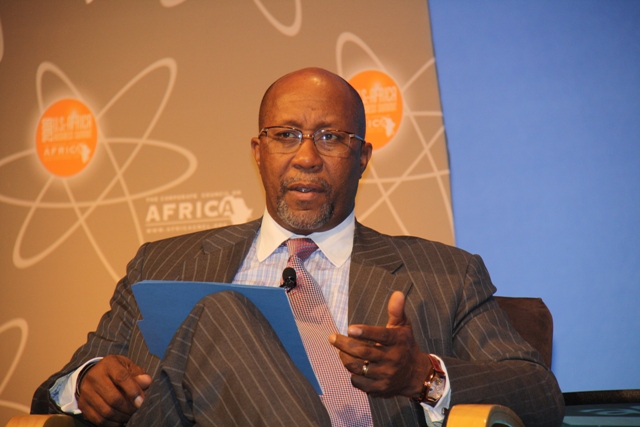
Michael Joseph, CEO of Safaricom, East Africa’s largest mobile phone provider based in Kenya spoke recently with Mshale’s Shamilla Amulega,
on the state of the mobile telephony industry in the region and strategies his
company has taken to command the number one position it currently
occupies.

U Visa Program Offers Protection to Immigrant Crime Victims

Immigrant crime victims generally lack access to the criminal justice system because of language barriers, cultural differences, and ignorance about the process. Most of all, their fear of deportation and separation from family members discourages them from seeking police protection, shelter, medical care and other social services. Abusive partners also use the threat of deportation to keep immigrant victims of domestic violence isolated. Immigrant groups are victimized at rates similar to the general population, but their rates of reporting crime are much lower. Thus, recognizing that immigrant communities are extremely vulnerable to victimization, Congress created the U-Visa program to ensure that immigrant crime victims are afforded safety and protection, regardless of their status in the U.S.


Specifically, in October 2000, Congress introduced the “U” nonimmigrant classification with the passage of the Victims of Trafficking and Violence Protection Act (including the Battered Immigrant Women’s Protection Act.) The legislation was intended to strengthen the ability of law enforcement agencies to investigate and prosecute cases of domestic violence, sexual assault, trafficking of aliens and other crimes while, at the same time, offering protection to victims of such crimes. Unfortunately, the U visa provisions are complex and immigrant communities are often unaware that the program is available to provide relief to crime victims and pave the road to obtaining lawful status in the United States.


Who is Eligible for a U Visa?


To become eligible to receive the immigration benefits under the U nonimmigrant classification, the individual must meet the following requiremements: (1) he/she must have suffered substantial physical or mental abuse as a result of having been a victim of criminal activity; 2) he/she has information concerning that criminal activity; 3) he/she has been helpful, is being helpful, or is likely to be helpful in the investigation or prosecution of the crime; and 4) the criminal activity must have violated the laws of the United States or occurred in the U.S.


Not every criminal activity makes a crime victim eligible to receive the benefits Congress intended. The statute requires that the criminal activity violate federal, state, or local criminal law such as murder, rape, torture, sexual exploitation, extortion to witness tampering, obstruction of justice, and false imprisonment, among others.


How Do You Apply For a U Visa?


To apply for a U visa, the crime victim must file a Petition for U Nonimmigrant Status (Form I-918) with U.S. Citizenship & Immigration Services (USCIS). The petition must include a certification of helpfulness from a certifying agency; i.e. a U Nonimmigrant Status Certification (Form I-918, Supplement B) from a federal, state, or local law enforcement official that demonstrates the petitioner has been helpful, is being helpful, or is likely to be helpful in the investigation or prosecution of the criminal activity. Further, either the head of the agency or a supervisor designated with the authority to issue certifications on behalf of the agency must sign the certification.


Victims of qualifying criminal activity may apply for U Visa status from inside or outside the U.S., which makes this type of immigration category different from other nonimmigrant classifications. There is no filing fee, although petitioners may have to pay a biometrics fee of $80.


What are the Advantages & Disadvantages of the U Visa?


USCIS may grant not more than 10,000 principal aliens U nonimmigrant status in any given fiscal year. This limitation, however, does not apply to spouses, children, parents, and unmarried siblings who are accompanying or following to join the principal alien victim. If the cap is reached in any fiscal year before all petitions are adjudicated, USCIS will create a waiting list that will help victims cooperating with law enforcement agencies stabilize their immigration status. Further, petitioners assigned to the waiting list will be given deferred action – that is, they will be eligible to apply for employment authorization or travel permits – until their petitions can be adjudicated after the start of the following fiscal year.


The duration of this nonimmigrant category is limited, however. The U nonimmigrant status cannot exceed four years. Extensions, on the other hand, are permitted upon certification from a certifying agency that the alien’s presence in the U.S. is required to assist in the investigation or prosecution of a qualifying criminal activity.


Finally, an individual who has held U nonimmigrant status eventually could apply for lawful permanent resident status in the U.S. The individual must have been physically present in the U.S. for a continuous period of at least three years since the date of admission as a U nonimmigrant, and the agency must determine that the individual’s continued presence in the country is justified on humanitarian grounds to ensure continuation of a cohesive family, or is otherwise in the public’s best interest.


Consult an Immigration Attorney to Determine Whether You Qualify for a U Visa


In sum, law enforcement agencies need the victims’ cooperation to prosecute the perpetrators. Victims who fear deportation, however, often do not choose to interact with law enforcement agents. Therefore, the U visa enables the government to combat crime with the help of individuals who lack lawful status in the U.S.


Immigrant crime victims are afforded safety and protection under the U Visa Program and should consult with a qualified immigration attorney to explore the eligibility requirements and potential benefits.


Nothing in this article should be taken as legal advice for an individual case or situation. The information is intended to be general and should not be relied upon for any specific situation. For legal advice, consult an attorney experienced in immigration law.

Stay Focused!

0

Life takes many twists and turns. Our response to everyday situations faced can have significant impact on our future life. We can learn great lessons from Bible characters who were distracted from their God-given purpose and, therefore, weren’t able to respond well to the situations they faced.  Their decisions impacted their life.  

For example, Adam and Eve lost their comfort in life; Samson lost his vision and King Saul lost his anointing.   God’s purpose in life stands through it all. Keeping our focus on God’s purpose will prevent distractions from robbing us of our destiny.

It is my prayer that each person holds firmly onto the promises of God despite pressures, influences and distractions to do otherwise. We need to continually draw on the Apostle Paul who fought the good fight of faith to finish the race.  As we face situations in our daily work, we should base our response and reaction on the foundation of purpose God has destined for us.

Remember:  Without a life of purpose, we won’t fulfilled and enjoy the true benefits and blessings that God has predestined for us.  What we set our heart on will determine how we spend our life.

U.S. Ties Africa Prosperity to Good Governance

0
U.S. Ties Africa Prosperity to Good Governance

WASHINGTON – Secretary of State, Hillary Clinton, listed conditions that she said will propel Africa to prosperity – chief among them being responsible leadership.

In an address to the 7th biennial US-Africa business summit, Clinton  outlined strategies to help spur economic development in Sub-Saharan Africa and create conditions that will improve the lives of the African people, saying that “we have to acknowledge that none of this can happen without responsible African leadership, without good government, transparency and accountability, without acceptable rule of law, without environmental stewardship and the effective management of resources, without respect for human rights, without an end to corruption as a cancer that eats away at the entrepreneurial spirits and hopes of millions of people.”

According to the Secretary of State, “We are eager to move beyond stereotypes that paint Africa as a land of poverty, disease, conflict, and not much else.  And we will continue to lay a strong foundation for a new kind of engagement with Africa, one that is built on shared responsibility and shared opportunity, and on partnerships that produce measurable, lasting results.”

“I don’t need to tell this group that although there are so many opportunities for investment, none will succeed unless conditions are favorable for business and investment,” she added.

Clinton told the summit that Companies are not going to be attracted to states with failed or weak leadership, crime or civil unrest, or corruption that taints and distorts every transaction and decision, or to countries that violate the rights of their people and, worse, allow violence toward women and girls to be practiced with impunity.

She listed five key areas the US wants to partner to create prosperity to include trade, development, energy security, public private partnerships and “fifth, and perhaps most important, we are stressing good governance, transparency and accountability, ending corruption, and adherence to the rule of law.”

She offered South Africa as a compelling example of the relationship between good governance and economic development, stressing that South Africa emerged from apartheid and engaged its citizenry in the democratic process and is now Africa’s economic engine.  She cited Rwanda as another good example in the continent.

Secretary Clinton however acknowledged the challenges that lie ahead even as Africa puts its house in order but should not be used as an excuse, “now, we know that there are a lot of obstacles to overcome, but we are determined to work with you to achieve the goals that we have set forth.  I was delighted that President Kagame was here, because even with the global recession, Rwanda’s health indicators are improving, its economy continues to expand, and that is directly traceable to the sound policies that the government has implemented.”

She also pointed out that the Government of Botswana in its early years of independence was visionary as regards its mineral wealth.  The leadership there was so devoted to building a country that would have the advantages that they wanted to see for their people after colonialism had finally ended.  So they struck a hard bargain, and they created, essentially, a trust fund where a percentage of the revenues from the diamonds went into that fund, and then that fund was used to pave the roads.  “And if you have traveled in Botswana, you know that the roads are the best in Sub-Saharan Africa except for South Africa.  And we can see the results year after year after year,” she said.

Organized by the influential Corporate Council on Africa (CCA), more than 1,500 business leaders from the private and public sectors in the U.S. and Africa  attended, making this year’s summit one of the largest. 
Pre-summit events included honoring of Mr Jakaya Kikwete, President of Tanzania generally seen to have led the effort to improve key sectors of the country’s infrastructure such as electricity, transportation, and education in a forum which was for business associations round the globe.

Also at the summit were country specific forums such as “Doing Business in Ethiopia”, designed to highlight success stories from businesses that have already entered the Ethiopian market, network with other businesses interested in Ethiopia, meet face to face with Ethiopian and American policymakers and business men and women, and build potential partnerships for the future.

Similar forums were held for Angola and Namibia which allowed participants to network with both private sector and government officials from the respective countries. Several bilateral workshops were also held and they spanned agriculture, tourism, power, infrastructure and financing.

There was an array of corporate sponsors for the summit overall and for the various workshops and plenary sessions. They ranged from media giants to oil firms and nutrition solutions firms such as Novus International which touts itself as a global leader in creating science-based nutrition and health solutions. The company, a gold level sponsor of the agribusiness workshop told members of the press during a briefing session that the company’s products are in over 90 countries around the world and that it is ‘committed to helping feed the world with wholesome food and achieving a higher quality of life.’

Dr Christopher Knight of Novus said at the media session that Novus “believes in empowering producers with tools and knowledge that will help make a positive impact in their local communities and the world.”

Novus unveiled a fellowship program targeting African scientists that will entail the scientists coming to Novus’ research facility in Missouri. The program is collaboration between USAID and the Gates foundation which Novus’ Joyce Cacho emphasized is a long-term commitment by her company and will not be dependent on the funding from the Gates foundation and USAID, “as we now want to turn our attention to Africa”, she told members of the press. A scientist from Mozambique will be among the first recipients with the overall aim of the fellowship being the transfer of some applicable knowledge to Mozambique.

Stephen Hayes, president and CEO of CCA in welcoming participants said that the 2009 summit took a new approach by spotlighting a limited a number of key sectors where opportunities are most promising.

Department of State Issues December 2009 Visa Bulletin

The Department of State’s (DOS’) Visa Office (VO) has released the visa numbers for December 2009. The Employment First Preference category remains current for all chargeability areas. The Worldwide Employment Second Preference cutoff and the Second Preference cutoffs for Mexico and the Philippines are also current. The China mainland-born cutoff remained at April 1, 2005, and the India Second Preference cutoff remained at January 22, 2005.

The Third Preference cut-off for India advanced over one week to May 1, 2001. The cut-off for mainland-born China, Mexico, the Philippines, and all other chargeability areas remained at June 1, 2002. For the Third Preference Other Workers category, the cut-off date for all areas remained at June 1, 2001, except for India, which advanced over one week to May 1, 2001. The Fourth Preference categories, including the Certain Religious Workers category, are current. The Fifth Preference category, including the Targeted Employment Areas category and the Fifth Preference Pilot Program, also remains current. With regard to the now-current status of the Fourth Preference Certain Religious Workers category and the Fifth Preference Pilot Program, the VO states.

Legislative action, which occurred, during October has extended the Employment Fourth preference Certain Religious Workers, and Employment Fifth preference Investor Pilot program categories through September 30, 2012.

The December 2009 Visa Bulletin is available at: www.travel.state.gov/visa/frvi/bulletin/bulletin_4587.html

Mayor Coleman Affirms New Era of Commitment to Minority Businesses

0
Mayor Coleman Affirms New Era of Commitment to Minority Businesses

St. Paul Mayor Chris Coleman has affirmed the city’s commitment to do right by communities of color, small businesses, women-owned businesses and other disadvantaged businesses through restructuring city government to create new ways to do business with the City of St. Paul.

The mayor made the commitment during a special broadcast of Conversations with Al McFarlane aboard the historic Centennial Showboat at Harriet Island.

The program promoted engagement, opportunity, awareness and support for minority, women and small business development and was put together by the Riverfront Economic Development Association (REDA), the powerful business support and promotion organization that serves St. Paul’s West Side community, and the Minority Business Development and Retention division of St. Paul’s new Human Rights and Equal Economic Opportunity (HREEO) Department. The Twin Cities Local Initiative Support Corporation (LISC) co-sponsored the public policy forum broadcast.

While it is appropriate to discuss how businesses navigate challenging economic times, Coleman said the emphasis should be on the “season of opportunity” now at hand in St. Paul.

“Everyone knows about the $1 billion of investment that will occur along the University transit corridor. But there are other opportunities occurring across the city on the West side, on the Eastside, on the North End and on Payne Avenue and Arcade Street,” he said.

Coleman said the City of St. Paul must ensure that minority- and women owned and disadvantaged businesses are part of the opportunity.

“I think we’re doing our part,” he said. “Four years ago when I took office we realized we were not properly organized or focused to make sure that we were providing opportunities for all of our citizens and business owners. City Attorney John Choi, acting on recommendations of a formal audit of St. Paul efforts to ensure inclusiveness, asked people what they needed. He made recommendations for changes we needed to go forward. We made a very dramatic change in opening up the Department of Human Rights and Equal Economic Opportunity. We created a new way of doing business. We are making sure that people can succeed and that as minority-owned businesses and women-owned and disadvantaged firms, you have the resources you need to be successful.

“We’re figuring out where we can partner with people. We have new loan programs. A lot of people are traveling light right now. They’re fearful about the recession,” Coleman said.

“We are asking what we need to do to assure those businesses that are struggling. So we can drive business in that direction. These are things we can do and will continue to do. We need to hear from all of you. What are the things that you want us to do that were not doing. How can we continue to restructure and organize to create opportunity?

“This is not just a morally right thing to do, but it’s economically the right thing to do as well. When we invest in businesses, those dollars turn over again and again and again in our own community. When we support our small businesses, we stabilize our neighborhoods,” Mayor Coleman said.

Chris Romano, executive director of REDA said his organization serves two functions. First as a business association, a mini chamber of commerce with over 100 members. “We hold training and networking sessions. We provide loans. Secondly we have a community development corporation function. Our responsibility is to ensure Westside revitalizes in the best way possible, from a business and community perspective”, he said.

“If you own a small business on the Westside and if you need money to expand your business to buy additional machinery and to be successful we can provide those funds. We do that In connection with community banks and the city of St. Paul,” he said.

Romano said REDA also provides small business grants. “One of the nice things about a grant is that you don’t have to pay it back.” He said the grants are for façade improvements, like signage, windows, and entryways, things that improve the look of the business. The grants require a 1 to 1 match with a limit of $5,000 from the grant. So a project could cost up to $10,000 with the business providing half of the project cost.

Adolfo Cardona, publisher of Latino Midwest, joined fellow publishers, Nghi Huynh, of Asian American Press, and Tom Gitaa, of Mshale, and David Glass, executive director of the American Indian Economic Development Fund, in raising Meet-the-Press style questions of forum presenters.

Forum presenters besides Mr. Romano included Tomas Sanchez, executive director of Invest St. Paul which coordinates planning, zoning, and traffic transit environments to support small business development; Readus Fletcher, deputy director, Human Rights and Equal Economic Opportunity (HREEO,) who heads St. Paul’s Minority Business Development and Retention initiative; Bob Kessler is director, department of safety inspections (DSI); Larry Zang (DSI); Susan Feuerherm, Acting Purchasing Manager, City of St. Paul; Angela Burkhalter, Public Information Officer – project manager, Minority Business Development and Retention (MBDR);John Kimball, Senior VP of Park Midway Bank.

Saint Paul second ward councilman, David Thune, who was one of the panelists at the forum, said that while government cannot be the “be all and end all” for small business, he said, “We need to demand responsible partnerships. And when partnerships and projects that we set up don’t go exactly the way we want, we shouldn’t throw everything out and just walk away, despite the good work that has been done.”

This first of its kind broadcast program also reflected the emergence of a unique multi ethnic and multi-media platform for examining and promoting business and economic development in communities of color.

Editor’s note: You can access an archive of the broadcast online at www.kfai.org. It will be the 10/27/2009 show.

Insight News contributed to this story.

World Premiere of Walker Art Center-Commissioned Reggie Wilson and Andreya Ouamba’s The Good Dance: Dakar/Brooklyn

0
World Premiere of Walker Art Center-Commissioned Reggie Wilson and Andreya Ouamba's The Good Dance: Dakar/Brooklyn

Two continents, two great rivers, and two of contemporary dance’s biggest talents: The Good Dance: Dakar/Brooklyn is the culmination of a landmark three-year collaboration between American dance/theater-maker Reggie Wilson and Congolese contemporary dance creator Andréya Ouamba. As a new commission receiving its world premiere at the Walker Art Center, the piece will be polished during a two-week residency that includes rehearsals and production work as well as community gatherings, workshops, and a master class.

The world premiere of The Good Dance: Dakar/Brooklyn will be performed on Thursday-Saturday, November 12–14, at 8 pm in the William and Nadine McGuire Theater.

“Our priorities have shifted and crystallized over time,” says Wilson, who met Ouamba on his first trip to Senegal in 2002. Delving into the vocal sounds, movement, and visual and emotional landscapes of African American and African culture, The Good Dance unearths deep connections between the Mississippi River delta in the United States and Central Africa’s Congo River basin. It also brings forth the personal experiences of each choreographer, tying them into the concept of bodies and movement carrying moral traditions.

Wilson continues: “I saw a movie in which one character was repeatedly referring to ‘the Good Book.’ It really resonated for me, how in Western traditions, people go to texts—the Torah, the Koran, the Bible—for guidance and laws. But in African religions, there’s no text. They’re centered around oral traditions, but also around how the body is organized in space: through rituals and ceremonies, through gesture, the way in which you carry yourself. That’s where your information is, and you read other people’s bodies for their information. That moral guidepost is in the human body, so you don’t have a good book, you have a good dance.

“Andréya and I began talking about how that idea of ‘the good dance’ connects with movement artists in how they carry their work in their bodies, and it has become a primary concern in our piece. It involves looking through the lens of Andréya’s and my experiences, asking questions about who we are, and sharing where we’ve come from. We hope it won’t stop there. By being specific about who we are, if we treat these things respectfully, it resonates into other places, other times, other people and their own traditions. We want to get at the big stuff without trying to be big – but instead look at the details and minutiae of the physical experience of our lives.”

Reggie Wilson/Fist & Heel Performance Group is a Brooklyn based dance company which blends contemporary dance with African traditions. The company makes brilliant new performance from the spiritual traditions of the African Diaspora. Wilson draws on the movement idioms of blues, slave, and worship cultures to create what he calls “Post-African Neo Hoodoo Modern dance.”

Accompanied by their own driving rhythms—body percussion, aspirated breath, singing, and shouts, Fist & Heel blends deep ritual into potent, beautiful and energizing contemporary dance.

Wilson’s research on the secular and religious aspects of life in the African American communities of the Delta and the central African countries of Cameroon, Gabon, and Congo (Brazzaville), as well as a multiyear exchange and collaboration between Reggie Wilson/Fist and Heel Performance Group and Ouamba and his Company, 1er Temps based in Dakar, Senegal, will be contextualized into the The Good Dance. The piece has been awarded a National Dance Project production and touring grant.

Born in Congo, based in Senegal, Andréya Ouamba is one of the major emerging choreographers in West Africa. He won first prize at the prestigious competition Danse L’Afrique Danse 2007 with the duet Improvisé 2, which has since toured globally.

Ouamba was invited by Festival Avignon to commission a solo for himself from Kenyan artist Opiyo Okach, which toured internationally, including Theater der Welt in Germany in summer 2008.

Ouamba is a catalyst of dance development in Dakar. He is artistic director and organizer of AEx Corps, a workshop and experimental program for West African dancers.

Tickets to The Good Dance: Dakar/Brooklyn are: Thursday, $18 ($15 Walker members); Friday (post-show Q&A) and Saturday, $25 ($21) and are available at walkerart.org/tickets or by calling 612.375.7600. The McGuire Theater’s Balcony Bar will be open at 7 pm and after the performances. More details at www.walkerart.org

Crucible for Silver and Furnace for Gold

0
Crucible for Silver and Furnace for Gold

Book Review

Title: Crucible for Silver and Furnace
for Gold

Author: Moraa Gitaa

276 pages. Nsemia Publishers

$15 (on Amazon.com)

Moraa Gitaa’s appealingly titled novel “Crucible for Silver and Furnace for Gold” is her first entry in pursuit of this prize: a romantic love story that not only captures the flavor of its time and place but also contains a more consequential, even transformative significance. And Gitaa exposes some genuine concerns of trust, fear, and loneliness.

Here are two beautiful and fascinating characters who come from distinct backgrounds in every aspect but are connected by a common virtue and need: Love.  Lavina Kante and Giorgio Santini develop magnetic attractions to each other despite having unsettled issues that range from lack of self-esteem to mistrust. Lavina is a lost soul, plagued by betrayal and ostracized by her family. She is consumed with depression and becomes desperate to end her life.

The long haired, fair skinned and curvy lab technician takes a sabbatical to seek refuge in Malindi at Tim and Lynne’s residence. The concerned and kind couple open up their home and take her as one of their own. Lynne is a close friend of Lavina. The two have known each other since childhood. Tim who is the husband of Lynne is the mayor of Malindi. The couple is very understanding and allow Lavina to stay as long as she pleases. Curving soapstone for friends is a talent and basking in the beach her favorite past-time, both of which help her relax and put her troubles in remission. 

It is at the beach where Lavina attempts to end her life by swimming deep into the ocean for the mighty tides to swallow her. Ironically she gets another chance at starting a new life with a handsome shrewd Italian entrepreneur and her knight at that moment. 

Giorgio and Lavina have common interests in African art, music, food, books and even the finer things in life. Giorgio is a wealthy developer with establishments scattered in various towns of Mombasa.  He travels extensively both locally and abroad and needless to say is passionate about his work. But the one bug that bites and has him re-scheduling for lovers time is Lavina. He turns out solid and unshaken by her state of health or the implications it may have on him or on their relationship. For Lavina it’s a struggle of fear of not being accepted, not being loved, not trusting to be loved as is and the possibility of never having children of her own.

The book presents various social, economic and political issues as relates to society in Kenya today. Stigma and discrimination among people affected with sexually transmitted diseases (STDs) is inarguably prevalent. Fears about family rejection, loss of a job and public shunning impedes the effectiveness of prevention and care efforts. Lavina came to terms with these encounters after Giorgio’s bold step of acceptance and assurance to love and care for her.

Although creating awareness, counseling and increasing the opportunities for contact with people living with HIV and AIDs is an ongoing effort, silence and discrimination are still widely practiced. 

Interestingly Gitaa brings up the controversial use of traditional herbs and medicines, which is believed to cure many terminal ailments such as HIVAIDs.

The history and politics of Kenya are intertwined. Every success or instability has a historical component. For instance land allocation and ownership, which was initially taken over by white colonial settlers, has never been justly re-allocated to the rightful owners or their generations. Instead, politicians and powerful individuals’ misuse and abuse their power to acquire these lands illegally to achieve their own means. 

To that end, it is not surprising therefore that Giorgio is met with resistance from the locals who oppose a proposal to build an extensive bridge that may appear to disrupt their routine. Giorgio is running into problems because he unknowingly bought land from a corrupt district commissioner.  Page 164.

Gitaa speaks about current affairs in Kenya and more so in Mombasa. Many Africans and specifically Kenyan natives can at least remotely relate to the events and experiences she describes.  Crucible for Silver and Furnace for Gold will renew the desires of Kenyans in the Diaspora to go back.

Mombasa for many signifies pride, rich traditions and culture, renowned history and the influx of Europe citizens, notably Italians who have fallen in love and married the place, culture and the people. The Indian Ocean, the soapstone arts, the indigenous foods, the rain forests and the hospitality of the people in this coastal region beckon me. Geographers and nature lovers would love to learn and experience the history of the region and of such places as the more than 50 Sacred Mijikenda Kaya forests that have been named a world heritage site by the UNESCO convention. Page 123.

The author’s style of writing is atypical of African writers. It moves away from the usual traditional themes and settings famously authored by household names such as Ngugi Wa Thiongo, Chinua Achebe and Grace Ogot et al. 

It’s an interesting shift in the sense that seldom will you find African writing infused with a western style. Some may resist her style with an excuse that it does not represent the lifestyle of the African continent but the writing is in fact justified given the time, region of the plot, and the characters. They are modern, educated, powerful, and intelligent.

On the contrary, one aspect I could not help noticing was over emphasis of their class. The designer clothes, shoes and perfumes worn by Giorgio and Lavina. Every description of their physical appearance was adorned with description of famous designer clothing, perfume and shoes. Although I was a little taken back with the lack of suspense to the ending, fairy tale endings still do exist.

The book is a good read. It contains very descriptive writing that is graceful and prolific and the absence of melodrama makes it even more genuine to the point I imagined I was Lavina.

What character would you play? Find out.

Buy it at Amazon.

Minnesota Bar Admission Rules Under Review

0
Minnesota Bar Admission Rules Under Review

A majority of States offer a pathway for foreign-educated lawyers to become licensed. Not Minnesota. Despite its tradition of welcoming immigrants and refugees, Minnesota is in the minority of States that allow only graduates of lawschools approved by the American Bar Association (ABA) to practice law. As a result, lawyers who originally trained in Somalia, Liberia, Nigeria, Cameroon, Kenya (African countries with the largest populations in the State) are not even permitted to take the Minnesota bar exam. Lawyers from other countries are also excluded.

Additionally, attorneys trained in ABA-approved lawschools carry huge debts due to the extraordinarily high cost of tuition at these schools. For example, average annual tuition for 4 lawschools in Minnesota is $27,890. As a result, newly licensed attorneys typically avoid non-profit or public service work representing clients who cannot afford representation. Immigrants, refugees and low-income communities bear the brunt of this lack of access to affordable legal services.

To help address the above problem, Henry Ongeri (a law graduate of the University of Nairobi, Kenya) teamed up with 3 other lawyers licensed in other US States to petition the Minnesota Supreme Court for a change in the bar admission rules. On August 10, 2009, the Court ordered the Minnesota Board of Law Examiners to conduct a comprehensive review and to submit a report to the Court with a recommendation. In response to the Court’s Order, the Board has
scheduled a hearing from the Petitioners and Roger Magnuson, a Minneapolis attorney. Leaders of the local religious, immigrant and
refugee communities will also attend and participate.

The public hearing will take place on November 12, 2009 at 3.45 – 7.00 p.m. at the Minnesota Judicial Center, Room G01 (Auditorium), 25 Rev. Dr. Martin Luther King Jr. Blvd, St. Paul, MN 55155.

More information: www.ble.state.mn.us/LegalEdCommittee.html

Updates from the U.S. Citizenship & Immigration Services

USCIS Naturalization Test to Become Fully Implemented

Effective Oct. 1, 2009, all citizenship applicants must take the new naturalization test, regardless of when they filed their Application for Naturalization (Form N-400).

“Becoming a United States citizen carries with it extraordinary rights and responsibilities,” said USCIS Director Alejandro Mayorkas.  “Our new test captures the meaning of citizenship and is consistent with our values and history as a nation.”

The revised naturalization test will help strengthen integration efforts by emphasizing fundamental concepts of American democracy, basic U.S. history, and the rights and responsibilities of citizenship.

USCIS began administering the new naturalization test Oct. 1, 2008, with two basic objectives – to ensure a uniform test administration nationwide and to develop a civics test that can effectively assess an applicant’s knowledge of U.S. history and government.  Up until Oct. 1, 2009, applicants who had filed for naturalization before Oct. 1, 2008, had a choice of taking the old test or the new test.  Currently, the overall pass rate for the new test is 91 percent.  To learn more about U.S. citizenship and the naturalization test, logon to www.uscis.gov/citizenship

USCIS Launches New Website

On September 22, 2009, USCIS launched a redesigned website—available in English and Spanish—a major effort which fulfills President Obama’s pledge to offer enhanced navigation tools for the public to access immigration information and review case status.

“Transparency and openness are critical to effective immigrationUS and citizenship policies,” said Secretary Napolitano. “USCIS’ new website provides the public with the latest tools—from text messages to emails—to improve responsiveness and access to immigration services.”

“The redesigned website we are launching today reflects our commitment to listening to the public and creating a better experience for the hundreds of thousands of USCIS customers we serve,” said USCIS Director Mayorkas. “This effort is the first step toward creating a more innovative, customer-centric experience that meets the nation’s citizenship and immigration needs.”

The new USCIS website provides a one-stop location for immigration services and information—including an innovative service called My Case Status, which allows immigration customers to receive alerts on the status of their applications via text message and e-mail.

Other new features include a Where to Start tool to guide users through the navigation process; a simplified way to track individual case status; local and national case processing times; an improved search engine; and a new Information Dashboard feature allowing users to access national immigration trends associated with immigration petitions and applications. Check it out at www.uscis.gov

Federal Contractors Required to Use E-Verify Beginning Sept. 8, 2009

Beginning Sept. 8, 2009, all federal contractors and subcontractors are required to use the E-Verify system to verify their employees’ eligibility to work in the United States if their contract includes the Federal Acquisition Regulation (FAR) E-Verify Clause.

In July, Department of Homeland Security (DHS) Secretary Janet Napolitano strengthened employment eligibility verification by announcing the Administration’s support for the regulation that will award federal contracts only to employers who use E-Verify to check employee work authorization.

E-Verify, which compares information from the Employment Eligibility Verification Form (I-9) (see link to the right) against federal government databases to verify workers’ employment eligibility, is a free web-based system operated by DHS in partnership with the Social Security Administration (SSA). The system facilitates compliance with federal immigration laws and helps to deter unauthorized individuals from attempting to work and also helps employers avoid employing unauthorized aliens.

The Federal Acquisition Rule; Case 2007-013; Employment Eligibility Verification (see link to the right) extends use of the E-Verify system to covered federal contractors and subcontractors, including those who receive American Recovery and Reinvestment Act funds.  Applicable federal contracts awarded and solicitations issued after Sept. 8 will include a clause committing government contractors to use E-Verify.

Companies awarded a contract with the E-Verify clause on or after Sept. 8 will be required to enroll in E-Verify within 30 days of the contract award date.  E-Verify must be used to confirm that all new hires, whether employed on a federal contract or not, and existing employees directly working on these contracts are legally authorized to work in the United States.

More than 145,000 participating employers at nearly 550,000 worksites nationwide currently use E-Verify to electronically verify their workers’ employment eligibility.  Since Oct. 1, 2008, more than 7.6 million employment verification queries have been run through the system and approximately 97 percent of all queries are now automatically confirmed as work-authorized within 24 hours or less.