Home Blog Page 196

View from the Top

0

God wants us to see life from His point of view.  This is truly the “view from the top”.  This is an expansive, sweeping view of the future landscape for our lives. 

This view is rich with seeds for growth which can produce bountiful opportunity for advancement.  Taking the step to view life from the “top” requires effort on our part to put thoughts and actions that deter us from God’s view into a state of “solitary confinement.”
This requires our receptivity to understand and continually follow God’s instructions and wisdom. 

Focusing our mindset, time and activities on God’s view opens up countless opportunities. This view is priceless – it is a view that will cause freedom in thinking and action so that we can capture and act on the endless possibilities the Lord has planned for our lives. 
 
Remember:  God’s view is the level our thinking should advance toward.  We won’t rise any higher than the limits we place on our mind. Our mindset is what activates and releases whatever happens in our life

After Minneapolis, FBI Eyes Atlanta’s Somalis

0

CLARKSON, GA. -– In this small town on the edge of Atlanta, the FBI and local law enforcement are looking out for an alarming kind of crime: radical Islamist terrorists potentially trying to recruit the town’s young Somali-Americans to fight a war in Africa.

There is terrorist recruitment taking place already in Minnesota, said Clarkston police chief Tony J. Scipio. That’s why his department and the FBI are looking for anything similar in the Somali-American community here in Clarkston.

In Minneapolis, as many as 20 young men have been reported missing from their homes since last fall. They are thought to have been lured into the ranks of al-Shabaab in Somalia. That group got a terrorist designation from the U.S. State Department, which ties it to al-Qaeda, bombings, assassinations and attacks on peacekeepers. A powerful faction fighting Somalia’s transitional government, al-Shabaab’s agenda is extremely strict Sharia law.

To fight potential recruiters, the Atlanta FBI has spent the last several months in what the agent-in-charge called an “outreach” program to Clarkston Somali-Americans, including mosque visits and community meetings.

Supervisory special agent Andrew Young said radical violent Islamist recruiters use the same strategy as a street gang recruiter, or even a little league coach.

“From what we know about recruiters, whether they’re Islamic, drug gangs or the coach, they’re looking for those kids who are looking for something deeper inside. To one it could be geopolitics. To one it could be a friendship. They’re all looking for something,” he explained.

And terror recruiters are quickly becoming adept at online tactics, noted Young.

“That’s what we see as a trend hitting home,” he said. “We see a lot more Internet recruiting being targeted to our youth.”

If young people go to Somalia, the FBI’s biggest worry is that they may return with dangerous souvenirs, like bomb-making or demolition skills and a radical anti-U.S. agenda.

Atlanta’s Somali-American community mushroomed after 1991 with arrivals of war refugees. Between 2000 and 2007 alone, the U.S. Office of Refugee Resettlement sent some 3,000 Somalis to Atlanta.

Because so many suffered in the war, they’re unlikely to see much appeal in returning to war, say Somali-American leaders in Clarkston.

But the alleged Minneapolis recruits spent little or no time in war-ravaged Somalia or in refugee camps. That may make young people vulnerable to a dramatic, nationalistic appeal, according to one Georgia leader.

“If al-Shabaab says, ‘We’re fighting Ethiopians,’ then they’ll have sympathy,” declared Omar Shekhey, president of the Somali-American Community Center, a statewide umbrella group.

Somalia’s transitional government is supported in part by the army of Somalia’s number one enemy, Ethiopia. The two countries have fought two formal wars in 40 years.

Al-Shabaab has no sympathizers in Clarkston, Shekhey insisted, but suggested that the other side -– the transitional government –- is frustrating, ineffective and unpopular. He jumped to criticize the transitional government’s power-sharing formula that he says reduces some Somalis to half-citizens, or non-citizens because it fixes quotas for parliamentary seats by clan.

U.S. support for that interim government rouses ire in some, Shekhey said, especially young people who reject the costs of that U.S. strategy.

“They can be angry,” he said. “‘Why is the U.S. doing this?’ they ask.”

Sharmarke Yonis, of the Georgia Somali Community, a non-profit headquartered in Clarkston, says that anger doesn’t always translate into a violent act.

“We might have some people who have sympathy, but not anyone who will commit a hate crime,” he said.

There’s sympathy because every religion spawns radicals who commit hate crimes, such as a person who would bomb an abortion clinic in the name of Christianity, he suggested, but emphasized that he sees no danger in Atlanta.

“In Georgia, we don’t have many, just a few listening,” Yonis said. He believes the threat is bigger in Columbus, Ohio, or Minneapolis, where the Somali-American populations measure in the tens of thousands.

No Somali-Americans are reported missing in the Clarkston area. A four-month police and FBI joint operation of surveillance and confidential informants turned up nothing, according to the police chief.

But “the word ‘FBI’ scares people,” said Hussien Mohammed, the director of Sagal Radio, a Clarkston-based station that broadcasts in English plus four languages spoken in east Africa: Somali, Afaan-Oromo, Amharic and Swahili.

“They’re coming from a country that has no law. They’ve been beaten, abused, harassed by security forces in their country … Some have been taken away in the middle of the night. People fear the same here.”

Mohammed seemed conflicted about the level of FBI involvement.

“Too many visits from the FBI have been seen in our community,” he said, but later added, “It’s their job. It’s why we’re safe.”

He’s very adamant on one point, which is backed up by other Somali-Americans and law enforcement: “These people are very peaceful like any other community. They’ve been terrorized at home enough. They want to be Somali-Americans, not just Somalis.”

Time for immigration Reform is Now

0


Editor’s Note: This editorial was produced in association with New
America Media (www.newamericamedia.org),
a national association of ethnic media, and was published by ethnic media
across the country this week to bring attention to
the urgency of immigration reform.

 The White House
and members of Congress must move quickly on enacting a just and humane
immigration reform package that will reunite families, reinvigorate the
economy, and remove the term “illegal or undocumented immigrants” from the
dialogue in this country. Ethnic media, which reaches over 60 million adults in
the United States, calls on Congress to move decisively on immigration reform
because there are few issues as important to the nation’s well-being as an
overhaul of the inefficient, inhumane and economically debilitating immigration
system. More importantly, we are also urging our readers and viewers to contact
their Senators and Congressmen and let them know that immigration reform must
be a national priority.

The immigration
system is broken not just for 12 million undocumented immigrants, but also for
specialized workers blocked from joining the American economy because of narrow
quotas, and mothers and fathers and brothers and sisters of U.S. citizens who
must wait for years before being reunited with their families.

Our nation needs
comprehensive immigration policies that will replace a broken system of raids
and roundups with one that protects all workers from exploitation, improves
America’s security and builds strong communities. It’s time to end the division
between workers, which has allowed big business to exploit both sides. Clearly,
working-class citizens and immigrant workers have much in common – dreams of
better homes, education for their families and quality healthcare.  There is more that brings us together, than
separates us.  United we can be a strong
force for change, changes that that bring more workforce safety and humane
conditions.  

Immigration is
often portrayed as an explosive, divisive issue. In reality it’s not. Since the
repeal of the national origins quota system in 1965, which discriminated
against certain immigrants, a consensus has been building towards an
immigration system that respects the country’s core values. These include
economic opportunity, equality under the law regardless of ethnic background,
and an embrace of the world’s most innovative, energetic and ambitious workers.
Now, with the country facing serious competition from workers abroad, it’s more
important than ever to create a world-class immigration system. It’s for the
good for families, good for communities and good for America.  

Women Immigrants Key to Family Unity

0

ATLANTA, Ga. – Women immigrants must overcome formidable barriers when
they first come to the United States, but their determination to hold
their families together helps them overcome many of those obstacles.

Those are among the findings of a recent New America
Media-commissioned national survey that pollster Sergio Bendixen shared
with a tightly packed gathering here at the Hyatt Regency Hotel on June
5 at a forum, “Women in Ethnic Media Breakfast: Women Changing the Face
of Immigration and Journalism.”

NAM chief of staff Odette Keeley, who immigrated from the Philippines
nine years ago, said women are redefining themselves both in the home
and the workplace.

Meredith Greene Megaw, communications director at the Committee to
Protect Journalists, a press freedom advocacy group, talked about her
organization’s efforts to shine the spotlight on the two North Korean
journalists and the Iranian American journalist, Roxanna Saberi, all of
whom were arrested while in pursuit of stories.

The threats to women journalists are not much different than those
faced by their male counterparts, Megaw noted, except that women
journalists also face cultural taboos, as well as the danger of being
sexually assaulted and threatened.

Those risks have forced many of them to switch to other forms of
media like the radio and the Internet, where they can maintain some
amount of anonymity while still practicing their trade, Megaw said.

Bendixen said that one of the greatest challenges new immigrant
women initially face is language. It is even more challenging if they
come from a certain socio-economic status. Many have little or no
access to health care. And to top it all, most of them face gender
discrimination.

“But within 10 to 15 years after they come to United States, women shed
their submissiveness,” become more assertive and take on a new role:
family stewardship, Bendixen said. “Keeping their families together is
their number one goal,” and they will do whatever it takes to ensure
that.

One of the first things they do in their new role in their family is to urge their spouses to seek citizenship.

“What could be more American than that?” Bendixen said.

Women who were forced to leave their children behind in their homeland
when they migrated to the United States generally succeed in bringing
their children over within five years, the poll shows. Those who face
deportation, take their children back with them.

Of the 90 percent of the women immigrants interviewed, 30 percent were
undocumented. Nearly all the women interviewed said that their families
were intact, their husbands live with them and their children were
either born here, or live with them in the United States.

Minneapolis Looks Within, Celebrates its Diversity

0
Minneapolis Looks Within, Celebrates its Diversity

The Minneapolis MOSAIC is launching its seventh annual celebration of the city’s diversity this weekend in downtown Minneapolis. The Twin Cities is home to immigrants and refugees from all over the world. Minnesota has a rich history of immigration, and new arrivals in the past several decades have introduced a blend of new cultures, perspectives, and people to the state. The Minneapolis MOSIAC hopes to capitalize on this diversity, and encourages the city to explore difference through artistic means.

The Minneapolis MOSAIC will feature talented local and international artists, and reflect the vibrant diversity in the city. Minneapolis Mayor R.T. Rybak said, “Our rich cultural scene is one of the things that we love about living here—and we love to share it.” The festival hopes to highlight the state’s increasingly diverse demographics, which create an opportunity for artistic exchange and appreciation.
 
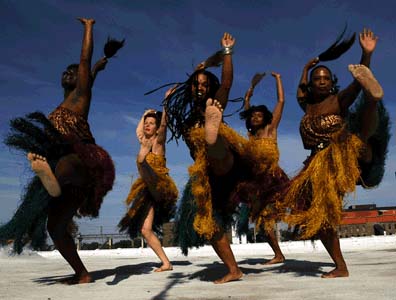
The annual celebration will open this Saturday with an event entitled, “Many Worlds. One Night.” Brian Turner from Cities 97 will emcee one of the stages, and various artists and acts are scheduled to perform during the opening ceremony. The Chamber Ballet of Morelos, a dance company based in Mexico will perform “The Passion,” for its first show in Minnesota. The ballet is fusion of genres and includes elements of jazz, classical, and contemporary styles. Food, items, and displays will be available from Midtown Global Market and Mill City Farmer’s Market food vendors, as well as other independent vendors.

The kick-off event is one of many planned events throughout various locations. The seventh annual celebration will include over a hundred music, dance, theater, visual art, film, and spoken word events that will continue throughout the summer. The festival will be an opportunity for a diverse group of Minnesotans to share their talents, history, experiences, and culture, as well as an opportunity to experience the culture of many other people.
 
The schedule of activities can be found at the Minneapolis MOSAIC website.

Federal Court Litigation In the Aftermath of the Real ID Act


Federal district courts continue to play a significant role in reviewing immigration cases, despite the passing of the REAL ID Act of 2005, which makes it more difficult to obtain judicial review of discretionary decisions by U.S. Citizenship & Immigration Services (USCIS) and other government agencies.


The Administrative Procedure Act (APA) generally permits an individual to sue the United States in federal district court when he suffers a legal wrong caused by agency action or inaction. For example, individuals may ask a federal court judge to review USCIS’ denial of certain applications when the decision is arbitrary, capricious and unlawful. This is called a complaint for declaratory relief.


In addition, when a person applies for an immigration benefit, such as naturalization (Form N-400) or adjustment to lawful permanent resident status (Form I-485), and does not receive a decision within a reasonable amount of time, he may petition a federal court judge to order USCIS to process the application and issue a decision in a timely manner. This is called a complaint for mandamus relief.


Federal court litigation, however, remains a costly legal process that requires the expertise of skilled counsel. Moreover, as a threshold matter, plaintiffs must establish that the court has jurisdiction (the authority to apply or interpret the law) in their case. Otherwise, the court may dismiss their complaint for lack of jurisdiction without even considering the merits of their claims. With the passing of the REAL ID Act, establishing jurisdiction has become a tougher hurdle for plaintiffs to overcome.


Section 242(a)(2)(B) of the Immigration & Nationality Act (INA), entitled “Denials of Discretionary Relief,” restricts federal court review of certain discretionary decisions by the government in immigration cases. The REAL ID Act expanded the scope of this statute so that it now applies to discretionary decisions made not only in removal (deportation) proceedings, but also in non-removal cases. Nevertheless, this change did not strip jurisdiction over all federal district court lawsuits, so it is still possible to obtain declaratory relief and mandamus action in some cases.


Declaratory Relief


The complexity of immigration laws and the legal ambiguities over whether an agency decision is discretionary or non-discretionary have resulted in inconsistent outcomes on the extent of federal courts’ jurisdictional powers. Even when jurisdiction is found, the limits in scope of review and deference to agency decisions often affect the results on the merits of the case.


One of the primary legal questions now being debated is whether a federal district court has jurisdiction to review the agency’s denial of a Form I-130 petition, particularly when the denial is based on a sham marriage determination. Typically, an I-130 approval is needed to help a foreign national spouse immigrate to the United States or adjust to lawful permanent resident status.


In the U.S. District Court for the District of Minnesota, two judges have ruled differently in similar but separate cases, with Judge Ann Montgomery finding jurisdiction and Judge James Rosenbaum finding lack of jurisdiction over the agency’s denial of an I-130 petition based on marriage fraud. Igbanugo Partners represented the plaintiffs in both cases.


While the Eighth Circuit Court of Appeals (the appellate court for Minnesota cases) has yet to settle this issue, the Fifth, Second and Seventh Circuits all held recently that they have jurisdiction to review an I-130 petition. In Ayanbadejo v. Chertoff, the Fifth Circuit held that the decision of whether a U.S. citizen entered into sham marriage with a Nigerian citizen, for purposes of their I-130 marriage petition, is non-discretionary and so is not barred from judicial review under the REAL ID Act.


The court reversed the federal district court’s judgment to the extent that it dismissed the I-130 petition for lack of jurisdiction and remanded the case to the district court for further proceedings. Likewise, in Ruiz v. Mukasey, the Second Circuit found that the REAL ID Act did not bar judicial review of UCSIS’ denial of an I-130 petition based on a sham marriage finding. 


The court denied the government’s motion to dismiss the petition for review based on lack of jurisdiction and transferred it to the district court for consideration.  Finally, in Ogbolumani v. Napolitano, the Seventh Circuit found that it had jurisdiction to review USCIS’ denial of a U.S. citizen’s I-130 petition for her Nigerian spouse. Nevertheless, on the merits, it upheld the denial of the I-130 because it agreed with the district court that the foreign national had previously entered a sham marriage.


Mandamus Relief


Several district courts, including the U.S. District Court for the District of Minnesota, have found they have jurisdiction to compel USCIS to adjudicate applications in a reasonable time. In one case, Igbanugo Partners filed suit petitioning the court to compel USCIS to adjudicate the plaintiffs’ asylum-based adjustment of status applications, which had been pending for six years.  Pointing to the APA, which states, “within a reasonable time, each agency shall proceed to conclude a matter presented to it,” plaintiffs argued that the agency failed to perform a duty owed to them.


The court agreed and remanded the case to USCIS to adjudicate the I-485s within 30 days. Plaintiffs were granted lawful permanent resident status in less than 30 days. 


In another case, a foreign national retained Igbanugo Partners to challenge the government’s motion to dismiss his pro se complaint seeking mandamus action in his naturalization case. The plaintiff argued that USCIS had a duty to adjudicate his naturalization application within 120 days after his naturalization examination under section 335 of the INA, but USCIS failed to do so. The government asked the court to dismiss the complaint for lack of jurisdiction because the FBI background check was still pending and the case was not ripe for review. 


In the alternative, the government asked the court to remand the case to USCIS for adjudication with no time limit or deadline. Finding jurisdiction to review the complaint, the court remanded the case to USCIS and ordered it to fulfill its non-discretionary duty to adjudicate the naturalization application within six months. Two months later, the applicant became a naturalized citizen.


Nothing in this article should be taken as legal advice for an individual case or situation.  The information is intended to be general and should not be relied upon for any specific situation.  For legal advice, consult an attorney experienced in immigration law.


Kenya Coalition Government is Stable, Says Mwakwere

0
Kenya Coalition Government is Stable, Says Mwakwere

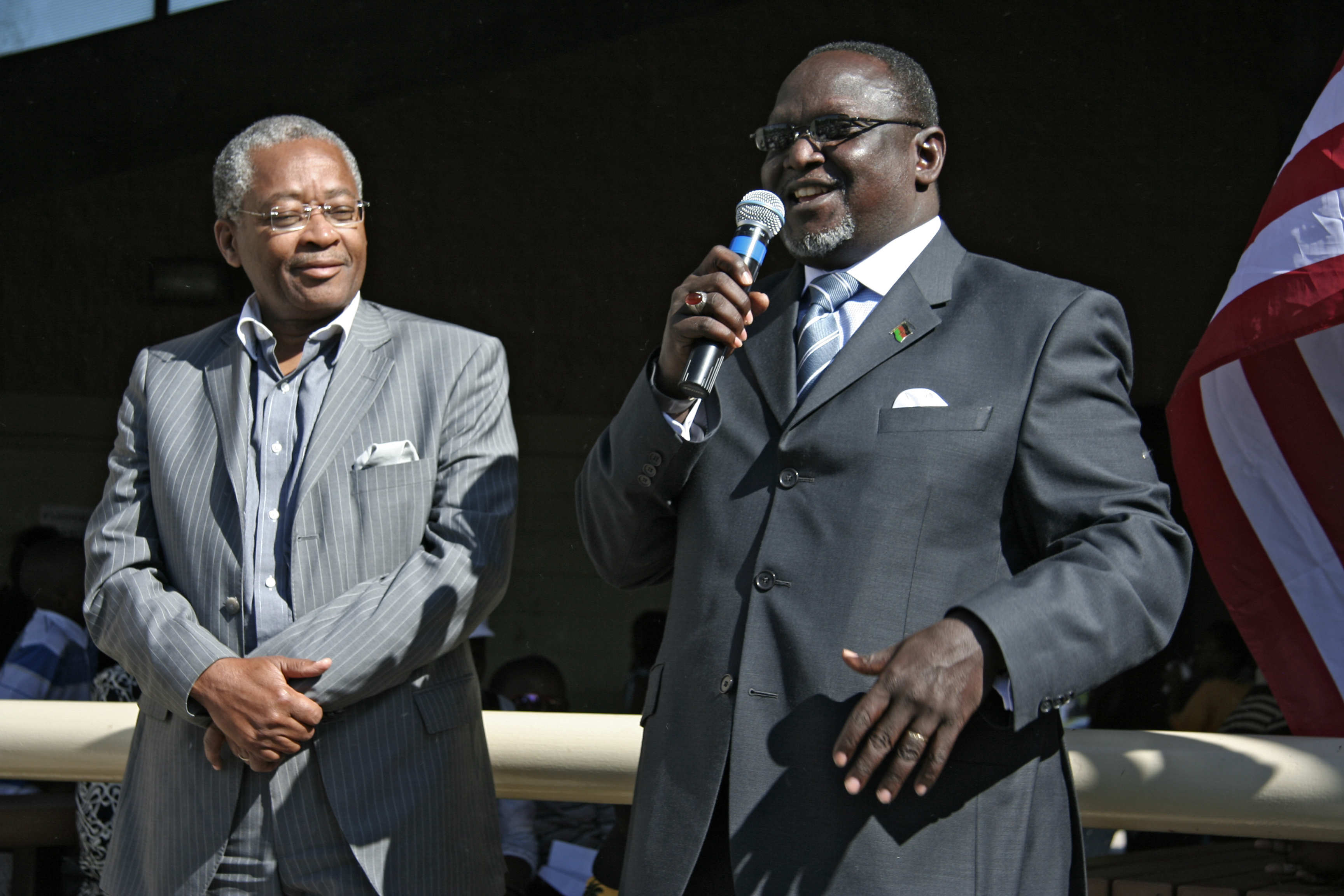
Transport Minister Chirau Ali Mwakwere said over the weekend
that the coalition government in Kenya was stable despite what was portrayed in
the press.”Sasa tuko katika hali ya
kusikizana ki sawa sawa
(we are in the process of being in agreement)”. The
Minister was speaking to Kenyans in Minnesota gathered to celebrate Madaraka
day at a local park. He is in the country to be part of the inaugural flight to
Nairobi
by Atlanta based Delta Airlines on June 2.

Minnesota was his first stop in the county at the request of
Kenya’s ambassador to the U.S. Peter Ogego. Ambassador Ogego three years ago
declared that official Madaraka day celebrations will be held in Minnesota, a tradition
he has stuck to.

Speaking mostly in Swahili, minister Mwakwere said he was
optimistic that a new constitution will be in place by 2011 in readiness for
the 2012 general elections. Sticking to the script of all Kenyan politicians
whenever they speak to Kenyans in the diaspora, he declared that dual
citizenship was being given serious consideration. “Ni a tunayo (the will is there)”. Without elaborating, he said
calls for dual citizenship will be included in the new constitution as it “is
what the people want’.

Hundreds of Kenyan-Americans listened as the minister
reiterated the importance of Madaraka day saying that even in the current
political climate in Kenya, occasions such as the one being observed have come
to be occasions to come together as one despite political differences.

Other than briefly briefing those present on the political situation
back in Kenya, most of the minister’s remarks centered on recent developments
at his ministry. Among the initiatives he mentioned included the construction of
a new port in Lamu to serve landlocked Ethiopia saying the funds for the
project are already available. The new port will supplement Kenya’s biggest port.
Mombasa. 

As he spoke of the developments
on the new port initiative, a Kenyan, Gichiri Ndua, a Kenya Ports Authority
(KPA) corporate Services manager was just last week picked as president of the International
Association of Ports and Harbors
(IAPH) becoming the first African to get that position.
He takes over from Mrs Datin Paduka Phang of Malaysia.

The minister also spoke at length on the ambitious Nairobi
metropolitan plan that aspires to transform Nairobi into a modern metropolis.  Although that major initiative is not managed
by his ministry but the Ministry of Nairobi Metropolitan Development, his
ministry has to work closely with that relatively new ministry as transport is
a major component of the plan. Last December when President Mwai Kibaki unveiled
the Nairobi Metro 2030 plan, the cost to implement it was pegged at US$ 423
billion. Nairobi Metro 2030 is part of the bigger Vision 2030 that plans to
develop metropolitan regions across the country. Minister Mwakwere during his
remarks in Minnesota said the plan once implemented will solidify Nairobi’s
position as the economic hub of the region and radically transform Nairobi into
a major economic force.

Ambassador Ogego in commending the local organizing
committee for Madaraka day celebrations said his embassy is willing and ready
to engage the Kenya diaspora on substantive issues “and not petty ones”. He
also handed out certificates of appreciation from the embassy to local Kenyans
in Minnesota that he said have exhibited exemplary community service. As in
previous Madaraka day visits, the ambassador was accompanied by embassy staff
who renewed passports onsite.

Also making brief remarks at the celebration was a
representative from the office of US Senator Amy Klobuchar of Minnesota.

The hundreds of Kenyan-Americans who turned out were later
treated to a soccer match between Kenyans and Ugandans in which Kenya lost 2-1,
after good natured ribbing between both teams’ fans about the disputed Migingo
island
.

Courage

0

Courage is the fuel that powers our ability to believe that all things are possible in our life. Courage fuels action and advancement; fear fuels passivity and mediocrity.

Problems can’t be solved at the level they were created; courage fortifies our capacity to stand firmly on the level of problem-solving needed for long-term impact. It takes personal courage to make tough decisions.

Courage is needed, as well, to adjust to the rapid pace of change going on in our world today. Truly understanding that God’s principles for life are all we need to guide our decision-making frees the power of courage within us.By doing this, we are able to face situations on a day-to-day basis with boldnesss and wisdom from the Lord. Courage is power – it reinforces the full use of our mind and spirit.

When our mind and spirit is aligned we operate on all cylinders.

Remember:  Without courage, the greatness within us may not come to reality. When we live our life with courage we won’t be pulled off track by changing circumstances.

Books for Africa Expands Operations into Atlanta

0
Books for Africa Expands Operations into Atlanta

ATLANTA – Books for Africa, the world’s largest shipper of donated books to the African Continent has opened a 20,000 square-foot warehouse in Atlanta.  The new facility, located just outside city of Atlanta in Smyrna, will serve as the organization’s primary shipping, receiving and sorting center.

Speaking during the grand opening ceremony James Kiiru, the Commercial attaché to the Kenyan Embassy in Washington DC praised the organization for its work when he delivered a message from Kenya’s Ambassador to the US, Peter Ogego who was to serve as the chief guest but had to be with the Kenyan prime minister who was making an official visit to the country. Mr. Kiiru said the Embassy greatly appreciates the organization’s work as it complements the efforts being made by most African countries which are striving to offer formal education to their children.

Mr. Kiiru said “Africa will forever be grateful to Books for Africa as its efforts continue to positively impact education development on the continent”. He added the continent is faced with a lot of challenges, most of which directly affect the children. “It is good to know that someone cares. The Kenyan Embassy will do everything in its powers support you as it believes in your dream,” he said amid applause. He then performed the ribbon cutting to officially open the new warehouse and sent off the first container of books from the new warehouse destined for the city of Eldoret in Kenya.

Speaking earlier, Books for Africa’s board of directors President-elect, Tom Gitaa, said that the organization greatly appreciates the cooperation and support given by African embassies in Washington. “We recognize the fact that we cannot do much without their invaluable support”, he said. Gitaa, who is also the president and publisher of Mshale, thanked all donors and sponsors for making it possible to ship the books to Africa. He said the organization was truly grateful to talk-show host Oprah Winfrey and Organization of the Petroleum Exporting Countries (OPEC), for their recent donation of $95,000 and $100,000 respectively.  He told those present that the Atlanta hub will be a busy one. “We are hitting the ground running. We intend to be shipping at least a hundred containers annually”, said Gitaa.

Books for Africa founder, Tom Warth, told a riveted audience the story of how the organization came to be. Upon selling his business in 1988, he went on a tour of Africa. While in Jinja, Uganda, he came upon a library with empty shelves. “When I looked at those children’s faces, I knew that they yearned for knowledge but they had no way of getting it”, said Warth. The urge to touch their lives and others like them led him to create a system for collecting discarded books from American schools, colleges, Libraries, and publishers. What began as a one man’s concern 21 years ago has grown to unimaginable proportions. “But we are not there yet. The 21 million books we have sent to 45 countries are not enough. We need more books, money, and volunteers”, he said.

 “We are very excited today,” said Patrick Plonski, Books For Africa’s executive director.  “The people here are very kind. They have come to see what we are doing and they are very impressed. Many of them have promised to help as volunteers in our new office and warehouse”. Plonski added that he is very hopeful that the expansion will be a success story. “The greater Atlanta area offers us exceptional opportunities to interact with diverse corporations and businesses, schools, universities, community leaders and organizations,” he said.

Delta Airlines, which is commencing direct flights to Kenya on June 2 also offered to deliver the first air shipment of books from the organization to Kenya free of charge through a partnership initiated by Books for Africa partner, Atlanta based Our Reading Spaces. The first air shipment of books will be aboard the inaugural flight to Nairobi and among its passengers will be Kenya’s ambassador to the United States, Peter Ogego. 

Delta Airlines, through a company representative at the grand opening promised to continue partnering with development-oriented agencies to offer relief to the needy. “It is a symbolic gesture that aboard our inaugural flight to Nairobi on June 2nd will be aid to Africa in form of books”, said Frank Wrenn, the External Affairs and Community Relations Manager.

But it was perhaps the founder and Executive Director of Our Reading Spaces, Irene Mbari-Kirika, who summed it up for everyone when she said: “Education is a fundamental human right. We all have an obligation to make sure that all children, regardless of where they are, get it”.

With a mission to end the book famine in Africa, Books for Africa collects, sorts, ships and distributes high-quality books to needy children in Africa.  Books donated by publishers, schools, libraries, individuals and organizations are sorted and packed by volunteers who carefully choose the ones which are age and subject appropriate.  Each 40-foot container, which holds approximately 22,000 books, benefits approximately 250,000 students over the life of the books.  Each container costs approximately $9,500 to ship, which is less than 50 cents per book.   

Books for Africa will continue to keep its organization’s headquarters and operate a warehouse facility in St. Paul, Minn.
Present during the ceremony were Elisa Voelkel of H.J. Russell & Company, David Murphy of Better World Books, and Beth McClurg of Cushman & Wakefield.  Others included Kenyan businessman Peter Mwaniki and Kenyan businesswoman Elizabeth Mungai, who donated hundreds of books.

Ethnic Media to Play Critical Role in 2010 Census

0
Ethnic Media to Play Critical Role in 2010 Census

SAN FRANCISCO – On April 1, 2010, less than a year from now, a snapshot of the whole population of the country will be taken. Whether you are a citizen, an immigrant, legal, illegal, homeless or an international student, if you are in the United States at that time, you will be counted.

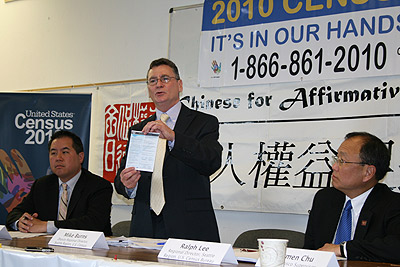
How important is it to be in the snapshot? How do we get everybody in it? These questions were answered at a May 5 roundtable discussion at New America Media, where ethnic media met with government officials to discuss how to get the message out to those who are most likely to dodge the “snapshot” — immigrants and minorities.

One reason that immigrants, especially the undocumented, may not want to be a part of the census is that they are afraid that their information will be used by government agencies against them.

“Immigrants tend to have fear and suspicion toward government agencies because of issues like race and profiling that the government used to sanction,” said Susan Hsieh, representative for Chinese for Affirmative Action (CAA). “A lot of distrust and fear are the response to what has been happening in history. The big job for the Census Bureau is to work together to inform people that they don’t need to be afraid, there is no way that the Census Bureau will use that information to put them in jail or deport them.”

In fact, of the 10 questions on the census form, which is printed in five different languages including Chinese, Vietnamese, Spanish, Korean and Russian, not one question asks about immigration status. So even if someone attempts to use that information — which is illegal — it is impossible to find out someone’s residential status from the census data, said Carlos Rodriguez, a partnership specialist with the U.S. Census Bureau.

A group of Latino evangelical pastors recently has called for a census boycott among undocumented immigrants. Rodriguez, who is doing outreach to the Hispanic community, said that “the effort of the proposed boycott is misguided.” Being part of the census can actually increase a community’s political influence. “These people do not understand the impact,” he said. “It is ironic because they’ve been fighting for equal rights, equal access to health care, education and all that for the last 50 to 100 years.”

Rodriguez said that the Census Bureau will not respond directly to the boycott, but instead they will reach out to the community in a more positive way, explaining why it is important and how easy it is. This is where the ethnic media come into play.

Being the first avenue that immigrants go for news, ethnic media play a significant role in helping the census improve the count because their readers are the ones who historically have been undercounted, said Phil Ting, assessor-recorder of San Francisco. Ting said San Francisco has an undercounted population of 100,000 which, if it had been figured into the population, would have gotten the city an extra $29 million per year in funding. And ethnic newspapers, TV and radio programs are the media that enter the living rooms of many in this undercounted population.

It all comes down to money, and every single person matters. Key local, state, and federal decisions are based on census data. Population figures not only affect political representation; they also help determine how the $300 billion in annual federal funding is allocated, said Ralph Lee, regional director of the U.S. Census Bureau’s Seattle region.

This goes back to the fundamental of democracy — one vote, one voice, said supervisor Carmen Chu. The census data will be used for reapportioning seats in the House of Representatives, and drawing the district lines.

Mike Burns, deputy regional director of the U.S. Census Bureau’s Seattle region, suggested that immigrants take a look at what effect the census data has at the local level. “Look around the neighborhood,” he said. The schools, community centers, immigrant transition English classes are all affected by the census, which counts the population, and decides how much government funding it is getting.

“Because San Francisco is a sanctuary city, basic city services are provided to people without status,” said Hsieh. “To be counted is a way to make sure their neighborhood gets the money to run these services, so that everbody benefits.”

Jane Xiao, a reporter for Sing Tao Daily, thinks that the Chinese community will actively participate in the census because many of them are from Hong Kong, Taiwan, and China, where large-scale censuses are conducted regularly. “The methods may be different,” she said. “But people get the idea.”

Missing Youth Still Haunt Minnesota Somalis

0
Missing Youth Still Haunt Minnesota Somalis

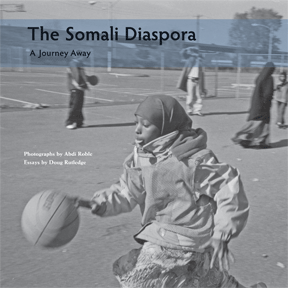
The story of Somali youth who vanished from the Twin Cities, possibly to fight alongside jihadists in their home country, is transforming the normally passionate and sometimes pugilistic debates at Minneapolis coffee shops into quieter introspection.

Now a recurring topic of conversation among Somalis is “reconstructing the community’s tainted image,” said Dahir Awaleh, a 47-year-old small-business owner who frequents the popular Starbucks on Minneapolis’ Riverside Avenue.

“In Minnesota, Somalis are increasingly associated with terrorists,” he lamented, sipping his coffee. “Businesses are raided. Friends and family members are being interrogated by law enforcement agencies. Mosques are under surveillance.”

On a recent Saturday afternoon – a day when the shop’s customers are almost entirely Somali – Awaleh’s remarks drew quick nods from the half dozen Somali men he sat with. They said the unknown number of Somali youth who left the Twin Cities, among other places, to fight in Somalia, are casting the community in a negative light, thanks to alarmist individuals and sensational news media.

“Individuals anointed by the news media as leaders are capitalizing on this tragedy,” said Mukhtar Osman, an engineering student at the University of Minnesota, who was recently held at the airport for hours when he returned from a family visit in Sweden. “My detention is a direct impact of reckless remarks made by so-called community leaders who claim that Somali youth may strike U.S. targets if they return. There’s no shred of evidence for this.”

Osman’s assertion is backed up by law enforcement. Andrew Liepman, deputy director of intelligence at the National Counterterrorism Center, recently told a Senate panel that his agency does “not have a credible body of reporting right now that leads us to believe that these American recruits are being trained and instructed to come back to the U.S. for terrorist acts.”

Self-radicalized?

Though much of the blame for the missing Somali youth has been directed at local mosques, there are signs that the youth, galvanized by the 2006 Ethiopian invasion of Somalia, may have radicalized themselves. Ethiopia’s invasion, widely believed to be supported by the Bush administration, “has attracted the rapt attention of Somali Diaspora communities and heightened their nationalistic sentiments,” Liepman testified before the Senate Homeland Security and Governmental Affairs Committee in March.

Extremist elements like al-Shabaab, a Somali group designated a terrorist organization by the U.S., have exploited the bitter reaction to the Ethiopian invasion and compelled young, despondent Somali men to join their ranks.

As a result, some of the men may have sold assets or worked overtime to pay the airfare to Somalia. A source close to one of the missing young men, Abdisalam, also known as “Bullet-head,” said that he sold his car just a few weeks before he left last year. At least a handful of the vanished youth have had decent paying jobs.

Earlier this month, a young man who uses the pseudonym “Abu Muslim” and claims to be a 23-year-old from Minneapolis, told a local radio station in Somalia that no one had recruited him to fight.

“I chose to join the cause of jihad in my country,” he said in broken Somali, a clear sign that he grew up in the Diaspora.

Also this month, al-Shabaab released a sophisticated 31-minute propaganda video designed to appeal to Diaspora Somalis. The star of the video is a Caucasian man who calls himself “Abu Mansoor,” the American. He commands an English-speaking unit of about two-dozen men, thought to be Somalis bred in the West. A Somali member of the unit, whose face is obscured, says in an American accent that he never thought he’d be leaving the comfort of home to carry an AK-47 in defense of his country.

‘Under Siege’

Whether the missing youth radicalized and financed themselves, or whether certain individuals within the community have actively recruited them, the negative impact of the story can hardly be overstated.

Two weeks ago, FBI agents raided the Minneapolis offices of money transfer business — a key lifeline for millions of Somalis who depend on monthly remittances from loved ones in the Diaspora. Although the offices were not closed, the episode was another blow to a community shaken by fear, confusion and uncertainty.

Special agent E.K. Wilson of the Minneapolis FBI said the raids were part of an ongoing investigation, though he wouldn’t confirm or deny if they were related to the vanished youth.

That uncertainty surrounding the subject of the investigation is bedeviling the community. Returning to Somalia for any reason – marriage, traditional medical treatments or a just to visit family – is cause for intense scrutiny.

“Even people who tried to take vacation from their jobs were asked by their superiors if they were going to Somalia for jihad,” said Abdi Sheikh-Osman, an adjunct professor of law at the University of Minnesota. “Somalis fled a country where the government was the principal enemy. Now they face a similar situation. The community is effectively under siege.”

Back at the Starbucks, many in the crowd said they know countless friends and family members who have been interviewed by the FBI. They also said the news of a grand jury being convened to investigate the matter, while a welcome step, has increased anxiety among them.

Al-Shabaab in trouble?

Ethiopia’s withdrawal from Somalia late last year, a crucial recruiting tool for al-Shabaab, has probably hurt its bottom line, experts said. Left with a popular Islamist as the president of the nascent Government of National Unity and an unfriendly clannish society, al-Shabaab will inevitably see its membership dwindle, experts believe.

“The Shabaab is already in trouble, thanks to the Ethiopian withdrawal,” wrote Ken Menkhause, a Somalia scholar at Davidson College in North Carolina. “It also runs the risk of having its most powerful ideological card – Somali nationalist, anti-foreigner sentiments – turned against it, as domestic adversaries accuse it of being a puppet of foreign jihadists bringing more trouble to the country.”

If such scenario bears fruit, the story of the vanished Somali youth may have reached its climax.

This story first appeared in the Minnesota Independent