Home Blog Page 206

Ghanaian Immigrants Tighten Belts in Economic Crunch

0
Ghanaian Immigrants Tighten Belts in Economic Crunch

NEW YORK – In a store in the Bronx that smells of unrefrigerated raw fish, a middle-aged Ghanaian woman is rummaging in her purse for money.

She, like hundreds of other Ghanaians in New York, comes to money transfer rooms inside African grocery stores like Eddie’s Place, to send money back home to Ghana. But as the economy crashes in the United States, the remittances are shrinking even as the need is as great as ever.

“You hear what my auntie said?” asks Prince, who is manning the money transfer room, its door covered with phone card ads – Home Boy, Black Horse, Hamburger and Bang Bang. “School’s begun in Ghana and she has two kids there. They’re saying ‘Send the money, send the money.’ All her money from this week’s work is going for their school there.” The woman nods in agreement before handing over a stack of mostly $20 bills.

“Take it easy, auntie, take it easy,” says Prince, in a comforting tone, as he counts the $510, including the $10 transfer fee.

“That’s right,” she says, resigned, as she picks herself up and starts to walk out of the store.

It’s a scene that is replicated at money transfer centers across the city. The crisis on Wall Street is trickling down to West Africans sending money to families back home. According to the 2000 Census, 96,000 of the 3 million foreign-born New Yorkers are of African origin. Many of them live in New York City: Highbridge in the Bronx, south of Corona in Queens, or Flatbush in Brooklyn.

When money is short, remittances drop or become less frequent. For those who try and send the same amount home, it means life in the United States gets that much tougher. “Banks’ interest rates have gone down and the cost of living has gone up,” says Ivy Quarshie, secretary general of the National Council of Ghanaian Associations and a projects manager at J.P. Morgan. “Money transfer will continue, but there’s not enough savings.”

According to a report on Ghana by the Department of International Development in the U.K., remittances to Ghana from individuals and NGOs accounted for more than 13 percent of that country’s Gross Domestic Product in 2003. That’s four times the foreign direct investment from multinational companies. Sending money back home is an integral part of the African Diaspora lifestyle and is not restricted to one’s immediate relations.

“In Ghana, when we say family, we talk about wife, kids, siblings, parents, uncles and their families. If every family sends one person out of the country, I say you can save the entire country,” says Ebenezar Nkrumah, a nurse assistant at the Manhattan Eye, Ear and Throat Hospital.

Nkrumah supports his wife, children and parents who live in Tamale, in northern Ghana. But something has got to give. “I owe my landlord rent for two months,” he says.

Local businesses are trying to entice new customers. Family Link Money Transfer matches exchange rates with competitors and has been offering free phone cards for customers after every transaction. People send an average of $100 per transaction according to Nana Owusu-Manu, the firm’s marketing manager. The city’s four options, Western Union, Moneygram, Vigo, and Family Link, all have roughly the same transaction fees. Family Link used to get 35 to 40 customers per day at its head office. That has now dropped to about 15 customers.

But not all remittances go through an agent. “Many people bypass transaction fees by having people at both places,” says Sidique Wai, president of the United African Congress and community relations specialist at the New York Police Department. This is largely facilitated by individuals who travel between the two countries, and can carry cash for friends and family or to a delivery man back in Ghana. Family Link’s Owusu-Manu advises against this. “The black market always causes the exchange rate to fluctuate,” he says, agitatedly, before touting Family Link’s relations with more than 100 Ghana Commercial Bank offices in Ghana.

But despite the difficulties and due to societal pressures, people rarely stop sending money. “They are all building mansions in Ghana but living in small holes here,” says Kweku, the owner of an African grocery store near LeFrak City, Queens. As a result, they are poorer. “Life is not a rehearsal. This is it! Live it out,” says Kweku, trying to advise them.

But many West Africans are pragmatic about the economic crisis. “If money is not injected, it will affect the entire economy,” says Quarshie at J.P. Morgan, feeling that government intervention and market oversight are the right solutions for the future. “You can’t give mortgage loans of $300,000 to someone who makes $20,000. Blame goes all around.”

That won’t address Faustina Larbi’s current predicament though. The caregiver is next in line at Prince’s money transfer counter. “My daughter is getting married, and I have to send $1500. What am I going to do? I’m going cuckoo!” she exclaims.

No News on the Presidential Debate or the Economic Crisis: Just Music for the Soul

0
No News on the Presidential Debate or the Economic Crisis: Just Music for the Soul

With the stock market giving its riders whiplash as it bounced up and down and an unprecedented Presidential race in hot debate last October 15th, Cape Verdean singer, Lura, faced an audience looking for escape.

Dakota Jazz Bar owner, Lowell Pickett, assured the small crowd that they had “made the right choice” in attending Lura’s show.

“You can catch up on the debates later,” said Pickett, “this [show] is better for the soul,” he insisted. 

Lura provided all the necessary elements for a soulful break from politics and financial concern as she performed number after number in her rapturous voice. Wearing a turmeric-colored outfit that bared her shoulders and provided snapshots of her midriff, Lura soared both vocally and visually, moving musically from love notes about her homeland, So Um Cartinha, to Criolla infused music mixed with Congolese dancing as she sang Batuku

In the past as well as on her album, Lura performs with a horn player, but Wednesday evening at the Dakota part of her six-piece band included a violin, instead of a horn.  Its bright sound mimicked a trumpet as it accompanied her.  Guitars and drums also played along, accenting Lura’s splendid voice. 

Lura’s command of the band guided by her femininity showed us the strength of women without brashness or masculinity.  Current social problems and inequality that presently plague Africa also have a voice in Lura’s music in addition to her joyful and celebratory numbers. 

The size of the audience dictated the Dakota’s decision to curtain-off part of their seating area, but that also effectively closed down their dance floor.  Lura’s music is so dance-enticing that roping off dance opportunities seemed a disservice to both the patrons as well as the musicians who gain momentum from a participating audience. Lura’s pointed requests for the audience to join her in singing different songs were met with timidity.

The evening’s somber mood probably would not have lifted markedly even with wider space to move.  However, as Lura sang one song in particular, she tied on a hip wrap, kicked off her high heeled shoes, and rolled her hips in response to her music; her intimate manner with the crowd drew affection.

Besides one pair half-heartedly turning their heels, no one else in the audience joined her spirited dancing, but her sensual, distinctive movements made it easy to forget our troubles as we watched this petite woman from the archipelagos off the west coast of Africa. 

At Last a Curator for the African Gallery at the Minneapolis Institute of Arts

0
At Last a Curator for the African Gallery at the Minneapolis Institute of Arts

On June 9th Dr. Jan-Lodewjik Grootears started working for the
Minneapolis Institute of Arts (MIA) as the curator of its African,
Oceanic, and Native American Art (AONA) department.

This appointment comes after a long period without a curator for the departments and an enthusiastic Dr. Grootears explained that the pros and cons, “I start afresh and don’t have to symbolically kill my predecessor, but at the same time the collection and installation are in poor state and health”.

Unbeknown to many Africans, the MIA has one of the nation’s broadest collections of African art featuring outstanding examples of sculpture, as well as basketry and ceramics. 

The MIA began acquiring art for its AONA galleries from as early as 1928 and continues to do so. In 2007 the museum acquired a rare bronze sculpture made at the height of the Kingdom of Benin culture, between the mid-sixteenth and mid-seventeenth centuries. Also of international acclaim is a large terra-cotta figure of a seated dignitary from the Nigerian Nok culture, which flourished between 700 B.C. and A.D. 300.

As with many African galleries, the vast majority of the objects in the MIA’s collection are from West and Central Africa. Dr Grootaers attributes this to three theories; arts were thought to stimulated by kingship and other political organizations, which were abundant in West and Central Africa, there were more nomadic and semi-nomadic societies in Eastern Africa and these groups had less possessions and lastly, but more important was that the definition of art in Africa was predominantly relegated to masks and statues, which were very common in West and Central Africa.

Realizing that Minnesota is home to a large East African population, Dr. Grootears insists upon the importance of consulting with community leaders on their knowledge of arts in order to successfully carry out his mission to include more objects from that region into the gallery.

Historically, Somalia has been known as a nation of poets and Dr. Grootears says that in conversations that he has had with Somalis here in Minnesota he has found out that the art form still exists. “I would like to incorporate such audio in the gallery and showcase the instruments that accompany this audio,” he explains. Embellished Qurans would also be a great addition he added, but he would seek advice from the community as to whether it would be permissible to have them in the gallery.

Dr. Grootaers, who grew up in Brussels, admits that a career in art has not always been his focus, but he’s always loved art. Prior to his graduate work, he taught biology in Gabon and Zimbabwe for three years. While a PhD student at the University of Chicago, he focused on African anthropology and spent 15 months conducting fieldwork amongst the Zande people in Central African Republic. Even then he still was not focused on art. It was only after working on an exhibit of African Harps in Paris that he considered a career change. For ten years after that exhibit he worked as a freelance curator for many museums and has organized many exhibitions, a skill that he plans to extend to the African gallery. He has also published several catalogs.

So what does a curator do?  Dr. Grootaers explains that a curator oversees the three tasks of a museum; conservation objects that are acquired, scientific research conducted on them as pertains to how they were made and used and finally the showcasing of art to the public. MIA currently has about 350 objects on display in its African gallery a number, which Dr. Grootaers argues is “far too many”. He would like to reduce the collection to 120 so that there’s more to be seen on the objects. These objects were either sold or donated to the gallery.

With regards to the ethical acquisitions of these objects Dr. Grootears comments, “Museums have become more aware of illegally acquired objects in the last 25 years. [They] are following national rules and won’t acquire objects that don’t have export licenses.” The International Council of African Museums (AFRICOM), which is run by African Scholars, is responsible for issuing export licenses for African art.

Burkinabé Artist Finds Talent in Sculpting

0

West African artist Rabi Sanfo has found a home for his metal sculptures in Minneapolis. His art has been on display across the Twin Cities in colleges, museums, art exhibits, and very recently at the Minnesota State Fair.

Born and raised in Burkina Faso, with his eight siblings, Sanfo’s venture into art began with welding when he created wooden furniture at a factory where he worked.

Yet, Sanfo’s true creativity came to life after he relocated to Minnesota.  He produced his artwork in his garage, piece by piece; his creativity knew no bounds. One day Sanfo’s creativity was put to test when he was challenged to create a table with human-figure sculptures for legs, The result was a resounding success that pushed him to begin working on sculptures as an art form. Before long, his sculptures were admitted for display at the Frank Stone Gallery in Northeast Minneapolis, where he sold most of his pieces.

Inspired by his new-found talent, Sanfo has been sculpting successfully for the last couple of years. He now rents an art studio and an office in Minneapolis. On display in his studio is an 18-piece collection titled “Remnants” that he will present at the Science Museum in Chicago.

He draws his talent from a desire to tell stories: stories that his father told him. A fable writer of two unpublished books, Sanfo’s father left him ideas through words. Sanfo has taken these ideas and created a physical narration with sculptures using skills learned from studying engineering and tool making in college.

“As a sculptor I want people to question me, and learn from me about my art,” he says, explaining why his pieces are titled in French, his country’s official language instead of English.

Sanfo describes his work thus, “My art is modern African furniture and decorative objects inspired by my country, Burkina Faso, and Africa in general. Through these pieces, I hope people become more aware of the impressive art history in West Africa.”

Sanfo is on a new quest: he is interested in bronze casting. While on a visit to Burkina Faso earlier this year he began an apprenticeship with a seasoned artist. Adhering to Burkinabé tradition, Sanfo presented gifts to a master of bronze casting and asked for permission to learn the delicate craft. This same tradition also requires a student to be of the same tribe as the master.

This summer an iron piece “The Industrious Cooperative Ant”, which he created for the Minnesota Department of Natural Resources, was celebrated at the Minnesota State Fair. The project whose center piece was an old rusted wheelbarrow was a result of a creation from found objects retrieved from the Mississippi River by Sanfo and other artists.

With several Minnesotan awards under his belt, Sanfo looks forward to displaying his work at Africa’s prestigious International Art and Craft Fair, Ouagadougou (Le Salon International de L Artisanat de Ouagadougou), a trade show held bi-annually in Burkina Faso.

However, nowhere is his art more celebrated than in St. Paul where the University of Saint Thomas uses his piece “Mother Earth” for a Leadership Award Trophy. 

Sanfo’s sculptures can be viewed online at

www.mnartists.org and on his personal blog.

Another harsh Twin Cities Marathon for Elite African runners

0
Another harsh Twin Cities Marathon for Elite African runners

On the morning of October 5th outside the downtown Minneapolis Metrodome, participants in the 27th annual Medtronic Twin Cities Marathon awaited the horn. In comparison to last year’s record high starting temperature of 72 degrees, this year’s 48 degrees was perfect. The day was grey and the weather forecast predicted rain, but everyone was hoping for perfect weather. At 8:00am the runners were on their way, they passed the St. Mary’s Basilica in downtown, a first in the many landmarks along the course with crowds cheering them on.

Because this race was designated by the USA Track & Field to be the USA Men’s and Masters Marathon Championship the cash prizes were heavily slated towards American citizens and as a consequence many top notch elite male athletes were absent. All together there were seven elite African athletes. Richard Kandie, Callen Moraa and Zeddy Chepkoech from Kenya are part of the Duma Runners Club while Simon Sawe, Mary Akor and Macharia Yuot are naturalized U.S citizens who are natives of Kenya, Nigeria and Sudan respectively.

From the start the men kept up a 5 minute mile pace and in the beginning of the race a leading group ran in a tight pack. By the time they had got to Lake of the Isles Kandie was in the lead with Sawe close behind. At mile 7 seven it started to drizzle lightly and by mile 11 it was pounding cats and dogs, by half marathon the pack started to split and the Kenyans had dropped back. At mile 17 Fernando Cabada separated himself from the front pack of three and stayed way ahead of everyone else finishing the marathon in 2:16:32.

Cabada was extremely emotional about the win as he had been having a rough couple of months because of partying and a lack of seriousness. “I gave up a lot and trained really hard,” he said with tears in his eyes, “When things weren’t good, it was the worst time of my life and I don’t wanna go back there,” he added.

For the Africans this was a tough run. Richard Kandie, the first African to cross the finish line, came in 38th and Sudanese-born Macharia Yuot finished 39th while Kenyan-born Simon Sawe dropped out at mile 24. Sawe complained that it got too cold and he was having trouble with his right hamstring.

The women fared much better with Nigerian-born Mary Akor, winner of the gold medal at the grandma’s marathon in June, finishing fourth despite running on an injured hamstring. “It was really cold and I am used to running in warmer weather,” she said. “I like the kind of weather we had at Grandma’s, but I had to finish the race because last year I dropped out,” she added.

Kenyans Zeddy Chepkoech and Callen Moraa finished 10th and 22nd respectfully. They too complained about how cold the weather was, as most of them are used to running in much warmer climates.

There were many local African marathoners and it was a first for Kenyan, Grace Ngunu and Ethiopian, Samuel Kidane. Ngunu who was running to raise money for a slum in Kiandutu, clocked an amazing time of 3:38:18 and qualified to run the Boston Marathon. Both admitted that the marathon was one of the toughest things they ever had to do and while Ngunu is unsure about participating in the Boston marathon, Samuel is sure he won’t be running another marathon for a long time.

Senseless Murders: Somali on Somali Gang Violence

0

Starting a new life in America is already a challenge for many immigrants as they struggle to make ends and to culturally adjust to a foreign culture. And now something else is making the lives of Somalis in Minnesota more stressful—gang violence that has taken hold of youth as one death is avenged for another, and then more. 

In less than a year six young men have been killed, three of them have lost their lives in one week – all young men between the ages of seventeen and thirty. Worst still neither the Somali community nor the authorities are doing enough to stop further senseless killings.

Sadly, there seems to be a dichotomy in the glorification of violence in everyday life and the reality of the consequences that arise from constant exposure to violence. In the US, and many western countries, violence is glorified. It is present everywhere you look— on television, movies, computer games and even cartoons. 

It is no wonder then that the Center for Disease Control (CDC) reports astonishing numbers on crimes of violence among American youth. CDC reports that in 2003, 5,570 young people ages 10 to 24 were murdered, averaging 15 deaths each day. These statistics also show that in 2004, more than 750,000 young people between the ages of 10 and 24 were treated for injuries sustained due to violence. Yet with these staggering facts, the U.S. continues to treat youth violence as normal crime and not as an epidemic. 

Finding a solution to deter youth violence is certainly no small feat. For immigrants past experiences in their countries of origin coupled with a lack of knowledge or understanding of the US legal system compound curbing violence in the immigrant community. All the same, it is vital that new American communities, neighborhoods, law enforcement agencies and cities and states work together to address social ills and save our children. Together, they must gain understanding and expose the problem. 

It matters little what neighborhood one lives in; no one is immune or protected from crimes, petty or not, what happens in one area impacts the whole community.  

The Dalai Lama, wisely said, “If you wish to experience peace, provide peace for another.”

It is essential that we start to discuss approaches to prevent violence: increase public awareness on conflicts, strengthen government programs and bring together community leaders, law enforcement and legislators to fight against youth violence.  No –it’s not only Somalis problem!

Somalis are part of this greater community; they are part of the extended Minnesota family. Somalis are as concerned as the larger Twin Cities community about the violence that is plaguing our youth. 

It is imperative that we all understand that it takes time for an infant to crawl. While Somalis learn and start to assimilate into mainstream America, other stakeholders must step up their efforts and find ways to reach out to the community and prevent further mayhem in our city and communities. We must stand together in solidarity and as one community steadfastly address this dilemma.

As citizens and tax payers, Somalis deserve similar attention afforded to their needs. The police must find a way to penetrate and gain the trust of this community. Social programs that educate and engage the Somali community must be strengthened. Criminals must be persecuted to the full extent of the law. Ignorance should not be a defense to a crime. We must also prosecute family member who facilitate/support a crime or obstruct justice.

Finally, let us heighten our efforts to give this issue the elevation it deserves. There are media campaigns against public health concerns such as obesity, however, there is very little on violence and drugs.

Continuing to ignore this epidemic will truly risk the safety of our communities. When we address violence and drugs as public health concerns then we are bound to address the issues appropriately that will result in peace.

Law enforcement agencies must establish themselves in the community so that the community can trust them enough to give information on perpetrators of crime. Dorothy Thompson was quoted to have said “Peace is not the absence of conflict but the presence of creative alternatives for responding to conflict.” Let us be creative and tenacious to bring these criminals to justice and off of our streets.

Our children, who are our future, are vanishing right in our eyes. The prosperity of any community’s depends on not only how well they integrate into the mainstream but also how well their children do in life.

The Somali community must take responsibility of its youth. We waste precious time keeping a united front instead of fighting this social ill. We need to organize small and while doing so continue to do all we can to prevent further killing or hurt in our community. Start by saying ‘far too many, these mindless killings must end.’ 

We must find peace in our street and neighborhoods. We must work hard to see our children and their children’s children grow into responsible adults.

As Croesus argued “In peace the sons bury their fathers, but in war the fathers bury their sons”.
 

Opinions expressed by Mohamed Hassan are his own and do not reflect the opinions of Mshale.

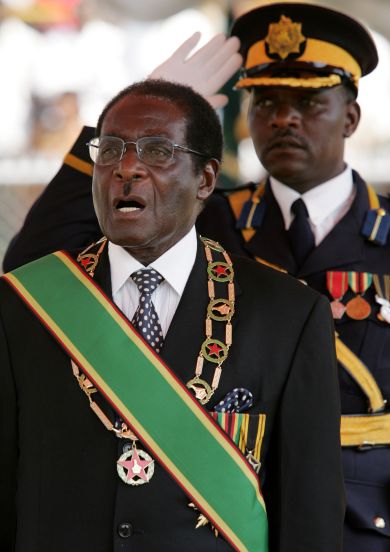
Mugabe, Zimbabwe First

0
Mugabe, Zimbabwe First

In a democratic set-up, governments are “instituted among people to derive their just powers from the consent of the governed.”

You may even go further and call it a dictatorship of the majority that creates opportunities for the interests of the minorities.

You are a liberation war hero, no one questions that. The Unilateral Declaration of Independence by Ian Smith that went unpunished by the British created conditions for a peoples’ revolution which you championed and won! I say Bravo!

The British defaulted in the Lancaster House Agreement as far as paying compensation to “white settler farmers” whose land was to be re-distributed to the indigenous landless Zimbabweans. We still hold Britain accountable for this foul play!

We know for a fact that some 4,400 whites owned 32% of Zimbabwe’s most arable and fertile agricultural land while millions of African Zimbabweans were living in semi-arid parts of the land in smallholder plots accounting for only 38% of the available farm land. This disproportionate land ownership, – was and is – unacceptable!

The African Union (AU) supports your uncompromising position on the land question and respects your country as a sovereign state.

Comrade Mugabe, you have remained in power for 23 years and you are 84 years old now. Think about it. I know your bitterness stems from history, for instance being jailed for 10 years without trial before you were able to seek refuge in Mozambique from where you launched a come-back guerilla war that gave you the Presidency.

You brought neo-colonialism to their knees in Rhodesia in 1979 by the Lancaster House Agreement that gave you a hero’s welcome to your motherland Zimbabwe. We have not forgotten all that. It is part of your legacy and history and our great grandchildren will read about it and thank you for your sacrifices.

The younger generation has seen how elections were conducted in Zimbabwe in the recent past. For all intents and purposes, it looked like a power-sharing deal between Zanu-PF and Movement for Democratic Change (MDC) was struck, Kenya-style!

This union should give you breathing space to look for an honorable exit strategy.

Africa does not want to have another Dr Hastings Banda (the Malawi experience)!

Ousted President of South Africa, Thabo Mbeki, helped broker the power-sharing deal and Zimbabweans breathed a sigh of relief when things appeared to come to a good conclusion. They saw hope of living in peace and would then work with the international community to address the global economic meltdown that has been hurting every one, and more so Zimbabweans!

Your election re-run, boycotted by the opposition, that gave your Zanu-PF party 147 of the 150 parliamentary seats, is no justification to monopolize power and disregard the gentlemanly negotiated power sharing agreement with your opponent Morgan Tsvangirai.

Giving most sensitive cabinet posts to your party – contrary to the spirit of the power sharing agreement – does not sound right!

Comrade Mugabe, have you forgotten that in the national referendum, you did not win? As a Roman Catholic, spiritually anti-gays and a man with seven degrees, are you not capable of telling when the time has come for you to prepare a successor who will keep the revolution you started alive?

How will you benefit if the major export commodity of your country – tobacco – continues to decline leading to rising joblessness? The war-like situation in the land has contributed to a looming famine with about 5 million of your people having to resort to food-handouts!

Comrade Mugabe, I know you have a few friends in the African Union, and some European powers like France have stood with you. Your one-year suspension from the Commonwealth could be over, but some white settler farmers are attracting sympathy as they consider themselves Zimbabweans now being discriminated due to the color of their skin!

I am not sure that the wounds of presumed apartheid Zimbabwe can be healed through outright revenge. There has to be a middle-road that will minimize the suffering of Zimbabweans both white and black.

Military control and police brutality is not the right way to go. Listen to the Zimbabweans. Give them what they want to lessen their present suffering. Certainly, your historical role will not diminish if you transition in a good successor and no-one will put you on trial in an international court for human-right violations.

The history of Zimbabwe has been very complex. You have done your share and it is time for you to go and allow a member of the younger generation carry forward from where you stopped. Please do this for the sake of Zimbabweans and retire in peace and dignity. Devote your time to work for meaningful African unity!

If you do not do what is right for you now to lessen the suffering of your people, I can see an unstoppable wave of another revolution that will sweep you out of power in disgrace. Make the right move now for the sake of Zimbabweans and for the sake of your lasting legacy – Mandela style!

Circumcision Cuts HIV Infection in Heterosexual Men

0
Circumcision Cuts HIV Infection in Heterosexual Men

For well over two decades now, Sub-Saharan Africans have been fighting the insidious spread of HIV with everything from latex condoms and faith-based programs to an array of drug cocktails, yet the disease has continued unabated.

For well over two decades now, Sub-Saharan Africans have been fighting the insidious spread of HIV with everything from latex condoms and faith-based programs to an array of drug cocktails, yet the disease has continued unabated.

Help may finally be on its way.

Health care providers and HIV prevention advocates are now putting their hopes in a mundane and low cost, but powerful weapon against new infections: male circumcision.

Trials in Kenya, Uganda and South Africa have now demonstrated that male circumcision can reduce the rate of HIV infection in men in heterosexual relationships by 50 – 60 percent.

Experts are hailing this as a significant breakthrough, so much so that the United Nations Joint Programme on HIV/AIDS (UNAIDS) has recommended that the provision of safe circumcision services be increased in countries with high HIV prevalence. UNAIDS is encouraging African governments to prioritize medically supervised circumcision of HIV uninfected men between the ages of 12 and 30 years old.

When asked about a universal circumcision policy here in Minnesota, where the Department of Health 2007 surveillance data showed that African American and African-born males account for 32 percent of new HIV diagnoses, even though they make up only five percent of the state’s male population, Dr. Richard White, a HIV prevention researcher, was a little circumspect.

“There is no doubt that male circumcision is an exciting and important HIV prevention strategy, and is being successfully scaled up in many populations. But male circumcision is also sometimes associated with strong cultural and religious beliefs so it should never be imposed and, if it is promoted, must be done in a culturally sensitive way, and with ethnic communities that find the practice acceptable.”

“Minnesota does not have a universal male circumcision policy,” said Peter Carr, Director of HIV/AIDS at Minnesota Department of Health.

“If we identified a trend in a particular community, our approach would be to implement targeted promotion efforts, and consult with providers that service the African and other minority communities to find culturally-relevant solutions.”

Melanie Bacon, a Nurse Consultant at the National Institute of Allergy and Infectious Diseases (NIAID), part of the National Institutes of Health (NIH) said, “The objective here is to see male circumcision as part of a comprehensive prevention toolkit which includes the correct and consistent use of condoms, abstinence and the reduction of sexual partners.”

“It is important that proper messaging accompanies any HIV intervention strategy”, said Bacon, who is the Medical Officer for both of the male circumcision trials funded by NIAID.

According to the NIH, among the 2,784 men who participated in the study in Kenya, some for as long as three and a half years, 62 percent contracted HIV while uncircumcised and only 27 percent have acquired HIV after circumcision. It is estimated from the study data that circumcision cuts a man’s risk of HIV infection by 64 percent.

Dr. White, who is Mathematical Epidemiologist at the London School of Hygiene and Tropical Medicine warned, “Male circumcision is not a vaccine. Even if you are circumcised, if you continue to have unprotected sex with an infected person, you are still likely get HIV in the end. Male circumcision does not provide complete protection and circumcised men should still be encouraged to use other prevention choices available to them, such as condoms.”

Bacon said HIV targets cells that are very close to the inner surface of the foreskin, so taking out the foreskin reduces the potential of being vulnerable to HIV infection. She said the foreskin may trap the virus close to the vulnerable target cells, providing a greater chance for access; additionally, during sex there are often tiny microscopic tears that can be an entry point of the virus, by removing the foreskin as a result of circumcision, you are better protected.

When AIDS first began to surface as a pandemic in Arica, researchers noted that men who were circumcised seemed to be less likely to be at risk of being infected. Groups that circumcised boys tended to have lower HIV rates than those that did not, and that Africa’s Muslim countries, where circumcision is the norm, had fewer AIDS cases than predominantly Christian countries. However it was really difficult to tell if it was circumcision that was the cause or other differences between the groups, such as differences in sexual behavior.

The first definitive evidence came in 2005 from French AIDS researchers, when a “randomized-controlled” trial was carried out in South Africa. One group of males was randomly assigned to be circumcised, and one group left uncircumcised. Then researchers waited while the men went about their normal lives. The trial was a success, so successful in fact that it was halted prematurely – the men who had been circumcised were 60 percent less likely to have gotten HIV than the men who were uncircumcised.

Then in December 2006, two similar studies in Uganda and Kenya were stopped early by the NIH, again because they were so successful, male circumcision was shown to prevent HIV acquisition through heterosexual intercourse.

In an interview from his office in London, Dr. White said, “This is one of the most effective intervention strategies in the fight against HIV – three trials in three countries among three separate populations – all have shown exactly the same thing!”

Male circumcision should also benefit women.

“If the prevalence of HIV infection falls over time in men because more men are circumcised, then women will benefit because their partners will be less likely to be infected with HIV. Women of circumcised males should also benefit because they will be less likely to get other sexually transmitted infections,” said Dr. White.

The picture is not so clear for men who have sex with men. Dr. White said that circumcision is unlikely to protect against HIV during receptive anal sex, and therefore men who have sex with men are likely to benefit less.

Keys to Providing Health Insurance Benefits

0

Employee benefits play an increasingly important role in the lives of employees and their families, and have a significant financial and administrative impact on a business. Most companies operate in an environment in which an educated work force has come to expect a comprehensive benefits program.

Indeed, the absence of a program or an inadequate program can seriously hinder a company’s ability to attract and keep good personnel. Employers must be aware of these issues and be ready to make informed decisions when they select employee benefits.

Designing the right benefit plan for your employees is a complex task. There are many issues to consider, including tax and legal aspects, funding, and finding the right vendors or administrators.

TIP: You may want to contact your insurance carrier, broker, or benefits consultant for assistance in designing and implementing your benefit plan.

What Is An Employee Benefit Plan?

An employee benefit plan protects employees and their families from economic hardship brought about by sickness, disability, death or unemployment. It also provides retirement income to employees and their families. And it provides a system of leave or time off from work.

Mandated Benefits
The employer must pay in whole or in part for certain legally mandated benefits and insurance coverage:
•    Social Security.
•    Unemployment insurance.
•    Workers’ compensation.

Funding for the Social Security program comes from payments by employers, employees and self-employed persons into an insurance fund that provides income during retirement years. Full retirement benefits normally become available at age 65. For younger individuals the date for maximum benefits is being adjusted to age 67. Other aspects of Social Security deal with survivor, dependent and disability benefits, Medicare, Supplemental Security Income and Medicaid.

Unemployment insurance benefits are payable under the laws of individual states from the Federal-State Unemployment Compensation Program. Employers contribute to the program based on total payroll.

Workers’ compensation provides benefits to workers disabled by occupational illness or injury. Each state mandates coverage and provides benefits. In most states, private insurance or an employer self-insurance arrangement provides the coverage. Some states mandate short-term disability benefits as well.

Note: Workers’ compensation is offered, but not mandated in Texas. However, it’s important for employers in all states to have workers’ compensation coverage because it limits a business’ liability for job-related injuries.

Optional Benefits

A comprehensive benefit plan can include the following elements:
•    Health insurance.
•    Disability insurance.
•    Life insurance.
•    A retirement plan.
•    Flexible compensation (cafeteria plans).
•    Leave.

A benefit plan can also include bonuses, service awards, reimbursement of employee educational expenses and prerequisites appropriate to employee responsibility.

In this article, we will cover the topics of Health and Dental Insurance only.

Medical and Dental Plans
A serious illness or injury can be devastating to an employee and his or her family. It can threaten their emotional and economic well-being. Thus, adequate health insurance is important to employees and is part of a solid group plan.

Group health plans help attract and keep employees who can make your business a success. They relieve your employees of the anxiety of health care costs by providing the care they need before illness becomes disabling, thus helping you avoid costly employee sick days.

Group health plans usually cost less than purchasing several individual policies with comparable coverage. Moreover, there are tax advantages to offering health care benefits: your contribution as an employer may be deductible and the insurance is not taxable income to your employees.

As an employer, you can choose either an insured (also known as an indemnity or fee-for-service plan) or a pre-paid plan (also known as a health maintenance organization).

Traditional Indemnity Plans. An indemnity plan allows the employee to choose his or her own physician. The employee typically pays for the medical care and then files a claim form with the insurance company for reimbursement. These plans use deductibles and coinsurance as well.

A deductible is a fixed amount of medical expenses an employee pays before the insurance plan reimburses any more expenses. The deductible can range from $100 to $1,000 a year. (High Deductible Health Plans, known as HDHP, are covered under Health Savings Accounts.) Coinsurance is a percentage of medical expenses the employee pays, with the plan paying the remaining portion. A typical coinsurance amount is 20%, with the plan paying 80% of approved medical expenses. Listed below are the most common types of insurance arrangements (indemnity plans) providing health care to groups of employees.

•    A basic health insurance plan, covering hospitalization, surgery and physicians’ care in the hospital.
•    A major medical insurance plan, usually supplementing a basic plan by reimbursing charges not paid by that plan.
•    A comprehensive plan, covering both hospital and medical care with one common deductible and coinsurance feature.

Health Maintenance Organizations

Health maintenance organizations (HMOs) provide health care for their members through a network of hospitals and physicians. Comprehensive benefits typically include preventive care, such as physical examinations, well baby care and immunizations, and stop-smoking and weight control programs.

The main characteristics of HMOs are as follows:
•    The choice of primary care providers is limited to one physician within a network; however, there is frequently a wide choice for the primary care physician.
•    There is no coverage outside the HMO network of hospitals and physicians.
•    Costs are lower, due to limited choice. Physicians are encouraged to keep patients healthy; accordingly, they often are paid on a per capita basis, regardless of how much care the patient needs.
•    The employer prepays HMO premiums on a fixed, per-employee basis.
•    Employees do not have to apply for reimbursement of charges, but they may have small co-payments for medical services.

Preferred Provider Organizations.

Preferred provider organizations (PPOs) fall between the conventional insurance and health maintenance organizations, and are offered by conventional insurance underwriters. A PPO is a network of physicians and/or hospitals that contracts with a health insurer or employer to provide health care to employees at predetermined discounted rates.
Some of the key elements of a PPO are:
•    It offers a broad choice of health care providers. Because of the broader choice of providers, PPOs are more expensive than HMOs.
•    It may have less comprehensive benefits than HMOs, but the benefits usually can meet almost any need.
•    PPO providers usually collect payments directly from insurers.

Although there is no requirement for employees to use the PPO providers, there are strong financial reasons to do so.

Dental Benefits. Medical insurance frequently includes dental plans. Most plans cover all or portions of the cost for the following services:
•    Cleaning, x-rays and oral examinations.
•    Fillings.
•    Crowns and dentures.
•    Root canals.
•    Oral surgery.
•    Orthodontia (these portion of the cost covered here are generally quite limited, if at all)

Health Savings Accounts

The Health Savings Account(HSA) is considered an alternative to traditional health insurance. It is a savings account that offers consumers a way to pay for medical expenses. You own and control the money in the HSA and can determine how to spend the money.
You must be covered by a High Deductible Health Plan (HDHP) to take advantage of HSAs. For 2008, to qualify for the HSA, your minimum deductible in your HDHP must be at least $1,100 (single coverage) or $2,200 (family). These minimum deductibles increase to $1,150 (single) and $2,300 (family) for 2009.

The HSA allows employees to deduct contributions to the HSA even if they do not itemize deductions. For 2008, the maximum annual HSA contribution for an individual is $2,900 and for a family, it is $5,800. (These contribution limits increase in 2009 to $3,000 and $5,950, respectively.) The HSA plan allows employees who are covered by a high-deductible health plan to contribute pre-tax amounts that will be used to cover medical expenses or used later for retirement. Qualified amounts contributed to an employee’s HSA by an employer can be excluded by the employee. Distributions from the HSA are not taxable as long as they are used for medical expenses.

Balancing Cost, Quality And Accessibility
In summary, when deciding on a health plan, consider what you and your workers want in a plan. Determine all costs associated with the plan. Investigate the quality of potential insurance carriers.
•    Examine the quality of each plan, including the benefits and restrictions.
•    Hospital coverage (inpatient care).
•    Outpatient services.
•    Physical coverage.
•    Substance abuse treatment.
•    Prescriptions.

Check on underwriting and other restrictions that may exclude you from the health plan:
•    Employee medical histories.
•    Minimum employer contribution.
•    Minimum participation by eligible employees and dependents.

Waiting periods.
•    Proof of employee status.
•    Purchase of other benefits.
•    Other limitations – what isn’t covered.

Check on the extent to which your company can control costs. This might include prior review of hospital admissions to determine necessity of hospitalization. Or it could mean concurrent review of hospital stays to confirm continuing need of hospitalization.

Management programs for catastrophic cases might be used. These programs arrange for the most cost-effective care.

Planning Pointers
Before you implement any benefit plan, you should ask yourself some questions:
•    How much are you willing to pay for this coverage?
•    What kinds of benefits interest your employees? Do you want employee input?
•    What do you think a benefits plan should accomplish? Do you think it is more important to protect your employees from economic hardship now or in the future?
•    Do you want to administer the benefits plan, or do you want the administration done by an insurance carrier?
•    What is your employee group like today? Can you project what it might look like in the future?

You now have some basic benefits information as well as the basic questions that need answers before you go benefit shopping for your employees.

An adequate benefit program has become essential to today’s successful business, large or small. With careful planning you and your employees can enjoy good health and financial protection at a cost your business can afford.


Preserving Lawful Permanent Resident Status

Occasionally, a U.S. Lawful Permanent Resident (“LPR”) may choose to be absent from the United States frequently and/or for extended periods of time due to business or family demands.  Frequent and/or extensive absences from the United States may cause an LPR to jeopardize the validity of his or her green card.


Prolonged Absence from the United States


Generally, if a trip abroad did not exceed a year, an LPR can present his or her green card at a port of entry to be able to return to the United States.  However, if the LPR was absent from the United States for over six months or has abandoned his or her LPR status, the U.S. government will regard such foreign national as “seeking admission” to the United States.  “Seeking admission” is a special term in Immigration Law.  It means that to be able to enter the United States, a foreign national has to satisfy certain statutory criteria including establishing that he or she is not afflicted by a communicable disease (e.g. tuberculosis); is not a serious criminal; does not present a national security threat; is not likely to be on public assistance; etc.  


Ultimately, whether one has abandoned his or her LPR status turns on a green card holder’s intent to return to the United States rather than the length of time spent abroad. 


Under the Immigration and Naturalization Act (“INA”), an LPR who returns to the United States is a “special immigrant.”  INA defines “special immigrant” as “an immigrant, lawfully admitted for permanent residence, who is returning from a temporary visit abroad.”  Courts use the following test to determine whether a visit abroad was temporary.  A visit is considered temporary if it was:


  • for a relatively short period, fixed by some early event, or


  • the trip will terminate upon the occurrence of an event that has a reasonable possibility of occurring within a relatively short period of time.

If the length of the visit depends on the occurrence of an event and is not fixed in time, and such event does not occur within a relatively short period of time, the U.S. government will consider the visit temporary only if the foreign national has a continuous, uninterrupted intention to return to the United States during his or her time abroad.  The following is a list of factors that will be used to determine whether the green card holder’s intent to return was continuous and uninterrupted: the alien’s family ties; property holdings; business affiliations within the United States; the duration of the alien’s presence in the United States; the alien’s family, property, and business ties in the foreign country.


Preservation of LPR Status


A green card holder who has been absent from the U.S. for an extended period of time will have to establish at the port of entry that his or her definitive intent to return to the United States is corroborated by extensive ties to this country (e.g. real estate ownership in the United States, payment of taxes, presence of family members in the United States, and employment). One worst-case scenario is that the foreign national will be issued a Notice to Appear in immigration court, where he or she will have to establish LPR status before an immigration judge.


Viability of Re-entry Permits


A re-entry permit can be issued for a period of two years.  The application has to be filed in the United States, and the applicant has to be fingerprinted before he or she leaves the United States.  If the LPR departs from the U.S. before he or she is fingerprinted, the U.S. Citizenship & Immigration Services (“CIS”) may consider the application abandoned. The LPR, however, does not need to wait in the U.S. until the application is approved.


It is a common misconception that the re-entry permit will completely immunize a foreign national from losing their LPR status.  The re-entry permit only prevents a Customs and Border Patrol (“CBP”) official from finding abandonment of LPR status relying solely on the duration of absence while the permit is valid.  A CBP official may still investigate a lengthy absence to find out whether the foreign national’s activities (e.g. crimes) make him or her inadmissible.


Although the re-entry permit is not a guarantee against CBP’s finding the abandonment of LPR status, it strongly indicates the foreign national’s intent to return to the U.S. on a permanent basis.


Tax Implications for LPRs


Failure to file a tax return as an LPR or filing a tax return as a non-resident can have an adverse impact on LPR status and the possibility of acquiring U.S. citizenship (naturalization).  Even if an LPR does not have income in the United States but has earnings abroad, he or she is required to report income on a U.S. tax return as a resident to avoid negative immigration consequences.


Conclusion


When contemplating lengthy or frequent trips abroad, LPRs should be aware that the re-entry permit is not a guarantee against losing LPR status because of frequent absences from the United States. Ultimately, it is the LPR’s intent to return to the United States, as evidenced by the ties to this country, and not the length of a trip overseas that will determine whether or not a green card holder has abandoned his or her lawful permanent resident status. 


Nothing in this article should be taken as legal advice for an individual case or situation. The information is intended to be general and should not be relied upon for any specific situation. For legal advice, consult an attorney experienced in immigration law.

Minnesotan Africans Engage in Local Politics

0

This year, African volunteers and political activist are rallying behind Democrat presidential nominee Barack Obama. Other Democrat candidates in Minnesota are also receiving wide support financially and in human resources.

(Read here on Keith Ellison and Al Franken’s recent meeting with Somalis in Minneapolis.)

Nimco Ahmed, a Somali American political activist, is the campaign manager for Jeff Hayden, a DFL candidate running to represent South Minneapolis, in the Minnesota State Legislature. Hayden, an advocate for affordable housing and a community activist, is running against Republican Kirsten Lindberg and Green Party candidate Farheen Hakeem. The seat was previously held by Neva Walker, who was the first African American to serve in the Minnesota Legislature, did not seek re-election.

Hayden’s priorities if elected: environmental sustainability, supporting single payer health care, strengthening public schools, jump-starting economic development and creating affordable housing all issues that are pertinent to immigrants.

Another candidate who has received a lot of support from the African community is marine and Iraq war veteran Ashwin Madia who is running for US Congress in the Minnesota’s 3rd congressional district. A son of Indian immigrants who settled in the US with almost nothing, Madia has inspired many immigrants with his fast rise in politics.

Presidential Race
Africans for Obama
Over the course of the campaign, Mshale has covered the African immigrant community’s support (here and here) of presidential candidate Senator Barack Obama.

“It is important that African immigrants become politically engaged in their adopted country as they are as American as the next American,” saidSiad Ali, the African Immigrant Political Coordinator for the Obama campaign.

Also a Somali-American Ali says that their work as volunteers is two-fold; to educate immigrants on their right to vote, and to let them know that Obama is the candidate who will best meet their needs. Ali organizes town hall meetings with local political campaign leaders and community members.

At one such gathering Obama campaign’s Minnesota Political Director, Dominic Washington said: “Immigrants have proved that they are a force in politics, locally and in the national campaign.”

Washington attributes the excitement of Africans in Minnesota to the same reasons that have drawn the rest of the country to Obama: “Senator Obama is connecting with people who are tired of politics as usual and want real change.”

Ali’s team of volunteers is made up of Africans from different backgrounds so that they can reach out to the different African immigrants. As part of their town hall meetings, they have music and short voter education skits that are spoken in vernacular language in an attempt to reach even those immigrants who barely understand English.

Victor Abalo, a Togolese American, is one of the campaigns African outreach field coordinators. He has held debate parties to engage African immigrants in the political process.Abalo makes himself available for the state, and has even flown to other states when he has identified a need of volunteers.

Sabad Jama is excited about campaigning: whenever she is not working, or taking ESL (English as a Second Language) classes, she is out on the streets door knocking and chatting with other Somalis on the importance of their vote for Obama. Her biggest draw to him? His economic policy.Jama , an immigrant from Somalia works as a janitor in Minneapolis. She looks forward to working in the health care sector as soon as . She sitesObama’s American Opportunity Tax Credit as further incentive to vote for him. Obama has promised to offer college students a $4,000 credit that will make tuition almost free for community and state colleges.

Another volunteer, Muna Noor a political activist who works with SEIU Local 26, a union that represents janitors, security officers and window cleaners, is eager to experience “the positive domino effect on the larger community due to Obama’s presidency.”