Home Blog Page 208

Why are African Immigrants Settling in Minnesota?

0

According to Wynfred Russell: “the end of the Cold War created a vacuum in Western strategic interest in Africa […] into this vacuum rushed humanitarianism and its twin, liberal human rights, as alternative guiding lights for Euro-American foreign policy.”

Russell, the director at the Center for Multicultural Services at Normandale Community College gave a presentation at the Africa Today Conference to explain why Minnesota is particularly attractive to refugees.

African immigrants in Minnesota leave their countries of birth for a myriad of reasons including: “civil war, ethnic/religious violence, human rights violations, poverty and economic depravity, political repression, educational advancement and economic opportunities. “

Russell attributes the large settlement of refugees to the presence of ten refugee humanitarian organizations in Minnesota who settle refugees here through the American Refugee Resettlement Program. (See diagram for the largest of these humanitarian organizations) These organizations he asserts are aggressive in resettling refugees in Minnesota:  “they ambulance chase refugees.”

The cycle, he says, continues because these organizations need to continue receive funding to stay in business so they settle refugees in Minnesota so that they (the organizations) can offer services, such as trauma therapy, cultural adjustment among other social services to these new Americans.

Russell observed that “unfortunately, many people make money in the name of helping poor people.”  He also said that not all humanitarian organizations and people were out to make money out of refugees.

Once refugees are settled through the American Refugee Resettlement Program, they bring in their families and soon a thriving community begins to establish itself; another reason explaining the large number of refugees in Minnesota.

Following his presentation, the audience engaged in a lively debate on the fate and success of refugee settlement. Most notably was the frustration of many refugees expressing the challenges of accessing the professional job market.

Russell agreed, “Underemployment is a serious problem in Minnesota among Africans. My maternal uncle was an engineer in Liberia, he now works as a janitor at HCMC. His Liberian educational credentials are not recognized.”

A social worker in the audience attempted to address the underemployment issue: food processing, and textile industry have been instrumental in hiring refugees. As for professionals, many of these refugees have lost all paper trail on their education, and professional background, and it is impossible for them to get professional jobs.”

An elderly American man also said that with a failing economy it is harder for older individuals, foreign or not, to get jobs matching their qualifications.

Many immigrants “take the first job that comes to them because they need to sustain their families.”

Africa Today Conference: In Search of Pathways towards Working Governance

0

African countries need to develop a hybrid of governing styles to achieve modern-day democracies was the consensus at a recent conference in St. Paul.

Tom Gitaa, the founder and publisher of Mshale Newspaper, who was the keynote speaker urged African governments to re-democratize.

“African countries should use old African democracy processes that were participatory and consultant in nature.” Gitaa said that a combination of traditional African governments, and Western-style democracies would take Africans away from the current myriad of problems that have affected the continent following independence.

“Colonialism interrupted democracies in Africa,” Gitaa said. On the other hand, Gitaa warned Africans against putting all blame on colonialists.

“Some of our problems have nothing to do with the West. Some of these are internal problems, and the underlying fight for power and resources.”

Following his speech, Gitaa engaged other community leaders in a discussion on the success and potential challenges faced Africa in its adoption of such hybrid governments.

Professor Mahmoud El-Kati from Macalester College was curious about how African governments would make progress. “People tend to put too much faith in government. How does Africa see that they build a positive civil society?”

Gitaa recognized the growth of civil societies in many parts of Africa including Nigeria, Ghana and Kenya, these organizations he says, have been instrumental in highlighting ills of government. Gitaa urged Africans in the Diaspora to identify and finance constructive civil societies in their countries of birth.

“It [the growth of civil society] has to be forced, because members of the civil society become the face of change, and are many times terrorized by their current governments.”

A Liberian man in the audience was concerned that “there is a conflict between Western and indigenous communities.” He complained that while Liberia was on a path to democratic and economic growth, many of the indigenous communities are still struggling to enjoy this growth.

“The second scramble for Africa is in Liberia as it is rich in resources. Liberians living in the Diaspora are one of the most educated groups of people in America, so their initiatives to invest in the local economies of their countries will direct money towards development of the country,” said Gitaa.

A member of the audience was skeptical about using European/Western democracies as models of working democracies. He warned, “Neo-colonialists are much more insidious; foreign think-tanks and non-government organizations in many African countries have little input from indigenous communities.”

This conference, Western or Indigenous Democracy: What is the Choice for Africa? was hosted by Africa Today, an organization that describes itself as a “a financial relief organization with the purpose of assisting African communities with diminishing health, education, and economic development.”

The conference highlighted the need for African governments to begin work towards finding a working governing solution.

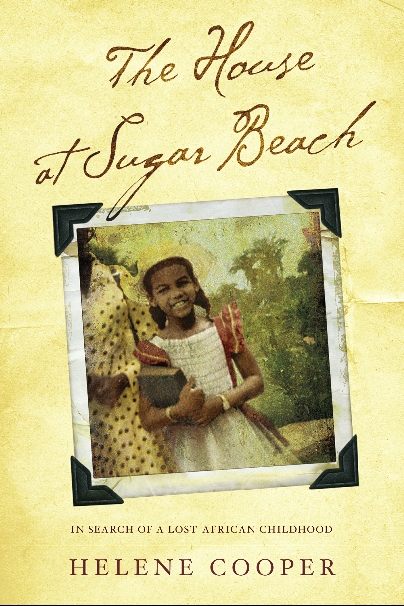
Book Review: The House at Sugar Beach

0
Book Review: The House at Sugar Beach

“For years the Cooper daughters—Helene, her sister Marlene, and Eunice—blissfully enjoyed the trappings of wealth and advantage. But Liberia was like an unwatched pot of water left boiling on the stove. And on April 12, 1980, a group of soldiers staged a coup d’etat, assassinating President William Tolbert and executing his cabinet. The Coopers and the entire Congo class were now the hunted, being imprisoned, shot, tortured, and raped. After a brutal daylight attack by a ragtag crew of soldiers, Helene, Marlene, and their mother fled Sugar Beach, and then Liberia, for America. They left Eunice behind.”
                                           -The House at Sugar Beach – front flap

Minneapolis, MN—Liberian-born Helene Cooper, author and diplomatic correspondent for the New York Times, was here on a promotional tour of her book “The House at Sugar Beach: In Search of a Lost African Childhood.”

The more recent bloody civil war, 1989-2003, involving Charles Taylor and President Samuel Doe is usually what most people are reminded of when Liberia is mentioned. That period in Liberia’s history eclipsed the previous coup d’etat, of President Tolbert, in 1980, and the murder of members of his regime led by Samuel Doe and fellow soldiers of the Liberian Armed Forces. It was a critical time in the history of Liberia and many Liberians still carry the deep scars—emotional and physical—of that dark period.                                                                                                                                                          

Helene Cooper’s Sugar Beach tells a Before and After story of her life around the April 1980 change in regime. Cooper’s memoir relates the story of a privileged childhood linked to the bloodline of Elijah Johnson, one the first American freed slaves that chose to return to Africa, fleeing slavery and a life of racial discrimination. As one of the founding families of Liberia, the Coopers were part of the minority Americo-Liberian elite ruling class that monopolized political power and restricted voting rights of the indigenous population. They dominated all sectors of Liberia until April 12, 1980. Life for Helene went from that of a privileged princess who lived with her family in a 22-room custom-made beachfront home with servants and private school, to that of an “African refugee” in Knoxville, TN, where she lived in cramped apartments and struggled to make ends meet, like many American families.

For many years she did everything she could to blend into her new American life, shutting off the memories, feelings and emotions of her past life.

“For a long time I thought of Liberia as a place to die and only those who stay out, live,” Cooper said in reference to happier times and many love ones lost in Liberia. The tipping point was a near-death accident while on assignment, reporting on the war in Iraq. As she lay in the Iraqi dessert sand she thought of Liberia and decided that if she was going to die, it should be in Liberia—her own country.

The Book Reading

One week into her book tour, Cooper described her trip to Minnesota as “cool,” admitting that she was ‘a bit nervous about speaking to predominantly-Liberian crowd’ and expressed gratitude for the warm welcome.

In fact, her trip to Minnesota sort of brings her full circle—where she got her first, real-world reporting. According to her memoir, in 1985, the summer after her sophomore year at the University of North Carolina, Cooper stayed with her brother and his wife residing in Minneapolis at the time. She had tried to get an internship with the Minneapolis Star-Tribune and the St. Paul Pioneer Press but was turned down because of her lack of experience so she cold-called every alternative newspaper, magazine and supermarket circular in the area. The St. Paul Skyway News offered her a non-paid internship as a reporter—her first article was a profile of a police artist.

One of her scheduled appearances during her stop in Minnesota was at North View International Baccalaureate World School in Brooklyn Park, where a Book Reading was organized by a concerted effort of community organizations. In attendance were over 100 well wishers, book lovers, community members, students, staff and administrators of the Osseo Area Schools and members of the Brooklyn Park City Council.

To introduce the author were two students from North View’s High Achievers Program, Ben and Charles, wearing t-shirts with the slogan “Get Caught Reading”.

The High Achievers Program is a mentoring and support program for junior high and high school students to increase the enrollment and under-represented students in special advanced classes. To encourage students in the program to continue reading, organizers of Cooper’s book reading included the students in planning the Book Reading.

Cooper read excerpts from her book; drawing sighs of despair and laughs at times and in between, offered background and context on some of the scenes.

Throughout the book she refers to her class of people (decedents of freed slaves) as “Congo” and native Liberians as “Country” (meaning of a lower class). These are highly emotional terms in Liberian circles and considered hot button topics, of which Cooper is very aware.

In defense Cooper says, “That’s the whole point of my using them—that’s how it was. It may not be politically correct but if we aren’t honest about it and face up to what really happened, then we aren’t doing ourselves any favors,” Cooper said. “There’s no need to sugar-coat what it was.”

Cooper expects that different people will read her book through different lenses and come away with their own interpretations. “I can’t control how people review my book and I certainly can’t do anything about people who choose to boil the book down to a paragraph or term,” Cooper said.

Helene Cooper admitted that writing Sugar Beach was the hardest thing she has ever done, dwarfing challenging, globe-trekking assignments as a diplomatic reporter. She said that the idea of the book started as a conversation about her past life with some of her “reporter friends.”  It took her four years to complete the book and the support of her family, friends and professional colleagues kept her going those times when it looked like she would never get it right.

 “When I told my friends about my past in Liberia, I left out some details that I hadn’t come to grips with, like my sister Eunice, who was left behind,” Cooper said.

Writing Sugar Beach has resulted in many discoveries for Cooper: her inner strength, stories of her ancestors, the strength of family, and truths about her past—some of which she’s proud of and others she’s not so proud of. She reminds people that “as humans people err in judgment” and the “best we can do is face up to our mistakes and do the best we can”. 

The House at Sugar Beach: In Search of a Lost African Childhood by Helene Cooper. Published September 2008, by Simon & Schuster. Available online and in all major bookstores.

From Somalia to Seattle – Immigrant Mom Stands By Community, Faith and Tradition

0

Seattle, WA—Asha Mohamed knew America was the place for her soon after her arrival in a Kenyan refugee camp. “They gave me two books, a Bible and a pamphlet that talked about the American Constitution.” She was familiar with the former, but found the latter “the most fascinating document that I could ever read.”

As a refugee, Mohamed was then a young teenager who had become separated from her family during a chaotic episode of Somalia’s civil strife.

“Strangers took me from Mogadishu to Mombasa [in Kenya],” she explained, adding that she knew little of the Somali language. Coming from a somewhat privileged family, she had been educated in Italy.

In Italian schools, the study of English was mandatory and Mohamed’s most vivid impressions of America had been gleaned not from the ideals of its founders, but from the glamour and glitz of U.S. television exports. “My view of America was Dallas, Dynasty, and,” she added zestfully, “Wonderwoman!”

She was grateful to eventually reunite with her family members who also had made their way to Kenya. “None of my closest relatives were harmed,” she said. After two years there, she received her parents’ permission to come to America to study to be lawyer. Though, traditionalists in many ways, they were afraid of losing their daughters to Western culture, yet cognizant of the skills needed to survive in an interdependent world.

“I expected America to be this beacon of hope,” Mohamed said. Upon her arrival, she recalled being disappointed to find discrimination against women and “visible signs of racism.” There was economic shock as well.

Her legal sponsor was an aunt living in San Jose, one whose daily circumstances differed from what Mohamed had been accustomed.

“In Africa, we were affluent …. We had everything on speed dial,” she said bemusedly. “My aunt said, ‘Asha, we are poor here. You need to understand that. ’”

Mohamed did not.

“I didn’t want to accept the reality that she lived.” She thought her aunt had “settled” for a lower socio-economic status; that she had “given up.”

Reflecting, Mohamed said she realizes, “I was judgmental.” She knew little of the financial challenges of working class Americans.

In all her youthful naiveté, Mohamed too was still a product of a conservative Muslim culture. She said she chose to stand, like most Somali women, “by your community, by your faith, by your traditions.” She got married at 19. Her husband found a job in Seattle. “I wanted to go to New York .… He fell in love with the Emerald City.”

Now a mother of three, Mohamed is a counselor for the Seattle Housing Authority. She is also a community organizer, and a fervent immigrants’ and human rights activist at CURE – Coalition to Undo Racism Everywhere. She is looking forward to her role as a delegate to the Equal Voice for America’s Families town hall meeting in Los Angeles on Sept. 6. “We’re bringing 400 people from Seattle, 600 from the state,” she said energetically, prayerful that from within her group will emerge some who will help comprise “the next generation of critical thinkers.” Underwritten by the Marguerite Casey Foundation, there will be two other concurrent town halls in Birmingham and Chicago, respectively. The three-city event is expected to attract nearly 15,000 people, many of whom will have attended local and regional town halls 2007-2008.

Mohamed participated in an Equal Voice policy platform meeting in Chicago earlier this year where attendees spent four days to produce a working agenda for low-income families. That agenda will be submitted for approval on Sept. 6.

While in Chicago, Mohamed said she was fortunate through Equal Voice to make valuable contacts with community organizers who have experience in facing some of the issues plaguing Seattle, particularly the city’s resurgence of gang violence.

“We’re back in the ‘90s,” Mohamed exclaimed, except now it’s “East African gangs trying to get street cred.” She lamented, for example, the recent death of a 16-year-old Somali youth she had known since he was eight. He took an African-American friend to attend a Somali wedding. Afterwards, while driving down the highway, he was followed and shot by fellow Somalis, apparently enraged at him for “betraying his people” by bringing an African-American guest.

Mohamed said that there are now “stabbings left and right,” territorial disputes over drug distribution turf among Asian, Latino, African American, and East African gangs, all being fueled by new Somali arrivals from Minnesota and Ohio. It is very tough for parents to admit to the accusations, she said, that “your kid sells drugs, your kid does drugs.”

Mohamed still finds America’s ethnic diversity fascinating. She has encountered courageous individuals – Muslims and non-Muslims — who stood with her in her outspoken criticism against the persecution of Muslims in her community after 9-11. “I started doing training in high schools, ‘No Hate in Washington,’” she said. She challenged the Patriot Act and has collaborated in organizing opposition to the U.S. invasion and occupation of Iraq. Throughout her still evolving career as an activist, she has made no distinction between being a Muslim and an American.

Through her efforts, Mohamed had helped many in Seattle’s immigrant community to secure social services, their green cards, and even U.S. citizenship, but “it never occurred to me to get my own citizenship.” A phone call changed that: “Hey Asha, your mom is very sick. She’s in Dubai.”

Mohamed went through the preparations for travel, including filing for U.S. citizenship, but the bureaucracy was daunting. Ultimately, her mother died before she could leave, and had she left, she would not have been able to return — a mother, a wife, a woman who, by her account, has defended the best of America’s principles. “No one gives you a license to mistreat people because they’re poor or different.”

Now officially an American, and soon to complete her undergraduate degree, Mohamed has her sights set on being an immigration attorney. Her law degree will be a Golden Lasso, of sorts, enabling her to hold those in authority accountable. “This is the Golden Lasso. Besides being made from an indestructible material, it also carries with it the power to compel people to tell the truth. Use it well, and with compassion.” – Queen Hippolyte to Wonder Woman

African Leaders Speak Out at UN Against Devastating Impact of Fuel, Food Crises

0
African Leaders Speak Out at UN Against Devastating Impact of Fuel, Food Crises

NEW YORK – The soaring cost of fuel and basic foods over the past year has left many countries in sub-Saharan Africa unable to adequately fund critical activities, such as health care and the provision of safe drinking water, their leaders told the General Assembly’s annual high-level debate today.

Guinea-Bissau’s President João Bernardo Vieira said the sharp rise in the cost of oil had been particularly destabilizing on the economy of his country, which is already among the poorest in the world.

“The lack of energy compromises seriously all socio-economic activities, hospitals in particular and the distributions of potable water, which is indispensable to guaranteeing hygiene and public health,” he said.

Vieira said it was unfair to expect that countries such as Guinea-Bissau will have the economic wherewithal to absorb or adjust to the rise in energy costs when it still has to fund basic services for its citizens.

“What means do we have at our disposal to face the perverse consequences of a system which is poorly based in speculation and which has nothing to do with the law of offer and demand?” he asked.

“How can we invest and improve our infrastructure in such vital areas like health, education and agriculture if we are compelled to continuously spend large parts of our already limited resources to buy fuel?”

Zimbabwean President Robert Mugabe said it was crucial that national efforts to tackle the food and energy crises are complemented by appropriate international measures, including debt cancellation for low-income food-deficient countries.

“Adequate support for food production programs is absolutely necessary” he told the Assembly. “We call for more research into better seed varieties and assistance in irrigation technology and improved water harvesting methods necessary to mitigate the effects of climate change.”

He reiterated his country’s faith in multilateralism and called for greater democratization in the UN, saying that the present configuration made it subject to the use of the 15-member Security Council by the powerful countries “as a readily available legitimizing forum for their political machinations.”

The Council, whose decisions are binding, must therefore be democratized through increasing its membership, he added, also calling for the Assembly, whose decisions are not, to be revitalized to make it more effective, reasserting “its pre-eminent role, its authority and its capacity to guide and direct other organs of the UN system.”

Swaziland’s King Mswati III said the high fuel and food prices were compounding existing stresses on poor countries caused by climate change, the HIV/AIDS epidemic and other diseases such as tuberculosis and malaria.

“It is encouraging to note that the United Nations, in particular the Food and Agriculture Organization (FAO) and World Food Programme (WFP), continue to assist developing countries in finding lasting solutions to the food crisis,” he said.

He added that developing countries such as Swaziland were hopeful that the current Doha round of global trade negotiations, which have stalled, can still be successfully concluded.

Black Unemployment Grows Past 11 Percent

0

“It’s tough especially for young Black men” said Washington. “I need a job with benefits, but nothing is out there. I’ve had a few interviews, but they don’t result in nothing.”

Washington has no skills and he’s a high school dropout.

But James Price is frustrated, too. He’s got a college degree and the skills to go along with it. He’s mostly worked in the media and ran his own business for a decade before his cash flow ran dry.

“There is a media crisis,” he said. “Newspapers aren’t hiring and televisions stations are only hiring if you have a good inside contact and you are young and white. Mature, skilled Black people like me need not apply. I’m at the point where I’ll take almost any job that pays me what I’m worth and provides health insurance.”

These are the easy tales of woe found in almost any African-American community in Philadelphia. But these anecdotes and the government’s recently released national unemployment statistics don’t tell the true story about the depth of joblessness in the Black community.

The most recent U.S. Bureau of Labor Statistics figures show that the national African-American unemployment rate has hit 11 percent — reaching double digits for the first time in three years.

The bureau has yet to release Philadelphia’s unemployment rate by race or gender. The city’s total jobless rate stands at 7.2 percent, higher than the nation’s 5.7 percent unemployment rate.

Experts say the current increase in African-American unemployment is driven by a rise in Black women’s unemployment, which jumped 1.7 percentage points, from 8.3 percent in July to 10 percent in August. Last August, the Black female unemployment rate was 7.5 percent.

This year, Black men’s unemployment rate declined slightly from July to August, going from 11.3 percent to 11.2 percent, but it is still significantly higher than it was just a year ago when it was a much lower at 7.9 percent.

Young Black adults and recent college graduates (25 to 29-year-olds) are finding it difficult to find work. Their unemployment has risen from 5.1 percent in August 2007 to 6.9 percent last month. As the economic downturn proceeds, it will continue to have a disproportionate effect on African Americans.

But the true extent of the unemployment problem rarely receives the attention that it deserves. Perhaps for reasons of race or systemic economic justice, Democratic and Republican presidents have made the real unemployment statistics almost impossible to find in the media.

People are rightfully suspicious of what the media now tries to pass of as “official” jobless statistic.

The unemployed heads African Americans see and know can be counted on street corners, in front of television sets, sitting in living rooms, bored and or angry and frustrated and locked down in some jail cell.

Finding the true jobless figures is like playing a shell game with a street corner hustler. The object to be found is taken off the table so no matter which shell the unsuspecting player picks, the object will never be found.

What makes the object — or the true jobless rate — so important is that it affects the social fabric of the African-American community.

A high unemployment rate can determine the quality of family life and education, crime, housing, how long people lives, how sick they are and many other vital factors.

Simply put: numbers are political. They tell stories that shape public policy and those policies can sometimes determine who lives and who dies; who will be homeless and who will not; who has heat in the winter and who will go hungry. Numbers are not to be trifled with.

And numbers come with consequences. These social ills require special programs ranging from Food Stamps, AID to Dependent Children, unemployment compensation, housing support, energy assistance and Medicaid.

In the 1950s, the federal, state and local governments paid $23.5 billion for these programs. By 1990, the cost for these programs hit $1 trillion — no small sum by any measure.

Some economists argue that the national Black jobless rate or employment-population ratio (the proportion of the working age population with a job) for African Americans is 42 percent of all those of working age.

The translation: Almost half of all African Americans who can work aren’t working.

There are numerous arguments about why that is the case. Among the most popular is that Black men, for example, refuse to work for what they call “chump change.” Any job, the popular saying goes, is better than no job.

In a recently released paper by Algernon Austin, director of the Washington based Economic Policy Institute’s Program on Race, Ethnicity and the Economy, he argues that studies have found that Black men are willing to work for lower wages than any other major racial and ethnic groups in the U.S.

He concluded that African-American men were willing to work for $5.85 an hour if there were no other jobs available and white men were willing to work for $8.93 under the same circumstances.

Austin also wrote: “The surprising fact about the employment rate gaps among white and Black men is that the gap is biggest among high school dropouts. It is the jobs that are defined as low-skill jobs (i.e., those that do not require a high school diploma) that Black men have the most difficulty obtaining.

“In 2007, for men in the prime working ages of 25 to 54 years old, the white-Black employment gap for high school dropouts was 15.4 percentage points. For male college graduates, whites had a four-percentage point employment advantage over Blacks. For men with advanced degrees, the white male employment advantage was 1.8 percentage points.”

The social consequences of such a high unemployment rate are astounding. Policymakers and social science contend that they have resulted in overcrowded jails, failing schools, deteriorating housing and a broken health care system.

“Based on these real numbers, it is clear that we need some kind of domestic Marshal Plan,” said Austin. He was referring to a World War II era development program that helped Europe and Japan recover from the war.

Rather than a Marshal Plan, there is a growing movement in the African-American community calling for reparations and economic justice for all Americans.

There are numerous reasons why the public never gets a chance to see these numbers.

Kevin Phillips, a speechwriter in the Nixon administration and an economist, says since 1960 both Democratic and Republican presidents have rigged the numbers and the media has played along.

He says even the Clinton administration, which was widely praised for its policies toward African Americans, helped push the real statistical realities of Blacks under the carpet.

According to him, the Clinton administration redefined the workforce as people seeking work for less than a year, so that those who were out of the job market for more than a year were not counted in the unemployment statistic.

The Clinton administration also thinned the household economic sampling from 60,000 to 50,000 by dropping mostly inner city households, resulting in a count that reduced Black unemployment and poverty levels.

These numbers are only expected to get worse as the nation’s economy settles into a deepening slump with worsening economic pain for families. The past seven months of job losses follows the slowest job growth since the Great Depression.

“The worst is yet to come in the U.S.,” Kenneth Rogoff, a Harvard University professor of economics, said in an interview.

As the old saying goes, when white America catches a cold, Black American catches pneumonia.

In Maasailand, No Child Left Behind Means Building a School Yourself

0

TRANSMARA, KENYA – It is five in the morning, and we are climbing
the winding dirt road that leads to the entrance gate of the Maasai
Mara, Kenya’s famous wildlife reserve. Emmanuel Tasur, our Maasai
guide, is explaining the rite of passage where a young Maasai warrior,
or moran, kills a lion.

The moment the lion attacks, the moran inserts a stick into its opened jaws, holds it there tightly, and with his free hand, hacks at its throat with a spear.

“Education prevented me from becoming a moran,” Tasur says as we drive, weaving through cattle in the darkness. “It began because I wanted a pair of shoes. I knew my dad would never go for it – we were too poor. But school uniforms required them, and if I was to go to school, I would have to have shoes.”

At primary school, Tasur earned the top score on his final exam for the entire region of Kilgoris, which sent him on to graduate from a competitive national high school. From there, he went to work for City Council in Nairobi for four years, then earned a degree in Informational Sciences from Moi University in 2006.

He has returned to build schools for the children of Maasailand – the only way to provide them with a proper education when the schools provided by the Kenyan government do not, Tasur feels.

For three nights I have been staying with Tasur, his Maasai wife Lillian and their six-year old son, Shiloh, in their two-room timber house in the highlands near the Maasai Mara. At 36, Tasur earns his living as a safari guide, which helps pay the school fees for his other two young children who are away at boarding school. In the evenings, bells ring out as herders bring cattle down the hillside for the night, and the family has dinner by the light of a lantern.

The local schools do not prepare children for jobs outside of farming the family land, according to Tasur.

“At grade 8, your life goes one way or the other,” he explains, when those who have enough learning under their belt can advance to a national boarding school. If you don’t make it to a national school, your options reduce to herding cattle or other agricultural work.

In a village of 10,000 people, Tasur is the only one to hold an advanced degree. He estimates that five have university diplomas. The Maasai literacy rate is 18 percent, according to a report by Ethnologue, compared to a national literacy rate in Kenya of 85 percent. With the Maasai population around 400,000 (Tasur puts it closer to 700,000), it is 1.5% of Kenya’s total — a minority tribe, despite being one of its best known internationally for elaborate beadwork, traditional dances, and moran culture.

“The Maasai are one hundred years behind the rest of Kenya,” Tasur says. “There are no Maasai who represent us as doctors or lawyers, as a professional class.”

With Kenya among the most literate countries in Africa, and primary school attendance at over 92 percent, why are the Maasai so far behind?

Tasur cites the legacy of two British treaties dating back to the early 1900’s that “closed off Maasailand” from the rest of Kenya and delayed infrastructure and communication – due in part to British fear of the Maasai warriors.

Another reason is an education system that grants you a high school certificate that is essentially meaningless when looking for a job.

“They will be asked for qualifications, (and told) that you need a Masters [degree] in such and such a field, with so many years of experience. You’re telling this to someone with a high school “pass” certificate — not even a distinction or credit – because the high schools they attended never gave them a chance at life. You don’t have your tribesman, your relative, or even the money to buy your way through, and the cycle continues forever,” he explains.

Despite the odds, Tasur has a joy that flashes to the surface in an instant, making him a favorite of children in the village. They run to the side of the road when they see his car coming, and he responds by throwing both his arms out the window, waving back, laughing. To be with him is to feel his great joy, and to feel that far-off things might be possible.

His belief in the power of education to change the direction of your life – especially if you are Maasai – led him to run for Member of Parliament in the December elections, with a promise to turn over one half of his salary as an MP to the building of schools.

After months of crisscrossing the region, listening to voters and visiting homes, he nearly won the election before having to step aside for another Maasai candidate who was believed to have a better chance at defeating the Kipsigis candidate for the seat – an example of the tribal politics he was trying to transcend. The Maasai candidate eventually won, but ballot boxes were burned and stolen, and the national post-election violence that erupted across Kenya last December sparked its own violence here between the Kipsigis and Maasai.

As we drive through the Maasai Mara in the early morning, Tasur spots a lioness and her cubs sleeping in the grass, pulls the car up next to them, and turns the engine off. I hide under the back seat as he calmly looks at them, talking gently, as if striking up a conversation with strangers.

When we stop for lunch, I realize that his mixture of fearlessness and joy is probably why people invest their hopes in him. He is a celebrity here.

“Why didn’t you tell us you were coming?” says his childhood friend, who manages the lodge. “Where have you been? How is it going?” other friends say, bringing us passion fruit juice and coffee, wondering if they can have a few words with him to discuss a project.

Though he has been laying low since the election, the loss has not swayed him from his vision of building five schools in Maasailand that would send 100 students per year – 20 from each school — to national high schools, where they would have at least a shot of entering a University, and from there, a shot at finding a job.

With funding primarily from Americans abroad who have visited his program, and from Tasur’s work as a safari guide, the first two temporary classrooms went up in March, and 76 children from nursery school to third grade walked through the doors of Sirua Aulo (Beautiful Lawn) Academy on May 8th. He employs men in the village as laborers, and neighbors have participated by giving rocks and timber.

The cost to complete one fully furnished classroom with desks, books, and supplies is approximately $11,000 US dollars, according to Tasur. The next step is to open a boys and girls dormitory; a kitchen to provide food and care for orphans and children with disabilities who are currently kept at home due to shame; a community clinic and library; and a full primary school and secondary school.

The grand scale of his dream is one that he refuses to let discourage him. “Even if it is so far away from where I want to go, it is so far from where I’ve come,” he says. “If your school is poor in Kenya, there is nobody there to pick you up. If I didn’t come back to do this, I don’t know who would.”

To continue raising money for the Sirua Aulo Academy, next summer Tasur will launch Karma Kenya Tours, a travel company that combines international volunteerism with traditional Kenyan sightseeing.

“We hope to call our clients ‘community travelers,'” he says, “since their traveling will enable the very survival of a community.” All money from the tours will go to the school and to teachers’ salaries, and travelers will spend at least a day in the village teaching in the classroom or helping with construction.

Back in the car, a British voice comes over the radio, announcing classes for “finishing school” starting next week in Nairobi. “The time has come for Kenya,” the voice says, “to prep yourself for life in the real world.”

“Learn how to improve yourself with classes on everything you need to know about 21st century etiquette — how to throw dinner parties and what fork to use, to wardrobe and grooming.”

The firm is called Public Image Kenya.

Tasur looks over at me and smiles, his trademark optimism shining, spilling over to everyone he meets. I’m not sure if there are many people with their feet more firmly planted in “the real world,” who have gone from the task of facing down lions to facing down failing schools.

Though it still practiced illegally in some parts of Maasailand, the Kenyan government has since banned lion-hunting due to declining lion populations, and Tasur senses something else replacing it.

“A better appreciation of what really constitutes bravery by the Maasai. That one can still be brave without killing a lion – like being brave enough to go through school. People who have endured the duration of school are now the most courageous members of society.”

Visit Village Volunteers here to learn more about this program.

Attorney General’s Order Provides Hope for Victims of Female Genital Mutilation

On September 22, 2008, U.S. Attorney General Michael Mukasey issued an important order relating to victims of female genital mutilation (FGM).  Mukasey instructed the Federal Board of Immigration Appeals (BIA) to reconsider a decision from a 2007 case in which the board denied protection from removal (deportation) to a 28-year-old woman who was a victim of FGM in her native Mali.  BIA’s decision severely limited the ability of FGM victims to obtain asylum and similar forms of relief from removal in the United States.


Under U.S. immigration law, foreign nationals present in the United States may obtain asylum, withholding of removal and/or Torture Convention relief if they are able to show, among other things, that they are in danger of suffering harm such as persecution or torture if they return to their home countries.  One way for an individual to demonstrate that such a danger exists is to prove that he or she suffered persecution in the past.  In recent years, immigration courts have determined that FGM – which, according to the World Health Organization, involves the “partial or total removal of the external female genitalia, or other injury to the female genital organs for non-medical reasons” – is a severe enough type of harm that it amounts to persecution, making the individual eligible for asylum or related relief if all the other legal requirements are met. 


Early FGM cases involved women who had not yet been subjected to genital mutilation, but who feared victimization in the future.  In the 2007 case, however, the woman from Mali had already been subjected to FGM as a young girl, and was basing her claim for protection in part on that past persecution she had suffered.  BIA rejected her claim, explaining that although she may indeed have suffered past persecution in the form of FGM, in this instance the past persecution actually served as proof that she was not at risk of future harm. The board reasoned that FGM, while “reprehensible,” is a one-time event, and therefore there was no possibility the woman would be persecuted again by the procedure.


The Board’s decision drew outrage from several members of Congress.  In January 2008, Representatives Zoe Lofgren, D-California, and John Conyers, D-Michigan, wrote a letter to Attorney General Mukasey, urging him to intervene. 


Rep. Lofgren noted that FGM “is a gross violation of a woman’s human rights and has traditionally been grounds for the granting of an asylum claim.”


Rep. Conyers called the Board’s decision “a step backward for the rights of women worldwide,” and added, “America’s standing as a global leader for human rights and democratic principles is undermined by this decision.”  The direct intervention by an Attorney General in individual immigration cases is quite rare.  Nonetheless, Mukasey saw fit to exercise his legal authority over the Board in this instance.


Mukasey called the board’s decision “flawed” and directed the Board to reconsider its holding.  Mukasey referenced two fundamental errors in the BIA’s decision.  First, he stated that the Board was wrong to conclude that a past victim of genital mutilation is not at risk of suffering FGM again in the future.  Mukasey explained that, contrary to the board’s analysis, female genital mutilation is in fact capable of repetition.  There are several forms of FGM and so a past FGM victim may still be at risk of suffering a different form of the procedure.  Moreover, some forms of FGM can be undone and then performed again multiple times.  BIA’s second error, Mukasey noted, was its assumption that in order to qualify for asylum or related relief a woman must fear the exact same form of persecution she previously suffered.  In other words, even if it appears that a victim of FGM is unlikely to suffer further genital mutilation, this does not end her case.  Instead, the fact that a woman was subjected to FGM in the past is by itself a strong indicator that she will suffer additional persecution in the future, even if that persecution may not consist of repeat FGM.


The Attorney General sent the case back to the Board, ordering it to correct its flawed analysis of FGM cases and reconsider whether the woman from Mali is in fact entitled to relief from removal. 


Representatives Lofgren and Conyers responded to the decision with praise for the Attorney General.


“Our immigration courts should be giving refuge to victims of human rights abuses, not deporting them back to the very place that mutilated them,” said Conyers.  “Attorney General Mukasey did the right thing by vacating this ill-informed decision.”


“I am glad that the Attorney General heard the calls for reconsideration, and acted as he did,” said Lofgren.  “Combating violence against women is an American priority, and our immigration law cannot be out of step.”


While in the short term the September 22nd order only applies to the individual case involving the woman from Mali, Attorney General Mukasey’s decision should open the door for many more victims of FGM to avoid removal and gain refuge in the United States.


Nothing in this article should be taken as legal advice for an individual case or situation. The information is intended to be general and should not be relied upon for any specific situation. For legal advice, consult an attorney experienced in immigration law.

Getting your Green Card?: New vaccination requirements for refugees and immigrants

0

As of July 1, 2008, there are several new vaccination requirements for refugees and immigrants who are getting their Green Cards (Adjusting their Status).  These requirements come from the U.S. Citizenship and Immigration Services (USCIS).

The new requirements say that all refugees and immigrants must show that they have received all the shots (vaccines) recommended for persons according to their age. This means women girls and women up to age 26 must have the HPV shot.  People over the age of 60 must have the zoster shot if they have never had a shot against Chickenpox, etc.

Most refugees have health insurance for their first 8 months in the U.S. so it is important to get all your shots when you first arrive and have health insurance. These shots can be very expensive, and without insurance one has to pay for the full price of each shot. For people who do not have health insurance it may be possible to get a lower price at the county health department or through the Merck Patient Assistance Program.

While clinics and doctors who perform the Green Card exam are aware of these changes, it is important for all refugees and immigrants to be aware of these changes as well.

Refugees and immigrants will need documents showing that they have received measles, mumps, rubella-MMR, polio, tetanus, and diphtheria, as well as some of the shots listed below (depending upon your age).

Vaccine Type

Age

Rotavirus

6
through 32 weeks of age

Hepatitis
A

12
through 23 months of age

Hepatitis
B

0
(birth) through 18 year of age

Meningococcal

11
through 18 year of age

Human
Papilloma virus (HPV)

11
through 26 years of age- GIRLS

Zoster
(shingles)

60
years of age or older

Influenza
(flu)

6
through 59 months of age (annually)

Pertussis

10
years of age or older

List of additional vaccine requirements for refugees and immigrants applying for a green card – effective July 1, 2008

For more information about the changes in vaccination requirements for refugees and immigrants go to page 1 of the 2008 Technical Instructions to Civil Surgeons for Vaccination Requirements here.

Regarding this article call Sue Dicker, Refugee Nurse Consultant at the Minnesota Department of Health’s Refugee Health Program at 651-201-5510.

This article was contributed as part of an ongoing series of health articles to educate refugee communities in Minnesota. Special thanks to Susan Dicker and Ann O’Fallon from the Department of Health’s Refugee Health Program for writing this article.

<!–
/* Style Definitions */
p.MsoNormal, li.MsoNormal, div.MsoNormal
{mso-style-parent:"";
margin:0in;
margin-bottom:.0001pt;
mso-pagination:widow-orphan;
font-size:10.0pt;
font-family:Arial;
mso-fareast-font-family:"Times New Roman";
mso-bidi-font-family:"Times New Roman";
letter-spacing:-.25pt;
mso-bidi-language:AR-SA;}
@page Section1
{size:8.5in 11.0in;
margin:1.0in 1.25in 1.0in 1.25in;
mso-header-margin:.5in;
mso-footer-margin:.5in;
mso-paper-source:0;}
div.Section1
{page:Section1;}

Employee Relocation in a Tightening Real Estate Market

0

Many companies are asking “What to do about an employee’s home when he or she is moved to a new job location? This is an increasing tough and costly question with the real estate market tightening throughout much of the country.


Typically, the employer wants to protect the employee against financial loss on a “forced” sale of the home. Here are the most common ways to do that, and their consequences to the employee:

Employer reimburses employee’s financial loss

Here the employer has the home appraised and agrees to pay employee the difference between that appraised fair market value and any lesser amount the employee gets on sale. Such reimbursement would cover the employee’s costs of sale.

Note: The financial loss here is not the same as a tax loss. The financial loss is the home’s value less what the employee collects under “forced sale” conditions. In the current real estate market, the value is not always clearly determined. Relocating employee might think the home is worth more based on an earlier appraisals or market sales. A tax loss is the property’s tax basis (cost plus capital investments) less what’s collected on sale.

If the employee has a gain on the sale (amount collected on sale exceeds basis), gain can be tax-exempt up to $250,000 ($500,000 on certain husband-wife sales). Tax loss on sale of one’s residence is not deductible.

The employer’s reimbursement of the employee’s financial loss is taxable pay to the employee. Employers who want to shelter the employee from any tax burden on what is usually an employer-instigated relocation may “gross up” the reimbursement to cover the tax. But gross-up can be costly. For example, a grossed-up income tax reimbursement for a $10,000 loss would be $14,575 for an employee in the 35% bracket—more, where social security taxes or state taxes are also grossed up.

Employer buys the home.

Few employers directly buy and sell employees’ homes. But many do this indirectly, effectively becoming the homes’ owners, through use of relocation firms acting as the employers’ agents. A IRS ruling shows how to do this with no tax on the employee:

Option 1: The relocation firm as employer’s agent buys the home for its appraised fair market value, and later resells it. The firm collects a fee from the employer, which will cover sales costs and any financial loss to the firm on resale. IRS now says that this fee is not taxable to the employee. Also, the employee’s gain on sale to the relocation firm qualifies for the tax exemption under the limits ($250,000 etc.) described above.

Option 2: The relocation firm offers to buy the home for its appraised value, but the employee can choose to pursue a higher price through a broker he or she chooses from a list provided by the relocation firm. If a higher offer is made, the relocation firm pays that price to the employee (whether or not the home is then sold to that bidder). Here again, the employee is not taxed on the firm’s fee and gain is tax exempt under the above limits.

Tip: Either option works for the employee, letting him or her realize full value on sale of the home (with possibly greater value through Option 2), without an element of taxable pay.

Caution: If the deal is structured so that the relocation firm facilitates a sale from employee to a third party buyer (rather than to the relocation firm), the employer’s payment of the relocation firm’s fee is taxable to the employee.

The Employer’s Side

Reimbursing the employee’s loss

This is fully deductible as a business expense, as would be any additional amount paid as a gross-up.

Note: Fully deductible, but maybe more costly, before and after taxes, than buying the home for resale through the relocation firm.

Note: Paying the relocation fee only, without buying the home, as in the WARNING above, is also fully deductible, as would be any gross up amount on that fee.

Buying the home

The change in the IRS rule was good news for employees, but gave nothing to employers, whose tax treatment wasn’t covered. The official IRS position is that employer costs (other than carrying costs such as mortgage interest, maintenance, and fees to a relocation management company) are deductible only as capital losses which, for corporate employers, are deductible only against capital gains. Taxpayer advocates tend to argue that employer costs here are fully deductible ordinary costs of doing business.

Tip: Where employee relocation is in prospect—and that can include relocating new hires—employee and employer need to consult their professional advisers for the wisest financial and tax course.

Palin Has No Record on Diversity or Civil Rights

0
Palin Has No Record on Diversity or Civil Rights

There’s no record that Alaska Governor and Republican VP nominee Sarah Palin uttered anything more than the obligatory complimentary congratulations to the woman that beat her out for the Miss Alaska title in 1984.

The winner was Maryline Blackburn, an African-American. A ritual congratulatory wish from Palin would have been about the only public acknowledgment to date from her in an instance, in this case a beauty contest, where Palin was confronted with the issue of diversity in the person of a competitor.

Since then, Palin’s record on race and diversity has been the blankest of blank sheets. The probes into Palin’s record on diversity and civil rights have almost exclusively focused on her views on gay rights, gay marriage and equal pay. These are crucial civil rights issues. But so are racial diversity and civil rights. The Web site OntheIssues.org gives a comprehensive look at the positions of elected officials on the major issues based on their statements, speeches, campaign materials and policy position papers. Palin has taken no position on immigration, affirmative action, job and housing discrimination, school re-segregation, police-minority community relations, and racial disparities in the criminal justice system.

The site did list two terse positions Palin took on hate crimes legislation and cultural diversity. Both give a tiny window into the would-be vice president’s thinking on diversity and civil rights. During the 2006 gubernatorial campaign, she told the Eagle Forum that she opposed expanded hate crime legislation. She branded all heinous crimes as hate crimes. This view of what constitutes a hate crime goes squarely against the wide body of law and public policy that defines a hate crime as a willful act or threat based solely on racial, gender or religious animus. By lumping common crimes, no matter how repulsive, into the hate crime category, Palin would effectively gut enforcement of federal hate crime laws.

In her gubernatorial campaign booklet in 2006, Palin gave her equally terse view of discrimination. She simply said that she and her gubernatorial running mate value cultural diversity and would provide opportunities for all Alaskans. She made no mention of affirmative action, job discrimination, and the enforcement of civil rights laws.

Palin made no mention of Alaska’s affirmative action plan. It’s been in place since 1998 and mandates that the state make special efforts to ensure that veterans, especially disabled veterans, have equal access to state jobs. Presumably, Palin backs the plan. Yet, she makes no mention on her Web site or any other place what her office has done to enforce the state’s tightly constricted affirmative action plan.

Knowing Palin’s views on race and civil rights, whatever they are, is more than just a matter political one-upmanship. If elected, her views will carry much weight when it comes to making and enforcing legal and public policies that affect minorities and women.

That’s certainly been true in her home state. Alaska’s Eskimos, Indians and Aleuts make up more than 15 percent of the state’s population. Indian activist groups there have protested discrimination and disparities in health and education, and also over their hunting and fishing rights. There is no record that Palin has spoken out on their plight.

Democratic presidential contender Barack Obama, his VP running mate Joe Biden, and Palin’s Republican running mate John McCain come from states that have diverse populations. In the Senate they have spoken out on, taken positions on, and haggled over legislation on immigration, hate crimes, affirmative action, job discrimination and education disparities. They are keenly sensitive to the importance of civil rights and diversity issues.

The same has been true even with Bush. Before his election in 2000, he promised to make cultural diversity the watchword in the GOP. That year, and in his reelection bid in 2004, he courted black conservatives and independents. He promised to boost minority business, HIV/AIDS funding, and programs for failing inner city public schools; praised the Voting Rights Act; and on occasion spoke out against racially motivated violence.

McCain and Palin, if elected, will likely have to do the same. They will also face sharp challenges on affirmative action, police misconduct, job discrimination, racial disparities in drug laws, and school funding. They will also be called on to make administrative and court appointments that reflect diversity.

Democrats, much of the media, and a big segment of the public have pounded Palin for her non-existent experience and public pronouncements on foreign policy and national security matters. But she has been absolutely expansive on these issues in comparison to her past and present mute silence about diversity and civil rights.

During her tenure as Alaska governor, Palin didn’t have to say or do much about civil rights. She does now. And we shouldn’t have to wait for her to get to the White House before she does. That’s too great a risk for the country.