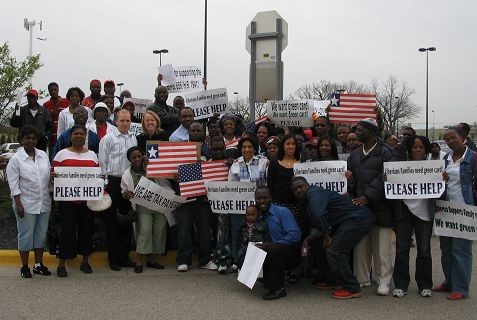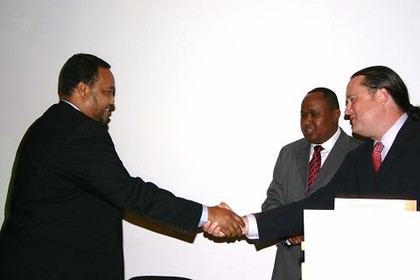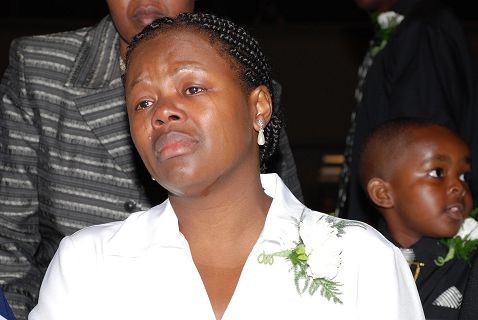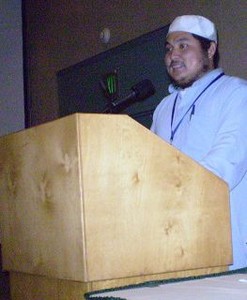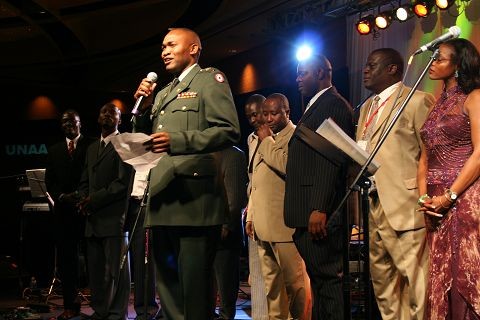
WILMINGTON – The Kenya Community Abroad (KCA) 2007 conference is underway at the Marriot by the University of Delaware. The conference opened with a call to all Kenyans in the Diaspora to get involved in the formulation of policy in their motherland. The call was made by the KCA president Mkawasi Mcharo who noted “there is nothing that happens in Kenya that does not affect us.” She said “it is our responsibility as Kenyans to participate in setting policies and engage in political discourse. Policies that affect us are created by other people, yet it’s our duty to engage fully as Kenyans.”
Mkawasi Mcharo hailed the leaders in Kenya and in the Diaspora for the positive changes taking place in Kenya. She cited the Diaspora bill that was drafted and now is about to be signed into law as a result of efforts of Kenyans abroad. Noting that KCA members are trans-national citizens, Ms Mcharo urged members to contribute equally to Kenya’s development since “we are still part of our county. When Kenyans are in pain we are in pain; when they celebrate we celebrate; there is nothing that happens in Kenya that does not affect us.”
This year’s conference theme is “Uniting a people, Building a Nation.” KCA also celebrates its tenth anniversary this weekend.
The KCA president cited the establishment of the Agenda Africa, a Think Tank started by KCA and the Stop Campaign, a campaign geared towards protecting Kenyan children as some of the achievements of the organization since its founding in 1997.
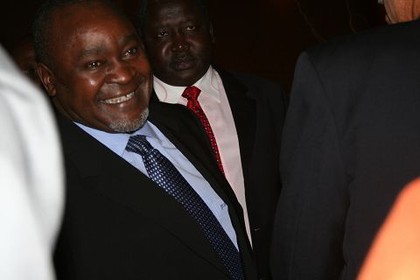
Dr. Shem Ochuodho will be awarded the 2006 KCA Excellence Award at a function later tonight to recognize the organization’s founders. Prominent past awardees include renowned environmentalist and Nobel laureate Dr. Wangari Maathai.
This year’s conference has drawn participants from across the United States and from Kenya. Kenyans from the neighboring states of New Jersey and Philadelphia, the Washington metropolitan area, and from as far as Georgia and Minnesota began arriving late Friday for the conference that brings together Kenyans in the Diaspora and their friends to deliberate about development issues in Kenya.
The conference ends tomorrow Sunday. Later tonight the participants will attend a grand banquet to mark the tenth anniversary of the founding of KCA.
WILMINGTON – It is all excitement in the quiet neighborhood of Newark, Delaware as Kenyans and their friends from all over the United States gather for the Kenya Community Abroad (KCA) 2007 conference.
Kenyans from the neighboring states of New Jersey and Philadelphia, the Washington metropolitan area, and from as far as Georgia and Minnesota began arriving late Friday in preparation for the grand conference that brings together Kenyans in the Diaspora and their friends to deliberate about development issues in Kenya.
The opening ceremony, however, has been delayed due the late arrival of some of the official guests and attendees.
The conference, and the celebration of the tenth anniversary of KCA, will run for two days until Sunday afternoon. Later tonight the participants will attend a grand banquet to mark the tenth anniversary of the founding of KCA.
Wole Soyinka (73), Africa’s first Nobel Prize-winning poet, playwright and activist – and indeed Africa’s literary Ambassador, was the main speaker at the American Theatre Communications Group National Conference that was hosted in the Twin Cities (June 7-9).
The theatrical national conference that attracted over 700 leading American thespians, poets, playwrights and others, provided a forum for a “provocative mix of plenary, breakout sessions and time for networking” and intellectual discourse among theatre professionals. The highlight of this year’s event was the presentation by Wole Soyinka of his creative publication – Rituals for our Times.
In line with this year’s theme of the national conference of Artistry in a New Century, Wole Soyinka rose above mediocrity as he actively engaged in a treatise that exalted him as a catalyst for social change in our times. He argued that as we live in a world of both good and bad laws that require constant adjustment to ensure equitable justice for all, creative artists become the vanguards for reflecting on such “rituals” as may be presented as possible remedy for human ills.
Over the centuries, Soyinka argued, mankind has sought for some atonement to redress social ills by engaging in some kind of sacrificial practice calculated to appease the spirits and cleanse society from transgression.
Citing examples of human injustice and other calamities including genocide in Rwanda, military dictatorships in his native Nigeria, atomic bombing of Hiroshima, perceived wars against weapons of mass destruction (mass deception?) bird flu, Tsunami and the like; he said our world is full of such calamities. “Just like you have many inscriptions on our T-shirts,” he ventured, adding – mankind has looked for rituals to ensure a correct balance of things in our lives and sought to uphold principles of social justice for all.
In places where mankind has been overwhelmed by tragedies and catastrophe, like in Sierra Leone, Liberia, the Congo, Rwanda, Darfur – mankind tends to look for an outcast, an outsider scapegoat for crucifixion in the style of Jesus to atone human suffering.
In his analysis, all actions designed to influence and alter the state of affairs in society, including political social exercises, assume ritual dimensions. He said leaders like Louis Farrakhan of the Nation of Islam and the famous Million Men March; abolition of slavery to fight assumed white privilege, all these have led to rituals of declaring a universal day-of-atonement.
The United Nations Universal Declaration of Human Rights, the declaration by state leaders of national days of mourning or national prayer in the face of great calamity or gross economic failure are the rituals of our time, he submitted. By and large, Soyinka argues, mankind goes through a process of adjustment, adjudication and arbitration to address social ills in an evil society.
In quoting an African witty proverb that says that if a duck is beyond sacrificial reach then a pigeon can be used instead Soyinka contends that this proverb demonstrates that Africa’s wisdom goes a long way to corroborate the universality of rituals in human history. This suggests the meeting of the minds of various global cultures on matters of rituals.
Soyinka: early Christian missionaries in Africa brought the Bible to Africans and while “we were busy studying it, we woke up to find our land gone.” Struggles have resulted in mankind’s attempt to fight social injustice, decadent laws, oppression, and tyrannical regimes in the process human bonds stretching from North to South and from East to West have evolved in search of universal human rights.
A lively debate followed in which workshop participants were able to share ideas on the role of theatre as a way of reaching out to influence social and political change in our never-ending search for answers to the many ills that have plagued humanity for centuries.
Answering a question from a member of the audience about information flow in our current world of information technology as a modern human tool, Soyinka praised the internet as a commendable and powerful tool of communication. However, he cautioned that this new technology is both a blessing and a curse and caused laughter when he suggested that “the man who invented the internet deserves a Nobel Prize but after that he should be hanged in a public garden”!
The controversial Wole Soyinka was arguably the major attraction at the Twin Cities new state-of-the-art Guthrie Theatre where the 2007 National Conference of the nationwide Theatre Communications Group (TCG) was hosted. Other celebrated artists that pulled crowds included Tina Landau, Laurie Brooks, Michael Rohd, Rha Goddess, John Malpede, and Kathy Randels among others.
Wole Soyinka was born in Abeokuta Nigeria in 1934 and received his University education at the University of Ibadan (Nigeria) before proceeding to Leeds where he earned his BA in English. He was employed by the Royal Court Theatre of London as script reader, actor, and director (1957-1959) before returning to Nigeria in 1960 where he founded a theatre company known as The Masks.
He has served as Director of Drama School at Ibadan University (Nigeria) and head of Theatre Arts at the same university before joining the University of Ife (Nigeria) as head of the department of Dramatic Arts. He has written many novels and books of drama and poetry rising to be the first African writer to earn the prestigious Nobel Prize in Literature.
Some of his known works include Kongi’s Harvest, The Lion and the Jewel, and The Trials of Brother Jero. In his artistic works, he has successfully satirized the absurdities of his society creating political enemies from dictatorial leaders, landing him in jail twice in his native Nigeria.
TCG is engaged in the mission of strengthening, nurturing and promoting professional not-for-profit American theatre and offers career development programs for artists. The group also offers an opportunity for advocacy through dramatic literature to provide timely alerts about legislative change.
TCG is on record to have supported cross-cultural exchange through travel grants and other forms of assistance to traveling theatre professionals serving over 440 member theatres nationwide.
According to Phillip Matthews, TCG Director of Communications, the not-for-profit arts and culture segment of Minnesota society is an estimated $ 838.5 million industry that supports 22,095 full-time jobs and generates $ 94.1 million annually in local and state government revenue.
World Refugee Day Highlights Successes and Challenges of New Americans
Twin-Cities residents assembled at the Brian Coyle Center in South Minneapolis to observe World Refugee Day on June 20. It was a day that saw Minnesota as a rainbow society joining forces to give a powerful cultural bonanza that included global cuisine, dance, drama, art, music, cultural attire and song to the merriment of the large audience that showed up.
Refugees across the world today number 20.8 million, and in recognition of this immense human crisis, the United Nations on Dec 4, 2000 in solidarity with Africa declared June 20th as World Refugee Day. The African continent started celebrating this event a year before.
Speaking at the climax of the event, Hugh Parmer, President of the American Refugee Committee said Americans were happy to welcome such a diverse group of refugees from across the globe and took pleasure in seeing immigrants settle down.
He termed the diversity brought by the coming of refugees to Minnesota as a sign of globalization flatting the world for equal multi-cultural opportunities. “Drive through the streets of Cedar and Lake and you will encounter different faces of people from diverse backgrounds and cultures; people who own businesses and shops whose contribution to the state development cannot be ignored," Premer added.
The Plight of the Refugee
Premer narrated horrible accounts of sufferings and hardships that refugees undergo on a daily basis and reiterated on the need for wholesome collective approach to help rebuild the self sufficiency of the world’s most vulnerable and forgotten people. "There’s no greater loss on earth like the loss of ones native land" Premer remarked, saying out of the 32 million refugees around the world 80% were women and children. The President says the number of refugees living in deplorable conditions in camps was on the rise while youngsters were being recruited as child soldiers. He mentioned Afghanistan as an example where refugees have been in camps for more than 20 years following the invasion of Russian forces in their country.
Therapy The Minnesota based Center for Victims of Torture (CVT) called on parents and guardians of refugee students to register youth in a support leadership group. The support group facilitated by CVT clinicians and psychologists is relevant to students who fled from war and violence.
“The therapy groups were adapted from a model called Cognitive Behavioral Intervention for Trauma in schools. CVT modified the treatment approach to promote the leadership potential of the students, increase mind-body skills (including technologies to relax and reduce anxiety) and building trust.”
CVT and Jackson Middle School sponsored two groups during the last school year. The students marked their accomplishments at the end of the school year with a canoe trip provided by Wilderness Inquiry, a nonprofit dedicated to helping people of all walks of life experience nature.
Remarked Tom Sullivan, Principal of Jackson Middle school: “I saw an increase in confidence and comfort level in school among the students who participated in the support groups.”
The student leadership support group is part of a CVT initiative in Brooklyn Park and Brooklyn Center. CVT is working to create a network of refugees, educators and health service providers to watch symptoms of trauma and help survivors access care.
Entertainment
The large audience was treated to a cleverly executed school play by Somali students who took the viewers on an imaginary trip from Mogadishu to the Twin Cities. The audience was able to explore the cultural diversity of the various ethnic groups encountered. The cross-cultural shocks experienced became the centerpiece of the drama.
For the Somali new refugees, they were shocked to learn that Americans love “hot dogs” as part of their lunch table construing that Americans sadly ate dog meat. As the new immigrants got to understand the culture better, they learnt that a hot dog was not made from dog meat!
The dance hall saw great entertainment from the Hmong community who showcased their cultural dance while clad in a white-dress with ribbons and scarf completing the Laotian touch. Somali folktale dancers with their agile body movements that accompanied rhythmic drumbeats also stole the show.
The daylong celebrations saw entertainers from Sierra Leone (Ibe Kaba), the Fatala Express featuring a dynamic dance and drumming group from West Africa and the ECD Dance Company from Philippines. For those who love to eat, delicious food was served by Tam Tam’s African Restaurant and Holy Land Restaurant was there to offer familiar Middle East cuisine.
Minnesota offers a home for refugees Minnesota is second only to California in accommodating the largest number of refugees in America. Large numbers of refugees in Minnesota come from Laos and Somalia. Others come from trouble spots of Africa such as Darfur, Sierra Leone, Liberia, Asia, the former Soviet Union and other locations around the globe.
According to Gus Avenido, the Minnesota Refugee Aid Coordinator, Minnesota could overtake California in the near future due secondary immigration.
Gus mentioned friendly healthcare system, hospitable residents and well managed schools as some of the contributing factors enticing refugees to consider relocating to Minnesota upon arriving in the United States.
Sponsors of this year’s World Refugee Day in the Twin Cities included: African Community Services, African Development Center, American Refugee Committee, Center for Victims of Torture (CVT), Minnesota Council of Churches, Confederation of Somali Communities in Minnesota, Oromo Community of Minnesota, Lutheran Social Services, Minnesota Public Schools and many others.
Mshale’s Abdiaziz Ahmed contributed to this report.
Official Impressed by Immigrant Clinic’s Ability to Serve With Limited Funds
Crown Medical Center, a small immigrant clinic that started barely two years ago received a visit in June from Minnesota Commissioner of Health Dianne Mandernach, for what she said was an example of people taking responsibility in reaching out to their communities.
“Wow, wow, wow, you guys are doing a good job,” she said upon learning that the clinic was serving an average of 35 patients a day.
Located in the bustling South Minneapolis area, Crown Medical Center provides primary and urgent care, immigration and refugee medical examinations free HIV screening and counseling and psychology services. Dr. Joyce Onyekaba, who together with her husband Chike Onyekaba, founded the clinic, said she left her job at Health Partners when she realized that the immigrant community in Minnesota had special needs.
Dr. Onyekaba cited the increase in diabetes and obesity in immigrant communities as one such a need. “Many of my patients come from warmer climates where they walk everywhere with no need to exercise,” she said.
She said that a lack of active life and a drastic change in diet had allowed for the increase in diseases that her patients might never have been exposed to in their countries of origin. To address the problem Crown Medical Center offers community classes on nutrition and health, Dr. Onyekaba said.
While the clinic welcomes all patients, a majority of them are from the refugee community, comprising the Hmong and Somali populations. It is this unique demographic that, according to Dr. Onyekaba, makes her work both challenging and rewarding.
“When patients come in I have to feel around them and not just address their physical health being, but I also have to realize that many of them are yet to get acculturated into the fast paced American life,” Dr. Onyekaba said.
Chike Onyekaba, who is also the clinic’s manager and accountant, said Crown Medical Center has three fulltime medical staff, including his wife and Dr. Melvin Coleman, a licensed psychologist. But Dr. Onyekaba is the clinic’s only general practitioner. There are also four other staffers who help with administrative work.
Crown Medical Center has served over 4,000 patients in the past two years, according to Mr. Onyekaba.
To counter its staffing and financial hiccups, the Crown Medical Center partners with other health facilities in the Twin Cities such as Hennepin Faculty Associates, Hennepin Medical Center and Abbott Northwestern Hospital. They also work with medical interns who have been instrumental in reducing the workload.
Mandernach said she was impressed by the array of services the clinic offers, considering its modest size. She said the State government has funds for specific non-profit organizations and urged Crown Medical Center to apply for them.
“It is a community’s responsibility to reach out and understand the needs of the underprivileged members of its society,” Mandernach said.
Although Crown Medical Center serves patients who have government medical insurance, a number of them are not covered. For these patients, a sliding fee is offered: many are still not able to afford this. That makes the center eligible to apply for funds set aside by the state for non-profit organizations.
Chike Onyekaba confirmed that the clinic had begun working on registering part of the business into a non-profit organization in an attempt to garner these funds. The creation of the Crown Medical Support Services as an independent arm of the Crown Medical Center will allow patients and members of the community to receive subsidized health care services.
“Our goal is to improve the health and well-being of high risk and vulnerable population with the provision of affordable medical, mental, educational, social and other related services,” he said.
Hundreds of Somali nationals flocked James Griffin Stadium in St Paul over the weekend to celebrate 47 years of independence for the Horn of Africa nation.
Dressed in blue shirts and dresses and wearing caps with white stars to symbolize the Somali flag, the crowd consisting mostly of youngsters thronged the stadium on Sunday to witness the historic occasion that brought them together irrespective of their political affiliations.
The weekend activities were a culmination of a weeklong soccer tournament that attracted teams from as far as Georgia and Tennessee. Participants were also treated to a musical extravaganza with several Somali Artists performing on stage.” Let me assure today, that whatever happens to our nation, Somalia will ultimately emerge stronger" shouted Maryan, a Somali woman who witnessed the raising of Somali flag after the downfall of Italian occupation. She urged the youth to shun tribalism by establishing friendship amongst themselves regardless of their clan groupings.
At one point, the crowd burst into laughter when the soccer commentator decided to imitate renowned BBC Somali reporter Ahmed Mohamed. Mohamed has been with BBC for close to two decades and his voice is familiar with many Somalis. Security was beefed up at the stadium located in Central High School off Interstate 94 East. The City’s special Gang Unit had a visible presence at the festivities while several chase cars kept vigil outside the stadium.
At one time police who were busy watching the soccer match were caught off-guard when two teenage girls exchanged blows near the main entrance. An officer manning the gate had to rush in to separate them as reinforcements joined in to keep the peace. But save for these minor altercations, the ceremony ended on a peaceful note.
Spectators brazed the afternoon sunny weather to watch the match between Communality and Ohio. Communality, a Minneapolis based club managed to defeat Ohio in the semi-finals. Soccer lovers returned to the stadium once again on Monday evening to watch the finals pitting Communality against Midnimo. Midnimo from the southwest suburbs of Burnsville displayed their superior mastery of the game with attacks and well coordinated passes. However both teams failed to score in the first half. It was only on the second half that Midnimo players managed to translate their maneuvers into actions by netting 3 goals past the net of Communality’s goalkeeper. Whistles rented the air as hundreds of Midnimo’s supporters belted out jubilant ululations.
The tournament dubbed ‘the biggest Somali in Diaspora Competition’ climaxed with a prize and trophy giving ceremony. Apart from the winning team, several Somali graduate students from Minnesota colleges and universities received awards for various academic achievements.
The Minnesota Women’s Political Caucus (MWPC) presented awards to women who had made achievements in various professions. Elin Malmquist Skinner, Minnesota State Senator Mee Moua and Nimco Ahmed were among a group of women honored at the 33rd annual Founding Feminist’s dinner in June in a hotel in Minneapolis.
The award categories were: the Lifetime Achievement Award, Founding Feminists and Women to Watch.
Women to Watch This award is given women thirty five and under who are working to improve the status of women in the community.
Nimco Ahmed, a native of Somalia, was recognized as an active community organizer, not only in the Somali community in Minnesota, but also in her work on several local and national political campaigns. Ahmed who works as a political aide to Minneapolis City Councilmember Robert Lilgren is also the director of the Democratic National Committee’s Women’s program.
In accepting her speech, Ahmed credited the late Senator Paul Wellstone in making her believe that she could make a difference in society. Excited by the work she does Ahmed credited her political activism to a “natural need to speak for those who can’t speak.” As she pointed into the audience to her 4-yr old niece, little Nimco, Ahmed declared that “she is the reason why society has to change.”
Dyane Garvey who was awarded for her commitment to helping nonprofits and small businesses become sustainable and thriving assets to the community, “You do it because you have to.” Garvey is the Executive Director of Hmong American Institute for Learning, an organization that promotes the Hmong culture through art. As a young woman, Garvey watched as women in her community were not allowed to express themselves. However, she was convinced then and now that,” women have a story to tell, and knowledge that must be allowed to pass onto the next generation.”
Founding Feminists This award recognizes pioneers in the fight for women’s rights Winona LaDuke, a Native American, who ran for the office of the Vice President of the United States as the nominee of the Green Party, was awarded for her continued work as an activist, environmentalist, economist and writer. She has worked tirelessly to preserve the Native American heritage. In her acceptance speech in which she hoped to pass her legacy onto her children she said,” Sustainable societies are built on the respect and acknowledgement of diversity.”
Peggy Leppik, who chairs the Environment Committee and serves on the Transportation Committee, served seven terms in the Minnesota House of Representatives is seen by many women as an inspiration. Accepting her speech, she paid tribute to feminist Betty Friedan who inspired her in her book The Feminine Mystique “I stand on the shoulder of thousands of women who have stood for the rights of women.”
Mee Moua, Minnesota State Senator, was the first Hmong woman elected to the Senate. Senator Moua was recognized for her continued efforts in making policy changes that will give rights to women and people of color. “We will continue working hard, because there is still so much to do,” she promised.
Ember Reichgott Junge, a former US Senator, was recognized for her work as an attorney and radio personality in highlighting and meeting the needs of women. In paying tribute to her mother, who instilled in her the passion to make community change said, “It is our responsibility to inspire the next generation.”
The Lifetime Achievement Award was given to Elin Malmquist Skinner for her outstanding work as an activist for women and children’s rights. While she has never run for public office, Skinner has worked behind the scenes encouraging many women to pursue their dream as a leader. It is for these efforts and a lobbyist that she was recognized for. She is also a founding member of the MWPC and the Minnesota Women’s Consortium.
In 1999 the second M-Net Face of Africa beauty pageant made history, when for the first time in African television an event was broadcast live to 42 countries Africa. Since then African beauty pageants have sprung up everywhere, both on the continent and in the Diaspora. A Google search yields numerous results for various versions of Miss Africa beauty contests and in Minnesota alone there are usually 5 such pageants from various communities in a year, the most notable being the Miss Liberia Minnesota Pageant.
On June 23rd at Central High School, Minnesota held preliminaries for what may be considered the most ambitious beauty pageant yet – The Miss Africa USA pageant. As with all beauty pageants, African beauty pageants have not escaped criticism from those who feel that such events exploit women and water down the definition of real beauty. Despite obvious shortcomings in the event organization, watching the seven ambitious ladies carry themselves with such dignity and intelligently speak about their dreams and hopes for Africa would have made any African proud. “I dream of an Africa that will be peaceful, I dream of an Africa that will be stable politically, socially and economically,” said Fri a nursing student from Cameroun. “My ultimate goal is to go back home and spread peace and understanding,” said 18-year old Tina from Sudan.
The contestants whose ages ranged from 18 to 24 represented the peoples of Cameroun, Kenya, Nigeria, Tanzania, Somalia and Sudan and came from various cities across Minnesota. With the exception of Caroline from Kenya, none of the other ladies had any experience in modeling. Some of the contestants admitted to being a bit intimidated by the event, but with encouragement from their families signed up for the pageant. “I heard about this event from my uncle who encouraged me to participate,” said the youngest participant, Rogiyo from Somalia.
The talent section provided a great range of performances. Fri and Stella from Tanzania got serious with poetry dedicated to the continent. Rogiyo performed a Somali dance, Tina a dancehall piece and Korma from Nigeria energized the crowd with some smooth coupé decalé dance moves. Caroline beautiful vocals rang through the auditorium as she sang “Stand Up for Love” and Yvonne also from Cameroun had the audience laughing with her solo skit on why not to get pregnant before marriage.
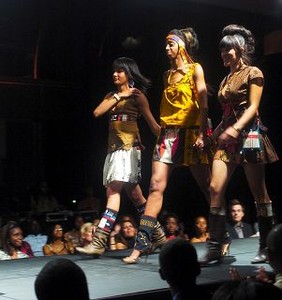
One special last minute addition to the show was a fashion show by 19 year old designer Namal Both. Namal was originally among the line up for the pageant, but dropped out on discovering that she was pregnant. She did however model one of her outfits along with two friends. Caroline, the Kenyan contestant also modeled one of her outfits for evening wear. Though only allowed to show three outfits, she captured the attention of the crowd who were greatly amazed at her talent. Exclamations like “Wow!” and “Oh my God!” rang through the crowd along with cheering from others. Namal, who is Sudanese was born in the Gambela region of Ethiopia and came to America alone at the tender age of seven. Life has not been a bag of candy for her and she ended up in foster care when she was 14. Her clothes are a fusion of African traditional designs and contemporary fashion. She currently attended Minneapolis Community Technical College, where she studies apparel technology and wants to attend a fashion school in New York thereafter.
Also keeping the audience entertained were local artists Amanim dancers, RnB musicians V-Style and Crew and Somali sensation Ziigad. Towards the end of the night Makossa Super Star Emile Kangue sang a couple of ballads to calm everyone’s nerves as they awaited the results.
The three judges who are well known in the African community were; Mr. Jackson K. George Jr, vice-president of the Organization of Liberians in Minnesota, Mrs. Melissa Nambangi, president of Minnesota African Women’s Association and Ms. Angela Nkem Asiegbu-Emelife, a member of Umunne Cultural Association.
With so much great talent, it was difficult for judges to choose some as winners while leaving others out. Nonetheless in the end it was Fri from Cameroun who took home the Miss Spokes model award because of her eloquence, Stella from Tanzania nabbed Miss Culture on account of her sensitivity, the enthusiastic Korma from Nigeria got Miss Performance and Tina from Sudan cinched Miss Supermodel because of her look.
The Minnesota preliminaries may be over, but the race for the title of Miss Africa USA is still going with preliminaries not done in other states. Founder Lady Kate Njeuma informed everyone that the four awardees would be informed on July 15th, after the conclusion of all the preliminaries in other states who will be attending the final pageant in Atlanta in November. For updated information on the national pageant, visit their website here.
The usually serene Theodore Wirth Park was buzzing with activity on Saturday, June 16th. Music could be heard as far as the car-lined street adjacent to the park as large groups of adults and children alike streamed down the numerous trails into the park for the Minneapolis Juneteenth celebrations.
Despite having been in existence for over a hundred and forty years, outside the African-American community little is known about Juneteenth, which is now widely regarded as Black-America’s Independence Day. On January 1st 1863, President Lincoln’s official Emancipation Proclamation deemed all slaves free, but the Texans did not enforce this executive order. It was not until two and a half years later on June 19th 1865, that Major General Gordon Granger landed at Texas and set about his first order of business to inform all Texans that the war had ended and the enslaved were not only free, but entitled to equal rights as their masters and rights of property. In later years there were many stories told to explain the delay in the delivery of this news to Texans ranging from the murder of the original messenger with the news of the emancipation to the deliberate withholding of the information by the enslavers. In 1980 Juneteenth became an official state holiday in Texas and many are hoping that other states will follow suit.
Whatever the case, Juneteenth celebrations have continued to spread and the celebrations are now held internationally as far as Ghana, Trinidad and Paris. Nationally, the two largest Juneteenth celebrations are now held in Milwaukee and our very own Minneapolis. In 2005, the Minneapolis celebrations enjoyed a record attendance of about 60,000 people. This year however, attendance was extremely low, perhaps less than a tenth that size. “I am shocked at the turnout!” remarked one gentleman, “there aren’t a third as many vendors as there were two years ago,” he added. Everyone agreed that to blame was the fatal shooting of a teen associated with last year’s event and to ease everyone’s fears the police presence was extremely heavy. “It doesn’t matter, many people just completely avoided coming here, that kind of thing takes years to recover from” he concluded. There were others who also thought that part of the blame be laid on the board. “I didn’t see much advertising this year as I have in previous years,” claimed Tanya.
Minneapolis Juneteenth Festivals are marked by soul food, entertainment, education and empowerment and this year’s attendees could enjoy the community breakfast, participate in the annual parade, compete in the sweet potato pie contest, ride in the hot air balloon, enjoy the entertainment or even take a journey through Africa. In an effort to strengthen the link among the diverse black groups, there were some Africa-oriented programs. One such highlight was hosted by Obsidian Arts, who loaned the largest known map of Africa from National Geographic. Both the young and old seemed to enjoy the Quest Card game where they walked across the brightly colored 35’ long and 26’ wide map through various African countries, cities and mountains on safaris and scavenger hunts. Close by people were able to purchase African clothing and merchandise from Ghanaian stall. Africans featured on the entertainment schedule too, the audience was treated to a fascinating shoulder shaking dance from Ethiopia and vibrant drum beat and dance from West Africa.
In recognition of the theme of the celebration, Liberian artist Blade Brown paid tribute to the struggles of African Americans with his performance as did Nigerian poet Olukunle who gave his audience and hefty dose of spoken word. “This was a good attempt at including other black Minnesotans,” said Wade, “and next year we can make the collaboration even better if the organizers of the three largest Afro-summer events (Juneteenth, Afrifest and Carribfest) promoted each other’s events in their respective communities.”
People drawn from all walks of life gathered at the University of Minnesota International Center at the end of June to express sympathy and solidarity to thousands of victims of torture worldwide.
Marking this year’s International Day in support of victims of torture, the group meeting under the auspices of Minneapolis based Center of Victims of Torture prayed, planted trees and sung songs to showcase their feelings as a testament to the power of healing and the resilience of torture survivors around the world.
Delivering the keynote speech, the Executive Director of the Center for Victims of Torture (CVT) Douglas Johnson castigated world governments including the United States that condone torture. He called upon United States citizens to come together and reject unpopular policies like the establishment of secret prisons, unlawful detentions and what he termed as "illegal outsourcing of torture"." I hope you will join us in working to end the policies still in place, that allow for torture and inhuman treatment of those who are detained in the name of the war on terrorism", he said amidst applause from gathering.
He heaped praise on a group of 200 volunteers that he said were useful to the daily operations of his office saying they deserved recognition for their important work at CVT. "They drive clients to and from appointements; work one-on-one with torture survivors helping them acclimate to a new life; they spread CVT’s message of hope and healing by speaking to groups; they conduct research, provide administrative support and tend our garden,without them CVT could not do the work it does" he said.
Addressing the same gathering, the Chairman of the Organization of Liberians in Minnesota Gboyee Seeyon challenged the state to show its commitment to victims of torture in Minnesota by working closely with African non-profit and community organizations. He decried the on-going trend where African community organizations were competing with the mainstream non-profits on disbursed funds calling it a regret and an embarrassment to the ultimate purpose of assisting torture victims in the state and across the world.” We are supposed to be collaborating not competing" Seeyon remarked, mentioning proposal and grant writing as two areas where such communities need to be assisted on.
The International Day in support of torture is celebrated to express solidarity with the suffering of torture victims and their families and to reaffirm the need for a global commitment to rehabilitate all victims of such an abuse. It marks the twentieth anniversary of the entry into force of the convention against torture though many nations including the United States have failed to ratify it.
The Redykyulas comedy troupe is once again set to do its annual American tour. The three former students turned comedians begin their 2007 multi-state comedy tour in Long Beach, CA on July 7.
Walter Mongare, Tony Njuguna and John Kiarie quickly rose to fame in the late nineties by doing what no one else dared to do at the time; caricature the former president Daniel Moi. Some believe their actions played an integral part in changing the attitudes of many Kenyans, most of whom at the time considered it taboo to criticize the president or the political elite.
Their talent at lampooning a seemingly endless array of characters, and ability to take an otherwise random piece of news and commit it into comedic history has ensured a loyal following. This is responsible for their popularity within the Diaspora and the current success of their annual tours and video sales.
Their skits continue to be daring, cutting edge and topical as they tackle everything from the first lady of Kenya , to popular televangelists and sports celebrities. Their trademark provocative ‘president dance’ never fails to bring down the house and remains one of the most anticipated parts of their show. They give ordinary Kenyans a chance to laugh at a political scene which is often tenuous and polarizing.
Their 2007 tour, promoted by Kilimanjaro Entertainment, will feature an up and coming comedian ‘Churchill’ and songstress Linda Muthama who was the 2nd runner-up at the 2006 Tusker project Fame. The tour will also be promoting the new Kenyan movie ‘Malooned’ directed by Bob Nyanja and produced by Cinematic Solutions . They will end with a show in Minneapolis, MN on August 4th at the Park Center High School auditorium in Brooklyn Park. More information can be found here.