Home Blog Page 236

Siama Matuzungidi: One of soukous Legends

0

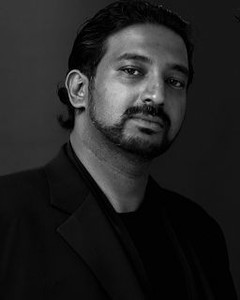
There are people who go down in history as legends, but are recognized too late. Siama Matuzungidi should not be one of them. He started his career as a Soukous music  artist in 1971 in Zaire, now known as The Democratic Republic of Congo.

Soukous, also known as Lingala and previously as African rumba, is a music genre that originated from the Congo. The music is accompanied by instruments like the guitar and drums. Siama performed in Congo with a band known as Shama Shama for seven years before  he left for Uganda in 1978. While living in Uganda, he joined another group called Kombe Kombe  which later on changed its band name to Bela Mambo. This group  consisted of some of his old band members as well as new members including Kanda Bongo Man and Diblo Diabala who are very well known artist in the Lingala music genre’.

Siama performed twice for Idi Amin in Cape Town, Uganda. Idi Amin was the political leader, best known as Uganda’s dictator. Due to the war in Uganda, Siama had to move to another country. In 1979, he moved to Kenya and once again was in another band called Viva Makale that performed at Garden Square in Nairobi, Kenya’s capital city.   Shortly after that, Siama joined another group called Shika Shika that toured all over Kenya. Inclusive in the band was famous Jimmy Monimambo, who died a few years ago in Tanzania.

At this point, Siama had lived in Kenya for two years where he joined another group Virunga with Samba Mapangala. This group consisted of at-least sixteen band  members; guitarists, saxophone and trumpet players, drummers as well as vocal performers. The group, very popular in Kenya, had shows at the Star Light Hotel in Nairobi for four years before they separated.

Later, Siama and some members formed the Ibeba System band which performed in a cafeteria at The Jomo Kenyatta International Airport. During one of the shows, a group of Japanese searching for African talent spotted Ibeba System band. After signing a contract, the band performed in Japan for five years.

Not tired of traveling the world and playing soukous music, Siama and a band called Losako with Koko Zigo Mike moved to Dubai where they performed for a period of seven months.

In 1995, Siama moved to Minnesota. He formed the Mbetani Twins band that had shows at First Avenue in downtown Minneapolis. Later he joined  Shalita band that had weekly shows at Trumps in Stillwater . He also worked with Shangoya, a band from Trinidad that performed at schools and at different festivals.

In 2001,  Siama formed Marimba Africa band that consisted of five members. Marimba is a large wooden percussion instrument similar to the xylophone. The bands name originates  from this instrument. Siama and his band members performed African music, Zuke and Kwasa Kwasa at the Blue Nile Restaurant.

In 2004, Siama released a CD titled  Sisili that comprised of Lingala and Swahili music. The song Sisili was a huge hit in Kenya in the early 80’s. Marimba band now performs at private parties, country clubs and parks in the Twin Cities.

Besides being a great singer, a superior guitarist and a song composer, Siama   contributes in local schools in Minnesota, where he teaches African culture and music. Earlier this year, Siama performed at Dashen Restaurant to help raise funds and  create awareness to the awful situation in Darfur, Sudan. Strumming on his guitar strings and calling in song with his baritone voice, the cause to take action and help Darfur was evident to all present for the event.

An artist for over three decades now, Siama is still strong in his career, traveling to different states in America – Dallas, Chicago, Michigan – and sharing his love of soukous music. He is currently working on a project in collaboration with jazz musician Jacko McNelly. Siama Matuzungidi hopes that support of African music will continue and increase, to help expand it as well as keep it alive from its roots to its continued evolution.

Please visit the photo gallery to view pictures.

Olara Otunnu Receives Harvard Law School Association Award

0
Olara Otunnu Receives Harvard Law School Association Award

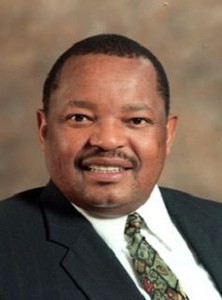
Harvard Law School graduate Olara A. Otunnu LL.M. ’78 is the newest recipient of the prestigious Harvard Law School Association Award. The award was presented by Dean Elena Kagan ’86 and Harvard Law School Association President Jay H. Hebert ’86 on June 15 at the Worldwide Alumni Congress, held this year in Washington DC.

"Olara Otunnu is one of our most inspiring alumni," said Kagan. "His career in public service, his extensive leadership in the fields of international security and human rights, and his groundbreaking work at the UN set an example for all of us. He is a tireless advocate for children around the world, and I am honored to be able to present him with the HLSA Award."

The former United Nations under-secretary general and special representative for children and armed conflict, Otunnu founded and currently heads the LBL Foundation for Children. The New York-based non-profit is committed to promoting education and healing for children around the world, especially those whose lives have been dislocated by war. By drawing international attention to neglected conflict situations and pressing for full compliance with international protection laws, the LBL Foundation supports communities to recover and rebuild themselves.

During his time at the UN, Otunnu spearheaded the campaign to develop and mobilize international action on behalf of children exposed to war. He was the architect of the groundbreaking compliance mechanism designed to protect war-affected children, which was unanimously adopted by the UN Security Council in Resolution 1612 (2005).

Otunnu is also the recipient of the 2005 Sydney Peace Prize, the 2002 German Africa Prize, and the Global Award for Outstanding Contribution to Human Rights. In 2006, the International Jury for the World’s Children’s Prize, on behalf of 12 million children in Global Friend schools, elected him the first World’s Children’s Ombudsman.

He has also served as president of the International Peace Academy; president of the UN Security Council; chairman of the UN Commission on Human Rights; and Uganda’s Minister of Foreign Affairs and Permanent Representative to the UN. Otunnu serves on the boards of the Aspen Institute; the Carnegie Endowment for International Peace; Carnegie Corporation of New York; and the Hilton Humanitarian Prize. 

The HLSA designates up to three award recipients each year. The award honors HLS alumni, faculty members and friends who have demonstrated extraordinary service to the legal profession, to society, or to HLS. Recipients are nominated by the HLS community and chosen by the HLSA Awards Committee. The first HLSA Award was presented to Erwin Nathaniel Griswold ’28 S.J.D. ’29 in 1992. Since then, recipients have included Mary Robinson LL.M. ’68, the former president of Ireland; former Attorney General Janet Reno ’63; and Senator Barack Obama ’91.

1st Annual Shades of Diversity Juneteenth Dinner & Fashion Show

0

On Friday June 15th, the first annual Shades of Diversity Juneteenth VIP Dinner & Fashion Show was held in Downtown Minneapolis, MN. A party, you say? A professional Juneteenth celebration? I had to check this out for myself so I threw-on a nice outfit and headed to the 601 Graves Hotel. The purpose of the event, as organizer Dre Sims of Inside Out explained to me, was “to bring people together collectively…We are bringing people together to network and create opportunities.” Well I’ve always been a fan of opportunities. And I suppose opportunities present themselves via networking, so it sounds like a great business plan thus far…

Doors opened at 5:00pm, but I arrived around 6:30 as to catch the hustle and bustle of the event (and maintain my fashionably late status). The evening began with various rooms occupying community businesses, a silent auction and live jazz, giving participants the opportunity to network with one another and actively involve themselves in local businesses. I scanned the room and decided to take a gander at the silent auction where all proceeds were earmarked for Girls In Action, a Minneapolis-based mentorship and empowerment program spearheaded by Dr. Verna Price, the keynote speaker of the entire event. Dinner at Temple Restaurant, signed Basketball shoes by host and Minnesota Lynx player Tamika Raymond and even a Jaguar, courtesy of Jaguar Land Rover Minneapolis were just a few of the many items up for bids. I took a sneak-peak at the Jaguar specs but quickly realized I didn’t have $40,000 on me to start the bid…so I moved on to T & Y Carwash and put my bid in for $15. Hey, you got to start somewhere. After placing a couple more bids on local products and services, I decided to peruse the business vendor areas. Girls In Action, Homewood Studios, Vasuda Salon, and Mshale Newspaper were just a few of the various local businesses displaying their products and services, all in the name of community and pride.

I managed to make it to just about every room and vendor area: networking and opportunity mission accomplished. There was another mission, however, that hovered over me…dinner. The evening flowed pretty smoothly, especially for a first-time event. But dinner was late and I was getting a little anxious. So I headed into the dining/program room and sat down, hoping that my presence in front of an empty plate would speed things up a bit. It didn’t work. But eventually the night progressed and dinner was served as soon as everyone made it into the room.

The magic of the evening began with the powerful spoken word of Shá Cage. She spoke of “diversity…change…transition” and exclaimed with urgency, “be yourself no matter what.” Her words set the tone for the evening. Next was the jovial, yet graceful introduction by host and Minnesota Lynx player Tamika Raymond. She eased the crowd with her lighthearted words but to be honest, I was slightly more focused on her fabulous Nwaka’ego Odigwe gown. But we’ll get to that later.

The theme of the night, diversity, managed to slip into the message of each and every speaker. Tom Gitaa, Publisher of Mshale Newspaper, spoke of the importance of diversity in light of immigrants in Minnesota today and the necessity to work together to “build our community.” Rico Vallejos, President & Creative Director of International & Ethnic Communications, Inc. and its Hispanic division, LatinoCreative, followed Gitaa perfectly and detailed diversity by defining what it is not…uniformity. Perhaps it was his words and partial recitation of The Gayarti Mantra that stuck with me the most: “May our intellect be stimulated so that we may be inspired to take the right action at the right time.” This challenged all of us to take another look at diversity and consider seizing action. Certainly a tough act to follow. Tim Brewster, Head Football Coach for the Minnesota Gophers, gave more of a pre-game talk similar to one he’d give to his football players, I imagine. Nevertheless, he got his point across. He explained how “there is a disconnect in the diversity at the University of Minnesota…and that needs to change.” And Congressman Keith Ellison highlighted the purpose of the evening by discussing the idea that Juneteenth should go farther than the African-American community. One idea shared by organizer and participants alike.

All of these speakers worked-up to the keynote speaker of the evening: Dr. Verna Price of Girls In Action. Dr. Price began by challenging us to spend 3.1 minutes speaking with someone we don’t know of “a different skin tone.” There goes that networking again. I found myself briefly chatting it up with Lindsey Harding from the Minnesota Lynx, proudly telling her how I ate all the food on my plate. I couldn’t think of anything else. After loosening up the crowd a bit, Dr. Price discussed her organization, which utilizes “personal power, leadership development, service-learning, and career building” to mentor and empower young girls at North High School in Minneapolis. And this was the full circle moment: a physical example to go along with the theme of the night – disclosing why diversity is important and how to take action. Her presentation was powerful to say the least. “Wherever, whatever, however you are in life…there’s still some place for you to take action.” By the end of her speech folks were ready to not just “talk about it,” but “be about it!”

Following Dr. Price’s powerful and motivational presentation was a brief comedy show by Brandon “Snack Bar” Lewis. Unfortunately I missed this portion because I was too busy picking up the T & Y Carwash vouchers that I won in the silent auction. That’s right, I may not have won the car…but I won the carwash. By the time I was done collecting my goods, the fashion show had begun. Various designers such as Crystal’s Closet, Cricket, Dynamyk Threadz, Wear It For Men, Soho Exchange, Bridal Emporium and Nwaka’ego Odigwe all collaborated with models by Ms. Denishia, stylists and make-up artists to present a funky and fun fashion show – a creative element to add to the diversity of the program.

The evening ended with “The Afterparty,” music by DJ Ray Seville, and one last chance for program participants to exchange business cards. I took that opportunity to briefly speak with Minnesota Twins player Torii Hunter about The Torii Hunter Project and how it connects to the ideals of Juneteenth. Torii explained to me how his organization gives children the chance to travel and participate in America’s favorite pastime: baseball. Some of these children have never had the chance to be on a little league team let alone travel on a plane. He illustrated how his project helps these children “envision what they want to do in life” essentially by opening the doors that they once thought were locked. And perhaps this is the archetype of the element of opportunity in Juneteenth. One that The Torii Hunter Project, Girls In Action, and other community organizations are striving to achieve. As his website states, "our goal is to increase the opportunities for America’s youth to enjoy the game of baseball in inner cities and beyond, and to provide an equal playing field for everyone, regardless of race, ethnicity and skill level." Certainly Juneteenth’s ideals at work – a message of diversity…and opportunity.

Juneteenth has been celebrated across America as a day of reflection, history, community, pride and growth. I left the first annual Juneteenth Shades of Diversity Dinner & Fashion Show with contacts, carwashes, and fashion sense – the result of some good networking. More importantly, however, I left feeling like the event took a big step in the direction of action and opportunity – fulfilling the elements of Juneteenth by bringing communities together professionally and creatively.

Visit Minnesota Inside Out here for more information about the The First Annual Shades of Diversity Juneteenth Dinner & Fashion Show

Inaugural Africa Investor Awards Honors Top Capital Market Performers

0
Inaugural Africa Investor Awards Honors Top Capital Market Performers

South Africa’s Johannesburg Stock Exchange (JSE) was named Africa’s best stock exchange, New York-based Citigroup as Africa’s best investment bank, and Kenya Commercial Bank as the continent’s top performing company at the 2007 Africa Investor Index Awards ceremony at the London Stock Exchange last week.

Based on the Ai40 and Ai100 indices of investment research and publishing group Africa Investor, the Ai Index Awards reward the best performing stock exchanges, listed companies, investment banks, research teams and fund managers on the continent.

According to the Sunday Times, 100 senior executives gathered at the gala ceremony to celebrate Africa’s "top capital market performers".

Allan Kamau, executive editor of Africa Investor,was quoted by The Sunday Times as saying the JSE had come out tops largely because of its innovation in setting up indices for smaller companies as well as socially responsible companies.

The Stock Exchange of Mauritius came in second behind the JSE.

Citigroup, which clinched US$17-billion worth of deals across Africa in the year ended March 2007, beat strong competition from the likes of Investec, JP Morgan and Standard Bank Group to take the best investment bank award.

Kenya Commercial Bank took the award for best performing Ai40 company ahead of firms such as Orascom Construction (based in Egypt), West Africa Portland Cement (Nigeria), MTN Group (South Africa) and United Bank for Africa (Nigeria).

The other Ai Index Award winners were:

Best performing Ai100 company: Egyptian Iron & Steel
Best Africa research team: Databank
Best Africa fund manager: Emerging Markets Management LLC
Best African IPO: Dangote Sugar Refinery

The Ai40 is a weekly, value-traded adjusted, market capitalization-weighted index.

It captures the largest and most liquid publicly traded stocks across Africa by ranking them by market capitalisation and by liquidity as measured by the average daily value traded in US Dollars. To ensure regional diversification it sets a country cap on the bigger markets such as South Africa and Egypt in order to capture companies in smaller markets with a market cap in excess of $ 150 million. The index was launched on 30 December 2005 at a base value of 100.

Africa Investor is a specialist research and investment communications firm that supplies investors and policy makers with information on Africa’s investment environment and sheds light on issues that inform investment decisions.

Keesha Gaskins Takes The Helm at Minnesota Women’s Political Caucus

0

The Minnesota Women’s Political Caucus on Monday announced the hiring of Keesha Gaskins as its executive director. The formal announcemnt comes exactly a week before the Caucus holds its Founding Feminist Festival on June 25. The festival will honor among others, Nimco Ahmed, a Somali native, as a "Woman to Watch".

Gaskins has served on the Minnesota State Bar Association Board of Governors and the boards of the Minnesota/North Dakota/South Dakota State Conference for the NAACP, Minneapolis Branch of the NAACP, Minneapolis YWCA and Girl Scout Council of Greater Minneapolis. Gaskins holds leadership positions at the state and local levels of the Democratic-Farmer-Labor (DFL) Party and is a member of the African-American Leadership Council for the Democratic National Committee. Gaskins is also a former chair of the Human Rights Commission for the City of St. Cloud.

Announcing her hiring, the Caucus said Gaskins’ major focus during her first six months will be MWPC’s Diversity Outreach Project (DOP), funded by the Bremer Foundation and the Women’s Foundation.

“I am very excited to have the opportunity to work with the Minnesota Women’s Political Caucus,” said Gaskins. “I believe passionately in its mission of supporting women in elected and appointed office, which is key to supporting change in Minnesota and nationwide. I embrace the challenge of continuing MWPC’s 36-year tradition and including women of every race, class, creed, religion, culture, sexual orientation, ability and political affiliation. I also look forward to partnering with other women’s organizations and community allies to institutionalize historic gains made by women and to support full participation of all women in the political process.”

MNWPC seeks to increase the number of women in elected and appointed office by identifying, recruiting, training and supporting pro-choice women candidates.

Gaskins, 36, is a native of Bloomington, Minnesota and graduate of Northeastern University School of Law, Boston, Mass., and St. Cloud State University, St. Cloud, Minnesota. Prior to being hired by MWPC, she practiced law in Minneapolis at Bowman and Brooke L.L.P.   

UK Kicks Off Fund for African Business

0
UK Kicks Off Fund for African Business

The 17th World Economic Forum (WEF) on Africa kicked off Wednesday with the leader of the House of Lords in the United Kingdom announcing one of the first donations to a new fund aimed at supporting businesses in Africa.
 
Baroness Amos told reporters at WEF-Africa that Britain would be contributing US$20 million (approx R140 million) over three years to the Africa Enterprise Development Fund, set up to encourage entrepreneurship on the continent.
 
In another development, a key report on economic competitiveness in Africa,  produced jointly by the WEF, the World Bank and the African Development Bank,
was released.

The Africa Competitiveness Report 2007 identified improved access to finance as  central to boosting economic activity on the continent, along with better infrastructure and stronger institutions.

"Low access to financial services emerges as a major obstacle for African  enterprises, but poor infrastructure, corruption and weak institutions also make
African goods and services less competitive in the global marketplace," the report states.
 
The report gave South Africa an overall international competitiveness ranking of  46 out of 128 countries. South Africa was one out of 29 African countries  measured.

The report outlined a number of steps that Africa’s 53 countries can take to improve business conditions, stating that energy and transportation are among the main bottlenecks to productivity growth and competitiveness in Africa.

"Firms lose as much as eight percent of sales due to power outages, and transportation delays can account for as much as three percent of lost sales," the report states.
 
But the "critical constraint" to businesses in Africa – which reporters heard  saw overall gross domestic product growth of 5.8 percent last year – is that of limited access to finance.

"Further, improvements in the regulatory environment (such as better  collateralisation, transparency and auditing) represent a necessary step for  unleashing the potential of finance for competitiveness in Africa," the Africa Competitiveness report 2007 states.

The African Enterprise Challenge Fund is one attempt to address increased access to finance on a continent that is already seeing rapid growth and where conference delegates are beginning to make comparisons – and detect differences – with the emerging economies of China and India.
 
Li Ruogu, chairperson of the Export-Import Bank of the People’s Republic of China and Malvinder Singh, head of Ranbaxy Laboratories of India both brought their experiences to bear on the question of similarities and differences between China and India and that of Africa.

Mr Singh cited the large domestic market as benefiting India’s growth once its economic reforms began, while Mr Li said that Africa must unite for its development. Mr Li said that good governance was not a precondition for development but rather a result of it.

Also at the opening press conference, Tokyo Sexwale, chairperson of Mvelaphanda Holdings said that while there were certain similarities, "Africa must find its own way". Regional economies must be integrated to a point where the continent’s approximately 800 million people could comprise a harmonious market.
 
Cynthia Carroll, chief executive of mining giant Anglo American, added that the economic and political reforms in Africa that have placed the continent on its recent current growth trajectory – which has been above five percent continent-wide for the past three years – have been driven by Africans, rather  than because of external pressures.

The United Kingdom Department for International Development said that the Africa Enterprise Challenge Fund would boost business development on the continent when it becomes operational from next year, offering grants of up to US$1,5 million.

These grants are to go to businesses that "provide innovative proposals for improving people’s chances to take part in economic activity, particularly in the areas of finance and agriculture" [with 70 percent of Africans working in agriculture].

In another development, the International Finance Corporation – the private sector arm of the World Bank Group – on Wednesday announced its largest financing yet in sub-Saharan Africa.

This US$320 million package will go to five subsidiaries of Celtel International B.V to help expand and upgrade mobile data networks in the Democratic Republic of Congo, Madagascar, Malawi, Sierra Leone and Uganda.

Half of this amount comes from the IFC’s own loan account, while the other half comes from syndicated loans with participating commercial banks.
 
President Thabo Mbeki was later on Wednesday to deliver the opening address to the 800 delegates and 300 journalists at the three-day summit annual conference.

Madaraka Day Festivities

0

This years 44th Madaraka Day united Kenyans in Minnesota to a gathering at Plymouth Park. Madaraka Day which is on June 1st commemorates the day that Kenya attained internal self-rule in 1963, after four decades of armed struggle.

The celebration which was organized by a Kenyan committee in Minnesota kicked off Saturday morning, with the set up beginning at 9:00am. By 12:00 noon, the festivities were well underway with Kenyan families in attendance.

After an introduction by the head of the organizing committee, the guest of honor, H.E Peter R. O. Ogego, Kenya’s ambassador to the U.S.A presented a speech. The speech revisited the meaning of Madaraka Day and encouraged Kenyans to remain united.

Kenyans with expired passports got a chance to have them renewed, but more importantly, there was a free AIDS tests.

Amidst all the activities planned for the day, there was free food – hamburgers, hotdogs, potato chips – and drinks provided by the organizing committee. There was a variety of African food for sale provided by Safari Restaurant, which is located on Nicollet Avenue in Minneapolis. Kids played around in the park as well as in the bouncing castle that had been sponsored for the occasion by Kilimanjaro Entertainment.


As the day wore on, the music pumping from the speakers kept the afternoon lull at bay. Western Union and Vigo, money transfer agencies, passed promotional gifts to people dancing all over the park. Unfortunately, the weather decided to cut the festivities short, when a sudden down pour sent 500 plus people home, a little too soon.


MADARAKA DAY PARTY AT THE BLUE NILE.


The rain may have put a small damper on the day, but it did nothing to stop the party from going on. I walk into Blue Nile Restaurant and Lounge located on East Franklin Avenue in Minneapolis. It’s a quarter to twelve and I know I’m late for the party. I had to work but nothing was going to keep me away from this party. There are quite a number of people. By the time I get to the bar to order a drink, at least ten feet from the entrance, I’ve said hello to more than ten people. Dj Babu from New Jersey is on stage spinning the music. Traditional Kenyan music blares loud and reminiscent from the speakers. I look around and see nostalgic smiles on faces old and young. I look at my friends and it seems we all have one thought in mind, home, Kenya.

Downstairs, there is another dance floor, a different crowd. More relaxed, as they listen to Lingala, a mix of West African music. Dj Dan is blending each mix smoothly, one after the other.

Back upstairs, the atmosphere has spun. Women dressed in Vitenge’s – traditional Kenyan clothes – are walking in and the music is now the latest Kenyan music. There are shouts and screams of excitement as one song plays after the next, and the spirit of camaraderie is thick in the air.

Madaraka Day brings Kenyans together, but for those of us living in the U.S.A, the day not only brings us together, but reminds us of where we came from, who we are, and the joy of being a united people.

African Immigrants a Successful Bunch, But Not Overall

African Immigrants a Successful Bunch, But Not Overall

Country of Origin a Major Factor

African immigrants in the United States are generally more educated and earn larger salaries compared to people from other continents, but their success depends on what country they come from, according to a new report.

The study was conducted by Kefa M. Otiso, a professor of Geography at Bowling Green State University in Ohio. Otiso said the project, which draws data from the 2000 U.S. Census, began “just out of curiosity” by comparing Kenya and Ghana. During the Kenyan Diaspora investment forum in Atlanta, Ga., in March, Otiso presented his findings in a report on how Kenyan immigrants were doing economically. They did surprisingly better when compared to the general U.S. population, the report showed then.

It was out of that realization that Otiso decided to examine immigrants from other African countries to see how they compared against each other and the U.S. general population, he said. The data showed that 75 percent of African immigrants come from 12 of 54 countries namely, Nigeria, Egypt, Ghana, Ethiopia, South Africa, Kenya, Liberia, Somalia, Morocco, Cape Verde, Sierra Leone and Sudan.

“The more I learned, the more I realized that although we come from the same continent and have a lot of similarities, we are very different,” Otiso said.

Overall, Africans immigrants performed better than the rest of the U.S. population in education and employment, the report shows. For instance, the rate of Africans with an undergraduate degree and above was 43 percent, compared to 24 percent among general U.S. population.

The average annual personal income of African immigrants was about $26,000, nearly $2,000 higher than that of American-born workers. This factor might be attributed to the fact that a larger percentage of Africans (71) aged 16 years and older were in the work force. In contrast, 64 percent of Americans were employed, the study showed.

The high educational and professional success of Africans could become beneficial to illegal immigrants from the continent in their efforts to become lawful. One key area is in overcoming the huddles set by a bipartisan comprehensive Senate immigration bill agreed upon in May.

The bill, which President George W. Bush said he would sign, lists education, knowledge of the English language and job skills as some of the requirements that illegal immigrants would have to meet to be considered for legalization. There is no data on the specific number of Africans living in the United States illegally, but most of them are students and visitors who overstayed their visas.

The success of African immigrants is not uniform across all communities, however. Those who come from countries such as South Africa, Nigeria, Kenya and Egypt, where English is spoken, rank among the highest income earners because it is easier for them to deal with the transition they have to make to resettle, the report shows.

On the other hand, Ethiopians, Sudanese and Somalis, who mostly immigrate as refugees, do not do as well as their counterparts from English speaking African countries. Otiso said that the reason was because most people from the three countries immigrate to the United States as refugees and asylum seekers, following crises in their home countries.

“The decision to immigrate is mostly an economic one,” Otiso said. “Those who do so willingly are likely to choose where to go based on how easy it will be for them to resettle and be successful.”

Otiso said he hoped the diversity of the African immigrant population shown in his study would help policymakers and social service agencies to tailor services to specific communities. That is something Jillian Middlebrooks, a manager in the Office of Multi-Cultural Services in Hennepin County, Minn., said would be important as her office strives to effectively serve a diverse population that is often grouped together.

“Understanding the communities we serve is very critical,” Middlebrooks said.

Middlebrooks said that by looking at the countries of origin of African immigrants who receive services from her office, the county had already seen the differences highlighted in Otiso’s study. Somalis and Oromos were the African communities that frequent the office. The Minneapolis metropolitan area, where Hennepin County falls, is home to the largest Somali population in the United States. As new non-English speaking immigrants struggle to resettle, the county government’s challenge is to make that transition easier for them, Middlebrooks said.

“Our system is already difficult enough for people born in the Midwest to navigate,” she said. “We have to make it easy for people coming from cultures where filling paperwork is not the norm.”

Middlebrooks’ office provides job skills training and legal services to new immigrants. The office also accepts volunteers who do not speak English as a first language to assist in mentoring and helping others.

Women’s Political Caucus Names Nimco Ahmed “Woman to Watch”

0

Nimco Ahmed has been recognized as a “Woman to Watch” by the Minnesota Women’s Political Caucus (MWPC).

Ahmed’s work in the community has been no easy feat. She draws her strength from her family and friends. “I have had many people in my life who have held my hand as I crossed the road.” From an early age, Nimco has been interested in working and serving the community. Ahmed, who now works as a policy aide in 6th Ward for Vice President Robert Lillgren in the City of Minneapolis, is excited about this award mostly because she is interested in creating an alliance with MWPC. “A lot of the work that the MWPC does in empowering women in leadership is parallel to what I already do.”
 
Nimco Ahmed, for five years, worked with the Confederation of Somali community as Youth Program specialist and community organizer. Nimco was the co-founder of the First African Then American (FATA) and Minnesota League of Young Voters (LYV). Soon after high school, Ahmed began her career in political activism when she joined the late Minnesota Senator Paul Wellstone’s campaign team. In the last presidential election, she was the African/African American Base Vote Organizer and also organized the Muslim voters in the state of Minnesota.


She continued her political campaign career when in 2006 Ahmed worked as the Base Director for the Amy Klobuchar for US Senate and ran the Women’s program for the Democratic National Committee.


On a national level, Ahmed was one of the organizers of for the 2004 National Hip Hop Political Convention in New Jersey, and was co-chair of last year’s convention in Chicago. In 2005, she was the African American Base Director for Victory 2005, the Democratic Party’s campaign to rally voters, in New Jersey.
 

According to Keesha Gaskins, the executive director of MWPC, Ahmed was selected because of her local and national accomplishments. “She has shown a demonstrated commitment to work for the advancement of women in politics and has shown support for women’s issues."


Gaskins continues to say that while there are challenges in succeeding as a leader in immigrant communities, cooperative communities whose values include communication, consensus building and generational respect among other things, one is able to draw strength from these values. Ahmed who moved to the US from Somalia, attributes her success on her cultural sense of coalition building.


Currently, the Caucus is working on a Diversity Outreach Project (DOP) whose purpose is to increase the political voice of women of color throughout Minnesota.  The long-term goal is to increase the number of women of color running for office at all levels, thereby increasing the number of women in elected and appointed office.
 
Gaskins stresses on the importance of developing partnerships and relationships that will allow the recognition of female leaders in “to work together on issues of concern to women in each of Minnesota’ four primary racial/ethnic communities, including the African community.”


“I am a reflection of all the strong people in my life," says Ahmed urging the youth to set their eye on the price and to work hard despite any hurdles to get to their personal and career goals.

World urged to focus on Africa’s economic success stories

0
ARUSHA, Tanzania – News items on disease, conflict and corruption in Africa are crowding out positive stories of burgeoning economies on the continent, speakers at a global technology and design meeting said this week.
 
Many African economies are booming and attracting interest from people keen to invest in them despite hurdles such as bad roads, erratic power supply or insecurity, they added.
 
"What is one thing you remember about Africa? Corruption, war, genocide, AIDS? Enough. We’ve heard these things," said Euvin Naidoo, head of the South African Chamber of Commerce in the United States, at the week-long gathering in Tanzania.
 
Naidoo, a New York-based investment banker, cited high returns on stock exchanges in countries like Kenya, South Africa, Egypt and Angola in recent years, among those items that featured little in news outside the continent.
 
"There are fundamental changes in the movement of capital and the evolution of capital markets that are taking place on the continent," he added.
 
The annual Technology, Entertaining and Design conference normally meets in California, but decamped to Africa for the first time in a bid to highlight potential on the continent where average economic growth stood at 5.4 percent in 2006.
 
Scores of Western and Africa innovators and entrepreneurs — from the developer of battery-powered medical operating theatre to the founder of a satellite radio service — have been exchanging ideas since Monday in the Tanzanian town of Arusha.
 
One speaker hailed the skill of businessmen withstanding patchy infrastructure and insecurity to set up shop in Africa.
 
"I have never seen entrepreneurs who face the kinds of challenges African companies face, and overcome those hurdles," said Carol Pineau, a U.S. film-maker chronicling business development in Africa.
 
She cited the case of Alieu Conteh, Vodafone Congo’s founder, who asked local residents to collect scrap metal then welded them into a cell phone tower after providers declined to send one because rebels were closing in on Kinshasa’s airport.
 

It’s a Family Affair at Madaraka Day

0

Kenyan Ambassador “Vindicated” On Moving Celebration to Minnesota

Kenya’s Ambassador to the United States, H.E. Peter Ogego, over the weekend, met with Kenyans in Minnesota and surrounding states to celebrate Kenya’s 44th Madaraka Day.

Ambassador Ogego read excerpts of President Kibaki’s Madaraka Day speech which outlined the milestones the country had achieved and a call to Kenyans to renew their commitment towards building a free, just and prosperous nation. He emphasized the importance of individual and collective actions and the need to focus on strengthening their unity and sense of nationhood.

Ogego stated that Kenya was going through a transformation on all levels and called for the cessation of unnecessary levels of engagement. He emphasized his commitment to serving the Kenyan Diaspora and offered that embassy staff was always available to help. He spoke on personal responsibility saying that “we must all know why we came here”.

Speaking on the rising insecurity in different areas of Kenya and the Mungiki menace (an illegal cult that continues to murder civilians) in Kenya, Ambassador Ogego said, “Their days are numbered. Those who think they can get away with killing others are mistaken. Kenyans are not cowards, we were not scared of the colonialists and political oppression of the past. We will catch these misguided criminals who have failed in life”.

On the last Madaraka day of his current term, the president had highlighted some of the achievements over the last four years. The economy grew by 6.1% for the fourth year in a row and the number of Kenyans living below the poverty line was cut from 56% to 46%. The government had also implemented rural electrification schemes with 377 grid extensions completed and a further 340 scheduled for completion by September this year.

President Kibaki also urged leaders to nurture national cohesion citing tribalism as a dangerous ill that could tear the Kenyan people apart. He was encouraged by the youth of Kenya who have largely disregarded tribalism and said there was hope that the vice could be eliminated from the society.

The ambassador was proud to announce that the United Nations awarded Kenya the prestigious 2007 United Nations Public Service Award.

Madaraka Day,  June 1st, is the day that Kenya attained internal self-rule in 1963, preceding full independence which was achieved on 12th December 1963. Madaraka Day was the first time the Kenyan flag was raised and the national anthem recited leading to it being declared the first national holiday by the new government of Kenya.

Official Madaraka Day celebrations in the US are traditionally hosted by the Kenyan embassy in Washington DC, however, the ambassador committed to having it in Minnesota for the first time this year. It is observed as a day for families to get together to renew bonds and strengthen their national identity. He said at the end the huge turnout vindicated his decision to have the celebration come to Minnesota this year.
 
The event, organized by a local Madaraka day committee, included food and refreshments, music, a play area for the children, a HIV/Hepatitis C testing tent and several vendor stalls, with embassy officials on hand to renew passports. Over 150 passports were renewed at the end of the day.

Thirteen-year old Mary Page sang Shackles, a song by the group Mary-Mary which was followed by a prayer and the Kenyan national anthem.

Books for Kenyatta University

Ogego praised the efforts of a group of Kenyan-American professors who pioneered efforts to donate books from educational institutions in the US. Dr. Jane Njue from Northern Illinois University got together with, Dr. Agnes Odinga of Hamline University, Dr. Ebby Luvaga and Dr. Leah Keino, Iowa State University along with Dorothy Rombo a graduate student from the University of Minnesota to donate books to Kenyatta University in Nairobi. Partnering with Books for Africa, they went to their colleagues at various institutions and requested for used books, collecting 40,000 university books.

Morande ended by thanking the main event sponsor, the Minnesota Department of Health (MDH). He praised MDH for taking the initiative to engage the Kenyan community as it confronts the AIDS and Hepatitis C issue among its members.

Morande who got tested for both HIV and Hepatitis C at the African Health Action Corporation tent urged awareness and testing.

“It is important that everybody gets tested at least once a year and those at high risk, like health workers, should be tested every six months. HIV is a disease like any other…the earlier you start your treatment the better,” said Morande.  Over twenty people were tested that day.

Attendees were impressed by the large turn out, despite the rainy weather towards the end.

“We wanted to give Kenyans the opportunity to get together to enhance self awareness in the Diaspora,” said William Yimbo, one of the community leaders who helped organize the event.

“The large number is a show of patriotism to our country. We can work together as a community, showing harmony and serving as examples to our children,” Morande said.

“It has been a lot of fun,” said Immaculate Oburu, a University of Minnesota student, after the event. “I was really surprised at the diversity in age, everyone from the children to the older people came.”

“We are very pleased by the work of our leaders here in Minnesota, Madaraka meant that we were self sufficient and free but not all those have been achieved,” said Chris Obure who attended the event. 

The event was deemed a success with several hundred Kenyans showing up, as well as representatives from N. Dakota, S. Dakota, Iowa and Wisconsin. There was an evening dance held later that night at the Blue Nile hosted by Kilimanjaro Entertainment.