Home Blog Page 237

Memorial Day Weekend

0

Friday May 25th


It’s around 10:30pm and I just arrived at the Lounge night club, downtown Minneapolis. There are only a handful of people at the club, though I know for sure in a little while it will pick up. The reggae riddims vibrating from the speakers rock my body to motion. I can’t remember when or how I first got into reggae, but it now seems to be the music of choice, not just for me, but for quite a number of East African people I know.


11:15pm and people are slowly shuffling into the small club room where Dj Hustla of Mezesha Entertainment keeps the rhythms flowing. I like the way the Dj plays his music enticing people, one by one to the dance floor. He keeps a keen eye on his dance floor and makes sure he gives his crowd what they want.


By 12:00 O’clock, the club is in full swing and I can barely find enough space to move without bumping into someone. There is laughter, dancing, drinks and a wave of excitement in the club. Dj Hustla too feels it and he motions me to get him another drink from the bar. The reggae hits keep coming one after another and there is really no chance to sit and take a break. By the end of the night, I’m sure my toes are swollen from all the dancing and my feet hurt as I exit the club. I painfully walk to the car and though the night is over, I’m sure the weekend has just begun considering it’s a three day weekend.


Sunday May 27th


Did you ever plan something and you weren’t so sure how it would all turn out? That is exactly what happened when we decided to have a barbecue at Minnehaha Park in Minneapolis. I wasn’t sure that people would really turn up since I had received a few phone calls of uncertainties. Nevertheless, six of us went ahead to the park and set up for the barbecue.  There was music, beef and hot dogs on the grill, as well as drinks in a cooler. Half an hour into barbecuing, people started powering in. We were at the Wabun picnic area, with a convenient parking lot right by.


I could see as the cars drove in and I have to admit at some point I did get a little nervous thinking there would not be enough food and drink for everyone. I think at least fifty or more people ended up at the barbecue. It was a huge success and from those I heard back from, they thoroughly enjoyed themselves.


As the barbecue ended, the night partying was just beginning. I headed home to get a change of clothes. I was aware of two parties going on downtown Minneapolis; “The White” party, that would be happening at Escape Ultra Lounge. Dj Dan of Soljam Entertainment would be there to play different sounds to an array of West Africans.


A few blocks down, was another huge party at The Lounge Night Club, where Dj Hustla of Mezesha Entertainment, Dj Diamond Don and Guest Dj’s would cater to the sounds of reggae lovers. I attended the latter. To say there was a lot of people, is truly an understatement. The Dj’s brought their A-game and the crowd was definitely loving it. I danced to the last song and was happy to end the weekend on such a high note. I did learn later on that Escape Ultra Lounge did exceptionally well too.


Monday, Memorial Day was a good day to just relax and unwind. I visited with friends and as we lounged, we talked of what a fun Memorial Day weekend it was.   

Kenyan Community Abroad to Celebrate 10th Anniversary

Kenyan Community Abroad to Celebrate 10th Anniversary

Trailblazers Recall the Birth of a Diaspora Giant

The call to organize for resistance came in February of 1997 during an emotionally-charged, anger-driven demonstration outside the Kenyan Embassy in Washington D.C.

A suspicious fire in a dorm at the University of Nairobi’s Kikuyu Campus, had taken the life of Solomon Muruli, a third-year student, who a few months earlier had been allegedly detained and tortured for what police said was his role in fueling student unrest at the university. During investigations into his ordeal, Muruli had identified a policeman as one of his tormentors.

For the first time, Kenyans in North America, who until then had never thought of coming together, headed for their country’s embassy in Washington D.C. to protest. While there, they formed an impromptu organization only meant to issue statements to the press. They called themselves the Kenyan Community Abroad. Lucy Kimani, one of the demonstrators outside the embassy, coined the name on the spot.

“The truth of the matter is that the name just seemed natural at the time for it represented who we were, the Kenyan community abroad,” Kimani said in an e-mail response from Nairobi.

Muruli’s death sparked a need for Kenyans in the Diaspora to unite and create a force aimed at improving the political climate in Kenya by mobilizing the country’s citizens who lived away from home. “They named the organization, the Kenyan Community Abroad,” said Dr. Matunda Nyanchama, KCA’s founding president.

“It wasn’t hard at all to come up with a name,” Nyanchama, said on a phone interview from Toronto, Canada, where he resides. “Lucy had come up with an ingenious name and we had been signing our statements to the press (about Muruli’s death) as ‘Kenyan Community Abroad.’”

The organization celebrates its 10th Anniversary on the weekend of July 6 in Newark, Delaware. The ceremony will take place at the Courtyard Marriott located at the University of Delaware. Mkawasi Mcharo, KCA’s current president, said the theme of the two-day convention would be to search for leadership that unites Kenyans.

“We are looking for political leadership that creates unity among Kenyans beyond tribe and reduces economic imbalance,” Mcharo said.

One of the weekend’s highlights will be the presentation of the KCA Award for Excellence, Mcharo said. This year’s honoree is Dr. Shem Ochuodho, who will be celebrated for his commitment to bringing Information and Communication Technology to Kenya. He currently works for the government of Rwanda as Information Technology advisor. In an e-mail response to Mcharo, Ochuodho said he felt honored to receive the award.

“It is indeed very stimulating to know that there are people out there who notice some of the little things “servants” like you and I do in the course of our duties,” said Ochuodho.

Since its founding, KCA has made significant contributions to Kenya’s social, political and economic arena. The organization has evolved to become sort of a lobby group, advocating for interests of its 12,000 members and fellow citizens in Kenya. KCA is especially known for collecting more than 10,000 signatures in 2004, lobby for the inclusion of dual citizenship in the draft of a new constitution.

During the long contentious period that produced three different versions of the constitution namely the Bomas Draft, the Minimum Reform Draft and the Wako Draft, KCA kept representatives on the ground to make sure that whichever document prevailed contained a section that legalized dual citizenship. In the end, the organization achieved that goal.

Although Kenyans rejected the government-sponsored Wako Draft, the only one to make it to a November 2005 referendum, the attempt was a milestone because it made Kenyan politicians aware that KCA was a force to reckon with, Nyanchama said.

“Since our work in the drafting of the constitution, we have seen several politicians come to court us,” he said. “KCA has put the word “Diaspora” in Kenyans’ thinking.”

KCA’s rise to prominence did not come easy, however, said Kimani, beginning right from the start.

“I remember very heated debates on whether we had the right to call ourselves that (KCA) when in essence there were thousands of Kenyans abroad and we barely numbered a hundred by then, but we stuck to our belief that we were indeed the Kenyan Community Abroad,” Kimani said.

Then there were financial problems. As the organization struggled to conduct its business and publicize its mission, it was drawn back by lack of funds. The $30 membership fee almost entirely went to hosting and maintaining its Web site, Kimani said.

But in the end it was the Internet that accelerated KCA’s approach, said Nyanchama, the founding president, who holds a PhD. in Computer Science from the University of Western Ontario.

“The Internet was a God-sent to us because it democratized the space and gave a voice to the voiceless,” Nyanchama said. 
Registration for the two-day conference in Delaware can be made in online at the KCA’s Web site, www.kenyansabroad.org.

The Play Must Go On

0

After the Guthrie Theater released its exclusive rights to stage a new play about Liberia’s history, Liberians in Minnesota have begun to wonder: Whatever happened to Tap the Leopard?

For Liberians in America, it is going to be another summer of political drama and high suspense in courtrooms and congress chambers around the world.

In June, the former Liberian president Charles Taylor will stand trial in the Hague, Netherlands for alleged crimes against humanity committed during Sierra Leone’s civil war (1991-2002). Beyond that, the fate of 10,000 Liberian legal immigrants in the U.S. remains unknown as their Temporary Protected Status (TPS) runs out in October and they could face deportation. 

Consider it a curious plot twist, then, that some Liberians in Minnesota have also directed their concerns to a petition of an utterly different nature and arena: a call for the Guthrie Theater to produce a new groundbreaking play, Tap the Leopard, about West African history.

“The Liberian community has been fascinated by this drama and the process of how it came together,” said Wynfred Russell, who has led an email campaign lobbying the Guthrie to produce Tap the Leopard. “It is a story that needs to be told and one Americans need to know. Liberians have been dying to see something like this in mainstream culture.”

Russell said the script has epic possibilities and touches upon a wide spectrum of Liberia’s history, from its founding by freed African-American slaves to the days when the United States and Firestone Tires ran the country as a quasi-colonial slave state. Russell has singled out the King of Minnesota Theater companies because its directors had commissioned the play in the first place, and many Liberians had hoped to see it produced on one of the Guthrie’s stages for the 2007-08 season. A well-known figure in the Liberian community and professor at the University of Minnesota, Russell had originally assisted Tap the Leopard’s playwright, Kia Corthorn, in her research about the West African nation now led by Africa’s first ever female president, Ellen Johnson- Sirleaf.

“So many institutions in the state have lent a hand to help tell the story of Liberians,” he said. “The Guthrie has the chance to join them and do something no one has done before. We just want them to reconsider or at least work with us.”

In early May, Russell sent out a blanket email to over 350 individuals and organizations asking them to contact Guthrie staff in support of staging Tap the Leopard. He said he has received an enthusiastic response so far, and the Twin Cities Africanist Network even ran his plea in a recent newsletter. Russell went as far as saying that the Liberian community expressed “utter dismay” when they found out that the play would not go on at the theater this year.

Not so fast came word from the Guthrie.

In an email to Russell, the Guthrie’s artistic director, Joe Dowling, wrote that Tap the Leopard is still being considered for production in the Dowling Studio’s 2008-09 season.

“It is a large play and will require further emendations before it will be affordable in our repertoire,” Dowling explained to Russell in the email. “However, we intend to continue a conversation with Kia [Corthorn] about how a production might be achieved and, if it proves practical and affordable, we will look seriously at the possibility of presenting it at a later date.”

“I should also advise you that an orchestrated email campaign on behalf of any work will prove a fruitless exercise towards decision making about Guthrie programming.”

Fruitless or not, Russell said he will continue to petition the theater. He noted that while Corthorn has not participated in the campaign, she has not expressed opposition toward it, either. Kia Corthorn did decline to be interviewed for this article.

"We are not trying to control the creative process at the Guthrie,” said Russell. “We are not saying that they are wrong or that they did anything wrong. We do not want to be antagonistic. We just want to show that this is a story worth telling.”

Story Behind the Story: Acts I-III
While the divide in the behind-the-scenes story appears to be one of community expectation versus artistic direction and choice, subtleties abound as thick as Shakespearean subplots.

Act I: In 2003, the Guthrie Theater selected 11 writers, including Corthorn, to travel around the world, research other countries and cultures, and write about the experiences. It was called the New Play Program and funded by the Bush Foundation. Choosing Liberia, Corthorn went to West Africa just as it entered a new phase of healing after some 15 years of civil wars and inter-regional conflicts. In itself, the journey offered dramatic possibilities as Corthorn is a celebrated African-American playwright who went to a country founded by freed African-American slaves to learn about its history and to observe a vision for its more hopeful, peaceful, and prosperous future.

Act II: Corthorn wrote and developed Tap the Leopard, enlisting the support of the likes of Russell and others in the Liberian community in Minnesota besides many other people in Liberia. Corthorn’s focus on a large African community in the Twin Cities does not come without its own history. She wrote Snapshot Silhouette about, in part, divisions and connections between Somalis and African-Americans in Minnesota, and, in 2004, it premiered at the Children’s Theater in Minneapolis to critical acclaim.

Act III: In 2006, the Guthrie assisted Corthorn and company to stage professional public readings of Tap the Leopard, which was well received. When the Guthrie announced its 2007-08 season in the spring, the play was not listed and soon began Russell’s campaign. 

As Dowling noted in his correspondence with Russell, the Guthrie never made promises that they would produce any of the plays by the 11 writers in the New Play Program. In fact, the Guthrie just launched the first world premiere from the New Play Program (May 23-June 10), Boats on a River by Julie Marie Myatt, in the Dowling Studio. It follows two Western aid workers in Cambodia and focuses on the child sex slave trade in Southeast Asia and the rehabilitation of Cambodian girls out of the brothels.

The story surrounding Tap the Leopard so far has led some figures in the Twin Cities arts community to comment on the need for more international productions in theater.

How will Acts IV and V turn out?

As the Guthrie no longer has exclusive rights to stage Tap the Leopard, Corthorn is free to explore other venues throughout the country. For many Liberians in Minnesota, however, the only happy ending can come if the production makes its world premiere on a stage at the Guthrie.

African Mall in Minnesota

0

The African Food Market is located in the City of Crystal on highway 81, sandwiched between the Crystal Inn and a Carpet King next to the Crystal Airport. At 13,500 square feet, the structure is a symbol of the growing stature and impact the African immigrant community is having in Minnesota. It is now commonplace to see anything from African stores to churches sprinkled around the Twin cities and soon, if one man’s dreams are achieved, you will soon see African malls.
 
That man is Kwaku Addy, owner of Addy Enterprise under which the African Food Market operates. Addy had worked at a Seven Eleven while in college before graduating as a mechanical engineer. One day while buying rice at a Liberian owned store in Minneapolis, Addy joked about buying the store to the then owner, Fatu Davis. She called him two weeks later inquiring about his bid for the store. After thinking it over, Addy was able to secure a 10,000 loan with which he bought the retail store, naming it the African Food Market.
 
By the mid 90’s, a stronger African presence was beginning to emerge around Brooklyn Park and Addy realized that most of his customers were from this area. It only made sense to take the business to where the clients were and in 98′ he moved the store to a new location on Brookdale and Zane Street in Brooklyn Park.
 
Business boomed and in about two years he had outgrown the medium-sized store. He moved to a larger store in 2000 on Zane and Brooklyn Boulevard, the store quickly growing into a staple of the African community, serving as both a food market and community center of sorts.
 
Addy’s dream was to have an African mall offering a range of services and goods distinctly geared toward the African community. He realized that The African Food Market had matured beyond the level of a store so he started looking for a bigger facility. In 2006 he was able to secure a $1.5m loan with which to open the African Food Market at its current location in Crystal.
 
The mini-mall now includes, a clothing store, a photo shop, a beauty salon, a wholesale store, a ballroom and several office spaces that have been rented out. The retail store has a state of the art scanner system rivaling his competition, Rainbow and Cub foods and is complete with a deli that offers outside catering.

"Stick to your goals, don’t rob your market,” Addy cautions African entrepreneurs. “Don’t make $5 and spend $6."
 
Addy admits that part of the challenge has been finding like minded people, like his current General Manager, Jackson George, who would help propel his vision. "[The African Food Market] used to be a family store, but needed new ideas and someone who would help push my dream,” says Addy. "For the store to be progressive and offer the best customer service that can be – coming from an African background- I had to let a few employees go and replace them with professional and progressive minded people."
 
Addy is inspired by other communities like the Hmong and the Chinese who work together to support and sustain their business ventures and is very grateful of the support he has received from the African community.
 
 "I want to be an African example," says Addy when speaking of African ingenuity. "This enterprise is not just for me, it is for West Africans, it is for Africans."  
 
His future plans include opening two or three more malls in Minnesota, then opening branches in Texas and Atlanta, Georgia.
 
He would eventually like to move his malls to Africa. He will soon be launching the website www.africanfoodmall.com       

Unite for Sight

0
Unite for Sight

“Presently I cannot see”…

Anthony Smith, a Liberian man, sits outdoors at the Buduburam Refugee Camp in Gomoa, Ghana and reflectively explains the painful story of how he lost his eye site. Behind him stands a tree, waving in the wind and perhaps shelter to the chirping birds heard in the background. Beyond the tree rests two red-shingled gazebos, simple and perfectly symmetric. The verdure, the rusty colored shingles, the dimming sky…all images of his past; for now he can only feel and hear his surroundings.

“I was attacked brutally, my family and I, on the 9th. Of the year 1990”…

He describes in detail the atrocities of the civil wars in Liberia from 1989-1996 – how the rebels beat and/or killed anyone affiliated with the government. Working as a registrar for the National Democratic Party before the war, he was a direct target. They beat him, his children, and his community. He was forced to look at the sun and when he looked away to relieve his eyes of the excruciating pain, they would step on his eyes with indefensible rage.

“…Just like that.”

Just like that. On April 14th several medical professionals and students embarked on what many thought was going to be an informative conference on the current state of Global Health. The moment this scene was displayed on the classroom projection screen, however, it was clear that the conference was about so much more. The conference was about saving humanity. This scene is part of Duke University student and filmmaker Sally Ong’s documentary on The Buduburam Refugee Camp for Unite for Sight. Unite for Sight as stated on their website, “is a nonprofit organization that empowers communities worldwide to improve eye health and eliminate preventable blindness.” The Fourth Annual International Health Conference, held by Unite for Sight at The Stanford University School of Medicine, gathered both medical students and professionals alike, to discuss the state of international health in a optimistic, yet realistic manner.

 “80% of Blindness is Preventable. 36 Million Are Needlessly Blind.”

These are the statistics that cover the Unite for Sight homepage. Eighty per cent of blindness is preventable? Who knew? Indeed, the presenters at the conference. Not only are they well aware of this astounding fact, but they are also making great strides to combat this daunting statistic and provide preventive care to underserved global communities. Many of these communities are torn by war, others are without direct access to medical care, and some are suffering from both.

Although a great issue in and of itself, the conference covered far more than the subject of global eye care. In fact, deciding which sessions to attend remained a tricky assignment: Healthcare and HIV/AIDS in Low Resource Settings, Childhood Diseases: Morbidity and Mortality, Public Health in Latin America, Social Entrepreneurship, Microfinance, & Sustainable Development, Technology & Telemedicine: New Innovations in Health Care, The Health of Women and Babies, Community Health and Research  – all informative sessions facilitated concurrently – a few of more than one hundred seminars on global health.

“How do we get to the root cause of the diseases? How do we reach out and limit – restrict the incidents of these diseases? This is community health and economic development.”

Dr. Ian Rawson, CEO and Director of Hopital Albert Schweitzer Haiti, jumps right into his session: “Addressing the Root Causes of Disease in Haiti.” He discloses the imperative yet often overlooked relationship between community health and economic development. Women who are involved in microeconomics are less likely to have HIV because they are more likely to be economically independent and have a greater self-esteem. This is one of his examples at its simplistic, core level; however, it is not as simple as it sounds. He states that in order to tackle the root causes of disease in Haiti, several methods must be used. Beyond providing microeconomic skills and involvement to women rests societal and cultural factors. And in order to address these factors, partnerships must be formed.

Traditional healers, for example, are people who are recognized and trusted in the community; therefore partnerships that involve them are not only ideal, but also essential in reaching a greater demographic. In less than 20 minutes, Dr. Rawson manages to discuss the topics of community health, economic development, medical partnerships, Directly Observed Drug Therapy, community leadership development, environmental renewal…and that is just the first presentation of a four-part session on Healthcare and HIV/AIDS in Low Resource Settings which is undeniably informative and applicable internationally. Where to go next?

“Global health is our health. It’s important for Americans to not only be experts in health, but diplomats…”

What is the responsibility of American medical professionals in the field of global health? Dr. Thomas Novotny, Director of International Programs and Professor in Residence, Epidemiology, & Biostatistics at the UCSF School of Medicine, speaks to the responsibility and opportunity of health providers today. “Who needs global health education? Why do they need it? What do they need to know?” Dr. Novotny opens each section with a different thought-provoking question in his discussion about “Innovations in Global Health Education.” The underlying idea seemingly remains; we are all connected and always will be. International issues have a domestic impact, global health inequities are in strong existence, foreign policy has the ability to fail, new medical challenges continue to surface, and the “global health curriculum” continues to change. These factors alone are enough reason for medical professionals to seize this opportunity and responsibility so that the state of global health may improve on various levels. And yes, the levels are discussed in depth….in less than 20 minutes. It’s amazing how much vital information can be relayed in such a small amount of time.

“Where are the human rights for these kids?”

Dr. Mini Murthy, assistant professor at The New York Medical College School of Public Health, speaks with passion and convincing urgency in her session, “The Human Rights of Children in India.” Children remain the “excluded” and “invisible,” unable to have access to basic health care and human rights – inconceivably exploited and sadly mistreated. Dr. Murthy explains how factors such as poverty, armed conflict, discrimination, trafficking, and displacement contribute to the loss of innocence for so many children in India. And as she ardently insists, this has to be changed…and now. And within 20 minutes, she charges a room full of observers to consistently work towards this change. 

Twenty minutes. Not much time to present on global health. But just enough time to prove that there is a greater issue that requires immediate, increased attention. Perhaps that’s about how long it takes to perform a life-altering eye surgery, or administer malaria medication to a family, or perform essential women’s health exams, or meet a Buduburam volunteer in front of the red-shingled gazebos, below the dimming sky, which he cannot see, to discuss the potential invaluable contributions to him and his community.

“Fortune favors the prepared mind”

Dr. Robert Siegel, Stanford Center for African Studies and Department of Microbiology and Immunology, strategically slips this Louis Pasteur quote into his presentation on “Engaging Students in International Health.” And perhaps this remains the foundation of this year’s Unite for Sight Conference; the idea that if we as medical professionals, students and supporters hope to make a significant impact on the current state of global health, we must purposefully prepare our minds. Wearing a red bowtie and white & grey sneakers with his dress pants and shirt, Dr. Siegel’s attire and quirky persona symbolically displays the notion that we must visibly stand apart in order to sincerely come together. Another step towards saving humanity.

“Unite for Sight is a nonprofit organization that empowers communities worldwide to improve eye health and eliminate preventable blindness. The goal of Unite for Sight is to work with its partner communities and eye clinics to create eye disease-free communities.” For more information on Unite for Sight, to view the Buduburam Refugee Camp documentary video, or to learn more about the presenters at this year’s conference, visit their website here.

1st Annual Shades of Diversity Juneteenth Dinner & Fashion Show

0
1st Annual Shades of Diversity Juneteenth Dinner & Fashion Show

Juneteenth is a holiday of celebration and history. On January 1, 1863 the Emancipation Proclamation was announced, freeing all slaves in the Confederate States of America territory that had not already gone back to control of the Union. It was not until June 19, 1865, however, that the day had greater significance. This was the day that the Emancipation Proclamation was truly imposed, principally in Galveston Island, Texas. And ever since this momentous day, Juneteenth has been celebrated across America as a day of reflection, history, community, pride and growth.

According to Twin Cities Juneteenth, Inc., more than 60,000 people participate in Minnesota’s family-oriented Juneteenth celebrations every year. This year, Dre Sims of Inside Out hopes to add onto the strong foundation of the Juneteenth events and provide another significant perspective on the meaning of the holiday. Here enters “The First Annual Shades of Diversity Juneteenth Dinner & Fashion Show.” As Sims explains, “The purpose [of Juneteenth] is to bring people together collectively. Traditionally, Juneteenth has been more of an African-American event. It is important to bring all people of color together.” Sims describes how he hopes to create an event that celebrates the essence of Juneteenth and promotes diversity in a professional setting. “The idea of Juneteenth affects all of us in some way. We are bringing people together to network and create opportunities.”

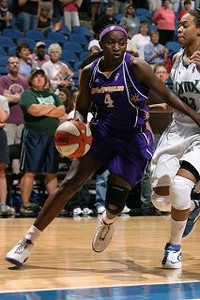
So what sort of opportunities may present themselves at this “Juneteenth Kickoff Celebration?” Sims has lined-up networking, dinner, speakers, comedy, a silent auction, an art showcase, live jazz, a fashion show, and live DJ music for the night. That’s about 8.5 hours of “opportunity.” Perhaps what remains the exceptional foundation of the evening is the diverse assembly of community speakers: U.S. Congressman Keith Ellison, Dr. Verna Price of The Girls in Action Mentorship Program, Tamika Raymond [event host] of the Minnesota Lynx, and Tom Gitaa, Editor & Publisher of The Mshale Newspaper. Sims hopes to add a couple more speakers from the Somali, Hispanic and Asian communities. “I want[ed] a diverse collective of people that represent Minnesota and the way things are today and I think that’s what we’ve got – a diverse group of people that can speak on the importance of diversity, networking, and inclusion.” Indeed; for the speakers to date have a strong voice in the areas of community involvement, politics, athletics, business, service, faith, and more – essentially, the areas that have the ability to take the concept and celebration of Juneteenth to another level.

Sims is pleased that various community organizations and businesses have stepped-up to support this event through sponsorship and donations. Aligning with the essence of Juneteenth and community empowerment, 100% of the proceeds from the silent auction will go to Girls in Action, a mentoring program at North High School spearheaded by event speaker Dr. Verna Price, while a portion of the proceeds from the event will go to The Minneapolis Urban League Young Professionals.

Networking and diversity seem to be the underlying goal of many community-based Minnesota organizations. So when asked to expand and explain the principle goal of the event in relation to Juneteenth, Sims thoughtfully replies, “I hope that people will see the importance and uniqueness of each individual group of people. I hope to empower minorities – that people see that we are valuable to the communities and to each other.”

The First Annual Shades of Diversity Juneteenth Dinner & Fashion Show will be held on Friday June 15th, 5:30pm at 601 Graves Hotel in Downtown Minneapolis, MN. For more information, tickets, and/or sponsorship/silent auction opportunities, contact Dre Sims at 952-470-3999 or visit their website here.

“Buy The Future”

0

“A sense of responsibility hit me…that’s the BC and AD of my life.” Many speak of a “before” and “after” in their lives; a moment that discloses definition and provides guided purpose for the future. For Dr. Mensa Otabil, Christian motivational speaker, entrepreneur, educator and Ghanaian leader, this moment was shortly after the death of his mother. “It was an awakening of my individuality and my own sense of responsibility as a person. Everything I am now I define to that point because that’s when my mind started to change.” Dr. Otabil was a teenager when his mother passed and his father passed shortly after. Ever since, he has been living with what he calls a sense of responsibility; and his life works aim to help others disclose that same sense of responsibility and empowerment.

"Raising leaders, shaping vision and influencing society through Christ." This is the brief yet critical mission of The International Central Gospel Church based in Accra, Ghana. Dr. Otabil is currently the general overseer of ICGC, which formed in 1984 as a small church of 20 members and has grown into a “multifaceted network of ministries.” Perhaps what stands out the most about this church is the unique premise upon which it was formed: African Emancipation. Dr. Otabil explains, “I grew up with the reality of third-world living; the effects of underdevelopment in the community and the life of the citizens…I felt that there had to be a Christian response.” Dr. Otabil expresses the importance of leadership as liberation. He believes that the underdevelopment of Africa is undoubtedly due to significant factors such as history, geography, colonialism, and slavery. “Leadership with a clear vision,” however, will help the countries of Africa overcome… and so began the International Central Gospel Church.

ICGC grasps the major components of a modern-day civic center: social empowerment, spiritual guidance, health information, business skills, civic responsibility, and education. Every year ICGC facilitates “Life Walk,” an 18-kilometer walk that promotes heath education while fundraising for a local charity. This year 7000 people participated and raised funds to build a boys’ dormitory for orphans as well as a computer-learning center – something usually reserved for those with money. From walks to concerts, sermons to service, this church seems to do it all. And yet despite the seemingly large impact ICGC has on its community, Dr. Otabil realizes that the issues in Ghana and Africa as a whole are far greater than we can imagine. “The problems in our country are many, so even when we do these small bits they don’t seem like anything.” Dr. Otabil’s brief moment of visible discouragement no doubt, expresses the weight of living with a sense of responsibility. Simply put, it’s not easy. Nevertheless, Dr. Otabil only allows himself to dwell on this idea momentarily; for this dismay is quickly transformed and he goes on to talk about the role of ICGC in improving the lives of people.

Improve indeed – and not just in a religious sense. Dr. Otabil has taken positions in the areas where he may exercise his sense of responsibility. On top of being the general overseer of the International Central Gospel Church, he is the Chancellor of Central University College, Senior Pastor at Christ Temple, presenter of The Living Word radio and television programs, and author of a book “Buy the Future.” He also has a wife, Joy, and four children, Sompa, Nhyira, Yoofi Abotare, and Baaba Aseda. So given his accolades and community involvement, perhaps it is not surprising that about 10 years ago, he joined forces with Minnesota-based Pastor Randy Morrison of Speak the Word Church International for its annual Empowerment Conference.

Pastor Randy, who was born in Trinidad, West Indies and came to the United States as a teenager, passionately speaks of the importance of empowerment – not only helping out communities in need of assistance, but also providing them with the necessary tools so that they may help themselves. Dr. Otabil’s message of living with a sense of responsibility seems to go hand-in-hand with Pastor Randy’s message of empowerment. Who would have known that an instant friendship formed in Nassau, the capital of the Bahamas in the Caribbean years ago would result in this spiritual and motivational duet? Today, however, it only seems natural. As Dr. Otabil puts it, “I agree with him on so many issues – philosophically we are on the same wavelength.” And if philosophical wavelengths are any indication of successful collaborations, then folks, we have a winner. Their philosophical perspectives on life practically mirror each other. When speaking of Africa, Pastor Randy exclaims, “Poverty is a state of mind.” On the same topic yet independent of Pastor Randy’s interview, Dr. Otabil states, “empowerment is basically mental and spiritual.” Certainly parallel.

In May Dr. Otabil joined Bayless Conley, Rick Godwin, Dr. A.R. Bernard, Pastor Randy and Speak the Word Church International in the “Empowerment Conference: Taking Responsibility.” The title alone combines both Morrison’s and Otabil’s personal missions. And when asked what he hopes program participants walk away with, Dr. Otabil says, “I think they should walk away with a clear direction as to something they can do to make their lives better.” This one-week event pushed its participants to reevaluate their lives and take responsibility for what they may have to offer the world. And the world is whom Pastor Randy and Dr. Otabil hope to reach. Their shared love for the continent of Africa drives their message even further. They are taking the Empowerment Conference to Nairobi, Kenya in June and hope to personally reach church leaders, congregations, and businesspeople alike. Their television programs are on back-to-back in Kenya, but they’d like to make the trip and deliver their message in person. As Dr. Otabil puts it, “[our role is] empowering people mentally, spiritually, and helping people take charge of their lives.” 

Perhaps the title of Dr. Otabil’s book sums it all up. Buy The Future: Learning to Negotiate for a Future Better than Your Present. This book seems to be the textbook for his teachings and beliefs – supplementing the Bible, of course. He uses the story of Jacob and Esau [Genesis 25:20-34; 27:1-45 NKJV] to illustrate how we may buy the future in several areas of our lives. He believes that in society there are “Esaus” and there are “Jacobs.” It is up to us to decipher the two and take control of what we want to be in the future. And although uniquely interpreted, the underlying premise of the book along with Dr. Otabil’s religious, business, and academic teachings present a significant dual question: What is your BC-AD and how are you living with a sense of responsibility for a better future? Essentially, you too may buy your future. 

International Central Gospel Church is located in Accra, Ghana on 69 Ring Road West. Speak The Word Church International is located in Golden Valley, MN on 515 Jersey Avenue South. Pastor Randy Morrison & Dr. Mensa Otabil will visit Nairobi, Kenya to speak about Empowerment June 12-16, 2

Linyekula Displays Hope, Innocence and Dreams In Modern Dance

0
Linyekula Displays Hope, Innocence and Dreams In Modern Dance

Along with over 200 other people crowded into the Walker Art Center performance hall, for over 30 minutes on May 17th,  I watched dancer Faustin Linyekula’s mind unfold as he contorted and splayed his body before us, giving physical form and movement to his thoughts on art and immigration.

As patrons walked into the gallery, they discovered the dancer seemingly fussing over last minute adjustments prior to his performance.  But as Linyekula continued to shuffle through his collection of books, projecting visuals of individual pages onto the opposite wall, it became apparent that his haphazard shots, his scanning of random pages and the various degrees of focus were an integral part of his presentation.

The French word, "veille," hovered at the top of the projection and taking note of this command, I obediently began to watch intently.  Most of the crowd, however, remained unaware of the fact that Linyekula had begun his performance.  Many continued to loudly chatter and shift about looking for an open seat or accommodating wall against which they might lean.

On the wall, the words from V.Y. Mudimbe’s book, The Idea of Africa, came into focus.  "…art in dark rooms…small wonder most of art is unseen."  At this, Linyekula walked out into his self-defined performance area and waited with a dispassionate look on his face.  It took several minutes for the audience to quiet and redirect their attention on Linyekula. 

Then, exuberantly, this gaunt, young man proclaimed that there were parades today in his homeland of Congo, celebrating his son’s birthday.  With a smirk, he backed down from this boisterous position and conceded that the parades might have something to do with the celebrations commemorating the rise to power of Laurent Kabila in 1997 during which Zaire was renamed to its present name, The Democratic Republic of Congo, on May 17th.

After a brief and jovial exchange, the whine broadcasting over the public address system grew and Linyekula moved into a space designated by a wide, long sheet littered with art books.  A pair of statues stood on each end of the cloth, on opposing sides.  The whine interspersed with sometimes understandable radio announcements.  The noise sounded both distracting and drawing. 

Our eyes watched as Linyekula picked up white chalk and wrote numbers–dates on his body.  "051707" was rapidly, yet carefully drawn on his right shin.  Then he filled his left calf and his forearm and his left shin.  He peeled his long-sleeved, black shirt off, scrawling on his back and writing decisively on his muscled stomach.  All the while, he crawled and rolled and crab-walked around the length of the runner on the floor.
The dozens of muscles on his back were as defined as if he wore no skin.  His painted face appeared like an African warrior or could it be the West African marks of courtship?  It was all so subjective, the meaning truly dependent on the owner of the eyes who were watching him.

That is the nature of modern dance.  Unlike ballet where the dancer seeks to depict a swan gliding over the pond, or a fish swimming in the sea, with modern dance, as with modern art, the meaning is interdependent between the performer and the viewer.

Further, the perception of an individual performance is informed by the angle from which the viewer observes the show.  Those seated at the edge of the audience, closest to Linyekula felt the heat of his body and smell the perspiration glistening on skin.  Those seated at the top of the auditorium looked upon the act with a broader perspective, seeing not only the dancer, but the entire stage as well as the reactions of audience members up front.

Linyekula has looked to philosopher V.Y. Mudimbe for much of his inspiration.  He toiled to tell his story using the everyday experiences he encountered.  Very much an organic artist, Linyekula’s story focused on the immigrant experience.  Many in the audience were also immigrants.

Linyekula stood on his head.  On the hard, linoleum floor, he slowly hoisted his inverted body up until his toes were pointed at the ceiling.  He roared out, "I am an African dancer" several times.  Then, having lowered his body back down, he said, with irony, "Hope…hope…he who lives on hope starves."  Yet he continued to point at photos projected onto the wall and repeated "hope, innocence, dreams" over and over, the photos showing families and individuals.

By this time the chalk has been almost entirely sweated off his body.  He brought closure to his piece singing in Lingala, echoing the prerecorded voice that was still playing over the speakers.  Then he melted into the audience and sat next to another patron, accepting her offer of water.  Faintly we heard the last notes of the song.

Linyekula’s brief spring performance at the Walker Art Center previewed his lengthier artist-in-residence stay that will take place this coming fall during the first several days of November, 2007.

The Woman Who Would Be President

0
The Woman Who Would Be President

At the moment, the odds seem stacked against her. But her ascension to Zimbabwe’s highest office cannot be ruled out. In fact, many ruling party insiders still consider her to be very much in the running to succeed President Robert Mugabe.

Until recently, Joyce Mujuru, 52, enjoyed Mugabe’s personal support and appeared to be his obvious choice for successor. Mugabe even risked splitting his party in 2005 after handpicking Mujuru to fill the deputy president post left vacant by the death of Simon Muzenda.

This came at the expense of Emmerson Mnangagwa, who had the most support for the job. Soon after, Mugabe all but confirmed his choice of Mujuru as successor, telling her at a public rally not to confine herself to being deputy but to "aim higher".

The tables turned on Mujuru when she and her powerful husband, the former Zimbabwe army commander, Solomon Mujuru, grew too impatient to become Zimbabwe’s next first family. They successfully lobbied the party to block Mugabe’s plans to extend his rule until 2010 by postponing next year’s presidential elections.
They also incensed Mugabe by their alleged involvement in a book by the former Zanu-PF secretary-general Edgar Tekere, which questioned Mugabe’s role in the liberation struggle.

Facing severe internal resistance, a furious Mugabe dropped plans to stay in power until 2010 but then announced he would make himself available as the party’s presidential candidate next year. He excoriated Joyce Mujuru in a state television interview for backing internal party dissent and said she had ruined
her chances of succeeding him.

At a central committee meeting in March, Mugabe’s candidature was railroaded by his supporters, led by secretary for the commissariat Elliot Manyika, and little debate was allowed.
 
But the Mujurus struck back. They managed to force the convening of a special congress later this year at which the ruling party would have to formally endorse Mugabe’s candidature.
 
This they achieved despite the argument by Mugabe’s supporters that he was elected as party leader at the 2005 congress and that this mandate allowed him to stand on behalf of the party without the endorsement of a special congress.

Party insiders said the Mujurus certainly haven’t given up. They are now involved in serious maneuvering to block Mugabe’s endorsement at the special congress.

"They have lost a battle, but they think they haven’t lost the war yet," said a party insider who preferred anonymity.

If the Mujurus manage to turn the tables and to block Mugabe’s endorsement, then Joyce Mujuru’s candidature is all but guaranteed. If they fail, the Mujurus still command enough support and financial resources to secure the presidency at some time in the future when the 83-year-old Mugabe eventually goes.

"Either way we are faced with the reality of a Mujuru presidency," said political observer Simon Mushayavanhu.

The big question is: will they be an improvement on Mugabe or actually be worse? Mujuru’s husband, Solomon, wants her to occupy the top seat so that he can be the power behind the throne and consolidate his vast, controversial business empire. The Mujurus got married in the liberation struggle and at the tender age of 25, at independence in 1980, Joyce Mujuru became Mugabe’s youngest cabinet minister, despite being barely literate. She has since educated herself through correspondence courses and recently earned a degree at a small university for women in Marondera.

It is Mujuru’s tough talking and her controversial business dealings with her husband that sends cold shivers down the spines of many. On occasion Mujuru has far outdone Mugabe’s confrontational and divisive rhetoric. In the liberation struggle, she gave herself the nom de guerre, Teurai Ropa, which means "spill
blood". She has boasted how as a young woman during the war she grabbed an AK-47 rifle from a dying guerrilla fighter and single-handedly shot down and destroyed a Rhodesian Air Force helicopter, killing all aboard. Her claim has never been independently verified by anyone who fought alongside her in the liberation war.

When violent land seizures began in 2000, Mujuru kept to the spirit of her nom de guerre by urging Zimbabweans not to hesitate to "spill the blood of white farmers" to recapture their land heritage. She is said to have personally led several land invasions and threatened families with death unless they vacated their properties. At a time when Zimbabwe needs a conciliator, she seems to represent the opposite.

Her husband Solomon had no qualms in invading and seizing Guy Watson-Smith’s 4, 500 hectare farm south of Harare and then selling off equipment on the farm. The High Court declared Mujuru’s occupation of the farm and subsequent disposal of equipment worth more than R2 million illegal. But Solomon Mujuru has remained on the farm since 2001 and Watson-Smith has given up on ever getting his farm back. Reports have suggested that the Mujurus control more than 30 farms between them.

They have been linked to corruption and looting wrangles at the Zimbabwe Iron and Steel Company (Zisco) and in serious irregularities in Solomon Mujuru’s acquisition of Zimbabwe’s only diamond mine. They have also been accused of involvement in shady foreign currency dealings. In fact, when they fell out with Mugabe, the president indirectly accused the Mujurus of smuggling diamonds.

The conventional wisdom in Zimbabwe now is that anyone who succeeds Mugabe cannot but do better. But judging by the caliber of the candidates in the succession race, this is by no means guaranteed. It is a sad measure of the rot in Zimbabwean society that the Mujurus are still contenders for succession at a
time when the country needs a serious renewal of leadership.

Zambian Ambassador Advocates HIV/AIDS Awareness

0
Zambian Ambassador Advocates HIV/AIDS Awareness

Dr Inonge Mbikusita-Lewanika, Zambian Ambassador to the US, was in Minneapolis in May to support the efforts of World Vision and the International AIDS Trust who have a joint project on the development of leadership in women.

The initiative of these two organizations creates an alliance between Minnesotan professional women and Zambian women working with orphans in Zambia. Visits to Zambia, while enforcing relationships between the two groups of women, allows an assessment of the needs of the orphanages to be made on a more personal level.

Lewanika, a strong advocate for the basic rights of orphans, together with her sister, runs a school in Zambia that houses and educates 530 students. The teachers, who she trains, are all orphans. In an attempt to create a sense of family, the households in which the orphans live in are headed by older orphans whose responsibility is to look out and care for their siblings.
 
Lewanika mentioned that the Zambian government has made great strides in the fight against HIV and AIDS by setting up the National Aids Council that monitors the activities of the various organizations involved. According to Lewanika many non-governmental organizations (NGOs) work hand in hand with other countries to simulate models on how to effectively work with the government when working on similar causes.

In what is a first, the Zambian government, in raising HIV/AIDS awareness, invites traditional community leaders to speak on prevention, treatment and testing. Awareness has also been created through posters and even on receipts given to those who buy land from the government. This aggressive campaign has seen the Zambian population’s HIV/AIDS infection drop from 20% to 16%.

Zambian president, Levy Mwanawasa has instructed all Cabinet Ministers to mention HIV/AIDS awareness every time they make a public speech regardless of the topic at hand. The Government has also turned infrastructure that was used for National Service training, into schools and housing for orphans who are vocationally trained and sent back to their places of origin, equipped with a trade.

Lewanika: “There are about one million orphans on the streets of Zambia. The government has made great efforts to handle the overwhelming number of children orphaned by AIDS.”
.
Domestic abuse has also been addressed by the Zambian government which had been previously as a matter to be resolved between spouses and their families. According to Lewanika the Zambian government has established a Victims’ Support Unit while also educating members of the police force on the rights of women to be safe in their homes. Husbands found guilty of battering their wives are now being arrested and put through the court systems.

Despite awareness of their rights, many women were still reluctant to report abuse from their spouses. Lewanika, however, pointed out that once women were educated and economically empowered they would be more independent allowing them to get away from abuse.

The president of the International AIDS Trust, Sandra Thurman said she was “encouraged by the increased AIDS/HIV awareness in the Zambian community.”

Thurman is confident that these steps will lead to lower infection rates. She stressed the need to address the social stigmas attached to HIV/AIDS infected persons. Talking about sexuality and promoting condom use among couples, where one was HIV positive, have proved to be some of the challenges still faced and until these can be overcome, the disease would continue to be difficult to identify and treat.

Thurman advocated for the education of girls since they were vulnerable. “Due to the worldwide AIDS pandemic, people around the world have had come together to discuss the underlying issues that make different demographics more at risk in getting infections, such as poverty and education.

Urging the Zambian government to change legislature, Thurman said, “Customary law which requires the widow or widower to be ‘cleansed’ by a close family member of his or her late spouse has contributed to the spread of HIV/AI

Appointment of Special U.S. Envoy to Somalia Brings Mixed Reactions

1
Appointment of Special U.S. Envoy to Somalia Brings Mixed Reactions

Secretary of State Condoleezza Rice last month appointed a special U.S. envoy for Somalia, ending more than 10 years of no diplomatic presence in the African nation. But some experts and local Somalis say the move is too little, too late.

Retired diplomat John Yates, who was in charge of the Somalia portfolio at the U.S. embassy in Kenya before his appointment, faces immense challenges. The country has been without a central government for 16 years, and violence has recently been at an all-time high.

More than 4,000 people, mostly civilians, have been killed since January in the worst fighting between Ethiopian troops and resistance groups. Many Somalis blame the United States for giving Ethiopia the green light to invade Somalia.

Professor Ahmed Samatar, dean of international studies and programming at Macalester College in St. Paul, a Somali native and an expert, said he is “dismayed by the way the U.S. administration has bungled its current approach to the Somali situation.”

Former U.S. ambassador to Ethiopia, David Shinn, who now teaches at George Washington University said Yate’s appointment “as special envoy for Somalia is a good one. I only wish it had happened earlier. “

Jendayi Frazer, assistant secretary of state for African affairs, visited Somalia, in April, to show support for the fledgling, warlord-dominated Transitional Federal Government. But that hardly quelled the violence.

Last month, Somalia Prime Minister Ali Ghedi escaped a roadside bomb that targeted his convoy. The same month saw five African Union troops killed and dozens injured in another roadside bombing in Mogadishu, which is increasingly looking like Baghdad.

U.S. Sen. Nom Coleman, R-Minn., who has been pushing for an ambassador-level diplomat to Somalia for almost two years, said the move is a “necessary step towards the establishment of a comprehensive U.S. policy for Somalia.”

Minnesota is home to the largest Somali-American community in this nation.

Hundreds of Somalis protested recently in Minneapolis against what they said is a massacre by the Ethiopian army and the sectarian Somali government troops. In May, the United Nations launched an investigation into possible human rights violations during fierce fighting in March and April, and the European Union suspended financial support to the Somali government pending that investigation.

Samatar, the Macalester professor, said “this envoy should have been appointed last summer,” to mediate between the interim government and its adversaries.”

“If there is to be any concrete and positive value in this new emissary,” Samatar said, “he will have to have a ready and convincing response to the immediate withdrawal of the occupying Ethiopian forces, and the urgent creation of a new political national dispensation that supplants the [interim government].