
Home Blog Page 43

Supreme Court outlaws affirmative action in college admissions, says race can’t be used

0
maxresdefault
Supreme Court outlaws affirmative action in college admissions, says race can’t be used

The Supreme Court on Thursday struck down affirmative action in college admissions, declaring race cannot be a factor and forcing institutions of higher education to look for new ways to achieve diverse student bodies.

The court’s conservative majority effectively overturned cases reaching back 45 years in invalidating admissions plans at Harvard and the University of North Carolina, the nation’s oldest private and public colleges, respectively.

The decision, like last year’s momentous abortion ruling that overturned Roe v. Wade, marked the realization of a long-sought conservative legal goal, this time finding that race-conscious admissions plans violate the Constitution and a law that applies to colleges that receive federal funding, as almost all do.

Those schools will be forced to reshape their admissions practices, especially top schools that are more likely to consider the race of applicants.

Chief Justice John Roberts said that for too long universities have “concluded, wrongly, that the touchstone of an individual’s identity is not challenges bested, skills built, or lessons learned but the color of their skin. Our constitutional history does not tolerate that choice.”

From the White House, President Joe Biden said he “strongly, strongly” disagreed with the court’s ruling and urged colleges to seek other routes to diversity rather than let the ruling “be the last word.”

Besides the conservative-liberal split, the fight over affirmative action showed the deep gulf between the three justices of color, each of whom wrote separately and vividly about race in America and where the decision might lead.

Justice Clarence Thomas — the nation’s second Black justice, who had long called for an end to affirmative action — wrote that the decision “sees the universities’ admissions policies for what they are: rudderless, race-based preferences designed to ensure a particular racial mix in their entering classes.”

Justice Sonia Sotomayor, the court’s first Latina, wrote in dissent that the decision “rolls back decades of precedent and momentous progress.”

Both Thomas and Sotomayor, the two justices who have acknowledged affirmative action played a role in their admissions to college and law school, took the unusual step of reading summaries of their opinions aloud in the courtroom.

In a separate dissent, Justice Ketanji Brown Jackson — the court’s first Black female justice — called the decision “truly a tragedy for us all.”

Jackson, who sat out the Harvard case because she had been a member of an advisory governing board, wrote, “With let-them-eat-cake obliviousness, today, the majority pulls the ripcord and announces ‘colorblindness for all’ by legal fiat. But deeming race irrelevant in law does not make it so in life.”

The vote was 6-3 in the North Carolina case and 6-2 in the Harvard case. Justice Elena Kagan was the other dissenter.

Biden, who quickly stepped before cameras at the White House, said of the nation’s colleges: “They should not abandon their commitment to ensure student bodies of diverse backgrounds and experience that reflect all of America,” He said colleges should evaluate “adversity overcome” by candidates.

In fact, an applicant for admission still can write about, and colleges can consider, “how race affected his or her life, be it through discrimination, inspiration or otherwise,” Roberts wrote.

But the institutions “may not simply establish through application essays or other means the regime we hold unlawful today,” he wrote.

Presidents of many colleges quickly issued statements affirming their commitment to diversity regardless of the court’s decision. Many said they were still assessing the impact but would follow federal law.

“Harvard will continue to be a vibrant community whose members come from all walks of life, all over the world,” school President Lawrence Bacow said in a statement.

President Reginald DesRoches of Rice University in Houston said he was “greatly disappointed” by the decision but “more resolute than ever” to pursue diversity. “The law may change, but Rice’s commitment to diversity will not,” he said in a campus message.

Former Presidents Donald Trump and Barack Obama offered starkly different takes on the high court ruling. The decision marked “a great day for America. People with extraordinary ability and everything else necessary for success, including future greatness for our Country, are finally being rewarded,” Trump, the current Republican presidential frontrunner, wrote on his social media network.

Obama said in a statement that affirmative action “allowed generations of students like Michelle and me to prove we belonged. Now it’s up to all of us to give young people the opportunities they deserve — and help students everywhere benefit from new perspectives.”

The Supreme Court had twice upheld race-conscious college admissions programs in the past 20 years, including as recently as 2016.

But that was before the three Trump appointees joined the court. At arguments in late October, all six conservative justices expressed doubts about the practice, which had been upheld under Supreme Court decisions reaching back to 1978.

Lower courts also had upheld the programs at both UNC and Harvard, rejecting claims that the schools discriminated against white and Asian American applicants.

The college admissions disputes were among several high-profile cases focused on race in America, and were weighed by the conservative-dominated, but most diverse court ever. Among the nine justices are four women, two Black people and a Latina.

The justices earlier in June decided a voting rights case in favor of Black voters in Alabama and rejected a race-based challenge to a Native American child protection law.

The affirmative action cases were brought by conservative activist Edward Blum, who also was behind an earlier challenge against the University of Texas as well as the case that led the court in 2013 to end use of a key provision of the landmark Voting Rights Act.

Blum formed Students for Fair Admissions, which filed the lawsuits against both schools in 2014.

The group argued that the Constitution forbids the use of race in college admissions and called for overturning earlier Supreme Court decisions that said otherwise.

Roberts’ opinion effectively did so, both Thomas and the dissenters wrote.

The only institutions of higher education explicitly left out of the ruling were the nation’s military academies, Roberts wrote, suggesting that national security interests could affect the legal analysis.

Blum’s group had contended that colleges and universities can use other, race-neutral ways to assemble a diverse student body, including by focusing on socioeconomic status and eliminating the preference for children of alumni and major donors.

The schools said that they use race in a limited way, but that eliminating it as a factor altogether would make it much harder to achieve a student body that looks like America.

At the eight Ivy League universities, the number of nonwhite students increased from 27% in 2010 to 35% in 2021, according to federal data. Those men and women include Asian, Black, Hispanic, Native American, Pacific Islander and biracial students.

Nine states already prohibit any consideration of race in admissions to their public colleges and universities. The end of affirmative action in higher education in California, Michigan, Washington state and elsewhere led to a steep drop in minority enrollment in those states’ leading public universities.

The other states are: Arizona, Florida, Georgia, Nebraska, New Hampshire and Oklahoma.

In 2020, California voters easily rejected a ballot measure to bring back affirmative action.

A poll last month by The Associated Press-NORC Center for Public Affairs Research showed 63% of U.S. adults say the court should allow colleges to consider race as part of the admissions process, yet few believe students’ race should ultimately play a major role in decisions. A Pew Research Center survey released last week found that half of Americans disapprove of considerations of applicants’ race, while a third approve.

The chief justice and Jackson received their undergraduate and law degrees from Harvard. Two other justices, Neil Gorsuch and Kagan, went to law school there, and Kagan was the first woman to serve as the law school’s dean.

Every U.S. college and university the justices attended, save one, urged the court to preserve race-conscious admissions.

Those schools — Yale, Princeton, Columbia, Notre Dame and Holy Cross — joined briefs in defense of Harvard’s and UNC’s admissions plans.

Only Justice Amy Coney Barrett’s undergraduate alma mater, Rhodes College, in Memphis, Tennessee, was not involved in the cases.

Brooklyn Park honored as a City of Excellence

0
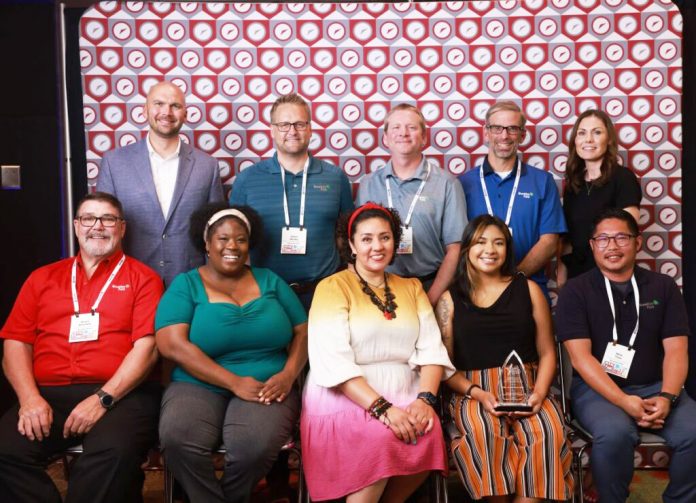
The city of Brooklyn Park was awarded the City of Excellence award on Thursday, June 22, 2023 during the annual conference of the League of Minnesota Cities held in Duluth, Minnesota. Sitting from left: Bruce Bloxham, Shanna Woods, Carmen Bibiano, Brenda Morales, Nhia Thao. Standing from left: League of Minnesota Cities executive director, Luke Fischer, Jason Newby, Keith Jullie, Brooklyn Park city manager Jay Stroebel, 2023-24 League of Minnesota Cities president and Nisswa city administrator Jenny Max. Photo: Courtesy League of Minnesota Cities
BPLMC Publish
The city of Brooklyn Park was awarded the City of Excellence award on Thursday, June 22, 2023 during the annual conference of the League of Minnesota Cities held in Duluth, Minnesota. Sitting from left: Bruce Bloxham, Shanna Woods, Carmen Bibiano, Brenda Morales, Nhia Thao. Standing from left: League of Minnesota Cities executive director, Luke Fischer, Jason Newby, Keith Jullie, Brooklyn Park city manager Jay Stroebel, 2023-24 League of Minnesota Cities president and Nisswa city administrator Jenny Max. Photo: Courtesy League of Minnesota Cities

The city of Brooklyn Park was on Thursday honored by the League of Minnesota Cities (LMC) with the City of Excellence Award for “Creative Solutions for City Housing Challenges.”

LMC recognized the city for its “Enhanced Inspections via Door-Knocking at Large Apartments” initiative during its annual conference held in Duluth where over 700 elected and appointed officials from cities gathered. It was the highest turnout of the annual event in 20 years, according to League officials.

According to a news release, the City of Excellence Awards are given by LMC to recognize cities for outstanding programs or projects.

The win comes with a plaque, a check for $1,000, and recognition in League publications and promotional activities throughout the coming year.

The city piloted the door-knocking initiative following a study conducted by the University of Minnesota’s Center for Urban and Regional Affairs (CURA) that examined experiences in Brooklyn Park’s large apartment communities.
The CURA study found that those living and managing the large apartment complexes named affordability, safety, and dignity in housing as their major concerns.

Following meetings with various stakeholders, including renters and community leaders, city staff identified large apartment communities that merited an enhanced inspection response. Property managers were then informed when their scheduled door-knocking would take place.

The door-knocking exercise involved informing residents on how to report concerns to property managers and providing them with information on how to access resources such as emergency assistance, food and housing.

Mr. Jason Newby, the city’s inspections and environmental health manager, praised his staff for the success of the program and attributed it to their ability to “shift and respond” to the growing needs of residents.

“Rental inspectors and community engagement staff piloted a renter-centered proactive door knocking approach focused on addressing maintenance, communication, and other livability concerns,” Mr. Newby said. ” Their dedication and compassion for their work, and the residents of Brooklyn Park, is why this program was a huge success.”

Juneteenth block party focuses on importance of Black community’s economic wellness and safety from violence

0
sddefault 2
Juneteenth block party focuses on importance of Black community’s economic wellness and safety from violence

After a week of canceled outdoor events due to unhealthy air quality, the Twin Cities finally got to celebrate the first Juneteenth since Gov. Tim Walz signed a bill making the day a state holiday.

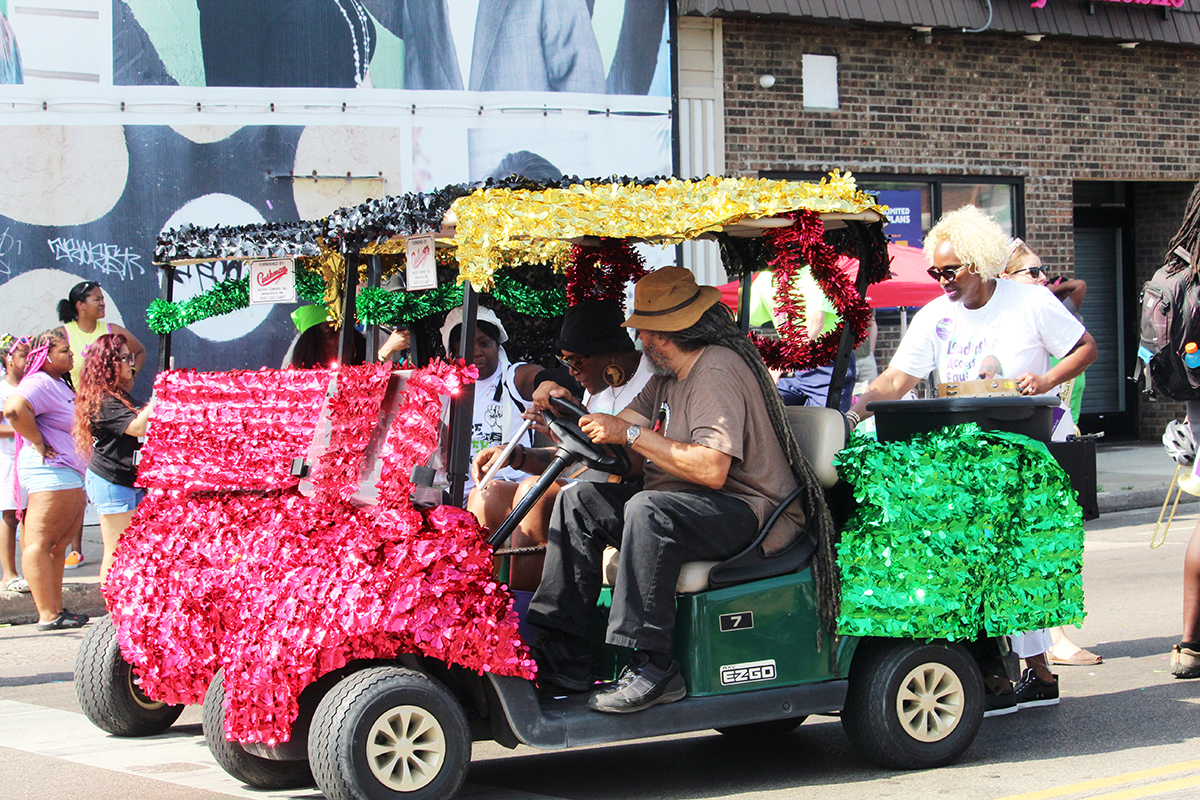
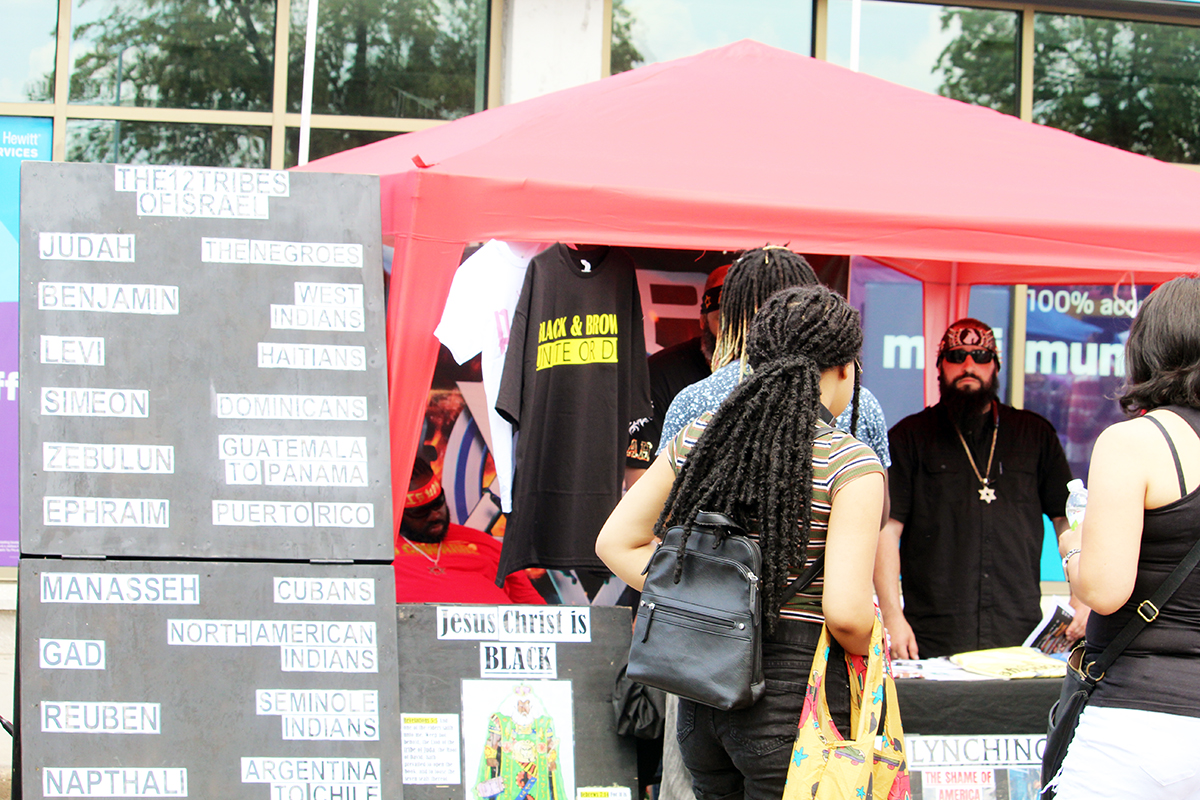
Residents from the larger metro area filled the streets of the West Broadway district in Minneapolis on Monday June 19 to celebrate one of the most important holidays for Americans of African descent. The celebration was also a showcase of Black organizations and businesses, ranging from skincare, clothing, financial education services and economic equity advocacy, to food and healthcare.

Dubbed Juneteenth Block Party, it was the second annual event organized by BOB (Black Owned Business) Rewards Club, which aims to bridge the racial wealth gap by campaigning for Black ownership of businesses and advocating for existing ones.

Ladina Y. Posey, the community engagement coordinator at the Association for Black Economic Power, said that in addition to celebrating the day the last enslaved people were set free, it was an opportunity to highlight the various businesses and bring a different spotlight to West Broadway, a district she said “gets such a bad rep.”

“There are a lot of Black businesses that are struggling because of what is put out there into the social [media] realm,” Posey said. “[West Broadway] does have things that happen just like any metro community, [but] it is not unsafe.

Advocates of Black prosperity often use gatherings like the Juneteenth Block Party to stress the importance of closing the wealth gap by creating economic independence for the African American community. Although Black Americans make up 14% of the population of the United States, only 2% of them own businesses, according to the Federal Reserve. The main reason there are so few Black business owners is because it can be difficult for Black Americans to come up with capital, considering that their households hold just under 3% of the country’s wealth, compared to nearly 87% held by white Americans, according to the Federal Reserve. Even those who manage to secure capital often find themselves struggling to stay afloat, leading to a significant number of them failing. In early 2020, for example, the National Bureau of Economic Research published a study showing that the number of businesses owned by Black entrepreneurs experienced the sharpest decrease, 41%, compared to 32% and 25% for Latino and Asian American businesses, respectively.

“We need to make it for our people,” Posey said. “They can’t make it without our support.”

The block party showcased businesses like Mama Bling, a home customizing and décor business.

“It’s very important to show off Black businesses, not only ours, but everyone coming into a situation like this in general,” said Livv Rankin, one of the business partners of Mama Bling. “Not only am I giving out my Black business, but also, I get to celebrate everyone else’s.”

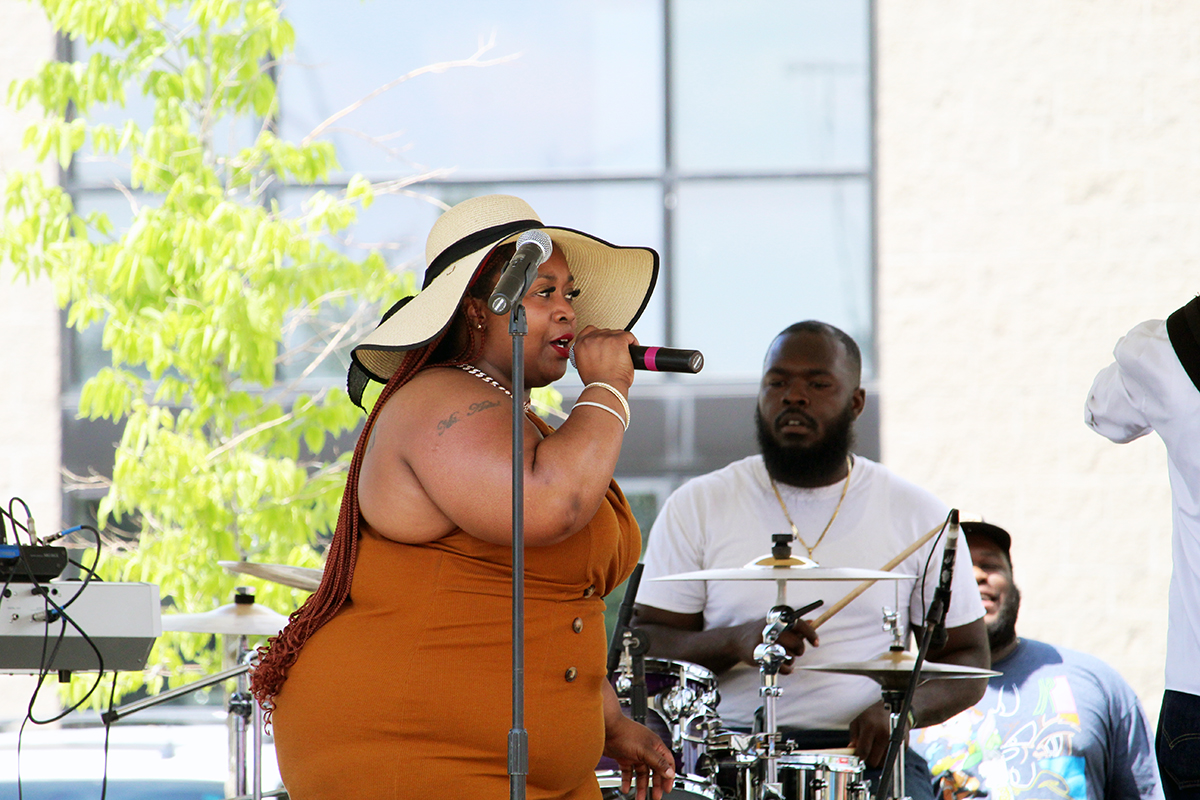
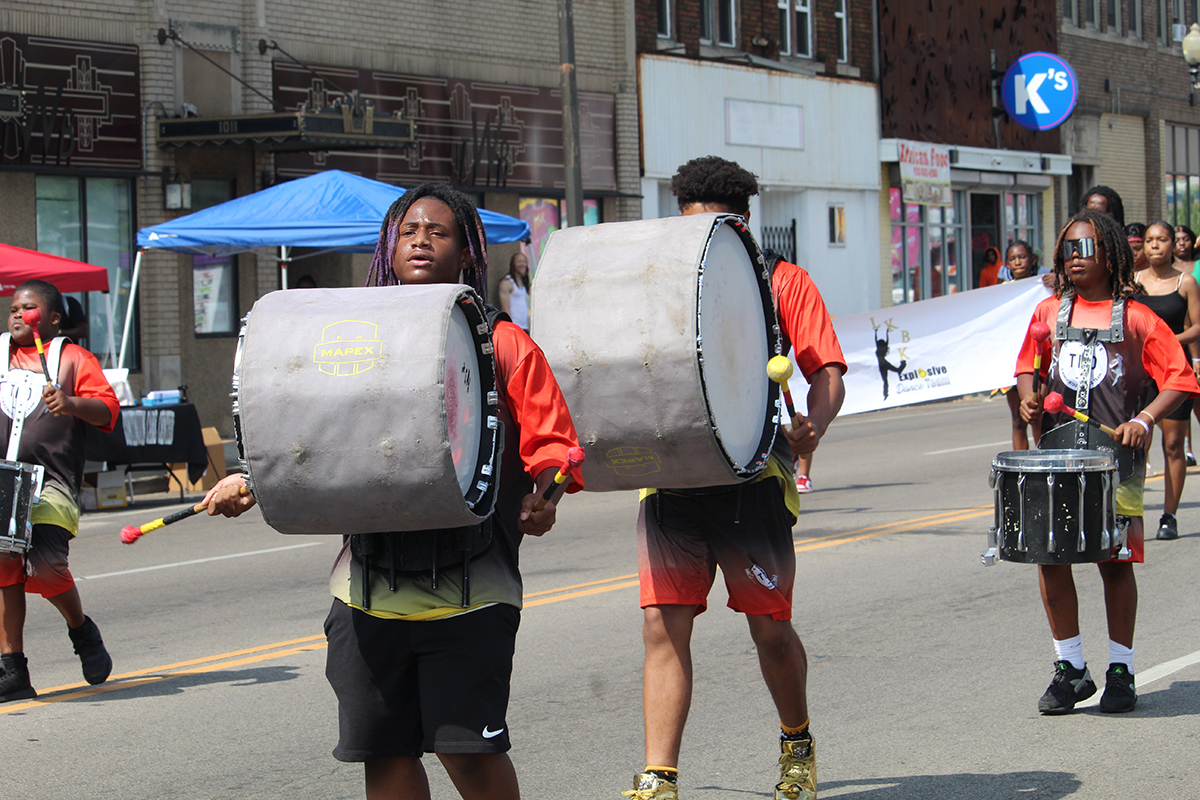
The block party started off with a parade and performances by local dance groups like the Twin Cities Masquerades Dance Team, and the TKO Drumline & Knock Out Dance Team

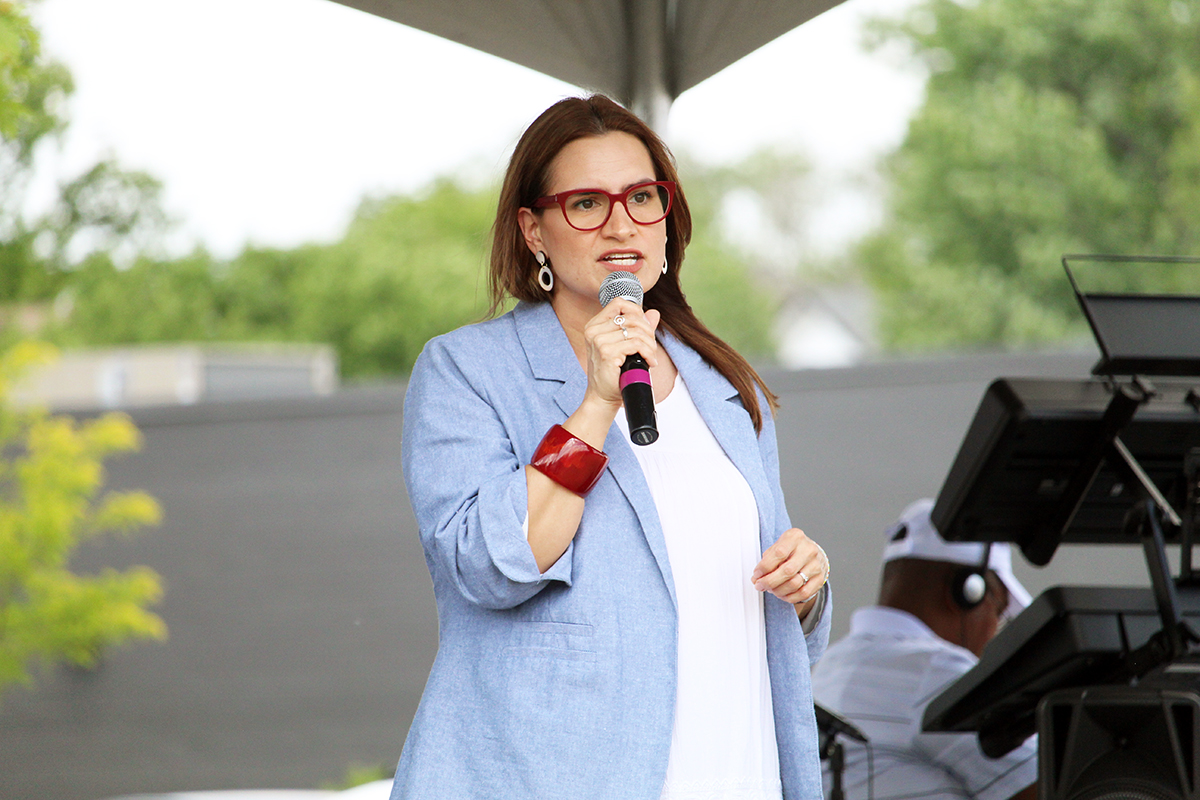
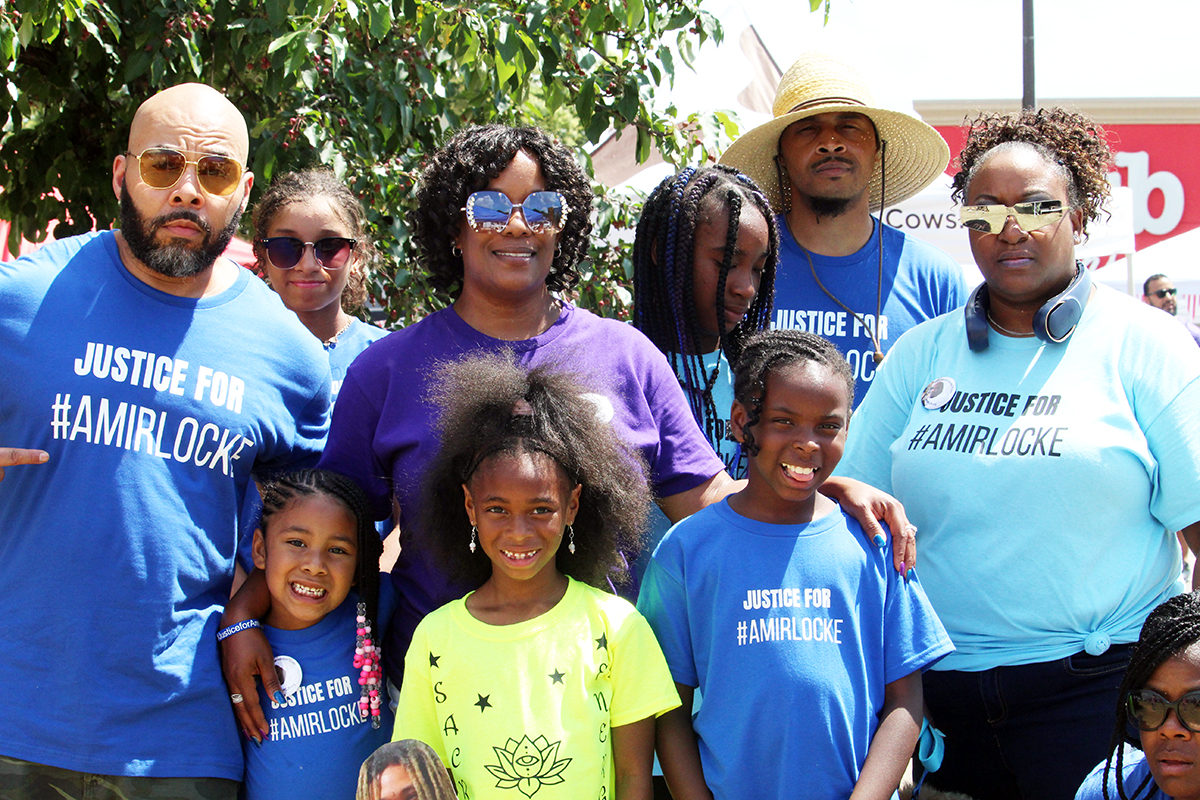
Several speakers also discussed other issues such as violence, housing, and education, including Minneapolis NAACP President Cynthia Wilson, Minnesota Lieutenant Gov. Peggy Flanagan, and Karen Wells, whose son, Amir Locke, was killed by a Minneapolis Police Department officer on Feb. 2, 2022.

Although the most recent legislative session passed laws such as the one that guarantees free school meals for every child, and the Child Tax Credit, which are projected to lower child poverty by a third statewide, Flanagan said there was a lot more to do.

“Today is a good day to celebrate, but also a good day to acknowledge that we have so much more work to do,” said Flanagan. “This is simply a down payment for the work that we have to continue to do together.”

Williams, the Minneapolis NAACP president, spoke about the important role the family and the community can play in reducing not only gun violence, but all violence.

“Oftentimes, we say it takes a village to raise a child, but the truth is, it takes a village to raise a family,” Williams said. “And if we go back historically, y’all, we can recognize that the family is what was the foundation to make everything run effectively in our communities. You break up the families, you break up the community.”

For St. Paul resident Bridgette Noel, Juneteenth celebrations have a significant generational value. Noel said she had been participating in Juneteenth celebrations for as long as she could remember. She said she would continue to recognize the importance of the celebration to her children and grandchildren.

“It’s about time,” Noel said. “We’ve come so far. So, so far. Our, ancestors and grandmothers and great-grandmothers and great-grandfathers paved the way for us, so this is a great way of showing them [that] we finally got it. We finally made it.”

Although the Emancipation Proclamation abolished slavery by on January 1, 1863, enslaved people in Texas didn’t find out that they had been freed until June 19, 1865, when U.S. Maj. Gen. Gordon Granger announced through an executive decree known as General Order No. 3.

In 1866, a group of freed African Americans came together to celebrate the end of centuries of enslavement. The day became known as Juneteenth and is the oldest know holiday celebrating emancipation of enslaved people, according to the National Archives. Juneteenth has since evolved to become one of the most important holidays that commemorate the resilience of the Black community in the United States. It has been a state holiday in Texas since 1980.

Minnesota is one of 27 states that have enacted laws proclaiming Juneteenth an official government holiday. On June 17, 2021, President Joseph R. Biden signed a law that made Juneteenth a federal holiday.

Jupiter & Okwess give powerful performance at the Cedar

0
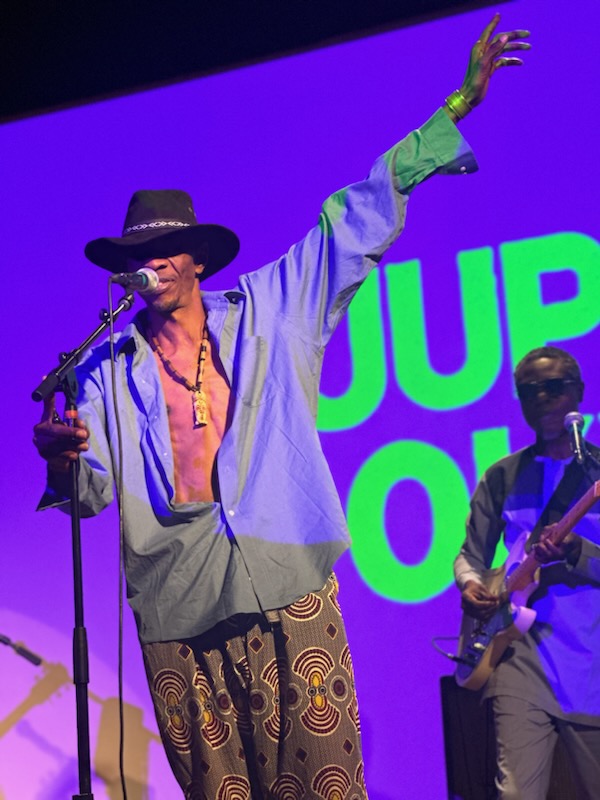
Jupiter Bokondji during his concert with band Okwess at the Cedar in Minneapolis on Tuesday, June 20, 2023. Photo Credit: Steve Poreda/ Funtime Funktions
Purple Jupiter Steve Poreda
Jupiter Bokondji during his concert with band Okwess at the Cedar in Minneapolis on Tuesday, June 20, 2023. Photo Credit: Steve Poreda/ Funtime Funktions

The Cedar’s events manager and volunteer coordinator, Jared Hemming, introduced Jupiter & Okwess with a flourish, but the band did not appear. Instead we watched for several minutes a documentary film introducing the band and placing them in their country with its political and social turmoil as well as its depth of culture and music.

Then Jupiter Bokondji along with his band Okwess stormed the stage at The Cedar on Tuesday night, June 20th performing irresistible dance music straight out of the roots of their Congolese home.

Visual images played on the screen throughout their performance, a melange of African art, masks, political and social commentary, soldiers, children, dancing, and musicians all displayed and juxtaposed with geometric vibrantly colored shapes.

They played their hearts out despite the small crowd of fewer than seventy people as if the joy of the music was all they needed to motivate themselves.

masked drummer.jpg by Mr. Fun
A masked Okwess Band drummer at the Jupiter & Okwess concert at the Cedar on Tuesday, June 20, 2023. Photo Credit: Steve Poreda/ Funtime Funktions

In the mostly standing audience, we danced. Some of us danced with abandon, so much so that Jupiter pulled one of the dancers on stage. The yoga and Pilates instructor didn’t hesitate, but leaped into the limelight and added to the highly entertaining evening.

The band played for 75 minutes, one song rapidly followed by another in many languages of the Democratic Republic of Congo including Lingala, Tetela, Ekonda, Mongo and Tshiluba. Jupiter occasionally spoke a word or two to the audience in French. He would have liked to say more, but was unwilling to attempt much more English than Thank you and Let’s Go!!

His most powerful voice was in the music he made. He sang, shouted, growled, trilled, and laughed with gusto. Not only Jupiter, but also bass guitarist, Yende Balamba Bongongo, often floored us with his rich bass voice that could easily compare to the powerful voices heard at the Lincoln Center in New York City.

Rounding out the band, Eric Malu- Malu Muginda on rhythm guitar and Richard Kabanga Kasonga on guitar. Drummer, Montana Kinunu Ntunu, wore a mask a la Spiderman, but Montana’s mask was decorated with metallic wings along the side of his head and a wing-design highlighting his eyes. After the show, he told me in French he did it for a mystical effect.

The Cedar was in top form, their sound system on par with the fantastic, compelling sound coming from the band. Between the funk, Soukous, and AfroPop pummeling us in the best way, I’d look askance at the low turn-out, yet thankful that those of us who were there found the exuberant music as thrilling to listen to as the musicians found it thrilling to play.

I hope they return. I’m ready to dance myself ragged again.

U.S. World Fair drought continues as Serbia is chosen to host Expo 2027

0
A rendering of the proposed host pavilion for Minnesota's 2027 World. Serbia won the bid on June 21, 2023 to host the 2027 Expo. Photo: Courtesy of Minnesota USA Expo 2027
MN World Expo 2027 Pavilion Rendering Publish
A rendering of the proposed host pavilion for Minnesota's 2027 World. Serbia won the bid on June 21, 2023 to host the 2027 Expo. Photo: Courtesy of Minnesota USA Expo 2027

The U.S. lost its bid to host Expo 2027 in Minnesota when member States of the  Bureau International des Expositions meeting in Paris on Wednesday chose Serbia to be that year’s host.

154 countries participated in the final vote between Spain and Serbia at the 172nd General Assembly, with the Serbia emerging tops with 81 votes to Spain’s 71, with three countries abstaining.

The U.S. was up against four other countries; Thailand, Spain, Argentina and the ultimate winner Serbia. This was Minnesota’s second bid to host the expo having lost to Argentina which won the rights to host Expo 2023. Due to the pandemic the 2023 Expo was canceled.

The much-anticipated African support for the U.S. bid does not seem to have materialized, given how poorly it performed in the three rounds it was in before it was knocked out.

“Our bid is backed by nearly every country on the African Continent,” former Minnesota Secretary of State Mark Ritchie and a board member of Minnesota USA Expo 2027 had said in an op-ed in the Pioneer Press.

Minnesota Africans United (MAU), a coalition of African immigrant communities in the state, had led the charge in lobbying African countries to support the U.S. bid.

“There was no African country in the running to host the World Fair so Minnesota Africans United partnered with Minnesota USA Expo to support (the) U.S. bid as we believe it will open up business opportunities for our community here and African countries,” Basil Ajuo, President and CEO of MAU said during an interview with Mshale about a week before the vote.

Up to three rounds of voting are held to see if a country can win a two thirds majority. A country with the lowest votes in each round is eliminated. In the fourth round, only two countries remain and the winner is decided by a simple majority.

On Wednesday’s voting, Argentina was eliminated in the first round, followed by Thailand’s elimination in the second round, with the U.S. making it to the third round where it was also eliminated. It was Serbia and Spain in the decisive fourth round which requires only a simple majority.

“While we’re disappointed that we will not have the opportunity to host the world this time, we congratulate Serbia on their successful bid for Expo 2027. We know that they will create a memorable Expo experience,” said Bob Clark, Minnesota USA World Expo bid committee co-chair in a statement.

“While Minnesota may not have been chosen as the host, we are incredibly proud of the effort, passion, and commitment that went into our bid,” Mr. Clark said.

An estimated 14 million people were expected to visit the state during the 93 days of the expo in the summer of 2027.

The location of the expo was to be next to the Mall of America in Bloomington, Minnesota.

“Of course, we’re disappointed, but I’d like to tell you how proud I am of our exceptional efforts and what we’ve gained in the process,” Bloomington Mayor Tim Busse said in a video message posted on the city’s website.

Mr. Ajuo congratulated Serbia for their selection and in a statement said that “the process of campaigning for support globally has connected Minnesota ever more closely with all countries on the African Continent. For the nearly 400,000 Minnesotans of African descent, bringing an Expo to our state will strengthen our ties in ways that boost both Minnesota’s economy and the economic well-being of our mother countries in Africa.”

Round 1 Votes Round 2 Votes Round 3 Votes Round 4 Votes
USA 19 USA 21 USA 23 Serbia 81
Thailand 16 Thailand 15 Serbia 74 Spain 70
Serbia 54 Serbia 69 Spain 53 Abstentions 3
Spain 42 Spain 48 Abstentions 2
Argentina 8 Abstentions 1
Abstentions 1


Thousands gather for funeral of five women killed in car crash in Minneapolis

0
sddefault 1
Thousands gather for funeral of five women killed in car crash in Minneapolis

Man with hit-and-run history jailed after high-speed crash kills five young women in Minneapolis

0

A man who served a hit-and-run sentence in a California prison until his release earlier this year remained jailed Tuesday, awaiting charges after a crash killed five young women in Minneapolis when a speeding driver blew past a state trooper, ran a red light and slammed into their car.

Derrick John Thompson, 27, of Brooklyn Park, Minnesota, was evaluated at a hospital and then booked into the Hennepin County Jail on Monday in the aftermath of Friday’s crash. The victims — Salma Abdikadir, Siham Adam, Sabiriin Ali, Sahra Gesaade and Sagal Hersi — were all between 17 and 20 years old.

Thousands of mourners from the area’s large Somali American community attended the young women’s funeral Monday at the Dar Al-Farooq mosque in Bloomington, where the five had been active members. They were returning home from a Somali mall where they had henna applied in preparation for a friend’s wedding scheduled for the next day when their car was struck.

Hennepin County Attorney Mary Moriarty said her office was reviewing the case and would make a charging decision soon. Prosecutors have until noon Wednesday due to the holiday weekend.

“Our community is grieving the loss of the five bright young people whose lives were cut short in a senseless, selfish act of reckless driving,” Moriarity said in a statement. “Instead of celebrating a joyous wedding, these families were forced to plan funerals and deal with the devastation of this tragedy.”

California court records show that Thompson was released from a prison there earlier this year after serving part of an eight-year sentence for his conviction in a 2018 hit-and-run that severely injured a woman in Montecito, California. Minnesota court records also show he was convicted twice of fleeing police in his own state. Jail records don’t show whether he currently has an attorney.

In Friday’s crash, a state trooper first spotted a speeding driver on Interstate 35W in Minneapolis around 10 p.m., police said in a statement. The driver exited the highway before the trooper could attempt a traffic stop and crashed into another vehicle with four women and a girl inside. All five died at the scene.

Police said the driver ran from the scene. Officers searched the area before taking Thompson into custody. He was evaluated at a hospital and then booked into the jail Monday.

Minnesota court records show that Thompson is the son of former state Rep. John Thompson, of St. Paul, who was a sharp critic of police during his one term in office. The elder Thompson became a Black Lives Matter activist following the police killing of his friend, Philando Castile, in suburban St. Paul in 2016. Minnesota House Democrats expelled him from their caucus in 2021 after old allegations of domestic abuse resurfaced, following an acrimonous traffic stop in St. Paul in which he claimed he was racially profiled, and he lost his primary election last year. A working number for the father could not immediately be found.

Unhealthy air quality prompts cancellation of first Juneteenth celebration under new Minnesota law

0
An ad that ran in local media including Mshale advertising the first celebration of Juneteenth as a state holiday that was to happen on Thursday, June 15, 2023 on the grounds of the Minnesota State Capitol. The event got canceled due to unhealthy air emanating from Canadian wildfires. Other activities around the state celebrating the actual Juneteenth day on Monday, June 19 will proceed as planned. Photo; Courtesy Council for Minnesotans of African Heritage
JUNETEENTH 1500x750 for Mshale
An ad that ran in local media including Mshale advertising the first celebration of Juneteenth as a state holiday that was to happen on Thursday, June 15, 2023 on the grounds of the Minnesota State Capitol. The event got canceled due to unhealthy air emanating from Canadian wildfires. Other activities around the state celebrating the actual Juneteenth day on Monday, June 19 will proceed as planned. Photo; Courtesy Council for Minnesotans of African Heritage

Dangerously toxic air quality in Minnesota forced state legislators to cancel an event they had planned Thursday to mark the first year of Juneteenth as an official holiday under state law.

Smoke from wildfires in Canada has been spreading south and engulfing most states that border the country. On Wednesday, the Minnesota Pollution Control Agency (MPCA) issued an air quality alert that was to be in effect through Friday June 16.  The air quality index (AQI) used to measure fine particles of pollutants reached 175, which is categorized as unhealthy “for everyone across north and central Minnesota,” according to MPCA, prompting the cancellation of all outdoor activities.

In a statement released to the press regarding the cancellation of the official Juneteenth event, Florkime Paye, the community engagement and communications director of the Council for Minnesotans of African Heritage (CMAH), advised people to follow MPCA guidelines, as well as those of local government agencies.

“As we know, the African heritage community is disproportionately affected [by] air quality and environmental pollutants,” Paye said.

Air pollution is a long-standing problem in the United States, and disproportionally affects low-income and communities of color, according to a study published in 2022 in the journal Nature. The study, which was authored by the Harvard T.H. Chan School of Public Health, found that Black, Asian and Hispanic American communities were more exposed to air pollution at higher concentrations than white populations were. And an analysis of U.S. Centers for Disease Control (CDC) data by the American Lung Association found that in 2018, Black people were 42% more likely to have asthma than white people. It also showed that low-income communities, regardless of race, were also more likely to experience higher levels of air pollution than high earning communities.

CMAH collaborated with the offices of state Sen. Bobby Joe Champion and Rep. Ruth Richardson to organize the Juneteenth celebration, which was scheduled to take place on June 15 from noon to 4 p.m. on the steps of the State Capitol in St. Paul. Champion, who is also the president of the Senate, was the chief author of the bill, which the state legislature passed in January before Gov. Tim Waltz signed it to make June 19 a state holiday.

“Great nations do not ignore their most painful moments, they face them,” Champion said back in January when the bill passed. “Today, we faced the pain and suffering caused by the legacy of slavery and segregation by designating Juneteenth as a day to be commemorated by Minnesotans.”

Although President Abraham Lincoln made the Emancipation Proclamation that abolished slavery by on January 1, 1863, not all slaves in the Union were freed. Slaves in Texas didn’t find out that they had been freed until June 19, 1865, when U.S. Maj. Gen. Gordon Granger announced the freedom of 25,000 formally enslaved Black people through executive decree known as General Order No. 3.

In 1866, a group of freed African Americans to celebrate the end of centuries of enslavement. The day became known as Juneteenth and is the oldest know holiday celebrating emancipation of slaves, according to the National Archives. Juneteenth has since evolved to become one of the most important holidays that commemorate the resilience of the Black community in the United States. It has been as state holiday in Texas since 1980, and on June 17, 2021, President Joseph R. Biden signed a law, making Juneteenth a federal holiday.

Minnesota is one of 27 states that have enacted laws proclaiming Juneteenth as an official government holiday. Unfortunately, due to the poor air quality, Champion and others must wait until next year for an official commemoration of the holiday at the State Capitol. Speaking with Mshale, Paye, the CMAH official, said response from local Black businesses and members of the community who were looking forward to the day indicated that they understood the importance of adhering to the air quality alerts released by the MPCA.

“We have had a positive response from the African heritage community, stakeholders, the businesses and other community member,” she said. “We would like to send them our gratitude for their understanding of the importance of prioritizing the health and safety of our communities.”

Africa key to US bid to host World Expo 2027 in Minnesota

0
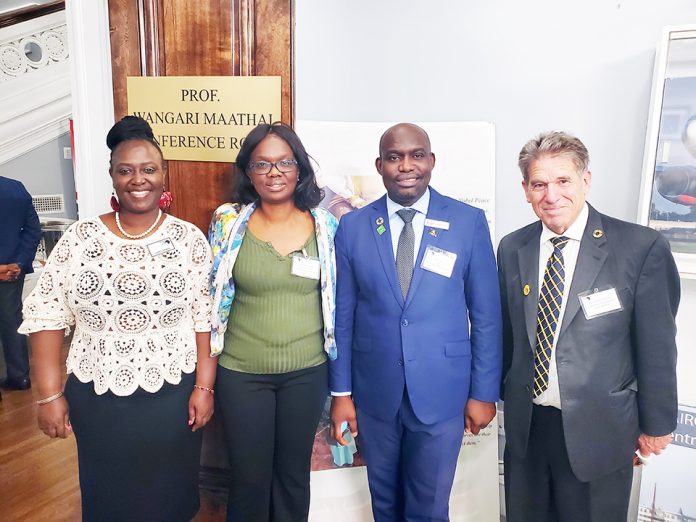
Leaders of Minnesota African United during a visit at the Kenya Embassy in Washington, D.C. on Thursday, June 8, 2023 as they lobbied for the U.S. bid to host Expo 2027 in Minnesota. Left to right is Ms. Lillian Otieno, Ms. Nelima Sitati Munene, Mr. Basil Ajuo and Mr. Mark Ritchie. Photo: Tom Gitaa/Mshale
Otieno Munene Ajuo Ritchie Kenya Embassy June 8 2023 by Tom Gitaa
Leaders of Minnesota African United during a visit at the Kenya Embassy in Washington, D.C. on Thursday, June 8, 2023 as they lobbied for the U.S. bid to host Expo 2027 in Minnesota. Left to right is Ms. Lillian Otieno, Ms. Nelima Sitati Munene, Mr. Basil Ajuo and Mr. Mark Ritchie. Photo: Tom Gitaa/Mshale

The decision on which country will host the “Specialized Expo 2027”, commonly referred to as the World’s Fair, will be made in Paris next week on June 21 during the 172nd General Assembly and Africa will be key to whether the United States, one of five finalists, wins the bid to host it in Minnesota at a site next to the Mall of America.

The United States is up against Thailand, Serbia, Spain and Argentina. There are 179 member countries, each with one vote at next week’s crucial assembly. African countries with over 50 of them as members comprise almost a third of the votes.

Secretary of State Antony Blinken has also recorded a special message for the assembly supporting the U.S. bid and the first session of the 93rd Minnesota Legislature, which wrapped up last month, allocated a $5 million grant for the local host committee to assist with planning should Minnesota win the bid .

Minnesota Africans United (MAU), a coalition of African immigrant communities in the state, has led the charge in lobbying African countries to support the US bid.

“There was no African country in the running to host the World Fair so Minnesota Africans United partnered with Minnesota USA Expo to support (the) US bid as we believe it will open up business opportunities for our community here and African countries,” Basil Ajuo, President and CEO of MAU said during an interview with Mshale.

Mr. Ajuo was joined in the interview with former Minnesota Secretary of State Mark Ritchie, a board member of Minnesota USA Expo 2027, the non-profit entity formed to securing the and MAU board chair Ms. Nelima Sitati Munene.

The trio and other leading African immigrant leaders in the state, including the national Small Business Person of the Year, Mr. Abdirahman Kahin, have for the last two years crisscrossed the African continent and Europe drumming up the US bid. The intense lobbying has included visiting virtually all the African countries’ Washington embassies and holding countless webinars in the process.

In an op-ed published recently in the Pioneer Press, and again reiterated in the Mshale interview, Mr. Ritchie sounded more confident than ever about Minnesota’s chances at next week’s vote: “Our bid is backed by nearly every country on the African Continent,” he said.

If Minnesota is chosen to host, an estimated 14 million people would descend on the state in the summer of 2027 for 93 days of an international exhibition encompassing technology, science, as well as the arts and culture.

The U.S. bid is based on the theme “Healthy People, Healthy Planet: Wellness and Well-Being for All.”

One big possible outcome if Minnesota hosts the expo is the avenues it opens for African immigrants, and ultimately African nations, to own the development process.

“The way development has been done on the continent in the past has been one sided, but if an African immigrant here in addition to sending remittances partners with an American company for a business venture back home (Africa) then that changes everything,” Ms. Nelima Sitati Munene said of Africa’s relationship with its international development partners. The expo 2027 will provide the venue for those possibilities, she added.

The MAU team is urging African immigrants with ties to their home countries’ leadership and their embassies in Washington to call them and express their solidarity and support for the U.S. bid. Expressions for the U.S. bid can also be shared on social media in advance of the June 21 vote using the following hashtags: #Expo2027USA, #Expo2027, and #HealthyPeopleHealthyPlanet.

Grammys add new categories, including for pop dance recording and African music performance

0
Grammy Awards are displayed at the Grammy Museum Experience at Prudential Center in Newark, N.J. on Oct. 10, 2017. The Recording Academy has announced three new categories to be added to the 2024 Grammy Awards: Best Pop Dance Recording, Best African Music Performance, and Best Alternative Jazz Album. Photo/Julio Cortez/AP File
Grammy Awards Display in 2017
Grammy Awards are displayed at the Grammy Museum Experience at Prudential Center in Newark, N.J. on Oct. 10, 2017. The Recording Academy has announced three new categories to be added to the 2024 Grammy Awards: Best Pop Dance Recording, Best African Music Performance, and Best Alternative Jazz Album. Photo/Julio Cortez/AP File

LOS ANGELES — More change is afoot at the Grammys. The Recording Academy announced Tuesday that three new categories will be added to the awards show in 2024: best pop dance recording, best African music performance, and best alternative jazz album.

In addition, two existing categories have been moved to the general field, which means that all Grammy voters can participate in selecting the winners: producer of the year, non-classical, and songwriter of the year, non-classical, the latter of which was first introduced this year.

Previously, the general categories were made up solely of the “Big Four” awards: best new artist, as well as album, record, and song of the year. Grammy voters are eligible to vote in general categories, as well as up to ten categories across three genre fields — and are instructed only to vote in their area of expertise. The changes to those two categories reflect an evolving music industry, where songwriters and producers have become increasingly celebrated for their contributions.

The new best African music performance category will highlight “regional melodic, harmonic and rhythmic musical traditions,” according to a Recording Academy press release, including genres like “Afrobeat, Afro-fusion, Afro Pop, Afrobeats, Alte, Amapiano, Bongo Flava, Genge, Kizomba, Chimurenga, High Life, Fuji, Kwassa, Ndombolo, Mapouka, Ghanaian Drill, Afro-House, South African Hip-Hop, and Ethio Jazz.”

Before the addition, those artists would compete in the best global music performance category, first introduced in 2022 as part of the global music field.

Prior to 2020, the field was previously referred to as “world music.” The Grammys enacted the name change to curb “connotations of colonialism,” according to a press release.

The best pop dance recording category is defined by “up-tempo, danceable music that follows a pop arrangement” and recordings that “feature strong rhythmic beats and significant electronic-based instruments with an emphasis on the vocal performance, melody and hooks.” Dance remixes do not apply.

And finally, the best alternative jazz album category will spotlight alternative jazz albums that blend genre, hybridizing jazz and other musical styles including “R&B, Hip-Hop, Classical, Contemporary Improvisation, Experimental, Pop, Rap, Electronic/Dance music, and/or Spoken Word.”

“The Recording Academy is proud to announce these latest Category changes to our Awards process. These changes reflect our commitment to actively listen and respond to the feedback from our music community, accurately represent a diverse range of relevant musical genres, and stay aligned with the ever-evolving musical landscape,” Recording Academy CEO Harvey Mason jr. said in a statement.

“By introducing these three new Categories, we are able to acknowledge and appreciate a broader array of artists,” he said. “We are excited to honor and celebrate the creators and recordings in these Categories, while also exposing a wider range of music to fans worldwide.”

Three African immigrants among 2023 Bush Foundation Fellows

0
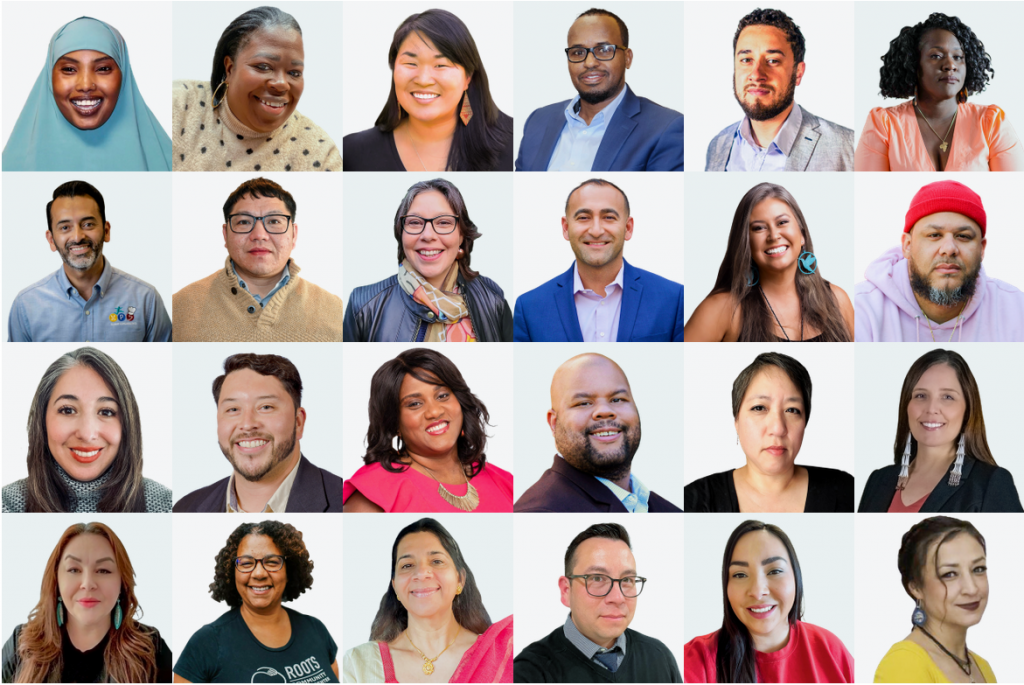
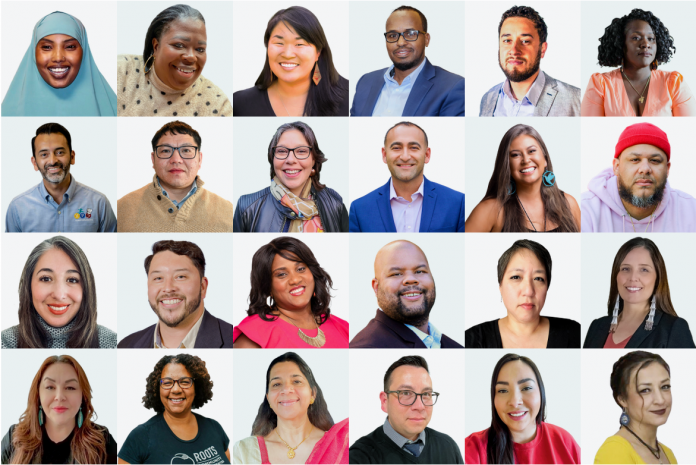
The 24 leaders pictured above from the Upper Midwest of the United States are the recipients of the 2023 Bush Fellowship and will each receive a flexible grant of up to $100,000 to strengthen and develop their leadership. Photo: Courtesy Bush Foundation
2023 Bush Foundation Fellows
The 24 leaders pictured above from the Upper Midwest of the United States are the recipients of the 2023 Bush Fellowship and will each receive a flexible grant of up to $100,000 to strengthen and develop their leadership. Photo: Courtesy Bush Foundation

Three African immigrants are among the 16 Minnesota recipients of this year’s Bush Foundation fellowships announced today. Winners are chosen for their track record of success and potential to lead further change. They will each receive up to $100,000 to further their leadership opportunities. Previous recipients have used their winnings to further their education such as graduate school.

The 16 Minnesotans are among 24 total fellowship recipients from the Upper Midwest.

The African immigrants:

FARHIA BUDUL
Farhia Budul is a 2023 Bush Foundation fellow. Photo: Courtesy Bush Foundation

Farhia Budul is one of the first East African women to go public with her story of achieving sobriety which has become a source of hope and healing for dozens of people. She believes that while people may initiate sobriety in treatment, recovery happens and is sustained in the community.

ABDIRIZAK DIIS
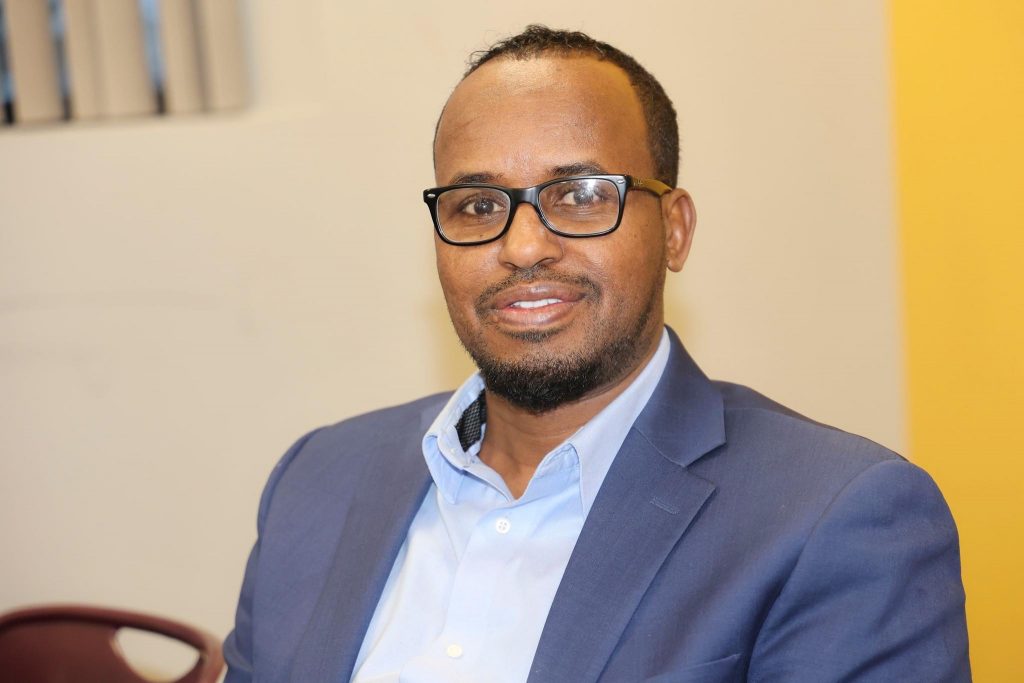
Abdirizak Diis is a 2023 Bush Foundation fellow. Photo: Courtesy Bush Foundation

Abdirizak Diis is an educator in Minneapolis Public Schools and understands the unique needs of immigrant children in America which led him to be the creator of the first Somali ethnic studies program in the country.

OWEN DUCKWORTH
Owen Duckworth is a 2023 Bush Foundation fellow. Photo: Courtesy Bush Foundation

Owen Duckworth is a child of African and European immigrant parents and has led many successful affordable housing efforts and believes relationships are at the heart of change. A consensus builder, organizer, and artist, he seeks to eliminate the entrenched housing and wealth inequities in the region.

2023 Bush Foundation Fellows
The 24 leaders pictured above from the Upper Midwest of the United States are the recipients of the 2023 Bush Fellowship and will each receive a flexible grant of up to $100,000 to strengthen and develop their leadership. Photo: Courtesy Bush Foundation

The Bush Foundation will start accepting applications for the 2024 Bush Fellowship on August 22, 2023. You can lean more about Bush Foundation and the 2023 fellows at bushfoundation.org.