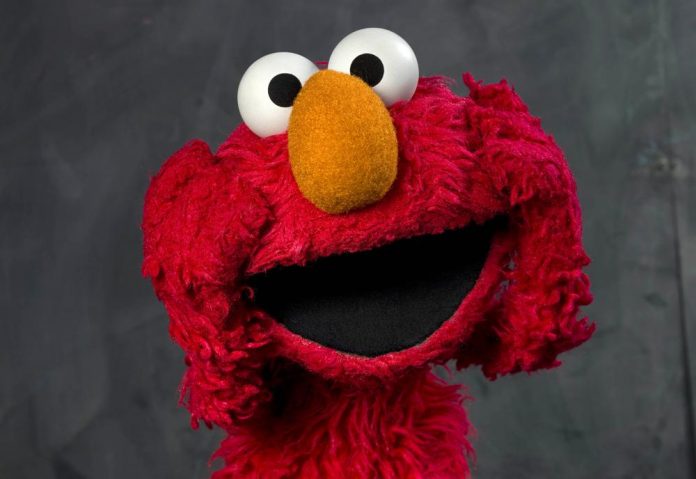
This Jan. 24, 2011, photo shows "Sesame Street" muppet Elmo posing for a portrait with the assistance of puppeteer Kevin Clash in the Fender Music Lodge during the 2011 Sundance Film Festival to promote the documentary "Being Elmo" in Park City, Utah. Elmo got a COVID-19 vaccine Tuesday, June 28, 2022, according to Sesame Workshop, the nonprofit educational organization behind "Sesame Street." Photo: Victoria Will/AP File
Elmo got a COVID-19 vaccine Tuesday, according to Sesame Workshop, the nonprofit educational organization behind “Sesame Street.”
In a public service announcement posted to YouTube, the beloved 3-and-a-half-year-old “Sesame Street” star talked with his dad about what it was like to get the shot.
Elmo’s dad said he had a lot of questions for the pediatrician, who assured him that vaccinations are safe and effective for children.
“Was it safe? Was it the right decision?′ I talked to our pediatrician so I could make the right choice,” Louie said in the PSA. “I learned that Elmo getting vaccinated is the best way to keep himself, our friends, neighbors and everyone else healthy and enjoying the things they love.”
COVID-19 vaccinations for the youngest Americans started last week. That means U.S. kids under 5 — roughly 18 million youngsters — are eligible for the shots.
Last November, Big Bird got vaccinated — sparking criticism from some conservative politicians. Texas Sen. Ted Cruz, a Republican, called it “government propaganda.”
The CDC advises vaccination even for those who already had COVID-19 to protect against reinfection, and says it is OK to get other vaccines at the same time.
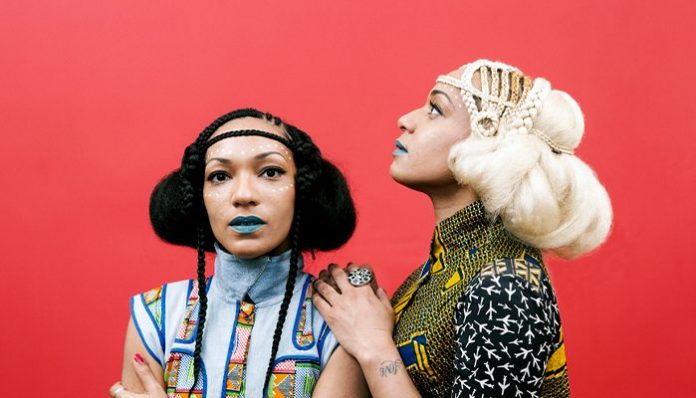
Les Nubians will perform two shows at the Dakota on Wednesday, July 13, 2022. Photo: Courtesy of Les Nubians
Les Nubians will perform two shows at the Dakota on Wednesday, July 13, 2022. Photo: Courtesy of Les Nubians
The duo that comprises Les Nubian, Hélène Faussart and Célia Faussart, emerges from the pandemic with new music and renewed passion to bring their melange of sound to the world. The imposed quarantine was both frustrating and fruitful for the two women.
Mshale spoke to the sisters this week on Zoom, with Hélène in Guadeloupe and Célia in Paris. The physical separation from their audience weighed on them. Célia said, “It was very challenging, in Paris we couldn’t go anywhere. We couldn’t go to other countries.”
But out of that frustration, “We also released a playlist, Les Nubian, to comfort people during confinement,” said Hélène. They also released to acclaim, a single, Liberation, in the spring of 2020. “It was perfect timing at that time for what we were going though,” said Célia. “The theme of song was important to share to all the people stuck at home.”
During covid, Hélène went to Cameroon “to see if was time to settle in the country of my mother, but it was not. I was not ready for the corruption.” Instead, she traveled to Guadeloupe.
Most of Les Nubian’s musicians are from Guadeloupe. There, Hélène found an artistic collective of many nationalities from countries such as Martinique, Guadeloupe, and Dominica. She said, “Being part of this community confirmed to me what makes the beauty of this world, it’s us individuals, us human beings.”
Now that most restrictions have lifted, they’ve begun to tour again. July 13th brings them to The Dakota for a return engagement for two shows, 7:00 p.m. and 9: 00 p.m.
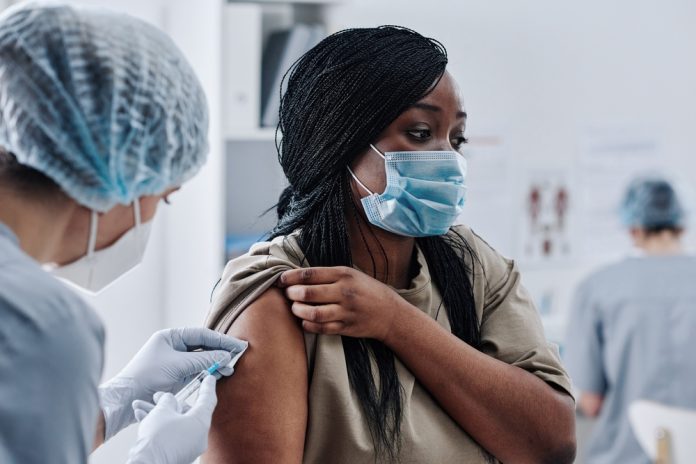
FDA advisers voted on June 28, 2022 to recommend updated booster doses for COVID-19 this fall. Photo: Anna Stills/Shutterstock
FDA advisers voted on June 28, 2022 to recommend updated booster doses for COVID-19 this fall. Photo: Anna Stills/Shutterstock
At least some U.S. adults may get updated COVID-19 shots this fall, as government advisers voted Tuesday that it’s time to tweak booster doses to better match the most recent virus variants.
Advisers to the Food and Drug Administration wrestled with how to modify doses now when there’s no way to know how the rapidly mutating virus will evolve by fall — especially since people who get today’s recommended boosters remain strongly protected against COVID-19′s worst outcomes.
Ultimately the FDA panel voted 19-2 that COVID-19 boosters should contain some version of the super-contagious omicron variant, to be ready for an anticipated fall booster campaign.
“We are going to be behind the eight-ball if we wait longer,” said one adviser, Dr. Mark Sawyer of the University of California, San Diego.
The FDA will have to decide the exact recipe, but expect a combination shot that adds protection against either omicron or some of its newer relatives to the original vaccine.
“None of us has a crystal ball” to know the next threatening variant, said FDA vaccine chief Dr. Peter Marks. But “we may at least bring the immune system closer to being able to respond to what’s circulating” now rather than far older virus strains.
It’s not clear who would be offered a tweaked booster — they might be urged only for older adults or those at high risk from the virus. But the FDA is expected to decide on the recipe change within days and then Pfizer and Moderna will have to seek authorization for the appropriately updated doses, time for health authorities to settle on a fall strategy.
Current COVID-19 vaccines have saved millions of lives globally. With a booster dose, those used in the U.S. retain strong protection against hospitalization and death but their ability to block infection dropped markedly when omicron appeared. And the omicron mutant that caused the winter surge has been replaced by its genetically distinct relatives. The two newest omicron cousins, called BA.4 and BA.5, together now make up half of U.S. cases, according to the Centers for Disease Control and Prevention.
Pfizer and Moderna already were brewing boosters that add protection to the first omicron mutant. Their combination shots, what scientists call “bivalent” vaccines, substantially boosted levels of antibodies capable of fighting that variant, more than simply giving another dose of today’s vaccine.
Both companies found the tweaked shots also offered some cross-protection against those worrisome BA.4 and BA.5 mutants, too, but not nearly as much.
Many scientists favor the combination approach because it preserves the original vaccines’ proven benefits, which include some cross-protection against other mutants that have cropped up during the pandemic.
The question facing FDA is the correct recipe change. Both companies said they’d have plenty of omicron-targeted combo shots by October but Moderna said switching to target omicron’s newest relatives might delay its version another month.
Further complicating the decision is that only half of vaccinated Americans have received that all-important first booster. And while the CDC says protection against hospitalization has slipped some for older adults, a second booster that’s recommended for people 50 and older seems to restore it. But only a quarter of those eligible for the additional booster have gotten one.
Marks said that by tweaking the shots, “we’re hoping we can convince people to go get that booster to strengthen their immune response and help prevent another wave.”
The logistics will be challenging. Many Americans haven’t had their first vaccinations yet, including young children who just became eligible — and it’s not clear whether tweaked boosters eventually might lead to a change in the primary vaccine. But the FDA’s advisers said it’s important to go ahead and study updated vaccine recipes in children, too.
And one more complexity: A third company, Novavax, is awaiting FDA authorization of a more traditional kind of COVID-19 vaccine, protein-based shots. Novavax argued Tuesday that a booster of its regular vaccine promises a good immune response against the new omicron mutants without a recipe change.
Advisers to the World Health Organization recently said omicron-tweaked shots would be most beneficial as a booster only, because they should increase the breadth of people’s cross-protection against multiple variants.
“We don’t want the world to lose confidence in vaccines that are currently available,” said Dr. Kanta Subbarao, a virologist who chairs that WHO committee.
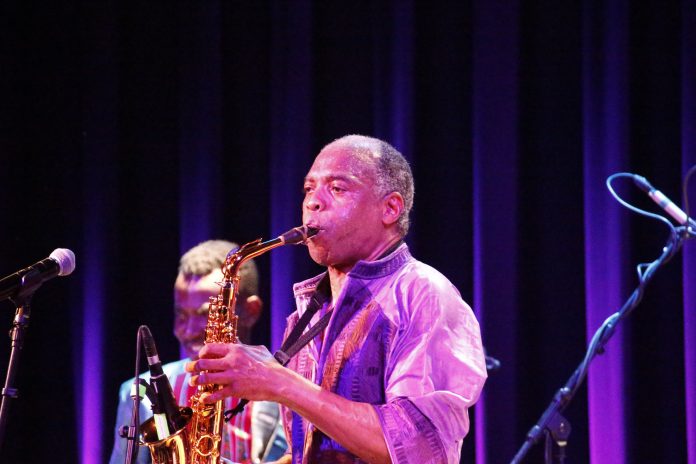
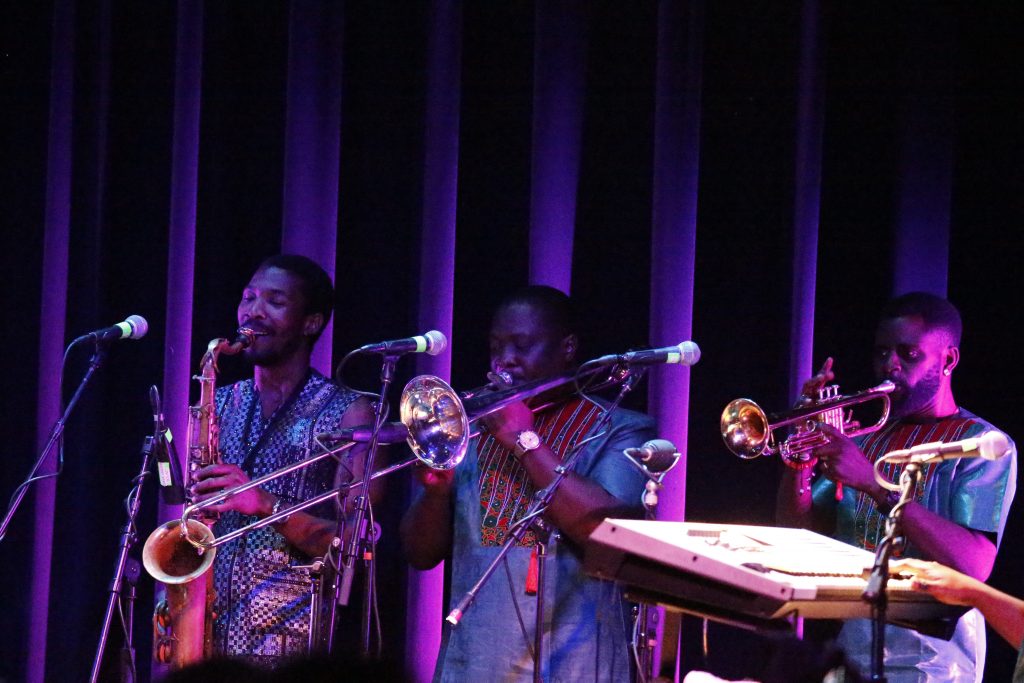
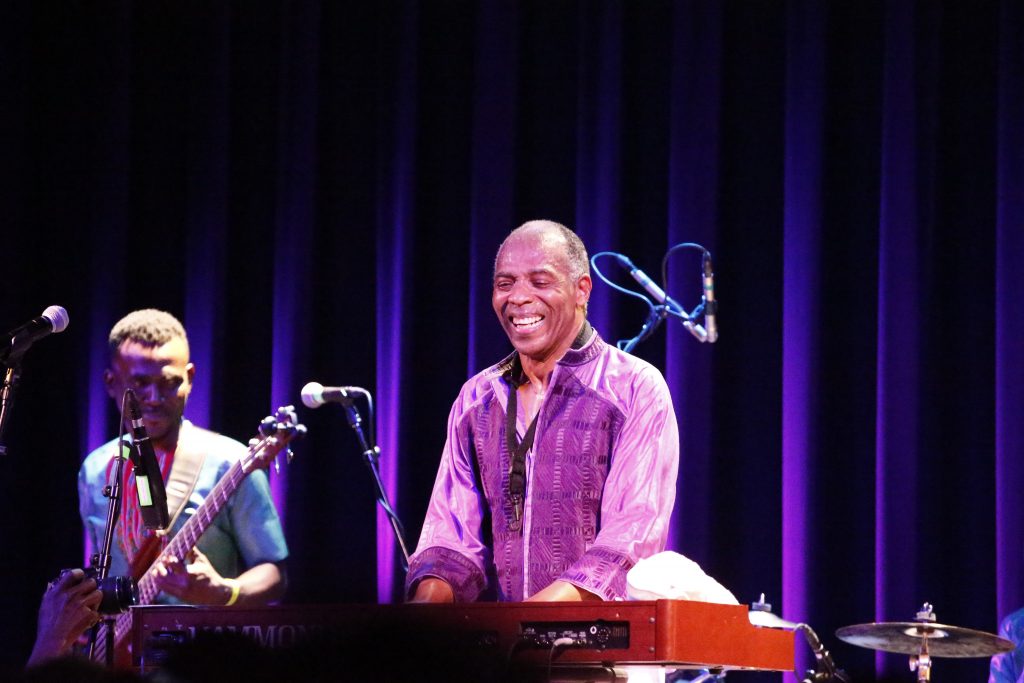
Femi Kuti plays the saxophone during a standing room only concert at the Cedar in Minneapolis on Wednesday, June 22, 2022. Photo: Richard Ooga/Mshale
Femi Kuti plays the saxophone during a standing room only concert at the Cedar in Minneapolis on Wednesday, June 22, 2022. Photo: Richard Ooga/Mshale
The Cedar Cultural Center hosts hundreds of musical acts every year, but they could not contain the sound of Femi Kuti and his band Positive Force last Wednesday evening, June 22nd.
Nearly 400 concert-goers absorbed Kuti’s music in a standing-room-only concert. Pummeled by the sound of a full band that included Femi’s son, Made Kuti, if the Cedar’s roof could have shot upward, it would have.
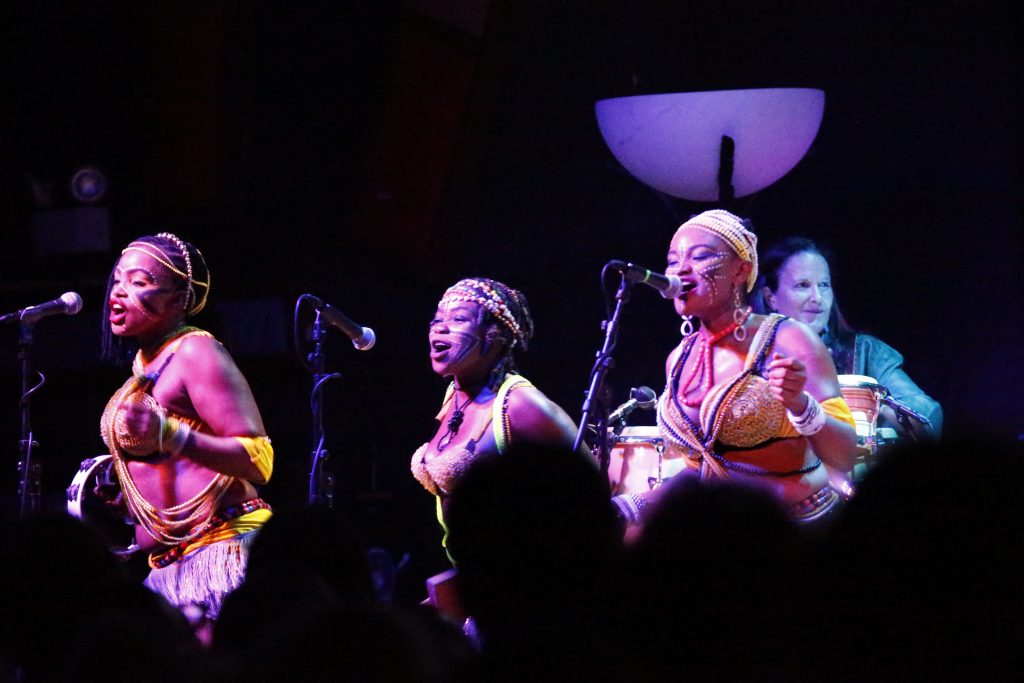
Femi Kuti’s dancers at the Cedar in Minneapolis on Wednesday, June 22, 2022 during a standing room only concert. Photo: Richard Ooga/Mshale
The evening opened with DJ Salif Keita piping out dance music to an enthusiastic crowd dressed up and eager to experience an evening rich in music DJ Salif Keita kept us on our feet with updated music from the 70s and 80s and 90s. Many indulged and skittered about the dance floor not formally dancing, but not standing still either.
Made Futi (extreme left), Femi Kuti’s son, leads the trumpeters during a standing room only concert at the Cedar in Minneapolis on Wednesday, June 22, 2022. Photo: Richard Ooga/Mshale
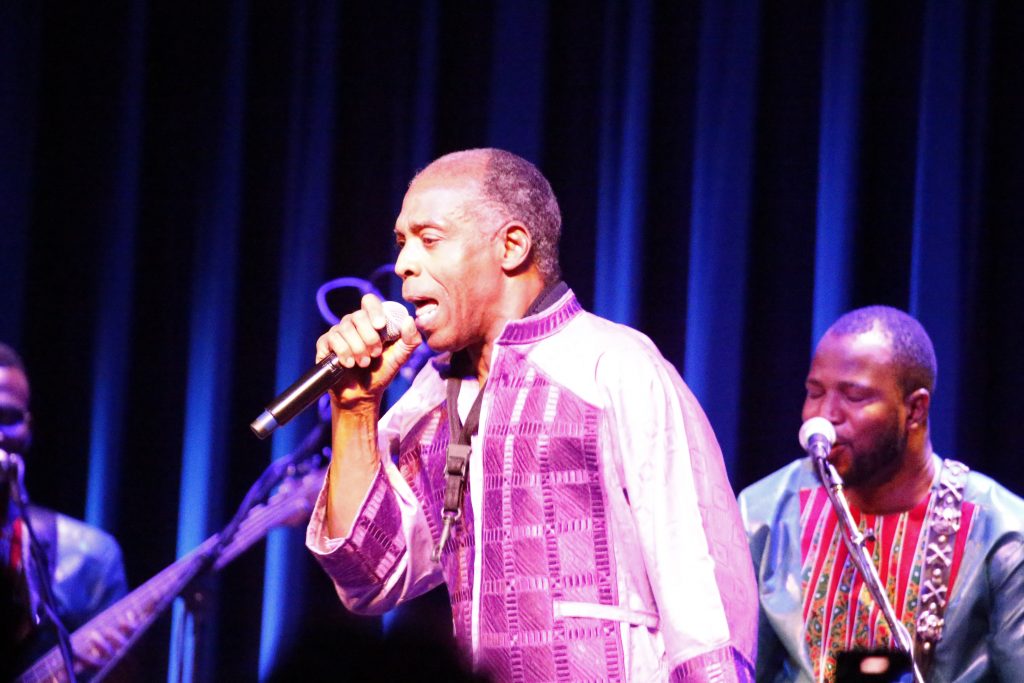
Shortly after 8:30, the commanding sound of Afrobeat musician Femi Kuti, son of Nigeria’s King of the AfroBeat, Fela Kuti, took the stage. He introduced the band that included his wife and oldest son. Then he shouted, “Fasten your seatbelts! Are you ready to groove?!”
Femi Kuti during a standing room only concert at the Cedar in Minneapolis on Wednesday, June 22, 2022. Photo: Richard Ooga/Mshale
Kuti, master of his music, playing synthesizer, saxophone, and singing his own compositions plays alongside his entourage of horns, guitars, drums, rhythm instruments, and dancers, who also provide back-up vocals.
With little segue between numbers, he played many songs from his latest album, Legacy+ such as PàPáPà, Stop the Hate, and Show of Shame. Nearing the end of his set, he compelled the audience to clap their hands over their heads, “Like this, two hands, everybody, like this.”
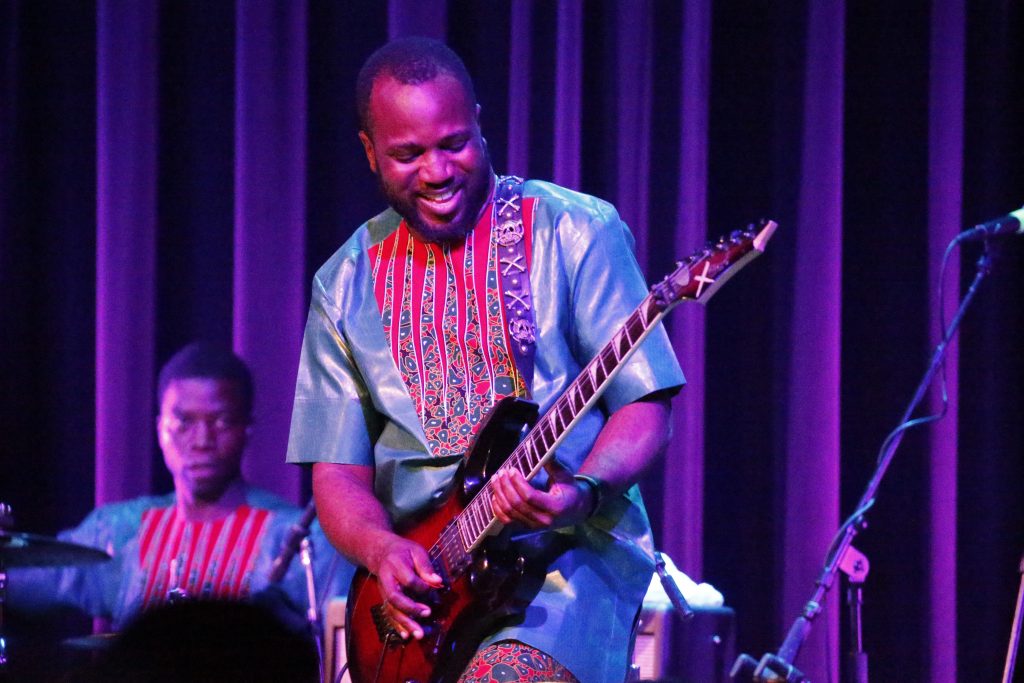
Femi Kuti’s guitarist plays during a standing room only concert at the Cedar in Minneapolis on Wednesday, June 22, 2022. Photo: Richard Ooga/Mshale
Once we complied, Femi called out, “I’m starting a new song…feel, in your bones, man…bring love, peace, and charity…” Finally, the room was utterly silent and BOOM! The band exploded with another song.
Femi Kuti on the keyboards at the Cedar in Minneapolis on Wednesday, June 22, 2022 during a standing room only concert. Photo: Richard Ooga/Mshale
Femi danced with abandon, but afterwards, ruefully told us, “I forget, I’m not 27 any more.” He brought his son, Made Kuti, to the front and left the stage to him for a number. Made’s sound, unique and clearly separate from his father’s, draws from his own contemporaries with an edgy hip-hop vocalization.
Femi Kuti returned to the stage and finished the nearly 90-minute set with an encore that matched the rest of the show—intense and insistent.
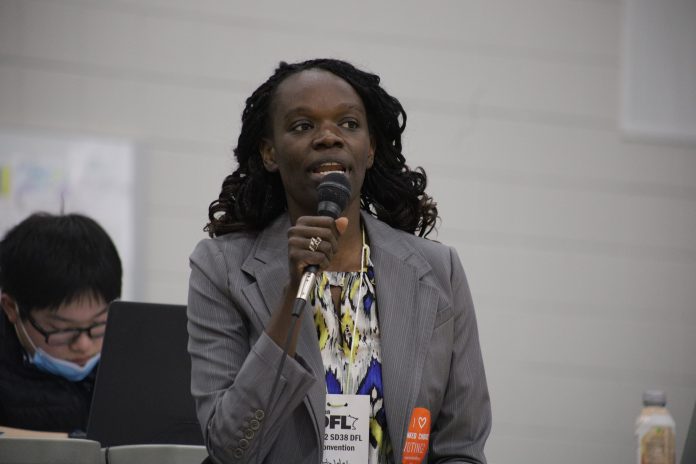
Huldah Momanyi Hiltsley speaks at the DFL District 38 State Senate Convention on Saturday, March 26, 2022 where she won most of the delegates. Stonewall DFL and OutFront Minnesota—two influential LGBTQIA+ advocacy groups have announced their endorsement of her candidacy. Photo: Panashe Matemba-Mutasa/Mshale
Huldah Momanyi Hiltsley speaks at the DFL District 38 State Senate Convention on Saturday, March 26, 2022 where she won most of the delegates. Stonewall DFL and OutFront Minnesota—two influential LGBTQIA+ advocacy groups have announced their endorsement of her candidacy. Photo: Panashe Matemba-Mutasa/Mshale
Huldah Momanyi Hiltsley, the Kenyan community leader running for a seat in the Minnesota State Senate, has earned the endorsement of Stonewall DFL and OutFront Minnesota—two influential LGBTQIA+ advocacy groups.
“Huldah understands the value of unconditional love for LGBTQIA+ youth and the community,” said Tamara Grady, the Osseo Area Schools Board Director, who is also the mother of two LGBTQIA+ children.
Hiltsley is running to replace Sen. Chris Eaton in District 38. If elected, she would become the first Black woman and African immigrant to join the upper house of the Minnesota legislature.
Born in Nyamira County, Kenya, Hiltsley came to the United States at the age of nine with her family. After graduating from Robbinsdale Cooper High School in New Hope, Minnesota, in 2004, Hiltsley went on to obtain a bachelor’s degree in International Business from Bethel University in St Paul. She is a recipient of The Morrill Hall and Rachel Tilsen Social Justice Award for her commitment to advancing social justice in the community. She currently works as a corporate compliance specialist, and serves as president of Mwanyagetinge Association of Kenyans in Minnesota.
Hiltsley has described herself as an advocate for all people, who believes that good governance requires integrity, transparency, accountability, and equity.
“Together, we will fight for a future where better quality of life is accessible to all residents in the Brooklyns and Osseo,” Hiltsley said.
OutFront Minnesota is the leading LGBTQIA+ advocacy organization in the state of Minnesota. According to their website, for the past three decades, OutFront Minnesota has worked to foster an LGBTQIA+ inclusive Minnesota via community organizing, public policy and law, anti-violence efforts, education and training, and a Youth and Schools Gender Sexuality Alliance (GSA) Network. OutFront envisions a state where people of the LGBTQIA+ community can live out their identities and have access to equal opportunities, free of violence, harassment, and discrimination.
First established in August of 1980 as the LGBTF Caucus (LGBT and Friends Caucus), Stonewall DFL is the official LGBTQIA+ Caucus of the Minnesota Democratic-Farmer Labor Party. The organization seeks to create an inclusive political atmosphere by electing members of the LGBTQIA+ community to Minnesota public office, as well as candidates who show commitment to advancing the rights of LGBTQIA+ people.
The two organizations have made a transformative impact on the Minnesota State legislature and policy throughout the years. In 1993, OutFront Minnesota backed the Minnesota Human Rights Act, the nation’s first ever civil rights law to protect transgender individuals from discrimination.
Stonewall DFL endorsements require a 60% majority of approval by the Board of Directors. Stonewall DFL provides endorsed candidates with volunteer and financial support.
Jennifer Haack, a community member and mother of two LGBTQIA+ children, said that she believes Hiltsley will continue to push for inclusivity for all in the district.
“Huldah will never abandon a single person in her community,” Haack said.
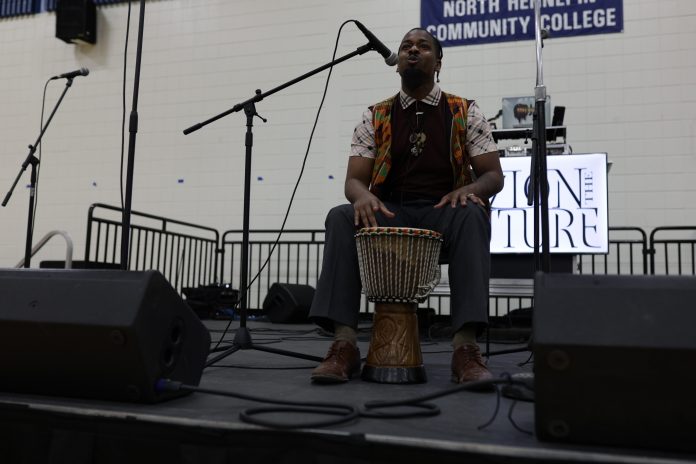
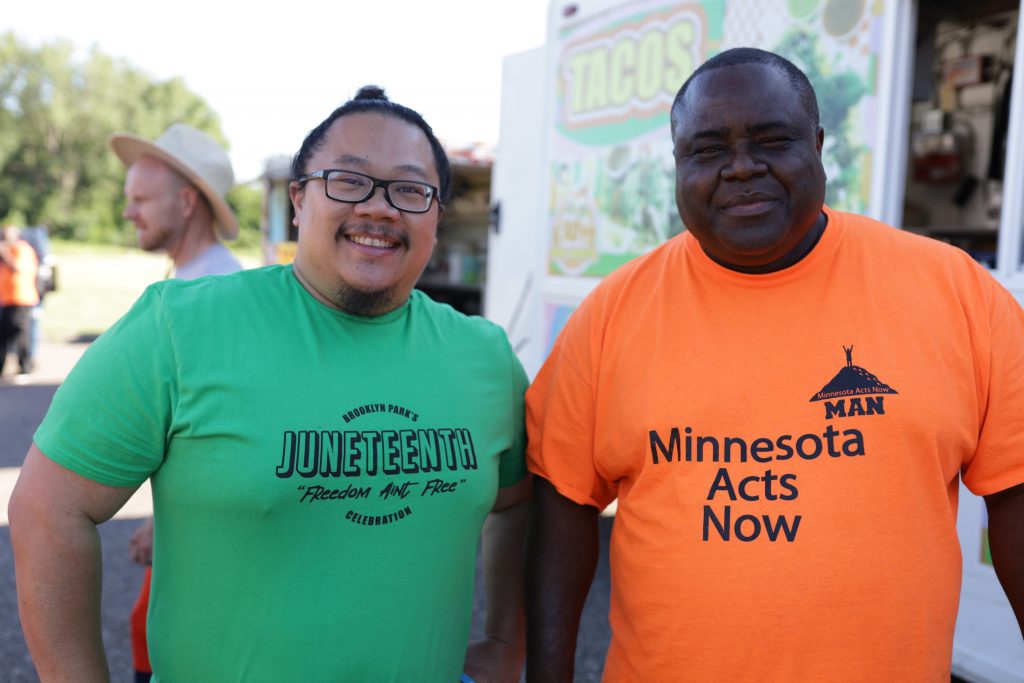
A drummer at Brooklyn Park’s Juneteenth celebration on Friday, June 17 2022. Photo: Panashe Matemba-Mutasa/Mshale
A drummer at Brooklyn Park’s Juneteenth celebration on Friday, June 17 2022. Photo: Panashe Matemba-Mutasa/Mshale
Spirits were high last weekend in Brooklyn Park, Minnesota, as residents attended the suburban Minneapolis city’s first annual celebration of Juneteenth, the holiday commemorating the emancipation of enslaved Africans in the United States.
Themed “Freedom ain’t Free”, the Juneteenth event took place at the Health and Wellness Center at North Hennepin Community College on Friday evening.
“I wholeheartedly believe that this is our country’s second Independence Day,” said Minnesota Senate candidate Susan Pha.
Although the Emancipation Proclamation was enacted in 1863 and consequently resulted in the freedom of around four million slaves, not all slaves were released from bondage. In Texas, slavery continued up until 1865, when Gordon Granger, a Union Army general, announced that the last remaining slaves would be freed in accordance with U.S. law.
In 1866, a small group of free African Americans in Texas orchestrated the first “Jubilee Day” on June 19 to celebrate their newfound freedom. The tradition continued to grow throughout the decades, and by 1979, Juneteenth was declared an official holiday in the state of Texas. On June 17, 2021, President Joseph R. Biden signed a law to make Juneteenth a federal holiday. It is considered the longest-standing African American holiday.
Brooklyn Park City Council member “XP” Lee and Bishop Harding Smith at Brooklyn Park’s Juneteenth celebration on Friday, June 17 2022. Photo: Panashe Matemba-Mutasa/Mshale
The first slaves to the United States is said to have been recorded as early as the 1500s. In 1619, an English ship reached American shores carrying around 20 Africans on board. The transportation of captured Africans continued into the following centuries for what would later be known as the Trans-Atlantic Slave Trade.
Contrary to popular belief, most slaves did not come to the United States via English ships. Only around 5%, or 300,000 captives, took that route, according SlaveVoyages, collaborative website that publishes public records about the Trans-Atlantic Slave Trade. The majority were transported by Spanish and Portuguese ships into Brazil and the Caribbean.
Brooklyn Park city councilmember Xiongpao “Xp” Lee said that learning about the delay in freedom for Texan slaves shifted his perspective on American history. He said it was critical for Americans to never forget that slavery persisted even after the enactment of Emancipation Proclamation.
“The fact that it took two years for freedom to reach those last enslaved people in Texas is something that just breaks my heart,” he said.
Harding Smith, a pastor at Spiritual Church of God, which is based in Minneapolis, said that it was important to acknowledge that while the United States has come far in its treatment of African Americans, it still has a long way to go. Smith pointed to issues of police brutality, discrimination, and economic barriers that create a form of “modern day slavery” for Black Americans.
“Recognizing this day is a good first step,” Smith said, “but we aren’t truly free until we address all aspects of the struggles we face.”
Kareem Elevated, a rapper and spoken word poet from Los Angeles, said that city-sponsored celebrations benefit the community by promoting diversity and preserving history.
“There is a lot of anti-racism work to be done, and Juneteenth is important because it helps us see the progress we have made,” Elevated said.
Paula Weakly, a resident of Brooklyn Park, said the celebration of Juneteenth was a step in the right direction, but also that she was shocked it had taken so long for the day to be honored.
“It’s good to see the diversity of our city and its people highlighted like this,” Weakly said.
Claudia Diggs said that she had always been enthusiastic about the Fourth of July, but only learned about Juneteenth recently. Recognizing Juneteenth was key to creating an inclusive account of American History, she said.
“My people were not free on July 4, 1776,” said Diggs. “For me, this is Independence Day.”
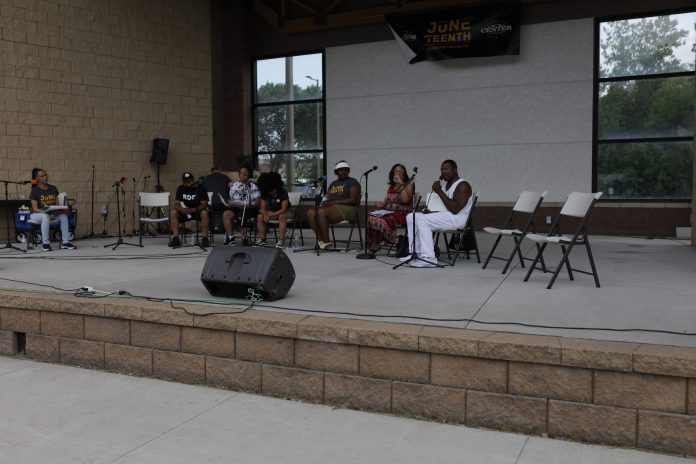
Dr. Angel Smith (left) moderates the Juneteenth Community Discussion during a City of Brooklyn Center-sponsored Juneteenth celebration at Centennial Park. Photo: Panashe Matemba-Mutasa/Mshale
Dr. Angel Smith (left) moderates the Juneteenth Community Discussion during a City of Brooklyn Center-sponsored Juneteenth celebration at Centennial Park. Photo: Panashe Matemba-Mutasa/Mshale
Residents of Brooklyn Center gathered in Centennial Park on Saturday to commemorate Juneteenth (short for June nineteenth) to honor the historic milestone that was the freeing of the final slaves in Texas on June 19, 1865. A highly anticipated facilitated discussion, featuring community leaders and public figures, concluded the activities with a candid discussion about race and trauma.
“It is amazing that we have this freedom, not only freedom from slavery, but freedom to come together in community,” said Matt Branch, executive director of Root Youth and Family Services.
Despite June of 1865 signifying the official end to slavery in America, many have been misled to believe that slavery ended two years prior in 1863, when President Abraham Lincoln enacted the Emancipation Proclamation. In actuality, the law included many exemptions, and slaves in the states of Missouri, Texas, Maryland, Kentucky, and Delaware continued to live a life of bondage. The miseducation surrounding the freedom of slaves is considered one of the reasons why Juneteenth is Black America’s “forgotten” holiday.
The Juneteenth Community Discussion, moderated by Brooklyn Center’s Communications Manager Dr. Angel Smith, featured a series of statements about the Black experience in America. Participants were then asked if they agreed with the stances, and to further elaborate on their responses.
Gary Hines, musical director and producer of three-time Grammy Award-winning choir, “Sounds of Blackness,” said that he did not agree that Juneteenth was strictly a “Black” holiday.
“I have friends of all nationalities who acknowledge the day,” Hines said. “Juneteenth is an Afrocentric, American holiday, for everybody.”
Though Juneteenth popularity has grown over the decades, many outside the Black community do not know its significance. A recent report published in the New York Times found that 60 percent of Americans either knew “nothing at all” or “only a little bit” about the holiday.
LaToya Turk, Brooklyn Center’s interim manager for the Office of Prevention, Health, and Safety said that Juneteenth can resonate with people of all backgrounds.
“We all have our own freedom story, and it may take different forms and look different for different groups, but we can use that as a common bond when celebrating Juneteenth,” said Turk.
Branch responded to a statement on whether Black youth experience fewer hardships than their grandparents did, saying that modern racism is more covert.
“I have to do the work of figuring out who is with me and who is against me,” Branch said.
Tanya M. Bransford, a District Court judge in the Hennepin County District Court, said she believed Black youth are worse off today because of mental health issues.
“There has been a high increase in mental health issues and isolation exacerbated by the pandemic,” Bransford said. “Although it was segregated, people in the ‘40s and ‘50s had more of a sense of community.”
Rising rates of anxiety and depression among youth disproportionately affect Black students, according to EdSource, a California nonprofit that advocates for student success in public schools. In prior decades, the Black youth suicide rate trailed that of their white and Asian counterparts. Today, the rate has more than doubled, surpassing that of all other ethnic groups, with 12 out of every 100,000 Black youth deaths caused by suicide in 2020.
Turk said that it is both easy and difficult to discuss her Black experience with others.
“It really depends on who I am talking to,” Turk said. “Certain people will be offended by these conversations, but the more we have this dialogue, the more we can reach a mutual respect.”
Branch said that while race-based conversations need to be had, he often found them emotionally draining.
“It is definitely triggering at times, because it sort of reminds you of all the struggle and in a way, you are reliving your trauma” Branch said.
Turk argued that more community-driven approaches to issues are needed to promote Black wellbeing.
“One we start to share spaces and have dialogues about what is happening, then we can implement programs to support our people,” Turk said.
Branch said that Juneteenth is most importantly an opportunity to promote Black history and culture to the younger generations for a brighter future.
“Explaining to my children who they are and why Juneteenth celebrates them was such a joyous feeling,” Branch said.
In this March 2021 photo provided by Pfizer, vials of the Pfizer-BioNTech COVID-19 vaccine are prepared for packaging at the company's facility in Puurs, Belgium. According to a study published Thursday. June 23, 2022 in the journal Lancet Infectious Diseases, nearly 20 million lives were saved by COVID-19 vaccines during their first year, but even more deaths could have been prevented if global targets had been reached. Photo: Pfizer via AP
In this March 2021 photo provided by Pfizer, vials of the Pfizer-BioNTech COVID-19 vaccine are prepared for packaging at the company's facility in Puurs, Belgium. According to a study published Thursday. June 23, 2022 in the journal Lancet Infectious Diseases, nearly 20 million lives were saved by COVID-19 vaccines during their first year, but even more deaths could have been prevented if global targets had been reached. Photo: Pfizer via AP
Nearly 20 million lives were saved by COVID-19 vaccines during their first year, but even more deaths could have been prevented if international targets for the shots had been reached, researchers reported Thursday.
On Dec. 8, 2020, a retired shop clerk in England received the first shot in what would become a global vaccination campaign. Over the next 12 months, more than 4.3 billion people around the world lined up for the vaccines.
The effort, though marred by persisting inequities, prevented deaths on an unimaginable scale, said Oliver Watson of Imperial College London, who led the new modeling study.
“Catastrophic would be the first word that comes to mind,” Watson said of the outcome if vaccines hadn’t been available to fight the coronavirus. The findings “quantify just how much worse the pandemic could have been if we did not have these vaccines.”
The researchers used data from 185 countries to estimate that vaccines prevented 4.2 million COVID-19 deaths in India, 1.9 million in the United States, 1 million in Brazil, 631,000 in France and 507,000 in the United Kingdom.
An additional 600,000 deaths would have been prevented if the World Health Organization target of 40% vaccination coverage by the end of 2021 had been met, according to the study published Thursday in the journal Lancet Infectious Diseases.
The main finding — 19.8 million COVID-19 deaths were prevented — is based on estimates of how many more deaths than usual occurred during the time period. Using only reported COVID-19 deaths, the same model yielded 14.4 million deaths averted by vaccines.
The London scientists excluded China because of uncertainty around the pandemic’s effect on deaths there and its huge population.
The study has other limitations. The researchers did not include how the virus might have mutated differently in the absence of vaccines. And they did not factor in how lockdowns or mask wearing might have changed if vaccines weren’t available.
Another modeling group used a different approach to estimate that 16.3 million COVID-19 deaths were averted by vaccines. That work, by the Institute for Health Metrics and Evaluation in Seattle, has not been published.
In the real world, people wear masks more often when cases are surging, said the institute’s Ali Mokdad, and 2021′s delta wave without vaccines would have prompted a major policy response.
“We may disagree on the number as scientists, but we all agree that COVID vaccines saved lots of lives,” Mokdad said.
The findings underscore both the achievements and the shortcomings of the vaccination campaign, said Adam Finn of Bristol Medical School in England, who like Mokdad was not involved in the study.
“Although we did pretty well this time — we saved millions and millions of lives — we could have done better and we should do better in the future,” Finn said.
Funding came from several groups including the WHO; the UK Medical Research Council; Gavi, the Vaccine Alliance; and the Bill and Melinda Gates Foundation.
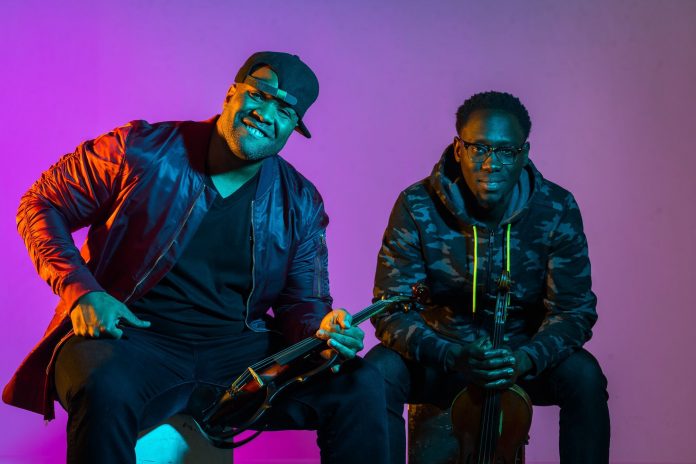
Black Violin treated concert goers at the Ordway in St. Paul, Minnesota on June 17, 2022 with hip hop, fusion, jazz, and pop covers all played on violin, viola, a Korg KRONOS keyboard. Photo: Courtesy of Black Violin
Black Violin treated concert goers at the Ordway in St. Paul, Minnesota on June 17, 2022 with hip hop, fusion, jazz, and pop covers all played on violin, viola, a Korg KRONOS keyboard. Photo: Courtesy of Black Violin
The world changed for a lot of people this year on June 17th. Quite possibly the trajectory for at least a handful of kids has taken a divergent path and they will look back on this evening as the moment when it all started.
The catalyst for this change happened on stage at The Ordway in St. Paul, Minnesota when Black Violin, comprised of two guys each with a small stringed instrument in their hands showed the rest of us how wild and exciting and cool a violin can be.
Wil B and Kev Marcus took their years of classical training and turned it all on its head. The audience was treated to hip hop, fusion, jazz, and pop covers all played on violin, viola, a Korg KRONOS keyboard that rivaled a grand piano, a drum set wielded by Nat Stokes, and DJ SPS spinning discs.
The quintet didn’t simply play orchestral music in a contemporary style. With a fog machine, strobe lights, flashing colors, and the thumb’s-up to take lots of selfies plus tag them with #blackviolin we found ourselves in a strange—but it worked—mash-up of musical genres and unusual juxtapositions.
Highlight of the first half of Black Violin’s set was their hit from Take the Stairs, a song called Dreamers. Wil B’s vocals soared over the impressive, yet deafening percussion, then gave way to Liston Gregory III’s incredible keyboard solo that sounded like a Steinway was on stage and not a synthesizer.
There was no intermission in this over 90-minute show. The second half of their set began with the duo playing an unadorned Shaker melody, Simple Gifts. They slowly jazzed it up, transforming into other musical styles and adding in the other musicians.
Kev Marcus announced, “In order to keep it fresh for ourselves and to offer the audience a unique experience this is the part where we just make it up.” This thrilled the concert-goers and the band launched into more polyphonic, almost chaotic music, yet exciting and energizing. Again, Wil B and Kev’s skills were matched by the stunning performance of Gregory on the keyboard.
The seats were nearly full at the Ordway with dozens of them filled by young children who doubtless were seeing for the first time the flexibility of a violin. Kev Marcus shouted out that he and Wil B earned full-scholarships to college with their instruments. Reminding the students and parents that it’s not only a football or basketball that can provide a full-ride to higher education.
Black Violin is all about breaking stereotypes and thinking outside the box. Their performance lived up to the performers’ goals and surpassed the audience’s expectations.
This photo provided by Pfizer shows the production of Pfizer's COVID-19 vaccine for children under 5 on May 2022 in Puurs, Belgium. U.S. regulators on Friday, June 17, authorized the first COVID-19 shots for infants and preschoolers, paving the way for vaccinations to begin next week.Photo: Pfizer via AP
This photo provided by Pfizer shows the production of Pfizer's COVID-19 vaccine for children under 5 on May 2022 in Puurs, Belgium. U.S. regulators on Friday, June 17, authorized the first COVID-19 shots for infants and preschoolers, paving the way for vaccinations to begin next week.Photo: Pfizer via AP
U.S. regulators on Friday authorized the first COVID-19 shots for infants and preschoolers, paving the way for vaccinations to begin next week.
The Food and Drug Administration’s action follows its advisory panel’s unanimous recommendation for the shots from Moderna and Pfizer. That means U.S. kids under 5 — roughly 18 million youngsters — are eligible for the shots. The nation’s vaccination campaign began about 1 1/2 years ago with older adults, the hardest hit during the coronavirus pandemic.
There’s one step left: The Centers for Disease Control and Prevention recommends how to use vaccines. Its independent advisers began debating the two-dose Moderna and the three-dose Pfizer vaccines on Friday and will make its recommendation Saturday. A final signoff is expected soon after from CDC Director Dr. Rochelle Walensky.
At a Senate hearing Thursday, Walensky said her staff was working over the Juneteenth federal holiday weekend “because we understand the urgency of this for American parents.”
She said pediatric deaths from COVID-19 have been higher than what is generally seen from the flu each year.
“So I actually think we need to protect young children, as well as protect everyone with the vaccine and especially protect elders,” she said.
The FDA also authorized Moderna’s vaccines for school-aged children and teens; CDC’s review is next week. Pfizer’s shots had been the only option for those age groups.
For weeks, the Biden administration has been preparing to roll out the vaccines for little kids, with states, tribes, community health centers and pharmacies preordering millions of doses. With FDA’s emergency use authorization, manufacturers can begin shipping vaccine across the country. The shots are expected to start early next week but it’s not clear how popular they will be.
Without protection for their tots, some families had put off birthday parties, vacations and visits with grandparents.
“Today is a day of huge relief for parents and families across America,” President Joe Biden said in a statement.
While young children generally don’t get as sick from COVID-19 as older kids and adults, their hospitalizations surged during the omicron wave and FDA’s advisers determined that benefits from vaccination outweighed the minimal risks. Studies from Moderna and Pfizer showed side effects, including fever and fatigue, were mostly minor.
White House COVID-19 coordinator Dr. Ashish Jha predicted the pace of vaccinations for kids under 5 to be far slower than it was for older populations and said the administration doesn’t have any internal targets for the pace of vaccinations.
“At the end of the day, our goal is very clear: We want to get as many kids vaccinated as possible,” Jha told The Associated Press.
In testing, the littlest children developed high levels of virus-fighting antibodies, comparable to what is seen in young adults, the FDA said. Moderna’s vaccine was about 40% to 50% effective at preventing infections but there were too few cases during Pfizer’s study to give a reliable, exact estimate of effectiveness, the agency said.
“Both of these vaccines have been authorized with science and safety at the forefront of our minds,” Dr. Peter Marks, FDA’s vaccine chief, said at a news briefing.
Marks said parents should feel comfortable with either vaccine, and should get their kids vaccinated as soon as possible, rather than waiting until fall, when a different virus variant might be circulating. He said adjustments in the vaccines would be made to account for that.
“Whatever vaccine your health care provider, pediatrician has, that’s what I would give my child,” Marks said.
The two brands use the same technology but there are differences.
Pfizer’s vaccine for kids younger than 5 is one-tenth of the adult dose. Three shots are needed: the first two given three weeks apart and the last at least two months later.
Moderna’s is two shots, each a quarter of its adult dose, given about four weeks apart for kids under 6. The FDA also authorized a third dose, at least a month after the second shot, for children who have immune conditions that make them more vulnerable to serious illness.
Both vaccines are for children as young as 6 months. Moderna next plans to study its shots for babies as young as 3 months. Pfizer has not finalized plans for shots in younger infants. A dozen countries, including China, already vaccinate kids under 5, with other brands.
Immediately upon hearing of the FDA’s decision, Dr. Toma Omofoye, a Houston radiologist, made appointments for her 4-year-old daughter and 3-year-old son. Without the shots, her family has missed out on family gatherings, indoor concerts, even trips to the grocery store, she said. During a recent pharmacy stop, Omofoye said her daughter stared and walked around like it was Disneyland, and thanked her.
“My heart broke in that moment, which is why my heart is so elated now,” Omofoye said.
But will other parents be as eager to get their youngest vaccinated? By some estimates, three-quarters of all U.S. children have already been infected. And only about 30% of children aged 5 to 11 have gotten vaccinated since Pfizer’s shots opened to them last November.
The FDA officials acknowledged those low rates and said the government is committed to getting more older kids vaccinated and having better success with younger kids.
“It’s a real tragedy, when you have something free with so few side effects that prevents deaths and hospitalization,” said FDA Commissioner Robert Califf.
Roughly 440 children under age 5 have died from COVID-19, federal data show.
Dr. Beth Ebel of the University of Washington School of Medicine in Seattle, said the tot-sized vaccines would be especially welcomed by parents with children in day care where outbreaks can sideline parents from jobs, adding to financial strain.
“A lot of people are going to be happy and a lot of grandparents are going to be happy, too, because we’ve missed those babies who grew up when you weren’t able to see them,” Ebel said.
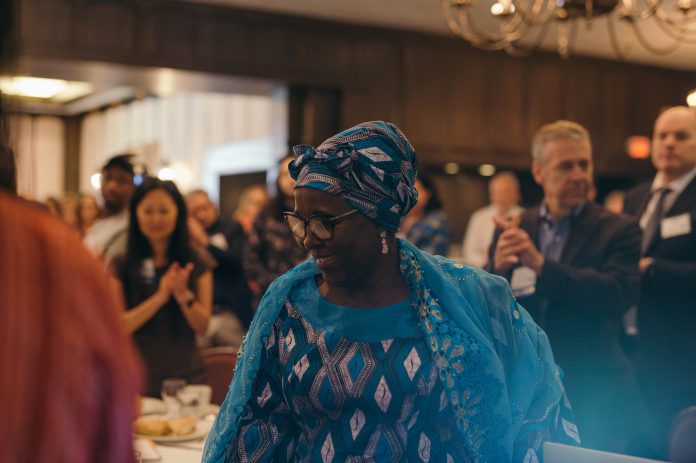
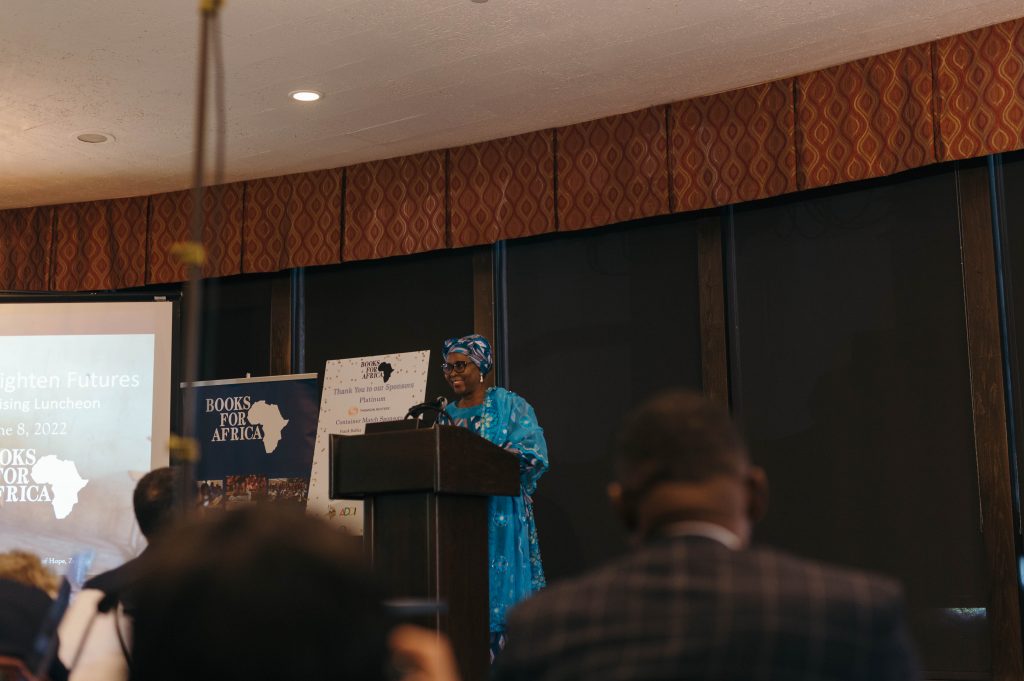
Ambassador Hajia Alima Mahama of Ghana walks to the podium to deliver the keynote address at the annual Books for Africa fundraising luncheon in St. Paul, Minnesota on June 8, 2022 where she spoke about the urgency of solving the book crisis in Africa. Photo: Jerusa Nyakundi/Mshale
Ambassador Hajia Alima Mahama of Ghana walks to the podium to deliver the keynote address at the annual Books for Africa fundraising luncheon in St. Paul, Minnesota on June 8, 2022 where she spoke about the urgency of solving the book crisis in Africa. Photo: Jerusa Nyakundi/Mshale
The world’s largest shipper of donated books to Africa held a fundraiser on June 8, where the goal was to break its own record and send 3.2 million books to the continent by the end of the year.
Books for Africa held its annual fundraiser at Town and Country Club in St Paul, Minnesota. The theme for this year’s event was Books Brighten Futures. Hajia Alima Mahama, Ghana’s Ambassador to the United States, was the keynote speaker.
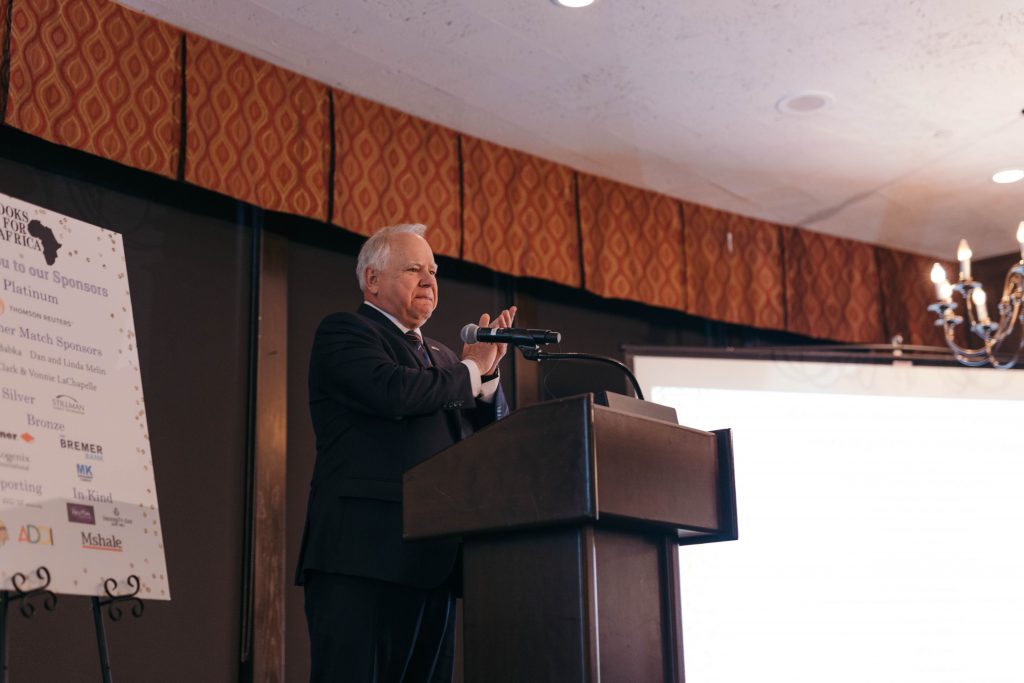
“I feel so honored that an organization like this is headquartered here in Minnesota,” said Minnesota Governor Tim Walz.
Governor Tim Walz of Minnesota speaking at the annual Books for Africa luncheon in St. Paul, Minnesota on June 8, 2022. Photo: Jerusa Nyakundi/Mshale
Of the 10 least literate countries in the world, nine are situated on the African continent, according to a United Nations Educational, Scientific, and Cultural Organization (UNESCO) report. In Sub-Saharan Africa, literacy rates depict a gendered gap, with 72% of men and just 58% of women being able to read, according to a 2021 study published in the journal Statista.
“The girls in Ghana selling water should be going to school and reading because they are the leaders who are going to change our world,” said Ghanaian author and publisher Rosemond Owens.
Tom Warth founded Books for Africa in 1988 to address the issue of literacy when he visited a library in Uganda that had nearly empty shelves. Since then, the mission has expanded, and the nonprofit organization has delivered more than 50 million books to all countries in Africa. In recent years, the Books for Africa has begun shipping computers and electronic devices to provide access to eBooks.
In her keynote speech, Mahama spoke about the urgency of solving the book crisis in Africa. She said that she believed education and access to books is at the foundation of every successful society.
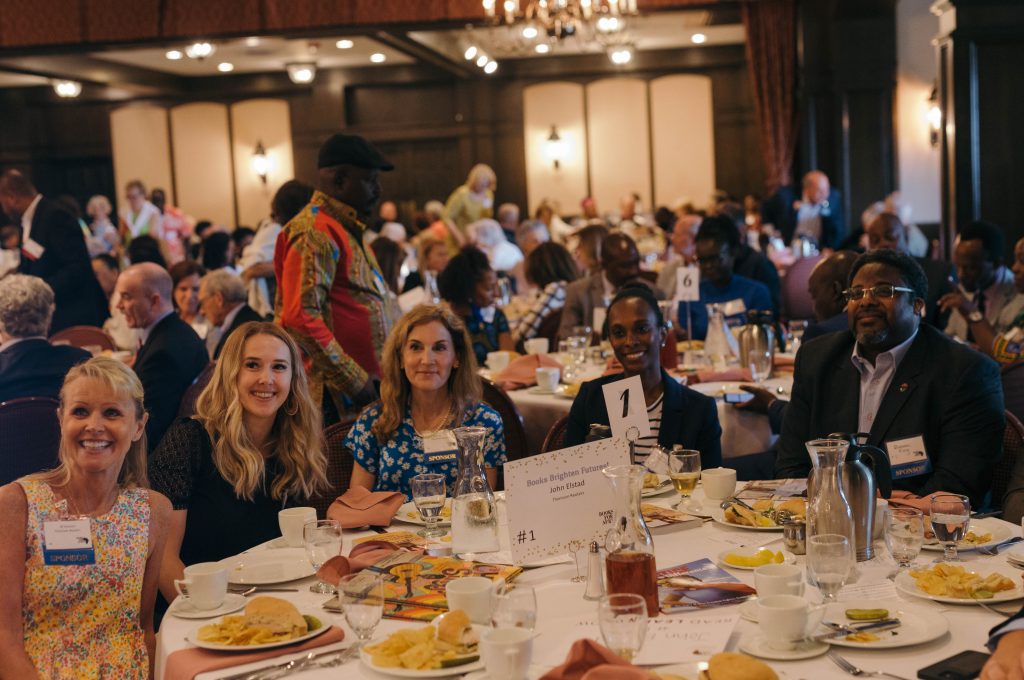
Guests at the annual Books for Africa fundraising luncheon on June 8, 2022 in St. Paul, Minnesota were told that the nonprofit organization has delivered more than 50 million books to all countries in Africa. Photo: Jerusa Nyakundi/Mshale
“It is easy to take books for granted in the United States, but education is key,” said Mahama.
Dana Anderson, a senior director at Cognizant, said she felt moved to give as a lover of books and firm believer in the transformative value of education.
“I am here because the gift of knowledge to a young person can change their life,” Anderson said.
Matenneh-Rose Dunbar she was inspired by the effects of book distribution she has seen in her home country of Liberia.
“Books are being provided for kids of all ages, and it is really helping them get ready for the professional world,” Dunbar said.
Carrie Blandin said that she had been familiar with Books for Africa for a while and decided to finally attend her first fundraiser.
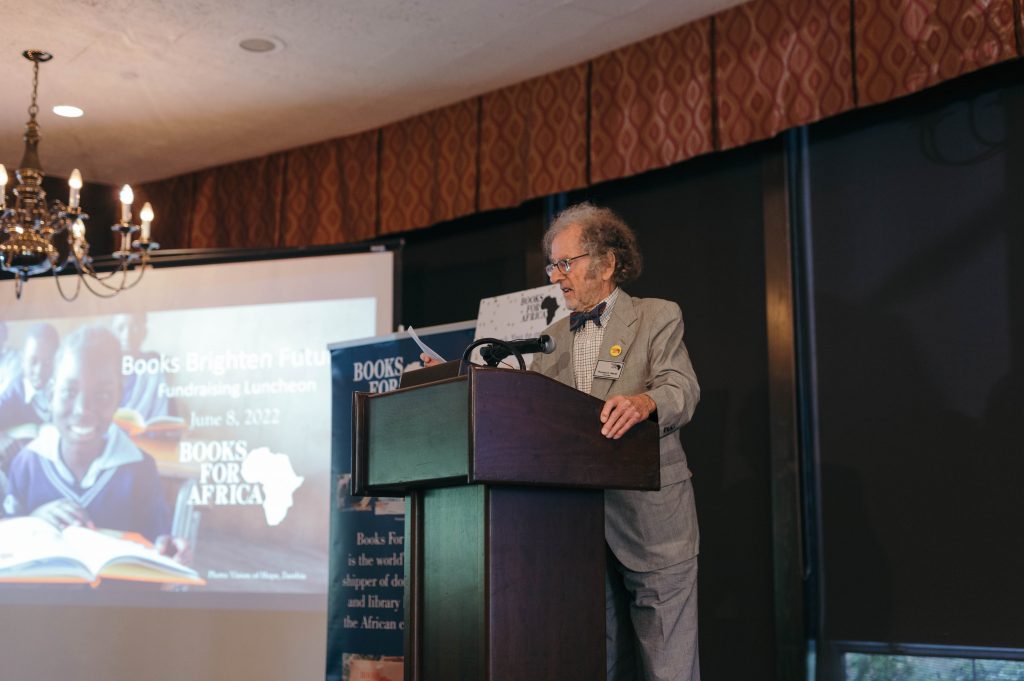
Tom Warth, the founder of Books for Africa, the largest shipper of donated school textbooks to the continent, told the audience at the organization’s fundraising luncheon on June 8, 2022 that the organization’s mission is now spearheaded by the African diaspora. Photo: Jerusa Nyakundi/Mshale
“This is a cause I will continue to support because every child in every corner of the world deserves to have access to books,” Blandin said.
Godfred, Maxy, and Bethany Otuteye, a family who were in attendance together, talked about why the work at BFA resonates with them.
Godfred said he came to the United States from Ghana on a scholarship from New York Based Africa America Institute. He later went on to study at Harvard University, where he said many of his classmates were beneficiaries of the same scholarship. He credits his access to books and education to his success today.
“I am here today because of the generosity of people I have never met,” said Godfred.
Ambassador Hajia Alima Mahama of Ghana keynoted the annual Books for Africa fundraising luncheon in St. Paul, Minnesota on June 8, 2022 where she spoke about the urgency of solving the book crisis in Africa. Photo: Jerusa Nyakundi/Mshale
In college, Godfred met his now-wife Maxy, who was attending a neighboring university at the time. Years later, the couple had their daughter, Bethany, who followed in her father’s footsteps and went on to obtain a bachelor’s degree from Harvard.
“Investment in education has a generational effect,” said Bethany.
Warth, the founder, said that besides the volume of books donated, one of the things he is most proud of is the presence of African leadership in the organization.
“It’s not just a bunch of old white people leading this,” Warth said. “The African diaspora is spearheading this now.”