
Home Blog Page 88

Joe Biden: My plan to lift every voice in Black America

0
Joe Biden
Joe Biden: My plan to lift every voice in Black America

There is injustice in America. There is discrimination. There is a legacy of racism and inequality that lives still in our institutions, our laws, and in too many people’s hearts that makes it harder for Black people to succeed. These are facts in the United States of America in 2020, and we must all do more to move our nation closer to the ideals inlaid at our founding—that all women and men are created equal.

Today, there are Americans all across this country, especially Black Americans, who are exhausted and hurting. Who are disappointed by a system that never seems to deliver for your communities. Who are sick and tired of a cycle where, in good times, Black communities lag behind, in bad times they get hit first and hardest, and in recovery, they take the longest to bounce back.

We’re in the midst of four simultaneous crises—a pandemic that has claimed more than 200,000 lives, a disproportionate number of whom were Black; an economic crash that has hit Black workers and Black business owners especially hard; a long overdue reckoning on racial justice; and a climate crisis that is already hurting Black and Brown communities the most.

President Trump wants to paper over the living wound of racism. He’s issued Executive Orders and established a new national commission designed to whitewash our history—and deny the daily reality of being Black in America. He actively appeals to white supremacists and fans the flames of hatred and division in our country, because he thinks it benefits him politically. He ignores the most basic job of every president: the duty to care for all of us, not just those who voted for him.

It’s the polar opposite of what I will do as president. I was proud to serve for eight years alongside President Obama. I watched up close how he filled the Oval Office with dignity and compassion for others. And, together with Senator Kamala Harris as my vice president, we will restore honor, integrity, and competence to the White House.

We will build an administration that looks like America, including nominating the first Black woman to serve on the Supreme Court.

That’s how we will work together to deliver real, lasting change. Criminal justice and policing reforms, but also economic opportunity and financial stability. Building wealth for families of color and passing it down. Closing the racial wealth gap is one of the most powerful ways we can build real equity in our society, and it’s going to require a full-court press. That’s what my Lift Every Voice plan is—a comprehensive agenda to take on the range of issues that drive inequality in Black America.

We’ll tackle student debt and invest more in our HBCUs, so higher education is a pathway to wealth and opportunity instead of to debt that prevents you from owning a home or starting a small business.

My plan will empower Black-owned small businesses, with short-term relief to get you through this tough time and long-term investments to help you build back better—with access to new capital and financing and government contracts.

We’ll fix our upside-down tax system to finally reward work, not wealth. Trump thinks billionaires deserve more tax cuts. But under my plan, I’ll make sure the super wealthy and big corporations pay their fair share, while ensuring that no one making less than $400,000 a year sees their taxes go up.

And I’m going to fight like hell to defend your family’s health care, just like I would my own. Right now, in the midst of a pandemic, Donald Trump is asking the U.S. Supreme Court to overturn Obamacare—all of it. He wants to overturn the very law that expanded coverage to an additional 3 million Black Americans.

If he succeeds, more than 20 million Americans will lose their coverage, and more than 100 million people with preexisting conditions will no longer be protected against their insurance companies charging them more, or denying them coverage all together.

I’ll defend Obamacare and build on it—adding a public option that will automatically enroll 4 million more people that Republicans shut out by refusing to expand Medicaid in their states. We’re going to get to universal coverage and lower health care costs. We’re going to give working families a bigger subsidy to lower their premiums. And we’re going to take on pharmaceutical companies, bringing down the cost of your prescription drugs by 60 percent.

As my friend John Lewis used his final words to remind us: “Ordinary people with extraordinary vision can redeem the soul of America.” We cannot be tired. We cannot be hopeless. The choice in this election couldn’t be more stark, and we must vote for the future we want for every single one of our children. I’m ready to fight for you and your families, and I hope to earn your vote.
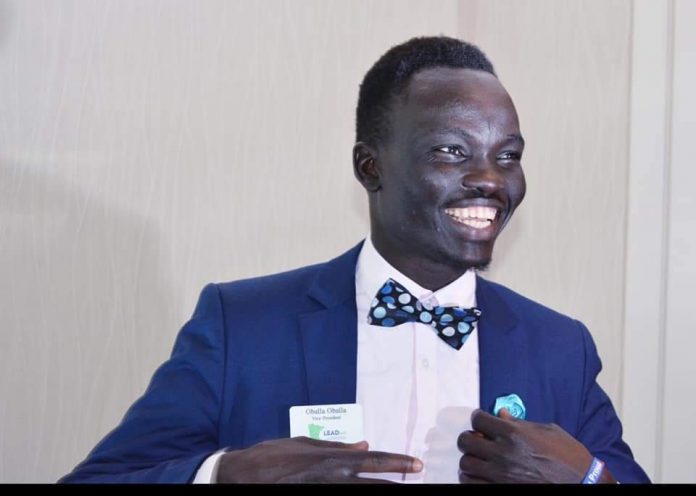

Ethiopian-born Oballa Oballa seeks seat on the Austin City Council

0
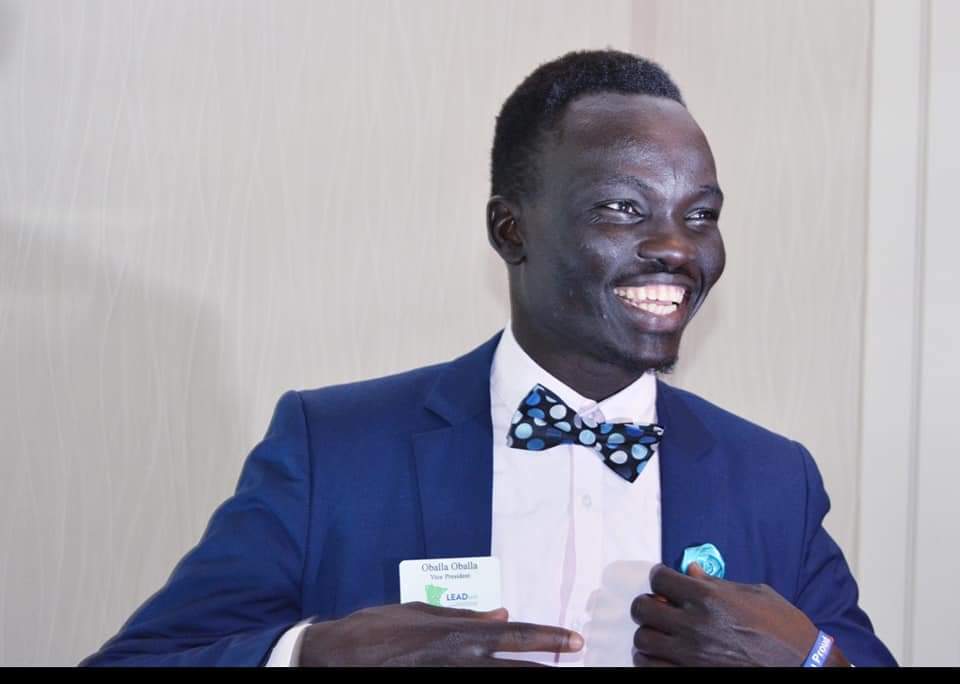
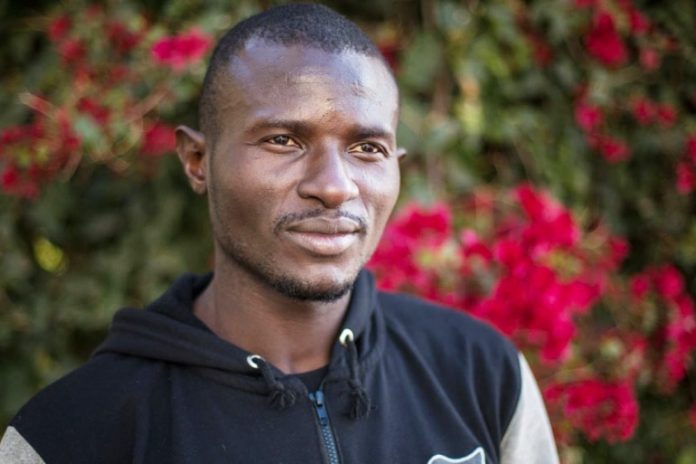
Oballa Oballa who was born in Ethiopia is bidding for a seat on the city council in Austin, Minnesota. Photo: Courtesy of Oballa Oballa
FB IMG 1603463767262
Oballa Oballa who was born in Ethiopia is bidding for a seat on the city council in Austin, Minnesota. Photo: Courtesy of Oballa Oballa
FB IMG 1603463767262
Oballa Oballa who was born in Ethiopia is bidding for a seat on the city council in Austin, Minnesota. Photo: Courtesy of Oballa Oballa

Oballa Oballa of Austin, Minnesota is ready to expand his leadership roles within his city. The twenty-seven-year-old is running for a seat on the city’s council.

Oballa, a native of Ethiopia, moved to the United States seven years ago with his family. He was born in Gambella Ethiopia, a city that was affected by genocide in 2003. Oballa’s family was forced to flee to neighboring Kenya where he lived in a refugee camp for over ten years before resettling in the United States.

Oballa and his family first moved to Maryland, then to South Dakota where he graduated high school before moving to Austin five years ago.

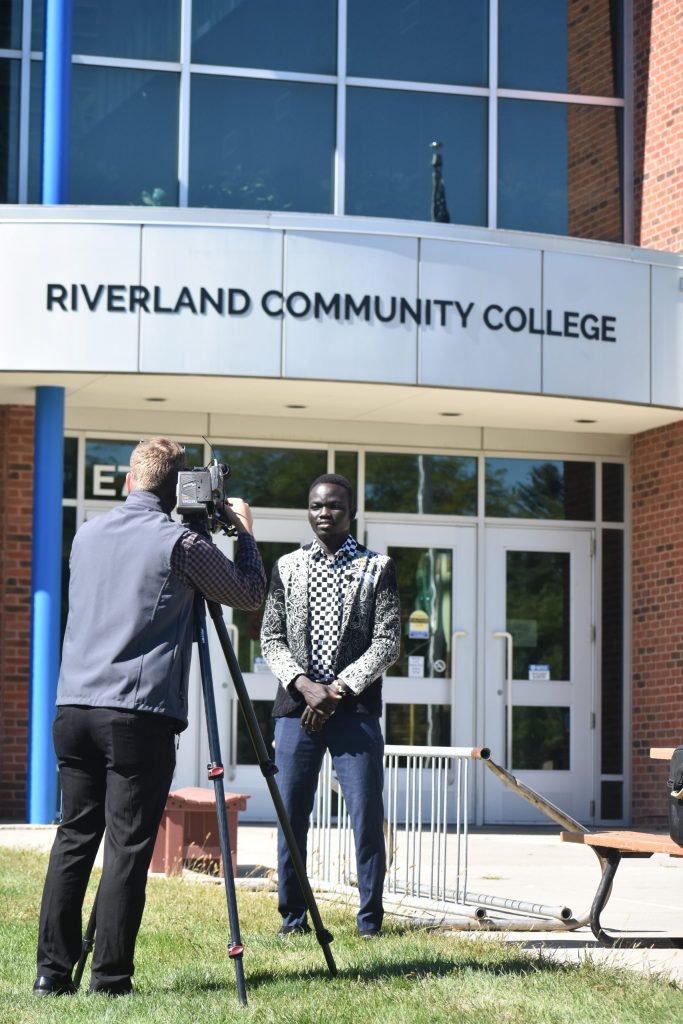
“I moved to Austin to help my mom and be close to her,” he said. After arriving in the city Oballa enrolled in Riverland Community College where he obtained his associates degree in Human Services.

As a student in Riverland, Oballa was involved in the student Senate where he was elected as the President of the organization. During his tenure, he worked to fight food insecurity among students by helping to establish the school’s first food pantry.

To expand his leadership role, Oballa decided to run for a statewide position. He was elected as Vice President of LeadMN an association that represents Minnesota’s public two-year colleges before being appointed as the president.

As an active resident of the city of Austin, Oballa was appointed as the Human Rights Commissioner in 2016 by Mayor, Tom Stiehm, a position he’s held for the past four years. Oballa currently serves as an honorary city council member where he attends meetings and shares his ideas but does not have voting rights.

DSC 1880 scaled e1603466639206
Oballa Oballa is running for a seat in the Austin, Minnesota City Council. Elections are on November 3, 2020. Photo: Courtesy of Oballa Oballa

Amongst his other accomplishments, Oballa has received this year’s Young Leader Year award from the Resettlement Programs Office of the Minnesota Department of Human Services. He was appointed by Governor Tim Walz this year as a Board of Trustee for Minnesota Colleges and Universities, a term that will last until 2022.

Oballa is running to address issues in housing, education, childcare, and to increase youth empowerment. He considers access to housing and day care to be the most critical issues on his campaign.

“The reason why I chose housing is because Austin is growing as a city,” he said. “Most people find it difficult to find housing within Austin.”

As the city of Austin increases in population the city council is faced with a task of ensuring all its residents are able to find adequate accommodation. Individuals working in the city of Austin have had to look for places to live in neighboring cities.

Oballa also wants to increase the number of day care services available to the city’s working residents. “Daycare is important because from what I have seen with most immigrants who are here they struggle a lot,” he said.

Oballa has observed that the daycare centers in Austin have long wait lists which prove to be challenging for working families that are in dire need of childcare. This obstacle has created stressful decisions between working and taking care of children. “Some people have to call in [to work] a lot,” Oballa said.

Increasing child care providers is part of Oballa’s plan to ensure that businesses are able to retain their workers.

To ensure that the city of Austin continues to thrive well into the future Oballa also wants to make sure that the youth in the city are empowered to make positive decisions for the future. He wants to “mentor young kids to be good leaders of tomorrow,”.

If elected Oballa wants to increase conversations between the city council and the residents to ensure that the constituents needs are met effectively.

“The changes that I’m looking for is not something I would change myself but is a collaborative work of the whole city,” he said.

In recent years, the city of Austin located in south central Minnesota near the Iowa border has increased in both population and diversity. The city has attracted immigrant and refugee populations from East Africa, South East Asia, and South and Central America who have settled there after finding stable employment.

For Oballa and many others the city of Austin is home.

“The main thing I love about Austin is the people, the people of Austin are very kind, very welcoming, very friendly,” he said. “I think Austin is really a place I can call home, because of everything they have done for me.”

Oballa Oballa lives in Austin, MN with his family. He is on track to earn a Bachelor’s degree in Social Work from the College of Saint Scholastica this December.

How to vote

Visit Mshale’s election 2020 section on details on how to vote early ahead of the November 3, 2020. Because of the COVID-19 pandemic, Minnesota election officials are encouraging voters to vote early in person or by mail.

Linda Sloan takes over as executive director at Council for Minnesotans of African Heritage

0
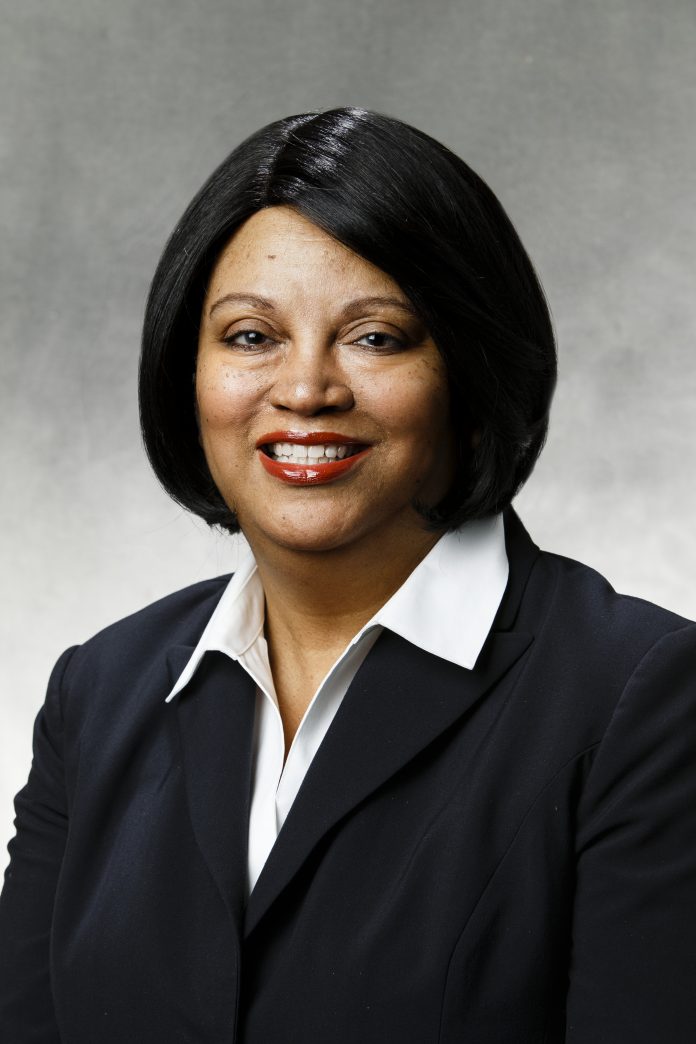
Linda Sloan has been named the executive director of the Council for Minnesotans of African Heritage. Photo: Submitted
Linda Sloan
Linda Sloan has been named the executive director of the Council for Minnesotans of African Heritage. Photo: Submitted
Linda Sloan
Linda Sloan has been named the executive director of the Council for Minnesotans of African Heritage. Photo: Submitted

The Council for Minnesotans of African Heritage announced last week that Linda Sloan has been named the Council’s new executive director, effective immediately. She becomes the first woman to lead the 40-year old Council.

The transition in leadership comes after the resignation of Justin Terrell who left to take over the leadership of the Minnesota Justice Research Center.

The Council for Minnesotans of African Heritage (CMAH) is the successor to Council on Black Minnesotans as of 2015. The Council on Black Minnesotans was created in 1980 by the Minnesota legislature to advise the governor and the legislature on issues facing the state’s black community. In 2015, the legislature adopted a new statute that renamed the Council on Black Minnesotans as Council for Minnesotans of African Heritage (CMAH) and its executive director is appointed by the Legislative Coordinating Commission, a group of 12 legislative leaders that consists of six members each from the Minnesota House and Minnesota Senate.

A native of Chicago, Sloan was most recently the Director of Career Development and Employer Relations at the University of St. Thomas. She received her Bachelor of Science in Marketing from the University of Illinois and an MBA in Marketing and Strategic Management from Purdue University.

She is a member of the Zeta Phi Beta Sorority.

Boyd Morson seeks Brooklyn Park City Council seat to bring diverse perspective

0
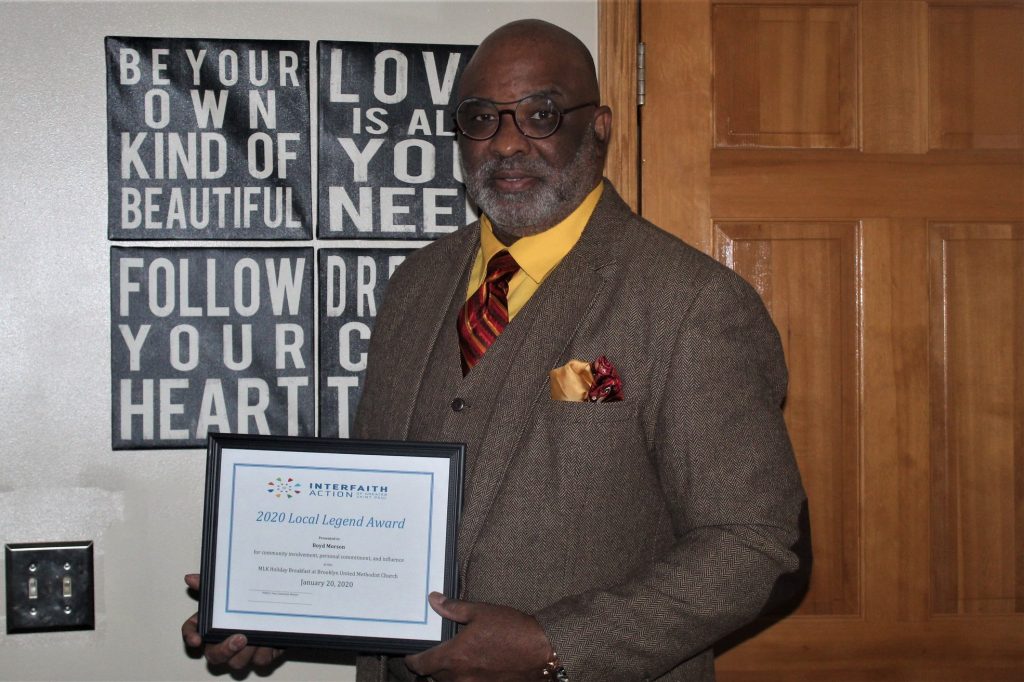
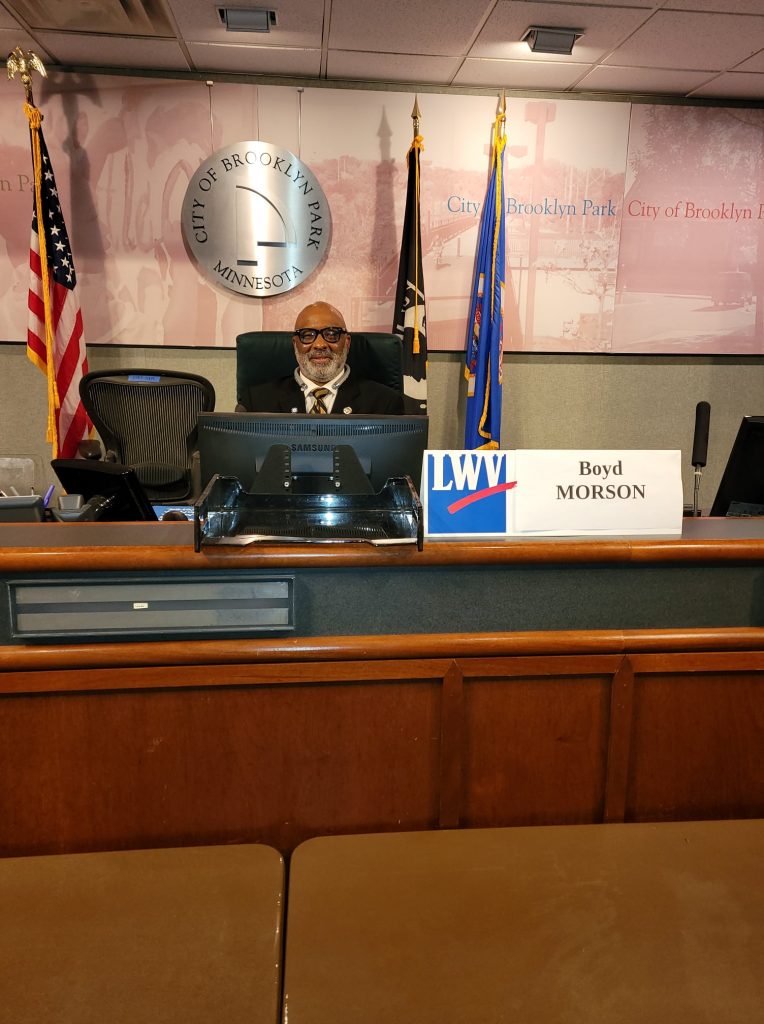
Boyd Morson is a candidate for the Brooklyn Park City Council Central District. He is seen here holding a Legends Award he received early this year from Interfaith Action. Photo: Courtesy of Boyd Morson
Boyd Morson Headshot
Boyd Morson is a candidate for the Brooklyn Park City Council Central District. He is seen here holding a Legends Award he received early this year from Interfaith Action. Photo: Courtesy of Boyd Morson
Boyd Morson Headshot
Boyd Morson is a candidate for the Brooklyn Park City Council Central District. He is seen here holding a Legends Award he received early this year from Interfaith Action. Photo: Courtesy of Boyd Morson

Long time Brooklyn Park resident Boyd Morson is ready to expand his role in the community by vouching for a seat on the city’s council. Boyd is running for a position to represent the city’s central district. Morson is among those who prevailed in the August 11 state primaries to move on to the November 3 general election.

Morson first moved to the city almost twenty years ago with his wife and three children. The Morson’s wanted to live in a culturally diverse area of the state to raise their family.

“We wanted to be amongst the diversity that is reflective of who America is,” he said. “The most obvious place in the state of Minnesota is either Brooklyn Park or Brooklyn Center.”

What first attracted Morson to the city is now the main reason he’s running for a seat on the council. “I’m running for a city council position…to bring a diverse perspective that is reflective of our community,” he said.

The United States Census reports that the city’s racial demographics are composed of roughly 48 percent Caucasians, 29 percent African descent, and about 18 percent Asian. Demographically this makes Brooklyn Park the second most diverse city in Minnesota with neighboring Brooklyn Center being the first.

Morson launched his campaign in June of this year during the city’s primaries. Soon after, he began canvassing and to initiate conversations with the residents of Brooklyn Park. To date, he has knocked on over two thousand doors.

Morson at LWV Forum
Boyd Morson who is running to represent the Central District in the Brooklyn park City Council during the League of Women Voters candidate forum on October 13, 2020. The election is on November 3, 2020. Photo: LVW Screenshot

Morson is running on a platform for police reform, education, and investing in businesses and building partnerships. He considers police reform to be the most critical issue.

“We want to get back to good community policing,” he said.

If elected Morson would like to see a reformed department that holds police officers more accountable for misconduct. He would like to ensure that the police force is composed of Brooklyn Park residents and that the officers are mandated to volunteer in the community.

“We need to have police live in Brooklyn Park,” he said. “We need to have them have a psychological evaluation every year…they need to have volunteer hours in the community.”

Morson also wants to decrease police misconduct by ensuring that each officer has independent liability insurance which would take the burden off of taxpayers for settlements.

Morson has previously served with the council as a Vice President of the Human Rights Commission in 2007. During his tenure, he successfully changed the title of the position from the Human Relations Commission to best reflect the role of the position as advocating for all residents of Brooklyn Park.

While in his position he also helped to bring a festival called Celebrating the Many Faces of Brooklyn Park to life. As the title indicates, the purpose of the festival was to celebrate the city’s diversity. The event has since been terminated, but Morson hopes to revive it if he’s placed in office.

If elected as a council member for Brooklyn Park, Morson promises to increase interactions between city council members and their constituents. “In the first one hundred days, they [Brooklyn Park resident] can expect that I will be the most visible voice,” he said.

Looking ahead into the future Morson wants to see a united and vibrant community. “I want to see a bridge,” he said. “A city that smiles and waves to everyone that comes in the community.”

Brooklyn Park is a suburb north of the Twin Cities and is Minnesota’s sixth largest city. The city’s council consists of six members with two representatives from each of the city’s East, Central, and West districts. Members serve staggered four-year terms with only one of each district’s council members up for election in each four-year cycle.

How to vote

Visit Mshale’s election 2020 section on details on how to vote early ahead of the November 3, 2020. Because of the COVID-19 pandemic, Minnesota election officials are encouraging voters to vote early in person or by mail.

Dakota-Scott Workforce Development Board seeking nominations for December awards

0
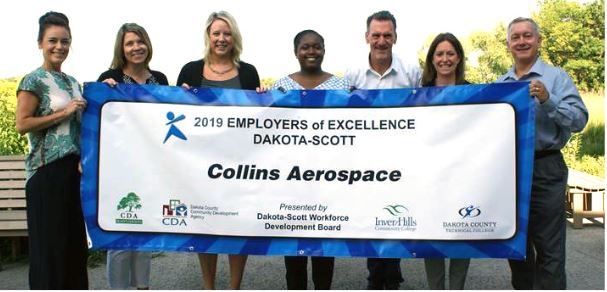
Collins Aerospace was named an "Employer of Excellence" at last year's Dakota-Scott WorkForce Development Board Legislative and Employer Awards event. Nominations for the 2020 event are being accepted through October 30. Photo: City of Burnsville
Collins Aerospace
Collins Aerospace
Collins Aerospace was named an “Employer of Excellence” at last year’s Dakota-Scott WorkForce Development Board Legislative and Employer Awards event. Nominations for the 2020 event are being accepted through October 30. Photo: City of Burnsville

The Dakota-Scott Workforce Development Board which provides guidance and exercises oversight to activities related to the Job Training programs in the counties of Dakota and Scott is seeking nominations for its Legislative and Employer Awards event to be held in December.

Nominations being sought are for individuals, programs, companies and organizations that improve workplaces in the two counties.

The nomination deadline is 5 p.m. Friday, Oct. 30.

To submit a nomination, call the Workforce Development Board at 651-554-5633 or email [email protected].

Nominations are being accepted for the following :

  • The Mark McAfee Friend of Workforce Award is given to an individual who has championed workforce issues at the local, state or federal level.
  • The Business Champion Award recognizes an outstanding company that also uses CareerForce services such as the job fairs, job postings or working with counselors.
  • The Bob Killeen Award recognizes companies for their use of innovative or quality practices. Killeen was a former WDB member and advocate for quality efforts.
  • The Willis E. Branning Excellence in Youth Employment Services Award recognizes an organization or program, an employer or an individual who has demonstrated a commitment to preparing young people ages 14-24. Two awards will be given — one for Dakota County and one for Scott County. Awards sponsors are the WDB and the Dakota Electric Association.
  • The Bob Klas Sr. Entrepreneur Award recognizes a local entrepreneur success story. The inaugural award was presented to Bob Klas Sr. Criteria includes the entrepreneur’s success as evidenced by business growth, the individual’s leadership in the business or civic communities and the mentorship they provide to other entrepreneurs.
  • Employer of the Year for People with Disabilities will be presented to an employer who has improved the lives of people with disabilities through employment.

Submit nominations to [email protected].

Learn more about Dakota County at this link and Scott County at this link.

America’s largest Black owned bank reaches 100,000 customers milestone

0
OneUnited, America's largest Black owned bank announced on Wednesday, October 14, 2020 that it has reached the 100,000 customers milestone. Photo: Eric Glenn/Shutterstock
Black Man ATM Mshale
OneUnited, America's largest Black owned bank announced on Wednesday, October 14, 2020 that it has reached the 100,000 customers milestone. Photo: Eric Glenn/Shutterstock
Black Man ATM Mshale
OneUnited, America’s largest Black owned bank announced on Wednesday, October 14, 2020 that it has reached the 100,000 customers milestone. Photo: Eric Glenn/Shutterstock

OneUnited, the largest Black owned bank in the U.S. announced Wednesday that it has achieved the over 100,000 customers milestone. The bank attributed the success to its social justice activism and investments in its technology platform.

“Our customer base continues to grow rapidly, and we have expanded access and now have over 100,000 locations to better meet their needs. Importantly, we’re on our way to fulfilling Black America’s long-held dream of organizing our spending power to create social and economic equality in our society,” said Teri Williams, the bank’s President & COO.

The bank’s social activism started in 2016 following the murders of two Black men, Philando

Teri Williams by Mshale Newspaper
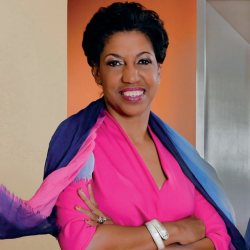
Teri Williams, President & COO of OneUnited Bank, America’s largest Black owned bank. It announced on October 14, 2020 that it had reached 100,000 customers. Photo: OneUnited Bank

Castille and Alton Sterling, when rapper and activist Killer Mike urged Black Americans to move their money to Black owned banks. The he hashtag #BankBlack quickly trended and money started flowing to OneUnited. Another surge of deposits followed after Minneapolis police killed George Floyd this summer. Floyd’s murder saw 10,000 new customers open accounts at OneUnited.

The shift to digital banking has also been a plus for the bank as more of Black America is comfortable with the shift. To that end, the bank announced that to accommodate its rapid growth it is introducing a new service called “Cash to Your Card” which will give its customers access to an “additional 90,000+ locations” which will allow it to service customers nationwide, including access for the customers to over 30,000 surcharge free ATMs.

Not since the founding of St. Luke Penny Savings Bank in Richmond, Va., in 1903 by Maggie Lena Walker has a Black owned bank reached this milestone. Maggie Lena Walker was the first Black woman and first woman bank president in the United States.

Reps. Omar, Castro and Richmond condemn treatment of Cameroonian migrants and asylum seekers in ICE detention

0
In this 2018 photo, Kombo Yannick is one of many Cameroonian migrants who have travelled through Latin America in order to apply for asylum in the United States. Photo: Walker Dawson/Al Jazeera
Kombo Yannick by Walker Dawson Al Jazeera
In this 2018 photo, Kombo Yannick is one of many Cameroonian migrants who have travelled through Latin America in order to apply for asylum in the United States. Photo: Walker Dawson/Al Jazeera

Reps. Ilhan Omar (D-MN), Cedric L. Richmond (D-LA), and Joaquin Castro (D-TX) have condemned the treatment of Cameroonian migrants and asylum seekers in Immigration and Customs Enforcement (ICE) detention. In a letter to ICE director Tony H. Pham that was also sent to Mshale, the represenatives also raised concerns related to human rights violations, the ongoing Anglophone crisis, and the emergence of Boko Haram and ISIS-West Africa.

“We write to express grave concerns over the situation of Cameroonian migrants and asylum seekers in Immigration and Customs Enforcement (ICE) detention,” the Members wrote. “There have been several alarming high-profile incidents, including the death of a Cameroonian migrant in ICE detention last year and a hunger strike held at Pine Prairie this past June.”
In the most recent U.S. Department of State annual human rights report on Cameroon, the Department identified patterns of extrajudicial killings, torture, and forced disappearance by the Cameroonian government as well as various non-state actors. In 2019, the State Department restricted security aid to Cameroon in response to reported atrocities committed by Cameroonian security forces. Due to several overlapping crises in Cameroon, the denial of Cameroonian asylum seekers may result in tragedy for Cameroonians.

Below is the text of the letter:

October 13, 2020

Tony H. Pham
U.S. Immigration and Customs Enforcement
1500 12th St., SW
Washington, D.C. 20536

Dear Mr. Pham:

We write to express grave concerns over the situation of Cameroonian migrants and asylum seekers in Immigration and Customs Enforcement (ICE) detention. There have been several alarming high-profile incidents, including the death of a Cameroonian migrant in ICE detention lastyear and a hunger strike held at Pine Prairie this past June.

There are several overlapping crises in Cameroon, including grave human rights violations, the ongoing Anglophone crisis, and the emergence of Boko Haram and ISIS-West Africa, that mean that for many Cameroonian asylum seekers, orders of removal may result in tragedy for Cameroonians.

The United States has been active in recognizing this danger. The most recent U.S. Department of State annual human rights report on Cameroon identifies patterns of extrajudicial killings, torture, and forced disappearance by the Cameroonian state as well as various non-state actors. The State Department took these allegations seriously enough that in February 2019, they restricted security aid to Cameroon in response to reported atrocities committed by Cameroonian security forces.

Given the grave circumstances in Cameroon, it is a moral and legal imperative to ensure that Cameroonians are being given the utmost concern in their asylum applications. To better understand the Department’s treatment of Cameroonians, we request the following information no later than October 30, 2020.

Given the grave circumstances in Cameroon, it is a moral and legal imperative to ensure that Cameroonians are being given the utmost concern in their asylum applications.To better understand the Department’s treatment of Cameroonians,we request the following information no later than October 30, 2020.

•How many Cameroonians have been removed each year from FY10through FY20?

•How many of these individuals were removed to Cameroonand how many to other countries? If not Cameroon, which third countries have accepted these Cameroonian nationals?

•How many Cameroonians have applied for asylum or other forms of relief and protection during this same time period?

o What percentage of these applications have been denied, disaggregated by the form of relief?

o What percentage of these applicants have had legal counsel?

•What is the rate of denied parole for Cameroonian asylum seekers, and how does it compare to the rates for other nationalities?

o If there are large disparities, what accounts for these disparities?

•How many Cameroonians are currently in ICE custody, and where are they held?Please include a list of all detention facility names and locations.

o How many have been approved for bond, but remain in ICE detention, for inability to pay or other reasons?

Sincerely,
Ilhan Omar
Member of Congress
Cedric L. Richmond
Member of Congress
Joaquin Castro
Member of Congress

Asst. Commissioner Hajimumin: Minnesota benefits when immigrant businesses succeed

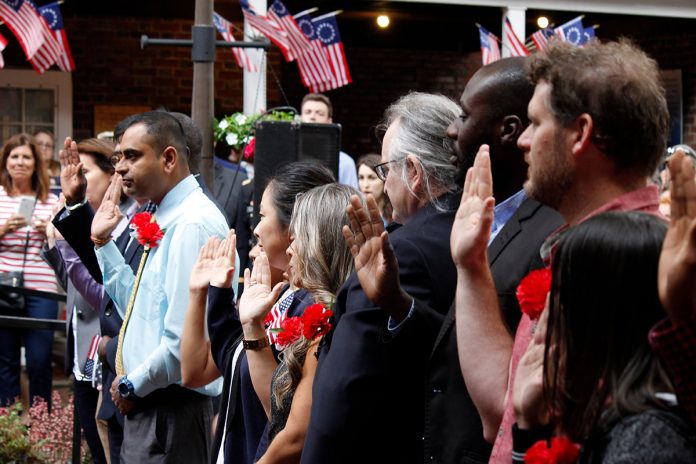
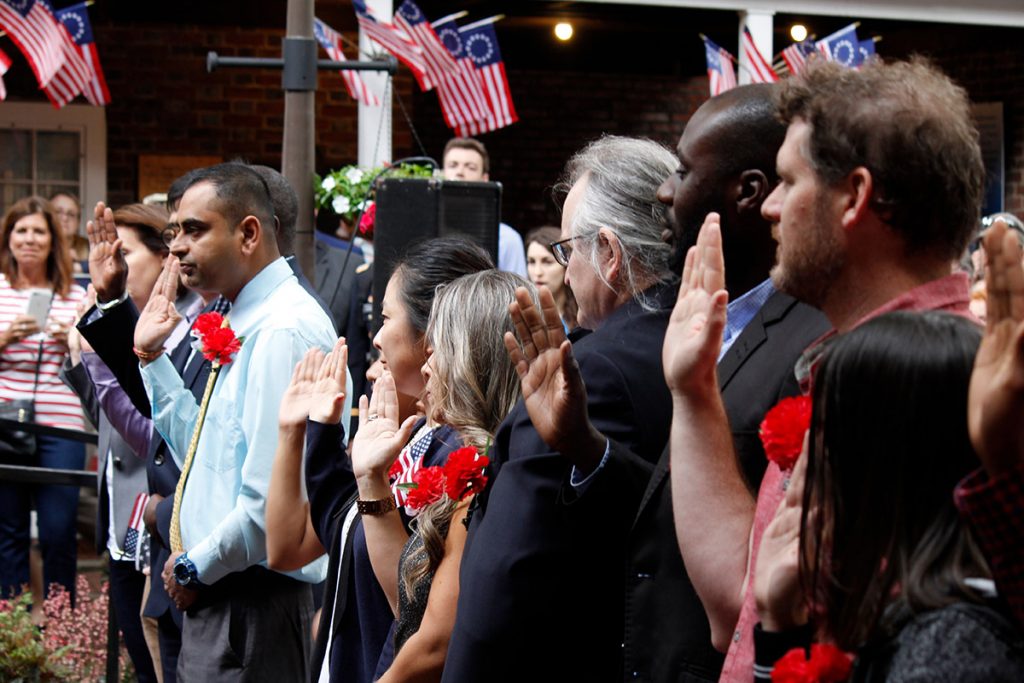
Immigrants officially become new U.S. citizens in a special naturalization ceremony on Flag Day. Photo: Jana Shea/Shutterstock
Naturalization Ceremony
Immigrants officially become new U.S. citizens in a special naturalization ceremony on Flag Day. Photo: Jana Shea/Shutterstock
Naturalization Ceremony
Immigrants officially become new U.S. citizens in a special naturalization ceremony on Flag Day. Photo: Jana Shea/Shutterstock

In my first three months of work as the Assistant Commissioner for Immigrant and Refugee Affairs, I have been fortunate to meet with so many business owners and entrepreneurs who are shaping Minnesota’s economy. My work is about better understanding the current conditions, especially the barriers to starting and growing a business in our state.

Last week, I visited with two business owners, and I am so impressed with their success, even through hardships. Mirian owns El Callejon, a store at Mercado Central in Minneapolis, where she sells T-shirts and men’s clothing. But owning a business in Minnesota isn’t where she started. Mirian fled El Salvador’s civil war in the early 1980s, arriving in California. After losing a job, and with young kids at home, she borrowed a sewing machine and began making aprons and scrubs. She grew her sewing business, then opened a clothing store in California, and eventually moved to Minnesota and opened a new store here.

Proceeds from her business allowed Mirian to put four kids through college, and she is getting ready to send her youngest one to college. Sales have dropped considerably due to COVID-19 and other adverse conditions along Lake Street, but she carries on with resilience. She takes deep pride in her children’s successes as a chef, a nurse, an architect and an IT wiz. She also adopted and supports two daughters in El Salvador. One of them recently started her own small restaurant in that Central American country. Entrepreneurship runs deep in the family, wherever they live.

In Richfield, the owners of Las Twins Fashion Western Wear, Yolanda and Rodrigo, recently expanded their store, where many customers come to find quinceañera dresses, plus baptism, first communion and special occasion clothing.

Their store was previously located on Lake Street, and Yolanda put in countless hours as an organizer and coordinator for cleanup and repair in the neighborhood after civil unrest there earlier this year. She distributed information about how to connect with resources such as housing and food assistance and with donations that were made. Even when the situation was tough for her own business, Yolanda went to work helping others. That’s really the spirit and dedication to community we need in our state.

Being in service to others is a value that Yolanda and Rodrigo’s children have learned from them. Their children have participated in the Raíces program at Centro Tyrone Guzman. It’s a youth social entrepreneurship program that lets teens explore business ventures. It was designed by teens for teens.

Youth participants piloted a salsa-making business. Through the operation of this small business, Raíces youth are learning technical skills related to financial management, budgeting, research, marketing and communications. They are also learning and practicing work-readiness skills – such as leadership, problem solving and a strong work ethic – as they build professional networks.

Although production was interrupted by COVID-19 restrictions, all of the salsas that were initially made to sell at the farmers’ market during the summer of 2020 were donated by participants to Centro Tyrone Guzman families as an addition to the food packets Centro was providing to those most affected by COVID-19. Participants and customers look forward to cooking and enjoying more batches of salsa soon.

Visiting with Mirian and meeting Yolanda, I am reminded of why I accepted this job. It’s really a continuation and combination of my previous work as a consultant for immigrant business owners and a cabinet minister in Somalia. I see the importance of working together so that our entrepreneurs can create the businesses that drive our economy, enliven our neighborhoods and build our community.

We know that immigrant business owners are more likely to hire immigrant workers. They are job creators. We can find ways to support them, whether they choose to locate in the Twin Cities, the suburbs or small towns in Minnesota. Every Main Street and every community benefits when immigrant and refugee business owners find success. Especially now, their creativity and commitment to our state deserve our recognition, and immigrant and refugee entrepreneurs deserve our thanks.

African women’s group AMWAG holding cultural food drive in Brooklyn Park

1
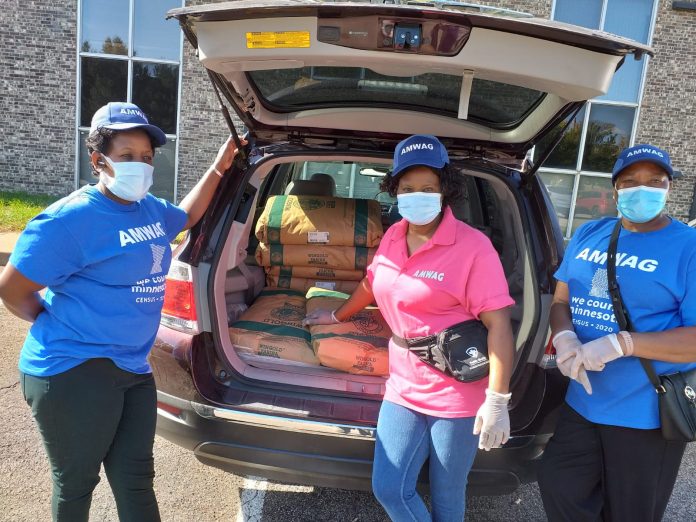
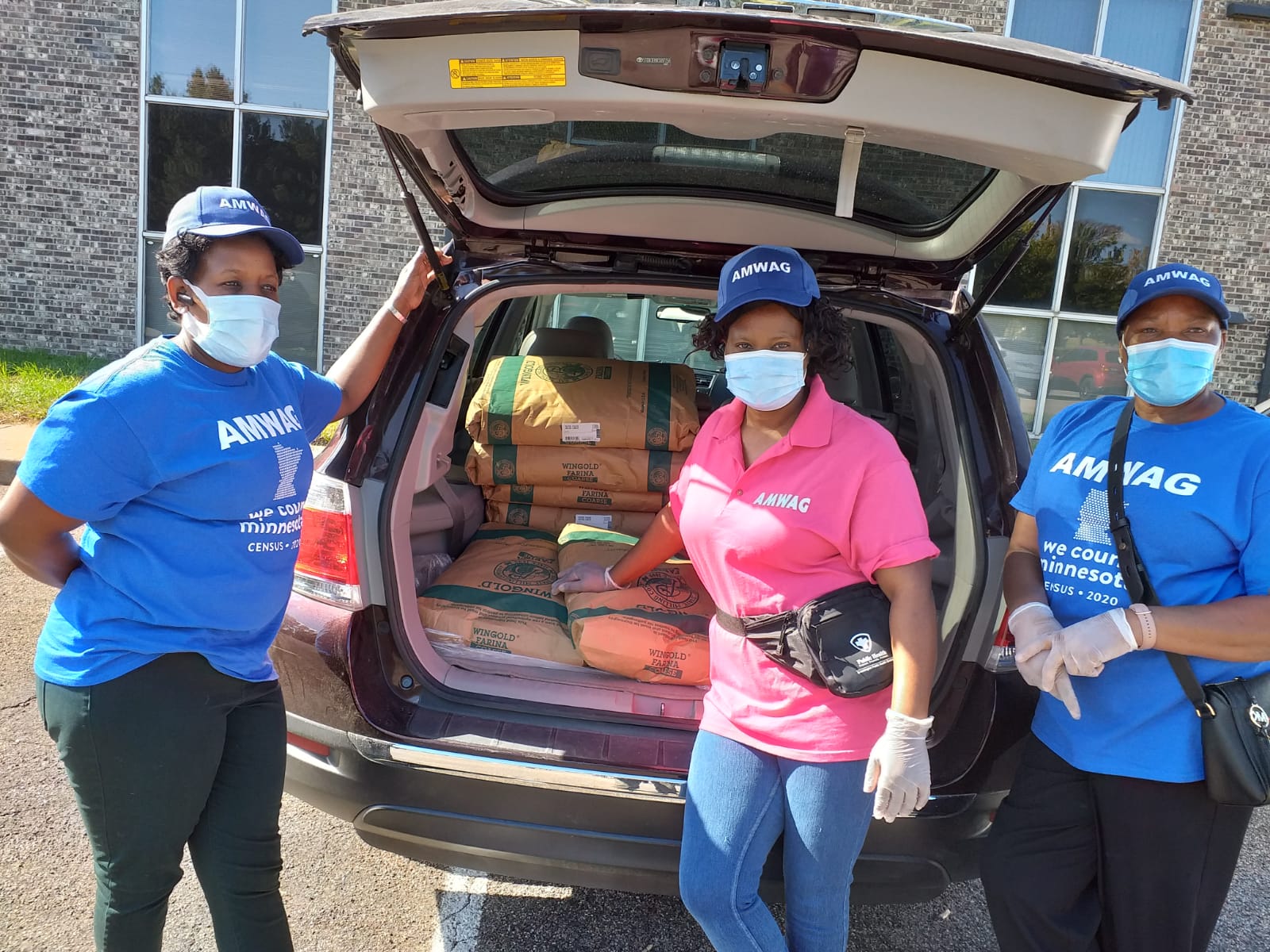
The African Minnesota Women’s Awareness Group is holding a cultural food drive in Brooklyn Park through November 14, 2020. Photo: Courtesy AMWAG
AMWAG Food Drive 2
The African Minnesota Women’s Awareness Group is holding a cultural food drive in Brooklyn Park through November 14, 2020. Photo: Courtesy AMWAG

As the COVID-19 crisis continues local non-profit organizations are rising to meet new challenges wrought by the pandemic. One such group is the African Minnesota Women’s Awareness Group (AMWAG) which has been hosting a series of food drives to meet the increased rates of food insecurity.

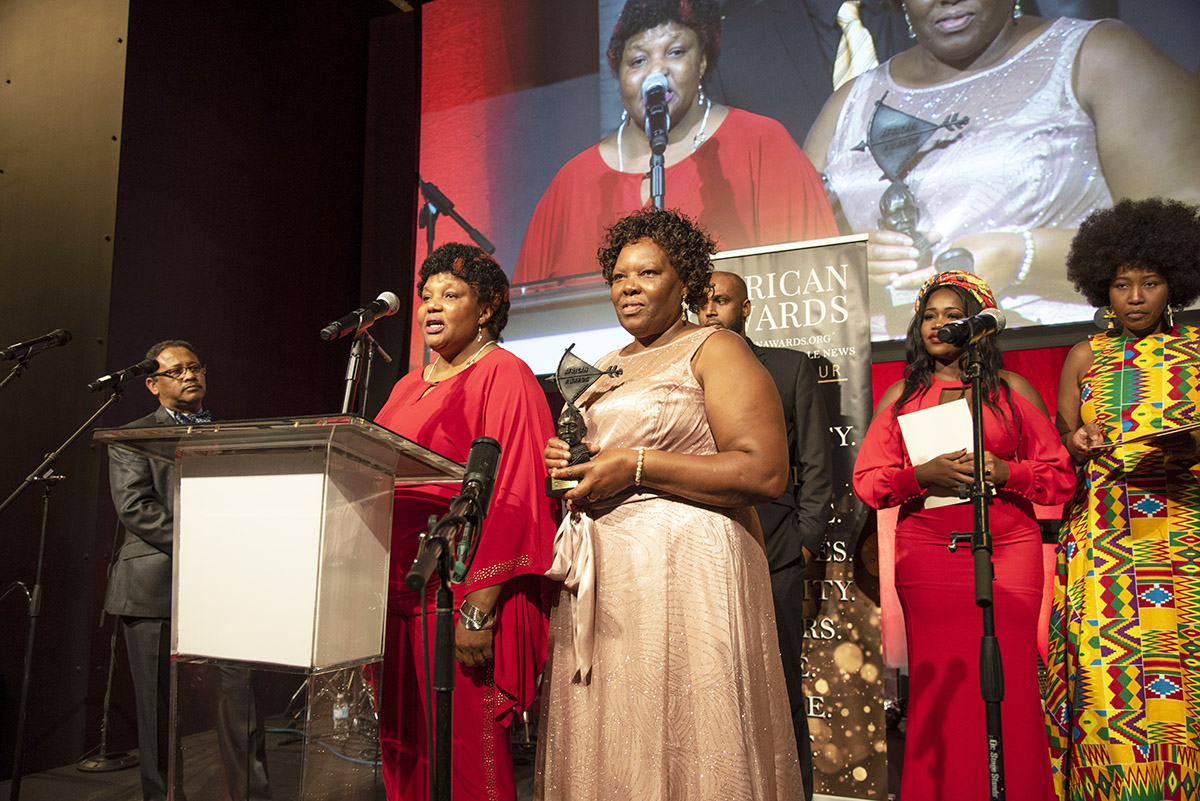
AMWAG, founded in 2015, first began as a women’s social group and later evolved into a non-profit organization that focuses on raising awareness for domestic violence. The organization was presented with the Non-profit of the Year Award at last year’s 9th annual African Awards that are organized and presented by Mshale.

“We realized among us [and] some of the people we interacted with had been domestically abused,” co-founder Elizabeth Marigi said.

AMWAG spreads awareness for domestic violence by hosting educational speaking and outreach events. The organization has partnered with local shelters and social workers to ensure that domestic violence victims are able to receive the support they need.

Since the pandemic began however, there has been an increase in demand for services due to food insecurity. “Because of covid, people were calling us, and we would leave food at their door steps,” Marigi said.

Starting in April, AMWAG began working with local churches by supporting them financially and physically helping them distribute food by delivering items to individuals’ homes.

In 2019, data reported by the United States Department of Agriculture estimated that nearly 11 percent of American households experience food insecurity. This figure has been exacerbated by the pandemic with researchers at Northwestern University in Illinois estimating that the rate of food insecurity has nearly doubled as a result of economic challenges brought on by COVID-19.

Through the help of a grant from Hennepin County that was allocated by the city of Brooklyn Park, AMWAG is able to host food distribution events every weekend in October that will last until Mid-November. Just this weekend alone the organization was able to distribute over 7 thousand pounds of food.

The Brooklyn Park based organization has also taken initiative to ensure that individuals are provided with foods that they’re familiar and comfortable eating. “We bought things which we know most Africans like,” Marigi said. Families have been able to receive pantry staples and fresh produce to meet their nutritional needs.

Through the help of local volunteers AMWAG was able to deliver food to vulnerable members of the community who are not able to physically leave their homes.

Food Distribution Dates

Address: Parking lot at 7420 Unity Ave. N., Brooklyn Park, MN 55443 and in Suite 209
Dates: October 17, 18, 30, 31 and November 13 and 14.
Time: 12PM to 4:30PM on all dates.

To learn more about AMWAG and other services they provide you can visit their website.

Minnesota DHS honors 10 refugees

0
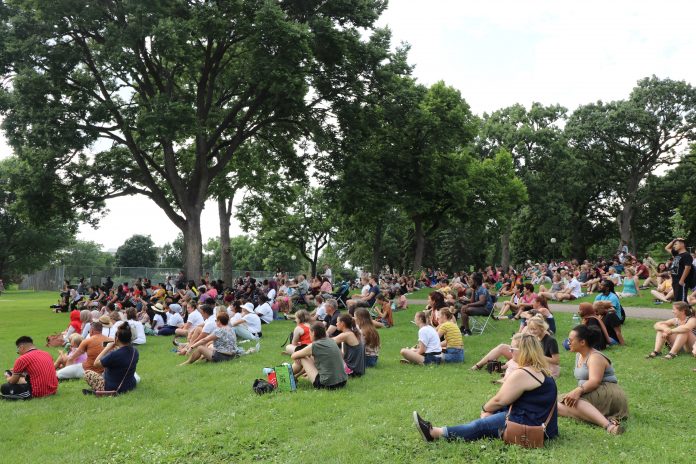
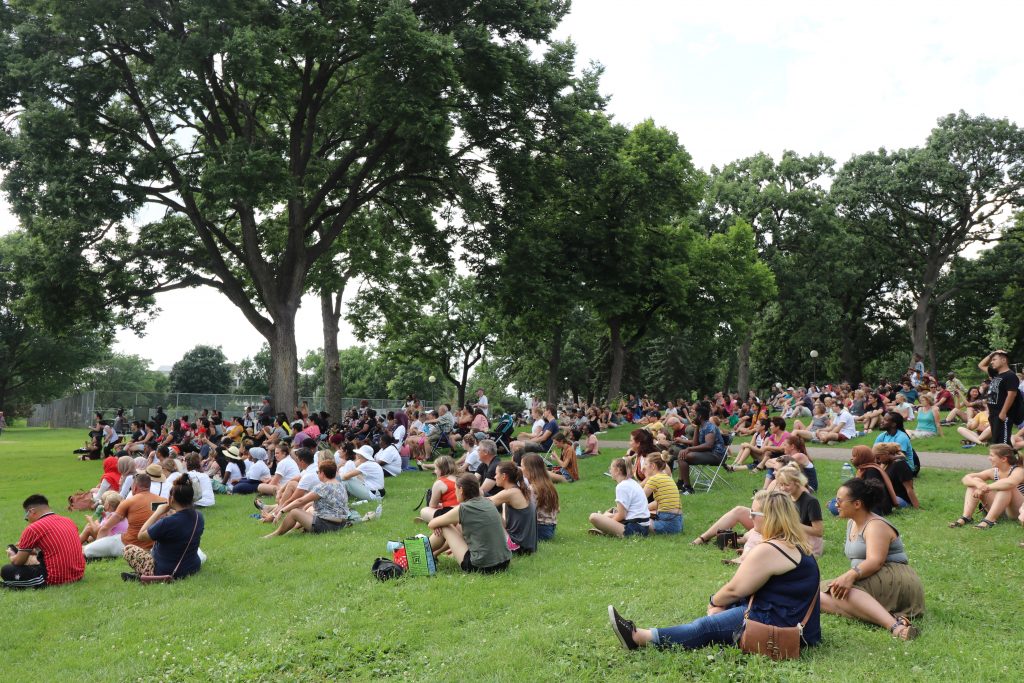
A crowd watches proceedings at the stage during Twin Cities World Refugee Day at Loring Park in Minneapolis on Sunday, July 14, 2019. Photo: Cynthia Simba/Mshale
IMG 1638
A crowd watches proceedings at the stage during Twin Cities World Refugee Day at Loring Park in Minneapolis on Sunday, July 14, 2019. Photo: Cynthia Simba/Mshale
IMG 1638
A crowd watches proceedings at the stage during the annual Twin Cities World Refugee Day at Loring Park in Minneapolis on Sunday, July 14, 2019. Photo: Cynthia Simba/Mshale

The Minnesota Department of Human Services has announced the honorees for this year’s Outstanding Refugee Awards.  The awards recognize refugees for civic engagement, entrepreneurship, young leadership and significant efforts during their first two years in the state.

In 2019, Minnesota welcomed 891 refugees from 13 countries, about half of them children and youth. The largest number of refugees were from Burma, followed by the Democratic Republic of Congo and Ukraine.

The department in a news release said it canceled this year’s awards ceremony because of the COVID-19 pandemic, but plans to honor the 2020 award winners at an event next year.

“People who come to the United States as refugees endure great hardship in order to realize their hopes for a better life for themselves and their families,” said Human Services Commissioner Jodi Harpstead. “I’m so pleased to acknowledge the achievements of these individuals who have done so much to unify Minnesota and make our state a better place to live.”

The Civic Engagement Award recognizes individuals who make their communities stronger through civic participation:

  • Dr. Obsa Abdulla Hassan of Spring Lake Park, a physician at Mercy Hospital in Coon Rapids, founder of the Axis Family Clinic in northeast Minneapolis, and a volunteer at Hadi Medical Clinic, a free community clinic in Brooklyn Center.
  • Hani Haybe of Minneapolis, a nurse at Hennepin Healthcare and the founder of Street Soccer Twin Cities.
  • Farhiya Iman of St. Cloud, a social worker for Stearns County and owner of Nori Cafe and Creamery.
  • Rufo Jiru of Shakopee, a chemist and humanitarian, founder of the Anole Sisters nonprofit in Minneapolis, an active member of the Disability Support International Advisory Working Group and the Minnesota Autism Council Working Group in St. Paul, and a board member of the Multicultural Autism Action Network and Minnesota International Non-governmental Organization Network in Minneapolis.
  • Novia Josiah-Isaac of Maplewood, a licensed social worker at the Center for Victims of Torture in St. Paul.

The Entrepreneurship Award goes to individuals who contribute to their communities in business, the arts or education:

  • Amran Abukar of Willmar, a cultural liaison at Kennedy Elementary School and an author.
  • True Thao of Cottage Grove, a mental health advocate and founder of True Thao Counseling Services.

The Young Leader Award acknowledges the contributions of young people who have achieved great milestones and are making a difference in their communities:

  • Ku Mo of St. Paul, a University of Minnesota student and community supporter.
  • Oballa Oballa of Austin, a student at Riverland Community College, an advocate and leader in the statewide LeadMN student organization, and an honorary member of the Austin City Council.

The New Beginnings Award recognizes individuals who have been in the country two years or less and exemplify resilience and courage while rebuilding their well-being and making Minnesota home:

  • Bugondo (Blaise) Ntibonera of Minneapolis, a refugee resettlement case worker at Lutheran Social Service of Minnesota in Minneapolis.

DEED hands out computers as coronavirus spotlights digital divide

0
Comp Distribution 4
DEED hands out computers as coronavirus spotlights digital divide

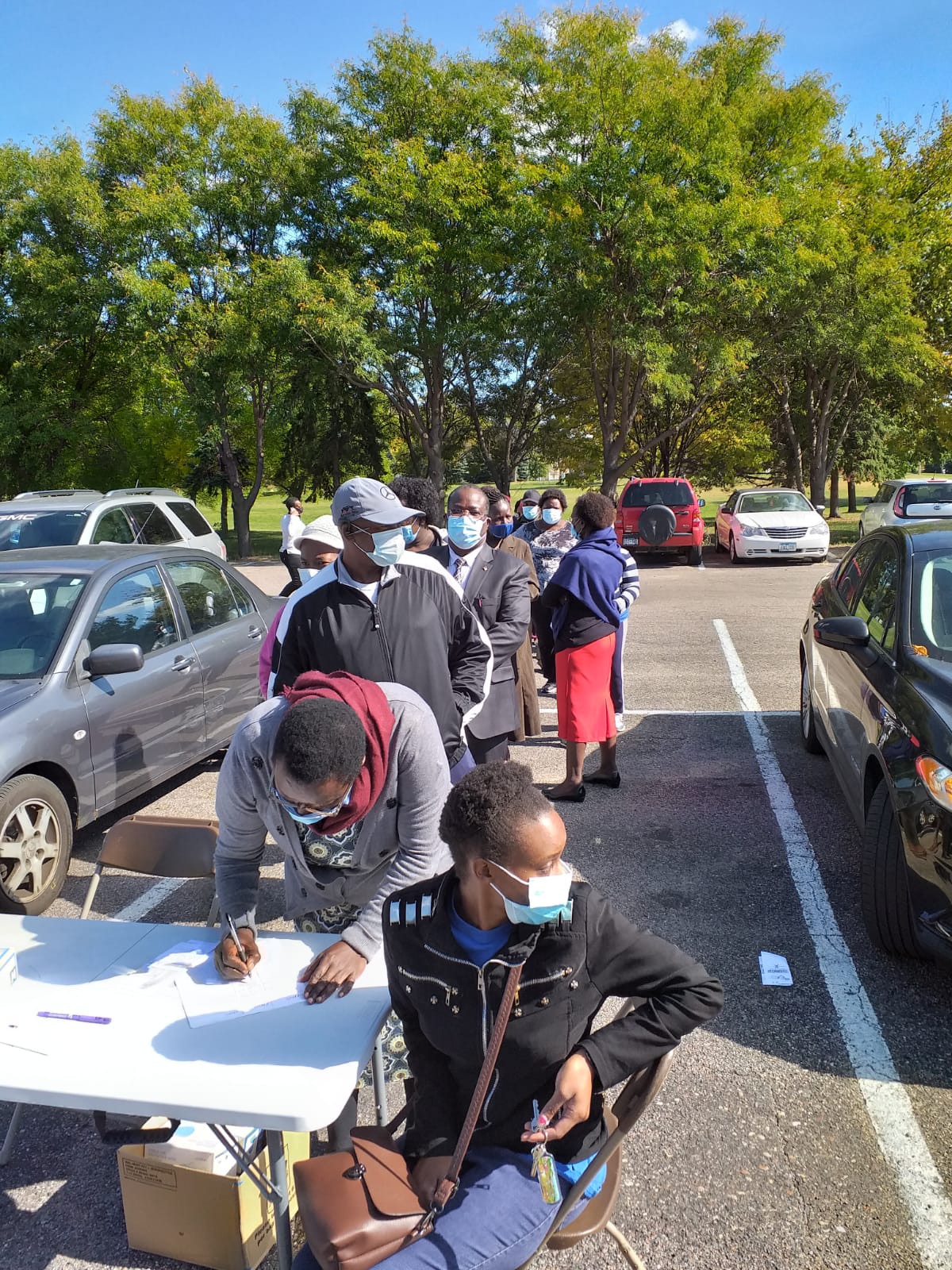
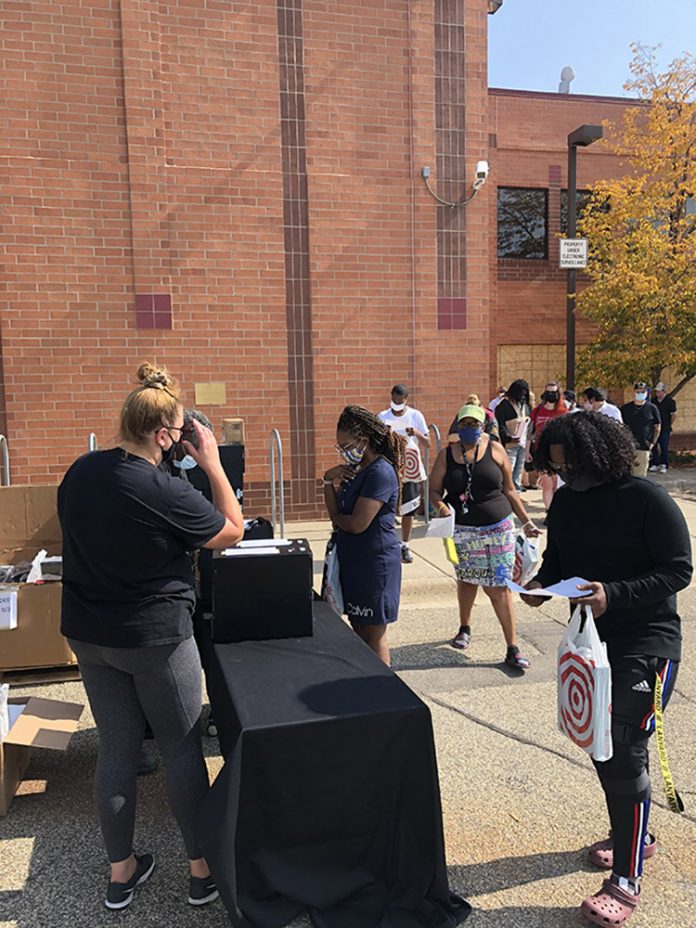
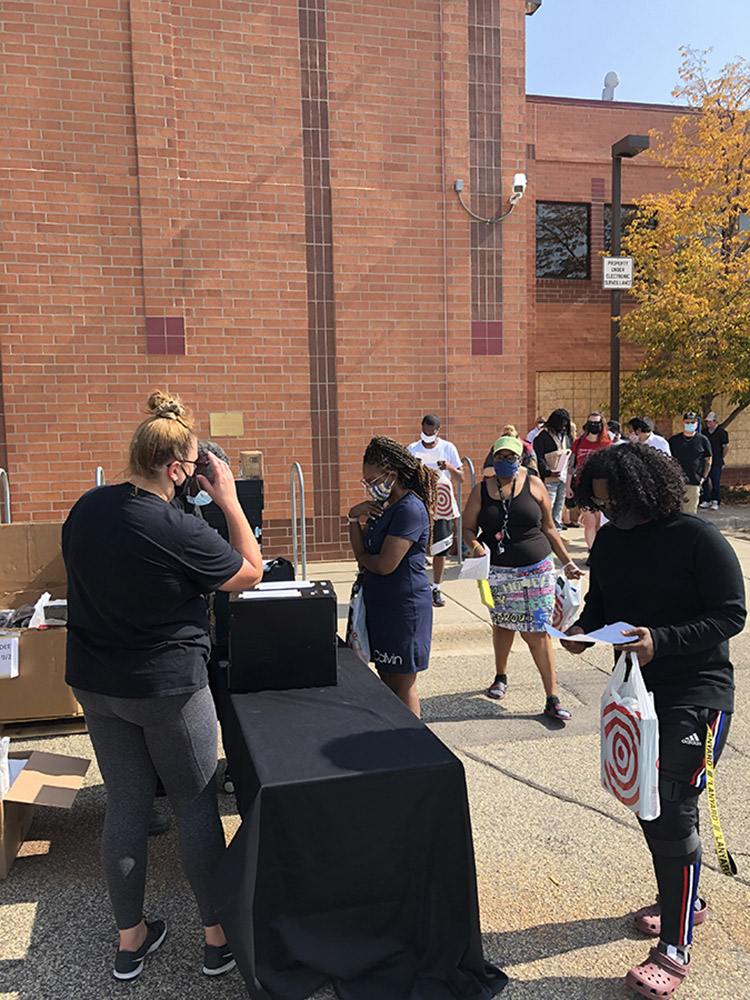
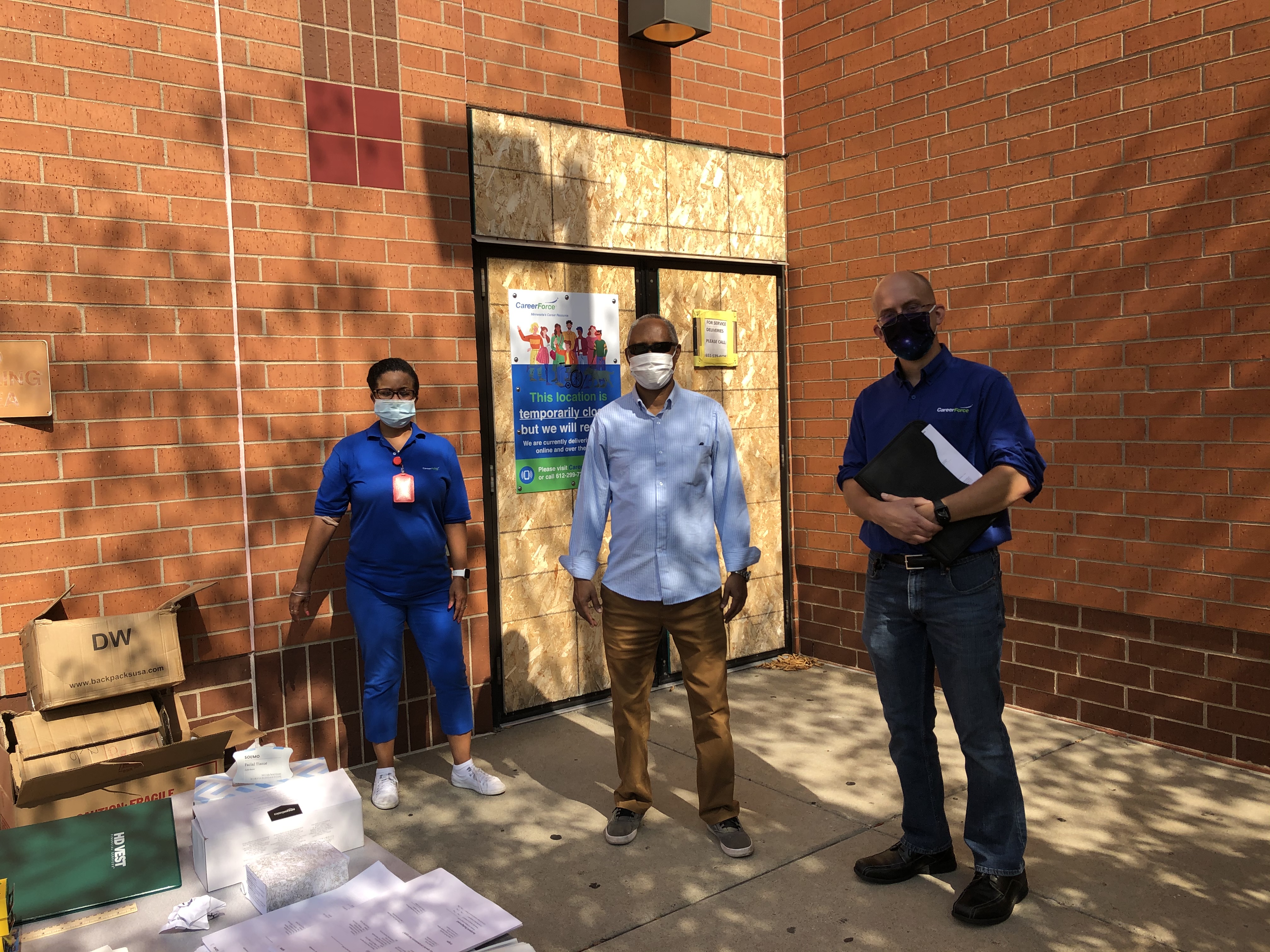
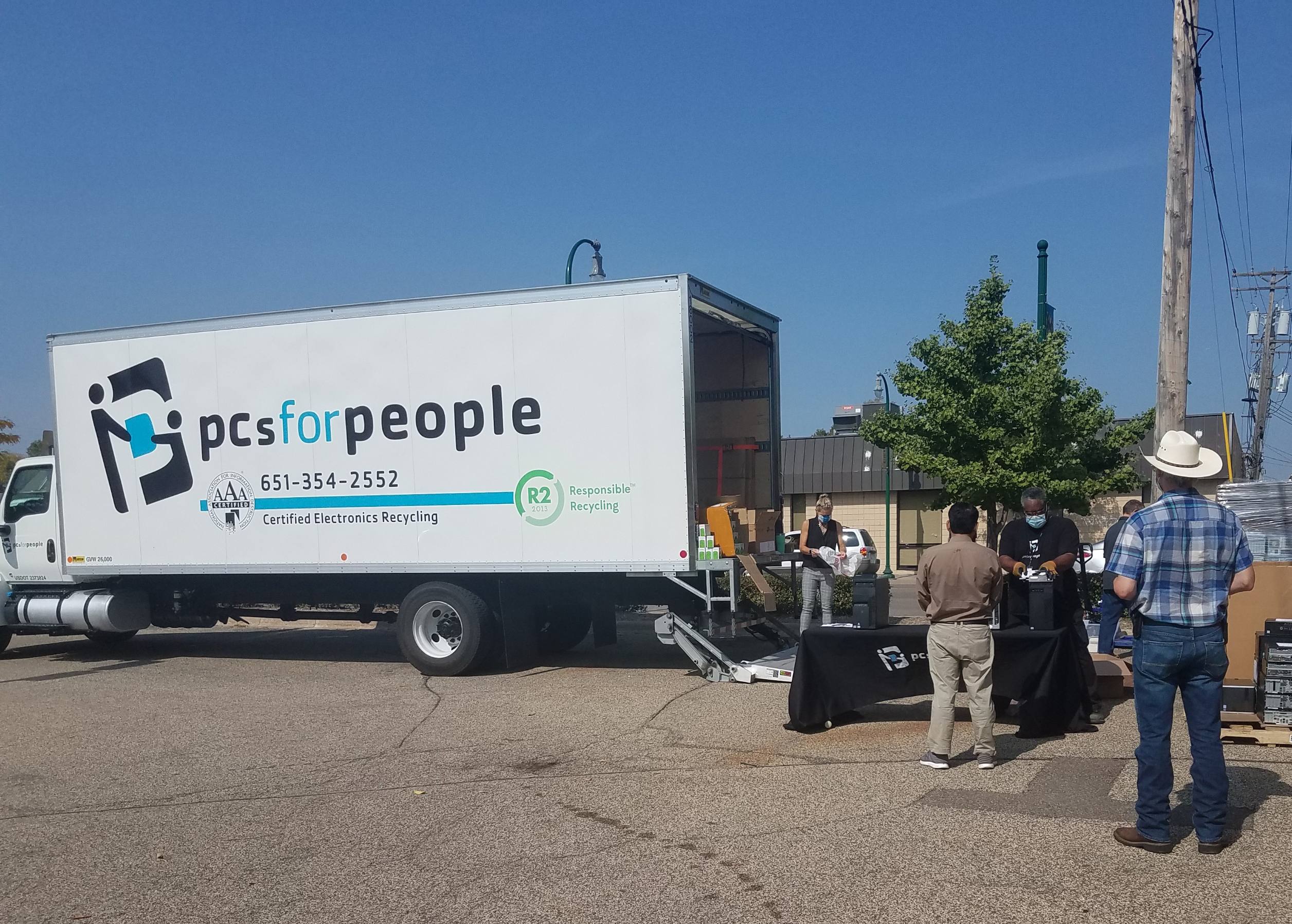
On September 23, the Minnesota Department of Employment and Economic Development (DEED) distributed one hundred free computer packages for Minnesotans in need. Dozens of Minnesotans will now be able to search for and apply for jobs on their personal computers.

“We recognize that not having access to a computer or the internet makes getting a job during the pandemic very difficult,” said Hamse Warfa, the Department’s Deputy Commissioner. “That’s why CareerForce is focused on addressing the digital divide that keeps many Minnesotans looking for work now from connecting with the employers who need them.”

The computer distribution was also sponsored by the City of Minneapolis and Lovitude, through its financial support. CareerForce staff and partners helped run the event, which was held in the parking lot outside the CareerForce location on Lake Street.

The computer packages included a refurbished donated desktop PC and monitor, as well as a webcam, keyboard, mouse, Wi-Fi adaptor, cords and basic software programs. The event occurred in partnership with the non-profit organization PCs for People.

The COVID-19 pandemic has resulted in record unemployment rates across the country. These new rates have been disproportionately affecting underserved and communities of color.

In an effort to help Minnesotans in the workforce, the DEED has had a series of initiatives aimed at aiding individuals in finding and retaining employment. Among them was providing all Minnesota residents free access to Coursera, an online learning platform that offers specializations, degrees, professional and master track courses. The service is available until March of 2021 but individuals must register by December 31, 2020.

Deputy Commissioner Warfa encourages individuals to leverage the resources available to them in obtaining and retaining employment. “We see the needs in our community, we want to encourage folks to take advantage of available resources,” he said.

To access the various resources that the DEED offers for employment you can visit the Minnesota CareerForce website. They offer career exploration and job search services both over the phone and online.

The DEED serves as the state’s principal economic development agency, promoting business recruitment, expansion and retention, workforce development, international trade and community development. For more details about the agency and its services visit the DEED’s website.