Home Blog Page 140

What you need to know about Ebola

0
What you need to know about Ebola

Ebola - MDHRight now, there is an Ebola outbreak occurring in four West African countries – Liberia, Sierra Leone, Guinea, and Nigeria. No one has contracted Ebola disease in the United States or Minnesota. The risk of catching Ebola disease is extremely low, but there are a lot of questions about the disease.

What is Ebola?

  • Ebola is caused by the Ebola virus. It affects many of the body’s organ systems and often causes severe illness.
  • Symptoms of Ebola most commonly start 8-10 days after coming into contact with Ebola virus but can occur as early as 2 days to up to 21 days after exposure. Symptoms include:
  • Fever
  • Headache
  • Joint and muscle aches
  • Weakness
  • Diarrhea
  • Vomiting
  • Stomach pain
  • Lack of appetite
  • Abnormal bleeding

How is Ebola Spread?

  • Ebola is spread by direct contact with blood or other body fluids (such as: vomit, diarrhea, urine, breast milk, sweat, semen) of an infected person who has symptoms of Ebola or who has recently died from Ebola.
  • It can also be spread on objects or surfaces contaminated by body fluids of an infected person, for example clothing or bedding of an ill person that have not been cleaned.
  • Ebola can only be spread from one person to another when someone has symptoms.
  • ·            Ebola is not spread through food, water, or the air.

Who Can Spread Ebola to Others?

  • For a person to spread Ebola to others, they must have:
  1. Been in an area where Ebola disease is occurring in the last 21 days, AND
  2. Been in contact with the blood or body fluids of a person who is sick with or has died from Ebola, AND
  3. Developed Ebola symptoms.

Who is at Risk?

  • ·         The risk of catching Ebola in the general public is extremely low.
  • ·         There has not been any transmission of Ebola in the United States.
  • ·         Ebola is not spread by casual contact with someone who has traveled to countries in West Africa with Ebola outbreaks.
  • ·         Health care providers or family members caring for a person with Ebola are at highest risk because they may come in contact with blood or body fluids.

Is it Safe to Travel Overseas?

  • Yes. It is safe to travel overseas.
  • The Centers for Disease Control and Prevention (CDC) updates travel advisories routinely.  Currently the CDC recommends that people not travel to Liberia, Sierra Leone, and Guinea where Ebola outbreaks are occurring unless it’s essential, such as providing humanitarian aid work in response to this Ebola outbreak. They also recommend that travelers to Nigeria take additional steps to protect themselves. These recommendations may change, so check the CDC website before planning travel (http://wwwnc.cdc.gov/travel/notices).
  • CDC has procedures in place to try to prevent ill passengers from getting on a plane in West Africa. CDC also has protocols if an ill passenger were to travel to the United States.
  • If you are planning to travel outside the United States:
    • Discuss your travel plans with your health care provider before you go.
    • Check the CDC Traveler’s Health website for updates on travel notices for specific diseases and countries: http://wwwnc.cdc.gov/travel/notices.
    • After you return from a trip outside the United States:
      • Call your doctor or clinic right away if anyone gets a fever, headache, joint and muscle aches within three weeks of returning home.
      • o   Tell your doctor where you traveled, what you did, and if you had contact with anyone who had Ebola.

Should I Avoid Contact with a Relative, Co-Worker, Classmate, Neighbor, or Anyone Else that Recently Traveled to West Africa?

  • No. You do not need to avoid contact with someone who has recently traveled to a country where an Ebola outbreak is occurring.
  • Ebola is spread through direct contact with blood or body fluids. It is only spread when a person is showing symptoms.
  • If a person who recently traveled to West Africa has symptoms of Ebola (including fever) they should contact their health care provider and tell them about their travel history. Their health care provider will evaluate their risk for Ebola as well as other more common infections of West Africa such as malaria and typhoid.

Where Can I Get More Information?

Books for Africa launches Africa-based Advisory Council

0
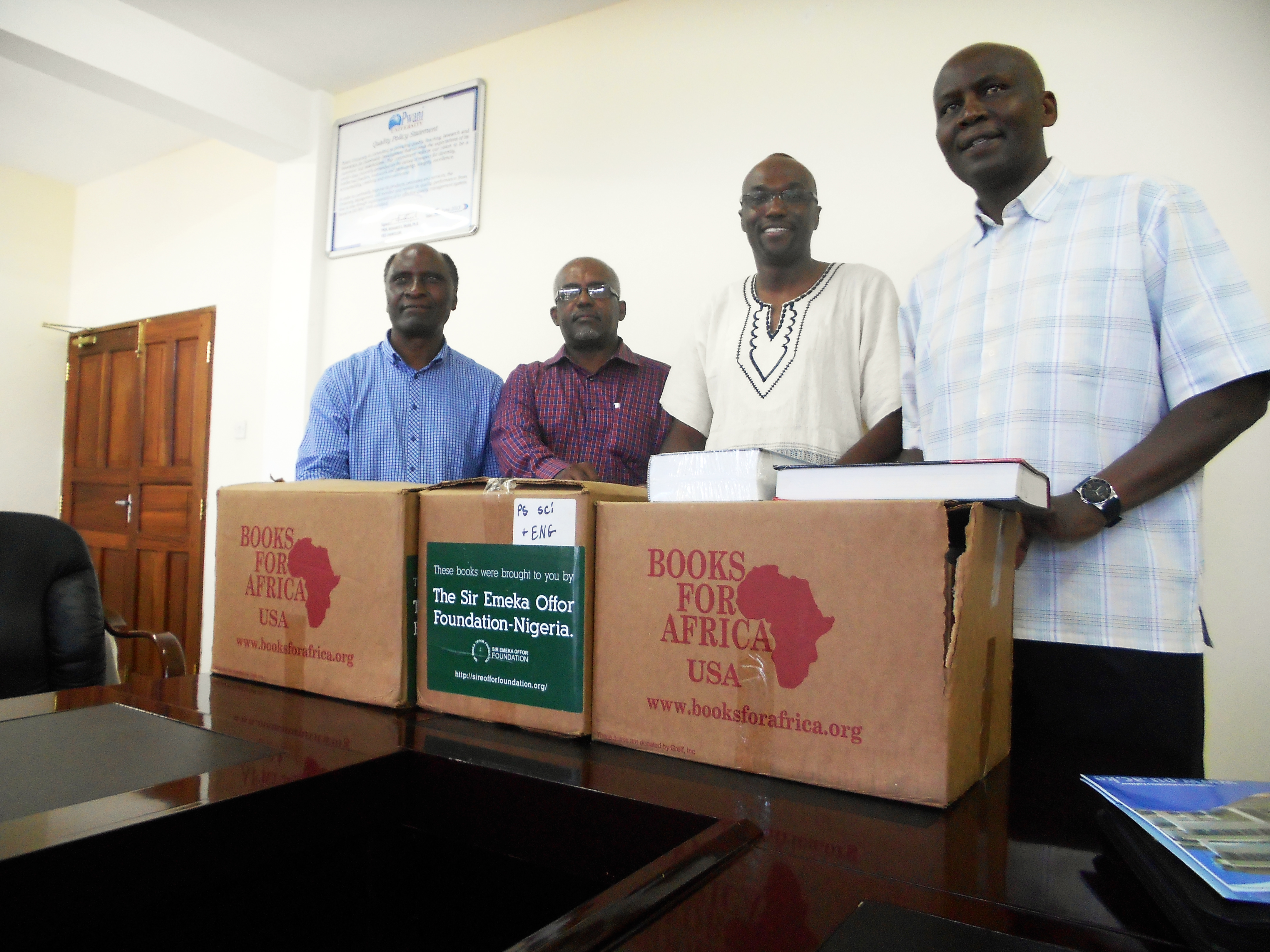
From left during the launch of the Books for Africa Advisory Council at Pwani University are Prof. Gabriel Katana, Chair of the Kilifi County Education Board; Prof. Mohamed Rajab, Vice Chancellor of Pwani University; Tom Gitaa, Director of Diaspora Affairs, Books for Africa; Ambassador Elkanah Odembo, the chairman of the new Advisory Council. Photo: Joseph Tondo Masha/Mshale
From left during the launch of the Books for Africa Advisory Council at Pwani University are Prof. Gabriel Katana, Chair of the Kilifi County Education Board; Prof. Mohamed Rajab, Vice Chancellor of Pwani University; Tom Gitaa, Director of Diaspora Affairs, Books for Africa;  Ambassador Elkanah Odembo, the chairman of the new Advisory Council. Photo: Joseph Tondo Masha/Mshale
From left during the launch of the Books for Africa Advisory Council at Pwani University are Prof. Gabriel Katana, Chair of the Kilifi County Education Board; Prof. Mohamed Rajab, Vice Chancellor of Pwani University; Tom Gitaa, Director of Diaspora Affairs, Books for Africa; Ambassador Elkanah Odembo, the chairman of the new Advisory Council. Photo: Joseph Tondo Masha/Mshale
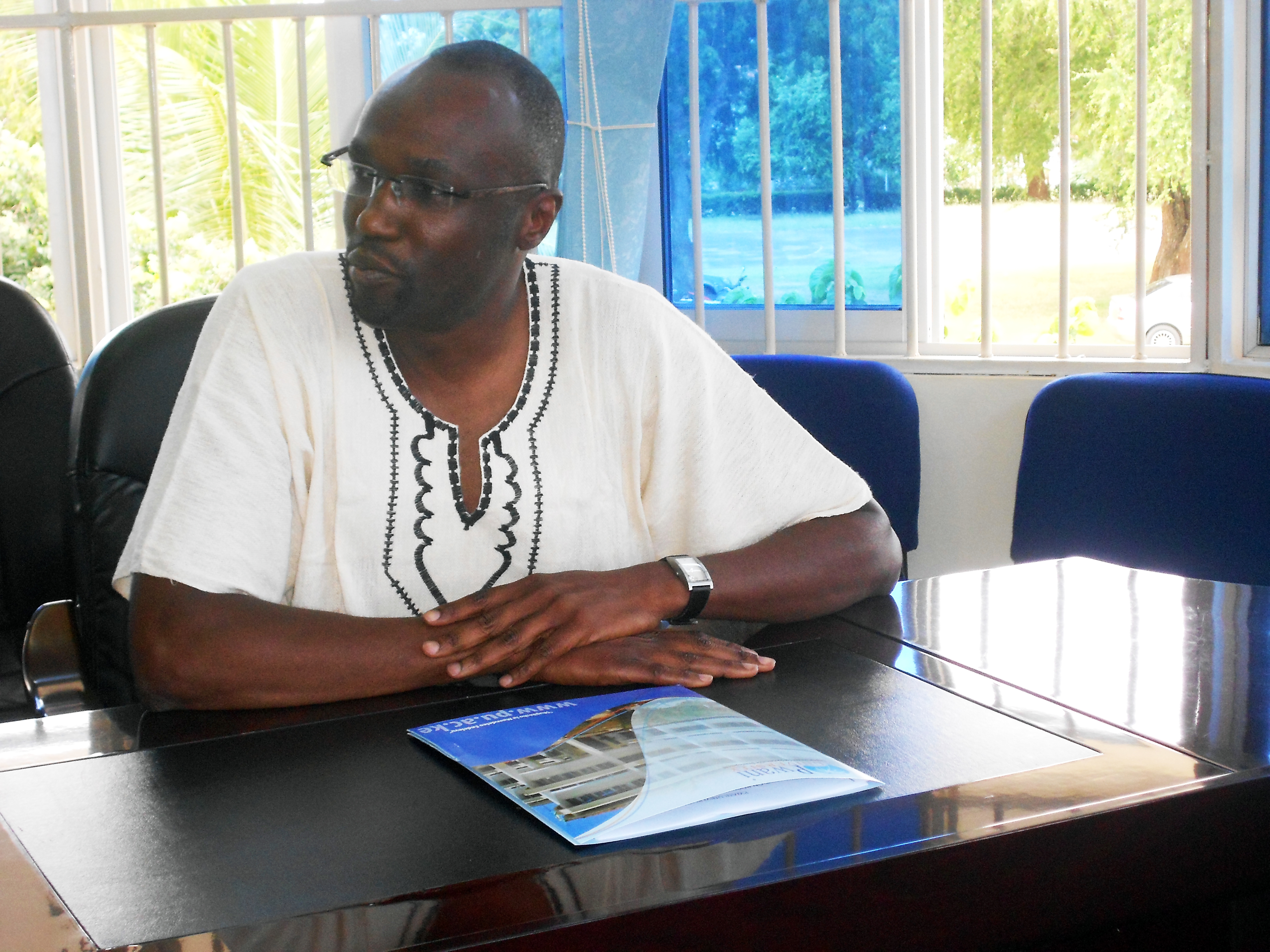
Ambassador Elkanah Odembo, Kenya's former ambassador to the United States, listens during launch activities of the Books for Africa Advisory Council at Pwani University. Ambassador Odembo will chair the Advisory Council out of Nairobi, the Kenyan capital.
Ambassador Elkanah Odembo, Kenya’s former ambassador to the United States, listens during launch activities of the Books for Africa Advisory Council at Pwani University. Ambassador Odembo will chair the Advisory Council out of Nairobi, the Kenyan capital.
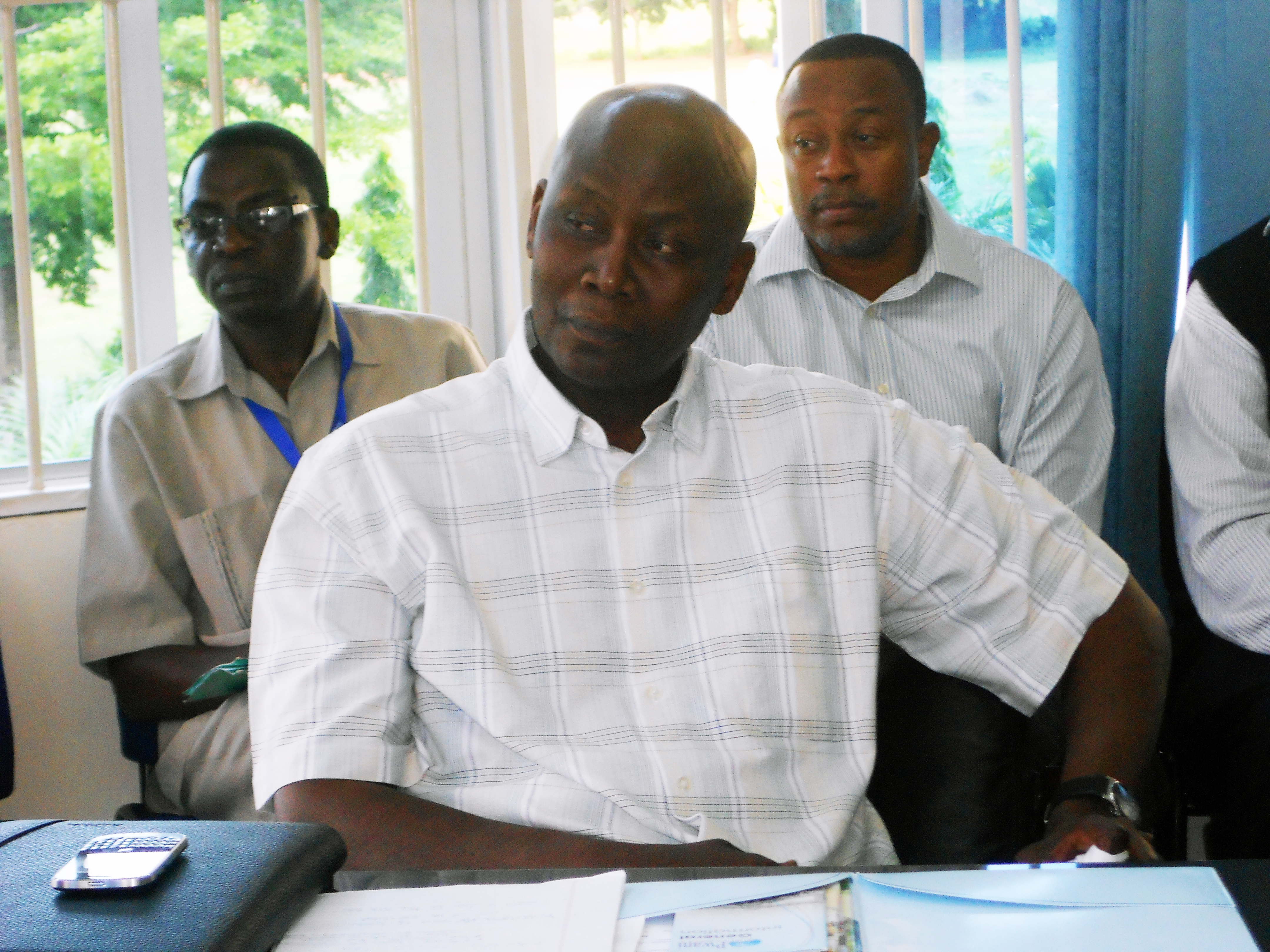
Tom Gitaa, Director of Diaspora Affairs at Books for Africa, the largest shipper of donated school text books to Africa speaks at Pwani University in Kenya where he represented the Books for Africa board during the launch of an Africa-based Advisory Council for the organization. Photo: Joseph Tondo Masha/Mshale

KILIFI, Kenya – Books for Africa, the largest shipper of donated text and library books to the African continent countries has vowed to expand its books donation program to end the book shortages in the region.

According to the organization’s Director of Diaspora Affairs, Mr Tom Gitaa, the United States based Books for Africa, which has been in existence for the last 25 years, has managed to donate 31 million books to 49 African countries. Kenya is among the African countries that have been receiving the books including universities, primary and secondary schools.

Gitaa was speaking at Pwani University during the launch of a new Africa-based Advisory Council for the organization. Ambassador Elkanah Odembo, the immediate former Kenyan envoy to the United States, got the opportunity to be endorsed as the first chairman of the Advisory Council for the organization in a ceremony which was chaired by the vice chancellor of Pwani University, Professor Mohamed Rajab.

Gitaa said through the partnership of Pwani University, the organization has recently managed to donate up to 300 books each to 30 primary and 13 secondary schools in Kilifi County. Headmasters from the recipient schools were also in attendance to witness the launch.

Professor Rajab thanked the management of Books for Africa for choosing Pwani University to be its partner in the program of shipping and distribution of the donated books in the region. Rajab said the reading culture needed to be improved in the country’s education institutions. The donation of books by education friendly organizations like Books for Africa was a noble idea.

The vice chancellor said most education institutions in the coast, especially primary and secondary schools lacked both text and other library books and said the donation of the books will be of importance towards improving the reading culture among the children.

“I consider it a noble gesture for Books of Africa for having seen the need to donate text and library books to our education institutions specifically in the Coast region as that will improve the reading culture among the area’s children” said Rajab.

The vice chancellor further announced that the university was putting up a library complex at the institution, a library which will give an opportunity of school children and researchers to access reading materials near them.

“At Pwani University we are putting up a library complex at the institution and am very sure this library will give an opportunity to our learning people to access reading materials near them” said Rajab.

The chairman of Kilifi County Education Council professor Gabriel Katana lamented on the poor performance of area schools in national examinations and said stakeholders in the education sector need to come together and discuss ways of improving the standards.

“It is shocking to see that a very minimal number of our children who sit for the Kenya Certificate of Secondary Examinations (KCSE) in Kilifi county manage to secure university positions through the joint Admissions Board (JAB) and this is something which us as stakeholders in the education sector have to look at” said Katana.

Speaking on what the new Council’s mission will be, Gitaa said its primary role will be to advise Books for Africa on how to be effective with its book donation program in the continent, as well as on African governmental policy matters on the ground that might affect it. The Council will operate out of Nairobi under the chairmanship of Ambassador Odembo and will include members from other African countries as well.

Ambassador Odembo, who is also the Vice President, Africa region, for the World Council of Credit Unions promised to work with the council board members and other scholars to improve the standards of education in Kenya. “Education is important and is the key to lifting our people out of poverty”, Odembo said.

Salif Keita to Grace Dakota Jazz Club Stage

0

photo-salif-keita-2When Salif Keita stepped on stage as an 18 year old in Mali, West Africa, it was 1967. World headlines looked much the same as they do now: Israeli and Arab forces were at battle; racial violence in the United States troubled the population; and blacks were logging first-time statuses with Thurgood Marshall swearing in as first black US Supreme Court justice.

Keita’s group then, a government-sponsored band, Super Rail Band de Bamako, set the tone that he uses to this day. That is, his music retains its traditional African instruments while also infusing contemporary sound and groove.

He departs from his first band, however, with his press toward addressing human rights issues in his music. Super Rail Band helped to train and launch him musically; world events have helped to shape and color his music’s content.

Monday, September 1st, Salif Keita performs two shows at The Dakota in Minneapolis. With 47 years of experience to back him, be prepared to hear his unique vocals, riveting African instruments such as balafone, kora, and djembe, as well as engaging trumpet, sax, and electric guitar.

Keita earned one of the biggest musical awards of his career: the Best World Music 2010 with his album, La Difference (2009). He’s cut more records in the past five years and has a wealth of material to play.

Monday, Sep 1, 2014
7:00 pm
$50
BOX OFFICE 612-332-5299
Buy online 

Dakota Jazz Club & Restaurant
1010 Nicollet Avenue
Minneapolis, MN 55403
612-332-1010

Vax4Teens

0
Vax4Teens

MDH-Ad-Aug2014Did you know that younger teens need vaccines, too? As kids get older, the protection from their childhood vaccines begins to wear off. There are also new diseases that teens can come in contact with in this stage of their lives. Keep your teens healthy with the Tdap, meningococcal, HPV, and influenza vaccines.

 Vaccines for teens

Tdap Vaccine

This vaccine protects against three serious diseases: tetanus, diphtheria, and pertussis (also known as whooping cough). Your teen should receive the Tdap vaccine at 11 or 12 years old. Beginning September 1, this vaccine will be required for 7th-12th graders to attend school, unless they have a legal exemption.

Meningococcal Vaccine (MCV4)

Meningococcal conjugate vaccine, also called the MCV4 vaccine, protects against some of the germs that can cause meningitis. Meningitis is a serious disease that can cause swelling around the lining of the brain and spinal cord. It can also cause a life threatening blood infection. Your teen needs this vaccine at 11 or 12 years old. They will need another meningococcal shot when they are 16 years old. Beginning September 1, this vaccine will also be required for 7th-12th graders to attend school, unless they have a legal exemption.

HPV Vaccine

This shot is cancer prevention! Almost all people will have a human papillomavirus (HPV) infection at some time in their lives and some forms of HPV can cause cancer. HPV vaccines help protect against HPV infections and the cancers they cause. Both boys and girls should receive HPV vaccine. Teens need a series of three HPV shots starting at 11 or 12 years old.

Influenza Vaccine

This vaccine protects against influenza (flu) and should be given every fall.  The flu can cause health problems such as dehydration or lung infections.

Shots don’t have to be scary!

Help your teen be as calm and comfortable as possible when getting their vaccines. Have them bring along their favorite music and headphones; or have them close their eyes and imagine a favorite place or activity. Remind them that getting shots may sting a little, but it’s much better than getting sick!

When should my child be vaccinated?

A good time to get these vaccines is during a yearly checkup. Your teen can also get these vaccines at a physical exam required for sports, school, or camp. Even if your teen missed these vaccines at 11 or 12 years, they can still get them at an older age. It’s a good idea to ask the doctor or nurse at every visit if there are any vaccines your teen may need.

What else should I know about these vaccines?

These vaccines have all been studied very carefully and are safe and effective. They can cause mild side effects, like soreness or redness at the where the shot was given. Some teens may faint after getting shots, but sitting for 15 minutes afterwards can help prevent fainting. It is very important to tell your doctor or nurse if your teen has any serious allergies before they receive any shots.

How can I get help paying for these vaccines?

The Vaccines for Children (VFC) program provides free or low cost vaccines for some children and teens.  Talk to your doctor or nurse for more information and to find out if you’re eligible.

Where can I learn more?

Visit www.vax4teens.com for more information on keeping your teen healthy and happy.

Somali president Hassan Sheikh Mohamud visit met with protests in Minnesota

0
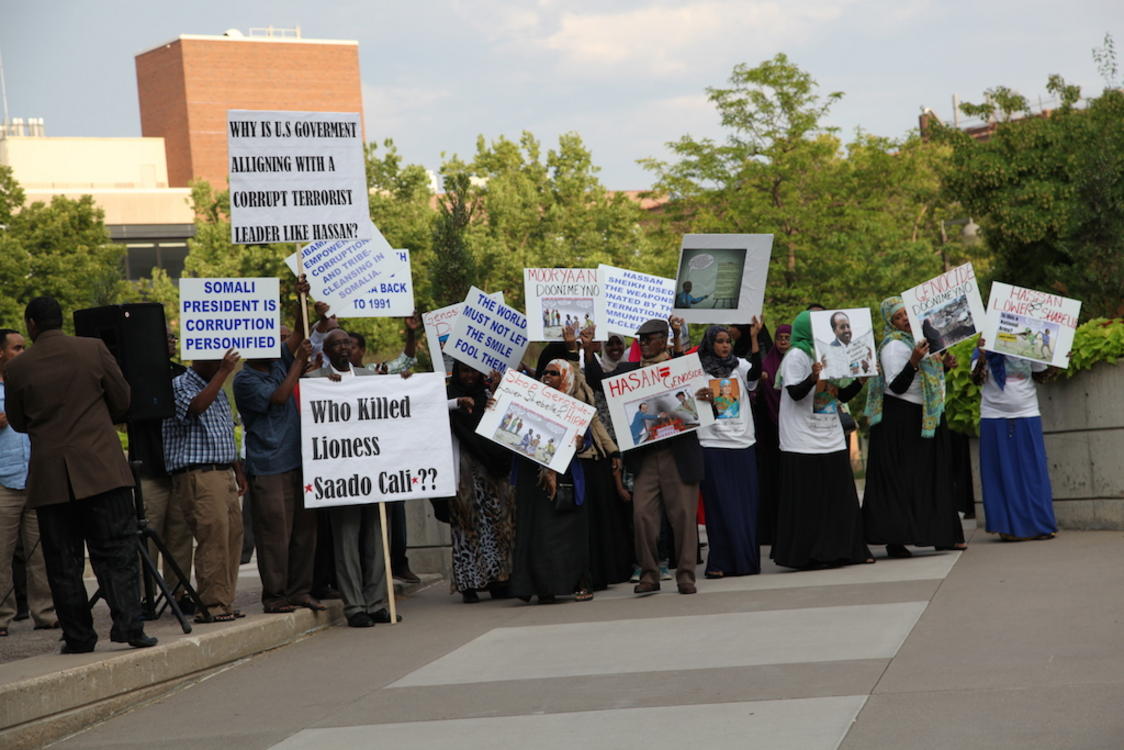
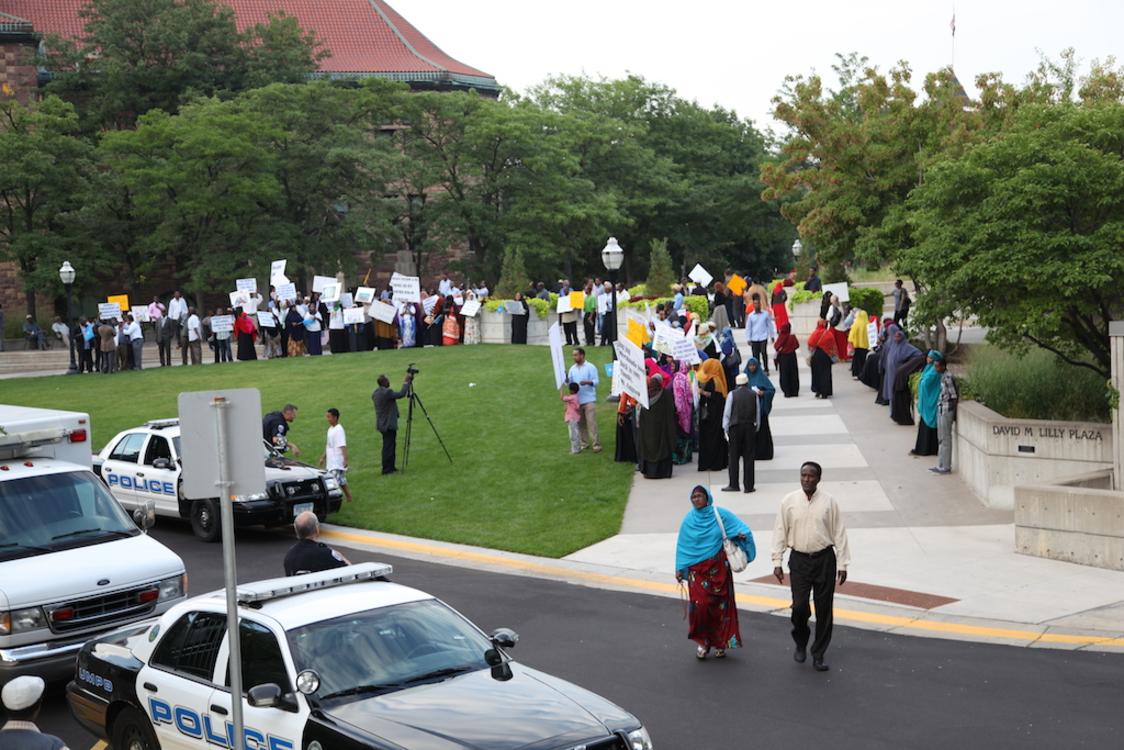
President Hassan Sheikh Mohamud of Somalia was met with protests when he visited Minnesota on Saturday, August 9 2014. Photo: Christina Cerruti/TC Daily Planet
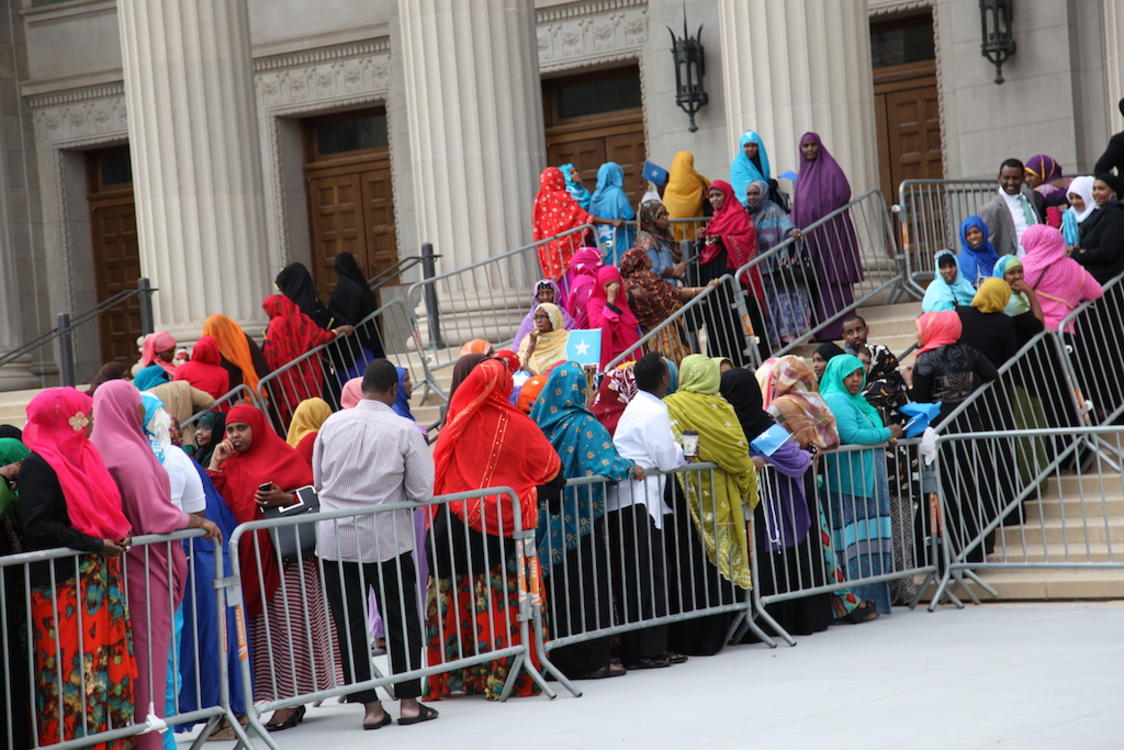
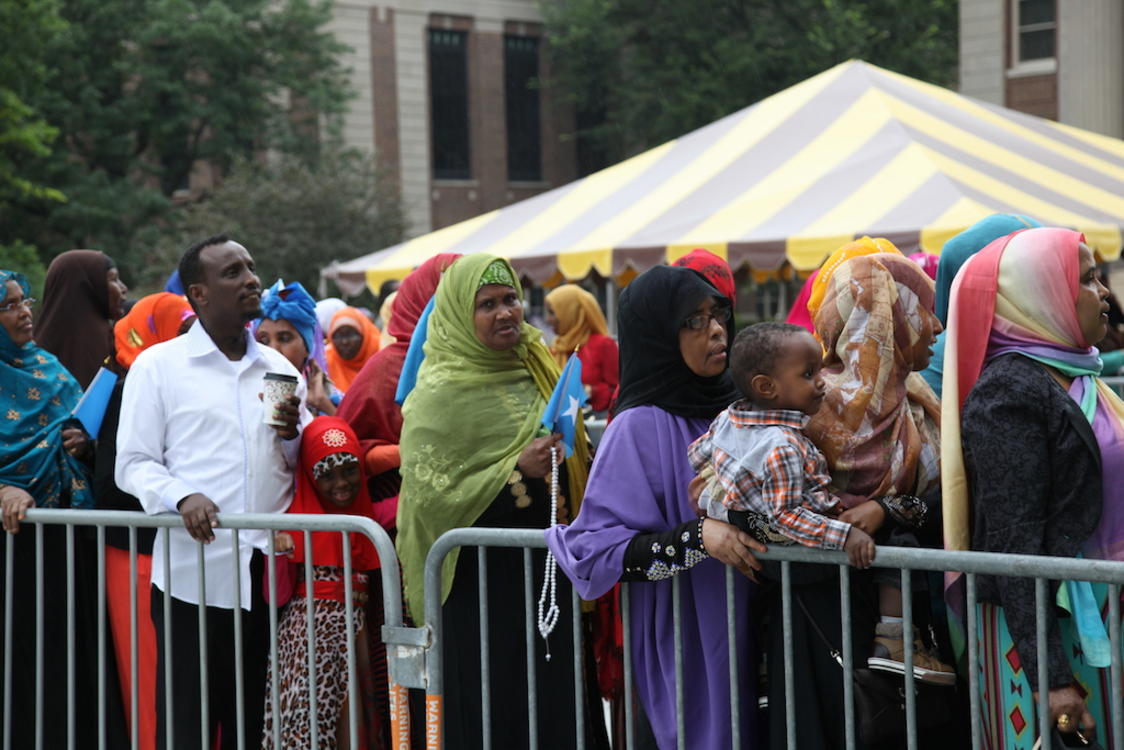
Somali-Americans in the Twin Cities line up to enter Northrop Auditorium on August 9 2014 to hear president Hassan Sheikh Mohamud of Somalia despite protests by other Somali-Americans outside the auditorium. Photo: Christina Cerruti/TC Daily Planet
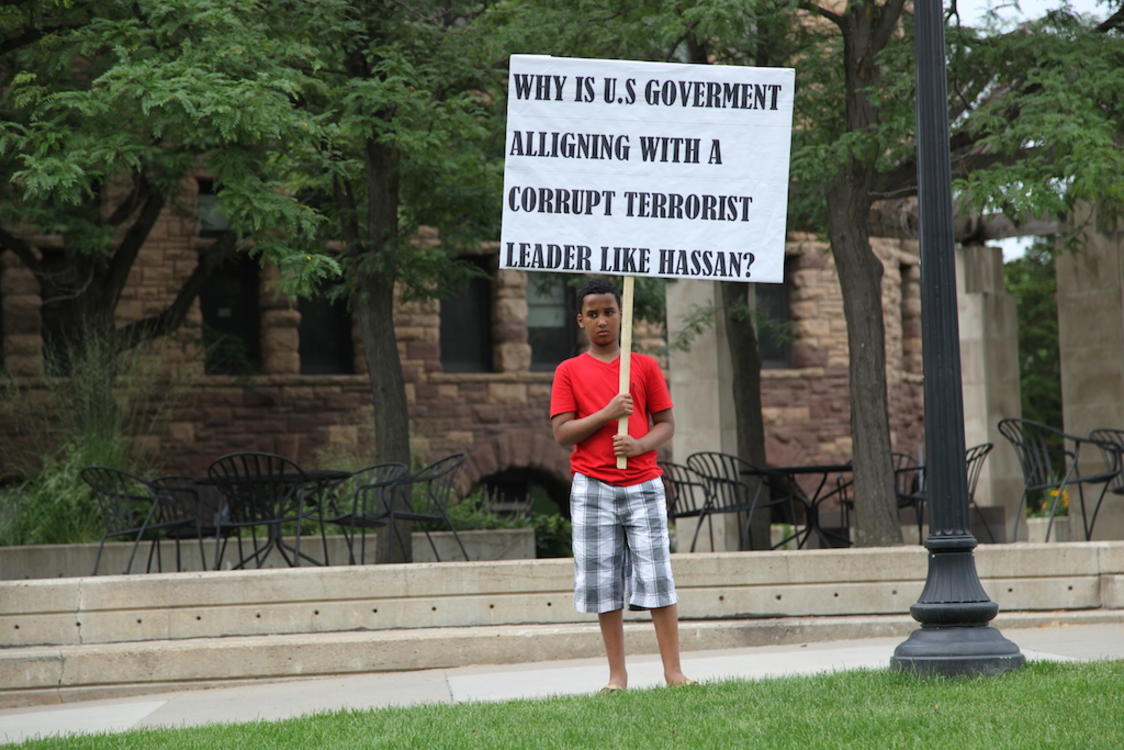
A Somali-American youth joins in the protest against president Hassan Sheikh Mohamud of Somalia at the Northrop auditorium on August 9 2014. Photo: Christina Cerruti/TC Daily Planet

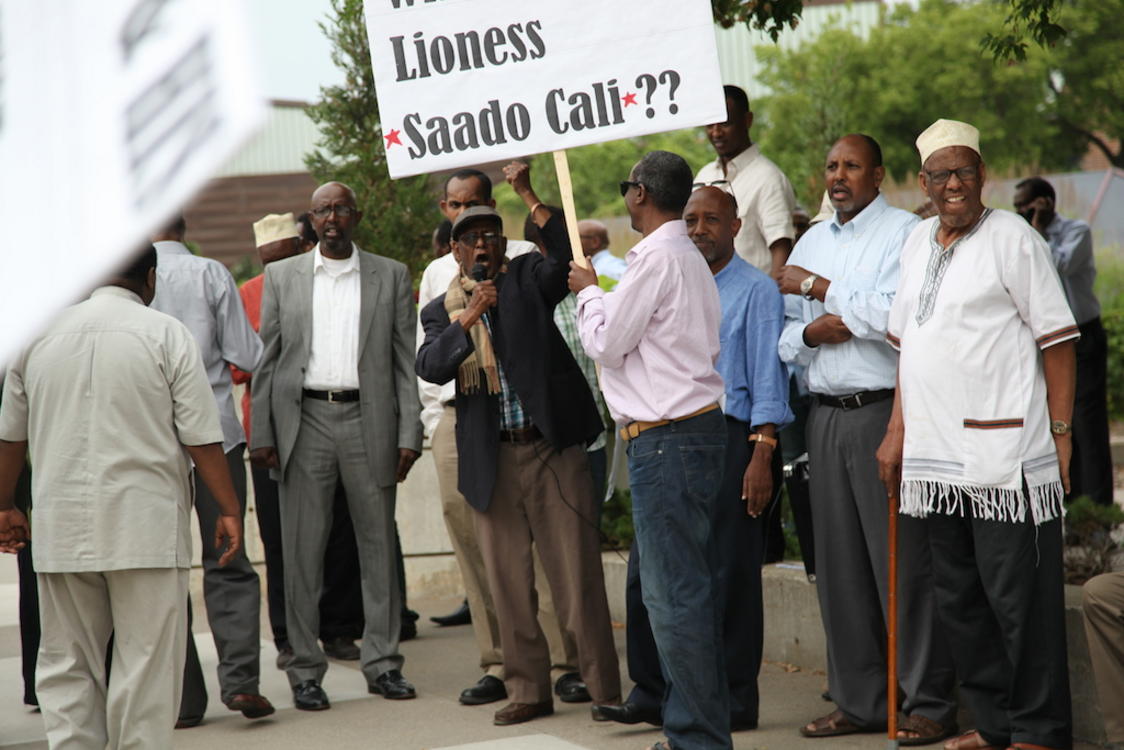
Somali-American protesting the visit of  Somalia's president Hassan Sheikh Mohamud to the twin Cities on August 9, 2014. Photo: Christina Cerruti/TC Daily Planet

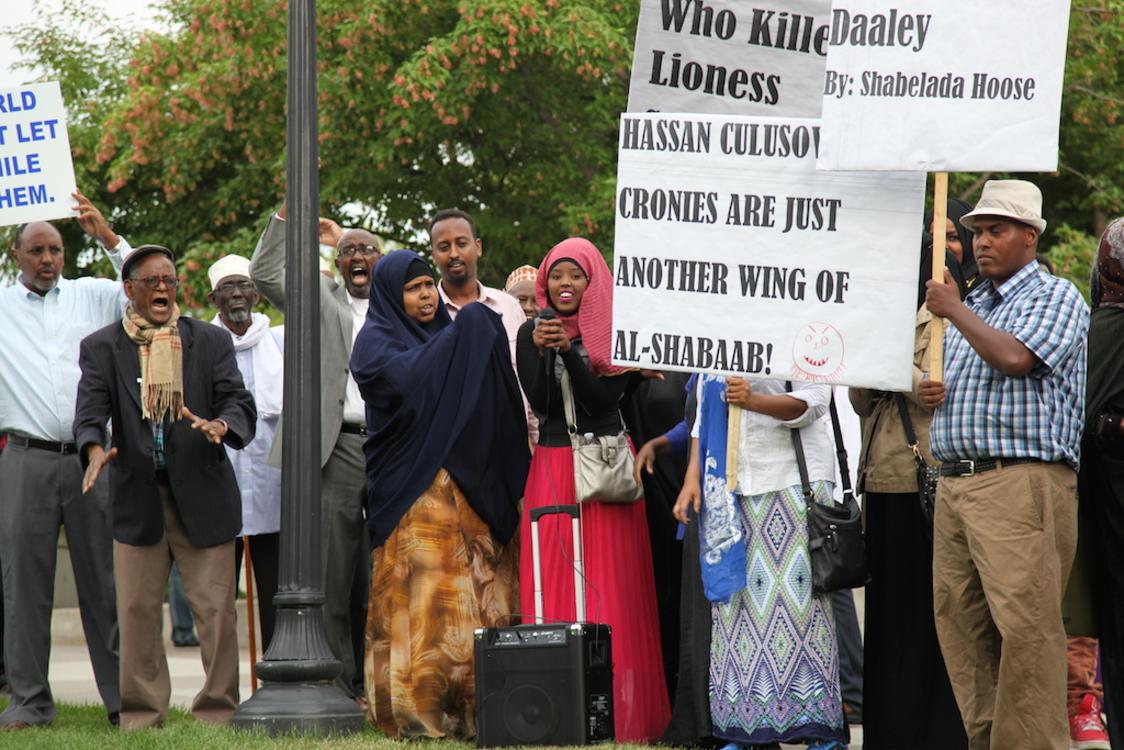
Somali-Americans in the Twin Cities carry placards as they protest the visit of president Hassan Sheikh Mohamud of Somalia at the Northrop Auditorium on August 9 2014. Photo: Christina Cerruti/TC Daily Planet
University of Minnesota Police kept a watchful eye on the peaceful protest by Somali-Americans as they protested the visit of Somalia's president president Hassan Sheikh Mohamud to the Twin Cities. The president addressed  Somali-Americans at the University of Minnesota's Northrop Auditorium. Photo: Christina Cerruti/TC Daily Planet
University of Minnesota Police kept a watchful eye on the peaceful protest by Somali-Americans as they protested the visit of Somalia’s president president Hassan Sheikh Mohamud to the Twin Cities. The president addressed Somali-Americans at the University of Minnesota’s Northrop Auditorium. Photo: Christina Cerruti/TC Daily Planet

It was completely dark by the time Somali president Hassan Sheikh Mohamud arrived at Northrop Auditorium on the University of Minnesota campus on Aug. 9. But the lack of light didn’t stop protesters, many of whom had been demonstrating for hours, from rushing to the curb and chanting “Down, Hassan, down!” as the president arrived.

President Mohamud’s visit to the Twin Cities is part of his attempt to build relationships with the strong Somali population in Minnesota, but his reception was met with mixed feelings. More than 100 protesters showed up among the several hundred attendees at the event, attacking the president for his current policies, which protesters say lack adequate security improvements and fail to keep promises.

“Somalis back in Somalia, they have been in civil war for 24 years and they don’t have a voice,” said protest organizer Abdirizak Jama. “President [Mohamud] is ignoring the federal system, the federal constitution.”

Back in May more than 100 Somali lawmakers asked the president to resign for failing to deliver more tangible change, like improving security in a nation struggling to rebuild after two decades of war.

President Mohamud’s support also doesn’t accurately represent the Somali-American community in Minnesota, Jama said, which he estimates at more than 25,000.

The U.S. Census Bureau estimates about one in three of the 85,700 people with Somali ancestry in the United States live in Minnesota, according to their most recent data.
Said Mohamed said he’s frustrated by the lack of government funds used to educate the people of Somalia about the dangers of the extremist ideology perpetrated by terrorist groups like Al-Shabab.

President Mohamud is responsible for the death of Somali parliament member Saado Cali Warsame, who was killed last month in a drive-by shooting in Mogadishu, Mohamed said. President Mohamud severely undervalues the important role of women in politics and society, Mohamed said, so he’s against providing any financial support to president Mohamud’s office.

“I would like to say to Mr. Obama, not to give (president Mohamud) any funds because this president is not doing the job to secure our interests,” Mohamed said. “He’s using that money to fund tribes and start divisions in the country.”

Community organizer Ahmed Hirsi, who works alongside the Somali Action Alliance that sponsored president Mohamud’s visit to campus, said that many protesters are frustrated and upset over the death of Warsame who had strong ties to Minnesota. “A lot of people are asking why she didn’t get the protection that she was supposed to have,” Hirsi said.
President Mohamud visited the U.S. to attend the U.S.-Africa Summit in Washington D.C., so Hirsi said he and other community organizers felt that it would be a great opportunity to extend an invitation to president Mohamud to visit the Twin Cities.

“There are a lot of people who are concerned and we welcome those people who are against his policy,” Hirsi said. “This is a great way for them to ask questions, to hear him out and understand why he’s doing what he is doing.”

Minneapolis social worker Deeqa Ali said she supports president Mohamud and hopes to someday return to Somalia to learn about the conditions of her homeland.

“I’ve been here 20 years and I haven’t seen home,” Ali said. “I miss home and the closest thing that I can think about is just having a president we can identify with.”

Ali said she doesn’t believe the recent allegations of president Mohamud conspiring to divert Somali assets recovered abroad for personal interests. After a series of transitional leaders in Somalia, she said, she was happy to see president Mohamud elected into office.

“There are people who are negative and people who are positive,” Ali said. “But at the end of the day he’s just one person who is really trying to put together a country that hasn’t been a country for the last 20-plus years. We’re here to tell him he’s doing a great job.”

Minneapolis political activist Mohamed Anin Ahmed said he has high hopes for president Mohamud and that people can’t expect him to do everything they want him to do. Most importantly, he said he believes president Mohamud has succeeded in strengthening ties and fostering business relations between Somalia and wealthier countries like the U.S.

“A country destroyed needs capital. This is very important. Without capital, this man can do nothing,” he said. “He doesn’t have to come here and talk to us. But he’s coming here to reach out, and even though I am not a 100 percent supporter of him I wish him luck.”

America plays catch-up as it hosts the US-Africa Summit

0
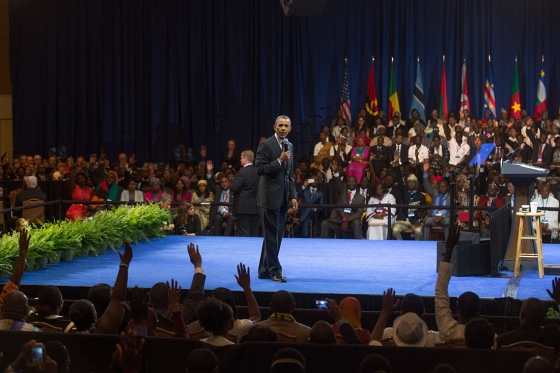
President Barack Obama delivers remarks and answers questions at the Young African Leaders Initiative town hall in Washington, D.C., July 28, 2014. The president will host African presidents in the first ever US-Africa Summit that starts August 4, 2014. Photo: Chuck Kennedy/White House

WASHINGTON — President Barack Obama is gathering nearly 50 African heads of state in Washington for an unprecedented summit aimed in part at building his legacy on a continent where his commitment has been questioned.

But the backdrop for the conference that begins Monday underscores what has been a constant challenge to that effort. Even as Obama immerses himself in talks on regional security, democracy building and business investment in Africa, the world’s attention — and much of his own — will be on an extraordinary array of urgent overseas crises.

Among them: Gaza clashes, Russia’s provocations in Ukraine and mounting extremism in Iraq, to name just a few. An outbreak of the deadly Ebola virus in West Africa also threatens to cast a shadow over the summit, with leaders from at least two affected countries canceling plans to travel to Washington and the U.S. setting up medical screenings for other officials arriving from those nations.

“It’s the nature of the world we live in today where there are multiple crises at any time,” said Witney Schneidman, the former deputy assistant secretary of state for African affairs. “But that should not paralyze us from moving forward on key areas to advance our interests.”

White House officials say the American interests in Africa are immense. The continent is home to some of the world’s fastest growing economies and a rapidly expanding middle class. The U.S. is also competing for those consumers with China, which surpassed the United States in 2009 as Africa’s largest trading partner.

“The importance of this for America needs to be understood,” Obama said Friday. “Africa is growing, and you’ve got thriving markets and you’ve got entrepreneurs and extraordinary talent among the people there.”

He added: “Africa also happens to be one of the continents where America is most popular, and people feel a real affinity for our way of life.”

From the start of his presidency, Obama has faced sky-high expectations from African leaders and U.S. policymakers who hoped the son of a Kenyan would bump Africa up the White House list of foreign policy priorities.

Obama’s first trip to sub-Saharan Africa as president — an overnight stop in Ghana in 2009 — also suggested that he could be an American president able to tell hard truths to the continent’s leaders. During a speech to parliament in Accra, he declared that Africa “doesn’t need strongmen, it needs strong institutions.”

But it would be four years before Obama returned to Africa again, a yawning gap that raised questions about the extent of his commitment to continent. Unlike his predecessor George W. Bush, who launched a $15 billion program to address HIV and AIDS, Obama seemed to be lacking a signature Africa initiative. And his administration’s focus turned instead to the Arab Spring movement sweeping through the Middle East, a heavily promoted rebalance toward Asia and a slew of pressing security concerns.

Analysts say Obama’s second term has brought about a more robust focus on Africa. The president made a three-country trip to the continent last summer and aides say he’s likely to travel there again before the end of his second term. He’s also launched a new “Power Africa” initiative that aims to leverage billions in private sector commitments to bring electricity to 20 million households in sub-Saharan Africa. And he’s launched a fellowship program for young African leaders that received more than 50,000 applications for 500 slots this year.

Carl LeVan, a professor at American University’s School of International Service, said those efforts, along with the Washington summit, suggest an administration undertaking “a concerted and calculated effort to construct its legacy, and its legacy toward Africa in particular, since expectations were so high.”

Also factoring into the U.S. focus on Africa: China, which has ramped up its investment in the natural resource-rich continent and whose leaders make frequent trips to the continent.

U.S. officials try to draw a distinction between Chinese and American investment in Africa. While Beijing may spend more money, they argue that the Chinese focus more on extracting resources from Africa for their own purposes rather than boosting African capacity and building long-term economic relationships.

“We do believe we bring something unique to the table,” said Ben Rhodes, Obama’s deputy national security adviser. “We are less focused on resources from Africa and more focused on deepening trade and investment relationships.”

Obama announces unilateral action on immigration

0
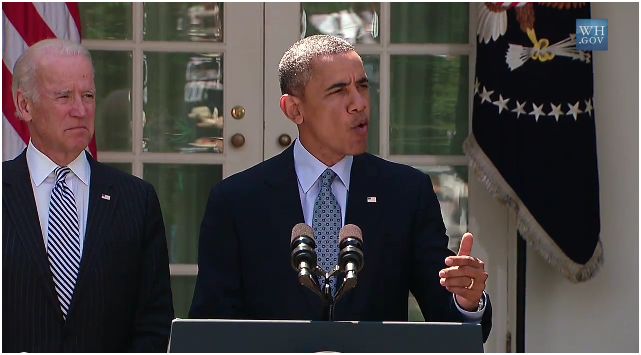
President Barack Obama, with Vice President Joe Biden, delivers remarks on immigration reform in the Rose Garden of the White House, June 30, 2014. Photo: White House/Chuck Kennedy

After Rep. John Boehner told President Obama last week that House Republicans would continue to block a vote on immigration reform this year, Obama today announced that he is directing Homeland Security and the Attorney General to move resources from our interior to the border; and asking them to identify additional actions this summer that he can take without Congress.

“The only thing I can’t do is stand by and do nothing while waiting for them to get their act together,” Obama said Monday.

He added that administrative actions alone will not adequately address the problem and that he is continuing to call on Congress to act.

Obama’s move does not come as a surprise to many immigration reform activists who have been pressuring the president to act this summer if the House doesn’t vote on immigration reform.

As New America Media reported this month, immigration reform is not dead; it is now in the hands of President Obama.

Healthy kids equals healthy minds!

0
Healthy kids equals healthy minds!

Mshale-MDH-July2014Did you know that vaccines help keep children and teens healthy?  And staying well helps them stay in school!  Healthy students are able to pay better attention and participate in class.

Make sure your kids are ready for child care or school. Starting September 1, 2014, there are new immunization requirements for school and child care.

What are the new shot requirements?

  • Hepatitis B – For all children over 2 months old enrolled or enrolling in child care or an early childhood program.
  • Hepatitis A – For all children over 12 months old enrolled or enrolling in child care or an early childhood program
  • Tdap – For students entering 7th grade.  Students in 8th through 12th grades must show documentation if the school requests it.  This replaces the Td immunization requirement.
  • Meningitis (meningococcal) – For students entering 7th grade.  Students in 8th through 12th grades must show documentation if the school requests it.

What do parents need to do?

  • Check your child’s immunization history.  For copies of your child’s immunization records, talk to your clinic or call the Minnesota Immunization Information Connection (MIIC) at 651-201-5503 or 1-800-657-3970.
  • Compare your child’s records to the new shot requirements.  Have they had the Tdap and Meningococcal vaccines?
  • Schedule an appointment if your child needs additional vaccines.
  • Keep a copy of your child’s records.  You may be asked to provide proof of immunization before enrolling.

What other vaccines can protect my children?

There are other vaccines against serious diseases that are also recommended for your children and teens.

  • Rotavirus vaccine for infants.
  • Influenza vaccine for anyone age 6 months or older.
  • Human papillomavirus (HPV) vaccine, which protects against HPV, a virus that can lead to certain types of cancer.  The HPV vaccine is cancer prevention and the series of 3 shots should be started at 11-12 years.

Concerned about cost?

Free or low cost vaccinations may be available.  Talk to your doctor or clinic about whether your child is eligible.

Set your child up for a successful school year.  Be sure they have received the required vaccines and talk to your doctor or clinic about what else you can do to keep them healthy and in school.  For more information, including a chart showing which vaccinations your child should receive when and instructions on how to seek an exemption from the immunization requirements, please visit http://www.health.state.mn.us/divs/idepc/immunize/readykidswhento.pdf

FBI investigates Minnesota’s Somali community

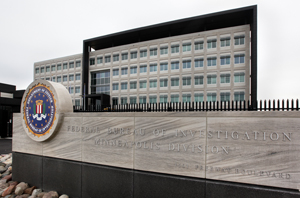
The 144,000-square-foot FBI Field Office in Brooklyn Center, Minnesota. One of 56 such offices in the country.

Via TC Daily Planet

Agents from the Minneapolis office of the Federal Bureau of Investigation are collecting information from Cedar-Riverside residents as part of an ongoing investigation spurred by recent allegations of American citizens joining Syrian rebels overseas.

Rumors that neighborhood residents are illegally fighting in conflict overseas prompted agents from the FBI to ramp up their already-existing presence in the neighborhood earlier this month, said Minneapolis FBI spokesman Kyle Loven.

He said agents are actively interviewing residents and informing them about the allegations, while also trying to figure out if anyone in the community is involved.
“We’re looking for information that would indicate that someone intends to travel to a country where there’s armed conflict,” Loven said.

Since Ethiopian military forces invaded Somalia in 2006, Loven said at least 22 Somali immigrants — who were mostly young men — have left Minnesota to join al-Shabaab, a Somali terrorist organization. He said the FBI is continuing investigations into those incidents.
“Our information and history here in Minneapolis indicates that these recruitment efforts are being directed primarily at young people,” Loven said.
Citizens are allegedly joining rebel forces in going against Syrian president Bashar al-Assad’s government.

The Minneapolis FBI kicked off its investigation into potential Syrian ties in the Cedar-Riverside area earlier this month when two FBI agents met with community members at the Brian Coyle Center. Loven said the FBI will continue to work with city and state Somali groups in an attempt to gain a better understanding of what might be attracting young men to foreign countries.

“Our liaison … met with leaders to determine as many facts as they could,” Loven said.
The meeting followed a notice posted on the Minneapolis FBI’s website, which was shortly after the first death of an American suicide bomber acting on behalf of a militant group in Syria, late last month.

The FBI’s Minneapolis site called for anyone who knows someone who is “planning to and/or has traveled to a foreign country for armed combat or who is being recruited for such activities” to contact its office.

So far, the Minneapolis division is the only FBI office in the country to post such a notice online.

A large part of the FBI’s outreach will be identifying “at-risk” youth, Loven said, adding that the agency’s presence in Cedar-Riverside will work to prevent future recruitment.
Mohamed Farah, executive director of Ka Joog, a Minnesota Somali youth group, said al-Shabaab’s recruitment efforts are present in the Somali community “24/7.”

Recent recruitment efforts, Farah said, are “part two” of 2007’s initial wave.
Loven said the FBI isn’t investigating anyone who has left for war zones to provide humanitarian services.

Jaylani Hussein, a board member on Minnesota’s American Relief Agency for the Horn of Africa, traveled to his birthplace in Somalia in 2008 to distribute food during a famine and help establish schools there.

“Obviously I was aware of people having gone to fight in Somalia,” he said. “But there were some people who profiled me and thought I was suspicious for having gone to Somalia.”
Hussein said those who have returned to Somalia for peaceful reasons vastly outnumber those who go for violent reasons.

Farah said he disagrees with efforts that focus too heavily on military intervention in attempt to combat terrorism instead of outreach at home.

“We tend to forget to engage the community here,” he said. “This is a two-way street.”

African immigrant Services organizes Osseo School District Parents of Color Townhall

0
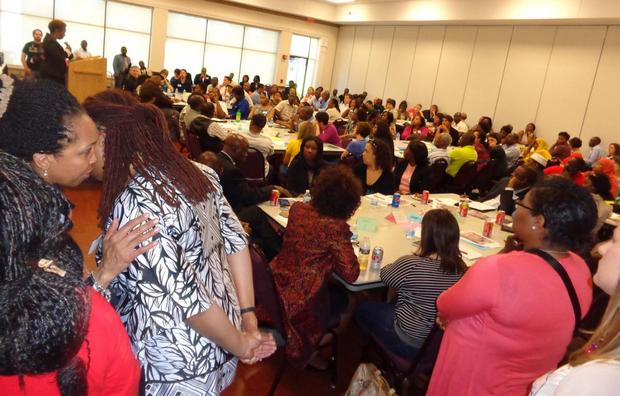
Over 200 people packed the Brooklyn Park Community Center at a Townhall meeting organized by African Immigrant Services for parents of color. Photos: Jay Clark/TC Daily Planet

On May 22, More than 200 people crammed the main meeting room at the Brooklyn Park Community Activity Center to participate in the Community Town Hall for Parents of Color in the Osseo School District. Most of the participating parents were African immigrants and African Americans. The meeting was hosted  by African Immigrant Services and Legacy Family Center.

Teachers and staff of Northview Junior High participated in the planning and logistics of the meeting.

A top goal of the meeting was to give the parents an opportunity to talk about what they wanted changed in  their schools, identify solutions, then work together to get solutions implemented.

Small group brainstorming

People gathered around tables in groups of about ten.

They then in turn brainstormed these questions:

  • What do you like/dislike about your child’s school?
  • What solutions would you propose?
  • What kind of follow-up would you like to see after tonight?

The answers to the like and dislike questions were then written on big easel sheets, and the sheets were taped up on the wall.

As the meeting ended, people were given five dots, and asked to vote for the five things they most liked and disliked about their school and the school system.

Voting Priorities

These dislikes got the most dot votes:

1.    Staff not racially similar to students (41 votes)

2.    Low expectations for black students (38 votes)

3.    Need better support for immigrant students (36 votes)

4.    Inconsistent communication from teachers to parents (35 votes)

5.    Not enough diversity (32 votes)

6.    Blowing black student school issues out of proportion (32 votes)

7.    Teachers lack cultural understanding of their students (31 votes)

8.    School board is not racially similar to community (30 votes)

These likes got the most dot votes:

1.    Hiring people of color (25 votes)

2.    Good at getting communications out to parents’s homes (15 votes)

3.    There is good diversity (13 votes)

4.    Progress made regarding racial equity (11 votes)

5.    Cares about exceptional students (10 votes)

6.    Open communication (10 votes)

Over the next few weeks., parents and community members will be reaching out to more parents, researching possible solutions to the biggest problems, negotiating with the Osseo school district, and working together to get solutions implemented.

Even though  the room was packed and noisy, people came away energized and vowing  to work together to improve  their school system

Below are the easel sheets with dots and the vote count for each like and dislike.

Related: African immigrants warm up to Osseo School Board Racial Equity Policy

Hepatitis B: A serious infection that can be prevented

0
Hepatitis B: A serious infection that can be prevented

Hepatitis BThis article focuses on a specific type of hepatitis that is important to know about during pregnancy –Hepatitis B.

What is hepatitis B?

Hepatitis B is a liver disease. It is caused by the hepatitis B virus. Many people with Hepatitis B do not have symptoms and do not know they are infected. Hepatitis B can cause severe liver damage and liver cancer. A simple blood test can tell you if you have hepatitis B. Doctors do not always do this test at a regular visit, so it is important to ask for this test.

Are there treatments for hepatitis B?

Yes. There are treatments for hepatitis B that can help your liver stay healthy. It is important to find out if you have hepatitis B so you can get medical care. You should see your doctor regularly to talk about your health.

Should pregnant women be tested?

All women should be tested for hepatitis B during each pregnancy. If a woman has hepatitis B, her baby can become infected at birth. Your doctor may recommend that you get treatment to help protect your baby from hepatitis B. Most infants who are infected at birth will have hepatitis B for the rest of their lives. If you have hepatitis B, there is a simple and effective way to protect your baby.

How can I protect my baby from hepatitis B?

There are steps that you can take to protect your baby from becoming infected with hepatitis B. These steps are:

  • Have your doctor test for hepatitis B during your pregnancy.
  • If the test says that you have hepatitis B, your baby will need two shots at birth. The two shots are hepatitis B immune globulin (HBIG) and hepatitis B vaccine.
  • Make sure your baby gets all their hepatitis B vaccine shots.
  • Once your baby has all their shots, make sure their doctor does a hepatitis B test. This test will make sure your baby is protected from hepatitis B.

Even if you do not have hepatitis B, your baby should still get all of the recommended hepatitis B vaccines starting at birth.

For more information about hepatitis B, talk to your doctor. You can also find information at the Minnesota Department of Health website at: www.health.state.mn.us/hepatitis