
Home Blog Page 143

Gichana elected president of Mwanyagetinge

0
From left Collins Orenge, Wycliff Chakua and Geoffrey Gichana listen as they are introduced to make remarks after their election as Public Relations Officer, Vice-President and President respectively of Mwanyagetinge on Sunday, March 16 2014 in Brooklyn Park, Minnesota. Photo: Richard Ooga/Mshale
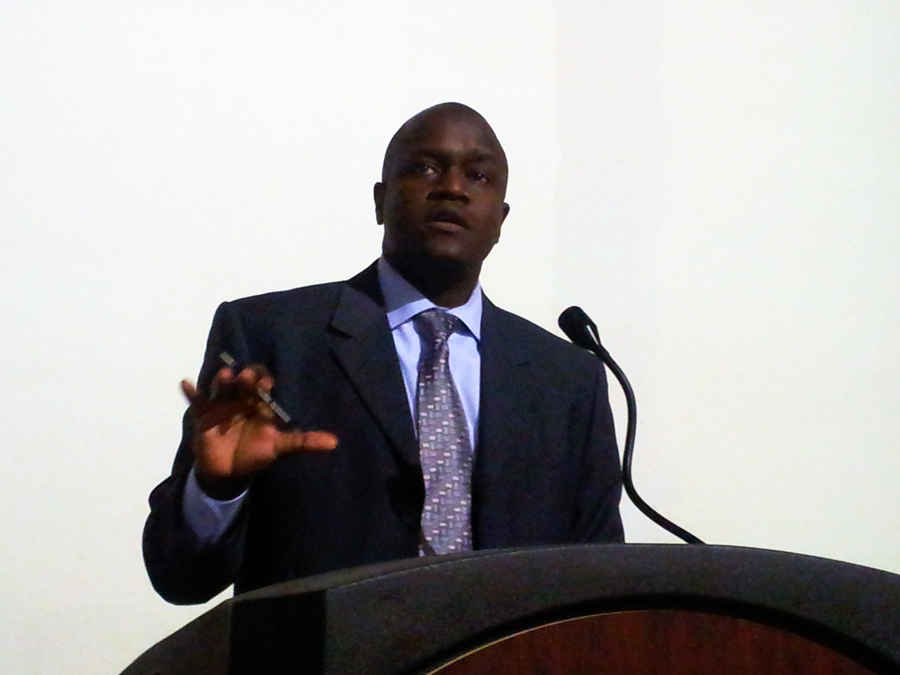
Geoffrey Gichana speaking to members of Mwanyagetinge after they elected him president on Sunday, March 16 2014 in Brooklyn park, Minnesota. Photo: Tom Gitaa/Mshale

Geoffrey Gichana was elected Sunday as president of Mwanyagetinge which pulls together members of the Gusii community of Kenyans in Minnesota. The Gusii community is estimated (by Mshale) to represent more than 60% of the over 10,000 Kenyan immigrants in the state. They hail mostly from the populous Kisii and Nyamira counties in western Kenya.

Gichana is an IT worker and a Metropolitan State University alumnus with a bachelor and master’s degrees in Management Information Systems from the institution. He ran unopposed and was elected by a unanimous voice vote by members present. Gichana, 34, now leads the oldest organized group of Kenyans in the state. The organization formed in the mid-80s as Kenyans trickled into the state before swelling to become the fourth largest among the African immigrants in Minnesota.

The post of president attracted two candidates but under stringent new rules adopted in a new constitution last year, one needs a minimum of a bachelor’s degree to run. Tom Bichanga, chairman of the elections commission overseeing the vetting of candidates and the election told Mshale the other candidate did not meet the criteria spelled out in the new constitution, thus resulting in his commission presenting just one name to the membership.

“We are going to move Mwanyagetinge towards a different direction,” Gichana said in a brief acceptance speech. He said his team plans to usher in a new era of close collaborations with other community stakeholders such as businesses and churches.

Admitting a contentious road ahead regarding the Benevolent Fund, he said “Our proposal is to delegate that to the specific constituent groups because that portion can be managed well at that level.” The fund assists participating bereaved members with financial support in times of death of a family member. His proposal, if adopted, will result in the divvying up of the management of the fund along lines that resemble the existing parliamentary boundaries back in the Kisii and Nyamira counties, where most of the members hail from or trace their family tree.

Also elected Sunday was financial services veteran, Wycliff Chakua, a Risk Analyst at Wells Fargo Bank. He takes over as vice-president and he too like Mr. Gichana was elected unopposed. The elections commission said no other person offered themselves for the position. Chakua, 35, was the treasurer in the outgoing Japheth Kimaiga administration and is also the incoming Midwest region Chapter Head for Africa 2.0, a Pan-African Civil Society organization that consists of young and emerging leaders from Africa and the Diaspora.

Chakua graduated from Devry University with a Business Technical Management degree and is currently working on his MBA at Keller School of Management.

“The vision we have together with the president will bring back the fire to the organization,” Chakua thundered in brief remarks to members following his election. He said Mwanyagetinge has been relegated to one which comes to prominence only when someone dies and that should not be the case, eliciting nods of approval from members. He added “(Mwanyagetinge) should be the main organization of Kenyans in the state and we are going to claim our rightful place.” The vision, he said would be to move the organization from a welfare organization to a “community resource center that will identify opportunities for its members,” he said. He added the vision the team has will be achieved through training, job placements, collaborations and wealth creation.

Hamline University business student, Collins Orenge, 28, assumes the new role of Public Relations Officer. His is the only elected position that does not require a minimum of a bachelor’s degree. The candidate only needs to have “good organizational skills” and “good people and communication skills,” according to the constitution.

A self declared “self-taught entrepreneur”, Orenge, in addition to being a student runs Lulu Creations, a web design firm he founded.

“If we do not change we are going to be extinct,” Orenge told members. He urged them to contribute financially to the organization over and above their membership dues as “the current state of affairs is very bad”.

Vacant Positions

Two key positions in the organization had no takers according to the elections commission. After a lengthy discussion at the lack of interest in the two positions, members lamented the state of affairs of the organization with some calling for a new recruitment drive to register new members to bolster its deteriorating finances.

“This is indicative of where we are, not enough registered members so we can have money to function properly,” one member said.

Chakua and Orenge who were Treasurer and Secretary respectively in the outgoing administration will oversee those functions on an interim basis in addition to their new roles while the elections commission seeks to fill them, members instructed.

At the Sunday meeting, three members volunteered themselves for the two vacant posts. They will be vetted by the commission and voting will take place at a later date.

Members interested in contesting the two open seats should contact the elections commission via email: [email protected].

Officers serve a two year term and can be a re-elected for one more additional term.
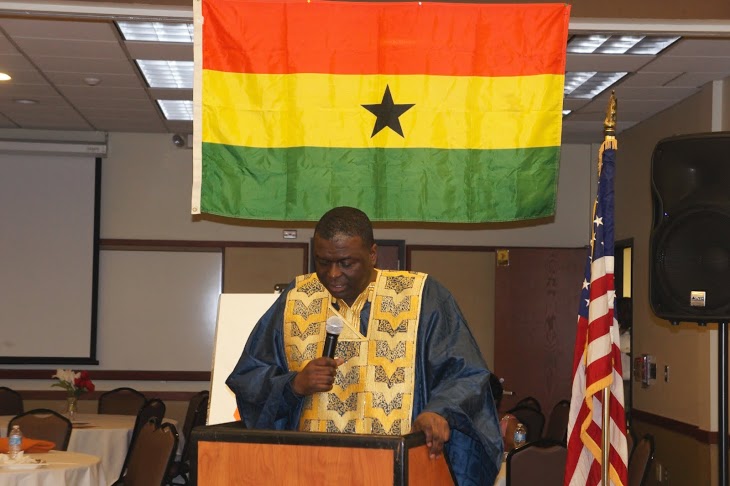
GhanaAM scholarship initiative honors past present and future

0
Reginald Chapman of WCCO TV, the CBS affiliate in MInneapolis/St.Paul, keynoted Ghana's 57th Independence Day celebration in Minnesota on March 8, 2014 at the Coon Rapids Civic Center. Photo: Michael J. Kweku Brookman

Editor’s note: Check back later for photos from the event or text GHANA to 24587 for an alert when they are posted.

The Ghanian Association of Minnesota (GhanAM) marked Ghana’s 57 years of Independence with a night of dinner and dancing.  GhanAM also announced the creation of a scholarship for youth working in the community to pursue higher education.

The dinner was held in Coon Rapids, where Reginald Chapman, WCCO reporter was the guest speaker. Chapman outlined the critical role of civic engagement in building strong communities, past present and future. He said it would take more than just giving money to people for school, however.

“You also have to nurture them,” Chapman said. “You have to be there along the way to help them through the rough spots, to guide them around the potholes so that they can be as successful as you are.”

On March 6, 1957 the British colony of Gold Coast gained independence along with a new name: Ghana. Less than a hundred year earlier Western superpowers had divided the African continent among themselves.  Yet by 1961, Kwame Nkrumah, Ghana’s first president, offered all primary and middle school students a free education.

“Those traits and values that led to the liberation of people back then still exist today,” said Chapman. “We must pass them down to young people in this room as gifts from one generation to the next.”

By listening to elders and watching out for one another, the dream of achieving a degree that can become a reality for young people in the Twin Cities and beyond, he said.  Chapman, also an adjunct professor at St. Cloud State, sees mentorship as critical to the success of young people, which influenced his decision to teach at their school of mass communication. Enrollment of African American students in the program has increased 60 percent since he joined the faculty.

At a time in the nation’s history when job-growth remains sluggish, the disperate impact on communities of color is undeniable and most severe in Minnesota, according to a 2013 federal report; the telling numbers in terms of educational outcomes, home ownership and even the possibility of wealth building speak volumes. Chapman said that those who volunteer benefit through increased job prospects, better health and overall well-being.

I think volunteering in the community also helps us gain that visibility,” said hostess Akosua Larbi-Osei. “We want people to know that yes, we live in Minnesota, but we also want to maintain our sense of identity as Ghanaians.”

To that end, GhanAM’s Academic Foundation Committee will grant scholarships regardless of religion, creed, sexual orientation or disability status. All Ghanaian high school seniors on track for college or trade schools and those already enrolled can submit applications through June 30, 2014. A complete application will include a resume and essay portion that focus criteria like community involvement, academic accomplishments and professional goal-setting. Scholarship recipients will be announced at an awards banquet later this year.

When Collins Ofori-Amafo arrived in this country in 1986 there were maybe 100 Ghanaians.  Now there are over 6000 of them living statewide, said Amafo, a member of the Committee.  In that time, he’s seen the Association grow from something of a social club into a group of established leaders planning for the long-term.

“Parents have the mind-set of people living in Ghana and these children are growing up as Americans” Ofori Amafo said. “They are torn between the two cultures. He said it was it was important to, “help them move up slowly, or else we are going to regret it.”

Maintaining that momentum will may critical to many communities that must deal with similar cultural dichotomies as the age of globalization and a more service-based economy, where following one’s passion can seem terribly risky. It’s adversity like this however, and the thought of past victories that encourage so many to persist and to thrive. That night, once all was business was taken care of,  Tiyumba Cultural Group provided song dance, while DJ Za Za played afro-pop until the night finally came to an end.

Young people are hungry for a career… to follow their passion,” Chapman said.   “On this day that we celebrate the independence of a great nation, let’s also celebrate the young people’s re-commitment to service in the community.”

BMO Harris is banking on Malagasy-born Ravelomanantsoa

0
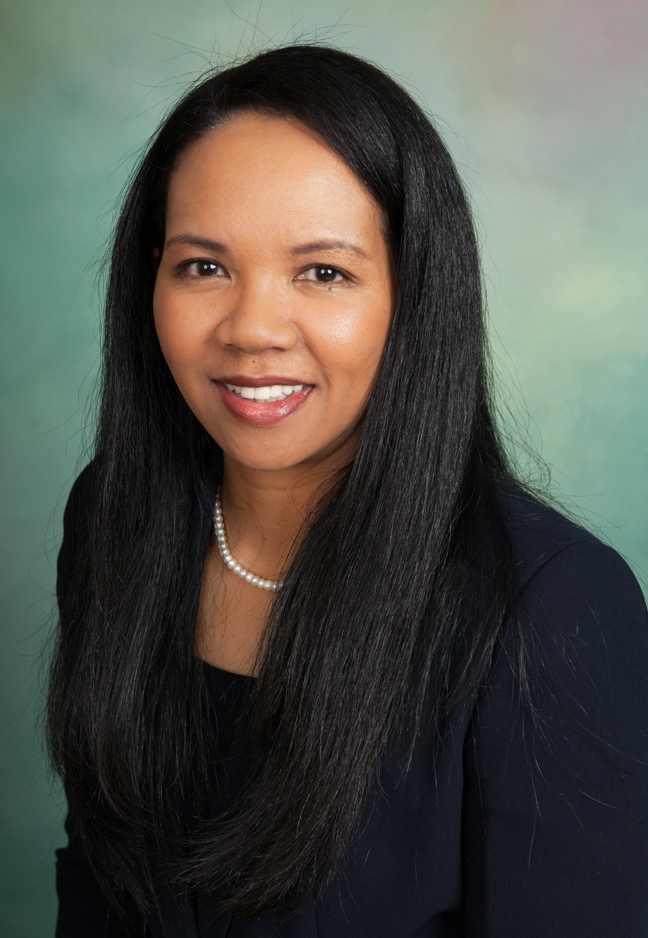
Felicia Ravelomanantsoa has been named Small Business Banking Officer for Minnesota and Northwestern Wisconsin by BMO Harris Bank elevated from her position as Branch Manager and Vice-president of the Lake Street Branch in Minneapolis. Photo: Courtesy of BMO Harris Bank
Felicia Ravelomanantsoa has been named Small Business Banking Officer for Minnesota and Nowthwestern Wisconsin by BMO Harris Bank elevated from her position as Branch Manager and Vice-president of the Lake Street Branch in Minneapolis. Photo: Courtesy of BMO Harris Bank

The lady credited with making BMO Harris bank a successful mainstay on the now thriving Lake Street corridor in South Minneapolis, Felicia Ravelomanantsoa, has been elevated to Small Business Banking Officer by the Montreal, Canada based bank which has its US headquarters in Chicago.(Read a previous Mshale profile of her here).

She joined then M & I Bank in 2007 and was given the task of building the Lake Street branch from scratch including a brand new building and staff to go with it. In addition to being the branch manager at Lake Street, she was also a vice-president in the retail division.

M & I Bank which was headquartered in Wisconsin was purchased by Canada’s BMO Harris in 2010.

Her new responsibilities are immense and show the confidence the leadership has in her. In her new position, she will be working with small businesses throughout the 14 BMO Harris branches in the entire state of Minnesota and Northwestern Wisconsin. She will specialize in business loans and other financial services aimed at small businesses.

Ravelomanantsoa who was born and raised in Madagascar has a Masters of Economics from the University of Nanterre in Paris. Those are credentials that will be needed, along with her experience, to keep BMO Harris competitive in the Minneapolis/St. Paul area. The latest market share data from the Federal Deposit Insurance Corp.(FDIC) ending June 30, 2013, shows BMO at number four (with a 1.5% share of Minnesota deposits or $3.1 billion) behind Wells Fargo, U.S. Bank and TCF Bank to put it among the five largest banks in Minnesota. Bremer Bank is number five.

The number four position in the state in last year’s FDIC Minnesota rankings was a step up for BMO as they were number five the previous year. With that vast improvement under its belt, BMO is banking on the likes of Ravelomanantsoa to take it to the next level with the business climate improving and banks looking to be active again. Pete Batinich, BMO Harris Retail Market Manager revealed as much when he said of Ravelomanantsoa appointment “Given the importance of small businesses to Minnesota’s economic growth, Felicia’s proven leadership skills make her an important member of our growing organization.”

She will be based at the 651 Nicollet Mall BMO Harris branch in Minneapolis where most of the Minnesota BMO Harris leadership operates from.

Let’s make foster care homes smoke-free

0
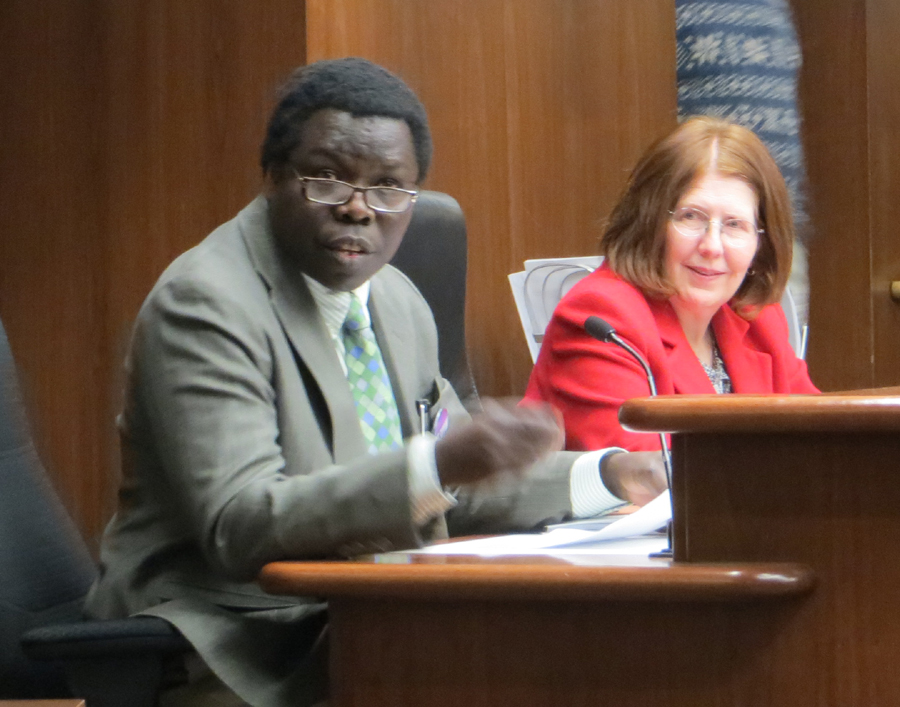
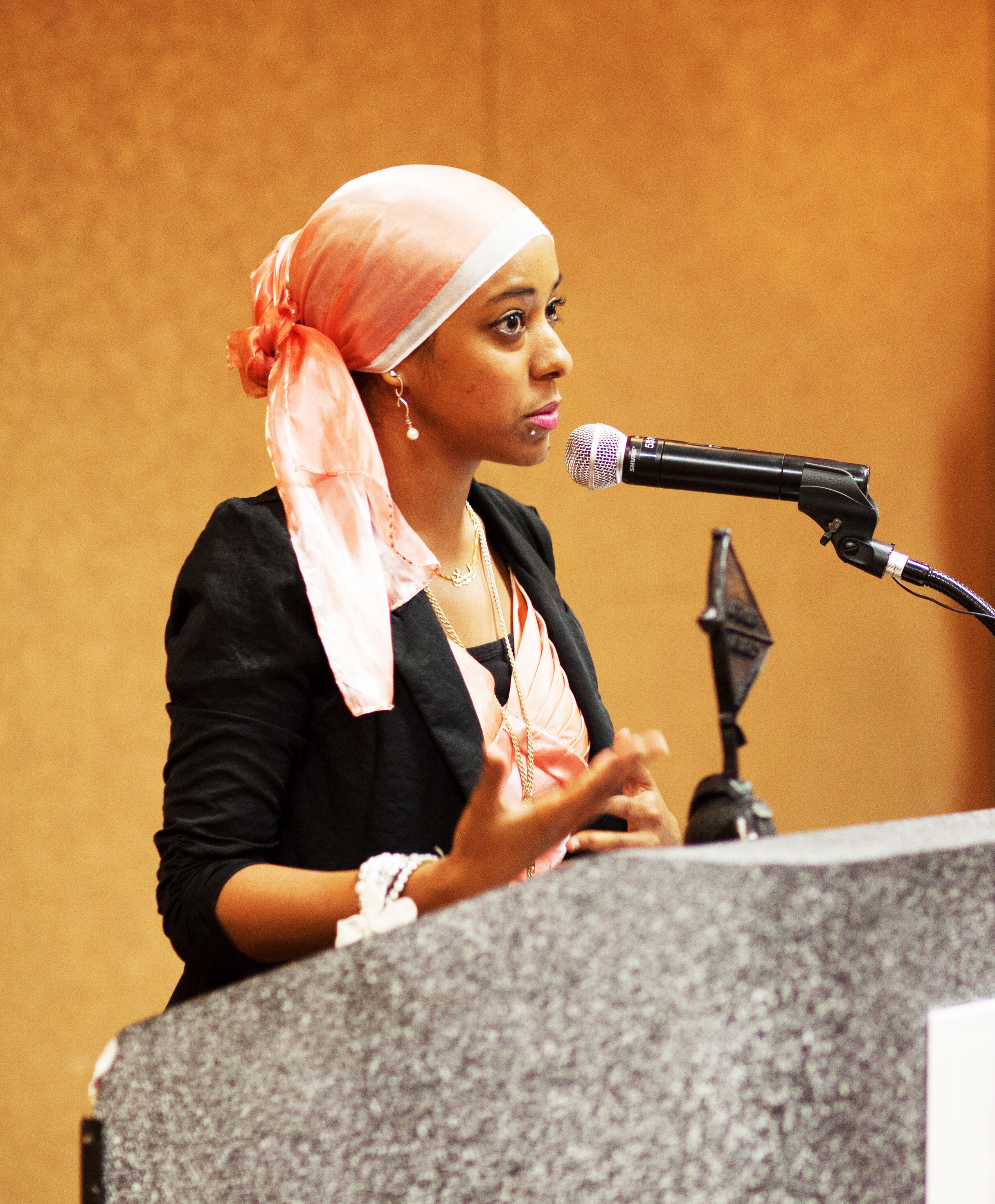
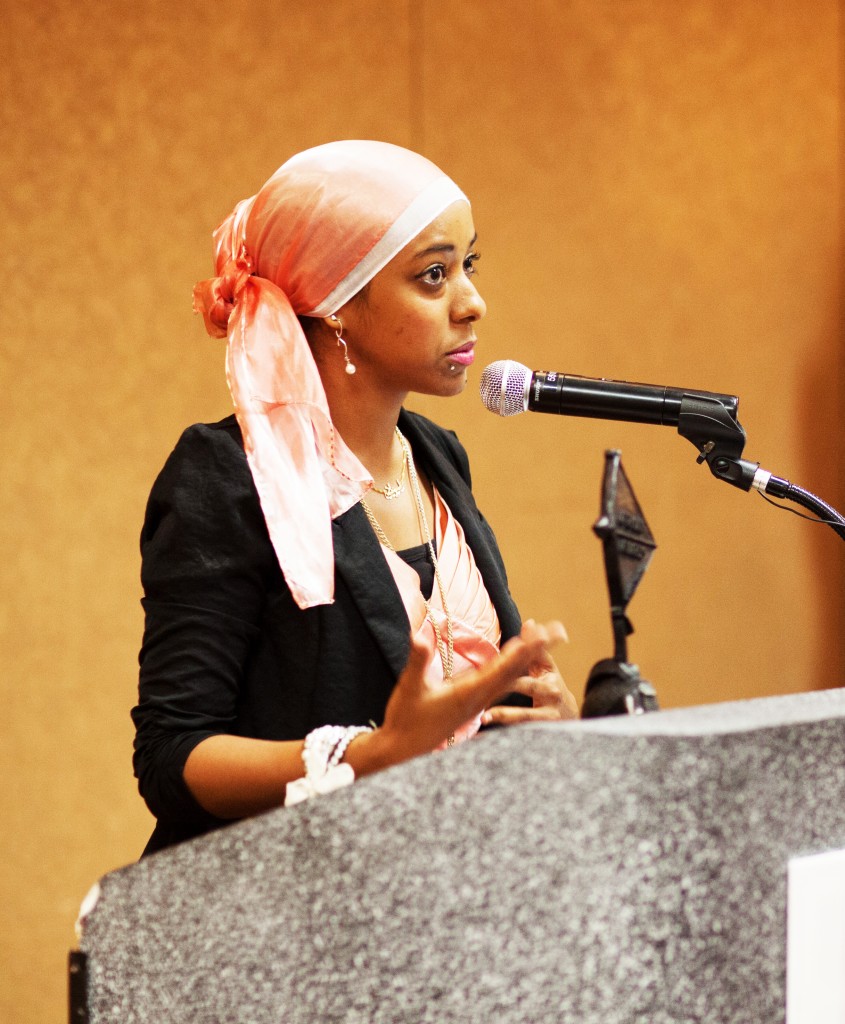
Jack Ayim of Andover, Minnesota testifying before the Minnesota House Health and Human Services Policy Committee during a pre-session hearing. Photo: Submitted

Children are typically being placed in foster care because their health and/or well-being is at risk. These children are vulnerable, and it is our responsibility to protect them and ensure they are being placed in safe and welcoming environments that will allow for the best possible outcomes. I believe the best possible outcomes can only be achieved in foster care environments that are smoke-free.

It has been proven that children who are brought up in households where smoking is permitted are more likely to start smoking themselves. There is a very high percentage of minority children living in foster homes, so that makes this issue especially important to me as an African American. I want to do everything I can to break this cycle.

Rep. Tina Liebling of Rochester has introduced a bill that would require Minnesota foster care homes to be smoke-free. I am a passionate supporter of this bill, and I was honored to present my testimony in a pre-session hearing for the Minnesota House Health and Human Services Policy Committee.

Efforts to regulate smoking in Minnesota foster care homes at the county level are gaining traction. St. Louis, Lake, Beltrami, Cottonwood/Jackson, Dakota and Redwood counties have all passed laws to prohibit the act. Others, such as Ramsey County, are moving toward passing a resolution to protect these vulnerable children.

While a step in the right direction, these actions are not enough, and we are falling behind our neighbors.  There are 26 states, including Wisconsin, North Dakota and Iowa, that have already passed statewide smoke-free foster care laws. I hope that our House and Senate representatives will seize this moment and pass our own statewide law. It is their responsibility to our Minnesota children.

I also urge my fellow African/African American community members to join me in supporting this bill. Let’s do everything in our power to break the cycle and protect these children from being exposed to the harmful effects of secondhand smoke and give them a better chance of attaining the bright futures they deserve. Let your elected officials know if you support this.

National Museum of African Art showcases Eco-Friendly African Design

Kibonen NY's bamboo shift featured the work of Nigerian artist George Osodi.Photo: Gustave Assiri/The Washington Informer
South African fashion designer Thula Sindi displays his mineral-inspired designs at the National Museum of African Art's "Earth Matters, Fashion Matters" showcase. Photo: Gustave Assiri/The Washington Informer

Sustainable. Sexy. Eco-friendly. Ethnic.

These are words that usually don’t go together when describing fashion design, let alone fashion from Africa. But those were the underlying motivations for the National Museum of African Art’s “Earth Matters, Fashion Matters,” a showcase of ecologically inspired, ready-to-wear designs by eight African designers based in Africa, New York and Europe.

The Feb. 23 evening event celebrated the closing of the exhibit “Earth Matters: Land as Material and Metaphor in the Arts of Africa” and also observed the museum’s 50th anniversary.

“When you talk about eco-friendly fashion, you usually think of a burlap sack,” said Kibonen Nfi of the Kibonen NY fashion line. The Cameroonian designer took the theme of the showcase to heart, not only using slinky bamboo fabric to create her outfits but also literally including one of the main pieces of the exhibit in her clothing.

Nigerian artist George Osodi’s “De money series no.1,” a terracotta-hued archival print became the pattern on a sheer shift by Kibonen.

“I took one of the main pieces in the show and digitized it onto the fabric,” she said. “It’s how I made eco-friendly fabric more sensual using bamboo jersey to accentuate the silhouette.”

Each of the featured designers used their own unique approach to addressing the need to preserve the African environment while also making a statement about social justice in a place where many transgressions jeopardizing the future of the land are ever-present. Issues surrounding conflict diamonds, mineral mining and environmental pollution create the headlines of today’s Africa.

Patience Torlowei, a Nigerian designer whose company, Patience Please, is headquartered in Lagos, created pieces that incorporate natural elements such as daisies and butterflies in a youthful, flouncy dress she called “Daisy.”

But the centerpiece of her collection was a long, hand-painted gown that served as a narrative of African ecological woes, from the pollution of the Niger Delta by oil refineries to the impact on the wildlife and the people who depend on it for sustenance.

“Beauty has a price,” she said while explaining the motifs of a gown she named “Esther,” after her late mother. “I included gold to celebrate the 50th anniversary of the Smithsonian, and also a diamond, which both come out of Africa.”

The signature gown was produced in a limited edition of five dresses.

South African designer Thula Sindi, approached the issues surrounding South African mining in a unique slant to his line. Using metallic fabrics and shiny sequins on distinctly non-African designs, Sindi said, “I don’t like boxing myself in. I design with any kind of theme, even Victorian and Japanese. But the history of the [South African] mines is so negative, I didn’t want to make that obvious.

“My pieces are dark, basic fabrics with embellishments; copper, gold and diamonds because those things are still being mined in South Africa,” explained the designer, who started his career as the director of a Dutch fabric company. “I also took the industrial nylon that the miners used and glamorized it for contemporary uses.”

Other participants in the show adhered to the theme in less overt ways. Sierra Leonean designer Tamu Thomas expressed her dedication to sustainability in her London-based fashion brand Kenema through the use of materials produced by women in her home country.

“The war in Sierra Leone had such a huge impact, the whole country has PTSD (post-traumatic stress disorder),” she said. “I wanted to empower individual women to realize that they don’t just make things, they have a business.

“My clothes are young, fresh, London,” she added. “Sierra Leone is a small country without much money, so I didn’t want to be colonial. I want to uplift the women and make it possible for them to care for families. I want to make it possible for women to sustain themselves.”

Leymah Gbowee to keynote Nobel Peace Prize Forum

0
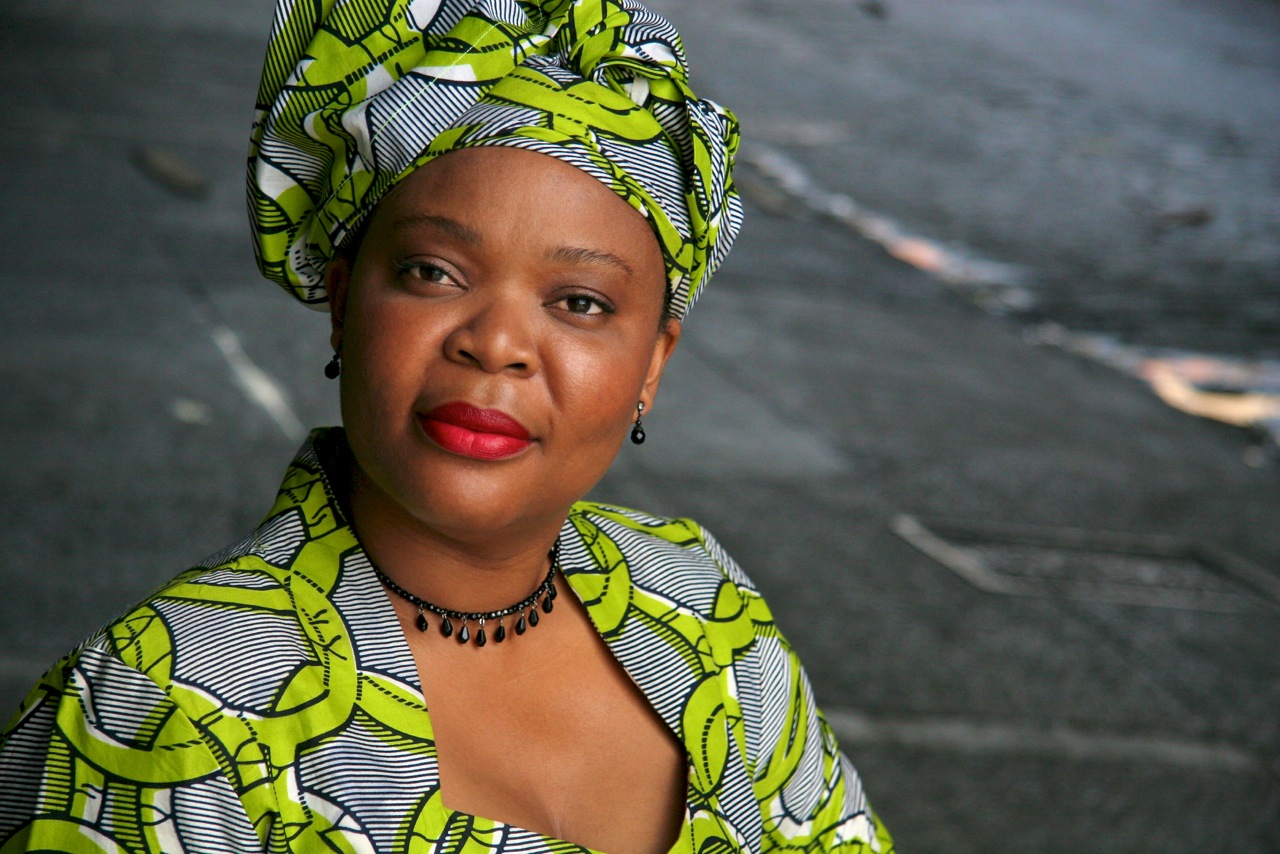
Nobel Laureate Leymah Gbowee will give the closing keynote address at the Nobel Peace Prize Forum in Minneapolis on Sunday, March 9 2014. Photo: Nobel Peace Prize Forum

Leymah Gbowee, Liberian peace activist and 2011 Nobel Peace Prize winner is the keynote speaker this coming Sunday, March 9 at the Nobel Peace Prize Forum’s ‘Global Day’, being held at the University of Minnesota’s Tedd Mann concert Hall at 4:15PM.

Gbowee was awarded the Nobel Peace Prize in 2011 for her “non-violent struggle for the safety of women and for women’s rights to full participation in peace-building work.” Gbowee advanced the peace process and worked to facilitate free elections in 2005 via a women’s peace movement that aided in ending the Second Liberian Civil War in 2003. She is the co-founder of the Women Peace and Security Network Africa (WIPSEN-Africa).

This is the 26th annual Nobel peace Prize Forum. It is the Norwegian Nobel Institute’s only such program or academic affiliation outside of Norway and brings Nobel Peace Prize winners, civic leaders, and scholars together with students and other citizens. This year’s forum started March 1 on the campuses of Augsburg College and the University of Minnesota West Bank and consisted of an address by the Dalai Lama.

Leymah Gbowee’s keynote address will close out the 2014 Forum.

Tickets and information are available at the Nobel Peace Prize Forum website.

Seven Democrats help Republicans sink Debo Adegbile nomination

0
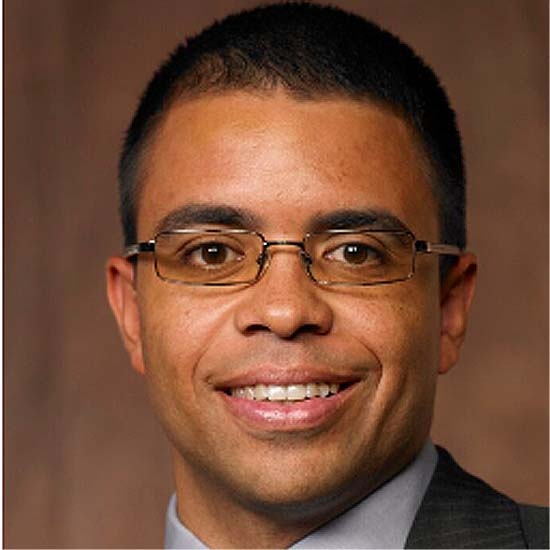
Debo Adegbile Photo: Courtesy Daily Kos

By Humberto Sanchez and Niels Lesniewski

Seven Senate Democrats joined Republicans to block President Barack Obama’s pick of Debo P. Adegbile to lead the Department of Justice’s Civil Rights Division amid a controversy over his legal defense of convicted cop killer Mumia Abu-Jamal.

Adegbile is the son of a Nigerian father and an Irish immigrant mother.

Adegbile’s nomination needed a simple majority to cut off debate but the chamber voted 47-52 against him, with Obama ripping the vote as a “travesty.”

Democrats Bob Casey of Pennsylvania, Chris Coons of Delaware, Joe Donnelly of Indiana, Heidi Heitkamp of North Dakota, Joe Manchin III of West Virginia, Mark Pryor of Arkansas and John Walsh of Montana all voted no. Majority Leader Harry Reid, D-Nev., also voted no in order to preserve his right to reconsider the vote. If Adegbile had mustered just two more votes plus Reid, Vice President Joseph Biden was on hand to cast a possible tie-breaking vote.

It’s the first presidential pick to be blocked since Democrats changed the Senate’s rules via the “nuclear option” to block filibusters of nominees.

President Barack Obama called the vote “a travesty based on wildly unfair character attacks against a good and qualified public servant.”

Obama said Adegbile had impeccable credentials and “unwavering dedication to protecting every American’s civil and Constitutional rights under the law.”

“Mr. Adegbile’s personal story – rising from adversity to become someone who President Bush’s Solicitor General referred to as one of the nation’s most capable litigators – is a story that proves what America has been and can be for people who work hard and play by the rules. As a lawyer, Mr. Adgebile has played by the rules. And now, Washington politics have used the rules against him.”

Powerful law enforcement groups and Republicans opposed the nomination, with the Abu-Jamal case at the heart of the controversy.

Obama mentioned the issue but not by name.

“The fact that his nomination was defeated solely based on his legal representation of a defendant runs contrary to a fundamental principle of our system of justice – and those who voted against his nomination denied the American people an outstanding public servant,” Obama said.

The nomination also has exposed the political risk for Democrats of deploying the nuclear option.

Sarah Chacko contributed to this report.

Lupita Nyong’o wins Best Supporting Actress Oscar

0
Lupita Nyong'o accepting her Oscar for Best Supporting Actress at the 86th Annual Academy Awards in Los Angeles a day after her birthday on Sunday, March 2 2014. Photo: ABC TV Screen Grab

Lupita Nyong’o’s best supporting actress Oscar win marks a new chapter in the young actress’s rise since the release of ’12 Years a Slave’ which took the best picture Oscar later that night.

Along with Minneapolis’ own Barkhad Abdi of Somalia who received a best supporting actor nod and the UK’s Chiwetel Ejiofor’s nomination, a broader swath of pan-Africana was represented. This is a trend that could continue if narratives of communities of color continue to be explored within major motion pictures.

Born in Mexico to Kenyan parents, Nyong’o won the role of Patsey in the adaptation of Solomon Northup’s slave narrative detailing his abduction and sale into chattel slavery. She made it a point to salute the spirit of the very real woman whom she portrayed on screen.

Nyong’o quickly became a fashion icon and media darling following the film’s release.

Nyong’o spoke on the issues she had with her dark skin when she was honored at the Essence Black Women in Hollywood Luncheon. She described how touched she was by a fan who chose not to bleach her own skin because if the accolades Nyong’o received for the confidence she displays.

Lolla Mohammed Nur: From journalism to poetry

0
Lolla Mohammed Nur accepting her Community Leadership Award at the 4th African Awards Dinner hosted by Mshale on Friday, September 20 2013 in St. Paul, Minnesota. Photo: David Mendolia/Mshale

Lolla Mohammed Nur is moving on up! After a year as community engagement editor at the TC Daily Planet, she’s now working on another kind of writing as a Givens Writer. According to its website, the Givens Black Writers program engages “emerging African American writers from diverse genres in an eight-month program providing mentoring and peer support, building literary community, honing literary craft, and producing new works.” We asked about her plans and reflections, and here’s what she said.

What kind of writing do you plan to work on?

I plan to work on my creative writing. I’m really interested in focusing on poetry and establishing myself in that field. Most of my writing experience has been in journalism, but I’m interested in exploring creative non-fiction and even fiction, in addition to poetry. I think the Givens Fellowship will allow me room to further explore myself as a writer.

I think it’s really helpful to be in an environment where there are other black writers and peers supporting me. There aren’t many places like that in the Twin Cities. We will hold ourselves accountable and push one another in meeting our writers’ goals.

Have you been writing poetry for long?

I’ve been writing on and off since childhood. I’ve been an avid reader since I was five. My mom bought me books all the time and I read all the time. But life and work gets in the way of focusing on that kind of writing and reading. I haven’t had time since college. I’m trying to be more consistent with it now.

Who are some of your favorite poets?

Maya Angelou, of course. I’m going to mix poets and prose — Audre Lord, Toni Morrison. Those are my top three in terms of classical black feminist writers. Currently writing— Warsan Shire and Nayyirah Waheed.

Any advice for aspiring poets or writers?

I’m also still finding myself as a poet and a writer. What I wish someone had told me when I was younger, as a young woman and a budding poet — I wish I had a mentor from my background who encouraged me to pursue that kind of writing. Because I didn’t have a mentor, I didn’t think I was good enough or that it was worth exploring. But now I feel the opposite way — I don’t think there are enough voices like mine in that style of writing.

If you want to write, go for it — put your voice out there!

Anti-Gay legislation in Africa not in its best interest

0

This editorial appeared in the Mshale print edition that  was on newsstands on March 1, 2014.

A sense of homophobia is sweeping throughout Africa. As we ushered in the New Year, parliaments in Uganda and Nigeria passed strict anti-gay legislation. President Goodluck Jonathan of Nigeria enthusiastically signed it into law with many analysts, including this paper, believing his signing was to distract the populace from other pressing matters facing Africa’s giant, including missing billons from the Central Bank. President Yoweri Museveni of Uganda did not follow Mr. Jonathan’s lead at first but changed course late,r and as this edition went to press, he called a press conference to sign the new law publicly. Signing new laws in public is a rare thing in Uganda.

It is very common for African politicians to engage in populist anti-gay rhetoric for political gain to distract from their own failings. We would like to tell them they are setting up their countries for very bad times ahead. Bad times in the sense that the continent as a whole needs to use all the brains available to prosper the continent, and that includes gays. The continent cannot afford to rid itself of able bodied productive citizens with the hatred that is now rampant. The suicide rate has gone up among gays and especially gay teenagers and this is something Africa can ill afford.

Other countries are poised to follow Uganda and Nigeria in passing anti-gay legislation. Cameroon and Tanzania being one of them. We ask them to go in the opposite direction instead and work to protect the rights of all. Police rarely act when reports of violence against gays are made and this is a sad indictment of Africa that must be addressed.
Anti-gay legislation in our opinion is unjust discrimination that needs to be fought by all peace loving and fair minded individuals.

The mark of a great society is how they go about protecting the rights of minorities, action that even our own country the good old United States of America continues to learn as it never did a good job of it in the past.

You do not have to agree with the homosexual lifestyle to support the protection and rights of these individuals. Anytime the majority use their power and numbers to take away and restrict the rights of the minority, then the society is on a slippery slope.

Look around the world and you will find nations that are making great strides economically are those that make sure persecution is not meted out to vulnerable minorities.

To those African leaders busy proclaiming that homosexuality is “un-African”, that may well be the case but we would challenge them that what is more un-African is letting Western Christian fundamentalist groups descend on the continent and manipulate you into passing these unjust laws against gays.

African politicians need to do what is in the best interests of its people and we do not believe marginalizing and persecuting any of its people however distasteful that populace is serves to move Africa to the next level.

The last time we let the West play an important policy role in the affairs of African countries was with the damage causing Structural Adjustment Programs (SAP) from the World Bank and IMF in the late 80s and early 90s. The programs sapped wealth out Africa and impoverished the continent and are now just recovering after we ditched them.

Nairobi chosen to host African Institute for Remittances

0
African Union Headquarters in Addis Ababa

The African Union (AU) Executive Council, has selected the Republic of Kenya to host the African Institute for Remittances (AIR). The Council asked the African Union Commission to conclude the Host Agreement with the Republic of Kenya so as to ensure the formal take-off of the Institute this year.   It also asked the World Bank and other development partners to support the Institute. The Institute is scheduled to be fully operational by 2015.

“I am delighted that the Executive Council has decided that the Republic of Kenya will host the AIR. The establishment of AIR, the first of its kind in the world, is a cornerstone in harnessing Diaspora resources for social and economic development in Africa”, said Dr. Mustapha S. Kaloko, Commissioner of Social Affairs of the African Union Commission. He also called upon development partners to continue supporting the Institute.

Kenya is one of four member countries that had expressed interest in hosting the AIR secretariat.  The decision to select Kenya was made during the 24th Ordinary Session of the AU Executive Council which met from 27 to 28 January 2014 at the AU headquarters in Addis Ababa, Ethiopia.

AIR project partners agreed to the need for sustained collaboration and coordination of efforts in support of the Institute to achieve the planned improvement in the market for remittances, and to leverage their impact on development in the continent.  The partners are African Union Commission, World Bank, European Commission, African Development Bank, and the International Organization for Migration.

Background

The African Union Commission resolved in 2010 to create AIR in the framework of the Africa-European Union partnership on Migration, Mobility and Employment, to leverage the untapped development potential of remittance flows to the African continent. The magnitude of remittances to and within Africa has grown remarkably in recent years, gaining the attention of the international development community due to their positive impact on the living standards of beneficiaries. However, the precise volume of these remittances is unknown and presumed undercounted. Their transfer cost remains unacceptably high by international standards, and their full potential for economic and social development is largely unexploited.

The AIR Project was launched with funding from the European Commission while the World Bank was responsible for overall implementation and execution of the project, in collaboration with the African Development Bank and the International Organization for Migration. The primary objective was to facilitate the AU Member States and the African Union Commission in establishing the Institute of Remittances.  The AIR will be anchored within AUC.