With temperatures rising to 84 degrees Wesley Korir of Kenya won the men’s race with an unofficial time of 2:12:40 besting fellow Kenyans Kenyans Levy Matebo (2:13:06) and Bernard Kipyego (2:13:13) who took second and third place respectively.
Sharon Cherop of Kenya was victorious in the women’s race clocking an unofficial time of 2:31:50. It was a sprint to the finish line in the women’s race as Cherop out sprinted fellow Kenyan Jemima Jelagat Sumgong and beat her by two seconds. In a total domination of the 2012 Boston marathon, Kenyan Georgina Rono capped the sweep when she came in third in the women’s race with a time of 2:33:09.
The wins by Korir and Cherop were the second slowest time recorded for the Boston marathon as temperatures soared to the high 80s.
The winners will both receive $150,000 each. Korir is the 19th Kenyan men’s winner in 22 years.
22,500 took part on the race and another 4,300 were given deferments by officials to next year. The move by Boston marathon officials to offer deferments to anyone who wanted because of the high temperature was unprecedented.
Canada’s Joshua Cassidy of Toronto won the wheelchair race and set a new world record of 1:18:25.
Last year’s winner drops out at Mile 18
Geoffrey Mutai who set the world record for Boston last year was forced to drop out after 18 miles because of the heat.
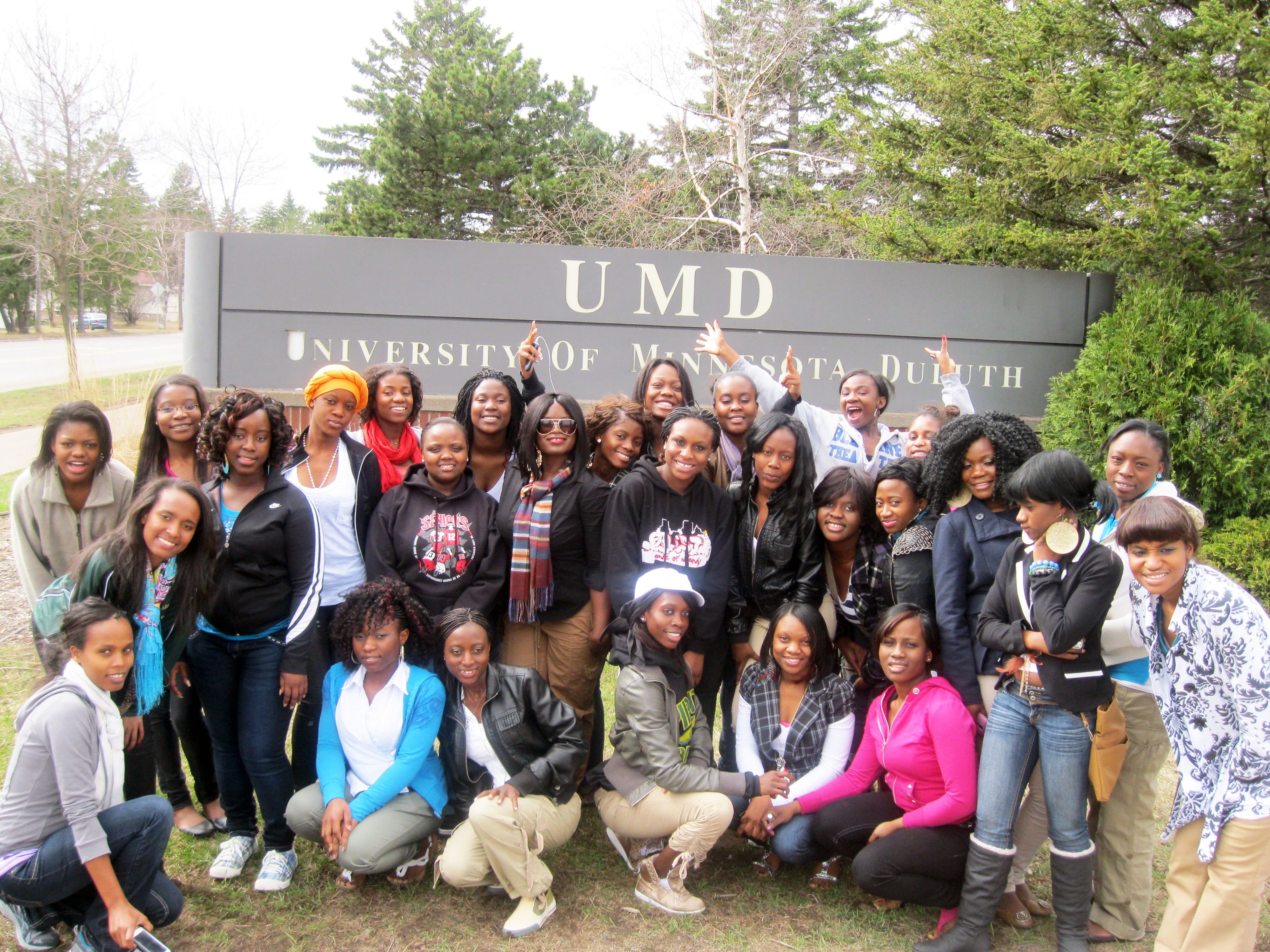
African immigrant and refugee girls with MAWA Executive Director Melissa Nambangi (in sunglasses) pose outside of the University of Minnesota-Duluth campus after completing a six college tour organized by the Minnesota African Womens Association (MAWA) through its AGILE (African Girls Initiative for Leadership and Empowerment) program.
African immigrant and refugee girls with MAWA Executive Director Melissa Nambangi (in sunglasses) pose outside of the University of Minnesota-Duluth campus after completing a six college tour organized by the Minnesota African Womens Association (MAWA) through its AGILE (African Girls Initiative for Leadership and Empowerment) program.
It is often said that “when you educate the man, you educate the family but when you educate the woman, you educate the community.” This adage epitomizes the importance of education for the girl child.
In the United States today, the importance of a college education in improving the wellbeing of refugee and immigrant communities cannot be over emphasized. It is in this backdrop that the Minnesota African Women Association of Minnesota (MAWA) organized a 3-day college tour to six colleges in Minnesota and North Dakota for girls from the African immigrant and refugee communities of the Minneapolis and St. Paul metro area. The six colleges visited included Saint Cloud State University, College of Saint Benedict, St. Joseph; University of Saint John’s, Collegeville; Minnesota State University of Moorhead; University of North Dakota, Fargo, and University of Minnesota Duluth.
In all, twenty-nine girls participated in this second edition of the MAWA college tour that took place from March 25th to March 28th, 2012. The girls are part of MAWA’s AGILE (African Girls Initiative for Leadership and Empowerment) program, an after-school program run from eight schools and community sites in the Minneapolis and St. Paul metro area.
The college tour is intended for African immigrant girls who are new to the American education system. The program prepares them in understanding the college application process. They also receive information on how to select and finance their college education. For those who have been admitted into colleges, it helps them take a closer look at their college choices and provides options to those who are yet to decide.
Meeting with the Admissions and Financial Aid staff at each school, the girls got firsthand information on how to seek admission into each school, how to get grants, loans, and other forms of financial aid. The girls appreciated learning of diversity and first generation college student scholarships. The participants also heard from other African students in the respective colleges on how they deal with tuition cost barriers.
The girls were encouraged to send in their applications to any of their college choices without being deterred by tuition costs. As the staff and students at each school spoke glowingly of their schools. With each college stop, the AGILE girls found each school gave them a reason to love it as each school’s tour guide provided in-depth information on college life and personal experience.
One guide spoke of having changed her major six times, another spoke of the experience of being free of staff and parental pressure to attend class, do her school work and how she changed and started managing her time more responsibly after getting a fail grade. Another advised the girls to choose their classes based on whether they are “a morning person” or not and others spoke of meals, extra-curricular activities, shops and hairdressers catering to African tastes, etc.
They also learnt of the deep personal side of college. During a panel discussion, members of the panel spoke of loneliness, missing their families, and missing “seeing people who look like them on some campuses” and how they eventually found others through associations, multi-cultural centers and so forth. Others advised the girls to apply for scholarships no matter how small the amount may be because “any little amount makes a difference.” The girls were also informed that there are other scholarships available in the colleges to those who are already students and that they should speak with advisors first before taking out student loans.
Aside from the excellent academic programs and extracurricular activities, other aspects of these schools appealed greatly to the girls – the library system and computer services at St. Cloud State University, the all girls St. Benedict’s remarkable Study Abroad program, the health and wellness center and high values of the all-men St. John’s, the access to resources at both Minnesota State University Moorhead and North Dakota State University at Fargo, whose proximity to each other surprised the girls and with the University of Duluth, the view on arrival and the attention paid to diversity were all additional attractions.
The girls paid closer attention to Dr. Diomo Motuba, a West African lecturer at Minnesota State University Moorhead who advised the girls to go to college since that was going to make their life easier in the future. Meeting African students such as the panel at St. Ben’s which had a Ghanaian, Ugandan, Somali, Tanzanian and Ethiopian, and meeting past AGILE participants like Baraka at Duluth made the girls feel more at home in these colleges. Seeing the dormitories and hearing the experiences of living in the dormitory and other on-campus housing also helped them decide what kind of housing to consider as they decide on college attendance.
According Ms. Melissa Nambangi, Executive Director of MAWA, the AGILE program is MAWA’s pride and joy. For Ms. Nambangi, the AGILE program has been able to motivate girls whom some had written off as being uninterested in education, difficult to work with and understand, and generally expected to not go to college due to unintended pregnancies and other cultural barriers. The college tour has been instrumental in educating, informing, and assisting AGILE participants in charting successful pathways towards post secondary education.
AGILE was started in 2004 as a response to appeals from African parents for MAWA to help their daughters adjust to life in the United States and from schools concerned with cultural obstacles to the success of African female students. Participants in this year’s tour came from eight African countries and included sophomores, juniors and seniors.
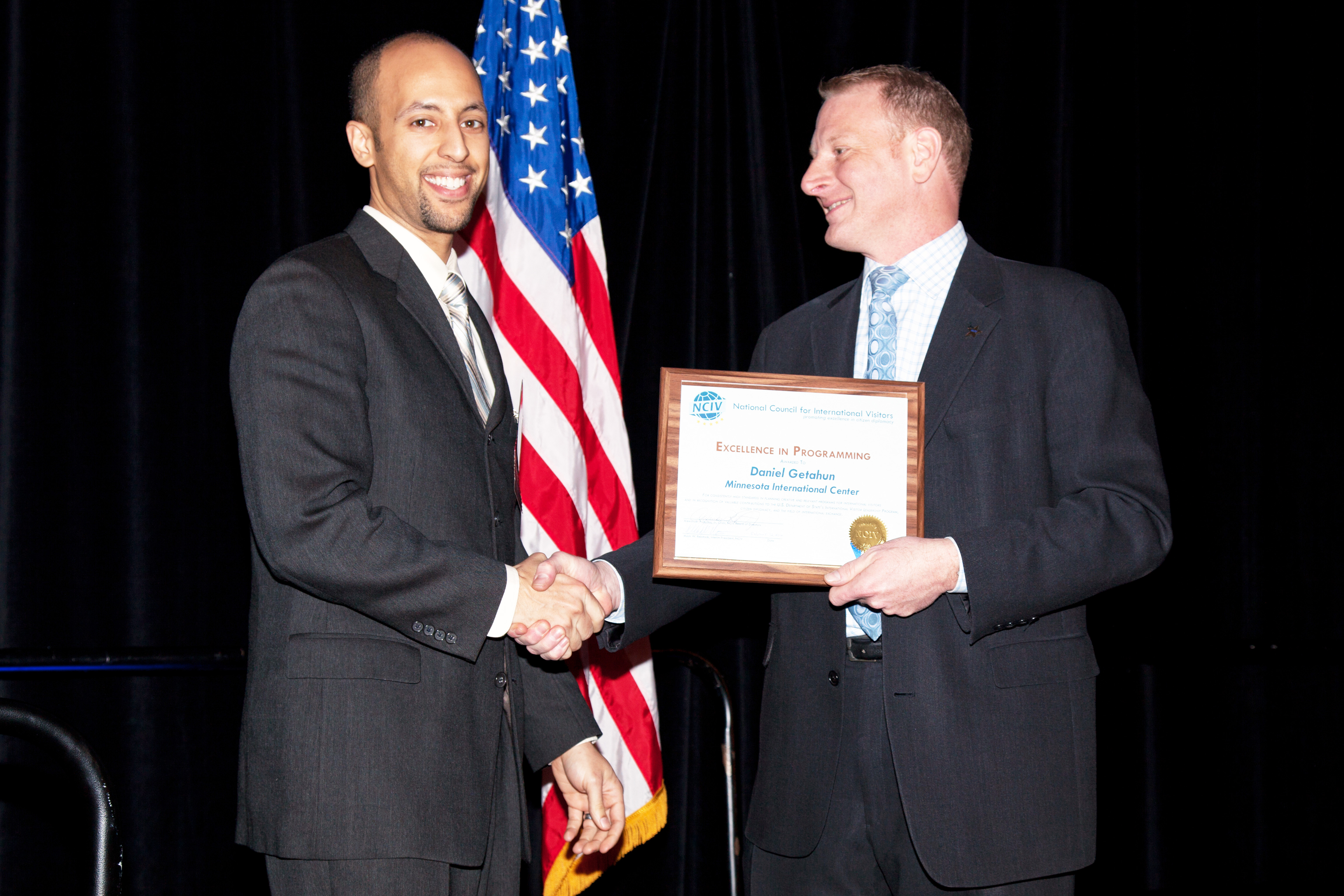
Daniel Getahun of the Minnesota International Center (MIC) has been recognized as “Programmer of the Year” by the National Council for International Visitors (NCIV) at its annual national Meeting in Washington, DC.
Getahun is the International Visitor Leadership Program (IVLP) manager at MIC. IVLP is a U.S. State Department-sponsored exchange program for mid-career professionals who have been identified by U.S. embassies around the world as emerging leaders in their fields.
NCIV and its local affiliates coordinate the foreign visitors’ stays in the United States. In Minnesota, only the MIC works with the State Department on the program. Getahun‘s work is what has kept the State Department interested in Minnesota. His success in arranging professional appointments and dinner hospitality for these international visitors has been responsible for keeping the state, the Twin Cities and the MIC center stage with the State Department according to his boss, Carol Byrne, the president of Minnesota International Center.
“Daniel’s innovative programming and attention to every detail for our U.S. State Department international visitors has ensured a quality experience and raised the profile of Minnesota throughout the world,” Byrne said in an email interview.
Mr. Getahun who is of Ethiopian heritage was a math, social studies, and world religions teacher at a tuition-free college preparatory middle school in inner-city San Diego, California before he joined MIC in 2006. In a conversation with Mshale following his recognition at the national meeting, he said he preferred to think of it as recognition of Minnesota’s interest in engaging with the world, as well as the quality and diversity of the local professional resources and citizen diplomats who participate in the exchange programs.
“My role in facilitating the program is simply not possible without the willing interest of several hundred nonprofit organizations, government agencies, schools, small business, large corporations, and individuals working in every professional field, including education, human rights, agriculture, media, public health, arts, social services, and more,” Getahun noted. “I consider it an acknowledgment of the many hours and long days devoted to the program, but much more so I think the recognition reflects Minnesota’s interest in engaging with the world.”
International visitors who have been in Minnesota recently under the auspices of the IVLP have been varied. They include a multi-regional group for a program on Breast Cancer Awareness and Outreach, a group from Oman for a program on American libraries, visitors from Ecuador and the Galapagos Islands for a program on Sustainable Cities in Sensitive Environments. Also, as this edition went to press, a senior official at Kenya’s Ministry of Foreign Affairs in Nairobi was being hosted by MIC to acquaint him with U.S. policies on immigration, refugees and citizenship.
To underscore the significance of the IVLP, US Senator John McCain who gave the keynote address at the annual meeting said he seldom travels to a country where IVLP alumni are not playing an important role in government or civil society. “Your work has been important for many years. The groundwork you have laid has been so important,” Senator McCain said.
Editor’s note: Mshale President & Publisher, Tom Gitaa, sits on the board of the Minnesota International Center.
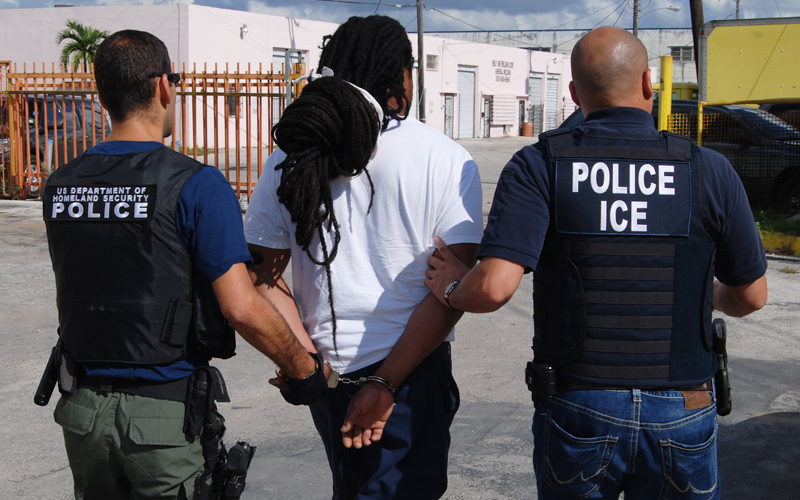
ICE agents arrest a man as part of "Operation Cross Check" in September 2011. "Operation Cross Check" targeted immigrant fugitives and those here illegally and have criminal records.
ICE agents arrest a man as part of "Operation Cross Check" in September 2011. "Operation Cross Check" targeted immigrant fugitives and those here illegally and have criminal records.
Immigration enforcement and deportation have a particularly devastating impact on mixed status families, that is, families who have one or more direct members who are undocumented. When parents are deported, families face impossible decisions about whether their family will be separated or whether U.S. citizen kids will be de facto deported along with their parents. New numbers released in a report by Immigration and Customs Enforcement (ICE) show the extent of the issue. The new report finds that, between January and June 2011, ICE deported over 46,000 immigrants who claimed to have at least one U.S. citizen child.
The report, which was submitted to Congress by ICE, is part of an effort to collect more information tracking the deportation of immigrants with U.S.-born children. In addition to the 46,486 parents removed during the first two quarters of FY2011, ICE sought final orders of deportation, exclusion, or removal for 39,918 parents of U.S. citizens. Nearly 22,000 final orders were obtained.
If the numbers remain constant through FY2011, it means that nearly 100,000 immigrants who claim to have at least one U.S. citizen child will have been deported. These numbers are incredibly high, particularly since a 2009 report from the DHS Office of Inspector General estimated that slightly more than 100,000 parents of U.S. citizen children had been deported between 1998 and 2007.
The impact of the deportation of a parent can be devastating for kids and their parents. It can also be expensive for taxpayers. In a January 2012 report entitled “Shattered Families,” the Applied Research Center found that over 5,100 children of immigrants have ended up in foster care after their parents had been detained or deported.
Many people are hoping that new guidelines on the exercise of prosecutorial discretion will allow immigrant families to remain together in the U.S. Parents of U.S. citizen children can make the case for relief from deportation, but only if they can demonstrate they have been in the U.S. for a long period of time and can make a compelling case for remaining in the U.S.
“I believe it is critical that the new guidelines are interpreted as generously as possible by agency officials to prevent even more families from being torn apart,” said Rep. Lucille Roybal-Allard, in a statement from the Congressional Hispanic Caucus (CHC).
“It is a tragedy. The President’s policy of sparing long-time residents from deportation so that we can concentrate our resources on removing serious criminals needs to be fully implemented and followed. We are putting our future at risk every day that we delay serious reform and continue shoveling more good people into deportation and their children into foster care,” said Rep. Luis Gutierrez (D-IL), chair of the CHC Task Force on Immigration.
This new deportation data flies in the face of those who believe that having a U.S. citizen child protects undocumented parents from deportation.
Does it seem like your child is getting a lot of vaccinations? Vaccines are a very important part of protecting your children and yourself from some serious diseases. Anyone who has seen a person die or get very sick from a disease that could be prevented by a vaccine knows how important they are.
Immunizing your child is one of the most loving things you can do. Shots work. Shots are safe. They have very few side effects. The benefits far outweigh any risks.
Be sure to get shots at the right ages. Kids need most of their shots by 2 years of age. Shots work best at these ages, but if your child is behind, you can get them caught up. Shots for young children are usually given at:
Birth
2 months
4 months
6 months
12-23 months
4-6 years
Vaccination protects against these diseases:
Hepatitis B
Diphtheria
Tetanus
Pertussis (whooping cough)
Meningitis – Hib and Pneumococcal
Polio
Rotavirus
Influenza
Measles
Mumps
Rubella
Varicella (chicken pox)
Hepatitis A
We don’t see some of these diseases very often anymore. That is because vaccines work. Vaccinations help keep children healthy so disease does not spread in our communities.
It is okay for a baby to receive several shots at the same time. It helps the immune system to grow stronger. Most of the time, it is okay to go ahead with vaccination even if your child has a cold, earache, diarrhea, or is on antibiotics.
Remember to carry a shot record card for each child. You will need them for the doctor, child care, Head Start, school, camp, and even college.
Sometimes parents are worried about how much shots cost. Free or low cost shots are available for eligible children in Minnesota through the Minnesota Vaccines for Children program. Find out if your child can get free or low cost shots by going to this website: www.health.state.mn.us/divs/idepc/immunize/howpay.html.
If you are looking for more information about the diseases and the vaccines that prevent them, check out the Vaccine Information Sheets. They have translations available in many languages. The website is: www.immunize.org/VIS.
Editor’s note: Our publisher, Tom Gitaa, was last weekend part of a group of community leaders and organizers that were given a tour of the proposed Bottineau Transitway. He shares his first first person experience of the daylong tour organized byACER of Brooklyn Park. Throughout the year, we will be publishing stories on the community engagement aspects of the Bottineau Transitway as it relates to the African immigrant community where it will pass. 40% of our print newspaper readership is in the Transitway, so this is of importance to our readers. Please read our first story from last month about the transitway here.
The call came through around 2pm last Friday. I was on a conference call with a client so I let it go to voicemail. It was Wynfred Russell. He is the executive director of ACER (African Career, Education & Resource, Inc.), a Brooklyn Park nonprofit. He was reminding me the next day was the daylong tour of the proposed Bottineau transitway. I had it in my calendar but for some reason I had assumed it was on a weekday and not a weekend. I normally run two marathons during the year and practice season is in high gear around this time of year. Actually runners in Minnesota have been lucky this past winter season and we have been practicing all winter outside and Saturday is an important day for me as far as getting ready for the marathons go.
For most marathon runners, we have what we call the “long run” which includes running more miles on the day as opposed to the shorter ones during the week. So for example in my case I would run 5-6 miles three times a week and then on Saturday I would 12-15 miles depending on what stage of my practice I am at, increasing the long miles as marathon day gets closer. You do the long run when you can rest afterwards without big plans in the works. With Wynfred’s call, it meant Saturday was out for the long run so I had to decide if I should go home and do it that evening which I did.
Bottineau Transitway, what is it?
First, some background on what the Bottineau transitway is. Early this year Mr. Russell had requested a lunch meeting with me to talk about it. His organization had received a grant to increase awareness among communities in the northwestern part of the corridor. Under a project called “Making Transit Meaningful”, ACER’s goal in collaboration with the City of Brooklyn Park is to engage communities that traditionally have not been involved in transitway planning and decision-making.
The Bottineau transitway is a 13-mile stretch located in Hennepin county that runs from downtown Minneapolis (where the light rail ends at target field) cutting through north Minneapolis and on to the suburbs Golden Valley, Robbinsdale, Crystal, Brooklyn Park, and Maple Grove. Planners expect that it will also impact communities such as New Hope and Rogers. It has been determined that a major transit upgrade is needed in this stretch.
Wynfred’s plan was to involve Mshale in one of the awareness components his organization as to implement and he wanted my buy-in. he probably did not know then but my personal bias towards mass transit is well known by those who deal with me on a regular basis. I don’t use mass transit on a regular basis but I have found it to be convenient and affordable when I need it.
Mass Transit convenience
My use of mass transit has been on the rise more recently as in the last 6 years. When my wife died in 2006, my two kids and I needed a fresh start so we moved from the northwest suburbs to the south suburbs and have lived since then just a 5 minute drive from the Mall of America light rail station. More often than not, it is much more efficient if we hop on the light rail to catch a play downtown or a Timberwolves game (my kids are avid basketball players). It saves on time getting off the parking ramp downtown not to mention the parking fee which can be as high as $15 on event days.
The Mshale office is just blocks from the Minneapolis downtown boundary and I have mastered the 50 cents downtown zone where you pay two quarters to ride within downtown. Sometimes Metro Transit I discovered recently has a few select free ride buses downtown. Instead of driving within downtown for meetings, I just hop on the bus.
My other uses on the Hiawatha light rail is to get to my monthly 7:30 AM Minnesota International Center board meetings downtown. I just park near the Mall of America and hop on the train. It stops right outside the Dorsey & Whitney offices where we hold our board meetings. That way I avoid the rush hour traffic and save on some parking money and I am always on time.
Community Engagement
So when Wynfred came calling, he found a willing partner. He first needed me to attend a “leaders meeting” that Hennepin County commissioner, Mike Opat was to kick off. You can read about that meeting here. Suffice it to say, commissioner Opat is one of the few politicians who gives his profession a good name. There is a joke sometimes that with any politician you can anticipate what he/she is going to say before they open their mouth depending on the audience. Pandering is second nature to the average politician. In the interactions I have had with him over the years I have never been disappointed even when his positions have been opposite of mine. At this particular meeting, the main thrust of his address was to solicit input from the community and to emphasize that no final decisions had been made on which mode (BRT or light rail) the transitway will adopt. From my experience, his desire for more input from the community is genuine given past history and his current measured and sober approach to the Vikings stadium debate even after being key to the building of Target Field for the Twins.
At this stage, no decisions have been as to what is going to happen regarding Bottineau. There is a timeline that has been established with key moments having commenced in December 2011 with what is called a “Notice of Intent” where the public is informed about the project. Through last month, ‘Scoping” has been going on with the eventual distribution of a Scoping Booklet. The best way to understand it is this is the public involvement phase and the establishment of alternatives. For example after the scoping is done, it might be determined that per the community, nothing needs to be done or which mode of transportation is preferred.
So last Saturday morning, I drove to the Bottineau & 63rd Ave Park and Ride facility in Brooklyn park to meet up with the rest of the community leaders for what was called a Bottineau transitway Mobile Guided Tour. We were asked to arrive by 7:30am as the bus will be arriving shortly thereafter.
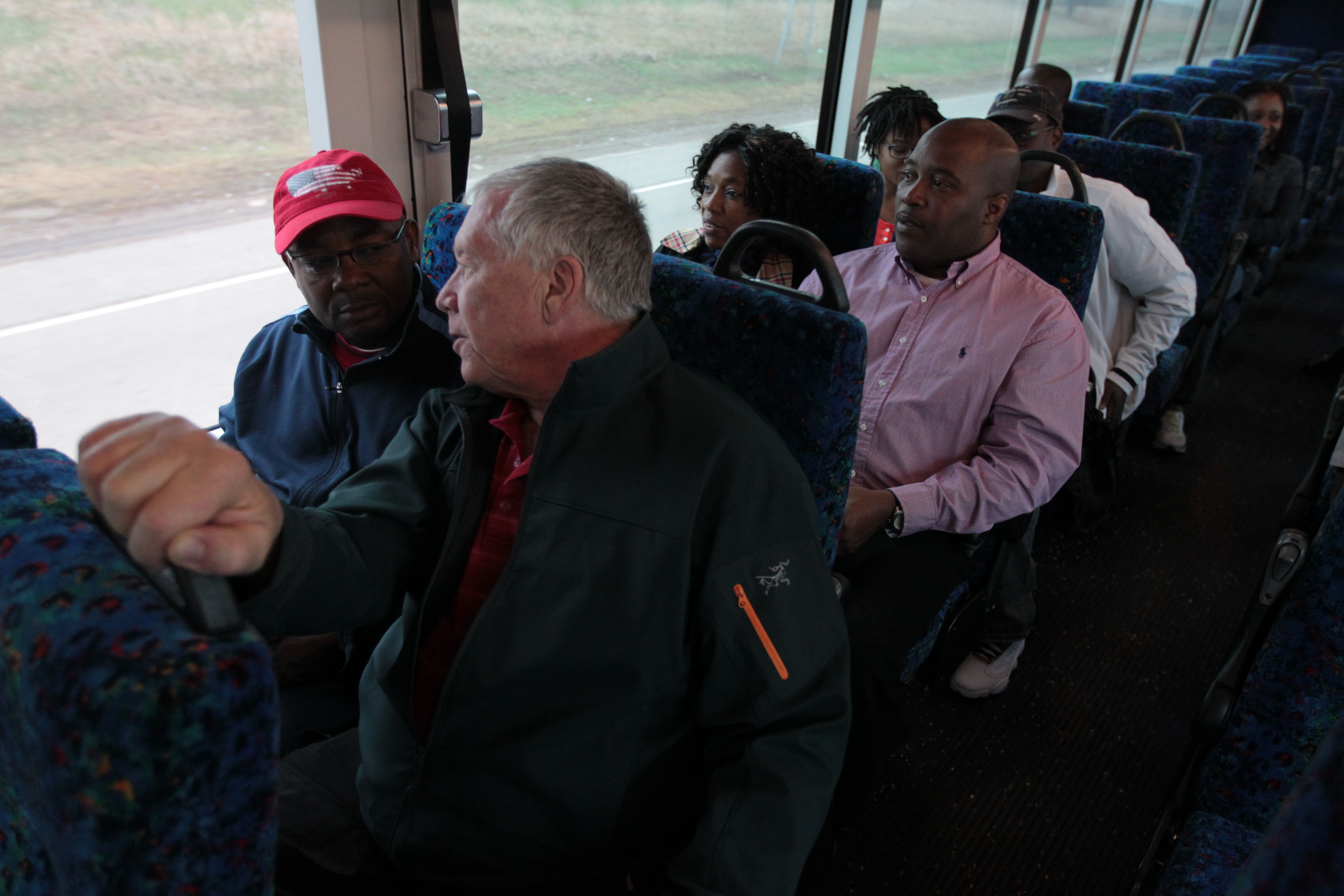
By 8:30, the bus was pulling out of the park and ride and we were headed to the Community Education building on lake street and Hiawatha avenues in Minneapolis right on the steps of the Hiawatha light rail. I had the opportunity to sit next to Teshite Wako, the Chief Financial Officer (CFO) at the Neighborhood Development Corporation. He is devout Seventh Day Adventist and he was supposed to be heading to church at that particular hour. So this was quite a sacrifice for him. The Adventists church day is Saturday and he told me “my wife was incredulous this morning that I was missing church for a transit tour”, he told me wistfully. After that, I didn’t feel so bad for missing out on my long run marathon practice. I too normally have to think hard before I miss church on Sunday.
Soon after arriving at the education building and a breakfast consisting of rolls and bagels with coffee was served. A panel discussion consisting of Metropolitan Council member Lona Schreiber, Michael Mechtenberg of Metro transit and Margaret Kaplan of Corridors of Opportunity (an initiative within the Metropolitan Council) kicked off. Moderating was by the ever skillful Yeamah Brewer.
This first panel was mostly technical in nature describing the mechanics of getting the transit project up and running and dynamics that are involved. Ms. Kaplan however did home in on matters that were of particular interest to those attending, particularly on the community engagement aspect on a project of this scale.
The second panel promised to be more interesting and I was ready for it as by now I had my caffeine habit catered to by the ACER catering team. This was a panel consisting of Steve Wellington of Wellington Management and Mike LaFave the executive director at the Neighborhood Development Corporation (NDC). LaFave quickly veered off Yeamah’s script and invited Wako to join him at the panel table to add some perspective. These three added quite some perspective for me personally.
Steve shared about his dealings with the Minneapolis City Council in bringing transit oriented development to Hiawatha and Lake Street. One advice he gave that stuck in my head for those in Brooklyn Park get to know the people who own the land where the line (Bottineau) will go through”, he said. He gave an experience he had. After he closed on the property that now occupies the prominent shopping center on Hiawatha and Lake, people kept asking him how he got the property. Very simple he said. He was not actually looking for the opportunity. The family that owned it had scattered around the country and they wanted to sell. A broker, knowing Steve was a developer called him to check if he was interested and the rest is history.
Mr. LaFave whose interest might differ in some ways from the likes of Mr. Wellington added another interesting dimension. NDC is a non-profit so their approach to development is different. Profit is not the primary motivator for them. They are currently involved in development along the central Corridor light rail in St. Paul. He described how NDC has worked with immigrant businesses that normally cannot get loans from traditional banks and the like. Some of the affected businesses operate along the Central corridor. For those not familiar with the great work organizations like NDC do, it was eye-opening. Wako intimated to me during the tour that some strategic partnerships with ACER might be in the work which will bring some of NDC’s experience and expertise to the Brooklyn Park and northwest suburbs area.
ACER has done a great job so far but I was more than impressed how they were forward looking (and might I say courageous) in pairing Steve and Mike in the same panel. Two individuals in development but with very different approaches.
As we listened to the panel discussions, to our right through the spacious windows we could see the light rail go by. The purpose of holding the meeting here before we started the tour was to see the possibilities of transit oriented development should Bottineau come to pass.
There is a thriving commercial strip on Hiawatha and lake streets. This is the development that Mr. Wellington is responsible for. It is a far cry from years before when it was the epitome of a decaying urban neighborhood. In the early nineties when I moved here from Kenya for college, I lived in South Minneapolis by Uptown while attending school and the Hiawatha/Lake Streets was not an area you wanted to be in on foot especially at night. Steve told us it was not easy to get it off the ground. The city’s vision for the area was different from his as a developer but as time passed the visions merged to make it a success.
Impact on African Immigrants
With Bottineau, this will be the first time a major development will impact a big segment of the African immigrant community in the same scale as the Central Corridor in St. Paul has affected the Asian community there especially their businesses.Many African immigrants own houses and other properties along the proposed Bottineau transitway. Not to mention the numerous businesses they operate along it.
The proposed Bottineau transit way will cut through the cities of Robbinsdale and Brooklyn Park, on streets where a lot of African immigrants now reside both as renters and owners.
After the Community Education building panel, Steve gave us a tour of the shopping mall he developed. After some probing questions directed at Steve, the group seemed to warm up considerably with nods of approval when we discovered the mixed use development did not only bring in national chains. Tenants were a mix of national chains like Aldi, Caesar’s Pizza but in addition Somali stores occupied some of the storefronts. “An Asian man opened that Laundromat over there”, Steve proudly declared.
The look on some on my group was one of relief. So gentrification is not a given, their relieved expressions seemed to say.
Next, we walked a few hundred feet to the transit station on Hiawatha and lake. It has been in the news lately this particular station. They put on music by Mozart and Bach to discourage the youth who like hanging out at the transit station. Apparently the music is so grating on their ears that they shuffle off. A Metro transit employee in charge of light rail operations gave us some background and overview on how the system operates and some of the challenges they face.
The light rail, new for some
As we got on the train, I soon discovered this was a first time experience for some on the group. Father James Wilson, who is from Liberia and former head of the Liberian Minister’s Association, admitted laughing that this was his first time on the light rail. And why is that? I asked. He replied in his jovial way “the opportunity has never presented itself,” he replied. It seemed the Bottineau transitway was already becoming an eye-opener to key people in the community. I overheard another lady two seats ahead admit this was also her first time. Within 20 minutes we were at the Mall of America which is the final station on the south end of the light rail. The ACER leadership team wanted us to see a Bus Rapid Transit (BRT) concept that is about to get in operation.
Bus Rapid Transit (BRT), a first in the State of Minnesota
I live along this BRT route. The Minnesota Valley Transit Authority which will operate this segment describes it as “a new and cost-effective way of providing high-quality transit service with buses. The buses operate primarily in bus-only lanes with light rail- like service characteristics and station spacing. Traffic signals are modified giving buses priority, helping them move more quickly and reliably. BRT stations are similar to light rail stations, each with a boarding platform, shelter, proof-of- payment ticket validation and security features. BRT is much less expensive than light rail to construct and operate and retains the flexibility to operate in conventional traffic lanes”.
I figure quoting them verbatim will do justice to the explanation. Anyway, the simple way to think of BRT is having buses behave more like light rail or a train with a dedicated permanent lane.
The BRT along Cedar Avenue will be the first one in the state of Minnesota. About 11 stations have been identified along it. The Metropolitan Council has dubbed the new BRT the Red Line. A little background about that as I understand it. Last year the Metropolitan Council announced a new scheme to designate the Minneapolis/St. Paul transit system by color. Thus, the current Hiawatha light rail line will now be known as the Blue Line. The Central corridor light rail that is under construction between downtown Minneapolis and downtown St. Paul will be called the Green Line. A future BRT currently under construction along highway 35W will be called the Orange Line.
The Bottineau line will be added to this system wide transit system in an integrated fashion. So you could for example get from the southwest suburbs to the northwest suburbs in an easy and fast fashion. If you have been lucky enough like me to visit other places around the world and even within the United States, I am sure you are aware that Minneapolis/St. Paul lags way behind in transit for a metro of this size, way behind.
So these are exciting times for those who love transit. As we drove from the Mall of America station to Apple Valley which is the Red Line, a Salima O’Connell, a transit specialist with Dakota County took over from Ms. Brewer, on the microphone inside the bus for a guided tour of the BRT route. We were able to view the various stations on the Red Line.
She told us one of the reasons the Hiawatha light rail line could not go further than the Mall of America was because the bridge over the Minnesota River on Cedar Avenue (highway 77) that connects the south suburbs to Bloomington and Minneapolis cannot support a train. To make that feasible, $1 billion will have to be spent to rebuild it for a train to go over it compared to the $250 million to build the BRT. I was one of those who have always wondered why they did not just extend the line southwards as the density is there to support it. Now I have my answer. Soon we arrived at the Apple Valley transit station which is also a park and ride which we were told has 750 stalls. Over 700 of them were taken on the first day when it opened after construction last year. The old transit station is about two hundred feet away.
Ms. O’Connell, whose parents I learnt emigrated from Guyana, then gave us a PowerPoint presentation at a nearby elementary school. She told us after consulting with stakeholders among them residents, BRT was chosen as the right option for the area. She said as a suburb, the needs are a little different. She told us people in the affluent suburb are not transit dependent but have made the choice to invest in transit to address some of their needs. I meant to tell Salima after her guided tour and presentation that she should consider moonlighting as a lecturer or instructor but I forgot.
Money Magazine’s “Best Places to Live”
Afterwards, an Apple Valley city employee who heads their development initiatives showed us some of the impact just the one transit station in downtown apple Valley has had on development and future plans to leverage the BRT. He did not waste time to proudly proclaim that Money magazine name Apple Valley among the “Best Places to Live” in 2010 coming in at number 20 in the United States. I got out of his presentation that a private/public partnership has done wonders for his city. As he talked it crossed my mind that maybe the same could happen for Brooklyn Park as the new young mayor of that city was at the Opat kickoff meeting and seemed engaged which is a good sign for Bottineau.
So far it seemed to me a lot of these projects where they have worked there is a tight working relationship between developers, the citizenry of all kind (like in the Green Line where the Asians have been active in making their case) and the city.
The last stop was to see the actual Bottineau line. We left Apple Valley and headed to the Target Field light rail stop where the Bottineau line is to start. The Hennepin engineer was quick to point out as we started that “there is nothing to see yet unlike BRT where you just came from”.
The Ghost of Rondo
He pointed out major potential challenges if and when construction begins. As we approached the Penn Avenue stretch of the line, Wynfred Russell, who was sitting next to me told me about some of the public hearings in North Minneapolis regarding Bottineau and how heated they have been. He told me the meetings have been packed and citizens have expressed concern over the potential disruption of their lives given that the line whether BRT or light rail will be literally a few feet from their front porches. Given the narrowness of Penn Avenue, this is especially contentious for residents along that route.
Then there is the veer present ghost of Rondo. If you are not aware of the history of I-94 in St. Paul and how it ended up splitting the historic Rondo neighborhood, you should read about it here.
As we rode through Penn, I appreciated the concerns of the residents there. However, my brain was also working overtime and I was wondering whether if the line gets rerouted elsewhere it might not be an outcome North Minneapolitans will come to rue.
What was on my mind at that particular time as we drove past was whether this was a case of a failed leadership. Why not have the councilman and other leaders float the possibility of buying out the houses along the 1/2 mile stretch at market rates and the owners can buy some of the empty houses two blocks behind theirs? The problem with Rondo from my reading is that the residents were not given the option to be part of the solution. Up to this point it seems North Minneapolis residents are doing their part but I am not sure that the political leadership at the neighborhood level has elevated the debate to a more strategic view by the community.
Right now, the city council people who represent this stretch of Bottineau are on board with the stadium construction and have provided leadership in advocating for it. Councilman Samuels wore a hard hat to a press conference the other day to advocate for stadium construction. I am a stadium supporter as well and I am in the camp of those who believe in taxpayers partnering with the Vikings to make a stadium a reality. I take that view even though I have only been to a fewer than ten Vikings games in my lifetime. I am dubious however as to its long term beneficial impact on North Minneapolis residents than light rail will be. At best, some temporary construction jobs might materialize from a Vikings stadium but residual benefits from light rail are enormous. But that will be a topic for another day.
The Maple Grove factor
As we drove into Brooklyn Park, I learnt that the largely homogenous city of Maple Grove is not too hot on the Bottineau line extending there. The last numbers I saw seemed to suggest that Arbor lakes shopping center, Maple Grove’s crown jewel, depends on the residents of Brooklyn Park which is 48% minority to provide some of the traffic needed to make the place profitable.
The marketing materials that Kimco Realty which manages the place puts out proudly touts that there is a Black and African American market of up to 15% within a 5 mile radius of the Arbor Lake Shoppes. Given that Maple Grove is about 90% white, my assumption is that the blacks being touted are coming from adjacent minority-majority suburbs like Brooklyn Park and Brooklyn Center. Hopefully wiser minds will prevail in Maple Grove and they will join to in the Bottineau discussion in a serious way, like “we want it”. But that is a discussion for another day.
Preference for Light Rail over BRT for Bottineau
At the end of the daylong tour, I handed my evaluation and feedback form to Wokie Freeman, one of the leaders at ACER. I made sure I was explicit in my choice of light rail over Bus Rapid Transit for Bottineau even though for the south suburbs where I live I fully support the decision to go with BRT.
One of the questions on the feedback form wanted participants to indicate their choice of mode (LRT, BRT or do nothing). The permanent nature of LRT will serve the northwest suburbs better in ensuring developers do not have to worry if BRT service will be cut. LRT will force the community and its leaders to be more creative on how to keep it going during tough budget times. A more affluent citizenry in the south suburbs has the wherewithal to deal with scaling or descaling of BRT service as needed.
Seun Kuti to Jump Onstage at Cedar Cultural Center
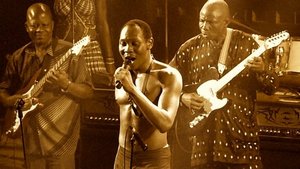
Seun Kuti’s arms stretch wide enough to hold onto his father, Fela Kuti’s, musicianship —a man who passed away 14 years ago—as well as dip into the politics of present day Nigeria, his homeland. The stretch probably feels natural to him as Seun grew up watching his father slipping effortlessly in both arenas: music and politics.
Seun Kuti and Egypt 80, in fact his late-father’s band, will perform at the Cedar Cultural Center in Minneapolis on April 14th. Watching this youtube clip, one might wonder at how the Cedar, which holds 625 at full capacity, will be able to contain Kuti’s sound.
Mike Rossetto, The Cedar’s marketing coordinator, feels confident they will be able to meet the saxophone player’s expectations. “I can promise you that Seun will be a memorable concert,” Rossetto told Mshale. It’ll be a dancing crowd, which mirrors the movements on stage as well. In addition to Kuti’s horn, guitar, and percussion players, he also features three backup singers—women dressed in traditional Nigerian costume who provide vocals as well as African dance.
Kuti also uses his voice to bring attention to issues that face the everyday Nigerian. Earlier this year, he participated in Occupy Nigeria protests. The protests were leveled at President Goodluck Jonathan who eliminated the fuel subsidy in Nigeria, in January 2012.
In an interview with Al Jazeera on CP-Africa.com, Kuti explains his involvement in OccupyNigeria, “I am Nigerian first, this is not about being an artist…this is about being a Nigerian. We have to be a different generation (from our parents); we have to be outspoken about our future.”
Kuti’s show at the Cedar will be a a premier musical event. Rossetto affirms what all Seun Kuti fans are already thinking. “I’m really looking forward to seeing Seun and band. For [The Cedar], this is one of our highlights of the season.”
Concert Information: Saturday, April 14, 2012 – 8:00pm Doors Open: 7:00pm Advance: $30.00 Day of show: $35.00 Walker members $25/30; Standing show At The Cedar
Hot chicks, pimped-out rides, MTV cribs, $300 sneakers, fame, and fortune as portrayed on American Rap videos is a life many aspiring rappers dream about. The “cheddar” as money is sometimes referred to in Rap lingua,is so plentiful, it sometimes rains from above.
These lavish images beamed around the globe courtesy of BET, MTV, VH1 and other media outlets are as enticing to aspiring American rappers as they are to their African immigrant counterparts, who for the purpose of this article I will refer to as the African rapper ? whether born of immigrant parents or migrated to the U.S. at a young age. The question I have heard asked quite a few times is: What are the chances of an African rapper making it in America?
With no intention of derailing anyone’s American dream, this is as tough a task as they come, and more so to the African rapper. But, if Barack Obama was able to beat all odds to become the first African American to hold the most powerful office on the planet, what is it that can stand in the way of the African rapper making it big? Let me just deal with the language issue upfront and assume that since the upcoming rapper came to the US as a child or was born here, accent is not a communication barrier because this has proved to be a major stumbling block for rappers who move to the U.S. at an older age.
Rap, which is part of the Hip Hop culture, is deeply rooted in the community. Rappers are generally identified with the “hoods” (neighborhoods) they hail from. They represent regions such as east coast, west coast and the south; or a neighborhood such as Compton, Queens or Brooklyn. Traditionally, budding rappers have sharpened their skills by doing rap battles on street corners and other neighborhood hangouts and in the process develop a fan base and name recognition or “street credibility.” The hood also avails an underground market for mix tapes, t-shirts and other Hip Hop merchandise and grooms upcoming rappers and producers before they venture to the outside world.
Major record labels have discovered some of their most successful rappers in the underground Hip Hop world. Chamillionaire is believed to have sold 200,000 mixtapes in his hometown of Houston, Texas, before being signed by Universal Music Group. Lil Wayne and 50 Cent are two other successful rappers who also found their way to the top on a similar route. Record labels prefer proven “hustlers” who have already horned their skills, made a name and established that they can move records.
Considering that the African immigrant community is not homogeneous, has no specific neighborhoods and is thinly dispersed throughout the United States, the African rapper is essentially devoid of a hood to represent. What then is the path to the top?
The answer may lie in cyberspace. Technology has provided a limitless, borderless market that just a few years ago did not exist. It is now possible, albeit with hard work, focus, patience and unique creativity, for the African rapper to create a “cyber-hood” from which to woo potential fans. The internet, especially social media sites such as Facebook, CD Baby, YouTube and Amazon have become game-changers for independent artists to the point where some are achieving international success without big record labels backing them up. However, an online presence does not compensate for lack of artistic creativity or ambition, one must first and foremost be a serious artist. Rap is a form of expression and artists who can tell their own unique African story have a better chance of succeeding.
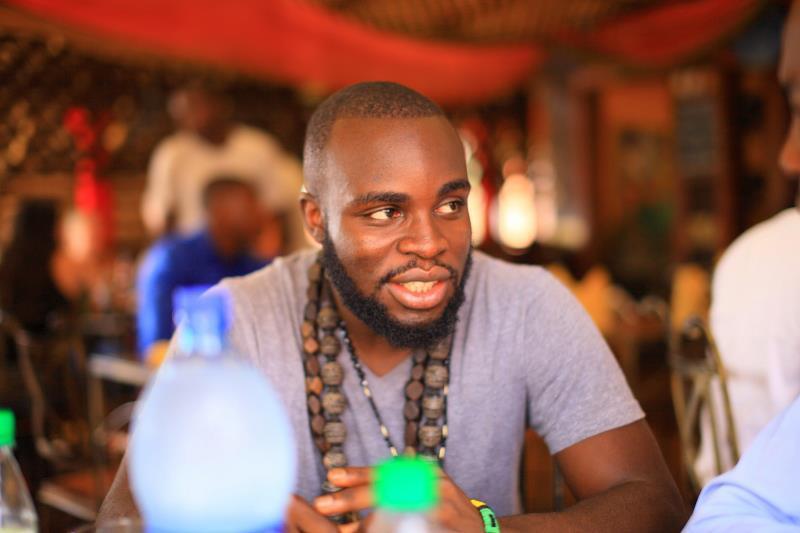
Emmanuel Jal, a former child soldier, has captured international headlines by using Hip Hop to tell the story of his native Sudan. M.anifest, a Ghanian based in Minneapolis and Dallas-based Kenyan Dezyne, are two African rappers who have not only used the “cyber-hood” to their advantage but have also done so by distinguishing themselves by telling a uniquely African immigrant story. K’Naan, a Canadian rapper of Somali descent and Wale, an American rapper born of Nigerian parents are probably two of the most successful African rappers. They not only boast of major music label deals, they also roll with the big fish of the Hip Hop world.
The “cyber-hood,” backed up by artistic creativity, focus, ambition and a uniquely African story, is the game-changer for the African rapper. It can be done. There are millions of Africans in America and around the world who are waiting to hear that unique African story that no American rapper can tell. What I must emphasize is that there is no room for an African rapper trying to be a “Compton storyteller.” He/she cannot tell that story as believably and convincingly as a Compton native can and thus comes across as a wannabe.
Sade to release 'Bring Me Home - Live 2011' concert tour DVD
Earlier this month Billboard named 53 year old Anglo-Nigerian singer, Sade, among the top ten music money makers of 2011 in its 2012 Top 40 Money Makers List, with reported earnings of $16,382,809. She came in number six behind Taylor Swift, U2, Kenny Chesney, Lady Gaga and Lil Wayne.
Sade’s high ranking was due in part to her wildly succesful 2011 world tour in support of her 2010 platimum selling album “Soldier of Love.”. It was one of the top ten grossing tours last year and which the Baltimore Sun called “the best concert of the year”. The tour included a 54-date U.S. run.
That succesful concert tour will now be released in a DVD/album package, according to a press release sent to Mshale. She will release Bring Me Home – Live 2011″ on May 22, according to the release by her label.
The DVD was shot in various cities around the world during the tour and will feature a behind-the-scenes film, a technical documentary and outtakes from the crew. It was directed by Sophie Muller. Muller was also responsible for designing the Sade stage show which was dubbed the “most creative stage production” by Pollstar.
Live DVD tracklisting:
1. Soldier Of Love 2. Your Love Is King 3. Skin 14 4. Kiss Of Life 5. Love Is Found 6. In Another Time 7. Smooth Operator 8. Jezebel 9. Bring Me Home 10. Is It A Crime 11. Love Is Stronger Than Pride 12. All About Our Love 13. Paradise 14. Nothing Can Come Between Us 15. Morning Bird 16. King Of Sorrow 17. The Sweetest Taboo 18. The Moon And The Sky 19. Pearls 20. No Ordinary Love 21. By Your Side 22. Cherish the Day
Live CD tracklisting:
1. Soldier of Love 8. Paradise/Nothing Can Come Between Us 2. Skin 9. Morning Bird 3. Kiss of Life 10. The Moon and the Sky 4. Love is Found 11. No Ordinary Love 5. In Another Time 12. By Your Side 6. Jezebel 13. Cherish the Day 7. All About Our Love 8. Paradise/Nothing Can Come Between Us 9. Morning Bird 10. The Moon and the Sky 11. No Ordinary Love 12. By Your Side 13. Cherish the Day
And I heard a voice from heaven saying, “Write this: Blessed are the dead who die in the Lord from now on.” “Blessed indeed,” says the Spirit, “that they may rest from their labors, for their deeds follow them!” – Revelation 14:13
With sadness, but with total submission to the will of God, we announce the passing unto glory of Chief Samuel Akpan Inyang.
Chief Inyang passed away suddenly on March 5th, 2012 following a brief illness.
Chief Samuel Akpan Inyang was born on November 24th, 1948 as the first son to Chief Johnny Inyang-Akpan and Madam Lydia Inyang-Akpan (Nee MaMa) at Ikot Ibiok-Eket, Akwa Ibom State of Nigeria. Chief Samuel Akpan Inyang, leaves behind friends, children, grand-children, and several relatives to treasure his memories among which are:
1. Children through union of Late Madam Ann Abraham Eka:
Christopher Samuel Inyang (son) Lydia Inyang (daughter)
2. Stepsons through union of his beloved wife, Madam Brightstar Harmon-Inyang:
Jesse Harmon Tristan Harmon Raymond Harmon
Chief Inyang had a passion to help and support his community. He would never return to his village without large suitcases of needed medical supplies and/or clothing. Chief Inyang was also an active member of Akwa Ibom State Association of Nigeria, USA (AKISAN-TC).
He will be greatly be missed by his family, friends, and the Akwa Ibom community in Minnesota.
Funeral Arrangements
Funeral Service: Saturday, March 31st, 2012 at Brook’s Funeral Home – 862 Concordia Avenue, Saint Paul, MN 55104 (click address for direction). Time: 06:00 PM to 12:00 AM
Memorial Service: Sunday, April 1st, 2012 at Apostolic Church – 510 Prior Avenue St. Paul, MN 55104 (click address for direction). Time: 09:00 AM to 12:00 PM
Transportation of Dr. Inyang’s body to Nigeria will take place couple of days following the services.
A memorial fund account has been setup to help in offsetting the cost of funeral services and transportation of Chief Inyang to Nigeria. The account details are as follows:
1. Account Name: Samuel Akpan Inyang Memorial Fund 2. Account Number: 2606460562 3. Bank name: Wells Fargo 4. Bank Routing Number: 091000019 5. Bank Swift Number for Non-Wells Fargo Wire Transfers: • 121000248 (Domestic) • WFBIUS6S (International Wire Transfers) 6. Bank Location: 670 MCKNIGHT RD N, SAINT PAUL, MN 55119 7. Bank Phone: 651-205-5275 For more information or updates, please contact any of the following family members: 1. Madam Brightstar Harmon-Inyang – 612 961 7651 2. Mr. Nse Umana – 651 319 0656 3. Mr. Jim Akpan – 612 309 0962 4. Mr. Robert Inyang – 510 209 3883 5. Dr. Peter Odouk – 678-368-6482.
Great communities come together to assist one another in times of difficulty. Given the huge financial burden due to funeral cost and impending transportation of Chief Inyang to Nigeria, every Akwa-Ibomite is encouraged to give generously to help meet the estimated expenses of $10, 000. Let’s come together to help give Dr. Inyang a befitting burial.
You can contribute to Chief Inyang’s Memorial Fund using any of the following options:
1. Account to account transfer (see account info above) 2. Make a deposit to the account at a Wellsfargo branch 3. Wire transfer your contribution to the Wellsfargo account 4. Mail your contribution to:
AKWA IBOM STATE ASSOCIATION OF NIGERIA, USA – TWIN CITIES CHAPTER, MINNESOTA. Care of: Dr. Stella Ekong, 3419 124th Circle NE, Blaine MN, 55449
Akwa Ibom State Association of Nigeria, Twin-Cities Chapter, USA is a 501c Certified Non-Profit Organization
PRESIDENT: Dr. Stella Ekong VICE PRESIDENT: Mr. Ubong Usoro FINANCIAL SECRETARY: Mrs. Nse Etuko PUBLIC RELATIONS: Mr. Edem Umoh SECRETARY: Mrs. Anietie Okon
March 24 of each year is World Tuberculosis (TB) Day. It is a day to raise awareness about TB.
What is TB?
TB is a serious disease caused by a bacteria (germ) called Mycobacterium tuberculosis. TB is spread through the air. When someone with active TB disease in their lungs coughs, sneezes, or talks, TB germs can get into the air and float. Other people close to them can breathe these TB germs into their lungs. TB is a serious disease but it can be cured with the right medicine. TB germs usually attack the lungs. But TB germs can also attack other parts of the body, including the brain, bones and lymph nodes. Only people with active TB disease in their lungs can spread TB germs to other people.
There are two phases of TB: latent TB infection and active TB disease. Both phases can be treated with medicine.
Latent TB infection (LTBI)
People with latent TB infection do not feel sick. The only way to know if TB germs are in their body is to get a TB skin test or TB blood test. If you had BCG vaccine, ask your doctor if you can have the TB blood test.
Active TB
People with active TB disease can get very sick and spread TB germs to others. People with active TB disease may have one or more of the following symptoms: a cough (lasting three weeks or more), coughing up blood, chest pain, weight loss, fever, chills, night sweats, and being very tired for no reason.
Tuberculosis is treated with special antibiotics made just for TB that must be taken for six months or longer.
TB is a Global Health Problem
TB is a widespread health problem around the world. The World Health Organization estimates that 2 billion people are infected with the latent form of TB, or LTBI. In 2010 there were about 9 million people in the world with active TB. Twenty-six percent lived in Africa, 3% lived in the Americas, 59% lived in Asia, 7% lived in the Eastern Mediterranean, and 5% lived in Europe. It is also estimated that 1.5 million people died from TB in 2010.
TB in Minnesota
Each year, about 140 people are diagnosed and treated for active TB in Minnesota. When a doctor diagnoses a patient with active TB, the doctor works with Minnesota’s public health departments to help the TB patient get well. This is because TB is a complicated disease to treat, needing special TB medications over several months. Medicine for TB is free of cost to anyone who lives in Minnesota.
In the United States, including Minnesota, most doctors recommend taking special TB medications to treat LTBI. This helps prevent that person from getting sick with active TB. This may be different in other countries where LTBI is not treated because there are limited resources and they focus instead on treating active TB.
BCG Vaccine
The BCG vaccine is given in many parts of the world where TB is common. BCG helps prevent children from getting severe forms of TB disease. BCG vaccine is not given in the United States because there a low risk of TB infection here.
BCG vaccine & the TB Skin Test
People who have received the BCG vaccine can get the TB skin test if they need to be tested for TB. If the result of the skin test is positive, it is very likely that it is due to a TB infection and not because of the BCG vaccine. There are newer blood tests available that detect only the TB and not the BCG vaccine.
Additional information
The Minnesota Department of Health has fact sheets about TB in English and 15 other languages including: Amharic, Arabic, Bosnian/Croatian/Serbian, French, Hmong, KaRen, Khmer (Cambodian), Laotian, Nepali, Oromo, Russian, Somali, Spanish, Tibetan, and Vietnamese.