Home Blog Page 171

Sade’s first U.S. tour in a decade opens to soaring reviews

0
Sade's first U.S. tour in a decade opens to soaring reviews

Britney Spears wasn’t the only one kicking off a tour Thursday night (June 16).

Sade, the woman and the band, returned to the U.S. for their first shows in more than a decade to downright ecstatic reviews.

The two-hour, Sophie Muller-directed concert at Baltimore’s 1st Mariner Arena, site of where Rihanna launched her U.S. tour only a few days before, is a visual stunner, according to reviewers.

Rolling Stone’s Evan Serpick felt time had stood still for the British-Nigerian singer, who first appeared on stage in her trademark ponytail and black turtleneck: “And that luxurious, smoky voice – the one that earned Sade (the singer) a reputation as an aural aphrodisiac, the female counterpart to Barry White – is as glorious as ever…The set continued to jump around among the band’s six albums, maintaining a flow that highlighted their well-honed formula of diverse, syncopated percussion, jazzy instrumentation and hard-hitting, passionate lyrics, all held together by that one-in-a-million voice.

USA Today’s Korina Lopez said, “These days, pop stars strutting the stage in barely-there thongs and doing crotch-grabbing routines are common,” wrote Korina Lopez. “So it was refreshing to see a beautiful woman with a beautiful voice just simply singing.”

The Baltimore Sun’s Erik Maza called it “the best concert of the year…Rihanna’s was good, but it was amateur hour in comparison. U2’s will be bigger, but it will not exceed the sheer transcendence of the Sade live experience….The singer, however, did not coast on the adulation of a crowd that would have swooned even if she’d sung Creed covers. Her two-hour show was a success because, after all the flashy, gimmicky shows pop stars have been staging this past year, this was a palette cleanser.”

The outing, which supports last year’s “Soldier of Love” album, lasts until mid-September and includes three nights at Los Angeles’ Staples Center. Someone was clearly missed.

SETLIST (courtesy of Baltimore Sun)

Soldier Of Love

Your Love Is King

Skin

Kiss Of Life

Love Is Found

In Another Time

Smooth Operator

Jezebel

Bring Me Home

Is It A Crime?

Still In Love With You

All About Our Love

Paradise

Nothing Can Come Between Us

Morning Bird

King Of Sorrow

The Sweetest Taboo

The Moon And The Sky

Pearls

No Ordinary Love

By Your Side

Encore:

Cherish The Day

Liya Kebede is the new face of L’Oreal

0
Liya Kebede is the new face of L'Oreal

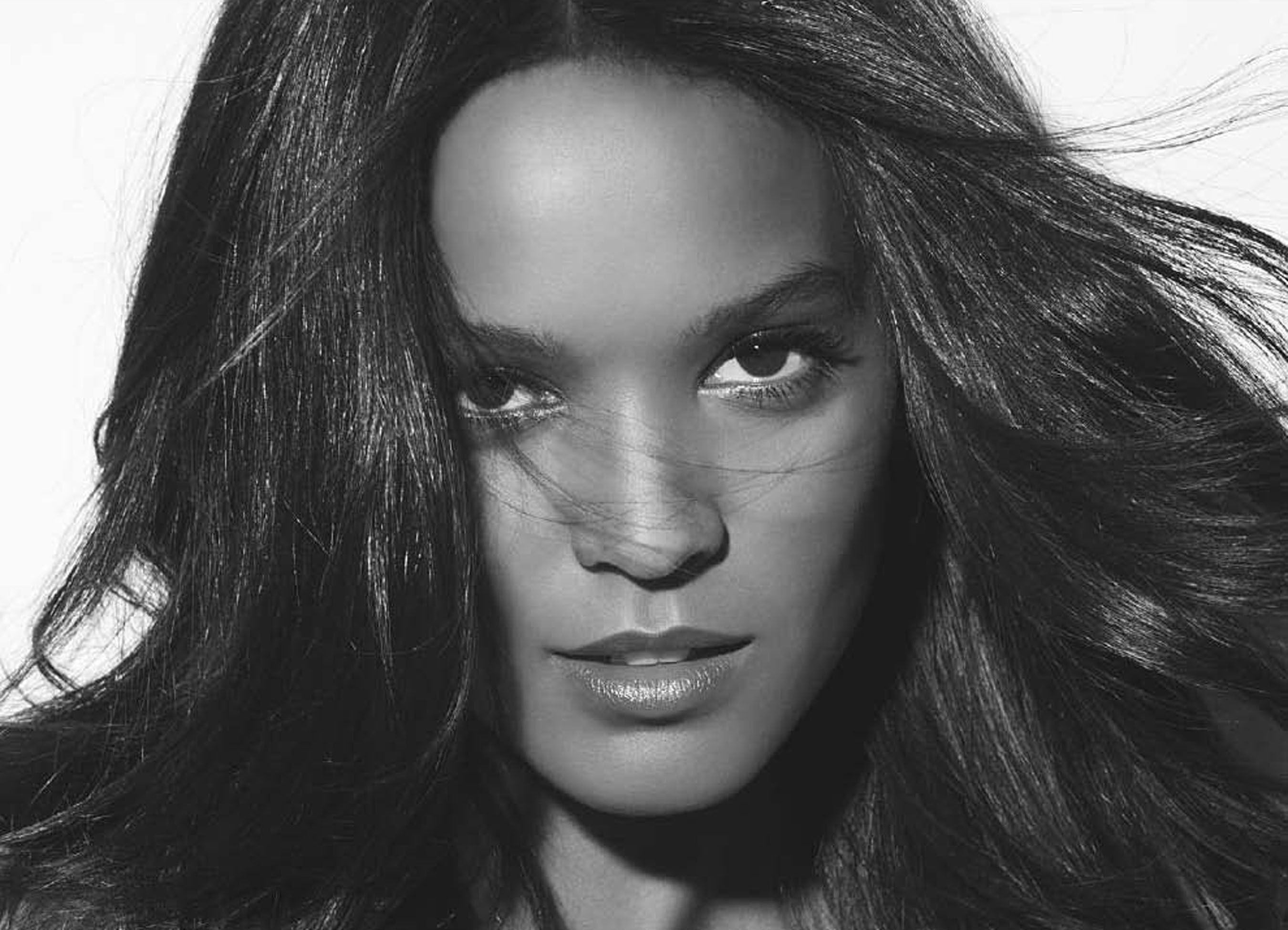
The Miami Herald is reporting that international model-actress Liya Kebede has been named the “new face” of L’Oréal. Kebede’s career began when she was in high school in Addis-Adaba, Ethiopia. Scouted by a modeling agency, she left Africa for France at the age of 18, and top-level international designers like Tom Ford, then the artistic director for Gucci, quickly hired her.

Since then, her elegance and her beauty have been seen at Fashion Weeks around the world, and she has been featured on covers of international fashion magazines (Vogue, Flair, I-D), emerging as a key figure in the fashion industry. Kebede has also appeared in several films, including 2006’s The Good Shepherd and Desert Flower in 2009.

In addition to her beauty, Kebede is a goodwill ambassador for the World Health Organization, for maternal, neonatal and infant health care. Her commitment was such that, just a few months later, she established the Liya Kebede Foundation, raising money for the Durame Hospital in Awassa, Ethiopia, with the goal of providing health care material.

Full Story @ Miami Herald.

Kenya’s Ambassador promises to ‘clean house’

0

Elkanah Odembo, Kenya’s ambassador to the United States, was in Minnesota in June to celebrate Madaraka Day with Kenyan Minnesotans; commemorating forty-eight years since Kenya attained internal self-rule from the British. Odembo assured Kenyans that his office is improving services.

Over the years, Kenyans living in Minnesota and other parts of the country have complained about inadequate services from the embassy; Odembo promises a radical shift in the embassy’s services to Kenyans in the US. To this end his office is engaging with Kenyans around the US in discussion fora as part of an ad hoc Diaspora Advisory Committee. This committee, made up of different Kenyan stakeholders, is charged with reporting on the needs of Kenyans as well as gathering intelligence on the makeup of Kenya’s diaspora.

Government Service

In a meeting in Hopkins with one such group, Odembo said that he was an ambassador in every form of the word: “my job description is ‘what does Kenya get out of it?’”. The ambassador encouraged Kenyans to lobby the American government in Washington DC particularly on foreign policy and trade issues. On security concerns, Odembo called on the support of the international community in a legitimate government in Somalia that would limit the threat of Al Shabaab to Kenya.

According to Odembo, the Consular section of the embassy which deals with immigration, visas and passports is dealing with unprecedented requests. With the passing of the new Constitution which allows for dual citizenship for the first time, the ambassador reported that his office is inundated: “We are overwhelmed by people requesting passport renewals. There are people who are renewing their passports from the ‘70s.“ His staff, he says, working late hours fields about two hundred and fifty calls a day. A new voicemail system; and new staff are in the works for efficiency.

The ambassador estimates that there are about 100,000 Kenyans in the US eligible to vote in Kenya’s 2012 general elections. The government is interested in serving the Diaspora he said, but urged Kenyans not to engage in tribal politics. “We came close to the brink, I don’t think God will be that kind to us again, so we should be in our best behavior,“he challenged Kenyans.

Instead he called on Kenyans to provide principled advice on issues of governance and to invest in Kenya.

Odembo paid a courtesy call to Minneapolis City Hall where he met with Mayor RT Rybak, the Minneapolis Fire Chief, Alex Jackson and Council Members Gary Schiff, Cam Gordon, Meg Tuthill and Kevin Reich.

Reich asked what the US should do to increase the number of Kenyan students to its universities, whose numbers have declined over the last four years according to the ambassador. The ambassador said, he is in discussion with universities across the state urging them to offer in-state tuition rates for students. The Minnesota State Colleges and Universities already has such a provision that allows foreign students, albeit with certain provisions such as specified GPA and community service, to pay in-state tuition.

Also at the meeting was the president of the International Leadership Institute, Judge (Ret.) LaJune Lange, who facilitated a firefighters’ training program between the city of Minneapolis and Eldoret in western Kenya. Lange was instrumental in fostering a sister relationship between the two cities said her organization and the Minneapolis Fire Department were looking at reaching beyond Eldoret firefighters.

Investing in Kenya

In what was his inaugural visit to Minnesota since his appointment a year ago, Odembo also met with local business leaders and politicians making the case for Kenya as an investment and tourist destination. The ambassador touted Kenya’s economic long term goal known as Vision 2030; a continued diversifying of Kenya’s economy and the overhaul of Kenya’s judiciary. He argued that with a new Constitution, Kenya was in a better position to reduce bureaucracy as Nairobi will no longer be the central command of government.

The ambassador urged the American government, via its African Growth and Opportunity Act (AGOA) to invest in more than oil on the continent. “Ninety per cent of trade between the US and AGOA countries is oil. I make the case that even without AGOA these trade agreements would still exist.” He urged instead that investments be made in other fields like agriculture, IT infrastructure and energy. “Kenya has the potential to be one of the largest green energy economies,” he said speaking on the potential growth of Kenya’s geothermal, solar and wind energy. The Lake Turkana Wind Power project is expected to add at least thirty per cent to Kenya’s energy output.

Investors were encouraged to use the Kenyan Embassy and the US Commercial Service to survey Kenya’s market potential and discover investment opportunities.

80 per cent of world refugees hosted by poor countries, says UN report

0
80 per cent of world refugees hosted by poor countries, says UN report

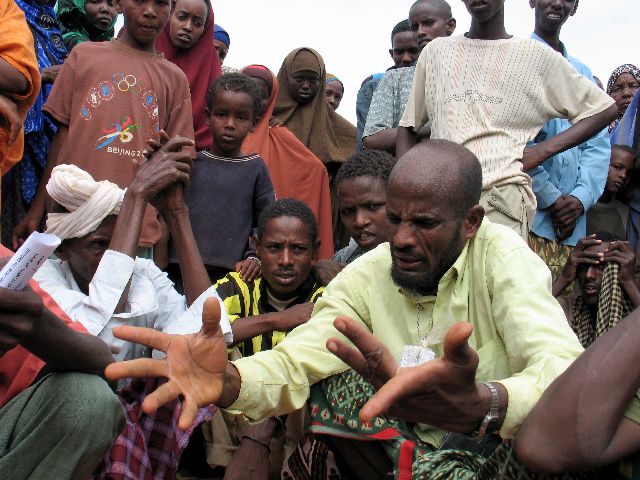
An estimated 80 per cent of the world’s refugees now live in developing countries and yet anti-refugee sentiment is growing in many industrialized nations, the United Nations said in a report unveiled today, urging the richer States to address the deep imbalance.

In absolute terms and in relation to the size of their economies, poor countries shoulder a disproportionate refugee burden, according to the 2010 Global Trends report of the UN High Commissioner for Refugees (UNHCR), released on World Refugee Day, marked on 20 June every year.

Pakistan, Iran, and Syria have the largest refugee populations at 1.9 million, 1.07 million, and 1.005 million respectively. Pakistan also feels the biggest economic impact with 710 refugees for each dollar of its per capita gross domestic product (GDP), followed by the Democratic Republic of the Congo (DRC) and Kenya, with 475 and 247 refugees per dollar of their per capita GDP respectively.

“What we’re seeing is worrying unfairness in the international protection paradigm,” said António Guterres, the UN High Commissioner for Refugees.

“Fears about supposed floods of refugees in industrialized countries are being vastly overblown or mistakenly conflated with issues of migration. Meanwhile it’s poorer countries that are left having to pick up the burden,” he said.

Overall, the report portrays a drastically changed protection environment to that of 60 years ago when the UN refugee agency was founded. At that time UNHCR’s caseload of refugees was 2.1 million Europeans uprooted by the Second World War.

Today, UNHCR’s work extends to more than 120 countries and encompasses people forced to flee across borders as well as those in flight within their own countries.

An estimated 43.7 million people are currently displaced worldwide – roughly equalling the entire populations of Colombia or the Republic of Korea or of all Scandinavian countries and Sri Lanka combined.

Of the total, 15.4 million are refugees – 10.55 million under UNHCR’s care and 4.82 million registered with the UN Relief and Works Agency for Palestine Refugees in the Near East (UNRWA). Some 27.5 million people displaced internally by conflict and 837,500 are asylum-seekers. The report does not include this year’s internal displacements in Libya and Côte d’Ivoire.

Reflecting the prolonged nature of several of the current major international conflicts, the report finds that the refugee experience is becoming increasingly drawn out for millions of people worldwide. UNHCR defines a protracted refugee situation as one in which a large number of people are stuck in exile for five years or longer. Last year, 7.2 million people under UNHCR mandate found themselves in such a situation, the highest number since 2001.

On the other hand, only 197,600 people were able to return home, the lowest number since 1990, according to the UNHCR report.

Afghans, who first fled in significant numbers after the Soviet invasion in 1979, accounted for a third of the world’s refugees in both 2001 and in 2010. Iraqis, Somalis, citizens of DRC and Sudanese were also among the top 10 nationalities of refugees at both the start and end of the decade.

“One refugee without hope is too many,” said Mr. Guterres. “The world is failing these people, leaving them to wait out the instability back home and put their lives on hold indefinitely. Developing countries cannot continue to bear this burden alone and the industrialized world must address this imbalance.

“We need to see increased resettlement quotas. We need accelerated peace initiatives in long-standing conflicts so that refugees can go home,” he added.

According to the report, more than 2.9 million internally displaced persons (IDPs) returned home in Pakistan, the DRC, Uganda and Kyrgyzstan. While the global number of IDPs remained high and instability persisted, that was nonetheless the highest number of IDP returns since UNHCR started monitoring internal displacement trends in 1997.

The number of countries reporting stateless populations has risen steadily since 2004, but differences in definitions and methodologies still prevent reliable measurement of the problem, UNHR said. The reported number of stateless people last year – 3.5 million – was nearly half of the 2009 figure, but this was mainly the result of methodological changes in some countries that supplied data. Unofficial estimates put the global figure closer to 12 million.

Midiwo-Odembo: Invest in Women for best returns

0

Hopkins, Minnesota – At a breakfast meeting in June, Aoko Midiwo Odembo encouraged Kenyan women to pursue their dreams, participate in business enterprise and to offer each other support.

Midiwo-Odembo, who was visiting Minnesota with her husband, the Kenyan ambassador to the United States, Elkanah Odembo, said, “Investing in a woman is the largest return on investment.”

She was speaking at a meeting hosted by the Kenyan Women in Minnesota (KWIM), a three-year old organization with a little over one hundred members that is looking to grow. KWIM’s founding president Murugi Mutiga says that the women’s association has been steadily growing as it reaches out to more Kenyan women across Minnesota.

Midiwo-Odembo encouraged this growth and asked that the group see itself as a resource for the community. Her goal, with the embassy, is to collect resource databases around the US that would be posted on the embassy’s website for ease of access to information. “Map where you are.”

Midiwo-Odembo says that she was concerned about reports of domestic violence in Kenyan communities around the country. In October last year, a Kenyan woman from Minnesota, Bilha Omare, was slain together with two of her children by her husband in a domestic dispute.

Midiwo-Odembo called Kenyan women to use these kind of tragedies as a call to action. She suggested that Kenyan women “be their sisters’ keepers” by having frequent in-person meetings to create trust and a sense of community and friendship.

Speaking against patriarchy, Midiwo-Odembo urged the women to pick a copy of Virginia Wolf’s extended essay A Room of One’s Own saying that even with family obligations women can accomplish personal career goals. “Begin looking at Kenyan industries to see which ones have opportunity investments. Your husband’s and father’s property is not yours, “she cautioned.

Midiwo Odembo is the founder of the Kenyan Women Voters which saw the elections of several female members of parliament including current sitting MP Martha Karua. Most recently, she represented Kenya at the launch of the World Bank’s, “Women Economic Empowerment as Smart Economics; A dialogue on Policy Options” at the invitation of German Chancellor Angela Merkel. Using her experience as an example, she urged participation at all levels of commerce. “Partake in the world’s wealth.”

For women interested in returning to Kenya, Midiwo-Odembo referenced Kenya’s recently promulgated constitution that calls for a third of female positions in all public service offices.

“Look at Vision 2030 to see the industries that are bankable,” she encouraged referring to Kenya’s long-term economic strategic plan.

To empower one self she advised continual self education, “Both the Kenyan and American constitutions are the most important documents you will ever read because it governs your life.”

Liberia’s Vice President, Joseph Boakai, to visit Minnesota June 17

0
Liberia's Vice President, Joseph Boakai, to visit Minnesota June 17

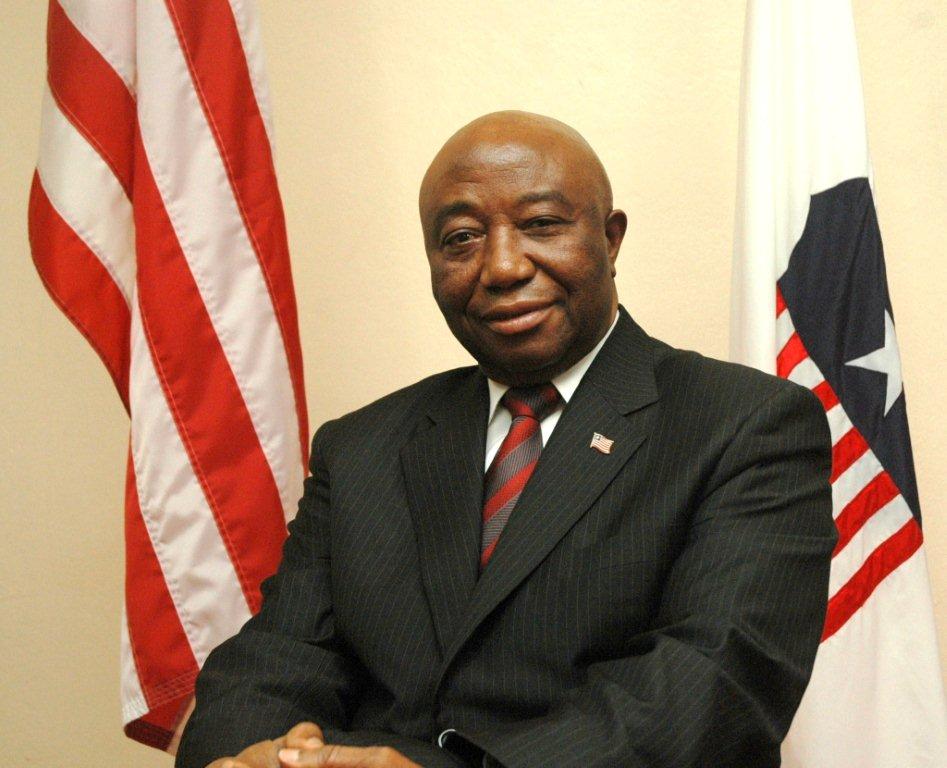
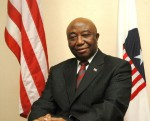
The Vice President of Liberia, Joseph Boakai, will Friday, June 17, pay a one-day working visit to Minnesota at the invitation of the African Career, Education & Resource, Inc. in conjunction with the Liberian Ministers Association, and the Organization of Liberians in Minnesota.

While in Minnesota, the Vice President will hold bilateral talks with state, government, and educational officials to support Liberia’s development agenda. Moreover, Vice President Boakai will be continuing previous discussions, on securing investment opportunities for Liberia, started by President Ellen Johnson Sirleaf during her visit to Minnesota in 2009 and completing ongoing sister city negotiations between Minneapolis and Saint Paul. He will also meet with the dean of the Humphrey Institute of Public Affairs and other University of Minnesota officials, and receive update on efforts to extend DED (which expires on September 30) for Liberians from volunteers of the Coalition for Permanent Residency (CPR) at the Minneapolis Urban League. Scott Gray, president of the Urban League, will welcome Vice President Boakai.

The CPR has already delivered a letter signed by more than 120 organizations from around the country asking President Obama for an extension of the legal status of Liberians on DED. While the infrastructure in Liberia continues to improve, there remains a great amount of instability in the country and its neighbor, the Ivory Coast, says Vic Rosenthal, executive director of the Jewish Community Action, and a leading CPR member. “Vice President Boakai will speak about the strong ties between Liberia and the United States, and the importance of immigration policies that recognize the needs of both countries.”

Mr. Boakai will later be the honored guest at a reception, where he will participate in a Great Conversation Forum with the community, and will give some perspectives on Liberia – ‘then, now, and tomorrow’.

“Liberia faces many tough challenges and Vice President Boakai’s message on engagement and patriotism is that every Liberian regardless of age, ethnicity, religion, and political persuasion has an important role to play in helping the country to overcome obstacles to its progress,” says Sando Wayne, Senior Policy Advisor in the Office of the Vice President.

During the reception, beginning at 7:00 p.m. at the Community Activity Center, 5600 85th Avenue, in Brooklyn Park, guests will enjoy an assortment of hors d’oeuvres and a cash bar. The conversation with the Vice President will commence promptly at 8:00 p.m.

Niger Delta conflict: “The epitome of poverty”

0

Saro Nkesi still finds it difficult to talk about the years before he finally left Nigeria.

“During the period of 1993 to 1995, I was always staying in the bush and dashed home to eat and went back to the bush again,” he said. “Sometimes I would stay with other friends who were not from Ogoni. It was a terrible time in my life.”

Nkesi participated in nonviolent protests against Shell Oil’s operations in the Niger Delta’s Ogoniland. He sought to evade the Nigerian government forces that would sweep into Rivers State to suppress the popular resistance to decades of oil exploration unhampered by environmental, developmental or humanitarian concerns. But on one fateful occasion, he said, instead of finding him, “they saw my wife and they killed her.”

Nkesi was a guest speaker at the Second Annual African Justice Initiative Symposium, “Oil & Gas in Africa: A Blessing or a Curse?” hosted by the Washington College of Law at American University earlier this spring. Among the presenters, Nkesi was the only Ogoni eyewitness to the events leading to the hanging of author and activist Ken Saro-Wiwa and eight other Ogoni leaders in 1995 by the regime of the late Nigerian president Sani Abacha.

The organized resistance to oil extraction in Ogoniland prompted Shell to suspend operations there in 1993 and it has yet to resume, but pipelines, some prone to leakage from age or poor maintenance, still traverse the territory. Some estimates are that 9 billion gallons of oil have spilled into the Delta since oil was first discovered in the mid 1950s.

Nana Yaa Anyane-Yeboa, president of the African Justice Initiative and a law student at American University, selected oil as the symposium’s topic last fall, months before tumult began wrenching the Arab world and international markets. She had read about Ogoniland’s history, but particularly the controversy over a yet to be released United Nations Environmental Program (UNEP) report. The goal of the report is to provide a roadmap for environmental remediation in Ogoniland but the UNEP team is also charged with identifying the sources of oil pollution there.

Despite its environmental assessment work being funded by a $9.5 million grant from the Shell Petroleum Development Corporation, UNEP has insisted on its capacity to be impartial. Detractors allege otherwise.

Critics, who said they were leaked advance information, have claimed that the report will instead blame the larger percentage oil spills in Ogoniland to sabotage of the pipelines or attempts at “bunkering” or theft of the oil. UNEP denies the allegation. The report is due out this year.

Anyane-Yeboa said she became dismayed by the concerns of environmental activists and other critics that the report thus far “virtually exonerated Shell” for the devastating environmental consequences of its practices.

Meanwhile, Anyane-Yeboa has become acutely aware of oil’s human costs. “What I found shock[ed] and amazed me,” she said. “What I found was people had lost their land and livelihood because of oil. I found people had lost their health because of oil, and I found that people had lost their lives because of oil.” She conceived of the symposium’s topic as a means to educate fellow law students, human rights activists and the Washington area community about the Ogoniland debacle.

Anyane-Yeboa was only a teenager in 1995 when the Ogoni Nine were executed after being sentenced by a military tribunal that allowed them no legal representation and no right to appeal. Born an American to Ghanaian immigrant parents, she said the tragedy of the Ogoni had escaped her notice though she has followed other issues affecting Africa. One of her interests is that Nigeria’s history of oil not be repeated in Ghana where an off-shore field was discovered in 2007. Nigeria is America’s fifth-largest supplier of oil after Canada, Saudi Arabia, Mexico, and Venezuela.

Omoyele Sowore, a Nigerian journalist with Sahara Reporters, and a former student activist in Nigeria, said in his keynote address that the Niger Delta “epitomizes poverty.” He cited several causes for the region’s condition, including: the loss of fishing as a sustainable occupation due to chemically poisoned water also not fit for human consumption; the decline of agriculture due to polluted land; acid rain caused by the constant flaring of the gas generated by oil production; and a rash of diseases he attributes to oil pollution as their most likely cause.

He said the Delta’s population has no easy access to hospitals, paved roads or other infrastructure one would expect from a region which yields between an estimated 85 to 90 percent of Nigeria’s export earnings. That revenue finances development in the rest of country and pays for the brutal repression by the Nigerian “Kill and Go” police squads and military—as directed by Shell and other petroleum multi-nationals, Sowore said.

To support his claim of Shell’s intimate relationship with the Nigerian government, Sowore cited recent Wikileaks revelations where Shell executives boasted about their influence within every Nigerian ministry. Sowore, who is from the Niger Delta but is not an Ogoni, said the execution of Ken Saro-Wiwa was “a contract killing” carried out by the Abacha regime at the behest of Shell.

Sowore said Shell told the Nigerian government, “We want to get rid of this guy,” because Saro-Wiwa and the Movement for the Survival of the Ogoni People (MOSOP) had begun to attract international attention about the industry’s egregious practices and the resulting suffering of the Delta’s people.

The Niger Delta, along Nigeria’s Gulf of Guinea coast, includes nine of the country’s 36 states, a multiplicity of tribes and a populace of which the Ogoni are a small number. At issue, in part, is the lack of consensus between the federal government and those states about revenue-sharing formulas derived from oil profits. In the meantime, the environmentally damaging practices from oil exploration have left a crippling legacy.

Judith Brown Chomsky, a cooperating attorney with the Center for Constitutional Rights, spoke about the effects of oil extraction. “There are villages in the Niger Delta where children don’t see a dark sky even at night because the oil flares constantly,” she said. In the petroleum extraction process, Chomsky explained that the accompanying gas “comes out with a roar” and is burned off or “flared” in the Niger Delta.

Flaring is less costly than more environmentally sustainable alternatives which reduce profit margins. Shell felt it could operate with impunity because it was veiled from public scrutiny, Chomsky maintained.

Chomsky also discussed Wiwa v Shell, the lawsuit brought against Royal Dutch Shell for human rights abuses under the Alien Tort Statute and the Torture Victim Act in an American court by Ken Saro-Wiwa’s son and other Ogoni plaintiffs. In 2009, after 14 years, Shell, without admitting wrongdoing and before going to trial, settled for $15.5 million. Environmental damages were not a part of the suit, but Chomsky said that through the legal process of discovery, the plaintiffs’ attorneys were “able to read what corporations were thinking and doing from their own documents.”

What became apparent was that Ken Saro-Wiwa and MOSOP were considered a serious threat, in part because of media exposure outside of Africa.

Since 1993, MOSOP’s organized nonviolent resistance has prevented Shell from extracting oil in Ogoniland. But, throughout the Niger Delta, other tribally based organizations and actors have emerged over the years, including MEND (Movement for the Emancipation of the Niger Delta), often employing different (and sometimes violent) tactics than the Ogoni.

Sowore, stressing he did not want to glorify the current maelstrom of violence, said the Niger Delta region “is awash in arms … the Niger Delta region is at war as we speak today.”

As with any war, women and children often pay the highest price and Saro Nkesi, now living in Virginia, has taken it upon himself to assist with their needs as president of the GIA Project Foundation, Inc. He said he is still actively involved with MOSOP and uses his U.S.-based foundation to raise the money he sends to Nigeria for “the children who lost their parents, the children who are not able to afford to go to school … for the widows who have lost their husbands.”

Toofan US tour: Twin Cities this weekend

0
Toofan US tour: Twin Cities this weekend

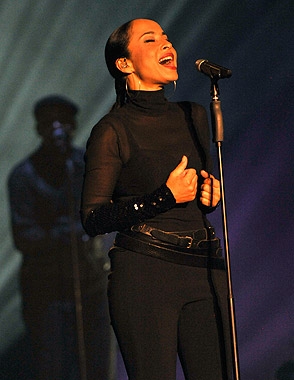
Togolese musical sensation, Toofan, will bring their act to the Twin Cities on Saturday with a performance in Brooklyn Center at the Miracle Empowerment Center. Concert time is listed as 8:00 P.M.

The duo of MASTER JUST (Fantohou Kossi) and BARABAS (Mensah Blaise) known for their addictive auto-tuned mix of hip hop and Afropop, have been warmly received during their US tour. The group came to national and international prominence in 2006 after Togo’s national team affectionately referred to as Les Eperviers (the Sparrow Hawks) qualified for soccer’s world cup. Toofan’s 2005 album “Epervier Obragada” then became the team’s national anthem.

Since their debut album, they have released two other successful albums, Confirmation and Carte de Visite in 2006 and 2009 respectively. Their latest album is Truc de Fou.

Also appearing on stage with the Toofan duo on Saturday June 18 will be two other Togolese musicians, RX Patou and Mary Kim.

Soccer

The Togolese soccer team in Minnesota is hosting a Toofan Soccer Tournament earlier in the day to be held in Plymouth (Douglas Drive & HW 55 W). According to Roger Fortunat in a newsrelease, the tournament will feature, besides Togo, Cameroon, Liberia and Nebraska’s Togolese team.

Kickoff is at 1:30 P.M. on Saturday.

The Toofan duo will be on hand to present the trophy to the winning team.

Concert Info: 612-598-6141

Soccer info: 612-554-5055

Is Black America unhappy with Obama?

0
Is Black America unhappy with Obama?

As criticism of President Obama from within the black community takes on a personal tone, NAM Host Shirin Sadeghi speaks with New America Media editor and radio host Earl Ofari Hutchinson about Obama’s relationship with the black community.

Census: Minority-owned businesses jump by over 45%

0
Census: Minority-owned businesses jump by over 45%

The number of minority-owned businesses in the U.S. jumped 45.5 percent from 2002 to 2007, more than double the 17.9 percent increase for U.S. businesses as a whole, according to Census data released Tuesday.

Revenues of minority-owned firms increased 55 percent to $1.0 trillion over the five-year period, compared with a 33 percent increase for all businesses nationwide. In 2007, more than one-fifth of the nation’s 27.1 million firms were minority-owned.

Of the 5.8 million minority-owned firms, 766,533 had paid employees, an increase of 22 percent from 2002, the Census Bureau reported. These firms employed 5.8 million people, a 24 percent increase from 2002, and their payrolls totaled $164.1 billion, an increase of 42 percent.

In 2007, minority firms with no paid employees (nonemployers) numbered 5.0 million, an increase of 50 percent from 2002. These firms had receipts totaling $164.3 billion, an increase of 59 percent.

“Just as the 2010 Census has documented our increasingly diverse population, so too the Survey of Business Owners demonstrates the increasing diversity of U.S. business ownership,” said Tom Mesenbourg, deputy director of the U.S. Census Bureau. “The growth in the number of minority-owned firms — both employers and nonemployers — has far outpaced that of businesses overall.”

The new data are from the 2007 Survey of Business Owners: Company Summary, which provides statistics on minority and non-minority businesses every five years, as well as breakdowns and cross-tabulations by gender, race, ethnicity and veteran status.

For most minority groups, the gains in the number of women owners were higher than for men.

The three states with the largest number of minority-owned firms in 2007 were California, Texas and Florida. California had 1.2 million minority-owned firms, or more than a fifth of all minority-owned firms in the United States. Texas had 723,057 minority-owned firms, or 13 percent of all minority-owned firms, and Florida had 680,069 minority-owned firms, or 12 percent.

Among counties, Los Angeles County had the most minority-owned firms with 466,312, accounting for 45 percent of the county’s total firms; followed by Miami-Dade County, Fla., with 286,596 (71 percent); Harris County, Texas, with 169,381 (46 percent); and Cook County, Ill., with 154,811 (30 percent) firms.

Interview: Nigerian designer Deola Sagoe

0
Interview: Nigerian designer Deola Sagoe

African designers are having a very good year. In just a matter of months, designers like Duro Olowu, Mataano and Mimi Plange have pushed their way to the forefront, landing in big magazines and on even bigger stars.

Chief among them is Deola Sagoe, the Nigerian-born beauty making a splash in her homeland and abroad with chic pieces which offer fun and femininity — with all the authenticity of African fabrics and prints.

We sat with her to talk about her line and how she makes it work as a global fashionista.

ESSENCE.com: You’ve become very well known among African fashion enthusiasts. How do you feel about that success?

Full story at Essence.