Home Blog Page 175

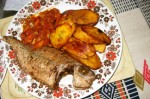
Fried fish may lead to fatal strokes

0
Fried fish may lead to fatal strokes

Study finds high prevalence of eating fried fish among blacks; frying reduces beneficial nutrients

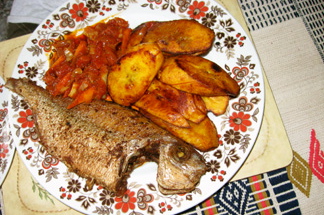
Fish is commonplace on most dinner tables of African American families in “stroke belt” states, which is a good thing, but a new study from Emory University in Atlanta finds that often times, the fish is fried; and, that may not be good for the heart.

The so-called stroke belt comprising Arkansas, Alabama, Georgia, Louisiana, Mississippi, North Carolina, Tennessee, and South Carolina, are states mainly in southeastern United States identified by public health officials for having increased rates of stroke and cardiovascular disease. “Stroke incidence in these eight states is about 20 percent higher than in the rest of the country,” says Dr. Fadi Nahab, the lead author of the Reasons for Geographic and Racial Differences in Stroke (REGARDS) study, a large U.S. government funded research.

Fish is good for you, he says. The omega-3 fatty acids found in most fish, have repeatedly been associated with a reduction in the risk of stroke and heart disease, when eaten at least two times a week. However, the process of frying the fish causes a loss of these helpful fatty contents.
Nahab and his research team interviewed, examined, and asked 21,675 people how often they ate fried fish and non-fried fish. Of the participants whose records were analyzed, 21 percent were from the “stroke buckle,” the coastal plains of Georgia, North Carolina, and South Carolina. The incidence of stroke in the stroke buckle is even higher than in the stroke belt. Another 34 percent were from other parts of the stroke belt, while 44 percent were from other states.

Researchers looked at geographical as well as racial differences, where African Americans have twice the stroke incidence as their white counterparts, even though blacks consumed fish at a higher rate. The study sought to understand what is contributing to the racial and geographic differences in stroke acquisition.

“We have to be aware of and pay attention to cooking methods and not just the food intake itself,” he said in a recent telephone interview, adding, “The majority of the higher intake was the result of twice, on the average, of fried fish. That is one of the key things to take and specifically relate to the racial differences.”

However, there may be other factors responsible for why blacks in the southeast predominately choose to fry their fish.

“Aside from tasting very good, frying foods as a cooking method is historically an established tradition in the southern region,” says Dr. Alvin Killough, a cultural and ecological psychologist in behavioral medicine at the University of Minnesota. “In many respects, frying was ‘the’ method of cooking the fish many African Americans had or still have access to economically, which we now know are optimally low in omega-3 fatty acids.”

Clearly, descriptive studies of this sort are an important beginning in attempting to unravel the basis for the differential consumption and preparation of fish in the U.S., Killough says.
Nevertheless, Professor Nahab cautions that The REGARDS study does not prove causality. “It does not show a link between eating fried fish and getting stroke, or cardiovascular disease. That will have to be another study.”

When asked what makes fried fish a problem, he says, “Frying fish increases calorie and fat content.” He notes that fried fish typically sold at U.S. fast food restaurants—like cod and haddock—are species with lower healthy contents. “There are studies that have shown that if you fry any fish the omega-3 leeches out of the fish and are replaced by the cooking oil; and what happens is that you end up with (a) lower level of omega-3 content.”

Nahab, who is also an assistant professor at Emory University School of Medicine, recommends broiling, grilling, or baking as alternative ways to prepare fish; the main goal is to limit excessive weight gain. He says people should eat at least five servings of fruits or vegetables per week; engage in 30 minutes of daily physical activity; see a doctor to check for high blood pressure, cholesterol, and diabetes; stop smoking; and limit alcohol use. “This study just assesses the habit of fish preparation, but based on what we know that absolutely avoiding fried fish and preferably going to the non fried options are better.”

Researchers do not yet know if smoked or dried fish is a better healthy option to fried fish.
Gay Ugandan’s murder blamed on American evangelicals

0
Gay Ugandan's murder blamed on American evangelicals

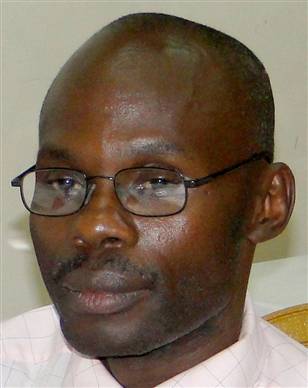
Although the murder of Ugandan gay rights advocate David Kato and the shooting of Gabrielle Giffords in Tucson, AZ, occurred 9,000 miles apart, there are many who believe that American hate speech is to blame for both crimes. In Uganda, Kato ‘s death is being called tthe direct result of the hateful words of American evangelicals who have publicly fought against homosexuality and homosexual rights.

The American conservatives accused of making inflammatory remarks in the months leading up to the Tucson massacre seem to have successfully rebuffed the allegation that they bear any responsibility for that crime. They’ve been helped by the mass media, which has focused heavily on the mental illness of shooter Jared Loughner.

But the Americans accused of fueling the homophobia that many are blaming for Kato’s brutal murder—he was bludgeoned to death with a hammer— will have a much harder time convincing the world that they have nothing to do with his death.

Over the last few years, homophobia has soared hroughout Africa but especially in Uganda, where a controversial 2009 Anti-Homosexuality Bill proposed the death penalty for some homosexuals. The evidence suggests that American evangelicals were involved in the drafting of the bill. In March 2009, an American evangelist named Scott Lively led an anti-gay conference in Kampala. A few days later, David Bahati, a lawmaker and a close friend of Lively, introduced the bill in Parliament.

Rev. Kapya Kaoma, a Zambian priest who went undercover to the “viciously homophobic” conference to conduct research on the rise of homophobia in Africa, quoted one Ugandan attendee: “Dr. Scott told us about Brazil where, 10 years ago, homosexuality was unheard of. Today, it is the capital. There are people that have been against homosexuality that are having to leave because of the pressure and the threats that they are putting on them. That is how serious it is.”

To solidify their lies, evangelicals took advantage of Ugandans’ devotion to Christianity. They knew that Africa’s nearly 500 million Christians practice their religion with more zeal than the foreigners who introduced it to them. Such people are more likely to act on anything that supposedly comes from the Bible. This is evident in the words of another man whom Rev. Kaoma quoted after Lively’s speech: “The man of God told us about…a movement behind the promotion of homosexuality. … I got to know that there is a force behind homosexuality, which we need to tackle with force. He also told us that these people who are behind this…evil, they have all resources that they need…to spread this evil. We need to stand firm to fight homosexuality.”

It is true that for decades there have been laws in the Uganda forbidding homosexuality. But like many laws in African countries, these were never enforced. And as the existence of those laws obviously suggests, Ugandans have known all along that some of their fellow citizens are gay. It wasn’t until American evangelicals began flocking to the East African country that Ugandans began to see homosexuality as something new and evil.

Human rights activists and governments from around the world pressured Uganda to shelf the anti-homosexuality bill, albeit temporarily. But the damage was already done. Politicians, journalists and other Ugandans became increasingly intolerant of people they had lived with peacefully for decades. Outing gays became the fashionable thing to do. A little-known tabloid called Rolling Stone gained international notoriety for publishing the front page headline “100 PICTURES OF UGANDA’S TOP HOMOS LEAK.” Kato’s photo was among them.

“Hang them,” the paper urged.

Lively and other evangelicals vehemently deny that they have a hand in igniting homophobia in Uganda. They point to some media reports quoting Ugandan police saying that Kato’s death might have been a robbery gone awry. But it isn’t hard to find stories in the same media about the corruption and incompetence of the same police.

The irony is that as Ugandans were getting ready to “stand firm to fight homosexuality,” Lively was moving from California to Massachusetts— a state where gay marriage is legal—to open a coffee shop. If it turns out that Kato was murdered because of his sexuality, nothing will wash his blood off Lively’s hands— not even fair-trade coffee from Uganda.

U.S. Government Welcomes Haitian Orphans While Resuming Removal of Haitians With Criminal Records

USCIS Teleconference to Discuss the Help Haiti Act of 2010


The USCIS Field Operations Directorate and Office of Public Engagement invite all interested parties to participate in a teleconference on Wednesday, February 9, 2011 at 2:00pm (EST) regarding the Help Haitian Adoptees Immediately to Integrate Act of 2010 (Help HAITI Act of 2010). The purpose is to provide families of paroled Haitian orphans with information about filing for lawful permanent resident status (LPR) in order to get a green card. President Obama signed this new Act into law on December 9, 2010.


Prior to the Session


USCIS asks that all participants review the information on the USCIS website, about filing for a green card under the Help HAITI Act, prior to the date of the call. You can find this information by doing the following:


1) Log on to www.uscis.gov
2) Select the “Help Haiti Act of 2010” link under the “Green Card (Permanent Residence)” heading or select the link on the main page banner.


To Join the Call


To participate in the call, please email the Office of Public Engagement so that there are a sufficient number of phone lines. Emails can be sent to [email protected]. Please reference “Haiti” in the subject line of your email.


On the day of the teleconference, please dial 1-888-677-1830 and provide the following passcode: HAITI. USCIS recommends calling in 10-15 minutes prior to the start of the teleconference.


United States Resumes Removal of Haitians as of January 20


On January 20, the U.S. government resumed removal of Haitians from the United States for the first time since the devastating earthquake that struck the poor Caribbean nation on January 12, last year.


Barbara Gonzalez, a spokeswoman for Immigration and Customs Enforcement, confirmed that 27 Haitians with criminal records in the United States had been returned to Haiti.


They were the first of about 700 Haitians classified as “criminal aliens” who have been targeted for removal to the Western Hemisphere’s poorest country this year,according to Gonzalez. She added, “These are the first removals since they were suspended last year,” confirming the end of a moratorium on such deportations declared immediately after the earthquake.


“All of those removed were men, who had been previously convicted of a crime in the U.S.,” she said.


She noted that the removals were consistent with a policy of removing Haitians in the United States who pose “a threat to public safety.”


Gonzalez said those deported included Lyglenson Lemorin, a 35-year-old legal U.S. resident, who was acquitted of all charges in Miami’s Liberty City Seven terrorism-conspiracy case in December 2007.


Haiti is still recovering from the crippling earthquake, grappling with a political dispute over the presidential election results from November, and struggling with a cholera epidemic that has killed nearly 4,000 people.


Immigration officials have stated that they will only remove Haitians who were convicted of crimes and finished serving their sentences. Other Haitians, including non-criminals and those granted a special immigration classification known as Temporary Protected Status, are unlikely to face removal at this time.

Liya Kebede In the Woods

0

After starring in 2009’s Desert Flower (which will be released in New York and L.A. on March 18), model Liya Kebede continues her crossover into film.

Her latest oeuvre is an arty online video directed by Jennifer Elster, which features Debra Winger, Terrence Howard, Rufus Wainwright, Yoko Ono, and other actors and artists trudging through empty woodlands and wondering aloud things like, “What do we want? And what are we willing to sacrifice to get it?” Titled In the Woods, the film is being released in short segments on Elster’s website, ITWPathway.com.

Full Story @ New York Mag.

Southern Sudanese in US vote for independence

0
Southern Sudanese in US vote for independence

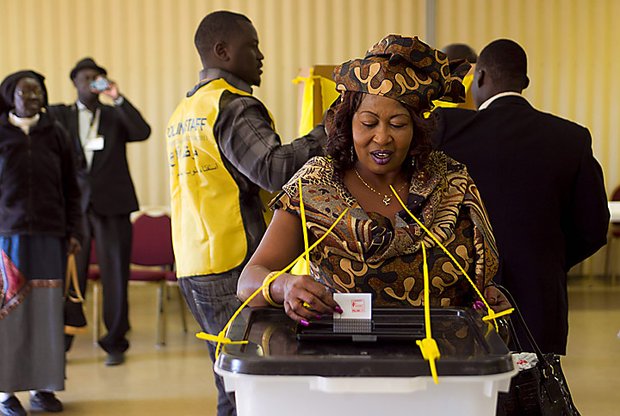
More than 8,000 Sudanese refugees living in the United States voted overwhelming in favor to split their homeland, Southern Sudan, from the north in a referendum that could create the world’s newest country.

The Southern Sudan Referendum Commission on Tuesday announced the preliminary results for votes taken in eight U.S. cities.

Benaiah Duku, a U.S. representative for the group overseeing the voting, said 8,412 people voted in favor of secession and 75 voted to keep the country united.

The referendum is part of a peace deal that ended the 1983-2005 civil war between Sudan’s north and south that left about 2 million dead. Many of those who voted in the United States were among the 3,800 war orphans known as the Lost Boys of Sudan.

Refugees lined up at polling places in Boston, Washington, D.C., Chicago, Nashville, Tenn., Omaha, Neb., Dallas, Phoenix and Seattle. Of the 8,791 people who registered, 8,504 showed up for the voting that started Jan. 9 and ran until Sunday. Duku said seven votes were invalid and another 10 were unmarked.

Duku called the voting orderly, but emotional.

Voting was also held in Kenya, Uganda, Ethiopia, Egypt, United Kingdom and Australia, as well as in Sudan. Duku said the votes from the United States will be consolidated into the final vote to be released later.

“I would like to sincerely thank the governments and the people of these countries for their generous assistance in this undertaking,” Duku said.

Southern Sudan is one of the world’s poorest regions, but is oil rich. The people there have resented their region’s underdevelopment and have accused the northern Sudan government of taking their oil money.

Tri-Valley University shut down for visa fraud

0
Tri-Valley University shut down for visa fraud

The Tri-Valley University’s head office on Boulder Court wore a deserted look after it was raided and shut down Jan. 19 by U.S. Immigration and Customs Enforcement agents on charges of massive immigration fraud.

Tri-Valley University is said to have had 1555 students and as many as 95 percent of these students are Indian nationals, mostly from Andhra Pradesh. These students, theoretically enrolled in various degree courses at the university, are now left to face a bleak future with a possible loss of their student immigrant status.

Tri-Valley’s Pleasanton campus is locked up with black plastic sheets and blinds covering the glass-panel windows from the inside, while the main entrance has a rotten banana peel hanging from the door handle. A UPS delivery message dated Jan. 24 for founder Susan Su is pasted on the door.

While neighboring businesses in the community maintained they only knew of the university’s alleged misdemeanor from news reports, a parent of a toddler, who attends an art class on the same street, remarked to India-West, “I have rarely ever seen anyone here.”

According to the complaint filed by the U.S. District Attorney’s Office noted, “Since its inception, Tri-Valley University has been a sham university, which Su, and others, have used to facilitate foreign nationals in illegally acquiring student immigration status that authorizes them to remain in the United States.”

The complaint further alleges that Tri-Valley University has made millions of dollars in tuition fees for issuing visa-related documents, which enable foreign nationals to obtain illegal student immigration status under a fraudulent scheme.

India-West was unable to contact Su or any other university authority before press deadline. ICE has also refused to comment on what course of action it will take against the university and students.

During the course of the investigation, ICE found that while students were admitted to various residential and online courses of the university and on paper lived in California, in reality they illegally worked in various parts of the country as far away as Maryland, Virginia, Pennsylvania, and Texas, according to a Times of India report.

ICE found that the university gave its own residential address for its students to allegedly conceal that they did not live in California.

For a student to maintain an active immigration status, they must show proof that they are making reasonable progress towards completing coursework and physically attend classes.

Federal authorities are reportedly trying to contact individuals who paid money to obtain student visas and student work permits, resulting in a panicked reaction among the Indian student community.

Many of these students, fearing a probe, are fleeing the country as soon as possible.

Meanwhile, many of the new students from Andhra Pradesh, who were planning to join the university for the new semester Jan. 10 after the winter break, have cancelled their U.S. travel plans. ?The university has been offering on-site and online courses in law, medicine, art, business and engineering to students since 2008, and boasted a faculty list of more than 50 educated professionals on its Web site.

ICE agents have executed search warrants at three other properties that have allegedly been bought with tuition money, including the university’s Pleasanton campus.

Consultants bullish on Sub-Saharan African growth and reform

0
Consultants bullish on Sub-Saharan African growth and reform

Sub-Saharan Africa is weathering the global downturn better than most other parts of the world and is projected to grow by 3,8% and 4,5% this year and next year respectively, faster than Latin America, Europe and Central Asia.

This was according to influential global management consultancy McKinsey ‘s latest research report, McKinsey on Africa, which punts the region as a growing recipient of foreign direct investment.

Better political and macroeconomic stability, a strengthened political commitment to private sector growth, and increased investment in infrastructure and education had made the growth possible. However, last month the World Bank highlighted that the biggest constraints on companies operating in SA, the continent’s largest economy, were crime and corruption.

In contrast, the McKinsey report indicated that fiscal soundness and monetary discipline were increasing, while sovereign credit ratings in parts of the continent enjoyed a positive outlook, and debt as a share of exports had declined dramatically to levels comparable with other regions.

“Most encouraging of all is that the region is continuing to reform through difficult times.

“There is a broadly shared conviction among sub-Saharan leaders that sustained growth will only come from the private sector and increased integration with the global economy,” the McKinsey report said.

The region had almost tripled its export levels and diversified its trade and investment partners since 1990.

Chinese imports alone from sub-Saharan Africa increased to more than 13bn from 64m, while the combined share of the region’s exports fell to 49% from 73%.

Direct foreign investment in sub-Saharan Africa grew for eight successive years. In one decade, the region’s mineral fuel exports rose to 96bn from 11bn.

“Today, sub-Saharan Africa is not only a major supplier of natural resources, but also the region with the greatest potential for new discoveries.”

The region was positioned for developing solar and hydroelectric energy, as well as the production of biofuels, the report indicated.

It had the capacity to feed its growing population as well as meet the burgeoning demand for food and other agricultural products in other markets.

More than 65% of people in the region lived within reach of a wireless network, up from less than 1% a decade ago.

“While great progress has been made in improving access to the information and communications infrastructure in many countries, much less effort has been made to exploit its potential to transform others sectors,” the report said.

The United Nations predicted that the proportion of sub-Saharan people living in urban areas in sub-Saharan Africa would double to 67% by 2050 from 35% in 2005, with significant implications for productivity, growth and demand.

As labour costs increased in China, the competitive advantage it enjoyed in manufacturing was likely to shift to sub-Saharan Africa.

A retrospective fashion exhibit honoring style icon Eunice Johnson

0
A retrospective fashion exhibit honoring style icon Eunice Johnson

Macy’s Department Stores and Johnson Publishing Company are partnering to present a beauty, fashion and lifestyle tribute to the life of legendary style maven, Eunice Johnson. The Ebony, Fashion Fair Cosmetics & Macy’s Celebrate Eunice Johnson retrospective, will debut at Macy’s Herald Square in New York City on January 27th thru February 1st, and will then tour 10 Macy’s locations across the country throughout the month of February.

In partnership with EBONY and Fashion Fair Cosmetics, Macy’s will showcase some of the haute couture designs from Mrs. Johnson’s private collection that were featured in the famed Ebony Fashion Fair shows. The month-long exhibit will feature designs by some of the World’s most renowned and critically-acclaimed designers, including Lanvin, Yves Saint Laurent, Vivienne Westwood, Carolina Herrera, Stephen Burrows and B. Michael to name a few.

Each of the 10 locations will feature approximately 10 to 30 signature looks, complete with information about the designer, the season in which the design first appeared and information about the model who wore the look.

“It is a honor for Macy’s to stage a celebration of Eunice Johnson’s contributions to fashion, beauty and American history ,” say’s Martine Reardon, executive vice president Marketing, Macy’s Inc. Reardon continues, “This is a wonderful opportunity for us to partner with one of America’s most iconic and revered lifestyle authorities. Through the Ebony Fashion Fair shows, Mrs. Johnson filled a void in fashion by producing runway presentations that brought a new sense of style, drama and diversity to the industry, and we’re excited to present a glimpse of these historical shows to our customers.”

Johnson Publishing Co., chairman Linda Johnson Rice said, “It is a sign of my mother’s determination, confidence, and creativity that more than 50 years after launching the renowned Ebony Fashion Fair show, her timeless sense of style endures as a guidepost for today’s fashion loving women. We are honored that Macy’s, a 30 year retail partner of Fashion Fair Cosmetics, selected Eunice Johnson as the anchor for these exciting exhibits.”

In addition to New York City, the retrospective will be on exhibit at the following locations:

• Macy’s State Street, Chicago, IL; February 2nd to 7th
• Macy’s Galleria at Hidalgo, Houston, TX; February 3rd to 8th
• Macy’s Center City, Philadelphia, PA; February 9th to 14
• Macy’s Aventura, Aventura, FL; February 10th to 14
• Macy’s Lakeside, Metarie, LA; February 17th to 21st
• Macy’s Metro Center, Washington, DC; February 17th to 21st
• Macy’s Beverly Center, Los Angeles, CA; February 22nd to 28th
• Macy’s Lenox Square, Atlanta, GA; February 24th to 28
• Macy’s Union Square, San Francisco, CA; February 24th to 28th

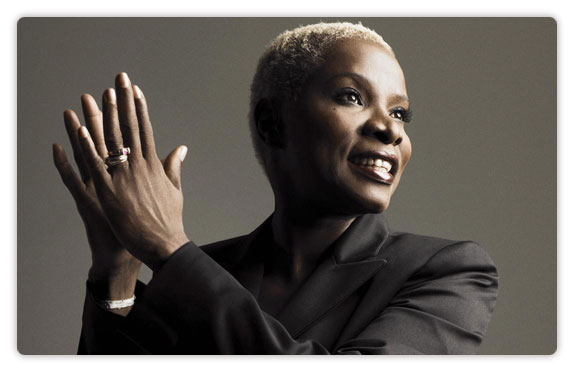
Angelique Kidjo performing at the Ordway on January 21

0
Angelique Kidjo performing at the Ordway on January 21

This Friday, Jan. 21, St. Paul will be privileged to receive, from her birthplace in Benin, a very special international visitor. At 7:30 p.m., on the main stage of the Ordway Music Theater, 345 Washington Street, there will be an appearance by Angélique Kidjo with her quintet.

As a highly energetic singer/songwriter, Ms. Kidjo has worked with international favorites such as Phillip Glass, Youssou N’Dour, Carlos Santana, Alicia Keys, Branford Marsalis and everyone in between. As an equally energetic advocate of human rights, Ms. Kidjo has been a UNICEF Goodwill Ambassador since 2002 and has worked with numerous advocacy groups and personalities. It is, once again, easier to name the countries she has NOT visited as an advocate. BBC Africa has named her one of the 50 most iconic people on the continent.

Angélique Kidjo’s visit is not just a concert, but an international occasion reflecting her command of many cultures and languages, most of all the mother tongue of real international diplomacy–music. Ms. Kidjo’s performances are as charismatically energetic as her life. Expect to be caught up as a full participant and not simply a passive observer.

Performance and Ticket Information

Angélique Kidjo
Friday, January 21, 2011 at 7:30 p.m.

Ordway Center for the Performing Arts
345 Washington Street
Saint Paul, MN 55102
Ordway’s Music Theater

Tickets start at $21.

Box Office: 651-224-4222
Groups: 651-282-3111
ordway.org

Walmart buys its way into Africa

0
Walmart buys its way into Africa

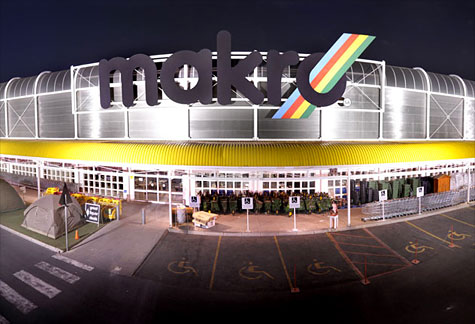
Walmart, the U.S. retail juggernaut, will set up shop in South Africa, according to media reports.

Shareholders of South African retailer, Massmart Holdings Ltd., on Monday voted 98% in favor of selling a 51% stake to Walmart at the equivalent of $21.39 per share or 148 Rand.

The total purchase price will come to US$2 billion.

The South African Commercial, Catering and Allied Workers Union which represents the workers at Massmart immediately voiced disapproval of the vote accusing Walmart of being antiunion and promised to challenge the takeover in court and politically. The Union promised to educate its members of the implications of the takeover.

Massmart CEO, Grant Pattison, said he expects approval from South African regulators, the Competition Commission and the Competition Tribunal.

Speaking after the vote, Pattison said “This is an important milestone and we now await the decision from the competition authorities.”

Doug McMillon, Walmart International president and CEO, said South Africa is an “important region with attractive growth characteristics. This combination fits perfectly with our strategy to enter high growth markets in which we can apply our global expertise and generate strong returns.”

Most of Massmart’s 288 stores are in South Africa but it operates in 13 other African countries.

Despite assurances from Massmart and Walmart that they will continue to honor existing agreements with the unions, the latter remain unconvinced.

“Despite the advent of democracy in 1994, South Africa remains one of the most inequitable societies in the world, said Tyotyo James, deputy-president of the Congress of South African Trade Unions.”The acquisition of 51% of Massmart by Walmart will cut out even more local ownership of one of the major retail players in the country.”

Refashioning the African Politic

0
Refashioning the African Politic

For the many self-employed African tailors who dress men and women who cannot afford to purchase imported clothes at retail stores, to the crafty artisans who capture the imaginations of tourists with uniquely crafted jewelry, there is no question that the success of the African fashion industry has a direct correlation to their well-being and livelihood.

And for those enterpreneurs looking to capitalize on the global (mis)appropriation of ‘African fashion,” all eyes are on the continent; indeed, anybody tuned into fashion knows that the “African aesthetic” is not only tipping into the mainstream, it is in vogue.

Full Story @ Mimi.