Home Blog Page 176

Muslim women gain higher profile in U.S.

0
Muslim women gain higher profile in U.S.

Around Sept. 11, 2001, not long after she founded the Islamic Speakers Bureau of Atlanta, Soumaya Khalifa heard from a group whose name sounded like “Bakers Club.” It wanted a presentation.

The address was unfamiliar, but she went anyway. The group turned out to be the Bickerers Club, whose members love to argue. Islam was their topic du jour and their venue was a tavern. Ms. Khalifa laughed, and made the best of it.

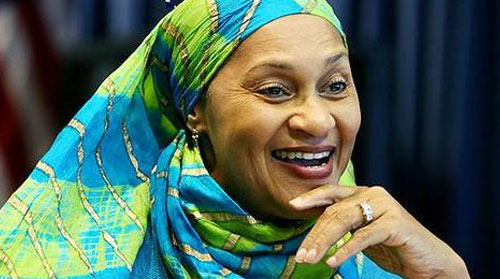
Ms. Khalifa, who was born in Egypt and raised in Texas, wears a head scarf but also juggles, comfortably, the demands of American suburbia: crowded schedule, minivan and all.

She is one of a type now found in most sizable U.S. cities: vocal Muslim women wary of the predominantly male leadership of their community and increasingly weary of suspicions of non-Muslims about Islam.

These women have achieved a level of success and visibility unmatched elsewhere. They say they are molded by the freedoms of the United States — indeed, many unabashedly sing its praises — and by the intellectual ferment stirred when American-born and immigrant Muslims mix.

“What we’re seeing now in America is what has been sort of a quiet or informal empowerment of women,” said Shireen Zaman, executive director of the Institute for Social Policy and Understanding, a nonprofit research institute founded after the 2001 attacks to provide research on American Muslims. “In many of our home countries, socially or politically it would’ve been harder for Muslim women to take a leadership role. It’s actually quite empowering to be Muslim in America.”

As Najah Bazzy, a American-born nurse and founder of several charities in Michigan, put it: “Yeah I’m Arab, yeah I’m very American, and yeah I’m very Islamic, but you put those things in the blender and I’m no longer just a thing. I’m a new thing.”

It is not always easy. Several of the Muslim women interviewed for this article said they had been the object of abusive letters, e-mails or blog posts.

Yet in their quest to break stereotypes, America’s Muslim women have advantages. They are better educated than counterparts in Western Europe, and also than the average American, according to a Gallup survey in March 2009. In contrast to their sisters in countries like Egypt and Saudi Arabia, they are just as likely as their menfolk to attend religious services, which equates to greater influence. And Gallup found that Muslim American women, often entrepreneurial, come closer than women of any other faith to earning what their menfolk do.

“Muslims coming to North America are often seeking an egalitarian version of Islam,” said Ebrahim Moosa, an associate professor of Islamic studies at Duke University. “That forces women onto the agenda and makes them much more visible than, say, in Western Europe.”

Besides her speakers’ bureau, which advertises itself as “a bridge between Islam and Americans of other faiths,” Ms. Khalifa heads a consultancy working with students, executives, soldiers and even the F.B.I. to overcome stereotypes. Some people she addresses have never met a Muslim. Some look askance at head scarves.

Ms. Khalifa, who has degrees in chemistry and human resources, began wearing a head scarf in her mid-30s, about 15 years ago. At first, she said, people looked at her “like I was different, Muslim, un-American, stupid.”

But she is quietly persistent. When a small-town newspaper refused to run Ms. Khalifa’s ad listing the hours of a nearby mosque, she organized a successful boycott by local churchmen.

Perhaps the most noticed figure among American Muslim women is Ingrid Mattson. In a bright-red jumper and multicolored head scarf, she stood out among the gray-haired clerics in black who gathered in Washington in September to try and defuse the anger over the planned mosque near the World Trade Center site in New York.

Ms. Mattson, who is 47 and teaches at the Hartford Seminary in Connecticut, became the first woman to head the Islamic Society of North America, one of the largest Muslim associations on the continent.

She was first elected vice president on Sept. 4, 2001, then president in 2006, a position she held until September; those years were so full of sound and fury over all things Muslim that gender took a back seat.

“But what happened on Sept. 11 and after has led American Muslims to be more involved in civic society,” Ms. Mattson said, “and Muslim women were finding that a very rich area for activity.”

“The only area where there’s a limitation is religious leadership — the imam,” she added, predicting that “we will have some communities in the future that have female imams.”

Historically, Muslim women have wielded power from behind the scenes, with notable exceptions like Benazir Bhutto, the late former prime minister of Pakistan. A 2009 survey of the world’s most influential Muslims by Georgetown University and the Royal Islamic Strategic Studies Center listed just 2 women in the top 50: a Syrian religious leader and Queen Rania, wife of the Jordanian king. Ms. Mattson received an honorable mention.

Muslim women in the United States reflect the country’s diversity: white converts like Ms. Mattson, women of Middle Eastern background like Ms. Khalifa, or Tayyibah Taylor, a convert of Caribbean descent in Atlanta who founded a glossy magazine, Azizah, to celebrate Muslim women of achievement.

The magazine may profile “America’s first all-Muslim, all-female law group” or a hijab-wearing flight attendant, but it also takes up issues like AIDS and spousal abuse. Despite its struggles, Azizah, with a circulation of 45,000, recently celebrated its 10th birthday.

“I didn’t see Islam as taking my freedoms as a woman,” said Ms. Taylor, who is 57 and studied the Koran in Jidda for six years. “It really opened up worlds for me.”

The Muslim population in Atlanta, now estimated at 80,000, has its roots in the 1950s, when a small group of Nation of Islam worshipers, mostly black men, met in a grubby building shared with a chapter of the Ku Klux Klan. Waves of immigrants from South Asia, the Middle East or, most recently, Bosnia and Herzegovina, swelled its ranks. The metropolitan area, with 5.5 million people, now has 40 mosques.

But while Muslim women have gained prominence, much of their activity remains outside the mosque.

“There is a missing link in terms of what the Muslim religion teaches about gender equality,” Ms. Khalifa said. “The leadership in our mosques is not reflective of our population — there are hardly any women.”

Imam Plemon T. el-Amin, a retired leader of the Atlanta Masjid of Al-Islam, talked of “a slow move — really an indecisiveness — about getting women fully involved in day-to-day Islamic activities.” That, he said, is changing.

One issue is gender separation at prayer, imposed to reflect Islamic notions of modesty. In some mosques, women are relegated to separate rooms. But, Imam el-Amin said, “I’m seeing mosques do much better at trying to make those separate accommodations equal.”

Ms. Mattson’s election to lead the Islamic Society of North America, or ISNA, was a signal moment.

Her election “broke a barrier and made it much more acceptable for women to take a leading role as leaders of the entire community, not just women,” said Dalia Mogahed, executive director of the Gallup Center for Muslim Studies and a former adviser on faith issues in the Obama White House.

Imam el-Amin added, “That’s exactly what ISNA and many of the Muslim organizations needed to see.”
Director Jarreth Merz of “An African Election” on the making of the Documentary

0
Director Jarreth Merz of “An African Election” on the making of the Documentary

In a world plagued by stolen elections, secret government agendas, and a renewed interest in the exploitation of African natural resources, what value does democracy offer, particularly in the tumultuous region of West Africa?

For Ghana, a nation that has been Africa’s barometer of political stability, democracy may mean the difference between peace and prosperity—and murderous chaos under military coup.

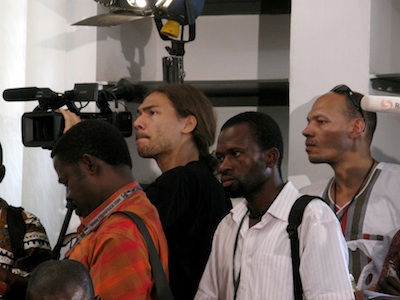
“An African Election” is a remarkable documentary that grants viewers unprecedented access to the anatomy of Ghana’s 2008 presidential elections. Capturing the intrigue of electioneering, the intensity of the vote-counting process, and the mood of the countrymen whose fate lies precariously in the balance, director Jarreth Merz’s coverage unfolds with all the tension of a political thriller, revealing the emotions, passions, and ethical decisions that both threaten—and maintain—the integrity of the democratic process.

“An African Election” illuminates a beacon of hope for Africa and for the value and vitality of democracy today. [Description courtesy of Sundance Institute]

[indieWIRE invited directors with films in the Sundance U.S. Dramatic & Documentary Competitions as well as the World Dramatic & Documentary Competitions and NEXT section to submit responses in their own words about their films. These profiles are being published through the beginning of the 2011 Sundance Film Festival. To prompt the discussion, iW asked the filmmakers about what inspired their films, the challenges they faced and other general questions. They were also free to add additional comments related to their projects.]

“An African Election”

World Cinema Documentary Competiton
Director: Jarreth Merz
Screenwriter: Erika Tasini, Shari Yantra Marcacci, Jarreth Merz
Executive Producer: Franco Agustoni, Brigitte Agustoni
Composer: Patrick Kirst
Cinematographer: Topher Osborn
Editor: Samir Samperisi
Codirector: Kevin Merz
Coproducers: Luisella Realini, Silvana Bezzolla Rigolini, Tiziana Soudani

Responses courtesy of “An African Election” director Jarreth Merz.

Intimacy and voyeurism…

“Love Brewed in an African Pot” by the Ghanaian filmmaker Kwa Ansah was my first cinematic experience that I remember having as a child. It touched me deeply at a young age and stuck with me to this day. I ventured off into the world of theater for the greater part of my life only to return to film. I am inspired by the intimacy that one can create through the lense, the voyeuristic eye that can make the audience travel into different worlds, places they would normally never get to see, and that is especially true for documentaries.

A different Africa…

My brother and I had just finished filming the documentary “Glorious Exit” in Nigeria, the story of a man who goes to bury his father, though he hardly knew him and didn’t grow up in that culture. It was fascinating to experience the day-to-day African life, which I knew so little of, the culture clash, even though I had spent my childhood in Ghana. I wanted more of that slice of African life, so together with my step-dad, we came up with the idea to try to go behind the scenes of the elections in Ghana. We realized it had never been done before. He had been active in the political scene there beyond party lines, which was a good calling card for us. Well I must also add that I was turning forty and looking for the traces of my childhood memories. More importantly though I realized very quickly that I wanted to portray a different Africa in my film from what we are used to seeing. Then I was also probing to see if the idealized childhood memories could hold up with the country’s reality, if after 28 years of absence, I would find a Ghana that was still a role model for Black Africa.

Gaining access and funding…

I visited Ghana eight months prior to the presidential elections to see if I could get access to the political players. Once there I knew I could do it but that I would have to be on the ground early to gain their trust. I started pitching the project and the rest is history…nobody wanted to do the film! I took part of my parents pension fund and started filming. Sounds cruel, but hey they put me in this world!

Capturing an election…

The question was how to be in different places at the same time without killing the budget. We had to cover the story as it unfolded following the different candidates. I couldn’t rely on footage from news channels in Ghana because I was looking for specific images and a cinematic feel, which I had in mind. I was fortunate to work with Topher Osborn, a very talented DP from the States. We created a look for the film that would go beyond capturing unique moments. I wanted the images to look good and be true to the story. My brother, Kevin Merz joined us. He is a gifted filmmaker and cameraman and we had worked together in the past. Without knowing where the story would go I knew that with my team we would be able to capture unforgettable moments.

Shooting in the ‘strong room’…

People were talking about the ‘strong room,’ the one place within the secured perimeters of the electoral commission where all the results where faxed to. No camera team had ever been granted access. One evening I sat in the office of the electoral commissioner smoking a cigarette and drinking a cold beer after a long and hot day on the road. I asked the commissioner if we could film in the strong room. To my surprised he agreed, on the one condition that none of our footage was to be released until after the election was over. We shook hands and that was that. I was amazed that a gentleman’s agreement still stood its ground, and of all places in a third world country. One never stops to learn.

The journey in store for Sundance audiences…

Sundance is a place where people see beyond the horizon, where visionaries meet and challenge each other in a creative way. An African Election challenges the preconceived notion we have about politics in Ghana or Africa without hiding the brutal realities. It shows how important democracy is to the stability and peace in any fragile third world country, actually in any place in the world. America still serves as a role model when it comes to democratic core values, despite the challenges the country has faced in the past, a role Americans must be aware and proud of. It is a great responsibility, which may be a blessing and a curse. The film is shot stunningly and is a treat to the eyes, it takes you on a journey through images you don’t get to see every day. Last but not least the film is exciting to watch since it unfolds in the most unpredictable way and will keep you on the edge of your seat.

Number One film?

“When We Were Kings” is an all time favorite of mine. I was inspired by the editing and the grand cinematography.

Alexander Pushkin, the Oscars and New Orleans…

I am currently developing my first narrative projects with an amazing pool of talent. One story is about the greatest Russian poet Alexander Pushkin, his life, his love and his death. I also just finished a narrative short film that takes place on the night of the Oscars and deals with how success corrupts love and the people involved. Another is the story of a fisherman from New Orleans who has lost his job after the oil spill and is still struggling with the aftermath of Kathrina and a young nurse who has just returned from her tour of duty from the Gulf War as a nurse. They fall in love, against all odds. You see, I think love will be the topic of the coming years and centuries!

Art of African Diaspora at Manhattan’s Museum of Arts and Design

0
Art of African Diaspora at Manhattan's Museum of Arts and Design

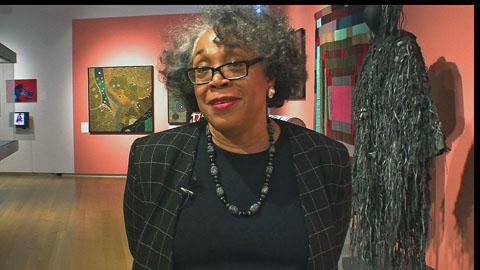
Works by more than 100 African, African-descended, or simply African-influenced artists from around the world are the focus of a new show at New York’s Museum of Arts and Design.

“The Global Africa Project” is the first Africa-centered show at the museum, which specializes in the arts of craftsmanship and design. Among the African nations represented are Nigeria, Kenya, South Africa, Malawi, Senegal, Togo, Cameroon, Uganda, Ghana, Botswana, Mali, Ivory Coast, Madagascar, Mozambique, the Comoros and Algeria. Many of the pieces on display, though, were created outside of Africa.

Full Story @ VOA.

African fashions: From runway to retail

0
African fashions: From runway to retail

Over the past five years we have experienced an explosion of African fashion on the global fashion scene. Where wearing an outfit inspired by Africa’s rich and diverse culture once meant sketching a clothing pattern, finding fabric, and working with a tailor to create the outfit.

We now have a number of of labels based everywhere from Lagos to Johannesburg who are playing couturier, as well as fashion shows such as the well-established Sanlam South Africa Fashion Week to the up-and-coming Mozambique Fashion Week who are providing much needed platforms to showcase African designers.

But until two years ago, the bridge between runway and retail was non-existent for African fashion consumers without access to designers’ brick and mortar stores, leaving many would be consumers unable to support African designers.

Recognizing the gap between runway to retail, savvy designers have begun selling their creations through their own websites.

Full Story @ Mimi.

Johnnie Carson: Southern Sudan vote is historic

0
Johnnie Carson: Southern Sudan vote is historic

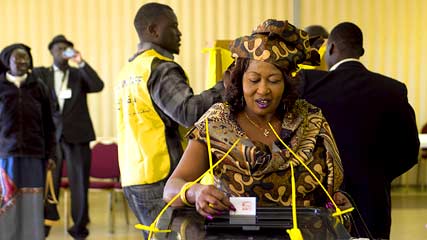
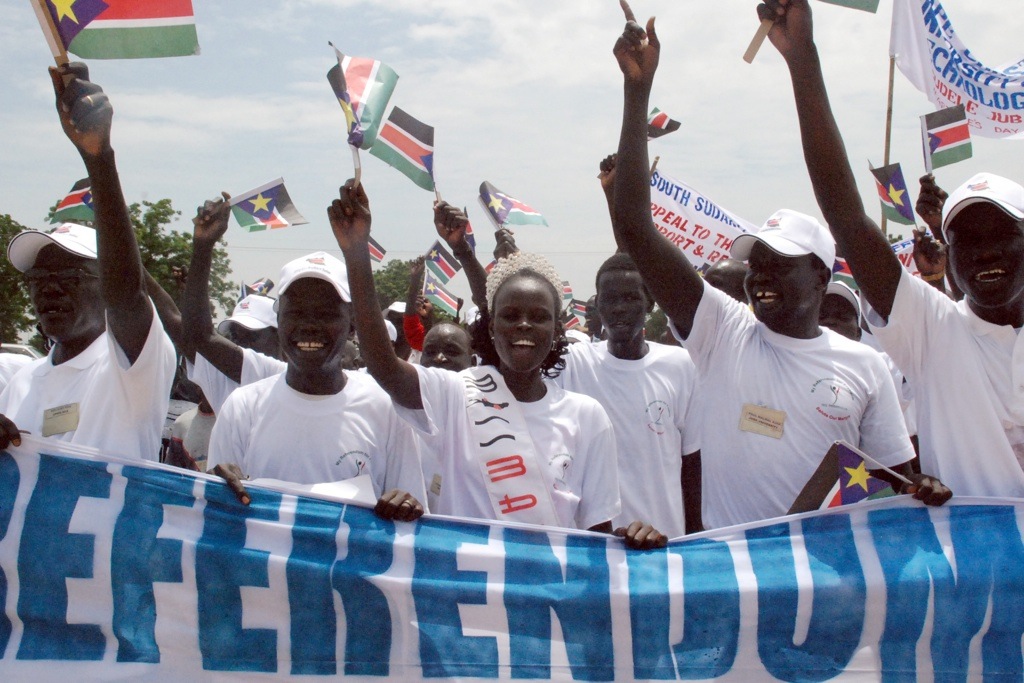
The January 9 referendum in which the people of southern Sudan will vote on whether to make their region an independent nation will be a “historic occasion,” most importantly for the people of Sudan, but for all Africans as well. If the election is transparent, fair and successful, it will reflect the will of the people no matter which path they choose, U.S. Assistant Secretary of State for African Affairs Johnnie Carson told reporters.

Briefing the press at the State Department January 5, Carson said the occasion will be historic because “for the first time in their lives” the people of southern Sudan will “make a decision on whether they will secede from Sudan and become an independent state or become a part of a united Sudan.”

Carson termed the referendum vote “the beginning of the end of a culmination of five-and-a-half-years of a Comprehensive Peace Agreement that was negotiated and signed in Naivasha, Kenya, in January 2005. Although the effort was led by Intergovernmental Authority on Development states under the leadership of Kenya,” Carson told reporters, “the United States, Great Britain and Norway were participants and partners in the effort leading to where we are today.”

“We believe that this event beginning on January 9 will in fact go off successfully, that the organization and the diplomatic efforts that have been put into this will lead to a successful referendum. We think that it will reflect the will of the people and that it will occur on time, peacefully and in a well organized manner,” Carson said.

Carson said both the United States and the international community were “extraordinarily pleased” by the January 4 visit to the southern Sudan city of Juba by Sudanese President Omar al-Bashir, who stated publicly that the North is prepared to accept the outcome of the referendum and will seek to have a peaceful and beneficial relationship with the people of the South regardless of how they vote.

“We hope the North and the [ruling] National Congress Party will live up to those very promising statements that have been made by the leadership of the North, and that we are about to see the end of what has been a really enormously successful diplomatic effort to end what has been 20 years of violence and conflict between the North and the South.”

Carson told reporters the United States government has worked “extraordinarily hard and tirelessly to get us where we are today” and “invested a great deal of diplomacy to ensure that the outcome of this referendum is peaceful and successful. We have engaged both North and South Sudanese leaders. We have engaged the European community and the international community and have worked hard at the Security Council to make this happen.”

Certainly over the past nine months, he said, the United States has “substantially augmented” its presence and diplomatic activities in southern Sudan and quadrupled the staff of American diplomats in Juba and across the South to help the referendum succeed.

Carson said it is the desire of the United States to see the referendum move forward. If the people of southern Sudan vote for independence, he said, “we will also as a country help that new nation to succeed, to get on its feet and to move forward successfully, economically and politically. But it is an historic decision for the people of south Sudan. It is their decision to make.”

Carson was joined at the briefing by Tim Shortley, the senior representative for Sudan at the U.S. State Department, who serves as the deputy to U.S. Special Envoy for Sudan Scott Gration, and by Larry Garber, the deputy assistant administrator for Africa at the U.S. Agency for International Development (USAID).

Shortley told reporters the current environment in Sudan is “very conducive to a positive outcome of the referendum.” He credited the creation of that environment, in part, to President al-Bashir’s January 4 visit to southern Sudan and the discussions he had with Sudan First Vice President Salva Kiir and others on the outcome of the peoples’ vote. Shortley reiterated Carson’s point that it has been an “extraordinary effort” to get to the point where both parties have agreed to hold the referendum and respect the outcome of the vote.

Following the weeklong referendum vote, which concludes January 15, Shortley said Carson will lead a U.S. delegation to the African Union summit where the outcome of the referendum will be discussed.

The U.S. team on the ground during the referendum vote, Shortley said, will include Special Envoy Gration; U.S. Senator John Kerry; Ambassador Dane Smith, the newly appointed senior adviser on Darfur; and Ambassador Princeton Lyman, who is the lead negotiator for North-South issues, “so we are very well positioned to monitor the vote and to see a successful outcome.”

Larry Garber of USAID told reporters that the smooth logistical preparations for the referendum stand as a significant achievement for both the Sudanese and for U.S. development and diplomatic efforts. Garber stressed that the referendum process is a Sudanese process and is managed by the Southern Sudan Referendum Commission (SSRC) based in Khartoum, which has received substantial assistance from the United States and the international donor community.

Garber said the registration process began in mid-November 2010, with more than 3.7 million Sudanese registering in south Sudan, about 150,000 eligible voters registered in north Sudan and about 60,000 eligible Sudanese registered to vote from overseas. “The country is huge; the logistics are difficult,” he said.

The balloting will begin January 9 and run through January 15, at which time ballots will be counted at the various regional sites. The SSRC has issued a timeline, Garber said, indicating the official results will be reported in mid-February but speculating that unofficial results might be available “quite a bit sooner.”

The vote will be “yes” or “no,” will be a seven-day process, and must clear a threshold that 60 percent of registered voters cast their vote for the referendum to be deemed valid, he said.

The vibrant world of Kachi Designs

0
The vibrant world of Kachi Designs

When I first saw the fashion designs behind Kachi Designs, I had one word in mind: Vibrant. The colors and the African-inspired patterns really drew my in and wow, the world of Kachi is beautiful. Even more beautiful is the fact that Kachi Designs is the brainchild of upcoming self-taught designer Chigozie “ChiChi” Anaele.

A True Visionary, artist, and entrepreneur. ChiChi produced her first ensemble using her own bedding! That is enough to make me adore the artist behind this brand. Another word: Creative genius. Meet Kachi Designs and the charmer behind this intriguing label:

Full Story @ Style Bistro.

Volunteerism and community development critical to business growth in Africa

0

For Upendo Minja and Patricia Kafoe, attending Chamber of Commerce board meetings in the United States went beyond just recording minutes — the experience was invaluable, as it empowered them with new ideas on business and community development that they hope to implement in their African organizations.

Minja, who is from Tanzania, and Kafoe, from Sierra Leone, participated in a five-week program designed to provide young “rising star” employees of chambers of commerce and business associations overseas with the opportunity to gain valuable additional leadership skills and professional development in the United States.

Both were in agreement that the program — Leaders, Innovators and Knowledge Sharing, sponsored by the Center for International Private Enterprise (CIPE), a nonprofit organization affiliated with the U.S. Chamber of Commerce — allowed them to see how volunteerism and community development work as nourishment to sustain business growth.

“What I enjoyed the most was the spirit of volunteerism and how people are very committed to community development,” said Minja about her stay at the Northern Kentucky Chamber of Commerce.

Minja, a chamber development officer at the Tanzania Chamber of Commerce, Industry and Agriculture, experienced firsthand how community development “brings people together.”

“They are ready to do anything to make sure that their community and economy is growing,” added Minja.

Kafoe, a business information officer at the Sierra Leone Chamber of Commerce, said that she will try to develop “an American business culture” at home.

“I saw so much communication between the business communities,” said Kafoe. “Everyone tries to develop their community and their organizations.”

Kafoe, who is responsible for maintaining and increasing her chamber’s membership, is planning to incorporate marketing ideas she learned during her stay at the Troy Chamber of Commerce in Michigan.

“We have limited services that can attract fundraising in our chamber, and in the ‘Just in a Minute’ program in Troy, I saw how businesses got together and in one minute they would explain what their business is all about,” said Kafoe.

“It was fundraising because people paid to go and everyone wanted to go to promote their business. It’s fascinating and instrumental. It takes a short time and it makes you communicate your position. It’s an idea that I want to bring back. And when you keep moving and host meetings in different organizations, it keeps people interested,” Kafoe added.

And keeping an audience engaged was exactly what she was able to do while at Troy.

“She brought people to tears with her charisma and her power of words,” said Michele Hodges, president of the Troy Chamber of Commerce.

“She left an indelible mark at Troy. The assumption was that she was here to learn but we learned more from her. Patricia let us know about what Africa could mean to us in terms of business transactions.”

CIPE partnered with chambers of commerce in five U.S. cities, which hosted participants from Bangladesh, Russia, Sierra Leone, Sri Lanka, Tanzania and Brazil.

Daniele Longo, vice president for business development and international trade at the Northern Kentucky Chamber of Commerce, said that participating in the program was a great opportunity to share information about how his organization operates.

Longo said that Minja worked on one-on-one business consulting and entrepreneurship building. He also added that she was able to see how his organization manages volunteers as she worked with some of the 1,500 members that give their time for the chamber’s community activities.

“She is fantastic, very open, very friendly, very easy to work with, and left lots of friends and we will miss her a lot,” said Longo.

But perhaps the chance to work with Minja might just be a click away.

“We are working on a cooperation program where from the United States’ side [through Skype and new video technologies] we can provide counseling and expertise, and from the Tanzanian side there could be a lot of entrepreneurs interested,” said Longo.

And interest about Tanzania has grown, as Minja didn’t miss an opportunity to talk about her country when giving presentations in international programs, schools and board meetings.

“Most of the businesspeople in Kentucky did not know much about Africa, and especially the country I am coming from, and wherever I presented something about my country and the opportunities we have for business they were very interested and some of them want to come to Tanzania,” said Minja.

Minja, Kafoe and the other program participants were in Washington in December, where they met with officials of nonprofit organizations and the U.S. government.

And they were all in agreement: the lesson learned was that community development is key to business development.

Birthright citizenship under assault

0
Birthright citizenship under assault

A group of state legislators in at least 15 states wants to deny birthright citizenship to the children of undocumented immigrants.

Their strategy is to pass state legislation that they know will be challenged in federal court, in the hopes that eventually the U.S. Supreme Court – which is considered to be the most conservative court in decades – will be the final arbiter on the issue.

But legal scholars believe the chances that the issue will be taken up by the Supreme Court are slim.

James C. Ho, former Solicitor General of Texas and expert constitutional attorney, predicts that the case will never make it to the high court. “I think the lower courts will strike it down and the U.S. Supreme Court will refuse to hear the case because it has already decided it,” said Ho, who is now a partner with the law firm of Gibson, Dunn & Crutcher in Dallas.

The Constitutional Question

At the heart of the debate on birthright citizenship is a dispute over the interpretation of the 14th Amendment to the Constitution, which states, “All persons born or naturalized in the United States, and subject to the jurisdiction thereof, are citizens of the United States and of the State wherein they reside.” The amendment, ratified in 1868, was intended to ensure that children of freed slaves were granted U.S. citizenship.

The question is whether the amendment’s authors intended to include the children of undocumented immigrants. The debate focuses on the interpretation of the phrase “subject to the jurisdiction thereof.”

Opponents of birthright citizenship argue that undocumented immigrants are not subject to U.S. jurisdiction.

Ho disagrees, saying the U.S. Supreme Court settled that matter in 1898. A Supreme Court decision that year, in the case United States v. Wong Kim Ark, confirmed that a child born in the United States to alien parents, is entitled to birthright citizenship under the 14th Amendment.

A more recent Supreme Court decision in 1982, Plyler v. Doe, clearly states that undocumented immigrants are subject to the jurisdiction of the United States, according to Ho’s analysis.

Other legal scholars, like Peter H. Schuck, a professor of law at Yale, say there is no Supreme Court precedent that deals explicitly with the children of undocumented immigrants.

The 1898 decision, Schuck says, “didn’t have in mind undocumented alien children because there were no categorical restrictions on immigration at that time.”

Schuck believes that the phrase “subject to the jurisdiction thereof” in the 14th Amendment excludes undocumented immigrants because they are in U.S. territory without the consent of the U.S. government.

Schuck, however, doesn’t believe the case will reach the U.S. Supreme Court.

The states’ approach to changing birthright citizenship is considered costly and impractical by constitutional and immigration attorneys.

“I don’t think any state law that either granted or denied federal, national citizenship would be constitutional. No state law could do that,” according to Schuck’s analysis.

Schuck doesn’t support completely repealing birthright citizenship, but believes the country should find a compromise so the future children of undocumented immigrants can gain citizenship after proving ties to the country.

Failing a decision by the Supreme Court, there are two schools of thought on how birthright citizenship could be changed: Schuck believes believe Congress could simply pass a bill to change the law; Ho thinks only an amendment to the Constitution can change the law.

“In my opinion Congress can not pass this kind of law,” said Ho. “If Congress passed it, it would be unconstitutional.”

If a state passed a law like this, he added, it would be unconstitutional for an additional reason: “It would be unconstitutional because it violates the 14th Amendment, and for a second reason: states have no business determining who is a U.S. citizen and who is not. We can’t have 15 different laws determining who is a U.S. citizen and who is not.”

The Fight Continues

Congress could hold hearings on the birthright citizenship issue as early as next year. Rep. Steve King, R-Iowa, the incoming chairman of the subcommittee that oversees immigration, is expected to introduce a bill that would deny birthright citizenship to the children of undocumented immigrants.

Another movement at the state level has picked up momentum.

Kansas lawyer Kris Kobach, who helped Republican Sen. Russell Pearce craft the immigration law SB 1070 in Arizona, is now working with Pearce to draft a bill that all the states could propose.

Kobach didn’t return calls for an interview.

But there’s precedent in Arizona for a state bill to change the way the state issues birth certificates to the children born to an undocumented immigrant parent. A 2008 bill sponsored by Sen. Karen Johnson, R-Mesa, and supported by then-representative Pearce, would have included a clause in the child’s birth certificate stating that the child was born to undocumented parents and wasn’t eligible for benefits that require U.S. citizenship. The legislation was intended to go to the voters and didn’t get a hearing.

Opponents of birthright citizenship argue that it has served as a way for undocumented immigrants to have “anchor babies” that allow them to eventually become citizens and take advantage of social and healthcare benefits.

But proponents argue that, constitutional questions aside, repealing birthright citizenship is simply bad policy and would only increase the number of undocumented immigrants in the country.

“Those children can’t petition for their parents to become U.S. citizens until they are 21 years old and it most cases, the parents would be barred from getting a visa to the United States for 10 years,” said Michelle Waslin, senior policy analyst at the American Immigration Council’s Immigration Policy Center in Washington, D.C. “So that’s a 31-year plan. It doesn’t seem like it’s a very good plan to legalize your status here in the U.S. It doesn’t protect them from deportation.”

Waslin argues that such a change in the law will affect all citizens, creating a complicated bureaucracy.

“My birth certificate will no longer be proof of my U.S. citizenship, so how would anybody prove their citizenship?” she asked.

While it may take years for a case on birthright citizenship to reach the Supreme Court, the higher appellate court has undertaken a review of state immigration policies such as Arizona’s employer sanctions law. Some expect the current challenge on Arizona’s SB 1070 to reach the high court.

“Only one state in the country has enacted SB 1070 and that’s Arizona,” said Vik Malhotra, advocacy and policy counsel for the American Civil Liberties Union (ACLU).

“We really think that once the dust settles, the focus is going to be on states trying to get their financial houses in order, and there won’t be a lot of room for these types of laws, that really cost the states money.”

Southern Sudanese head back ahead of referendum

0
Southern Sudanese head back ahead of referendum

With the referendum on independence for Southern Sudan just weeks away, the United Nations refugee agency reported today that thousands of southerners living in the north are heading back by road, rail, barge and plane in both organized and spontaneous returns.

Nearly 55,000 southern Sudanese have returned in the past few weeks to the southern states, mainly to Unity State, according to the UN High Commissioner for Refugees (UNHCR), which added that Upper Nile, Northern Bahr el Ghazal, Jonglei and Warrap states have also received large numbers of returnees.

“In the sprawling camps for displaced people around [the Sudanese capital] Khartoum, thousands of southerners are packing their belongings and waiting to leave,” UNHCR spokesperson Adrian Edwards told reporters in Geneva.

The vote that is due to take place on 9 January is in accordance with the 2005 Comprehensive Peace Agreement (CPA) signed between the Sudanese Government and the southern rebel group, the SPLA, ending two decades of war between the north and the south.

Since the signing of the Agreement, two million displaced people have returned to their communities in southern Sudan and the so-called ‘Three Areas’ of Abyei, Blue Nile, and Southern Kordofan. Another 330,000 refugees returned from exile, the majority of them with the help of UNHCR.

Mr. Edwards noted that the recent arrivals are straining a “fragile” humanitarian environment in Southern Sudan, which is already dealing with more than 215,000 internally displaced people uprooted by ethnic clashes, rebel attacks or other forms of insecurity since January.

Victoria’s Secret relegates Black models to tribal skit

0
Victoria’s Secret relegates Black models to tribal skit

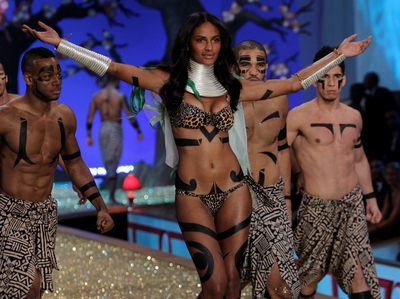
It’s easy to not be racist at work but somehow Victoria’s Secret flunked this task in a fashion show broadcast in November on CBS (and rebroadcast Dec. 8 on The CW). The show — in which half a dozen black models were stuffed into a segment titled “Wild Thing,” in which they wore tribal body paint and African wraps.

Everyone is familiar with fashion’s race problem. For years, the business declined to use non-white models in its ads and runway shows. If it did so, those models were often used to promote animal prints and African-themed garb. The rise of black supermodels like Naomi Campbell and Tyra Banks in the 1980s was supposed to have put an end to the unbearable whiteness of fashion. The days in which black models were only allowed to wear chunky wooden jewelry, turbans and leopard skin should have been relegated to the 1970s.

If only that were the case. The Victoria’s Secret faux pas isn’t isolated. In the last three years:

Full Story @ BNET.

Audio Interview: Shailja Patel on Migritude

0
Audio Interview: Shailja Patel on Migritude

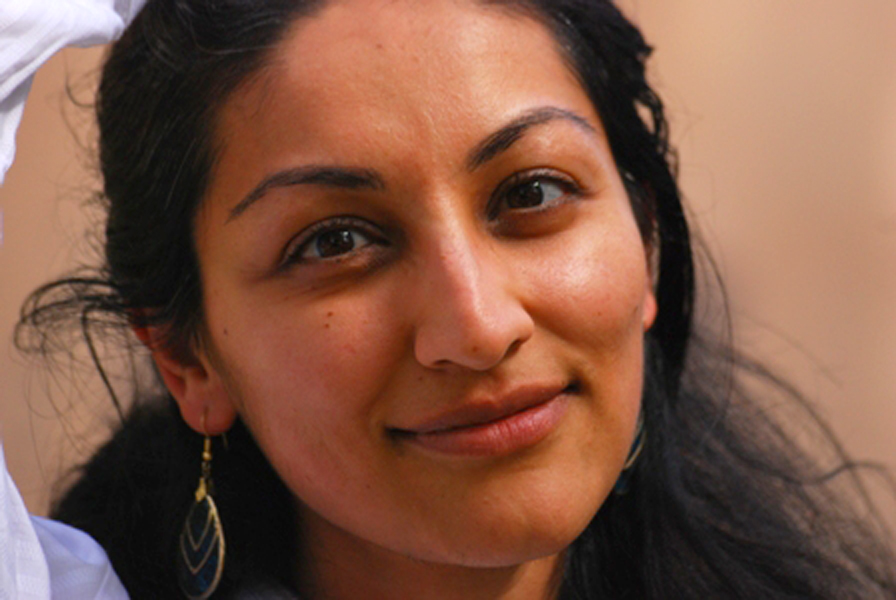
Kenyan poet, playwright and theatre artist, Shailja Patel gives insight into her one-woman show turned book, Migritude – migrants with attitude during an interview with Sandip Roy.