We draw on our memories to function in life. If the memories we store are based on a pessimistic view of life, we won’t function according to God’s plan.
The good news is we have the power to keep or reject the memories we store. God views situations based on opportunity. Seeing things from God’s view produces good memories; seeing things from a negative or pessimistic view produces dark memories. When Jesus saw fish, He saw abundance.
Matthew 6:23 points out that our eyes are like lamps – if our eyes are good, light will flow from the lamp; if our eyes are bad, the lamp will only give off darkness. How we view life determines the quality and nature of the memories we store.
Following God’s plan for our life means we should view situations based on opportunities instead of misfortunes.
Remember:Memories are the bank account of life where we make deposits daily. Although we can’t be separated from our memories, we can choose which ones we let influence our daily lives.
Ruby Takanishi, president and chief executive officer of Foundation
for Child Development, recently co-edited a new book titled,
Immigration, Diversity and Education, with Elena L. Grigorenko. She
spoke with New America Media Education Editor Carolyn Ji Jong Goossen
about the current challenges facing immigrant children in the United
States and the reforms needed to support their future health,
wellbeing, and academic success.
Do you feel like the new administration has adequately addressed immigrant children’s issues thus far?
No. The fact of the matter is that immigrant children are not on
anybody’s agenda, except in a negative way. First of all, there has
already been a decision to exclude many immigrant children and their
families from public health insurance access. There is also very little
discussion in the education initiatives being presented, including the
“Race To The Top” funds, the stimulus funds, and even the No Child Left
Behind policy. The opportunities for doing positive social policy is
not evident.
I would say that in terms of the Immigration and Customs Enforcement
tactics, it does seem to be that the shift from going after employees
to going after employers would be less traumatic to children.That’s not
to say that undocumented workers won’t still lose their jobs, but at
least their parents won’t disappear. I understand that they are trying
to change some of their practices of detaining families in detention
facilities, so that’s certainly encouraging. But overall, I personally
have been very disappointed that the administration had opportunities
to do positive things for children of immigrants, but hasn’t done
anything so far.
Do you think the stimulus money has the potential to make an impact
on access and quality of preschool and elementary school for immigrant
children?
I’m not sure that it will have those effects because the stimulus money
right now, in terms of pre-k, child care, et cetera, is really trying
not to expand, but just sustain or make up for the lack of state
funding.
What are the education reforms you would like to see under this
administration, to help ensure academic success and health of immigrant
children?
I am a very strong supporter of dual language programs. Research would
indicate that it’s very important for young children to have a solid
foundation in their home language as they develop a second language. If
done well, dual language programs are a win-win situation. If immigrant
children are with students whose first language is English, they can
also learn another language at an early age. We may be one of the few
countries in the economically advanced world that is monolingual. And
dual or multi-language capacity is essential in a global economy.
The second thing that’s really important is for immigrant children to
have equal access to high quality pre-K programs. The reasons why not
everyone does include the availability of programs in their
communities, the availability of programs that parents feel are
supportive of their cultural values, and the cost. Because we have a
largely private system, families shoulder costs. So if you don’t have
much income, you cannot spend money on pre-K programs even if you would
like to. Pre-K helps with acquisition of second language, and an early
and good start to education.
Two of the essays in your book conclude that parental participation
is a strong enhancing factor in academic growth for immigrant children.
Why does it make such a difference in early education?
What is most crucial is that parents communicate to their children the
value and importance of engaging and investing in the hard work of
education. Different immigrant groups do this in different ways,
depending on whether they are educated and affluent, or whether they
come poorly educated or not educated at a high level.
There are parents who can do things like buying and reading books,
taking music lessons, going to museums, and going to second language
class. Even so, there are ways they can let their children know that
education is important, and hook them up with individuals and
organizations that could be helpful to them.
Different immigrant groups have different amounts of social capital.
Some immigrant groups are very well organized to do this, others are
not. In the groups that don’t have enough social capital, it’s an
opportunity for other immigrant serving organizations to step in and
fill that gap.
What’s the best way that immigrant parents can effectively advocate for their children in pre-K and elementary school?
In the best of worlds, you want every parent to be an advocate for
their child. Different immigrant groups have different ideas with
respect to that role. Some groups have a cultural experience that says,
“I bring the child to school and the school will educate the child.”
But in American society, especially in low-income areas, that may not
be a good position to have. So how do you assist families that don’t
have a tradition of advocacy for their children?
One of the things I saw in Chicago is that community organizations work
with parents to engage them in the schools in a number of different
ways. This includes training parents to work in the classrooms so they
have a better sense of what is going on in the schools, and then using
those experiences to network with and organize parents to advocate for
change in the schools.
The discussion about immigrant children is often framed as “problem”
they pose for American society; yet, some of the book disputes this
idea. What are the strengths that immigrant children bring to the U.S.?
Some people decry the fact that immigrant students are described in a
way that says they are facing so many dificulties. And others describe
the “immigrant paradox,” where immigrant parents have low education and
low socio-economic status, but their children become valedictions and
are healthier than other children.
What is important when you just look at the basic demographics of the
child immigrant population is that it’s extremely diverse in terms of
countries of origin, and the human, social and economic capital that
immigrant families bring in to the United States.
What the demographic work is showing is that to think of immigrant
children as a monolith is wrong. And it’s important to think of the
rapidity of social change. So on the one hand, we do know that
immigrant children, particularly Latino children, are more likely to be
born healthier, even more healthy than native-born children. On the
other hand, one of the chapters in the book talks about the really
alarming rates of obesity among Latino children, even before they reach
kindergarten, which have lifelong consequences.
On the one hand, Latino immigrant families were celebrated for the fact
that they were more likely to have two-parent households, more than
native, but that is eroding fast. The number of single parent Latina
families is growing. So one can talk about assets, but it has to be
connected with the particular group at a particular point in time.
Another asset is that it’s really hard to find any immigrant family
that doesn’t have extremely high aspirations for the education and
future of their children. It doesn’t matter if they are getting a
Ph.D., or if they have less than a fifth grade education. There is an
enormous faith and belief in education that may be an important
selection factor for the groups that come to the United States instead
of going to another country.
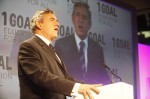
“It’s an outrage that 35 million African children miss out on a basic
primary education — tackling that would be an incredible achievement,”
UK Prime Minister Gordon Brown said Tuesday at the global launch of the
1GOAL campaign, which aims to turn next year’s World Cup soccer
tournament in South Africa into a platform for action on the issue.
Brown joined soccer and entertainment stars, U.S. Secretary of State
Hillary Clinton, and other activists and leaders in calling on the
world’s wealthier governments to provide more funding for education
worldwide, especially to support teachers, textbooks, and school
infrastructure in developing countries. They’re also hoping to use the
World Cup platform to convince millions of parents in developing
nations that they should send their kids to school.
Some 75 million children worldwide are not in school; many cannot
afford the fees charged by cash-strapped governments or must work to
help support their families.
Ahead of the tournament, which starts on Jun. 11, 2010 and will be
played in Africa for the first time ever, the 1GOAL campaign is trying
to push the issue by recruiting tens of millions of supporters on its Web site. And it’s got plenty of star power to help it do just that.
“Today, there are boys and girls around the world dreaming about their
futures,” said Clinton at yesterday’s launch. “Education is their
gateway to opportunity, it lifts people out of poverty and strengthens
families, communities, and countries….Let’s make the World Cup an
opportunity to reaffirm our commitment to education for all.”
Added British soccer star Rio Ferdinand: “Musicians have led
influential campaigns against poverty; it’s time for the football world
to do our part.”
Other well-known figures supporting the campaign include actress
Jessica Alba, UN Secretary-General Ban Ki-moon, FIFA President Sepp
Blatter, Queen Rania of Jordan, Australian Prime Minister Kevin Rudd,
actor Kevin Spacey, President Jacob Zuma of South Africa, and soccer
stars Mia Hamm, Thierry Henry, and Michael Owen.
Education for All
While 40 million more children go to school today than in 2000, even if
progress continues apace, tens of millions will still be out of school
by 2015, the deadline world leaders set at the beginning of the century
for getting all children into the classroom.
Perhaps even more worrisome, only 58 percent of eligible students
worldwide get to attend secondary school, according to the Basic
Education Coalition, an umbrella group of organizations pushing for
more efforts to get kids into school.
An investment of about $11 billion more per year could ensure
“education for all” by 2015, the group says, noting that developing
countries spend about $40 per student per year on education. By
contrast, developed countries spend 100 times that amount — about
$4,000 per student per year.
Currently, only a tiny fraction of global funding for education comes
from international assistance. Local governments, families, and
communities are left to pick up the vast majority of the tab.
The U.S. government provides about $0.7 billion for basic education
efforts around the world each year, up from about $0.1 billion in 2000.
LOS ANGELES – Aside from pregnant women and children, such high risk
communities as African American, Hispanic and Native American should
get vaccinated against the H1N1 virus because many of them suffer from
chronic health disorders or compromised immune systems, said a federal
health official.
“Even though we’ll be offering the vaccine to everyone who wants to get
vaccinated, we’ll give priority to the most vulnerable people,” said
Felipe Lobelo, an epidemiologist with the Centers for Disease Control
and Prevention (CDC), at a New America Media-organized ethnic media
briefing on Oct. 13.
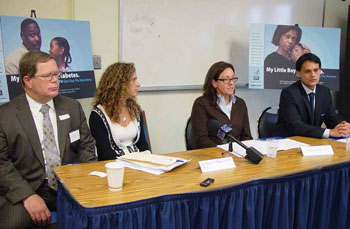
Nearly 20 journalists, representing the Chinese, Korean, African
American and Hispanic communities, attended the event at St. Anne’s, a
social services agency.
“We’re excited to be able to reach all these communities through you,” Lobelo remarked.
A highly contagious form of influenza, H1N1, also known as the swine
flu, was first detected in the United States this past April. Since
then, the nation has seen a number of cases in nearly every state.
Nearly 1 million people have so far been infected, and 600 people,
including 76 children, have died from it. Around 6,000 people have so
far been hospitalized.
“Our priority group (for the vaccine) will be those between 6 months and 24 years,” Lobelo said.
Even though the benefits of the swine flu vaccine greatly exceed the
risks, and even though the CDC is making every effort to publicize
this, Lobelo said he expects that around the same number of people who
die each year in the United States from the seasonal flu — 36,000 —
will die from swine flu.
He stressed that the flu shot would have what health officials call a
“cocoon effect,” that is, it will protect not only the person getting
vaccinated but all they come in contact with, as well.
For this reason, Lobelo also advised healthcare workers to get vaccinated.
The virus strikes hardest in children and young adults who have none of
the immunity to the strain that older people have perhaps because they
have had previous exposure to strains akin to influenza, he said.
So far, the pandemic has been moderate in severity, with the symptoms
resembling the seasonal flu – fever, body ache, cough and cold, Lobelo
said. But he sounded a note of warning: Sometimes, the symptoms go away
and return more intensely.
Children, 9 years and younger will need to get two shots, 21 days
apart, because their immune response from the vaccine is different from
that of older people, who need only one shot, Lobelo said.
The vaccine could be administered as a shot or in the form of a nasal
spray, which is approved for healthy persons between ages 2 and 49
years, who are not pregnant and who do not have underlying medical
conditions.
Alan Janssen, health communications specialist with the CDC’s National
Center for Immunization and Respiratory Diseases, noted that his agency
is “trying to share the vaccine as fairly as we can.” That means,
communities with larger populations will get larger number of doses of
the vaccine, he said.
“That’s why it’s important to get an accurate Census count,” observed NAM Executive Director Sandy Close.
The undocumented should also get vaccinated against the H1N1 virus when
the vaccine rollout program begins in Los Angeles County on October 23,
said Michelle T. Parra, who directs the county’s immunization program.
No questions will be asked about anyone’s legal status, she asserted.
She said her agency would be working with the city, which has already
identified several venues where people can get vaccinated. The city
will embark on an intensive outreach program.
The United States expects 200 million doses of swine flu vaccine by the
end of the year, as pharmaceutical companies are churning it out at
“unprecedented speed,” but not at the expense of compromising its
safety, health officials say.
“The H1N1 vaccine has been created the same way as we create the
seasonal flu vaccine, with the same safety and rigor,” Lobelo said.
“The only difference is the combination of strains in the H1N1 vaccine.”
Some media members at the briefing said they were not sure they were
going to get vaccinated, even though they were warned how dangerous the
flu could be. Melanie Polk, publisher of the L.A. Watts Times, for one.
Polk questioned the panel of speakers on why Los Angeles County had
chosen to begin the vaccine rollout program in Encino and Culver City,
two affluent neighborhoods, instead of some of the poorer communities.
Parra tried to reassure her that every effort would be made to ensure that all parts of the county get the vaccine.
A flu fact sheet will be handed out to all who get vaccinated, she said.
Lobelo said more information on the flu could be found on the CDC
website at www.cdc.gov/h1n1flu or www.cdc.flu.gov, or by calling
1-800-CDC-INFO.
All midlife and older Americans have been feeling the impact of the recession. But the effects have been even harsher for African-American and Hispanic retirees and baby boomers heading for retirement, according to a new study by AARP.
AARP’s “Closer Look” survey of almost 1,000 Americans ages 45 or older shows that in the past year ethnic boomers and elders have struggled to pay their medical costs; had trouble paying for food, heating and other essential needs; lost jobs or saw their hours cut; and were compelled to hunt for affordable housing in greater percentages than their white counterparts.
“We are seeing a disappearing middle class,” stated David Certner, legislative policy director of AARP.
Social and economic differences long preceded the recession, but Certner said the “differences have been exacerbated for African Americans and Hispanics.”
In particular, Certner was surprised by findings showing large percentages of people who were not confident they could cover the cost of a major illness or would be able to afford their retirement. Although one in four whites doubted their ability to pay the cost of a serious illness through insurance or savings, more than four in 10 African Americans and two out of three Latinos had little or no confidence they would be protected.
In addition, even though a striking one in three whites expressed little or no confidence that they will have the resources to cover their health care and living expenses in retirement, more than half of black respondents and a whopping 71 percent of Hispanics foresee difficulty making ends meet in their later years.
The survey, the first in a quarterly series aimed at serving as an ongoing barometer of how well aging Americans are doing, focused on measures of health, income and community living needs, such as housing costs.
The findings underscored the significance of health reform for ethnic seniors and those near retirement. One-third of African Americans and almost 40 percent of Latinos postponed getting needed medical or dental care. One in four people in both groups didn’t fill a prescription, cut pills in half or just skipped doses to save money. And one in three said they had trouble paying their medical bills.
Home life was particularly precarious for aging blacks and Hispanics. More than a quarter of them had trouble paying their rent or mortgage. One in three faced a major problem with foreclosure. And far more of them sought affordable housing than older whites.
Particularly striking was that about one in three black or Latino survey participants either moved in with a parent or adult child in the past year or had a relative move in with them – almost double the proportion of aging whites, who doubled up at home.
Employment impacts were also daunting, with more minority pre-retirees than whites losing jobs, seeing cuts in pay or work hours, delaying retirement or prematurely withdrawing retirement funds to cover costs.
One of the most telling poll results was that almost six in 10 ethnic boomers have lost sleep in the last 12 months due to stress or worry.
“The pre-65 group is the most anxious,” Certner said. “They are concerned about three generations: their parents, their kids and their own retirement. So they are experiencing multiple levels of anxiety.”
Certner was not sanguine about a quick turnaround. The survey results indicate reasons for concern that these problems run deeply, “not just in terms of the current recession that might be resolved next year. These are long-term effects that will be tough to turn around.”
Viable solutions for aging Americans, he added, need to go beyond “more reliance on government in their retirement years.” AARP, he said, is supporting wide range of long-term remedies, such as private pension reforms to increase the number of middle and lower-wage workers with retirement savings.
Each year, millions of foreign nationals use a non-immigrant visa (NIV) to enter the United States and remain here on a temporary basis. There are various categories of NIVs and they all place restrictions on the amount of time foreign nationals may remain in the U.S. and on the type of activities in which they may engage. For example, the B-2 NIV allows for tourist activities, while the F-1 allows a foreign national to pursue studies in an educational institution. It is not uncommon, however, for a foreign national’s plans to change upon arrival in the U.S., so that she wishes to engage in activities outside the scope of her NIV. When this occurs, the individual is generally faced with two options: return to her home country to apply for a different type of NIV, or apply to the U.S. Citizenship & Immigration Service (USCIS) for a change of status within the United States.
A change of status is not permitted in every instance, and a foreign national must consider at least three factors in determining whether she is eligible. These factors include: (1) whether her desired change of status is permitted under the law, (2) whether she is presently maintaining valid status, and (3) whether the application to change status is timely.
Prohibited changes of status
Some non-immigrant categories do not permit change to a new status. For example, certain J-1 exchange visitors may not change to a different NIV status until they have returned to their home country for two years or obtained a waiver of the two-year requirement. Likewise, a foreign national admitted as a non-immigrant under the Visa Waiver Program may not change status. Also, regardless of one’s current non-immigrant status, the law does not allow a change of status to the K-1 fiancé(e) classification.
Maintenance of valid status
In order to successfully change to a new status, the foreign national must have maintained her original non-immigrant status. Put differently, if she is no longer in a valid authorized status at the time USCIS reviews her application to change status, her request will likely be denied. An individual may fall out of non-immigrant status if she violates the terms of that status. For example, if a foreign national who entered on a B-2 tourist visa engages in unauthorized employment, USCIS will find that she has failed to maintain status and will deny her request to change status.
Timeliness of the application
The foreign national must file her application for change of status before her authorized stay expires. Authorized stay generally refers to the date listed on the foreign national’s I-94, the white card inserted in one’s passport upon arrival in the U.S. It is important for foreign nationals to understand the difference between their visa and their I-94. The visa is the document that permits entry into the U.S. and may be valid for an extended period of time, say ten years. On the other hand, the I-94 controls how long one is authorized to remain in the U.S. on a particular trip. Thus, a foreign national seeking to change non-immigrant status must do so prior to the expiration of her I-94, even if her visa remains valid for several more years.
A foreign national who applies for change of status prior to the expiration of her authorized stay (e.g., the date on her I-94) may generally remain in the U.S. while that application is pending, even if her I-94 expires before the application for change of status is adjudicated. However, in most cases, she may not begin the activities in the new non-immigrant status until her change of status application has been approved.
Travel abroad during and after the application process
If an applicant for change of status departs the U.S. before her application has been approved, USCIS will consider her to have abandoned her request. The foreign national will likely need to apply for the new visa classification at a U.S. consulate abroad in order to return.
In cases where USCIS has approved the change of status application, the foreign national will receive an approval notice, confirming the existence of the new status. However, she will not at that time receive a new visa. Thus, if she wishes to travel overseas and return pursuant to the new status, she will also need to apply for a new visa at a U.S. consulate abroad.
Application process
A foreign national wishing to change non-immigrant status must file either the Form I-129 or Form I-539 with the appropriate USCIS service center. The I-129 is generally used for changes to an employment-based status, such H, L, or TN. The I-539 is used in most other situations, such as a change to tourist or student status. The current filing fees are $320 for the I-129 and $300 for the I-539. Applicants should be aware that additional fees may apply. Processing times vary depending on the type of application. At the moment, USCIS is processing most change of status applications within 2.5 months. Current processing times can be found at www.uscis.gov.
Nothing
in this article should be taken as legal advice for an individual case or
situation. The information is intended to be general and should not be relied
upon for any specific situation. For legal advice, consult an attorney experienced
in immigration law.
Traditional Banking Has Failed, Equity Bank Boss Tells US-Africa Business Summit
WASHINGTON
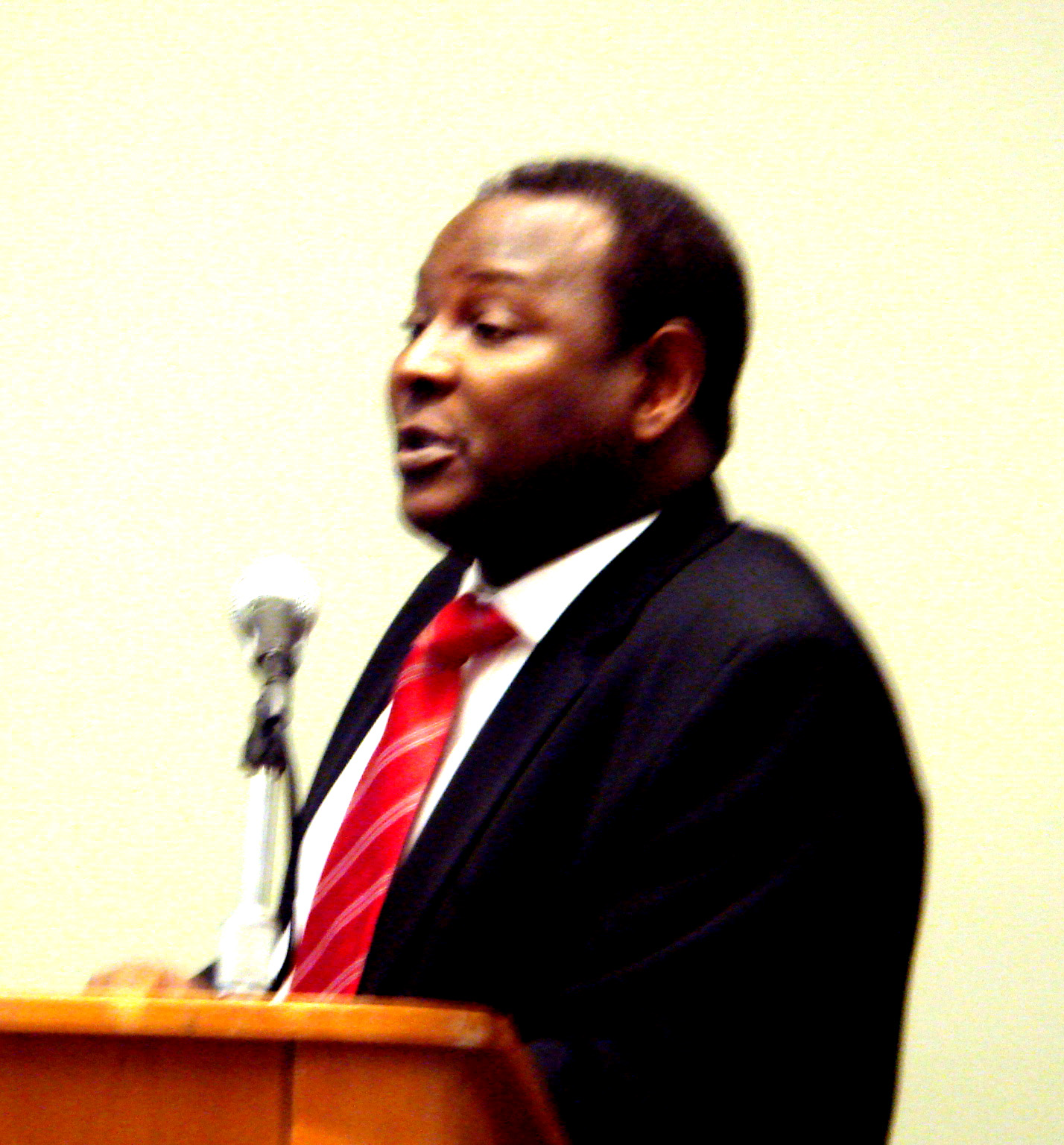
– The traditional model of banking has failed, the CEO of East and Central
Africa’s largest bank in terms of deposits, Mr. James Mwangi, said today when
addressing a workshop on the future of Banking in Africa. The Equity Bank boss said
this failure is particularly evident in Africa, which has given his 25 year old
bank an advantage in tapping into the continent’s unbanked.
The
workshop was part of the 7th biennial US-Africa Business summit held in
Washington this week.
Mr.
Mwangi told summit attendees that the future of
banking in his view lies in the convergence between banking and
telecoms.”Equity bank has 56% of all bank deposits in Kenya and through
its responsiveness to its customers has facilitated a high rate of savings by
its customers to the tune of US$900 million”, he said. Its success is also
due in part to its pioneering role in the micro financing movement in Africa
which has won it accolades globally.
Mr.
Mwangi was the only African bank executive officially on the summit program to
participate in the critical workshops taking place during the week long event.
The
Equity bank boss attributed his bank’s success to the leveraging of economies
of scale and said the sector has been successful in lobbying Kenya’s baking
regulators to allow for what he called an “agency model”. He
described the model as one which will allow virtually any storefront with a
cash register or credit card terminal to act as an agent for a bank by
performing some of the traditional banking functions of accepting deposits and
dispensing cash. “This is a great thing as it will save us a lot of
expenses”. Such expenses he said include the traditional brick and mortar
strategy that banks have employed for a long time.
In line
with his view that the traditional banking model has failed especially in Africa,
he foresees a business model that entails a high volume, low margin scenario
especially in developing countries “because in Africa many people have
very little money but do a lot of small transactions and as such we have to
accommodate that to keep them as customers, and the agency model and the
convergence of banking and telecoms will serve us well,” he told the
workshop. The cell phone boom in the country and the continent has created a
scenario that makes it possible for banks to tap into the unbanked as his bank
has done in the 25 years it has existed.
This
year’s US-Africa business summit, organized by the Corporate Council on Africa
(CCA), brought together over 1,500 leaders from the private and public sectors
in both Africa and the US. CCA is a membership organization of nearly 180 U.S.
companies dedicated to strengthening the commercial relationship between the
U.S. and Africa.
US
Secretary of State, Hilary Rodham Clinton, addressed the summit today.
Creating a mental picture of the future provides a target to advance toward. With God’s guidance, we should create a clear visual picture of where we desire to be in the future.
Our will is the gatekeeper for decisions we make about distractions encountered. We can either choose to act on distractions or we can choose to stay focused on the visual picture of God’s future destiny for our life.
The Lord provides us with a road map to travel on life’s highway. We need to stay in the right lane of life or we will find ourselves taking detours that lead to dead-ends. The most direct access to our future destiny is by following God’s direction and plan.
We should consistently seek the Lord’s help to keep our guard up so that distractions don’t impact our thoughts and heart. We get this help through God’s word and promise. Proverbs 4:23 tells us to “guard our heart.” Keeping our heart right will further ensure that we are aligned with God’s plan for our future.
Remember:Whatever dominates our soul will likely be experienced in our life.
“We are limited, not by our abilities, but by our vision – anonymous.
WASHINGTON
– The Obama administration today pledged more assistance to Africa in its quest
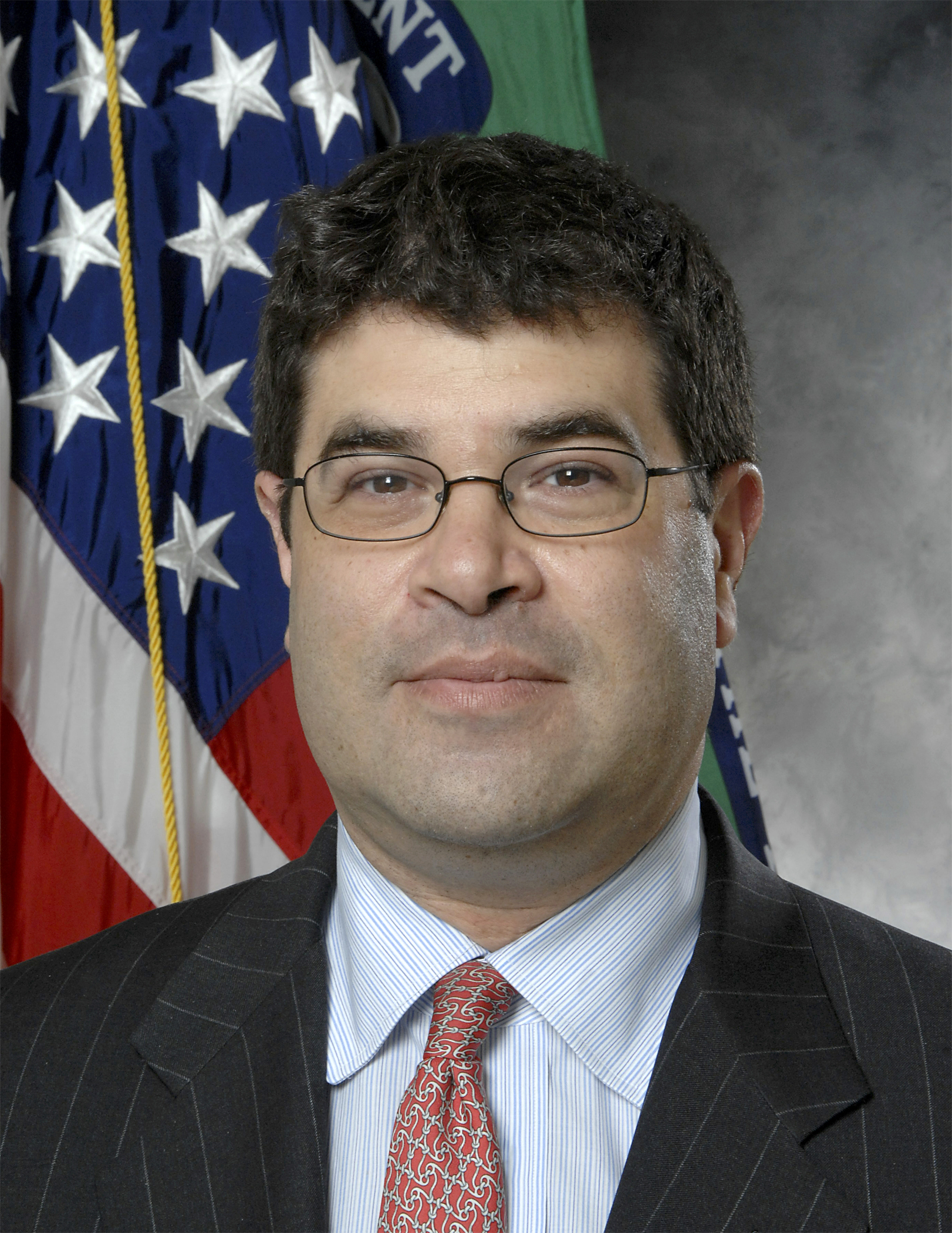
to develop. Without giving figures, U.S. Deputy Treasury Secretary Neal S.
Wolin, speaking at the 7th US-Africa Business summit said two areas in particular
need serious attention: infrastructure and agriculture and that “in both
these areas, the U.S. stands ready to commit substantial resources and
technical assistance. But we look to Africa to lead the way,” he said.
Mr.
Wolin told summit participants that through U.S. government sponsored
investment arms like the Millennium Challenge Corporation, the Overseas Private
Investment Corporation, the Export-Import Bank and USAID the U.S. government is
ready to assist in projects such as the US$325 million power generation
facility in Rwanda to extract methane from the depths of Lake Kivu that will
double the electricity generation in that country.
Mr.
Wolin reiterated the new Obama approach to development assistance to Africa
“where we provide assistance to African nations, we will do so not as a
patron, but as a partner.” He however emphasized that the U.S. will look
for what he called “corresponding commitment” from African countries
in exchange for assistance especially in the areas of good governance and the
promotion of strong institutions that in turn establishes an environment that
stimulates private sector investment.
Global Financial Crisis
Mr.
Wolin’s address at the summit was part of a session dealing with how Africa can
look beyond the global financial crisis and financing of its development
agenda. Among panelists at the early morning session was former Goldman Sachs vice
chairman, Robert Hormats, who was last week sworn in as the Obama administration’s
Under Secretary of State for Economic, Energy and Agricultural Affairs; Russell
Loubser, CEO of the Johannesburg Sock Exchange; Thomas Gibian of Emerging
Capital Markets and Saki Macozoma of South Africa’s Stanlib.
Local Businesses
Mr.
Hormats told African governments that they should create an environment that
promotes local African businesses as foreign investors will be attracted to
where the locals are thriving.
On his
part Mr. Macozoma said that “some of the low hanging fruit is helping
African governments to be efficient with such things as e-government.”
Emerging
Capital Partners’ Libian said the next game change for Africa has to be
“the high speed internet that is being introduced throughout Africa.”
A tribute to Tanzanian-born journalist
Swallehe Msuya.
On Sept. 23, a health care worker found Tanzanian-born journalist Swallehe Msuya dead in his Minneapolis apartment. Swallehe had failed to show up for a kidney dialysis appointment scheduled the day before. He was 61.
I first met Swallehe when I moved to Minneapolis in July 2007 to be the editor in chief of Mshale, a newspaper for African immigrants.
The first thing I did as the editor was schedule a meeting with writers. Because of its small size, Mshale heavily relied on freelancers. Most of them had full-time jobs and only wrote because they were passionate about covering the African immigrant community. Their jobs meant that I could not get the dozen or so writers in a single editorial meeting, so I had to meet them individually.
Tom Gitaa, the publisher, had told me that Swallehe was nearly 30 years older than me. That made me nervous, because in our culture it can be awkward to manage someone older. Back in my warehouse days I worked with two older African men, a Kenyan and a Nigerian, who refused to learn anything from me because I was “too young.”
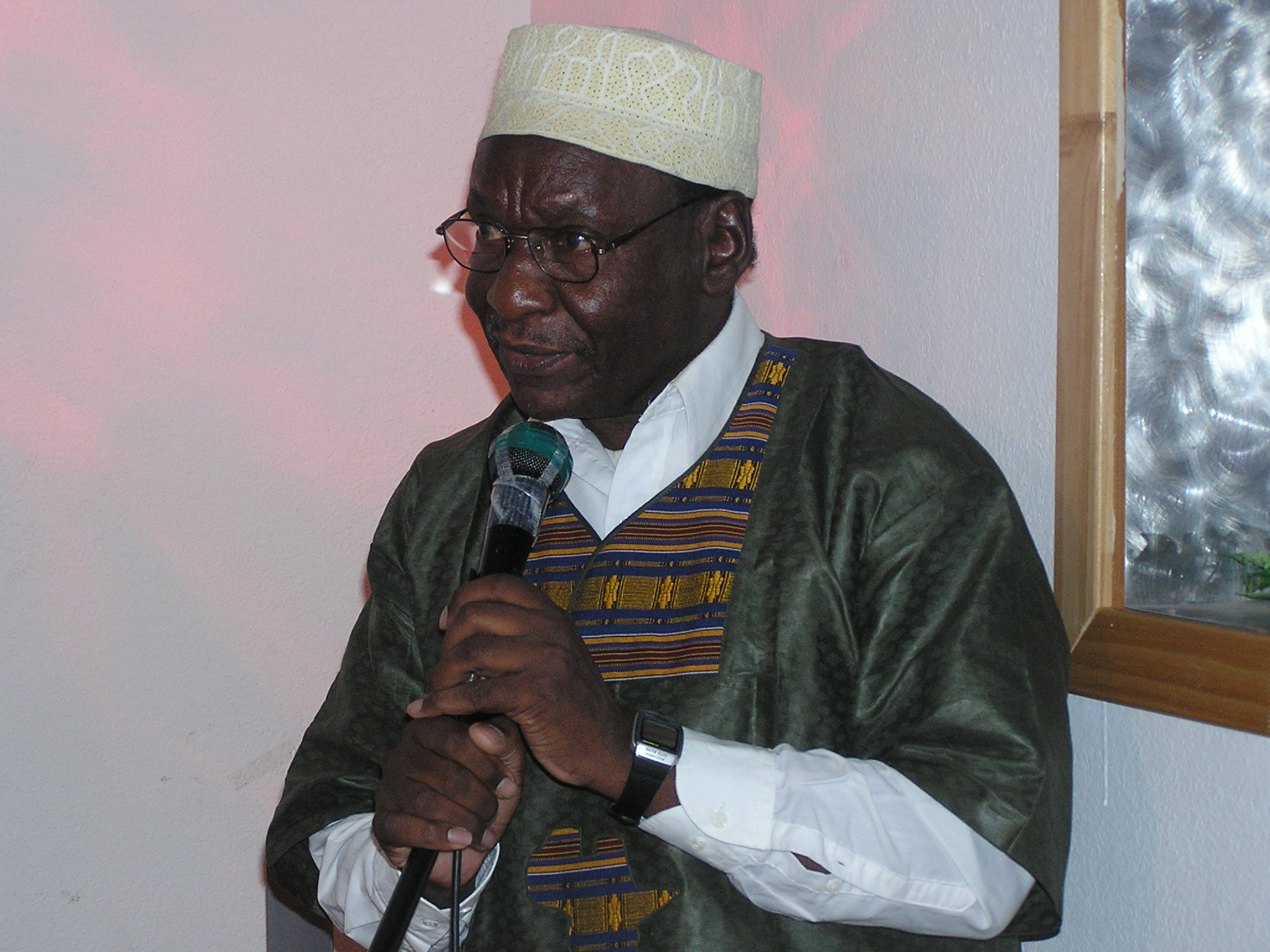
Swallehe walked into the newsroom dressed – as he always was – in traditional Tanzanian attire.
“Welcome to Minnesota, young man,” he said in Kiswahili.
As I was trying to figure our how to start asking a man old enough to be my father questions, Swallehe saved me the agony and began to interview me instead. Why would a highly educated young man come to such a small newspaper? How old are you? Are you married? Why not? You are not religious? Why not? He tells me I am going to have hard time finding a woman because most Kenyans here are religious.
I answered all his questions, careful not to get into any details that might extend my time on the hot seat. When he was satisfied, he began to tell me about himself. He came from Tanzania in 2003 for treatment for a kidney ailment. He was a devout Muslim. He liked the idea of a newspaper for African immigrants. He proposed a monthly column in addition to his reporting.
That column came two months later. He named it “African Prestige.” In his articles, Swallehe repeatedly called on Africans to discover their intellect and unite for a better continent. He described himself as “as a committed son of the soil, who sees Africa’s future success emerging only from the formation of continental unity and economic integration.”
On global warming he urged Africans to join “the global coalitions addressing this important issue, as it is our planet and our lives that are at stake.
What did Swallehe think about the exit of British Prime Minister Tony Blair? “Although I won’t miss Tony Blair’s policies toward Africa,” he commented, “I shall forever miss the witty verbal heavyweight bullfighter, whose debates generated great drama and excitement in the House of Commons.”
Swallehe also loved to make his readers laugh. He was “as old as the state of Israel.” And my favorite: “Next time you are asked who discovered the mighty Kilimanjaro, Africa’s highest mountain, tell them that [Swallehe’s] great-great grandfather, Kimborido Kasei Righiria, born and raised at the foot of the mountain, lived with it before any white explorer set eyes on it. Give him credit for that!”
Editing Swallehe’s column often left me wondering how a man who knew his health was deteriorating could be so full of hope for Afriaca.
“Even as he underwent treatment he continued to selflessly give, and would be among the first ones to avail himself for an assignment,” Tom Gitaa, the publisher of Mshale, wrote in a statement. “Sometimes he would get mad at me that I did not call him for assignments out my consideration for his dialysis schedule. ‘Do not assume. You call me first and I will tell you myself if I cannot go,’ he would shout over the phone always in a good-natured way.”
That was the Swallehe I knew.
What I didn’t know, though, was that he lived alone. When I think about him dying alone, I’m reminded of the “cultural erosion” he often wrote about. (“Those African names with historical meanings, and our languages that define who we are or where we come from will slowly disappear.”)
But this “cultural erosion” is nothing we Africans are in control of. We are in America, where the needs of the individual trump those of community. America will give you a better life than you led in the old country, but take away the best of you.
It is even harder if you are aging and sick, as Swallehe was. It is true that – relative to Tanzania – Swallehe received better medical care here. But the “cultural erosion” in what Swallehe once called “this great nation” stripped him of the dignity Tanzania might have accorded him. Living in America meant that he had no one there to monitor his health and perhaps get him to the hospital sooner. And it meant that Swallehe had no one present to hear his last words of wisdom.
WASHINGTON – The 7th biennial US-Africa Business summit got off to a promising start with African technocrats charged with attracting foreign private investment putting a new spin on their sales pitch: Yes there are challenges in Africa but the opportunities are just great to pass.
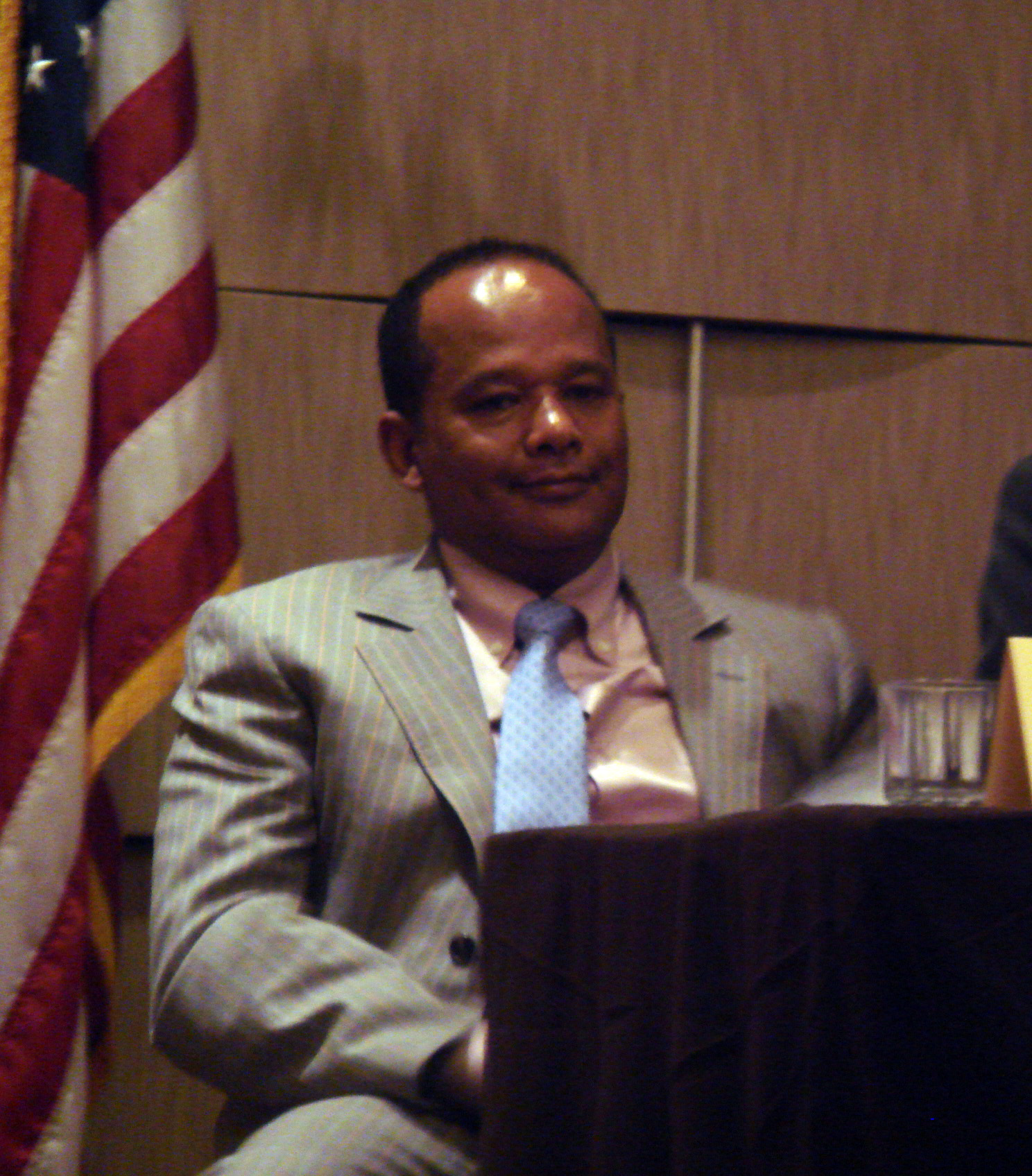
The Namibian delegation included Haddis Tilahun, CEO of United African Group, the largest hospitality corporation in Namibia who told participants at a special Namibian presentation that returns can “be as high as 30%”. His success with UAG is symptomatic of the new breed of African entrepreneurs who do not confine themselves to their home country – he was born and raised in Ethiopia, lived in the U.S. and has lived in Namibia for the last 18 years.
At a welcome dinner to mark the official start of the summit, Obiageli Ezekwesili, Vice-President for the Africa region at the World Bank cautioned American businesses still holding out in investing in Africa due to fear that Chinese corporations with active support from their government have benefitted at the expense of Americans. She was particularly concerned at the disproptionate level of support the U.S. government has given to American businesses compared to its Chinese counterpart as regards to investments in Africa. She told American corporations to look to the World Bank which has designed programs designed to protect private investments in certain countries.
2010 World Cup
South Africa is next year’s host of FIFA’s word cup and it has pulled out all the stops in promoting the tournament at the summit. This will be the first time the continent is hosting soccer’s best extravaganza. Match Hospitality and SportsMark who are the official marketers of the program have a booth at the summit promoting the games. Executives from SportsMark said at the welcome dinner Tuesday that “if you plan to go to South Africa in the next 12 months, do it June 11 -July 11”.
The Corporate Council on Africa, which puts together the biennial summit, is a membership organization of nearly 180 U.S. companies dedicated to strengthening the commercial relationship between the U.S. and Africa. The business summit brings s together leaders from the private and public sectors in both Africa and the U.S.
Among African presidents participating at the summit this year include Jakaya Kikwete of Tanzania, Paul Kagame of Rwanda and Sassou Nguesso of The Congo.