A ceremonial ribbon cutting was held at the First City Monument Bank location in Lagos to mark the opening. Western Union first opened an agent location in the continent ten years ago.
Money transfer behemoth, Western Union International, opened its 10,000th agent location in Africa at the Matori branch of Nigeria’s First City Monument Bank just as that country’s Central Bank disclosed in an estimate that cumulative contributions of Nigerians in the Diaspora totaled $US 4.5 billion in 2006. A ceremonial ribbon cutting was held at the First City Monument Bank location in Lagos to mark the opening. Western Union first opened an agent location in the continent ten years ago.
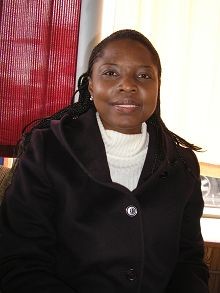
Zineb Benjelloun, Western Union’s Assistant Marketing Manager for Africa told Mshale during an interview that the opening is a landmark for her company as it underlines the money transfer company’s commitment to Africa. She described the development as consistent with the company’s strategy of providing the most convenient service “to serve our customers wherever they need us”, she said. Her sentiments were echoed by Henry Semenitari, Executive Director, Retail Banking of First City Monument Bank who during the ribbon cutting in Lagos said “We fully support Western Union as it continues to grow and to provide even greater convenience to our customers, not only in Nigeria but across the continent.”
Western Union, which has the most extensive agent locations of any of the MTOs (Money Transfer Operators), has however faced stiff competition in the last few years. An unfazed Ms. Benjelloun, a Moroccan native, has since assuming office continued to stress the value her company provides, emphasizing the “peace of mind” that comes with using Western Union. On the issue of the informal channels for sending money (such as Hawalas) she said “Western Union, by partnering with reliable and leading postal and banking organizations across the continent, provides customers with safe, fast and convenient money transfer services reaching even the most remote areas in Africa.” Referring to the spotty availability of the informal channels in recipient communities.
She added in the case of Nigeria, “(Western Union) offers the largest U.S. dollar payout network of any money transfer company in Nigeria with more than 1,500 agent locations in more than 160 cities.” She said 2007 will be a year of network expansion for the company revealing that Western Union kicked off the year by opening its second agent location in Eritrea operated by Himbol Financial Service.
There is no doubt competition between the MTOs has been good for customers which even Ms.Benjelloun could not deny. In the Minneapolis market for example, there has been a precipitous drop in the cost of remitting money to Africa. In the 46 countries of Africa that Western Union serves, one can now send upto $500 for just $10.50, close to half of what it cost just a year ago. The new pricing scheme was announced last month with customers now having the opportunity to send up to $100 for as low as $8.50 in some of the major markets like Dallas and Los Angeles.
Over and above the business relationship that exists between western Union and its customers, Ms. Benjelloun said her company has demonstrated “multiple levels” of support for Africa including “event sponsorships and HIV prevention efforts to building schools and clean water programs to funding relief efforts when disaster strikes”.
In the United States, she said Western Union is a big supporter of the African immigrant community sponsoring over 80 African community events across the country with plans to support even more this year.
“Western Union is determined to keep building connections and we look forward to many decades of continued partnership in Africa,” Ms. Benjelloun said.
A unique charter school that will embrace African values and culture will be opened in Minnesota this Fall. According to Ghanian-born Comfort Lartey-Ofori, founder of ELOM International Academy, she has conceived a school idea that advocates academic excellence that combines the best of African culture with universally acceptable international academic standards. She is one innovative and strategic organizer who exhibits both dynamism and the love of African values and hopes that her school will be a model for other states in America with large African immigrants to emulate.
The school to be set up in Brooklyn Park that opens its doors to the public this fall will teach school pupils respect for elders and infuse African drumming, song, dance, culture and languages to its curriculum.
Comfort elaborates “the Academy will provide a quality educational environment that espouses respect, as reflected through an Elders Council composed of community leaders. This is indigenous to West Africa and celebrates each child’s unique learning abilities and needs. The Council will both support our mission and ensure that our students receive the mentorship and guidance that will truly serve them throughout their lives.”
“ELOM” is a word borrowed from the Ewe language of the Volta Region of Ghana that symbolizes “love.” The school will focus on the education of all the senses and the intellect through sustained engagement within a loving, supporting, challenging and exciting learning environment.
To underscore the mission of the school that seeks to connect students to their communities, Comfort explains: “this holistic model is based on the premise that all students can find identity, meaning, and purpose through their connections to the community. Students who will stay connected to the natural world, and to moral and planetary values like compassion and peace. This strategy will help create an intrinsic reverence for life and a passionate love of learning”, she emphasized.
ELOM has plans to establish “voluntary covenants” with parents to support their children’s efforts to learn.
Among other things, parents will provide a consistent place in the home to complete homework and work with their teachers to implement “ILPs designed for children.” Parents will check homework for their children, inquire about assignments, attend parent/teachers meetings, and volunteer regularly at ELOM, when possible. The bottom line goal is to “create a sense of a village” in which the character of school children is developed for future leadership and harmonious life in the community.
ELOM International Academy will implement the Core Knowledge Sequence as the foundation for its K-8 curriculum. It clearly defines the knowledge and skills that each student must muster at each grade level and creates high levels of academic expectations. In addition it will eliminate many gaps and repetition characterized by standard curricula and follow a strategy of delivering cultural literacy in a systematic manner while leaving room for creativity.
ELOM will also implement the Houghton Mifflin and Open reading programs. These are scientifically researched programs that include five areas of reading instruction: phonemic awareness, phonics, fluency, vocabulary, and text comprehension.
Comfort also spoke about the “Six +1 Traits Model and Writing Assessment” in the following words: “We want to help our students to find their voice, to celebrate with pride their cultural heritage, whether West Africans or from other backgrounds. For these reasons, ELOM teachers will adopt The Northwest Regional Educational Laboratory’s – 6+1 Trait Writing model. We believe that this model will be ideal for developing the writing skills of the diverse learners at ELOM.”
ELOM promises to use the SOLOM and TEAE for LEP students (limited English Proficient students) as well as the SOLOM and the LAS/RW (Language Acquisition skills) as pre- and post-tests to help determine appropriate instructional levels for all ELL students.
These tools will help in building language acquisition capability and tracking reading and writing skills, and help to systematically track English language improvement.
As a Charter Public School, ELOM will provide free tuition and transportation for all pupils, and the school will be distinct from others in these aspects:
·A longer school day than traditional public schools.
·Small class and total enrollment, with a student-to-teacher ratio of approximately 20-1.
·A full-day kindergarten program.
·A required uniform dress code.
·A challenging Core Knowledge curriculum with a proven phonics-based reading program, encouraging students to be critical thinkers while building their skills in reading, writing, math and the arts.
·Group drumming, dance, story telling and singing as part of each day.
·Mentors and elders who support ongoing progress.
·West African and other international cultures imbedded throughout the curriculum and programs.
ELOM is a Charter school supported by tax dollars but governed by their own boards of directors, independent of local school districts. ELOM will use its autonomy to select the best curriculum, staff and policies. The Academy will have an Executive Director and an Educational Director to ensure sufficient attention is provided to the needs of every student.
ELOM’s Board of Directors is composed of leading educators, business people, and community representatives dedicated to creating a world-class elementary school. ELOM is sponsored by Volunteers of America, a non-profit supporting quality new schools that partner with and serve the greater community.
The school will open its doors during the fall of 2007 to grades K-3, expanding through grade 6 by the Fall of 2021. Channel Afrique, an association of African professionals and intellectuals in Minnesota organized an end of year party last December attended by ELOM’s Board members, elders, parents and fund-raisers to introduce the school idea to the community. The occasion was graced by traditional African dances and other related cultural activities.
Parents who wish to enroll their children at ELOM, please call (763) 221-6634 or go to www.elomacademy.org for more information or send an e-mail to: [email protected]. If you choose to write a letter, the address is ELOM International Academy, P.O.Box 398, Champlin, MN 55316.
African immigrants living in Minnesota should take advantage of this opportunity to register their children in a school that is geared to uphold African cultural values.
NAIROBI – The curtains finally fell on the seventh edition of the World Social Forum in the Kenyan Capital of Nairobi with a new transsexual phenomenon, gaining root in Africa.
The forum that ended on January 25 saw the lesbians, gays and trans-sexual community gaining currency not only in Kenya but also in the entire African continent.
All eyes focused on the groups that have been for a long time conducting their business secretly.
But at the WSF, they came up openly, stealing the show, as they demanded for their ‘rights’.
The lesbians and gays joined their counterparts from all over the world and had a tent adjacent to Gate 7, at the forum’s venue, Moi International Sports Centre Kasarani, about 15kilometers North of Nairobi city.
And as a sign of friendliness, it was at their stand only that visitors were welcomed with a cup of tea and cookies.
They were then invited for lessons on lesbianism, gay relationships and transsexuals. The bisexuals and transsexuals are now in the warpath to agitate for an end to discrimination and recognition by the constitution.
On the other hand, the forum that was attended by more than 10,000 delegates from around the world, gave a significant prominence to issues affecting ordinary people and it helped put African issues on the international agenda.
Key international Icons, among them retired Zambian President Kenneth Kaunda, Mary Robinson, Dr Salim Ahmed Salim, Winnie Mandela, Archbishop Desmond Tutu, six ministers from Brazil, Kofi Woods, Liberian Minister for Labor, artistes Oliver Mtukudzi and Yvonne Chaka Chaka graced the event.
One of the main goals of the conference was to empower ordinary people in the developing world.
Issues on human rights dominated the conference, which saw several recommendations, and action plans by the delegates sail through.
Seven topics on human rights abuses and ways of intervention were discussed.
With Kenyans facing a presidential election at the end of this year, Kenyan human rights activists vowed to put a solid agenda on the table of political parties with ethnic agenda.
A civil society from France also proposed a taskforce for human rights in situations of conflict are set up.
On the other hand, members of the clergy were asked to take women’s rights and violation to the pulpit.
The activists proposed that scientists should be hired to educate women and men on and reciprocal respect.
Human rights advocates from the South indicated that they will need the support of their counterparts from the North if their fight for social justice if at all it has to make impact.
The caucus was able to match effects of social rights and WSF which included women and peace, terrorism, armed conflicts, land rights in relation to women, and religion.
During the opening ceremony participants gathered in Kibera, an area that hosts Africa’s largest slum, who walked through Kabarnet road, Ngong road, Haile Sellassie Avenue, and later converged to Uhuru Park.
On the eve of the closing ceremony Nobel Peace Laureate Prof Wangari Maathai led participants in a walk to several designated areas to plant 100,000 trees.
Kenya’s sports personalities Paul Tergat-of the long distant marathon fame-graced the closing ceremony as he led delegates in a run across Nairobi’s Korogocho slums.
The fact that the forum took place in Africa is indeed historic. Being the first conference in Africa and where these issues were discussed, the Seventh Edition becomes a landmark in the history of the WSF.
Ms Wahu Kaara one of the conference’s organizers says committee member of the forum’s organizing secretariat said it was a chance for Africa to provide solutions and not just be seen as a problem.
“Africans are also global citizens and this is a chance for Africa to be seen as a continent of hope and not despair,” she says.
The Forum, she says was not to capitalize on Chief Guests but was out to change the world into a better place.
Civil societies in Africa took the centre stage to agitate for debt cancellation. They want, starting from now, all illegitimate debts to be cancelled unconditionally. They also want African and other countries to start negotiations with donors and explore different modalities of dealing with debt issue.
The forum was an open space for ordinary people to get a platform to reflect, think, generate democratic ideas, formulation of proposals, free exchange and interlinking for effective action by groups and movements opposed to a world dominated by capitalism and any form of imperialism.
It is why the gay and the lesbian communities took the centre stage to agitate for what they termed as their ‘rights’ that had been deprived off them.
It’s at the conference where it also emerged that one is born a transsexual.
It also emerged that the number of bisexuals and transsexuals in the country was rising.
The bisexual community regretted that they faced discrimination in society including being disowned by their families, beatings and rape.
“A homosexual person is just like any other normal person and we want our rights and dignity upheld at all times,” says Joseph Njenga, who confessed publicly that he was gay.
Also high on the agenda was the issue of HIV-Aids, Women’s issues, privatization of common goods, the landless, peace and conflict among others considering that Somalia and Ethiopia are in direct conflict at the moment.
“Africa through the forum showed that powerlessness is power in itself. It will be a time to reclaim humanity from the cradle,” says Wahu.
On gender equity, for instance, several recommendations were made. It was proposed that the WSF steering committee be composed of women and men on 50/50 ratio.
It was proposed that women in conflict regions be guaranteed rights, including citizenship, to enable them function properly.
The women demanded that the least half of the delegates at the next social forum should be women with a third of them represented at the decision making committees.
Slum dwellers and those living in informal settlements were not left behind. Forced evictions became the focus of debate and gave impetus on the need to improve the standards of living of many people as a basic right.
An estimated 20, 000 participants also took part in a symbolic 30km marathon race from the Korogocho slum area in the eastern part of the city to Uhuru Park in the heart of Nairobi’s city centre.
The race was flagged off by the world marathon record holder Paul Tergat of Kenya and drew participants from all walks of life, including the church, the slums, civil society and a few politicians. However, Ndereba, who is the four-time Boston marathon champion, who was scheduled to jointly flag off the race with Tergat, did not turn up.
The runners, donning mainly black and white T-shirts, assembled at St Johns Catholic Church in Korogocho in the wee hours of the morning to await the arrival of Tergat, who is also a goodwill ambassador of the World Food Programme (WFP). At Uhuru Park, where the closing ceremony took place, the participants danced to a mixture of tunes for several hours.
A few guests like the Kenyan Nobel Laureate Prof Wangari Maathai, the Italian Vice Minister for Foreign Affairs and Patricia Centinelli said the WSF was a great success.
“There are people here who came with nothing but now they will go home inspired. They will do something for themselves instead of complaining. When you are working with the poor, you get discouraged. But that changes when you meet with others who face the same challenges you are dealing with. Then you know you are not alone,” said Maathai.
The Italian Vice Minister said it was the responsibility of all governments to provide water, food and land to the people. “We should take advantage of WSF to say to all Governments that they must be serious in solving problems facing man kind,” Said Patricia Centinelli. The speeches were followed by more song and dance, before the ceremony official got underway, during which at least seven prizes were given out.
At Korogocho, the enthusiastic participants mopped Tergat, chanting in Swahili Tergat wetu, (Our Tergat) and trying to emulate his running skills.
“We decided that the marathon should begin from the slums, for the sake of those living in there. We want to show them that we are part of them and they can come out of the slums and do some positive work out there,” said Tergat, who addressed the press just before he flagged off the run.
Tergat regretted that slum dwellers were being discriminated against and blamed for many of the bad things in society, sometimes very unfairly. “This is because they don’t have the opportunity to fully and freely enjoying their rights like other people. They also don’t have a voice, which is exactly the reason for our choosing to be here today. We want to show them that everything is possible if they build their confidence and believe in their future,” he said.
The meeting brought together two hundred women from different parts of the globe to deepen the intensive dialogues on feminist perspectives and strategies in addressing fundamentalism, militarism and neo-liberal globalization.
One of the women participant said “women believe they are poor, they can’t contest in politics, yet they forget that to achieve anything, you must build confidence in yourself”.
Mama Koite Doumbia from the Mali, who is also the chairperson of FEMNET gave her experience how some of her member couldn’t contest for the presidential seat, “one of them was told, you names as nominees will be put at the bottom and for us to consider your nomination you have to pay”.
Visit the Photo Gallery for more pictures from the World Social Forum in Nairobi.
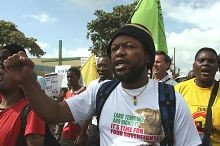
Ali Jumale strode with his wife and four children Saturday to a protest in Peavey Park that attracted hundreds of Somalis, who stridently denounced Ethiopian troops for forcing its way deep into Somalia in the hopes of asserting the authority of the weak government.
“Our country is humiliated,” said Jumale, 51, who also blamed the U.S. for tacitly approving “Ethiopia’s aggression.”
That “aggression” happened last week when Ethiopia, a country most Somalis hold animosity toward, dating back to centuries of conflict, sent upwards of 20,000 soldiers to subdue the power of the unflinching Union of Islamic Courts (UIC), which was swiftly gaining control of most of Somalia, while the internationally-backed Transitional Federal Government (TFG) was rapidly losing soil and support.
UIC gained control of Mogadishu and much of South-Central Somalia six months ago and restored semblance of law and order after defeating notorious warlords, widely believed to be financed by U.S. clandestine services.
In a stunning reversal of fortunes, TFG forces, riding Ethiopian tanks and armored vehicles marched into Mogadishu on Friday. For TFG, it was a remarkable victory secured by the superior firepower of Ethiopia, which also celebrated a milestone for gliding in to the capital of its historic foe.
Jumale was among a throng of Somalis, who after celebrating their holiest feast, Eid Al-Adha, flocked to Franklin and Chicago Ave., on a rainy day to express their disdain with Ethiopia’s move, which defied a recent U.N. resolution off-limiting neighboring countries to engage Somalia militarily.
The U.S. State Department initially said that “Ethiopia has legitimate security concerns,” but on Friday called for a “power-sharing dialogue” between TFG and UIC.
Ethiopian forces resurrected most of the thorny Mogadishu warlords, —a move that protestors say is emblematic of its real intentions. Some of those warlords fought against Americans in the failed 1993 Operation Restore Hope, which engulfed the lives of 18 Americans, portrayed in the film “Black Hawk Down.”
“I’m aghast by [Ethiopian] actions,” said Abdirizak Haji Hussien, former prime minister of Somalia in the 1960’s. “We want them out immediately.”
One after another, protestors seemed to blame the U.S. for being complicit, or indifferent about “the violation of Somalia’s sovereignty by its arch enemy,” said Hassan Mohamoud, president of Somali Institute for Peace and Justice, (SIPJ) which organized the rally.
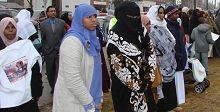
Women wearing colorful garbs and headscarves, and men wearing white robes, held signs that said “No more warlords,” and “Somali-Americans against Ethiopian aggression.”
The boisterous crowd, estimated at three thousand by some, was one of the largest in Minnesota. But some say it’s far from reflecting a unified voice among often polarized community.
“The reality is that there are many people who think Ethiopia is the magic bullet in Somali turmoil,” said Fardowsa Abdi, who stayed in her car, parked within earshot of the rally.
“While I’m hesitant about Ethiopians in particular, I’d support foreign intervention of some kind.”
Some members of the Ethiopian community said they don’t sanction their government’s attack in Somalia.
“Everyone knows that [Ethiopian prime minister] is deflecting attention away from his internal crisis,” said Sam Deganu, an Ethiopian businessman who said he came to the rally to show solidarity and to clarify that all Ethiopians aren’t in line with the war. “The Somali war has the hallmarks of Iraqi war, except that it has far less support among us.”
That view is echoed by many experts, who noted that the European Union has recently halted million of dollars in humanitarian aid to Ethiopia, after learning the latter’s grim record.
Another fear, some protestors say, is that Mogadishu could become another Baghdad, where asymmetrical war is waged against Ethiopian occupation.
Calls for withdrawal In the U.S., Congressman Donald Payne of New Jersey, a Democrat, who’ll be heading the African Subcommittee in the House next month, called Ethiopia’s action an “ill-advised measure that will further destabilize and increase the suffering of the Somali people.”
“I strongly condemn this aggression and call for the immediate withdrawal of Ethiopian and all foreign forces from Somalia.”
The African Union and the Arab League, both of which Somalia is a member of, also called Ethiopia to withdraw.
But Ethiopian premier said that he wouldn’t heed those calls until he gets the job done—a statement seen by many Somalis as an open-ended stay in the country.
As the number of Africans in the Diaspora increases, their economic impact both in Africa and in their newly adopted homes continues to rise profoundly. This impact can be felt throughout the global marketplace and directly affects the communities they inhabit. In Minnesota, African-born immigrants are establishing their clout, effecting change in everything from local politics to economic trends.
What socioeconomic trends and changes might 2007 bring for the African Diaspora in Minnesota? The probable answers seem limitless; however, the latest figures from the 2006 American Community Survey conducted by the US Census Bureau has experts and ordinary people alike pondering the many current and future challenges for Africans across the state.
According to the recently released survey, the median household income for African immigrants, including those of sub-Saharan ancestry born in the U.S., stood at only $21,000. That is less than half that of White and Asian households, which both average approximately $54,000, and still well below the $35,700 average for Hispanic households.
The survey, which was conducted in 2005, made headlines in the Star Tribune and other major media in Minnesota mainly due to two facts: incomes of Asians nearly equal those of Whites, and the income gap between African immigrants and other groups has further widened.
But what are the socio-economic forces behind these numbers? What analysis needs to accompany such data? What are the challenges that African immigrants have to face, before this income gap can even start to close? And what success stories are possibly left out of such figures and headlines?
With approximately 5,000 immigrants from sub-Saharan Africa having arrived in the state each year since 2000, the importance and magnitude of those questions will only rise. Mshale recently interviewed some new African business owners, professionals and community leaders about the survey and those questions and challenges.
Raising One African Bird at a Time “It takes time to learn how to survive in this country,” said Peter Mwaura, who first came to Minnesota from Kenya in 1999. “It is not just about education. You have to stay focused on self-improvement. You can’t be afraid to try new things. You can’t be afraid even to fail.”
In June of 2006, Mwaura opened Simba Craftware, a shop retailing African crafts, artwork, and accessories, in the new Midtown Global Market in Minneapolis. Just 27 years old, Mwaura did not have any extensive background in business before opening Simba Craftware.
“I took my daughter to Kenya earlier in the year, and I was struck by the beautiful hand-carved bird figures I saw,” he said. “That’s when the idea of opening a store in Minnesota came to me.”
At the time, Mwaura had been studying music production at Minneapolis Community and Technical College, and he has since taken time off to get the store off the ground. Among the rows of kiosks and food courts at the Midtown Global Market, his store stands out with hundreds of brightly-colored birds hanging from mobiles around the kiosk. The birds have remained his best selling product beside handmade handbags, sandals, batik art, and other goods familiar to anyone who has lived or traveled in East Africa.
During slow business hours, Mwaura can often be found stooped over one of the store’s wooden chess tables, engaged in an intense game of wits with a neighboring store owner or with a passerby who might want to challenge him.
“Many Africans come here and just end up working in nursing homes or as parking attendants,” he said. “We all need to start somewhere, but, at some point, you just have to reach out for the light. Nobody else is going to do it for you.”
Simba Craftware had its start eased thanks in part to financing from the African Development Center (ADC), which, since it opened its doors in April 2004, has been a gateway to financial success for many African immigrants.
Hussein Samatar, the founder and executive director of ADC says, “Entrepreneurship is not a new thing for the African community. The only way they know how to survive, is to start a business. If you look at the big picture, you will find that overall the African community has improved themselves. There is a sense of hope and also of concern.”
Samatar noted that some of the economic gains made by the African immigrant remain largely unnoticed because of the sheer amount of new African arrivals to the state, especially from Somalia and Ethiopia, who have to start earning their livelihood from scratch.
“The numbers reflect how we are getting more and more people from Africa in Minnesota,” he said. “Many come in as refugees. They have to start fresh. They have to learn the language, and it may take many years for some to get settled.”
If one looks at some of the city-specific data, the figures tell a somewhat different story. For example, Asians households in Brooklyn Park have a median average income of $59,210, while Asian households in Minneapolis and St. Paul have a significantly lower average of $34,281 and $38,676 respectively. Median household incomes for Africans and Hispanics in Brooklyn Park are also higher than those in Minneapolis and St. Paul.
Community experts like Samatar have interpreted such numbers as directly rated to how much longer many Asian immigrant families have been in the state, such as Hmong families who started coming in significant numbers over 20 years ago, and have become homeowners in the suburbs.
“For African businesses that have been here longer, they are starting to enter the second stage of development,” he said. “Many are starting to wholesale their goods – not only selling to their own ethnic groups, but to the mainstream.”
Samatar went on to illustrate two other critical indicators of development for immigrant communities: higher education and homeownership. He stated that many African immigrant students are enrolled in Minnesota college campuses. As their economic status rises Africans have started becoming homeowners.
Other African community members have questioned the accuracy of the figures both in terms of Minnesota’s African population (68,096 according to the Census), and of the median household income data, which they consider in part inaccurate due to some traditional African economic practices, such as bartering which is unconventional in mainstream America.
“Help, not handouts, is needed because of the rising numbers. But the future is still bright,” said Samatar.
Just down the street from the ADC on Cedar Avenue in Minneapolis, Stephen Kaggwa works behind the counter at Tam Tam’s African Restaurant, which he opened July 2006. Kaggwa, a chef and new business owner, said that he underwent an immense struggle in order to come to Minnesota from Uganda. He is also a beneficiary of financing from ADC which he used to open the restaurant in Minneapolis.
“It’s a challenging journey, but I know many African immigrants who are doing extremely well and making more than $100,000 per year,” said Kaggwa. “We do have a big gap to cover. Those of us who have found some success, we have to get into our communities and educate our people.”
Kaggwa also cited the large number of new African arrivals in the state as an explanation for the low median household income numbers.
“Probably, in the next generation, African immigrants will rise up and so will these numbers,” he said.
It is clear that the African Diaspora in Minnesota has had a significantly lower impression on the economy than other longer established immigrant groups. Most are employed in jobs that do not require strong English skills in the service sector or other African-owned businesses. However, more African-born immigrants are enrolling in postsecondary institutions allowing them an opportunity to further integrate into the professional community and establish deeper economic roots. As more African students graduate from Minnesotan colleges and universities and merge into the workforce there is bound to be an economic shift in the African immigrant community. For the African community in Minnesota, 2007 will undoubtedly be a year to pay close attention to.
The Walker Art Center currently has on exhibit a collection of work including pieces by Willem de Kooning, Pablo Picasso, and Georgia O’Keeffe. The central theme of each piece explores the expression of the human body in relationship to the fluid social, political, and physical environment in which it exists.
Drawn from the time period of the second half of the 20th century, Body Politics: Figurative Prints and Drawings from Schiele to de Kooning, portrays several thematic angles. The exhibition’s second section, which keynotes the broad cultural fascination with the customs, objects, and religions of African and Oceanic tribal cultures challenges the viewer take a second look at their biases.
The artifacts of these "primitive" cultures, which were once considered exotic fifty years ago, are expressed through artist’s perspective such as German expressionist Karl Schmidt-Rottluff, Max Pechstein, Max Beckmann, and Emil Nolde.
The Walker Art Center is located at 1750 Hennepin Avenue–where Hennepin meets Lyndale–one block off highways I-94 and I-394, in Minneapolis.For information, call 612-375-7600.
Imagine going home to a lovely luxurious house that not only looks exquisite, but also knows exactly what to do. The “smart” homes of 2006 are truly mind blowing.
A Smart Home
You can enjoy a house whose lights automatically switch on when you arrive home lighting up your walkway and every room that you walk into. After relaxing into some comfortable clothes, your favorite song automatically begins to play so there is no need to fiddle with the stereo system. If the phone rings, the music automatically mutes and a voice says “your sister is calling from her work phone.” Homes can be equipped with automated systems that not only integrate control of audio systems, home security, monitoring systems and lighting, but also things that are not traditionally electrical such as door locks and drapes.
How it Works
All systems and equipment connected to the network are controlled via a touch screen panel placed on the wall which can be concealed. You can monitor and control your home automated systems long distance via a secure connection through a cell phone or laptop. You do not have to wait to get home to turn the thermostat up or close the drapes, or turn off the stove if you forgot to do so when you left home. If someone happens to come to your house in your absence, a motion detector can alert you and send a real-time video feed so you can answer the intercom while on vacation in Paris.
Costs
A top-notch home automation system can be costly, running you more than $100,000. If you are looking for one with a super home theater setup, it could run close to a million dollars. A home does not have to be as high-tech as Bill Gates’ whose compound even features an underwater music system for the swimming pool. However, ever evolving technology is reducing the complexity of creating a smart home, making it more affordable to consumers.
Is an Automated Home Worth Creating?
Investing in a high-tech home is a worthwhile venture. You can create anything from a superb home theater that puts real cinemas to shame,or flat screen televisions that slide from view by the click of a button, to toilets that detect blood sugar levels through urine. In this digital era, high-tech products are increasing the convinience of our homes and with products that can be controlled from any part of the world, are making life easier, simpler and a little more enjoyable.
This article was repbulished from the African Executive.
African governments have over the past several years implemented far reaching regulatory reforms to enhance business and investment climate. Countries have abolished or significantly reduced requirements for government participation in business ventures. In oil producing countries and minerals resources rich countries, there is a noticeable shift away from mandatory joint ventures. Ghana, for example, has expanded the scope for foreign direct investment (FDI) by reducing the number of industries closed to foreign investors. And some countries are expediting investment approval procedures by developing one-stop investment centers. Investment-related issues, such as technology transfer, are now subject to less restrictive compliance criteria, and the protection of intellectual property rights has improved in some countries.
One area where these reforms are most evident is in the area of FDI which is very important given Africa’s severe lack of capital, technology and skills. Over the past two decades or so, African countries have liberalized regulatory regimes for FDI, addressing investors’ concerns, privatizing public enterprises and actively promoting investment. These reforms are yielding results. According to UNCTAD’s 2006 World Investment Report, FDI inflows into Africa rose from $17 billion in 2004 to $31 billion in 2005 – almost double. Although this is just about 3 percent of global FDI, the increase reflects growing international confidence in the policies that African countries are implementing. However, the same report notes that “attracting quality FDI – the kind that would significantly increase employment, enhance skills, and boost the competitiveness of local enterprises remains a challenge.
A key component of the microeconomic reforms undertaken by African countries has been the privatization of state-owned enterprises. This began in the late 1980s but has gathered steam across the region. Privatization is relieving governments of the burden of subsidies to state-owned enterprises, curtailing/minimizing official corruption, and patronage systems. Long dormant government enterprises have been reactivated, creating jobs, increasing product diversification and exports.
In some countries, appointments to the boards of government-owned companies often raised political and ethnic tensions as there often was a need for ethnic balancing. Inefficiency and corruption often resulted as the fallout of this balancing act. Privatization is removing governments from this arena and where they do get into arena, it is to play the role of arbitrator, not distributor of rents to ethnic elites. In many countries, this is resulting in significant reductions in ethnic tensions. Privatization is also spurring the creation of capital markets and deepening it in others when newly privatized companies are listed on the stock exchange. Revenues from the sale of state-owned enterprises is swelling government coffers, enabling governments to increase social sector investments.
Three examples illustrate the contribution of privatization to the growth of the private sector in Africa: Telecommunication, aviation, and housing.
Telecommunication
Private provision of telecommunications services in Africa has risen quite significantly. In most African countries, telecommunication was a state monopoly. This imposed significant cost on the domestic private sector, harming its competitiveness relative to external sectors. In many countries, telephone penetration was very low and services very erratic. This sector was thus a good candidate for privatization and deregulation. At the last count, some 25 countries in sub-Saharan Africa have transferred (or are in the process of transferring) all or part of their telecommunications ownership from the state to the private sector.
The results have been phenomenal. In Morocco, for example, teledensity increased from 5% to 15% between 1998 and 2000 following the introduction of competition in the mobile telephony market. In Nigeria, there are now over 25 million telephone subscribers, an increase from less than 500,000 about nine years ago.
Aviation
Another sector where the impact of privatization and deregulation has been felt, especially in West Africa, is the aviation. Aviation is crucial for economic expansion in Africa, given that most countries are landlocked. It is important for the expansion of the tourism sector and for global and regional integration. In most West African countries, national and regional airlines founded in the immediate post independence years have all collapsed. A host of factors ranging from corruption, incompetent management, to competition from the more established airlines from the industrialized world have been blamed. Today, private airline operators abound, and are integrating the continent in the area of air transport It is important to note in this regard that growth of this sector is financed mostly from domestic resources.
Housing
Housing is a major problem in all African countries, a problem that most African countries will not overcome left to their own resources. The private sector is the dominant provider of housing in all African countries. This role has increased in some countries with the liberalization of land ownership policies and removal of some foreign exchange controls. In Ethiopia, for example, real estate companies are constructing new upscale residential developments. The new investment climate, accompanied by special incentives to attract “Diaspora” savings is having a positive effect on remittances from the African Diaspora. In countries such as Ethiopia, the government has made conscious efforts to attract Diaspora through the easing of procedures for acquisition.
The Union of Liberian Associations in the Americas (ULAA) is the umbrella group of Liberians and their various organizations in the Americas. ULAA is a voluntary, non-profit and non-governmental organization that was formed on July 4, 1974 in Philadelphia, Pennsylvania. It was given birth through the efforts of the Liberian Students Association in the US with its mission being to advance the causes of Liberians at home and abroad.
Mr. Emmanuel S. Wettee, a Ph.D. student at Colorado Technical University was inducted into office as the new president of the ULAA on Saturday, December 9, 2006. Installing the executive officers, Father James Wilson, President of the Liberian Ministerial Council in Minnesota challenged Wettee and other elected officials of ULAA to uphold and abide by the Constitution of ULAA and to carry out its mission and purpose.
Fr. Wilson, who is also the Rector of St. Andrews Episcopal Church in Minneapolis, was speaking at ULAA’s inaugural ceremony, where he addressed hundreds of Liberians from all parts of the United States, at the Grand East Host banquet facility in Reynoldsburg, Ohio. He reminded the officers that they are called not only to administrative responsibilities, but also to good governance that would be based on selflessness, respect for all, accountability, transparency and well-guided interpersonal relationship and spiritual thinking.
“Over the years, ethnicity has trumped national commitment in our national history, created hatred, animosity, and division among us Liberians and continues to keep us apart," said Fr. Wilson.
"As executive officers of ULAA, can you promise before God and this assembly that you will rise above ethnicity, treat every Liberian equal, develop a national agenda that would unify Liberians and create national consciousness?” he asked to which the officers all responded in the affirmative. He concluded by calling on ULAA Chapters to give the executive officers their fullest cooperation and support.
Other elected officers include: Mrs. Georgia Mason-Selli, National Vice President; Mr. Isaac Zawolo, National General Secretary; Mr. Emmanuel Togba, National Treasurer; Eastern Regional Vice President, Mr. Charles Y. Coleman; Northern Regional Vice President, Mr. Gaye D. Sleh; Southern Regional Vice President, Mr. James Y. Hunder and Regional Vice President Western Regions, Mr. Jerry Gbardy.
The guest speaker at the ceremony was Dr. Stephen C. Lubkemann, an assistant professor of Anthropology and International Affairs at George Washington University, who urged the Liberian community to lobby lawmakers against terminating TPS (Temporary Protective Status).
Terminal Protective Status
Dr. Lubkemann said, “What was once a possibility, the termination of TPS, is now a certainty. For those Liberians who have who lived here for many years under this always tenuous status, and its taxing physical, social, economic, and perhaps above all psychological insecurity, it appears that this is the last Christmas that they will know under thisbureaucratic Sword of Damocles".
He continued, “Since the renewal of TPS is no longer an option there are perhaps only two fundamental questions left to consider; will the sword of illegality now indeed fall upon those who have lived so long under TPS status?What, if anything, can be done to prevent it from happening?”
Dr. Lubkemann reminded Liberians that the termination of TPS status now assured them that what was once a temporary immigration status will now more accurately be thought of as terminal protective status for all who have benefited from it. "There will be no automatic exception for Liberians, if only because TPS itself will no longer exist,” he added.
Dr. Lubkemann, who is known in many Liberian communities for his research work on TPS, emphasized that ULAA leadership and the mass Liberian community participation will both be needed in order to succeed in any effort to achieve permanent status for current Liberian TPS holders.
“There is a new and potentially effective argument to be made to policy-makers who are deliberating status issues which is that they should consider the foreign policy benefits of granting permanent status to those with TPS,” said the guest speaker. He added, "The granting of permanent status to those with DED/TPS would strengthen the ability of the Diaspora to contribute to the rebuilding of Liberia itself. It bears noting that those with TPS status are acting in a lawful manner, having thus already demonstrated their commitment to legal means.”
In his Inaugural Address, the 23rd President of the Union of Liberian Associations in the Americas, Mr. Emmanuel Wettee, called on Liberians to unite and forge ahead under the banner of ULAA. He said, “It has become clear time again that the splintering of the national effort has not yielded the desired results for us and our country. Hence, I cannot but implore all Liberians to unite under this big ULAA umbrella, where, as the saying goes, ‘there is room for everyone’.”
Working with the Liberian Government
Mr. Wettee, who served as Doyen of ULAA for many years, said his Administration will work closely with the Government of Liberia. He said he would use the Liberian Embassy near Washington, D.C. as his immediate point of contact in building the much needed collaborative relationship. He said he would take urgent steps to ensure that efforts at producing a revised ULAA Constitution materialize, adding, “The goal here is to finalize the Union’s organic laws in ways that address the needs of some organizations that are desirous of joining the Union".
President Wettee was applauded when he said his administration is considering the holding of a Donors’ Conference on Liberia under the auspices of ULAA which will seek to mobilize financial resources for Liberia.He also noted that the Conference would seek the highest manifestation of partnership between ULAA and various Liberian organizations.
Mr. Wettee said, in support of his domestic social services agenda, his administration would establish the mechanism to partner with member chapters and other organizations in conducting chapter and regional seminars as well as co-sponsoring specific projects in the area of social service delivery. He added that his administration would be grounded on five pillars: shared power and influence, visioning and mobilizing, collaboration and partnership and increased participation and changing perceptions.
“Our administration aims to act collaboratively with our internal organizations and external partners to solve agreed upon issues that affect all Liberians.” Mr. Wettee called on all Liberians to roll up their sleeves and assist him in making ULAA a better organization. “Fellow Liberians, the road ahead of us appears very rough but, with determination, commitment, willingness, and above all unity of purpose, we can all partner together under an effective leadership and come out with great success”.
Ohio Governor’s Greeting to Liberians
A special message from Hon. Bob Taft, Governor of Ohio, was read by ULAA Chief of Protocol, Mr. Adolphus Karpeh. The Governor extended greetings to the officers, members, family and friends of the ULAA.
In his message, the Governor said that Ohio takes pride in its ethnic communities appreciating the ways in which Liberian Americans added to the diversity of the state. He added that his office recognized the importance of the rich cultural heritage that is passed along to the future generation through the many Liberian American professional, fraternal, cultural, religious and social organizations.
The Governor also pointed out that the ULAA can be proud of its accomplishment since it fulfilled its stated purpose of promoting peace, democracy and development in Liberia while working to improve the living standards of Liberians in the Americas. Hon. Taft saluted Emmanuel Wettee and the officers for their efforts towards contributing to the multicultural diversity of communities throughout the State of Ohio and the world.
The ceremony climaxed with a grand dinner and ball. The star of the evening, US based Liberian singer, Dominic Brapoh sang a few of his original songs to much applause. Dominic, also known as Lucky Shango, has produced two Liberian albums: Beautiful Woman and Liberian Pageant. He is currently working on his third album which includes the tracks Let me show you something and Bounce that Tumba.
Minnesota Advocates for Human Rights (MAHR) is launching a large scale statement-taking process this month and is seeking the full participation of Liberians and other Africans all over the US in spreading the word and encouraging fellow compatriots to come forward willingly to give their statements to the Liberian Truth and Reconciliation Commission (TRC) concerning their experiences in Liberia’s civil war. The TRC U.S. Project is designed to give Liberian refugees in the U.S. a role in promoting international justice and human rights as part of the healing process in Liberia. The purpose of the TRC is to promote national peace, security, unity and justice in Liberia.
Ahmed Sirleaf II, who was recently hired by the Human Rights organization to spearhead the community outreach efforts, says MAHR has designed a vigorous community outreach and public awareness plan to educate Liberians and other West Africans about the statement-taking process. He added that MAHR along with other implementing partners of the TRC process in the U.S. have established a toll free and a local telephone number (to be announced soon), to help Liberians in Minnesota and around the U.S. make appointments with the MAHR or get information about the time and place where they could go to give their testimonies.
Sirleaf said four statement-taking sites have been identified so far: Center for Families in North Minneapolis, VLN Park Avenue Legal Clinic in South Minneapolis, Our Savior’s Church in Brooklyn Park, and The Osseo Enrollment Center in Brooklyn Park. He intimated that other venues have yet to be determined. Sirleaf who has been volunteering and advising the MAHR on TRC and Liberian issues since the inception of the project, says the community outreach plan envisions the engagements of Liberians through the TRC National and local Advisory Committees, the Organization of Liberians in MN, OLM, the Liberian Ministerial Association (LMA), and other Liberian community and religious leaders and groups, as well county and alumni associations in Minnesota and around the country.
“We will go to churches, mosques, temples, and all places of worship to spread the word about this important work,” Sirleaf said in a telephone interview with Mshale. The plan also includes engaging local and national media outlets, including regular press releases and media appearances about the project to foster better participation.
“We call on all Liberian professionals, community leaders, and media organizations to participate in educating our people about the process,” he added.
The TRC will provide a forum that will address issues of impunity, presenting an opportunity for both the victims and perpetrators of human rights violations to share their experiences while looking into the root causes of the crisis in Liberia, then recommend measures to be taken for the rehabilitation of the victims. Liberians will have an opportunity to tell their stories and make recommendations to the government and the TRC about reconciliation, reparations, and the potential prosecution of perpetrators.
Mirroring the TRC’s work in Liberia, MAHR is coordinating an effort to collect statements from thousands of Liberian refugees throughout the United States. This groundbreaking project will for the first time give refugees – the victims of human rights abuses – a voice in the peace and reconciliation process. No other truth and reconciliation commission has involved refugees in the U.S. in its proceedings. In addition to providing refugees with a voice, this project will create a model for involving refugees in mechanisms that promote international justice, human rights and the rule of law. MAHR is working directly with Liberia’s Truth and Reconciliation Commission to develop this project, but is not receiving any funding from the TRC.
More information can be found on the MAHR website on http://www.mnadvocates.org/Liberian_Truth_and_Reconciliation_Commission_Project.html.
AAt a dinner last month, Kenyans in Minnesota gathered to launch a new association– The Kenyan Community in Minnesota (KCM). A socio-economic organization, KCM, has been established to enhance the socio-economic growth of Kenyans, both in the Diaspora and in Kenya.t a dinner last month, Kenyans in Minnesota gathered to launch a new association– The Kenyan Community in Minnesota (KCM). A socio-economic organization, KCM, has been established to enhance the socio-economic growth of Kenyans, both in the Diaspora and in Kenya. The association also hopes to be influential in Kenya’s search for its political destiny. In the past, the Kenyan community in Minnesota has attempted to create an association of Kenyans abroad. Most discussion on Kenyan public forums quickly turn to tribal and sometimes regional debate. How can Kenyan community leaders in the Diaspora effectively fight to end this cycle? The greatest challenge for this association is to demonstrate to Kenyans its efficiencies as a regional body.
Kenyan Community Leaders There was a resounding resolve from the different community leaders to work towards uniting all Kenyans.
Cliff Kosgei, chair of the Eldoret Group, a Minnesota organization for the Nandi community, challenged the new KCM board to create a sense of one community among Kenyans. Kosgei urged KCM leaders to take their responsibilities seriously since " leading is not a title, but is a call to action."
"I am glad that Kenyans are finally under one umbrella to encompass whole communities since this will accord the community a stronger voice in its endeavors. Hongera," said Peter Ndemo, speaking for Mwanyagetinge, a community organization.
George Oyeho, a community leader with the Rotary Club (Woodbury), was excited at the prospect of working with all Kenyans on issues of development. He encouraged members of the community to remember their roots by participating in projects that will go towards poverty alleviation and in improving the standard of living of Kenyans by investing in education, health services and food storage. He also impressed upon the event’s attendants on the need to take an official census on the number of Kenyans living in Minnesota. "We are still practicing hunter-gatherer skills, however, we will progress a lot more if we worked in solidarity."
Hercules Otieno, a member of the AKIA, the Luo organization also warned the leaders about making the association a personal business as has been the practice in many community organizations.
Representating the Kenyan Somali community, Abdullahi Sheikh was glad to be involved in KCM’s discussion since his community, residents of Northern Kenya, have always been isolated from the rest of Kenya. His message to the audience was profound in establishing one’s identity. "One discovers that life is beyond your little community. When I moved away from home, I began to identify not as a Somali, but as a Kenyan- a member of a larger community
Call to Action
Speaking after dinner to about one hundred guests, the guest speaker at the KCM launch, Dr. Siyaad Abdullahi urged Kenyans to take up the opportunity to prove that they can work in solidarity. Dr. Abdullahi is the CEO of Midwest Career Institute, a private training institute in nursing and other healthcare professions. He is the founding president, and current chair of the Pan African Business Alliance (see Business story on the Pan African Business Alliance Re-energized).
"Difference is strength, but we need to use this to a great good," said Dr. Abdullahi.
Dr. Abdullahi asked Kenyans in Diaspora to take advantage of living in the US, a country with great resources, both in technology and economic advancement. While a lot of Kenyans might have individual obligations, especially financial ones, it is imperative that they learn to work as a community for economic development. He urged the leadership of KCM to write a policy document where they put the Kenyan government to action, and use the media to push this agenda. Dr. Abdullahi cited current Kenyan President Mwai Kibaki’s energized speech where he promised Kenyans a better life. He compared the disappointment that Kenyan leaders, in their failure to deliver their development promises, to an inflated soccer ball. Dr. Abdullahi is confident that associations such as KCM have a responsibility to call for development in Kenya with an effective government, allowing Kenyans to look forward to improved infrastructure and social systems. "There is life after a political term," said Dr. Abdullahi speaking on the big man syndrome where leaders squander public resources for private gain.
KCM Leadership KCM is looking forward to have its first elections in the next few months. According to the interim chair of the association, Joash Maangi KCM will serve as national forum for Kenyans in Minnesota to discuss and partake in matters on Kenya’s national interest.
"KCM will help Kenyans integrate into mainstream America as they make Minnesota their home away from home. KCM promises to be inclusive of all Kenyans in Minnesota. We propose a structure that will have an advisory board with the following stakeholders: leaders from all Minnesotan Kenyan Organization, Kenyan business owners, professional leaders and individuals with local property," Maangi on the structure of KCM.
Following skeptical questions on the suspected political role of KCM from Kenyans attending the launch, Maangi assured them that KCM promised to be an independent organization devoid of political association.
The following are the interim officers, Bob Nyangweso, Nicholas Mireri, Otieno Nyangundi, Loice Oburu, and Henry Ongeri.