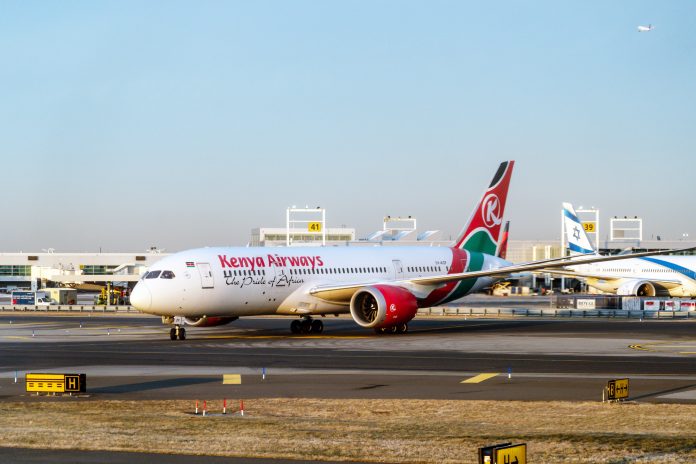
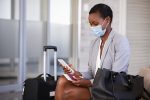
Kenya Airways has launched a fare matching program called Best Price Guarantee. Photo: Courtesy Zhukhovsky
Kenya Airways has launched a fare matching program called Best Price Guarantee. Photo: Courtesy Zhukhovsky
Sponsored Content from Kenya Airways
Kenya Airways has introduced an exciting product, BEST PRICE GUARANTEE (BPG). Best Price Guarantee (BPG) is a fare matching program that aims to give assurance to our customers on the all-inclusive competitive fares distributed by Kenya Airways on direct online channels i.e. website and mobile.
How does BPG work? Should a customer find a better quote on any indirect channel, Kenya Airways commits to match the fare. To start, the product will pilot in the US and South Africa markets effective 14th April 2022, with subsequent roll-out in the rest of the markets.
Please note that all BPG claims shall be submitted using an online form available on Kenya Airways website and processed by the US desk at CEC back office.
Click the link below to read more about BEST PRICE GUARANTEE (BPG)
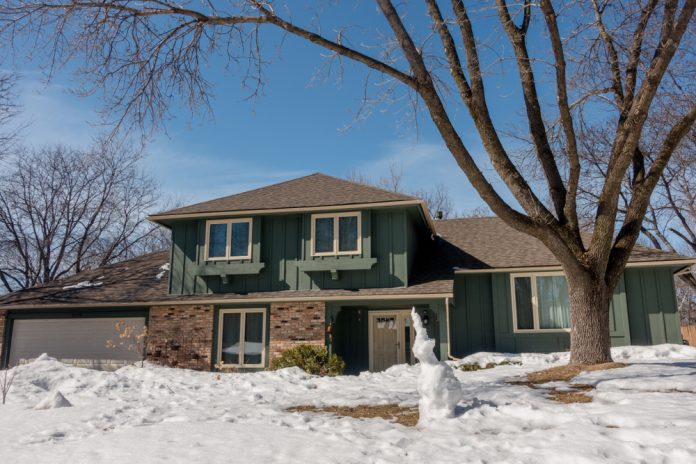
Minnesota Housing has started accepting applications at HomeHelpMN.org for Minnesotans to apply for government financial assistance to avoid foreclosure. Applications will be accepted through June 17, 2022. Photo: Shawn Goldberg/Shutterstock
Minnesota Housing has started accepting applications at HomeHelpMN.org for Minnesotans to apply for government financial assistance to avoid foreclosure. Applications will be accepted through June 17, 2022. Photo: Shawn Goldberg/Shutterstock
Minnesotans who have fallen behind on their mortgages and face a foreclosure due to a financial hardship, caused by the COVID-19 pandemic, can now apply for government assistance through the new HomeHelpMN program. Applications for assistance opened on Tuesday, May 17 at HomeHelpMN.org. The application period will end on June 17.
Minnesota received $109 million from the Federal American Rescue Plan to help homeowners get caught up on their mortgage payments.
To be eligible for the program you must own and occupy the home in Minnesota. Eligibility is based on your county’s median household income and will vary by county. In Minnesota’s seven-county metro area, those limits are $90,000 for a single person, $93,850 for a couple and $117,300 for a four-member household.
“Many households were already one paycheck away from falling behind even before the pandemic. Lost wages quickly led to missed payments,” said Minnesota Housing Commissioner Jennifer Ho in a news release. “Many Minnesotans have fallen behind on their mortgage. Many are even facing foreclosure. HomeHelpMN opened today with a goal of preserving homeownership for as many Minnesotans as possible.”
Commissioner Ho said demand for the funds is expected to be higher than what is available and encouraged those who are in need to apply as soon as possible.
Homeowners can receive up to $35,000 in assistance, for qualified past-due expenses including mortgage bills and contract for deed payments, manufactured home loan payments, property taxes, homeowner association fees, property insurance, and manufactured home lot lease and Tribal Land Lease payments.
Payments will be made directly to your mortgage lender or debt holder.
You can submit your application online at Home-HelpMN.org or over the phone at 800-388-3226. The website and application are available in English, Spanish, Somali, and Hmong and other languages. Callers will be prompted to select a language and will be connected to an interpreter if they prefer a language other than English. Call Center hours are from 8 a.m. – 6 p.m., Monday through Saturday.
Minnesota Housing said if applications received during the application period exceed available funding, applicants may be put on a wait list. A submitted application is not a guarantee of funding availability, it warned.
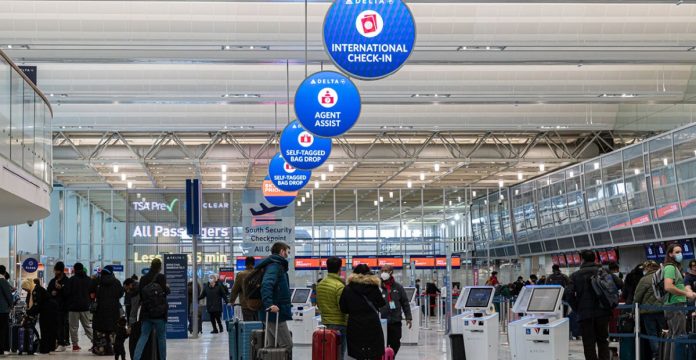
Travelers at the Minneapolis-St. Paul International Airport in 2021. For the summer of 2022 as traveling picks up, the CDC is recommending domestic travelers test for COVID-19 as close as possible to their departure day. Photo: Courtesy MSP Airport
Travelers at the Minneapolis-St. Paul International Airport in 2021. For the summer of 2022 as traveling picks up, the CDC is recommending domestic travelers test for COVID-19 as close as possible to their departure day. Photo: Courtesy MSP Airport
The US Centers for Disease Control and Prevention has updated its guidance for people traveling within the United States.
The agency now urges all domestic travelers to “consider getting tested as close to the time of departure as possible (no more than three days) before your trip,” according to its Covid-19 website updates this month.
This advice notably includes travelers who are current with their vaccines and boosters.
Previously, the recommendation to test before domestic travel applied to those who weren’t up-to-date with their Covid-19 vaccines.
There’s also testing guidance for after your trip is over, especially if you’ve been spending time in areas crowded with people.
The CDC recommends taking a Covid-19 test after domestic travel “if your trip involved situations with greater risk of exposure such as being in crowded places while not wearing a well-fitting mask or respirator.”
Finally, the agency reminds travelers to be aware of local rules and conditions wherever they’re going within the United States. Don’t assume what holds true in your town or state is the same somewhere else.
The CDC advises people to “follow all state, tribal, local, and territorial health recommendations and requirements at your destination.”
Different rules for international travel
These domestic updates are separate from CDC guidance for those traveling to the US, including US territories, from abroad.
Those travelers must have a negative coronavirus test within a day of travel or submit proof that they’ve recovered from Covid-19 in the previous 90 days. Children younger than 2 do not need to test.
The CDC also recommends getting tested three to five days after international travel to the United States.
Additionally, foreign citizens must be vaccinated for Covid-19 to enter the United States. No such requirement exists for US citizens, US nationals, and lawful permanent residents traveling domestically or internationally.
Still, the agency recommends that people be up-to-date with vaccines before any air travel.
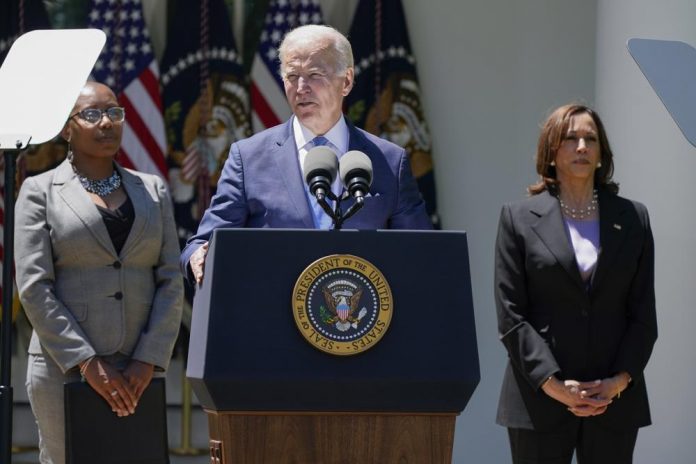
Vice President Kamala Harris, right, listens as President Joe Biden speaks at an event on lowering the cost of high-speed internet in the Rose Garden of the White House, Monday, May 9, 2022, in Washington.On the left is Alicia Jones, a beneficiary of the internet program. Manuel Balce Ceneta/AP
Vice President Kamala Harris, right, listens as President Joe Biden speaks at an event on lowering the cost of high-speed internet in the Rose Garden of the White House, Monday, May 9, 2022, in Washington.On the left is Alicia Jones, a beneficiary of the internet program. Manuel Balce Ceneta/AP
WASHINGTON (AP) — President Joe Biden announced Monday that 20 internet companies have agreed to provide discounted service to people with low incomes, a program that could effectively make tens of millions of households eligible for free service through an already existing federal subsidy.
“High speed internet is not a luxury any longer. It’s a necessity,” Biden said at a sun-drenched rose garden event with representatives from participating companies, as well as members of Congress.
The $1 trillion infrastructure package passed by Congress last year included $14.2 billion funding for the Affordable Connectivity Program, which provides $30 monthly subsidies ($75 in tribal areas) on internet service for millions of lower-income households.
With the new commitment from the internet providers, some 48 million households will be eligible for $30 monthly plans for 100 megabits per second, or higher speed, service — making internet service fully paid for with government assistance if they sign up with one of the providers participating in the program.
“This is a case where big business stepped up. We’re trying to get others to do the same thing,” Biden told the crowd to sustained applause. “It’s going to change peoples’ lives.”
Advocates were cautiously optimistic.
“It might be a game-changer,” said Marty Newell, coordinator for Rural Broadband Policy at the Center for Rural Strategies in Whitesburg, Kentucky, where he said slow internet has plagued residents and businesses alike.
Newell said he wanted to see more about what the program will mean going forward, but that his main question is — given that increased broadband access has generally been a bipartisan issue in Congress — “What took them so long”
Biden, during his White House run and the push for the infrastructure bill, made expanding high-speed internet access in rural and low-income areas a priority. He has repeatedly spoken out about low-income families that struggled finding reliable Wi-Fi, so their children could take part in remote schooling and complete homework assignments early in the coronavirus pandemic, including, he said Monday, families driving to McDonald’s parking lots to access wireless internet inside the restaurant.
The 20 internet companies that have agreed to lower their rates for eligible consumers provide service in areas where 80% of the U.S. population, including 50% of the rural population, live, the president said. Participating companies that offer service on tribal lands are providing $75 rates in those areas, the equivalent of the federal government subsidy in those areas.
Biden and Vice President Kamala Harris also met Monday with telecom executives, members of Congress and others to spotlight the effort to improve access to high-speed internet for low-income households. The president said a top priority going forward will be increasing competition among internet providers in many parts of the country, noting that millions of Americans live in areas with just one provider and currently pay higher prices because of it.
The participating providers are Allo Communications, AltaFiber (and Hawaiian Telcom), Altice USA (Optimum and Suddenlink), Astound, AT&T, Breezeline, Comcast, Comporium, Frontier, IdeaTek, Cox Communications, Jackson Energy Authority, MediaCom, MLGC, Spectrum (Charter Communications), Starry, Verizon (Fios only), Vermont Telephone Co., Vexus Fiber and Wow! Internet, Cable, and TV.
American households are eligible for subsidies through the Affordable Connectivity Program if their income is at or below 200% of the federal poverty level, or if a member of their family participates in one of several programs, including the Supplemental Nutrition Assistance Program (SNAP), Federal Public Housing Assistance (FPHA) and Veterans Pension and Survivors Benefit.
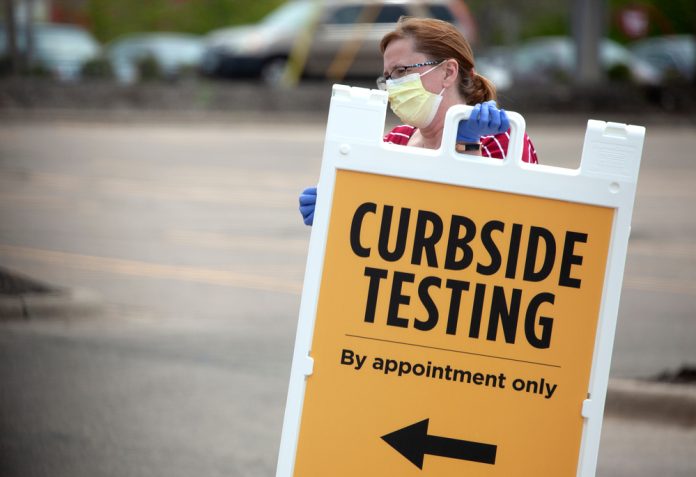
In this May 7, 2020 picture, a medical worker carries a directional sign for curbside testing of the coronavirus. The Minnesota Department of Health announced on Wednesday, May 11, 2022 that it will open a community testing site in the Midway neighborhood of Saint Paul on May 16, 2022. Photo: Steve Skjold/Shutterstock
In this May 7, 2020 picture, a medical worker carries a directional sign for curbside testing of the coronavirus. The Minnesota Department of Health announced on Wednesday, May 11, 2022 that it will open a community testing site in the Midway neighborhood of Saint Paul on May 16, 2022. Photo: Steve Skjold/Shutterstock
A COVID-19 community testing site is scheduled to open at the former Herberger’s in the Midway neighborhood of Saint Paul, the Minnesota Department of Health announced on Wednesday. The health department’s move is part of its strategy to adjust testing resources to meet demand and need.
““Testing remains an important tool for protecting ourselves and others from COVID-19,” said Jan Malcolm, the Minnesota Commissioner of Health. “As this latest announcement shows, we are continuing to work with community partners to adapt the testing resources to fit the needs and preferences of Minnesotans.”
The Midway site, located at 1400 University Avenue West, will offer rapid antigen testing om Sundays from 11 a.m. to 4 p.m. and Mondays through Fridays from 11 a.m. to 6 p.m.
The number of COVID cases has been going down in the last few months as was the number of Minnesotans hospitalized with COVID-19. However, the numbers have been rising lately with a surge attributed to what experts are calling relatives of the omicron variant with names such as BA.2 and BA.2.12.1.
As a result of these strains, the Minnesota Department of Health reported on Tuesday that there are 368 people hospitalized with COVID-19, with 36 of them in intensive care. It also reported 5,117 new cases of COVID-19 which is almost double the number reported a week ago. The over 5,000 new cases do not include at-home tests which largely go unreported.
Tests are free at the state’s community testing sites like the one opening in Midway. A full list of the state’s community testing sites can be found at this link: COVID-19 Community Testing Sites.
The Midway site will have the ability to conduct up to 5,000 test per day, MDH said in a news release. Translation services and accessibility accommodations will be available on-site. While walk-ins are welcome, MDH is encouraging appointments.
The state also announced the closure of two testing sites at Roy Wilkins Auditorium in downtown Saint Paul and the Stillwater Armory. The two sites’ last day of testing will be May 12 and May 13 respectively.
The health department also reminded Minnesotans that they can order two free sets of rapid tests that will be delivered to their homes at no cost. Through the federal government, families can also order free rapid at-home tests at CovidTests.gov. Food banks, local public health agencies, community groups and other community health organizations may also have free tests available.
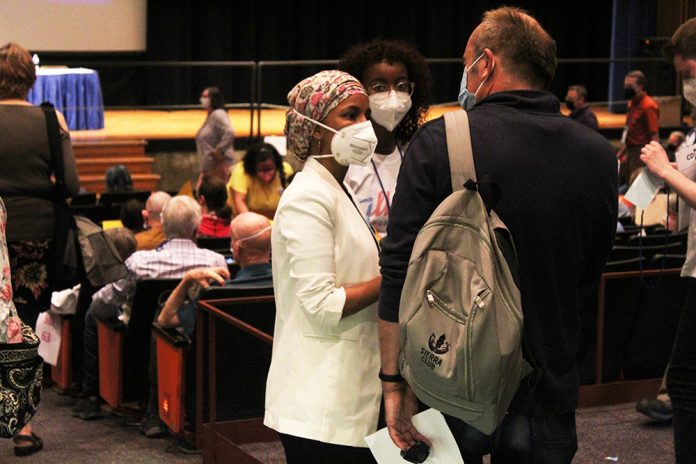
Rep. Ilhan Omar, left in mask and her daughter Isra, talk to a delegate during the DFL Fifth Congressional District endorsement convention on Saturday, May 7, 2022 where she won the endorsement in her reelection bid. Photo: Jasmine Webber/Mshale
Rep. Ilhan Omar, left in mask and her daughter Isra, talk to a delegate during the DFL Fifth Congressional District endorsement convention on Saturday, May 7, 2022 where she won the endorsement in her reelection bid. Photo: Jasmine Webber/Mshale
The Democratic-Farmer-Labor Party (DFL) has once again endorsed Rep. Ilhan Omar as she seeks re-election to represent Minnesota’s 5th Congressional District.
Omar and former Minneapolis city councilmember Don Samuels battled it out at the 5th Congressional District (CD5) Convention held Saturday at North Community High School.
“The Minnesota House of Representatives under DFL control argue for some of the most progressive policies, but we still have so much work to do,” said Governor Tim Walz.
Omar was first sworn into office in January of 2019. She is the first ever African refugee to be elected to Congress, one of the first Muslim American women to do so, and the very first woman of color to represent Minnesota.
Omar is a Somali-born immigrant whose family fled the country’s civil war when she was 8 years old. Her interest in politics began in her teen years. She was a policy fellow at the University of Minnesota’s Humphrey School of Public Affairs before winning a seat in 2016 to represent District 60B in the Minnesota House of Representatives. From then, her political career continued to grow, and she has been re-elected each term since her first swearing into Congress.
Don Samuels was born in Kingston, Jamaica, and emigrated to the United States for college. Samuels said he felt called to a career in politics when a bullet shattered the window of his soon-to-be newborn son’s room.
“For some it would have been a reason to pack up and move, but for us it was a sign to organize,” said Samuels.
Samuels then began advocating for safe neighborhoods in Minneapolis, and when a city council seat became vacant, he swiftly took the opportunity. During his time on the city council, he continued to address issues of violence in local neighborhoods. Additionally, he founded Minneapolis’ “Ban the Box” policy, which eliminated the requirement for hopeful job applicants to disclose past felonies. Samuels has since left the city council but continues to volunteer at various organizations to improve issues of safety in his community.
During a question-and-answer session, the candidates participated in a panel discussion where they shared their stances on hot issues in their neighborhoods. The most pressing question was that of abortion, which has taken centerstage following recent leaked majority opinion that suggest the U.S. Supreme Court could overturn the landmark Roe v. Wade, would leave the issue to the states.
Samuels said while he had not had much opportunity to speak on the issue during his career, he supported Roe v. Wade wholeheartedly.
“Despite a popular rumor going around, I support a woman’s right to choose, and always have,” said Samuels.
Omar said women’s rights have been a key focus area in her career.
“Abortion is healthcare, and women should be the ones to make decisions pertaining to their bodies,” said Omar.
Another delegate asked the candidates’ position on President Biden’s initiative that would cancel student loan debt for thousands of college students and graduates in the country.
Omar said it was an issue she’d been working on for years, as young people struggle to buy homes and older Americans put off retirement to pay off the loans.
“I introduced that legislation in my first term and have been trying to get the president to use his executive power ever since,” said Omar.
Samuels said that while he agreed with cancelling student debt, it was important to apply an “income cap.”
“It is a worthy cause, especially for African Americans, Native Americans, and poor people, but we must make sure we don’t cancel the student debt of millionaires,” said Samuels.
On the issue of healthcare, the candidates were asked to share their stance on the idea of universal healthcare. Samuels said universal healthcare is a goal he’s continued to support and that he upholds the values of Obama’s Affordable Care Act.
“Much of my career has been focused on advancing the Affordable Care Act, which ultimately increased access to health insurance,” said Samuels.
“Much of my career has been focused on passing equitable healthcare legislation: for example, we capped insulin at $35,” said Omar.
The candidates were also asked about how they have worked to serve marginalized communities. Samuels said that his humble beginnings in Jamaica equipped him with the perspective necessary to be an effective public servant.
“I grew up in a poor community and saw the difference in the way people of color were treated, so I always advocate for resources to be allocated to marginalized communities.
“As someone who carries multiple marginalized identities, intersectionality is important to me,” said Omar. “That is why I have advocated for legislation to close disparity gaps.”
In the end, Omar got more delegates to clinch the endorsement. Primary elections in Minnesota will be on August 9 with the candidate filing period starting on May 17.
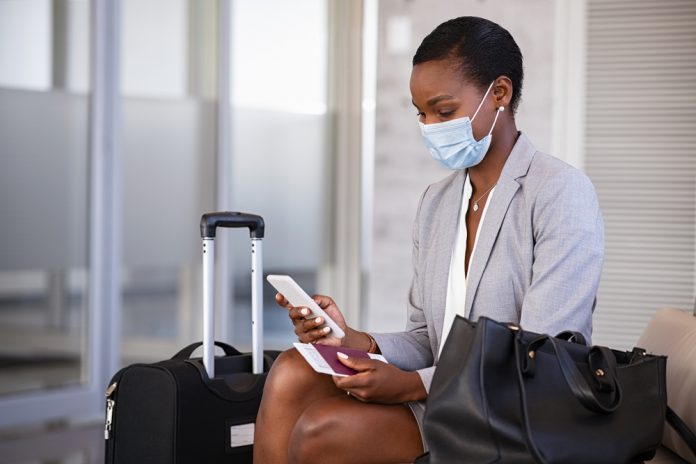
The U.S. Centers for Disease Control and Prevention recommends that you have backup plans ready if you’re traveling abroad in case you get COVID-19. Photo: Shutterstock
The U.S. Centers for Disease Control and Prevention recommends that you have backup plans ready if you’re traveling abroad in case you get COVID-19. Photo: Shutterstock
What happens if I get COVID-19 while traveling?
Depending on your destination, it could result in an unexpected change in plans, such as being required to stay isolated in a hotel.
It’s why the U.S. Centers for Disease Control and Prevention recommends that you have backup plans ready if you’re traveling abroad. You might have to stay longer than planned if you test positive.
In some places, you won’t be able to board flights until you test negative. In others, you might also be required to stay in a quarantine facility.
Since results from a PCR test can remain positive for weeks after an infection, those who have had COVID-19 might have to get documentation from a doctor or health authorities saying they’ve recovered. Some travel only requires an antigen test.
If you end up needing medical treatment, check with your embassy for suggested health care providers. Keep in mind that some countries still have overwhelmed health care systems due to the pandemic.
Plan time for recovery since some countries — including the U.S. — require a negative test for reentry. Exceptions to this policy may be granted on an “extremely limited” basis, such as in the event of an emergency medical evacuation or humanitarian crisis, says the CDC.
It also helps to be financially prepared to pay unexpected bills. While it varies country to country, travelers are often responsible for costs associated with any isolation or medical treatments needed.
Travel companies suggest getting insurance that will cover the cost of treatment, isolation or rescheduled travel plans. Some countries require that you have insurance before you’re allowed to enter.
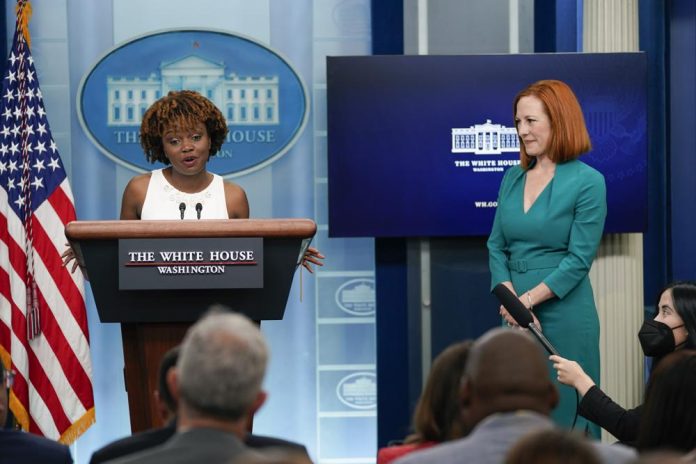
Karine Jean-Pierre, left, speaks during a press briefing at the White House, Thursday, May 5, 2022, in Washington after President Joe Biden named her as the next White House Press Secretary and the first Black person to hold the position.Outgoing Press Secretary Jen Psaki is on the right.Photo: Evan Vucci/AP
Karine Jean-Pierre, left, speaks during a press briefing at the White House, Thursday, May 5, 2022, in Washington after President Joe Biden named her as the next White House Press Secretary and the first Black person to hold the position.Outgoing Press Secretary Jen Psaki is on the right.Photo: Evan Vucci/AP
President Joe Biden announced on Thursday that Karine Jean-Pierre, 44, will be the new White House press secretary when Jen Psaki leaves the post on May 13.
Jean-Pierre who worked on Biden’s 2020 presidential campaign has been deputy press secretary since Biden took office. She also worked in the Obama White House. She was born to Haitian parents in Fort-de-France, Martinique, before her family immigrated to New York City, where she grew up.
“Karine not only brings the experience, talent and integrity needed for this difficult job, but she will continue to lead the way in communicating about the work of the Biden-Harris Administration on behalf of the American people,” Biden said in a statement.
Press Secretary Psaki appeared with Jean-Pierre on the podium after Biden’s announcement during the daily press briefing and said “I’m going to cry,” before motioning for her to come to the podium.
Psaki had stated earlier in the Biden administration that she only planned to stay on the job for one year. Press reports have indicated that she is headed to MSNBC.
“She comes to this job with decades of experience, even though she looks very young,” Psaki said as she and Jean-Pierre hugged each other on stage.
Psaki went on to say that Jean-Pierre’s appointment which makes her the first Black woman to hold the position, will “give voice to so many and allow and show what is truly possible when you work hard and dream big.”
In brief remarks from the podium during the daily briefing, Jean-Pierre said it is important for young Black children to see someone like them on White House press podium, saying that it was not “not lost on me,” that her appointment was historic.
“I understand how important it is for so many people out there, so many different communities,” Jean-Pierre said. “That I stand on their shoulders, and I have been throughout my career.”
Vieux Farka Touré of Mali is scheduled to perform at the Dakota in Minneapolis on Wednesday, May 18 2022. Photo: Courtesy of Vieux Farka Touré
Vieux Farka Touré of Mali is scheduled to perform at the Dakota in Minneapolis on Wednesday, May 18 2022. Photo: Courtesy of Vieux Farka Touré
More than half his life—and he’s only 41 years old—has been devoted to on-stage, live performance. Vieux Farka Touré revels in the energy of his audience and his bandmates. His many albums recorded live attest to his charisma.
So when the pandemic precluded those essential elements that fed him, guitarist and singer, Touré dug into his past for inspiration and motivation. His latest album, Les Racines, showcases what he discovered in the two years he spent at home in Mali.
Mshale spoke with Vieux Farka Touré recently. Touré said, “I had never been home in Mali for such an extended period of time since launching my career.”
Wednesday, May 18th, he’ll perform at The Dakota in Minneapolis featuring music created during the pandemic and compiled into his newest album, Les Racines, which will be officially released June 10th.
“The songs will feature the brilliant drummer, Adama Kone, on the calabash drum,” Touré said referring to his upcoming show. Touré’s performed at The Dakota previously, “but this will be Adama’s first time performing there.”
Touré reflected on how this new music evolved. “I recorded the album entirely at a studio that I constructed at my home in Bamako, Mali,” he said. While past albums were influenced by many different genres such as reggae and funk, Touré said “for Les Racines, I focused on the musical traditions of Mali. In addition to my guitar and vocals, the album uses Malian instruments such as the ngoni, kora, and calabash drum.”
His current US tour launched in April, none too soon for Touré who said, “When I was unable to perform live shows during the pandemic I constantly thought about how much I missed connecting with fans through live music.”
Taking the stage in May will be a solace and rejuvenation for both performers and listeners.
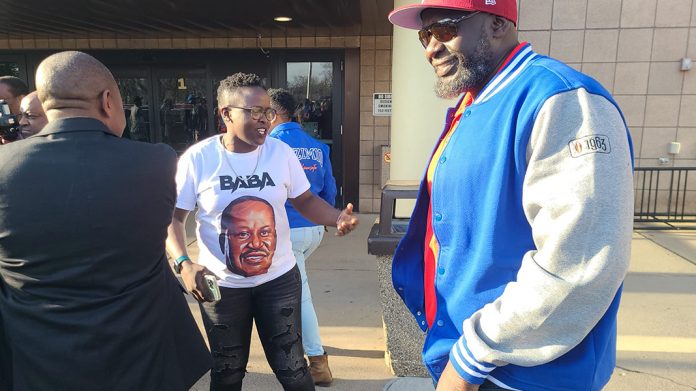
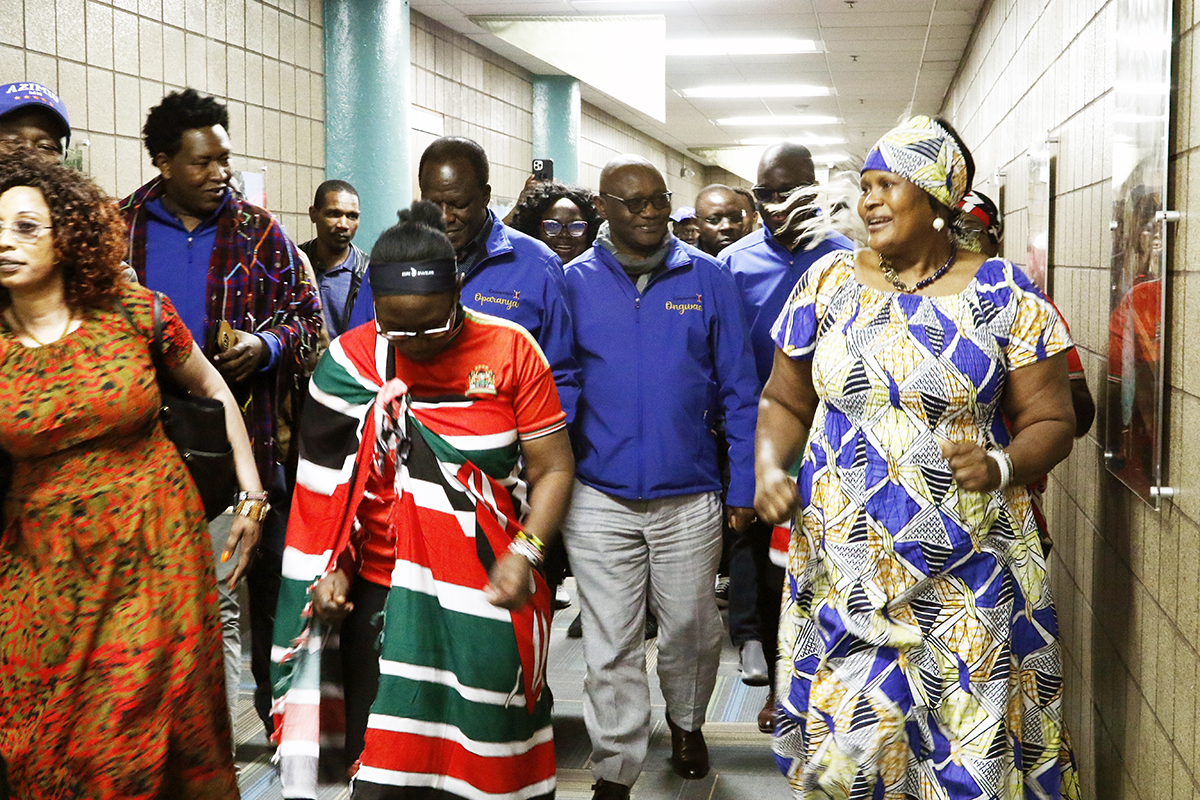
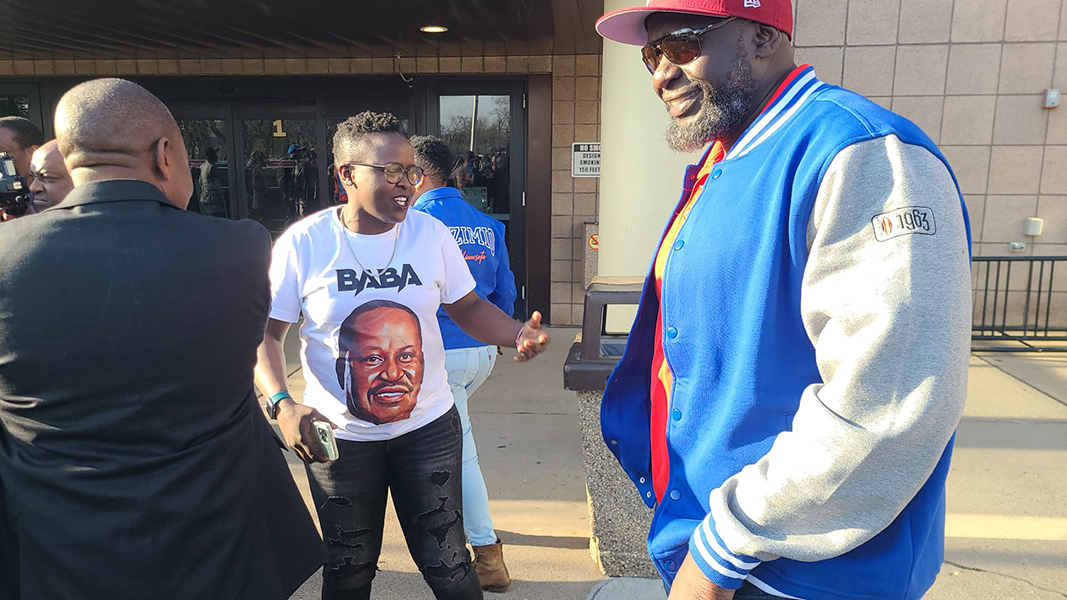
A supporter of Kenyan presidential candidate Raila Odinga wearing a t-shirt with an image of Mr. Odinga at the Brooklyn Park Community Center on Wednesday, April 27, 2022 when a delegation of top Odinga surrogates addressed Kenyans. Photo: Richard Ooga/Mshale
A supporter of Kenyan presidential candidate Raila Odinga wearing a t-shirt with an image of Mr. Odinga at the Brooklyn Park Community Center on Wednesday, April 27, 2022 when a delegation of top Odinga surrogates addressed Kenyans. Photo: Richard Ooga/Mshale
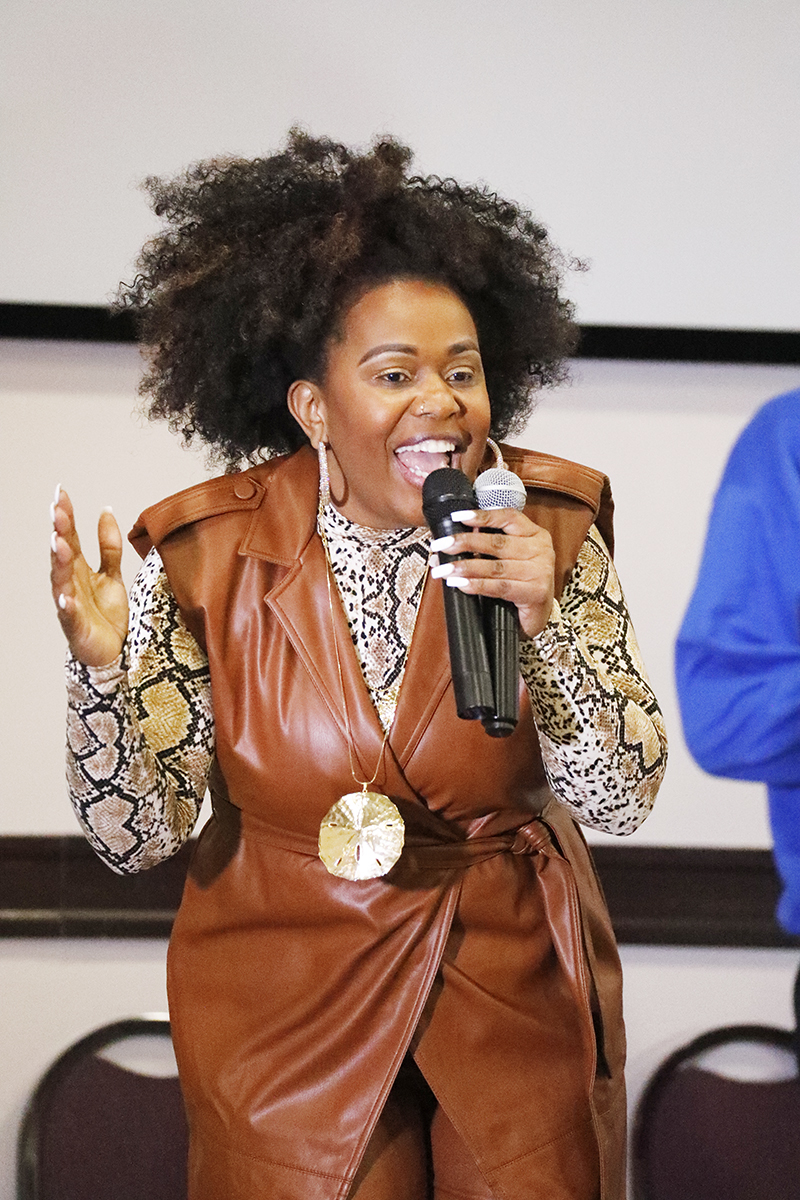
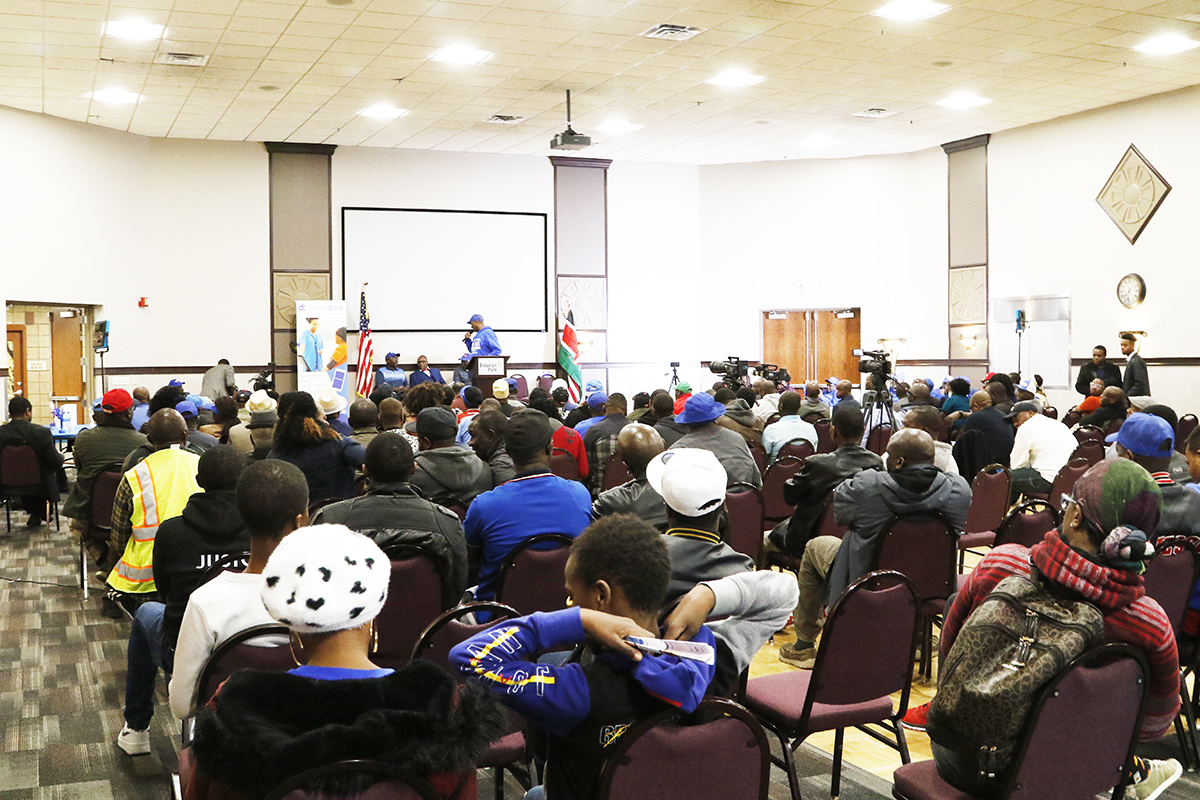
The Raila Odinga presidential campaign deployed top surrogates to meet with Kenyans in Minnesota, as their candidate was forced to cut short his planned 10-day tour of the United States to attend the state funeral of Kenya’s third president Mwai Kibaki.
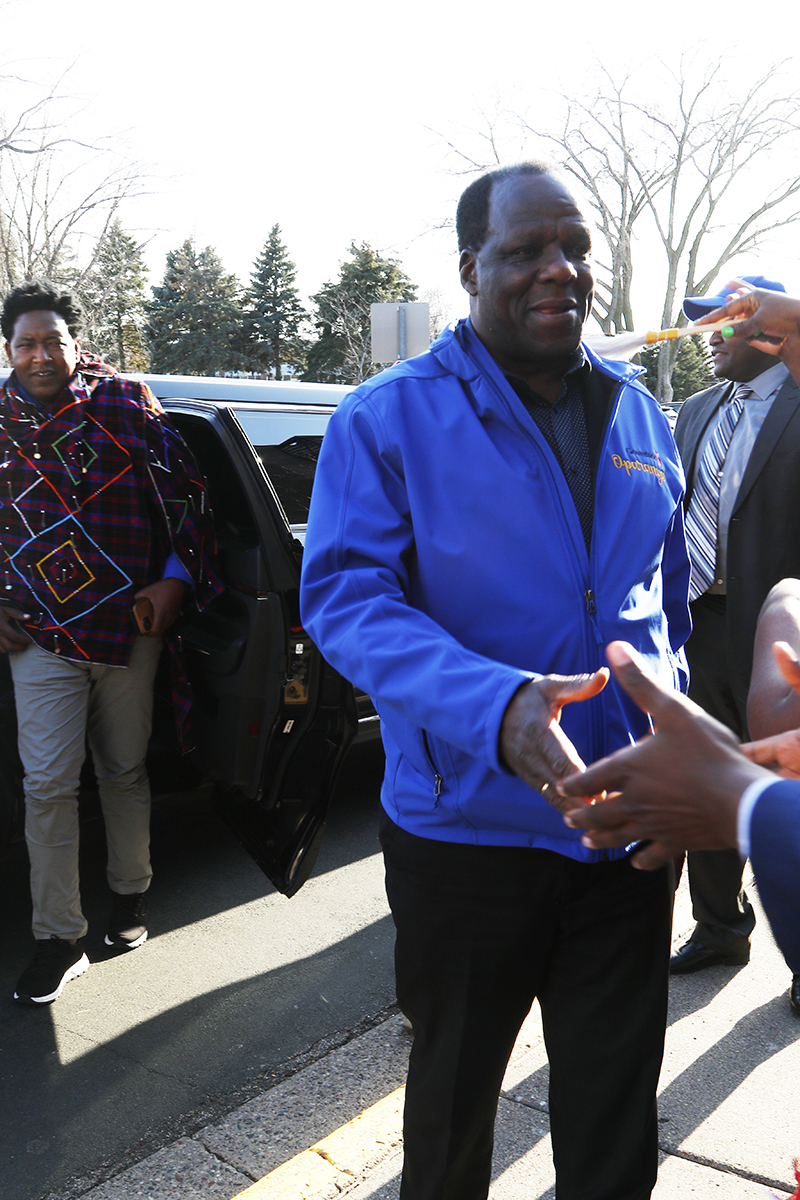
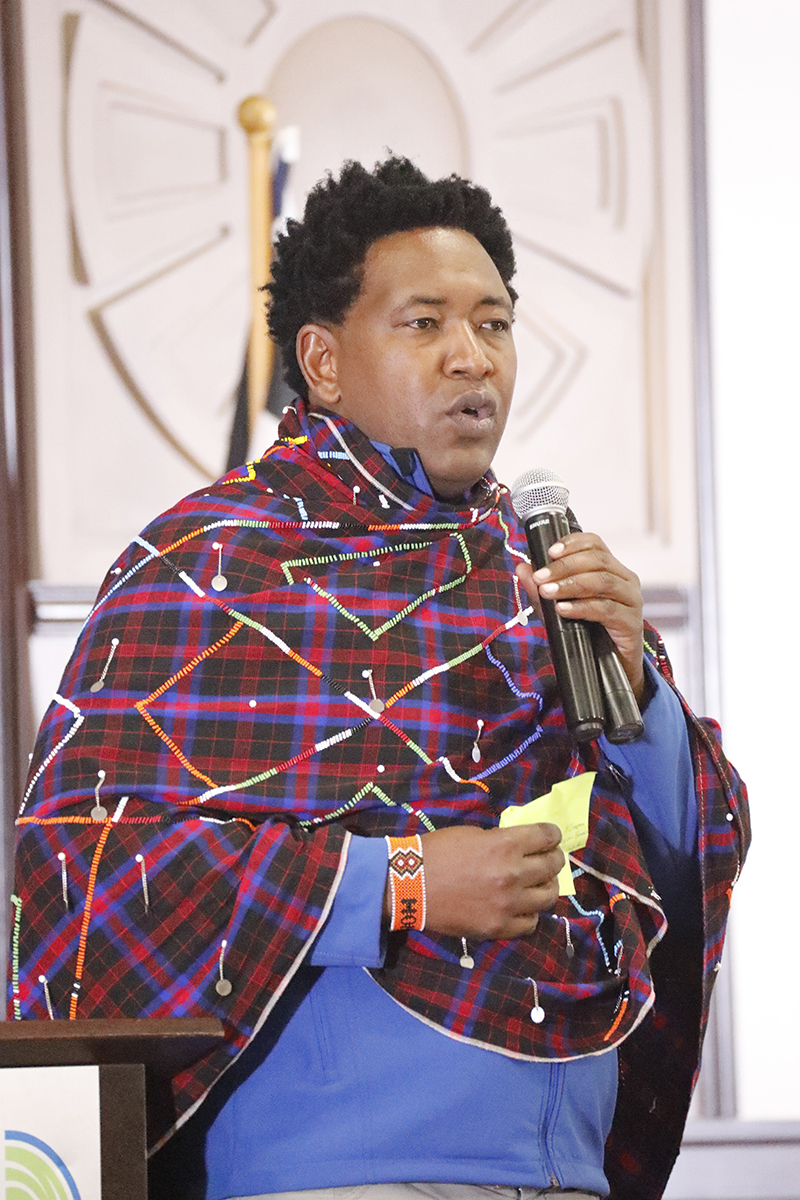
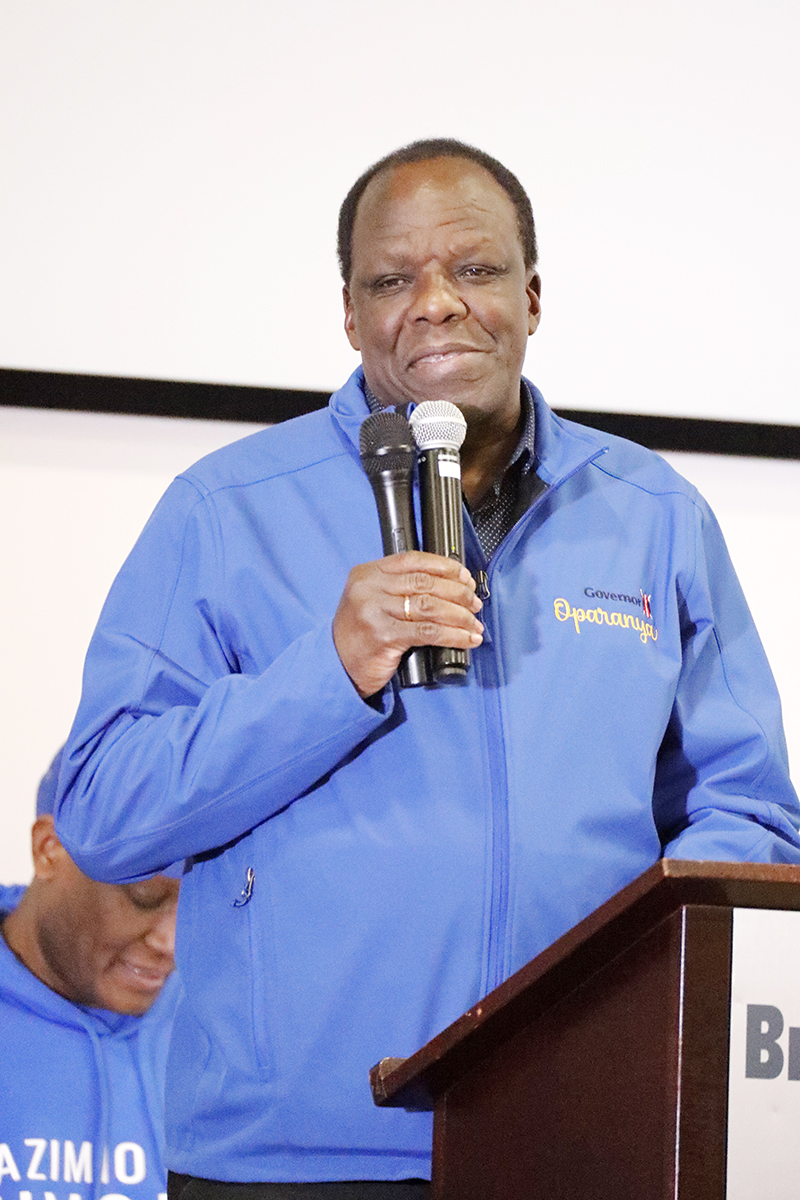
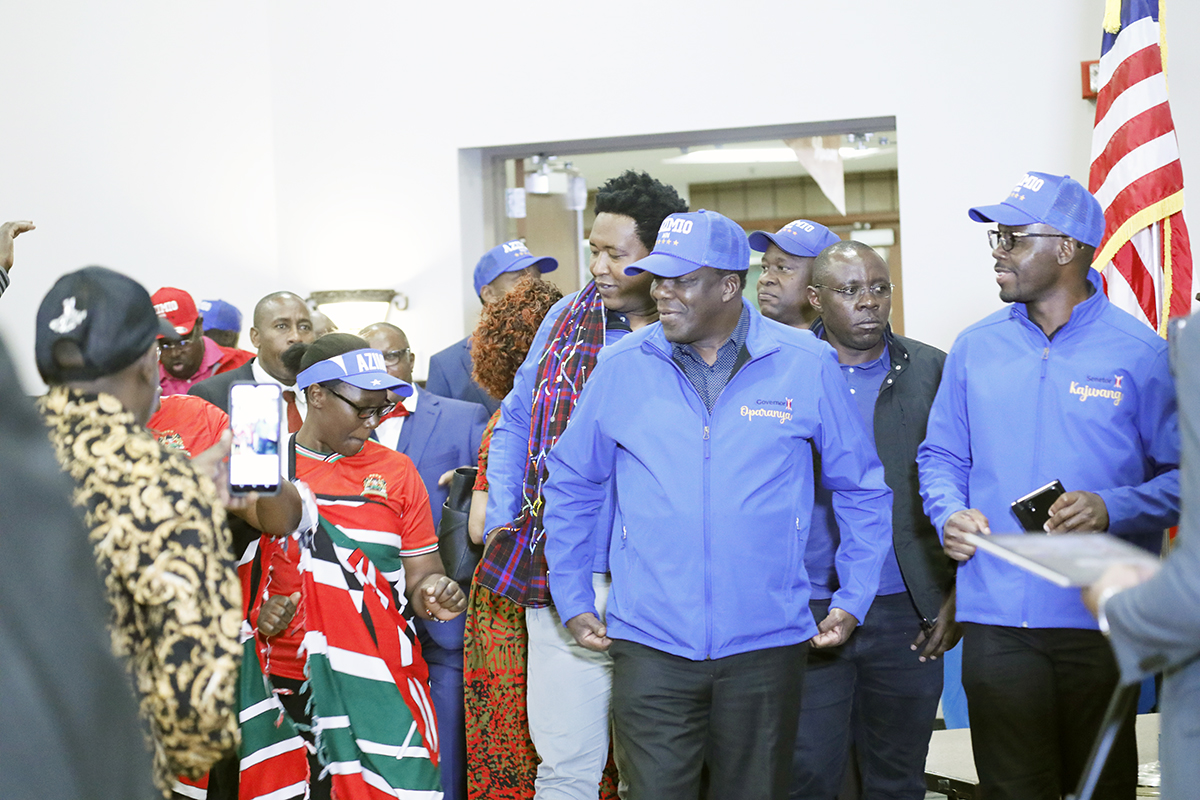
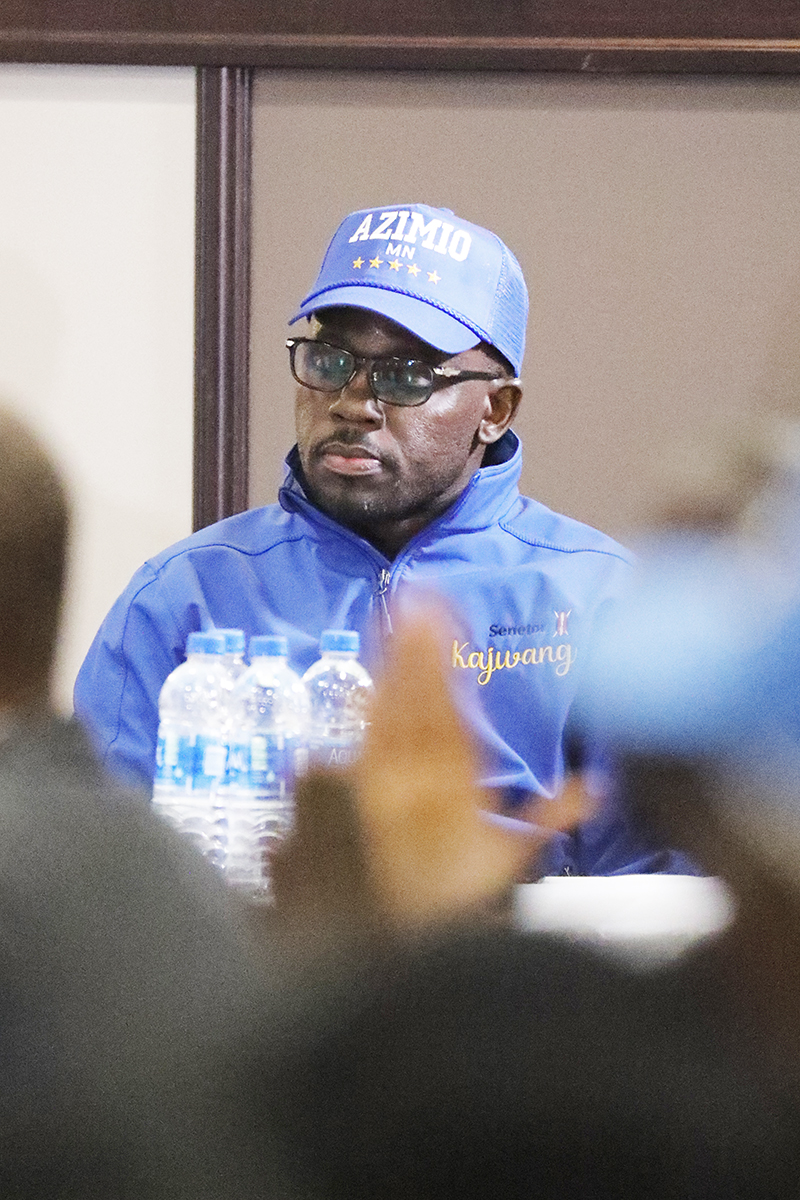
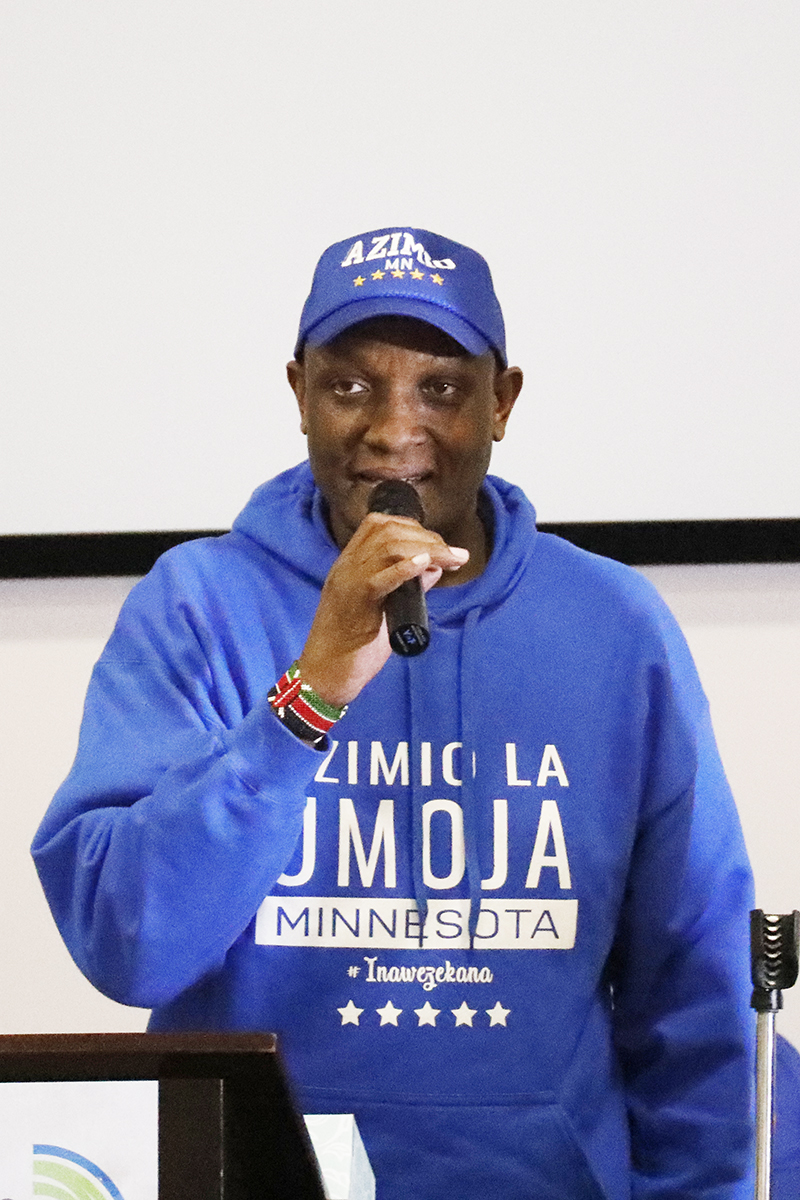
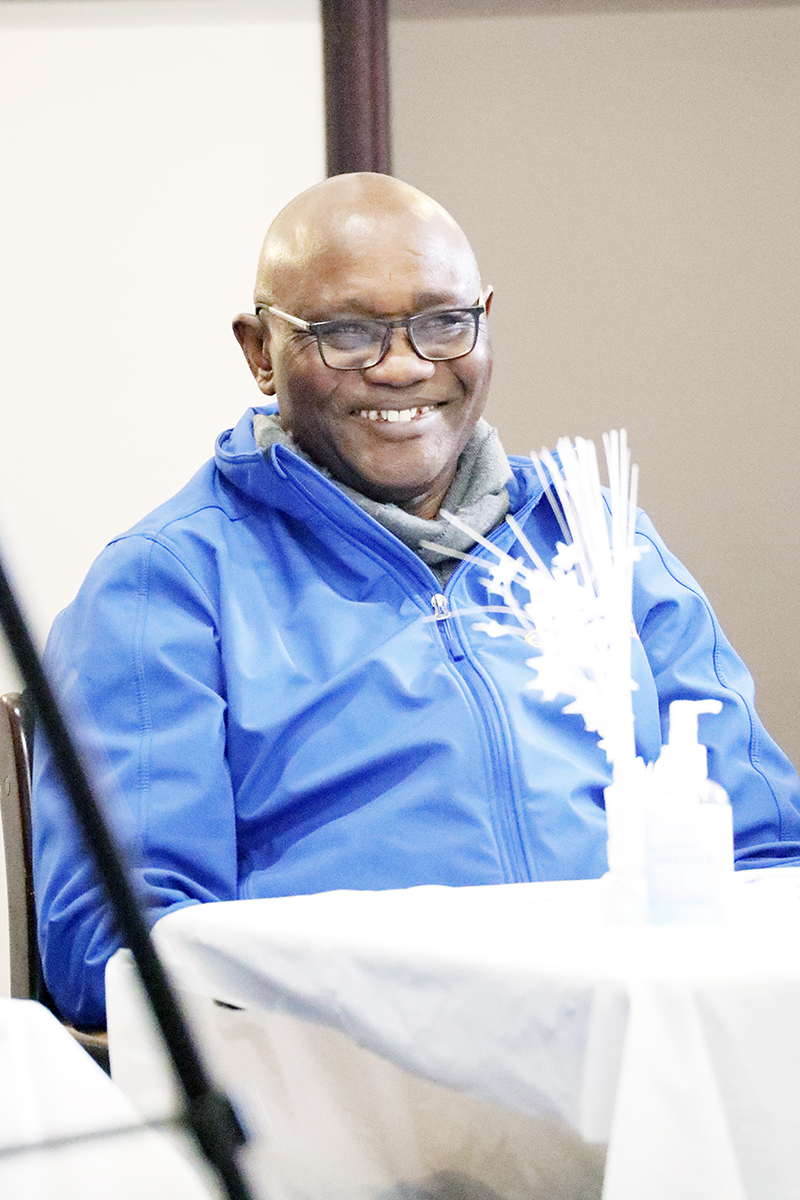
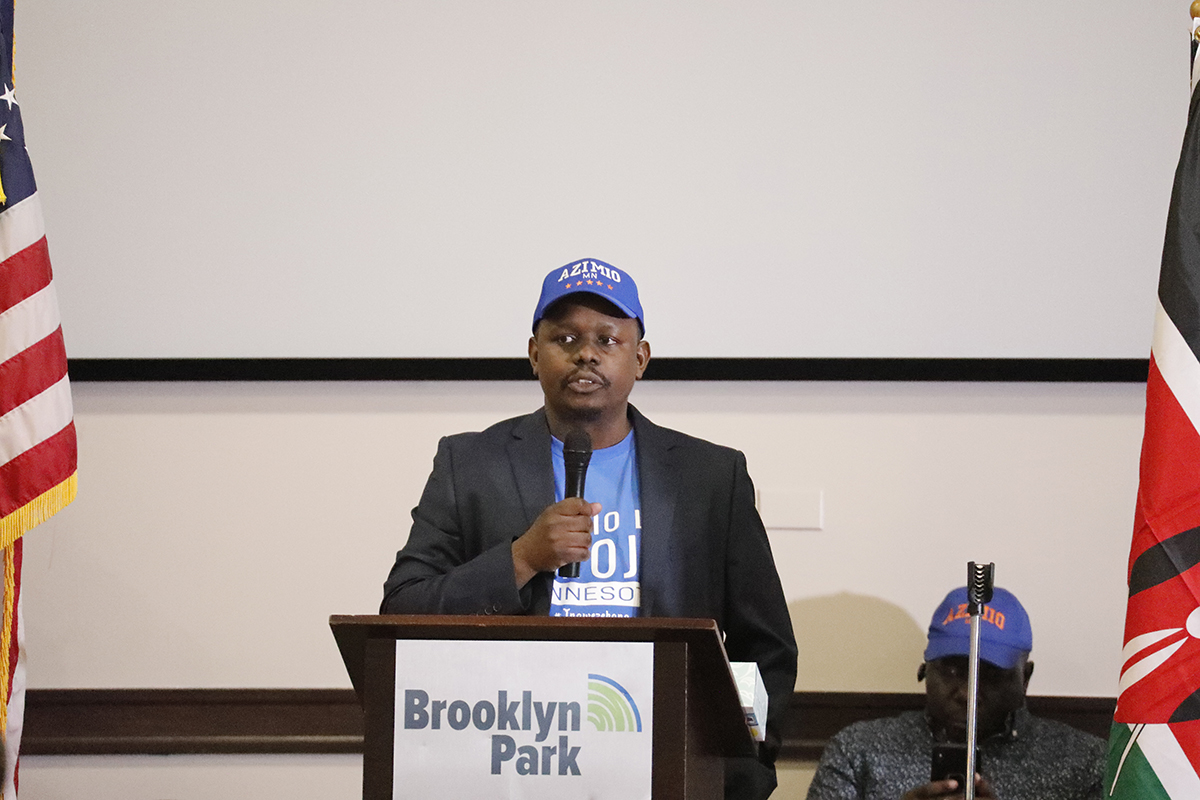
Gov. Wycliffe Ambetsa Oparanya, the chairman of Azimio la Umoja-One Kenya Alliance, and a team consisting of Gov. James Ongwae of Kisii County and Senators Ledama Olekina and Otieno Kajwang, arrived in Minnesota early Wednesday, where they met with Kenyans in the state to discuss their coalition’s platform and issues important to the diaspora.
Azimio la Umoja-One Kenya Alliance brings together more than 20 political parties, and is crafted along the lines of the National Rainbow Coalition that dislodged the Kenya Africa National Union (KANU) party from power in 2002. Pro democracy leader Raila Odinga of the Orange Democratic Movement (ODM) party, which is part of the Azimio coalition, was on March 12 unveiled as the coalition’s presidential candidate.
“With Raila I know what to expect from him,” Christine Ogongo, a Brooklyn Center Registered Nurse says of the candidacy of Kenyan presidential candidate Raila Odinga. Odinga’s top surrogates were in Minnesota on Wednesday, April 22, 2022 where they addressed Kenyans in the state at the Brooklyn Park Community Center. Photo: Richard Ooga/Mshale
Kenya’s general election is on August 9 and Odinga’s main competitor is the country’s current deputy president William Ruto. Ruto’s boss, President Uhuru Kenyatta, is backing Odinga for the presidency.
The quartet said their main agenda besides informing the diaspora on their platform was to also listen to them due their outsized influence on Kenyan politics. Remittances by Kenyans in the United States to Kenya totaled $2.3 billion in 2021, equivalent to the earnings the country makes each year from tourism and coffee combined.
Kenyans in Minnesota account for more than 10% of the almost 150,000 Kenyans in the U.S., and the state is considered a must visit by candidates for high office in Kenya. The politicians are not after the Minnesota Kenyans’ votes, but for their opinion shaping influence on relatives back home.
“We are here because Raila believes you guys are the ones supporting the Kenyan economy, so you are very important to our country, and just us we have traversed the whole of Kenya, we are doing the same here (U.S.),” Senator Olekina said.
“The reason Gov. Ongwae is here,” he added, “is because he believes in Azimio even though he has served his two terms and he is going home.”
“Many of you are sending money to your relatives as we are here, and when Raila becomes president, he has promised no child will be left behind, wouldn’t that lessen your burden?” Olekina asked.
The two-term Gov. Ongwae is term limited and his county of Kisii, and sister county of Nyamira is home to the majority of Kenyans in Minnesota.
“I told my colleagues as we embarked on our U.S. tour that if we don’t come to Minnesota then we have not been to the United States,” Ongwae said as he outlined the 10-point agenda an Azimio has for the country. Part of the agenda is to have 35% of the national budget disbursed directly to county governments.
Senator Otieno Kajwang, who is chair of the Devolution Committee in the Senate, highlighted his committee’s work in making sure funds are devolved to the counties as Ongwae was describing.
“It is not a question of ‘if’ Raila becomes present but ‘when’ he comes president” said Kajwang. “Being that Azimio is working on an inclusive government, you too will be represented.”
Christine Ogongo, a registered nurse from Brooklyn Center came to the United States nine years ago for better opportunities, and was present to hear what message the Azimio team was bringing. She said she did not need much convincing as she believes Raila Odinga represents the best hope for ushering in a performing government.
Ogongo feels strongly that leading presidential candidates should lead the country by example, by being principled and not talking from both sides of their mouth – a jab at Deputy President William Ruto, who regularly throws barbs at the same government he is part of.
“Who among the two has a record of putting the country first?” Ogongo asked. “With Raila I know what to expect from him. He has a track record of years fighting for democracy which I cannot say of (William) Ruto. I will feel okay as I know my family back home will be safe with Raila (Odinga) at state house.”
Raila Odinga’s support network in Minnesota spans the last four Kenyan presidential election cycles, with an ever-growing base as new Kenyans move to the state.
One of those key supporters is Alvin Oyugi of Ramsey, a mechanical engineer at a Twin Cities corporation. He was registered as a voter in his home county in Kenya but in January flew to the Kenyan embassy on Washington to change his polling station to “diaspora.” Kenyans in the U.S. will for the first time be allowed to vote in the presidential election with the Washington embassy, and the country’s two consulates in New York and Los Angeles designated as polling sites.
“I figured it would be cheaper for me to travel to DC than Kenya during the election,” said Oyugi. “I have to make sure that I vote for Baba, as he is the best choice for those of us in the diaspora.”
One of the key requests by those in Minnesota over the years has been the establishment of a Kenyan consulate in the state, given the concentration of Kenyans. Previous administrations have promised to deliver one without success.
Gov. Oparanya, leader of the delegation, addressed the matter head-on. He shared with the audience an idea that Mr. Odinga had shared on Sunday while in Washington before he flew back to Kenya for the state funeral.
“No one else will listen to you except Baba,” thundered Gov. Oparanya. “That is why he has promised that there will be a cabinet level post to deal with diaspora affairs.”
The governor’s point was that the establishment of such a consulate would be easier to establish if diaspora matters were a topic of discussion at cabinet meetings.
One person hoping that Mr. Odinga will deliver on his consulate promise is Alex Isoe Mingate. Mingate works to promote trade between his home county of Nyamira and the United States, and has found linkages between the Washington embassy and the business community to be weak.
“I am hopeful that the government will realize just like Kenya Airways did that Minnesota is important,” Mingate said. “Setting up a consulate here will help them deliver on their promises and put more money in our people’s pockets back home through trade with America.”
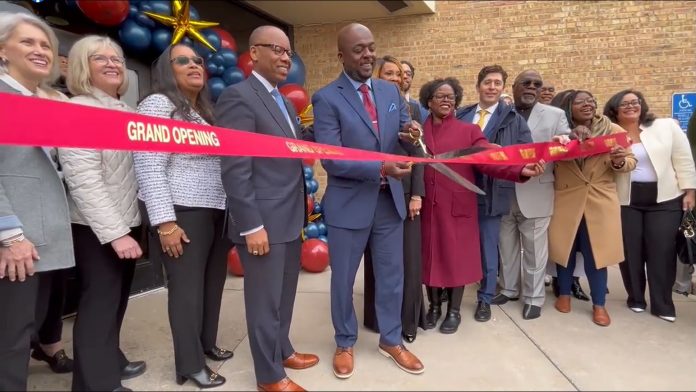
The first Black-owned bank in the state of Minnesota held a ribbon-cutting ceremony on Tuesday, April 26, 2022 in Minneapolis. Photo: Courtesy First Independence Bank
The first Black-owned bank in the state of Minnesota held a ribbon-cutting ceremony on Tuesday, April 26, 2022 in Minneapolis. Photo: Courtesy First Independence Bank
Residents, officials, and banking industry professionals gathered in Minneapolis Tuesday to celebrate the opening of the first Black-owned bank in the state of Minnesota.
First Independence Bank (FIB) is one of the largest Black-owned banks in the United States. It was established in 1970 in Detroit, Michigan, where it already has two branches. The bank offers basic banking services and consumer, mortgage, and business loans, as well as asset management services “with an affinity for underserved communities.”
“This effort is part of our plan to create a new model of inclusive economic growth in the area,” said Peter Frosch, the chief executive officer of Greater MSP, a nonprofit organization that provides resources for businesses and individual looking relocate to the Twin Cities area.
Historically, the U.S. banking industry has treated African Americans less favorably than its white customers. A 2020 report from the U.S. Federal Reserve found that less than 47% of financing applications by Black-owned business owners get approved. Even when they do get approved, African Americans are the least likely racial group to receive full funding, the report found.
The number of Black-owned banks in the United States has been declining since 2001. According to the Federal Reserve Bank of St Louis, between 2001 and 2007, the total number of Black-owned banks fell from 48 to 44. The trend persisted after the Great Recession, and by mid 2020, there were only 20 banks remaining, with combined assets of $5.45 billion. In comparison, there are over 5,000 non-Black owned banks in the United States, with the largest, JPMorgan Chase & Co., holding over $2 trillion in assets.
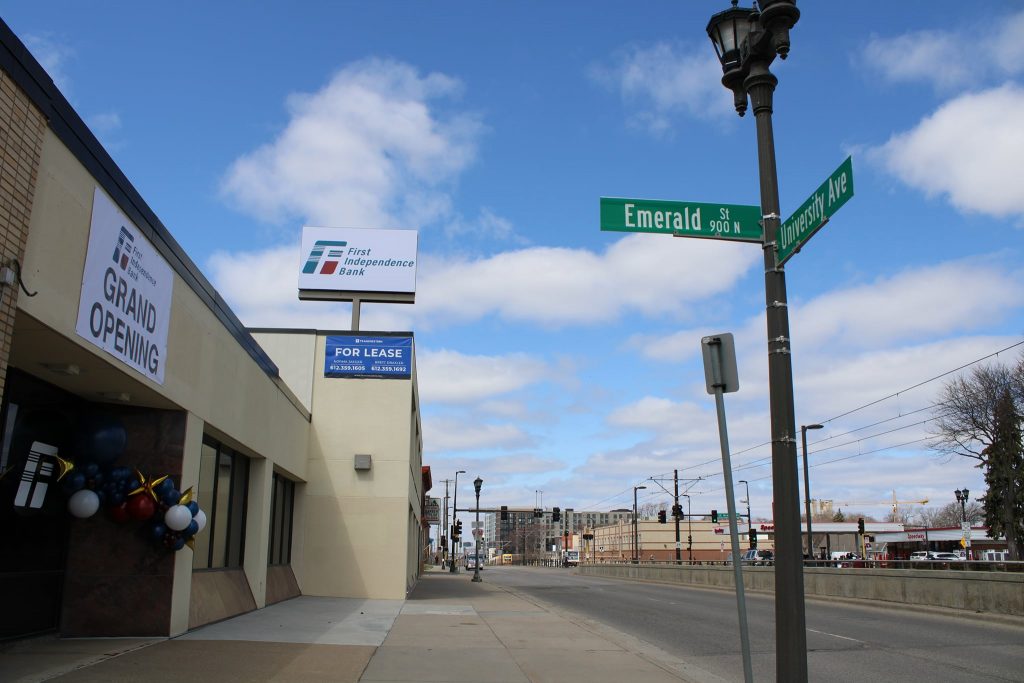
First Independence Bank located at 3430 University Ave SE in Minneapolis the first Black-owned bank in Minnesota held a ribbon-cutting ceremony on Tuesday, April 26, 2022. Photo: Courtesy First Independence Bank
Despite the decline of Black-owned banks, Kenneth Kelly, the chief executive officer of FIB, said he was optimistic. The company had been thinking about expanding to Minnesota for some time, he said.
“When I got the call from one of the partner banks, I jumped at the chance to explore the opportunity,” Kelly said.
Danielle Squires, the head of diverse segments at Wells Fargo, talked about some of the collaborative efforts that the bank has for its new partner, including making its ATM services available to First Independence Bank customers at no charge.
“Having multiple choices to serve our communities is the right thing for our entire region,” said Squires. “Together we can work to address the wealth gap and economic disparities in communities of color.”
Russel Knighton, a retired African American who worked as a commercial and business banker for several major banks, said that, as a member of the community, he still had great interest in new initiatives to improve financial equity in his city.
“I am eager to see what new strategies First Independence can bring to improve our situation with inequity,” Knighton said.
Despite her advocacy work primarily being in healthcare, Rae Blaylark, the president and CEO of Sickle Cell Foundation of Minnesota, said she was passionate about all aspects of wellbeing, including financial prosperity.
“It’s important that we support these initiatives in order to begin the process of building generational wealth,” Blaylark said.
The number of Black-owned businesses has increased in recent years, but persisting inequities in lending have made it difficult for aspiring Black entrepreneurs to succeed. Although people of African descent make up 14.2% of the U.S. population, only 2.3% of 5.7 million companies were Black-owned, according to a Federal Reserve.
Clara Mothershed, a small business planning specialist at the nonprofit Aurora St. Anthony Neighborhood Development Corporation, said most Black-owned businesses fail within the first five years. The most common reason for failure of Black businesses is lack of access to cash and financing services.
“We have a lot of rebuilding to do,” Mothershed said. “We have to show up for ourselves if we want to produce tangible change.”