


Home Blog Page 119

Christian Academy of African Physicians launched in Kentucky to focus on Christian primary care in Africa

0
Members of the Christian Academy of African Physicians met for the first time earlier this month. Photo: Courtesy of Loma Linda University
Loma Linda
Members of the Christian Academy of African Physicians met for the first time earlier this month. Photo: Courtesy of Loma Linda University
Loma Linda
Members of the Christian Academy of African Physicians met for the first time earlier this month. Photo: Courtesy of Loma Linda University

An inaugural meeting of the newly established Christian Academy of African Physicians (CAAP) was held in Louisville, Kentucky on November 9-11. The group will develop medical and spiritual curricula and to create partnerships that support the creation of new Christian primary care training programs for the continent of Africa.

Loma Linda University, a Seventh-day Adventist health sciences institution in California announced that it has joined CAAP during its inaugural meeting and that the university will be partnering with CAAP to train physicians in Africa. Mshale had not determined at the time of posting this report on the role of Mayo Clinic and the University of Minnesota plan to play in Africa through CAAP.

CAAP’s commission members are composed of representatives from:

  • Loma Linda University Health
  • Mayo Clinic
  • University of Minnesota
  • Africa Inland Mission
  • Bingham University Teaching Hospital (Nigeria)
  • Kabarak University (Kenya)
  • Mbingo Baptist Hospital (Cameroon)
  • Christian Medical & Dental Association (CMDA)
  • Pan-African Academy of Christian Surgeons (PAACS)

“CAAP is a strategic response to the need for quality Christian primary care clinicians, medical educators, and medical system leaders in Africa,” said Kevin Shannon, MD, MPH, CAAP commission chair and associate program director for Loma Linda’s family and preventive medicine residency.

According to the official newsmagazine of the Seventh-day Adventist Church, Adventist Review, CAAP plans to begin these programs by the end of 2019 and will support different training programs to include an 18-month diploma in general practice, full primary care residency training, and a Master’s in Public Health through Loma Linda University.

The CAAP partnerships will be similar to the Pan African Academy of Christian Surgeons (PAACS), which supports five-year surgical residencies at nine Christian hospitals across Africa, including Malamulo Hospital in Malawi, a Loma Linda University Health Global Campus site. Loma Linda University has provided academic backing for PAACS — an interdenominational collaboration — for more than a dozen years.

CAAP plans to begin these programs by the end of 2019 and will support different training programs to include an 18-month diploma in general practice, full primary care residency training, and a Master’s in Public Health through Loma Linda University.

Adventist Review reported that training programs will be offered at several well-established mission hospitals in Africa under the direction of experienced, board-certified missionary physicians. Preliminary sites include Mbingo Baptist Hospital in Cameroon, Bingham University Teaching Hospital in Nigeria, Kabarak University Hospital in Kenya, and Malamulo Adventist Hospital in Malawi.

According to the Pew Research Center, Seventh-day Adventists make up about 0.5% of the U.S. adult population as of 2015 but are among the most racially and ethnically diverse American religious groups: 37% are white, while 32% are black, 15% are Hispanic, 8% are Asian and another 8% are another race or mixed race.

The Adventist Church growth has been most marked outside the United States in places such as Africa and South America. The church boasts 19 million Adventists worldwide.

Hardline immigration enforcer to become new ICE director

0
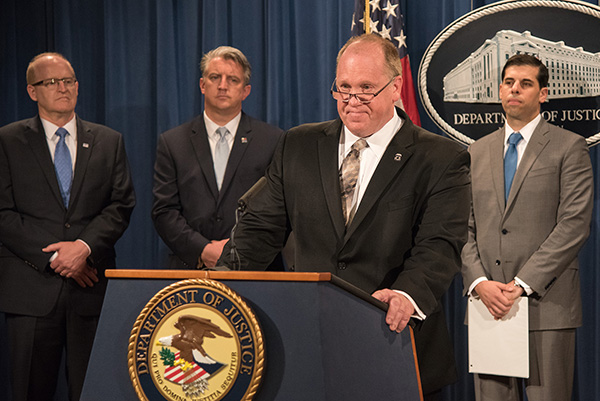
ICE Acting Director Thomas D. Homan speaks at the announcement of the National Blue Alert Network. Photo: Matthew T. Nichols/Department of Justice
Thomas Homan by DOJ Web
ICE Acting Director Thomas D. Homan speaks at the announcement of the National Blue Alert Network. Photo: Matthew T. Nichols/Department of Justice
Thomas Homan by DOJ Web
ICE Acting Director Thomas D. Homan speaks at the announcement of the National Blue Alert Network.
Photo: Matthew T. Nichols/Department of Justice

President Trump has nominated the man who last month pledged to quadruple workplace immigration crackdowns to be the permanent director of Immigration and Customs Enforcement. The White House announced on Tuesday that Trump has appointed Thomas D. Homan to the position. He has been the acting director since president Obama left office.

His appointment is subject to Senate approval.

During a speech last month at the conservative Heritage Foundation think tank, Homan pledged to increase workplace enforcement of immigration laws. He said he has instructed Homeland Security Investigations (HSI), the investigative unit of ICE, to look into potentially quintupling worksite enforcement actions next year.

“We’ve already increased the number of inspections in work site operations, you will see that significantly increase this next fiscal year,” he said.

“Not only are we going to prosecute the employers that hire illegal workers, we’re going to detain and remove the illegal alien workers,” Homan said at Heritage.

The White House’s announcement of Homan’s appointment came about a day after a blistering letter criticizing Homan by the Union that represents ICE workers. Chris Crane, president of the National Immigration and Customs Enforcement Council, accused Homan of mismanagement.

In the latter to Trump that the union chose to make public it said among others “While you recently stated publicly that you were “not happy” with the $400k in private jet usage by your former HHS Secretary Tom Price leading either to his firing or resignation, ICE’s Acting Director Thomas Homan is spending millions every year to provide free vehicles and gas to hundreds of ICE manager for the sole purpose of driving between home and work each day. Where do they get these vehicles? They take them away from their own officers and law enforcement operations in the filed leaving officers with insufficient equipment to perform the Agency’s mission.”

Trump was the first presidential candidate to ever be endorsed by the Union largely due to Trump’s promise to bolster enforcement operations.

In Homan’s 10 months in office in acting capacity, more than half of the increase in arrests have been of undocumented immigrants who had committed no crime other than illegally residing in the United States. Immigration experts predict that if the arrests continue at the current rate, they will surpass the highest annual numbers reached under President Obama in Donald Trump’s first year in office.

Homan is known as a hardliner when it comes to immigration enforcement. In July he suggested that mayors of “sanctuary cities” be charged with violating immigration laws because of their practice of shielding immigrants from federal immigration officials.

In June while giving testimony before the House Appropriations Committee he said “If you’re in this country illegally and you committed a crime by being in this country, you should be uncomfortable, you should look over your shoulder. You need to be worried.”

First annual Minnesota Black Authors expo

0
The first Minnesota Black AUthors expo will be held in Minneapolis on Saturday, November 18, 2017.
Black Authors
The first Minnesota Black AUthors expo will be held in Minneapolis on Saturday, November 18, 2017.
Black Authors e1510870776724
The first Minnesota Black AUthors expo will be held in Minneapolis on Saturday, November 18, 2017.

The first ever Minnesota Black Authors expo will be held on Saturday, November 18 2017 in Minneapolis. The organizers say the expo is intended to support the work of black authors and to engage the community.

The event is hosted by authors Jasmine Boudah, Toviaz Bridgewater Sly, and De’Vonna Pittman, and will be held at Neon, located at 1007 West Broadway in Minneapolis.

The expo is free and open to the public. Authors will display and sell their books as well as sign them.

Organizers are planning for about 40 authors and have pledged that “This event will not be “commercialized,” our intent is for authors to have a meaningful, memorable, and engaging experience.”

Book selections will include Non-fiction, Self Help, Urban Fiction, Christian Fiction, Empowerment, Hip Hop Love Stories, Coming of Age, and Children Books.

Minnesota Black Authors Expo
Date: Saturday, November 18, 2017
Time: 11am-5pm
Tickets: Free (Get online @ Eventbrite)
Address: 1007 West Broadway Ave., Minneapolis, MN 55411-2503

United Nations Police Week highlights

0
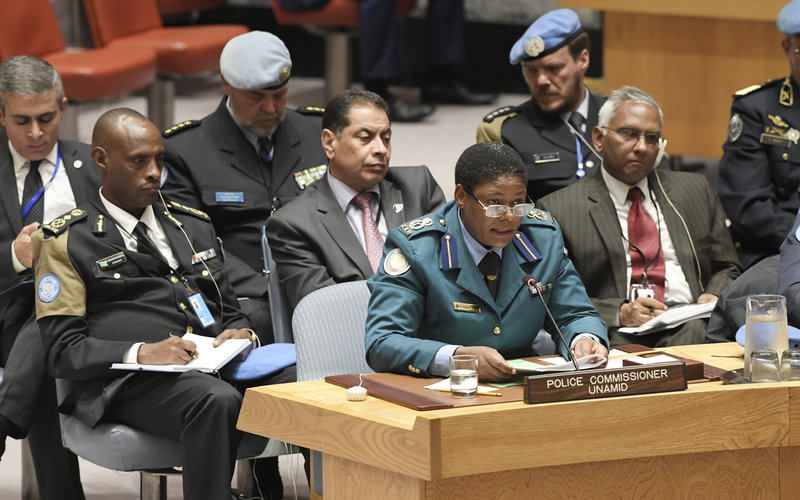
Priscilla Makotose, Police Commissioner for UNAMID (UN Mission in Darfur), briefs the Security Council. Photo: Evan Schneider/UN
Priscilla Makotose
Priscilla Makotose, Police Commissioner for UNAMID (UN Mission in Darfur), briefs the Security Council. Photo: Evan Schneider/UN
Priscilla Makotose
Priscilla Makotose, Police Commissioner for UNAMID (UN Mission in Darfur), briefs the Security Council. Photo: Evan Schneider/UN

On November 6-10, the Police Division convened the 2017 UN police week. Heads of police components (HOPCs) in UN peacekeeping operations and special political missions came to New York for discussions, as well as briefings to the Special Committee on Peacekeeping Operations and the Security Council.

During the week, Heads of police components considered the recommendations of the Internal Review of the UN Peace and Security Architecture related to UN policing, the status of implementation of the Secretary-General’s reform plan on UN policing as outlined in S/2016/952, as well as Security Council resolution 2382 (2017).

On Friday, UN police week closed following a session on human rights in UN police activities. The closing remarks were delivered by Alexandre Zouev, Assistant Secretary-General for Rule of Law and Security Institutions, Bintou Keita, Assistant Secretary-General for Rule of Law and Security Institutions and UN Police Adviser Luis Carrilho.

On Thursday, United Nations Secretary-General António Guterres briefly met and took a photo with the Under-Secretary-General for Peacekeeping Operations, Jean-Pierre Lacroix, Assistant Secretary-General for Peacekeeping Operations, Bintou Keita, Assistant Secretary-General for Rule of Law and Security Institutions, Alexandre Zouev, UN Police Adviser Luis Carrilho and Heads of police components in UN peace operations. In his message, Secretary-General Guterres stressed that United Nations police save countless lives, heal community tensions. The Secretary‑General also called for more women in United Nations police command positions.

Earlier on the same day, the UNAMID Police Commissioner Priscilla Makotose, MONUSCO Police Commissioner Awale Abdounasir and MINUSCA Police Commissioner Roland Zamora briefed the Special Committee on Peacekeeping Operations (C-34) on transitioning, gender/electoral security and capacity development respectively.

Building on Security Council resolution 2382 (2017), Police Commissioners focused on Wednesday on how police can be more effective in conflict prevention, peacekeeping and peace sustainment. Heads of UN police components also discussed how to achieve gender-responsive policing. As of September 2017, 1,118 female police officers from 70 countries serve in peacekeeping operations and special political missions. They act as role models for gender equality, inspiring women and girls to advocate for their own rights and pursue careers in law enforcement.

On Tuesday, the discussions of heads of UN police components focused on partnerships, good practices and challenges of UN capacity-building. More than 11,000 United Nations police officers from 89 countries (as of September 2017), are mandated to assist host-States in reforming their police and other law enforcement institutions.

On Monday, the Security Council adopted resolution 2382 (2017), which supports operationalizing the Strategic Guidance Framework for International Police Peacekeeping. The resolution also recognized the important role that United Nations police components play in the protection of civilians, including in preventing and addressing sexual and gender‑based violence, and violations and abuses against children.

In his address to the Security Council, Under‑Secretary‑General for Peacekeeping Operations Jean‑Pierre Lacroix said the United Nations police played a continued vital role in bridging the Organization’s work from prevention and peacekeeping to peacebuilding and development. The Police Commissioner of the United Nations Mission for Justice Support in Haiti (MINUJUSTH), Brigardier General Georges-Pierre Monchotte, briefed the Security Council on good practices of reforming the Haiti National Police. The Police Commissioner of the United Nations Multidimensional Integrated Stabilization Mission in Mali (MINUSMA), Issoufou Yacouba briefed on strengthening the serious and organized crime capacities of the Malian security forces. Police Commissioner Priscilla Makotose of the African Union/United Nations Hybrid operation in Darfur (UNAMID) briefed the Security Council on gender responsive policing.

An Evening with Elage Diouf and Cold Specks World Tour enroute to Minneapolis with special guest LA Timpa

0
Senegalese born Elage Diouf will perform at the Cedar in Minneapolis on November 20, 2017.
Ealge Diouf
Senegalese born Elage Diouf will perform at the Cedar in Minneapolis on November 20, 2017.
Ealge Diouf
Senegalese born Elage Diouf will perform at the Cedar in Minneapolis on November 20, 2017.

Senegalese born singer-songwriter and performer Elage Diouf, known for his audience participation shows will bring his music to the Cedar in Minneapolis on Monday, November 20. Advance tickets are $15 and $18 at the door.

Diouf who is based in Montreal, was one of the performers at September’s Canadian Songwriters Hall of Fame induction ceremony at Massey Hall in Toronto where the ceremony was held after a five-year absence.

He is described as being “wholehearted in his artistic approach, charismatic, authentic and easygoing.”  His music is a blend of pop, world, blues, folk and asiko.

Show Date: Monday November 20 @ 7:30pm (doors open @ 7:00pm)

Tickets: $15 Advance on the Cedar website or $18 at the door.

Address: 416 Cedar Ave S., Minneapolis, MN, 55454

Cold Specks

Cold Specks
Cold Specks will perform at the Cedar in Minneapolis on November 27, 2017.

Ladan Hussein who goes by the stage name Cold Specks is on a world tour for her latest album Fool’s Paradise. That tour makes a stop in Minneapolis at the Cedar the Monday after Thanksgiving on November 27 at 7:30pm. Advance tickets are $12 and $15 at the door.

Cold Specks was born in Canada to Somali parents. During the creation of Fool’s Paradise, Ladan became obsessed with pre-war Mogadishu, her family’s home city and Somalia’s capital while living in Toronto. “I just fell in love with the idea of a city I’d never known, this beautiful city by the beach, I tried to imagine what it looked like before the war,” she remembers.

The opening act for Cold Specks at the Cedar will be LA Timpa, a Nigerian born producer and songwriter who emigrated to Canada as a child. He has joined Cold Specks as a special guest on her Fool’s Paradise World Tour 2017.

Show Date: Monday November 20 @ 7:30pm (doors open @ 7:00pm)

Tickets: $12 Advance on the Cedar website or $15 at the door.

Address: 416 Cedar Ave S., Minneapolis, MN, 55454

Africans make gains in Minnesota elections

0
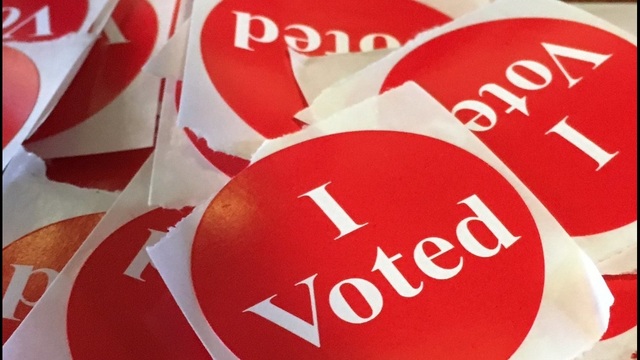
Vote Sticker
Africans make gains in Minnesota elections

Vote StickerAfricans made gains in elective office on election day Tuesday in Minnesota. This being an off year election there were no statewide elections on the ballot as it was mostly municipal and school

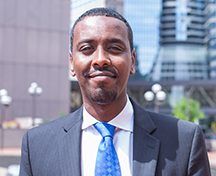
Abdi Warsame web
Abdi Warsam

board races that voters went to the polls for.

In Minneapolis, the most watched race was that for Minneapolis City Council Ward 6 where the incumbent, Abdi Warsame, the first Somali American elected to that Council faced off against Abdi Noor and prevailed by narrowly eking out a victory by just 239 votes. Minneapolis uses Ranked Choice Voting for its municipal elections and after the final count Warsame had 3,629 while Noor had 3,390. The nominal Republican in the race, Fadumo Yusuf, trailed with a paltry 183 votes.

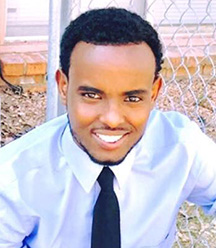
There will also be a new face in the all-important Minneapolis Park & Recreation Board. Abdikadir “AK” Hassan beat two other challengers to emerge victorious. AK garnered an impressive 7,094 votes against his closest competitor Abdi Gurhan Mohamed 5,415 and Charles Exner’s 2,069.

AK’s performance has turned heads in the last 24 hours with his vote haul, the most impressive by an African immigrant since his ally Ilhan Omar cruised to the Minnesota State Legislature with over 14,000 votes to her credit. The Minneapolis Park & Recreation Board is in charge of a $111 million annual budget that is overseen by a nine-person board. The park system gets over 22 million visits each in its 160 neighborhood parks and 19 regional parks. Park board members serve a four-year term.

Fartun web
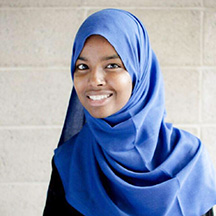
Fartun Ahmed

Somali-Americans however did not confine themselves to the central cities. In the affluent suburb of Edina, Faisal Deri made a bid for one of the four seats that were up for grabs in the Edina School Board. Despite garnering an impressive 2,980 votes (7.64%), Deri fell just short of making the cut for the four seats. The eventual winners out of the crowded field of twelve won by getting a spread percentage of between 11%-13% easily putting Deri in the top tier but falling just short.

In the suburb city of Hopkins, five candidates were vying for three seats in the school board. Fartun Ahmed was the second highest vote getter. Ahmed hauled in an impressive 5,615 votes (26.12%), second only to Jen Westmoreland Bouchard who got 29% of the vote with Chris LaTondresse rounding off the top three with 25% of the vote. The Hopkins school board has seven members. Board members serve a four-year term.

Both AK and Ahmed will be joining boards that did not have people of color in their last term.


AK
AK Hassan

Diversity Visa Lottery entry period ends on November 22

0
Entries for the United States Diversity Immigrant Visa Program are being accepted through November 22, 2017.
Visa Lottery
Entries for the United States Diversity Immigrant Visa Program are being accepted through November 22, 2017.
Visa Lottery
Entries for the United States Diversity Immigrant Visa Program are being accepted through November 22, 2017.

The Diversity Immigrant Visa Program administered by the U.S. Department of State has been in the news lately with calls to end it after one of its recipients, Uzbek native Sayfullo Saipov, was accused of driving a rented truck down a crowded New York City bike path, killing eight people and injuring more than a dozen others on October 31.

The program allows nationals from countries with historically low rates of immigration to the United States to apply for permanent resident status (“green cards”) without a relative or employer sponsor. Each fiscal year, 50,000 of such visas are granted.

Entries for the next fiscal year (which starts on October 1 2018 and ends on September 30, 2019) are now being accepted and will close on Wednesday, November 22, 2017.

All countries in Africa except Nigeria are eligible

All countries in Africa, with the exception of Nigeria, are eligible for the Diversity Immigrant Visa Program.

To be eligible, you must meet two qualifications:

  1. You must be over 18 and born in an eligible country. If you were not born in an eligible country, you may still be eligible if either
  • Your spouse was born in an eligible country, provided that both you and your spouse are named in the selected entry; or
  • You were born in a country that is ineligible, in which neither of your parents was born or legally resided at the time of your birth, provided that one of your parents was born in a country which qualifies this year.
  1. You must meet education/work requirements by having either of the following:
  • A high school education, which is defined as completion of a 12-year course of elementary and secondary education in the United States or a formal course of study in another country comparable to a U.S. high school education. USDOS will not accept a correspondence course or general equivalency diploma (GED).
  • Two years of work experience within the past five years in an occupation requiring at least two years of training or experience.

How to submit an entry

  1. Entries are only accepted online at dvlottery.state.gov.
  2. Entry period is between 12:00 noon, Eastern Daylight Time, Wednesday, October 18, 2017, and 12:00 noon, Eastern Standard Time, Wednesday, November 22, 2017.
  3. Entry is free and the US State Department warns individuals against paying anyone to submit your entry.

After successfully submitting

Keep your confirmation number and check back at dvlottery.state.gov starting on May 15, 2018 as the State Department will not send emails or letters informing you that you have won.

If you win the lottery

After you log into dvlottery.state.gov starting on May 15, 2018, you will be directed to a confirmation page that will provide further instructions, including information on associated fees to facilitate your immigration to the United States. You can then apply for a visa between October 1, 2018 and September 30, 2019.

The State Department also warns individuals to guard against scams such as fraudulent websites informing them that they have won.

Detailed instructions are here.

Will DACA parents be forced to leave their U.S.-Citizen children behind?

0
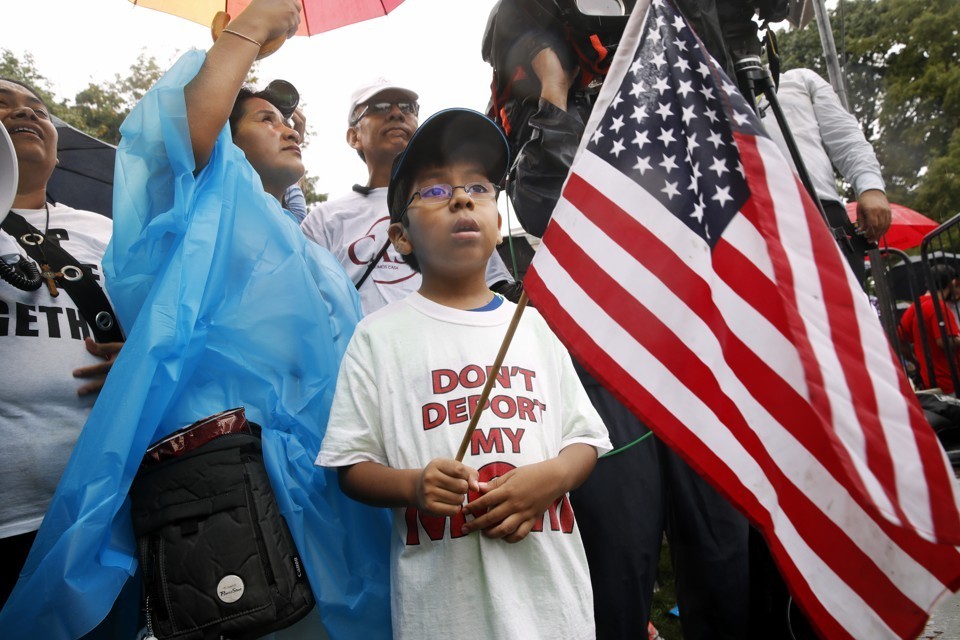
Michael Claros, 8, of Silver Spring, Maryland, attends a rally in favor of immigration reform, at the White House. The eight-year old is a U.S. citizen whose parents would have been eligible for Deferred Action for Parents of Americans, an Obama era policy memo that the Trump administration has since formally revoked. Photo: Jacquelyn Martin/AP
lead 960
Michael Claros, 8, of Silver Spring, Maryland, attends a rally in favor of immigration reform, at the White House. The eight-year old is a U.S. citizen whose parents would have been eligible for Deferred Action for Parents of Americans, an Obama era policy memo that the Trump administration has since formally revoked. Photo: Jacquelyn Martin/AP
lead 960
Michael Claros, 8, of Silver Spring, Maryland, attends a rally in favor of immigration reform, at the White House. The eight-year old is a U.S. citizen whose parents would have been eligible for Deferred Action for Parents of Americans, an Obama era policy memo that the Trump administration has since formally revoked. Photo: Jacquelyn Martin/AP

With the cancellation of the Deferred Action for Childhood Arrivals program, an estimated 200,000 children are at risk of losing their parents.

In September, the Trump administration announced it was rescinding DACA pending a six-month delay. The program is an Obama-era initiative that shields undocumented immigrants who were brought to the U.S. as children from deportation, and allows them to work legally in the country. Unless the Republican-controlled Congress passes a law granting them legal status, they could soon be subject to deportation. That uncertainty has instilled fear among many of the nearly 700,000 DACA recipients, but particularly those who are parents of U.S. citizens.

“It’s been really tough, it’s been a rollercoaster of emotion,” said Eliana Fernandez, a DACA recipient and mother of two children, ages 10 and 5. “What’s going to happen with my life, with my work, with my children? I’ve been trying to process everything.”

The vast majority of DACA expirations will come after March 5, 2018. According to the Department of Homeland Security, 275,344 individuals will have their work permits expire next year and 321,920 work permits are set to run out from January through August 2019. That means that hundreds of thousands of immigrants will suddenly be eligible for deportation and lose their ability to work legally in country.

Though often described as “kids,” a majority of DACA beneficiaries are in their 20s—and some of them have children of their own. A recent study conducted by Tom Wong of the University of California at San Diego along with the Center for American Progress, National Immigration Law Center, and United We Dream found that 25.7 percent of DACA recipients have a child who is a U.S. citizen. “If extrapolated to the total population of DACA recipients, this suggests that at least 200,000 U.S. citizen children live in the U.S. currently who have a DACA recipient for a parent,” Wong told told The Daily Beast.

While DACA was always supposed to be temporary, the ultimate outcome was meant to be legal status for its recipients, not deportation. Lawyers and immigrant-rights groups are working to address that by helping DACA parents map out what few options they have, and prepare for the possibility of deportation, in anticipation of their permits expiring. The National Immigration Law Center hosted a call this month to discuss the impact of terminating the program on the children of beneficiaries. “Many young people with DACA are parents, the majority to U.S. citizen kids. These children should be entitled to the same rights and opportunities as any other child,” said Marielena Hincapié, the executive director of the center.

Trying to obtain legal status is out of the question for many DACA recipients. The process to becoming a lawful permanent resident requires individuals to have a qualifying petitioner and to have entered—and resided in—the country legally. The latter requirement bars a majority of DACA beneficiaries from obtaining legal status since they came into the U.S. illegally to begin with or they overstayed their visas.

Read More.

African Awards Gala is on Saturday October 14

0
NEW AfricanAwards logo 4
African Awards Gala is on Saturday October 14

NEW AfricanAwards logo 4The 6th edition of the African Awards Gala is scheduled for Saturday, October 14 at the Minneapolis Marriott Northwest in Brooklyn Park. Rep. Ilhan Omar who is serving her first term in the Minnesota House of Representatives will keynote. Omar received the Community Leadership Award at the 5th edition of the African Awards. She is the first alumni of the African Awards to come back as a keynote speaker for the prestigious awards that are organized by Mshale.



A two hour red carpet session at 5PM will precede the awards ceremony at 7pm.

The following is the evening’s gala schedule:

5:00 P.M. – 7:00 P.M: Red Carpet Arrival (Complimentary Wines from Africa, Complimentary African Appetizers by Kilimanjaro Catering)

7:00 P.M. – 10:00 P.M.: Entertainment by Barinya West African Drumming Ensemble, Dinner, Keynote Address, Spoken Word, Awards Presentation.

10:00 P.M.: – Midnight: Music by DJ Dennis

More information is available at www.AfricanAwards.org

What: African Awards Gala (6th Edition)

When: Saturday, October 14, 2017 @ 5PM (Red Carpet) & 7PM (Entertainment, Dinner & Awards Ceremony)

Tickets: www.AfricanAwards.org

Bias against hiring blacks hasn’t budged

0

Rates of discrimination against African Americans in field experiments of hiring did not decline from 1990 to 2015, according to the largest and most comprehensive meta-analysis of its kind.

“It is often suggested that prejudice and discrimination are fading out over time through a gradual process of liberalization of attitudes,” says Lincoln Quillian, senior author of the study and professor of sociology at Northwestern University. “But we found striking stability in discrimination against African- Americans.”

The researchers found some evidence that discrimination declined during this period for Latinos, although the small number of field experiments including Latinos means the trend results are not highly certain.

“The results suggest we need to realize direct discrimination on the basis of race in hiring still exists and is something that the country needs to confront.”

Quillian says the analysis was important to understanding the sources of racial inequality, especially in employment, and to generally understand the changing status of race in American society. They realized that this could be investigated by putting together data from field experiments of hiring discrimination, which provides a much more valid method to assess discrimination than the indirect methods others have used.

He said it was striking and depressing to find a lack of change in rates of hiring discrimination over a 25-year period.

“During this time, the country saw some favorable racial trends, like declining black-white test score gaps, slow declines in racial residential segregation, and the election of the country’s first black president,” says Quillian, a faculty fellow with the university’s Institute for Policy Research. “But whites received on average 36 percent more callbacks to interview than African-Americans with equal job qualifications, and we found no evidence that this level of discrimination had changed.”

Quillian says the support for the principle of equal treatment regardless of race has increased, and explicit prejudice has declined, but other measures of more subtle racial biases had not shown similar change.

“Our results are consistent with the idea that the subtler racial biases are important for hiring discrimination,” Quillian says. “The results suggest we need to realize direct discrimination on the basis of race in hiring still exists and is something that the country needs to confront.”

The results support the need for efforts to enforce anti-discrimination laws and suggest a continued need for compensatory policies like affirmative action in hiring, Quillian says, adding that he and his coauthors are writing other papers based on meta-analyzing discrimination in hiring. One analysis puts the US in international context by comparing rates of hiring discrimination between the US and Europe.

The study appears in the Proceedings of the National Academy of Sciences. In addition to Quillian, coauthors include Devah Pager of Harvard University; Ole Hexel of Northwestern; and Arnfinn Midtboen of the Institute of Social Research in Oslo, Norway.

Who is to Blame? Understanding the blame game and its effects in Dementia care among African immigrants & refugees

0

By Tolulope Monisola OLA (PhD) & Richard B. Oni (PhD)

Who is to blame for my mother’s or father’s dementia? Whose fault is it? Why the blame game? What are the implications/consequences of the blame game in dementia care among the African immigrants and refugees? Epicetus a Greek Stoic philosopher once said: “An ignorant person is inclined to blame others for his or her own misfortune. To blame oneself is proof of progress. But the wise man never has to blame another or himself.”

The blame game is an overriding culture amongst Africans, especially in cases of diagnosis with dementia commonly tagged “the white man’s disease” or attributed to lunacy, witchcraft, or other myths of possessions. Playing the blame game is about censuring, holding responsible, making negative statements about an individual that his/her action(s) or inaction(s) are socially, morally and spiritually unacceptable.  By persisting in this blame one cannot proactively take steps to improve the situation. This is particularly harmful when it comes to dealing with someone who is experiencing memory loss and may have dementia.

This affects the person’s help-seeking behavior. It is of utmost importance that individuals experiencing memory problems be encouraged to seek early evaluation and diagnosis of dementia because it leads to a better diagnosis accuracy and longer stability of cognition and function.   Early intervention also alerts the individual and their caregiver/family to the available resources, and helps decrease their stress.

Moving from the blame game culture to an absolved culture requires a comprehensive understanding of dementia. It allows for the African immigrant and refugee communities to develop more aware of their own internal resources and effectively improve their help-seeking behaviors regarding memory loss.

The Minnesota Board on Aging’s “Cultural Awareness in Dementia Care” initiative is designed to promote principles of health equity and enhance person-centered dementia care for diverse ethnic and cultural communities who have the highest health disparities. This initiative strives to create cultural awareness among service providers that will result in culturally responsive service to persons with dementia and their caregivers.  Through these efforts the African community members will have more and enhanced resources to meet their dementia health needs.

Drs. Oni & Ola are both trained as Cultural Consultants in Dementia Care, an initiative supported by the Minnesota Board on Aging (MBA).  They are trained to educate, equip and provide information on cultural awareness of dementia in the African immigrant and refugee communities. Specifically, Dr. Ola will be sharing her experience as a caregiver to her mom who died of dementia.  Dr. Ola will discuss the communities’ beliefs that normalize the symptoms to aging or attributes it to spiritual imbalance in contrast to scientific information known about dementia.

As Cultural Consultants, Drs. Oni & Ola have extensive cultural knowledge of the Anglo and Francophone West African and refugee communities. They have been trained by The Minnesota Board on Aging to change the way old age and dementia is perceived in the African communities, which invariably improves help-seeking for dementia.

Additional Resources: Nancy E. Lee, State Program Administrator, Principal Minnesota Board on Aging.