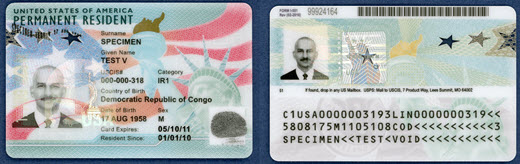
What the newly designed Green Card will look like after it comes into circulation May 1, 2017 Photo: Courtesy USCIS
What the newly designed Green Card will look like after it comes into circulation May 1, 2017 Photo: Courtesy USCISWhat the newly designed Green Card will look like after it comes into circulation May 1, 2017 Photo: Courtesy USCIS
The U.S. Citizenship and Immigration Services (USCIS) announced this week that it will begin issuing redesigned Permanent Resident Cards (Green cards) starting May 1, 2017.
The move is part of the Next Generation Secure Identification Document Project that seeks to create cards that are highly secure and more tamper-resistant than the ones currently in use. It is a multi-agency effort that involves USCIS, U.S. Customs and Border Protection, and U.S. Immigration and Customs Enforcement “to enhance document security and deter counterfeiting and fraud,” USCIS said in statement.
Temporary Protected Status
USCIS however stated that some green cards will continue to be issued in their current format after May 1 so as to deplete current supplies before transitioning to the new versions. Existing green cards will stay valid until the expiration date listed on the card.
People on a Temporary Protected Status may have an expired date on their documents but might have had their validity extended beyond the date on the card. Mshale encourages you to consult with an immigration lawyer if unsure.
If you have a green card that does not bear an expiration date but is still valid, you should consider applying for the updated card to take advantage of the new security features.
According to USCIS, the new green Cards will:
Display the individual’s photos on both sides;
Show a unique graphic image and color palette:
Green Cards will have an image of the Statue of Liberty and a predominately green palette;
EAD cards will have an image of a bald eagle and a predominately red palette;
Have embedded holographic images; and
No longer display the individual’s signature.
Also, Green Cards will no longer have an optical stripe on the back.
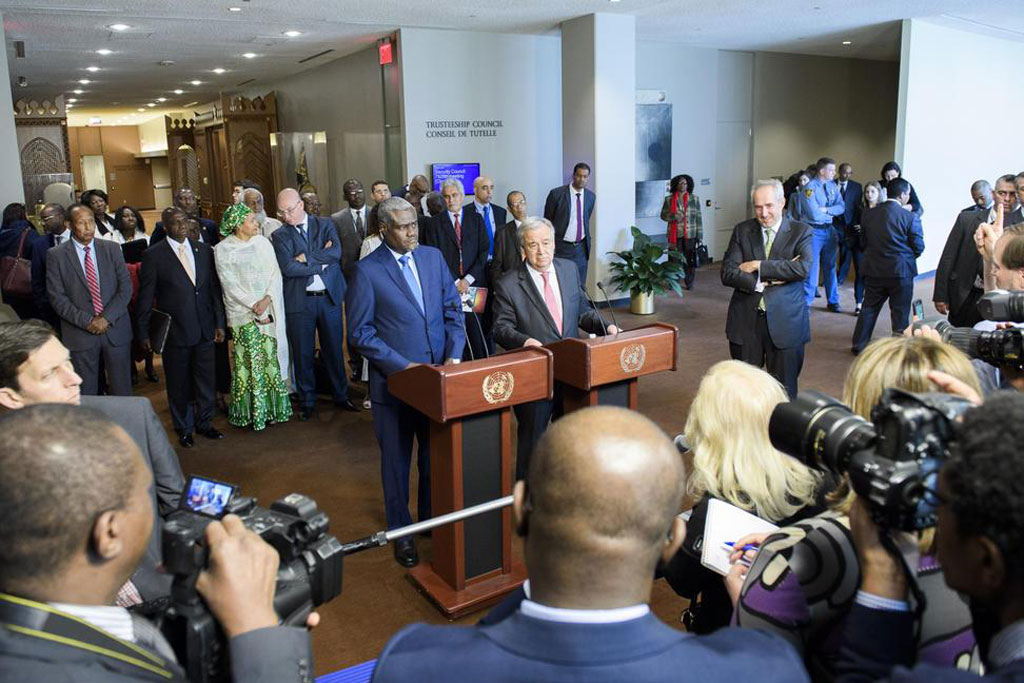
Secretary-General António Guterres (at podium, right) and Moussa Faki Mahamat, Chairperson of the African Union Commission, address the press following the signing of a Joint UN-AU Framework for Enhancing Partnerships on Peace and Security. Photo: Manuel Elias/UN
Secretary-General António Guterres (at podium, right) and Moussa Faki Mahamat, Chairperson of the African Union Commission, address the press following the signing of a Joint UN-AU Framework for Enhancing Partnerships on Peace and Security. Photo: Manuel Elias/UNSecretary-General António Guterres (at podium, right) and Moussa Faki Mahamat, Chairperson of the African Union Commission, address the press following the signing of a Joint UN-AU Framework for Enhancing Partnerships on Peace and Security. Photo: Manuel Elias/UN
United Nations Secretary-General António Guterres and the Chairperson of the African Union, Moussa Faki Mahamat, today signed a new landmark framework to strengthen partnership between the two organizations on peace and security pillars and better respond to the changing dimensions and evolving challenges of peace operations.
“We no longer have the traditional peacekeeping operations, where peacekeepers separate two countries or two groups within the same country that have signed an agreement, and a makeshift peace essentially prevails,” Mr. Guterres told the press at a stakeout, alongside Mr. Mahamat, after signing the framework at UN Headquarters in New York.
“We are witnessing, in Africa, as around the world, changes […] that force us to have a strategic review of the way peace operations take place,” he explained.
The Joint UN-AU Framework for Enhancing Partnership on Peace and Security is expected to boost the coordination between the two organizations at all levels. It is also anticipated to strengthen cooperation on issues ranging from human rights and good governance, to sustainable and inclusive development.
The new understanding will also help align the African Union’s Agenda 2063 with the global 2030 Agenda for Sustainable Development to ensure that they are both a “success story” in the continent.
Prior to the stakeout, Mr. Guterres and Mr. Mahamat jointly led the first Joint UN-AU Annual Conference where they discussed the complementarity between the 2030 Agenda and the AU’s Agenda 2063, as well as the fight against terrorism and the financing of operations led by the AU.
They also discussed situations in several countries, including Libya, Mali, the Central African Republic, and Somalia, and discussed efforts to combat the activities of the Boko Haram terrorist group.
Civil rights groups and census experts are sounding the alarm that pending actions by the Trump administration and Congress could severely hamper an accurate count of all communities in the Census 2020.
Civil rights groups and census experts are sounding the alarm that pending actions by the Trump administration and Congress could severely hamper an accurate count of all communities in the Census 2020.Civil rights groups and census experts are sounding the alarm that pending actions by the Trump administration and Congress could severely hamper an accurate count of all communities in the Census 2020.
With the 2020 Census three years out, civil rights groups and census experts are sounding the alarm that pending actions by the Trump administration and Congress could severely hamper an accurate count of all communities.
“Congress’ failure over the past few years to pay for rigorous 2020 Census planning, and now the Trump Administration’s insufficient budget request for 2018, will strike at the heart of operations specifically designed to make the census better in historically undercounted communities,” said Terri Ann Lowenthal, former staff director with the House Subcommittee on Census and Population.
She spoke during a national press call hosted by the Leadership Conference on Civil and Human Rights. The call was moderated by Wade Henderson, president and CEO of Leadership Conference on Civil and Human Rights.
“The decennial census is by far the most important and critical tool in our country to ensure that diverse communities are equitably served with government resources and that the American people are adequately represented at all levels of government,” said Henderson. “The census is required by the U.S. Constitution and policymakers are responsible for making sure the job gets done right. All of us must insist that they do that because there are no do-overs.”
Currently the Census Bureau is being funded at 2016 levels, as Congress has not approved final spending bills for 2017. The bureau has requested a 25 percent “ramp up” for preparation activities. But President Trump’s 2018 budget proposal recommends keeping funding levels where they are currently, $1.5 billion.
Census advocates say this is a crucial time for laying the groundwork and are calling for Congress to reject the administration’s budget proposal in favor of one that covers all preparation activities.
A ‘major civil rights issue’
Recently, the U.S. Government Accountability office deemed the 2020 Census a “high risk federal program,” in part because the U.S. Census Bureau is planning to utilize several never-before used strategies – such as collecting responses over the internet – but may not have the time and resources to adequately develop and test them.
Budget limitations have already hindered major preparations, including the cancellation of tests of new methods in Puerto Rico and on two American Indian reservations, and resulted in mailed tests rather than electronic or in-person ones, as well as delayed community outreach and advertising campaigns.
Advocates say current funding shortfalls will result in many people – particularly black, Latino and rural households, and families with young children – being missed by the count. Arturo Vargas is the executive director of the National Association of Latino Elected and Appointed Officials (NALEO) Educational Fund. He calls the underfunding of the census a major civil rights issue for Latinos and other communities of color.
“A successful 2020 Census is not possible if Latinos are not accurately counted,” Vargas said.
Millions of Latinos, the second largest ethnic group in the U.S., were missed in the 2010 census, including 400,000 children under four, according to Vargas.
For each uncounted person, state governments and communities lose thousands of federal aid dollars, which go to anti-poverty programs, education, infrastructure, emergency services, healthcare and other programs.
An undercount can also trigger changes in political representation – from redrawn district lines, to fewer seats in local, state and federal offices, often diminishing the power of communities of color.
Advocates say that new cost-saving strategies like collecting responses over the internet rather than paper forms require investments on the front end. Delayed preparations cannot be made up later. Surveys administered online may also be hampered by the “digital divide” if adequate field tests are not taken.
Lack of access to broadband and the internet may make it “more challenging to [reach] those historically left out of the census in the first place,” Vargas warns.
The ‘first high tech census’
The first “high tech” census also opens the door to cyber security concerns, which have been exacerbated of late by evidence of foreign attacks on the 2016 presidential elections. Such concerns could make Americans even more hesitant to participate.
Lowenthal says she and other advocates must be prepared for a “wild card” event, such as President Trump publically questioning the importance of the census via social media.
“One errant tweet could shake public confidence and in the process depress participation and undermine faith in the results, conceivably all the way to the halls of Congress,” Lowenthal said.
Census advocates are eyeing several other threats to the decennial count and its yearly counterpart, the American Community Survey. The ACS is sent yearly to about 1 in 38 households to collect demographic data on everything from employment and home-ownership to educational attainment.
Republicans in Congress are pushing to make participation in the ACS voluntary which could severely damage the data, says John C. Yang, president and executive director of the non-profit advocacy group Asian Americans Advancing Justice.
“The ACS updates the Census throughout the decade. As such it is required by law and must remain so to provide the vital info needed from our communities,” Yang said, emphasizing that the ACS is the only source for detailed data of ethnic subgroups, such as Vietnamese of Chinese descent.
Census advocates are also on high alert because an unsigned leaked executive order, titled “Protecting American Workers from Immigrant Labor,” referenced a directive to the Census Bureau to collect data on immigration status.
Advocates are alarmed by the intentions behind this unsigned order.
“Latinos and other immigrant families are keenly aware of heightened immigrant enforcement actions in their communities, and this may increase distrust in contact with public agencies including the Census Bureau,” Vargas said.
The deadline to file your taxes with the IRS in 2017 is Tuesday, April 18 2017. Use IRS form 4868 by that date if unable to complete your taxes by then. Photo: Wikimedia Commons
The deadline to file your taxes with the IRS in 2017 is Tuesday, April 18 2017. Use IRS form 4868 by that date if unable to complete your taxes by then. Photo: Wikimedia CommonsThe deadline to file your taxes with the IRS in 2017 is Tuesday, April 18 2017. Use IRS form 4868 by that date if unable to complete your taxes by then. Photo: Wikimedia Commons
To file for an extension: Taxpayers can download, print and file a paper Form 4868 from IRS.gov/forms. The form must be mailed to the IRS with a postmark on or before April 18. Taxpayers are reminded that an extension of time to file is not an extension of time to pay. Tax payments are due April 18. Submit an estimated tax payment with the Form 4868.
The tax deadline for this year is Tuesday, April 18. If for some reason you are unable to file a return by midnight on that date, you will need to request an extension by filling out form Forms 4868 at this IRS link.
“With the tax deadline approaching, taxpayers shouldn’t panic. The IRS has many options available to help people as they finalize their tax returns or if they need to get extra time to file,” IRS Commissioner John Koskinen said in a statement to Mshale.
The IRS has tax help, publications and information on IRS.gov to help last-minute filers, including information about free e-file options, such as FreeFile, or how to request an automatic six-month filing extension.
According to the IRS, it will have special phone lines open on Saturday, April 15 from 9 a.m. to 5 p.m., callers’ local time, to help taxpayers with last-minute issues.
This week is the busiest at the IRS as millions rush to beat the tax deadline next week. They are expecting about 18 million individual income tax returns for the week ending April 15, with about 16 million filed electronically.
As of April 7, the IRS has processed more than 100.9 million tax returns and issued more than 80.2 million refunds totaling $228.9 billion with the average refund being $2,851.
Extensions
The IRS expects to receive more than 8 million extension requests through next week, with the vast majority of those Forms 4868, Application for Automatic Extension of Time to File U.S. Individual Income Tax Return, being filed electronically. Overall, this year, the IRS expects to receive 13 million extension requests from taxpayers.
Taxpayers can download, print and file a paper Form 4868 from IRS.gov/forms. The form must be mailed to the IRS with a postmark on or before April 18. Taxpayers are reminded that an extension of time to file is not an extension of time to pay. Tax payments are due April 18. Submit an estimated tax payment with the Form 4868.
Make a Payment, Get an Extension
In addition to using Free File to get a filing extension, taxpayers can also get an extension by paying all or part of the estimated income tax due and indicate that the payment is for an extension using Direct Pay, the Electronic Federal Tax Payment System (EFTPS), or a credit or debit card. This way they won’t have to file a separate extension form and will receive a confirmation number for their records.
IRS Direct Pay offers individual taxpayers a free, secure way to pay an individual tax bill or estimated tax payment directly from a checking or savings account at no cost. No pre-registration is required and payments can be scheduled up to 30 days in advance.
By selecting “extension” as the reason for the payment, the IRS will also accept it as an extension – no need to separately file a Form 4868. In addition, any payment made with an extension request will reduce or eliminate interest and late-payment penalties that apply to payments made after April 18. The interest rate is currently four percent per year, compounded daily, and the late-payment penalty is normally 0.5 percent per month.
“As we enter the final days before the tax deadline, the IRS has seen a strong filing season so far with smooth processing of tax returns and refunds as well as signs our strengthened security steps are helping prevent more tax-related identity theft,” said Koskinen. “We appreciate taxpayers taking the time to file their tax returns accurately, and I also want to thank the nation’s tax community, tax professionals and our partners in the states for their critical role in helping make this filing season a smooth one.”
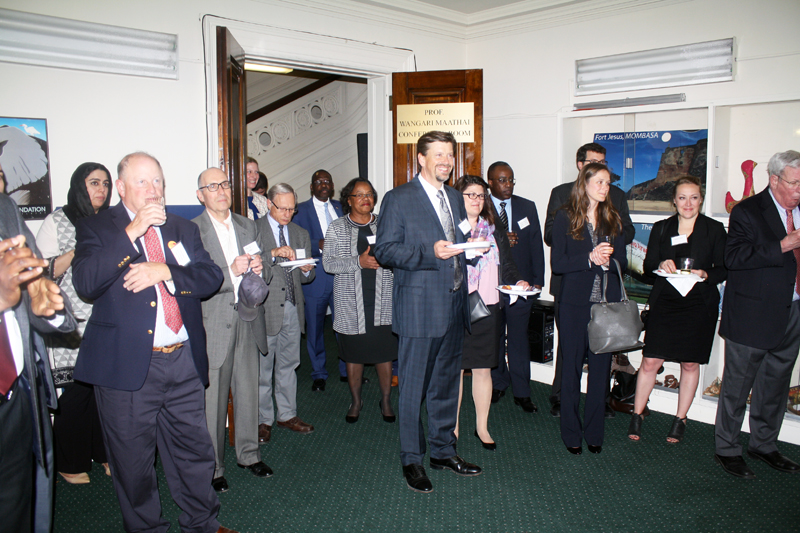
Books For Africa founder, Tom Warth, speaks at a Summit Society reception hosted by Ambassador Robinson Njeru Githae of Kenya (second from right) at the Embassy of Kenya in Washington, DC on April 4, 2017. On the right is the African Union ambassador to the United States, Dr. Arikana Chihombori Quao. Photo: Joseph Asweto for Mshale
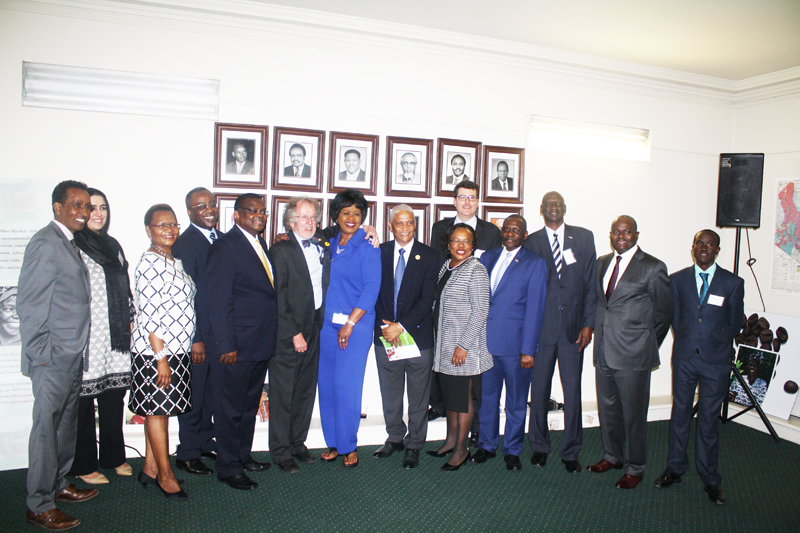
Books For Africa founder, Tom Warth, speaks at a Summit Society reception hosted by Ambassador Robinson Njeru Githae of Kenya (second from right) at the Embassy of Kenya in Washington, DC on April 4, 2017. On the right is the African Union ambassador to the United States, Dr. Arikana Chihombori Quao. Photo: Joseph Asweto for MshaleBooks For Africa founder, Tom Warth, speaks at a Summit Society reception hosted by Ambassador Robinson Njeru Githae of Kenya (second from right) at the Embassy of Kenya in Washington, DC on April 4, 2017. On the right is the African Union ambassador to the United States, Dr. Arikana Chihombori Quao. Photo: Joseph Asweto for MshaleMembers of the African Diplomatic Corps in Washington in a group photo at the Kenya embassy during a Books for Africa Summit Society reception hosted by Kenya’s ambassador to the United States, Robinson Njeru Githae. Also in the picture is Books For Africa founder Tom Warth and Sharon Sayles Belton of Thomson Reuters. Photo: Joseph Asweto for MshaleMembers of the African Diplomatic Corps in Washington in a group photo at the Kenya embassy during a Books for Africa Summit Society reception hosted by Kenya’s ambassador to the United States, Robinson Njeru Githae. Also in the picture is Books For Africa founder Tom Warth and Sharon Sayles Belton of Thomson Reuters. Photo: Joseph Asweto for Mshale
Recognizes Top Donors in Washington, DC
The world’s largest shipper of books to the African continent renewed their commitment to literacy with an event honoring the group’s biggest contributors and those who make their work possible.
Books For Africa, a U.S. based nonprofit held their annual Summit Society Reception on Tuesday, April 4, at the Embassy of Kenya in Washington, DC to recognize top donors and the African diplomatic corps for their help in getting millions of books to the continent.
“We have 14 countries represented here, 11 ambassadors and it’s really an exciting event,” Patrick Plonski, executive director, Books For Africa said. “It’s important that we always make sure that we are sending books that are valuable to Africa.”
“It’s not just sending books that are convenient for us to send or that we think are useful, but it’s important that they are beneficial to our beneficiaries.”
“By interacting with African ambassadors it helps us to stay grounded and make sure that what we are doing is useful to the continent, also interacting with ambassadors to see what we can do together,” he said.
The organization’s mission is to end the book famine in Africa and this year they plan to send 2.8 million books to their partner countries.
“We are always looking for books,” Plonski said. “We will be sending millions so that means we need a lot of books.”
Along with book donations Plonski insisted that just like any other nonprofit Books For Africa needs monetary gifts.
“We need money to send the books,” he said. “Donors are important to any nonprofit and we are no different.”
With a list of brand new actions, Plonski and team encourages communities to pull together at their local churches, rotary clubs or corporations to help move literacy onward in Africa.
“We have a number of initiatives moving forward,” he said. “Things like computers, e-readers and custom printing of books in different languages such as Portuguese, Swahili or other languages that are used in Africa.”
“While we continue to send books in English and also in French it’s always with the goal of adding value to what we provide and giving people what they want.”
According to the nonprofit, most African children who attend school have never owned a book of their own, and in many classrooms, 10 – 20 students share one textbook.
Kenyan Ambassador to the United States Robinson Njeru Githae, the Summit Society honorary chair, said through Books For Africa the goal is to have every child in Africa have their own individual textbook instead of having to share.
“Books For Africa is one of those organizations that Kenyans truly appreciate,” Githae said. “They have been able to ship to Kenya more than 15 containers of books which has helped our students in elementary, secondary and now at their universities and law schools so we are truly grateful to Books For Africa.”
Each container holds about 20,000 books at the cost of 50 cents per book to ship from the U.S. to Africa.
More than 38 million books have been shipped to school libraries, orphanages, adult literacy programs and community resource centers in 49 different countries since 1988.
Sharon Sayles Belton, the vice president for government affairs and community relations at Thomson Reuters knows firsthand the importance of books in the Africa. Thomson Reuters donates the law books that are sent to African law schools by Books For Africa through the latter’s Law and Democracy Initiative.
“There is a significant number of Africans in the state of Minnesota,” Belton said. “We have the largest Somali population in the entire U.S. in Minnesota and we have a large Liberian, Ghanaian and Nigerian population.
“My own personal commitment really comes from my belief that in order for any community to prosper we need to ensure they have access to education. If we work hard to educate the children of Africa, Africa will rise.”
Belton, who is also Minneapolis’ first black mayor where she served two terms from 1994-2002, believes that not investing in the future of children on the African continent would be a detriment to everyone globally.
“Those children run the risk of the dark side of humanity undermining their hopes and dreams,” she said. “We need to take every effort to keep that from happening and it starts first with love and then a book.”
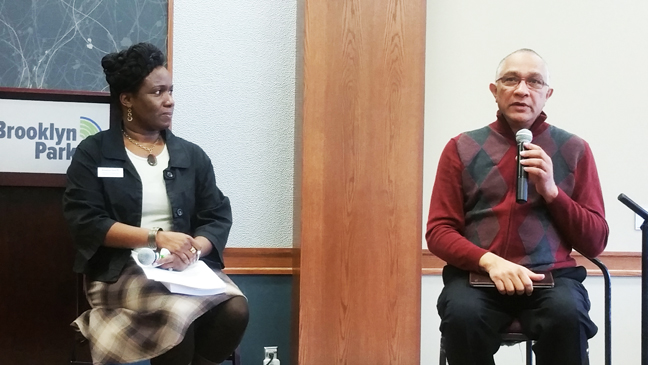
University of Liberia's Dr. Carl Patrick Burrowes (right) during a Q & A moderated by the City of Brooklyn Park Assistant City Manager Wokie Freeman (left) at a luncheon hosted in his honor on Thursday, March 30, 2017 in advance of an event Friday at Hennepin Technical College to discuss his new book on the history of Liberia. Photo: Tom Gitaa/Mshale
University of Liberia's Dr. Carl Patrick Burrowes (right) during a Q & A moderated by the City of Brooklyn Park Assistant City Manager Wokie Freeman (left) at a luncheon hosted in his honor on Thursday, March 30, 2017 in advance of an event Friday at Hennepin Technical College to discuss his new book on the history of Liberia. Photo: Tom Gitaa/MshaleUniversity of Liberia’s Dr. Carl Patrick Burrowes (right) during a Q & A moderated by the City of Brooklyn Park Assistant City Manager Wokie Freeman (left) at a luncheon hosted in his honor on Thursday, March 30, 2017 in advance of an event Friday at Hennepin Technical College to discuss his new book on the history of Liberia. Photo: Tom Gitaa/Mshale
The director of the institutes for research and policy studies at the University of Liberia, Dr. Carl Patrick Burrowes, will speak tomorrow in Brooklyn Park to discuss his new book “Between the Kola Forest and the Salty Sea: A History of the Liberian People Before 1800”.
The event which will be held at Hennepin Technical College is organized by the African Career, Education & Resource Inc, Youthprise and Hennepin Technical College. The free event starts at 5:45pm.
Dr. Burrowes, a native of Liberia, became head of the University of Liberia’s Institute of Policy Studies and Research in December 2016 and was tasked with the responsibility of improving it “as a think-tank dedicated towards helping to develop policy formulation and practices,” according to his appointment letter.
He had stints in various American universities before returning to Liberia. He was Professor of Communications & Humanities at Penn State for at one time. He was the Carter G.Woodson distinguished Professor of Journalism at Marshall University, where he co-founded the Center for the Study of Ethnicity and Gender in Appalachia.
In advance of his talk at Hennepin Technical College, Dr. Burrowes spoke today at a luncheon hosted in his honor at the Brooklyn Park community center by tomorrow’s organizers.
At the luncheon, Burrowes said there is a need for unity to be achieved among Liberians in Minnesota before a working coalition can be realized with other African immigrants and the black community in the state.
“How can you achieve that (black coalition) if you (Liberians) are not united among yourselves?” asked the author and university don.
He said he has lost faith in his generation but is hopeful the younger generation’s thirst for their history, a subject of his book, will make a difference in society’s well-being.
Dr. Burrowes will speak more at length about his book and work at the Friday evening event at Hennepin Technical College.
The event is free and open to the public but registration is required online here.
An Evening with Dr. Burrowes
(Free Event)
Fri, March 31, 2017
5:45 PM – 7:30 PM CDT
Hennepin Technical College
9000 Brooklyn Boulevard, Brooklyn Park, MN 55445
London-based Somali artist Nimco Yasin will conclude her Midnimo residency this week with a finale concert at the Cedar on Friday, March 31, 2017. Photo: Courtesy Cedar
London-based Somali artist Nimco Yasin will conclude her Midnimo residency this week with a finale concert at the Cedar on Friday, March 31, 2017. Photo: Courtesy CedarLondon-based Somali artist Nimco Yasin will conclude her Midnimo residency this week with a finale concert at the Cedar on Friday, March 31, 2017. Photo: Courtesy Cedar
London-based Somali artist Nimco Yasin will conclude her Midnimo residency this week with a finale concert at the Cedar on Friday, March 31. A Cedar news release said Yasin will be joined by a live band consisting of all-star Minnesotan musicians DeCarlo Jackson, Deevo Dee, Harbi, and DeVante Jackson, led by deVon Russell Gray, along with local Somali artists Rahmo Rose and Iskalaji.
Nimco Yasin rose to fame as part of a member of the legendary Waaberi Group in the 80s. Waaberi Group was Somalia’s government-sponsored music and dance troupe that included the most talented singers, musicians, and dancers in the country. With more than 300 members over its 30-year existence, the group was a source of national pride and toured the world multiple times.
Known for her striking voice and emotional renditions of traditional Somali qaraami songs, Yasin has been a vital figure in reviving Somali traditions. Qaraami, a style that emerged in the 40s, is still going strong. Known for telling stories, often about love, these ballad-like tunes are based in the familiar pentatonic scale, and are often referred to as “Somali jazz.”
Yasin fled Somalia to the UK in 1989, shortly before the onset of civil war which nearly wiped out the country’s rich artistic traditions. Since then, she has rebuilt her career as a professional artist. In the summers, Yasin travels to Jigjiga, the Somali region of Ethiopia, to use her experience as a member of Waaberi to host a popular program that mentors promising youth in song, dance, and performance modeled after the group.
Nimco Yasin Midnimo Residency Finale Concert
Cedar Cultural Center
416 Cedar Ave. S.,Minneapolis, MN 55454
Friday, March 31, 2017
Doors @ 7pm and Show @ 8pm
Tickets: $20 Advance or $25 Day of show
Buy Online @ The Cedar
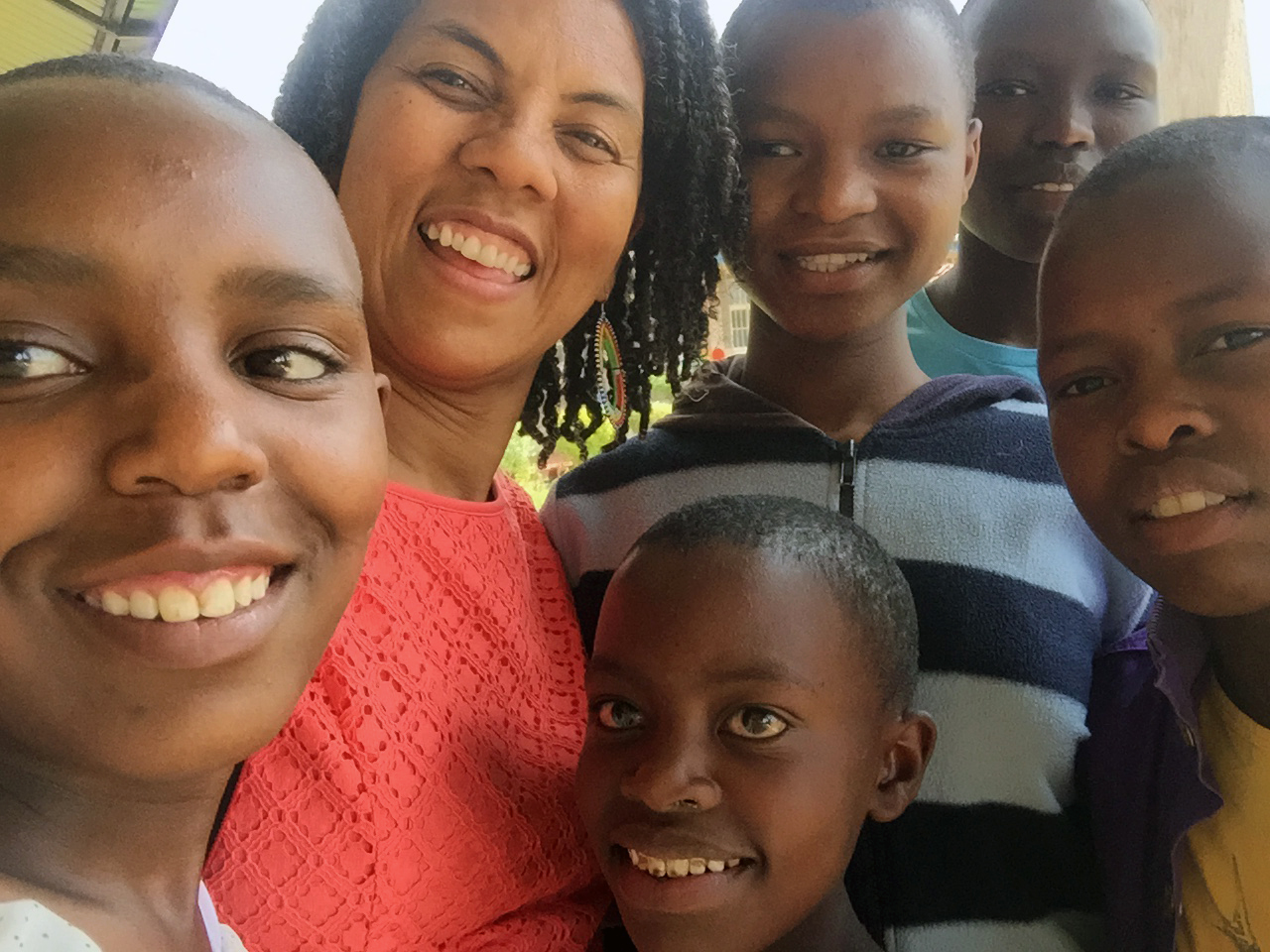
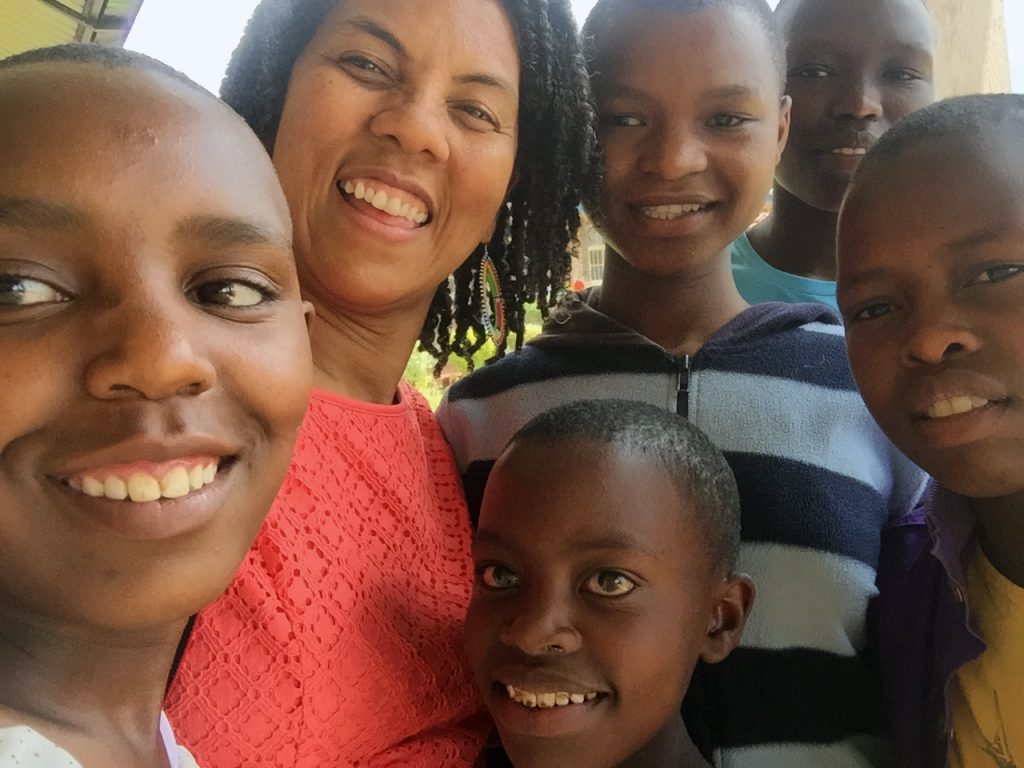
Girls in Action founder, Dr. Verna Price, in a selfie moment with Kenyan school girls that GIA visited in the town of Naivasha. Photo: Submitted
Girls in Action founder, Dr. Verna Price, in a selfie moment with Kenyan school girls that GIA visited in the town of Naivasha. Photo: SubmittedGirls in Action founder, Dr. Verna Price, in a selfie moment with Kenyan school girls that GIA visited in the town of Naivasha. Photo: SubmittedGirls in Action Advisory Board member and Senior Vice President at Wells Fargo, Kimberly Smith-Moore, with some of the Kenyan students she taught leadership in the town of Naivasha, Kenya. Photo: SubmittedGirls in Action founder, Dr. Verna Price, during a class session with 5th and 6th graders in the town of Naivasha in Kenya. Photo: SubmittedStudents in the town of Naivasha in Kenya during an interactive session presented by the Minnesota-based Girls in Action. Photo: SubmittedThe Girls in Action team with Kenyans students in the town of Naivasha that went through the leadership class that GIA conducted while in the country. Photo: Submitted
Like many people, when Dr. Verna Price returned from a 10 day trip to Kenya in early February, she felt changed. “It changes your perspective on everything: how you think, see the world, interpret different situations, your gratitude levels,” she told me. The founder of Girls in Action, a nonprofit that mentors young girls into promising leaders, Dr. Price was in Kenya to visit one of two chapters of her organization based outside of Minnesota (the other is in Guatemala). Girls in Action has had enduring success in Minnesota since its establishment in 2005 and now boasts 12 different school sites in the Twin Cities, with 350 girls enrolled in the program.
Since 2015, Dr. Price has been partnering with Light of Hope, a Kenyan nonprofit to put young girls through the Girls in Action program. Among other things, the program engages girls in advocacy and social change through service-learning and in positive cross-cultural interactions and communication. Based in Naivasha, Light of Hope is a home and school for rescued and vulnerable girls with a “self sustaining model,” Dr. Price tells me.
“The girls get food clothes, health, education and they get love, spirituality, and a safe home.”
Its founders, Sandra and Boniface Karanja, also have ties to Minnesota, where they met and discovered their shared mission before moving to Kenya. While Light of Hope houses approximately 90 girls, the Girls in Action program is available to about 45 of the girls, who are enrolled in grades 5-8. For her visit in 2016, Dr. Price had brought along her husband, this time she visited her oldest daughter and son, aged 14 and 23, so she could share the experience with them. She tells me that they each brought something they could share. Her daughter, a gymnast, taught the girls art and gymnastics. Her son, recently graduated from college, taught reading and piano. He also brought along his skateboard to teach the girls how to skate. Something she admits was hilarious to see the girls get into.
Dr. Price tells me that what stuck with her as she interacted with the girls at Light of Hope was their self-motivation. “Their sense of personal motivation was so high. The girls are so happy to be in school. That really impacted me and how incredibly brilliant they are.” Dr. Price is intent on building similar levels of motivation among the girls in her US chapters, “No excuses, no complaints.”
Kimberly Smith-Moore, a Girls in Action Advisory Board member and also a Senior Vice President at Wells Fargo travelled with Dr. Price. Smith-Moore taught the girls about service leadership and couldn’t help but be amazed by their positivity. “I learned so much,” she tells me. She felt instantly connected to the young girls, who welcomed their guests with songs upon their arrival. “These girls truly need us…our time, resources and most importantly love.”
Light of Hope was not Dr. Price’s only mission visit while in Kenya. A graduate of the Girls in Action-Kenya arranged for her to give a talk at her college, the Rift Valley Institute of Science and Technology. A motivational and public speaker interested in developing personal power among individuals, Dr. Price spoke on the seven dimensions of power, and how to use them to create positive change. The reception to her talk was astounding, she tells me. For many people, “it’s the first time in their lives that someone has ever said to them, ‘you are powerful.’ And that right now, you have the power to change your life.” Dr. Price recalls having conversations with students afterwards about their career goals and what drives them.
She also visited the Naivasha prison as part of a program targeting incarcerated men and women, which she runs through her Power Leadership Institute. When her and her husband visited in 2016, they held a seminar at the prison. This time she returned alone and gave a talk to approximately 200 incarcerated men on how to positively change their lives. “My work is to inspire them to be adders, not subtractors,” she tells me. Through all her efforts, Dr. Price is determined to inspire individuals, wherever they are in their lives, to be positive leaders. When I ask Dr. Price about her plans to visit Kenya again, she tell me with a laugh, “I don’t know when I’m coming back but I get a feeling that it’s gonna be real soon.”
To sponsor a girl at Light of Hope and “Educate girls to Change the world,” visit their website at lightofhopekenya.org.
About 100 people turned out to witness the grand opening of the Cedar Riverside Opportunity Center on March 12, 2017. Photo: Bethel Gessesse/Mshale
About 100 people turned out to witness the grand opening of the Cedar Riverside Opportunity Center on March 12, 2017. Photo: Bethel Gessesse/MshaleA youth standing in front of an Oromo Liberation front flag flashes a victory sign at the opening of the Cedar Riverside Opportunity Center in Minneapolis on March 12, 2017. Photo: Bethel Gessesse/MshaleAbout 100 people turned out to witness the grand opening of the Cedar Riverside Opportunity Center on March 12, 2017. Photo: Bethel Gessesse/Mshale
After two years in the making, the Cedar Riverside Opportunity Center opened this past Sunday, March 12th, with a ceremony drawing nearly one-hundred people. The center was packed with members of the surrounding community and local government officers, including council member Abdi Warsame and Hennepin County Commissioner Peter McLaughlin.
The Opportunity Center, located in the Five15 on the Park high-rise apartment, aims to tackle the high unemployment rate in the East African community by providing a range of services including educational programs, training workshops, on-site employment recruiting, and career counseling services. Partnering organizations of the center include Augsburg College, Minneapolis Community and Technical College, Hennepin County, and EMERGE Community Development.
Local officials and community members have high hopes for the center in providing a pathway to employment for members of the Cedar Riverside community. There is also confidence that the Opportunity Center will serve as a model for potential future job centers.
The flags of the six Muslim-majority countries that have been banned from entering the US by president Trump's new executive order on immigration.
The flags of the six Muslim-majority countries that have been banned from entering the US by president Trump's new executive order on immigration. The flags of the six Muslim-majority countries that have been banned from entering the US by president Trump’s new executive order on immigration.
On March 6, 2017, president Trump signed a new executive order on immigration to clarify his previous chaotic one that was successfully blocked by the courts following a suit by the states of Washington and Minnesota. The president’s new executive order will take effect on March 16, 2017.
The original order had seven Muslim majority countries, Iraq, Iran, Somalia, Sudan, Yemen, Syria and Libya. The new order drops Iraq from the list.
The 90 day ban still stays as in the previous order.
According to the US State Department, all visas revoked because of the original travel ban have been fully restored.
Also, all refugees from all countries are suspended from entering for 120 days. There is no longer an indefinite ban on Syrian refugees as was the case in the previous order, they will be lumped in together in the 120 days ban on all refugees.
This new executive order applies to foreign nationals of the designated countries who:
Are outside the United States on the effective date of the new executive order
Did not have a valid visa at 5:00 p.m., eastern standard time on January 27, 2017 and
Do not have a valid visa on the effective date of the new order.
The new executive ban is more clear as it attempts to avoid the chaos that greeted the previous one as people got detained at airports with no warning. According to the order, the suspension of entry will not apply to the following:
Any lawful permanent resident of the United States
Any foreign national who is admitted to or paroled into the United States on or after the effective date of the order
Any foreign national who has a document other than a visa, valid on the effective date of the order or issued on any date thereafter, that permits him or her to travel to the United States and seek entry or admission, such as an advance parole document
Any dual national of a country designated under this order when the individual is traveling on a passport issued by a non-designated country
Any foreign national traveling on a diplomatic or diplomatic-type visa, North Atlantic Treaty Organization visa, C-2 visa for travel to the United Nations or G-1, G-2, G-3 or G-4 visa; or
Any foreign national who has been granted asylum; any refugee who has already been admitted to the United States; or any individual who has been granted withholding of removal, advance parole or protection under the Convention Against Torture.
Most legal experts, citing the uncertainty and unpredictability of the Trump administration, are advising non-US citizens currently in the United States from traveling to the affected six countries.
Miriam Makeba, known internationally as “Mama Africa.” Photo: Wikimedia Commons
Miriam Makeba, known internationally as “Mama Africa.” Photo: Wikimedia CommonsMiriam Makeba, known internationally as “Mama Africa.” Photo: Wikimedia Commons
On this International Women’s Day, we honor the immense contributions women from Africa and the diaspora have made toward the music we love. With an extensive but by no means comprehensive playlist, we recognize women from across the musical, cultural, historical and geographic spectrum–from South African icon Miriam Makeba, known internationally as “Mama Africa,” to Elza Soares from Brazil, who continues to stun audiences at 79 years old with her powerful, raspy voice, to young artists including Yemi Aladé from Nigeria, dynamic Cuban singer Daymé Arocena and Sudanese songstress Alsarah.
We took inspiration from young Cameroonian pop star Reniss, whose song “La Sauce” we featured in our first edition of Fresh Cuts. Today, on her Instagram page, she is honoring the women who have come before her and influenced her music, drawing inspiration from both the style and essence of women like Bébé Manga and Bella Bellow, posing like them in some of their most iconic photographs.