

Home Blog Page 131

The matter of Herbert Igbanugo and the Minnesota Supreme Court

0
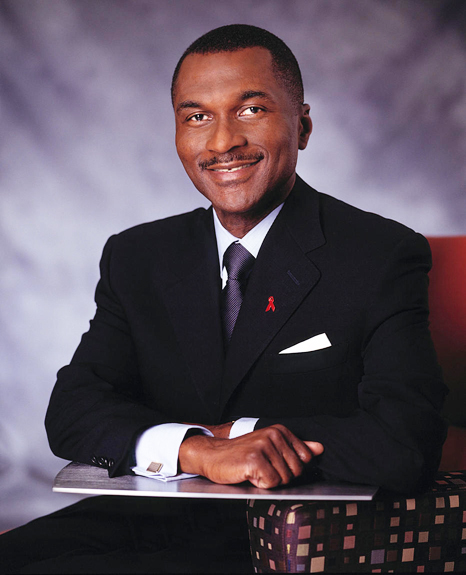
Herbert Azubuike Igbanugo

The news of the suspension of longtime Twin Cities attorney Herbert Igbanugo hit the community like a thunderbolt this past May. The Minnesota Supreme Court suspended the high profile Mr. Igbanugo for three months.

Attorneys, like in most other sensitive professions like medicine, have disciplinary action against them made public.

Mshale was unaware that there was an ethics complaint against him by prior clients of his until he decided to share with us on the eve of the Supreme Court decision. Still, the news was shocking to all of us and it sent shockwaves in the African community as well.

A little background might be in order for the few, at least in Minnesota, that might be unaware of what Mr. Igbanugo represents in the African community. In the legal community, as in many professions, it is not hard to categorize practitioners into various tiers based on competency and the level of service they are able to provide. Within our community, it is an established fact that Mr. Igbanugo is on the top tier of lawyers in the state. For a number of years, he was one of the main partners at Blackwell Igbanugo Partners, the largest black operated law firm in the United States. That is worth repeating so it does not escape anyone. The largest black operated law firm in the country when the firm was in existence.  The National Bar Association keeps track of such information and one can easily verify that.

Igbanugo and the other partners at the large law firm went their separate ways and started new practices. Mr. Igbanugo went on to establish his current firm, called Igbanugo Partners, which specializes in immigration and International Law. Immigration law as most of us are aware is an important area of practice for many African immigrants given our status in this country.

Lawyers are not created equal. You get the lawyer whose services and level of representation you can afford, and above all able to represent you well and win your case.

As stated above on May 2015, Herbert Igbanugo was suspended for a period of three months. As of last month (September 2015), he has been reinstated and is allowed to practice again after fulfilling the Supreme Court’s conditions and that of the Office of Lawyers Professional Responsibility. The latter is also responsible for the database that contains the list of disciplined lawyers in Minnesota. We are also in receipt of a letter dated September 15, 20154 from David R. Stras, Associate Justice of the Minnesota Supreme Court stating that indeed Mr. Igbanugo is now reinstated. We have checked the database and it says he is indeed able to practice.

Given his position in our large community, Mr. Igbanugo’s recent experience has touched many and caused consternation and heartache, with many who are not even his clients wondering what this portends for the community. Questions asked include

“Can we trust Herbert?”; “Are our African lawyers under attack by the Office of Lawyers Professional Responsibility?” Other questions hinged on what does this do to Mr. Igbanugo’s effectiveness once his suspension is over, keeping in mind that some of the most controversial cases in the African immigrant community context, and some might argue even beyond the community,  have been taken on by Mr. Igbanugo. All communities need blue chip type players in all key professions. As far as lawyers are concerned, Mr. Igbanugo is one of those blue chip players in that profession from our community.

The questions being asked by the community are all legitimate and we have no lawyers working at Mshale and none of us have legal training but we have had many years of interaction with most of the African attorneys in this town and can gauge the strengths and weaknesses of many of them. Given our position in the community, one of the many earned but non-paid role we play is that of a referral house, where people call or write from time to time to get a suggestion on the best person or company that can help them with a need or service they are after.

So for the last three months we have had to field a few questions from concerned Africans on the issue of Herbert Azubuike Igbanugo.

You can access the referee’s decision and that of the Supreme Court to have Mr. Igbanugo suspended and his eventual reinstatement on their respective websites (warning: most of these run into 60 plus pages) but the purpose of our editorial here today is to answer some of the key questions that came up from the community during the travails of Mr. Igbanugo these past summer.

The accusations against Mr. Igbanugo can be broken down into three from a layman’s perspective (which we are): Overcharging for services, professional misconduct and false statements to the court. They all stemmed from complaints against him by former clients revolving around non-payment of services from what we can determine from the hundreds of court papers we have read. Important also to keep in mind some of the accusations leveled at Mr. Igbanugo were actions carried out by employees/attorneys at his law firm but ultimately he is responsible.

It is up to you to decide whether you can take your business to Mr. Igbanugo after all this but whichever decision you make, we believe this is the context we want you as a consumer and member of the community to have. Since his admission to the Bar, Mr. Igbanugo has represented over 20,000 clients with mostly favorable results in the 27 years he has been practicing.

Even while they were suspending Mr. Igbanugo for misconduct, you need to be aware what the Referee (who is the person tasked with the investigations and recommendations to the Supreme Court) said in his report to the court to help our high court to come up with its decision:

1.) Respondent (Igbanugo) did not commit any professional misconduct involving dishonesty, fraud, deceit or misrepresentation

2.) Respondent did not make false statements to the court either overtly or by omission in his collections lawsuit

3.) Legal representation continued for all clients even if legal fees were in arrears

Additionally, the referee found that the respondent (Herbert) did not charge “unreasonable fees”.

It did leave us scratching our heads that someone can be suspended after the above three points have been made by what we consider the prosecutor (to use a familiar term) in this case. Was probation a more appropriate action by the Supreme Court? We don’t know. As stated, we are not lawyers but one can be forgiven if they feel the punishment did not fit the ‘crime’ after you have described the ‘offender’ in that manner.

It is important to keep in mind in what might have triggered what really is a tiff between a client and their lawyer. In his findings, the referee said “the firm has faced financial challenges and has had to write off, in the recent past, hundreds of thousands of dollars in unpaid fees.”

It is interesting to note that two of three clients that were the initiators of the complaints that led to all these had their cases successfully concluded in their favor, on the strength of Herbert Igbanugo’s representation, and the argument were over fees. The third client took a different attorney who finished the work Igbanugo had already started.

Here at Mshale, we might not support the style that Mr. Igbanugo used to try resolve the matters related to unpaid legal fees by clients, but we also cannot be blind to what we consider the key findings that the court also concluded, that we believe matter to all of you when looking for a good lawyer. The finding that Mr. Igbanugo “did not commit any professional misconduct involving dishonesty, fraud, deceit or misrepresentation.” We believe just that one sentence should answer most of your queries.

The other question was whether African lawyers are under attack by the Office of Lawyers Professional Responsibility. We are not in a position to answer that question for the mere fact that we have not devoted the limited resources we have to investigate it, but based on the information currently available on the OLPR records that are public, we only currently see two African lawyers under active suspension. One is because of a felony charge and the other for misconduct. For understandable reasons, lawyers are unwilling to speak on the record for matters related to the OLPR.

What you need to know is this as far the matter of Herbert Azubuike Igbanugo is concerned. He is free to practice law again per the Minnesota Supreme Court and this quote from the Referee that brought the charges against him is all we have to say and let you make your own conclusion (these are not our words but words written by the person that recommended Mr. Igbanugo be suspended): “Respondent is a supremely confident, assured and competent individual who has strong religious beliefs and high expectations for himself and others.”

Are you at risk from serious complications from the flu?

0
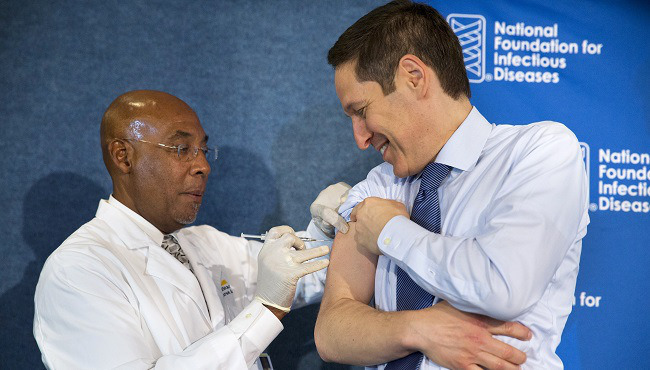
Centers for Disease Control and Prevention Director Dr. Tom Frieden, right, receives a flu shot from nurse B.K. Morris during an event about the flu vaccine, Thursday, Sept. 17, 2015, at the National Press Club in Washington. Photo: Jacquelyn Martin/AP
Centers for Disease Control and Prevention Director Dr. Tom Frieden, right, receives a flu shot from nurse B.K. Morris during an event about the flu vaccine, Thursday, Sept. 17, 2015, at the National Press Club in Washington.  Photo: Jacquelyn Martin/AP
Centers for Disease Control and Prevention Director Dr. Tom Frieden, right, receives a flu shot from nurse B.K. Morris during an event about the flu vaccine, Thursday, Sept. 17, 2015, at the National Press Club in Washington. Photo: Jacquelyn Martin/AP

If you are living with a long-term health condition like asthma, COPD, diabetes or heart disease, you take steps every day to stay healthy by taking your medicine, carrying an inhaler, eating right, or monitoring your blood sugar and cholesterol. But did you know that there is something else you can do just once a year to keep yourself healthy? You can get a flu shot.

People living with asthma, COPD, diabetes or heart disease have a higher risk of complications from flu. In past flu seasons, up to 80 percent of adults hospitalized from flu complications had a long-term health condition, as did about 50 percent of hospitalized children. The flu can make these health conditions worse, even if they are under control. People living with these conditions may also have weakened immune systems that make it harder for their bodies to fight flu. This is why it is so important that people with long-term health conditions get their flu shot every year.

Asthma is the most common medical condition among children hospitalized with the flu. Lung diseases like asthma and COPD cause your airways to swell and become blocked with mucus, which makes it hard to breathe. Flu can also increase the swelling of your airways and lungs, causing severe asthma attacks and symptoms that can lead to hospitalization. Heart disease was the most common health condition among Minnesota adults hospitalized with flu in 2012-13 flu season. If you have heart disease, flu can increase your risk of having another heart attack. Flu can raise blood glucose to dangerously high levels in people with type 1 or type 2 diabetes. Diabetics also have a higher risk of developing pneumonia by itself or after getting the flu so they also may need a pneumococcal vaccine.

Do you live with a family member who has a long-term health condition? It is especially important to stay up-to-date on recommended vaccinations, including your flu shot. Getting a flu shot can help prevent the spread of flu to people at higher risk. Get vaccinated to protect your family members.

The flu shot is safe to get, even if you are taking prescription medications. Adults can get the flu shot at doctors’ offices, pharmacies, workplaces, health clinics, and health departments. You may also need other vaccines based on other factors so talk to your doctor. Most health insurance plans cover the cost of recommended vaccines—a call to your insurance provider can give you the details. If you do not have health insurance or cannot afford vaccines, find an Uninsured and Underinsured Adult Vaccine (UUAV) clinic near you at: www.health.state.mn.us/divs/idepc/immunize/adultvax/clinicsearch.html.

Everyone is welcome at Good Grocer, a new kind of food marketplace

0
Fresh produce at the The Good Grocer which is located at 122 E. Lake St. in Minneapolis. Photo: Courtesy TC Daily Planet
The Good Grocer is located at 122 E. Lake St. in Minneapolis (Corner of East Lake Street & Stevens Ave). Photo; Courtesy TC Daily Planet
The Good Grocer is located at 122 E. Lake St. in Minneapolis. Photo; Courtesy TC Daily Planet
Fresh produce at the The Good Grocer which is located at 122 E. Lake St. in Minneapolis. Photo: Courtesy TC Daily Planet
Fresh produce at The Good Grocer which is located at 122 E. Lake St. in Minneapolis. Photo: Courtesy TC Daily Planet
Member Service Co-ordinator Janeth Sanchez organizes members in addition to working check out at Good Grocer which is located at 122 E. Lake St. in Minneapolis.

The small chartreuse and white building on the corner of East Lake Street and Stevens Avenue might be easy to miss, but what goes on inside might well become a model for solving the problem of fresh produce and healthier foods in lower income neighborhoods. The Good Grocer, a new kind of neighborhood co-op that opened June 15, is already getting healthy and affordable food to people in the area.

Once, people living nearby in the Lyndale and Whittier neighborhoods had easy access to good and affordable food. But, after Sullivan’s SuperValu, a large grocery store with a 28-year history of serving the community closed two years ago, residents found themselves with few options. In an area where many don’t have much money to spend or reliable transportation to travel miles to buy groceries, the neighborhood had no access to a quality grocery store. That’s when Kurt Vickman stepped in, looking for a solution.

Vickman, who for 14 years served as head pastor at The Upper Room, a local activist church, resigned his preaching position to devote full time to addressing food insecurity and, along with members of his church, opened a food shelf. But, he found problems.

“People who go to food shelves get 10 to 20 percent of their food from the shelves, but for the rest of their groceries, they have to pay full price. For a long time I was hearing about families who, at the end of the month, didn’t have enough food to eat,” he said.

He began to notice that many who came to food shelves would try to offer small amounts of money in exchange for the free food. “It was as if they were saying to us, ‘No, we’re not helpless.’”

But, there were rules at food shelves that Vickman couldn’t break. “We used to get food from a food bank. But, we had to sign a contract that we couldn’t have people work or have paying members, and that you had to give away the food for free.”

Vickman thought there might be a better way. “We had to redefine how to distribute food. We decided to create a space that was somewhere between a food shelf and a full-priced retail grocer,” he said.

Vickman converted the charity food shelf into a non-profit full service food store, calling it the Good Grocer and offering customers a chance to buy groceries at a discount in exchange for volunteer work. “We used business practices not to make a profit,” Vickman said, “but to give access to people who might otherwise not have access to healthy and affordable food.”

While you don’t have to be a member to shop there, (the general public is encouraged to come inside), members get a considerable discount on everything in the store. “We have more than 300 active members already,” said Services Coordinator Janeth Sanchez. “It’s a five-minute application and members need to do two and a half hours of volunteer work a month. For that, they get a 25 percent discount over the regular prices. Each item has two prices, one for members and one for everyone else.”

For Vickman, it’s about dignity as much as it is affordable food. “When people are poor, others don’t look at them as being able to contribute. But, everyone has something to contribute. Here they can feel proud instead of walking into a place [a charity food shelf] with their heads down.”

He recruited corporate supporters, including Ultra Creative, a local design firm that took the dingy building and provided what Vickman says was probably $50,000 of design work, including a logo. “I was in Jerry’s Foods in Edina and thought that lower income people should be able to shop in a clean, brightly lit and well-stocked place, too.”

Many members spend their volunteer their hours stocking shelves or doing inventory. Others have needed expertise – a refrigeration expert if a cooler breaks down, a window washer and professional cleaners. Corporate sponsors have donated amounts from $15,000 to $200,000. SuperValu and The Fish Guys, who usually service higher-end customers, agreed to distribute to the Good Grocer. “That was the critical piece,” Vickman said.

The store has long shelves of brightly colored, fresh vegetables. “We take a lot of pride in having fresh and healthy produce,” said Sanchez. The store carries regular and organic eggs ($3.52 for members, $4.69 for non-members) and a choice of organic pastas. You can pick up tofu or fancy ice cream.

“We have a very diverse membership – people from Mexico, Central and South America and we have a growing Somali base,” she said, “so we have Mexican and Middle Eastern sections.” The coolers are filled with fresh and smoked meats and the frozen food sections carry healthier frozen dinners and breakfasts as well as frozen pizzas.

“We are really trying to bring sustainable good foods to people who shop here. We’ll be increasing the organic food choices as people get familiar with it. And, we’re always looking for feedback from customers as to what they want us to carry,” she said.

There’s also a community element. Professional cake bakers make personalized birthday cakes for kids under 18-years at a cost of only $3, with a party room available for birthday parties. And on Saturdays, a member runs the Kid’s Club in the party room, so parents can drop off their kids while they work, shop or volunteer.

Vickman said that his heart is connected to the project. He has plans for the marketplace’s future, which includes building a community café area. The word ‘good’ in Good Grocer is good prices, a good assortment of good food but especially a good group of people, said Vickman. He hopes that Good Grocer will become a motivating force as well. “We want a gathering place where people can come in and get on line, with coffee for ten cents a cup. We want a place, not just for members, but for walk-in customers from the neighborhood and elsewhere – not just lower income people, but all people. We want to provide dignity where people are contributors. We want to offer, not a hand out but a hand up.”

The Good Grocer is located at 122 E. Lake St. in Minneapolis. It is open from 10 a.m. until 8 p.m.

Somali American Parent Association takes on East African immigrant mental health

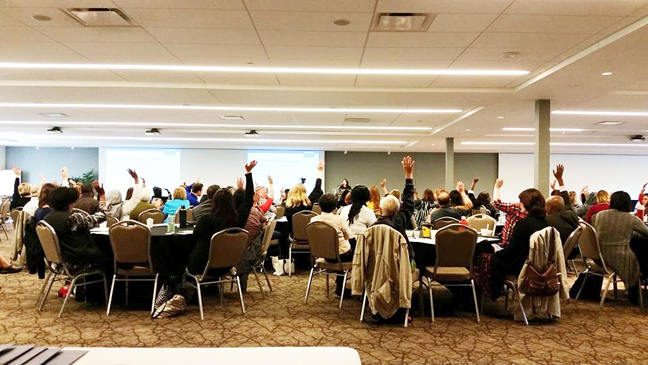
Somali American Parent Association executive director, Mohamed Mohamud speaking at the East African immigrant mental health conference his organization hosted in conjunction with the Minnesota Dept. of Health. Photo: Faiza Abbas Mahamud/Mshale
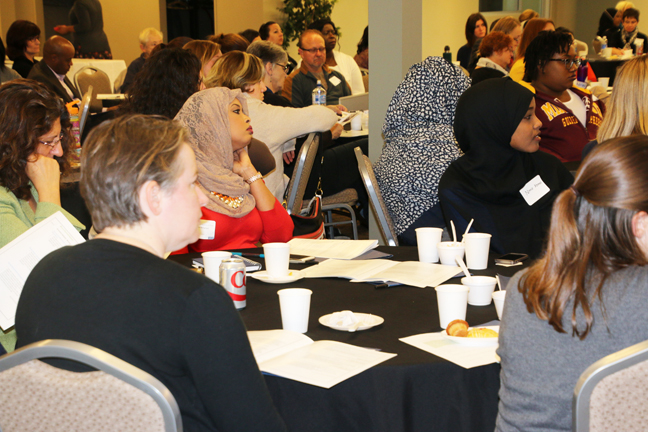
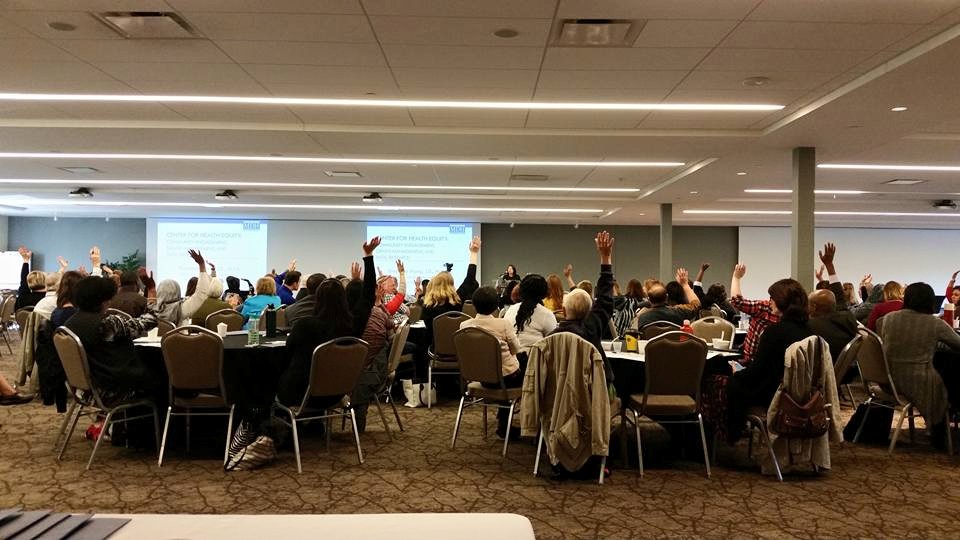
A section of the participants at the joint Somali American Parent Association and Minnesota Dept. of Health conference on the mental health of East African immigrants. Photo: Faiza Abbas Mahamud/Mshale

12049175_908449269231400_1012289142359729777_n

A section of the participants at the joint Somali American Parent Association and Minnesota Dept. of Health conference on the mental health of East African immigrants. Photo: Faiza Abbas Mahamud/Mshale

ST.PAUL, Minn. – In partnership with the Minnesota Department of Health, the Somali American Parent Association hosted the East African Mental Conference Thursday at Ties Event Center focusing on dissemination of latest research and promising practices on adult mental health in the Somali community and other East African communities.

More than 200 people attended the conference to talk about issues of mental health in the East African community. Most of the attendees are professionals who work in mental health and substance abuse prevention and treatment, community leaders, educators and students.

The East African Mental Health Conference was one of the first such gatherings in Minnesota, a topic rarely discussed in the African communities and often labeled as a taboo subject. The conference mission was to unveil discussions around mental health in the East African community and what is needed to create effective mental health practices in the Somali community and other East African communities.

The conference started shortly after 9 a.m.

Saida Abdi, Community Relations Director of the hospital’s Refugee Trauma and Resilience Center at the Children’s Hospital in Boston was the keynote speaker.

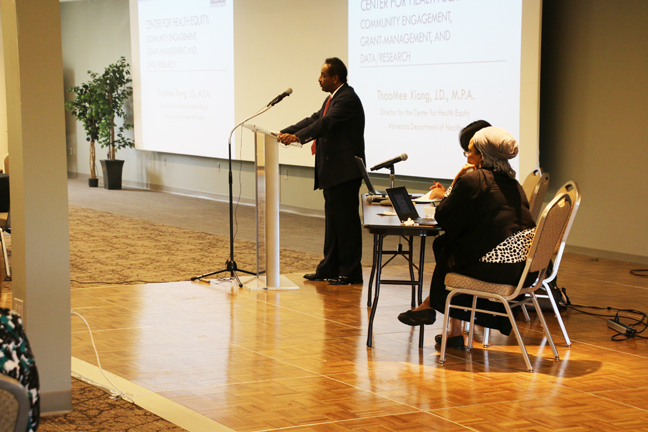
The speakers who preceded Abdi included ThaoMee Xiong, the director of the Center for Health Equity at the Minnesota Department of Health. Xiong talked about health equity and the importance of community engagement to achieve effective public health. She talked about how structural racism created through policies can contribute to health disparities.

“It’s important that we review our policies,” she said confidently as she glanced across the conference hall.

Deputy Commissioner for the Minnesota Department of Health, Daniel Polluck, Erica Fishman, Sara Chute and Asli Ashkir were among those in attendance.

Trauma became the theme of the conference when Abdi took to the stage her professional and personal findings. Abdi talked about how culture and refugee experience affects symptom expression, help seeking patterns and healing mechanisms.

She mentioned how many of the youth are affected by their parents’ war trauma. “Parents are the safe place for a child,” Abdi said.

The conference was later divided into five sessions and a panel. The topics of discussions included improving the mental health of Somali women, mental health of Somali refugees and stigma, Somali mental health concepts and best practices, maternal health and wellness in East African women and treating Somalis who deny or minimize mental health issues.

“I learned so much,” said Hani Mohamed, a mental health practitioner also a recent college graduate.

Minnesota Department of Health now eagerly waits for the final report that identifies areas where further research is needed said Mohamed Mohamud, Somali American Parent Association Executive Director.

“This conference has now opened a lot of doors,” Mohamud said. “Now mainstream entities and professionals know about our organization and the kind of work we do. They now know where to seek reliable resources and help.”

Asma Bulale, Community Engagement Specialist for Somali American Parent Association and main organizer of the event was the emcee. Bulale holds a masters’ degree in public health from University of Washington.

Bulale, a Somali native who blossoms in areas of community engagement and conversation around health equity said “I plan to engage more people in community conversations in regards to community health and prevention.” Bulale strongly believes that talking about “sensitive topics are key to achieving healthier lifestyle within the Somali community.”


University of Liberia benefit concert to feature Alumni Chorus on September 26 in Brooklyn Park

0
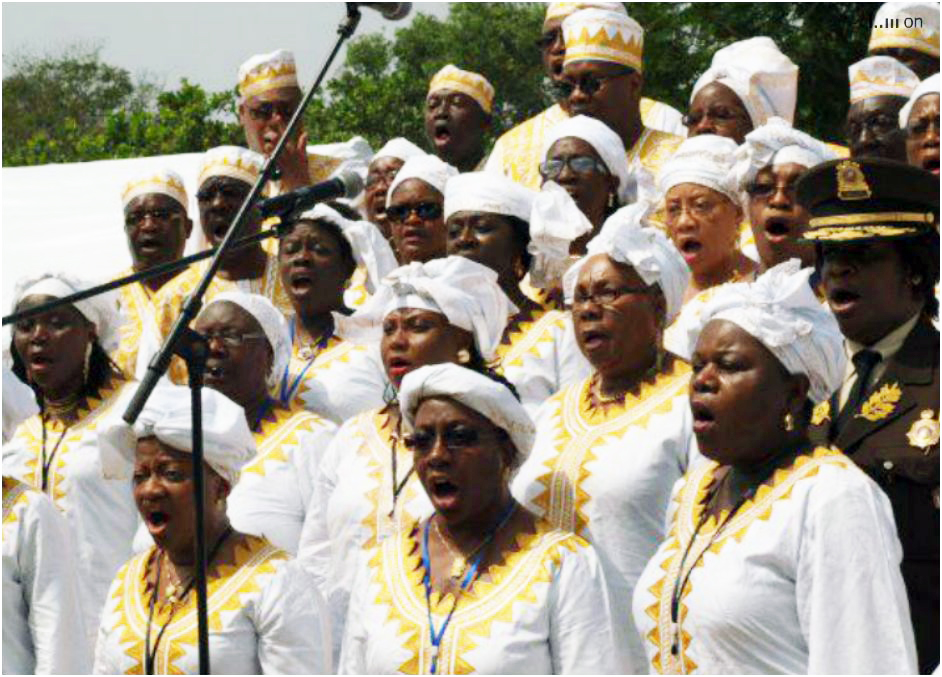
The University of Liberia Alumni Chorus will perform at a benefit concert for their alma mater on Saturday, September 26 2015 at Discover Church in Brooklyn Park, Minnesota. Photo: Courtesy of University of Liberia Alumni Chorus

The University of Liberia Alumni Chorus which consists of alumni from the school will deliver their renowned repertoire to Twin Cities residents during a Saturday, September 26 concert at Discover Church in the City of Brooklyn Park, home to a large Liberian population.

The concert starts at 6:00pm with doors opening at 5:00pm.

This will be the 6th annual concert series by the group. Proceeds will go towards scholarships for students at the university. In an interview with Mshale, Wayne Doe, a member of the Chorus said this year, some of the proceeds in addition to scholarship money will go towards the construction of a performing arts center at the more than a century old institution. “We are still working with the university to break ground on this important initiative,” he said.

The roster of the Alumni Chorus consists of alumni who sang under the direction of Mrs. Agnes Nebo von Ballmoos in the 1960s through 80s when the country’s 15-year civil war which the university became a victim of “completely destroying it.”

The performing arts center is in honor of Mrs. Ballmoos, who until her death in 2000 was the University of Liberia’s only ethno-musicologist and Associate Professor of Music.

“We would really appreciate the community’s support in getting this going,’ Doe said. He attended the university in 1979 but went on to graduate in Russia.

Established in 1862, the University of Liberia is West Africa’s oldest degree granting institution. It has an enrolled student body of close to 18,000 making it that country’s largest institution of higher learning.

Ambassador Jeremiah Sulunteh, Liberia’s ambassador to the United States, was advertised as the guest of honor alongside Brooklyn Park Mayor Jeffrey Lunde and Dr. Emmet Dennis, the university’s president. The embassy has since informed Doe and his team that Mr. Jackson George, the newly appointed Consul General for Minnesota will represent the ambassador instead.

The Grand Chief Patron for the benefit concert is Sawie Nebo, a Liberian entrepreneur.

Tickets start at $30 and up to $100. You can purchase tickets at the door or for advance tickets, call the numbers below.

University of Liberia Benefit Concert
Saturday, September 26, 2015 6:00 P.M. CST
Discover Church
1400 81st Avenue, Brooklyn Park, MN 55444
Tickets: Call 612-987-2010, 763-273-3896 or 770-815-9260
Tickets can also be purchased at the door on concert day

SAPA and Minnesota Health Department to hold conference on the mental health of East Africans

0
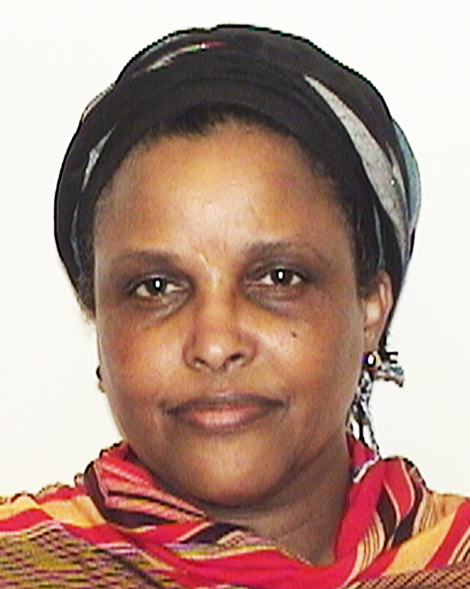
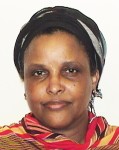
Saida Abdi, Director of Community Relations at Boston Children's Hospital Refugee Trauma and Resilience Center will keynote the Somali American Parent Association Mental Health Conference in the Twin Cities on October 1, 2015. Photo: Courtesy of Boston Children's Hospital
Saida Abdi, Director of Community Relations at Boston Children's Hospital Refugee Trauma and Resilience Center will keynote the  Somali American Parent Association Mental Health Conference in the Twin Cities on October 1, 2015. Photo: Courtesy of Boston Children's Hospital
Saida Abdi, Director of Community Relations at Boston Children’s Hospital Refugee Trauma and Resilience Center will keynote the Somali American Parent Association Mental Health Conference in the Twin Cities on October 1, 2015. Photo: Courtesy of Boston Children’s Hospital
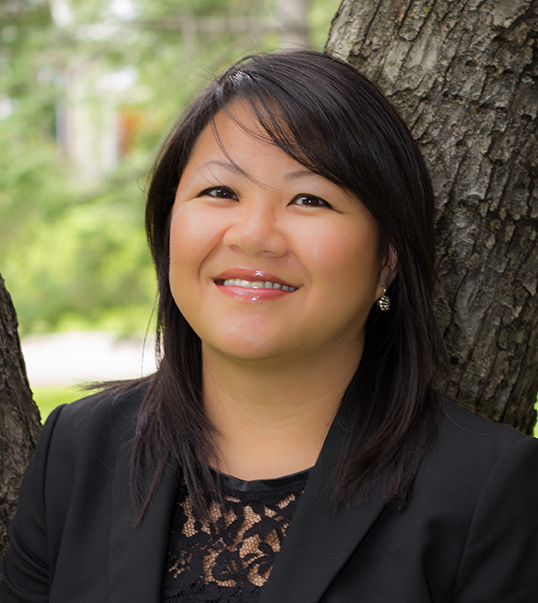
ThaoMee Xiong, Director of the Center for Health Equity at the Minnesota Department of Health Center will speak at the  Somali American Parent Association Mental Health Conference in the Twin Cities on October 1, 2015. Photo: Courtesy of Minnesota Housing Partnership
ThaoMee Xiong, Director of the Center for Health Equity at the Minnesota Department of Health Center will speak at the Somali American Parent Association Mental Health Conference in the Twin Cities on October 1, 2015. Photo: Courtesy of Minnesota Housing Partnership

A mental health conference focusing on the state’s burgeoning East African community will be held on October 1 in Falcon Heights, Minnesota. It will seek to identify opportunities for addressing and overcoming stigma and negative attitudes toward mental health services within the state’s East African communities. Conference organizers plan to come up with recommendations and best practices in mental health service delivery for the community, they said in a statement announcing the conference.

Registration is free.

It will be keynoted by Saida Abdi of Boston Children’s Hospital where she is the Community Relations director of the hospital’s Refugee Trauma and Resilience Center.

The one-day conference is designed for health professionals in fields of mental health and substance abuse prevention and treatment as well those in policy making positions.

The conference is organized by the Somali American Parent Association (SAPA) in partnership with the Minnesota Department of Health. Conference organizers said in a statement that in addition to those who work directly in the field of mental health, physicians, nurses, social workers, case managers and general community leadership will find the content of the conference useful.

The conference will provide the latest research on adult mental health among the state’s East African communities.

ThaoMee Xiong, the director of the Center for Health Equity at the Minnesota Department of Health will also speak at the conference.

Conference organizers said at the end of the conference “a final report will be  submitted to the Minnesota Department of Health that identifies areas where further research is  needed to form an action plan and implement next steps toward more coordinated health intervention  efforts and prevention initiatives for East African communities in Minnesota.”

Registration

Registering for the conference is free and can be done at this link.

Kenya’s Majority Leader, Aden Duale, defends Islam at Minnesota meeting

0
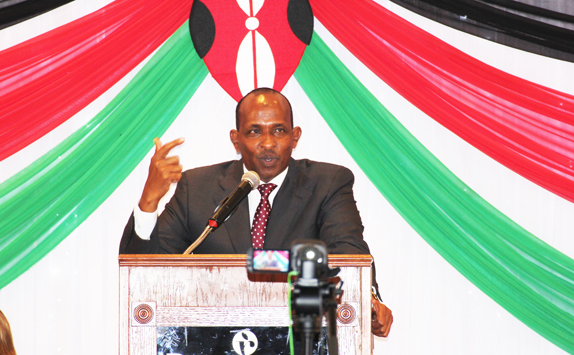
Kenya's Majority Leader in parliament, Aden Duale, defended Islam as a religion of peace during a meeting with Kenyans and Somalis in Minnesota on Saturday, September 19, 2015. Photo: Richard Ooga/Mshale
Kenya’s Majority Leader in parliament, Aden Duale, defended Islam as a religion of peace during a meeting with Kenyans and Somalis in Minnesota on Saturday, September 19, 2015. Photo: Richard Ooga/Mshale
Kenya's Majority Leader in parliament, Aden Duale, defended Islam as a religion of peace during a meeting with Kenyans and Somalis in Minnesota on Saturday, September 19, 2015. Sitting to his right is Democratic Representative Erin Murphy, Deputy Minority Leader in the Minnesota House of Representatives Photo: Richard Ooga/Mshale
Kenya’s Majority Leader in parliament, Aden Duale, defended Islam as a religion of peace during a meeting with Kenyans and Somalis in Minnesota on Saturday, September 19, 2015. Sitting to his right is Democratic Representative Erin Murphy, Deputy Minority Leader in the Minnesota House of Representatives Photo: Richard Ooga/Mshale
Kenya's Majority Leader in parliament, Aden Duale, gives the local Imam who gave the opening prayer before the Duale addressed a meeting of Kenyans and Somalis in Minnesota on Saturday, September 19, 2015. Photo: Richard Ooga/Mshale
Kenya’s Majority Leader in parliament, Aden Duale, gives the local Imam who gave the opening prayer before the Duale addressed a meeting of Kenyans and Somalis in Minnesota on Saturday, September 19, 2015. Photo: Richard Ooga/Mshale
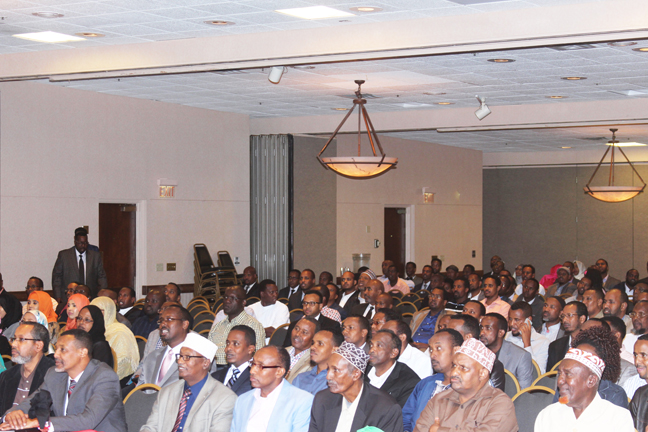
A section of the predominantly male audience of Kenyans and Somalis that came to hear Kenya's Majority Leader in parliament, Aden Duale, on Saturday, September 19 2015 in Minnesota. Photo: Richard Ooga/Mshale
A section of the predominantly male audience of Kenyans and Somalis that came to hear Kenya’s Majority Leader in parliament, Aden Duale, on Saturday, September 19 2015 in Minnesota. Photo: Richard Ooga/Mshale
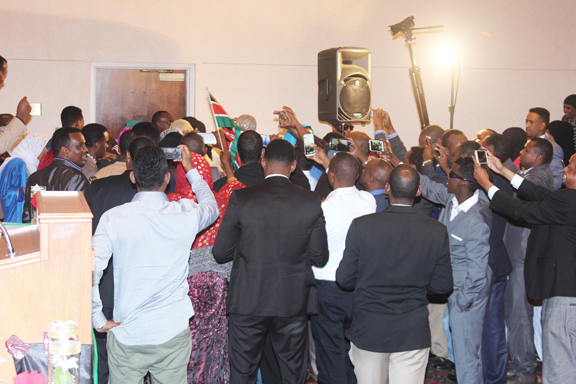
Kenya's Majority Leader, Aden Duale, is surrounded by the audience that came to listen to him as he joins musicians on the floor who were singing a special song written in his honor. Duale spoke to Kenyans and Somalis on Saturday, September 19, 2015 in Minnesota. Photo: Richard Ooga/Mshale
Kenya’s Majority Leader, Aden Duale, is surrounded by the audience that came to listen to him as he joins musicians on the floor who were singing a special song written in his honor. Duale spoke to Kenyans and Somalis on Saturday, September 19, 2015 in Minnesota. Photo: Richard Ooga/Mshale

BLOOMINGTON, Minn. (Mshale) – Kenya’s Majority leader in parliament, Aden Duale, gave  a strong defense of Islam, describing it as a “religion of peace,” saying  Muslims should stand firm and articulate the true teachings of the religion in the face of efforts to associate it with terrorism.

Duale said most of the victims of terrorism are “our own people” adding that the Muslim community must however deal with the issue of extremism.

Mr. Duale was speaking in Minneapolis during a meeting with the large Kenyan population here at a hotel by the Mall of America.

The Majority leader said the issue of extra-judicial killings in his country is a “serious one” and that the government is looking into it and expressed his desire for a resolution on the matter.

The meeting which started shortly after 9pm, instead of the advertised 7pm, had a broad representation of the Kenyan community in the state but by the time Duale took to the podium close to 11pm, most of the non-Somali speaking Kenyans had already left in disgust unable to follow the proceedings which were being conducted in Somali.

The tone for what was to take place for the rest of the evening was set by the choice of master of ceremonies, Mahamud Masadde. He is the Voice of America local correspondent, who does not speak Swahili. An unwritten rule the Minnesota Kenyan community has adhered to over the years is the requirement that an emcee should have a working knowledge of both Swahili and English, Kenya’s two official languages. Masadde made light of the fact that he could not speak Kiswahili to the chagrin of the non-Somali Kenyans in the audience. In Minnesota and other states around the US, events advertised as national meetings as this one was, are expected to be conducted either in Kiswahili or English.

Hercules Otieno, a Twin Cities realtor, is one of those who left the meeting before Duale spoke.

“I felt it was an insult to the wider Kenyan community for a meeting featuring the Majority leader of our country to be conducted in Somali and not Swahili or English,” Otieno said. “They should have advertised this as a Somali meeting.”

When he took the stage, Duale, preceded by about 14 local speakers drawn from a cross-section of the Kenyan community and Somalia, said “I will stick to English because the Kenyan media gave me grief in Eastleigh.” Recalling a time when he spoke at a public meeting in Somali. He however could not resist the opportunity to speak in Somali and translated his English remarks at the end in his first language.

The meeting, advertised in flyers as a Town hall, was anything but. The Majority leader did not take questions from the audience, characteristic of what Kenyans here have come to associate with town hall meetings.

Duale was however effusive in his defense of the Uhuru government. Most Kenyans in Minnesota were Raila Odinga supporters in the last election, a fact Duale conceded at the meeting. Duale is on record as saying he will take a bullet happily for Uhuru or his deputy Ruto during an interview last year. Additionally, he said if Ruto told him to jump from one of Kenya’s tallest buildings, he would do so.

“We are required to use 20 minutes of microphone time to say the good things jubilee is doing,” he said. He dutifully listed the achievements of the Jubilee coalition, including the fact that some of the powerful ministries in government such as Defense and Foreign Affairs are headed by women.

“Parliament has 28% women but the constitution calls for 33% and we are working hard to get to that number,” said Duale.

He boasted that the Uhuru government has taken development of infrastructure to a whole new level. “Garissa (his hometown) is now connected to the national (electricity) grid,” he said to loud applause. Many of the major roads connecting the marginalized regions of North-Eastern, where the majority of Kenyan Somali community hails from, have been tarmacked, the Majority leader said.

Duale also took some time to hit at his critics including Professor Makau Mutua. Mutua, a former Dean of the State University of New York at Buffalo Law School and a member of the Council on Foreign Relations, pens a popular column in the East African Standard, a leading Kenyan daily. In a September 13 column, he rubbished Duale as a spokesperson for the Somali community telling him to “stop acting like an unwanted concubine in Jubilee.”

At the Minnesota meeting, Duale told the audience as he was leaving Kenya for the US, “I begged the editors to publish my rebuttal, I almost went down on my knees,” Duale said with his trademark smile. In his published rebuttal in the same paper, Duale opined that there is no such thing as a spokesperson for the Somali people “the Somali are egalitarian and free. Being, as they are, a versatile and itinerant people with a strong entrepreneurial sense, the idea of imposed representation as community is out question. That though does not mean the Somali don’t recognize those among them who are well-placed and equipped to articulate their fears, aspirations and dreams.”

There was a light moment where he said he wished someone could take a photo of the Minnesota meeting  “to send to Makau Mutua so he can see I have supporters.”
Somali Diaspora

Duale also spoke on the success Kenyan Somalis have enjoyed in Kenya because of the “peace and enabling environment” in the country and because they chose to do “serious integration” with the people of Kenya. He reminded people that the current Foreign Minister for Kenya is a Kenyan Somali and is the first woman in Kenya to be in charge of the Foreign Ministry. “Energy ministry is also in our hands,” he said.

Duale said Somalis in Kenya should not lose sight of the achievements the community has attained even as it pushes for more,  “Alhamdulillah” he said to cheers. Saying the community must be thankful.

The fourteen or so speakers who preceded Duale included local Minnesota leaders from Somalia that thanked the Kenyan people for accommodating them as refugees for the last two decades.  Duale responded by articulating the efforts Kenya has made to make Somalia peaceful. He said he had the pleasure of making his first visit to Somalia recently. “The best fish is in Kismayu,” he said, to prolonged cheers a sign of the strong numbers of people from Jubaland that were present. Kenya has been accused of supporting Ahmed Mohamed Islam (Madobe) who declared himself president of Jubaland.

Somali blogs have been rife with accusations directed at Kenya’s handling of that region of Somalia that wants to be autonomous along the lines of Somaliland and Puntland, which are not recognized internationally.

The Majority leader is the United States for the United Nations General Assembly where President Uhuru Kenyatta is expected to lead the Kenyan delegation. Kenyans in the United States on Saturday called on President Kenyatta to cancel his visit to new York and instead send a representative, so that the president can deal with the more pressing matter of the teachers’ strike that has seen schools nationwide closed. In a story appearing in the Nation by its US reporter, BMJ Muriithi, the chairman of Kenyans For Kenya (KFK) US Chapter Mr Peter Makanga said the President should instead “deal with the crisis facing the nation”.

Kenyatta is expected in New York on Wednesday.

Majority Leader in Kenya Parliament to address Townhall in Minnesota

0
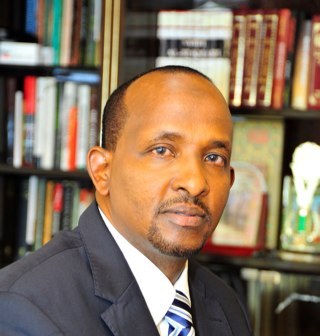
Aden Duale, Majority Leader in the Kenyan parliament will speak at a Townhall meeting at the Ramada in Bloomington, Minnesota on Saturday, September 19 2015. Photo: Courtesy of Twitter Verified account

Preparations are underway to host Kenya’s Majority Leader in parliament, Aden Duale, in the Twin Cities this weekend. He will address the large Minnesota Kenyan community in a Townhall style meeting at the Ramada on Saturday, September 19 starting at 7pm.

The “I will take a bullet for Uhuru, Ruto,” Member of Parliament for Garissa town is currently in New York. Uhuru and Ruto refers to Kenya’s president, Uhuru Kenyatta and deputy president, William Ruto respectively. He made the controversial quote last year during an interview with Kenya’s leading Daily Nation newspaper.

His hometown of Garissa is home to Garissa University where on April 2 of this year Al-Shabaab gunmen killed 147 students and injured 79, drawing worldwide condemnation.

Event organizers have posted notices on the Townhall meeting on Facebook and other social media outlets. Although Duale has visited the Twin Cities before, this will be his first visit to Minnesota since ascending to the powerful post of Majority leader of the ruling Jubilee Alliance party.

Minneapolis is home to thousands of Kenyans and Somali nationals. His event is expected to attract large crowds coming at a time when the Kenyan National Human Rights Commission just released a report on extra judicial killings allegedly carried by Kenyan security forces in Northeastern, Coast and Nairobi in the name of fighting terrorism.

According to Commission’s Vice- Chairman George Morara , the Kenyan military has been accused of running secret torture chambers for terrorism suspects  where illegal detentions, beatings and other form of torture are carried out. The Commission said more than 25 people have been killed and 81 others are unaccounted for. It is alleged that these torture chambers exist inside military bases in Wajir and Mandera counties.

The Saturday Townhall is free and open to the public.

Text KENYA to 24587 to be informed of any changes to the program.

Aden Duale Townhall Meeting
Saturday, September 19 2015 7:00PM CST
2300 East American Blvd.
Bloomington, MN 55425

Text KENYA to 24587 to be informed of any changes to the program.

Coca-Cola executive to speak at Liberian-American Townhall in Minnesota

0
Alexander B. Cummings, Jr. who is Executive Vice President and Chief Administrative Officer at The Coca-Cola Company will speak at a Town Hall style meeting with Liberians in Brooklyn Center, Minnesota on Saturday, September 12 at 5pm. Photo: Courtesy of the Coca-Cola Company
Alexander B. Cummings, Jr. who is Executive Vice President and Chief Administrative Officer at  The Coca-Cola Company will speak at a Town Hall style meeting with Liberians in Brooklyn Center, Minnesota on Saturday, September 12 at 5pm. Photo: Courtesy of the Coca-Cola Company
Alexander B. Cummings, Jr. who is Executive Vice President and
Chief Administrative Officer at The Coca-Cola Company will speak at a Town Hall style meeting with Liberians in Brooklyn Center, Minnesota on Saturday, September 12 at 5pm. Photo: Courtesy of the Coca-Cola Company

Coca-Cola executive, Alexander B. Cummings, Jr. will tomorrow (Saturday, September 12) participate in “Community Conversation” and engage Liberians in Minnesota in a Town Hall style meeting at the United Methodist Church in the City of Brooklyn Center (located between Brooklyn Boulevard and Noble).

The event is free and open to the public.

Mr. Cummings is Executive Vice President and Chief Administrative Officer (CAO) of The Coca-Cola Company. He was born in Liberia.

The session, which will highlight a variety of issues and challenges facing Liberia, will be moderated by well known Liberian-American media personality, Al-Jerome Chede.

Mr. Cummings joined The Coca-Cola Company in 1997 as Region Manager, Nigeria. In 2000, he was named President of the Company’s North & West Africa Division. In March 2001, he became President and Chief Operating Officer of the Africa Group, responsible for the Company’s operations in Africa, encompassing a total of 56 countries and territories across the continent.

According to Coca-Cola, Cummings currently serves on the boards of C.A.R.E. and Clark Atlanta University. He also is a board member of S.C. Johnson & Son, Inc. and Coca-Cola Bottling Co. Consolidated, a publicly traded bottler of The Coca-Cola Company (NASDAQ). He is a member of the Executive Leadership Council.

In addition, Mr. Cummings has previously served on the following boards; The African Presidential Archives & Research Center, Corporate Council on Africa, African-America Institute, Africare, and the following bottling partner entities of The Coca-Cola Company: Coca-Cola Hellenic Bottling Company, Coca-Cola Sabco (Pty.) Ltd., Equatorial Coca-Cola Bottling Company, and The Coca-Cola Bottling Company of Egypt.

Mr. Cummings holds a B.S. degree in Finance and Economics from Northern Illinois University and an MBA in Finance from Atlanta University.

Cummings currently serves on the boards of C.A.R.E. and Clark Atlanta University. He also is a board member of S.C. Johnson & Son, Inc. and Coca-Cola Bottling Co. Consolidated, a publicly traded bottler of The Coca-Cola Company (NASDAQ). He is a member of the Executive Leadership Council.

Prior to joining Coca-Cola, Cummings held several positions with The Pillsbury Company in the U.S. In his last role as Vice President of Finance for Pillsbury International, he had financial responsibility for a growing $1.2 billion international branded food business with operating companies in 16 countries.

Mr. Cummings holds a B.S. degree in Finance and Economics from Northern Illinois University and an MBA in Finance from Atlanta University.

Organizers said the purpose of the Cummings town hall is to bring the community together and “engage one of the world leading business executive on how we can make Liberia a “developing nation” compete in the 21st century.”

Community Conversation with Alexander Cummings, Executive Vice President and
Chief Administrative Officer, The Coca-Cola Company

Date: Saturday, September 12 5:00Pm-9:00PM
Location: Brooklyn United Methodist Church, 7200 Brooklyn Blvd, Brooklyn Center, MN 55429
Admission: Free
Refreshments will be served.

Pneumococcal disease: It can be prevented

0
Pneumococcal disease: It can be prevented

MDH_Sept2015Last winter Samuel thought he had caught a bad cold, but after two weeks of being sick, his health took a sudden turn for the worse. Samuel, only 35 years old, started having chest pain and trouble breathing. In a panic, his wife rushed him to the hospital while his children stayed with a neighbor. At the hospital they learned that Samuel had pneumonia, and he needed to stay in the hospital to get well.

Over the next week, Samuel tried many medicines to kill the germs that made him sick. After he recovered, Samuel learned that his illness was caused by pneumococcal disease and that it could have been prevented with a vaccine. As a smoker, Samuel did not know that he was at a higher risk of serious infections from pneumococcal disease. After this close call and being away from his family and work for over a week, he got the pneumococcal vaccine and now tells everyone that they should be vaccinated too.

If you smoke, have asthma, diabetes, or another long-term health problem, the pneumococcal vaccine can help protect you from serious infections like pneumonia, meningitis (infection of the tissues surrounding the brain and spinal cord), and blood infections. Getting vaccinated can also help prevent less serious infections like sinus infections and ear infections. Vaccination helps stop these infections before they start, and helps ensure that you do not pass them to your family and friends.

Pneumococcal disease is spread by coming in contact with the bacteria and then getting it in your mouth or nose. Sometimes a person infected with pneumococcal bacteria can be sick and you can avoid them, but often people are “carriers.” Being a carrier means that the bacteria live in the nose or throat of a person, but that person does not become sick. You cannot tell who could be carrying the bacteria, so vaccination is the best way to protect yourself.

Even if you feel healthy, conditions like asthma and diabetes place extra stress on your immune system making it harder to recover if you become infected with pneumococcal bacteria. People with asthma, diabetes, other breathing, heart, or kidney conditions, and people who smoke cigarettes should ask their doctor about what vaccinations can help them stay healthy.

People who have illnesses that reduce their ability to fight infections need to get two different pneumococcal vaccines to protect them. This includes people who have cancer, HIV, had surgery to remove their spleen, and cochlear implants (implants into the inner ear).  People over 65 years of age should also get two different vaccines to protect them against pneumococcal disease. People in this age group can have problems recovering from a pneumococcal infection.

Ask your doctor or nurse if you have gotten the vaccines that you need. This includes flu vaccine, because being sick with the flu makes you more likely to get pneumococcal disease. Make sure you are up-to-date on your influenza and pneumococcal vaccines! For more information, go to: www.health.state.mn.us/divs/idepc/diseases/pneumococcal/index.html.

Senator Franken headed to Ethiopia to discuss plight of the Oromos and Somali refugees

0
Senator Al Franken (center) seen here with East African immigrant supporters as he campaigned for a second term in last year's election. Franken is starting a five nation African visit as part of bi-partisan congressional delegation. Photo: Courtesy Al Franken
Senator Al Franken (center) seen here with East African immigrant supporters as he campaigned for a second term in last year’s election. Franken is starting a five nation African visit as part of bi-partisan congressional delegation. Photo: Courtesy Al Franken

United States Senator Al Franken is among a delegation of bi-partisan US senators and congregational members visiting five African countries in a bid to bolster and foster bilateral trade ties, a statement from the senator’s office in Washington stated. The trip starts this weekend.

Countries to be visited by the delegation include Senegal, Ethiopia, Rwanda, and Gabon, with a brief stop in Cape Verde.

Franken’s state is home to the largest concentration of Somalis outside of Africa and he plans to
meet with Somali refugees while in Ethiopia which hosts a large contingent of them, second only to Kenya. The state of Minnesota also boasts the largest concentration of Ethiopian immigrants after Washington, DC with the most dynamic of the Minnesota Ethiopians belonging to the Oromo community.

The Oromos have had longstanding grievances against the Ethiopian government regarding
marginalization of their community. While in Ethiopia, Senator Franken is scheduled to discuss their plight with Ethiopian government officials, according the senator’s spokesman, Michael Dale-Stein.

During the trip, Sen. Franken will be visiting renewable energy projects, agriculture projects, and health care facilities. Democratic Senator Chris Coons of Delaware is the organizer of the trip.

The other Minnesotan in the delegation is Rep. Betty McCollum. Others on the delegation include Sen. Jeff Merkley (D-Ore.), Rep. Kay Granger (R-Texas), and several other members of Congress.

“With Minnesota being home to so many vibrant African immigrant communities, collaborating with these countries could help support many Minnesota industries—including our agricultural and energy sectors—and would help us build bilateral trade relations,” said Sen. Franken. “Beyond that, this bipartisan trip is particularly important to me because I’m planning to meet with Somali refugees and also discuss the crisis facing the Oromo people, which are both things that many families in our state deeply care about.”