

Home Blog Page 148

Clearing up the facts on the Affordable Care Act, aka Obamacare

0
Clearing up the facts on the Affordable Care Act, aka Obamacare

There has been a lot of confusion about some recent notices to consumers from insurance companies that sell coverage in the individual insurance market, and I’d like to clear up the facts.

Today, more than 3 out of every 4 Americans get insurance from an employer, Medicare, Medicaid, or the Veterans Benefits Administration.  Americans who purchase insurance on their own, however, generally buy coverage in the individual insurance market.

Before the Affordable Care Act, coverage in the individual market often was unaffordable, had high co-pays or deductibles, or lacked basic benefits like maternity care, mental health services, and prescription drug coverage.  These plans also had high turnover rates, and often were not renewed at the end of a plan year.  One study showed that more than half of enrollees in the individual market left their plan within a year.

The health care law is creating new protections for people in the individual market, as well as strengthening employer-based coverage.  In the Health Insurance Marketplace, consumers will no longer be charged more because of gender or a pre-existing condition, recommended preventive services will be covered with no additional out of pocket cost, there will be caps on out of pocket costs, and plans will have to offer a basic package of 10 categories of essential health benefits.

Some insurance companies that sell products in the individual market are making changes to their plans.  Plans that were in place before the Affordable Care Act passed, and that essentially have not changed – that is benefits have not been cut or additional costs imposed on consumers – are exempt or “grandfathered” out of these basic requirements that ensure quality coverage.  Those grandfathered plans can stay the same.  Nothing has changed this fact, and that coverage can continue into 2014, so long as both the insurance company and the consumer agree that it will continue.

Some of less than 5 percent of Americans who currently get insurance on the individual insurance market have recently received notices from their insurance companies suggesting their plans may no longer exist.  These Americans have a choice – they can choose a plan being offered by their insurer, or they can shop for coverage in the Marketplace.  As insurers have made clear – they aren’t dropping consumers; they’re improving their coverage options, often offering plans that are more affordable.

Today, consumers have a choice of an average of 53 qualified health plans in the states where the federal government runs the Marketplace, including those in which it does so in partnership with states.  Nearly all consumers live in states with average premiums below earlier estimates.  Moreover, half of the people in the individual market today qualify for lower costs on monthly premiums when signing up for coverage through the Marketplace.

While the product is good, there is no denying the online experience on HealthCare.gov must be improved.   We will not stop improving the site until every American that wants it has access to quality, affordable coverage.

Importantly, while the team is improving the site, we have opened up new pathways for consumers to apply for coverage through the Marketplace.

There are four basic ways to apply for coverage.  Sign up by December 15 for coverage that starts January 1, 2014.

Enrollment stays open until March 31.

Rokia Traore featured on NPR’s “All Things Considered” at the Cedar in Minneapolis on Nov.25

0
Rokia Traore will perform at the Cedar in Minneapolis on November 25, 2013.

Rokia Traore Interview with Melissa Block of NPR’s All Things Consideredhttp://n.pr/16IBjsH.

Rokia Traoré, whose new album, Beautiful Africa, was released in the US recently, was featured on NPR’s All Things Considered. She spoke with host Melissa Block about the new album and the inspiration and influences behind its songs, which are sung in the Malian-born Traoré’s native languages of French and Bambara, as well as some English.

You can listen to the piece at the link above.

Tickets are on sale at the Cedar website.

RIP Joginder Singh, The ‘Flying Sikh’ was an East African hero

0
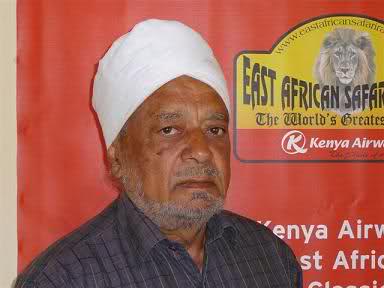
Joginder Singh "The Flying Sikh" born in the tea highlands city of Kericho, Kenya on February 9, 1932 died Sunday, October 20 2013.
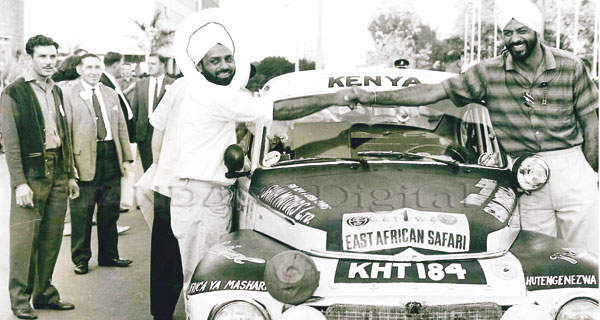
Joginder Singh (left) and his brother Jaswant Singh in 1965 at the finish ramp of that year's East African Safari Rally. Photo: Courtesy Standard Newspaper

By Shamlal Puri, Standard Newspaper

He is still a household name half a century after he carved himself a name by raising dust storms and churning mud on East Africa’s rugged highways and by-ways. To date, boys still mention ‘Jogida’ or ‘Jogida Sing’ whenever they see a car speeding away.

In Kenya, even for children who never witnessed his exploits on the road, Joginder Singh is synonymous with speed—breakneck speed.

The legendary Safari Rally champion Joginder Singh Bhachu passed away peacefully in London aged 81 last Sunday, Mashujaa (Heroes) Day. The undisputed king of the road succumbed to heart failure, leaving hundreds of thousands of his fans around the world in shock
and mourning.

Poignantly he died on Mashujaa Day, underscoring the fact that he was Kenyan hero.

Joginder Singh developed heart problems about ten-years-ago and underwent bypass surgery. He lived a quiet life in retirement with his family in Surrey, south-east England.

According to close family sources the octogenarian died in London at his son’s house.  He had complained to his son of severe discomfort and was put on a sofa to relax but passed on ten-minutes later.

Annals of history

Famously known as “Simba wa Kenya” and the “Flying Sikh”, Joginder Singh was the star of many generations of motor-rallying fans in Kenya and East Africans living around the world.

He entered the annals of history as the first Kenyan Sikh driver ever to win an international rally, and also the first man to win the gruelling Safari Rally three times.

Born in Kericho, Kenya on February 9, 1932, he was the eldest of ten children of Sardar Batan Singh and Sardarni Swaran Kaur.

Joginder was educated at a boarding school in Nairobi. His first work experience was as a spanner boy in his father’s garage. He gained further experience as a mechanic in other organisations before becoming the Royal East African Automobile Association’s first patrolman in 1958.

Joginder zoomed into the history books by winning the world’s toughest motor rally,  Safari Rally, in 1974 and 1976, competing against the cream of international rally drivers when the event was part of the World Rally Championship.

Joginder first entered the 13th edition of the then East African Safari Rally in 1965 with his brother, the late Jaswant Singh as the co-driver, in a second hand Volvo which was earlier driven by Tom Trana in 1963 and 1964 and had already clocked 42,000 km.

The two brothers drew the number one position for the start, considered to be unlucky, but they remained number one throughout the event that ran through Kenya, Uganda and Tanzania and made history after they finished at number one.

Joginder was outstanding as one of “the unsinkable seven” finishers of the 1968 event in which 74 crews started but only seven finished. The victors were also hailed as “The Magnificent Seven” after the Hollywood cowboy film released around this time.

From then onwards, they got plenty of sponsorships and Joginder went on to win the world rally event in 1974 and 1976.

Joginder’s record of 19 finishes in 22 attempts was an unprecedented feat for the Safari Rally in which finishing the event was once considered a greater achievement than winning other world rally events.

He was honoured as a special guest at the start of the 50th Safari Rally in 2002, and was appointed a patron of the Safari Classic in 2007.

Any visitor to his home in Surrey would marvel at the trophies, certificates, books, newspapers, magazines and documentaries chronicling his victories in motor rallies around the world.

Joginder Singh has left behind a legacy that has charmed across continents and his powerful persona and escapades as a daredevil rally driver will probably never find an equal in another century, for none came even remotely close for decades after he hung his driving gloves.

Outclassed the best

He always exhorted promising rally drivers to follow his example of being a teetotaller and urged them to break his own record.

Tributes have been flowing from the Kenyan diaspora across the world. Former Nairobi journalist Kul Bhushan, the doyen of motor rallying reporters, who covered the event for 26- years until 1990, for newspapers including The Standard said, “Joginder Singh achieved the legendary status of a national hero in Kenya and remains unmatched as a rally driver who outclassed the best of the world during the Seventies.”

Ken Kenny, of the London-based UKenTV said, “He will remain an icon in the world of Safari Rally. I salute you Joginder Singh.”

Philip Hotton said, “Can remember seeing Joginder in action, amazing driver. RIP, Joginder.”

Bradley Downer of East Grinstead, said, “RIP. I have many fond memories of watching Joginder race as a kid.”

Jane Lesley Walshe of Bedfordshire, said, “RIP Joginder Singh, many childhood memories shouting for you at EA Safari Rallies, from a hill or roadside. Remember you well.”

Asin Lalji Noorani of Dubai, said, “RIP. A legend you were. I grew up in awe of your courage and skill.”

Retired Dar es Salaam newspaper photographer Narendra Gajjar, now living in Canada, said he remembers photographing Joginder on many occasions in his 25-year career and each time it was a photo session to remember.

Priceless hero

“A much-loved hero of all Kenyans, he died poignantly on Sunday, when Kenya celebrated MashujaaDay. Fondly known as ‘The Flying Sikh’, Joginder Singh was also a consultant for the Himalayan Rally and took part in this event as well,” wrote the Hindustan Times of India.

There is no doubt that the world has lost a priceless hero, a true shujaa, who flew the Kenyan flag high in the world of motor rallying.

-Additional reporting by Kenneth Kwama

Minnesota rolls out online voter registration

0
Minnesota rolls out online voter registration

When my husband moved to Minnesota from Maine 17 years ago, he was met at the curb by our friend Tim, who handed him a voter registration card. As most Minnesotans know, voters have had the choice of filling out a registration card in advance or taking advantage of same-day registration at the polls. But late last week, it became even easier to register to vote, said Deputy Secretary of State Beth Fraser, when Minnesota became the 15th state to allow online voter registration, launching an online tool at mnvotes.org. The tool also allows absentee ballot requests from Minnesotans who are living outside the U.S. or in the military. It’s available at mnvotes.org.

“We have been watching other states, hearing rave reviews from both political parties,” Fraser said. She noted that the first online voter registration system was implemented in Arizona, under the leadership of then-Secretary of State Jan Brewer, a Republican. Arizona has had online registration since 2002; Washington State followed in 2006.

Voter registration has long been a contentious subject in Minnesota; just last year, Republican state legislators, led by House member and former Secretary of State Mary Kiffmeyer, placed on the ballot a constitutional amendment that would have stripped Minnesotans of same-day registration. The amendment failed.

There appears to be no opposition to online registration, Fraser said. While some states require that online registrations include a state driver’s license number, Minnesota allows voters to enter the last four digits of their social security number as an alternative to either the driver license or state identification number.

While the chief lure for voters is the ease of online registration, local government officials may also be motivated by the almighty dollar — if voters choose online registration, counties will save substantial sums, said Fraser. “In Maricopa [County, Ariz.], the cost to register a voter has gone from 86 cents for traditional registration to six cents for online,” Fraser said. She believes that errors will decrease, as voters who know the correct spelling of their names will make fewer typos than officials who have to rely on handwritten information that is then entered into databases.

Fraser believes that many voters will take advantage of online registration after a move within Minnesota or from another state. New voters will also register for the first time. Local officials will verify identification from government records. If the information doesn’t match, the voter will be contacted for clarification, she said.

Rolling out the tool during an “off” election year gives the Secretary of State’s office a chance to evaluate how it’s working before next year’s real test — statewide and national elections, which drive voter registration numbers. “Several hundred” people have already registered since the tool’s rollout on September 26, said Fraser. This fall Minnesotans will go to the polls in 35 municipalities and 113 school districts. She said she expects tens of thousands of voters to take advantage of online registration for the 2014 elections.

What do you think of online voter registration? If you want to see what it’s all about, go to mnvotes.org. And please share your thoughts below in our comment section.

From East Africa to Minnesota: Connecting hunger, poverty, and climate change

0
Mohamed Idris, executive director of the American Relief Agency for the Horn of Africa, speaking on climate change. Photo: Helen Duritsa

Solar-powered lanterns and cookstoves are among the practical approaches to expanding access to energy and decreasing reliance on fossil fuels in East Africa. They were among the topics in a discussion hosted by Stephanie Hemphill at the Safari Restaurant in Minneapolis on October 2. The meeting was sponsored by several social and environmental justice groups including the Sierra Club, the American Relief Agency for the Horn of Africa (ARAHA), Somali Family Services, and Oxfam.

One of the panelists was Mohamed Idris, the executive director of ARAHA. Idris began by explaining how climate change will affect food insecurity in the future. Climate change will cause more severe weather patterns, including increasingly common draughts and floods, which will lead to more crop failure and increased famine.

Idris’s solution focused on expanding access to energy in Eastern Africa and switching that type of energy from traditional fossil fuels to sustainable alternatives, especially solar. Many families in Eastern Africa do not have access to affordable energy at all, and Idris’s organization, ARAHA, is working to change that.

ARAHA is working on a pilot project that will provide solar powered lanterns to 100 families in the Shagarab Refugee Camp in Sudan so that they can have light after sundown. ARAHA is also providing solar stoves to a pilot group of 200 families. Idris was able to cook rice in the solar stove himself, and says, “To see the steam coming out of the pot, without gas or anything attached to the stove, that was amazing.” Idris says that adaption to the new technology has been low, but as it becomes more affordable he hopes that people will see the difference solar technology can make in their lives.

The other panelist was Paul Porter, a professor of agronomy and plant genetics at the University of Minnesota-Twin Cities. Porter reinforced the idea that while climate change will amplify the effects of poverty and hunger in the future, it is not the cause of them. He noted that challenges like political instability, land ownership laws, and market access had been feeding poverty in Eastern Africa before climate change was studied.

Porter explained that much of Somalia and Eastern Africa is communal land that is not owned by anyone. This is rapidly changing, and the increase in private land is making it difficult for many farmers (especially those who raise livestock) to continue their traditional practices. International efforts can also harm farmers, even when they are well intended. Food aid from other countries, for instance, decreases the demand for domestically produced food. Porter noted that one way to reverse this is to purchase food from local farmers with the money that would be spent shipping food aid, thus helping the economy at the same time.

Porter reminded the crowd that while farmers feel the effects of climate change, they cannot really influence it. “As you think about these issues, be [the farmers’] voice…because they can’t really speak,” Porter urged. This sentiment was echoed in a statement from Congressman Ellison, read by his representative Jamie Long. Ellison noted that while the United States is the world’s largest emitter of carbon emissions, the effects of climate change are felt disproportionately by people in other countries.
The night ended with discussion at each of the tables about what individuals could do to decrease the effects of climate change, from reducing energy consumption to changing their eating habits. Jessica Tritsch, from the Sierra Club, led the discussions and reminded everybody of how our individual actions affect communities across the world.

Raila Odinga blasts African Union resolution on the International Criminal Court

0
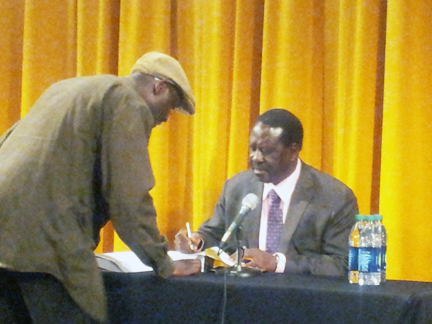
Former Prime Minister of Kenya, Raila Odinga, signing a copy of his autobiography for a reader at the University of Minnesota on Friday, October 18 2013. Photo: Tom Gitaa/Mshale

Former Prime Minister Raila Odinga of Kenya has blasted last week’s African Union resolution on the International Criminal Court (ICC) as ill-advised and unfortunate. The African Union during an extraordinary session passed a resolution, following strong lobbying by Kenya that no sitting AU Head of State shall be required to appear before the international court or tribunal during their term of office.

The AU then also advised President Uhuru Kenyatta not to honor the summons to appear before the ICC.

President Uhuru Kenyatta of Kenya and his deputy William Ruto are facing charges of crimes against humanity committed during the 2007/08 post election violence. Kenyans elected them president and deputy president this past March despite their awareness that the two faced the charges.

Mr. Odinga termed the claims by the AU that the ICC was targeting Africans as “hogwash”, saying the trials should run their course “now that we are there”. Odinga was speaking Friday (Oct. 18) during a book signing of his recently launched autobiography ‘Flame of Freedom’ at the University of Minnesota’s Humphrey School of Public Affairs.

A bemused Odinga pointed out the hypocrisy of Uganda’s Yoweri Museveni being in the forefront of speaking out against the ICC “when he is asking for help from the FBI to track down Kony (Joseph Kony) and have him taken to The Hague”.

Most of the African cases that have ended up at the ICC have been taken there by Africans themselves, Odinga said. He was not short of examples. Former Côte d’Ivoire president Laurent Gbagbo was handed over to the ICC by Ivorians, he said. “I had given Gbagbo a lifeline to avoid his final fate but he refused,” referring to his efforts as the African Union appointed mediator to end the presidential crisis in Côte d’Ivoire following elections there. Laurent Gbagbo was eventually arrested by the new government in Côte d’Ivoire and sent to the ICC.

At the heart of the AU resolution are African leaders’ claims that the ICC is targeting Africans, a point Mr. Odinga took great exception to saying “Africans have taken themselves to the ICC.” All 15 cases currently before the ICC involve Africans.

In the case of the two Kenyan leaders currently before the ICC, Odinga said Kenyans should stop having short memories. Mr. Odinga, at his most animated when addressing the ICC question from an audience member, said it is Kenyans themselves including the then parliament that rejected entreaties from him as prime minister and then president Mwai Kibaki to have a local tribunal try the cases. “These efforts by me and Kibaki were rejected by the people as they said we should go to The Hague,” he said. He added that Kenyans were given numerous chances by chief mediator Kofi Annan to set up a local tribunal but were unable to.

Odinga was accompanied by Wajir County Governor Ahmed Abdullahi and Marsabit County Governor Ukur Kanacho Yatani. Yatani is also Kenya’s former ambassador to Austria. Mr. Odinga said the two accompanied him so “they can see how devolution works in this country.”

Earlier the group had met with various Minnesota state officials from both the state executive and legislative branches including Minnesota Secretary of State Mark Ritchie. Minnesota ranks first in the United States for voter participation consistently topping over 75% voter participation. History will record Ritchie as the Secretary of State in charge when the largest and longest election recount in state history took place in 2009 during a US State Senate contest between Al Franken and Norm Coleman. Franken eventually prevailed with 312 votes after the State Supreme Court ruled in his favor 238 days after election day.

This was Mr. Odinga’s first visit to the state since losing the presidential election to Uhuru Kenyatta in March. He was last in Minnesota in September 2011 while prime minister. He cautioned against forces out to ensure devolution does not work in Kenya similar to the machinations that ensured federalism failed in the early years of independence.

Judge (ret.) LaJune Lange, president of the Minnesota based International Leadership Institute which hosted the delegation likened Odinga to his father Jaramogi Odinga, a leading light in the independence struggle. Siyad Abdullahi, a Minnesota based Kenyan-American businessman and a key member of the US National presidential Committee to elect Odinga to the presidency called on the Diaspora to be vocal as devolution in Kenya gathers steam, “we have the freedom to speak as they (government) cannot fire us”, he said.

Only a few copies of the book were available for sale at the book signing but volunteers took orders from the audience and will plan to make it available soon. A Mr. Robert Nyagudi said “an e-book will also be available soon on Amazon.”

Mr. Odinga said he tried his best to make the autobiography as “accurate as possible” and that “I will take full responsibility for any errors.” The autobiography covers his childhood growing up in the city of Kisumu and rural Siaya, he said, and up to the last presidential campaign early this year. “I have also shared my experiences during my years in detention,” he added.

The 959-page autobiography is published by Mountain Top Publishers of Nairobi.

Minneapolis bridge to be named after City’s first black and female mayor, Sharon Sayles Belton

0
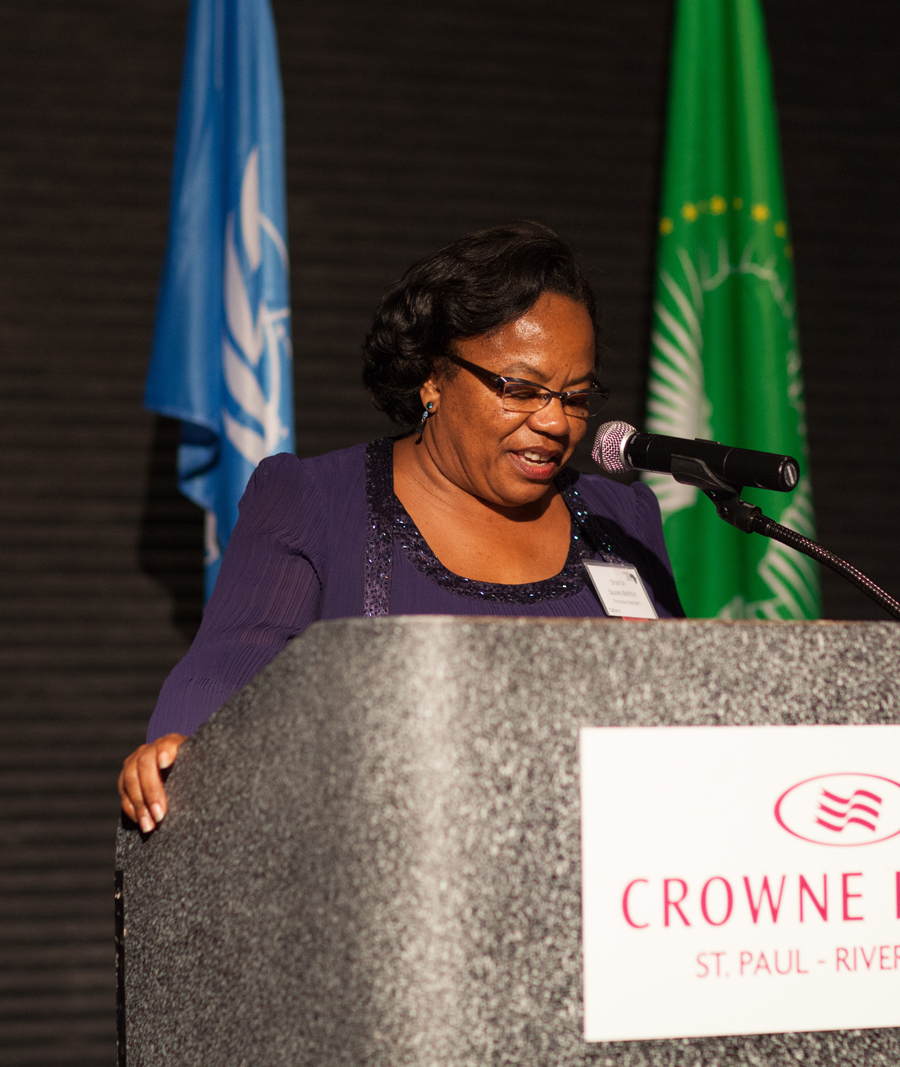
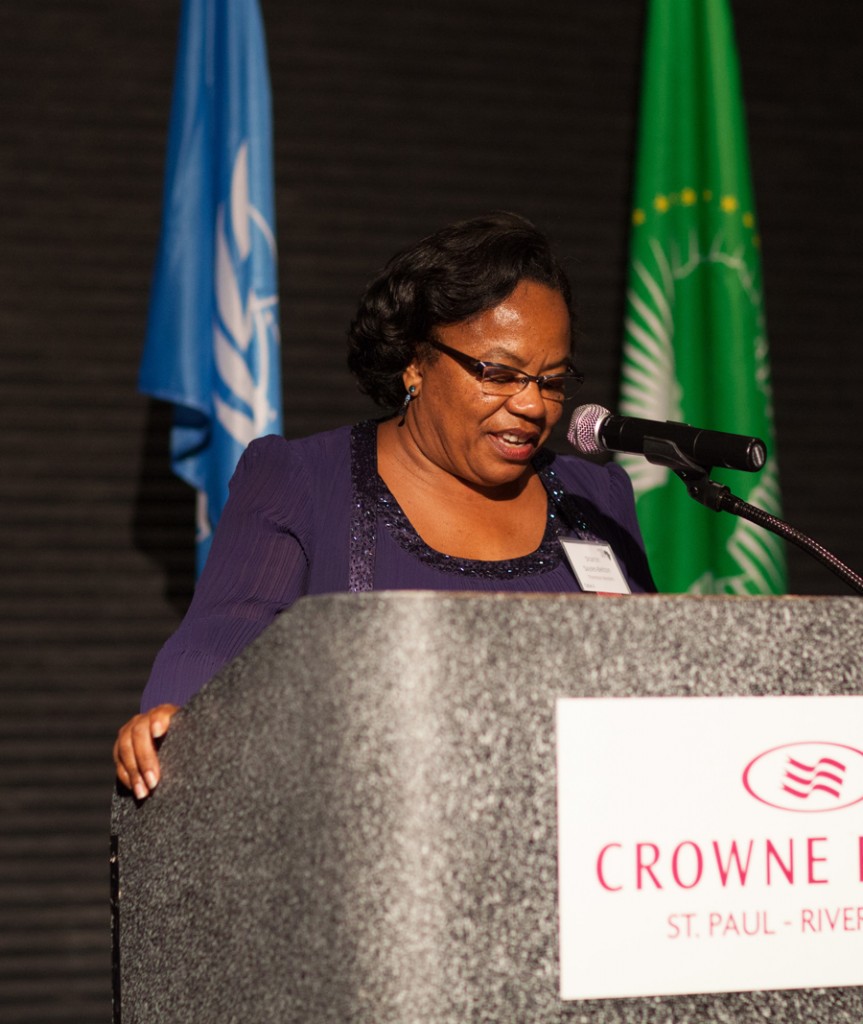
Sharon Sayles Belton speaking Friday, September 20 2013 at the Books for Africa 25th Anniversary Gala in Saint Paul, Minnesota. Photo: David Mendolia

The City of Minneapolis will on Tuesday, October 22 dedicate the refurbished 3rd avenue bridge that goes over I-94 in South Minneapolis and will henceforth be known as “Shar­on Sayles Belton Bridge” in honor of the first black mayor of Minneapolis,  Sharon Sayles Belton.  She was also the first and so far the only female mayor the city has ever had.

An enthusiastic supporter of many causes on the African continent, Sharon Sayles Belton was Mayor of Minneapolis from 1994-2001, serving two terms. Prior to becoming mayor, she was on the City Council representing teh city’s 8th Ward for 10 years with the last three years of her tenure as City Council President. She was on the council when Minneapolis was among the active American cities leading the fight against apartheid in South Africa by passing ordinances prohibiting the city from doing business with the apartheid regime.

The bridge is a stone throw away from the recently launched Minnesota African American Museum and it connects the museum to the Minneapolis Convention Center which is also across the street from the bridge.

The City first built the now-iconic bridge in 2000, under Mayor Sayles Belton’s leadership. It is designed to reflect the prairie-inspired design principles of Frank Lloyd Wright, the city said in statement.

On Tuesday, a statement from Mayor RT Rybak’s office said the event will include a live performance by Larry Long, Robert Robinson, JD Steele, and Tonia Hughes. JD Steele of teh Steele family is also active with the Shangilia Youth Choir of Nairobi where he has been working with disadvanatged youth.

As part of the dedciation, a sculp­ture will be ceremonially lit on the plaza at the north end of the bridge. The bridge’s renovation in­cludes restoration of the colored side­walk, main­te­nance of the bridge fa­cade and rail­ing, and an upgrad­ing of fixtures to energyeffi­cient LED lights.

Sayles Belton was “a champion of the arts and urban vitality”, according to the city and that during her tenure, Minneapolis renovated the historic theaters on Hennepin Avenue, “creating a regional venue for national theatrical and musical productions. She also spearheaded efforts to reconnect the city to the Mississippi River by revitalizing the blighted central riverfront and transforming it into a thriving area for housing, entertainment, recreation and culture.”

Excerpts on the back wall of the plaza include some of Sharon Sayles Belton “inspiring and thought-provoking words that remain relevant and will continue to guide us”, the city said in its glowing statement of her accomplishments.

Sharon Sayles Belton is currently vice president of government affairs at Thomson Reuters.

Dedication of Sharon Sayles Belton Bridge
7 p.m. Tuesday, Oct. 22, 2013
3rd Ave. South and 16th Street East
Free and open to the public.

Somali-Americans send estimated annual $215 million in remittances

0
Somali-Americans send estimated annual $215 million in remittances

Since the civil war erupted in Somalia more than two decades ago, thousands of families have flocked to the United States and left some of their loved ones in the war-ravaged country, which now has one of the highest unemployment rates in Sub-Saharan Africa.

With their minds on those left behind, Somali-Americans have been sending a share of their paychecks in remittances, which amount to almost the annual aid the United States government sends to Somalia each year, according to a new study.

“Approximately $215 million comes from Somali-Americans and Somalis in the United States — comparable to the total amount of development and humanitarian assistance that the U.S. government sent to Somalia in fiscal year 2012 ($242 million),” stated the July study, “Keeping the Lifeline Open: Remittances and Markets in Somalia.”

The study finds that amount Somali-Americans send helps reduce Somalia’s dependency on foreign aid and “allows individuals and families to spend money based on their needs and priorities.”

The report added: “Continued support from the Somali diaspora is essential for Somalia to successfully emerge from its protracted humanitarian emergency and political crisis, as well as to build the foundations for its long-term development.”

About 40 percent of the Somali population relies on remittances the Somali diaspora throughout the world sends, said Degan Ali, executive director of Adeso, a humanitarian and development organization, which in part conducted the research.

When Somalia was stable, its main source of economy included livestock and agriculture, Ali said in an interview in Minneapolis. “These beneficiaries have left the livestock system. They’re no longer pastoralists. They’re coming to the cities and becoming urban people.”

This means that money sent from abroad is a way of survival for these people, she added. Somalis around the world send approximately $1.3 billion to Somalia each year, according to the study.

Money transfer operators

When the civil war broke out in 1991, all the formal institutions in Somalia had collapsed. As a result, millions of Somalis were left in isolation from the rest of the world: People could not travel using a Somali passport. Doing business with someone outside of Somalia was difficult. There were no banks and no way someone could send or receive money from outside Somalia.

In the early 1990s, however, money transfer operators — locally known as Hawala, which means transfer in Arabic — became popular, serving as a banking system, where people can send and receive money. Senders in the United States pay $5 for each $100.

“The average people who get this remittance are people who don’t have anything,” Ali said. They’re mostly women with four to 10 children and a lot of extended families.”

More than 20 money transfer operators send money between the United States and Somalia. The majority of these hawalas operate in countries with large Somali populations. Hawalas that function in the Twin Cities include Dahabshiil, Amal Express, Tawakal Express and Amaana Express.

According to the study: “Most are small to midsized Somali-owned businesses that were established in the late 1990s and early 2000s, responding to the civil war in Somalia and the development of Somali refugee communities. Many of these companies also send money to several other East African countries, including Kenya, Ethiopia, Djibouti, and Sudan. However, nearly half of their transfers go to Somalia.”

Banks refuse to work with hawalas

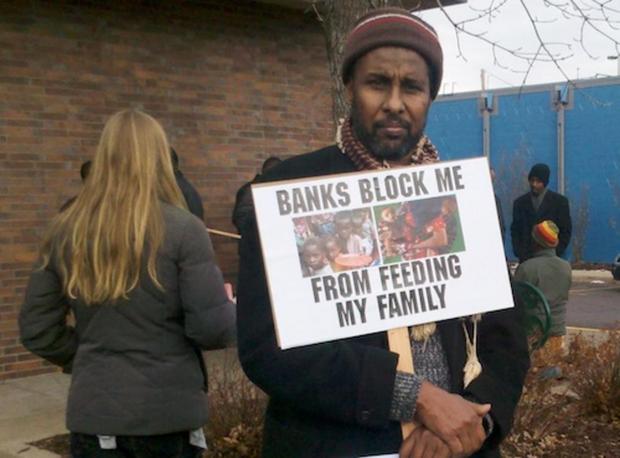
One by one, U.S. banks ended relationships with wire transfers of hawalas in the last decade. Wells Fargo and U.S. Bank were among the first banks that shut down accounts with Somali hawalas. Franklin Bank and St. Paul-based Sunrise Community Banks were the last in Minnesota to announce the divorce in December 2011, citing security concerns.

David Reiling, CEO of Sunrise Community Banks, told news reporters two years ago that the bank’s decision was triggered by the two Rochester women convicted of sending money to al-Shabab, the terrorist group in Somali.

“We don’t want to be involved in money getting into the hands of the wrong people in any way, shape or form,” Reiling told MPR. “So the only way we know at the moment to mitigate that risk is to close these accounts, until we can find another solution or work with government to re-establish those lines.”

Hashi Shafi, executive director of Somali Action Alliance, said the decision of bank officials is a “sanction against Somali businesses.”

Shafi added: “There is no risk in sending money to loved ones who are starving in Somalia.”

Hersi Suleiman, chairman of the newly founded Somali-American Money Service Association, said anyone who sends money to the wrong hands should be held accountable.

“Hawalas have records of anybody who sends money,” Suleiman said. “They ask for the sender’s name, phone number and record the information on their driver’s licenses.”

“If someone sends money to a terrorist group in the U.S. through a bank, will the bank be closed? No. But the person will be punished for the crime,” added Suleiman, who worked as a banker for more than 21 years. “Why can’t we get the same treatment? Why shut down entire Hawala businesses?”

Minnesota Somalis can still send money through Hawalas, which use a bank in California, Suleiman said, but “we are spending a great deal of money.”

Recommendations

The study recommended that bank officials reconsider their decisions and find ways to expand services to hawalas without legal issues. The study also suggested that money transfer operators conduct training on detecting suspicious activities and record keeping.

Other recommendations included that: “U.S. Government officials should prioritize the secure transfer of funds to Somalia and develop contingency plans for shutdowns and reductions in service, bearing in mind that increases in aid are not an adequate substitute for the direct financial flows from diaspora communities that build resilience and address people’s needs and priorities directly.”

Raila Odinga to speak and sign autobiography in Minneapolis on October 18

0
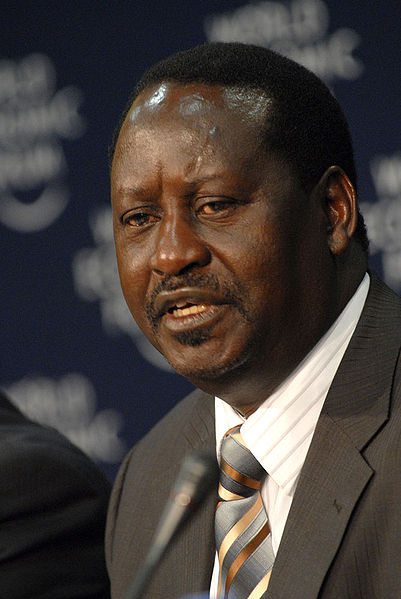
Raila Amolo Odinga, then Prime Minister of Kenya, speaking during the Opening Plenary of the World Economic Forum on Africa 2008 in Cape Town, South Africa, June 4, 2008. Photo: Courtesy World Economic Forum

The former prime minister of Kenya, Raila Odinga, will speak at the University of Minnesota’s Humphrey School of Public Affairs on Friday, October 18 at 2:00pm. It will be at the institute’s Cowles Auditorium. He will also do a book signing for his autobiography released this month “The Flame of Freedom”.

The event is hosted jointly by the Minnesota based International Leadership Institute headed by retired trial judge, LaJune Lange and the Roy Wilkins Center for Human Relations and Social Justice at the University of Minnesota.

The event is free and open to the public.

This is Mr. Odinga’s first visit to Minnesota since he lost the March 2013 presidential election to Uhuru Kenyatta. He challenged the election in Kenya’s Supreme Court but the court upheld Kenyatta’s victory.

Odinga enjoys wide support in the large Kenyan-American community in Minnesota and the visit could also serve as a thank you to them. His last visit to the state was in September 2011 while he was prime minister.

Robert Nyagudi, a Minnesota based key supporter of Mr. Odinga, said that the former prime minister will be accompanied by at least six County governors from Kenya including Governor Ali Hassan Joho of Mombasa County, the tourism capital of Kenya which has been in the news lately following the Westgate attacks in Nairobi as another potential target.

Nyagudi also told Mshale that “a few books, not too many” of Odinga’s autobiography will be available for sale and signing on the day of the event.

Sources in Kenya who have read the book, which is not yet widely released in the United States, say it covers Odinga’s childhood in Maseno, Kenya which is about an hour from where Barack Obama Senior was born and raised. The book covers the period through the last election in March 2013 but not after and is published by Mountain Top Publishers.

The foreword for the book is written by former Nigerian president Olusegun Obasanjo.

Raila Odinga Speaking Engagement & Book Signing
Humphrey School of Public Affairs, University of Minnesota
Cowles Auditorium
301 19th Ave. So. , Minneapolis, MN 55455
2:00PM-6:00PM
FREE

Kenya County governments show strong presence at U.S.-Africa Business Summit

0
Daniel Ombasa Apepo and Protus Moindi (seated) of Kisii County in Kenya talk to a visitor to their booth at the 9th Biennial US-Africa Business Summit in Chicago on Oct 10 2013. On the left standing is Moiro Omari, Cabinet Secretary for Trade at Kisii County. Photo: Tom Gitaa/Mshale
Daniel Ombasa Apepo and Protus Moindi (seated) of Kisii County in Kenya talk to a visitor to their booth at the 9th Biennial US-Africa Business Summit in Chicago on Oct 10 2013. On the left standing is Moiro Omari, Cabinet Secretary for Trade at Kisii County. Photo: Tom Gitaa/MshaleCarvings made of Kisii soapstone on display at Kisii County booth during the 9th Biennial US-Africa Business Summit held in Chicago Oct 8-11, 2013. Photo: Tom Gitaa/Mshale
Carvings made of Kisii soapstone on display at Kisii County booth during the 9th Biennial US-Africa Business Summit held in Chicago Oct 8-11, 2013. Photo: Tom Gitaa/Mshale

Moiro Omari had never been to the United States before but that did not stop him from taking the invitation to attend the U.S.-Africa Business Summit in Chicago seriously. Omari is the Cabinet Secretary in charge of trade at Kisii County in Kenya. The MBA holder from the University of Nairobi said he had heard good things about the biennial conference and convinced his governor and executive committee, to invest in the trip, he said. The county is one of the 47 counties that resulted from the devolved system of government that the country adopted with its new constitution.

“People who are investing their time to come to a conference like this mean they are serious about Africa, and I felt we need to meet with them and tell them what my county can do to facilitate trade between us,” said Omari.

Accompanying Omari to the summit are Protus Moindi, the County Assembly majority leader and Daniel Ombasa Apepo, the minority leader.

The new county system has given the new units of government the autonomy to source foreign direct investments and many of them have taken to the task with gusto. They have been in a quest to woo investors from around the globe. However, with no structured investment promotion arms as exists with the central government, the counties have resorted to shotgun approaches like working directly with family and friends in the Kenya Diaspora to arrange meetings with potential investors and the extensive logistics that go with such. Since April of this year, numerous governors of the various counties have made trips to the United States with the intention of luring investors.

Kisii County is not the only one represented at the summit. Others with delegations include Narok and Kisumu counties. Kisii County however is the only one with a booth showcasing one of that county’s strong exports, carvings made out of Kisii soapstone. The stand is hard to miss as it is near the entrance to the expansive exhibit hall, three stands away from the Dangote Group and eye-popping IBM stand.

Although this was their first time venturing into the US to solicit trade and investments for their respective counties, the county staff from both Kisii and Narok said they were up to the challenge. One such official is Moses Chelanga. He is the legal advisor to the Narok county governor.

“We have a strong delegation from Narok including the Assembly Speaker,” said Chelanga as he introduced the speaker, Ololtisatti Ole Kamuaro to this reporter.

The Narok delegation, although not exhibiting, was quick to make friends. Olufunto Boroffice, Technical Advisor to Nigeria’s Minister of Power, was sporting a colorful bracelet she received from a member of the Narok delegation. A former General Electric employee, she returned to Nigeria after 18 years in the US “so I could stop being an armchair critic of why things are not working back home”, she said.

The county officials described the U.S.-Africa Business summit as very engaging and promising. Interestingly, with the strong interest shown by the county governments, the Kenya embassy in Washington has no visible presence at the summit and its absence is hard to miss given the high profile it has cultivated over the years at the summit. It is the only one of the major African embassies not present at the summit which has attracted over 1,000 US and African business and government leaders. This is also the first time the summit has gone outside of Washington when held in the United States. President Uhuru Kenyatta has not announced a replacement for former Ambassador Elkanah Odembo whose tour ended in July. The embassy has been headed by the Chargé d’affaires, Ambassador Jean Kamau since Odembo left.

The disconnect with his country’s embassy however did not seem to bother Moiro Omari at the moment.

“Our mission here really is to make contact with prospects and we know it might take a while (to develop), but we will do what it takes”, said Omari.

U.S.-Africa Business Summit: ‘Book Knowledge’ alone not enough to overcome leadership gap in Africa

0
The panel on Shaping leaders for Sustainable Growth at the US-Africa Business Summit in Chicago, Michael Maves, Patrick Awuah, Fred Humphries, Stanislav Vecera, Sim Tshabalala and the moderator Zohra Zori. Photo: Tom Gitaa/Mshale

CHICAGO – African countries have made strides in producing educated people with the ability to run businesses and organizations but more needs to be done to equip them with the leadership skills needed to run major corporations and entities that have a global reach, participants at the 9th biennial of the U.S.-Africa Business Summit were told today in the second day of the summit that has attracted over 1,000 business and government leaders from the US and Africa.

Speaking to a capacity crowd in what turned out to be one of the most popular sessions of the conference, a panel which featured senior executives from Microsoft and Procter and Gamble said just obtaining the education and not the experience will not cut it in the new global economy.

Stanislav Vecera who leads Procter and Gambles operations in East and Southern Africa said the continent did not have a shortage of people with the academic qualifications to fill the jobs that are being created in Africa but that many do not have the required experience for many of the high skills needed for the expanding African economy.

“This is also a challenge to those companies operating in Africa to provide the opportunities that these (students) need to get the corporate experience”, Fred Humphries, Vice President of Government Affairs at Microsoft said.

Patrick Awuah, founder and president of Ashesi University, a private, non-profit institution in Ghana concurred saying that students in the continent need “broad perspectives” in order for Africa to have great leaders in business and government. “This is why”, he said “partnerships between Africa (and others) will have to make sense”.

The plenary session, aptly called “Shaping Leaders for Sustainable Growth” was offered in part so that the plenary participants can share their visions for growth in Africa and how they manage resources to prepare the human talent they lead. Vecera who has led Procter and Gamble operations in East and Southern Africa for the last two years said of all the regions he has worked, “Africans have the most energy and enthusiasm of all”, adding this is why it is important that they get pushed to the next level of leadership. He has previously worked in his home country of the Czech Republic, the United States, Hungary and Singapore.

Asked to share his thoughts on what a 25-year old African with no education can do to better himself, Simpiwe “Sim” Tshabalala, Co-CEO of Africa’s largest bank, Standard Bank, said it is never too late to better oneself. “If the opportunities can be provided, one can go back to school anytime”, he said. Tshabalala said with the expanding middle class in Africa, new opportunities should open up for all.

On how to overcome the leadership gap in business and government, those in position already will have to “lead by example” be willing to listen and rough it all “be humble”, according to Dr. Michael Maves, who was one of five speakers that formed the panel moderated by Zohra Zori of Global Management Challenge (GMC). Maves is a former CEO of the American Medical Association.