Barack Obama waves as he arrives at Dakar airport. Air Force One touched down in the Senegalese capital on Wednesday evening.
Barack Obama waves as he arrives at Dakar airport. Air Force One touched down in the Senegalese capital on Wednesday evening.Barack Obama waves as he arrives at Dakar airport. Air Force One touched down in the Senegalese capital on Wednesday evening.
Almost four centuries after Africans started being shipped to North America as slaves, the first U.S. president of African ancestry will on Thursday visit an infamous embarkation point for those destined for lives in chains.
In his first – and, many Africans say, long-overdue – extended tour of the continent, President Barack Obama will focus on political and economic issues, but is also paying homage to a painful chapter in American history.
On the first leg of his eight-day visit he is taking his family to the House of Slaves, a fort built in the late 18th century on Goree Island, off the coast of Senegal, as a transit point for the human traffic and now a museum.
The visit will be a somber reminder of a shameful period in U.S. and world history and provide a powerful contrast between Obama’s stature as leader of the world’s most powerful nation and the historical status of Africans, once treated as property in the country he governs.
“We have moved from a society in which African Americans were not viewed as citizens, in which social, economic equality was not provided, to one in which we could elect an African American president,” said Junius Rodriguez, a historian at Eureka College in Peoria, Illinois.
“It’s a remarkable transformation that we’ve made.”
Many Africans feel a bond with Obama but have voiced disappointment that he has not engaged with the continent as much as previous presidents George W. Bush and Bill Clinton.
During his first term, Obama’s only African trip was a one-day stopover in Ghana and many Africans have been impatient for him to make an extended tour of the continent.
Femi Kuti, seen here at a MInnesota Zoo concert in 2009, will perform at the Cedar in Minneapolis on Friday, June 28 2013 as part of the 'African Summer' music series. Photo: Richard Ooga/Mshale
Femi Kuti, seen here at a MInnesota Zoo concert in 2009, will perform at the Cedar in Minneapolis on Friday, June 28 2013 as part of the 'African Summer' music series. Photo: Richard Ooga/MshaleFemi Kuti, seen here at a MInnesota Zoo concert in 2009, will perform at the Cedar in Minneapolis on Friday, June 28 2013 as part of the 'African Summer' music series. Photo: Richard Ooga/Mshale
The ‘African Summer’ music series kicked off this week at the Cedar Cultural Center in Minneapolis. As in the previous years’ series, this year the goal has been to showcase the diversity of African music. The series will feature six concerts.
The series kicked off on Tuesday with Tuareg guitarist Bombino. Twin Cities based M.anifest from Ghana takes the stage tomorrow (Sat. June 15). M.anifest took top honors at this year’s Vodaphone Ghana Music Awards, taking home big wins in the Best Rapper of The Year and Best Song of The Year (Makaa Maka) categories.
Fela Kuti’s oldest son, Femi, plays on June 28.
Amadou & Mariam who made their Minnesota debut in 2012 courtesy of the Cedar will be back after a sold-out show last year left many asking for more. The blind couple met at Mali’s Institute for the Young Blind where they were both members of the orchestra.
Vieux Farka Touré, a guitarist from Mali takes the stage on July 9. He is the son of Grammy-winning musician, Ali Farka Touré.
Rounding up the series this year will be Fendika who represents the Azmari tradition of poetic song from Ethiopia.
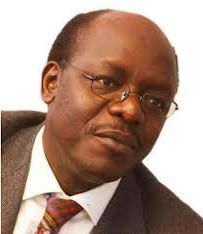
Mukhisa Kituyi of Kenya was confirmed by the UN General Assembly on June 10, 2013 as the new head of UNCTAD.
Mukhisa Kituyi of Kenya was confirmed by the UN General Assembly on June 10, 2013 as the new head of UNCTAD.Mukhisa Kituyi of Kenya was confirmed by the UN General Assembly on June 10, 2013 as the new head of UNCTAD.
The General Assembly today confirmed the appointment of Mukhisa Kituyi of Kenya as Secretary-General of the United Nations Conference on Trade and Development (UNCTAD) for a four-year term, beginning on 1 September 2013.
Mr. Kituyi will succeed Supachai Panitchpakdi of Thailand, who has served as head of the Geneva-based agency since September 2005.
A former Member of Parliament and a former Minister of Commerce and Industry of Kenya, Mr. Kituyi was nominated for the post last month by Secretary-General Ban Ki-moon.
Established in 1964, UNCTAD promotes the development-friendly integration of developing countries into the world economy. It seeks to work as a “laboratory of ideas” and to provide on-the-ground assistance to help developing countries raise living standards through trade, investment, finance and technology.
It also aims to help developing countries benefit from the globalized economy, and to contribute to international debate on emerging issues related to those countries and the world economy, such as the current global financial crisis, through major reports, policy briefs, and contributions to international conferences.
UNCTAD’s membership comprises the 193 Member States of the UN, as well as the Holy See.
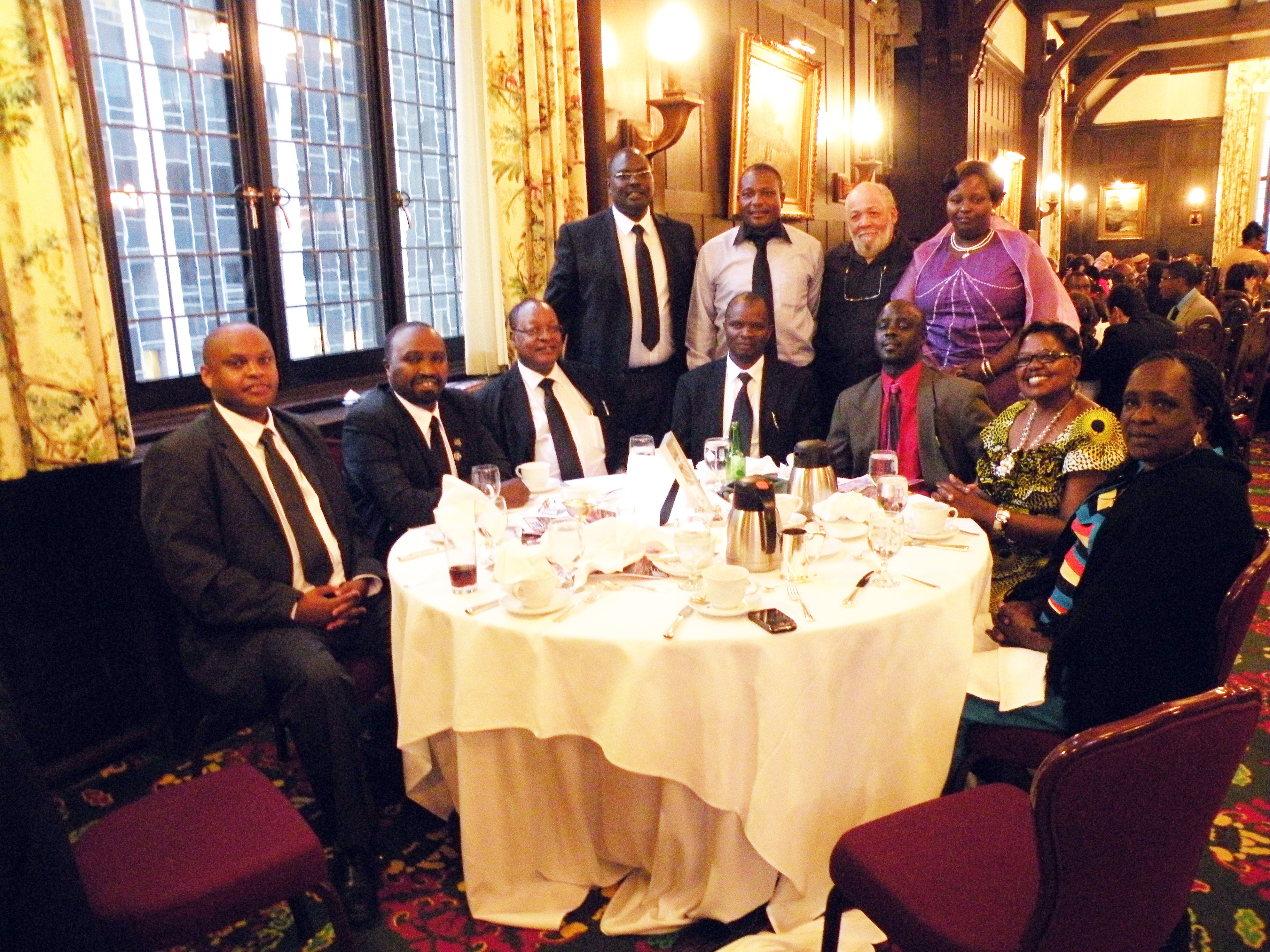
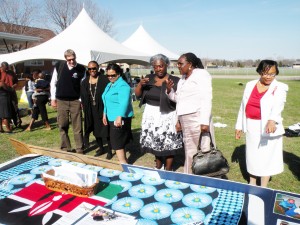
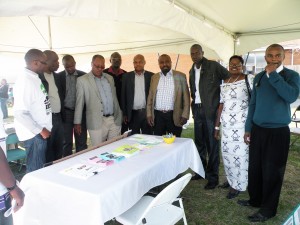
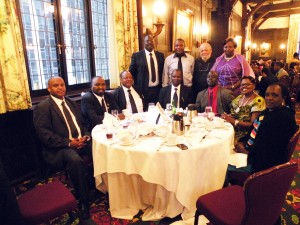
Delegates from Uasin Gishu County in Kenya at the Twin Cities International Citizens Awards in Minneapolis. Photo: Courtesy of ILI
Delegates from Uasin Gishu County in Kenya at the Twin Cities International Citizens Awards in Minneapolis. Photo: Courtesy of ILIMembers of the Uasin Gishu County delegation also visited a Health Fair at the Kenya Community Church in Brooklyn Center. They were accompanied by Judge (Ret.) LaJune Lange (2nd left), president of the International leadership Institute (ILI) Photo: Courtesy of ILISome of the members of the delegation from Uasin Gishu County in Kenya when they visited a Health Fair at the Kenya Community Church in Brooklyn Center, Minnesota. Photo: Courtesy of ILI
The bottom line is, you must be organized to achieve your goals, and resource development planning is what gets you organized. A total of eleven Kenyan professionals did just that on a recent tour of Minneapolis. The Eldoret delegates were from government agencies, the medical field, business and municipalities. In case you are wondering why Minneapolis out of the more than 19,000 cities in the U.S, Minneapolis is a ‘sister city’ to Eldoret.
For the curious mind, sister cities is a program centered on dedication of friendship and understanding between people of different cultures and personalities. These relationships are established based on cultural, educational, information and trade exchanges and are supported and implemented by citizen groups around the U.S. “The aim of the program is to have exchanges between two cities in order to learn best practices” said Mr. Daniel Kiprotich, Deputy Governor of Uasin Gishu County. Mr. Kiprotich stated that Minneapolis assisted Eldoret in overcoming challenges and aiding with projects because Minneapolis is well equipped.
In 2011, Eldoret fire fighters performed Hands On training with Minneapolis Fire Department trainers. According to Mr. Kiprotich, Eldoret is the most equipped town with the award of a fire truck, ambulance and an additional ambulance expected next year. “It is a good relationship. We came to widen up the scope and see other areas we can tap into”. Some of these areas include better methods of managing the environment as it relates to cleaning and recycling and ways to deal with challenges of involving the community in the process.
The delegation arrived in Minneapolis on May 4 ready for a 10 day rollercoaster schedule consisting of facilities tours, training workshops, meetings, benchmarking sessions and connections with local citizen group affiliations and Kenyans in the Diaspora. I was honored to meet the delegation of shrewd, dedicated and intellectual leaders passionate about the welfare of the people of Eldoret. The agenda consisted of the promotion of systemic development, encouraging sustenance and rational growth of local programs and projects, capacity building, benchmarking and replication of best practices. Offices visited included The Mayo Clinic, Hennepin Medical Center, the University of Minnesota, and the department of Public Works.
Dr. John Kibosia, Director of Moi Teaching and Referral Hospital (MTRH) and Dr. Wilson Aruasa, Deputy Director of Clinical Services both emphasized the importance of training medical staff and equipping the hospital with supplies and machines to enhance patient care and experience. During their visit in 2012, not only did the doctors engage in a productive and promising discussion, Dr. Kibosia and Dr. Aruasa observed day to day operation of the cardiac, pediatric and, Intensive Care Units (ICU) of Mayo Clinic and Hennepin County Medical Center. Of particular interest was the cleanliness of the facilities and the electronic systems of paper reduction. “When we went back home, these were things we tried to replicate,” said Dr. Kibosia. The MTRH leader also mentioned how training can give a new perspective of looking at things. “We realize here that smiling is a must and is good for customer relations. We are also putting it across”.
Accomplishments of this trip include a request for proposal (RFP) award from Mayo Clinic in which MTRH will receive a doctor, nurse practitioner and medical engineer in July to train the medical staff particularly in cardiology area. Upon completion of the training, Mayo Clinic is slated to equip the cardiology unit in expansion efforts. Currently, there are four beds in this unit and the hope is that after training and receipt of equipment an additional 6 beds will be installed to increase heart disease services. “Mayo Clinic will come to Eldoret to host a conference on cardiology and we hope this will excite passion in cardiology.” said Dr. Aruasi.
Additionally, the Kenyan doctors entered into a Memorandum of Understanding (MOU) with the University of Minnesota medical school in order to provide training and exchange of skills to MTRH staff. Kenyan doctors working at Hennepin County Medical Center’s pediatrics and ICU units were also willing to travel to Eldoret to train MTRH staff. “We are not only interested in material donations per say but more importantly in the transfer of skills back home.” said Dr. Aruasi.
The Eldoret Water and Sanitation Company (ELDOWAS) which is largely owned by Eldoret Municipal Council were represented by the ELDOWAS Managing Director, Mr. Reuben Tuei. ELDOWAS, which has been around for 13 years, essentially provides drinking water and the treatment of waste water to the City of Eldoret.
Mr. Tuei’s principal focus on the trip was technological management and maintenance of water and sewer. Mr. Tuei pointed out the need for equipment such as jet trucks and back trucks that are efficient in the management of sewer spills and blockage. “We do not have these trucks back home and therefore the work is done manually and it can be dangerous”. He stated. “ We are in talks with the City of Minneapolis and although talks are at the initial stage we are hoping to get assistance with the trucks”. Water management in general is crucial to each city. For instance, in cases of emergencies such as infernos, the city needs to have adequate water pressure to overcome such fires and ensure the water hydrants are well labeled. Other areas ELDOWAS will benchmark includes recycling and conserving water in areas such as roof catchments and generation of power from water for use in plants.
In 2000, the International Leadership Institute (ILI) in collaboration with Peter Ole-Sabai, a Kenyan citizen, presented a proposal to the City of Minneapolis requesting the city become an International Sister Cities’ member with Eldoret. The proposal was accepted by the Mayor and City Council and the relationship began with a visit to Minneapolis by the then Eldoret Mayor. A visit to Eldoret by ILI’s Youth Council laid the foundation for future sustainable projects. The ILI and Greater Friendship Missionary Baptist Church have continued to be supportive of projects that provide resources for the continued education and skills building of local Kenyans in the Eldoret communities and region.
Other affiliates that play crucial roles in the success of the delegations include natives of Uasin Gishu who have formed associations in Minnesota. These groups have collaborated to facilitate acquisition of various donations, secured appointments with local offices on behalf of the delegates, assisted with preparation of RFPs and helped interrogate management system issues. “These groups have contributed to helping us be robust, which has led to better accountability and management of resources”. Stated Dr. Aruasi.
Sister Cities International, located in Washington D.C, is the parent organization of sister cities programs around the U.S. Partnerships are with over 2,000 cities in over 140 countries worldwide. Established at the white house conference on citizen diplomacy in 1956, the aim was to create lasting friendships between people of different cities around the world in order to promote peace and prosperity.
Officials of Scottsdale are set to go to Eldoret in August 2013 on a fact finding mission after the Eldoret delegation paid them a visit. A total of six cities in Kenya are registered as members of Sister Cities International and partnered as follows:
Mombasa – Long Beach, Honolulu and Seattle
Kisumu- Boulder and Roanoke
Nairobi- Denver and Raleigh
Thika- Dixon
Eldoret- Minneapolis
Bura- Newbury Port
Delegates from Uasin Gishu County in Kenya at the Twin Cities International Citizens Awards in Minneapolis. Photo: Courtesy of ILI
Smithsonian’s National Museum of African Art to host panel on “Health, Hair, and Heritage” on June 7
The Sanaa Circle, a friends group of the National Museum of African Art, will present a panel discussion in support of the museum in the Smithsonian’s Ripley Center Pavilion, Friday, June 7, from 6:30 to 9 p.m.; it is free and open to the public. The panelists are experts from the fields of beauty, art, culture and history who will discuss contemporary hair, health and beauty in reference to the heritage and history of Africa. The discussion will be moderated by Diana N’Diaye, who is the principal investigator and curator of The Will to Adorn initiative at the Smithsonian’s Center for Folklife and Cultural Heritage. The project is one of the three themes of the 2013 Smithsonian Folklife Festival, and it looks at identity and how it is reflected in African American dress. N’Diaye is also a jewelry and dress designer.
Johnnetta Betsch Cole, director of the National Museum of African Art, will begin the evening with opening remarks. A reception will follow with hair models featuring images of contemporary beauty and styles by natural hair stylist and cosmetologist Camille Robbins-Reed. The panelists will be available for additional conversation during the reception.
Panelists include:
Dr. Monte Harris, a Sanaa committee member and internationally recognized plastic surgeon, lectures and leads discussions on the role of hair in an individual’s perceptions of beauty and identity. As the leader of the Center for Aesthetic Modernism and Do Good H.A.I.R. Project, Harris provides comprehensive health guidance for women seeking to achieve personal beauty that aligns with their ancestral heritage.
Karen Milbourne has been a curator at the National Museum of African Art since May 2008. Her expertise includes the arts and pageantry of western Zambia and contemporary African art. Since joining the museum, she has curated the exhibitions “Artists in Dialogue: António Ole and Aimé Mpane” (2009) and “Artists in Dialogue 2: Sandile Zulu and Henrique Oliveira” (2011). She also served as coordinating curator for the exhibitions “Yinka Shonibare MBE” (2010) and “Central Nigeria Unmasked” (2011).
Gina Paige is president and co-founder of Africanancestry.com, the nation’s leading genetics-based people ancestry-tracing company, sparking global interest, dialogue and focus on the importance of people knowing who they are.
Health, Hair and Heritage
June 7, 2013, 6:30 – 9 p.m.
S. Dillon Ripley Center
International Gallery, sublevel 3
1100 Jefferson Drive, SW
Washington, D.C. Admission: Free. Reserve your ticketshere.
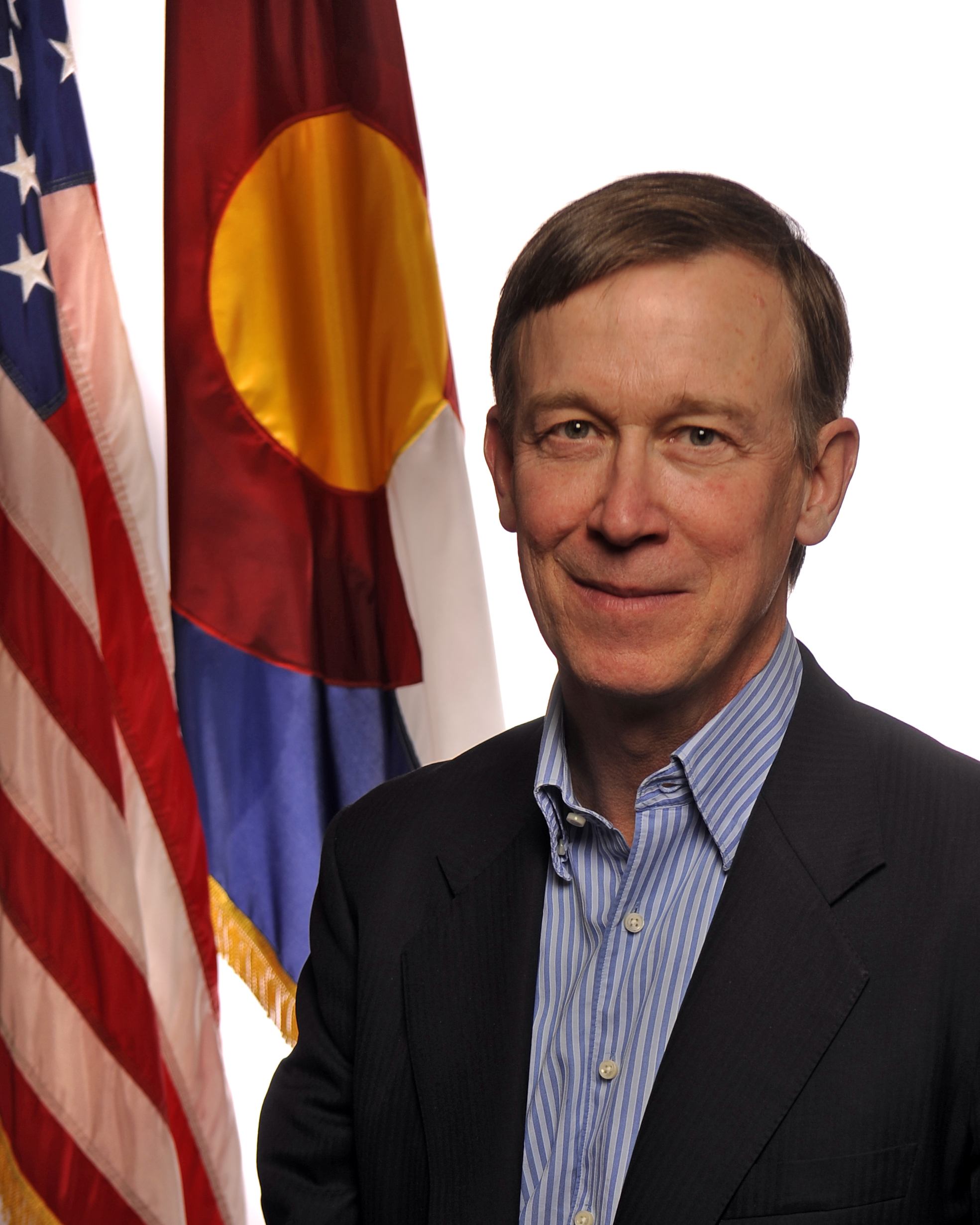
Governor John Hickenlooper of Colorado on Wednesday, June 5 2013 signed into law a measure that will grant driver's licenses to undocumented immigrants.
Governor John Hickenlooper of Colorado on Wednesday, June 5 2013 signed into law a measure that will grant driver's licenses to undocumented immigrants.Governor John Hickenlooper of Colorado on Wednesday, June 5 2013 signed into law a measure that will grant driver's licenses to undocumented immigrants.
Colorado Gov. John Hickenlooper signed into law on Wednesday a measure that grants driver’s licenses to undocumented immigrants, making Colorado the eighth state in the nation to pass such a law.
Other states that have passed similar laws include New Mexico, Utah, Oregon, Nevada, Illinois and Washington and Maryland. A Florida bill that would have granted driver’s licenses to deferred action recipients in that state was vetoed on Tuesday by Gov. Rick Scott.
The Colorado measure, which passed in Colorado’s Democratic-controlled legislature last month without Republican support, will go into effect Aug. 1, 2014.
Gov. Hickenlooper, a Democrat, recently signed into law a bill that allows undocumented high school gradutates in Colorado to access reduced college tuition rates. The state legislature also repealed a controversial 2006 law that required police to alert federal immigration authorities of anyone they suspected of being in the country illegally.
The exterior of Shabelle. Photo: Jeremy Iggers/TC Daily Planet
The exterior of Shabelle. Photo: Jeremy Iggers/TC Daily Planet
Photo: Jeremy Iggers/TC Daily Planet
The exterior of Shabelle. Photo: Jeremy Iggers/TC Daily Planet
The little Ethiopian restaurant hidden away inside the Shabelle Grocery used to be one of the best-kept secrets in the Seward neighborhood—until recently, there was no sign outside to indicate that Shabelle was more than just a grocery store.
Finally, last week, they put a sign in the window announcing their new $8.99 lunch buffet, served Monday to Thursday from 11:30 a.m. to 2 p.m.
This is not one of those 100-item strip mall mega-buffets. When I visited, there were only about half a dozen items to choose from, mostly vegetarian: red lentils, yellow split peas and stewed black-eyed peas, collard greens, linguine in a beefy tomato sauce, seasoned rice, a Greek salad and injera, the traditional spongy sourdough flat bread. What struck me was how fresh and flavorful everything tasted.
There’s lots more on the a la carte menu, ranging from kitfo (Ethiopia’s version of steak tartare) and rice with goat meat (both $10); Middle Eastern dishes like felafel, gyros, and chicken kabobs; and even a Buffalo chicken wrap and a hamburger (most items $5.99). The breakfast menu includes foule (refried seasoned fava beans, $6), scrambled eggs ($4.99), sambousas (stuffed pastry triangles, 50 cents apiece), and fatira (pita bread cooked with eggs, green peppers, onions in olive oil, $5).
Shabelle
2325 E. Franklin Avenue Minneapolis , MN
Phone: 612-333-1101
Hours: Mon-Sun 8am-10pm www.shabellegrocery.com
Hepatitis B: A Serious infection that can be prevented
This article highlights a specific type of hepatitis that is important to know about during pregnancy – hepatitis B.
What is hepatitis B?
Hepatitis B is a virus that infects the liver. Although hepatitis B is most often a silent infection, over time it can cause serious liver damage and liver cancer. Sometimes the infection continues for years without signs of illness. This is why it is called a silent infection. Silent infections are dangerous because they don’t seem serious until the damage to the body already is done.
Why should a pregnant woman be tested for hepatitis B?
If you are pregnant and have hepatitis B but don’t know it, you can give it to your baby during birth. Because of this, every woman should be tested for hepatitis B during every pregnancy. If you do have hepatitis B, there is a simple and effective way to avoid giving it to your baby.
Why should I be concerned about giving this infection to my newborn baby?
Hepatitis B can be transferred to your baby during birth. This is a problem because when babies are infected, they have a high risk of lifelong infection that causes liver disease or cancer. In fact, if an infant is not protected during birth, the infant has a 90 percent chance of developing lifelong infection. And even more importantly, 25 percent of those who develop lifelong hepatitis B die a premature death from liver disease or liver cancer.
How can I prevent giving this infection to my newborn baby?
The good news is that there are steps you can take to protect your baby and your family from getting infected. These steps are:
• Get tested during pregnancy
• If the test shows that you are hepatitis B infected, your baby should get
1) Hepatitis B Immunoglobulin (HBIG) at birth
2) Hepatitis B Vaccine at birth
• Make sure your baby completes all hepatitis B vaccine doses
• Make sure your baby is tested after the final dose of hepatitis B vaccine. This will confirm that the vaccine worked.
Are there treatments for Hepatitis B?
There are treatments for hepatitis B that can help your liver stay healthy. See a doctor regularly so that you know your options.
For more information about hepatitis B, talk to your doctor. You can also find information at the Minnesota Department of Health website at www.health.state.mn.us/hepatitis.
President Barack Obama will visit Senegal, South Africa and Tanzania starting June 26 through July 3rd 2013. China overtook the US as Africa's largest trading partner soon after Obama took office.
President Barack Obama will visit Senegal, South Africa and Tanzania starting June 26 through July 3rd 2013. China overtook the US as Africa's largest trading partner soon after Obama took office.President Barack Obama will visit Senegal, South Africa and Tanzania starting June 26 through July 3rd 2013. China overtook the US as Africa's largest trading partner soon after Obama took office.
President Barack Obama, whose father was born in Kenya, will make the first major African tour of his presidency since taking office in 2009. He will be accompanied by First Lady Michelle Obama.
A statement from the White House said Obama will visit Senegal, Tanzania and South Africa, starting June 26 through July 3rd. His only other visit to Africa was when he visited Ghana for less than 24 hours in July 2009 on the way from Russia.
Obama will meet leaders from government, business and civil society “to discuss our strategic partnerships on bilateral and global issues”, the statement said.
Former Presidents Bill Clinton and George Bush also visited Africa during their second terms in office. Clinton visited six countries while Bush went to five.
China has made inroads into the continent and there has been concern expressed by American business that the United States has lost ground as China tightens links with Africa. China overtook the US four years ago to become Africa’s largest trading partner. Stephen Hayes, president and CEO of the Corporate Council on Africa, which lobbies for American business interests in Africa wrote an op-ed for US News & World Report last week titled “An Obama Visit to Africa Is Long Overdue.”
Hayes went on to say “President Obama did not visit Africa in his first term. Africa was covered by Hillary Clinton twice, Joe Biden once and by the Acting Secretary of Commerce this past December. The number of countries touched by anyone in the administration can be counted with the fingers of two hands, with possibly a few left over.”
China’s top five leaders are in Africa every year according to Hayes and “as are the leaders of many other countries such as France, Brazil, Turkey and India, all of whom are investing actively in Africa. China’s leaders have visited at least 30 African countries over the past five years.”
The visit by Obama, coming on the eve of the birthday of the hailing Nelson Mandela is expected to make up for lost ground. Mandela will turn 95 on July 18.
“The president will reinforce the importance that the United States places on our deep and growing ties with countries in sub-Saharan Africa, including through expanding economic growth, investment, and trade; strengthening democratic institutions; and investing in the next generation of African leaders,” press secretary Jay Carney said in a statement.
Some 80% of people in KwaZulu-Natal speak ZuluSome 80% of people in KwaZulu-Natal speak Zulu
A leading South African university says it will make Zulu language classes compulsory for all first-year students from next year.
The decision by the University of KwaZulu-Natal is aimed at promoting “nation-building and bringing diverse languages together”, an official said.
Zulu is among the most widely spoken of South Africa’s 11 official languages.
It is the mother tongue for about 23% of the population and is also used as a lingua franca by many others.
However, few people from minority racial groups speak it.
This is the first time a South African university has made it compulsory for students to learn an indigenous African language, the local Mercury newspaper reports.
Protestors target excessive phone rates for immigrant detainees
At the West County Detention Facility, inmates can pay upwards of $20 for a five-minute phone call to friends, relatives or lawyers. While the high rates are a cash cow for the prison, for detainees they have become a major hurdle to staying in touch with the outside.
For immigrant detainees and their families, the high phone rates can lead to total isolation.
“$50 gets about 15 minutes of actual talk time,” said Roberto de la Rosa, whose mother is currently being held at WCDF. De la Rosa noted that with repeated dropped calls and reconnection fees, the cost of a single conversation rivals a single families’ monthly phone bill.
De la Rosa was among a group of some 40 activists, former inmates and family members who gathered last Friday outside the prison, located about 30 miles east of San Francisco. Representing a cross-section of local civic, religious and legal organizations, protestors carried signs that read, “Detained mothers have the right to call home.”
The rally was part of a national Mother’s Day action led by the national Campaign for Prison Phone Justice. A fact sheet released by the group notes most Immigration and Customs Enforcement (ICE) detainees are either in deportation proceedings or have petitions for asylum pending, and that affordable phone access is critical to their effective legal representation.
De la Rosa’s mother has been held in detention for close to two years, and was brought to WCDF in 2012 after nearly a year of being shuffled between centers. Her son says the constant moving and high phone rates have made staying in touch difficult.
“I’ve really only been in touch with her for the last four months,” he explained. Having recently lost his job and with persistent health problems, he says the added expense of maintaining communication with his mom, on top of rent and groceries “has really taken a toll on the family.”
WCDF houses some 1100 inmates, including those held by the county as well as candidates for realignment — a state-led initiative to transfer low-level offenders from state to county supervision. In the fiscal year ending in 2012, the Contra Costa County Sheriff’s Office, which runs the Richmond facility, was paid more than $3 million by the federal government to hold ICE detainees.
Christina Mansfield is co-founder of Community Initiatives for Visiting Immigrants in Confinement (CIVIC), which recently launched a national campaign to bring attention to the high cost of prison phone calls. She was at Friday’s rally, where she described immigrant detainees as “a captive market … The high cost of phone calls creates additional and unnecessary suffering for families, and privileges profit over the right of families to remain in contact.”
Unlike state and federal penitentiaries, which are required by law to contract to the lowest bidder, counties are not subject to the same regulation. “Most county jails go with the companies that get them the most profit,” explained Mansfield.
The issue first gained prominence in 2000, after a class action lawsuit was filed by Washington, DC resident Martha Wright against the prison phone companies for charges related to calls made from her grandson, who spent 18 years behind bars. She later sued the Federal Communications Commission, and this past April her case was taken up by the Congressional Black Caucus.
The phone system at WCDF is run by Alabama-based Global Tel* Link. The company paid $75,000 for the contract with Contra Costa County, which receives 57 percent of all profits made from the phone calls. The contract is due to expire in June 2013.
Last year, the company saw profits from calls made within WCDF nearing $700,000, according to documents obtained via a public request act filed with the Sheriffs office by CIVIC.
Global Tel* Link declined to comment for this story.
A call from inside WCDF includes a $3.25 connection fee regardless of the duration, with per-minute rates running as high as 25 cents for interstate calls and an additional 30 cents when phoning out-of-state. Inmates in county jails like WCDF pay higher rates than those in either state or federal penitentiaries.
De la Rosa said that with calls routinely dropped, he often has to pay the connection fee more than once in a single conversation.
Reverend Deborah Lee is director of the Interfaith Coalition for Immigrant Rights, one of the organizers of Friday’s rally. Gripping a stack of flyers with slogans that read “Justice” or “Happy Mothers Day – Affordable Phone Calls,” Lee described the rates as “exploitative,” saying they inhibited inmates ability to maintain family ties and stay up to date on their legal cases.
Prison reform advocates have long argued that maintaining connections to family and friends on the outside is critical to reducing recidivism and ensuring a smoother transition once inmates are released.
“Families are being overcharged for the most basic things,” she said, “like telling relatives you love them, or speaking with their attorneys about their cases.” Inmates’ relatives often pay anywhere from $25-$50 for two or three brief calls. “It’s cruel and inhuman,” said Lee, “the stories we hear are heartbreaking.”
One of those stories is that of Abesulom Taye, who was released from WCDF last week after a seven-month stint on a technicality stemming from charges dating back to 1998 for marijuana possession. Taye was among those at the Friday rally.
“It happened so fast,” he recalled of his arrest, saying it was unexpected as he had been granted asylum by a judge in 2010. A father, Taye said while he was detained he often had to “decide whether I wanted to talk to my son or have food that day.” The high costs meant that calls went from every other day to once a week. Eventually he racked up phone bills totaling $2000.
Lee’s group has joined with CIVIC in seeking a fair and open process for Contra Costa County to negotiate a new contract that would comply with ICE standards in going with the lowest cost provider.
“We shouldn’t be trying to balance our budgets on the backs of people trying to talk to their kids,” she said.