Home Blog Page 158

More Somali-Americans return home for job opportunities and nation building

0
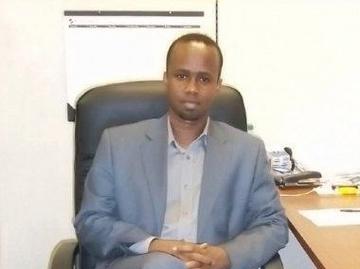
Abdi Daud plans to run for parliament in Somaliland in 2014. Photo: TC Daily Planet

When the civil war erupted in Somalia more than two decades ago, Abdi Daud left everything he had known and loved about the country for the unknown lifestyle and culture of the United States.

Daud arrived in Minneapolis in 2001 with little knowledge of English. Immediately upon his arrival, Daud began fighting financial challenges with the minimum wage he earned as a dishwasher at LSG Sky Chefs at the Minneapolis-St. Paul International Airport.

When Daud was laid off months later, due to the September 11 terrorist attacks, he took a security job in downtown Minneapolis to make ends meet.

Whether Daud worked as a dishwasher or as a security monitor, he said he always dreamed of getting higher education and returning to his native country to play a role in nation building. Twelve years later, his dream has become reality.

Last week, the 32-year-old Daud celebrated the completion of a master’s degree in health and human service administration from Saint Mary’s University of Minnesota. In 2009, he earned his bachelor’s degree in political science and global studies from the University of Minnesota.

Now, he’s in a process of applying a Ph. D. program in educational leadership at Northcentral University.

Daud holds an assistant manager position at Minneapolis-based Kaal Home Healthcare, Inc. However, he wants to go back home to right the political, economic and social wrongs.

Returning home

To Daud, the nine-to-five routine that his job requires isn’t enough. So he’s on his way to Somaliland, an autonomous region of northern Somalia, which declares itself an independent African state, but struggles to gain international recognition.

“I want to run for a parliament seat” in Somaliland in 2014, he said during a recent interview at 1st Cup Café, a community social hub in Minneapolis. “And I’ll eventually run for president.”

More and more Minnesota Somalis have gone back to the country after the al-Qaeda-like al-Shabaab, was weakened several years ago, and new signs of hope arose. They now want to take roles in the new government and the private sectors.

There are a lot of international organizations pouring money into the country, said Ryan Allen, an immigration expert and professor of community and economic development at the University of Minnesota’s Humphrey School of Public Affairs.

“Having degrees from the United States and being able to speak English as well as Somali is obviously the advantage,” Allen said. “Many are seeing economic potential in going back.”

Allen also noted that there is a sense of patriotism in wanting to return to help mend some of the problems in the country.

Last summer, Ahmed Samatar, an international studies professor at Macalester College in St. Paul took a sabbatical from teaching to run for president in Somalia in September.

“The moment has arrived in which I, too, would like to see if my own ideas can be planted on the soil of Somali politics, and might be therefore able to have the Somali community move beyond war, chaos, famine, and corruption,” Samatar told Minnesota Public Radio.

But when the elections came on September 10, voters had picked Hassan Sheikh Mohamud for the job, and Samater lost the race.

Likewise, mathematics teacher Hamid Masheye, of Wellstone International High School in Minneapolis, and three other Somali Minnesotans returned to the country last year. They were appointed to seats in the country’s executive branch.

And Daud will join them in December, even though he heads to the relatively peaceful Somaliland.

Access to Somaliland politics

Even though Daud left Somaliland two decades ago, he said that he is confident that he will live a decent life when he returns home. He also said that he’s almost positive that he will be able to climb the rungs of the country’s political ladder pretty quickly.

“That’s because I’m more qualified as a politician than most of the people there,” he said. “So many uneducated people are holding top positions in Somaliland that they really don’t qualify.”

There is another reason, though, that Daud would have easy access to politics there: his uncle Abdirahman Mohamed Abdullahi Cirro is the Speaker of the House of Representatives of Somaliland.

“I’ve good chances in playing a significant role in the politics of my country,” Daud said. “That’s why I don’t want to be just another immigrant in Minneapolis.”

For nearly a year, Daud has been serving on a committee for Waddani, a major political party based in Somaliland while he still lives in Minneapolis.

Being on a committee for this party, he said, is an important milestone and will give him credibility and recognition once he returns home.

Africa Fashion Week Los Angeles concludes

0
Africa Fashion Week Los Angeles concludes

Last year Nnenna Obioha and Onyinyechi Egeonuigwe created the fashion and events Production Company,Africa Fashion Week Los Angeles (AFWLA, LLC.). Through dedication, hard work, and the support of a strong team, the duo was able to put together a week long event that raises the bar for future productions of the same theme.

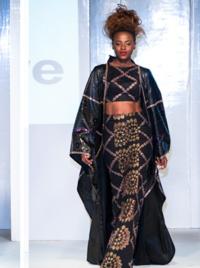
Held at the Papillion Institute of Art, nestled in the heart of Downtown Los Angeles, the inaugural event attracted over 500 guests from the fashion, art, and entertainment communities. Upon arrival, guests were treated to complimentary drinks by Chambord and hor d’oeuvres as they mingled and enjoyed the art exhibition Identifly by Michelle Robinson. Each night of shows was opened up with vibrant African dancers who performed to traditional African music, followed by the main event of runway shows. The musical duo Nola Darling hosted the event, and kept guests informed and entertained throughout the entirety of the program.

Africa Fashion Week Los Angeles 2012 featured 16 local, national, and international designers who showcased their collections to a diverse room full of VIP guests including – MOCA director Jeffery Deitch, actress LaShontae Heckard, Arik Airlines executive Kobina Brew-Hammond, model/actress Keenyah Hill, and artist Michelle Robison. Models walked down the runway to a flurry of flashing lights, as media partners and guests snapped pictures of the amazing designs. The Africa Channel, CaliforniaApparel News, LA Raw Magazine, and Obvious Magazine were some of the many media outlets present capturing AFWLA. Guests received complimentary gift bags courtesy of AFWLA sponsors, which included: OPI nail polish, Clear Essence cosmetic gift sets, Vibe Magazine, BlackBook Magazine, Curls hair care products, Lamik cosmetics, and more.

The event has received an overwhelming amount of feedback and praise which the team will use as momentum for their next season of shows. The external support of sponsors, celebrities, and media contributed to AFWLA’s appeal and introduction to the African fashion industry. In debuting and featuring designers who expressed a unique take on African and African-inspired fashion, the inaugural production intends to expand its goals as they relate to offering exposure to underrepresented members of the Western and European fashion industry.

On closing the night, as the founders reflected on the conceptualization ofAfrica Fashion Week Los Angeles, they both smiled in amazement of how a night of brainstorming evolved into a four-day production that would ultimately shift and propel LA’s fashion scene. In short, it is true what they say: What a difference a year makes.

Vote of confidence in Obama

0
Vote of confidence in Obama

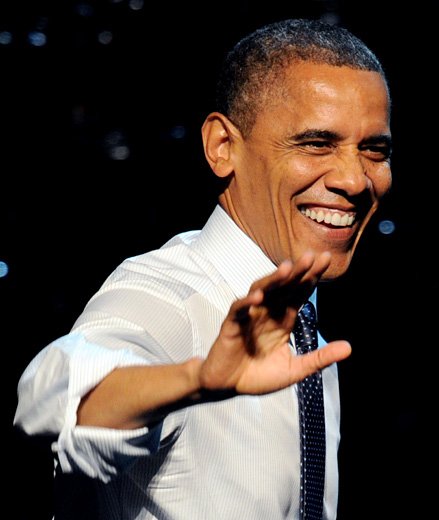
For a year I have been telling people that the 2012 presidential contest is far more important than the 2008 election. Yes, in 2008 America elected its first African-American president in Barack Obama. This was a profoundly historic achievement no matter how you figure it. But that outcome, to borrow some apt social science jargon, was over-determined.

Say what? Here’s why: George W. Bush was a lame duck incumbent in 2008. No matter what, he was out. The sense was endemic that Bush’s was a failed presidency, involving a deeply polarized nation, two misguided wars, the massive incompetence and indifference seen in Katrina and an imploding economy. In such a context, a Democrat, any Democrat, was expected to win.

And, indeed, virtually all of the arid econometric models that forecast elections predicted a Democratic victory, with roughly 53 percent of the popular vote. This is exactly what Obama got — even as an African American claiming a major party nomination for the first time in the history of the nation.

Why does 2012 matter more? This election is about who controls the terms of an unfolding future. Bush and Republicans were out of power with certainty in 2008. Republicans committed themselves to making Obama a one-term president, partly on the premise that his success was merely a reaction against Bush’s particular failures, not a repudiation of the Republican agenda or, at a deeper level, of the ideas and people who would drive the direction of American politics. The outcome of the 2012 election is about telling them they’re wrong!

A New Direction

The future of America is not simply about the agenda of fundamentalist Christians, or antigovernment zealots or affluent, older white men. This election was about an America that is increasingly diverse. It was about an America that is increasingly made up of people of color, especially Latinos. It was about an America that is tired of taxes and economic policies that favor bankers and the very wealthy, as opposed to the middle and working classes and Main Street America. It was about an America that respects the rights of gays and lesbians and the bodies of women, as well as the right of women to control their own bodies.

Let’s be honest, Republicans ran a campaign of retrenchment. The party, despite an effort by Mitt Romney and Paul Ryan to claim more moderate positions in the final days of the campaign, ran on the most backward-looking party platform in some time. The party of Romney chose to favor the powerful and privileged, inequality and intolerance, whether the issue was the undocumented among us and how to deal with immigration; abortion and women’s rights; the rights of gays and lesbians; or whether our tax code should continue to privilege the rich and powerful or call for them to carry a greater share of the tax burden.

This election, therefore, is an inflection point. It is the consolidation, first and foremost, of a multiracial progressive Obama coalition that is now the dominant electoral force in American national politics. Republicans will never again, so long as their policy agenda remains as it is, command a winning national coalition. Too many fundamental social trends run against it. A mix of more progressive white voters, especially white women, African Americans, Latinos, Asians and other people of color, now sets the national agenda.

This is why the Karl Roves, the Grover Norquists and the lunatic Donald Trumps of American politics are apoplectic in rage and disbelief. They do not want to accept that the basic makeup of the electorate does not and will not again sustain their agenda and their claims to power. People who have different outlooks and who look different from them are now going to set America’s policy agenda. And that is a good thing.

It is an inflection point because the demographic trends that disadvantaged the Republicans are clear and not changing, and because of the broad dimensions of the Obama victory. Obama carried most of the coveted and hotly contested “swing” states. He did far better in states like Florida and North Carolina than anyone expected. Meanwhile, in Congress, Republican Scott Brown went down in defeat against Elizabeth Warren, one of the most unambiguously liberal voices to seek a U.S. Senate seat in years.

It is inflection point in the arc of history because an African-American president was re-elected even though unemployment was at nearly 8 percent, and Republicans threw absolutely everything at him it was possible to throw, from “You lie!” to their vow to make him “a one-term president,” to driving the nation to the brink of financial insolvency rather than negotiating in good faith over the national debt. Most importantly, in terms of the economy, it is difficult to imagine a set of economic circumstances more favorable for a Republican challenger. And yet they lost, and lost convincingly. Obama and the Democrats are now firmly in charge, despite Republicans’ edge in the U.S. House of Representatives.

Changing Values

This election was not about Hurricane Sandy. It was not about birth certificates. It was not about who believed most in America.

The 2012 presidential election was about the direction of social policy across a whole host of critical issues: the economy, taxes, education, health care, the rights of women, the standing of immigrants and the position of gays and lesbians. It was a choice between trying to hold desperately on to a past that is clearly gone or moving confidently into an uncertain future that we all know, in our hearts of hearts, is the destiny of a great, but changing, nation. It was a vote in favor of Barack Obama and what he has been trying to do for four years. It was a vote, as President Obama put it, that gives new meaning to “the bonds that hold together the most diverse nation on Earth.”

Give Mitt Romney credit. In the end, his concession speech was gracious and high-minded. As he said, no doubt to the chagrin of many ideologues in his own party, “This election is over.” And he rightly called for an effort to “reach across the aisle to do the people’s work.”

This moment will also be an inflection point in terms of race relations, quite frankly. I say this not because Obama will suddenly pursue an agenda more openly advancing the concerns of black Americans in particular. No. Obama has proven that a black man can rise to the most extraordinary challenges our political process can put before a president and convince a clear majority of the American people to continue to stand with him. This success at being re-elected means far more for deep, transformative change in race in American culture than his 2008 victory, though, of course, 2012 would not be possible without 2008.

Many of us — everyone I know — have been anxious and worried for weeks on end. I stopped watching the news and listening to the radio two weeks ago. That’s how nervous I’ve been. Thankfully, as President Obama put it in his victory speech: “A long campaign is now over.” History just took a decisive turn, I believe. The full meaning and breadth of that turn will depend on continuing the work this electoral outcome symbolizes.

America is, decisively, headed forward, not back. And that is a very good thing indeed.

Lawrence D. Bobo is the W. E. B. Du Bois Professor of the Social Sciences at Harvard University.

Federal Reserve: Foreclosure victims may Be eligible for compensation

0
Federal Reserve: Foreclosure victims may Be eligible for compensation

Area residents who experienced home foreclosure in 2009-2010 have until Dec. 31, 2012, to request an independent assessment of whether they deserve monetary compensation for foreclosure processing deficiencies.

According to the Federal Reserve Bank of Minneapolis, nearly 16,500 Hennepin County households may be eligible for a free and impartial third-party review of whether their mortgage servicer handled their foreclosure inappropriately.  This program, known as the Independent Foreclosure Review (IFR), is part of an enforcement action against 14 major mortgage servicers by the Federal Reserve and the Office of the Comptroller of the Currency.

“These reviews are not just for those who lost their homes to foreclosure,” according to Dorothy Bridges, senior vice president at the Federal Reserve Bank of Minneapolis. “If your mortgage was serviced by one of the 14 covered servicers and was involved in any part of the foreclosure process during 2009-2010, from initial filing to sale or redemption period, you can request an independent review.” An impartial expert will re-examine each case, according to Bridges, and recommend whether compensation is warranted for mortgage servicer deficiencies that resulted in financial harm to the borrower. “And you have nothing to lose—there’s absolutely no charge of any kind for these reviews, and you don’t sign away any rights to pursue separate legal actions,” Bridges said.

If you or someone you know may be eligible, view the informational video on the Federal Reserve’s IFR webpage www.federalreserve.gov/consumerinfo/independent-foreclosure-review.htm. This website also provides further information, including a list of the 14 mortgage servicers included in the program and instructions on how to request a review by the Dec. 31 deadline. To avoid scams, Bridges recommends using these official sites and absolutely avoiding any person or organization who asks you to pay anything for this review.

Acoustic Africa: Afropean Woman at Dakota Jazz Club

0
Acoustic Africa: Afropean Woman at Dakota Jazz Club

Dobet Gnahoré dances with the same formidable skill as David Rudisha races. This coming Sunday, she teams up with two other musicians to present an unforgettable show at the Dakota Jazz Bar.

The Acoustic Africa threesome includes Gnahoré from Cote d’Ivoire, Manou Gallo, former bassist for Belgian group Zap Mama, and Kareyce Fotso, a Cameroonian singer who promises to sway our souls with her Afropop and blues.

The last time Gnahoré was in town, November ’11, also at the Dakota, she expressed how she cherished the rich variety of languages used in the African continent. About her own music written and performed in different languages, she found it was a “great opportunity to value the beauty and diversity of all those different African languages, their complexity and their melodies.”

Joining up with two women from other countries takes her to a deeper level. She’ll not only sing her own songs, but dance and accompany musicians performing from their own cultures. Also on stage will be guitarist Leni Stern and Aly Keita on balafon.

Dakota Jazz Club
612-332-1010
1010 Nicollet Avenue
Minneapolis, MN, 55403

Sunday, October 21
7 pm and 9 pm shows
Tickets

Congressman Keith Ellison exhorts African immigrant community to vote against voter ID and gay marriage ban

0
Congressman Keith Ellison exhorts African immigrant community to vote against voter ID and gay marriage ban

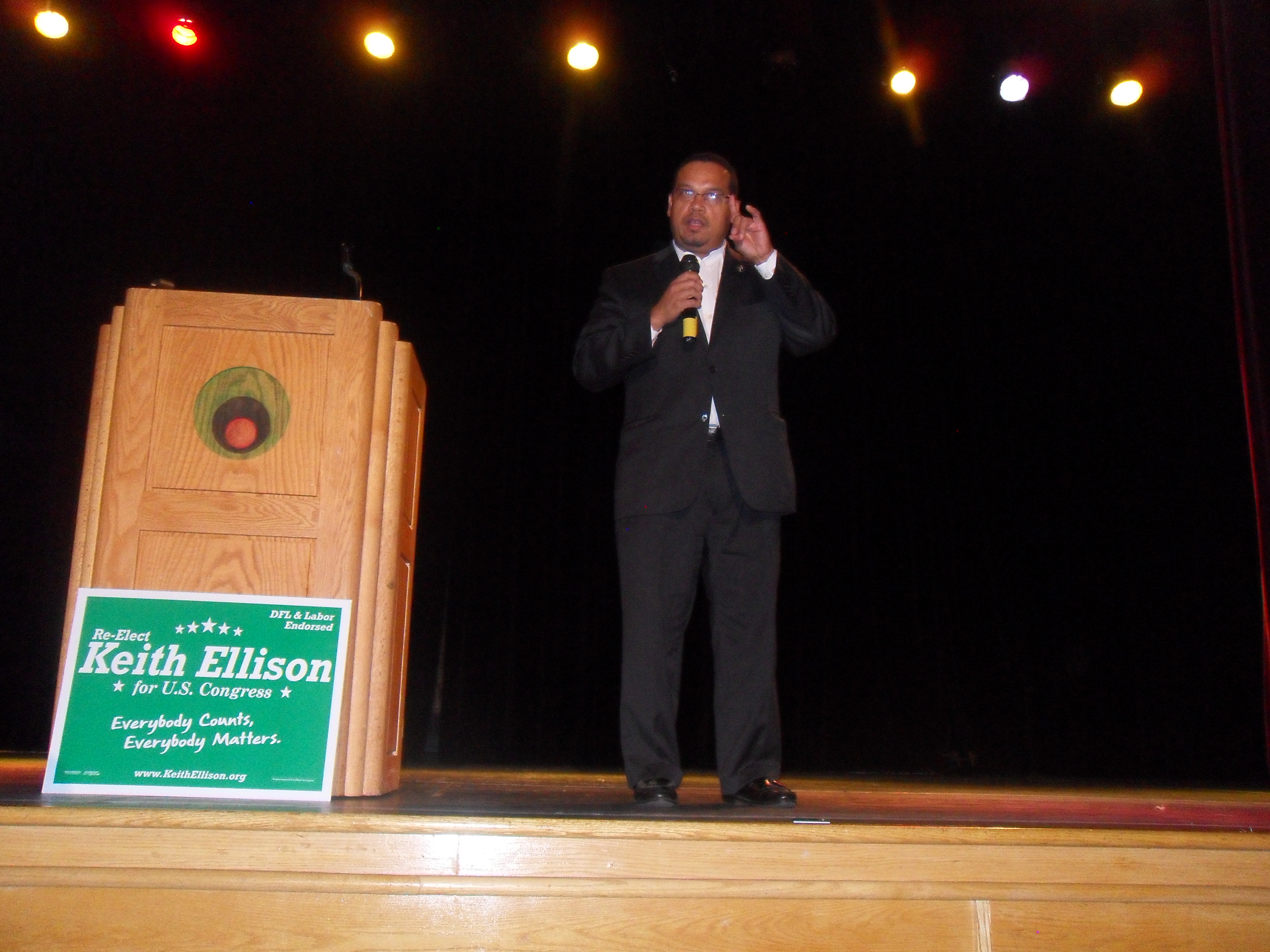
Minnesota Congressman Keith Ellison last night exhorted the African immigrant community in Minnesota to vote against the voter ID law and gay marriage ban that will be in the November 6 ballot. Mr. Ellison was speaking last night to a group of Africans at Sabathani Community Center in Minneapolis during what was dubbed as a community dialogue with leaders and members of the community.

African immigrants from more than eight countries were represented at the meeting.

The two controversial constitutional amendments have split the Minnesota electorate down the middle but the gay marriage ban is believed to enjoy wide support within the African immigrant community while most are expected to vote against the voter ID law. The congressman acknowledged the sensitivity of the gay marriage issue within the community when he prefaced his remarks on the matter with “I know some of you are going to get mad at me but I am going to ask you to also vote no on the other amendment (gay marriage ban)”.

Ms. Melissa Nambangi and Mr. Wynfred Russell, moderators for the event both expressed gratitude to the congressman for his willingness to begin such a dialogue with Africans in Minnesota, noting that such an outreach is useful and urgent.

In keeping with the African heritage of music and dance, the occasion started with performances from two choral groups, and one masquerade (juju) dance from Cameroon.

Congressman Keith Ellison first joined the masqueraders in their frantic juju dance before opening up the discussion.

Accompanying Congressman Ellison, were two members of his team (a representative of the Democratic Farmers Labor party and Brian Barnes, candidate for congress for the Minnesota third congressional District). Both speakers expounded on how African immigrants contribute to the development of American democracy.

Brian Barnes on his part was very instructive in explaining the role voters can play in making the upcoming elections rewarding. Mr. Barnes spoke on voter eligibility and Same Day Voter registration. Commenting on the recent voter ID law, he said that the law was repugnant to people’s right to vote and so it should be rejected by the voters. He urged every voter to vote “No” to the voter ID law because it disenfranchises minorities and is a waste of federal funds.

At 7pm, Congressman Ellison was invited to the discussion and he began by situating African immigrants in the democratic process of America. He said the New African Immigrants were a logical extension of the African American trajectory in America and so they must take their place in American politics.

BBC Radio 3 Awards winner, Dobet Gnahoré, at the Dakota on Sunday for Acoustic Africa

0
BBC Radio 3 Awards winner, Dobet Gnahoré, at the Dakota on Sunday for Acoustic Africa

BBC Radio 3 Awards winner Dobet Gnahoré returns to Minneapolis this Sunday with two shows in one night.She will perform at 7pm and 9pm at the Dakota Jazz Club and restaurant in downtown Minneapolis.

Gnahoré won the Grammy for Best Urban/Alternative Performance for the song “Pearls” in collaboration with India.Arie in 2010 and has continued to garner a reputation as one of the most vibrant performers in the world music scene.

At the Dakota, Gnahoré will be joined by Côte d’Ivoire bassist and vocalist Manou Gallo who is the bassist for the popular group Zap Mama.

Acoustic Africa: Afropean Women which is what the Dakota has dubbed the evening will also feature young Cameroonian singer, Kareyce Fotso, whose music is a combination of Afro-pop, Blues and traditional African music.

American contemporary guitarist Leni Stern will join them for musical direction.

Tickets for the two October 21 shows are available online.

Voices of Strength Performance Unconventional and Innovative

0
Madame Plaza
Madame Plaza
Madame Plaza

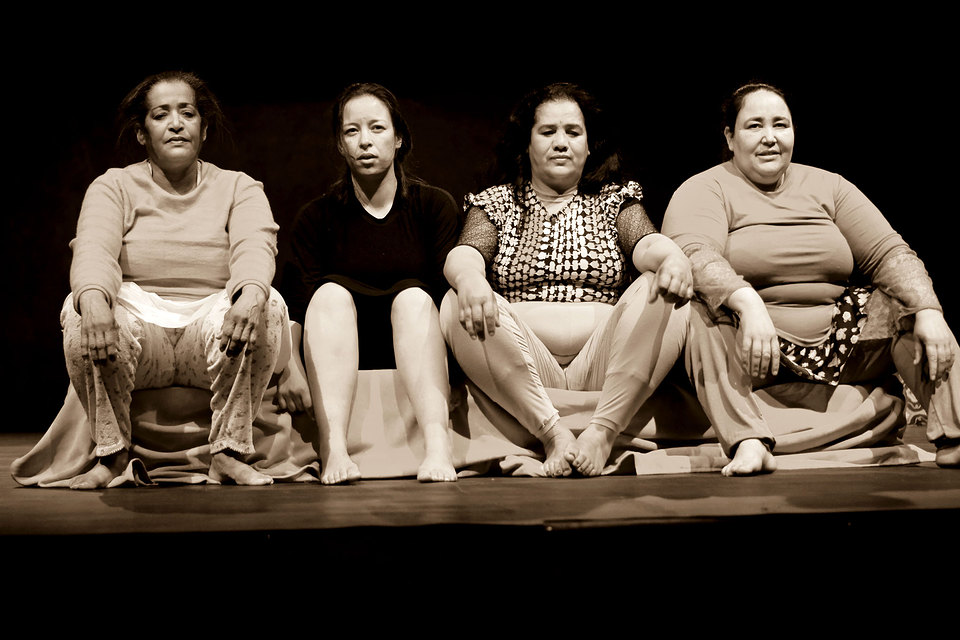
“Much of their performance was pedestrian,” said Maja Brunes, dance major graduate from Main Street School of Performing Arts in Hopkins and admitted dance major to the University of Minnesota.

Her summary stopped me. In my mind, Voices of Strength, which performed for three nights-October 10 – 13-at the Walker Arts Center in McGuire Theater, exposed me to an entirely new approach to dance. How could something so revolutionary be pedestrian?

No, not pedestrian in the sense of banality or unexceptional, she clarified, but in the fact that the four women who performed Madame Plaza depicted everyday actions such as sitting on a couch waiting or gathering in community and forming teamwork; it was almost theatrical in its storytelling, Brunes told me.

The whole experience begs the question, what is dance? Previously, I understood dance to be a response to music using one’s body to show kinesthetically the effects of the music. Even if it’s dramatic such as a ballet, it is still easy to understand the dancer has taken on the role of a cursed swan or a scurrying mouse, for instance.

Further, I’ve always associated dancers with lithe bodies and sinewy ropes of muscle enabling them to propel themselves off the floor complete with bounds and twirls. This stereotype did not fit three of the women who performed Madame Plaza. Their curvaceous bodies alone unseated my image of dancers.

Voices of Strength, a collaboration of work by five artists from Africa, portrays the story of the African woman. The artists bring their stories to the audience with unique ways of interacting with both objects and to one another.

For Brunes, she found herself emotionally gasping over the seemingly simple act of one dancer, creator and performer Bouchra Ouizguen of Morocco, picking up another dancer from behind and carrying her across the stage. “I can’t explain it,” said Brunes, “but I felt like they were working toward creating community.”

The first presentation, Sombra, on Thursday evening, October 11th, was a solo performance by Mozambican Maria Helena Pinto. Unexpectedly performed with the dancer wearing a large plastic bucket over her head and resting on her shoulders, Pinto spoke of the invisibility and absence of voice of women in Africa through both her body and her lack of words.

There were no pirouettes or dramatic leaps. Instead we watched Pinto repeatedly walk across a long row of upturned buckets and weave in a sporadic fashion through an equally long row of buckets hanging from the rafters. At times, she struggled to fit her entire self in her own bucket, rolling and writhing on the stage floor.

Her twenty-three minute piece ended with the startling act of her bucket flying off her head and out of sight. Within minutes of revealing her face, she made eye contact and warmly thanked the audience for attending although still without words.

Brunes noted that the performance began in black, transitioned to partial light and ended with Pinto walking into the light. This coincides with the program notes that include three translated poems that relate the idea of shadow, moving from non-existence, and finally seeking enlightenment.

French-speaking Sub-Saharan Africa needs major aid to fight AIDS, UN report says

0
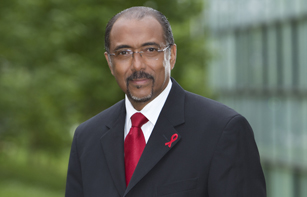
Michel Sidibé, UNAIDS Executive Director

NEW YORK – Despite great progress within a short time, the 29 French-speaking countries of sub-Saharan Africa are lagging far behind other states in the region in the battle against HIV/AIDS and need a massive increase in international aid, according to a United Nations report issued today.

“It is decision time for La Francophonie,” Michel Sidibé, the Executive Director of the Joint United Nations Programme on HIV and AIDS (UNAIDS), told a news conference in Kinshasa, the capital of the Democratic Republic of Congo (DRC), where the report was released at a summit meeting of the 56-member state International Organization of La Francophonie (IOF), a grouping of one of the biggest linguistic zones in the world.

“While out actions so far are laudable, they will not take us to the finish line. We must redouble our efforts for the AIDS response and act decisively,” Mr. Sidibé said, stressing that an additional $1.4 billion in international aid, a 160 per cent increase over current funding levels, will be needed annually by 2015 to fill the gap, together with a $120 million increase by the countries themselves.

“The international community must meet its commitments for Francophone Africa, and high-income Francophone countries must take the lead,” the UNAIDS chief added. “At the same time, low- and middle-income francophone countries must also increase their share of investments based on economic strength and disease burden.”

In 2011, an estimated 3.1 million people were living with HIV in low- and middle income IOF countries in sub-Saharan Africa, accounting for 10 per cent of the global total, according to the report. HIV prevalence varies widely among member countries in sub-Saharan Africa, from less than 0.3 per cent to 5 per cent of the adult population.

An estimated 826,000 people in low- and middle-income IOF countries were receiving HIV treatment in 2011, up from just 26,000 in 2003, according to the report. Increased access to HIV treatment resulted in a nearly 30 per cent decline in AIDS-related deaths between 2004 and 2011.

But despite this commendable progress, an estimated 970,000 people are still waiting to access life-saving HIV treatment in IOF countries, accounting for 14 per cent of the global treatment gap.

Taken as a whole, IOF countries in sub-Saharan Africa achieved 43 per cent coverage of HIV treatment in 2011, compared to 59 per cent coverage in non-IOF countries in the region. Among IOF countries in the region, just one in five pregnant women living with HIV has access to antiretroviral therapy for her own health and only 15 per cent of children eligible for HIV treatment are receiving it.

Programmes to prevent new HIV infections among children are gaining momentum across sub-Saharan Africa, with an estimated 34 per cent decline in new HIV infections in IOF countries between 2005 and 2011 – from 73,000 to 48,000.

Despite this progress, however, an estimated 450,000 children are living with HIV in low- and middle-income IOF member states of sub-Saharan Africa, according to the report. Coverage of HIV medicines to prevent transmission from pregnant women to their children in these countries remains low, at 36 per cent compared to 62 per cent coverage among non-IOF countries in the region.

Team of Kenyans looking to expand wellness opportunity into East Africa

0
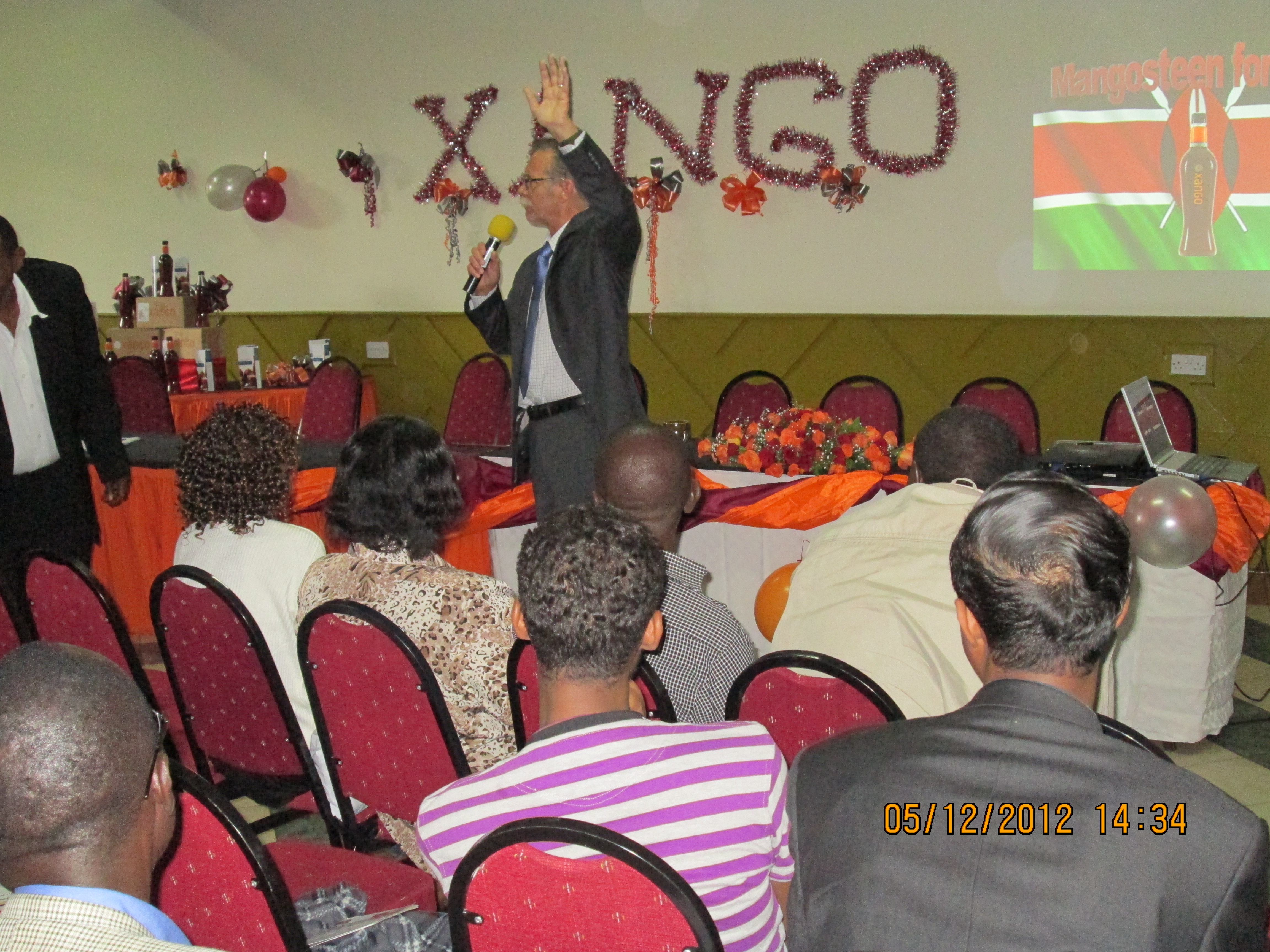
Dr. Karl Anderson during a presentation in Nairobi on May 2012

The Network Marketing Company which is also Direct Selling or Multi-Level Marketing brings the most powerful system of free enterprise in our modern world. Through distributors it’s entering the East African market through a user turned evangelist of its product, Dr. Karl Anderson, a prominent Twin Cities dentist.

Dr. Anderson has teamed up with a group of Kenyan Americans to introduce the  product and business opportunity to the East African region with a planned business presentation in Nairobi on November 9 at the SixEighty Hotel. Xango relies on the thousands of its independent distributors worldwide to distribute its product and East Africa will be no exception, according to Dr. Anderson.”We therefore need to connect with East Africans here in Minnesota and back home to launch this opportunity there,” he said.

His story with Mangosteen juice goes back 7 years. After suffering from osteoarthritis compounded by a back injury for 15 years, he set out to use his medical  training to find a natural remedy to the painkillers he was constantly on, Vioxx and Celebrex. Once he determined that the scientific research validated  that the Mangosteen extract was rich in what in the medical field are called  Cox 1 and Cox 2 inhibitors involved in pain relief, he was sold. Vioxx and Celebrex was out and was replaced with the recommended two ounce dosage of the Mangosteen Juice. “My stamina and improved sleep was amazing,” he says.

As he continued to use Mangosteen, close family members were also drawn in. His mother-in-law, a diabetic and insulin dependent for 10 years started using Mangosteen and after a month of usage her doctor withdrew her insulin treatment proclaiming he had not seen her sugar levels so low in years.

Armed with those personal experiences, Dr. Anderson has taken to sharing with his patients willing to listen the benefits of Mangosteen juice. One such patient is Kenyan born Minnesotan, Mutune Mutisya. His mother, suffering from osteoarthritis had been complaining of severe hip pain for a long time. Like many Africans Mutisya and his mother have a preference for natural remedies and was drawn in instantly when Dr. Anderson introduced him to Mangosteen.

“Dr. Karl gave me a bottle and told me to have my mother drink 30 mls everyday. After a month, her hip felt better. She stated she felt physically more active  than she had felt for a long time. I have started drinking Xango myself and I can feel the health difference immunity wise,” says Mutisya who quickly became a convert and started introducing it to his friends. “I became convinced that this product could help many people including my fellow Kenyans back home and here in Minnesota.”

Mutune Mutisya and Dr. Anderson would like to hear from East Africans in Minnesota and back in East Africa that would like to be distributors or be part of the business presentation on November 9th. They can be reached at 651-252-1288, or e-mail [email protected] or  [email protected].

More info at www.mangosteenforkenya.com.

Shell Oil presses Supreme Court to deprive torture victims of justice

0

WASHINGTON – Will victims of distant genocides and crimes against humanity be allowed to continue using U. S. courts to seek justice against their persecutors, as well as the individuals and corporations that helped facilitate human rights violations across the globe?

In a case before the U.S. Supreme Court, Shell Oil is sending a shocking message: victims of mass atrocities should have no standing in our nation’s courts.

The case, Kiobel v. Shell, concerns a group of Nigerian refugees living in the United States who sued Shell for helping Nigeria’s former dictator torture and kill environmentalists.  Rather than simply deny the allegations, Shell is trying to deny the plaintiffs—and all victims of foreign human rights crimes—the right to seek justice in U.S. courts.  Our courts, Shell argues, are powerless to hear claims that a foreign government slaughtered its own people in its own territory—even when the defendants who committed or financed these crimes find refuge in this country.

For victims of human rights abuses, the stakes couldn’t be higher.  For decades, U.S. courts have given survivors what repressive regimes back home denied them:  a chance to confront their abusers, seek truth, and obtain a measure of justice.  I know because I am one of these survivors.

As a young businessman in Somalia in the early 1980s, I was tortured by the former Siad Barre regime.  Accused of treason for the “crime” of volunteering in a civil society group, I was bound by ropes in excruciating positions, suffocated with water, and electrocuted.  I spent most of the next seven years in solitary confinement in a small, windowless cell.

After my release, the United States gave me asylum.  But it also gave me something that victims could not dream of in Somalia—the chance to bring my persecutor to justice.  In America, I discovered that General Mohamad Ali Samantar—the former Somali Minister of Defense who exercised command and control over my torturers—was living in comfortable retirement in a Virginia suburb.

My lawyers at the Center for Justice and Accountability, a San Francisco-based human rights organization, helped me and other survivors bring a case against Samantar.  In 2010, we fought all the way to the U.S. Supreme Court—and won.  Samantar was denied immunity for his crimes, and in August 2012, a trial judge ordered him to pay $21 million to his victims.  The judgment sent a clear message: there will be no safe haven in the United States for human rights abusers.

Our case against General Samantar is the latest in a long line of precedents brought under a 200 year-old law—the Alien Tort Statute—that allows victims to sue in federal court for violations of international law.  In 2004, the Supreme Court upheld that law.  But now Shell is asking the Court to ignore that precedent and roll back decades of progress in human rights.

I fear that our case—which has become a beacon for ending impunity in modern-day Somaliland—will be the last of its kind.  Shell claims that human rights do not belong in U.S. courts.  If the Court accepts Shell’s arguments, U.S. law will no longer give survivors of foreign genocide, war crimes, or crimes against humanity the right to hold perpetrators accountable.

But Shell is wrong.  Mass atrocities are the business of our courts.  International human rights violations know no borders.  Cases like Samantar or Kiobel are not about distant crimes in far-away lands. They are almost always about American lives.  They are about the war criminal next door, seeking to escape responsibility for his past.  They are about the torture survivor whose business suit, doctor’s coat, or factory uniform conceals her scars.  And they are about the rogue company whose offices in America reap profits from abuses overseas.

Shell’s lawyers are asking the Supreme Court to shut the courthouse doors on these cases.  I have faith that the Court will hold those doors open.  We must not avert our eyes to the human rights abusers living among us and deny victims their day in court.

This op-ed is made possible by America’s Wire, a news service run by the Maynard Institute for Journalism Education.