

Home Blog Page 163

A summer of African music in the Twin Cities

0
Viviane N'Dour
Viviane N'Dour

It is a summer of African music in the Twin Cities. Major African acts will be coming through the Minneapolis/St. Paul area. Whether indoor or outdoor, there is something for everyone.

Viviane N’Dour

Mshale has compiled this non exhaustive list of what is happening this summer in the music and entertainment scene in the Twin Cities.

The newly launched Mshale Text Club will be giving away tickets to some of these concerts to its members.The only way to participate in the ticket drawing is to join the Text Club by texting AFRICA to 24587 from your mobile phone. You then will be notified via text when to enter a drawing for a specific show.

Sierra Leone Refugee All Stars

This group formed by a group of refugees displaced to Guinea during the Sierra Leone Civil War will make a retun to the Twin Cities at the Cedar which has become a hotbed of world music with Africa well represented. They will be kicking off a series of African acts that will be coming to the Cedar this summer under its African Summer series.

Date: Tuesday, June 5
Time: 7:30 PM
Venue: The Cedar
Tickets available online

Fela!

This award winning Broadway musical finally makes its way to the Twin cities. It won a Tony in 2010 and is directed and

Fela! opens on June 12 at the Ordway in St. Paul, Minnesota after its run on Broadway.

choreographed by Tony Award-winner Bill T. Jones, in which “audiences are welcomed into the extravagant, decadent and rebellious world of Afro-beat legend Fela Anikulapo Kuti.”

Date: June 12 – 17, 2012
Venue: Ordway
Tickets available online

Viviane N’Dour and the Jolof Band

The “Queen of Mbalax” makes her way to the Twin Cities on June 20 in what is expected to be a thriller. A former sister-in-law to Youssou N’Dour’, she combines western music and dance forms such as rhythm and blues, jazz, soul, Latin, and rock with sabar, the traditional drumming and dance music of Senegal.

Date: Wednesday, June 20
Time: 7:00 PM
Venue: The Cedar
Tickets available online

Les Nubians

The Paris based sister duo will be back in downtown Minneapolis this summer performing at the Dakota

The Twin Cities has been good before to Grammy nominated Afro-pop group Les Nubians hence their return in less than a year. The group consists of Hélène and Célia Faussart from Paris, France.They played to sold out shows at the Dakota in downtown Minneapolis last year.

They will perform two shows this year in what is expected to be another sellout.

Date: Tuesday & Wednesday, June 26 & 27
Time: 7:00 PM
Venue: Dakota Jazz Club
Tickets available online

Orchestre Poly-Rythmo

This group from Benin is “a horn-driven big band with vocalists who can scream or croon, as its music slyly adds even more layers of rhythm — many drawn from voodoo” according to the New York Times.

It will be something different from what come through Minneapolis especially the Cedar.

Date: Tuesday, July 10
Time: 7:00 PM
Venue: The Cedar
Tickets available online

The Johnny Clegg Band

Western Rock and Zulu Rythms? Yes, they come together when you are talking about Johnny Clegg. He has pioneered a new,

Johnny Clegg

unique sound combining Western rock with Zulu rhythms and became one of South Africa’s most prolific musicians and an international superstar selling over 5 million albums in the process.

Date: Thursday, July 12
Time: 7:30 PM
Venue: The Cedar
Tickets available online


Wake Up Madagascar

Described as “A magical concert experience with a mission: to end illegal logging in the rainforests of Madagascar”, the concert is being taken on a wordlwide road tour following a big one that was held in Madagascar to raise awareness about the effects of illegal logging and will feature:

Jaojoby – Madagascar’s most popular singer, “The King of Selegy”
Razia Said – Singer, songwriter and environmental activist
Charles Kely – Virtuoso guitarist from the highland plateaus
Saramba – A female collective presenting upbeat songs and vibrant dance moves

Date: Friday, July 13
Time: 7:00 PM
Venue: The Cedar
Tickets available online

Spoek Mathambo

Johannesburg’s Spoek Mathambo will light up the stage with his music of live drumming and rock guitars intertwined with cyborg drum machine beats, video game bleeps, soulful singing and rap choruses.

Date: Thursday, July 19
Time: 7:00 PM
Venue: The Cedar
Tickets available online

Oliver Mtukudzi and the Black Spirits
Free Outdoor Concert!

The Walker equivalent of ‘shock and awe’. Top African musician, Oliver Mtukudzi performs free at Loring Park as part of the Walker’s ‘Summer and Movies’ programming.

This was a surpise addition to us at Mshale and a thrilling one at that. The Walker unveiled its 2012/2013 performing Arts season calendar and inside was this prize that Oliver Mtukudzi will be performing at loring park in Minneapolis.

Oliver ‘Tuku’ Mtukudzi will be part of the Walker Art Center’s Music and Movies in Loring Park. You better arrive early to secure yourself a spot in the park.

Date: Monday, August 6
Time: 6:00 PM
Venue: Loring Park, Minneapolis
Admission: FREE!!!

Amadou & Mariam

Thirty-five years after first hearing each other at the Institute for Young Blind in Bamako, Mali, and eight years after their Manu Chao-produced album Dimanche à Bamako thrust them into the global limelight with its sunny charm and irresistible  grooves,
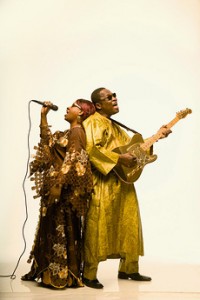
Amadou & Mariam

Amadou & Mariam and their band are finally appearing in Minneapolis to give a rare, small club performance at The Cedar, copresented with the Walker Art Center, and Sue McLean and Associates.

Date: Tuesday, August 7
Time: 7:00 PM
Venue: The Cedar
Tickets available online

Prison Rape Elimination Act (PREA) to expand to Immigrant Detention Centers

0
The Prison Rape Elimination Act (PREA) protections will now also be extended to immigrants held at Immigrant Detention Centers like this one that opened in Karnes County on March 2012.

Victims of sexual assault in immigrant detention centers will no longer be excluded from protection under the Prison Rape Elimination Act (PREA), the White House announced Thursday. The Obama administration released a presidential memorandum to extend PREA to all federal agencies. Each agency is responsible for creating its own rules to comply with PREA.

The Prison Rape Elimination Act was passed unanimously in 2003. However, until now, the act has only applied to victims of sexual assault in prisons operated by the Department of Justice.

On Thursday, the Justice Department released its final rule on PREA, which will increase trainings of prison staff to identify sexual abuse, increase screenings of inmates and guards, and make it easier for detainees to report rape. Trainings and screening protocols will also take into consideration the needs of “lesbian, gay, bisexual, transgender, intersex and gender nonconforming inmates.”

The Obama administration announced that all other federal agencies, including the Department of Homeland Security, which oversees immigrant detention centers, and Health and Human Services, which operates facilities for unaccompanied, undocumented children, will be required to draft their own separate rules within 120 days to satisfy the requirements of PREA and to finalize these rules within 240 days of their proposal.

Fela! hits the stage at St. Paul’s Ordway, promises unforgettable evening

0
Fela! opens on June 12 at the Ordway in St. Paul, Minnesota after its run on Broadway.

The Ordway Theater in St. Paul, presents a wide variety of performance art including dance, theater, and music. Their upcoming production of Fela! comprises all of these genres with an exceptional infusion of social commentary.

No re-creation of the life of Fela Anikulapo Kuti could justifiably omit his passion for social activism. Six days in June, Fela!, after its run on Broadway, will play to audiences in St. Paul. An Ordway Extra will take place one hour before the show on June 13, expanding on the theme of “Music as Social Change.”

Jermaine Rowe, Fela! ensemble, spoke with Mshale last week. Rowe, a Jamaican native, joined the cast in London where it was regrouping to perform on stage at the National Theatre after its Broadway run.

Rowe believes the audience will come away with an understanding of the origins of Afrobeat, an pudding stone-like musical genre infused with Nigerian and African sounds, jazz, and funk.  This form of music was primarily created and promoted by Fela Kuti back in the 1970s.

At a deeper level, “[The play] affects people in different ways. The message is not an African message, it’s a message of hope; it’s the story of humanity,” says Rowe.

During a scene in the play, “We symbolically walk onstage with coffins. These coffins contain injustices, things that matter to each artist,” described Rowe. One coffin represents Fela’s mother who was killed during a raid by the government in which Fela was badly beaten. “In Baltimore, Treyvon Martin’s mother watched. We had a coffin with Treyvon’s name on it. Those moments are powerful and beautiful,” said Rowe.

The Twin Cities has been fortunate to enjoy performances by both of Fela Kuti’s sons, Femi and Seun. Both sons bring in their own creative forces as they capture an Afrobeat groove in their respective performances.

To add authenticity to the production of Fela!, Femi Kuti and Seun Kuti were brought to a rehearsal. “We met his sons both,” said Rowe, “they came to a rehearsal and were available to us. At one point in London, Seun showed us how his father would direct the band,” the Jamaican actor said.

The Ordway will also host a talkback for “FELA!” on June 13 directly following the performance. The talkback will be a Q&A session about the show with members of the cast and creative team.

June 12-17, 2012
Performance Dates:
June 12 at 7:30 p.m.
June 13 at 7:30 p.m.
June 14 at 7:30 p.m.
June 15 at 7:30 p.m.
June 16 at 2 and 7:30 p.m.
June 17 at 2 and 7:30 p.m.

Ordway Center for the Performing Arts
345 Washington Street
Saint Paul, MN  55102
Ordway’s Music Theater
Tickets start at $35 (including fees)
Ticket Office: 651.224.4222
Groups: 651.282.3111
ordway.org

Marital Termination Agreements: How to Save Money and Avoid Protracted Divorces

0

The marriage contract is more than an important agreement; it symbolizes a couple’s commitment to one another and their vow to spend the rest of their lives with each other.  For different reasons, however, a marriage may come to an end, regardless of the best intentions and efforts; the marriage does not always survive the intent of the parties involved.

When irreconcilable differences lead a married couple to end their relationship, there are a number of ways to formally end the marriage.  Parties can choose to file a joint petition for divorce when they both agree on the terms of the divorce, in lieu of a contested divorce battle in the courts.  Parties can also enter into a written agreement to end their marriage with little court involvement.  Divorce proceedings often take a long time and can be a difficult and expensive experience, particularly if there are children, business assets, and real property involved.  In cases where there are disagreements, Minnesota courts allow couples the option of Early Neutral Evaluations (ENE) to find how to best resolve some of the challenging issues in the divorce.  These evaluations lessen the impact of a prolonged process prior to having the matter brought before the court.

A Marital Termination Agreement (MTA) is an additional method to resolve a marriage amicably between divorcing couples.  An MTA is an ideal option in cases where a couple wants to end their marriage in a friendly and fair manner. The MTA is a written agreement entered into between divorcing couples detailing how they wish to share their joint or marital assets, and/or resolve custody issues if children are involved.  It is then presented to the court for approval and to be incorporated into the court’s judgment and decree ending the marital relationship.

Is a Marital Termination Agreement Right for Me?

There are several factors to consider when deciding whether you and a divorcing spouse should prepare and enter into an MTA.  One of the most important factors is whether both parties agree on all issues regarding the divorce.  Some of these issues include how to fairly share all the marital assets, the parenting and custody arrangements if children are involved, child support and child care, health coverage, etc.  In cases involving children, a Marriage Termination Agreement must also address how child support payments are to be made, how conflicts involving custody will be resolved, income tax child dependency exemptions, health insurance coverage for minor children, amongst others.

Furthermore, depending on the particular circumstances, the parties to an MTA may have to make a decision in regards to spousal maintenance or alimony.  If they choose to not have either side responsible for spousal support, then they must include a Karon waiver in the agreement.  A Karon waiver is a mutual disclaimer stating that neither side will be required to pay spousal maintenance and that the court shall not have the power to review the waiver.  The waiver must be based on adequate consideration, full disclosure of each party’s financial circumstances, property division and the parties’ agreement that the MTA is fair and equitable.

Parties who chose to use an MTA must affirm in the agreement that they have read, understood, and given serious consideration to its contents.  They must agree that it is fair and equitable under the circumstances, and that it has been made to allow an orderly and just determination of the property settlement and resolution of the relevant issues in a manner satisfactory to both parties.  A Marital Termination Agreement may not be appropriate for certain divorcing couples who do not have children or assets together.  Those with limited joint assets may be better off filing a joint petition for dissolution instead of an MTA.

What to Do

If you find yourself involved in a divorce, contact an experienced family lawyer immediately, particularly if you are not a U.S. citizen and a divorce may have consequences on your immigration status.  Consult with an attorney who has the experience and knowledge it takes to understand what kind of divorce process is best suited for your particular situation and how it can affect your immigration and other family law cases.

If you have questions about a divorce, its immigration consequences, or any other issues in this article, contact an experienced family law attorney.  Consult a family lawyer to determine what process is relevant to your particular case or situation or for any of the issues raised in this article.

Nothing in this article should be taken as legal advice for an individual case or situation.  The information is intended to be general and should not be relied upon for any specific situation.  For legal advice, consult an attorney experienced in family law.

South African film looks to expand global presence

0
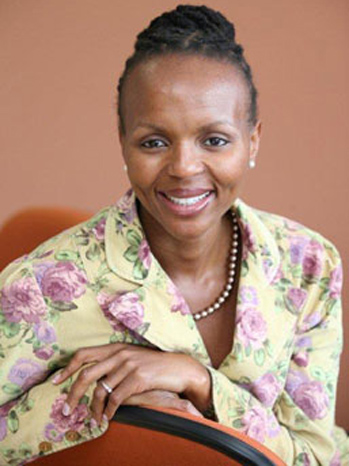
Zama Mkosi
Zama Mkosi

“The biggest goal is entrenching South African content locally,” says Zama Mkosi, the new CEO of South Africa’s National Film and Video Foundation. She spoke to The Hollywood Reporter at this year’s Cannes Film Festival.

Zama Mkosi, the new CEO of South Africa’s National Film and Video Foundation, is setting her sights on taking the country’s rising film sector to the next level.

She says her organization likely will be rebranded as the national film commission over the near- to mid-term to have it set a national film agenda instead of having each regional commission doing its own thing. In addition, the country is looking at including postproduction spending to its incentives program, and she plans to boost South African production output.

“For me, the biggest goal is entrenching South African content locally,” Mkosi told The Hollywood Reporter. “We would like to make sure that the production of local content is improved, and we provide more opportunities for South African content to be produced and more players to come into the industry.”

She added: “It’s all a numbers game. If you produce 1,000 [projects], you have a chance that five will be successful and able to compete with the rest of the world. And it helps equipping people with better skills and ensuring the quality of content. We want to work more on consistency and work on getting more stuff into the world.”

In a sign that South Africa wants to be a bigger global player, the country sent its strongest representation ever to this year’s Cannes Film Festival, including 130 filmmakers and 20 films.

While South Africa is happy to have attracted such Hollywood and foreign productions as Safe House and Dredd, which has brought spending and additional experience and skills to the country, Mkosi said more local output would boost the presence and market share of South African films in the country’s 700 movie theaters.

Speaking of attracting local and international production, Mkosi also said she expects that South Africa will in the near term discuss a bill to expand its production incentives to include postproduction spending.

Any international production qualifying for the scheme can currently claim a 15 percent, soon 20 percent, rebate on its local spend for South African shoots. Local and co-productions will receive a 35 percent rebate on the first 6 million rand ($761,000) spent and 25 percent on the remainder.

Mkosi also said that the South African government is making money available for public-private partnerships to roll out digital cinemas in underserved regions of the country. She had no details to share but said as many as 10 cinemas per year could be opened under that initiative.

Illiteracy not an option, declares NoKET during U.S. launch

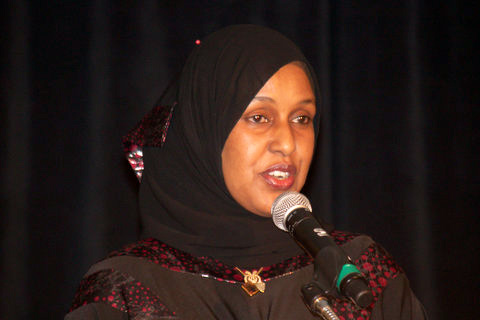
Amina Mohamed, Trustee and Founder of the Kenya based NoKET during the organization's US launch in Bloomington, Minnesota.

BLOOMINGTON, Minn – Northern Kenya Education Trust (NoKET) kicked off its United States launch in Minneapolis on May 11th in its quest to promote the quality of education for girls in northern Kenya during a dinner fundraiser at a local hotel headlined by US congressman, Keith Ellison of Minnesota’s 5th congressional district.

NoKET is an independent trust fund whose works covers the counties of Turkana, West Pokot, Baringo, Samburu, Isiolo, Marsabit, Mandera, Wajir, Garissa, Tana River, Lamu, Kajiado and Narok: regions with the lowest level of educational achievement. NoKET’s involvement in promoting a quality education birthed in 2006, but it was officially registered in 2010.

The launch brought together a delegation of civic leaders from Kenya including the Minister of State for the Development of Northern Kenya and other Arid Lands, Mr. Mohammed Ibrahim Elmi who also serves as the Member of Parliament for Wajir East constituency in the Kenyan parliament. The ministry he heads was created in 2008 by the current coalition government in Kenya because of the low development indicators northern Kenya has exhibited over the years.

NoKET hopes to establish a strategic partnership with organizations with a similar vision according to its trustees who were at the US launch. The trust fund is supported by organizations such as UNICEF, Imperial Bank and the Ministry of Education. UNICEF- Kenya was reported to have given NoKET $100,000. But the trust fund targets to raise $14 million and to gain a long term relationship with the Diaspora to improve the quality of education.

Though the US launch event required a steep $100 per person, well over 300 people filled the room to witness the night, and some even spilled into the halls. NoKET did not fall short when its trustees and organizers presented re-known leaders such as Congressman Rep. Keith Ellison, Kenyan Ambassador to the U.S. Elkana Odembo, Cabinet Minister, Hon. Mohamed Elmi and Amina Mohamed. The ambassador was in town already for a number of days primarily to keynote the annual Books for Africa fundraiser luncheon.

“Illiteracy is not an option,” UNICEF and NoKET’s trustee Ms. Mohamed said in an interview with Mshale, in assessing the current generation and the public’s concern to elevate educational levels in Kenya’s northern region. Mohamed who is also the co-founder of the trust fund, set the tone of the evening for her male trustees when they began to reference back to her speech and facts as they gave their remarks.

Congressman Keith Ellison, popularly referred to as “Africa’s Friend” by Kenya Diaspora leaders in Minnesota took the stage as the program’s keynote speaker. Despite the Congressman’s strong support among the Somali community in Minnesota, he strongly highlighted the relationship between Kenya and Minnesota. “Kenya and Minnesota have an enduring relationship,” he said. “I urge people to be engaged and participating in the process of making good things.”

Applause and enchantment swept through the room as the congressman displayed his humor to the audience, but it was obvious that he was deeply concerned about safety, and NoKET’s mission to slain the challenges of receiving a quality education for girls in Northern Kenya.

The girls’ images became a reality when Mohamed conveyed in depth stories of the nine girls out of the 433 NoKET serves. Young innocent faces with brief profiles were shown on the overhead projectors to capture the attention of the convinced attendees. Even though Ms. Mohamed mentioned her idea to bring one of the girls to the U.S. launch, keeping the girls in school is NoKET’s mission. “The education of a girl affects the surrounding of a home. We really have a responsibility to keep them in school.”

Though Mohamed announced the trustees plan to include boys into the program, a section of her speech that echoed through the room was when she said, “For 15 years a girl from Northern Kenya did not graduate from a university.” Mohamed began to collect facts after she realized being the only woman in her careers. “I realized I was alone in conferences and meetings. I was motivated to uplift women through education.” A closing remark that brought cheers and applause was when Ms. Mohamed assured supporters of NoKET that the organization was free from bureaucracy, a point even the Kenyan Ambassador to the U.S. strongly emphasized.

“We are investing in the Diaspora to help,” she said. “We want to assure you that we are not raising money for politicians.”

Odembo’s clear addition to Mohamed’s powerful remark was when he said, “It does not matter what political party we belong to if girls are not going to school.”

U.S. organizations such as Books for Africa (BFA), a nonprofit organization that ships donated books to children of Africa came forward to partner with NoKET. Books for Africa is the largest shipper of donated school textbooks to Africa. In addition to primary and secondary schools, institutions such as Kenyatta University, Daystar University and the Kenya Institute of Management have been recipients of textbooks from the organization. NoKET did not only gain the friendship of the 24-year-old BFA, but it also attracted many who made pledges to contribute to the program.

“If we get books to the girls in Northern Kenya that will be a great partnership,” said Norman Linnell, president of the board of directors at Books for Africa during remarks to the audience at the launch.

Another enthusiastic supporter at the launch was Judge (ret.) LaJune Lange, president of the International Leadership Institute (ILI). Lange has worked on the ground North Eastern Kenya to advance opportunities for the girl child with Woman Kind, an organization that sends volunteers and provides training programs.

Speaking with Mshale during the launch Lange said “We will be travelling again this summer to the region and working in the goals of NoKET along Woman Kind. We will provide capacity building for the teachers and education.”

Many attendees like Paul Morande were delighted to be present at the NoKET US launch. It was clear that NoKET marked the coming together of United States, Kenya and Somalia. “This is a noble event,” said Morande, as he stood up for the two countries’ national anthems.

HIV/AIDS hits Minnesota minority communities hardest, new report shows

0
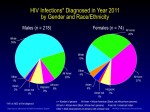
HIV incidence among communities of color is rapidly increasing, especially among women.

Ethnic community leaders across the Twin Cities say they are getting tired of hearing more bad news about the rise of HIV/AIDS infection in their communities. With more than three decades into the HIV/AIDS epidemic, rates of new infections in Minnesota overall have slowed, but HIV incidence among communities of color is rapidly increasing, according to a new report released by Minnesota Department of Health (MDH).

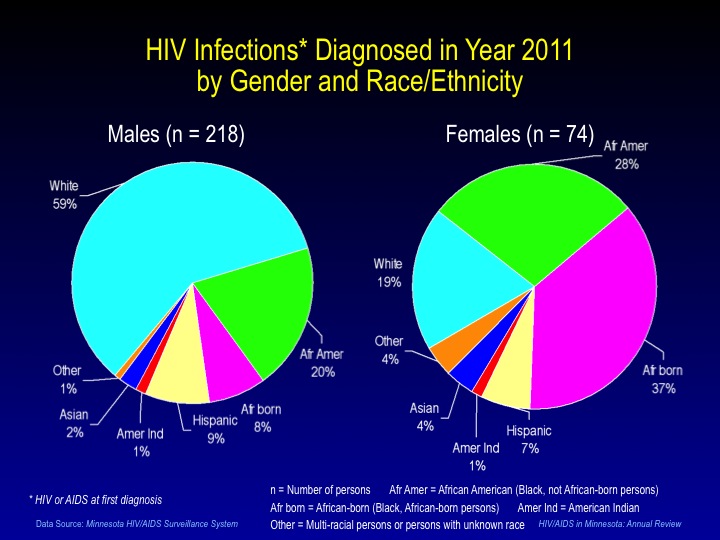
HIV cases among all women rose 9 percent with increases seen among African-born, African American, Latina and Asian women. Health officials say among women of all ages with known risk factors, “heterosexual sex was the leading risk factor, accounting for 98 percent of cases. Women of color accounted for 81 percent of all new cases reported among women, even though they make up only 17 percent of the general population.”

The report, which is based on one year of data collection, shows a total of 292 new HIV cases in 2011 compared with 331 in 2010, does not reveal a dramatic increase in the rate of HIV infection in the larger state population.

But it cements a picture of an epidemic that disproportionately affects ethnic minority community groups, where African immigrant males saw a 31 percent increase, while Asian males’ case count remained the same in 2010 and 2011.

“While the overall drop in cases is encouraging, it’s concerning that we continue to see increases and higher rates among some of our communities.” said Peter Carr, manager of the STD and HIV Section at MDH.

He said new HIV cases remain concentrated within the Twin Cities metropolitan area at 86 percent with an 11 percent increase reported in the suburbs in 2011 as compared to 2010, primarily due to an overrepresentation seen among women.

“Contributing factors that lead to higher HIV infection rates among some of our communities include powerful social factors such as employment, education, income, housing and neighborhoods,” said Carr. “Lower income levels ultimately result in limited access to health insurance and quality health care, including HIV prevention education, testing, treatment, and care services.”

Additionally, ethnic community health workers point to a high degree of gender inequality, poverty and ambivalence over sexual issues within the minority community as major factors in the spread of the disease.  “Negotiating gender roles in the context of sexual relationships is an ongoing challenge,” said Karvee Kawalawu, a health educator at Annex Teen Clinic in Robbinsdale, a first-ring Minneapolis suburb.

“There is clearly a problem when you have a 16 year old girl dating a 28 year old man. The power dynamic in such relationships is unbalanced; he has the power to control when, where, or whether safe sex is practiced or not,” she said. 
“Many young women are having unprotected sex with men in exchange for a meal at Red Lobster restaurant, earning them the dubious title in the community of the ‘Red Lobster girls.’ These girls and the men that prey on them don’t have any sense of the consequences of their actions to them and the community,” said Kawalawu.

She said another reason an increased number of youth are getting infected is the lack of Education. “Most youth are being misinformed of the transmission of HIV/AIDS. There’s so much mythological information that they believe which is also a factor.”

The ‘Magic Johnson’ effect

The reasons why the ethnic community in Minnesota is seeing a sharp elevation in new HIV diagnoses are complex and varied, said Maria Sarabia, an urban community health expert and researcher who studies minority-focused solutions to public health issues. 

”The fields of medicine and science have made great advances in creating products that help manage HIV.  The HIV ‘dialogue’ for a lot of people, has shifted slightly from prevention to management,” Sarabia said.

She added that this shift creates a sense of hope, and it is a good thing for so many people of color living with HIV. We hear success stories about ‘Magic Johnson’ living with HIV and still being happily married.

Sarabia, who specializes in using storytelling as intervention and engagement vehicles within communities of color, said the ads that promote HIV therapy drugs normalizes being HIV positive.  “However, when we assess the human psyche – there may be folks that feel like acquiring HIV is not that bad, and can be managed. This thought process could provoke people to take more risks, and engage in unprotected sex,” she said.

A little over 20 years ago, after his jaw-dropping announcement and subsequent retirement at 32, Earvin “Magic” Johnson’s doctors say he is in good health and comfortably managing HIV with “a daily regimen of drugs and exercise,” according to published news reports.

Yet health officials worry that Johnson’s health and physical outlook could encourage complacency, and they see

the milestone of his historic announcement as a call to renew dedication to “consistently practicing safe sex, including using condoms and limiting the number of sexual partners.”

Health officials also noted that getting tested for HIV and getting into treatment if infected is now more important than ever. People in treatment have shown a 95 percent reduction in HIV transmission rates when compared to infected persons who are not in treatment.

HIV/AIDS among African immigrants in Minnesota

0
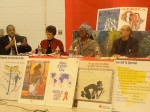
A panel discusses HIV/AIDS among Africans in Minnesota during a past African World Aids Day (AWAD) in Minneapolis. Photo: Sahra Mohamud/Mshale

More often than not, our stories are not only told by others, but also narrated from their perspective. Our African Story is a series of community-pertinent topics whose intention is to give an African voice and ownership to some of the most riveting issues of the day. I have decided to kick off the series with the issue of HIV/AIDs and the effects of the epidemic on the African immigrant community in Minnesota.

Although Minnesota is the focus, issues discussed here are relevant to the African immigrant community elsewhere in the United States and the diaspora. This is part one of a three-part article on HIV/AIDS. In this first part, I endeavor to dissect and understand what published infection statistics actually mean. On the surface, the statistics look like just another string of meaningless numbers. But, in the very numbers, lies the devil himself. Part two will feature the experiences of an African immigrant who works on the frontlines of an organization that provides services to HIV positive people. In part three, the reality of HIV hits very close to home as we get a first-hand glance in to the everyday life of an African immigrant who is HIV positive.

According to the Minnesota Department of Health, by the end of December 2010, an estimated 6,814 persons were known to be living with HIV/AIDS in Minnesota. During the same period, 331 HIV infections were diagnosed. Of those cases, African-born immigrants accounted for 33 cases or 10 percent. This may seem insignificant but it quickly takes epidemic dimensions when you consider that African-born immigrants only comprise 1 percent of the total Minnesota population and that this figure is the highest among all immigrant groups. Hispanics form a larger minority block — about 3 percent — yet they account for 31 cases or 9 percent.

The average age at HIV diagnosis among African-born men was 40 while the reported cases among adolescents and youth was only 1 percent. This challenges the notion that HIV/AIDS is more prevalent among the youth as they are perceived to be more sexually active and have a higher propensity to engage in riskier sexual practices. I strongly believe that the higher HIV rate among middle-aged African-born men is due to the stigma associated with HIV. The cultural and religious resistance by older Africans to openly discuss sex encourages denial and hampers HIV awareness and testing, which in turn leads to undiagnosed people unknowingly infecting their others. It is also very possible that most of these people may have been infected in their 20s and 30s while in Africa only to be diagnosed years later after migrating to the United States.

The low infection rates among adolescents and youth is in stark contrast to figures from Sub-Saharan Africa which show that half of all infections happen among youth aged 15 to 24. This may occur because African-born youth in Minnesota avoid getting tested, or are more aware of the dangers of the virus and thus take extra precautions. It is also possible that they may be getting tested anonymously. Because Minnesota allows for anonymous testing, those numbers do not reflect in the statistics.

What comes as no surprise is that among African-born men, 79 percent of the cases are transmitted via heterosexual means. The shocking part, and one many in the African community would rather keep numb about, is that 15 percent of the cases are transmitted via men having sex with other men; an issue that the community is in great denial about as it is perceived that homosexuality is a “White people issue.”

Because of the fear of stigmatization and potential banishment, it makes sense to assume that a substantial number of Africans go for anonymous testing. If this is true, the infection rates are much higher. These startling numbers should awaken the African community to the fact that HIV is a serious epidemic and that serious and concerted efforts to combat the virus through awareness, testing and treatment are urgently needed. It is also critical that Africans themselves take the lead in fighting the stigma and creating awareness.

As difficult as it is, HIV positive Africans need to come out and tell their stories, form support groups to offer comfort to one other and share information on available resources. It is important to note that HIV is not the death sentence it once was. With a combination of appropriate medications, a healthy diet and active lifestyle, a HIV positive person can add more than 20 years to his or her lifespan and live an almost normal life. However, keeping quiet makes the problem worse. It is time for Africans to gather the courage of coming out and telling their story. We cannot continue to wait for others to tell it on our behalf.

Part Two. June 1: Will feature an African immigrant who works with a non-profit organization that is in the frontline of providing services to HIV positive individuals.

Vice President of Kenya, Kalonzo Musyoka, to hold Town Hall meetings in the United States

0
Kalonzo Musyoka
The vice president's visit is among the first of what is expected to be many visits by candidates seeking the presidency in Kenya.
Kalonzo Musyoka
The vice president's visit is among the first of what is expected to be many visits by candidates seeking the presidency in Kenya.

The vice-president of Kenya, Kalonzo Musyoka, is slated to visit the United States beginning Saturday, May 19th and has scheduled a number of town hall meetings with Kenyans in the states of Texas, Georgia, Minnesota and the District of Columbia, according to the Embassy of Kenya in Washington, DC. The states are among those with high concentrations of Kenyans.

The Vice president is part of the coalition government currently in power in Kenya. He was appointed Vice-president and Minister for Home Affairs by President Mwai Kibaki on January 2008, positions he has held since. He has also been a member of parliament for the Mwingi North constituency for 25 years.

The 58 year old Mr. Musyoka is also patron of the Kalonzo Musyoka Foundation.

Mzalendo, a Kenyan website that tracks the performance, accountability and effectiveness of Kenya’s members of parliament has an extensive outline of the career of the vice-president.

The scheduled town hall meetings are as follows:

Massachussets: Friday 18 May, 2012 from 6:00pm to 9:00pmMarriot Boston Newton, 2345 Commonwealth Avenue, Newton, MA 02466

Texas – Saturday 19th May from 4:30pm to 8:30pm – Hilton Dallas Lincoln Center, 5410 LBJ Freeway, Dallas TX 75240

Georgia – Sunday 20th May from 4:00pm to 6:00pm – Doubletree Hotel, Windy Hill Road, 2055 South Park Place, Atlanta, Georgia, 30339

Minnesota – Monday, May 21 from 6:00pm to 8:00pm – Doubletree Hotel Bloomington, Minneapolis South, 7800 Normandale Blvd, Bloomington, MN 55439

Washington, DC – Tuesday 22nd May from 5:30pm to 7:30pm – Kenya Embassy

The town hall meetings are being coordinated locally by the Kenya Diaspora Advisory Councils (KDAC) of the individual states.

Brookings Institution – Tuesday, May 22nd from 1:30pm to 2:45pm: Kenya in Transition: A Conversation with Vice President Stephen Kalonzo Musyoka. To RSVP.

Coveted Vote

Under the new constitution the country enacted two years ago, Kenyans living abroad will for the first time be allowed to vote outside of the country starting with the next elections in March 2013.The diaspora vote has hence become coveted like never before. Prior to their being able to vote, the diaspora support was solicited mostly for the influence they commanded back in Kenya.

Interest in the DREAM Act Rises as 2012 Elections Approach: The Power of the Hispanic Vote

Debate over the DREAM Act (Development, Relief, and Education for Alien Minors Act) is far from over despite its failure in the Senate over a year ago. Along with the DREAM Act, Hispanic voters are receiving more and more attention as the 2012 elections approach. Latinos are the nation’s fastest growing group of voters, with an estimated 12.2 million set to vote in the 2012 general election. Both Democrats and Republicans realize that they cannot win in 2012 without the Hispanic community’s support. As such, immigration issues like the DREAM Act remain in the spotlight.


The DREAM Act offers undocumented immigrants, who were brought into the U.S. when they were children, a pathway to citizenship by earning a college degree or serving in the military. First introduced in 2001, it was never passed by Congress. Although it applies to all immigrants, the legislation would affect the Latino community the most due to the sheer number of undocumented Latino children who have been brought into the U.S. The latest version of the DREAM Act was passed by the House in December 2010 but failed in the Senate after it was tacked onto a defense-spending bill. Introduced through a bi-partisan effort, the legislation is now backed almost exclusively by Democrats, including President Obama who received 67% of the Hispanic votes in 2008 compared to 31% for John McCain. Recent bold comments by likely Republican presidential candidate Mitt Romney and a new Republican version of the DREAM Act have Latinos pushing politicians once more for immigration reform and passage of the original DREAM Act.


Romney’s comments that have Latinos fired up occurred during a recent campaign event, when he publicly declared his opposition to the DREAM Act and stated that if he were President he would veto the federal DREAM Act. As governor of Massachusetts, he vetoed a similar state law. He argued that the DREAM Act is a “handout” and that immigrants instead need more economic opportunity. Rather than provide a path to lawful residence for young, undocumented immigrants, Romney would support more employment-based immigration by raising the number of high-skill visas available and providing green cards to eligible graduates with advanced degrees in math, science or engineering.


Many political analysts and even some Republicans say that opposition to the DREAM Act and what it stands for might play well to the party base, but that it is politically short sighted and ill advised. Ruben Gallego, state representative in Arizona, said that the DREAM Act will be a particularly emotional issue for the Hispanic community in the 2012 election. He noted, “This is about our kids. Attacking the DREAM Act, and attacking our kids, is really not a wise political move for Republicans.”


Alberto Gonzales, former U.S. Attorney General and a Republican, stated in an interview with National Public Radio: “I do not believe that any Republican candidate…can win the White House without Hispanic support.” Regarding Republican talk on immigration, Gonzalez stated: “It’s mean spirited. I think it’s a turn off. It doesn’t really offer, it seems to me, a picture of opportunity for Hispanics in the Republican Party…And I think it’s been harmful to the party.”


Adding to the debate over immigration reform, Senator Marco Rubio (R-Fla.) announced his own version of the DREAM Act, which would allow young, undocumented immigrants to remain in the U.S. legally at least for a time, but deny them a pathway to citizenship. While the details of his plan are still unclear, it appears it allows young, undocumented immigrants who came to the U.S. with their parents to either attend school and receive a student visa, or enlist in the military and apply for a non-immigrant visa. Those who choose the military may be able to obtain permanent residence, but not citizenship. Although it is uncertain whether those who choose to study would be offered permanent residence, it is clear they would not have a path to citizenship. Therefore, some call Rubio’s version the DREAM Act without a dream.


For Republicans, striking a compromise with Senator Rubio’s watered-down version of the DREAM Act could earn them some points with Hispanic voters and lessen pressure on Republican lawmakers to support more comprehensive immigration reform. For Democrats, walking away from possible common ground could leave them open to criticism that they missed a chance for incremental progress. Some Democrat lawmakers say that they would prefer to pass the DREAM Act in its entirety, but would not rule out a compromise. Others say they will not support a bill that stops short of providing a path to citizenship. They argue that it could create an apartheid-like system in the U.S. with a permanent group of second-class individuals who can never obtain citizenship.


Showing some support for Rubio’s DREAM Act, Romney said he is “delighted with the idea that people who come to this country and wish to serve in the military can be given a path to become permanent residents of this country…I respect and acknowledge that path.” According to Romney’s campaign aides, he specifically opposes provisions in the original DREAM Act that would open a path to legalization for undocumented immigrants who complete high school and two years of post-secondary education and that would allow states to grant them in-state tuition to public colleges. Interestingly, Rubio recently joined Romney on the campaign trail, with speculation that he could be chosen as a running mate in order to gain Latino votes if it appears that the Hispanic electorate and immigrant community approve of Rubio and his version of the DREAM Act.


Despite the Republicans’ offered compromise on the DREAM Act, however, Hispanics remain skeptical of Rubio’s proposition and of Romney. A recent survey by the Pew Hispanic Center found that President Obama leads Romney 68% to 23% among Hispanic voters, and there is still widespread non-partisan support for the original DREAM Act. A February 2011 impreMedia-Latino Decisions tracking poll found that over 47% of Hispanic voters believe that immigration is the one most important issue facing the Latino community. More impressively, 85% said they support the DREAM Act. Among Obama voters, 79% strongly support and 14% somewhat support the DREAM Act (93% support seeing the bill passed). Among undecided voters, 62% strongly support and 23% somewhat support (85% total support). Finally and most notably, among Republican candidate voters, 52% strongly support and 23% somewhat support the bill (75% total support).


While Hispanics might be upset over Romney’s comments and unsure about Rubio’s DREAM Act, they have been disappointed with the lack of immigration reform under the current Administration. In the past couple of years, the Obama Administration has created a process to focus immigration enforcement resources on high-priority cases (individuals who pose a threat to public safety and national security, as well as repeat immigration law violators and recent border entrants). It has also approved $600 million for enhancing border security. While President Obama has stated that immigration reform is still a top priority, he has not offered a specific plan to get legislation through Congress.


Torn between disgust with the Republican rhetoric and disillusionment over President Obama’s limited follow through on comprehensive immigration reform, Hispanic voters are sure to arrive at the polls en masse this election year.

Chinese investment in Africa up significantly, says IMF official

0

Antoinette Sayeh, the Africa Department director at the International Monetary Fund (IMF) says Chinese investment in Africa is up significantly and is set to increase.

She says however that Chinese investment has concentrated heavily in resource rich African countries.

She spoke to Amy held of the UN News Service.