African countries should develop closer ties with both traditional and emerging partners, to boost sustainable and inclusive growth, according to a United Nations-backed report released today.
The report, African Economic Outlook 2011, said that “Africa is becoming more integrated in the world economy and its partnerships are diversifying, revealing unprecedented economic opportunities.”
The report, co-authored by the UN Development Programme (UNDP), the African Development Bank (AfDB), the Organization for Economic Cooperation and Development (OECD), and the UN Economic Commission for Africa (UNECA), also said that governments’ efforts need to include measures to create jobs, invest in basic social services and promote gender equality.
“New partners bring new opportunities for African countries. Defining national development priorities, trade, aid and investment is key to reaping the benefits of this new configuration,” said Mario Pezzini, Director of the OECD Development Centre.
In 2009, China surpassed the United States and became Africa’s main trading partner, while the share of trade conducted by Africa with emerging partners has grown from approximately 23 per cent to 39 per cent in the last 10 years, the report said.
While traditional partners, as a whole, still account for the largest proportion of Africa’s trade, investment and official development assistance, the report said that emerging economies can provide “additional know-how, technology and development experiences required to raise the standard of living for millions of people on the continent.”
Africa’s economies have weathered the global crisis relatively well and have rebounded in 2010. Recent political events in North Africa and high food and fuel prices are likely to slow the continent’s growth down to 3.7 per cent in 2011. During this year, sub-Saharan Africa will grow faster than North Africa.
“Africa is growing but there are risks. Urgent attention is needed to foster inclusive growth, to improve political accountability, and address the youth bulge,” said Mthuli Ncube, chief economist and Vice-President of the African Development Bank (AfDB).
“Putting people first must go hand in hand with efforts to accelerate regional coordination and integration. Trade agreements that benefit the continent as a whole, unleash the full potential of the private sector and develop regional investment opportunities are the way forward,” the report said.
Growing up as the teenage daughter of a Nigerian mother in urban America in the nineties was “equal parts awkward, hilarious, painful, experimental, joyous, and confusing.”
For all my mother’s faults that contributed to those “awkward, hilarious, painful, experimental, joyous, and confusing” years i spend as an embarrassed teenager, my grown up self appreciates, and has even come to love my Nigerian mother – flaws and all.
So here I share 10 things that I like – no, love – about my Nigerian mother.
1. She taught me that being Nigerian is normal. My Nigerian mother doesn’t think she speaks with an accent; she thinks this despite being confused constantly for a Jamaican (true story). As she sees it, everyone else has an accent (be it an American accent or British accent), and she is the norm. My teenage self wished that my mother would at least try to change the accent that so obviously identified her as a “foreigner” but my grown up self now appreciates my mother’s confidence.
This spring, at a press conference on Capitol Hill, Tolu Olubunmi came out publicly as an undocumented immigrant for the first time.
“It’s been nerve-racking because it puts me at a risk,” the 30-year-old said of her speech supporting Illinois Sen. Dick Durbin’s (D-Ill.) reintroduction of the DREAM Act. The bill, which passed in the House last year but failed to clear the Senate, would provide a path to citizenship for undocumented youths like her, brought to the United States as children. “But I think you have to focus on the individuals to get away from the politics of an issue that’s so divisive. Once you know that there are real people attached to the statistics, then you have to start working on real solutions.”
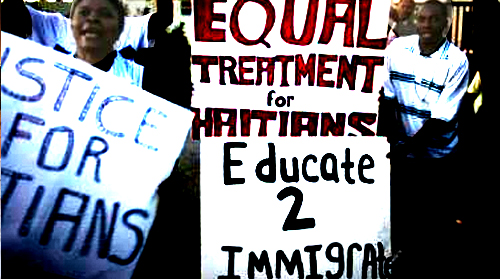
Olubunmi, who was born in Nigeria, is also one of 3 million black immigrants in this country. Despite moving from Africa, the Caribbean and Latin America at a remarkable rate — and despite an estimated 400,000 having undocumented status — they are barely footnotes in an immigration-reform conversation that is usually framed as a Mexican-border issue. But in light of newer, smaller-but-growing communities, as well as recently granted protected status for Haitians in particular, black immigrants are becoming stronger voices, advocating for reform from their diverse perspectives.
Black Sojourners
According to a Population Reference Bureau report, about two-thirds of black immigrants to the U.S. are from the Caribbean and Latin America — mostly Jamaica, Haiti and Trinidad — with families that largely began settling in the United States from the 1960s through the ’80s. More recently there’s been a wave of African immigrants, with more arriving between 2000 and 2005 than in the previous decade. The top three countries from that continent are Nigeria, Ethiopia and Ghana.
Most black immigrants enter the United States legally, seeking education and job opportunities, either by joining immediate relatives who are U.S. citizens or by presenting student or tourist visas with an expiration date. Those who are undocumented often fall out of status by overstaying these visas.
Caribbean- and African-born blacks tend to be wealthier and more educated than other immigrants, a class difference that has kept many from joining Latinos in the immigration-reform movement. But in recent years, with more African and Caribbean people coming to the United States to flee political strife, civil violence and natural disasters, new groups are entering as refugees or asylum seekers. While only 3 percent of immigrants from Caribbean countries, mostly from Haiti, were admitted under the refugee category, nearly 30 percent of sub-Saharan Africans granted legal residence between 2000 and 2006 entered as refugees.
As these flows of people have come from countries like Somalia, Congo, Liberia and Haiti — without the same educational resources allowing them to flourish — many have run into trouble navigating a slow-moving and restrictive immigration system.
Who Gets In?
Although immigration from Africa and the Caribbean has grown rapidly over the past decade, having contributed to at least one-fifth of America’s black population growth between 2000 and 2005 alone, there are anecdotal arguments that the process is infused with racism and works less efficiently for black people.
Sheryl Winarick, an immigration attorney in Washington, D.C., suggests that the largest hurdles for blacks in the immigration system, particularly those fleeing poverty or civil strife, usually arise from the economic situation in their countries. She explained that most visas require proof that an individual plans to return home after a temporary visit to the U.S.
“Anyone that’s coming from a developing country has a harder time demonstrating their intent to just visit instead of staying permanently,” she told The Root. “If you don’t own a home or have a steady flow of income to go back to, then the government assumes you’re more likely to want to stay here permanently and find work.”
On the other hand, Phil Hutchings, an organizer with Oakland, Calif.’s Black Alliance for Just Immigration, which lobbies for immigrants’ rights, believes that race is always in play. “It factors into whether you get through speedily or whether there’s a lot of circumspection,” he says.
“People who go against the norm of what Americans are ‘supposed to look like’ — and that generally includes black people — have more difficulty,” he continues. “Also, a fair number of African immigrants are Muslim, putting them in a suspect category that makes it harder for them to come here.”
An African Dreamer
For her part, Olubunmi says her challenges stemmed from a rigid policy that makes it impossible for undocumented immigrants to rectify their situation once they fall out of legal status. When she was 14, her mother brought her to Maryland from Nigeria to escape political instabilities. The plan was for her aunt, a U.S. citizen, to adopt her.
“The plan was never to be undocumented,” she says, but the process hit a snag when her papers were filed late. It’s a common mishap. “When you file your paperwork, officials could say that you missed a deadline by a week or two, but they don’t actually respond to you for two or three years because of the backlog. People who are committed to doing the right thing get caught up, unbeknownst to them, in these basic flaws in the system. It’s pretty easy to fall through the cracks.”
Olubunmi graduated from high school at the top of her class and then from college, earning a chemical engineering degree. She anticipated filing her papers with a company that would hire her as an engineer, only to learn that she couldn’t legally get a job. “The law says that if you’re undocumented, you cannot adjust your status while living in the U.S.,” she says. “I’d have to go to Nigeria to sort out the conflict; then, once I got there, it would trigger a three-to-10-year bar from returning to this country. But this is my home.”
Since 2008, Olubunmi has volunteered with various advocacy organizations, working behind the scenes for comprehensive immigration reform and the DREAM Act in particular. “We’re not asking for a free pass,” she says, explaining that many would-be beneficiaries were brought over as babies or toddlers.
“People always say, ‘Get in line.’ Well, the DREAM Act creates a line,” she says. “These students are saying that they will do whatever they have to, if it’s going to college or serving in the military. They are just asking for an opportunity to prove themselves worthy of the country they love.”
A Rising Haitian Voice
David Faustin, 45, says he had a smooth process coming to the United States from Haiti 22 years ago. He acquired his green card upon marrying his wife, who already had permanent residency, and became a citizen after 10 years of marriage. But as the pastor of a Washington, D.C. church with largely Haitian congregants, he has helped many of them through a far more difficult course.
When a devastating earthquake plunged the island into further despair in 2010, he was relieved by the Obama administration’s decision to grant Temporary Protected Status for Haitians who had already been living in the U.S., allowing them to stay here legally and suspending deportations.
“The church brought in lawyers like Ms. Winarick to help people who were scared of applying for TPS because they were of unlawful status,” he tells The Root. “They thought it was a way for immigration officials to know where they live.”
This month, the Department of Homeland Security announced that it would extend TPS for Haitians, which was scheduled to expire in July, for another 18 months. The department also expanded it to include Haitians who came here up to one year after the 2010 earthquake. “Having protected status is helping a lot of Haitian people to not only make it here and contribute to the American economy, but also to send money to other people back home and help them survive,” says Faustin.
Furthermore, it has empowered more Haitians to organize around immigration reform, partnering with immigrant-rights groups to build a powerful lobby. “In the past it was just the Hispanic community, but the Haitian community has become involved to advocate for what they would like to see happening for them,” says Faustin, citing, for example, amnesty for immigrants who once had legal status but are now unable to resolve their position. “As soon as the government gave them TPS, Haitians decided to take advantage of the momentum.”
Beyond the Border
Hutchings, of the 10-year-old Black Alliance, concurs that he’s seen other black-immigrant organizations mobilize in recent years, including San Francisco’s African Advocacy Network and Chicago’s Pan African Association. “In different parts of the country, black immigrants have developed enclosed communities just to themselves,” he says. “But at a certain point, a community realizes that it needs to reach out to develop allies and meet political officials. Their participation is really about people beginning to take responsibility for their own development in the United States.”
Olubunmi is heartened to see more people from African and Caribbean countries speaking out. “The majority of undocumented immigrants are Latino, but it’s important to recognize that there are different groups involved in this debate,” she says. “I remember once watching Bush talk about creating a path for folks who ‘come across the border.’ Well, if a bill is written from that perspective, it wouldn’t work for everybody.”
Ultimately, she knows that a system that works for everyone will require action from Washington. “I’m a huge supporter of President Obama, but I am very disappointed that we haven’t been able to get comprehensive immigration reform done,” she says.
While she understands that Congress must act, as the president demanded in his recent immigration-policy speech, she maintains that he has executive authority to make some changes himself — changes like stopping the deportation of undocumented “Dreamers.”
Until then, Olubunmi is committed to lending her voice to the struggle, even if it now means going public with her own status. “If it will help to raise consciousness, if it will help make life easier for other people,” she says with a quick, nervous laugh, “then I will lay myself at the altar.”
Recipient of a standing ovation at last year’s Cannes Film Festival, Oliver Schmitz’s Life, Above All is an occasionally affecting South African AIDS drama that is let down by a streak of shamelessly manipulative sentimentality.
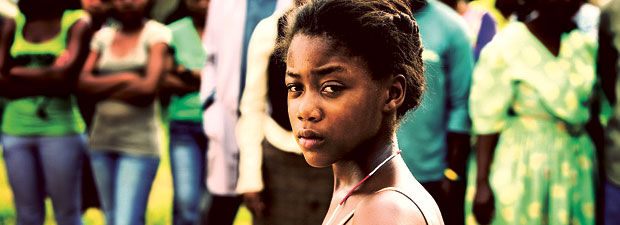
It’s underpinned by a barnstorming performance from Khomotso Manyaka as one of the unseen victims of the country’s AIDS epidemic – a young girl tainted by the shame of her mother’s illness and the cruel hypocrisy of her neighbours’ charity.
Taking its cues from authentically devastating AIDS documentary Hear My Song, Life, Above All purports to show us the reality of this South African crisis, in particular the way in which the disease’s terrifying effects are tangled up in the country’s modern Christian tradition and its older tribal customs.
For Chanda, the effect is a double whammy that sees her struggling to look after her mother while protecting her desperately vulnerable younger brother from a predatory version of Christian kindness. At the same time, Chanda’s best friend offers a hellish vision of what lies beneath the gaping fissures in South Africa’s social fabric.
Eventually, after her mother is forced to abandon them, Chanda must set out to find her and reunite the remnants of her fragile family. The result is a journey that reaches toward poignant revelation and reconciliation, but falls just short of both.
Though Manyaka effortlessly conveys the fearsome emotional consequences of Chanda’s predicament, Schmitz lacks the subtle hand needed to tease rather than beat a reaction out of his audience. Lumpen musical cues and emotional grandstanding simply get in the way of the authentic horrors that the film seeks to articulate. With a lighter touch, Life, Above All could have been the redemptive and insightful experience it so desperately yearns to be.
Knives, acid, fire and even surgery are some of the methods undocumented immigrants are using to erase their fingerprints and avoid incarceration. These desperate procedures, according to federal agencies and humanitarian activists, are increasing in the face of the advanced technology used to identify undocumented immigrants.
On Feb. 10, Dominican doctor Jose Elias Zaiter-Pou, 62, pleaded guilty to helping conceal the identity of undocumented immigrants by altering their fingerprints through surgical procedures. Zaiter-Pou charged $4,500 for the operation, in which he removed the ends of the fingertips, flipped them and sewed them back on, creating a new and unrecognizable print. He was sentenced to 12 months and one day in prison, followed by three years probation.
According to court records, the surgeon performed the surgery on dozens of clients. But experts say the practice is not unique to criminals attempting to flee from the authorities; it is growing among the migrant population. For example, Yissel Sosa Nuñez, a Dominican mother who was impatient to join her son in New York, underwent an operation to remove tissue from her fingertips.
“There is a lot of desperation among migrants, especially among parents who want to reunite with their children and they are aware that they are already on record. That’s why they are pushed more every time to take more desperate measures,” explained the Sean Carrel, a Jesuit priest and the director of Kino Border Initiative, based in Nogales, Mexico.
Sosa Nuñez, who was deported in 2008, had been arrested and deported in the past, so she knew beforehand that she would face prison time if she crossed the border again.
Jean Curtit, chief operating officer of the International Association of Identification, said that there is no specific data on how many immigrants could be using these methods. “They resort to all available systems — acid, knives, sandpaper; some pay for expensive surgeries and they are procedures that are really very painful and in many cases are useless because with the current technology, sooner or later they are identified,” he said.
The practice of “erasing fingerprints” is not unique to immigrants in America. According to humanitarian groups in Europe — where, as in the United States, there is a national database that tracks fingerprint information of thousands of undocumented immigrants — large numbers of migrants are trying to mutilate their fingerprints by cutting or scraping the skin.
Many immigrants in Europe are from the areas affected by wars in Iraq, Afghanistan and Africa, and are attempting to seek refuge and avoid deportation.
In the United States, the practice of mutilation to distort fingerprints is not widespread. However, data from the Federal Bureau of Investigation (FBI) and local police agencies indicate that it is a growing trend and that in the past four years, more cases are emerging throughout the country.
In 2007, after being detained by Border Patrol agents, Marc George revealed that a Mexican doctor had replaced the tissue of his hands with the tissue from his feet.
In March 2008 officers of the Lawrence Police Department in Massachusetts found a prisoner whose fingers had been sliced.
The detainee, who said his name was Edgardo Tirado, said he had had an altercation with someone who had mutilated his fingers with a knife. The investigators found that Tirado’s real name was Gerardo Perez, that he had been convicted of possession of narcotics in the past, and that he had undergone the procedure to avoid deportation.
According to reports by U.S. Immigration and Customs Enforcement (ICE), immigrants pay between $4,500 and $7,000 for the operation.
The Secure Communities program requires local police to send fingerprint data of all arrestees to a federal database that stores fingerprint information of undocumented immigrants. ICE plans to extend the program throughout the country by the year 2013.
Over three million students graduate from U.S. high schools every year. Most get the opportunity to pursue a college degree, strive for their vocational goals, and reach for their American dream. According to the PEW Hispanic Center in Washington, D.C, however, approximately 65,000 youths do not get this opportunity because they are smeared with the inherited label of being illegal immigrants. These youths have lived in the United States for most of their lives and want to be recognized as Americans.
Congress is attempting to provide immigration relief for undocumented youths through legislation known as the DREAM Act (Development, Relief, and Education for Alien Minors Act). The Act has been introduced in each subsequent Congressional session in various forms, for the last 10 years since 2001. The latest version passed the House in December 2010, but was defeated in the Senate. This year, on May 11, three Democratic Senators – Harry Reid of Nevada, Richard Durbin of Illinois, and Robert Menendez of New Jersey – reintroduced the DREAM Act in the Senate. This came just a few days after the California State Assembly approved California’s version of the Act. The legislators, together with 29 other Senators, including Barbara Boxer of California, advocated for the bill that died in the Senate, arguing it is long overdue and beneficial for the national economy.
Under the rigorous provisions of the DREAM Act, qualifying undocumented youths would be eligible for 6-year conditional permanent resident status. The DREAM Act requires applicants to have come to the United States before reaching the age of 16, lived in the United States continuously for at least five years since their arrival, earned a high-school degree, and demonstrate good moral character. Under the latest version, the cut-off age for applying is 30 years old at the time of the bill’s passage. Within the six year period, a qualified student must acquire a degree from an institution of higher education in the United States or complete at least two years, in good standing, in a program for a bachelor’s degree or higher degree in the United States, or must have served in the armed services for at least two years and, if discharged, have received an honorable discharge. If the permanent resident status is terminated for not fulfilling requirements, then, according to the terms of the Act, the person shall return to the immigration status that he or she had immediately prior to receiving conditional permanent resident status under the DREAM Act.
Supporters of the DREAM Act argue that bright, hard-working youths who grew up in the United States and call it home deserve a path to legal immigration. They say that tens of thousands of immigrant students with good grades are shut out of pursuing their educational objectives and vocational goals, which will benefit the American community, simply because of their undocumented status.
Many of these students were brought to the United States by their parents at a young age, through no fault of their own, and have spent most of their lives here. As President Barack Obama said in his speech about immigration reform, “These are kids who grew up in this country, love this country, and know no other place as home. The idea that we would punish them is cruel and it makes no sense. We are a better nation than that.”
According to its proponents, the DREAM Act would benefit the U.S Armed Forces and the national economy, and help push our education system forward. The Defense Department’s Fiscal Year 2010-12 Strategic Plan includes the DREAM Act as a means to help shape and maintain a mission-ready all-volunteer force, said Senator Boxer. Endorsed by General Colin Powell, the DREAM Act is also supported by Defense Secretary Robert Gates, who has said it “will result in improved recruitment results and attendant gains in unit manning and military performance.”
A Congressional Budget Office analysis estimated the House version of the DREAM Act would reduce deficits by about $2.2 billion and increase revenues by $1.7 billion over the 2011-2020 period. It estimates that the Senate version of the legislation would reduce deficits by about $1.4 billion and increase revenue by $2.3 billion over the 2011-2020 period. Removing the uncertainty of undocumented status not only would allow legalized immigrants to earn higher wages, but also encourage them to invest more in their own education, open bank accounts, buy homes, and start businesses.
Passage of the DREAM Act would add thousands of talented, motivated, multilingual and multicultural persons into our workforce. As President Obama said in his address to Congress, creating an educated workforce will increase productivity and help the U.S compete in the global economy. The 10 states that, since 2001, have passed laws allowing undocumented students to qualify for in-state tuition have not experienced an overwhelming influx of new immigrant students who displace native-born students. In fact, the states benefited from an increase in school revenues as undocumented students who would not normally attend college began paying in-state tuition.
Opponents of illegal immigration have expressed antipathy toward various DREAM Act proposals in recent years and have made it difficult for bills to be approved. The Federation for American Immigration Reform (FAIR), which opposes illegal immigration, said that the DREAM Act would provide “amnesty” for illegal immigrants instead of punishing them for immigrating illegally.
Opponents believe the DREAM Act will promote more illegal immigration or will lead to false claims by immigrants that they came here as children. They argue it would destroy the U.S. economy while putting national security at risk. Further, they believe that undocumented students have and will continue to receive favored treatment under affirmative action policies at colleges and universities, effectively displacing U.S. citizen youth.
Despite the arguments against the DREAM Act, there is widespread support for it. If enacted, the DREAM Act would have a life-changing impact on qualifying, eligible youth, who would in turn make positive contributions to U.S. society and economy. For many of these youths, the United States is the only home they know and English is their first language. Each year, tens of thousands of them graduate from primary school or secondary school, often at the top of their classes. They have the potential to be future doctors, nurses, teachers, and entrepreneurs, but they experience unique hurdles to live up to their fullest potential in this country. Through no fault of their own, their lack of status often prevents them from attending college or working legally. While the DREAM Act would allow undocumented youths to make greater contributions to the U.S. economy and society, its passage remains uncertain due to strong anti-immigrant sentiments and ongoing concerns about securing the nation’s borders.
Nothing in this article should be taken as legal advice for an individual case or situation. The information is intended to be general and should not be relied upon for any specific situation. For legal advice, consult an attorney experienced in immigration law.
What is Visitation or Parenting Time and Who is Entitled to it?
Visitation rights between a noncustodial parent and a child is essential to the continuance of a parent-child relationship. A noncustodial parent is the parent who does not have either legal or physical custody of the child or both. The parent who has physical custody of the child is the parent with whom the child is living on a day to day basis. The court must grant the noncustodial parent visitation rights to enable that parent to maintain a child to parent relationship that is in the best interests of the child. In year 2000, Minnesota law changed what was previously referred to as “visitation” or “visitation rights” to “parenting time”.
Limitations to Parenting Time
Generally the law provides that if the parenting time of a noncustodial parent is like to endanger the child’s physical or emotion health or impair the emotion al development of the child, the court can restrict the noncustodial parent’s parenting time. The court however, can only do so after a haring on the matter and a finding that the child is in danger of physical harm.
Also the court can limit custody or parenting time when a parent has been convicted of certain crimes. Some of these crimes include but are not limited to: assault in the first, second, or third degree, malicious punishment of a child, neglect of a child, terroristic threats, felony stalking, etc.
Under these circumstances, a person who has been convicted of one or more of these crimes has the burden of showing that custody or visitation by that person is in the best interests of the child. This is called the ‘burden shifting statute.’ Also the law requires a guardian ad litem to be appointed in any case where this statute applies.
Guardian Ad Litem
A guardian ad litem or GAL is an advocate for a child or children whose welfare is a matter of concern for the court. In legal terms, a GAL means “guardian for the lawsuit”. When the court is making decisions that will affect a child’s future, the child needs and deserves a spokesperson – an objective adult to provide independent information about the best interests of the child. While other parties in the case are concerned about the child, the Guardian ad Litem is the only person in the case whose sole concern is the best interests of the child, and he or she is assigned as an advocate for the child for the duration of the court process. Different from a legal guardian, the Guardian ad Litem has no control over the person or property of the child and does not provide a home for the child. The Guardian ad Litem does not function as the child’s attorney and does not provide direct services to the child.
Custody Evaluation
A custody evaluation is an evaluation about custody of the children conducted by a professional who is usually a psychologist or social worker, who assesses the family’s situation and then makes recommendations to the court about a parenting and custodial arrangements that will meet the children’s needs. Judges often give a lot of weight to the recommendations of the custody evaluator, therefore it is very important to be properly prepared for this process.
A custody evaluation or the appointments of a GAL are very effective methods of resolving some of the critical disputes that often endanger a smooth custody determination process. Attorney Obi Chukwu has helped several clients successfully through the custody evaluation process and achieved desirable results. He has also helped clients make the best use of the process to get positive results even in the most acrimonious situations. Attorney Chukwu has the experience and knowledge it takes to understand what a custody evaluation means for you and how it can affect your custody case. In one situation, opposing counsel tried to use the process to delay temporary custody for Mr. Chukwu’s client. Mr. Chukwu effectively brought to light the factual and legal analysis that showed his client deserved custody during the process, which led to a recommendation of custody for his client.
If you have questions about Parenting Time, GAL, Child Custody arrangements or any other issues in this article, contact an experienced family law attorney. Consult a family lawyer to determine what process is relevant to your particular case or situation or for any of the issues raised in this article.
Nothing in this article should be taken as legal advice for an individual case or situation. The information is intended to be general and should not be relied upon for any specific situation. For legal advice, consult an attorney experienced in family law.
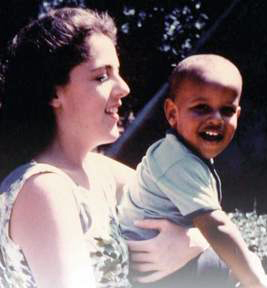
New America Media’s Shirin Sadeghi interviews journalist Janny Scott about her new biography, A Singular Woman, the untold story of Stanley Ann Dunham, the mother of President Barack Obama.
If you want to hide, just cut your hair short, sing Hélène and Célia Faussart, aka Les Nubians, in the funky number, Afrodance, from their latest album, Nü Revolution. The Paris-born sisters will perform at the Dakota Jazz Club this Thursday and Friday evening with hair that is anything but short.
Célia spoke with Mshale by phone last week, explaining, “It’s not only about having a specific cut it’s more about the way we see Black people and nature.” Western preferences often dictate that women of African descent fashion their hair according to unnatural styles.
By wearing one’s hair in its natural afro, Célia believes, “It’s more accepting who you are and showing who you are the way you are and not the way they (non-Blacks) want you to be.” Her statements are strong regarding as personal a subject as hair and she and her sister have the conviction as well as the dynamic hairstyles to claim them.
They began performing in the 1990s at a time when finding musicians to accompany them was difficult. Rather than allow themselves to be relegated to anonymous back-up singers, they chose to sing a cappella.
Their musical acumen grew as they performed in Paris, France, the land of their father, and in Africa. Their mother is Cameroonian. “I’m grateful in both cultures,” says Célia. “I feel at home in both. We’re mixed and we grew up with both cultures. So we always grew up in harmony on both cultures,” says the younger of the two sisters.
Not only with their music do they make public statements, but also with their time and status as international musicians. They work to benefit charities such as Cameroonian group Sid’ado (Adolescents against AIDS). Célia adds, “We are good mothers, helping to benefit a magazine about cultural identity, Respect.
“In our family, our father always said, the biggest wealth and key I can offer you is to travel and we got to growing up,” says Célia the mother of an 11 year old son and a daughter, one year younger. Hélene’s daughter is the youngest of the three cousins who have traveled with their mothers when not in school. Between touring, charity work, and living internationally, they have found a way to continue the gift of their father as they give likewise to their children.
Les Nubians
Time: Thursday, May 12, 2011 – 7:00pm Friday, May 13, 2011 – 7:00pm
The number of middle class Africans has tripled over the last 30 years to 313 million people, or more than 34% of the continent’s population, according to a new report from the African Development Bank (AfDB). The reasons for the increase in size and purchasing power of the African middle class include strong economic growth, and a move towards a stable, salaried job culture and away from traditional agricultural activities.
The report ‘The Middle of the Pyramid: Dynamics of the Middle Class in Africa’, however, warns that despite this phenomenon income inequality in Africa remains very high, and that the overall middle class figure includes large numbers of a ‘floating class’ whose hold on status is insecure.
Over the decades, the numbers have steadily risen from approximately 111 million or 26% of the population in 1980 to around 151.4 million (27%) in 1990. The 2010 figure, however, shows a significant surge of 60% from the 2000 figure of 196 million or 27.2% of total population.
The report defines middle class largely in terms of higher income relative to the average. That average is of course lower in Africa than in the west. The report notes: “the middle class is usually defined as individuals with annual income exceeding USD3,900 in purchasing power parity terms’.
However, the report acknowledges that other factors come into play when defining who is middle class, saying: ‘other variables such as education, professions, aspirations, and lifestyle are also important features that help establish who is in the middle class’.
Overall, it is economic growth that determines the rise of the middle class, but economic growth is in turn driven by social and economic factors. The report notes: ‘Africa’s middle class is strongest in countries that have a robust and growing private sector as many middle class individuals tend to be local entrepreneurs. In a number of African countries, a new middle class has emerged due to opportunities offered by the private sector’.
Other determining factors include the establishment of stable, secure, well-paid jobs, and higher levels of tertiary education.
Geographically, middle class levels vary a great deal across African countries. North Africa has the highest. Tunisia has the highest concentration at almost 90%, followed by Morocco at almost 85% and Egypt with almost 80%. But a significant number of these belong to the ‘floating’ category with a strong danger of falling into poverty due to economic shocks.
Other countries with high percentages of the middle class include Gabon, Botswana, Namibia, Ghana, Cape Verde, Kenya and South Africa. Countries at the bottom end include Mozambique, Madagascar, Malawi, Rwanda, Burundi and Liberia.
The report maintains the growth in the middle class is good news for the future prosperity of Africa, but also points out the continued high levels of income inequality on the continent. The continent has a extremely rich elite: ‘About 100,000 Africans had a net worth of USD800 billion in 2008, or about 60% of Africa’s GDP or 80% of sub-Saharan Africa’s’.
I have been dreaming of becoming a porn actor since a very young age. I live in the Ivory Coast and I am looking for a producer or a director to sign a contract and to be in a movie … I am relying on you to make my dream come true.
This is the advertisement that André (not his real name), a 21-year-old, posted on the Internet with his email address and cell phone numbers. This computer science student in Grand-Bassam — a town some 25 miles from Abidjan, the capital of Ivory Coast — is not unusual in Africa. Hundreds of young men and women in Cameroon, Democratic Republic of the Congo, Ivory Coast, Morocco, Nigeria, South Africa and elsewhere are all trying to join the pornographic-film industry in Africa or abroad.
The world pornography market (adult video networks, pay-per-view movies on cable and satellite, websites, in-room hotel movies, phone sex, sex toys, magazines and DVDs) is estimated to be tens of billions of dollars, according to Dan Miller, managing editor of XBIZ Premiere, a trade publication for the adult entertainment industry.
Warning that exact numbers are difficult to acquire because the vast majority of companies in the sector are privately owned, Miller says, “America’s market is by far the largest in the world in terms of scope and revenue. It far exceeds the market in Europe. Based on the information we have, I would estimate the market in the U.S. to be in the neighborhood of $7 billion.”
A Small Industry in Africa
By contrast, the largely Web-oriented African market is small but emerging. The leader on that continent would be South Africa, which hosted Sexpo, a public expo focused on all aspects of sexuality, in the second half of 2010. “The size of the entire adult industry in South Africa is said to be worth 60 million rand ($8.9 million), but that cannot be independently verified. It is probably the biggest in Africa.
Nigeria should be worth about half of that,” says Tau Morena, co-founder of Sondeza (“Bring it closer” in isiZulu), an African adult online network with more than 39,000 members (almost half of them South African) and an average of 7,000 unique visitors daily.
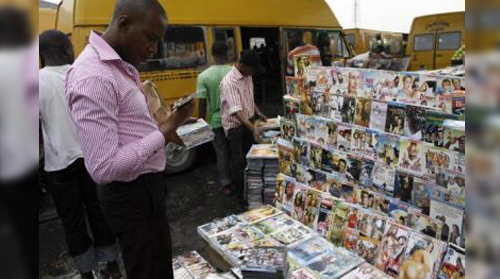
Why hasn’t the African pornographic sector taken off? Morena blames video piracy, which he says that most governments are not really interested in curbing: “In South Africa in the ’90s … about a million units were sold per annum, but now with the onslaught of piracy, roughly 150,000 units of all titles are sold on average, and the numbers keep declining.”
Another brake is legislation. Producing — and sometimes even possessing — pornographic material is illegal in several African countries. And yet pornographic content is increasingly available in Africa, mainly because of greater access to the Internet and to foreign channels that broadcast adult movies.
A Growing Market
That content is also increasingly sought after. “There is a strong demand from the lower and upper middle classes that have equipped themselves with communication and video equipment (PCs, modems, webcams). There is also international demand: Nigeria, home to one of the world’s largest domestic film-production industries, “exports videos and makes different types of content it later puts online on Internet portals,” says Philippe Di Folco, the French author of the Dictionnaire de la Pornographie.
Foreign demand explains why “African actresses become specialized in different forms of pornography in Europe,” says Cameroonian activist Amély-James Koh Bela, who monitors the pornographic sector. She identifies two porn-film companies, Concorde and Maeva, as the top providers of “special black” pornography that floods the Internet.
In the meantime, the underground amateur African pornographic sector keeps growing. More than that: Koh Bela says that three major cities in her home country (Douala, Yaoundé and Kribi) have been turned into porn-filmmaking centers where some actors boast about what they do for a living.
Alex (his name has been changed) has long been proud of his job. The young Cameroonian with an Afro hairstyle directed a handful of movies and founded a company he called Sexe Images Nature Africaine to “create jobs and fight local prostitution — less profitable than pornography.” He also starred in two short movies and was paid 1,500 euros ($2,100) for both by a producer based in France. This was all before he retired from the business because he “found God.”
“Super sexy cute South African porn star”
South African Palesa Mbau is not likely to be retiring anytime soon. The 23-year-old auditioned for a movie cast through Sondeza.com about a year ago. “The idea of creating a local film was inspired by our members, who asked us to produce something 100 percent local and relevant to our market,” says Morena, who produced the film. “We asked for members of the website to come forward and be part of this experience, as there are no professional porn stars in South Africa.”
There were more than 1,000 candidates (mainly men) from all walks of life. Mbau was chosen, along with four other amateurs — two women and two men — for Mapona [“naked” in Sesotho], Volume 1, which has sold some 5,000 copies since its release last September. “I am getting proud because it is a black [pornographic movie],” says Mbau. “That is raising black empowerment because the porn films that you [commonly] see in South Africa are all white.”
Is Mapona a turning point in the pornographic career that she started three years ago for “personal reasons”? One thing is for sure: The light-skinned actress, who met high-profile representatives of the adult industry at Sexpo, is determined to get somewhere in the X sector. “I have a full-time job in a call center, but I see my future over there. … I do not have any problem saying that,” she says.
Mbau has already tagged herself “super sexy cute South African porn star” on the Facebook fan page she opened at the end of 2010, and where she today has some 2,200 fans. The woman with a teenage voice from Midrand, in the northern province of Gauteng, is using the page to make a name for herself and share sexual feelings and jokes with her fans.
She is also building a reputation with her website, where she posted some explicit pictures of herself and where she sells private shows to “high-class clients.” For instance, the rates for “personal photos and video — additional” range from 500 to 1,000 rands (from $75 to $150), depending on whether she has to provide a cameraman.
Exploitation, Human Trafficking and Health Risks
No wonder, says Koh Bela, that some African youths see pornographic actors as examples of success — all the more because some manage to earn far more money with one film than the average African does in a month. What these young people do not always know, though, is that big money is rare in this sector. Besides, the threat of human trafficking — the third most widespread criminal activity worldwide, according to the United Nations — is worrying in some countries.
Around 5 percent of the victims of human trafficking identified in Western and Central Europe are of African origin, mainly coming from “West African communities, in particular Nigerian women and girls,” according to “The Globalization of Crime — a Transnational Organized Crime Threat Assessment,” (pdf), a report released in June 2010 by the United Nations Office on Drugs and Crime. “Studies of Nigerian victims report that acquaintances, close friends or family members play a major role in the recruitment of victims. … The vast majority of West African women and girls are exploited in street prostitution.”
Are the victims exploited in the pornographic sector, too? “When a child is caught in a network, the human trafficker exploits it in every possible way,” states Anne-Sophie Faysse, project leader at the French branch of ECPAT, an international network fighting child sexual exploitation. “You can find cases of rape; prostitution, which is much more visible; and pornographic-material production. In this last case, this is almost exclusively cyber pornography [photos, movies].” Adults — women, for the most part — may also be trapped.
Koh Bela, who is president of Mayina, a French association against human trafficking, indeed warns that human traffickers do not hesitate to force some victims into extreme forms of pornography, such as bestiality. “Some young women or mothers of victims told us that Western tourists, for the most part, rented villas where they organize private parties,” says Koh Bela. “They make the girls drunk and drug them before giving them to the dogs for hours of sexual intercourse. At the end of the party, the girls can earn 150,000 FCFA [about $325].”
Like some of their Western counterparts, African actors are also exposed to serious health risks. The use of condoms is often not allowed during shoots, and HIV testing is not always compulsory. This can add to the AIDS burden of Africa, where 22.5 million of those living in sub-Saharan countries are already infected, according to the latest Joint United Nations Programme on HIV/AIDS (UNAIDS) global report. Tau Morena insisted that the use of condoms be visible in each sex scene of Mapona and in his next movies, including Mapona, Volume 2, which is scheduled to be released in a few months.
“Better” Opportunities Beyond Africa?
The Ivorian André does not really think about the risks. He is still focusing on building a career that he believes will get him and his family out of poverty. Fela shares the same motivations. A native of Benin and mother of a 5-year-old girl, she says that she earns $200 to $300 a month when business — organizing special events in nightclubs — is good, and sometimes as little as $100. So she has decided to combine business and pleasure.
“I love all that goes with eroticism, sex and seduction,” says Fela, who lives in Lomé, the capital of neighboring Togo. “It is like second nature. My friends circulate amateur sex videos of me free of charge, and I hope that one day, someone will pay attention to me and call me for a shoot.”
Hers may not be the best approach. “I spoke several times by email with so-called directors who had seen my ads,” says André. “In the end, they asked for pictures of my penis. I sent them and never heard from them again … “
Diana, 28, has managed to avoid such tricks. Just like Fela, she is a single mother struggling to make a decent living for her 11-year-old child. Just like Fela, she wants to work in pornography “for pleasure and money.” Still, the Cameroonian, living in Bata, the second-largest city in oil-rich Equatorial Guinea, is determined to wait for a better opportunity — and it may not be in Africa. “I remember an Ivorian film shot in the bush,” she says. “Everything looked dirty. There were flies everywhere … Western movies look classier to me.”
Koh Bela, who is the author of Mon Combat Contre La Prostitution (“My Battle Against Prostitution”), confirms that observation. She has reviewed hundreds of African sex films, some of which are sold in Château Rouge, a neighborhood of Paris with a strong African presence. “The rare movies with African actors that have good production values have been directed by European producers — among others, French, Dutch and German,” she says. “After having flooded the Internet, these movies are finding a place in the DVD market, while African-produced movies are usually so poor at every level that big producers will never distribute them.”
This may explain why some youths attend informal pornographic classes. “There are initiation circles in Douala and Abidjan,” Koh Bela reveals. “In dedicated apartments, young women watch movies to learn every kind of caress, sexual positions and Western-style pornographic techniques. The ‘teachers’ do not hesitate to show the girls how to do things right. … They also test men’s and women’s abilities.”
Is this the best way to enter the sector? Not necessarily, according to Philippe Di Folco. “The amateur quality is what buyers want,” he says. “Today, consumers value the effect of realism because it is like they are voyeurs of private scenes, present in the bedroom or in the spot where the sexual intercourse is taking place.”
Meanwhile, André relies on the visual experience he got perusing movies and magazines. He also counts on luck. When he shares his aspirations with his male friends who also want to become porn actors, they find hope in their fellow Africans who have had the opportunity to perform in adult movies in France.