Home Blog Page 174

African Movie Academy Awards nominations announced

0

Naija Stars ‘Own’ Nairobi

NAIROBI
– It matters not if they are on stage, in a film or out on the street,
Nigerians are known for their boisterous nature. Over the last five
years, Nigerian movies market has moved from a minuscule one to topping
over American and European movies in demand among the locals.

This past week, Nairobi has been home to some of the Naija Stars who were in the country courtesy of Africa Movie Academy Awards. The 14 plus entourage of stars were in the country to promote the movie awards nomination gala gearing up to the main Awards night in April.

The eclectic gang made up of Ini Edo, Rita Dominic, Ramsey Nouah, Joke Silva, Jackie Appiah Kate Henshaw-Nuttal, Mike Ezuruonye, Chinedu Ikiedze, singers Edge, J Martins and P Square caused quite a stir from the time they touched down at the airport.

Thursday night when the first lot arrived, the international arrivals lounge at Jomo Kenyatta International Airport came to a halt with most of their fans trying to catch a glimpse of their favourite stars. Ever gracious, the stars did not disappoint; they took time out to speak to the press and pose for photos.

Celebrated Nigerian actress Joke Silva who is considered the Meryl Streep of Nigerian Film shared, “When Peace Anyiam-Osigwe started the African Movie Academy Awards, I thought it was a fantastic idea. It’s a great way system of rewarding practitioners in the industry just the way Oscars are done. It’s also a way for people to learn like if your peers are saying to you, this is a good film, this is a bad film, it helps you to go back to the drawing board and re-evaluate. The beauty of AMAA is not that it’s not just about Nigeria but it’s about Africa and I love that.”

The stars kicked of their tour with an intimate press cocktail at the Vineyard on their first night. The low- key event gave them a chance to share their experiences in film and otherwise. The one major point that came up when asked about how to achieve success in film like Nollywood, they all concurred that ‘commitment and the willingness to take risks are key.’

Their second night in town, dressed to the nines in lovely cocktail and evening dresses, flagged by their male- counterparts looking quite dapper in their suits, the stars were given the red carpet treatment as they were ushered into Ole Sereni for dinner. The shs.10, 000 a head dinner attracted a number of Nairobi’s high profile guests as well.

The guests were treated to a sumptuous dinner and entertainment without losing sight of the evening’s purpose, supporting the AMAA’s now dubbed Africa’s Oscars. Rita Dominic and Ken Ambani did a marvelous job as the evening’s emcees.

On the night of the much anticipated P-Square and J-Martins concert, they braved another evening of partying at the Carnivore Grounds. Despite the fact that the main acts didn’t get on stage until after midnight, the fans were not deterred. They sang word for word for all their favourite jams including ‘No one but you’, ‘No Easy’ and Ifunanya among others. Some lucky fans even got to keep their sweat stained t-shirts that threw into the crowd during their performance.

Nominations

Nominations announced in Nairobi for this year’s AMAA awards sets the stage for a much broader contention by films from across the continent than in previous years.
Nominated for BEST FILM are six movies from Congo (Viva Riva), Ghana (Sinking Sands), Nigeria (Aramotu), Kenya (Soul Boy) and South Africa, with the latter having two nominations out of the six for Hopeville and A Small Town Called Descent.

Not surprisingly, nominations for Best Actor and Actress and Cinematography and many other categories have come from the movies nominated for BEST FILM.

Now all attention is focused on Lagos for official AMAA night in April.

Apart from it being the 7th year running with amazing success, this year the African Movie Academy Awards (AMAA), also got support from the European Film Academy (EFA). According to reports, The Academy, ‘Beatwaves’ has joined the AMAA jury for this year’s event. It has also endorsed AMAA as a credible awards ceremony, hence the decision to be part of it.

Founded in 1988, the European Film Academy unites more than 2,300 European film professionals with the common aim of promoting Europe’s film culture. An AMAA insider said the Academy was impressed by the kind of movies that were awarded at AMAAs every year. Anytime those movies make it into international film festivals, they prove to be very good movies, as they don’t just win other recognitions but rub shoulders with other recognized international movies.

Movies such as ‘From A Whisper’ (Kenya), ‘Run Baby Run’ (Ghana), ‘The Figurine’ (Nigeria), ‘The Tenant’ (Nigeria) are a few of the movies that went through AMAA and caused a stir at international film festivals including the Rotterdam Film Festival, Berlin International Film Festival, Cannes Film Festival and more.

That, for the Academy, was enough evidence that the awards ceremony did not just honour any kind of movie. The award’s jury, which is made up of selected high movie intellectuals across Africa, is working without any interference from the organizers of the event. The jury has received over 300 entries from various African countries including South Africa, Nigeria, Kenya and more.
Google to digitize Nelson Mandela archives with $1.2 million grant

0
Google to digitize Nelson Mandela archives with $1.2 million grant

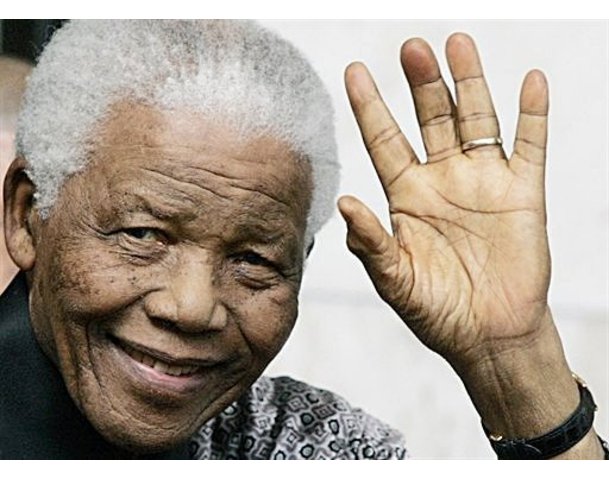
Google has donated $1.25 million to the Nelson Mandela Foundation Center of Memory in Johannesburg to help digitize memorabilia related to the South African leader.

Documents, photos, and multimedia from the 92-year-old Nobel Peace Prize winner’s life will be included in this free online archive. The archive will also feature correspondence between Mandela and world leaders, activists, family, and friends in the time leading up to the end of apartheid in South Africa. Although this treasure trove of multimedia isn’t live yet, it will be accessible globally “in the future,” Google said.

“The online Mandela archive… will be a wealth of information for those wanting to learn about and research the life and legacy of this extraordinary African statesman,” Google said in a blog post.

Google is already aiding in the indexing of the information, but it aims to provide the search technology that will make the multimedia catalog accessible to anyone, from anywhere.

According to the Nelson Mandela Foundation site, “memory resources documenting the life and times of [Mandela] are to be found in an extraordinary range of locations, both within South Africa and internationally. These resources are embedded and various legal and other jurisdictions.”

The search engine giant is also helping to digitize other important historical documents. In partnership with the Yad Vashem Museum in Israel, Google recently created the world’s largest archive of Holocaust photos and documents.

Google donated another $1.25 million to the Desmond Tutu Peace Center in Cape Town, in order to document and digitize his works and create an interactive digital learning center.

Equally, another $1.25 million was granted to Desmond Tutu Peace Centre in Cape Town, for the documentation and digitization of Desmond Tutu’s archives and an interactive digital learning centre.

Google also announced three additional grants given through the Google Inc. Charitable Giving Funds of Tides Foundation to support access to information across the continent.

Among the beneficiaries of the grant is the Nigeria ICT Forum, which was awarded a $500,000 grant to help in improving access to internet infrastructure in tertiary education institutions in Nigeria.

The Nigeria ICT Forum is a scheme of the Nigerian Caucus (a joint meeting of the Vice-Chancellors and ICT Coordinators) of the six Partnership Nigerian Universities. Its mandate is to develop an ICT-based capacity for strengthening Research and Higher Education, HEIs; Facilitate and nurture collaboration between HEIs to cultivate a favorable policy environment; develop, utilize and sustain ICT networks, services and shared resources consistent with institutional roles as focus for development.

U.S. group explores opportunities for West African women and girls

0
U.S. group explores opportunities for West African women and girls

Modern technology has the power to transform societies and provide vital access to the tools that allow for education, training and networking, especially for women and girls in emerging post-conflict societies like Liberia and Sierra Leone.

Both West African nations have challenges facing women and girls, and both recently emerged from civil strife that included gender-based violence. To help offer opportunities for women and girls, the United States has sent an all-women technology delegation of leading U.S. innovators and entrepreneurs to the two nations from February 27 to March 4.

“While in West Africa, the group will explore how technology can increase opportunities for women and girls,” the State Department said in an announcement February 25. “The delegation includes a mix of private sector, academia, civil society and entrepreneurs from across the United States.”

And the trip is part of Secretary of State Hillary Rodham Clinton’s mWomen initiative, which seeks to increase the number of mobile phones in the hands of women and girls in emerging nations, often where opportunity for their development and education has been inadequate.

“Through a series of site visits and meetings, the delegation will build partnerships and brainstorm ideas that can allow women and girls to better network and communicate and provide better access to education, health care, and economic opportunities through access to technology and tech-based tools,” the State Department said.

Clinton has advanced the use of technology and innovation as part of the United States’ 21st-century foreign policy as a means of changing the economic, social and cultural lives of people worldwide, the department said.

The delegation is being lead by Anne-Marie Slaughter, the State Department’s director of policy and planning. She joined the department in 2009 from Princeton University, where she served as dean of the Woodrow Wilson School of Public and International Affairs.

Also in the delegation are Francoise Brougher, a vice president with the Internet giant Google; Susan McCue, president of Message Global LLC; Leila Chirayath Janah, president of Samasource; Trina DasGupta, the program director and mWomen director for the GSMA Development Fund; Henriette Kolb, chief executive officer of the Cherie Blair Foundation for Women; Maria Thomas, chief executive officer of Etsy.com; Ann Mei Chang, senior engineering director for emerging markets at Google; Jessica Verrilli from Twitter; Marisa McAuliffe of the State Department’s policy planning staff and special assistant to the director; Shannon Nagy Cazeau, deputy director of the Office of Economic Policy staff in the State Department’s Bureau of African Affairs; and Katie Dowd, innovation adviser in the Office of Innovation at the State Department.

The delegation was scheduled to visit Liberia from February 27 to March 2, and then Sierra Leone from March 2 to March 4, the department said.

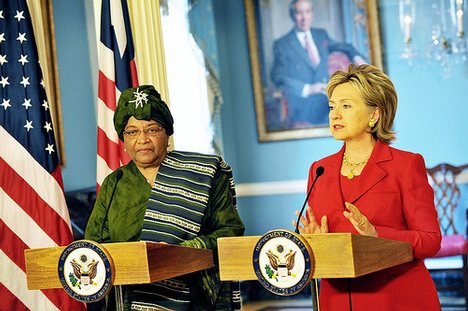
“Liberia and Sierra Leone are now positioned to lead change and build better futures for women and girls, particularly with Liberia having the first female president in Africa” — Ellen Johnson Sirleaf, the department said. “This delegation travels at a critical time when technology can make transformative advances as these countries grow.”

In Liberia, the delegation has meetings scheduled with President Ellen Johnson Sirleaf, Minister of Gender and Development Varbah Gayflor, Monrovia City Mayor Mary Broh, and business and civil society leaders, the department said. The delegation was scheduled to meet with Sierra Leonean President Ernest Bai Koroma on March 4 and also visit with business and civil society leaders.

Liberian President Sirleaf said in a prepared press statement that information technology has helped transform the world, and she hoped that the delegation’s initiative in Liberia could generate enthusiasm and interest.

Margibi County District Education Officer James Daye told reporters, “We welcome the U.S. technical delegation’s visit to Liberia, and we are impressed by the demonstration of how technology can be used to improve the quality of instruction to our students.”

In Memoriam: Mayor Steve Lampi

0

Steve Lampi brought a strong resolve and quiet determination to his two-plus terms as Mayor of Brooklyn Park. It was with those same qualities that he fought his own personal battle against cancer in recent weeks, telling his family and residents “his passion for life will carry him through.”

Surrounded by his family, Mayor Lampi succumbed to the disease Saturday, less than four weeks after first learning of his surprise diagnosis.

“Steve was a strong leader for our community,” said Mike Trepanier, Central District Council Member and now the acting mayor. “He presided with dignity always and treated everyone with fairness and respect. Beyond his role as mayor, he was a good friend. I will miss him dearly.”

Lampi, 56, was recently re-elected to a third term as Mayor of Minnesota’s sixth largest city in November of 2010. He was first elected to the seat in 2002. Working with the members of the City Council, his accomplishments were many. Among the most significant were securing federal funding for the under-construction extension of Highway 610 from Brooklyn Park to Maple Grove, redevelopment of the Brooklyn Boulevard and Zane Avenue area, stabilizing the community’s neighborhoods through strong housing and code enforcement programs and improving safety in the community through projects such as the opening of the new Village Creek Community Police Station.

Mayor Lampi had leadership roles and was active in the North Metro Mayor’s Association, Metro Cities, Regional Council of Mayors, Minneapolis Northwest (formerly Visit Minneapolis North), North Hennepin Area Chamber of Commerce and many other community and intergovernmental organizations.

He was a strong advocate for Liberian immigrants and New Americans of all origins in the City. Lampi was known as a consensus builder, able to bring people together to make difficult decisions. It was that reputation that forged two of his greatest successes.

Lampi partnered with Brooklyn Center Mayor Tim Willson to be the driving forces behind the Brooklyn Bridge Alliance, a joint powers organization bringing together the two cities, educational institutions, Hennepin County and community organizations to confront head-on the conditions that challenge youth in the community. The Alliance aims to tear down barriers that undermine youth achievement and lead to adverse community impacts. His commitment to youth was core to his work in recent years.

Mayor Lampi was also instrumental in the city’s newly begun community engagement initiative and mission: Brooklyn Park, a thriving community inspiring pride where opportunities exist for all. Lampi knew that truly successful communities rely on every member taking responsibility for the work of building community. He was excited to see it taking root in Brooklyn Park.

In addition to being Mayor, Steve Lampi was owner and president of Bridgeman’s, Inc. He is survived by his wife Kathy and their three adult children.

Funeral services for Mayor Lampi will be held at St. Alphonsus Catholic Church, 7025 Halifax Ave. N. in Brooklyn Center, on Friday, March 4 at 11 a.m. The funeral will be preceded by a one-hour visitation beginning at 10 a.m.

Visitation is also scheduled for Thursday, March 3, 4 to 8 p.m. in the Clubhouse at Edinburgh USA Golf Course, with a memorial service to begin at 7 p.m. Edinburgh USA is located at 8700 Edinbrook Crossing in Brooklyn Park.

Memorials can be sent to: Brooklyn Park Community Foundation,
Attn: Steve Lampi Scholarship Fund Brooklyn Park City Hall, 5200 85th Ave. N., Brooklyn Park, MN 55443

African-Americans turn to DNA tests to trace roots

0
African-Americans turn to DNA tests to trace roots

As a child, Melva Adams Kittrell would study the faces of her mother and five aunts.

Why, she wondered, did these African-American women have such fair skin? Why did two of them have blue eyes?

“I wanted to know more,” says Kittrell, now 71. “Who are these people and where did they come from?”

As an adult, she spent hours listening to elderly family members and searching archives. She slowly pieced together her family tree, going as far back as slavery. Severed family ties and scattered records posed roadblocks she couldn’t overcome.

But maybe science could.

Now Kittrell is among tens of thousands using DNA to trace family ancestry. Many are African-Americans who turned to companies that specialize in tracing roots back to Africa.

The trend, controversial to some, has become popular in recent years. Websites offer access to old records, and TV shows highlight the subject. In 2006, a PBS series featured Whoopi Goldberg and Quincy Jones tracing their roots. And NBC’s Who Do You Think You Are?, which helps stars of all races re-create their family trees, launched its second season this month.

Demand for DNA research tends to rise in February, Black History Month, said Gina Paige, president of African Ancestry, which uses genetic testing to identify African roots.

Full Story @ St. Petersburg Times.

Tunisia: UN lays out path for transition to democracy

0
Tunisia: UN lays out path for transition to democracy

The clear separation of powers between the executive, legislative and judicial branches in Tunisia after the ouster of its long-time ruler is vital for the North African country’s future, with human rights and dignity at its core, a United Nations mission reported today.

“We witnessed the beginning of a remarkable new era in Tunisia,” four top experts from the UN Office of the High Commissioner for Human Rights (OHCHR) said in a report on their week-long mission that ended earlier this month. “There are clear indications of a willingness to put in place the necessary mechanisms to ensure a clear break with past injustices and to elaborate a vision for the new Tunisia.

“Moves in this direction need to be reinforced and enshrined in law to ensure they become a permanent feature of Tunisian society,” they added, stressing the need for a fully participatory political system, freedom of speech, an end to impunity for abuses, and a bridging of the gulf between rich and poor, including in jobs, health care and education, for which technical, political and financial support from the international community is needed.

The experts, who were dispatched by High Commissioner Navi Pillay after president Zine El Abidine Ben Ali fled the country amid mass protests over rising prices of essential commodities, lack of jobs, corruption and curbs on fundamental rights, highlighted “the denial of dignity” as the key phrase that they heard throughout their visit as the underlying cause of the uprising.

“At the core of restoring that dignity will be redefining the relationship between the state and its people,” they said. “The relationship must now be built on the rule of law and respect for human rights and it must place the state at the service of all its people. The quest for dignity, the attainment of human rights, and the pursuit of justice are all interlinked.”

The Tunisian authorities have asked OHCHR to set up an office in the country to support the transformation, and an advance team will soon be on the ground to ensure that human rights remain at the core of the transitional phase.

“During our mission, we heard loud and clear the desire for human rights to remain at the foundation of Tunisia’s rebirth,” the team noted. “We are at a critical juncture and we have got to keep the momentum going. The work has only just begun.”

In their recommendations, the experts highlighted 10 areas that “require the attention of national and international actors,” including the establishment of governing structures and decision-making processes that are fully representative of the whole political spectrum and all segments of society, including youth and women.

Other fields include ensuring that all institutions are in line with international human rights standards; guaranteeing freedom of expression and association; accountability for all human rights violations with immediate judicial investigations into all credible allegations; and immediate steps to redress disparities in living standards and access to quality health care, education, jobs and social support for women, children, youth and marginalized communities.

Egypt-on-the-Potomac: Exclusive interview with DC protest leaders

0
Egypt-on-the-Potomac: Exclusive interview with DC protest leaders

For nearly the entire 18-day protests against the regime of Hosni Mubarak, American University student Mariam Aziz, 19, and George Mason University alum Hossam Mansour, 27, could be heard outside the White House and the Egyptian embassy leading dozens of Arabs, Americans and Africans in chants calling for the end of the 30-year Mubarak regime.

Although Mansour and Aziz were both born in Egypt, they, like many others first heard about the January 25 protests that spawned a mass movement through Facebook. On that day in Washington some were draped in Tunisian flags, while others crying out the names of different Arab states in solidarity with the Egyptian people.

However, Aziz, who maintains her permanent address in Cairo while studying, at American University in Washington, D.C., is quick to point out that Facebook, Twitter and other online media were merely tools of the movement.

Credit the People, Not the Internet

“All of the credit for this goes to the Egyptian people. I hate to give credit to anyone but them, because they made this happen,” said Mansour in response to media stories about the role of the popular Internet companies in the protests.

Mansour noted that the social networking group headed by Google executive Wael Ghonim and his peers–widely credited for the Internet’s role in the demonstrations–had signaled a willingness to cut a deal with the Mubarak regime early in the protests. But the Egyptian people would not accept anything short of Mubarak’s removal from office.

“The Egyptian people kept pushing and would not give up. Had they not kept pushing Mubarak may still be in office today,” said Mansour.

Except for the initial January 25 protest organized in Washington, D.C., by the Egyptian Association for Change, a nonprofit, nonpartisan and nonsectarian organization, Mansour and Aziz were among eight Egyptian youth, who organized all of the Washington-based events held in solidarity with the millions gathered on the streets of Egypt.

This included a march from the White House to the Supreme Court on February 4, initially billed as “the day of departure,” and another on February 5, from the Egyptian embassy to the White House. Mansour said the city of Washington, D.C., was very helpful in the planning of the events: “Everybody, even the police on the scene, was very understanding.”

Democracy, Not Divisiveness

Because the Washington rallies brought together a wide range of people from such disparate nations as Tunisia, Ethiopia, Pakistan and the United States, there were instances when Aziz, Mansour, and their peers felt they needed to head off possibly divisive statements or actions.

For example, the young event leaders moved to quell heated disagreements about the role of Israel in the Mubarak regime, Arabic chants calling for Mubarak’s hanging, and others objecting to the singing of the Egyptian national anthem at protests outside the White House.

Aziz recalled, “It was just something we had to deal with on the spot. We were just eight youth with no political agendas. All I’m fighting for is freedom and democracy. It wasn’t about promoting certain people or parties, just taking that one down.”

Likewise, Mansour said that although choosing the White House as one of the main locations for their demonstrations was deliberate, he understood, “This was very difficult for Obama because he was dealing with so much of the foreign policy establishment,” all of them from an older generation than the 44th U.S. President.

“We were calling for Obama to take a stand and say he sides with the Egyptian people,” Mansour said. In addition, Mansour said, the protesters expected Obama to pressure Mubarak, the long-time United States ally, “if not publicly, then at least in private.”

On Obama’s handling of the situation, Mansour observed, “given the circumstances I think he did good,” pointing to the older members of his cabinet as a possible hindrance.

Despite temporary disagreements and setbacks, Mansour and Aziz concur that the gatherings have been a boon for the Washington-area Arab communities. “I didn’t know many Arabs in D.C. before this,” Aziz said.

Mansour stressed that for the past three years in Washington there have been protests and rallies for Egypt, “But we could never get more than 25 people to show up and now just look.” He was thrilled to watch as crowds danced and cheered outside the Egyptian embassy on February12, celebrating the end of the Mubarak regime.

Mansour kept up with the events on the ground in Egypt through Facebook, CNN, radio and Al Jazeera.

Meanwhile, Aziz, whose television broke down during the last snowstorm, relied mostly on the Internet and daily telephone conversations with her parents for reliable information from Egypt. “Everyone else I knew was in Tahrir,” she said.

Speaking of Al Jazeera’s role as a constant source of information throughout the 18-day struggle, Mansour said he understands criticisms that the Qatar-based network may have had an agenda in its coverage, “but that’s okay, because we needed them for information.” If nothing else, he added, the network is “helping the spread of the democracy in the region.”

“My Father Was Screaming and Crying”

For both Mansour and Aziz, the brief statement on February 11 by Egyptian Vice President Omar Suleiman announcing Mubarak’s departure was charged with emotion. Aziz, who had been receiving constant updates from her parents in Egypt throughout the struggle, was heading into an economics exam at American University when her father called her “screaming and frantically crying. I had no idea what was going on.” Her first thought “was that someone in my family had passed away.”

After several seconds her father was able to calm himself down. “He got his words together and told me. I started crying and my heart was racing. I don’t think I’ve ever failed an exam like I probably failed that one. My hands were shaking as I was writing. Who cares about an Econ exam when your country is free?”

Mansour, was admittedly more pragmatic and, as Aziz pointed out, “more optimistic” after Mubarak’s February 10 statement. “I somehow thought the military just gave Mubarak 24 hours to either end this or get out. And that was the case,” he said.

He learned that Vice President Suleiman’s February 11 statement furthered his hopefulness. “I knew that Mubarak would never come out and say he’s leaving. He has too much pride and ego and stubbornness and stupidity to do so.”

Nonetheless, Mansour was no less emotional when the news finally set in. “Once it happened I jumped up over the chair and almost broke the door in my office and kept saying Tahia Mas! – Long live Egypt!”

In the days following Suleiman’s announcement, Mansour and Aziz said their optimism and hopefulness have not faded. Addressing the crowds in a break from the singing and dancing, Mansour reminded them, “This is not the end, it’s the beginning. We must keep going.”

Mansour told the crowd that he and others will start a Washington-based watchdog group to ensure that the will of the people is truly served by any future government in the 7,000-year-old nation.

Swahili song wins first ever Grammy for video game theme

0
Swahili song wins first ever Grammy for video game theme

The first ever Grammy Award for a video game theme was awarded Sunday to the track “Baba Yetu” which is the opening theme to the video game Civilization IV. It won for ‘Best Instrumental Arrangement Accompanying Vocalist’. It beat nominees such as Baby” by Roger Treece and “Based On A Thousand True Stories” by Vince Mendoza.

The song’s lyrics are a Swahili translation of the Lord’s Prayer written by composer Christopher Tin. The arrangement features the Soweto Gospel Choir & the Royal Philharmonic Orchestra. It was originally created for the Firaxis release back in 2005 and it featured on his album “Calling All Dawns” in 2009.

Industry watchers say the “Baba Yetu” win might provide some ammunition to Electronic Arts’ campaign to lobby The National Academy of Recording Arts and Sciences (NARAS) to introduce a Best Video Game Score category for the growing number of composers creating original scores for video games.

“Baba Yetu” had previously been awarded two Game Audio Network Guild awards, and been performed in the Video Games Live touring concert series and at major venues such as the Hollywood Bowl, the Kennedy Center, and the Royal Festival Hall in London.

The title of the song means “Our Father” in Swahili; the entire song is a translation of The Lord’s Prayer, blending African choral music with European harmonies. In Civilization IV, the song was first heard on the title screen and main menu.

“This win is actually sort of historic because this song was written for a video game, and this is the first time that a piece of video-game music has won a Grammy,” Tin said in his acceptance speech. “So I hope this brings more awareness to the fact that great music is being written for video games out there, and that hopefully other game composers will follow me up here on the stage sometime.”

U.S. to recognize new South Sudan State

0
U.S. to recognize new South Sudan State

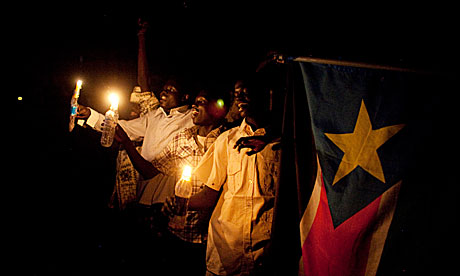
With the announcement that an overwhelming majority of southern Sudanese have voted to establish an independent state, the Obama administration says it intends to recognize the new country in July and is also beginning the process of withdrawing Sudan from its list of state sponsors of terrorism.

“After decades of conflict, the images of millions of southern Sudanese voters deciding their own future was an inspiration to the world and another step forward in Africa’s long journey toward justice and democracy,” President Obama said in a February 7 statement.

The final results of the January 9–15 referendum were announced February 7, revealing that more than 98 percent of southern voters had chosen to secede from Sudan.

Obama congratulated the people of southern Sudan and said he is “pleased to announce the intention of the United States to formally recognize Southern Sudan as a sovereign, independent state in July 2011.”

All parties need to “ensure that this historic moment of promise becomes a moment of lasting progress,” Obama said. The president called for the full implementation of the 2005 Comprehensive Peace Agreement (CPA) and said all outstanding disputes need to be resolved peacefully.

“At the same time, there must be an end to attacks on civilians in Darfur and a definitive end to that conflict,” Obama said.

“The United States will continue to support the aspirations of all Sudanese … [and] will work with the governments of Sudan and Southern Sudan to ensure a smooth and peaceful transition to independence,” he said.

Secretary of State Hillary Rodham Clinton commended the Sudanese government in Khartoum for accepting the outcome of the referendum.

She announced that the United States “is initiating the process of withdrawing Sudan’s State Sponsor of Terrorism designation, the first step of which is initiating a review of that designation.”

Sudan has been listed as a state sponsor of terrorism since 1993 due to its links with international terrorist organizations. Terrorist leaders including Carlos the Jackal, Osama bin Laden and Abu Nidal resided in Khartoum during the 1980s and 1990s. The designation has prohibited Sudan from buying or receiving U.S. armaments and from receiving any U.S. economic assistance, in addition to other restrictions.

“Removal of the State Sponsor of Terrorism designation will take place if and when Sudan meets all criteria spelled out in U.S. law, including not supporting international terrorism for the preceding six months and providing assurance it will not support such acts in the future, and fully implements the 2005 Comprehensive Peace Agreement, including reaching a political solution on Abyei and key post-referendum arrangements,” Clinton said.

State Department spokesman P.J. Crowley said February 7 that Sudan has indicated it wants to have more normal relations with the United States and the state-sponsor designation is an issue that stands between Khartoum and Washington.

“We’ve indicated that, going forward, we are willing to work to resolve this, with the caveat … that there are particular legal requirements that have to be satisfied before this action could be taken,” Crowley said.

Kenyan film is tops at Santa Barbara International Film Festival

0
Kenyan film is tops at Santa Barbara International Film Festival

Togetherness Supreme, a Kenyan film based on true events following the post election riots of 2007 in Kenya, was the overall winner of the Best International Film Award at the Santa Barbara International Film Festival (SBIFF).

Producer Mercy Murugi and Director Nathan Collett were present to receive the award.

Commenting on this years festival programme, the SBIFF Executive Director Roger Durling said, “This year in particular, I have been incredibly impressed by our film lineup. Each of the films possessed their own unique quality, creating one of the most diverse and interesting programs yet.”

“The response from the audience who came for the screening was overwhelming. We held over half an hour long Q&As after the screening, with the audience asking very insightful questions. They wanted to know more about Kibera, about the work that we do with the youth and the community, about Kenya and the issue of tribalism.” Says Mercy. “We had a total of three screenings. The first two were almost full house, but we did not attend the last screening.”

There were films from Italy, France, Belgium, Uganda, and UK – some that had screened in Venice, Cannes, Toronto and other famous festivals,” said Nathan.

The film is about Kama, a talented young artist living in Kiberia, Kenya, who is recruited by his friend Otieno to support a potential presidential candidate in the midst of a heated political race. In order to join, Kama must put aside the wishes of his father and turn away from the people of his village in order to achieve change after years of living in poor conditions. Things get even more complicated when a young woman enters the picture, causing friction between Kama and Otieno. Kama’s beliefs, heart and loyalty are put to the test in a city with rising tempers while the possibility of a major political upheaval is drawing near.

“We honestly had not expected the award”, adds Mercy. “We went to the screening of various films which had full theaters. There was even a list of 41 films to watch, and our film was not one of them. Even First Grader, a feature film shot in Kenya soon after we shot ours, was in that list.”

The SBIFF panel of judges included: actor Christopher Lloyd (Back to the Future); SBIFF originator Phyllis de Picciotto; actor Billy Baldwin (Gossip Girl); writer/director Paul Brickman (Risky Business) and his wife Jennifer Brickman; writer/producer Rusty Lemorande (Electric Dreams, Captain EO), Frank Donner (producer, Deliver Us From Evil); actor Anthony Zerbe (The Matrix) and his wife Arnette Zerbe and director Andy Davis (The Fugitive).

Vusi Mahlasela interview: Ubuntu, Africa’s gift to the world

0
Vusi Mahlasela (Photo: Courtesy The Dakota)

Vusi Mahlasela phones home to his wife and four children as often as he can, but with a tour schedule that keeps him away from South Africa nine months of the year, face-time is limited.

“This time,” he says over the phone to Mshale, “I want to take things slowly; I am a family man and want to be at home.” Thankfully, in 2011, he will still tour several months of the year. With his new release, Say Africa, he’ll be giving us a taste of this Taj Mahal produced record when he performs at the Dakota Jazz Bar on Sunday, February 13th.

Splitting his time, however, might be a challenge. Mahlasela is in demand. After taking the stage at the FIFA World Cup opening ceremony in Johannesburg, SA last summer, 2010, he expanded his audience and fan-base. And while he’d like to spend quality time with his children, he’s still mindful of the example he gives them through his music.

“We’ve been too quiet,” he says speaking of those of us living in the luxury of freedom and security. He wants others to step up and stand for what’s right. “One day [we’ll] continue [to] carrying the torch of giving hope,” Mahlasela said with conviction.

His part of the responsibility is to spread the message via his songs. He sings songs about wisdom, forgiveness, and teaching us that it’s important to forgive. “If you don’t forgive,” he warns, “you become your own prisoner.”

The theme of his newly released album is Ubuntu, a Zulu word that roughly translates as human-ness. Mahlasela provides many adjectives that collectively sum up Ubuntu: happiness, respect, obedience, empathy, and redistribution of knowledge and morals.

“In Africa,” he says, “we go to sleep knowing that we care for one another. Ubuntu is Africa’s gift to the world,” Mahlasela says with conviction.

This attitude or demeanor of Mahlasela’s is exactly what Lowell Pickett, owner of the Dakota Jazz Bar & Restaurant, noticed. “He’s very comfortable with himself in any setting,” says Pickett. “I think Josh Groban and Dave Matthews are in such different world and he can slide between them so comfortably because he’s so centered,” Pickett remarks. “He seems to have no ego.”

Vusi Mahlasela

Sunday, February 13, 2011

7:00 pm

Dakota Jazz Club & Restaurant
1010 Nicollet Avenue
Minneapolis, MN 55403

phone: 612-332-1010

www.dakotacooks.com