US wants to chart new course in Africa, says Clinton
U.S. ambassadors in Africa must help the United States chart a new course for sustainable American engagement on the continent, Secretary of State Hillary Rodham Clinton says. Clinton addressed the ambassadors at the annual African Chiefs of Mission Conference at the State Department in Washington October 5.
“What happens in Africa has a very direct and growing impact on what happens in Europe and what happens in the United States,” Clinton told the ambassadors.
The secretary said the challenges facing sub-Saharan Africa include poverty, corruption, conflicts and terrorism.
“We are continuing to try to strengthen democratic institutions and the rule of law” in Africa, she said. “We know that the challenges of staying on a course of open, transparent government, with moving away from the sort of big-man theory of governance, to move away from our relationship, as President Obama said in Ghana, from one of patronage to partnership, takes time. … There are no quick fixes here at all.”
The department’s Bureau of African Affairs is rebuilding bilateral and multilateral collaboration and engagement in Africa, Clinton said. “It’s very important that we do more to build up the African Union and other regional entities like the East African Community, which has a real potential for being an engine of economic prosperity.”
The secretary praised African participation in peacekeeping efforts in the region and noted that the United States has helped train more than 120,000 peacekeeping soldiers.
“Africans have been extraordinarily willing, from Senegal to Ghana to Burundi, to engage in peacekeeping. But it is important that we continue our training and our oversight,” she said. “We also have to do a better job of working with the U.N. so that their peacekeeping presence of non-African forces, such as in eastern Congo, are more responsive and better able to meet the needs of the civilian population for protection and security.”
Clinton pointed to U.S. commitments — $6.3 billion — to public health projects in Africa aimed at ending deaths from malaria and tuberculosis and eradicating polio from the continent. The great need, she said, is to “make sure … that we use this money to help build the capacity of African institutions themselves, to treat these diseased, to have more of a systematic approach to health care, to address the brain drain that deprives the continent of medical professionals.”
“I really believe not only in Africa’s potential, but in the potential of the State Department and USAID [U.S. Agency for International Development] and our entire government to have a more productive, constructive, sustainable engagement with Africa into the 21st century,” Clinton said.
A warm and intimate Meklit Hadero performs at The Cedar
Friday evening, September 24th, at the Cedar Cultural Center, an invitation handed out to hundreds of the Cedar’s real – time neighbors brought in dozens of residents – a 10% response rate—to hear Ethiopian-born Meklit Hadero perform for the first time in Minnesota.
Friday’s show brought just over 100 patrons. Next time, Mshale predicts she will sell-out the house. “There’s a focus this season on engaging the immediate community and bringing concerts here that they want to see,” said Mike Rossette, marketing coordinator at the Cedar.
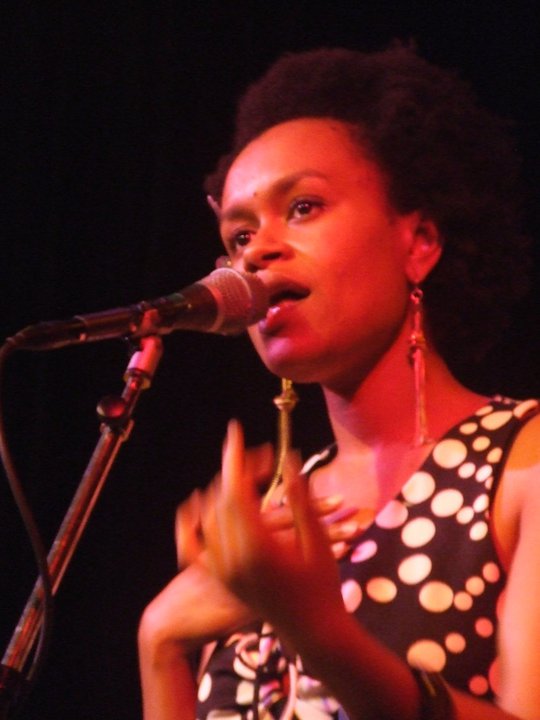
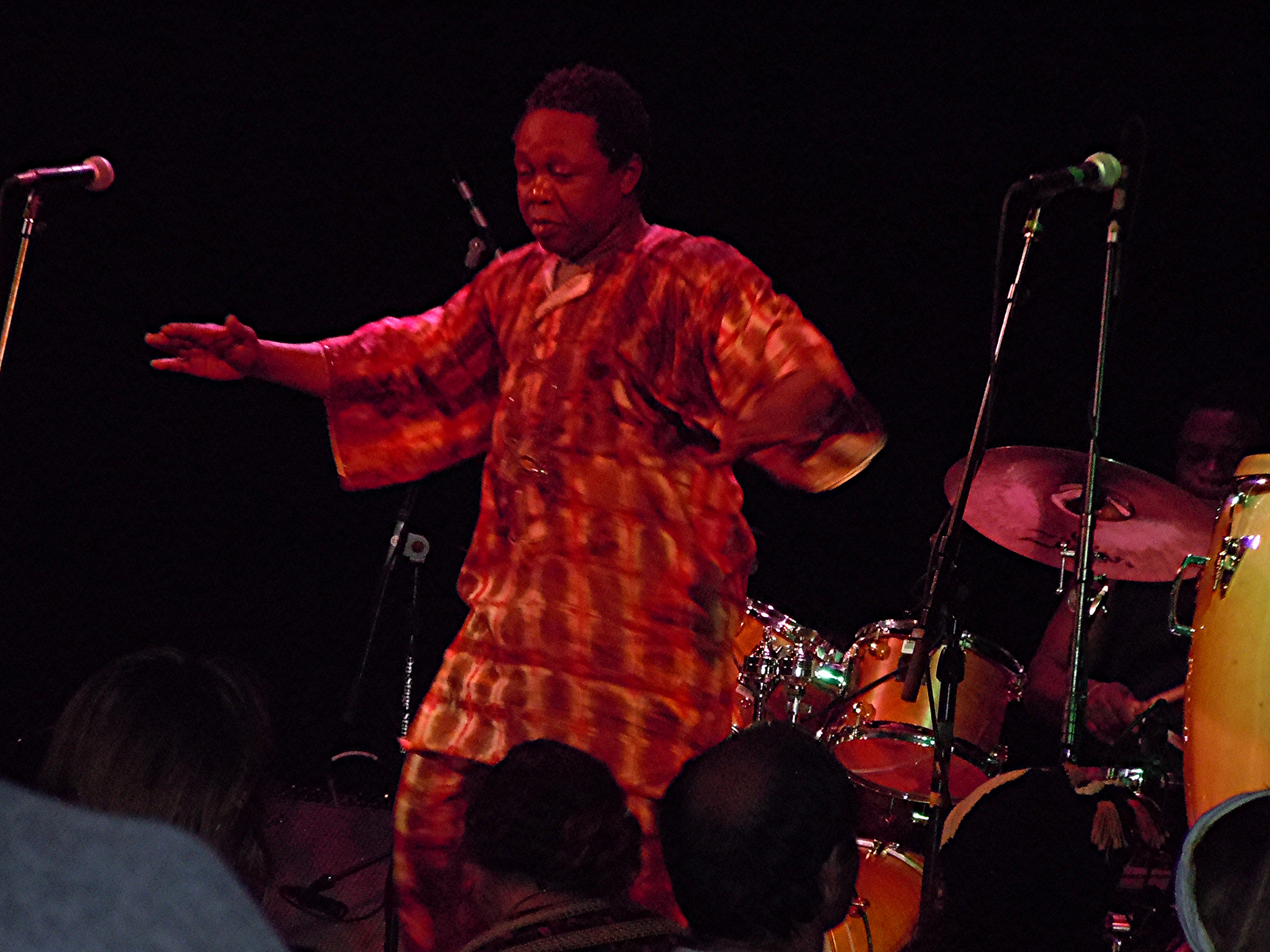
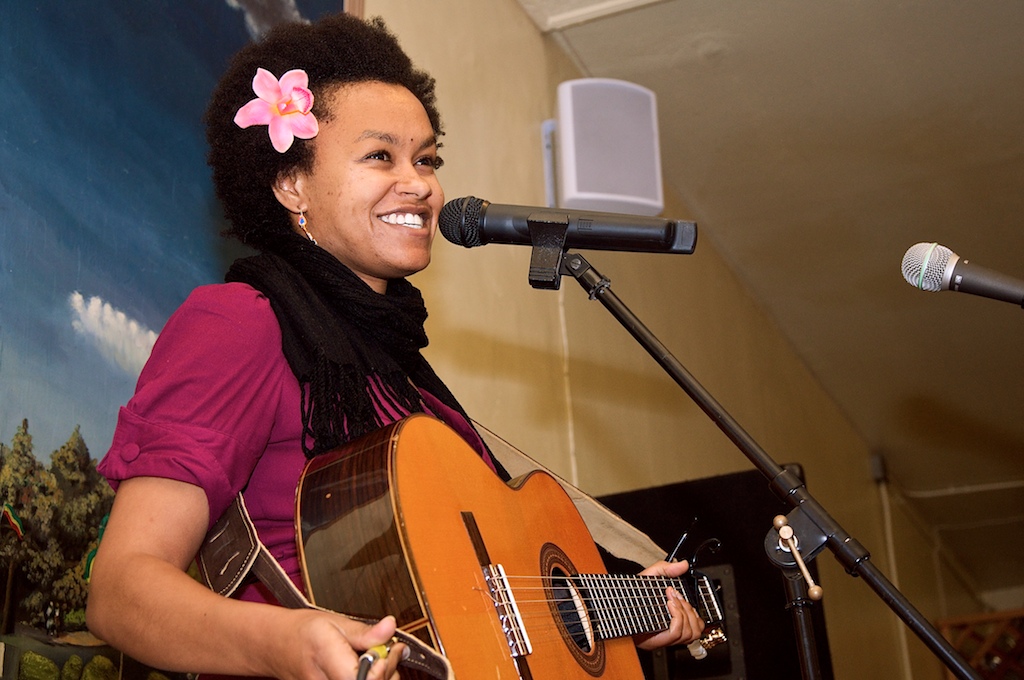
Hadero’s stage presence, so warm and intimate, combined with her musical prowess provided us with an unforgettable show. Surrounded by a band whose acumen in music could propel each of them into their own solo careers, Hadero held her own.
M. anifest, hip hopper transplant from Accra, Ghana, opened the show. M. anifest deftly worked his audience with smooth lyrics and an attractive front.
Laura Lipkin, who has known the rapper since his days at the University of Minnesota, remarked on what a pleasure it was to watch his impressive evolution from student to professional musician.
Taking the stage at 9:30, Hadero stood alone with her percussionist behind her as her only accompaniment. She wore a form-fitting black and white dress complete with elbow-length gloves. As soon as her first number concluded, she peeled off her lacy gauntlets, tossing them aside so that she could effectively play her acoustic guitar.
With her sleeves metaphorically rolled up, Hadero and band launched into a lengthy set that included tracts from her recently released album, “on a day like this.”
Most of her songs were sung in English, but here and again she included traditional Ethiopian pieces. In an interview on KFAI radio earlier that morning, Hadero said, “I don’t write traditional music because I didn’t grow up there. In terms of how I’m influenced by [my homeland], the way it’s most present for me is in the vocal textures.”
Born in Ethiopia thirty years ago, Hadero immigrated to the United States when she was 18 months old. Although she’s lost her fluency in Amharic, she can still use the language in her songs.
The super-vibrato and an “ultra-tenderness” that typifies East African music, quickly apparent in Hadero’s music, also permeate her American jazz numbers. Her distinctive manner of stretching, like rubber bands, her words, adds to her appeal.
This world-music characteristic gives Hadero her unique and profitable niche. While she’s been compared to Nora Jones and Joni Mitchell, she truly is her own person. The alluring blend of both jazz and traditional Ethiopian music makes her stand out from other touring musicians.
The concert venue, not quite half-filled, included both seated areas and standing or dancing space. Most of Hadero’s music lends itself to dancing with a Tai Chi-like movement. It is fluid and elastic, beautifully orchestrated.
Toward the end of her set, Hadero invited the audience to sing along. Our voices, many too Minnesota-white bread to compare to her whole wheat, multi-grained and gritty vocals, made for an interesting contrast. She indulgently praised our efforts.
She ended with a song in Amharic. “It is amazing to sing a song in another language,” she said from the stage, “even though I’m not totally fluent, even the shape of the words [adds dimension]. You can get lost in the words,” she told her diverse audience that included many Ethiopians.
Her encore was a mélange of tunes dedicated to her arts and culture work. “It’s a song about migration, the things that bloom from our sorrows.”
KFAI radio interviewed Hadero on the morning of her show.
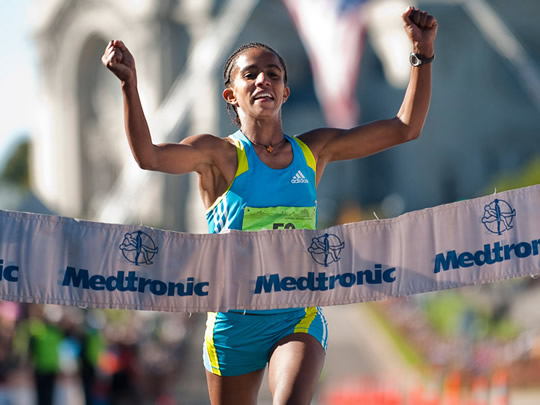
Buzunesh Deba of Ethiopia made history on Sunday in Minnesota when she became the first woman to win both the Grandma marathon and the Twin Cities marathon in the same year. The two are Minnesota’s premiere marathon events.
Deba won the Medtronic 29th Twin Cities marathon on Sunday with a time of 2:27:24.This past summer in June, she won Duluth’s Grandma marathon with what was at that time her personal best of 2:35:35.
The 23 year old Ethiopian born Deba lives and trains in New York. Her time on Sunday becomes the third best winning time for the Twin Cities marathon.
Russian Svetlana Ponomarenko came in second to Deba with a time of 2:35:23 and another Ethiopianm Serkalem Abrha came in third with a time of 2:36:16.
In the men’s race, Sergio Reyes of California won with a time of 2:14:02.
The top Minnesota finisher in the men’s race was Donovan Fellows of Woodbury who came in ninth. Nichole Porath of Red Wing finished 20th in the women’s race.
Sunday’s Twin Cities marathon also served as this year’s USA Men’s and Masters Marathon Championships and USA Women’s 10 Mile Championship.
Matt Downin of Edina, Minnesota won the 10 mile race in the men’s catgeory with a time of 50:43 while Michele Suszek of Longmont, Colorado was the top finisher in the women’s 10 mile race with a time of 59:08.
Deba’s win entitles her to US$25,000 prize money while Reyes will receive US$26,900.
Minnesota Governor proclaims October 1: Nigerian Independence Day
On October 1st,
Minnesota’s Nigerian community gathered in St. Paul to celebrate Nigeria’s
independence from the British. Marking the country’s 50th
anniversary at the State Capitol, Gov. Pawlenty touted the strategic ties
between Nigeria and the U.S., and particularly with the State of Minnesota. It
is estimated that roughly 6,000 Nigerians live in Minnesota.
The highlight of the
celebrations was a parade that stretched from Marshall and Lexington in St.
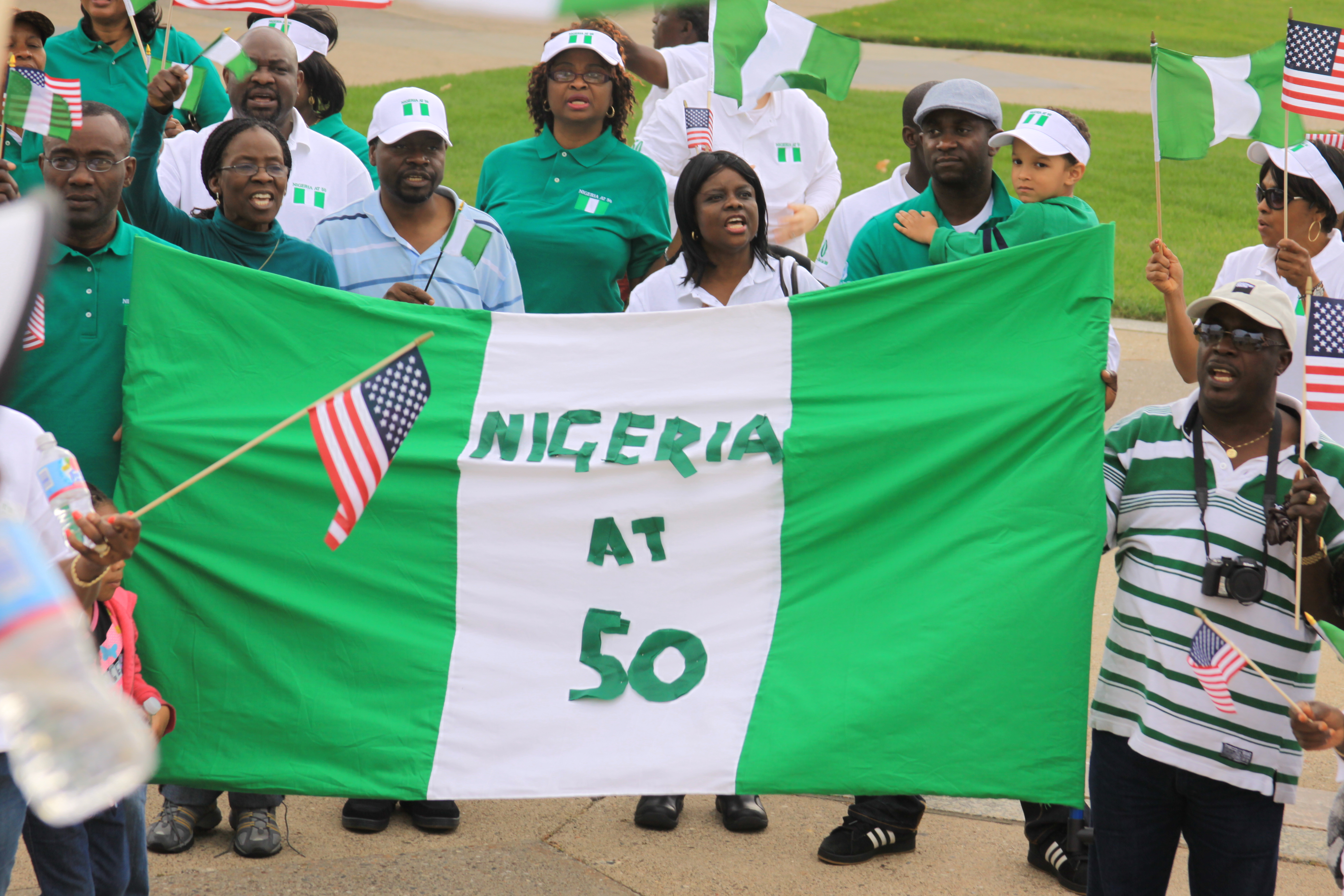
Paul to the State Capitol. With police escorts close to one hundred people
marched while singing the Nigerian and American national anthems along with Nigerian
folk songs. Adorned in green and white, the color of Nigeria’s flag, the
marchers jubilantly waved their flags.
This West African nation is one of seventeen countries celebrating fifty years
of independence from European colonial rule. Tunde Famodu, 64, who
migrated to the US in the seventies, was among several Nigerians who gave
testimonies about what independence meant to them.
“Nigeria is a loving nation with loving people. I was born during the
colonization of Nigeria. 50 years later, here I am. I am very happy for Nigeria
and I am so proud to witness such a day.”
Other the speakers included RoseAnn
Zimbro, from the DFL party, and Joy Choima Nnadi, who congratulated Nigeria.
Nnadi, of Brooklyn Park, said she was proud of Nigeria’s accomplishments and
happy to see “Nigeria at 50.”
For some, independence
celebrations were bittersweet. For Yahaya Nok, who moved from Nigeria in 1988,
the discovery of natural resources has changed Nigeria’s trajectory. According to the U.S. Energy Information
Administration, Nigeria was one of the top five sources of U.S. crude oil
imports for the month of July importing about 1.143 million barrels per day.
“Nigeria was better in the ‘80s because
there was security,” said Nok. “People could move from North to South, East to
West anytime without fear of armed robbers or kidnappers. Education was free
from primary school to university. There was free healthcare and no religious
divide and violence,” added Nok.
Tunade Shonoiki, a realty
broker in Minneapolis, agreed with Nok. He says after 50 years of self-rule, he
hoped Nigeria would be in a better economic and social stage.
“There was a better
lifestyle, schools, roads and more employment. We use to have constant water
supply and electricity and less corruption. Now, Nigeria is not the same,”
Shonoiki said.
Despite the dissatisfaction
with Nigeria’s political progress, other Nigerian Diasporans were hopeful for
the future. They are certain that with time, Nigeria will be better in the
future and set an example for other African nations.
“It is time for our leaders
to wake up and realize how far behind the country is. Especially when compared
with other countries with similar resources. I pray that the next 50 years will
be far better than the previous years.”
Although
Nigeria is still a developing country, its current growth rate is close to 10%.
Its booming economy includes Nollywood, the world’s third largest producer of
films and the development of telecommunications has been rapidly increasing in
the last few years.
After listening to his
daughter, Agwoi, sing the Nigerian and US anthems, Nok said that 50 years of
independence from colonial rule was very significant to him.
“It will make us evaluate where we are now
and look ahead to where we want to be in the next 50 years. I envision
Nigeria’s future as a free democracy where there will be free and fair
elections and where elected leaders will govern according to the wishes of the
people.”
Delta Air Lines Inc. in January will offer a flight from Atlanta to Dakar, Senegal and Luanda, Angola.
The flight will operate three times a week, making a stop in Dakar before going on to Luanda. Delta currently flies to Dakar from New York, but Angola is a new market for the airline, its eighth in Africa.
Senegal last year moved its U.S. tourism office from New York to Atlanta. Its director, Aziz Gueye, was disappointed to learn upon arriving here that Delta had suspended its Atlanta-Dakar flight.
He welcomed the news that the airline is reinstating the service.
“We can do nothing but give our applause to the person who made the decision,” he said. “This is good news.”
Sierra Leone's Refugee All Stars: All about love, peace and brotherhood
Sierra Leone’s Refugee All-Stars brought a musical message of love, peace, and brotherhood to Cedar Cultural Center, Sunday, Sept. 26. The extraordinary part was that they brought their message from a place called Freetown, capital of a nation reeling from the aftermath of civil war. Each of the members of this eight-piece ensemble has been hit hard by the ravages and hardship of war. Their remarkable personal stories are marked by dislocation, imprisonment, loss of family members, and punitive amputation as the result of the decade-long civil war that officially ended in 2001.
Sierra Leone’s civil war formed the backdrop for the movie “Blood Diamonds”. SLRAS’s own story and the lives of its members are traced in a documentary movie entitled “Sierra Leone’s Refugee All Stars” (2005) [http://www.refugeeallstars.org/]. It is a moving story of the determination and good luck involved in re-building the band and the lives of its members in the sprawling refugee camps that continue to be the only residence for many of the people of Sierra Leone in the persistent aftermath of war.
SLRAS’s music is a highly-charged blend of Creole reggae rhythm and West African dance music. Their instrumentation is influenced by the “soukous” dance style of African musicians such as the Congolese guitarist Dally Kimoko–a favorite of the band’s lead guitarist. The Creole influence comes from their sojourn in New Orleans and association with delta musicians such as Troy Andrews (well-known to Twin Cities audiences as “Trombone Shorty”), Washboard Chaz, and Bonerama. The combination had the standing-room-only audience at the Cedar Cultural Center dancing spontaneously throughout the performance.
The musicians exhibited a great deal of versatility, exchanging instruments during songs, setting instruments aside to regale the audience with dance moves, while maintaining the tight synchronicity of Afro-Creole rhythm that kept the audience captivated. The room warmed immediately to the reggae rhythm of the first number and became increasingly engaged and delighted as SLRA moved through their setlist with professional focus, pausing occasionally between numbers for brief background from the group’s leader, Reuben Koroma.
With song titles such as “Weapon Conflict”, “Living Like a Refugee”, “Gbrr Mani” (trouble), and “Kele Mani” (war is not good), their story and their message of peace are clearly the core of inspiration for their music. As “Franco” John Langba, one of the SLRAS founding members, put it: “The musician is a journalist; he know the truth.”
Mr. Koroma was kind enough to share a few words backstage. His band is thrilled that American audiences love their music and resonate to their message of peace. “When you can do something that people love, that is the impression you keep of a country. That is the number one thing.” For men who have experienced such horror and hardship to bring such loving enthusiasm to the stage is an inspiration in itself that goes deeper than words or music. Sharing hope with eight performers from a world away seemed particularly profound in the context of America’s own ongoing, internal struggle over membership in the global community, but then hope and peace come as a fresh breeze down the improvised streets of a refugee camp at any time in human experience–especially when carried by such a sincere combination of musicianship and close, personal history.
The Cedar has heard messengers of love and peace on previous occasions, certainly, but rarely from a group with such rhythmic subtlety to make the audience move its feet and such compelling personal passion to move the heart.
Africa Health Care Conference in Washington October 4-6
The 2010 U.S.-Africa Private Sector Health Conference, October 4–6 in Washington, will showcase Africa’s thriving health care sector and the successes and opportunities that can be found there. The health sector continues to outperform other business sectors across the continent.
The conference — which is being organized by the Corporate Council on Africa (CCA) — will attract private and public sector leaders, top investors and entrepreneurs, offering a chance for businesses to maximize investment in Africa’s expanding private health care market, where, according to CCA, “innovation is booming.”
“We bring to the table something refreshing and new with this conference”, said Stephen Hayes, president and chief executive officer of CCA, in a press release. CCA is a business trade group that represents some 85 percent of U.S. private sector investments in Africa.
“Where else can you learn from a Nigerian doctor who developed the ‘hospital in a box’ phenomenon, or meet a businesswoman who created an association that trains female dental assistants and is now reaching 2,000 patients and making quality dental health care affordable to everyone, in Africa?” he asked.
Themed “Integrating Business Solutions for Expanding Access,” the event will feature panelists from the African private health care sector and multilateral institutions, as well as U.S. and African government officials, including Richard Sezibera, Rwanda’s minister of health; Alice Albright, chief operating officer, U.S. Export-Import Bank; Ronald Williams, chief executive officer (CEO) and president, AETNA; Patrick Geragthy, CEO, Blue Cross/Blue Shield Minnesota; Onno Schellekens, managing director, PharmAccess Foundation; Jonathan Broomberg, deputy CEO, Discovery Health South Africa; Lynn Brown, president and CEO, Omma Healthcare; Luis Sambo, regional director, World Health Organization–Africa; Jerry Vilakazi, CEO, Business Unity South Africa; and Alexander Preker, lead economist–West Africa, World Bank.
According to the CCA statement, the conference provides a unique platform for networking opportunities and sessions led by U.S. and African leaders whose expertise stems from their own successful, ongoing ventures in Africa.
During the conference, company representatives will have the opportunity to interact with public and private financial institutions that fund health projects and to learn about available instruments for project finance in a specially designed room, deemed “The Vault.”
The conference enjoys the sponsorship of Chevron, the U.S. Agency for International Development, Danya International/ZebraJobs.com, the global nonprofit organization AED, Development Finance International, Medtronic, Northrop Grumman, allAfrica.com, Jeune Afrique, IC Publications and The Africa Report.
One of Sudan’s “Lost Boys” helps recently arrived refugees
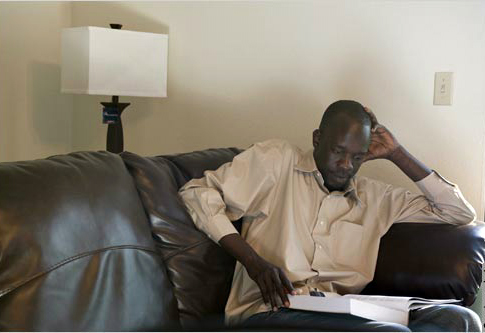
Adier Deng fled his home in southern Sudan at the age of 4 in 1989 during the Second Sudanese Civil War. He was separated from his family, who now live in a refugee camp in Uganda. Deng’s mother died on the way to the camp.
After an arduous journey to Ethiopia and to a refugee camp in Kenya, Deng was resettled in the United States at the age of 15. Now, already having earned a master’s degree in business administration, Deng is in law school and also works as a human rights officer at the Diocese of Kansas City–St. Joseph, helping newly arrived refugees.
Why did you leave your home in southern Sudan?
I left my home in Sudan because of the war that took place since the ‘80s between Northern Sudan and Southern Sudan. I had to escape for safety; we were chased out of our villages when I was 4 years old and had to flee to Ethiopia.
Were you with your family when you left Sudan?
[I was] not [with] my family. My family [was] in the village and I worked in the cattle camp at the time. The cattle camp and the village were attacked separately and we were forced to flee to different directions. My parents [fled] south towards Uganda and I [fled] east [toward] Ethiopia. So I was separated [from] them. I was with my cousin; he was 11 years old at the time.
How long did it take for you and your cousin to get from Sudan to Ethiopia?
It took us about three months to go there because we had to cross a desert and then from there we went to the border, which took us a long time because it was a jungle. It was almost 3,000 miles [4,428 kilometers] to go to Ethiopia so it took us almost three months to go there.
What happened when you got to Ethiopia?
When we got to Ethiopia, we crossed the Gila River, [which] is one of the most dangerous and highly infested rivers in Ethiopia. And I would say maybe in Africa, at large. A lot of our guys lost their lives in the waters, either eaten by crocodiles or drowned. We had to cross that river [to get to] Ethiopia. And then we just had to settle down there and build our own huts by ourselves. At the time, there was no U.N. [United Nations]. There was no one around. We were in the jungle. And we are far away from the cities in Ethiopia — that really [made] it a little difficult for us.
What happened after you were in Ethiopia?
A war broke out in Ethiopia, and then no one wanted us to be there. So we were actually chased back at gunpoint to Sudan and we had to cross the same river again. This time, we were heading to Kenya. This was about 2,000 miles [3,219 kilometers] from where we were at the river. [Going] from Sudan to Ethiopia and then to Kenya took almost a year.
How did you survive?
Basically, it was through my cousin and also the faith that I [had] and the hope. Those were the ones that I was relying on. I was still hoping that things would get better one day; the war is going to be over and I will [be able to] return back to my homeland.
And at the same time, I had to eat what everyone was eating — either being leaves or anything. [I tried not to] think about my parents because the minute [I would] do that, I would lose hope. [I was] just hoping that I will make it. That’s what makes [hope] alive. Just pray — things like that.
What happened when you arrived in Kenya?
We started living in Kenya by the border [with Ethiopia], a place called Lokichoggio. Then we were taken to the northern side of Kenya. There were no buildings. There was no water, just dry land. We [were] now in a place called Kakuma Refugee Camp. [Eventually] the Red Cross and UNICEF [United Nations Children’s Fund] started to bring in some supplies, books, pencils, some things like that.
What was life like in the refugee camp?
When I arrived in the refugee camp I was turning 5 years old. The life [in the camp] was not good. It was terrible. In the camp, we didn’t have enough [for] basic needs. At the same time, we wanted to go to school. [But] if you don’t have anything to eat, there’s no way that you can go to school. And there was a lot of sickness. Basically, all of the life was not good in the refugee camp, and I was in the camp for nine-and-a-half years.
Where did you want to resettle?
I wanted to go to the U.S. That was the best place possible. I wanted to come to America so that I can go to school and someday contribute to the peace process in Sudan.
What year did you and your cousin leave Kenya for the United States?
It was in November 2000 and I was turning 15.
Who sponsored you?
I was sponsored by Bethany Christian Services in Grand Rapids, Michigan. They located a foster family [for me and] I stayed with them until I turned 18. They were really good. They were like parents.
Describe your arrival in the United States.
It was wintertime and I [hadn’t experienced] winter before. I’m talking about snow. It was real cold. I saw they were holding my name on a small poster board. … I came out and then I saw my name and I came to them. I introduced myself and I was the right person that they were waiting for and they had a big jacket and other clothes to wear. And then I had to put those ones on and we went to the car so we could go home. I was really excited to meet them.
How was it adjusting to life in the United States?
It was really difficult to get adjusted. Basically, the culture is different. [I had] culture shock. I had to get used to American food, to the winters, and going to new schools. When I arrived I could understand English but I [could not] really speak it. So it was a difficult time for me to really put all of this together.
How did you finally start to get more adjusted to your new life?
A: Well, it started with being able to settle down. Just being able to find your niche and what you want to do and getting advice. … There was a Bethany Christian Services program … playing some sports and things like that. [I got] friends. It was a good experience. But at the same time, yeah, you have to have in mind why — the reasons that brought you to America. Those are the reasons that will keep you going.
And what did you want to do?
A: Basically, what I wanted to do was to finish education. That was number one — that was my priority. … [Second], working at an organization that will help, especially the Third World countries that have orphanages or an organization that would take care of that. Or if I don’t find something like that, then I will have to found one by myself.
After so many years of being on the run, how did it feel to finally have a stable home?
It feels good. The security is good over here. At the same time, you still have that feeling that … you want to do something [for] the place that you left. I still feel that I have to work harder. I have to help in some way.
What was high school like?
High school was really good — it was great. I [loved] it.
What were some things that you loved about it?
Having a lot of friends, and, at the same time, the instruction, the teachers, were really, really good. I [loved] playing with kids, going to classes and going out. Life was good. It was really good.
What did you do after high school?
A: After high school, I went to college. I went to Aquinas College in Grand Rapids, Michigan. I finished my bachelor’s degree in 2007. After that, I studied business at John F. Kennedy University and I finished my MBA in 2008.
What are you doing now?
A: Now, I’m in law school at Concord Law School. And that feels good. Law school is not simple. It is expensive and takes time. But it’s going well so far.
While you are in law school you are also working. Where do you work?
A: I’m working at the Diocese of Kansas City–St. Joseph and I’m human rights officer. I find jobs for refugees. Given the kind of situation [economic recession] that we’re in now, finding a job is a big deal for immigrants. I like what I’m doing. And definitely, it’s the kind of things that I had been through since I came to America. And I have the motivation. I like what I do.
How do you think your background as a refugee has helped you in your job now?
A: It has helped me a lot because, basically, I find myself wearing two lenses. One is being a refugee — I have been in your shoes, I’ve been there. And another thing is being an American. So you have to put these two things together so that you can deliver a good [service]. And at the same time, you have to have some strategic vision to do good things.
[I] know exactly what to do because my mind just flashes back. [For example], if a client called me and said, “Hey, I’m supposed to be going to work today and I don’t have a ride,” my mind would flash back. I was that person not long ago and I know how they feel.
Do you feel at home in the United States?
A: Where you are is basically your home. I feel at home [in the U.S.]. Here, I’m going to school. I have a job and I have my apartment. And I have a lot of networks, a lot of friends. I know the system in the U.S. And I know how to do my things by myself. I got used to the American ways of doing things.
How do you identify yourself?
[Chuckles] I’m still both [Sudanese and American]. Well, I am an American citizen so I am an American. That’s number one. Either domestically or citizenship-wise, I am an American. Number two, I’m still a Sudanese because I am originally from Sudan.
And I still — I’m forming both cultures — American culture and the Sudanese culture as well. That’s a part of the culture that’s not going to go away. So I have these two things still going on, running on. I still speak my language, which is good. And I’m now talking in English, which is really another good thing. So I’m in two worlds. But again, I am in America. It’s good keeping your identity. At the same time, you don’t need to reject a new system that you [are] introduced into.
How did you feel on the day you became a citizen?
I felt really good. I was happy to do it. I had stayed here for a long time and it was time to become a citizen. So [embracing] my new culture and my new country was really good. And I wanted to do that.
How did you achieve so much in such a short time?
I think the thing that you have to remember is make sure you don’t lose your vision. And those were the visions, the objectives that I set aside for myself. It was harder going there. But at the same time, the way that I’ve done it is to make sure you’re studying how to achieve things. You have to plan, then you have to prepare yourself for it and then you have to proceed without being instructed by other actors in the environment or in the community. So those are the ways to approaching it and that’s how I approached them: not [to] lose your vision. And then you have to know how to go about it. A lot of people don’t share those kind of visions or get lost somehow on the way. But again, it’s a personal way of doing things.
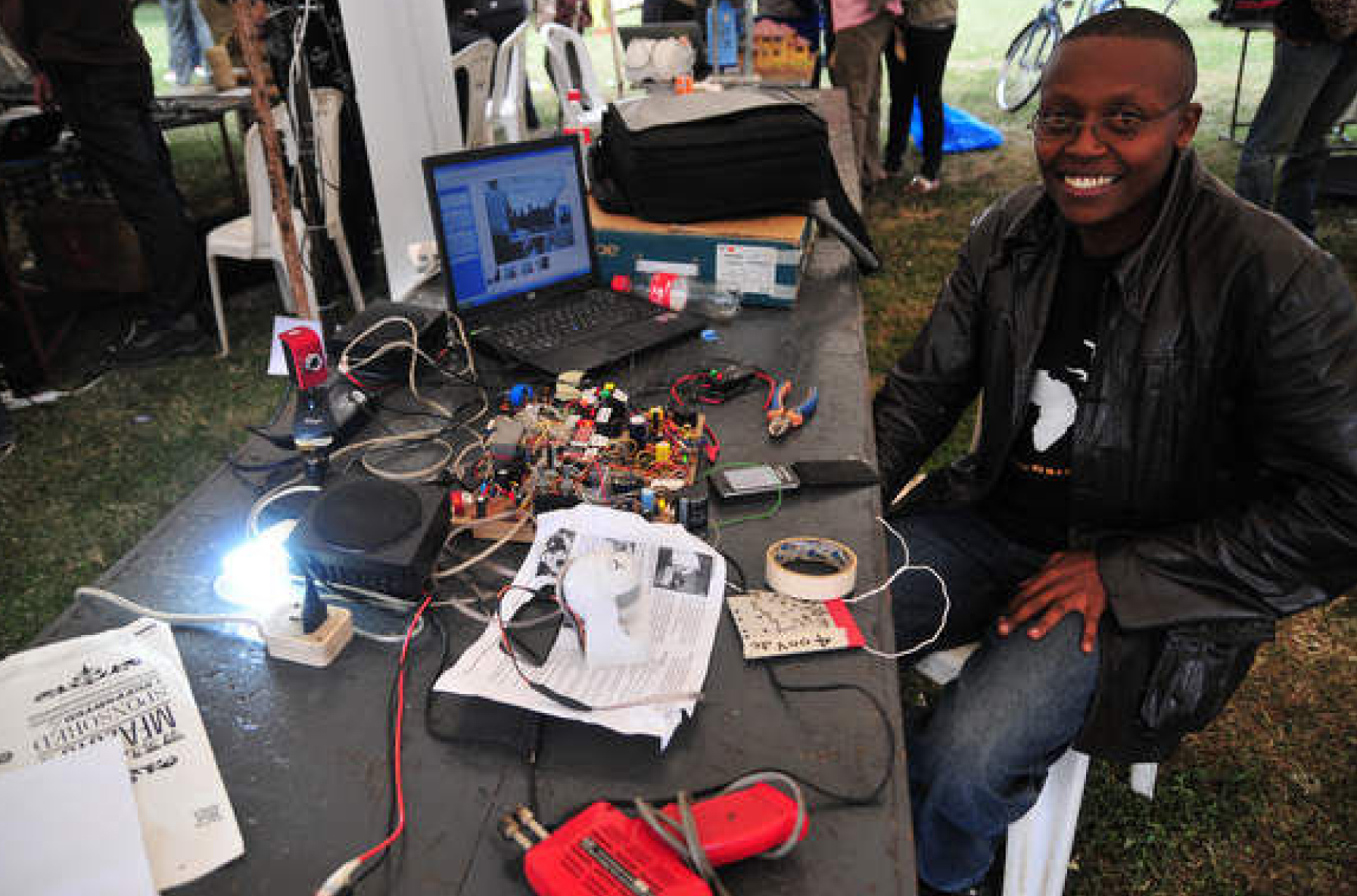
The Maker Faire Africa conference provides a platform for artists, engineers and other creative people to present technological innovation and other unique endeavors.
This year’s show was held in Nairobi, Kenya on August 27-28.
This year’s 2nd African Awards Gala presented by Mshale was absolutely phenomenal. The special event honored members of the African community in Minnesota who have and continue to make an impact through leadership and volunteerism. As a young African, I found the achievements of the honorees and guests remarkably inspiring.
Interacting with notable Africans made me hopeful for our community’s future here in Minnesota. Present at the gala were doctors, lawyers, human rights activists and community leaders. To be in the same room with such accomplished Africans was a gratifying experience. Despite the challenges in their personal and professional lives, especially as immigrants to a new country, these people continue to make a difference in others’ lives.
It is easy to get bogged down with negative perceptions of the African community making it easy to forget about our successes and societal contributions. This celebration certainly reminded those of us in attendance of the great work that some among us are doing.
Although all the attendees were winners, the four honorees were Elly Roimen-Mathenge, who received the Student of the Year award, Ahmed Sirleaf, who got the Community Leadership award, Dr. BraVada Garret-Akinsanya, was the Friend of the Community awardee, and the recipient of the African Business of the Year award was the Metropolitan Transportation Network, Inc. Robyne Robinson, award-winning television journalist turned politician, was the gala’s emcee.
I was touched by Dr. Garret-Akinsanya, a licensed clinical psychologist, whose remarks emphasized the importance of a unified African community. Her emotional speech made me think about how we are all connected and how we should be working to better our community so that our children can prosper in the future.
Adetokumboh M’Cormack, an accomplished Hollywood actor of Sierra Leonean descent, gave the keynote speech. M’Cormack, who has appeared in the film Blood Diamond; and the television shows Lost and 24 demonstrated that being in touch with one’s identity can have a profound influence on one’s personal and career growth. It was imperative for young Africans like myself to hear how keeping my identity makes me a stronger individual.
To witness and to be a part of such a successful event for Africans and by Africans was spectacular and has motivated me to do better as an African so that I may also influence those younger than me just as I have been inspired.
Credit should go to Mshale’s President and Publisher, Tom Gitaa, for perfectly executing an event that many will remember and cherish. I am inspired by Gitaa and proud of his contribution in recognizing the hardworking Africans in our community.
Her music defies categorizing. Like a diamond with many facets, Meklit Hadero offers an array of musical genres. For someone so young, she has a polished, yet diaphanous sound.
Born in Ethiopia, raised in the States, and presently, between touring dates, living in San Francisco, Hadero promotes her idea of music through a global lens.
Perhaps more importantly, Hadero, joined by nearly a dozen other artists from the Ethiopian Diaspora, promotes her homeland through a cultural exchange among artists living in Africa and artists who have left Ethiopia to live elsewhere.
This group, the Arba Minch Collective, and sponsored by Fractured Atlas, draws upon the talents of artists worldwide who work in mediums such as film, literature, theater, andmusic.
Hadero will play her jazzy, hip-hop, soulful, global music this Friday, September 24th at the Cedar Cultural Center at 8:00 PM with M. anifest, a now-local charismatic and rapidly rising Hip-Hop artist born in Accra, Ghana.
Editor’s note: Free ticket giveaway for the concert by Mshale at our Facebook page. Up to 20 people will get a pair of tickets to go catch the concert for free. Enter a comment on our Facebook page and you will enter the draw.