Togolese man gets 26 months sentence in New Jersey
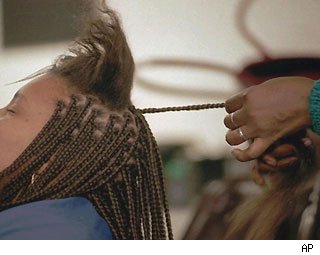
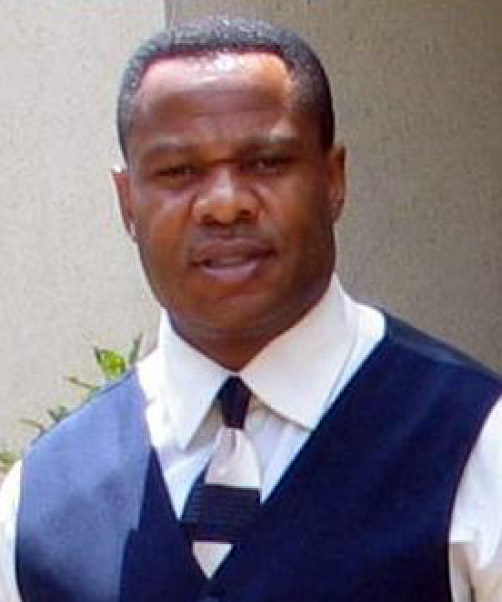
A Togolese citizen living in New Jersey has been sentenced to 26 months in federal prison for his role in the smuggling of girls and young women who were forced to work at hair braiding salons.
Geoffry Kouevi was sentenced Wednesday by U.S. District Judge Jose Linares. Kouevi was found guilty in August 2009 of visa fraud.
Prosecutors say at least 20 people were brought from Togo using fraudulent visas and forced to work for no pay.
Lassissi Afolabi was sentenced in July to more than 24 years in prison after pleading guilty to conspiring with his ex-wife and her son to commit forced labor.
Afolabi’s ex-wife faces sentencing in September. Her son received a 55-month prison term.
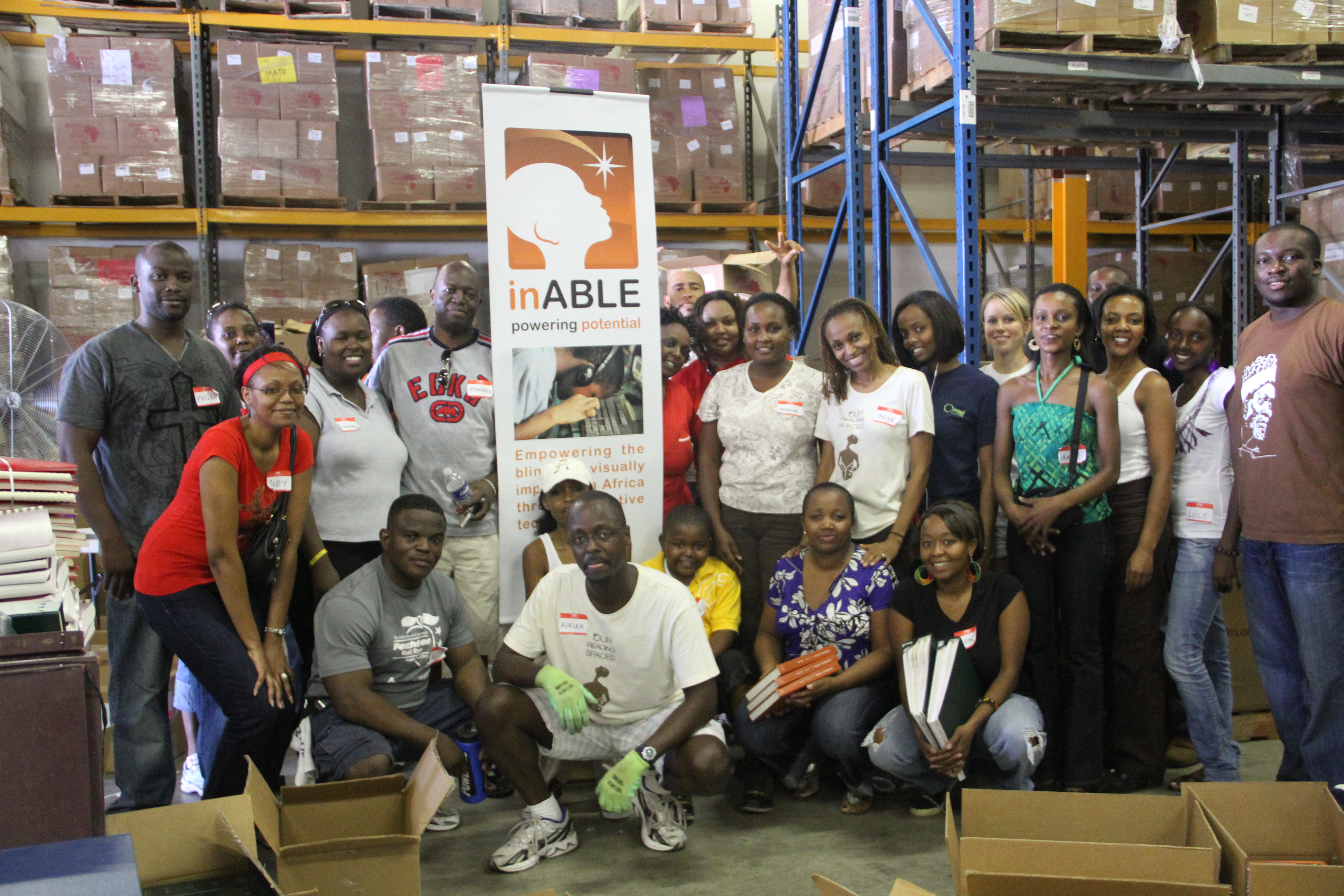
After more than a year in limbo, 22,000 books will be shipped Tuesday from Atlanta to rural Kenya to establish libraries in villages where none exist.
Atlanta nonprofit inABLE, formerly known as Our Reading Spaces, first arranged to send the books, a quarter of which are in Braille, last June on a planned Delta Air Lines flight to Nairobi, the East African nation’s capital.
The day before takeoff, the U.S. Transportation Security Administration denied Delta approval for the new route, citing insufficient security around the Nairobi airport. That left the books stranded at the Atlanta warehouse of Books for Africa, a Minnesota-based charity.
CHICAGO – When Serestine Cizanye arrived in Chicago from Tanzania it was winter and she spent every day in her room.
“I was confused, didn’t know when it was day and when it was night. Through the settlement agency, I met other refugees and immigrants and I was able to communicate with others in (my language) Kirundi,” Cizanye said.
A native of Burundi, Cizanye fled to a refugee camp in Tanzania in 1972 when the Tutsi-dominated government systematically massacred Hutus after a rebellion. She worked as a farmer, married and had five children. Then she was widowed.
In 1986, Cizanye was arrested by the Tanzanian government, along with numerous other women, and held against her will for three days. The women were all raped. Cizanye still suffers from the trauma of this experience.
In February 2008, Cizanye, 53, arrived in Chicago with two of her children, Pangrasi and Sipriyano. The resettlement agency provided her with housing, a bus pass and food stamps because her health prevents her from working.
But she has chest and back pain. She needs help navigating medical appointments because of language. Her sons are struggling at school. “It’s hard,” said Pangrasi, 15. “I don’t understand algebra; only science and arts.” Sipriyano said reading is difficult but he likes mathematics and has friends.
“These kids lived in a refugee camp for 11 years. They came here and didn’t speak a word of English,” said Terrance Sinabajije, a translator who works at the International Children’s Center (ICC) at Heartland Alliance.
“They learned through ESL classes, regular school, after-school programs and tutors provided by the settlement agency. It’s understandable that they have problems with some classes, but it’s still amazing if you could go and see how they lived in that refugee camp,” Sinabajije said.
Groups that try to resettle refugees like Cizanye are struggling with diminishing federal funds and an ever more variegated client base. Golden Door Coalition, a group of refugee service providers and supporters from the Chicagoland area, formed in January of this year, is advocating for a change in policy that would modify the Refugee Act of 1980, so it would be more relevant to the realities they face today.
Laura García is volunteer program manager at the Neighbor to Neighbor program at the Illinois Coalition for Immigrant and Refugee Rights (ICIRR). “The U.S. refugee program began in 1980 and at that time the two main groups were Vietnamese refugees and refugees from the former Soviet Union. The legislation was written for those big groups of people. The program structure, the funding structure, were for large groups of people all from the same country and also based on an old welfare structure,” García explained.
“Now, we have a very different reality. We have numerous groups of people coming from many different countries, so it’s very different. The need has increased, because it’s much harder to serve that many different populations coming in,” García said.
Also prior to 9/11, the refugee numbers were very high, over 100,000 a year. After 9/11 the program was practically frozen, because of national security concerns. Since then the numbers have been increasing again, García said.
Last year the United States let in approximately 46,000 refugees. The number of refugees resettled in 2005 in Illinois was 1,481. In 2009 that number grew to 2,576.
The Golden Door coalition is requesting a funding increase in Illinois’ share of the Department of Health and Human Services funding from $2.5 million in FFY 2010 to $7.5 million. That was the Illinois funding level from FFY 2000.
Some states like Florida receive a lot more funds than Illinois. Florida does have the largest number of refugees coming in, said García, but many are from Cuba.”It’s much easier to serve one large population that speaks one language than it is to serve many populations that speak many different languages,” García said
“In Chicago”, she explained, “we receive people from all over the world, who speak different languages and we want to be able to integrate them into the community, get them jobs, help their kids through school. And in order to do that properly we need additional funding”.
At a meeting recently, the Golden Door Coalition and a group of refugees from Iraq, Burundi, Somalia and Bhutan brought their concerns to Illinois Senator Richard Durbin and Edwin Silverman, Chief Bureau of Refugee and Immigrant Services at the Illinois Department of Human Services. The senator affirmed his commitment to increased funding for Illinois refugees, but didn’t provide details.
Cizanye is struggling to make a life for herself and her sons. But she said despite the tribulations she is grateful to have found a home here.
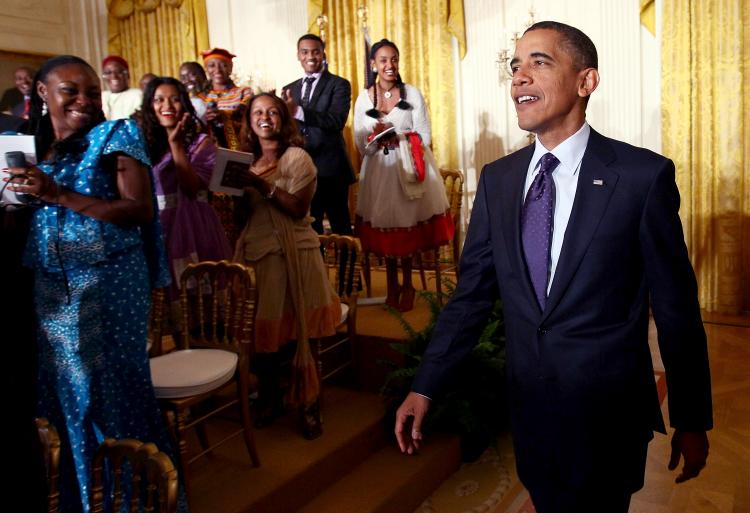
Obama hosts young African leaders, pledges collaboration
President Obama told young African leaders at the start of a three-day conference that as they work to build strong economies with jobs and opportunity, the United States will work with them, promoting the trade and investment on which growth depends.
“No one should have to pay a bribe to get a job or get government to provide basic services,” Obama told delegates to the first President’s Forum with Young African Leaders, which is meeting in Washington August 3–5. “As part of our new development strategy, we’re emphasizing transparency, accountability and a strong civil society — the kinds of reform that can help unleash transformational change.”
“It will be up to you — young people full of talent and imagination — to build the Africa for the next 50 years,” the president said.
Obama convened the conference with approximately 115 young leaders from a cross section of African life to examine how they see Africa’s future over the next half century and to help craft innovative solutions to regional challenges. Working with American counterparts and U.S. government officials, the delegates are sharing their insights on key conference themes of youth empowerment, good governance and economic opportunity.
The conference is being held at the White House and State Department as well as at locations in the Washington area with American business leaders and nongovernmental organizations. Delegates came from 46 countries and represent an array of political, economic, cultural and social arenas in their African homes.
A key event in the conference was a town hall meeting between the delegates and Obama in the East Room of the White House August 3. Obama spoke for about 10 minutes from prepared remarks, but told the delegates that “I don’t want to do all the talking. I want to hear from you.”
“You are the heirs of the independence generation that we celebrate this year. Because of their sacrifice, you were born in independent African states,” Obama said.
In Africa this year, 17 sub-Saharan nations are celebrating 50 years of independence, and since the early 1990s, democracy has made significant strides on the continent. Recently, democratic elections have been held in South Africa, Botswana, Namibia, Mauritius and Ghana, which illustrates the importance that Africans are placing in democracy and good governance.
“Just as the achievements of the last 50 years inspire you, the work you do today will inspire Africans for generations,” Obama told the delegates.
Asked about the disruptive power of corruption found in many African societies, Obama told delegates that while the problem is not unique to Africa, good governance is at the center of economic development on the continent, and there has to be a clear sense of the rule of law for growth and opportunity to flourish. It is one reason, he said, why the United States stresses the values of good governance to African leaders.
A young woman asked what commitment Obama could offer to the people of Somalia, a nation that has been torn apart by conflict for nearly two decades and struggles daily to maintain some degree of order. The president said that Somalia has the support of the American people, even through all it has suffered. “We desperately want Somalia to succeed,” he said.
But extremists have made a home in Somalia, the president said, because they believe it is a failed state. There is concern in Africa and in the region that continued instability there could have a destabilizing impact across the region, but the resolution of that strife will not happen soon, he said.
When challenged on how much support the United States is offering Africans in the treatment of HIV/AIDS, which has posed a significant health challenge across the continent, Obama said funding has been increased during his administration, and that it is now included in a broader program attacking worldwide diseases. He said that former President George W. Bush, during his administration, initiated the President’s Emergency Plan for AIDS Relief (PEPFAR), which vastly improved health care support for Africans dealing with the highly infectious disease.
That health program is being expanded under Obama’s broader Global Health Initiative. It does not stop at AIDS treatment, he said. It includes building a public health structure that also attacks transmission of the disease. One significant aspect of curbing transmission rates is empowerment programs for women, he added. Where women are empowered, researchers say, HIV transmission rates decline over time.
Another aspect of the Global Health Initiative, Obama said, is to improve public understanding of the nature of HIV/AIDS, how it is transmitted and what is needed to curb its spread.
Brooklyn Park Council race attracts another African immigrant
When voters go to the polls in next Tuesday’s primary races in Minnesota, the slate of candidates to choose from will have expanded from the last elections to include the burgeoning African immigrant community in the state.
In the city of Brooklyn Park, the race to City Hall will have an additional African face – Benjamin Osemenam. He is a councilman candidate for the Brooklyn Park East District. He joins fellow African-born Wynfred Russell who is running in the same city but for the Central District.
Osemenam, a homeowner in the city, says he was compelled to run because of the lack of accountability exhibited with the current leadership in the city. “I intend to serve and listen to the community,” he said. “I don’t want to listen to city hall.”
His extensive platform includes the issue of home foreclosures which has hit the city hard. The city is home to the largest concentration of Minnesota’s middle class African immigrants and Mr. Osemenam contends the city has not been aggressive in tackling the issue. If elected, he says he will work to create what he calls a “one stop shop” resource center for those about to lose their homes.
Asked what other fresh ideas he will bring to City Hall if any, he said community policing is something whose time is overdue in Brooklyn Park. Mr. Osemenam says he plans to introduce what he calls a “non- threatening” community police program that will involve Community Action groups and the Brooklyn Park police department. “If the community feels they are part of system, they will be willing to work with the police,” he told Mshale.
Other issues on the candidate’s platform include taxes, education and job creation with the latter calling for the implementation of what he calls the “Employ Brooklyn Park Initiative”, a public/private partnership that will involve among others an “innovative” contracting system that he believes will increase job opportunities by creating opportunities for small businesses to gain access to city contracts.
The candidate expressed concern that the early primary date might lead to a low voter turnout especially among the new Americans. He suggested those who might not be around to consider voting absentee in person if they have not already done so. Absentee voting at the Brooklyn Park City Hall can be done in person Monday through Friday from 8am-5pm. “This Saturday (August 7) you can go to City Hall from 10am-5pm and vote absentee”, he said.
Brooklyn Park City Hall is located at 5200 85th Ave N.
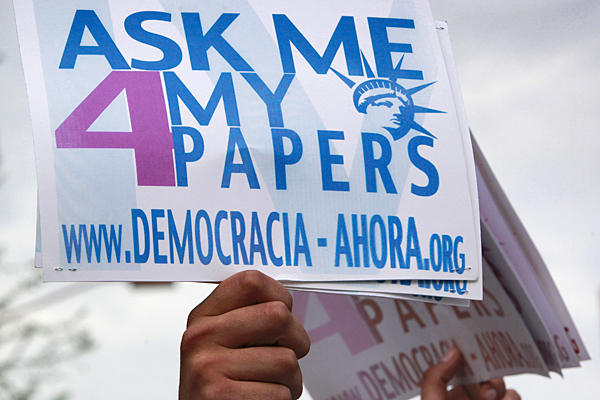
What to do if detained in Arizona, an immigration lawyer's advice
EDITOR’S NOTE: In recent weeks, immigration attorneys in Arizona and other states have been flooded with questions from anxious residents about how to avoid getting detained by immigration authorities and what to do if they or a loved one does get caught. Here’s some advice from Margarita Silva, an immigration lawyer in Phoenix affiliated with Los Abogados, a local Latino attorneys group.
What new information should the public know, now that some of the key provisions of SB 1070 have been blocked by a federal judge?
For the meantime, people who were afraid that they could be stopped and questioned about their immigration papers can breathe a sigh of relief. But I don’t think that this is a great setback for the people who want to keep arresting immigrants. [Gov. Jan Brewer] has called the judgment “a bump in the road.” So I believe the [immigrant] community needs to be alert and follow [news developments] very carefully.
Do you feel that SB 1070 proponents will find alternate ways to enact some of the blocked provisions using other existing laws?
[Even before SB 1070, authorities] have already been using our employer sanction laws to arrest undocumented immigrants. The irony is that [employer sanction laws] were put in place to arrest the employers who are hiring illegal immigrants. But up to now, [authorities] have only been arresting undocumented workers for using false documents to work. Not a single employer has been arrested.
There are other provisions of SB 1070—including the charge of harboring an undocumented immigrant—that can be enforced starting July 29. How does this provision affect U.S. citizens with undocumented spouses, or citizens living in an extended family with undocumented relatives?
There is no strict legal definition of what “harboring” means. In general, it refers to actively aiding someone to evade law enforcement officials. The impact on families with undocumented members depends on how strictly the law is interpreted. Sometimes, if a friend or colleague wants to stay with you temporarily, then you don’t really ask for their immigration status. In that case, you are not “knowingly disregarding the facts.”
What have you told people who ask what to do if they are stopped, either under SB 1070 or another law?
We tell them if you can validly show identification, that’s fine—you should go ahead and do it. But you need to know that it’s different depending on whether you are a passenger or the driver. For example, if you are a passenger, you are not required to engage with a police officer when they stop the driver for a traffic violation. Even if you are a driver, you can just answer questions about the violation you stopped for.
[Remember,] If you are accused of a crime, you have a 100 percent right to remain silent. I’d like to think people are aware of this. But knowing it in your head or seeing it on TV is different from sitting there with your children in the back seat while an officer with a badge and gun asks you questions. You can end up saying incriminating things.
What happens to your property if you are picked up?
If you are alone, your property might be impounded. If you are with someone you trust, you can hand over your personal possessions like your watch and wallet. Technically, your belongings should be returned to you upon release. But [Immigration and Customs Enforcement] does not like to take personal property into its possession. So things are often lost.
What about cars and houses?
I advise people to have a power of attorney ready for close friends or relatives who can take charge of your affairs.
Many families have been here for decades and might own car or house outright. You don’t lose the right to your assets because of your conviction. You can hand over a power of attorney to someone to manage your affairs while you are away. It’s the same as if you were living here legally and had to go away for a while. If you have someone who can drive your car to your home country, they could do that. It’s still your car or house.
Even if you do not own the car or house outright, you still have rights to it. But if you cannot afford to pay for it, you might lose it to foreclosure.
You should know your property is not subject to civil forfeiture if you are arrested—as might happen if you were a drug dealer and arrested with a million dollars or a car that the government suspects was bought with drug money.
What advice do you have for people with children?
I tell them to create a power of attorney for tangible items and for your children. You need to have a U.S. citizen who can take possession of children from the scene if, for example, you are picked up while driving your children to school. Otherwise they could end up going to foster care. Similarly, even if your children are in school [when you’re picked up, school officials] won’t let younger children go unless a trusted friend or family member is authorized to pick them up.
What should people tell their children about Arizona’s crackdown?
I tell people to talk to their children without scaring them too much. Children have a tendency to answer questions you might not want them to. So if an officer gives you a speeding ticket and leans into your car and says by the way, where are you from, you don’t want the child answering for you.
What advice are you giving people who are fearful about approaching law enforcement with other issues — whether it’s information about other crimes, or reporting domestic violence — because they’re afraid of being detained?
Human safety is first and foremost. If your life is in danger, don’t hesitate to call for help. Better to be alive in your home country than dead in the U.S.
Second, know the policies and practices of your local police department. Not all police departments are the same. Some will inquire into immigration status and some will not. For some, it may depend on the type of crime being reported. I believe that all agencies make this information public and it should be easily obtainable. Most reputable agencies and officers will not inquire into the immigration status of a crime victim and you should not hesitate to call those agencies in the event of an emergency.
For those agencies that pride themselves on enforcing immigration laws, you may want to weigh the “benefits” versus the potential costs of calling for help. If you were the victim of a $15 theft and you know the agency that would respond will inquire into your status — well, you decide if its worth the call!
What about racial profiling? Are you advising people to watch out for that?
Our clients are average workers. They would not really know how to watch out for that. But that is something the lawyers would need to look out for. To say [that police] are not going to racially profile just because it’s illegal is ridiculous.
But I do tell clients to be careful— watch your speed, make sure your license plate is current and that you don’t have a broken tailpipe, etc. Our sheriff [Maricopa County’s Joe Arpaio] has made it quite clear that [his people] will pull you over if you have a cracked windshield or a missing rear- view mirror or things like that.
What kind of resources are available to help anxious immigrants avoid being detained?
There are a lot of resources from local groups, nonprofits, churches about how to handle different situations. But no matter what you learn, it’s different when you do get pulled over by an officer. And everything you learned goes out of the window.
Having seen the film twice, I think it’s safe to say that almost every scene in Inception is exceptionally well done. There really aren’t any scenes that feel clumsy, unnecessary or poorly constructed. That being said, there are a few scenes that really do stand out. Scenes that are just crafted so perfectly, you can watch them over and over and never tire of them. Here are five scenes from Inception that are truly remarkable. (There are spoilers in this article so if you haven’t seen the film you may want to hold off on reading this).
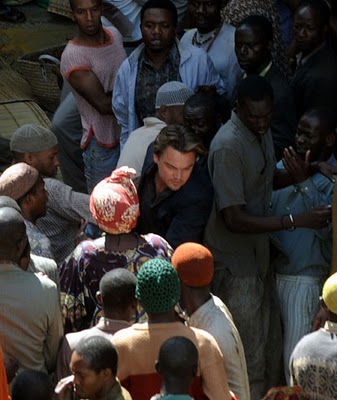
Early on in the movie Cobb finds himself in a sticky situation as he travels to Africa to meet up with Eames. While there, he realizes he has a tail on him and he must lose it if he is to get out of there alive. As Eames runs interference, Cobb hops over the balcony and the chase is on.
Hans Zimmer’s pounding score kicks in and as Cobb runs through the streets of Mombasa, Nolan films the scene with intensity and velocity. Mixed in with some nice top down shots of the city, the scene follows Cobb as he tries to evade his captors. The scene culminates in a narrow (no pun intended) escape.
Equal to any chase scene in a ‘Bourne’ film, the Mombasa chase is truly thrilling. From the moment Cobb hits the ground and Zimmer’s track ‘Mombasa’ kicks in, the energy level shoots through the roof. Cobb frantically races through the overcrowded streets as he tries to make his way to safety.
Zimmer’s high tempo and upbeat track fuels the scene as Cobb tries to lose the thugs. As he makes a final push for escape, Cobb gets stuck between two narrow walls. He manages to push through the gap and runs into Saito who picks him up and ends the chase. Thrilling, exciting and a great score to accompany it, the Mombasa chase scene is a highlight of Inception.
Ellison revisits Africa, delivers books and promotes democracy
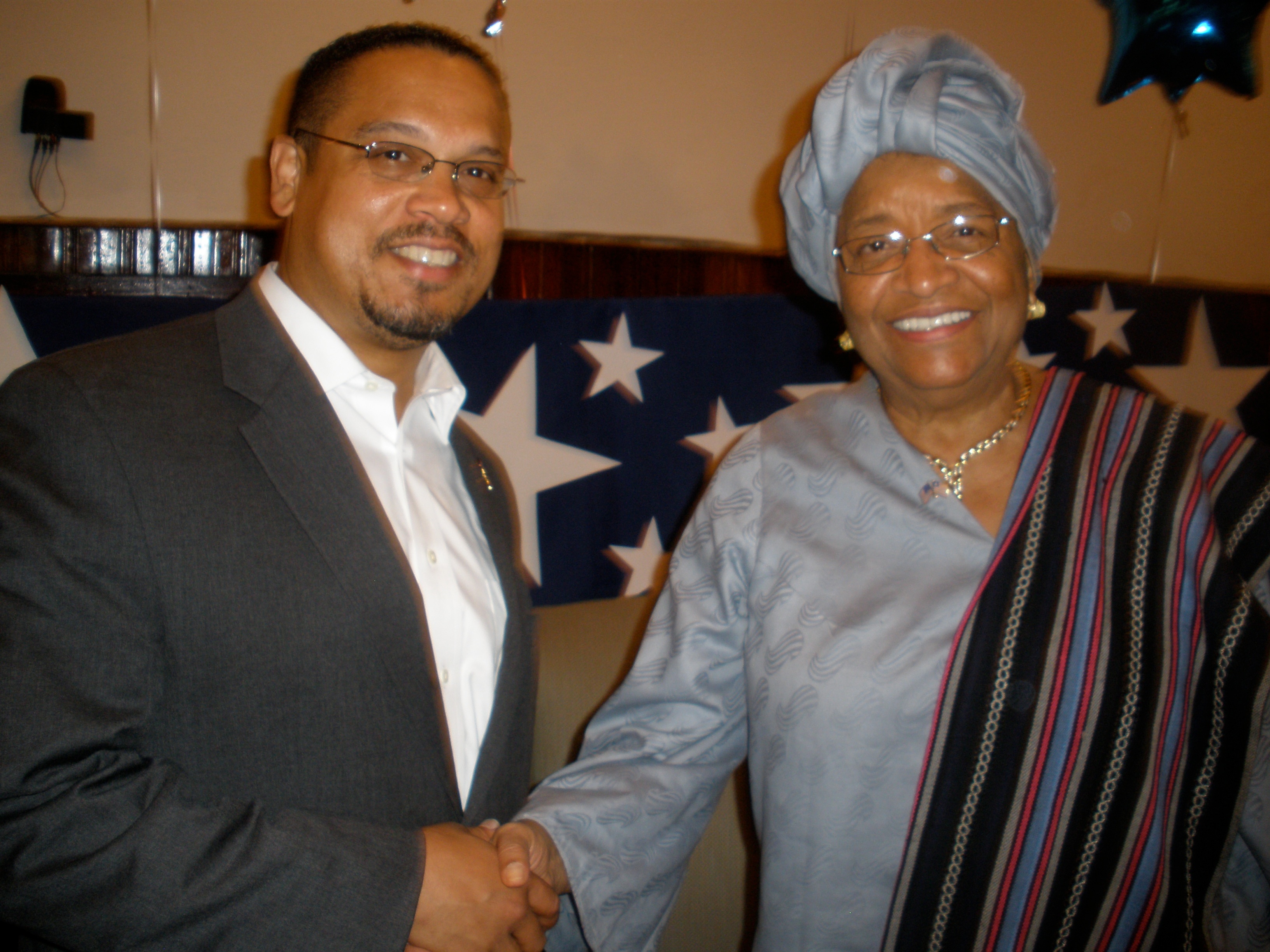
Representative Keith Ellison travelled across Africa to support the development of democratic governments through the House Democracy Partnership (HDP), a program that includes some 20 members of the House of Representatives. The trip’s focus was Liberia and Kenya, but the delegation also toured Senegal and Tanzania as part of its efforts to promote democracy through peer-to-peer partnerships.
Congressman Ellison participated in many levels of the political process in Liberia, from participating in the signing of a pact between the Millennium Challenge Corporation (MCC) and the government of Liberia for a$15 million grant to support the country’s continuing rebuilding efforts after the civil war.
Congressman Ellison also attended a town hall meeting in Kakata.
During a Mshale interview following his Africa visit, the Congressman described the room as a “packed house” with over two hundred attendees, and said that contrary to the view that African countries are ridden with the corruption and dictatorship caricature, this was an amazing display of the fundamentals of democracy.
“It was an incredibly uplifting experience to see how long people stayed to participate in a lively discussion on how public amenities would be used and how accountability would be established. People were detailed in the questions they asked, and were deeply invested in the democratic process.” The town hall meeting was particularly extraordinary as it occurred on July 4th, and for a country torn by a 15-year-old civil war that ended in 2003, the meeting was a sign forward.
“They are trying to find their feet after war. This is not so different from our own history where this country grabbed sovereignty and then struggled to shake off a slave democracy and later evolved into a true democracy.”
The trip’s highlight was perhaps the signing of the MCC/Liberia pact. The MCC is a US government agency that seeks to combat global poverty through sustainable growth. The three-year, $15 million grant will specifically support efforts to improve land rights and access, promote accessible education for girls, and establish trade reforms.
During his trip, Ellison also delivered four containers of books from the Minnesota-based non-profit Books for Africa (BFA), which is dedicated to “ending the book famine in Africa.” The books went to support human rights organizations and schools in both Liberia and Kenya.
Kenya continues to exist as a booming commercial and tourism hub in Africa, but since the post-election violence in 2007 and 2008, the country faces political uncertainty as it drives toward a referendum this summer for a new constitutional framework. Ellison described the demonstrations in March where Kenyans protested against MPs pay as a “hallmark of democracy, and a barometer for how free Kenya is.”
While commenting on the raging debate in Kenya regarding the constitutional reforms, the Congressman also mentioned the disconcerting news that some Americans were dabbling in the middle of this debate, which Ellison described as the “the Kenyan prerogative.” The Congressman maintained that reform is essential after the post-election violence, and that the official United States position is neither for nor against the proposed framework, but rather in favor of Kenyans choosing for themselves through democratic means.
According to Congressman Ellison, the effort of the HDP is a testimony that democracy can be supported without invasion, coercion, or war. “We have a 200-year-old democracy, and that’s worth something. In Kenya and other countries, we have found that people are asking good questions on oversight, transparency, and independent budgeting – all critical components to ensuring democracy.”
The trip is the Congressman’s second tour of Africa through the HDP. Ellison was appointed to the HDP by Speaker Pelosi.
Fifi Souma was last weekend crowned as this year’s Miss Africa-USA. The 21 year old from the Republic of Guinea is a full time student majoring in Communication at Montgomery College.
The 2010 pagenat, held at the Montgomery College Performing Arts Center in Silver Spring, Maryland, was described as a success by Lady Kate Njeuma, the Founder and Executive Producer of Miss Africa USA Management team.
While Arizona is a hotbed for immigration issues, concerns about aging African immigrants and refugees in Phoenix don’t always garner the same attention as the much larger Latino population.
African immigrants residing in the Metropolitan Phoenix—many of them refugees resettled here by the U.S. government–are a compact pan-African group of less than 20,000, according to the 2008 American Community Survey. They enrich Phoenix culture from an impressive array of nations, from West Africa (Sierra Leone, Liberia and Nigeria to East (Sudan, Somalia and Ethiopia), and from the central continent (Democratic Republic of the Congo, Rwanda and Tanzania), to South Africa—plus many other countries.
Life in this arid new land is especially trying for many older African immigrants. They find themselves far from often strife-ridden homelands, unable to find work and facing barriers of language and mobility. Adding to their stress are daily confrontations with a generation of Americanized children, who seem to turn traditional values upside down.
Although immigrants constitute an underwhelming 4.3 percent portion of the total black population of the Valley of the Sun region, they continue to raise families, start businesses and establish themselves in Phoenix. They also face the daunting challenges of transportation, language and eldercare.
Among the African immigrants in the Valley, the main population increase has come from refugees escaping brutal circumstances at home. According to the federal Office of Refugee Resettlement, the overall refugee population in Arizona more than doubled from 2006 to 2009 to 4,327.
Refugees resettled in the Phoenix area are not only from multiple African countries, but include large numbers from Iraq and Burma, as well as other strife-torn nations.
Jobs Are Scarce
The recession is having a strong impact on employment for Arizona’s refugees. Finding jobs for immigrants is a primary concern for the state-contracted refugee resettlement agencies, which bring a large portion of Africans to the Valley.
Only one in three of people in the refugee caseload entered the workforce in 2009, the lowest level in three years for the Office for Refugee Resettlement. Those who landed work received an average hourly wage of $7.17.
Job placement was particularly tough for non-English speakers. At the AZ Lost Boys Center, outreach coordinator Tap Dak said the program is developing English as a second language (ESL) classes for the organization’s service population of Sudanese immigrants.
“Lost Boys” is the term for the generation of Sudanese refugees orphaned and dislocated by religious and ethnic conflict since the mid-1980s. Since 2001, the U.S government has resettled many of them to Phoenix and other American cities.
Dak said the center is examining whether to start a training program for stay-at-home seniors. “We want to get elders a daycare worker’s license, but with state requirements and liability, we’re still looking at how that will work,” he explained.
Transportation Barrier Isolate Many
High unemployment among African immigrants and refugees also reflects their difficulty getting to and from work.
“Transportation definitely impacts a lot of people here,” acknowledges Lorraine Stewart, chief operating officer of the Maricopa County Area Agency on Aging.
Stewart states that there have been great strides in affordable housing and that support for elders is particularly strong within the religious community. She stressed, “But without transportation, elders can become extremely isolated.”
The Phoenix Valley Metro light rail system, a positive step toward public transportation access, began in 2008, and is a positive step. But many Valley residents require two or three transfers to reach work or school.
For African elders struggling to learn English and faced with the prospect of waiting for buses during triple-digit summer temperatures, the simplest errand in Phoenix can be daunting.
The urban sprawl of Phoenix can intensify elders’ isolation, leading to discouraging circumstances and depression among older Africans. “Elders need a place to gather,” says Abdulmajeed Dere, a Somali businessman and former caseworker of 10 years in the Valley.
Seniors often find themselves relying on case workers, volunteers and their working adult children for tasks ranging from the mundane to the essential, Dere said. This creates considerable strain on families with a dependent elder in the household, he added.
“They want to visit each other,” Dere said of Somali elders. “The [culture] they come from is about sitting together. When they have to stay at home because their young don’t have time to take them back and forth, stress builds up.”
Dere knows of this stress first hand. His grown children attend Arizona State University and high school, while he and his wife manage a cafe in a plaza and a driving school. His typical work day, which runs from early morning until 8 p.m., leaves his mother, who is approaching her 70s, long periods to occupy herself.
The Somali community is concentrated on Phoenix’s east side, but Dere’s home is in Glendale, a long ride to the west.
Also, the strained economy in Phoenix has forced several potential gathering places to close. For example, the Somali Association of Arizona’s Hope Center offered a score of services ranging from job training to citizenship classes, until it closed its doors in 2006, due to a lack of funding.
Generational Conflicts
When asked if elders are valued in the Somali community, Dere shrugged, calling the subject “a big challenge and messy.”
Often, he said, Africans recently immigrated to the United States discover that authority in the household is turned upside-down, in part, because of language difficulties.
Children, he said, usually adapt to American culture and learn English more quickly than their parents and grandparents. In a city with poor translation services in hospitals and schools, Dere continued, young family translators effectively become gatekeepers for their elders in accessing medical, legal or other services.
The result, Dere said, is to leave generations on either side of a widening cultural and digital divide. “Yes they can translate, but still a child doesn’t know about legal things or immigration law,” he noted.
Despite the difficulty for African elders, English classes could provide the positive community space older adults long for, if done the right way.
“Elders want to see people they are close to,” Dere said. He stated that while volunteer agencies and community colleges provide ESL classes, they design them for the whole community. Many older immigrants find those environments intimidating.
Dere emphasized, “Remember these are people who have never attended formal school.”
Besides needing more training capacity in ESL and other skills, older Africans could benefit from fewer barriers to become childcare workers. Arizona requires those qualifying for a daycare worker’s license to know English and be certified in cardio-pulmonary resuscitation.
Dak described the potential benefits of teaching a certification program to Sudanese elders that takes into account their learning styles. They would gain a greater sense of purpose, and relieve economic pressures on parents in their community struggling to make ends meet. “Do you know the (daycare) fees, if children are not picked up on time?” Dak laughs, shaking his head.
There are no easy answers for African elders in the Valley of the Sun, but efforts to meet the needs of this community group still persist despite the demanding economic obligations of working adults, and the dearth of funding available on the state level.
What is Early Neutral Evaluation in the Family Law Context?
Early Neutral Evaluation, or ENE as it’s commonly called, is a relatively new concept in MN family law.
Early Neutral Evaluation is a forum in which the parties and their attorneys present the key issues of their dispute to a neutral evaluator in the presence of the parties. ENE occurs after the case is filed in court but before formal discovery of evidence. The selected Neutral or Neutrals give an assessment of the strengths and weaknesses in each side’s case before proceeding in family court.
History
The use of ENE in family court cases falls under the amendment to the Alternative Dispute Resolution (ADR) processes established in Rule 114 for all civil cases.
Under the new provisions of the rule, all family law matters in district court are subject to the ADR. Family court judges normally refer cases to ENE or, as it is known in some counties, Social Early Neutral Evaluation (SENE). There are a few exceptions to the requirement for ENE in family court, and they include:
Domestic abuse cases
Contempt cases
Maintenance, child support, and parentage cases where the public agency responsible for enforcement is a party or is providing services to a party in the case.
Further, courts may not require parties to participate in ENE or other ADR processes where:
One of the parties claims to be the victim of domestic abuse by the other party; or
If the court believes there is a probability that one of the parties or a child of the parties has been physically abused or threatened with physical abuse by the other party.
What does this mean for me?
The idea behind the ENE is to allow the parties a face-to-face opportunity to discuss the core of their dispute with a qualified neutral. Both sides choose the neutral/s from a court approved list. The neutral/s will listen to both sides equally, take some time to analyze the issues and give an opinion of the best way to move ahead for both sides. If the parties accept the recommendation of the neutral/s, any agreement is put into writing and forwarded to the judge in the case. Often it may take more than one session with a neutral/s for the parties to reach accord on their key disagreements.
Who pays for the ENE?
Both sides are equally responsible for the costs of the ENE and typically pay the same as the attorneys’ hourly rates or by a sliding scale set by the state.
Can the process help me?
ENE is a very effective method of resolving some of the critical disputes that often endanger a smooth dissolution process. Attorney Obi Chukwu has helped several clients successfully through the ENE process and achieved desirable results. He has also helped clients make the best use of the process to get positive results even in the most acrimonious situations. Attorney Chukwu has the experience and knowledge it takes to understand what ENE means for you and how it can affect your divorce case. In one situation, opposing counsel tried to use the process to delay temporary custody for Mr. Chukwu’s client. Mr. Chukwu effectively brought to light the factual and legal analysis that showed his client deserved custody during ENE, which led to a recommendation of custody for his client.
If you have questions about Early Neutral Evaluation, ADR or any other issues in this article, contact an experienced family law attorney. Consult a family lawyer to determine what process is relevant to your particular case or situation or for any of the issues raised in this article.
Nothing in this article should be taken as legal advice for an individual case or situation. The information is intended to be general and should not be relied upon for any specific situation. For legal advice, consult an attorney experienced in family law.