Ghana's Ambassador to U.S. to Keynote Books for Africa Fundraiser
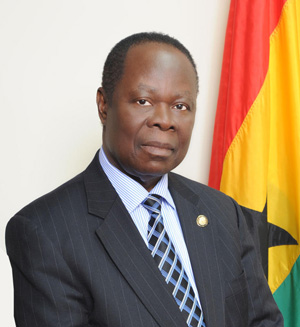
Ghana’s ambassador to the U.S., Daniel Ohene Agyekum, will speak on African economic development, education and the importance of books for African children at noon, Wednesday, April 28, at Town & Country Club, 300 Mississippi River Blvd. N., in St. Paul.
The event is sponsored by Books For Africa (BFA), the world’s largest shipper of donated English language text books to the African continent. Its mission is to end the book famine in Africa. Over the last 20 years, BFA has shipped over 22 million books to 45 African countries. Each shipment, which contains approximately 20,000 books, benefits a minimum of 20,000 students and up to 500,000 students over the life of the book. The larger community also benefits from access to reading materials, opening up a world of ideas, critical thinking and self-esteem.
Founded in 1988 and based in St. Paul, Minn., BFA collects, sorts, ships and distributes books to children in Africa. Books donated by publishers, schools, libraries, individuals and organizations are sorted and packed by volunteers who carefully choose books that are age and subject appropriate.
Books For Africa has for the third consecutive year received a 4-Star rating for sound fiscal management from Charity Navigator, America’s premier charity evaluator.
In his distinguished career, Ambassador Ohene Agyekum served on several delegations to international conferences. During his tenure as High Commissioner in Ottawa, he led Ghana’s delegation to negotiations leading to the adoption of the Montreal Protocol on the Substances that deplete the Ozone Layer, held in September 1987; and also attended the international Conference on Financial Leasing in Ottawa in 1988 and the UNDP Environmental Conference in Nairobi, Kenya.
Ambassador Ohene Agyekum was appointed to his current position by John Evans Atta Mills, President of the Republic of Ghana, in January 2009. An accomplished diplomat and a discerning and astute politician, he came to Washington, D.C., imbued with a rich experience in both diplomacy and politics and motivated by an unwavering personal commitment to the pursuit of progress and prosperity for Ghana.
Kenyan wins Boston Marathon and sets New Course Record
Ethiopian Erkesso is Women’s Winner
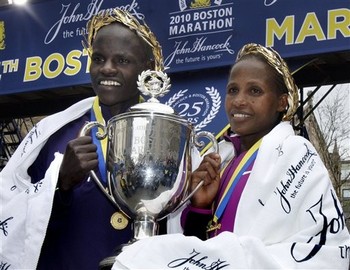
The Boston marathon today saw first time winners of the race in both the men’s and women’s race. Robert Kiprono Cheruiyot, 21, of Kenya and Teyba Erkesso, 27, of Ethiopia were the men’s and women’s winners respectively in the 114th Boston marathon.
Cheruiyot, who finished fifth in last year’s Boston won today’s race by setting a record for the race at 2:05:52 thus bettering the Boston marathon’s course record (2:07:14) set by fellow Kenyan, four-time Boston winner Robert Kipkoech Cheruiyot in 2006.
Cheruiyot’s course record earns him a $25,000 bonus.
Last year’s men’s winner,Ethiopian Deribe Merga (2:08:39) finished third behind fellow Ethiopian Tekeste Kebede (2:07:25) who came in second.
Americans Ryan Hall and Meb Keflezighi finished fourth (2:08:41) and fifth (2:09:26). Hall, who led in the early miles, ran the fastest time by an American at the Boston Marathon and was a minute faster than he ran in last year’s third-place finish.
“Almost two months ago, I met with Robert (Kipkoech Cheruiyot),”‘ said Robert Kiprono Cheruiyot. “He told me that if you stay with the group, you stay nice until people go slowly (then) try to move. Stay behind to reserve strength. He told me about his race he (won) in 2007 and 2006, so he knows.”
Erkesso of Ethipoia while winning in the women’s race also set a personal record for herself of 2:26:11 beating Russian Tatyana Pushkareva who came in at 2:26:11.
Erkesso, a World Cross Country veteran, led most of the way during the women’s race. “From the beginning of the race, I was looking to win,” said Erkesso, who built up a 1-1/3 minute lead through the 30K mark. “Tatyana was behind me and I didn’t believe that I had the win until I crossed the (finish) line.”
2010 Boston Marathon top 5 women results:
1. Teyba Erkesso ETH 2:26:11 2. Tatyana Pushkareva RUS 2:26:14 3. Salina Kosgei KEN 2:28:35 4. Waynishet Girma ETH 2:28:36 5. Bruna Genovese ITA 2:29:12
You have just completed your family case summons and petition. You have painstakingly reviewed your affidavits and assets and have made sure you’ve disclosed all you need to and clarified what you are requesting from the court. You show up at court to file your documents and pay the filing fees and the first question the clerk asks is: “Where is the affidavit of service?” What? What affidavit?
A proceeding for marriage dissolution, legal separation, or annulment is commenced by the service of a summons and petition upon the person (i.e. hand delivered to the person) of the other party according to Minnesota law. The summons is a form approved by law makers and provided free of charge to the public to use in initiating a petition for dissolution/divorce. A summons notifies the parties of what they must and must not do once the case is initiated. It also includes a notice of alternate dispute resolution provisions available to the parties. A copy of a dissolution summons can be found at: http://www.mncourts.gov/default.aspx?page=513&item=259&itemType=formDetails
If a proceeding is started by filing a joint petition with the other party (also known as the joint petitioner), signed by both sides, a summons is not required. The proceeding is deemed to have started when both parties sign and file the joint petition with the court.
How Do I Serve?
In a proceeding that is not a joint petition, service of a summons and petition is required to be made personally. Personal service or personal delivery can be made on the other party (also known as the respondent) either within or without the state or even in a foreign country. If personal service cannot be made, the court can order service of the summons by alternate means, including by mail or publication in a newspaper. After the court orders service by alternate means, if the respondent is subsequently located, before service is completed, personal service must be made before the final hearing.
The Affidavit of Service
Once service is made, either via personal service or service by mail, the person effectuating the service, which must be someone other than the person petitioning the court, must sign a sworn statement or affidavit before a notary proving that they have effectively served the respondent either by mail or by personal delivery. This affidavit or sworn statement of delivery is known as the Affidavit of Service. A copy of an Affidavit of Service form can be found at: http://www.mncourts.gov/default.aspx?page=513&item=470&itemType=formDetails
The Application to Serve by Alternate Means
The petitioner must first attempt to serve the summons personally and if service cannot be made personally, then the petitioner can apply to the court for permission to serve by alternate means (i.e. by mail or publication). The application for service by alternate means must include information about the respondent’s last known location, attempts by the petitioner to find the respondent, etc.
If the petitioner provides a forwarding address for respondent in the application, the court will order service by first class mail to that address where there is a reasonable possibility that mail or information will be forwarded or communicated to the respondent. If no address is provided, then the court will order service by mail to the respondent’s last known address. The court may also order publication, in or out of the state or country, but only if it might reasonably succeed in notifying the respondent of the proceeding. This means that the court may also order service by publication on a nonresident defendant/respondent living in a foreign country at an unknown address.
In addition, the court may also require the petitioner to make further efforts to locate the respondent through telephone calls to appropriate persons or via other means. Service is deemed complete twenty-one days after mailing or twenty-one days after court-ordered publication. More information about the Application to Serve Summons by Alternate means including a copy of the form and a sample Order to Serve by Alternate means can be found at: http://www.mncourts.gov/default.aspx?page=513&item=92&itemType=packetDetails
If the petitioner wants the court to help dispose of real estate located within the state of Minnesota, the court shall order that the summons, which shall contain the legal description of the real estate, be published in the county where the real estate is located.
If you have questions about the Service of Process or any other issues in this article, utilize the Family Court Self-Help centers for your county or contact an experienced family law attorney. Consult a family lawyer to determine what process is relevant to your particular case or situation or for any of the issues raised in this article.
Nothing in this article should be taken as legal advice for an individual case or situation. The information is intended to be general and should not be relied upon for any specific situation. For legal advice, consult an attorney experienced in family law.
As the economy worsens and unemployment continues to climb, many African American and African immigrant families are feeling the pinch. But, help is on the way.
This is the motivation behind the African Career, Education & Resource (ACER) fair. The second annual event takes place on Saturday, April 24, 2010 at the North View Junior High School from 11 a.m. to 2 p.m.
The ACER fair attempts to mitigate the challenges new and historic minorities face in obtaining access to information and resources to improve their wellbeing. The fair provides a “one-stop” approach for members of the community to learn about a variety of resources and services in an efficient and culturally-appropriate manner. The ACER fair also offers an opportunity for both sides – institutions and minority communities – to share information, get feedback, network, and build stronger relationships.
At this family-friendly event, attendees will meet and engage with representatives from: several K-12 schools; colleges and universities; fortune 500 companies; health and social service organizations; and various other resources. The ACER fair is free and open to the public.
According to the U.S. Census Bureau, 13 percent of Minnesota’s foreign-born residents, approximately 200,000, are from Africa – a higher percentage than any other state. Yet, minorities experience a lower level of access to social services, educational, and employment resources than other groups due to cultural, linguistic, and racial barriers even though they strengthen Minnesota’s economy through tax payments, entrepreneurship, and consumption. Additionally, the U.S. Department of Labor reports that the jobless rate fell from 10.0 percent to 9.7 percent in January, but increased to 16.5 percent for blacks, nearly double the national average.
The ACER fair is a volunteer-driven initiative to serve the black community by providing a variety of culturally-relevant resources and services in a single location. Sponsors include Osseo Area Schools (ISD 279) and Minnesota Department of Employment and Economic Development (DEED).
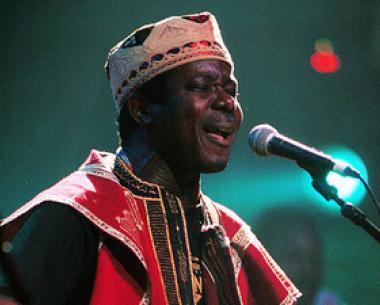
King Sunny Ade, popular Nigerian performer of Nigerian Juju music, has canceled scheduled concerts in Chicago on April 16, Minneapolis on April 17th and in Lincoln, Nebraska on April 18.
The cancelation comes in the wake of the death of two of his band members in a car accident on March 26. According to a statement from the band’s U.S. manager, the band members, Gabriel Ayanniyi (talking drum) and Omo Olope (percussion) were killed in a car accident, while on their way to a music video shoot.
Mshale Newspaper was a sponsor for the Minneapolis concert at the Cedar Cultural Center. Those with tickets can contact the Cedar for ticket refunds.
King Sunny Ade’s U.S. manager said of the two band members: “Gabriel was a great protégée talking drum player that everyone in Nigeria was talking about. These musicians deaths is a great loss.”
The Pan African Media Conference was a great acknowledgment of the Nation Media Group’s emergence over the last 50 years as a leading media company in Africa. There’s no doubt that Nation has risen to prominence in the region due to its honest reporting in both the politics and economy of Africa. Thus, one must question why, after 50 years of ‘advancing’ in the media sector, the press is invited to cover an event at an entrance cost of $150.00 dollars and not for free? Historically, media houses have been against charging the press to cover events. This is like charging the choir members for showing up to perform at their concert. Oh the irony!
Although the price charged was the greatest drawback of this epic event; getting the badges for both delegates and press proved to be another task. Upon paying the steep entrance fee, attendees were advised to arrive as early as 6.30a.m to obtain their photo badges. It took me almost two hours to first obtain a temporary badge with my name scribbled on paper, then to get the official pass which, mind you, was without a photo. Let me remind you, we were in line from 7:45 am. The event was scheduled to begin at 8:00 am. African timing never ceases to amaze me!
When we finally made it in, we found that the event was already off to a good start, with heads of state from various African countries in attendance. They gave speeches that were relevant to the agenda and many focused on the media’s responsibilities. The Moderator, J. Sibi Okumu, sought to know whether Rwanda and Kenya had given any emphasis to developing a culture of regular press briefings as is practiced in first world countries and especially popular in the Obama Administration in the United States. The Microphone was handed to Kenyan President Mwai Kibaki who said, “I didn’t understand the question”. Under normal conditions the moderator would repeat question, but instead the microphone was quickly handed to Rwanda’s President Paul Kagame and later on to Kenyan Prime Minister Raila Odinga. It seemed like President Kibaki’s response was code for ‘how dare you ask me that question’!
Tanzania’s former President, Bejamin Mkapa, a former journalist, brilliantly tackled this question by stating that many local journalists don’t do enough research homework, leaving him to hold briefings only with foreign press during his tenure. I must commend the Nation Media Group for creating a platform through which citizens could confront critical issues such as governance and human rights. Of course, it would have been interesting to get the input of some of Kenya’s Internally Displaced Peoples but with the cheapest ticket price at a $150.00, that is a dream.
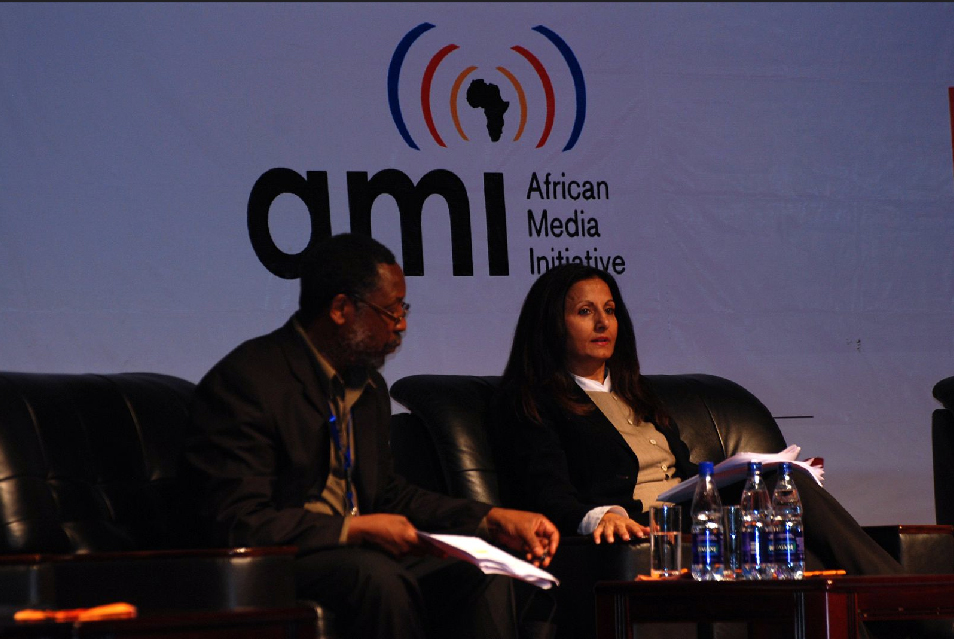
During the second half of the day, panel discussions focused on the images of Africa as portrayed by the international media. In a nutshell, Prof. Anton Harber stated that the debate should not focus on whether the coverage is good or bad, but rather, on whether these images might be too simplistic and lacking the complexity found in African issues. Africans, he said, have also not been good in telling their stories in powerful and credible ways. Paul David Hewson, aka Bono of U2, was able to add his two cents in spite of the hero worship from many present. He praised the vision and work of the Africa Media Initiative, as an effective model in addressing the issue of the continent’s media image. He further noted that if Africa was to be seen as a brand, then the brand managers would have to be the media and civil society. Drawing from what he termed as his current ‘learning tour’ of the continent, Bono felt that the media could play a more vigorous role in creating African ‘stars’ such as Mohammed Ibrahim and John Githongo, among others; and instead of focusing on the past, work on shaping the next forty years. A question that loomed in my mind was why a prominent person such as John Githongo, who collaborated with the Nation Media group in the past, was absent!
Sudanese-born British mobile communications entrepreneur and founder of the Mo Ibrahim Foundation, Mohamed “Mo” Ibrahim, kicked off his speech on a strident note, telling African leaders to stop depending on smart speech writers and deal with the actual issues at hand, such as the “major failure of leadership” that has plagued Africa for more than 50years. He challenged African leaders to “behave” and “identify their shortcomings” in order to overcome the problems that have plagued the continent for decades. Mr. Ibrahim in 2007 launched the Mo Ibrahim Prize for Achievement in African Leadership.
A former African editor with The Economist magazine surprised the floor with his observation of Africa, stating that he had never come across the use of the word ‘hopelessness’ in a description of the state of Africa. On the topic of culture, Professor Wangari Maathai also had a very candid observation- the primary reason why we find that most of our cultural content is inferior begins with us and much of our culture has been deliberately crushed by us. The inclusion of young leaders like Isis Nyongo and Ory Okollo, however, clearly shows that Africa is on the right track of progress. In my opinion, this sums up the solution to Africa’s problems: progress must start with us, the African people, viewing ourselves as victors and not victims.
Award winning Boonaa Mohammed on using Poetry to fight Evil
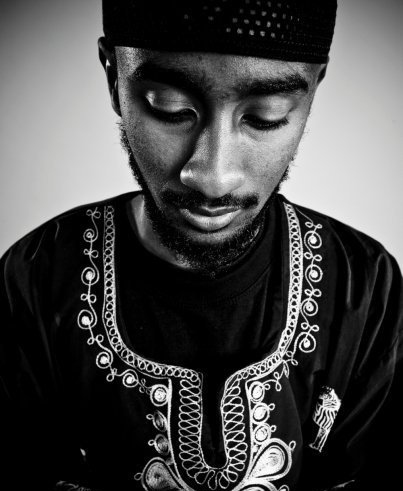
Boonaa Mohammed, a critically acclaimed award winning poet, writer, playwright and upcoming filmmaker paid a visit to the University of Minnesota as the keynote poet for the annual Poetry Jam hosted by the Muslim Student Association.
A 22-year-old Canadian-born Muslim, Mohammed is the son of Oromo refugees. His family is from Oromia, a region within Ethiopia that has been fighting for autonomy. There have been alleged atrocities committed against the Oromo people by the Ethiopian government.
“My parents were very heavily involved in the Oromo Liberation Front, as well as various movements to liberate the Oromo people. And at a young age, my parents were forced to flee Ethiopia,” said Mohammed.
They first moved to Djibouti where they sought asylum there and then they moved to Egypt. Soon after, they moved to Canada and Mohammed was born.
He started writing poetry at a very young age. Mohammed, a super-spiritual individual, says he sees himself as a storyteller who uses poetry to express his inner thoughts, attitudes and feelings about religion, politics, different relationships and other things that interest him.
“Like many young people, I was into hip-hop. When I was growing up, I used to rap and I always had a thing for storytelling and that is all I do, I tell stories. I was always interested in words and where they can take you and your mind. It was a natural progression from my childhood. And now I explore my storytelling in many different mediums,” he said.
Mohammed is a unique character known for his sense of humor and captivating presence on stage. He has toured the world and has also traveled extensively across the United States as the front man of a group called the Kings of Kush. He has won numerous competitions and poetry slam awards including winner of the 2007 CBC Poetry Face-Off “Best New Artist” award.
Aside from being a poet, Mohammed is also an activist and works closely with youth. He conducts writing workshops and seminars to share his experience with predominantly disenfranchised kids. He says he loves working with kids and believes that passing the ancient tradition of story telling to the younger generation is important.
“I do a lot of spoken word workshops with kids really under the framework of communications. I am teaching these kids effective communications techniques, especially kids from rough neighborhoods; they don’t know how to express themselves. As Muslims we are supposed to join good and forbid evil; by doing acts of good in this world, you are respecting the authority of Allah (God) and it becomes an act of good. And for me, I come with a mindset of helping these kids to speak up against evil,” Mohammed said.
Mohammed is currently working on crossing over into the world of theatre. He has a writing residency at the Theatre Passe Muraille in Toronto. He is working on his first play entitled “Purple Don’t Cry Love.” His latest album is entitled “Stranger to this World.”
Liberian Peace Activist: “……the price for not getting involved, threatening”
In Minneapolis for Women’s Day Celebration, Leymah Gbowee Urges African Diaspora to Find Firm Footing in U.S.
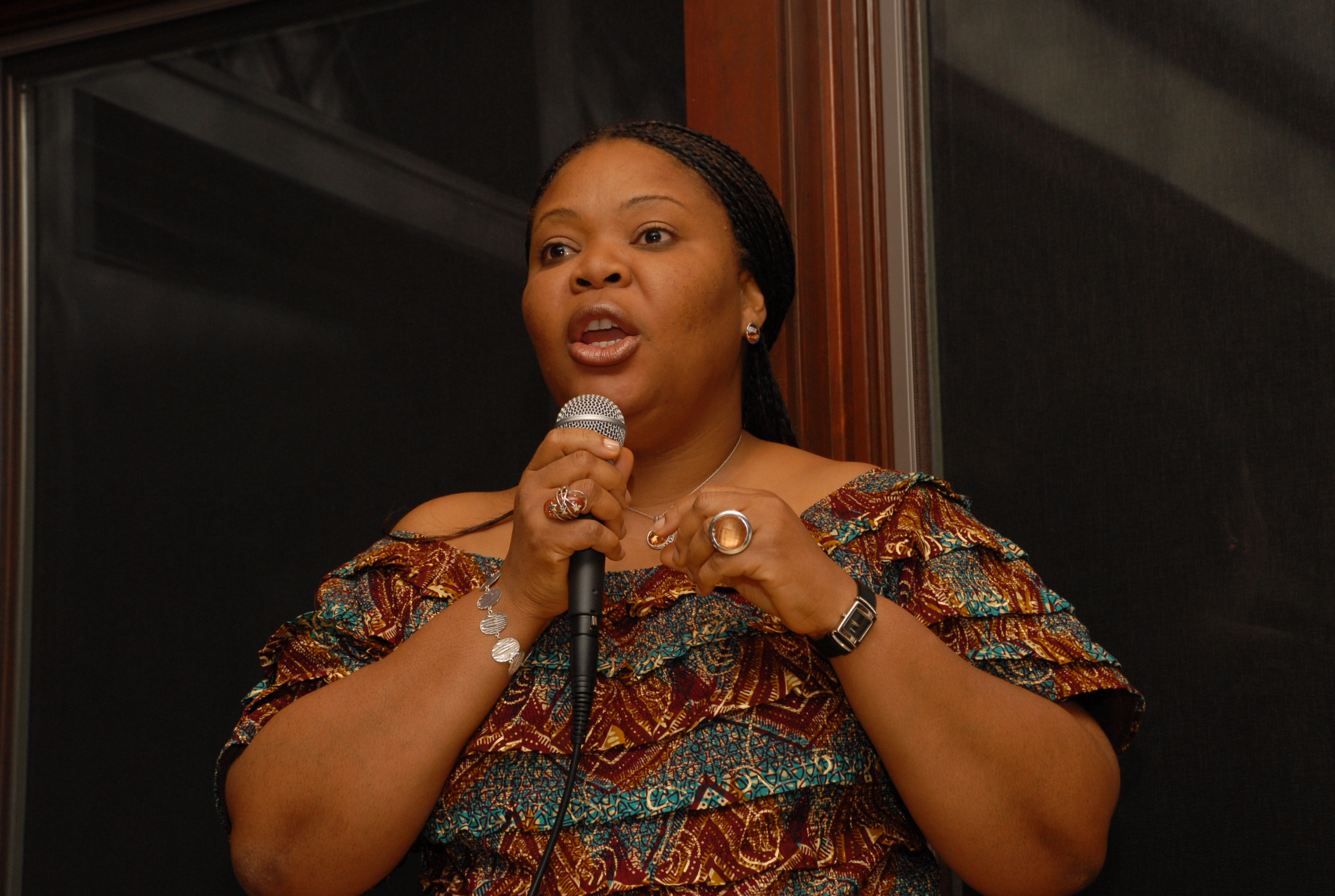
Leymah Gbowee was in Minneapolis on Saturday, March 6th at the Coffman Memorial Union where she gave the keynote speech for the 15th annual International Women’s Day celebration hosted by The Advocates for Human Rights and the Human Rights Program at the University of Minnesota. The event was themed “Inspire. Act. Change!,” and included a keynote address, workshops, film, and performances.
Organizers shared a teaser of the film, “Pray the Devil Back to Hell,” a powerful documentary on how Liberian women brought an end to a devastating civil war and reclaimed their country. Following the short viewing, Gbowee took the stage.
Gbowee, part of a delegation of women whose tenacity and energy inspired the 2008 film that attempts to reconstruct this account through interviews and footage from the war and beyond, was 17 years-old when the conflict broke. She found herself restless and broken by war and joined the Women in Peacebuilding Network (WIPNET).
“The price of sitting was getting higher… the price for not getting involved threatening,” she shared as she spoke on the catalytic events that ultimately lead to her organizing efforts in Liberia. She and others worked toward three demands: an immediate ceasefire, negotiation among disputing groups, and a viable settlement.
“In previous peace efforts, women would advocate for peace and then they dance, celebrate, and go back to cooking.” Wanting something more sustainable, they began an aggressive campaign that attempted to engage women in various elements of the civil society.
When proposals were submitted, knowing that many women were either too busy to read the entire piece or were otherwise illiterate, the delegation sat down every night and read one page, and then simplified and distributed the information to better inform community members. They set benchmarks, and organized to involve rural women, an often ignored population in the political process. They soon became heavily involved in the disbarment process of their sons and collected weapons, often breaking barriers of disengagement that split communities.
“When we were walking down the street people thought, ‘these women have swallowed the madness that is around then.’” Despite the gossip, dismissive diplomats, and the burden of a nation at war, the women proceed to organize an intensive community mobilizing campaign that sought register women 15 days prior to the deadline. They worked to strategically engage with women in a way that works for them. The delegation members helped other women cook, wash clothes, mind the shop, and other routine activities that would otherwise prevent some from registering. They registered almost 500 women, which was 50 more women registered to vote than men. “We were telling the international community that were we serious and that wanted to be involved,” Gbowee said. By successfully implementing this campaign and others, the women made a profound statement that they had the power to inspire, act, and change. This movement ultimately lead to election victory of Ellen Johnson Sirleaf, the first female president in the African continent.
As a result of this strategic engagement and diligence, they began to deconstruct structures of patriarchy and found huge successes that did not end after they achieved peace. The group moved on to reform laws that were unfavorable to women, including one particular law that only identified rape was only in instances of gang rape. They worked with female lawyers to change this law, and according to Gbowee, is one of the strongest rape laws in Africa – a crime that results in a 12 years to life in sentence without parole. The delegation of women also worked to give legal rights to women in rural areas and their children, as polygamy is practice but it is often the case that the wife in the rural area would be denied rights.
Gbowee cofounded the Women Peace and Security Network in Africa, an organization that seeks to enhance women’s participation in the civil society. The initiative grew from her work as an organizer and peace activist in Liberia. While her efforts in Liberia fueled a movement to involve women in all components of the civil society, her work has had a ripple effect across the African continent and beyond.
In her final comments, she challenged Africans in the audience, urging the diaspora in the United States, and particularly those from conflict-ridden societies like Sudan, the Congo, and Somalia to find a footing in America, as those back home depend on them for support and leadership.
Editor’s note: The following is a reflection of experiences and
observations by Mshale Staff Writer, Ramla Bile, who recently spent time
in Nairobi, Kenya as an Upper Midwest Human Rights Fellow, Promoting
Human Rights Abroad.
Promoting Human Rights Abroad
The Human Rights Center at the University of Minnesota Law School administers the Upper Midwest Human Rights Fellowship, a program that attempts to promote human rights and cultivate networks between human rights practitioners in our region and like-minded institutions across the globe. The experience allows those in the Midwest to engage with real human rights questions, and implement the rights outlined in the Universal Declaration of Human Rights.
Last fall, I went to Nairobi, Kenya to work with Horn Relief, a development and humanitarian organization in East Africa that primarily serves Somalia. Somalia has been at the epicenter of maritime issues and the “war on terror.” Too many NGOs have abandoned Somalia and moved on to work in other countries. Amidst this exodus, the few organizations that have remained find themselves constantly maneuvering around local and international issues. One organization that continues to have a constant presence in Somalia is Horn Relief (HR).
Horn Relief grew from the Somali Diaspora in the United States, and co-founder and former Executive Director, Fatima Jibrell, spent some time in Minnesota where many of her family members continue to live. Horn Relief has come a long way since its advent, and today, the organization stands as an oasis in a country entrenched in a twenty-year conflict, which continues to grapple with a devastating civil war, a brutal occupation, and the ongoing pressures associated with total state and infrastructure collapse.
The organization’s mission of “supporting sustainable peace and development in Somalia through grassroots capacity building, youth development, promotion of human rights and women’s leadership, and protection of the environment” takes a holistic look social progress from a deeply human rights lens. Horn Relief is headquartered in Kenya, a more stable country to plan and coordinate operations throughout the region.
As a young Somali-American, I naturally gravitated toward the organization’s hope, vision, and work in Somalia, as well as the opportunity to work with an organization that in many ways brought the diaspora to the homeland in a remarkable way.
From Migration to the Motherland
Growing up hyphenated in America and landing in Kenya was both jarring and natural. Jarring because the country is at a crossroads with regards to security and development, and with its 42 tribes, multitudes of spoken languages, and highly cosmopolitan cities, it is a natural place for anyone who has roots in the African continent. I was impressed with how easily I became absorbed in Kenyan society and was surprised that no one ever stopped to stare or gazed at me suspiciously. Race is almost innate in America. It has become routine that it surprises us when people aren’t fixed on our physical identity.
For African immigrants and refugees who grew up in the states, the first experience in the motherland is simply fulfilling. Many times, we romanticize Africa, and sometimes, even internalize degrading manufactured images and notions about the continent. We believe that tribal conflict is ubiquitous, and though such conflict does run deep in some African countries, it’s easy to dismiss the often-powerful displays of tolerance that is the African way. For example, Christmas, Eid, and Diwali are all acknowledged public holidays in Kenya, and are celebrated with brightly colored items at markets and neighborhoods – a refreshing scene considering the burst of disapproval that ensued when Best Buy decided to run an Eid special advertisement to target prospective Muslim customers last year.
During the first week of my fellowship, my organization’s offices were closed for two days in observance of Eid-al-fitr, and for the first time in my life, I felt like I belonged to society instead of lurking from beyond. I experienced the benefit of being the majority – the comfortable feeling of being acknowledged and catered to.
Kenya is both highly cosmopolitan and highly tolerant. The country is also a hub for non-profit and development activity. Kenya, a former British colony attracts young graduates from well-regarded British institutions like Oxford and the University of London’s SOAS.
Various UN agencies and widely renowned organizations like CARE, ACTED, and Save the Children have a prominent presence in Nairobi – all working to relieve suffering and promote human dignity through various projects. I landed at an organization that I felt was different from all other organizations in the city because I sensed a genuine grassroots partnership between Horn Relief staff, who were mostly locals, and those in the communities the organization served.
Implementing My Experiences in Midwest in Horn Relief
My experience with Horn Relief was incredibly uplifting and immensely challenging. I was brought in as the Communications and Information Fellow, and was responsible for producing material for the organization’s website and print needs. This work complimented my experience at The Advocates for Human Rights, and my constant interest in telling the stories of those who otherwise find themselves overlooked.
The impact of this organization is beyond anything that can ever be documented in an annual report or an A4 brochure. How do we tell the story of survival and relief in a way that captures the humanity of our work? The answer is quite simply that it’s impossible, but we try to tell such stories for a few reasons. First, we do so to give ourselves hope, and to remind ourselves the incredibly resiliency that we posses. We also tell such stories to appease the philanthropic community at-large, which wants to know how funding and resources are used.
Horn Relief exposed me to the very real challenges that emerge when we push for interventions or attempt to address critical human questions in the harshest of places. Not only did the global economic crisis impact the organization’s work in Somalia, but devastating natural disasters, and a precarious political situation that created new issues and intensified existing problems with food insecurity, livelihood and crop loss due to flooding and drought, and development.
The ambiguous political climate created new challenges, and the Sanaag region of Northern Somalia experienced increased insecurity overall, which resulted in the establishment of roadblocks that severally limited Horn Relief’s operations in the area by causing delays that made transporting resources and food more dangerous and complicated.
The increased insecurity raised red flags for donors who want to ensure that their resources will be able to reach those in need. The threat of piracy made other funders uneasy and created additional funding barriers.
Through Horn Relief, I was able to observe the many complicated layers of international development from remote management (having a base in Kenya with satellite offices across Somalia), trends in the international philanthropic community, as well as the tragedies – natural and manmade that devastates populations. I was also able to witness what a couple of dedicated people from Minnesota were able to establish 8000 miles away with the vision of restoring peace and development in a country they loved with tools they inherited while abroad. Instead of simply exporting theories they absorbed from school, they returned with a mission of listening to the needs and ideas of local communities and implementing the product of such discussions.
I returned to the states with a strong sense that we can and ought to do much more. While I was waiting for my next flight at the JFK airport, a read a news piece on how the interplay between the financial crisis and violence in the United States. On a micro level, this insecurity is similar to various conditions in East Africa. The only difference is, the scale and circumstances vary. In many ways, my experience abroad highlighted the extremes of human rights violations, but the fear that such extremes can materialize in our home made me develop an acute sense of its signs in our own neighborhood – a perception I know to maintain as I continue my work in the Midwest.
To learn more about the Human Rights Center or the Upper Midwest Human Rights Fellowship, please visit www1.umn.edu/humanrts/. For more on Horn Relief, visit www.hornrelief.org.
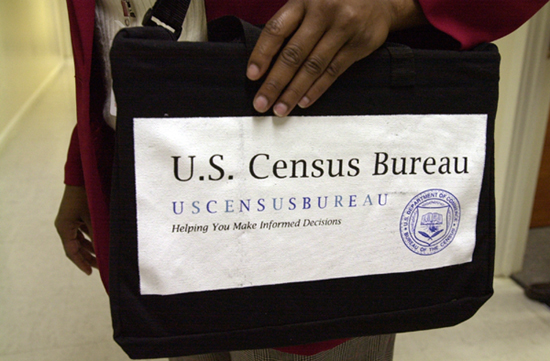
The 2010 Census wants to count every resident in the U.S. But many residents are concerned that their data may not be kept confidential. The Justice Department recently confirmed that no provision of the Patriot Act overrides the confidentiality law that protects census responses.
Recently, the Congressional Hispanic caucus raised this question again. Ronald Weich, Assistant Attorney General, U.S. Department of Justice, confirmed that data submitted on Census questionnaires will be kept completely confidential. One of the specific concerns raised by the Hispanic caucus was the Patriot Act. Mr. Weich assured the caucus that no provision of the Patriot Act supersedes Title 13 of the U.S. Code which protects Census data. When you fill out and mail back your 2010 Census form, your responses are safe and confidential.
No government agency, law enforcement agency, national security agency, court, or anyone else can access your Census responses – not anyone for any reason. No law, including the Patriot Act or immigration laws, overrides the confidentiality law that protects personal information collected by the Census Bureau. Nor can any court, government agency, law enforcement or landlord force the Census Bureau to share census responses until 72 years after the data was collected.
Every Census Bureau employee must pass a background check before being hired and must swear under oath to protect the confidentiality of census responses. This is an oath for life. Any employee who reveals any personal census information is subject to severe penalties — including a fine of up to $250,000, imprisonment of up to five years, or both. To date, and the Census has been conducted every 10 years since 1790, no confidential data has been released.
“Child Support” is a culmination of a number of things:
A child’s food; housing; clothing and daily care; these are also known as Basic Support.
The other aspect of child support is day care or child care costs for taking care of your child when you are unavailable, e.g. at work. This is Child Care Support
And the cost of health and dental insurance for your child is known as Medical Support.
These three items, Basic Support, Child Care Support and Medical Support, combined, make up Minnesota’s definition of Child Support.
You can get a child support order as part of divorce proceeding, child custody case, Order For Protection (OFP) hearing, paternity or even legal separation proceeding.
How is Child Support Amount Determined?
In January 2007, the state of Minnesota started using a new guideline for setting child support called income shares. Under the income shares guidelines, child support is determined by using the gross income (pre-tax income) of both the parents. These incomes, also known as Parental Income for Child Support (PICS), are added together and plugged into the MN child support calculator. The calculator is a formula developed by MN lawmakers that automatically calculates how much child support a parent is responsible for based on their share of the combined income.
After the parents’ incomes are combined, it is then divided based on the percentage of each parent’s income that made up the total. What this means is that if you make significantly more money than the other parent, for example, if your income is 70% of the PICS, after it is compared to a spending chart for your income level, you may be ordered to contribute more toward child support than the other parent. In calculating your child support obligation, the calculator allows you to plug in other child support you are ordered to pay or are currently paying and gives you credit for other children living with you before determining the amount you have to pay for child support.
For more information about the MN Child Support Guidelines Calculator, visit:
The time spent with your child/children also affects the amount you can be ordered to pay for child support. A custodial parent is the one who spends the majority of the time with the child/children. The non-custodial parent is the one who has less time with the children. For example, if you spend less than 10% of the time with your child/children, your child support does not change; however, if you spend between 10% to 45% of the time with your child/children; your support is reduced by 12%. If you spend over 45.1% of the time with your child/children and you have the same or similar income with the other parent, you do not pay any child support. Keep in mind, if you make more than the other parent, even if you spend over 45.1% of the time with your child/children, you will still have to pay some child support.
What about Child Care and Medical Support?
Typically, the parents are responsible for their children’s medical expenses and child care costs. The contribution of each parent will also be determined based on their income. If you are a non-custodial parent and your income is below the poverty guideline, that is if you make less than $10,830 for a family of 1, or $14,570 for a family of 2, you will pay a minimum amount for child support. The minimum amount that can be ordered is $50 per month for 1 or 2 children, $75 per month for 3 or 4 children and $100 per month for 5 or more children.
If you have questions about child support or any other issues in this article, utilize the Family Court Self-Help centers for your county or contact an experienced family law attorney. Consult a family lawyer to determine what your rights or obligations are with respect to child support or for any of the issues raised in this article.
Nothing in this article should be taken as legal advice for an individual case or situation. The information is intended to be general and should not be relied upon for any specific situation. For legal advice, consult an attorney experienced in family law.