Home Blog Page 243

With a Lot on Their Plate, South Africans Win Plate

Kenyans Lose Shield, Not From Their Flag
 
SAN DIEGO, Calif., Feb. 11 – In an apparent trade of fortunes between Kenya and South Africa at this year’s U.S.A. Sevens Rugby tournament in San Diego’s PETCO Park, South Africa took home the competition’s second highest trophy – the Plate – after a 28-19 win over Scotland.
 
Last year in Los Angeles, Kenya won the Shield after defeating the United States. South Africa returned home empty handed.
 
The South Africans started the final day of the contest with a 26-21 loss to Fiji. Although this was a bad start, it should have been a warning to South Africa’s potential opponents. Fiji was the top performer at the competition; therefore, a five-point loss to them was not bad, said Paul Treu, South Africa’s coach.
 
“I’m pleased by the fight we put up,” Treu said. “We really gave our best out there.”
 
Earlier in the tournament Treu had expressed his respect for island teams, saying he always expected a “physical battle” every time South Africa faced one. Fiji went on to win the Cup, the competition’s top trophy.
 
In the second match, the Plate semifinal, the South Africans dominated the team that ended their quest for a trophy last year, England, to win 21-14 and qualify for the final. Mzwandile Stick and Gcobani Bobo scored all South Africa’s points, 11 and 10, respectively.
 
In the final game against Scotland, the South Africans played knowing all African eyes were on them, after Argentina eliminated any hope of the Kenyans winning any trophy by whopping them 22-5.
 
The match against Scotland was so physical that South Africa’s Marius Schoeman left the field bleeding profusely from the face after a collision with a Scottish player.
 
South African and Kenyan fans, who stayed on their feet for the entire match, urged their continent’s team on, shouting repeatedly, “We want another one, just like the other one” after every try.
           
With only a two-point lead and the clock ticking, the South Africans knew they needed to put more points on the board. The opportunity came when a Scottish player fumbled the ball in a tackle deep in his team’s territory. Johathan Mokuena wasted no time. He picked the ball up and dashed to the end zone, sealing Scotland’s fate.
 
The Africans chanted, danced, stamped their feet, blew horns and waved their flags. South Africa had just won the second highest award of the tournament!
 
This was the fourth consecutive year the tournament has been held in southern California. Fans traveled from all over the country to Los Angeles to show support for their teams. Last year, however, organizers decided to move the two-day, 16-team, tournament to PETCO Park – the official home of the San Diego Padres – with hopes that the popularity of the stadium and its downtown location, accessible by public transportation, would boost attendance.
 
This year USA Sevens, the organization that owns the competition had an international festival in the main parking lot outside the stadium, featuring food, beer and wine, and a children’s play area. Ticket holders were allowed to reenter the stadium from the festival area – a privilege that kept all matches well attended.
 
South Africa and Kenya are the only African teams that participate in the tournament every year.
 

Islam is growing fast among African Americans

0
Islam is growing fast among African Americans
Islam is growing fast among African Americans, who are undeterred by increased scrutiny of Muslims in the United States since the September 11 attacks, according to imams and experts.
 
Converts within the black community say they are attracted to the disciplines of prayer, the emphasis within Islam on submission to God and the religion’s affinity with people who are oppressed.
 
Some blacks are also suspicious of U.S. government warnings about the emergence of new enemies since the 2001 attacks because of memories of how the establishment demonized civil rights leaders Martin Luther King and Malcolm X.
 
As a result, they are willing to view Islam as a legitimate alternative to Christianity, the majority religion among U.S. blacks.
 
"It is one of the fastest-growing religions in America," said Lawrence Mamiya, professor of religion at Vassar College, speaking of Islam among black Americans.
 
He said there were up to 2 million black U.S. Muslims but acknowledged there are no precise figures.
 
"It’s not viewed (by authorities) as a threat because the numbers are small and once we get past the war on terror and all the negative images then it will continue to spread."
 
Black Americans typically attend mosques separate from Muslims from immigrant backgrounds despite sharing common beliefs, according to Aminah McCloud, religious studies professor at DePaul University in Chicago.
 
But imams in Atlanta, a U.S. center for black Muslims, said they were subjected to less scrutiny than Muslims from the Middle East and Indian sub-continent.
 
RAP BROWN’S MOSQUE
 
Many blacks converted during the civil rights era, when Malcolm X helped popularize the Nation of Islam, attracting boxer Muhammad Ali among others. Islam still attracts prominent blacks such as rapper Scarface, a recent convert.
 
But the Nation of Islam has declined as a force at the expense of an association of mosques led by Warith Deen Muhammad, the son of Nation of Islam leader Elijah Muhammad, who died in 1975.
 
At a street-corner mosque in one of Atlanta’s oldest and poorest neighborhoods, a recent Friday sermon illustrated the power of the history of Islam in the United States for blacks.
 
Men and women sat separately on the mosque floor, heads covered, as cleric Nadim Ali recounted stories from history of Muslim slaves brought from Africa who struggled to uphold their faith in the face of slaveholders’ opposition.
 
If Muslims could remain true to Islam under slavery, the audience should follow their example, Ali said at the Community Masjid of Atlanta in the city’s West End district.
 
“You are talking about a people who were cut off from their roots …. Islam reconnects you with Africa and with other parts of the world so your peoplehood transcends race," Ali said later in an interview.
 
The mosque has a direct link to a slice of black history. It was founded by H. Rap Brown, a one-time member of the 1960s Black Panthers group. Brown became a Muslim in prison in the 1970s and changed his name to Jamil al-Amin.
 
He was convicted for killing a sheriff’s deputy in Georgia in March 2000 and is serving a sentence of life without parole, but in his absence the mosque has continued what Ali said was the low-profile work of building a local Muslim community.
 
CONVERSION
 
The mosque teaches there was no distinction between Sunni and Shi’ite within Islam, according to people who attend regularly. Sermons urged Muslims to find work, stay free from crime and drugs and maintain stable family lives.
 
Ali said he assumed the mosque was bugged and infiltrated by informers, in part because its leaders remained skeptical about U.S. policies since September 11.
 
"They (the government) unplug black people and plug in Arabs or Muslims. They unplug Arabs and plug in communists. America needs war to maintain its economic status," he said.
 
The larger Masjid of al-Islam mosque in another mainly black neighborhood of Atlanta is part of Warith Deen Muhammad’s group. Its imam, Plemon el-Amin, said he was involved with local interfaith work as well as with a local Islamic school.
 
One recent Friday, Mark King, a new convert, and hundreds of others at the mosque listened to a preacher urge Muslims to seek God through the Koran. Followers of other faiths should seek God through their own holy books, the preacher said.
 
King, who wears his hair in dreadlocks, converted after visiting Africa for the first time and in Gambia read the Koran and realized its teaching chimed with his own beliefs, not least in fighting injustice.
 
"For young African Americans, there is some attraction to learning about traditions that have been associated with resistance to European imperialism," said King, who has adopted the name Bilal Mansa since his conversion. 

Ghana’s Education Trails 50 Years Behind

0
By Kofi Akosah-Sarpong
 
The issue of further reforming Ghana’s education system raises interesting questions in the context of the on-going debate about integrating Ghanaian/African values and experiences in Ghana’s development process. The interest comes from the fact that a country’s education system should be the motor of its progress. This should be openly grounded in the country’s core innate values mixed with the enabling aspects of the world development models, especially with ex-colonies like Ghana whose education system has for long been driven by British structures and content to the detriment of Ghanaian/African values and experiences.
 
By slowing the integration of African values and experiences in Ghana’s education system, students who are expected to drive the country’s future, have little understanding of how to steer Ghana’s progress. Other countries, such as South Korea, Japan and Malaysia, have overcome this problem.
 
The educated Ghanaian, almost 50 years after independence from colonial rule, still has not been able to refine the inhibitions within Ghana’s culture that have been stifling the nation’s progress. When a Ghanaian university graduate still thinks death is  caused by witchcraft, or Western values and experiences are superior Africa’s, the implications are that the educated Ghanaian is still not educated in the practical sense of development.
 
The educated Japanese or South Koreans do not think so because their education systems, which are balances between Western and indigenous values, have taught them to think from within their core values first and any other second. Nowhere do we see this more than the Japanese management system called “Kaizen,” which is a mixture of Japanese cultural intelligence and modern (more Western) management values.
 
Various Ghanaian governments have been struggling to reform Ghana’s education system in relation to the country’s progress. From the European-centred education system; the Dzobo Report of 1973 which set the tempo for new thinking about reforming Ghana’s education system, to the 1987 attempts to restructure the content of Ghana’s education, with initial spotlight on the implementation of the Junior Secondary School (JSS) program, Ghana’s education system, as a vehicle for progress, is yet to balance Ghanaian core cultural intelligence with that of the dominant British/or Western ones. In this sense, the long struggle for education reform appears far from being informed by Ghanaian cultural values in relation to the dominant Western ones.
 
The situation is so unrealistic that some Ghanaians are calling for the insertion of human rights values in the education system as a vehicle for rapid development without knowing that within the Ghanaian/African culture are  human rights values that have not been open for progress. It is, therefore, sad that a 23-year-old immature Canadian with faint knowledge of human rights, who has the notion that Ghanaians/Africans have no culture of human rights,  will fly from Toronto, Ottawa, Vancouver, Winnipeg or Montreal to Ghana and teach Ghanaians what human rights and development are. This is an insult to Africa’s rich indigenous norms and values of human rights.
 
If Ghanaian education policy-makers are to break from the past attempts to reform the education system and mint a realistic education system that is to drive Ghana’s progress, the new reforms should be holistic by consulting such traditional institutions like the National House of Chiefs and appropriate Ghanaian/African cultures, languages, knowledge and values, and the standards used by Ghanaian/African ethnic groups to legitimate knowledge. To further enhance the past efforts, the education policy-makers should move beyond the old and tired systems that do not help Ghanaians to think first within their cultural values, respect and have confidence in their values, and learn a bit from the Japanese or Malaysians, especially from their best practices, in their education system.
 
When Dr. George B.N. Ayittey argues in New Hope for a Beleaguered Continent that in African villages, one cannot become a member of a peasant organization or king without satisfying an eligibility requirement; trouble-makers can be expelled from a village and bad kings can be removed and that Africa doesn’t need the World Bank or outsiders to tell her to put her own house in order. He is, in a sense, saying that this indigenous leadership culture is not taught in Ghanaian schools.
 
The new attempts to reform Ghana’s education system should correct this disturbing anomaly in the country’s education system and development process by balancing the multiplicity of values within Ghanaian/African values with the already existing colonial and global structures and contents.
 

African Democracies for Sale

0

by Mukoma Wa Ngugi

Some of the most important threats to democracy in Africa are the International Republican Institute (IRI), USAID and other international NGO’s that are directly funded by the United States Congress. These are US foreign policy institutions that masquerade as philanthropic organizations of good-will all the while furthering American foreign policy. They are currently operating in over 40 African countries including Nigeria, Kenya and South Africa.

A brief history of the IRI is as follows: In a bid to make the world friendlier to US interests, President Ronald Reagan (a supporter of Apartheid South Africa) called for the creation of the National Endowment for Democracy in 1983. The US, he claimed, needed an organization that would “foster the infrastructure of democracy–the system of a free press, unions, political parties universities–which allows a people to choose their own way, to develop their own culture, to reconcile their own differences through peaceful means.” As a result the National Endowment for Democracy (NED), which spawned the International Republican Institute (IRI), the National Democratic Institute for International Affairs (NDI), and United States Agency for International Development (USAID) were formed. NED receives about $50 Million from the US Congress. USAID requested a staggering $9.3 billion for 2007.

Out of these three organizations, the IRI and USAID are the most active in the promotion of a world safe for US Democracy. The IRI at first “focused on planting the seeds of democracy in Latin America,” according to its website. After the “Cold War, [it] has broadened its reach to support democracy and freedom around the globe.” USAID states that U.S. foreign aid helps in “furthering America’s foreign policy interests in expanding democracy and free markets while improving the lives of the citizens of the developing world.” Through what NED terms Consolidating Democracy, democratic principles and sovereignty are being violated. The NED, IRI and USAID attempt to unify opposition against a target government. They provide strategic and monetary support to the opposition. They also infiltrate university student organizations, women’s and youth groups, trade unions, teacher associations and other sectors of civil society which they then into supporting the opposition parties that they have effectively turned into a coalition. Worse than instigating a coup (a top down mechanism of change), the IRI and USAID infect the very blood lines of the country by affecting “regime change” through civil society.

Consolidating Democracy was successfully used in what the IRI refers to as the color revolutions in Ukraine (Orange), Georgia (Rose) and Kyrgyzstan (Tulip). In Haiti, democratically elected Aristide was overthrown using the same methods of unifying a rag-tag opposition and then mobilizing civil society behind it. But some countries such as Venezuela remain a failed target. The IRI’s 2005 Programs in Africa webpage states that it “provided training for political parties in Angola to establish a strong and stable political party system, and reinforce the national reconciliation process.” In Kenya it “worked with political parties to teach them how to develop positions and communicate them to voters.” In Nigeria they “focused on strengthening and preparing political parties for the 2007 elections and fostering partnerships between the parities and civil groups”. And in Liberia the IRI “sponsored the first-ever formal presidential candidate debates.”

In September 2006, when receiving the IRI 2006 Freedom Award together with Laura Bush, Liberian President Ellen Johnson-Sirleaf thanked the IRI which “was particularly active in promoting [the] elections.” She added that: “Very quickly an office was established. They came, they did workshops. They brought political groups together. They worked with the media. They educated. They instructed. They supported. They assisted the process.” She was in fact recounting the steps taken to consolidate democracy in Liberia by the foreign NGO.

President Mbeki has in the past questioned to what extent South African civil society makes independent choices. This concern can be extended to the continent. For example, a Boston Globe survey “identified 159 faith-based organizations that received more than $1.7 billion in USAID prime contracts, grants and agreements from fiscal 2001 to fiscal 2005” as part of President Bush’s Faith Based Initiative. The implications here are obvious. USAID has also tied acceptance of Genetically Modified food to foreign aid even in terms of disaster as in the case with Zambia in 2002. Organizations such as Oxfam have showed that GM foods in Africa would in the long run be harmful to the small scale African farmer, lead to the destruction of local food economies, create a cycle of dependency and cause more acute starvation. It was an absurd case of stopping starvation today by creating conditions for more starvation tomorrow. And in even more direct interference with the internal economy and politics of African countries, USAID, has worked in concert with the World Bank to promote the now infamous Structural Adjustment Programs. But it is the hijacking of democratic processes by using civil society that should be of the most concern to Africans concerned with genuine democracy.

The IRI and USAID don’t have to win every African election they participate in – each parliamentarian and each political organization that gets a seat in the government becomes their lobbyist. In effect, they become shareholders in the new government. And as the American proverb says, “whoever pays the piper calls the tune.” To understand the absurdity of what Africans have accepted as a norm, imagine African countries financing a third party in the United States. And in addition they also train student leaders, trade unionists, journalists and the rest of American civil society how to oppose or overthrow the US Government. Americans wouldn’t stand for it.

African election processes should be monitored by the African Union, the African Peer Review Mechanism and the international community to ensure opposition candidates get equal time in the media. Campaign finance laws should make it illegal for both the opposition and the sitting government to accept foreign funds. Taxpayer money (with a reasonable ceiling) could even be allocated to opposition parties, depending on the number of legally registered voters.

Sitting governments in Africa have access to state money, state television and newspapers and easily attract business money to line their pockets, while the opposition feels compelled to take foreign money. But foreign money perpetuates the goals of the donor. As a matter of democratic principle, alternatives have to be found. With governments that don’t address debilitating inequality, growing majorities living in absolute poverty, and opposition parties whose foreign funding sets the political platform instead of focusing on the causes of the marginalized, the gains made by those who fought for democracy with content are under threat.

Quest for Anthem Uniting East Africans Gains Momentum

0
The search for the East Africa political federation’s National Anthem is on.
 
The East African political federation is the regional intergovernmental organization of the Republics of Kenya, Uganda and Tanzania, with its Headquarters located in Arusha, Tanzania. The East African Heads of State signed the Treaty for the Establishment of the East African Community in Arusha on 30th November 1999.
 
Six songs in English and Kiswahili by different composers in Kenya, Uganda and Tanzania have already been proposed and will be short-listed for further approval. Among the proposed anthems presented by Mamlaka choir at the Kenya National Theatre included East Africa land of Peace and Unity, Tupendane Tuungane Pamoja, Tupendane sote, East Africa bound forever. Others proposed songs presented by the choir led by its director Ernest Okumu Waomba were, Mungu Ibariki Jumuia ya Afrika Mashariki, and Jumuia ya Afrika ya Mashariki. Already, residents of the three East African states have been presented with the six proposed anthems simultaneously, which were selected from a list of 90 songs.
 
Kenya’s East Africa Community minister John Koech said a uniform national anthem would go a long way in strengthening the corporation among the East Africans. The three East African countries cover an area of 1.8 million square kilometers and have a population of 82 million who share a common history, language, culture and infrastructure. These advantages provide the Partner States with a unique framework for regional co-operation and integration.
 
By the end of March we will emerge with the most challenging and inspiring song for the East African community,” Koech said.
 
Composers of the songs and their resident countries were however not disclosed in order to make the vetting process free from any bias. A technical committee in the three East Africa countries will then come up with three songs, which will be presented to the heads of states of Kenya, Uganda and Tanzania.
 
The Committee on Fast Tracking East African Federation started its work in Arusha on 21 September 2004 when it picked its Chairman and adopted its programme of
work. The Members of the Committee are Hon Amos Wako (Kenya’s Attorney General), who was elected Chairman of the Committee, Prof. H.K. Amani (Tanzania), who was elected Vice Chairman; and Dr Ezra Suruma (Uganda) who was elected Secretary of the Committee. Associate Members of the Committee are Ms Margaret Chemengich (Kenya), Prof. Sam Tulya-Muhika (Uganda), and Mr. Mohamed Fakih Mohamed (Tanzania).The Members of the Committee were appointed by the respective Heads of State.
 
The three presidents will then choose one of the three songs which will eventually become the federation’s national anthem,” Koech said.
 
The presidents will launch the selected song as the federation’s national anthem in April.
 
The Kenyan technical committee will from February this year proceed to learning institutions, churches, and market places military barracks to get votes on the six songs.
 
Kenya’s Permanent secretary in charge of EAC affairs Mrs. Rachael Nzomo said, “The process is intended to be taken up to the grassroots level”.
 
The minister announced that the three governments are fast tracking the formation of the federation with Rwanda and Burundi is expected to come aboard with a population of 115 million by June this year.
 
As we become many in East Africa, we create a bigger impact in the African region,” Koech said.
 
In addition, East Africans will be the ones to have a final say on whether to enter into a political federation or not. According to Koech, the collapse of the previous East Africa Community was caused by failure by the governments of Kenya, Uganda and Tanzania to consult their citizens.
 
A National consultative committee on fast tracking the East African political federation has already been inaugurated.The committee is tasked with sensitizing the public and receiving memoranda on the principles underlying the proposed federation.The exercise is expected to stimulate awareness and participation of Kenyans on social, economic and political benefits of the political federation to ensure sustainability.
 
The committee has until the end of April to create awareness and collect Kenyans views on the proposed federation. Uganda and Tanzania started collecting views from their citizens in October when the East Africa heads of state launched the exercise simultaneously.The committee report would form the basis of deliberations at an EAC regional workshop that will consolidate findings from Kenya, Uganda and Tanzania.This will be subsequently considered by an extra ordinary summit of the heads of state scheduled for July.
 
Questionnaires would be used to gauge whether Kenyans support or oppose a federation.However, according to Koech, some clauses in the treaty for the establishment of the EAC treaties like the mode of nomination of MPs to the East African legislative assembly might be reviewed ahead of the federation.
 
The main organs of the EAC are the Summit of Heads of State and or Government; Council of Ministers; Co-ordination Committee; Sectoral Committees; East African Court of Justice, East African Legislative Assembly; and the Secretariat.
 
Prior to re-launching the East African Community in 1999, Kenya, Tanzania and Uganda had enjoyed a long history of co-operation under successive regional integration arrangements.These included the Customs Union between Kenya and Uganda in 1917, which the then Tanganyika later joined in 1927; the East African High Commission (1948-1961); the East African Common Services Organization (1961-1967); the East African Community (1967-1977), and the East African Co-operation (1993-1999).The regional co-operation and integration envisaged in the EAC is broad based, covering trade, investments and industrial development; monetary and fiscal affairs; infrastructure and services; human resources, science and technology; agriculture and food security;
environment and natural resources management; tourism and wildlife management; and health, social and cultural activities.
 
Other areas of co-operation include free movement of factors of production; and co-operation in political matters, including defense, security, foreign affairs, legal and judicial affairs.The core budget of the EAC’s Secretariat is funded by equal contributions from the Partner States. Regional projects and programmes are funded through the mobilization of resources from both within and outside the region.

Celebrating Diversity in the Workplace

0
The 19th Annual Multicultural Forum on Work Place Diversity was hosted at the St Paul River Center on February 20th and 21st 2007. The event is an initiative of the University of St Thomas and was co-hosted by the National Black MBA Association and Thomson Corporation.
 
The objectives of the forum, outlined under its mission statement, are to “advance diversity in the workplace by enhancing awareness and understanding to bring about an inclusive workplace environment”. The two day workshop had about one hundred participating companies.
 
Some of the topics were ‘How to retain a diverse workforce’, Advancing Talent of Color into Leadership’ and ‘Lets keep Talking About Race’. Comprehensive talks were given at each of these sessions and if implemented, would go a long way towards bridging the gap between the Caucasians and people of color.
 
On the second day of the forum, various companies hosted a career fair and during a visit to the WCCO TV stand, Ann Oullette, Contoller and John Daenzer, Assistant News Director, expressed concern for the lack of diversity at the television station urged minorities to apply for positions since they can offer a balanced view of what was happening in the Twin Cities.
 
Julie Parvis of Diversity Promotions fully understands the need to encourage integration in the workplace and runs a company that adds their logo to promotional material for companies that support affirmative action.
 
Roger McKnight, a Private Mortgage Banker for Wells Fargo, and member of the Black MBA Twin Cities Chapter, shed light on the fact that one did not have to have a Masters degree in Business Administration (MBA) to join the organization. He realized many people stayed away from seeking membership for this reason. He further explained that membership to the organization allowed one to network and have increased career growth opportunities.  
 
Keynote Speaker: Ambassador Andrew Young
Ambassador Young, a civil rights activist and the first African American US ambassador to the United Nations was one of the key note speakers at the Forum. He closed the session with a moving speech that urged the listeners to embrace diversity and understand that in order to survive and thrive in this economy, everybody needed to work together for a better future for all, starting at the grass roots level.
 
Ambassador Young in Africa
In a brief interview, with Mshale, after his speech, Ambassador Young talked about a recent visit to Livingstone in Zambia where he attended a meeting for the Southern Africa Enterprise Development Fund (SAEDF), and was able to approve funding for several indigenous enterprises, such as Liquefied Foods, based in Zambia. SAEDF’s objective is to provide financial services to previously disadvantaged, indigenous small and medium-sized enterprises (SMEs) in the southern African region.
 
Ambassador Young who was writing a memoir about Africa stopped because of the speed at which Africa is changing. He decided instead to produce documentaries, the most recent one is entitled ‘Rwanda Rising’ and looks at the country 12 years after the horrific genocide. Coffee growers are profiled as well as others who were affected by the atrocities. The documentary follows the peoples’ progress and how far they have come with the healing process. It highlights their determination to rebuild and forge on, despite their devastating loss. The genocide in Rwanda has slowly but surely hit people around the world and affected how we view each other as human beings. As new stories come out from the survivors, the determination by many to ensure such a thing does not repeat itself can never be over emphasized. 

Joyce Iyawe

0
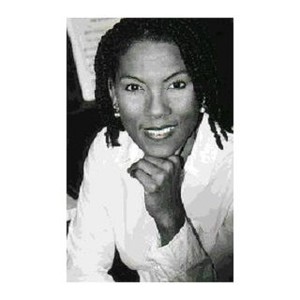
Eleda Eda Li Olorun Ni Da Ni” “The Creator made us with different qualities”. This Yoruba saying rings true for a young enterprising business woman, Joyce Iyawe.
 
Born in 1968 in the city of Ibadan, Nigeria, Joyce was exposed to business at an early age and by the time she was eleven, knew that she wanted to become a business woman when she grew up. Joyce is the second of four children, her parents Josiah and Alice Nehikhare always emphasized the need for a higher education. Joyce obtained a Masters degree in social work at Fordham University in New York. She never forgot her dream to be a business owner. She lived in the United Kingdom for a short period before deciding to move to the United States in 1990. Life was different in America and Joyce realized that this was where her dreams could finally be realized.
 
Joyce has always done other businesses outside her regular job, one of them was to braid hair at home, in her studio apartment in New York. Equipped with a large mirror and several plastic garden chairs for customers to sit on, Joyce created her hair braiding shop. What was striking about her decision was not the daunting fact that she would now be entirely responsible for sourcing her finances in a foreign country, but that she had very little knowledge about how to actually braid hair! She remembered what she saw other braiders in Nigeria at her mother’s salon-spa do and after practicing on friends and family in New York she had mustered up enough courage to start on her own, she put up fliers in her apartment complex, informing people of her skills and waited to see what would happen. The response was great and she developed a regular clientele.
 
She was also involved in business with her mom Alice and exported hair and beauty supplies as well as exercise equipment, to Nigeria. Her mom ran a spa-salon called ‘Alique’ which offered head to toe treatment.
 
Joyce, who had married and became Mrs. Iyawe, gave birth to a miracle baby boy who was four months premature. The challenges faced with raising a delicate soul like his were enough to make any mom give up on her initial dreams and concentrate on the care and keeping of her child. Undaunted by her epic responsibility, Joyce carried her business dream in her heart and not only did she give birth to another baby boy, three years later but her determination to survive by generating her own income led her to launch her new business, Pampered Hair Haven, the first and only one of its kind to be run in Minnesota. Pampered Hair Haven, is a human hair extension business that manufactures and supplies all-natural, 100% human hair and caters to women of all races.
 
A typical day for Joyce starts at 05:30 am. “The first thing I do every morning is focus. I get my self into a relaxed frame of mind and plan the day ahead. Once I have a clear vision in my head, I head down for my first cup of coffee.”
 
The boys leave for school at 07:30am and 09:00am, after a home cooked breakfast. She then drives to her shop, about fifteen minutes away from her home in Plymouth and opens for business at 10:00am.
 
I love to go to work everyday because it is truly exciting for me to meet or talk over the phone to my customers.” Joyce truly believes that you should have a passion for whatever you do in life and spreads the belief that every woman deserves to be pampered. She calls it her mission in life. Her passion for the well being of women is apparent to those she meets, as she encourages them to set aside time for self rejuvenation wherever possible. She also believes strongly in net working and loves it when she helps women to connect and grow close through her.
 
Her shop provides a relaxing atmosphere for women to sit and relax while they wait for their orders. It has also been used as a convenient meeting place for women on the go, to catch up on life and discuss business, kids and social plans face to face. Her shop closes officially at 6:00pm but Joyce has stayed late on many an occasion filling out last minute orders to ensure prompt customer satisfaction. At the end of the day, she goes home to her children to hear how their day went and attend to their needs.
 
I juggle a lot of things in my life but I make sure that at the end of the day, I make time for some peace and quiet on my own to relax and regroup.
 
Her website, pamperedhairhaven.com, highlights the excellent quality of hair offered. Women who are familiar with the hair are eager, repeat customers and are excited that this industry, previously found in larger metropolitan cities, is now available in Minnesota.
I love the fact that my company provides a service that contributes to building self esteem in women because there is nothing like a bad hair day to ruin a whole day!”
 
Joyce’s role model is her mom Alice who has always believed in her. When asked what she would do differently were she given a chance to do things over, she said she would educate herself more on the financial aspects of running a business in America.
 
She advises women who are seeking to become business owners, to get information from organizations such as Women Venture. Joyce also net works through organizations like African Women Connect, Channel Afrique, Sister Spokesman, Upswing and the Living Word Business networking group.
 
Joyce also had these gold nuggets to give to her aspiring African sisters.
Sharing information is very important because it brings blessings to both parties. It is good to be your sister’s keeper.”
 
Joyce, a dedicated mother would like those she meets to remember her as a woman with a passion for the pursuit of happiness.”
 

Eritrean feature story

3
Like many Eritreans living in Minnesota, Almaz Ghilagaber has lost relatives to war—perhaps too many to name.
 
Among others, two of her brothers died during Eritrea’s 30-year struggle for independence from neighboring Ethiopia. Another one had his leg blown off by a land mine. Africa’s longest civil war cost 65,000 Eritrean lives and untold destruction, but in the end the Red Sea nation of greater Horn of Africa won its independence despite staggering odds against them.
 
Ghilagaber has always considered herself an Eritrean patriot. However, she now worries more about what the Eritrean government might do to her relatives than any foreign army. Unlike many in her expatriate community, she has also started to speak out about what she sees as horrific human rights abuses and persecution.
 
“Many Eritreans believe as I do, but we are afraid to talk,” said the 49-year-old Ghilagaber. “I hope I am opening the road for people to talk. We are in a free country here.”
 
Ghilagaber is not the only one. A newfound group, the Eritrean Forum of Minnesota, has tried to spark debate about Eritrea’s human rights abuses among other issues under the dictatorship of Eritrean president, Isaias Afewerki. Forum members have begun to produce radio and television programs for local KFAI community radio and MTN cable access stations. While many abuses have long been reported by international human rights organizations, the local group’s open democratic discussion threatens to stir up controversy in a community still deeply nationalistic, but also fearful of how a draconian Eritrean regime might affect both them and their relatives back home.
 
“Even two years ago, it was unheard of that 25 people would come out for an opposition meeting,” said Eritrean Forum co-founder, Petros Haile. “We call ourselves the silent majority. People are becoming fed up with what they see back home.”
 
Life in Eritrea
 
In December of last year, Amnesty International reported that the Eritrean government had raided a village six miles from the capital city of Asmara and indiscriminately arrested and imprisoned over 500 people. Ghilagaber said that she had close relatives arrested in that raid, and she fears for their lives. Such arrests have been widely reported in recent years and often target the relatives of young men who have fled the country to desert or avoid conscription into the army. For Ghilagaber, the reports remind her of the last time she was in Asmara five years ago.
 
“It was hell. [Soldiers] would take the youth from the streets and force them into military service or put them in jail,” she said. “It is a martial court. There are no attorneys. There is no trial. Once you are in jail that is the end result. You are history.”
 
Besides relatives of army deserters and objectors, the government, according to Amnesty International reports, has targeted religious groups, particularly Evangelical Christians, and journalists. (As the March issue of Mshale went to press, the human rights watch group gave “high credibility” to a report that a renowned Eritrean journalist and playwright, Fessahaye Yohannes, had died while in a clandestine prison because he was denied medical attention.) In their annual reports, Reporters Without Borders consistently ranks Eritrea as having one of the worst records of press freedom in the world often in the same league as North Korea.
 
Ghilagaber said that after being an Eritrean freedom fighter, her surviving brother joined the opposition and often became subjected to interrogations, as did she. He eventually escaped to Italy and she was able to receive asylum in the United States in 2002.
 
“At that time, they had thrown several Members of Parliament and journalists in jail,” she said, and then explained that anyone even suspected of being part of the opposition could be jailed. “We were afraid for our lives.”
 
Eritrean History
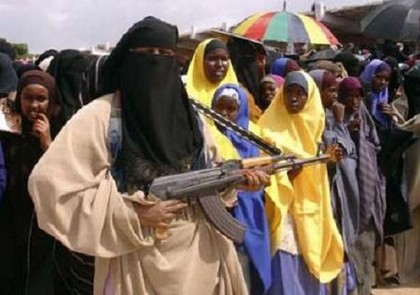
It would take volumes of books and decades of hindsight to untangle Eritrea’s history and the current regional crisis in the Horn of Africa. Conflict between Ethiopia and Eritrea spans over a half century, and a dispute about the border between the two countries, which led to all-out war in 1998, is still unresolved. In recent years, the war-ravaged nation of Somalia has, in part, become a proxy struggle between the archenemies with Eritrea supporting the Council of Islamic Courts and Ethiopia backing the internationally recognized Transitional Federal Government. Over December and January, a U.S.-supported Ethiopian invasion of Somalia drove the Islamic militias from Mogadishu.
 
Eritrea’s alignment behind the most radical faction of Somali’s Islamic courts has furthered its tense relations with the United States, as reflected in recent remarks by Assistant Secretary for African Affairs, Jendayi Frazier, at the African Union summit in Ethiopia. According to some African political experts, Eritrea has become increasingly more anti-American and volatile as it becomes more centralized and insular.
 
“The Isaias government is making alliances with anyone who help them in the short term,” said Professor Dan Connell, who has studied and written about Eritrea for over 30 years. “[Eritrea] has become a renegade in the region, a power that could be a threat to any of its neighbors.”
 
What makes the political situation all the more confounding is that Eritrea stood as a beacon of African hope for democracy, stability, and equality upon its independence in 1993. Connell was one of the few journalists and scholars who had continual inside access to Eritrean rebel forces during the 1970s and 80s. He wrote innumerable articles and books following the liberation movement and its aftermath often praising its leaders overall and the social programs started during the revolution.
 
Even through the 1990s, he saw signs of hope as Eritrea launched a grassroots movement in drafting its constitution, which was finished, but never implemented nor enacted into law. It was with the 1998 war with Ethiopia that, he said, marked a turning point for Eritrea that has led to its current oppressive state. He added, however, that the signs of that direction began long before independence if some journalists failed to recognize or fully appreciate them.
 
“The 1980s saw tremendous disillusionment in Eritrea,” said Connell. “Isaias lost his bearings and fell into rabid nationalism. He saw himself as embodying the nationalist movement. Now he has moved into pure megalomania.”
 
It is a far cry from what Connell wrote in the epilogue to his seminal book about the Eritrean revolution, Against All Odds (Red Sea Press, 1993):
 
“The maintenance and development of democracy in the political sphere will be the key to the continuation of the revolutionary process,” he wrote. “For this to happen, ordinary citizens must be the guardians of the revolution as well as the agents of future change.”
Oppression
Instead of agents of change, Eritrean citizens have become subjects of oppression, according to many in the expatriate community willing to speak publicly. Several people declined to be interviewed or identified during reporting for this story no matter their political perspective. Many others simply did not return phone calls.
 
There are hard realities behind their hesitancies. Many Eritreans expressed fears about possible retribution against their family members in Eritrea if their names were to be publicized. They spoke about a vast system of tightly knit informants and government supporters across expatriate communities and various forms of government intimidation.
 
One longtime prominent Eritrean in the Twin Cities who refuses to be intimidated is Yohannes Zemedhin.
 
“We know some of the people who are informants or just puppets of the government,” he said. Zemedhin was a founding member of the Eritrean Community of Minnesota, which started in 1986, and owns and operates the well known Red Sea Bar and Restaurant in Minneapolis.
 
“There are no human rights in Eritrea at all,” he said. “One person can blame you for something, and you end up in jail.”
According to Zemedhin, that’s exactly what happened to him when he visited Asmara in 2002. He said that, upon landing at the airport, undercover government agents confiscated his passport and imprisoned him without telling him what he had done. He said that he spent two days in prison alongside Eritrean journalists and he was interrogated every hour. He added that powerful relatives of his in Eritrea were able to negotiate his release. Otherwise, he could have ended up like the thousands who disappeared.
2% income tax
 
Zemedhin, like others who do not support the Eritrean government, have also foregone paying the so-called 2% duty to Eritrea on their income. It is widely known in the community that the Eritrean government demands that all people of Eritrean heritage pay them 2% of their income regardless of citizenship or country of residence.
 
“If you don’t pay the 2%, your family will have problems,” said Haile. “That means that you are not Eritrean. You have no privileges at all. It is a control system for the government. They will start to try to know everything about you.”
 
For Haile, Ghilagaber, and others who want to engage the Eritrean community worldwide in a democratic discussion, such risks are worth their cause.
 
“My brothers died for justice in Eritrea, but there is no justice,” said Ghilagaber. “Yet nobody is going to abandon hope.”

A Mogadishu Rape Victim Finds Hope in Minnesota

0
Just six months ago, Murayo Nur Ali was told that she had no hope of being treated for a severe injury she suffered during a gang-rape at age 7.
That was in Mogadishu, the capital of Somalia. But on Monday, she was full of hope as she stepped out of a private jet that flew her to Rochester for treatment at the Mayo Clinic.
 
Though Ali is 11 now, she looks like she hasn’t grown much since the attack. She’s gaunt and her wide eyes look languid. Still, she managed to smile and seem playful as she strode through dozens of people who waved encouraging signs and flowers at the Rochester International Airport.
One sign read, “The bad part is over.”
 
It’s exactly the message that the couple who sponsored Ali wanted to send her. The Rochester pair, Abdi and Zahra, who wouldn’t give their last names because they didn’t want to be overwhelmed with all those in need, didn’t know Ali until they read her story on a Somali website.
 
“We couldn’t sleep the night we saw [Ali] on the Internet,” said Abdi, who began to mobilize a network of people and organizations to help Ali. “She’s just like my 3-year-old daughter.”
 
Severe Injury
 
Ali was 7 when thugs kidnapped her near her family’s home in Mogadishu. She was going to a nearby grocery shop to buy cooking oil.
 
“Before you reach the shop, you will have to pass some old buildings which were ruined in the civil war,” according to a statement on the website Somalitalk.com from her father, recounting the events of that fateful March morning in 2002. “After [she was] away for 30 minutes…., I heard screaming…I stood up and went outside to see the situation. Immediately, I found some people carrying up my daughter bleeding…”
 
The Somali doctor who examined Ali said in a statement that “her genital organ and rectum was extraordinarily opened up beyond recognition.” She used diapers until now.
 
With meager resources and lack of equipment, the doctor could only offer limited treatment, but made it clear to her family that Ali must be treated outside Somalia.
Ali’s 64-year-old unemployed father was devastated. He’s so poor that he couldn’t even afford a taxi ride to the hospital.
 
Then, a Mogadishu-based nonprofit organization, known as COGWO, published Ali’s ordeal on Somali websites. It was the right step at the right time for the right person. Thousands of miles away in Rochester, Minn., a young Somali couple was moved, so much so that the two cried for days after they saw Ali’s tormented face. They sent more than 600 frantic e-mails to their friends. The response was massive, but disorganized. Then they began narrowing down their options.
 
Laborious process
 
The arrangement to bring Ali to the United States was laborious and elaborate. From last August until now, Abdi and Zahra spent at least 20 hours a week calling hospitals, foundations, attorneys, nonprofit organizations and government agencies. Their cell phone bill was skyrocketing to about $400 a month for making so many international calls.
 
“I just wanted to show [Ali] that there is a hope somewhere,” said Abdi.
At times, the couple, who have three of their own children, hit snags. Some friends told them that they were attempting the impossible. But they were determined to bring Ali to Mayo Clinic at any cost.
 
“I never hesitated to help her,” said Abdi, who refers to Ali as “my daughter.”
 
A collective effort
 
Though he and his wife took the initiative, Abdi has gotten a lot of help. A staffer at COGWO accompanied Ali and her father to Ethiopia to help them obtain the visa. U.S. Sen. Norm Coleman, R-Minn., pushed the Homeland Security Department to issue the visa quickly. The city of Rochester offered a house for Ali and her father, who’s traveling with her. And a Somali charter school has already admitted her, even though her education is “probably below the level,” according to Abdi.
 
By November, the humanitarian visa was approved, the Mayo Clinic agreed to treat Ali for free, and the nonprofit Wings of Hope, paid the airfare from Somalia to Washington D.C., and then flew Ali and her father on a private jet to Rochester.
The corrective procedure on Ali is expected to last for at least a year. She will also receive psychological treatment for what the Somali doctor described as “acute mental scars.”
 
Meanwhile, Abdi and Zahra are already planning to help another child in Somalia.
 

Walker’s play, Amajuba: Like Doves We Rise brings forth healing

0
In 1994 apartheid officially ended in South Africa. The country’s constitution was rewritten and general elections were freely held. With the election of South Africa’s first black president, Nelson Mandela, released from prison a short four years prior, the last vestiges of the apartheid system were finally outlawed.
 
And so ends centuries of racial struggle and decades of acute persecution. The signs designating "Blacks, Coloured, and Asians" are gone. Forced relocation is gone. It is all gone. Except for the scars, except for the pronounced cicatrices stitched into the emotional skin of nearly every former resident of the ten homelands established in South Africa as a relocation for that country’s Black citizenry. 
 
Amajuba: Like Doves We Rise, a play showcased at the Walker Art Institute this past February, exposes these wounds, displaying for the audience the realities of growing up under government-sanctioned racism. Through the self-revealing stories of the actors, we witness the disintegration of families torn apart by resettlement and the beauty of self-discovery robbed by the brutality of gangs.
 
Ground-breaking in it’s portrayal of the ravishes of racism, Amajuba begins the healing process, says director and playwright Yael Farber.
 
"I was commissioned by the North West Arts Council to write and direct anything I wanted," Farber tells me by phone before their run at the Walker. 
 
Working with five resident actors who were employed by the arts council at the time, Farber elicited their life stories as children under a minority-lead country. 
 
"Once they agreed to share their stories, I went about with interviews," Farber says. 
 
Farber acknowledges that she grew up on "the other side," in Johannesburg as a member of the elite. "I felt very strongly about the need to be a part of the healing," she confesses.
 
Thursday night, on a stage bare of any scenery, the five actors commence to tell their stories. Out of darkness a single voice begins to sing, lamentation mixed with hope is heard in the strong, distinctive South African choral voices.
 
“We are the lost generation of our country,” says one voice.
 
Another cries out, “Our lives were governed by hunger.”
 
We hear, “Why do I grieve for what was never mine?”
The stage lights rise and we see each performer standing or sitting in her or her own wash tub. One by one they recount that universal experience of being washed by their mothers as young children. But then the innocence is stripped away as parents are killed or disappear and children are raised by siblings, extended family, or on the streets as orphans. 
 
Each of the five actors tells his or her own story. Vulnerable during their childhood and again in exposing their most defenseless selves to an audience of over 330 people takes courage. Courage is one trait we’ve seen in each of them. 
 
“All I have is the voice God gave me to sing with,” one actor says as much to her fellow actors as to the audience. 
 
And another actor, remembering himself as a small boy, “I don’t remember what it is to be afraid anymore and sometimes I wish I could.” 
 
Still they have carried on, persevering during a time of legalized racism. Beyond the unique stories told by each actor: the gut-wrenching account of an eight year old orphan abandoned to fend for herself, the ache of watching a young boy shift miserably between groups as he searches for a place that a "half-breed" might claim, and the unfathomable shock of watching a young woman undergo the barrel of a pistol shoved in her mouth and who knows where else as she submits to gang behavior, Ms. Farber provides a platform for the actors to tell their story and the audience to fully absorb an uncomfortable tale.
 
More than observing a play, we are drawn into the experience. When the cast washes away implied tear gas, they splash water far across the stage, sprinkling the first few rows of the audience. And when they bury their dead, shovel upon shovel of red, dusty dirt is flung from corner to corner, billowing up and filtering into the air as we breath and we can not avoid smelling the organic earth and feeling it tickle our nostrils, as we become a part of the burial.
 
A post-show panel discussion keeps many in the audience in their places.   Moderated by Reggie Prim, Community Programs Coordinator for the Walker Art Center, discussion starts with recognizing the impact of apartheid in the United States today.
 
Panelist Myron Orfield, Executive Director at the Institute of Race and Poverty, points out, “The whole process of racial integration that occurred throughout the sixties, has taken a step backward. Last year we became more segregated than we were in 1968. Apartheid is very real here.”
 
Hearing this, Prim exclaims, "That’s shocking. These may be the stories in the past of apartheid, but racism and apartheid and segregation are very sneaky devils and seem to be on the rise once more."
 
Acknowledging the arduous journey each actor had to make in recounting the struggle to survive in the townships and then to perform those stories over and over, actor Bongeka Mongwana says, "But if we hadn’t gone through [remembering the painful stories] we would not have found what we have found now. It’s very hard to explain what that is that we have found and because it’s too extraordinary. I would not have accomplished all that I have had I not gone through this process. So, it’s been good, it’s been really good. It gets dark before the nighttime ends, look what’s happened to all of us," she concludes, smiling.
 
Before the evening ended, I asked about the stunning music sung during the performance. 
 
Jabulile Tshabalala firmly tells us, “We are a singing nation.” 
 
And in spite of all the hardships they have suffered, not only like doves do they rise, but like all birds, they continue to sing.
 

African Business Fair

0
As the African community in Minnesota grows, so does the business community. To address this need, Pan African Business Alliance (PABA) will host its second annual business fair in April. Unlike other business fairs, PABA’s initiative will give prominence specifically to African businesses.
 
A report released in 2005, by Dr. Bruce Corries for the US Census Bureau, estimates the total buying power of Sub-Saharan African immigrants in Minnesota at 708 billion dollars. He also estimates that six and four million dollars of these incomes are spent on rental and real estate investment. PABA recognizes that the purchasing power of the African immigrant is essential to the development of the economy will not just benefit the Minnesotan community at large, but also the improved economic status of families and individuals from Africa.
 
According to PABA officials, the business fair will create networking opportunities, not only for the African community, but also for Minnesotans interested in investing in this community.
 
The business fair, which will be held at Profile Center in Minneapolis on April 12th, 2007, will present immeasurable benefits to members of PABA and the community. There will be seminars and workshops, at little or no cost, to ensure that the African business community is educated on businesses practices. According to Henry Ongeri, one of PABA officers, the fair will industry specific seminars: accounting, tax and marketing tips, technology information among other things. 

Click here for time and date information.