Home Blog Page 59

US clears updated COVID boosters targeting newest variants

0
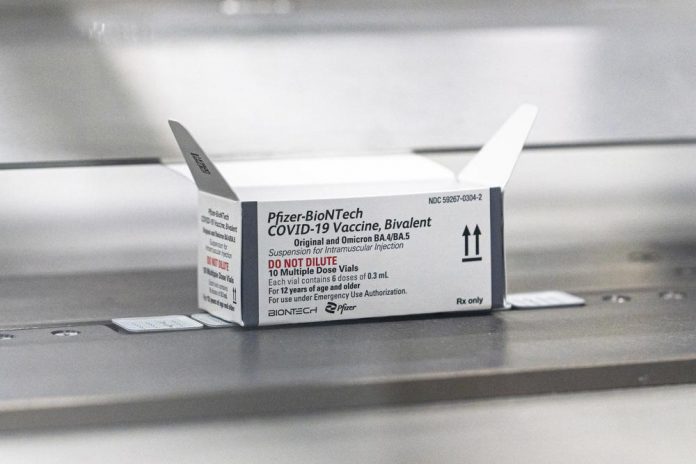
This August 2022 photo provided by Pfizer shows packaging for the company's updated COVID-19 vaccine during production in Kalamazoo, Mich. U.S. regulators have authorized updated COVID-19 boosters, the first to directly target today's most common omicron strain. The move on Wednesday, Aug. 13, 2022, by the Food and Drug Administration tweaks the recipe of shots made by Pfizer and rival Moderna that already have saved millions of lives. Photo: Pfizer via AP
PfizerAug2022
This August 2022 photo provided by Pfizer shows packaging for the company's updated COVID-19 vaccine during production in Kalamazoo, Mich. U.S. regulators have authorized updated COVID-19 boosters, the first to directly target today's most common omicron strain. The move on Wednesday, Aug. 13, 2022, by the Food and Drug Administration tweaks the recipe of shots made by Pfizer and rival Moderna that already have saved millions of lives. Photo: Pfizer via AP

WASHINGTON (AP) — The U.S. on Wednesday authorized its first update to COVID-19 vaccines, booster doses that target today’s most common omicron strain. Shots could begin within days.

The move by the Food and Drug Administration tweaks the recipe of shots made by Pfizer and rival Moderna that already have saved millions of lives. The hope is that the modified boosters will blunt yet another winter surge — and help tamp down the BA.5 omicron relative that continues to spread widely.

“These updated boosters present us with an opportunity to get ahead” of the next COVID-19 wave, said FDA Commissioner Dr. Robert Califf.

Until now, COVID-19 vaccines have targeted the original coronavirus strain, even as wildly different mutants emerged. The new U.S. boosters are combination, or “bivalent,” shots. They contain half that original vaccine recipe and half protection against the newest omicron versions, BA.4 and BA.5, that are considered the most contagious yet.

The combination aims to increase cross-protection against multiple variants.

“It really provides the broadest opportunity for protection,” Pfizer vaccine chief Annaliesa Anderson told The Associated Press.

The updated boosters are only for people who have already had their primary vaccinations, using the original vaccines. Doses made by Pfizer and its partner BioNTech are for anyone 12 and older while Moderna’s updated shots are for adults — if it has been at least two months since their last primary vaccination or their latest booster. They’re not to be used for initial vaccinations.

There’s one more step before a fall booster campaign begins: The Centers for Disease Control and Prevention must recommend who should get the additional shot. An influential CDC advisory panel will debate the evidence Thursday — including whether people at high risk from COVID-19 should go first.

The U.S. has purchased more than 170 million doses from the two companies. Pfizer said it could ship up to 15 million of those doses by the end of next week. Moderna didn’t immediately say how many doses are ready to ship but that some will be available “in the coming days.”

The big question is whether people weary of vaccinations will roll up their sleeves again. Just half of vaccinated Americans got the first recommended booster dose, and only a third of those 50 and older who were urged to get a second booster did so.

Here’s the rub: The original vaccines still offer strong protection against severe disease and death from COVID-19 for generally healthy people, especially if they got that important first booster dose. It’s not clear just how much more benefit an updated booster will bring — beyond a temporary jump in antibodies capable of fending off an omicron infection.

Still, “people have to realize this is a different kind of booster than was previously available. It will work better at protecting against omicron,” said virologist Andrew Pekosz of the Johns Hopkins Bloomberg School of Public Health.

Even people who had an earlier omicron version still can get reinfected so “you should definitely go for the booster even if you’ve been infected in the last year,” added Pekosz. He thinks “if we can get good buy-in to use this, we might really be able to make a dent” in COVID-19 cases.

The FDA cleared the modifications ahead of studies in people, a step toward eventually handling COVID-19 vaccine updates more like yearly changes to flu shots.

FDA vaccine chief Dr. Peter Marks stressed the agency considered “the totality” of evidence. Pfizer and Moderna have previously brewed vaccine doses updated to match earlier mutants — including the omicron strain named BA.1 that struck last winter — and tested them in people. Those earlier recipe changes were safe, and the BA.1 version substantially boosted virus-fighting antibodies — more than another dose of the original vaccine — although fewer that recognized today’s genetically distinct BA.4 and BA.5 strains.

But instead of using those BA.1 shots, FDA ordered the companies to brew even more up-to-date doses that target those newest omicron mutants, sparking a race to roll them out. Rather than waiting a few more months for additional human studies of that very similar recipe tweak, Marks said animal tests showed the latest update spurs “a very good immune response.”

“One needs to refresh the immune system with what is actually circulating,” Marks said. That’s why FDA also is no longer authorizing boosters made with the original recipe for those 12 and older.

The hope, Marks said, is that a vaccine matched to currently spreading variants might do a better job fighting infection, not just serious illness, at least for a while.

What’s next? Even as modified shots roll out, Moderna and Pfizer are conducting human studies to help assess their value, including how they hold up if a new mutant comes along.

And for children, Pfizer plans to ask FDA to allow updated boosters for 5- to 11-year-olds in early October.

It’s the first U.S. update to the COVID-19 vaccine recipe, an important but expected next step — like how flu vaccines get updated every year.

And the U.S. isn’t alone. Britain recently decided to offer adults over 50 a different booster option from Moderna, a combo shot targeting that initial BA.1 omicron strain. European regulators are considering whether to authorize one or both of the updated formulas.
Cape Verdean singer Lucibela to perform at the Cedar on Sept. 16

0
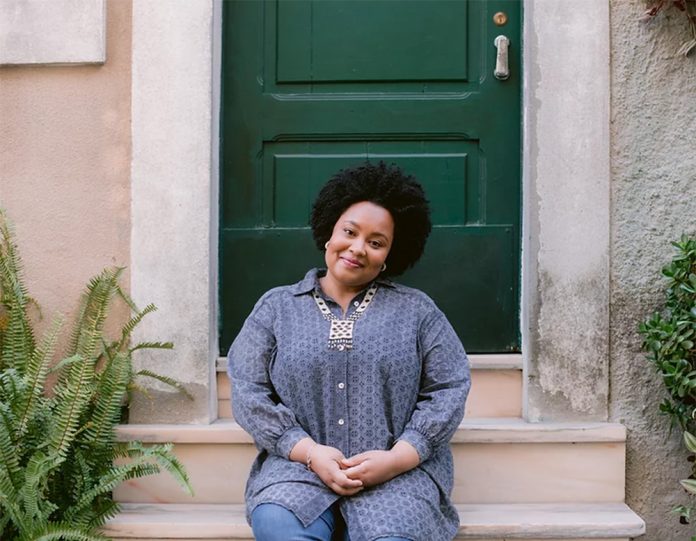
Cape Verdean singer Lucibela will bring her world tour to Minneapolis on September 16, 2022 when she performs at the Cedar Cultural Center. Photo: Courtesy of Lucibela
Lucibela
Cape Verdean singer Lucibela will bring her world tour to Minneapolis on September 16, 2022 when she performs at the Cedar Cultural Center. Photo: Courtesy of Lucibela

Lucibela will bring a night of Morna and Coladeria music to the stage when she performs at The Cedar Cultural Center September 16th. This will be her second tour in the USA. A second album, Amdjer, released in June of this year will fill much of the setlist.

Mshale spoke to Lucibela last week week. She reflected on the past two years. “Because of the pandemic, after being at home for so long, I started writing some texts that became my first compositions.” Although she’d attempted to write her own work previously, she admitted, “I always gave up”, but during the time of Covid, “I managed to finish about 6 songs of my own. I have now recorded two of these songs on my new album.”


Lucibela performs traditional Cape Verdean music, yet she makes it her own. Drawing on the inspirational Cesária Évora, the Queen of Morna who helped bring the tiny collection of islands that comprise Cape Verde into the public’s eye, Lucibela learned that to sing the morna, “we have to feel it.”

She continued, “when I sing a morna I think of the lyrics of the song, if it is sad I feel it, if it talks about love I feel it too. I try to perceive the story, feel it and convey it to the audience. That’s what makes me sing a morna; it’s my way of feeling and transmitting the music when I sing. I believe that these feelings are unique to each person.”

Cape Verde, uninhabited until it was colonized by Portugal in the 1400s, sits almost 600 miles to the west of Senegal and three times that distance from Portugal. The country asserted sovereign rule in 1975. When Cesária Évora earned a Grammy in 2004, the country pointed a spotlight on its rich musicianship.

Although the Barefoot Diva passed in 2011 when Lucibela was 25, still five years away from debuting internationally, a tremendous impression was made.

“I want to continue to spread Cape Verde’s music to the world. Cesária showed us that it is possible to be a great artist even being from a small country like ours, she makes me believe that it is possible to dream and pursue this dream of making a career in our traditional music and taking it to the four corners of the world.”

One of those corners will be Minneapolis.

Tickets can be purchased here. Doors open at 7 pm and the show begins at 8 pm with Douala Soul Collective as the opening act.

Kenyan cyclist dies in crash during gravel race in Vermont

0
In this photo provided by Joseph Viger, Kenyan cyclist Sule Kangangi cycles at a gravel race in Vermont, Saturday, Aug. 27, 2022. Kangangi died in a crash later in the day, while competing in the race. Photo: Joseph Viger via AP
Sule Main
In this photo provided by Joseph Viger, Kenyan cyclist Sule Kangangi cycles at a gravel race in Vermont, Saturday, Aug. 27, 2022. Kangangi died in a crash later in the day, while competing in the race. Photo: Joseph Viger via AP

WEST WINDSOR, Vt. (AP) — Kenyan cyclist Sule Kangangi died in a crash Saturday while competing in a gravel race in Vermont.

Kangangi was riding at a high speed in the Vermont Overland race when he crashed.

“Sule is our captain, friend, brother. He is also a father, husband and son. Gaping holes are left when giant’s fall. Sule was a giant,” his Team AMANI posted on social media. “Instead of leading us at the front of the pack, he will now lead us as our guiding pole star as we press forward in the realization of his dream.”

Rachel Ruto, the wife of president-elect William Ruto of Kenya, posted on Twitter that she was shocked to learn the sad news that he had passed away after a tragic crash.

“My heartfelt condolences to his family, and the entire cycling community, that has lost a talented cyclist, a mentor and a friend,” she wrote. “We will all miss him as an individual. Kenya has lost a champion. Rest in peace Sule.”

Sule 2
In this photo provided by Joseph Viger, Kenyan cyclist Sule Kangangi, center, poses with others for a picture at a gravel race, in Vermont, Saturday, Aug. 27, 2022. Kangangi died in a crash later in the day, while competing in the race. Photo: Joseph Viger via AP

The Vermont Overland is a 59-mile (95-kilometer) dirt road bicycle race that includes nearly 7,000 feet (2,130 meters) of climbing, according to the race’s website. About 900 cyclists were competing on Saturday in the race that begins and ends in the community of Brownsville in the town of West Windsor, officials said.

“Vermont Overland is heartbroken by the tragic death of Suleiman ‘Sule’ Kangangi during The Overland yesterday,” Ansel Dickey, owner of Vermont Overland, said in a statement on Sunday. “He was a kind friend and an inspiring and heroic athlete to his teammates and the gravel cycling community at large. We extend our deepest sympathies to his family, his friends, Team Amani, and the people of Kenya who are mourning his loss today.”

US suspends Chinese airline flights in COVID-19 dispute

0
Air China planes sit on the tarmac at Beijing Airport in Beijing, China on Aug. 20, 2009. The U.S. government is suspending 26 flights by Chinese airlines from the United States to China in a dispute over anti-virus controls after Beijing suspended flights by American carriers. Photo: Greg Baker/AP File
Air China
Air China planes sit on the tarmac at Beijing Airport in Beijing, China on Aug. 20, 2009. The U.S. government is suspending 26 flights by Chinese airlines from the United States to China in a dispute over anti-virus controls after Beijing suspended flights by American carriers. Photo: Greg Baker/AP File

BEIJING (AP) — The U.S. government is suspending 26 flights by Chinese airlines from the United States to China in a dispute over anti-virus controls after Beijing suspended flights by American carriers.

The Department of Transportation on Thursday complained Beijing violated an air travel agreement and treated airlines unfairly under a system that requires them to suspend flights if passengers test positive for COVID-19.

U.S. regulators suspended seven flights by Air China Ltd. from New York City and a total of 19 flights from Los Angeles by Air China, China Eastern Airlines Ltd., China Southern Airlines Ltd. and Xiamen Airlines Ltd., according to the Department of Transportation.

It said that was equal to the number of flights United Airlines, American Airlines and Delta Air Lines were required to cancel under Beijing’s “circuit-breaker” system.

The ruling Communist Party’s “zero COVID” strategy aims to keep the virus out of China while other governments are shifting to living with the disease. That has kept case numbers low but disrupted travel, manufacturing and trade. Beijing is easing travel curbs, but most foreign visitors still are barred from China.

Until Aug. 7, if up to nine passengers on a flight tested positive, a carrier could suspend a flight for two weeks or reduce the passengers it carried to 40% of the possible total, according to DoT. It said that since Aug. 7 airlines have been required to suspend a flight if the number of positive tests reaches 4% of passengers on one flight.

The agency complained that airlines face “undue culpability” for passengers who present negative test results before boarding but test positive after arriving in China.

China’s actions are “premised on circumstances wholly outside of the carriers’ control,” the U.S. statement said.

“We reserve the right to take additional action” if Beijing imposes “further circuit-breaker measures,” the statement said.

Sen. Klobuchar, Rep Omar, join community to celebrate expansion of People’s Center clinic for immigrants

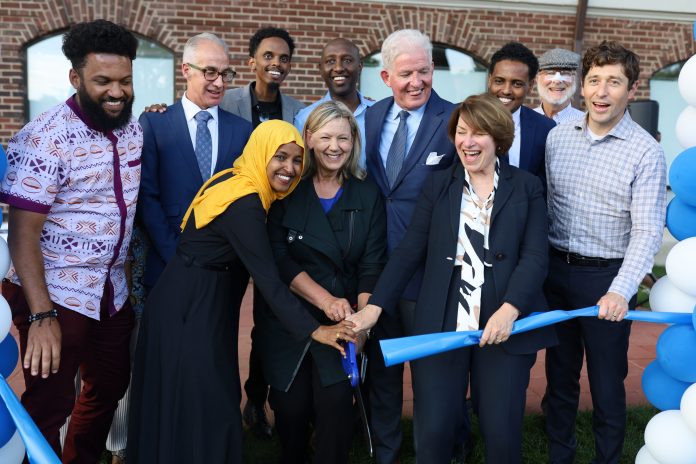
Rep. Ilhan Omar and Sen. Amy Klobuchar were some of the leaders at the ribbon-cutting ceremony for People's Center Clinic in the Cedar-Riverside neighborhood of Minneapolis on Tuesday, August 22, 2022. The clinic has been expanded to include a fitness center, a prayer room, and a multi-lingual call center. Photo: Panashe Matemba-Mutasa/Mshale
IMG 4222
Rep. Ilhan Omar and Sen. Amy Klobuchar were some of the leaders at the ribbon-cutting ceremony for People's Center Clinic in the Cedar-Riverside neighborhood of Minneapolis on Tuesday, August 22, 2022. The clinic has been expanded to include a fitness center, a prayer room, and a multi-lingual call center. Photo: Panashe Matemba-Mutasa/Mshale

Sen. Amy Klobuchar, and Rep. Ilhan Omar were in Minneapolis Tuesday to celebrate the expansion of a clinic that for over 50 years has been offering low-cost health care to immigrants in the Cedar-Riverside neighborhood. The new improvements to the Cedar-Riverside People’s Center Clinic include a walk-in clinic, a fitness center, a prayer room, and a call center with staffers who are fluent in several languages including Oromo, Somali, Spanish, and Amharic.

“As our immigrant communities continue to grow, I trust that many will seek the culturally inclusive care we offer at our facility” said Ann Rogers, the CEO of People’s Center Clinics & Services, the nonprofit that runs the clinics popularly known as People’s Center.

Omar said her family has a special connection to the clinic because she, her father, and her grandfather – all of whom were born in Somalia – benefited greatly from the clinic’s services in the past. Also, from 2014 to 2018, her sister, Sahra Noor, was the CEO of People’s Center Clinics & Services, the nonprofit organization that runs the clinic, she said.

“This isn’t just a clinic,” said Omar, whose congressional district includes Cedar-Riverside. “This is where you find community and people who actually care for you.”

Clinics like the People’s Center are important because they often step in to bridge the health care coverage gap that exists in immigrant communities and help people make easier transitions to the United States.  A report by the Kaiser Family Foundation found that there were great disparities between immigrant and non-immigrant access to health care. In 2020, 26% of documented and 42% of undocumented immigrants were uninsured, compared to less than 8% of U.S. citizens. Such clinics became even more essential during the coronavirus pandemic when a lot of immigrants found themselves without employment.

“As we were going through the pandemic, the lines outside of People’s Center were unreal,” said Mohamud Noor, a Somali-born member of the Minnesota House of Representatives “This expansion reflects a clear need that we have in the neighborhood.”

Klobuchar spoke about the importance of supporting immigrants as soon as they arrive in the United States, adding that it was especially important to have policies that support medical care services tailored to meet the unique needs of immigrants.

“Immigrants don’t diminish America; they are America,” Klobuchar said.

In 1970, a group of grassroots organizers who wanted to address the health care needs of students acquired an old chapel in the West Bank area of Minneapolis. They established the Cedar-Riverside People’s Center, one of the first clinics in Minnesota to offer free medical services, according to the organization’s website. The organization rebranded itself in 2003 to become People’s Center Clinics & Services and acquired a Federally Qualified Health Center. Today, it runs two health centers, including the Longfellow Clinic in southside Minneapolis. Together, they serve nearly 10,000 patients a year, offering services such as preventative care, chronic disease management, reproductive health care, pre- and post- natal care, STI and HIV testing, and dental care.

The Cedar-Riverside neighborhood has a foreign-born population of just over 36%, a majority of whom are people of color, according to Minnesota Compass, which provides research to inform the state’s policymakers. About 54% of residents speak a language other than English, and 72% of all households have an annual income of less than $35,000. The People’s Center’s flexible payment plans, lax insurance requirements and sliding scale fee system allow patients to seek care with minimal financial stress.

Minneapolis Mayor Jacob Frey said that integrated healthcare is a human right. One of the aspects of the People’s Center that he admired was its accessibility, he said. Nearly half of Cedar-Riverside residents do not own vehicles, mostly relying on bikes, walking, or public transportation, according to Minnesota Compass.

“It’s about being able to walk from your home and down the block with your child who needs pediatric care, and receiving that care on the spot,” Frey said.

Jamal Osman, a Somali-born council member who represents Ward 6 in Minneapolis, said that one aspect of the clinic that resonated with him was its service to new immigrants.

“I know firsthand how overwhelming it is to get to a new country and not be able to speak the language,” Osman said. “People’s Center breaks all cultural barriers for their patients.”

IMG 4126
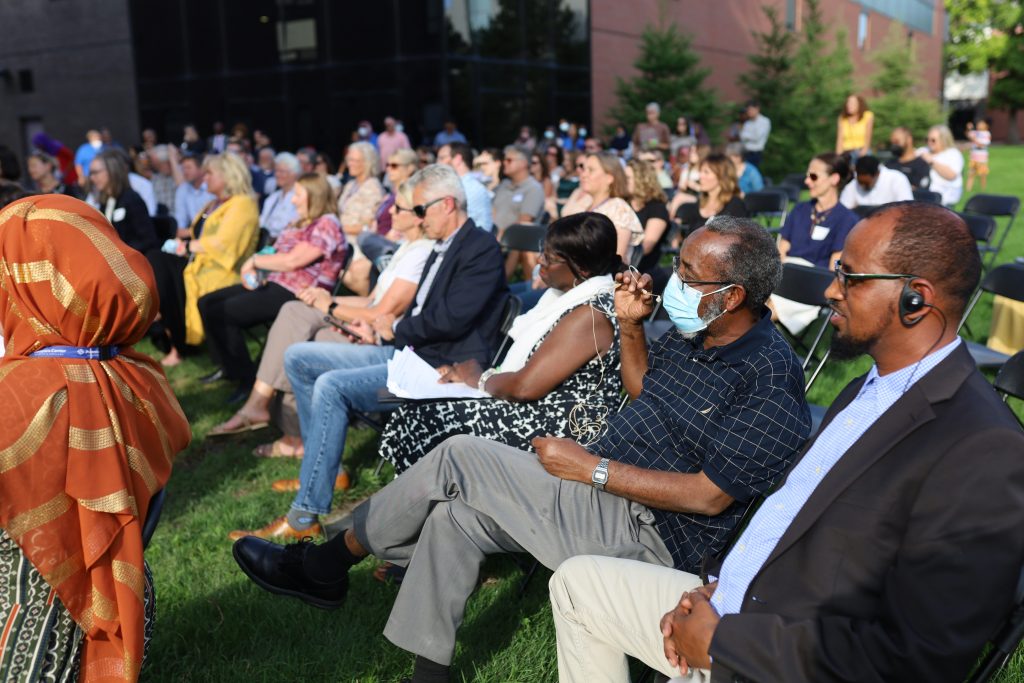
Attendees at the ribbon-cutting ceremony for People’s Center Clinic in the Cedar-Riverside neighborhood of Minneapolis on Tuesday, August 22, 2022. The clinic has been expanded to include a fitness center, a prayer room, and a multi-lingual call center. Photo: Panashe Matemba-Mutasa/Mshale

Dr. Steven Vincent, a neurologist who began his career as a volunteer at People’s Center and at one time served as its medical director, said the clinic’s impact on both patients and non-patients was what attracted him to it. As a physician, Vincent said it was rewarding to be able to serve the diverse group patients the clinic sees daily.

“This clinic’s patients, physicians, staff, volunteers, and the watching community around us can all vouch for me when I say that People’s Center has touched thousands of lives,” Vincent said.

Faduma Hussein, a Somali immigrant who has been visiting the clinic regularly since 2017, shared her experience receiving quick, accessible, and culturally tailored care after she acquired fractures in her leg and collarbone.

“At the time I did not have medical insurance, but I received surgery that same evening,” Hussein said, struggling to hold back tears.

After the event concluded, Paige Bingham and her friend Elsa Linke shared a hearty laugh over some Somali food. Bingham, the director of Close the Gap, a health equity program at, Boston Scientific, said she was passionate about addressing disparities in health care.

“It’s so important for members of the community to be equally invested in the thriving of this clinic as its volunteers and staff,” Bingham said. “This provides immeasurable value in this neighborhood.”

Mahad Jama, a Somali-born businessman who owns an interpretation company, said he became emotional seeing how People’s Center had grown. Jama said he was impressed by People’s Center’s mission to transcend language barriers and reach diverse populations, which he said would greatly benefit the East African community.

“This is a remarkable clinic in a remarkable location,” Jama said. “I am eager to see what it has in store for this generation and for many generations to come.”

Biden’s student loan plan: What we know and don’t know

0
New graduates line up before the start of a community college commencement in East Rutherford, N.J., on May 17, 2018. President Joe Biden on Wednesday, August 24, 2022 announced that many Americans can have up to $10,000 in federal student loan debt forgiven. That amount increases to $20,000 if they qualified for Pell grants. Photo; AP File Photo by Seth Wenig
Students Graduating in NJ in 2018 by Seth Wening Associated Press
New graduates line up before the start of a community college commencement in East Rutherford, N.J., on May 17, 2018. President Joe Biden on Wednesday, August 24, 2022 announced that many Americans can have up to $10,000 in federal student loan debt forgiven. That amount increases to $20,000 if they qualified for Pell grants. Photo; AP File Photo by Seth Wenig

President Joe Biden said Wednesday that many Americans can have up to $10,000 in federal student loan debt forgiven. That amount increases to $20,000 if they qualified for Pell grants. Here’s what we know so far and what it means for people with outstanding student loans:

WHO QUALIFIES FOR STUDENT LOAN FORGIVENESS?

You qualify to have up to $10,000 forgiven if your loan is held by the Department of Education and you make less than $125,000 individually or $250,000 for a family. If you received Pell grants, which are reserved for undergraduates with the most significant financial need, you can have up to $20,000 forgiven. If you are a current borrower and a dependent student, you will be eligible for relief based on your parents’ income, rather than your own.

WILL THE STUDENT LOAN PAYMENT FREEZE BE EXTENDED?

The payment freeze will be extended one last time, until Dec. 31. The freeze started in 2020 as a way to help people struggling financially during the COVID-19 pandemic and it’s been extended several times since. It was set to expire Aug. 31.

Interest rates will remain at 0% until repayments start. Under an earlier extension announced in April, people who were behind on payments before the pandemic automatically will be put in good standing.

HOW DO I APPLY FOR STUDENT LOAN FORGIVENESS?

Details of that have not been announced, but keep an eye on the federal student aid website for more details in coming days.

WHAT’S A PELL GRANT AND HOW DO I KNOW IF I HAVE ONE?

Roughly 27 million borrowers who qualified for Pell grants will be eligible to receive up to $20,000 in forgiveness under the Biden plan.

Pell grants are special government scholarships for lower-income Americans, who currently can receive up to $ $6,895 annually for roughly six years.

Nearly every Pell Grant recipient came from a family that made less than $60,000 a year, according to the Department of Education, which said Pell grant recipients typically experience more challenges repaying their debt than other borrowers.

Pell grants themselves don’t generally have to be paid back, but recipients typically take out additional student loans.

“This additional relief for Pell borrowers is also an important piece of racial equity in cancellation,” said Kat Welbeck, Civil Rights Counsel for the Student Borrower Protection Center. “Because student debt exacerbates existing inequities, the racial wealth gap means that students of color, especially those that are Black and Latino, are more likely to come from low-wealth households, have student debt, and borrow in higher quantities.”

To find out if you have a Pell grant, check any emails you’ve received that describe your FAFSA award.

HOW MANY PEOPLE WILL THIS HELP?

About 43 million Americans have federal student debt, with an average balance of $37,667, according to federal data. A third of those owe less than $10,000. Half owe less than $20,000. The total amount of federal student debt is more than $1.6 trillion.

WHAT IF I’VE ALREADY PAID OFF MY STUDENT LOANS — WILL I SEE RELIEF?

The debt forgiveness is expected to apply only to those currently holding student debt. But if you’ve voluntarily made payments since March 2020, when payments were paused, you can request a refund for those payments, according to the Federal Office of Student Aid. Contact your loan servicer to request a refund.

WILL STUDENT LOAN FORGIVENESS DEFINITELY HAPPEN?

The White House is expected to face lawsuits over the plan, because Congress has never given the president the explicit authority to cancel debt. We don’t know yet how that might impact the timetable for student loan forgiveness.

WHAT REPAYMENT PLAN IS THE DEPARTMENT OF EDUCATION PROPOSING?

The Department of Education has proposed a repayment plan that would cap monthly payments at no more than 5% of a borrower’s discretionary income, down from 10% now. Borrowers will need to apply for the repayment plan if it’s approved, which could take a year or more.

For example, under the proposal, a single borrower making $38,000 a year would pay $31 a month, according a government press release.

The amount considered non-discretionary will also be increased, through the department has not said how much.

Discretionary income usually refers to what you have left after covering necessities like food and rent, but for student loan repayment purposes it’s calculated using a formula that takes into account the difference between a borrower’s annual income and the federal poverty line, along with family size and geographic location.

“What’s tough about income-driven repayment is that it does not take into account your other liabilities, such as your rent payment,” said Kristen Ahlenius, a financial counselor at Your Money Line, which provides financial literacy training. “If someone’s living paycheck to paycheck and their rent is taking up half of their paycheck and then their car payment takes the other, they have to choose. Unfortunately, income-driven repayment doesn’t take that into consideration, but it is an option.”

Student Debt Relief offers a calculator to help determine your discretionary income.

WHAT IF I CAN’T AFFORD TO PAY EVEN WITH LOAN FORGIVENESS?

Once payments resume, borrowers who can’t pay risk delinquency and eventually default. That can hurt your credit rating and mean you’re not eligible for additional aid.

If you’re struggling to pay, check if you qualify for an income-driven repayment plan. You can find out more here.

The plan Biden announced Wednesday also includes a proposal that would allow people with undergraduate loans to cap repayment at 5% of their monthly income. Proposals like this one can take a year or more to be implemented, and it’s not clear what the fine print will be.

If you have worked for a government agency or a non-profit organization, you could also be eligible for the Public Service Loan Forgiveness Program, which you can read more about here.

Reimagined LGBTQ+ Pride festival lifts voices of people of color

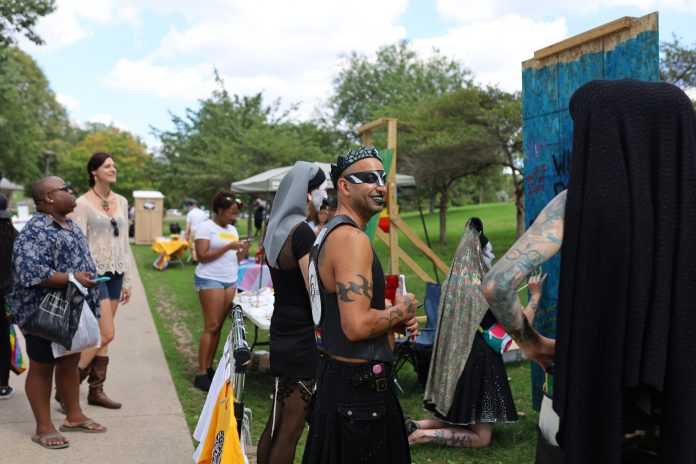
Participants gather at the Art station during the inaugural Minnesota People of Color LGBTQ+ Pride Festival on Sunday,August 21, 2022. Photo: Panashe Matemba-Mutasa/Mshale
Art station 1
Participants gather at the Art station during the inaugural Minnesota People of Color LGBTQ+ Pride Festival on Sunday,August 21, 2022. Photo: Panashe Matemba-Mutasa/Mshale

The Minnesota People of Color LGBTQ+ Pride, (MN POC Pride) held its inaugural Pride Festival last weekend in Minneapolis. The festival was the culmination of years’ worth of effort to increase the visibly of LGBTQ+ Black, Indigenous, and People of Color (BIPOC).

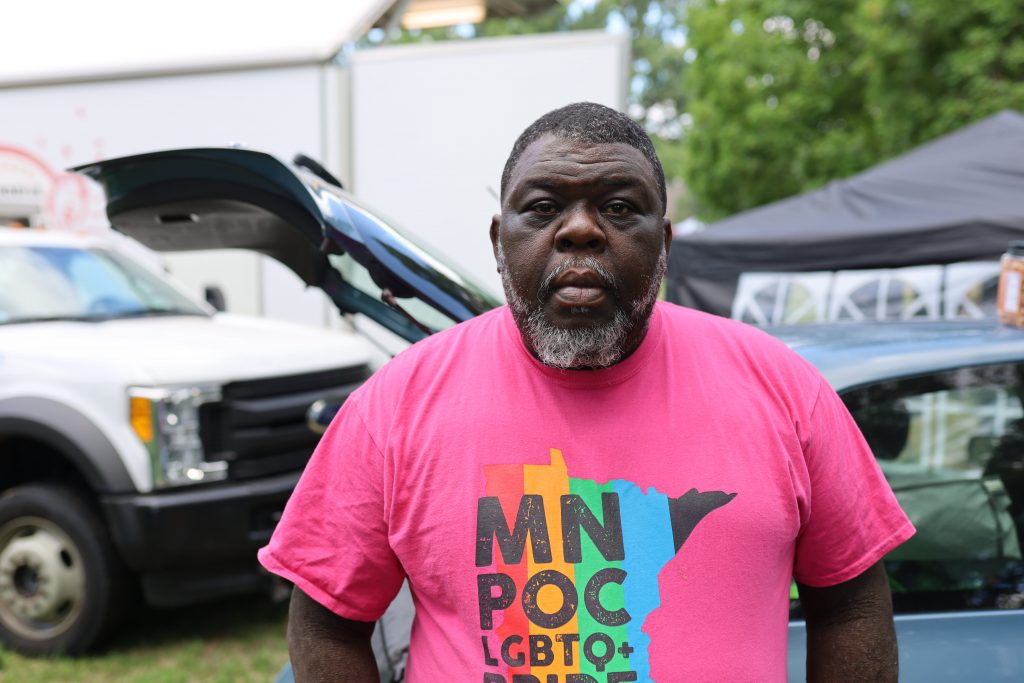
“This is by us and for us,” said Dennis Anderson, one of the founders of MN POC Pride.

The new festival is an expansion of what used to be the Black Pride celebration to include all people of color. It was a response to city-wide calls for greater BIPOC representation, according to MN POC Pride founders. The festival featured several celebrations that began on Thursday that included evets such as a Mr. & Miss Twin Cities Black Pride pageant, a riverboat cruise, and nightly dance parties. It ended on Sunday with an event that included vendors and picnics at Powderhorn Park in Minneapolis.

Miski Noor, a community organizer and co-director of Black Visions Collective, which was founded in 2017 to addresses issues of police brutality, was one of the vendors. Noor said the organization has since worked to tailor its services to cater LGBTQ+ individuals who are seeking to heal from the effects of police violence. “[Transgender] voices are often overlooked in this conversation, and we want to build a movement that can move toward safety with the premise that all Black Lives Matter,” Noor said.

Left Leesa Kelly right Amira McLendony
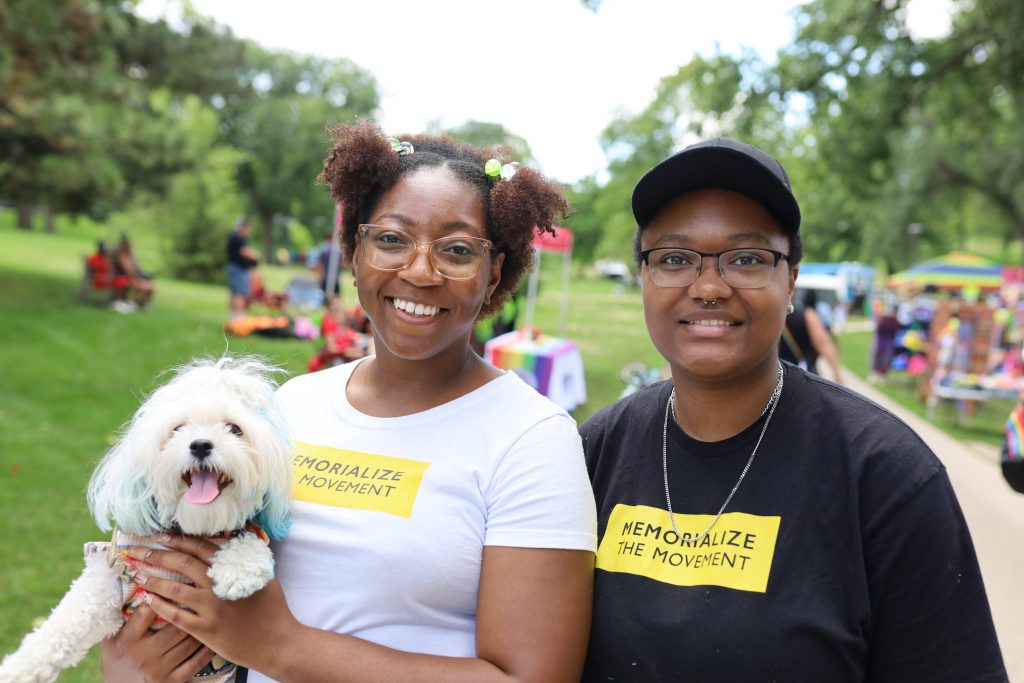
Leesa Kelly and Amira McLendony at the inaugural Minnesota People of Color LGBTQ+ Pride Festival on Sunday,August 21, 2022. Kelly is the founder and executive director of Memorialize the Movement, an organization that was founded in 2020 to collect and preserve the plywood murals created following the murder of George Floyd by a Minneapolis police officer. Photo: Panashe Matemba-Mutasa/Mshale

MN POC Pride takes place two months after the month-long national Pride celebration, which is held annually in June across the United States. While Twin Cities Pride has been hosting numerous events each year for the last half century, many said they wished to see a festival more tailored to fit the diversity for LGBTQ+ of color in the metropolitan area.

“Most of our artists and vendors are of color,” Anderson said. “We want this event to reflect the beautiful diversity of the LGBTQ+ community in our city.”

The general LGBTQ+ population in Minnesota is just over 4%, with 28% of them raising children, according to a poll conducted by Gallup and the Williams Institute at University of California Los Angeles Law School. Various studies indicate that although all LGBTQ+ people generally continue to face discrimination in areas like housing and employment, the situation is worse for people of color. A 2018 report from the Minnesota Homeless Study, for example, revealed that 68% of LGBTQ+ people experiencing homelessness also identified as BIPOC, an overrepresentation that illuminates compounding systemic discrimination.

“A lot of drag queens of color don’t get as many opportunities, and we are trying to bridge that gap” Anderson said.

Leesa Kelly, is the founder and executive director Memorialize the Movement, an organization that was founded in 2020 to collect and preserve the plywood murals created following the murder of George Floyd by a Minneapolis police officer. She said that the festival resonated with her because of her unique identity as a queer woman.

“As a Black queer woman, this is a valuable place for me to reflect and learn,” Kelly said.

Anderson
Dennis Anderson is a cofounder of the Minnesota People of Color LGBTQ+ Pride Festival which held its inaugural festival last weekend (Aug.18-21, 2022) in Minneapolis. Photo: Panashe Matemba-Mutasa/Mshale

Neecee Alain Mikli said he came the festival because he enjoyed seeing people come together for the greater good of Minneapolis’s queer community.

“Seeing all these queer people of color is amazing,” Mikli said. “We all have different talents to contribute from vendors, to the chefs, and performers.”

Another attendee, Tim Dooley, said that he believed recognizing Black Pride was essential to recognizing LGBTQ+ Pride because lot of the pride movements throughout history have been led by the African American community, including its role in the commercialization of Pride.

“There is no Pride without Black Pride,” Dooley said.

Distinguished Ethiopian American doctor joins executive leadership at UCare

Dr. Tenbit Emiru , an award-winning Ethiopian American neurologist, has been named the executive vice president and chief medical officer at UCare. Photo: Courtesy of UCare
Dr. Tenbit Emiru
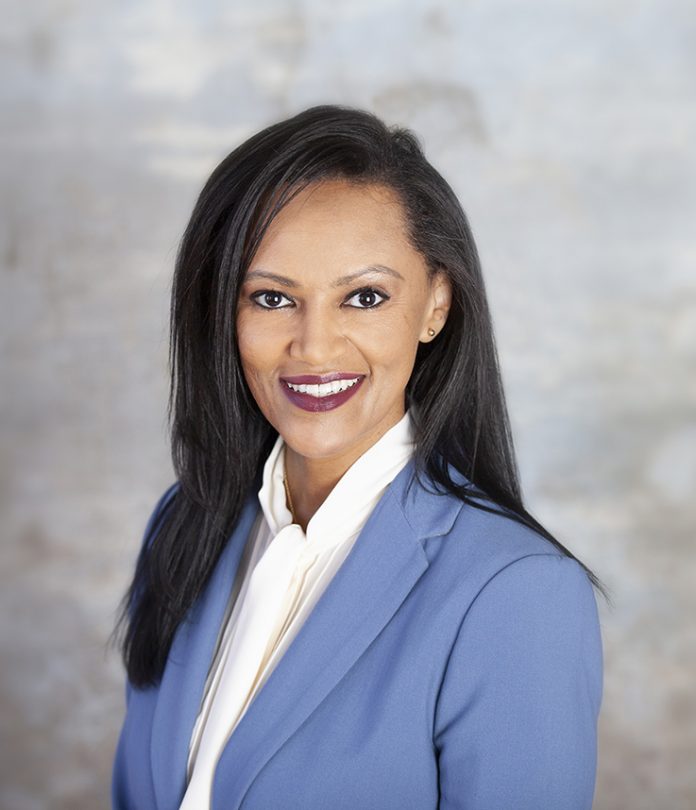
Dr. Tenbit Emiru , an award-winning Ethiopian American neurologist, has been named the executive vice president and chief medical officer at UCare. Photo: Courtesy of UCare

An award-winning Ethiopian American neurologist has been named the executive vice president and chief medical officer of one of the Midwest’s leading independent health care coverage providers. Dr. Tenbit Emiru was appointed to spearhead the strategic direction of UCare, an independent, nonprofit health plan providing health care and administrative services to more than 640,000 members throughout Minnesota and parts of western Wisconsin.

“We are thrilled to have her join our team,”  said UCare President and CEO Hilary Marden-Resnik.

Emiru succeeds Dr. Julia Joseph-Di Caprio, who recently left UCare to open a clinic for young people in an underserved community in St. Paul. Emiru will oversee several departments at UCare, including Clinical Services, Equity and Inclusion, Mental Health and Substance Use Disorder Services, Pharmacy, Population Health and Quality Management.

“Dr. Emiru is a skilled physician, visionary leader, and – most importantly – she is passionate about the members we serve and the communities we support,” Marden-Resnik said.

In a statement to Mshale, Emiru said she joined UCare because the organization’s focus on health equity and commitment to making sure that health outcomes are improved for all were in line with her passion for caring for people in underserved communities.

“I am passionate about health equity,” Emiru said. “I believe that everyone deserves to have an opportunity to be as healthy as possible, no matter where you come from or who you are.”

Prior to coming to UCare, Emiru was a critical care neurologist and chief of neurology at Hennepin Healthcare (formerly Hennepin County Medical Center) in Minneapolis, where she led a multi-disciplinary team of providers and operational leaders in transforming the delivery of care in the neurosciences. For the past five years, she has also been on the board of Hennepin Healthcare Foundation.

“I have cared for many people who come from underserved communities, including some who were transferred from greater [Minnesota],” Emiru said.

She said she hoped to bring an open mind and “willingness to learn a lot, and fast” at her new role, and that she would focus on getting an in-depth understanding of the work that’s already ongoing.

“I look forward to spending time building relationships in the community,” Emiru said. “Then, together with my team, we can charter a long-term plan on how we can continue to add a unique value to the communities we serve.”

Emiru is a distinguished physician, who has been recognized by her peers for her outstanding expertise in providing care. She was named “Top Doctor” by Minnesota Monthly in 2018 and 2020. She also made Minneapolis St. Paul Magazine’s  list of  “Top Docs and Rising Stars” in 2017 and 2018.

Emiru, who describes herself as “a very proud Ethiopian,” came to the United States as a high school teenager in the early ‘90s with her parents and her siblings. She credits he mother for sparking the interest in medicine, which she said began long before she came to the United States.

“My mother is a retired [Registered Nurse], and as a young child growing up in Ethiopia, I always knew about the impact of lack of adequate healthcare in a developing nation,” she said. “From a young age, I knew I wanted to be a physician.”

As an immigrant in Minnesota, Emiru said she learned how important it was to offer care that was both culturally and linguistically appropriate, which further strengthened her desire to become a physician.

Emiru is educated in several disciplines. She has a Ph.D. in psychology and an MD degree from the University of Minnesota. She also recently completed an Executive Master’s in Business Administration at the Kellogg School of Management at Northwestern University.

UCare partners with health care providers, counties and community organizations to create and deliver Medicare, Medicaid and individual and family health plans, which are accredited by the National Committee for Quality Assurance. The health plan addresses health care disparities and care access issues through a broad array of community initiatives. UCare has been on the Star Tribune’s list of Top Workplaces for 12 consecutive years since 2010 when the rankings began.

Tinariwen bringing tour to Minneapolis in September

0
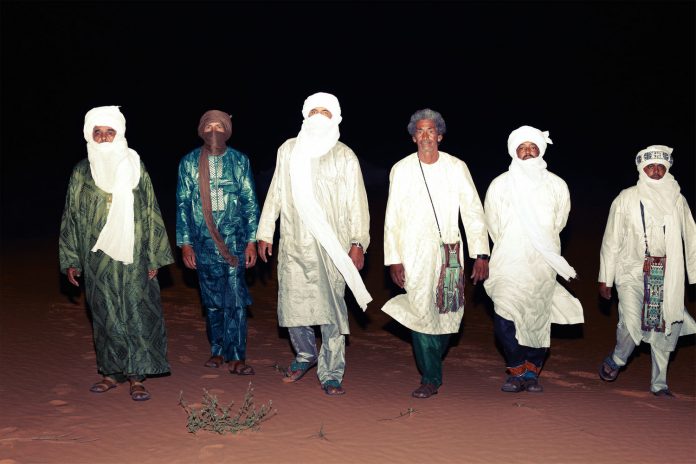
Tinariwen from the Sahara Desert region of northern Mali will bring their global tour to Minneapolis on Saturday, September 10, 2022 at the Cedar Cultural Center. Photo: Courtesy Tinariwen
Tinariwen
Tinariwen from the Sahara Desert region of northern Mali will bring their global tour to Minneapolis on Saturday, September 10, 2022 at the Cedar Cultural Center. Photo: Courtesy Tinariwen

The struggle only refines them. Tinariwen, a premier Tuareg band hailing from the Sahara, takes the stage at The Cedar Cultural Center September 10th. They’ve not performed in Minneapolis since 2015.

Digging into their past, which takes one back nearly sixty years, they’ve never had an easy path to success. Obstacles of political oppression, violence, refugee camps, and death pockmark the band’s timeline. So this pandemic was just another complication to overcome and definitely not their most difficult considering their history.

Tuareg people inhabit the Sahara, their numbers stretching from southwestern Libya to southern Algeria, Niger, Mali, and Burkina Faso as well as pockets of northern Nigeria. Tinariwen embrace their heritage as nomads, traveling at times by choice and other times by threat from country to country even spending a short exile to the United States in 2014.

Now, touring both Europe and the United States, this multi-Grammy-winning band brings the sounds and aura of many Saharan regions as well as input from various guest musicians. Their most recent album, Amadjar, cut in 2019, includes appearances from such varied performers as Warren Ellis, Noura Mint Seymali & Jeiche Ould Chighaly, and Micah Nelson.

Their 2022 tour will also include music from a reissue of albums released originally in 2001 and 2004, respectively The Radio Tisdas Sessions and Amassakoul. These acclaimed albums have several numbers reworked with the stylings of KMRU, Kenya’s own sound artist and experimental ambient musician, now living in Berlin.

The band, honored by BBC Radio 3 Award for World Music, remains intact despite the global ravaging of Covid however last year, they did lose one band member. On February 14, Japonais – a member of Tinariwen since 1985, and the author of the songs “Ahimana” and “Tamudjeras Assis” – passed away. He was 54 years old.

Tinariwen at The Cedar – Saturday, September 10, 2022
Doors open at 7:00 PM CT with show staring at 8:00 PM
Tickets at this Cedar link.

Brooklyn Center holds 4th annual Community Health Fair

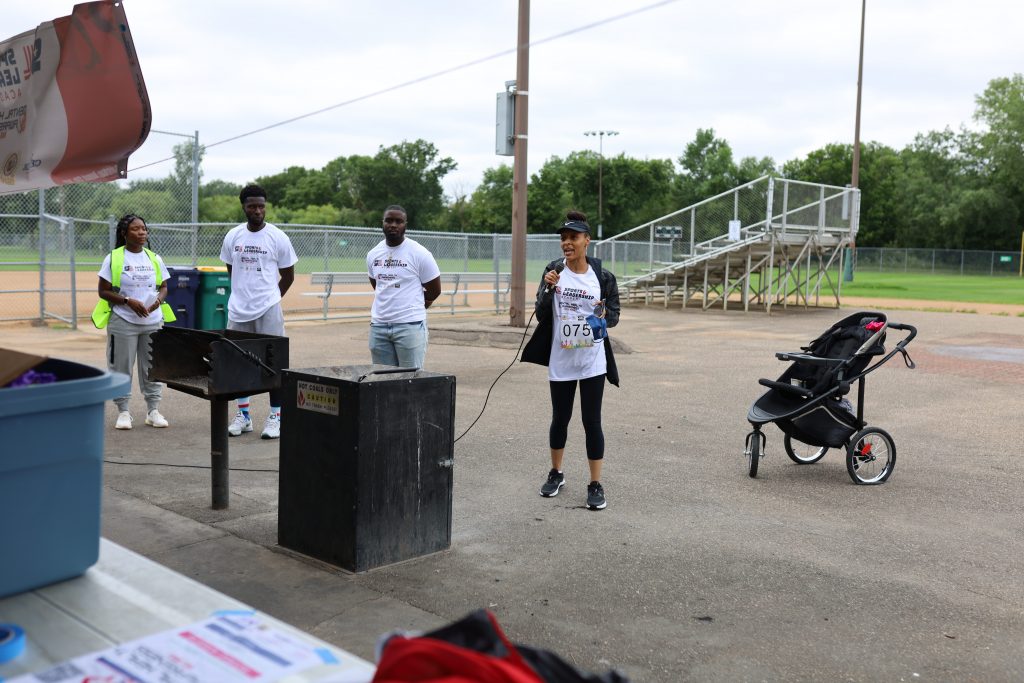
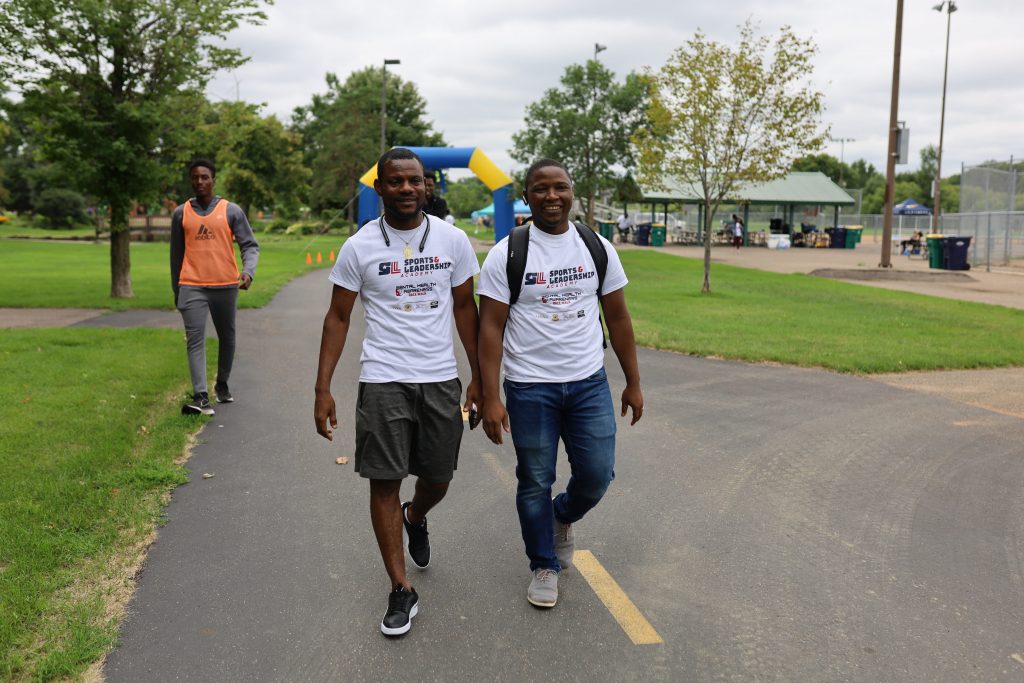
Participants in the 5K run/walk, which was sponsored by Sports and Leadership Academy, gather at the starting line to prepare for their 3-mile run.
Brooklyn Center Community Health Fair 11
Participants in the 5K run/walk, which was sponsored by Sports and Leadership Academy, gather at the starting line to prepare for their 3-mile run.

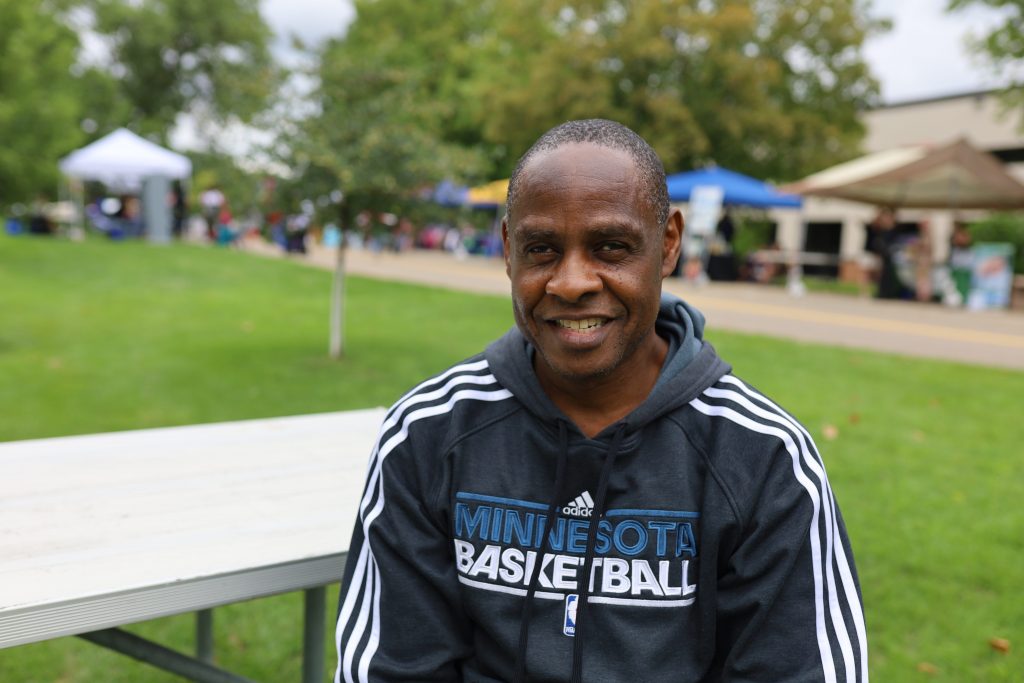
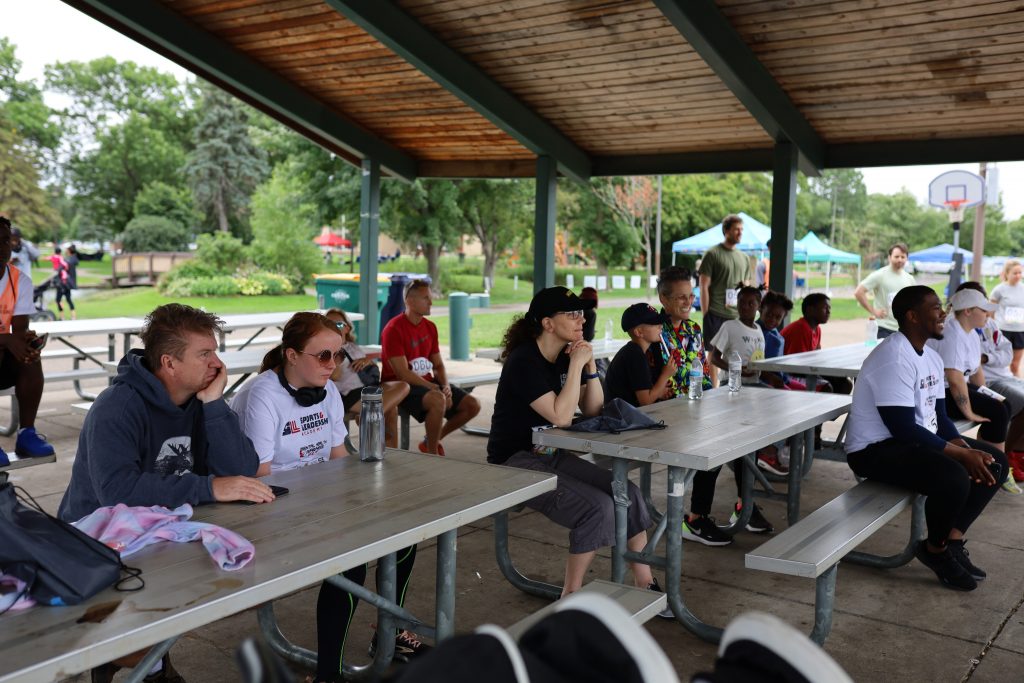
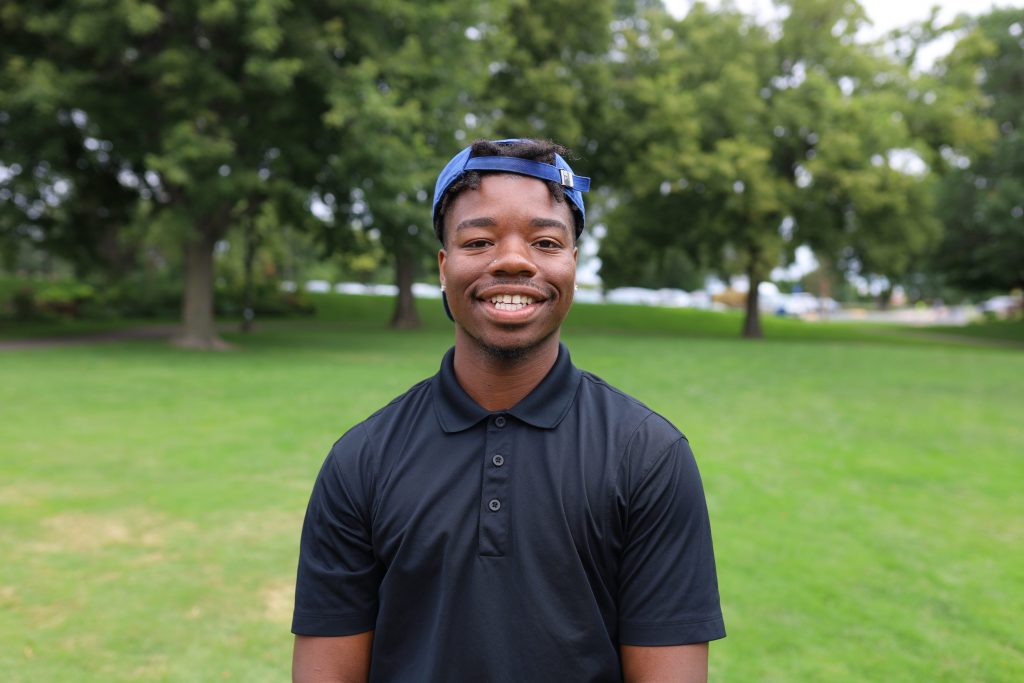
Brooklyn Center held it’s 4th annual Community Health Fair on Aug. 13, at the city’s Centennial Park. The event brought together community members for a day of events that included vendor booths, running and walking events, entertainment, activities for children, food, and of course health screening. Mshale’s Panashe Matemba-Mutasa was there to document it.

Brooklyn Center Community Health Fair 01
Dr. Angel Smith, the communications and community engagement manager at City of Brooklyn Center, addresses event attendees. “This event is a step in the right direction because we are taking care of our mental and physical health.”
Brooklyn Center Community Health Fair 02
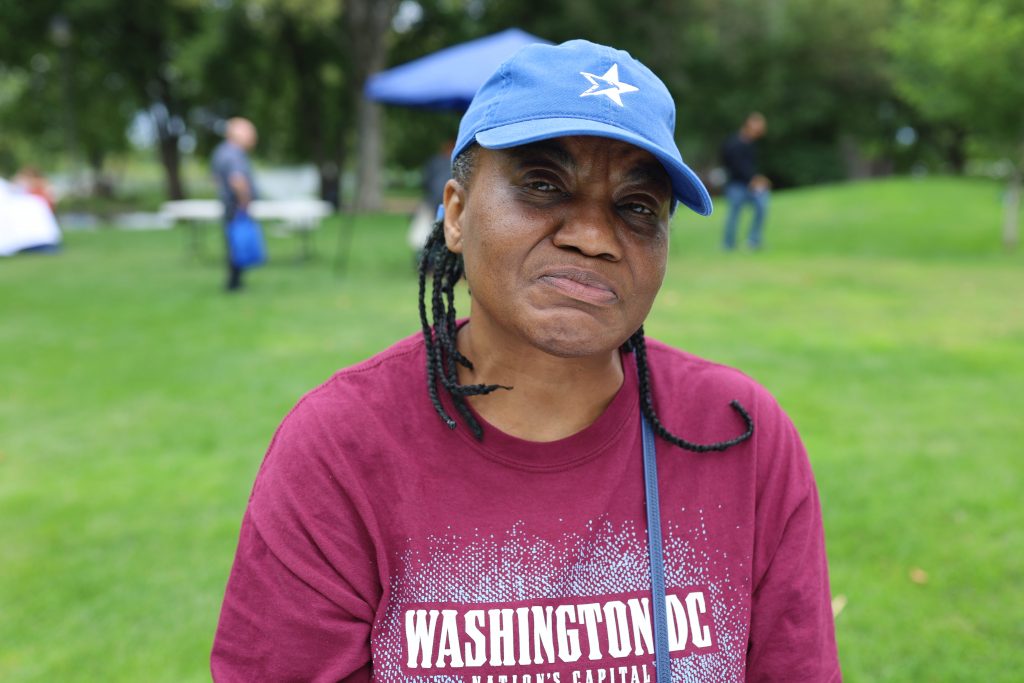
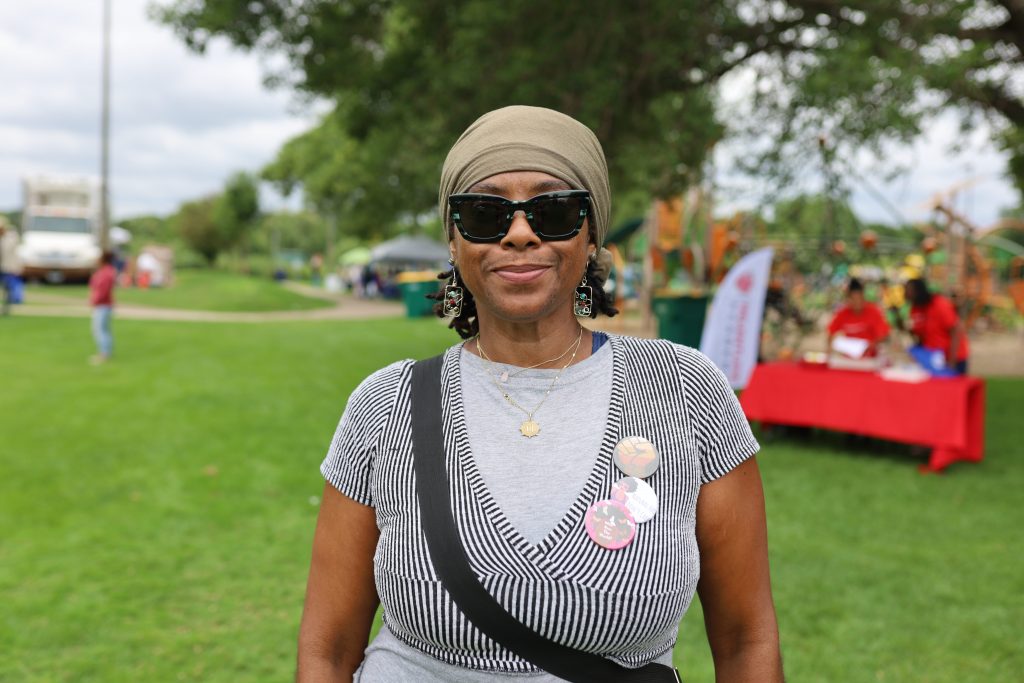
Glenda Eldridge said an unhealthy childhood motivated her to reconsider her lifestyle choices and become a “health enthusiast” to avoid her parents’ fate. “As a kid, so many of us [in the African American community] would eat meals with no veggies. After watching my mom and dad pass away from cancer, I thought about the ways we can improve as a people.”
Brooklyn Center Community Health Fair 07
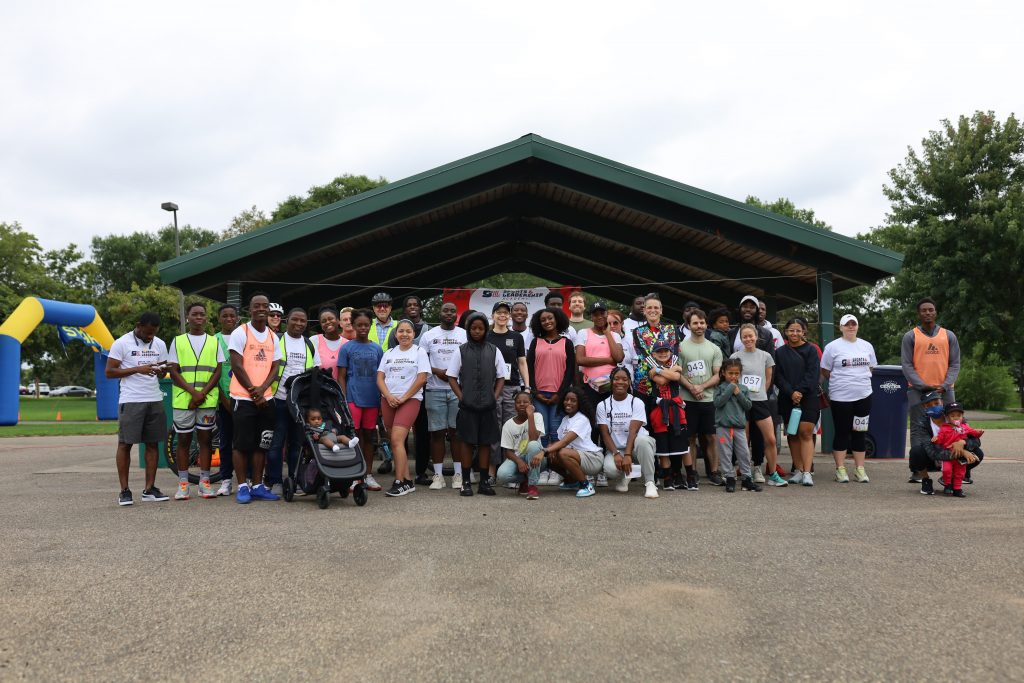
Volunteers, attendees, and staff pose for a photo after students from Sports and Leadership Academy give brief speeches.
Brooklyn Center Community Health Fair 19
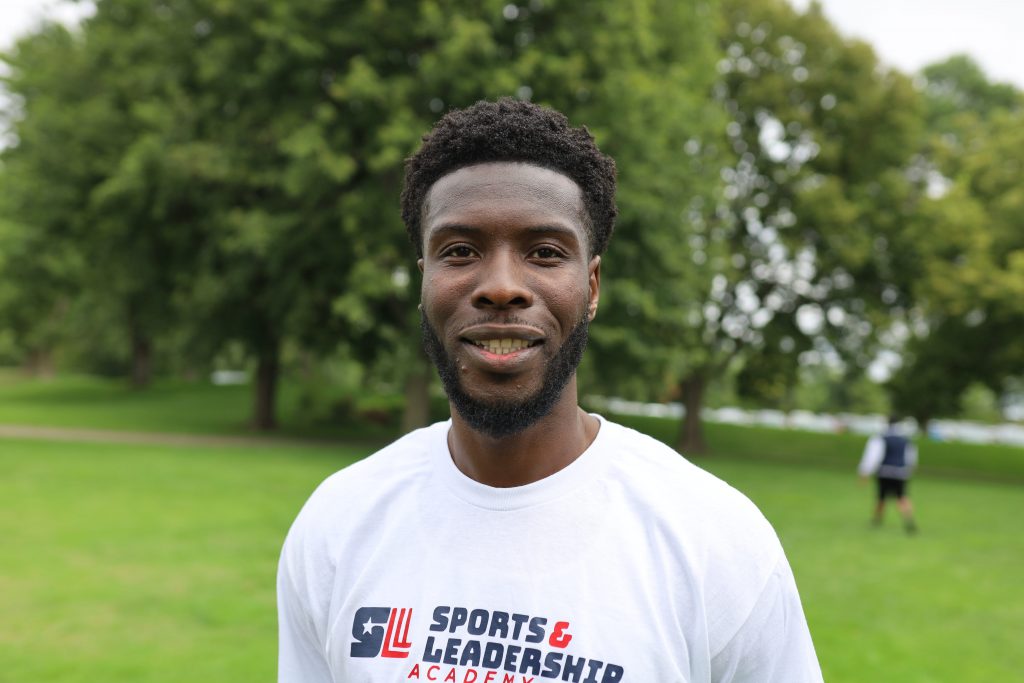
Frankie Miamen, the founder of Sports and Leadership Academy, shared his vision behind starting the company. “Our mission is to inspire the next generation through sports, and we believe that every kid and young adult can improve their life through physical activity. We chose sports as an avenue because we [many in the African American/Black community] grew up on sports. A lot of kids are still dealing with mental health issues from the pandemic, so we are blessed to be able to provide this outlet for them.”
Brooklyn Center Community Health Fair 16
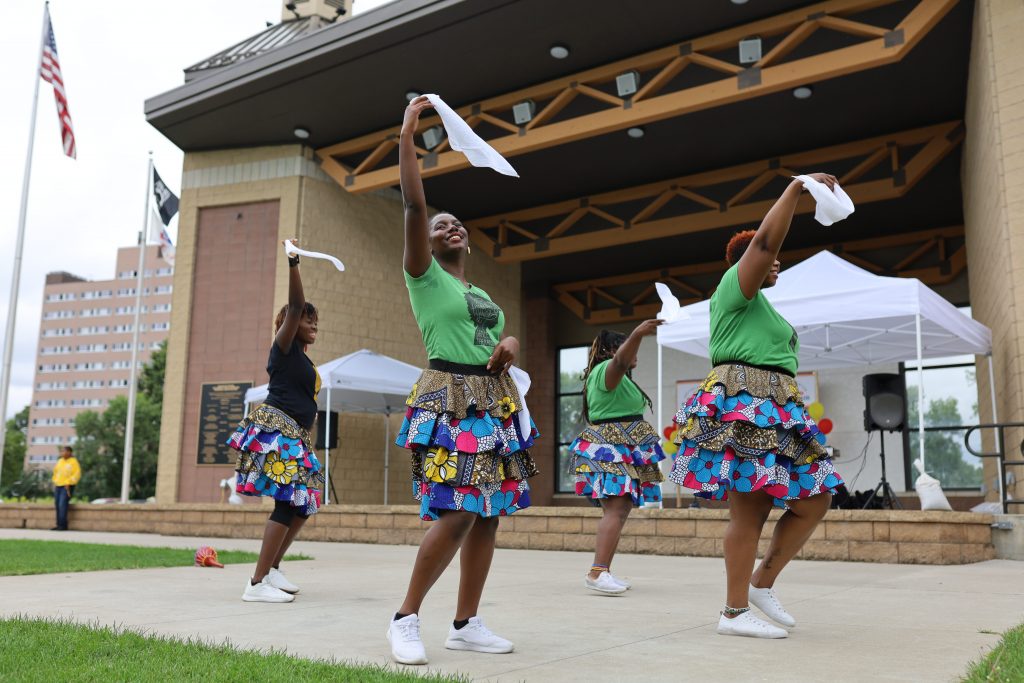
Afrocontigbo, an African dance company based in nearby Hopkins, performed a set that included traditional and contemporary dances from various parts of Africa. Nigerian-born Korma Aguh-Stuckmayer said that regular dance can be a good way to maintain good mental health. “We believe that dancing should be a part of everyone’s life.”
Brooklyn Center Community Health Fair 13
Tanya Welch said she had been attending the health fair every year because it is good for the community. “I come here every year, and it’s a great opportunity for us to come together. This so far has been my favorite one yet.”
Brooklyn Center Community Health Fair 10
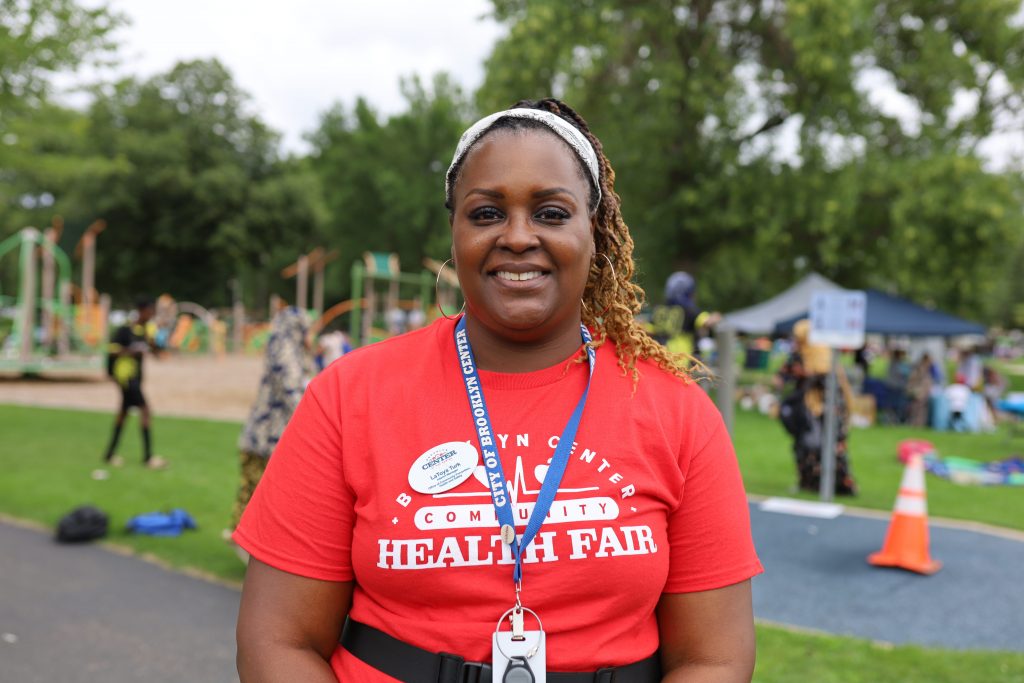
LaToya Turk, the interim manager of the city’s Office of Community Prevention, Health and Safety, said she was proud to be part of the team that makes the event possible every year. “This is an opportunity for us to present to our community different resources as it pertains to health and wellness: both physical and mental. We are intentional in making this an inclusive experience, and even our vendor selection reflects the diversity of our wonderful city.”
Brooklyn Center Community Health Fair 12
Dr. Sboyah Karloh (left) and Chen Barwu participate in the 5K run. “I play soccer in Brooklyn Park. I wanted to be a part of this because I care about mental health. You can be doing well in every aspect of your life but if your mental health is not ok, you are not ok,” Karloh said.
Brooklyn Center Community Health Fair 09
Nduba Namoonde, a Zambian American and branch manager at a financial firm, said despite walking 11 miles the night before, he decided to attend the health fair. “I got excited when I saw some of the activities offered here, like the 5K walk. It’s so important to take the opportunity to get out and exercise when you can.”
Brooklyn Center Community Health Fair 06
Attendees listen as students from Sports and Leadership Academy, an organization that partners with local schools to encourage physical activity, share their experiences at the academy and talk about why physical fitness is important.
Brooklyn Center Community Health Fair 18
David Kromah said he suffered a soccer-related injury but still tried to get out and exercise whenever he could for the sake of both his physical and mental health. “Mental health is important to me because it controls the whole body.”
Brooklyn Center Community Health Fair 03
Kahlil Permenter supports his wife, Felicia, the owner of AKN Wellness, a service-based health and wellness organization based in Minneapolis. Permenter says that he and his wife take their health seriously and hope to be able to help the community place more value in good health. “I’m starting to see a huge change among Black people where we’re being more proactive about our health, and I think it’s great.”

CDC drops quarantine, distancing recommendations for COVID

0
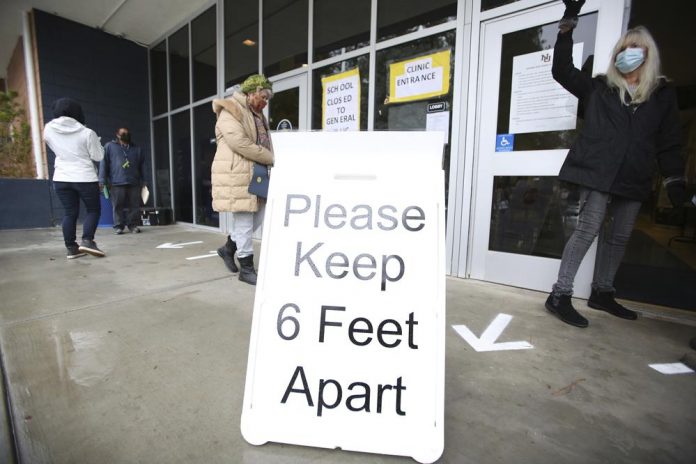
A sign asks those getting vaccinated to keep 6 feet apart during the vaccination event, Wednesday, Jan. 27, 2021, at Nevada Union High School in Grass Valley, Calif. The CDC has again revised its COVID guidelines, further relaxing quarantine recommendations and dropping the recommendation that people stay at least 6 feet away from each other. Photo: Elias Funez/The Union via AP File
AP COVID
A sign asks those getting vaccinated to keep 6 feet apart during the vaccination event, Wednesday, Jan. 27, 2021, at Nevada Union High School in Grass Valley, Calif. The CDC has again revised its COVID guidelines, further relaxing quarantine recommendations and dropping the recommendation that people stay at least 6 feet away from each other. Photo: Elias Funez/The Union via AP File

NEW YORK (AP) — The nation’s top public health agency relaxed its COVID-19 guidelines Thursday, dropping the recommendation that Americans quarantine themselves if they come into close contact with an infected person.

The Centers for Disease Control and Prevention also said people no longer need to stay at least 6 feet away from others.

The changes, which come more than 2 1/2 years after the start of the pandemic, are driven by a recognition that an estimated 95% of Americans 16 and older have acquired some level of immunity, either from being vaccinated or infected, agency officials said.

“The current conditions of this pandemic are very different from those of the last two years,” said the CDC’s Greta Massetti, an author of the guidelines.

Many places around the country long ago abandoned social distancing and other once-common precautions, but some of the changes could be particularly important for schools, which resume classes this month in many parts of the country.

Perhaps the biggest education-related change is the end of the recommendation that schools do routine daily testing, although that practice can be reinstated in certain situations during a surge in infections, officials said.

The CDC also dropped a “test-to-stay” recommendation, which said students exposed to COVID-19 could regularly test — instead of quarantining at home — to keep attending school. With no quarantine recommendation anymore, the testing option disappeared too.

Masks continue to be recommended only in areas where community transmission is deemed high, or if a person is considered at high risk of severe illness.

School districts across the U.S. have scaled back their COVID-19 precautions in recent weeks even before the latest guidance was issued. Some have promised a return to pre-pandemic schooling.

Masks will be optional in most districts when classes resume this fall, and some of the nation’s largest districts have dialed back or eliminated COVID-19 testing requirements.

Public schools in Los Angeles are ending weekly COVID-19 tests, instead making at-home tests available to families, the district announced last week. Schools in North Carolina’s Wake County also dropped weekly testing.

Some others have moved away from test-to-stay programs that became unmanageable during surges of the omicron variant last school year.

The American Federation of Teachers, one of the nation’s largest teachers unions, said it welcomes the guidance.

“Every educator and every parent starts every school year with great hope, and this year even more so,” President Randi Weingarten said. “After two years of uncertainty and disruption, we need as normal a year as possible so we can focus like a laser on what kids need.”

The new recommendations prioritize keeping children in school as much as possible, said Joseph Allen, director of Harvard University’s healthy building program. Previous isolation policies forced millions of students to stay home from school, he said, even though the virus poses a relatively low risk to young people.

“Entire classrooms of kids had to miss school if they were deemed a close contact,” he said. “The closed schools and learning disruption have been devastating.”

Others say the CDC is going too far in relaxing its guidelines.

Allowing students to return to school five days after infection, without proof of a negative COVID-19 test, could lead to outbreaks in schools, said Anne Sosin, a public health researcher at Dartmouth College. That could force entire schools to close temporarily if teachers get sick in large numbers, a dilemma that some schools faced last year.

“All of us want a stable school year, but wishful thinking is not the strategy for getting there,” she said. “If we want a return to normal in our schools, we have to invest in the conditions for that, not just drop everything haphazardly like we’re seeing across the country.”

The average numbers of reported COVID-19 cases and deaths have been relatively flat this summer, at around 100,000 cases a day and 300 to 400 deaths.

The CDC previously said that if people who are not up to date on their COVID-19 vaccinations come into close contact with a person who tests positive, they should stay home for at least five days. Now the agency says quarantining at home is not necessary, but it urges those people to wear a high-quality mask for 10 days and get tested after five.

The agency continues to say that people who test positive should isolate from others for at least five days, regardless of whether they were vaccinated. CDC officials advise that people can end isolation if they are fever-free for 24 hours without the use of medication and they are without symptoms or the symptoms are improving.

Also on Thursday, the Food and Drug Administration updated its recommendations for how many times people exposed to COVID-19 should test.

Previously, the FDA had advised taking two rapid antigen tests over two or three days to rule out infection. Now the agency recommends three tests.

FDA officials said the change was based on new studies that suggest the old protocol can miss too many infections and result in people spreading the coronavirus, especially if they don’t develop symptoms.