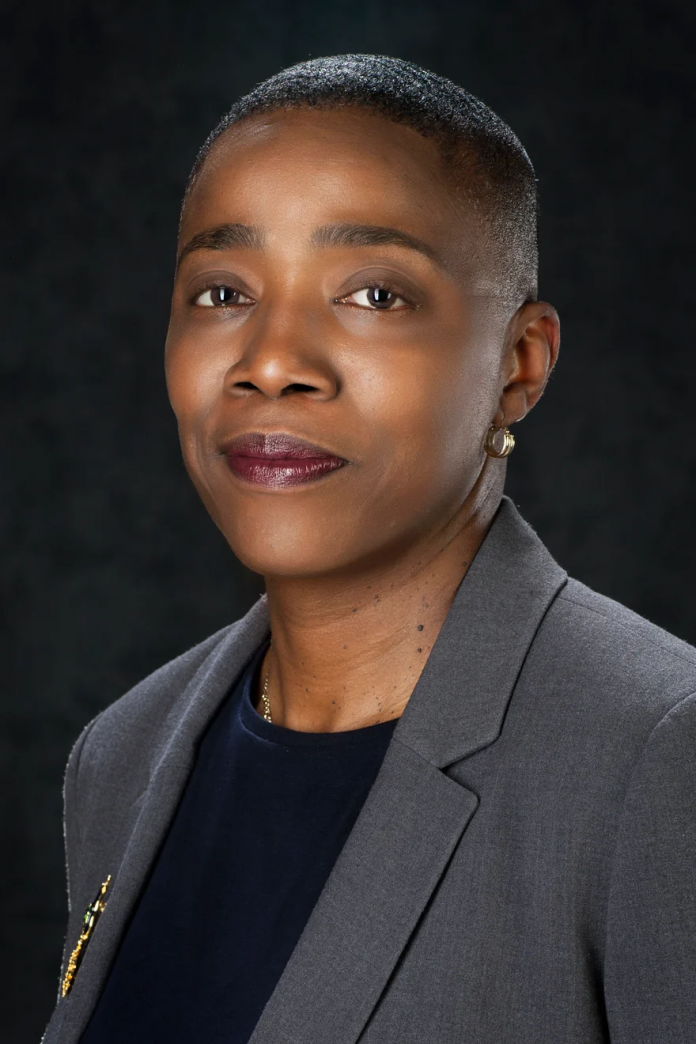
Dr. Margaret-Mary Wilson, who was born and raised in Nigeria and is atop executive at UnitedHealth Group, has been named that company's next chief medical officer effective December 5, 2021. United Health Group is America's largest health insurer. Photo: Courtesy United Health Group
Dr. Margaret-Mary Wilson, who was born and raised in Nigeria and is atop executive at UnitedHealth Group, has been named that company's next chief medical officer effective December 5, 2021. United Health Group is America's largest health insurer. Photo: Courtesy United Health Group
Dr. Margaret-Mary Wilson, an executive at America’s largest health insurer UnitedHealth, has been elevated to that company’s chief medical officer to lead its clinical innovations, according to a report in Fierce Healthcare that announced the promotion.
Her promotion is effective Dec. 5 and she will be taking over from Dr. Richard Migliori who has served in that role since 2013 and has been with the company for 25 years.
Prior to joining UnitedHealthcare in 2008, Wilson was an associate professor of internal and geriatric medicine at St. Louis University in Missouri, where she also served as director of geriatric ambulatory services and director of the ortho-geriatric service, according to Fierce Healthcare. Her experience also includes direct patient care, medical education, patient safety, quality improvement, risk management and global healthcare systems management in a variety of healthcare settings in Africa, the U.K., South America and the U.S.
UnitedHealth Group which is based in the Minneapolis suburb of Minnetonka also announced that it will surpass $300 billion in revenues next year to maintain its position as the largest health insurer in the nation.
“I’m honored to be named the next chief medical officer of UnitedHealth Group. This is an incredible time to be in health care and I look forward to working with my 340,000 colleagues to address some of the health system’s critical needs and most exciting opportunities. I’d also like to thank Dr. Migliori for his service, contributions and mentorship,” Wilson said in a statement.
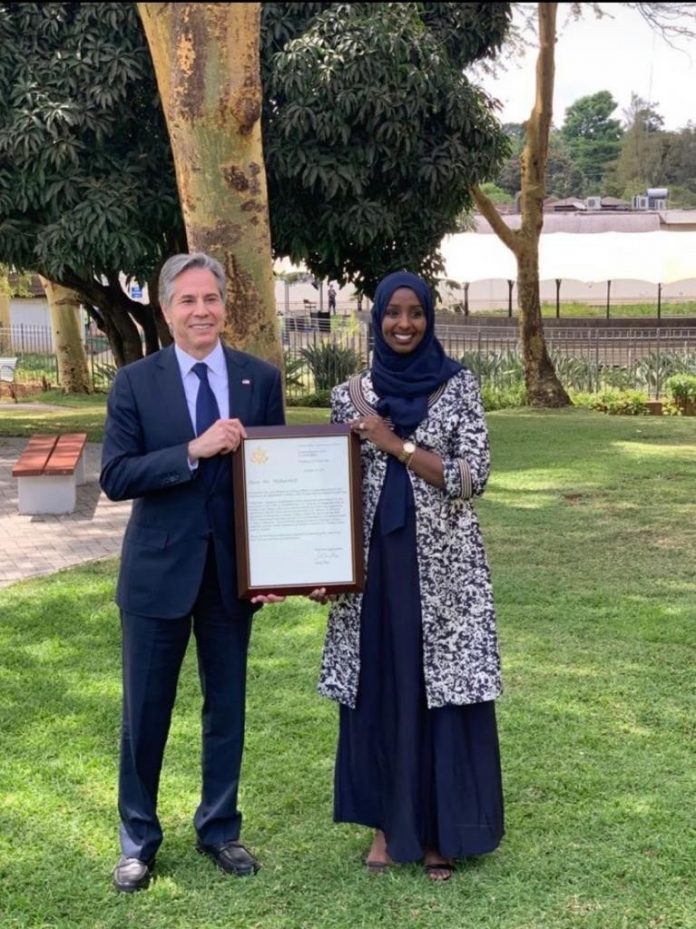
U.S. Secretary of State Antony Blinken while in Nairobi to meet with Kenyan leaders on November 17, 2021 presented the Foreign Service National of the Year award to Muna Mohamed who works at the U.S. embassy in Somalia. Photo: Courtesy U.S. State Departement
U.S. Secretary of State Antony Blinken while in Nairobi to meet with Kenyan leaders on November 17, 2021 presented the Foreign Service National of the Year award to Muna Mohamed who works at the U.S. embassy in Somalia. Photo: Courtesy U.S. State Departement
U.S. Secretary of State Antony Blinken presented this year’s U.S. State Department Foreign Service National of the Year award to Muna Mohamed who works at the U.S. embassy in Somalia.
Secretary Blinken presented the award to Ms. Mohamed while in Nairobi during the secretary’s three-nation tour to Kenya, Nigeria and Senegal.
According to the state department’s Foreign Affairs Manual, the foreign service national award is “given in recognition of the value to the U.S. Government through special contributions made by Department of State Foreign Service National (FSN) employees, hired under direct hire appointments and personal service agreements at U.S. diplomatic posts abroad.”
Winners of the award receive a certificate signed by the Secretary of State and a cash award of $10,000.
During his visit to Kenya, the gist of Blinken’s remarks focused on the crises in Ethiopia and Sudan where he said the U.S. will be looking to African leadership like Kenya’s to tackle the Horn of Africa crisis. In Nigeria he gave a speech in Abuja that outlined President Biden’s Africa policy.
In an address at the Abuja-based headquarters of the Economic Community of West African States regional bloc, Blinken said “governments are becoming less transparent, we see this happening across Africa — leaders ignoring term limits, rigging or postponing elections, exploiting social grievances to gain and maintain power, arresting opposition figures, cracking down on the media, and allowing security services to enforce pandemic restrictions brutally.”
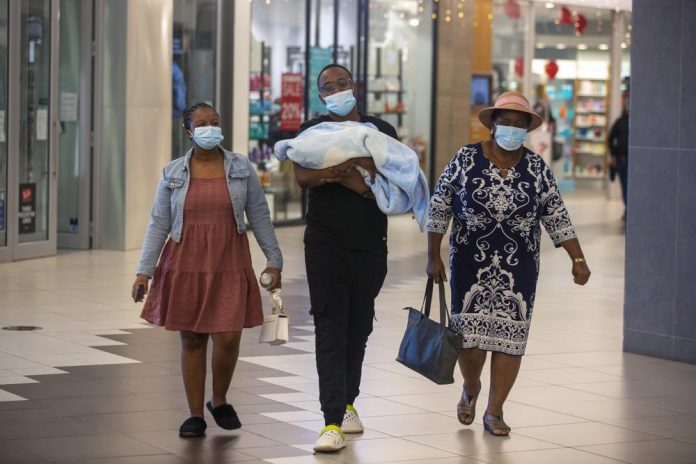
People with masks walk at a shopping mall in Johannesburg, South Africa, Friday Nov. 26, 2021. Advisers to the World Health Organization are holding a special session Friday to flesh out information about a worrying new variant of the coronavirus that has emerged in South Africa, though its impact on COVID-19 vaccines may not be known for weeks. Photo: Denis Farrell/AP
People with masks walk at a shopping mall in Johannesburg, South Africa, Friday Nov. 26, 2021. Advisers to the World Health Organization are holding a special session Friday to flesh out information about a worrying new variant of the coronavirus that has emerged in South Africa, though its impact on COVID-19 vaccines may not be known for weeks. Photo: Denis Farrell/AP
South African scientists identified a new version of the coronavirus this week that they say is behind a recent spike in COVID-19 infections in Gauteng, the country’s most populous province. It’s unclear where the new variant actually arose, but it was first detected by scientists in South Africa and has now been seen in travelers to Belgium, Botswana, Hong Kong and Israel.
Health Minister Joe Phaahla said the variant was linked to an “exponential rise” of cases in the last few days, although experts are still trying to determine if the new variant is actually responsible.
From just over 200 new confirmed cases per day in recent weeks, South Africa saw the number of new daily cases rocket to 2,465 on Thursday. Struggling to explain the sudden rise in cases, scientists studied virus samples from the outbreak and discovered the new variant.
In a statement on Friday, the World Health Organization designated it as a “variant of concern,” naming it “Omicron” after a letter in the Greek alphabet.
After convening a group of experts to assess the data, the U.N. health agency said that “preliminary evidence suggests an increased risk of reinfection with this variant,” as compared to other variants.
“The number of cases of this variant appears to be increasing in almost all provinces in South Africa,” the WHO said.
WHY ARE SCIENTISTS WORRIED ABOUT THIS NEW VARIANT?
It appears to have a high number of mutations — about 30 — in the coronavirus’ spike protein, which could affect how easily it spreads to people.
Sharon Peacock, who has led genetic sequencing of COVID-19 in Britain at the University of Cambridge, said the data so far suggest the new variant has mutations “consistent with enhanced transmissibility,” but said that “the significance of many of the mutations is still not known.”
Lawrence Young, a virologist at the University of Warwick, described omicron as “the most heavily mutated version of the virus we have seen,” including potentially worrying changes never before seen all in the same virus.
Dr. Anthony Fauci, the U.S.′ top infectious diseases doctor, said American officials had arranged a call with their South African counterparts later on Friday to find out more details and said there was no indication the variant had yet arrived in the U.S.
WHAT’S KNOWN AND NOT KNOWN ABOUT THE VARIANT?
Scientists know that omicron is genetically distinct from previous variants including the beta and delta variants, but do not know if these genetic changes make it any more transmissible or dangerous. So far, there is no indication the variant causes more severe disease.
It will likely take weeks to sort out if omicron is more infectious and if vaccines are still effective against it.
Peter Openshaw, a professor of experimental medicine at Imperial College London said it was “extremely unlikely” that current vaccines wouldn’t work, noting they are effective against numerous other variants.
Even though some of the genetic changes in omicron appear worrying, it’s still unclear if they will pose a public health threat. Some previous variants, like the beta variant, initially alarmed scientists but didn’t end up spreading very far.
“We don’t know if this new variant could get a toehold in regions where delta is,” said Peacock of the University of Cambridge. “The jury is out on how well this variant will do where there are other variants circulating.” To date, delta is by far the most predominant form of COVID-19, accounting for more than 99% of sequences submitted to the world’s biggest public database.
HOW DID THIS NEW VARIANT ARISE?
The coronavirus mutates as it spreads and many new variants, including those with worrying genetic changes, often just die out. Scientists monitor COVID-19 sequences for mutations that could make the disease more transmissible or deadly, but they cannot determine that simply by looking at the virus.
Peacock said the variant “may have evolved in someone who was infected but could then not clear the virus, giving the virus the chance to genetically evolve,” in a scenario similar to how experts think the alpha variant — which was first identified in England — also emerged, by mutating in an immune-compromised person.
ARE THE TRAVEL RESTRICTIONS BEING IMPOSED BY SOME COUNTRIES JUSTIFIED?
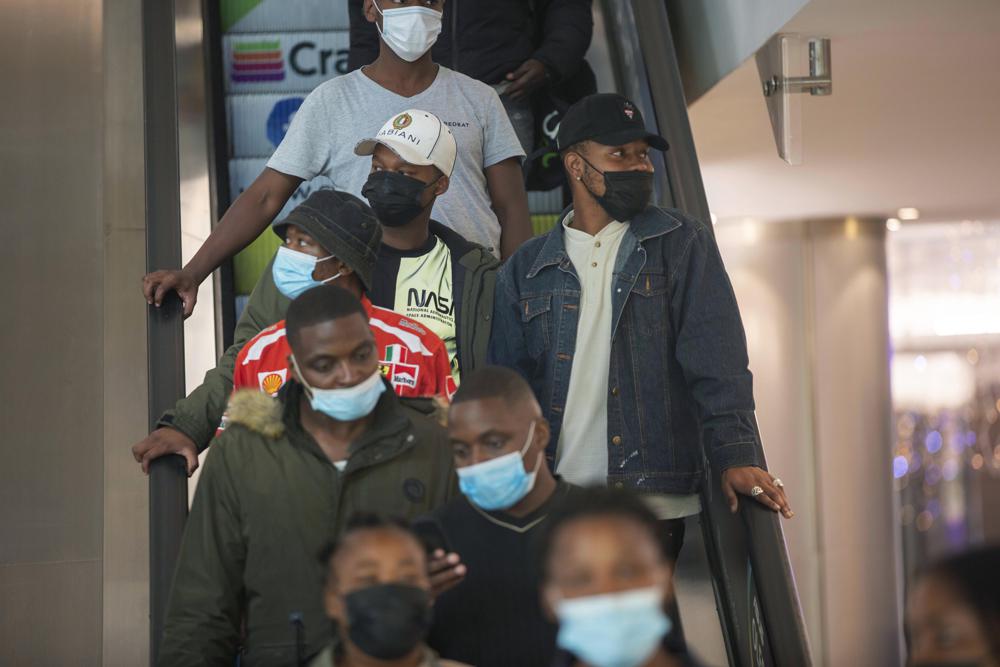
People wearing masks on an escalator at a shopping mall, in Johannesburg, South Africa, Friday Nov. 26, 2021. Advisers to the World Health Organization are holding a special session Friday to flesh out information about a worrying new variant of the coronavirus that has emerged in South Africa, though its impact on COVID-19 vaccines may not be known for weeks. Photo: Denis Farrell/AP
Maybe. As of noon Friday, travelers arriving in the U.K. from South Africa, Namibia, Botswana, Lesotho, Eswatini and Zimbabwe will have to self-isolate for 10 days. European Union nations also moved quickly on Friday to ban air travel from southern Africa, and the U.S. also said it would ban travel from South Africa and seven other African nations by non-US citizens beginning Monday.
Given the recent rapid rise in COVID-19 in South Africa, restricting travel from the region is “prudent” and would buy authorities more time, said Neil Ferguson, an infectious diseases expert at Imperial College London.
Jeffrey Barrett, director of COVID-19 Genetics at the Wellcome Sanger Institute, thought that the early detection of the new variant could mean restrictions taken now would have a bigger impact than when the delta variant first emerged
“With delta, it took many, many weeks into India’s terrible wave before it became clear what was going on and delta had already seeded itself in many places in the world and it was too late to do anything about it,” he said. “We may be at an earlier point with this new variant so there may still be time to do something about it.”
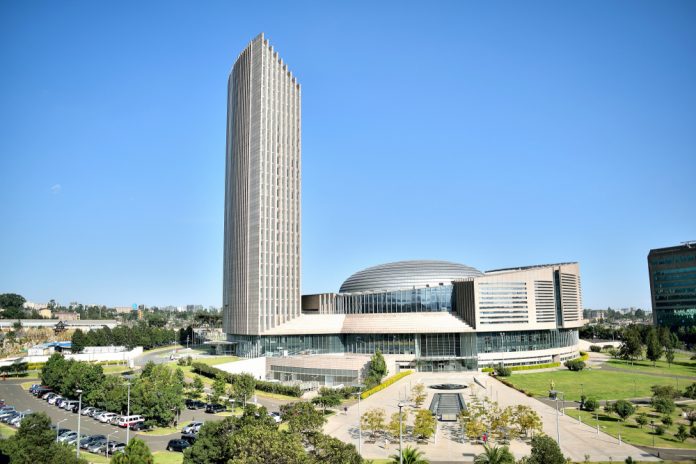
The African Union headquarters in Addis Ababa, Ethiopia. Photo: Hailu Wudineh Tsegaye/Shutterstock
The African Union headquarters in Addis Ababa, Ethiopia. Photo: Hailu Wudineh Tsegaye/Shutterstock
This article was originally published in the American Ambassadors Review. Mshale has republished it with their permission.
On the same day President Joseph Biden laid out his vision for global engagement at the U.S. State Department, he also extended greetings to the 34th Summit of the African Union (AU). That Africa popped up on the President’s radar screen so early in his administration is promising. In his remarks, the President sounded the right notes. He began by reinforcing the U.S. commitment to be Africa’s partner, underscoring the common fates of America and Africa and the need for Africa and America to “work together to advance a shared vision of a better future.” Among the details of that vision of a better future are “investing in democratic institutions and promoting human rights” and “ investing more in global health and defeating COVID.” It also means, he indicated, that the U.S. is standing ready to “engage in sustained diplomacy with the African Union to address conflicts across the continent.”
That’s good news for Africa. On the other side, Africa is a great place to start as the Biden Administration works to reestablish America’s leadership position in the world. That’s because Africa is where the stakes are clearest and where America has substantial economic, geopolitical and military interests, as well as substantial competitive advantages. To appreciate what I mean requires seeing Africa less as a “problem” and more as an opportunity.
The common narrative about Africa—though generally not expressed as crassly as it was by the 45th U.S. President—is substantively not much different than he characterized it. Whether it’s the evening news or policy forums, when the subject of Africa is raised, more often than not, the conversation is about disease, disaster or destruction. Does Africa have its problems? Yes, but what continent or country doesn’t.
Africa, like most places, is more than the sum of its problems. There are 16 countries in Africa, with a combined population of close to a billion people, that have free-market economies and free elections. For the record, those 16 countries are Cape Verde, Ghana, Liberia, Senegal, Mali, Nigeria, Namibia, South Africa, Botswana, Benin, Malawi, Mozambique, Zambia, Mauritius, Kenya and Tanzania. The most profound evidence that those 16 countries are on the right track is that they are home to nearly 50 democratically retired heads of state and government. For the naysayers who may harp that democracy is “on life support” in Africa, the reality is that, for the overwhelming majority of Africans, democracy is alive and well.
The same can be said for the economic front, as well. Since I served as President William Clinton’s envoy to Tanzania, the 16 countries I referenced earlier have had enviable growth rates, despite interruptions to that growth coming from events that emanated from outside the continent, viz. 9/11, the 2008 banking debacle, and COVID-19. Were it not for these catastrophic events, who knows what the growth rates of countries such as Tanzania, Ghana, South Africa or Nigeria would be.
Africa has countries that are stable, with citizens who are productive. How America engages in Africa has the potential to impact its economic interests for years to come. As Africa increasingly expands its place in the global economy, the stakes relative to U.S. geopolitical interests will only increase. The time to do a reboot of America’s Africa policy is now, while the U.S. has the political capital to make a difference for Africa and itself.
U.S. Economic Interests and Africa
Africa’s “sweet 16” democracies, with close to a billion people, represent an impressive market worth tapping in a variety of ways. Despite the market disruptions over the past two decades, African cities such as Dar es Salaam, Johannesburg and Dakar are growing at a phenomenal rate. More growth requires more capital. There is certainly room for America to find a place in this space. The new U.S. International Development Finance Corporation is a good start, with a budget of $58.5 billion per year. Africa needs to invest somewhere in the neighborhood of $80 billion a year on infrastructure for the foreseeable future. The Biden Administration and Congress would do well to raise the ante. Other nations—including China, Japan, Germany, South Korea and Australia—are stepping up to fill the demand.
As Africa’s economies and middle class continue to grow, there is a tremendous market for American consumer goods. Consumer and business spending in Africa is expected to top $6.6 trillion by 2030, up from $4 trillion in 2015. Again, not only China, but also nations in every other region of the world, are looking to fill the continent’s need for consumer goods.
Africa is more than a potential American consumer market; it has the potential to be a manufacturing center to meet American consumer needs, as well. The issue of supply chains has been featured prominently in the news, particularly as tensions between the U.S. and China have escalated. Those tensions aside, now that the Chinese manufacturing sector has matured and costs are rising, Africa is the next best place to satisfy the supply-chain needs of the manufacturing sector. It has a wealth of young people and poverty, which translates into an available and willing workforce. Africa has demonstrated that it has the potential to become the world’s next factory. Mauritius, one of the early entrants in this space, created a manufacturing zone that has supplied products for the fashion industry in Europe and America. Tanzania is a recent entrant into this space. There’s a new manufacturing concern in Tanzania that’s producing 5,000 units per day. (That’s just one factory.) South Africa is the manufacturing venue of choice for Mercedes’ righthand-drive vehicles.
So the potential is there. But U.S. companies have not come close to scratching the surface in terms of the opportunities. During the Clinton Administration, the U.S. passed the African Growth and Opportunity Act (AGOA), which provided trade preference for commodities and goods from Africa. While every U.S. Presidential Administration since then has extended the AGOA, not much has happened to provide other incentives (or push) for U.S. companies to leverage this advantage. As a result, China has displaced the U.S. as Africa’s number-one trading partner.
There is too much money on the table for America not to become more competitive in Africa. Maybe better results can be realized by tweaking AGOA. Groups like the Corporate Council on Africa could provide valuable insights as to how to do this. Perhaps nothing more is required than for President Biden to provide the necessary leadership with a few strategically scheduled trade missions, along with prodding the Commerce Department and the U.S. Trade Representative to make Africa a higher priority. Whatever it takes for America to get competitive in the African marketplace, now is the time to get busy.
Beyond the consumer market and manufacturing, there are also opportunities in the energy and mining sectors. Here again, the Chinese are ahead of others in the game. Whether it’s selling solar as an energy solution or closing commodity deals, the Chinese are way ahead of the U.S. Even in mining exploration, which I know something about, the U.S. is being outflanked by the Australians and Canadians. The U.S. needs to come up with strategies to incentivize U.S. capital markets to play in this space; this could start with funding and/or partnering with U.S. companies that want and should be a presence on the continent. The U.S. has declared minerals such as graphite to be strategic assets, as these are essential to the greening of the global energy supply, whether for battery technology or solar technology. Today the largest exporter of graphite is China. The world’s largest high-quality reserves are in African countries, particularly Tanzania.
U.S.-Africa Geopolitical Interests
In the aftermath of 9/11, the George W. Bush Administration established two entities that enabled America to up its game on the African continent: the Millennium Challenge Corporation (MCC) and AFRICOM. MCC was established to advance development in democracies around the world. The point was to help young democracies deliver a development dividend that would contribute to stability and progress and mitigate against the possibility of such places becoming breeding grounds for terrorists. At MCC’s inception, African countries dominated the list of initial recipients of MCC grants. The establishment of AFRICOM was a further acknowledgment that America and Africa have mutual geopolitical and military interests that required greater cooperation. There has been some mission creep relative to both initiatives. America needs to be proactive in providing the economic assistance and military assistance to preclude Africa from becoming a haven or incubator for the next generation of terrorism. With America’s pull-out from Afghanistan, we need to be on heighted alert for foreign terrorists.
There is no greater test of our appetite and ability to compete with China than in development and defense. More than that, if our nation wants to be proactive and, thereby, reassert our leadership position in the world, Africa is where we want to be.
U.S. Strategic and Competitive Advantages in Africa
When I went to Tanzania in the immediate aftermath of the U.S. Embassy bombing by al Qaeda, I was struck by the extent of cooperation and support we received at every level. It not only reflected a sense of sympathy for the losses we suffered, but it also reflected a sense of the respect with which the U.S. was held. From the U.S. Civil Rights Movement to the appointment of Andrew Young as United Nations Ambassador and, most recently, with the election of Barack Obama as U.S. President, America’s image as a beacon of democracy and justice is its hallmark. In a nutshell, being the world’s most enduring and diverse democracy is a huge advantage. Obviously, President Donald Trump’s characterization of Africa as “a continent full of sh*thole countries” was not the best strategy to win friends and influence people; but as I move around the continent, I find that America’s reputation is still fundamentally intact.
My point is that as the Biden Administration works to reassert America’s standing in the world, he starts with some goodwill in the bank on the African continent. The dynamism of American democracy and its diversity are two of its greatest assets. The U.S. needs to use both of these assets more effectively. If it does, it will have a tremendous advantage, but this notwithstanding, time marches on. Africa has development needs and needs trading and investment partners. If the U.S. isn’t to relinquish more ground to China, it has got to get in the game to win the game. President Biden’s pledge to provide more COVID-19 vaccines than the rest of the world to countries such as those in Africa is a good beginning. Nonetheless, the U.S. needs to up its game all around. Under the Clinton and Bush Administrations, America set new benchmarks for engagement in Africa. Those new benchmarks were achieved because Africa was a priority for both of those Administrations.
Biden’s welcoming remarks at the opening of the 34th session of the AU put forth a broad framework for engaging Africa. It was a good start. But if the U.S. is going to successfully protect its interests and exert the sort of leadership the world so desperately needs, the Biden Administration’s overtures to Africa can’t stop with those remarks. The U.S. has significant interests and a tremendous advantage in advancing Africa’s interests and its own. As with most opportunities, the U.S. must use it or lose it.
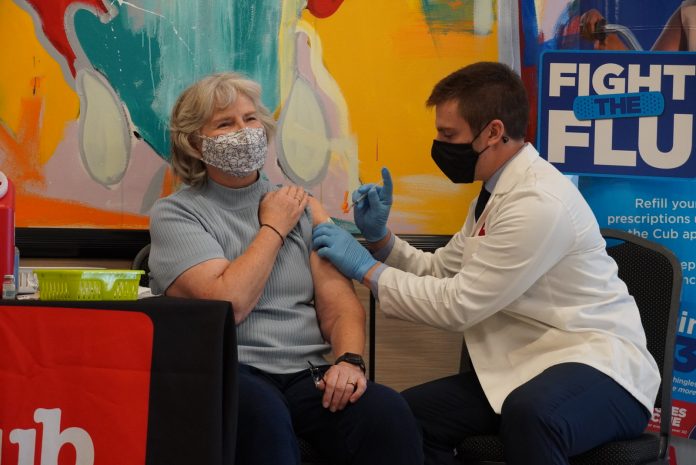
Minnesota Health Commissioner Jan Malcolm receives a booster dose of the
COVID-19 vaccine at the Cub Foods in North Minneapolis
Photo: Office of Governor Tim Walz
Minnesota Health Commissioner Jan Malcolm receives a booster dose of the
COVID-19 vaccine at the Cub Foods in North Minneapolis
Photo: Office of Governor Tim Walz
In response to surging coronavirus cases even among the fully vaccinated due to waning immunity, Minnesota health officials were set to recommend all adults get vaccine boosters starting Friday, November 19 even if federal regulators don’t do so by then.
The Delta variant is causing most of the new cases in the state.
The Food and Drug Administration is expected to approve Pfizer boosters for all U.S. adults before an advisory panel meets Friday, November 19 which is the first step before final approval by the Centers for Disease Control and Prevention.
Minnesota Department of Health data show that 39 percent of cases, 32 percent of hospitalizations and 45 percent of deaths were people who were fully vaccinated with most of them being among older people who got vaccinated earlier.
Minnesota will be following Arkansas, California, Colorado, New Jersey, New Mexico, New York and West Virginia which have already opened booster vaccines to all adults.
Minnesota health commissioner Jan Malcom during a press briefing said Minnesota is second in ranking among the states for vaccine booster administration with 715,000 of the more than 3 million fully-vaccinated Minnesota adults.
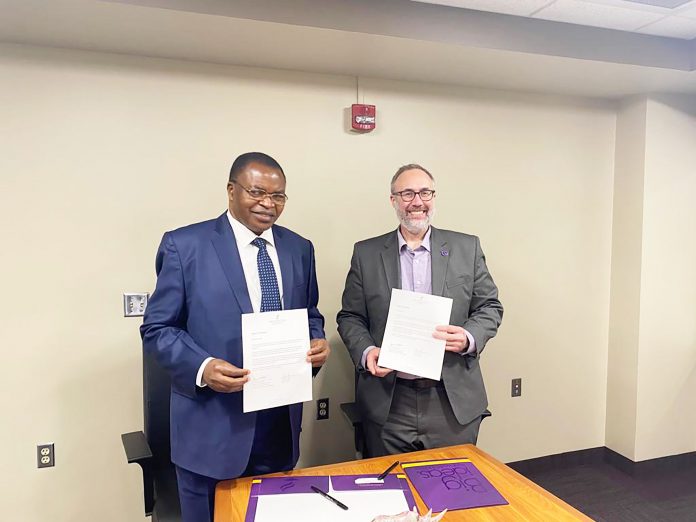
Kisii University and Minnesota State University, Mankato on Tuesday, November 9, 2021 signed an expanded memorandum of understanding to strengthen an existing partnership. Pictured after the signing in Mankato, Minnesota is Kisii University Vice Chancellor Prof. John Akama (left) and Dr. Brian Martensen, Interim Provost and Senior Vice President for Academic Affairs at Minnesota State University, Mankato. Photo: Courtesy Minnesota State University, Mankato
Kisii University and Minnesota State University, Mankato on Tuesday, November 9, 2021 signed an expanded memorandum of understanding to strengthen an existing partnership. Pictured after the signing in Mankato, Minnesota is Kisii University Vice Chancellor Prof. John Akama (left) and Dr. Brian Martensen, Interim Provost and Senior Vice President for Academic Affairs at Minnesota State University, Mankato. Photo: Courtesy Minnesota State University, Mankato
The largest university in southwestern Kenya has signed a partnership agreement that will strengthen its relationship with yet another Minnesotan institution.
Representatives from Kisii University and Minnesota State University, Mankato, signed a letter of intent at a dinner on Nov. 9. The new agreement is an expanded memorandum of understanding (MOU) the two institutions signed in 2019 to collaborate mainly in the field of education, and has been “both positive and productive”, according to the letter of intent. It seeks to expand the current relationship to include “exchange of students, faculty, and ideas as well as curricular connections.”
“We value our partnership and seek to identify additional areas of potential collaboration to fulfill our mutual mission of bringing opportunity for social mobility, access to educational excellence, and betterment for communities,” said Dr. Brain Martensen, the interim provost and senior vice president for academic affairs at Mankato.
The agreement was signed at Mankato, during a dinner hosting Kisii University Vice Chancellor Prof. John Akama, and Prof. Alfred Shitandi, the deputy vice chancellor of academic research and student affairs, who is also the registrar of research and extension.
In addition to enhancing learning, analytical problem-solving skills, and interest in global issues, international exchange programs help students understand, accept, and value other people through cultural immersion and language learning, according to the World Education Program.
The relationship between the two universities began through the Minnesota Kenyans International Development Association (MKIDA), an organization founded in 2003 to assist newly-arrived Kenyans transition smoothly into their adopted home, according to Dr. Gerald Nyachae Ondimu, its chairman. It later expanded its scope to incorporate more services, including providing immigrants from the east African country with opportunities to give back to the communities they came from through education.
“In 2008, the board was re-evaluating its priorities in terms of policy and direction the organization was intending to go,” Ondimu said. “One among other things we identified was how we can give back to the community we originally came from.”
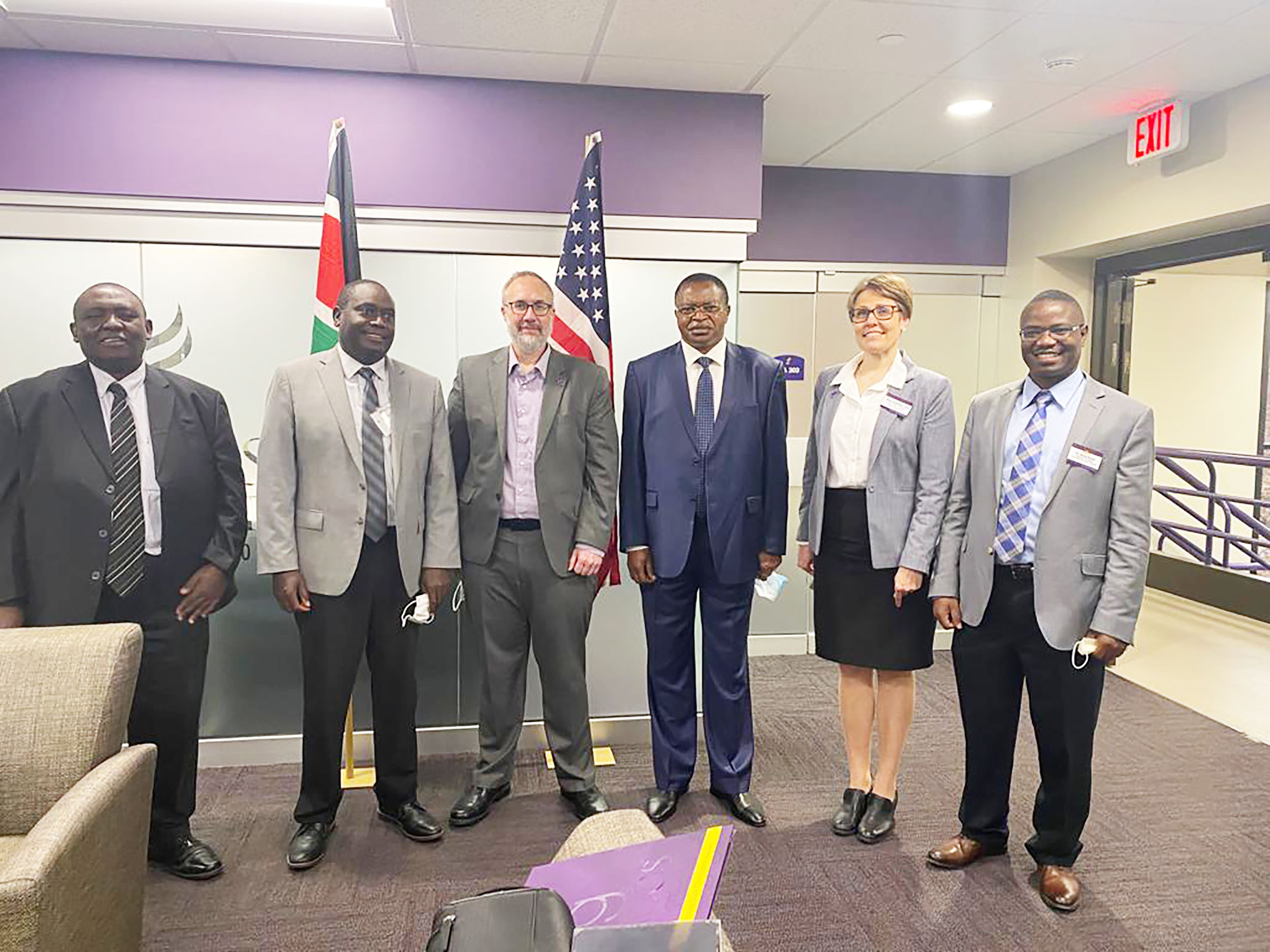
Kisii University and Minnesota State University, Mankato on Tuesday, November 9, 2021 signed an expanded memorandum of understanding to strengthen an existing partnership. Pictured after the signing in Mankato, Minnesota is (l to r) Prof. Alfred Shitandi, Kisii University; Dr. Gerald Nyachae Ondimu, MKIDA; Dr. Brian Martensen, MSU-Mankato; Prof. John Akama, Kisii University; Dr. Anne Dahlman, MSU-Mankato; Dr. David Kimori, MSU-Mankato and MKIDA. Photo: Courtesy Minnesota State University, Mankato
Dr. David Kimori, MKIDA’s vice chair, who is also a professor at Mankato, was instrumental in initiating the partnership between the two universities.
“I had been working with MKIDA for some time and felt it was a good opportunity as a faculty member to introduce Mankato and MKIDA,” he said.
In 2018, Kimori made a presentation before Mankato’s Global Education Advisory Council to promote a partnership between the two universities. In 2019, Kisii University signed an MOU with Mankato’s College of Education, which trains educators. The following year, students from Mankato travelled to Kenya and spent four and a half weeks teaching at Kisii University.
Kimori, whose research focuses on teacher education and Science, Technology, Engineering and Math (STEM) curriculum, said he was pleased to see the relationship flourishing.
“I’m happy to see young people really interacting and exchanging ideas internationally,” he said.
Dr. Elizabeth Finsness, the director of field and international experience at Mankato’s College of Education, was among the faculty members who accompanied the first cohort of students to Kisii University.
“It was amazing,” she said. “They had amazing attention from the faculty at Kisii.”
The new agreement extends opportunities for collaboration to all colleges at both universities. It also provides the option for students of both institutions to complete up to two years of study abroad.
Shitandi, the Kisii University deputy vice chancellor, said he hoped more schools at both universities would take advantage of the partnership.
“We also hope to have this continuation for the staff and student exchange,” he said.
MKIDA’s ties to Kisii University goes back more than a decade. The organization also helped start a relationship with the University of Minnesota and the Kenyan institution.
“The relationship with Kisii [University] really began back in 2009, when Kenyans living in Minnesota approached the University [of Minnesota],” said Dr. John Vreyens, the director of Global Initiatives, a program of the University of Minnesota Twin Cities Extension that collaborates with various international organizations.
But the relationship couldn’t have happened without the backing of Dr. Robert J. Jones, a former senior vice president for system academic administration at the University of Minnesota, who is now the chancellor of the University of Illinois at Urbana-Champaign. It was Jones, whose office was also in charge of public engagement, equity and diversity, and Extension Service, who made sure that once the initial contact between the universities was made, it progressed to the partnership it is today.
In 2012, Jones sent a delegation from the University of Minnesota, which included the Associate Vice President and Dean of International Programs Meredith McQuid, and Beverly R. Durgan, the dean of extension and professor of weed science, visited Kisii University.
Following the visit, a delegation of representatives from Kisii University, which included Akama and Shitandi, visited the University of Minnesota. Shortly after, the two institutions signed a memorandum of understanding.
Since the signing of the document, a wide array of academic exchanges has taken place.
In 2014, for example, a team of professors from the University of Minnesota’s Law school visited Kisii University and later established a new law school. MKIDA partnered with Thomson Reuters, the Canadian publisher of textbooks, to stock Kisii University Law School’s library through an arrangement with Books for Africa.
Students from Kisii University have also been able to participate in year-long work-based learning at the University of Minnesota’s School of Agriculture. Akama, the vice chancellor, said students have returned home more confident and eager to engage with their professors.
“The students who come here, when they go back, they’re kind of transformed,” he said. “You find that they are more interactive, and they appear to be more confident.”
Through their cooperation, the two universities also created a program that works with women farmers of leafy vegetables in the southwestern Kenya region. The program was launched with the help of a grant from the United States Department of Agriculture’s Scientific Cooperation and Research Program, and has worked with more than 200 farmers, according to Vreyens, the Global Initiatives director.
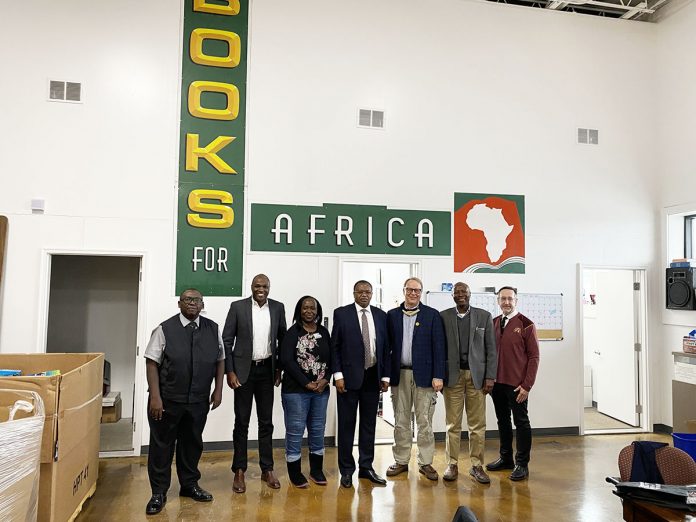
(L-R) Dr. Anakalo Shitandi of Kisii University; Tom Gitaa, president & publisher of Mshale and former Books for Africa board president; Ms. Lillian Otieno, Books for Africa board member and president of Association of Kenyans in Minnesota (AKIA); Dr. John Akama, Kisii University vice chancellor; Dr. Patrick Plonski, Books for Africa executive director; Paul Morande, executive secretary of the Minnesota Kenyans International Development Association (MKIDA) and John R. Vreyens, director of global initiatives at the University of Minnesota on Friday, November 12, 2021 when Dr. Akama and Dr. Shitandi paid a courtesy call on the Books for Africa leadership at its headquarters in Saint Paul, Minnesota. Photo: Courtesy Books for Africa
(L-R) Dr. Anakalo Shitandi of Kisii University; Tom Gitaa, president & publisher of Mshale and former Books for Africa board president; Ms. Lillian Otieno, Books for Africa board member and president of Association of Kenyans in Minnesota (AKIA); Dr. John Akama, Kisii University vice chancellor; Dr. Patrick Plonski, Books for Africa executive director; Paul Morande, executive secretary of the Minnesota Kenyans International Development Association (MKIDA) and John R. Vreyens, director of global initiatives at the University of Minnesota on Friday, November 12, 2021 when Dr. Akama and Dr. Shitandi paid a courtesy call on the Books for Africa leadership at its headquarters in Saint Paul, Minnesota. Photo: Courtesy Books for Africa
SAINT PAUL, Minn. – Kisii University Vice Chancellor John Akama and the director of research and outreach at the university Dr. Anakalo Shitandi met on Friday with the executive director of Books for Africa Dr. Patrick Plonksi and a handful of board of directors at the book shipper’s headquarters.
The vice chancellor was accompanied by John R. Vreyens, the University of Minnesota’s director for global initiatives. Professor Akama is on a week long U.S. visit meeting with University of Minnesota officials and those of Minnesota State University, Mankato.
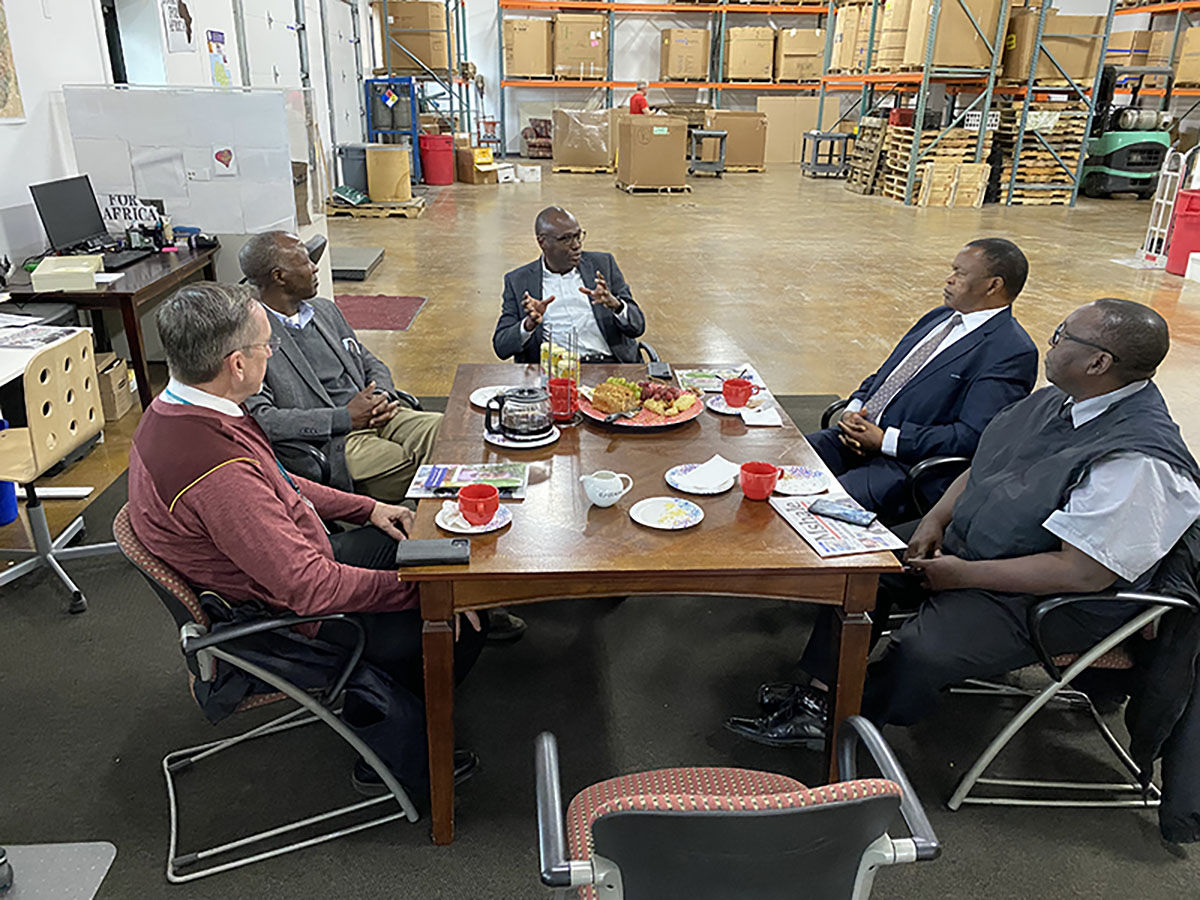
Dr. John Akama, the Kisii University vice chancellor (second right) and others listen as Tom Gitaa, Mshale’s publisher and former Books for Africa board president, explains how the African diaspora works with Books for Africa to ship donated text books to the African continent when the vice chancellor visited the organization’s headquarters and warehouse in Saint Paul, Minnesota on Friday, November 12, 2021. Kisii University has been a recipient of books from Books for Africa. Photo: Courtesy of Books for Africa
Kisii University and the two flagship Minnesota institutions have a working relationship that shares knowledge and expertise between them.
During the visit to Books for Africa, Dr. Akama thanked the organization for the containers of books that have been donated to his institution and gave an overview of the impact the books have had on the university community and surrounding areas.
Dr. Plonksi on his part pledged to continue supporting Kisii University through its partnership with Minnesota Kenyans International Development Association (MKIDA) which comprises the Kenyans in Minnesota from the Gusii region and has nurtured the Books for Africa and Kisii University partnership.
Attending the meeting were former Books for Africa board of directors president and board member emeritus Tom Gitaa, Association of Kenyans in Minnesota (AKIA) president Lillian Otieno and MKIDA executive secretary Paul Morande.
The 33-year-old Books for Africa is the largest shipper of donated text and library books to the African continent, shipping over 51 million books to all 55 countries as of this year.
Minnesota Energy Assistance Program has been expanded to offer more benefits to keep families warm during the winter and have their lights stay on. Photo: NicoleTaklaPhotography/Shuterstock
Minnesota Energy Assistance Program has been expanded to offer more benefits to keep families warm during the winter and have their lights stay on. Photo: NicoleTaklaPhotography/Shuterstock
The Minnesota Department of Commerce on Wednesday announced that Minnesotans can access greater financial assistance and newly expanded protections to keep their lights on and homes heated through the Minnesota Energy Assistance Program (EAP).
The Minnesota Energy Assistance Program helps people who own or rent their homes to pay for current and past-due bills for electricity, gas, oil, biofuel and propane, emergency fuel delivery and repair/replacement of homeowners’ broken heating systems, and could also cover water and sewer bills. “As the weather turns colder, it’s important for Minnesotans to take actions now to stay warm and safe,” said Commerce Commissioner Grace Arnold. “Energy assistance is here to make your energy bills more affordable. You shouldn’t have to choose between paying your energy bill and buying groceries or prescription medications.”
In September, the commerce department announced the income eligibility limit for the program has been increased to 60 percent of Minnesota’s median income ($67,765 per year for a family of four). This year, eligibility and benefits have been raised, paying up to $3,200 to cover energy bills for income-eligible Minnesotans.
In a news release, the department said $28.5 million has already been paid to over 25,000 Minnesota households in just the past 30 days.
How to apply
To request an application or find your local service provider:
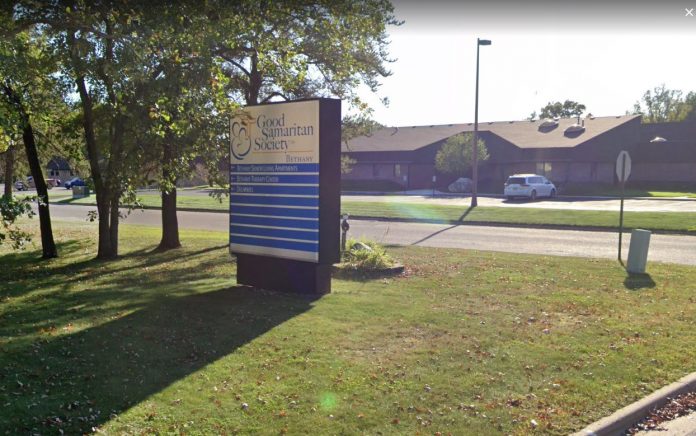
Gov. Walz of Minnesota on Wednesday, November 10, 2021 announced that Good Samaritan Society – Bethany in Brainerd will serve as an alternative care site for the state's hospitals dealing with a surge of Covid patients. Photo: Google Maps
Gov. Walz of Minnesota on Wednesday, November 10, 2021 announced that Good Samaritan Society – Bethany in Brainerd will serve as an alternative care site for the state's hospitals dealing with a surge of Covid patients. Photo: Google Maps
Governor Walz on Wednesday announced a second skilled-nursing facility, Good Samaritan Society – Bethany in Brainerd, would act an alternative care site as part of his action plan to relive Minnesota hospitals that have become overwhelmed with COVID-19 patients.
The governor’s move comes after the state facilitated the first alternative care site last week when Benedictine St. Gertrude’s in Shakopee made 30 beds available for patients. That facility received support from the Minnesota National Guard and state-funded staff through the COVID-19 Emergency Staffing Pool.
The governor’s office said the Brainerd facility will also receive an additional emergency staffing team of 14 Minnesota National Guard members and nine federal nurses to treat patients. The site will help relieve hospital capacity in central and northern Minnesota by accepting up to 34 patients from area hospitals.
Patients eligible for transfer include those who no longer require acute emergency care but are not well enough to go home, such as those who are recovering from surgery.
“We appreciate the opportunity to work with the state of Minnesota and our hospital partners to navigate capacity challenges in order to meet the needs of patients who are in need of care,” said Nate Schema, vice president of operations at the Good Samaritan Society in a statement. “The available capacity at Good Samaritan Society – Bethany in Brainerd allows us to serve more people in need of post-acute care and services and will provide our hospital partners with additional flexibility as they continue to serve the community. I remain deeply grateful to our staff who continue to go above and beyond to take care of those who need them the most.”
Governor Walz’s office said it has received proposals from multiple nursing facilities around the state willing to receive patients from hospitals. The Minnesota Department of Health and DHS are working to determine facilities best suited to expand the program.
“As Minnesota doctors and nurses care for more COVID-19 patients, we’re calling in reinforcements,” said Governor Walz. “Our new alternative care sites will treat Minnesotans on the road to recovery so our hospitals can focus on providing care for our most critical patients, including those sick with COVID-19. We’re forging a coalition to assist our hospitals. By working with our partners at long-term care facilities, the federal government, and the National Guard, we’re helping make sure we have the capacity to care for those who need it.”
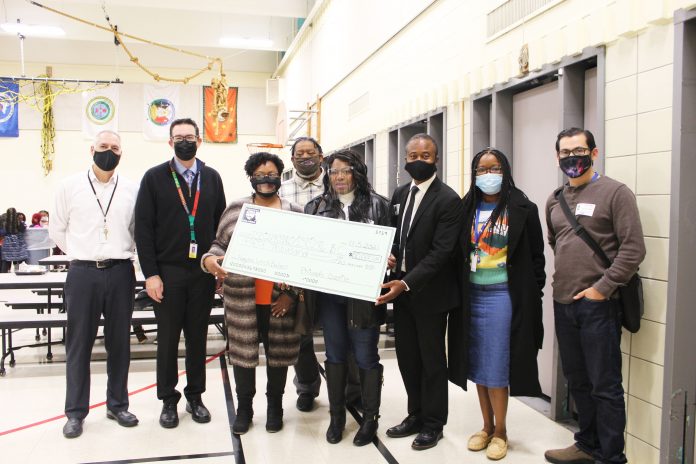
The Philando Castile Relief Foundation donated $50,000 to the Osseo School District 279 to support families with meal debt. Valerie Castile, CEO and Presdient of the foundation accompanied by other members of the Castile family presented the check at Palmer Lake Elementary School in Brooklyn Park in the presence of Mayor Mike Elliott of Brooklyn Center which also falls under District 279. Pictured are Supt. Cory McIntyre, Mayor of Brooklyn Center Mike Elliott, members of Philando Castile’s family and Director of Nutrition Services Jeff Ansorge. Photo: Jasmine Webber/Mshale
The Philando Castile Relief Foundation donated $50,000 to the Osseo School District 279 to support families with meal debt. Valerie Castile, CEO and Presdient of the foundation accompanied by other members of the Castile family presented the check at Palmer Lake Elementary School in Brooklyn Park in the presence of Mayor Mike Elliott of Brooklyn Center which also falls under District 279. Pictured are Supt. Cory McIntyre, Mayor of Brooklyn Center Mike Elliott, members of Philando Castile’s family and Director of Nutrition Services Jeff Ansorge. Photo: Jasmine Webber/Mshale
A nonprofit founded in memory of Philando Castile has donated $50,000 to settle debt families still owe to the school lunch program of the Osseo Area Schools District and Brooklyn Community Schools in suburban Minneapolis. Each will receive $25,000.
“I am still trying to wrap my head around why we still have lunch debt,” Valerie Castile, Philando’s mother, said in a video posted on her Facebook page shortly after donating the money.
She founded the Philando Castile Relief Foundation (PCRF) after a police officer shot and killed her son in 2016, during a traffic stop in Falcon Heights, Minnesota. Before the officer killed him in the presence of his girlfriend and her 4-year-old daughter, Philando Castile worked in the Nutrition Services Department for the St. Paul Public School District, and was the nutrition supervisor at J.J. Hill Montessori Magnet School, where he often used his own money to buy lunch for children who couldn’t afford.
“The United States is one of the richest countries on the planet, and here our children have to worry about lunch,” Castile said.
In 2020, 14.8% of all families with children had food insecurity, according to the U.S. Department of Agriculture. The rate was significantly higher in households headed by single parents; 27.7% for mothers, and 16.3% for single fathers. Food insecurity was also worse than average in Black and Hispanic households, at 21.7% and 17.2%, respectively.
Castile presented the check at a brief ceremony held at Palmer Lake Elementary School cafeteria, in the presence of students and Mike Elliott, the mayor of Brooklyn Center.
“We came up here to help out any way we can by donating to these families,” Castile said. “We are continuing Philando Castile’s legacy of helping reduce those negative lunch balances.”
Castile said it was “crazy” that some schools opted out of free and reduced school lunch programs, which she said they did to keep poor kids out of their schools. School lunch programs were the only option a lot of families have after the devastation caused by the coronavirus pandemic, she said.
“These children are going to lead this country at some point in life,” Castile said. “They have to be mentally healthy. They have to be physically healthy. As much taxes as we pay, our children deserve to eat for free.”
Elliott, the mayor of Brooklyn Center, said the donation would carry forward Philando’s life work of caring for students. He said the average school lunch debt in Minnesota is $168.45 per a child, and called on the state legislature to make free school lunch permanent for all students statewide.
“You can’t learn on an empty stomach,” Elliott said in a statement. “By not feeding all students, we undermine our education goals, and the important work teachers do,”
Jeff Ansorge, the director of nutrition and food services at Osseo Area Schools, echoed Elliott’s sentiments that hunger negatively affects children’s ability to learn and undermines society’s educational goals.
“If our kids aren’t fed, it has a direct impact on their physical and mental health, and ultimately their learning outcomes,” Ansorge said. “Even us adults, if we aren’t properly nourished, we cannot function.”
The Osseo Area Schools district, serves more than 21,000 students in the cities of Brooklyn Center, Brooklyn Park, Corcoran, Crystal, Dayton, Hassan Township, Maple Grove, Osseo, and Plymouth. It has a minority enrollment of 57%, which is far higher than the Minnesota state average of 34%. Most of the district’s minority students are Black or Asian.
Ansorge said the $50,000 grant would target schools in Brooklyn Park and Brooklyn Center, which are home to the most underprivileged student’s in the district. Administrators of the grant will also prioritize assisting high school seniors to ensure they graduate without debt, Ansorge said.
In addition to advancing Philando Castile’s passion of tackling hunger and food insecurity in schools, the foundation works in the area of preventing gun violence and supports organizations that provide counselling services to families of victims of gun violence.
“I couldn’t be more proud of the foundation’s work,” Elliott said. “It is helping victims of gun and police violence, as well as clearing lunch debt for students in schools in our community.”
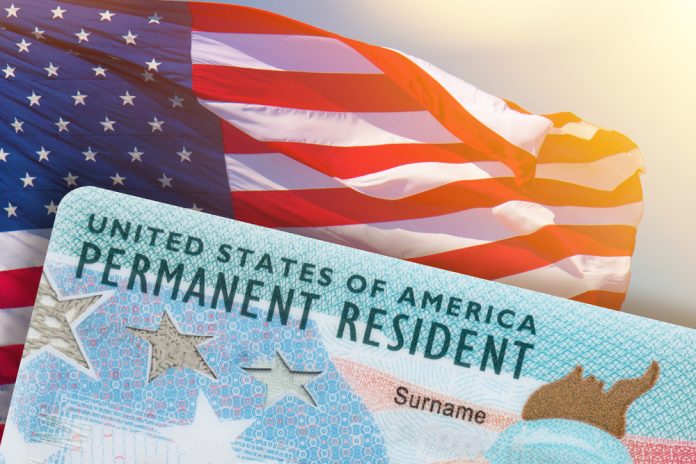
U.S. Citizen and Immigration Services in conjunction with the International Institute of Minnesota will host an informational session in Brooklyn Park, Minnesota on Sunday, November 7, 2021 on how Liberians can apply for Green Cards under the Liberian Refugee Immigration Fairness program. Photo: Artiom Photo/Shutterstock
U.S. Citizen and Immigration Services in conjunction with the International Institute of Minnesota will host an informational session in Brooklyn Park, Minnesota on Sunday, November 7, 2021 on how Liberians can apply for Green Cards under the Liberian Refugee Immigration Fairness program. Photo: Artiom Photo/Shutterstock
The December 20, 2021 deadline for Liberians living in the US who qualify for permanent residency to apply for a green card under the Liberian Refugee Immigration Fairness program (LRIF) is fast approaching and U.S. immigration officers will hold an information session in Brooklyn Park on Sunday, November 7 at Greater Praise Ministries from 1:30 p.m. to 3:00 p.m.
The information session is being hosted in conjunction with the International Institute of Minnesota which has been assisting eligible Liberians take advantage of the opportunity.
The LRIF was attached to the 2019 defense spending bill which former President Donald Trump signed into law. The original deadline for Liberians to apply for green cards was December 2020 but was pushed to December 20, 2021 due to the pandemic.
At the Sunday event, USCIS officials will provide an overview of the LRIF program, discuss eligibility requirements and respond to questions from attendees during the information session.
U.S. Citizenship and Immigration ServicesLRIF Information Session
U.S. Citizenship and Immigration Services national engagement on Liberian Refugee Immigration Fairness (LRIF).