Malian singer/guitarist Vieux Farka Touré will be the first African musician to perform at the Dakota on September 21, 2021 after the club reopens following an 18-month closure due to the coronavirus pandemic. Photo: Courtesy
Malian singer/guitarist Vieux Farka Touré will be the first African musician to perform at the Dakota on September 21, 2021 after the club reopens following an 18-month closure due to the coronavirus pandemic. Photo: Courtesy
Update: The Dakota has announced the postponement of the Vieux Farka Touré September 21 concert until further notice.
The Dakota, Minneapolis’ landmark jazz club and restaurant will resume live performances and dinner on September 10 following a year and a half closure due to the coronavirus pandemic. During the closure it presented virtual performances.
Davina with Chubby Carrier & the Bayou Swamp Band will kick off the reopening on September 10 at 7pm with their high energy and swamp funky zydeco.
First African act is on September 21 with Vieux Farka Touré
Malian singer/guitarist Vieux Farka Touré will be the first African act to perform after the reopening. Touré’s music which is celebrated in a new documentary “Vieux de Niafunké,” went into music following his father’s footsteps although his late father, Grammy-winning musician Ali Farka Touré wanted him to be a soldier instead.
Before his passing in 2006 the elder Touré gave his blessing to the son to continue his musical journey.
Tickets for the September 21 concert are available online at dakotacooks.com.
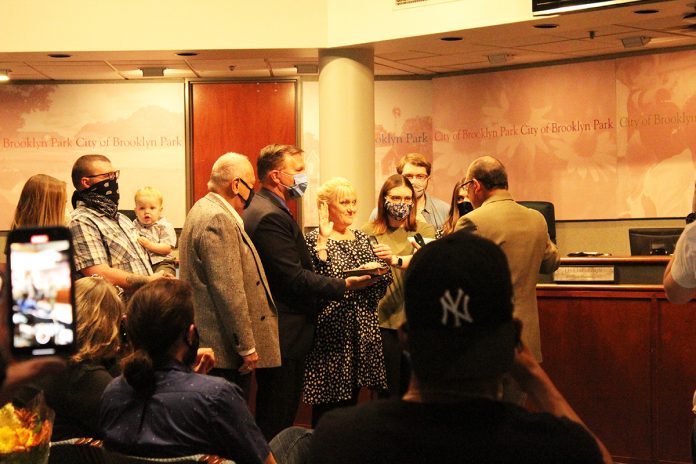
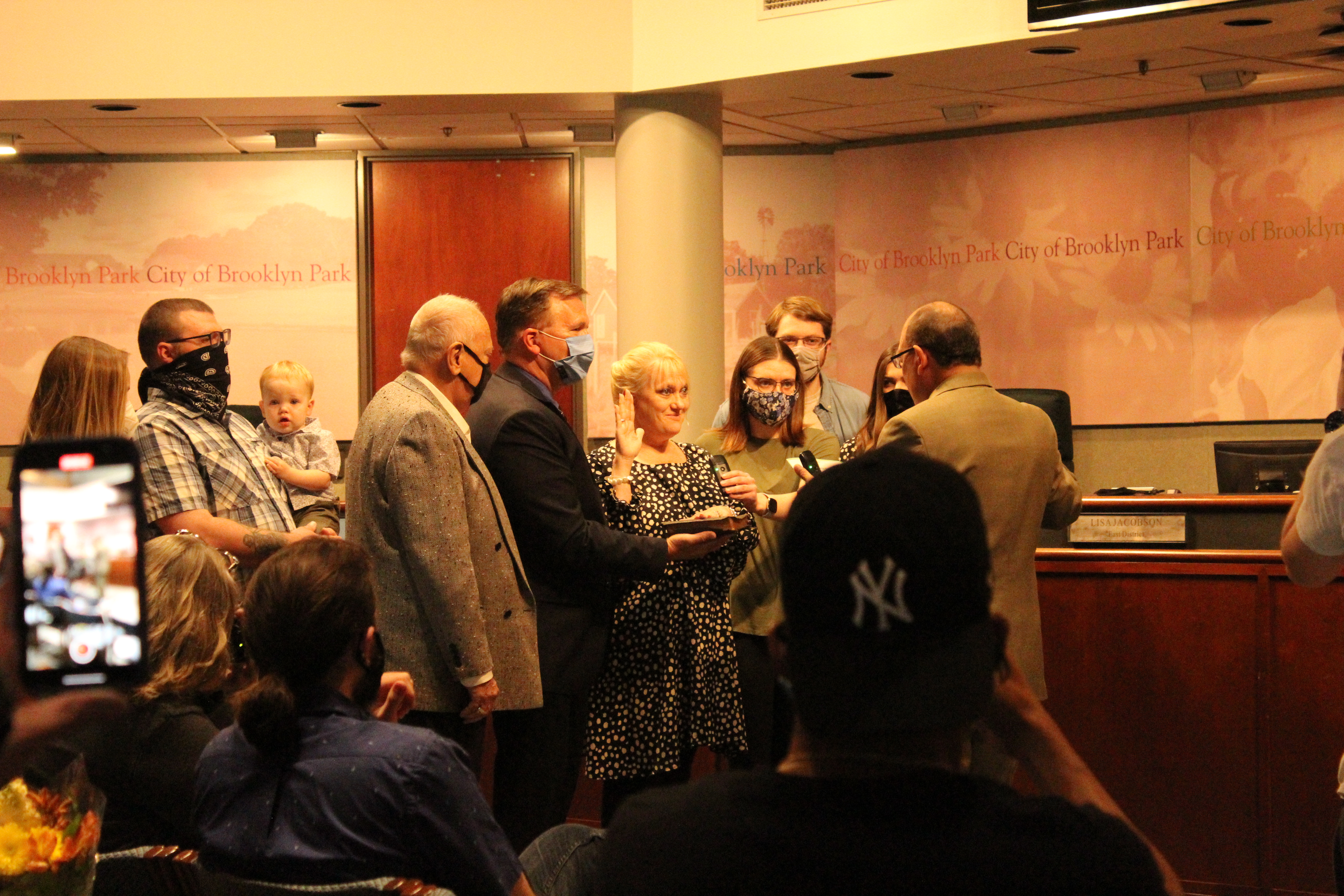
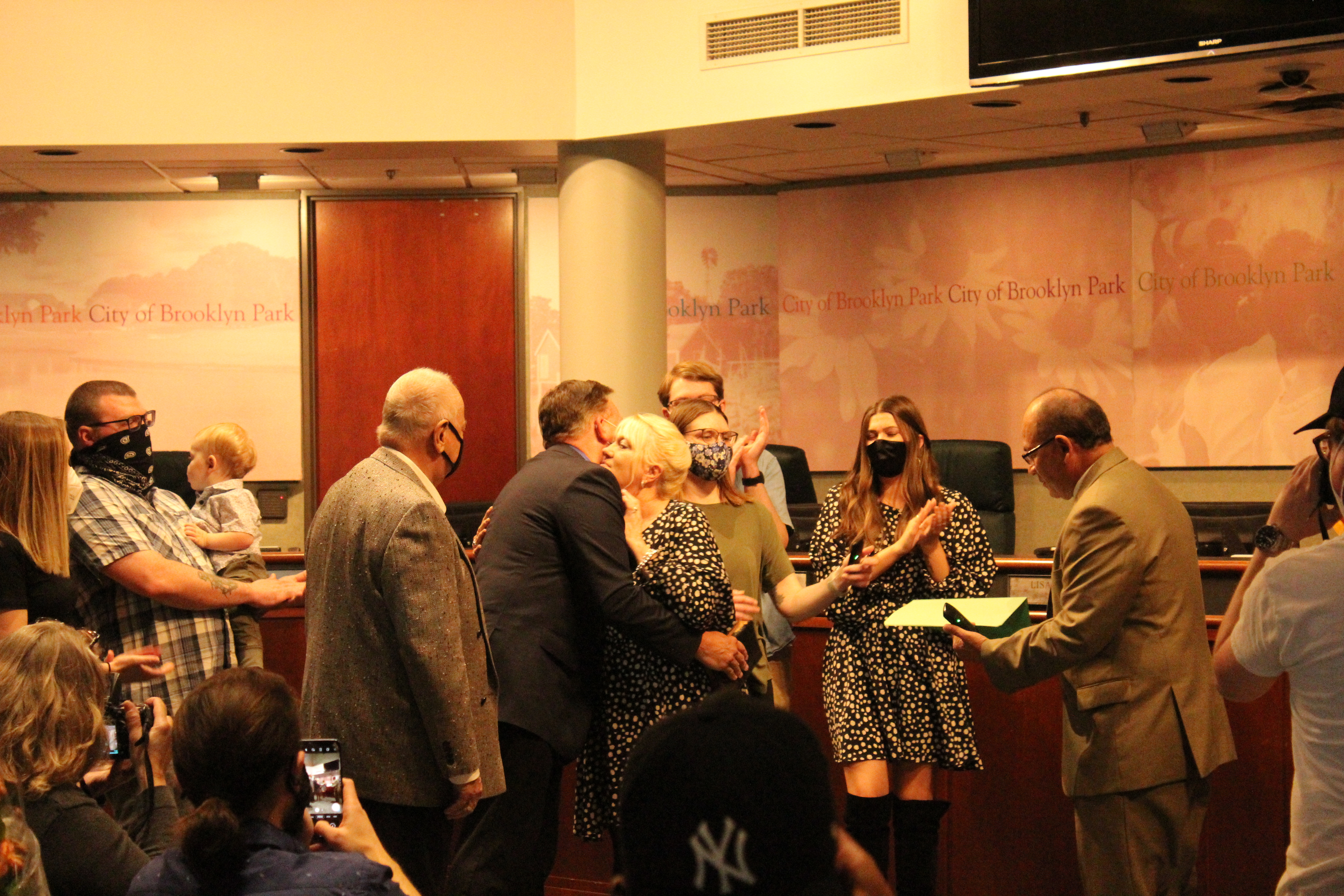
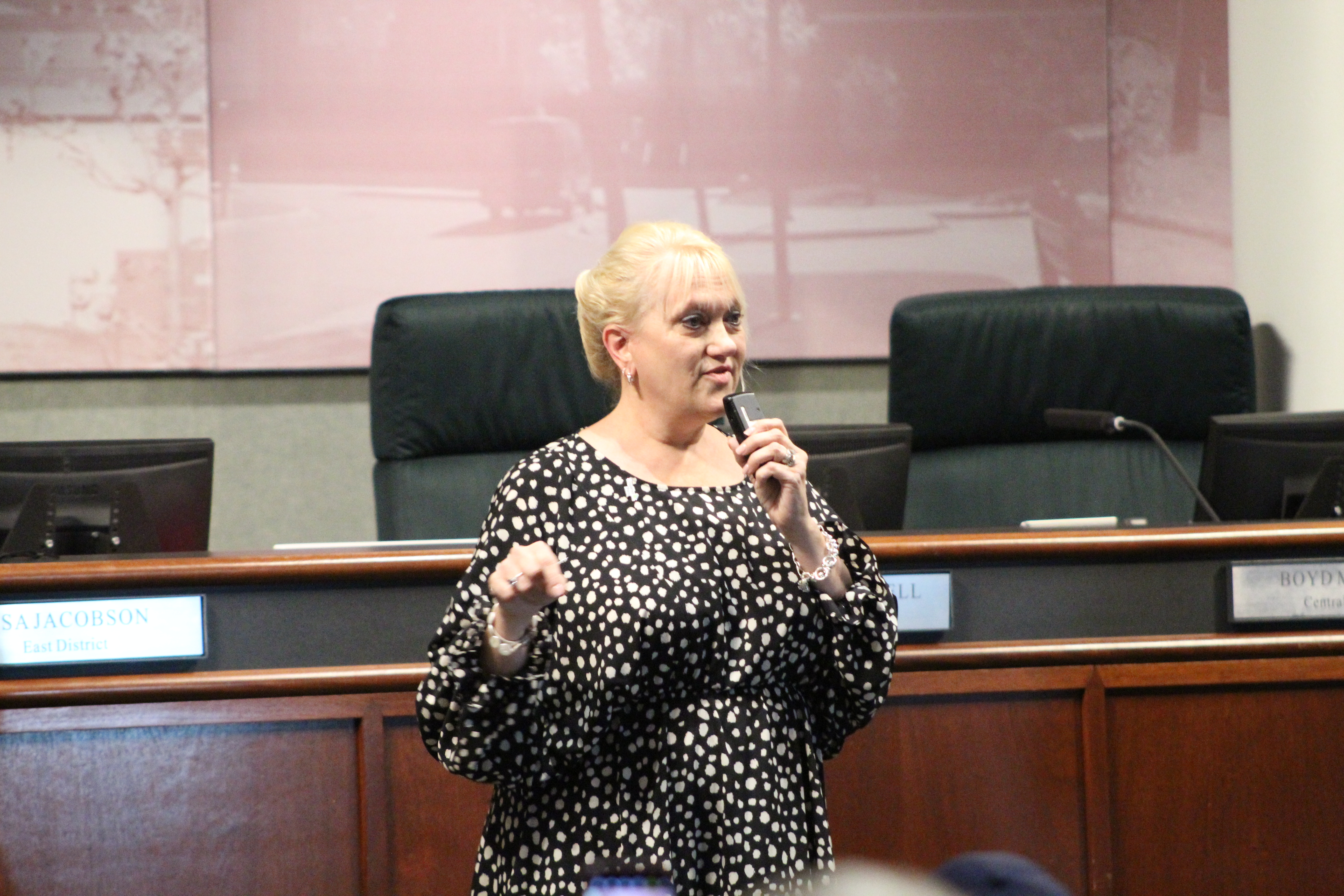
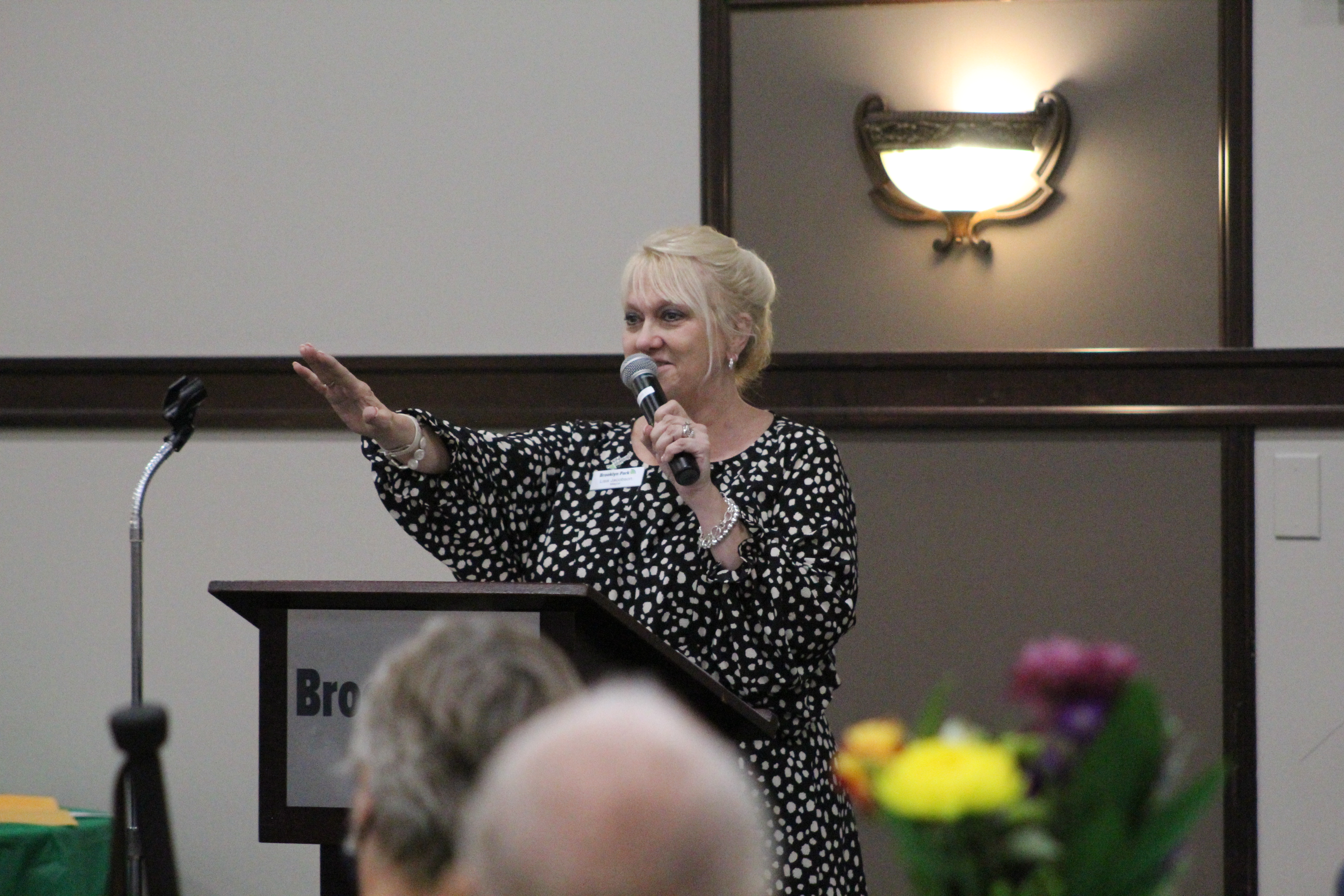
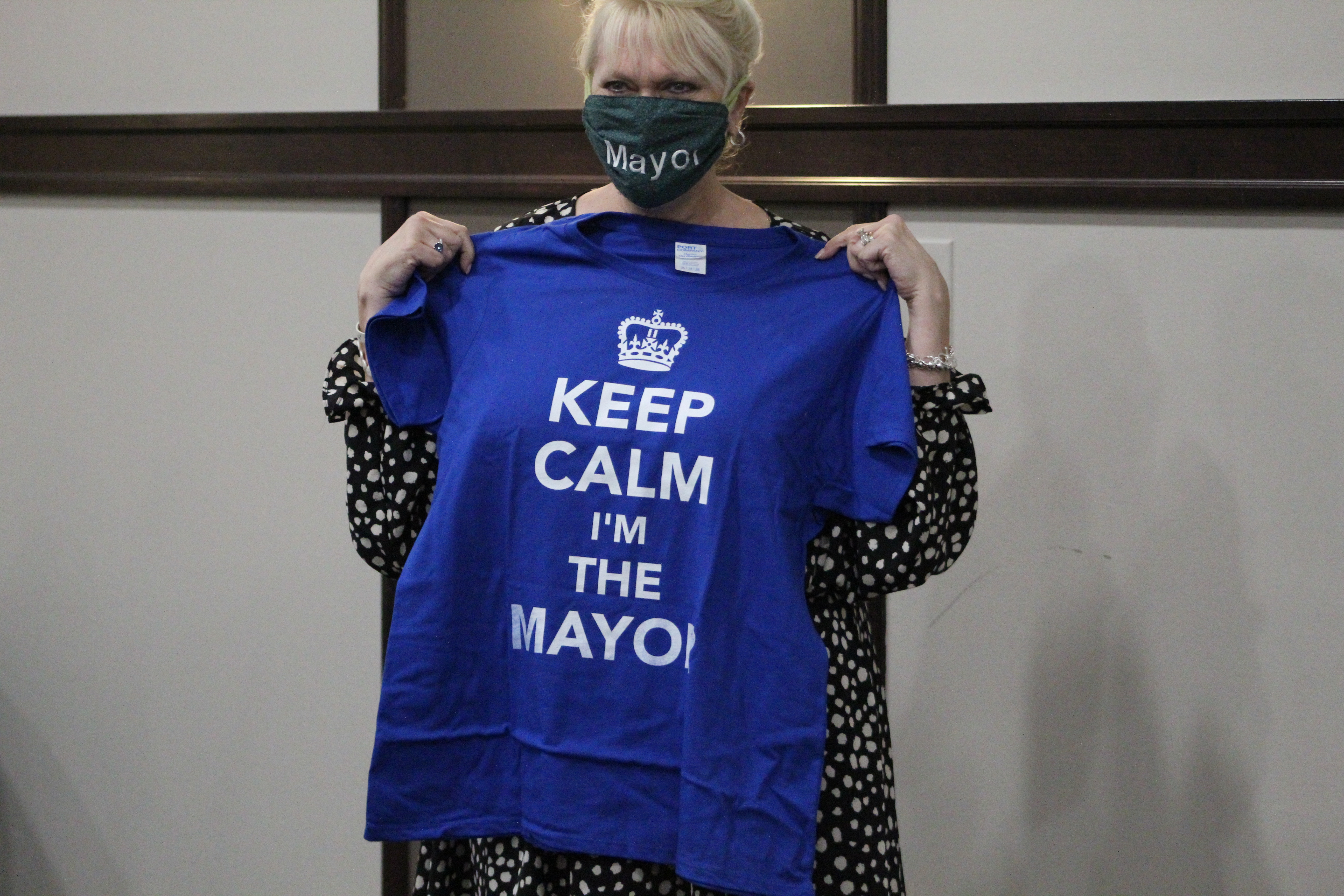
Brooklyn Park Mayor Lisa Jacobson takes the oath of office at City Hall on August 30, 2021 after the City Council acting as the election certification board certified her August 10 special election win on August 23, 2021. She received 3,416 votes to her challenger Hollies Winston’s 3,414. The city clerk Devin Montero administered the oath of office. Photo: Jasmine Webber/Mshale
Brooklyn Park Mayor Lisa Jacobson takes the oath of office at City Hall on August 30, 2021 after the City Council acting as the election certification board certified her August 10 special election win on August 23, 2021. She received 3,416 votes to her challenger Hollies Winston’s 3,414. The city clerk Devin Montero administered the oath of office. Photo: Jasmine Webber/Mshale
BROOKLYN PARK, Minn. – Brooklyn Park Mayor Lisa Jacobson took the oath of office on Monday, August 30,2021 at city hall. She won the August 10, 2021 special election when she received 3,416 votes to her opponent Hollies Winston’s 3,414. Her win was confirmed after a recount and the city council certified the results on August 23, 2021.
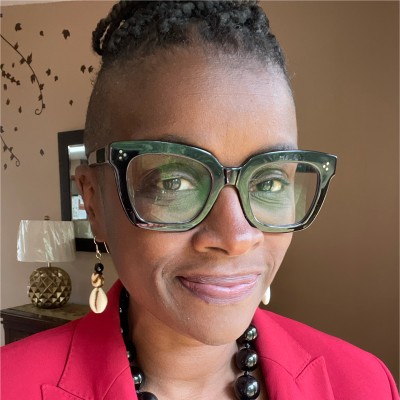
UCare, the Minneapolis based nonprofit health plan, announced on August 30, 2021 that it has hired Joy Marsh as its first associate vice president of equity and inclusion. Photo: Courtesy UCare
UCare, the Minneapolis based nonprofit health plan, announced on August 30, 2021 that it has hired Joy Marsh as its first associate vice president of equity and inclusion. Photo: Courtesy UCare
UCare, the Minneapolis based nonprofit health plan, has named Joy Marsh as its first associate vice president of equity and inclusion.
UCare provides health care and administrative services to over 570,000 members in Minnesota and parts of western Wisconsin.
In her new role, Marsh will be responsible for increasing UCare’s accountability and leadership of DEI efforts, and work to advance health and racial equity among members and the community, UCare said in a Monday press release.
“Joy brings invaluable experience and perspective to advance UCare’s anti-racism priorities,” Dr. Julia Joseph-Di Caprio, senior vice president and chief medical officer at UCare, said in the release.
Marsh has over 14 years of leadership and human resources experiences. Prior to this role, she worked as the director of the division of race and equity for the City of Minneapolis; associate director of business analysis and enterprise integration services at United Health Group, according to the release and Marsh’s LinkedIn page.
In the press release, UCare described Marsh as “a racial and transgender equity leader with a demonstrated history of leading organizational and systems change in government administration, financial services, health care, nonprofit and education sectors.”
Marsh will work with UCare’s internal and external stakeholders “to identify and address health disparities, foster a DEI workplace and dismantle systemic racism in UCare policies and procedures.,” UCare said in the release.
Marsh will report to Dr. Joseph-Di Caprio who said “we are excited to ensure greater equity and inclusion for our members, communities and employees through Joy’s leadership.”
UCare provides health care and administrative services to more than 570,000 members in Minnesota and parts of western Wisconsin.
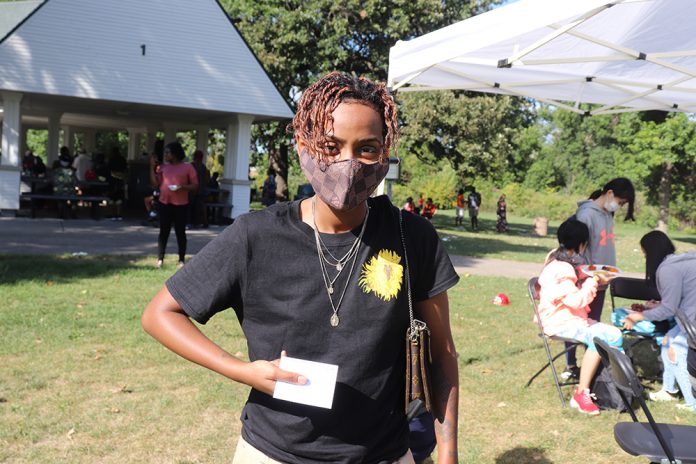
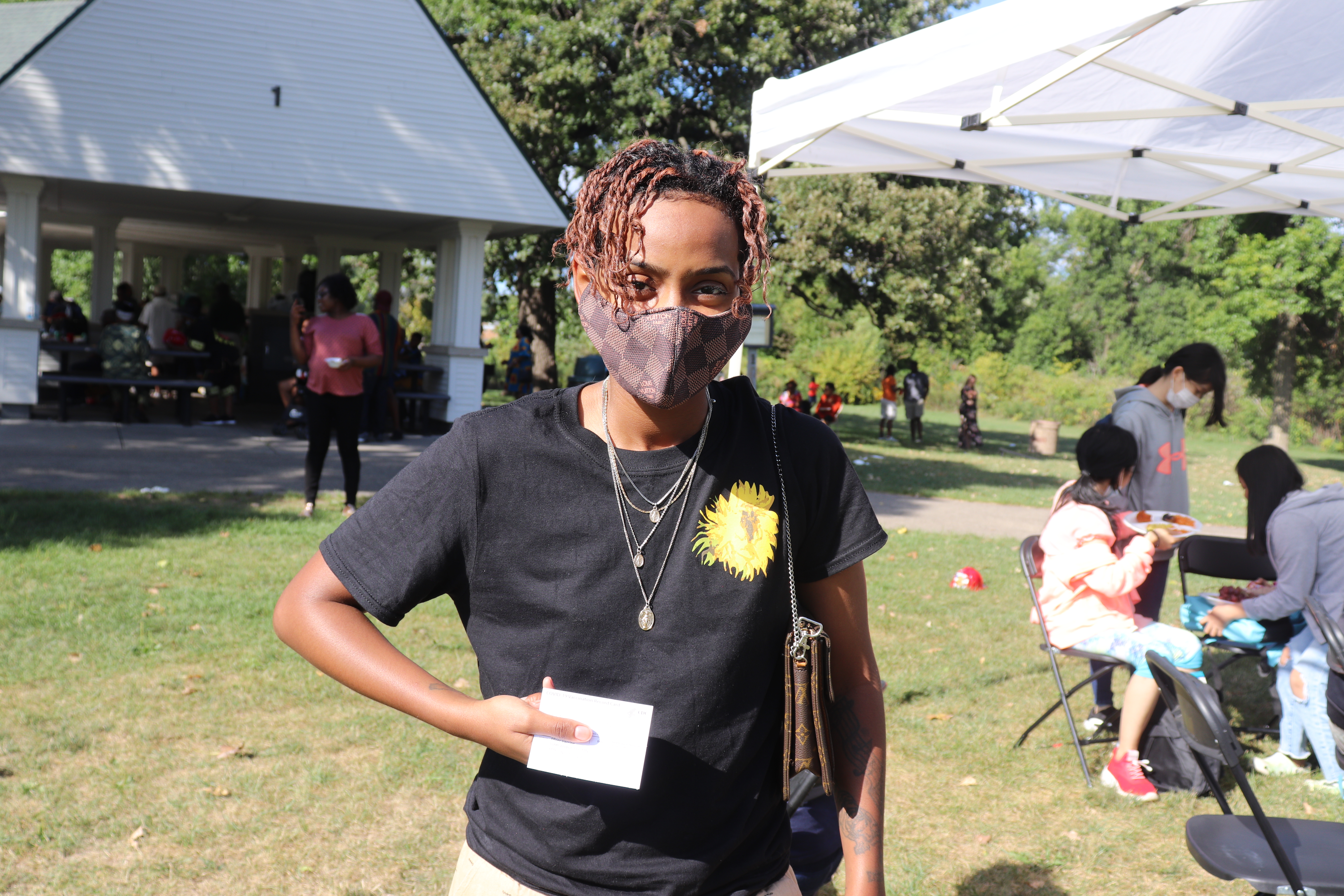
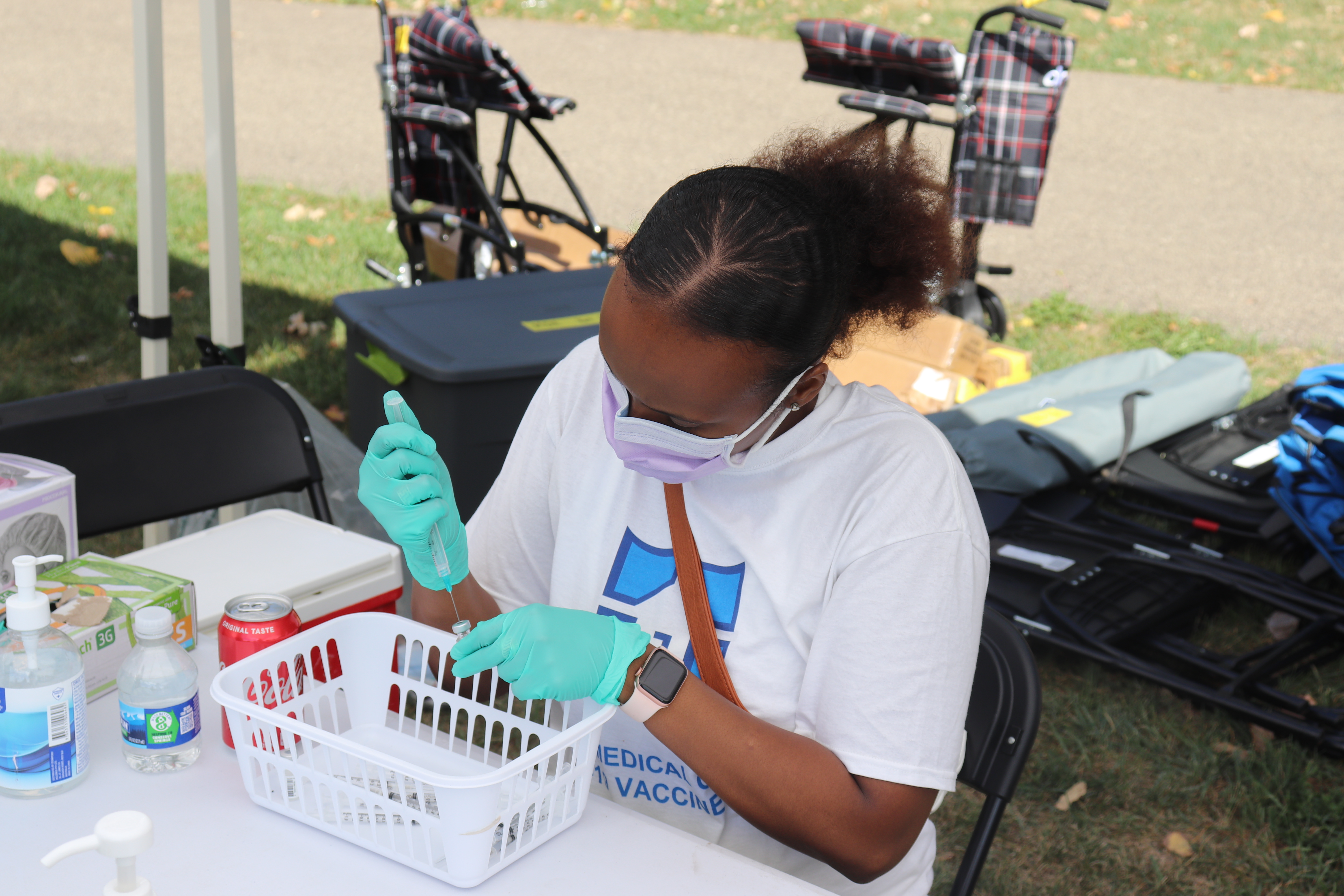
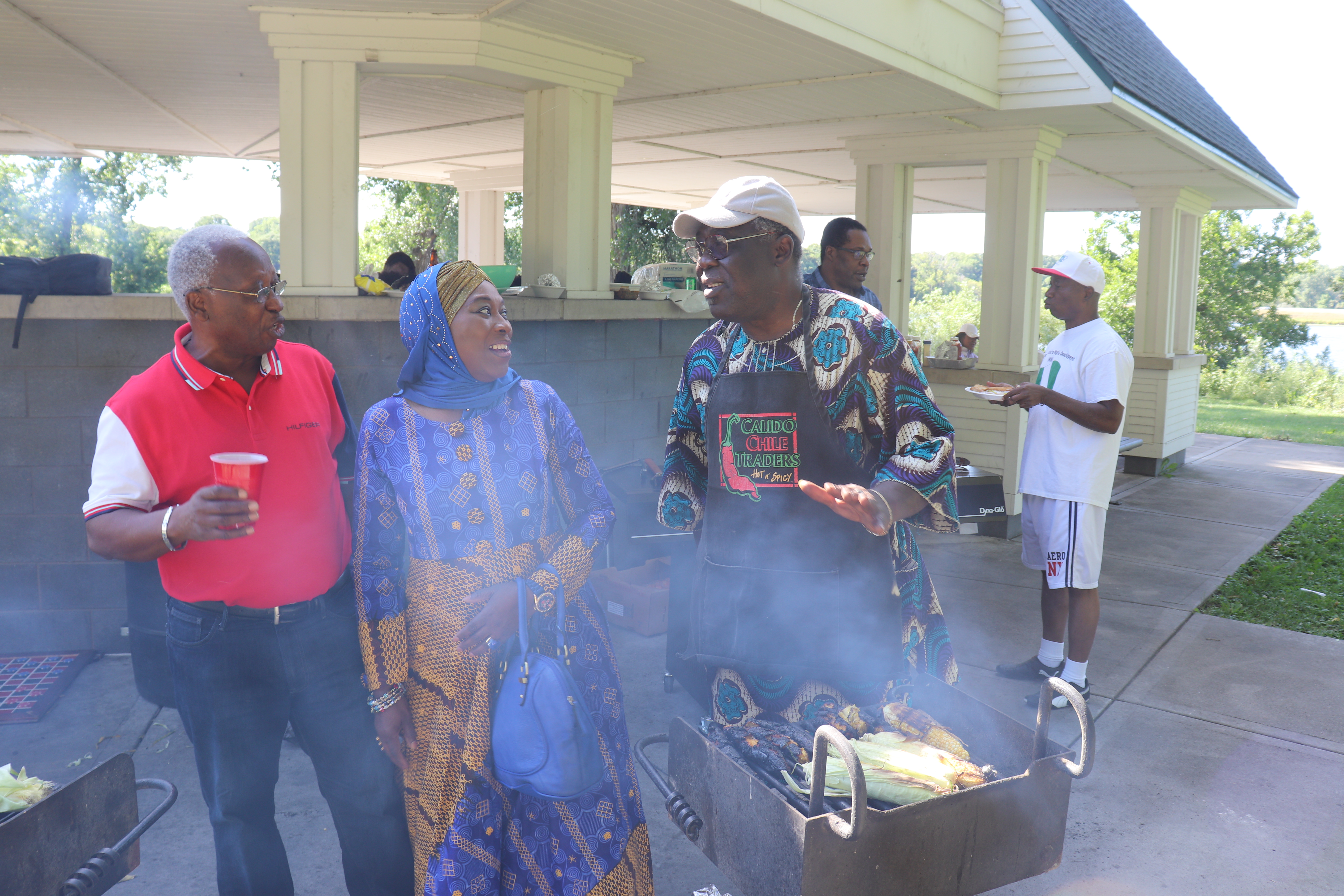
Lemi Z'ere, a 22-year-old second generation Eritrean and TikTok influencer, holds her COVID-19 vaccination card after receiving her first shot of the vaccine from an Odam Medical Group nurse during the annual Minnesota Institute for Nigerian Development (MIND) family picnic in Maplewood, Minnesota on Saturday, August 21, 2021. Photo: Tom Gitaa/Mshale
Lemi Z'ere, a 22-year-old second generation Eritrean and TikTok influencer, holds her COVID-19 vaccination card after receiving her first shot of the vaccine from an Odam Medical Group nurse during the annual Minnesota Institute for Nigerian Development (MIND) family picnic in Maplewood, Minnesota on Saturday, August 21, 2021. Photo: Tom Gitaa/Mshale
MAPLEWOOD, Minn. – Lemi Z’ere, a 22-year-old second generation Eritrean and TikTok influencer, put off getting vaccinated against COVID-19 for months because she was unsure of the science.
Despite the growing research evidence showing the vaccines are safe and effective, she needed to see for herself that there would be no adverse side effects, and that her friends wouldn’t suffer after receiving the jab.
“A lot of my friends got the vaccine now and they told me they are doing okay. I just had concerns because the vaccine was made so quickly. But my friends made the difference,” Z’ere said.
But it was the recent birth of her nephew, and the desire to visit her freely, that finally convinced Z’ere – who works at a local high school as a behavioral specialist – to get inoculated.
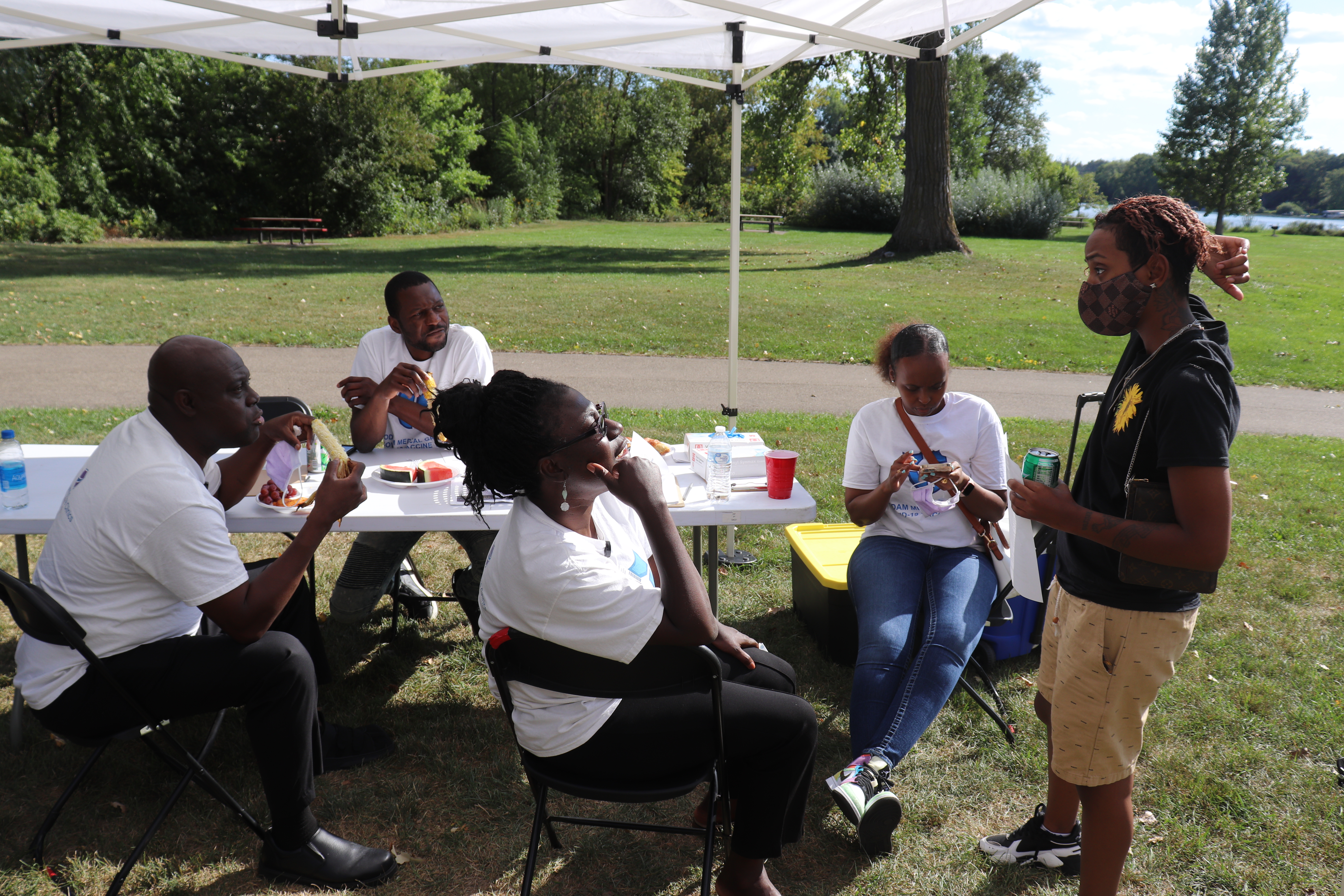
Z’ere was among a dozen people Mshale witnessed receive their first dose during a pop-up clinic hosted by the Minnesota Institute for Nigerian Development (MIND), during their annual picnic this past Saturday at Keller Regional Park in Maplewood.
Odam Medical Group administered the vaccines.
“School is also about to begin and after last school year it will be great to get back to some normalcy,” Z’ere said after getting the jab. “If most of us that are staff get vaccinated, we can avoid going virtual hopefully.”
A 14-year-old Hmong American called April said she had been thinking of getting vaccinated but was not sure on how to get it. Her motivation was to avoid virtual school. She accompanied her mother who had been told of the Nigerian picnic event which was not far from their house.
“Virtual school was so boring last year, am hoping my friends get vaccinated so we don’t get covid” said April as she was under observation after getting inoculated.
Z’ere is among the thousands across the state who have rushed to get vaccinated in recent weeks amid the recent surge in COVID cases, brought on by the delta variant. According to the Minnesota Department of Health, the seven-day average for the first doses administered was 2,675 one month ago. As of last week, Minnesota was averaging 4,955 first doses daily.
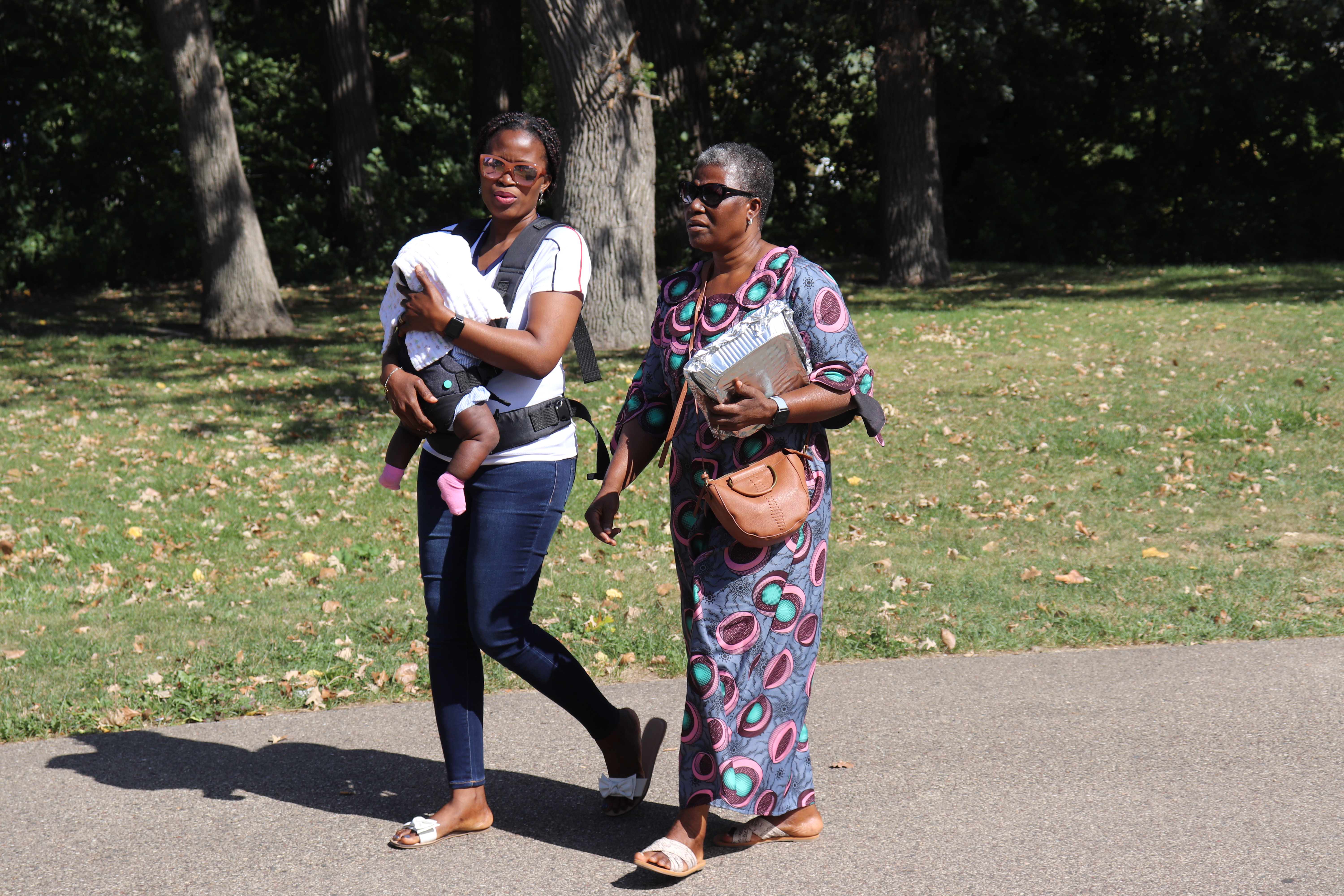
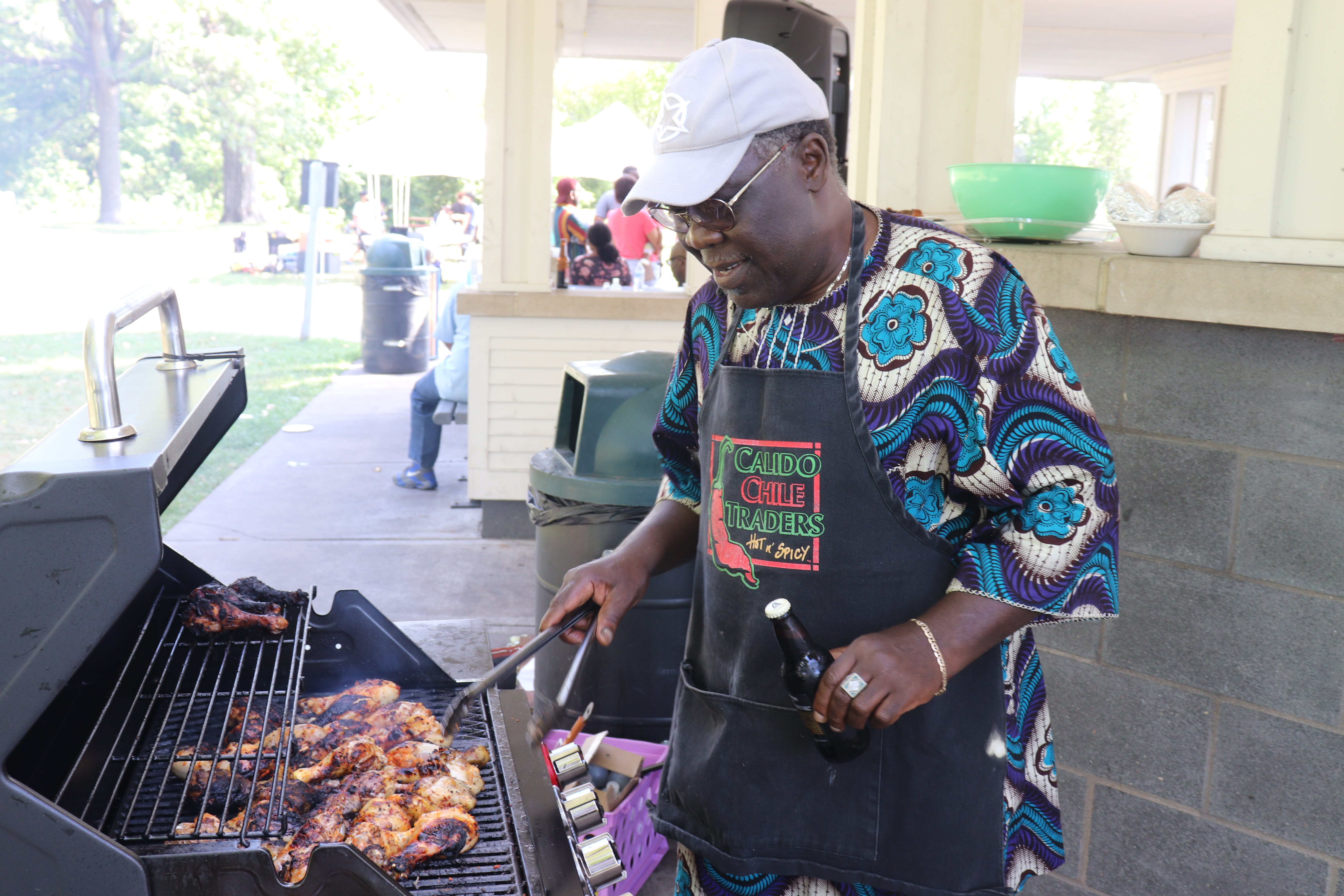
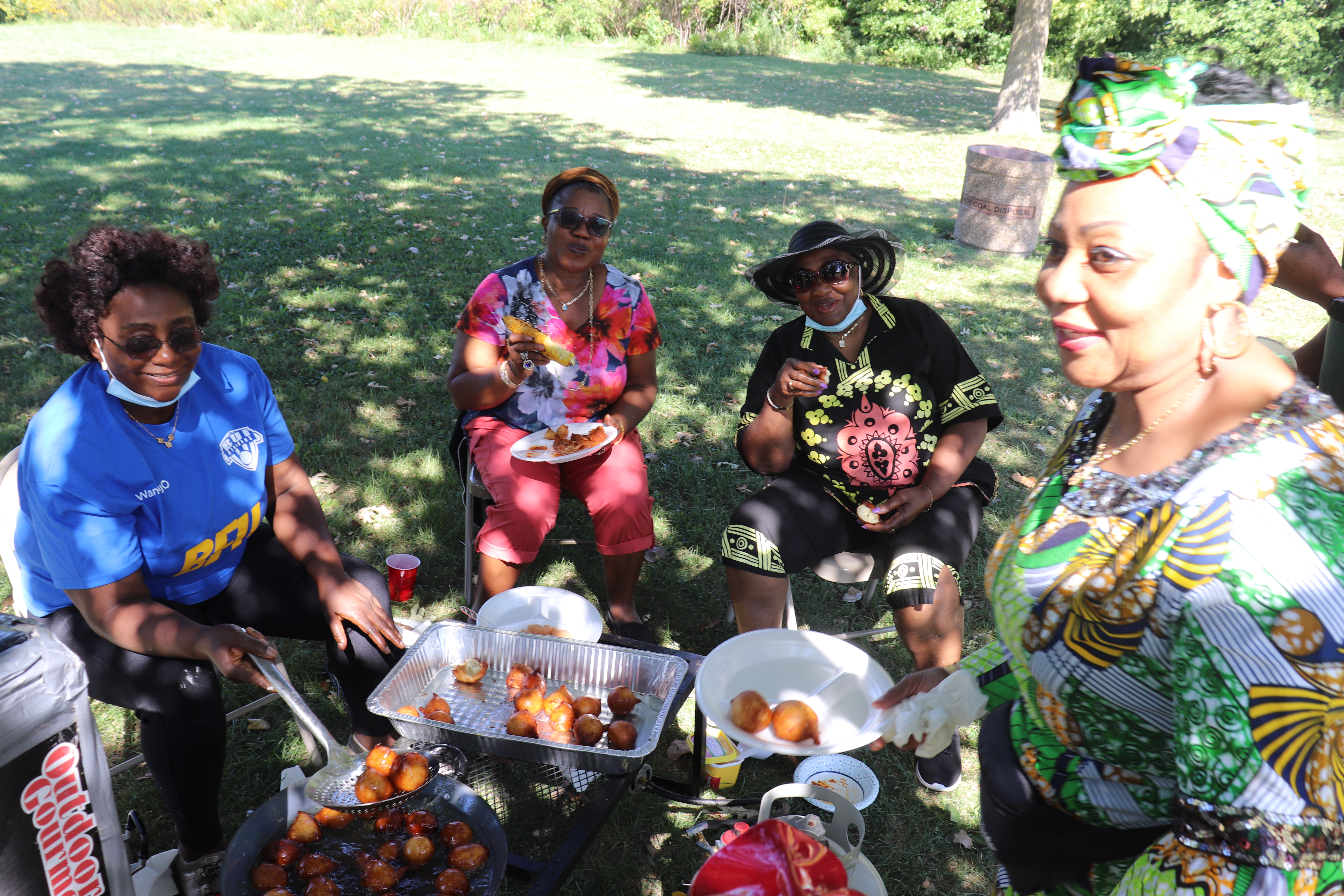
The annual Nigerian picnic was held one day before Governor Walz’s $100 vaccine incentive program was set to expire which could also have driven interest in the vaccine at the festive event. Afrobeat sounds rent the air as folks received their vaccines. The aroma of jollof rice attracted a constant stream of people to the bandshell while a few feet away others danced to Afrobeat as others played a game of bean bag toss.
But local African leaders say they still encounter resistance from some African immigrants about getting the shot, the difference being their skepticism is driven more by uncertainty than being antivaxxers.
“In Africa we are used to taking many vaccines so they are not new, sometimes I get surprised when our people say they don’t want to take the vaccine” said Dr. Richard Oni, clinical director at Progressive Individual Resources (PIR), a social and behavioral health social-service agency.
Dr. Oni who is also former president of MIND says hesitancy and misinformation are among the driving forces behind most African immigrants’ resistance to the vaccine, pointing to myths about them causing impotence and a host of other unproven side effects.
“So, our job as professionals is to demystify some of these myths and reminding them that we have taken vaccines for many other ailments in Africa, we tell them the technology is not new,” said Dr. Oni.
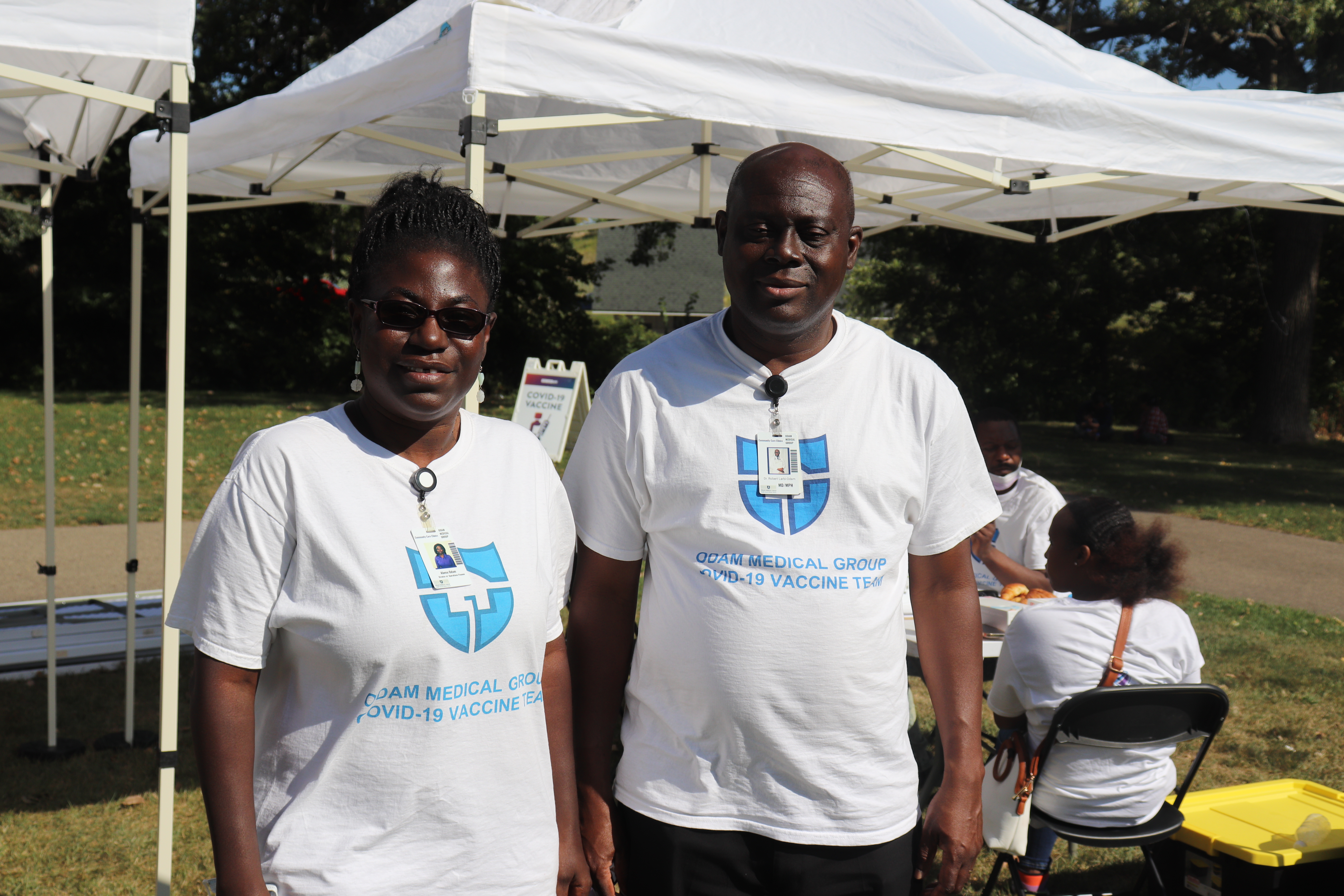
“We have found that a lot of our people have unique challenges and sometimes very busy work schedules that don’t lend themselves well to scheduling a vaccine appointment,” said Dr. Robert Larbi-Odam, the Odam Medical Group medical director. “It could also be language barriers, so at our practice we work to ensure these challenges do not stop them from getting it (vaccine).”
His wife Abena Larbi-Odam, is the operations director at Odam, and revels in tackling the unique challenges her husband was describing.
“We don’t talk to them as if they are dumb, we take time to explain because they are so many myths going around your head will spin,” Mrs. Larbi-Odam said. “We make it very easy for them, if its transportation issues we will come close to where they are.”
Odam operates two clinics in the metro, one at the Abbott Northwestern Hospital campus in south Minneapolis and another in north Minneapolis.
However, it is the alternate strategies that her clinic has come up with to deal with vaccine access issues in the African community that seems to animate her the most. They launched what she calls the Vaccination Strike Team, a group of Odam staff that is mobile and goes to “where the people are” so they don’t have to deal with language or transportation issues which are common.
Alternate strategies such as its vaccine strike team have allowed the Ghanaian-American couple’s Odam Medical Group to administer more than 34,000 COVID-19 shots in the past year.
“Someone should not miss out on a vaccine if they want it just because they don’t have transportation,” said Mrs. Larbi-Odam.
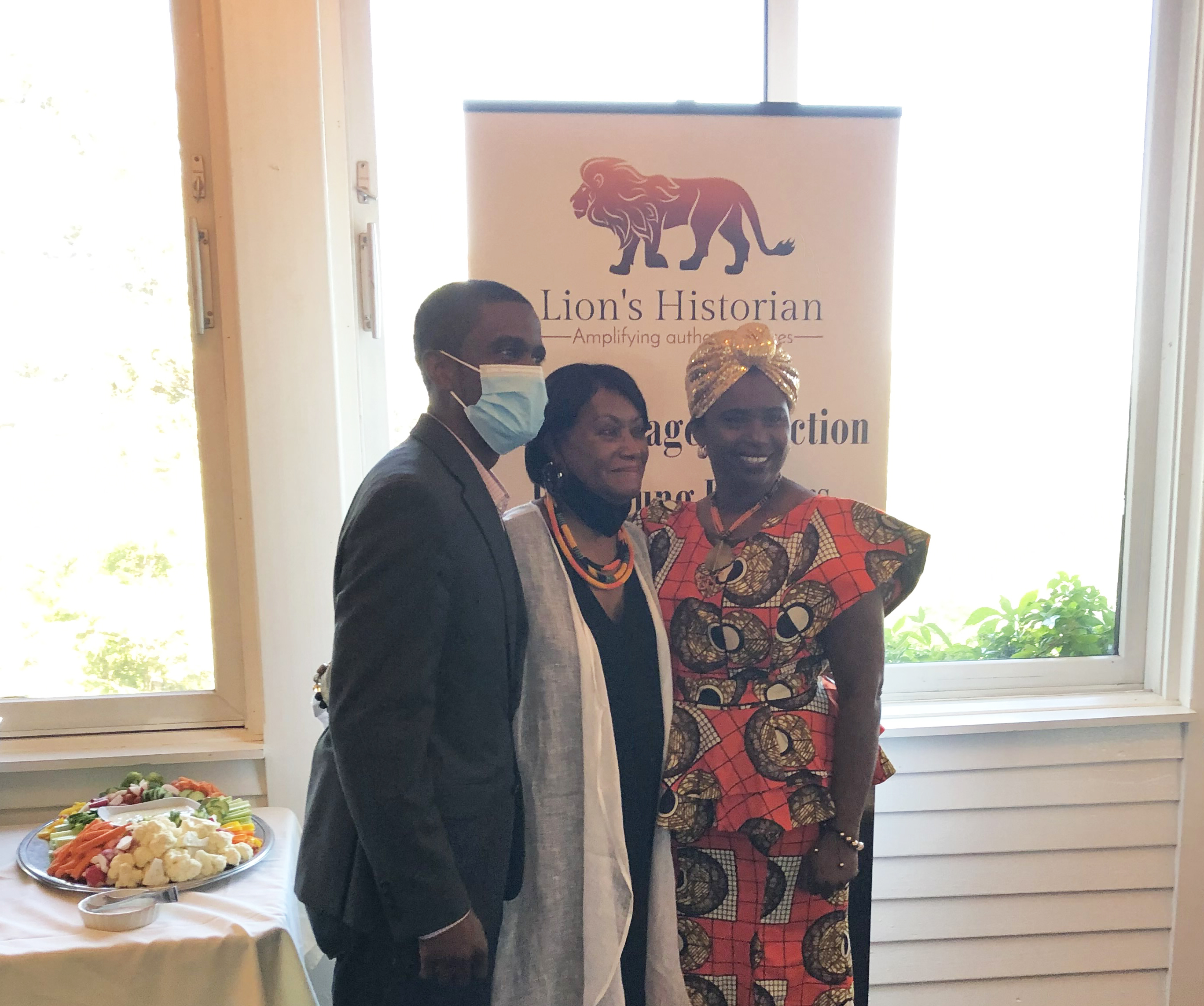
Dr. Delores Henderson (R) and Minnesota-based Ghanaian-American author Rosemond Sarpong Owens during the launch of “The Extraordinary Educator: Dr. Delores Henderson” that Owens wrote. Photo: Courtesy Sarah Owens Photography
Dr. Delores Henderson (R) and Minnesota-based Ghanaian-American author Rosemond Sarpong Owens during the launch of “The Extraordinary Educator: Dr. Delores Henderson” that Owens wrote. Photo: Courtesy Sarah Owens Photography
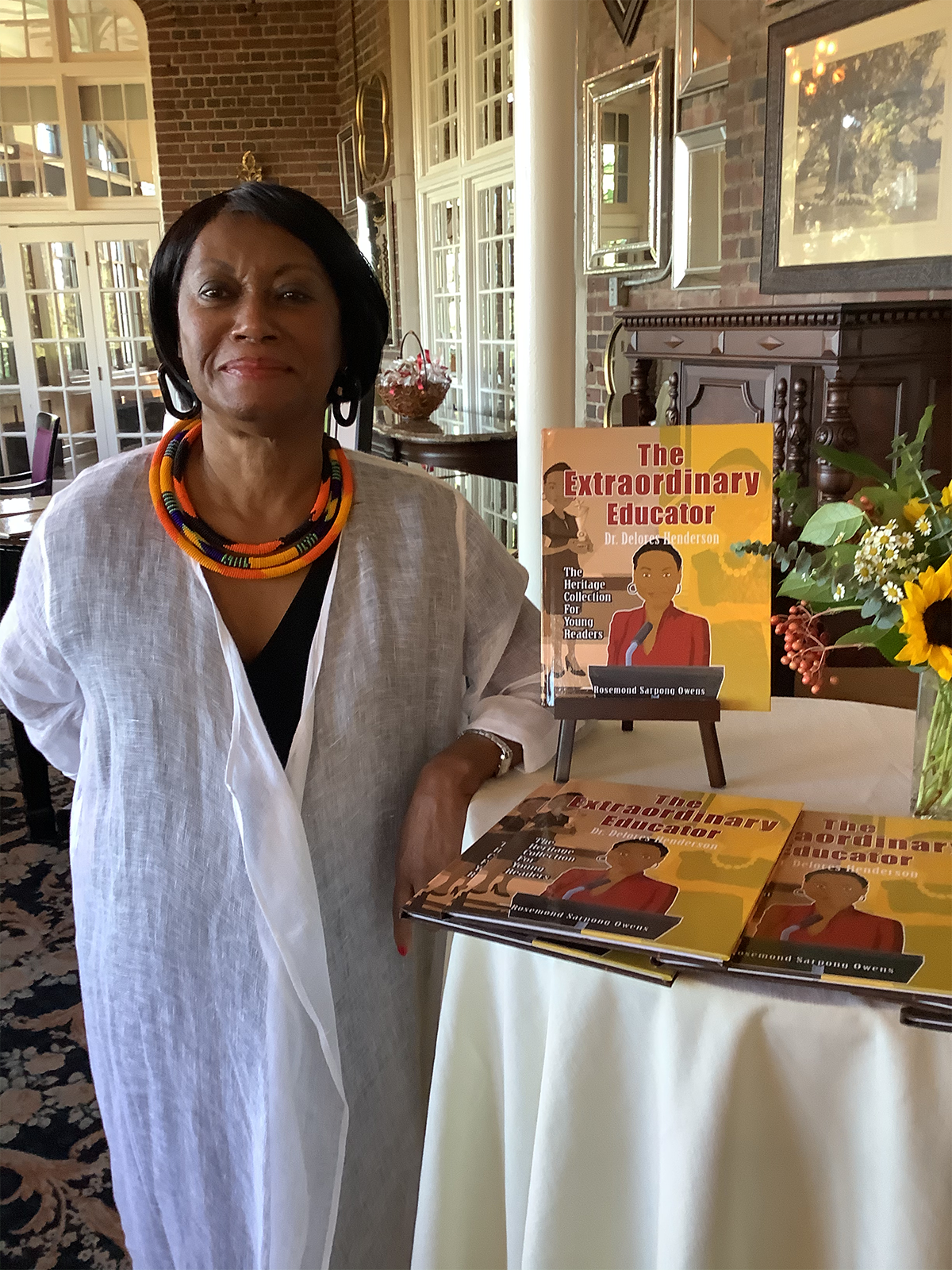
Ghanaian-American author Rosemond Sarpong Owens celebrated the launch of her new children’s book, “The Extraordinary Educator: Dr. Delores Henderson” on Saturday alongside the person that inspired it, Dr. Delores Henderson, a retired school administrator with the St. Paul Public Schools.
Dr. Henderson was the longest serving school administrator in the state of Minnesota when she retired in 2018. She become recognized as the first Black National Distinguished Principal for the State of Minnesota. One of the fruits of her long career is current Saint Paul Mayor, Melvin Carter, a product of the Saint Paul Public Schools. Mayor Carter was among the guests present during the book launch.
Owens says she was at a civic event with her husband where Dr. Henderson was present and was awed at the reverence and respect directed at the longtime administrator. She said she waited patiently until everyone was done speaking to her so she could also meet her.
“I left that encounter quite inspired and determined that others who didn’t know her, especially young Black girls, would do, so they can see what is possible,” said Owens.
Owens, who spoke to Mshale after the book launch, said the book seeks to inspire the next generation of young girls and women to aspire to live life to the fullest because it shows a young determined Dr. Henderson rising from humble beginnings to a place of dedicated service and influence.
The author who is also a mother to three children says what she loved about Dr. Henderson was her love for the children and families she served.
“As a child, I suffered from many insecurities about my skin color, facial features, and hair texture. Not until my teens did I see someone who looked like me in a book. That narrative must change,” Owens said. “To see people who look like you makes you feel included, that you belong, and that can inspire and empower all of us.”
A turning point for Owens came when she was in Spain attending the University of Madrid. She needed reference materials on Africa and she was appalled at what she found at the university’s library.
“They only had material that described Africa in the prehistoric times,” Owens said. “I was left shocked because what the material was describing is not the Ghana I grew up in.”
She says she did not consider herself a writer at that point but she had a reputation as a good storyteller, recalling how in walks home from school back in Ghana, fellow students would be captivated with her tales that they would find themselves miles from home.
In later years, based on the reputation from her days growing up in Ghana, the author ascribed herself the moniker the “Lion’s Historian” in reference to the quote by famed African author, Chinua Achebe: “Until the lions have their own historians, the tale of the hunt will always glorify the hunter.”
It was after her arrival in the United States where she has lived in the past two decades that she decided to put her stories and ideas into paper becoming an author. In the process, she also got involved with Books for Africa, the largest shipper of donated school textbooks to Africa and at one time serving as the first Black woman president of the board of directors for the storied organization.
“The Extraordinary Educator” will join the Heritage Collection, which is a series of children’s history books to retell the stories of Black and African ancestors to reduce the stigmas of internalized racism that stems from mainstream standards.
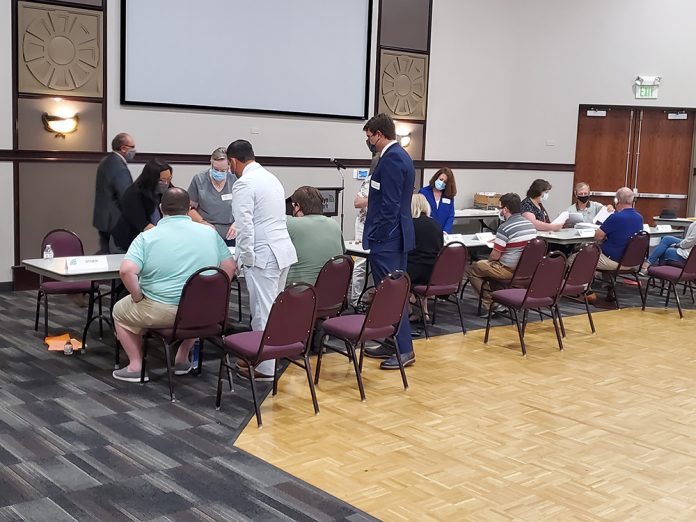
A recount for the August 10, 2021 special election for Mayor of Brooklyn Park was held on August 19, 2021. Lisa Jacobson who had won on August 10 by one vote increased her margin to two votes. Photo: Tom Gitaa/Mshale
A recount for the August 10, 2021 special election for Mayor of Brooklyn Park was held on August 19, 2021. Lisa Jacobson who had won on August 10 by one vote increased her margin to two votes. Photo: Tom Gitaa/Mshale
BROOKLYN PARK, Minn. – Unofficial results of a total recount in the August 10 Brooklyn Park special election for mayor in which Lisa Jacobson won by one vote, shows Jacobson gaining one additional vote to make the final result 3,416 to Hollies Winston’s 3,414.
The Winston campaign has challenged five votes while the Jacobson campaign is challenging two ballots.
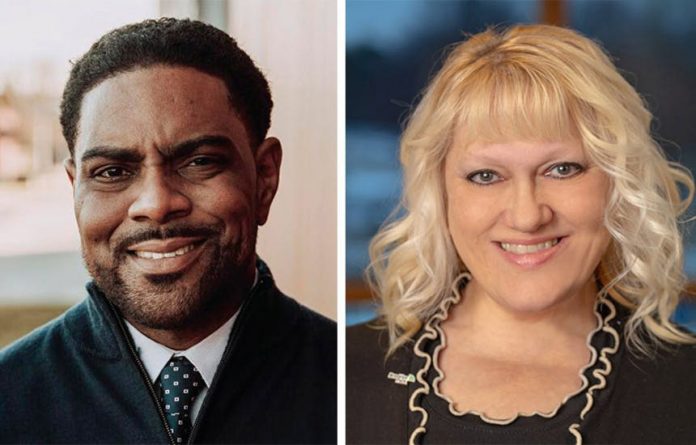
Lisa Jacobson, right, who beat Hollies Winston, left, by one vote on August 10, 2021 increased her margin to two votes after a manual recount on August 19, 2021.
The City Council acts as the Board of Certification and will meet on at a special meeting on Monday, August 23, 2021 to hear the challenges and certify the elections. Lisa Jacobson who is a sitting councilwoman will not sit in the special meeting.
In the August 10 results, there was one over vote, meaning the voter voted for both candidates. After today’s recount, it appears the over vote was awarded to Jacobson. The recount now shows there are no over votes.
After the recount, the number of write-ins remained the same as on election day at 26.
Minnesota has extended its $100 reward program for people who get their COVID-19 vaccinations by another week through August 22, 2021. Photo:
Minnesota has extended its $100 reward program for people who get their COVID-19 vaccinations by another week through August 22, 2021. Photo:
Minnesota has extended its $100 reward program for people who get their COVID-19 vaccinations by another week.
Any Minnesotan age 12 or older who gets their first shot through Sunday, Aug. 22, can claim a $100 Visa gift card at mn.gov/covid19/100. Anyone who has gotten their first shot since July 30 is eligible.
Gov. Tim Walz announced the extension Sunday night, calling the incentive program a success. According to the governor’s office, 55,456 newly-vaccinated Minnesotans have claimed rewards since the program began around two weeks ago.
“With the delta variant pushing cases up across the country, including right here in Minnesota, we’ve entered a new phase in the battle against COVID-19” Walz said in a statement. “The vaccines are the way we fight back against the virus. Get your first dose today and get $100. Simple as that.”
Walz initially authorized $2.5 million in federal pandemic relief funds to launch the reward program. The Legislative COVID-19 Response Commission approved an additional $13.8 million to ensure enough funding to meet demand.
The reward program and concerns about the highly contagious delta variant are driving the demand for vaccinations, as is the state’s “Vax to School” campaign. Two weeks into that drive, more than 20,000 12- to 17-year-olds have received their first doses of the Pfizer vaccine.
Nicholas Jones, the director and senior advisor on race and ethnicity research and outreach in the Census Bureau’s Population Division speaking during a news conference on August 12, 2021 to release the 2020 redistricting data. Photo: U. S. Census Bureau YouTube Channel
Nicholas Jones, the director and senior advisor on race and ethnicity research and outreach in the Census Bureau’s Population Division speaking during a news conference on August 12, 2021 to release the 2020 redistricting data. Photo: U. S. Census Bureau YouTube Channel
The United States was significantly more racially diverse in 2020 than it was in 2010, with the number of white people declining, as that of minorities rose to historic highs, according to the U.S. Census Bureau.
“The U.S. population is much more multiracial and much more racially and ethnically diverse than what we have measured in the past,” said Nicholas Jones, the director and senior advisor on race and ethnicity research and outreach in the Census Bureau’s Population Division.
No single piece of census data shows the direction the United State is heading in terms of racial transformation than a look at the ethnic makeup of those aged 18 and under. Of that age group, the results showed that no single race dominates, as the number of non-Hispanic whites in that category fell to 47.3% from 53.5% ten years ago.
And for the first time in the history of the census, the population of non-Hispanic white people declined, as Asians and Hispanics showed significant growth in their populations over the past decade, the 2020 census data shows.
The census results come at a time when race and ethnicity are dominant and divisive factors in the United States. Since the election of Barack Obama, the son of a Kenyan father, as the first non-white president of the United States, the country has seen an awakening of white nationalist groups acting on fears that diversity would lead to white people losing their status as the majority. Those divisions were amplified during the 2016 presidential election campaign when Donald Trump, the Republican nominee, preyed on the fears of white people and ran an openly racist campaign that propelled him to the White House.
The latest census data is likely to spark an intense debate and deepen racial division in a country where issues of race, voting rights, civil rights, and immigration have once again taken center stage in the political process.
A US Census Bureau worker in Norristown, PA on August 4, 2020 during last year’s decennial census. Photo: Dee Dalasio/Shutterstock
The information the Census Bureau released was not surprising. Much of it has been documented through the American Community Survey, a sort of mini count that the Census Bureau conducts every year by analyzing data. But the 2020 census data is comprehensive and presents a more precise and vivid picture of the changes that have happened since 2010, and gives a more predictable indication of what the country will look like in the years to come.
The overall U.S. population is now over 330 million people, up from 309 million in 2010, according to the new census data. Latinos accounted for the largest increase, as their population rose by almost a quarter since the 2010 census. There are now 62.1 million people of the Latin descent in the United States, or 18.7 percent of the total population, according to the data. The population of Asians soared to 24 million people, an increase of nearly a third.
The 2020 census results also showed the United States as an aging nation with falling birth rates. People over the age of 18 made up over 75% of the population, which was more than 10% higher than 2010. The population of those under 18, on the other hand, declined by 1.1 million to 74.2 million children.
Census officials cautioned, however, that the drop in the population of non-Hispanic whites might not be entirely due to falling birth rates but also because of changes in the way people identified themselves in the 2020 census questionnaire.
“To frame the discussion of racial composition, we use the concept of race alone, race in combination, and race alone or in combination,” said Jones, the advisor on race and ethnicity.
Jones said the number of people who identified as multiracial accounted for 10% of the total U.S. population. In the past decade, their number rose exponentially from 9 million to 33.8 million. A majority of them, 19.3 million, identified as “white and some other race”, Jones said.
Another reason to be cautious, Jones said, was because the number of people of Latino origin who identified as white alone decreased by 52.9%, down from 26.7 million to 12.6 million.
The Census Bureau did not include information about how the population of immigrants has changed of the last decade because what was released this week was only partial data intended to help state governments with redrawing congressional district boundaries, officials said.
The Minnesota Department of Health has issued a reminder to parents to get their teens receive their wellness vaccines that they might have missed during the COVID-19 pandemic. Photo: Ann Rodchua/Shutterstock
The Minnesota Department of Health has issued a reminder to parents to get their teens receive their wellness vaccines that they might have missed during the COVID-19 pandemic. Photo: Ann Rodchua/Shutterstock
Now is a great time to schedule an appointment for your teen to get caught up on vaccines. They may have missed some vaccines during the COVID-19 pandemic. As children get older, they can be exposed to other serious diseases and they lose protection from vaccines they got when they were younger. This is why it is so important to get recommended vaccines for teens.
There are three vaccines recommended for 11- and 12-year-olds: tetanus, diphtheria, and pertussis (Tdap), human papillomavirus (HPV), and meningococcal vaccine. Tdap vaccine protects against pertussis (whooping cough), human papillomavirus (HPV) vaccine protects against six types of cancer, and meningococcal vaccine protects against meningitis. Sixteen-year-olds need a booster dose of meningococcal (MenACWY) vaccine and they may need another type of meningococcal vaccine (MenB).
Teens 12 years and older should also get a COVID-19 vaccine authorized for their age group. It is important for kids to get vaccinated before going back to school, sports, or other activities this fall to protect them and people around them who cannot get vaccinated. Getting vaccinated for COVID-19 means kids won’t have to miss school, sports, or other activities due to quarantine and won’t have to get tested regularly. Teens can get all the shots they need on the same day.
These vaccines have all been studied and are safe and effective at preventing severe diseases. They can cause mild side effects, like a sore arm where the shot was given. If you have questions or concerns about the vaccines that are recommended for your child, talk to their health care provider.
Go to Immunization: Me and My Family (health.state.mn.us/vaxontrack) to learn about:
Find My Immunization Record: Learn what vaccines your child received and what they still need.
Where to Get Vaccinated: If your teen does not have health insurance or a health care provider, find a clinic that offers free or low-cost vaccines.
If you do not have internet or mobile access to the resources provided, call the Minnesota Department of Health at 651-201-5414.
Lisa Jacobson has beat Hollies Winston by one vote in the hotly contested Brooklyn Park special election for mayor held on Tuesday, August 10, 2021. She received 3,415 votes to Winston's 3,414 which triggers an automatic recount.
Lisa Jacobson has beat Hollies Winston by one vote in the hotly contested Brooklyn Park special election for mayor held on Tuesday, August 10, 2021. She received 3,415 votes to Winston's 3,414 which triggers an automatic recount.
BROOKLYN PARK, Minn. – Confusion in the vote totals in the hotly contested Brooklyn Park special election for mayor was cleared around 1:00 am Wednesday when precinct totals on the city website were synced to the topline results that were announced shortly before 11p.m.
Lisa Jacobson beat Hollies Winston by one vote, 3,415 to 3,414.
Winston can request a publicly funded recount as allowed by Minnesota statutes. Should he chose to ask for a recount, he must submit a written request to the city clerk by August 20.
In the updated numbers on the city website, Jacobson won seven of the nine precincts in the East District with 1,718 votes against Winston’s 1,370.
Winston carried all the eight precincts in the Central District, garnering 1,333 votes to Jacobson’s 1,134.
In the West District, Winston won five of the nine precincts with 711 votes to Jacobson’s 563.
The last time there was an election recount in a city election was in the August 14, 2012 in another special election to fill a vacant West District council seat. In that race, Wynfred Russell the current councilmember for that district lost by five votes to Bob Mata. A recount did not change the result.
Meanwhile, there will be a special city council meeting on Friday, August 13 at 6:00 p.m. to canvass the results of the special election.
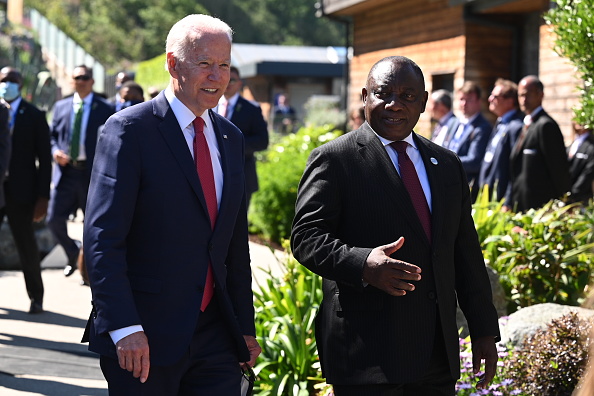
U.S. President Joe Biden talks with South Africa's President Cyril Ramaphosa as they arrive for a working session during G7 summit in Carbis Bay, Cornwall, Britain, June 12, 2021. Photo: Leon Neal/Getty Images
U.S. President Joe Biden talks with South Africa's President Cyril Ramaphosa as they arrive for a working session during G7 summit in Carbis Bay, Cornwall, Britain, June 12, 2021. Photo: Leon Neal/Getty Images
President Joseph R. Biden’s administration is revamping a U.S.-Africa trade and investment initiative that began under former President Donald J. Trump but has been slow to take off, according to a top government official.
Samantha Power, the administrator of the United States Agency for International Development (USAID), said time had come for America’s relationship with African countries to transition from one based on aid and dependency to a trade and investment one.
“This year, USAID, the agency that I have the privilege of running, turns 60,” Power said. “And for those 60 years, the U.S. relations with the continent of Africa has largely been the same. It is a relationship rooted in foreign assistance.”
Power said that although the aid America gave African countries over the years had been critical in increasing access to education, lifting millions out of poverty, and dramatically reducing the rates of HIV and malaria, that the relationship needed to change for the continent to realize its full potential.
“We have to evolve, from a relationship based mostly on aid, to one based on trade,” Power said.
Power was speaking during the U.S.-Africa Business Summit, a three-day, biannual conference that brings together African business executives and government officials to Washington, D.C., to discuss matters of development, trade and investment. This year’s summit, which began on July 27, was held virtually because of travel restrictions related to the coronavirus pandemic.
At the summit Power announced the official launching of Prosper Africa Build Together Campaign, which she said would strengthen private sector ties between the United States and the continent’s nations, and “spur economic investment at a scale that could never be matched by foreign aid.”
The new initiative would be an improvement of Prosper Africa, which was first announced by the Trump administration in the 2019 U.S.-Africa Business and Investment Summit, but one that never quite took off.
The Biden administration seems to be taking an African foreign policy approach different from his predecessor, who had cold relations with the continent’s nations, which he once referred to as “sh*t hole countries.”
During a telephone briefing on July 28, Dana L. Banks, special assistant to the president, and senior director for Africa at the National Security Council, said Biden was committed to seeing a more engaged partnership with Africa. He had requested for $80 million in additional funds to jumpstart the Prosper Africa initiative, she said.
“President Biden believes that Africa’s many dynamic and fast-growing economies and populations can and should mean a bright future for the continent – one featuring inclusive growth, sustainable development, enhanced health security, democratic progress, and the rule of law,” Banks said. “We must all work together to advance our shared vision of a better future.”
It remains to be seen whether merely rebranding the initiative will elevate the United States’ standing on the continent from one dependent on aid to one with vibrant economies that rely on trade and investment. Although a majority of Africans would agree with the overall goals of the Biden administration’s new campaign, putting it to practice will be an uphill task, given that western investment often comes with conditions of good governance. Implementing the initiative will no doubt be complicated by the presence of China, which for nearly two decades has been making major investments in Africa. Unlike America’s funds, Chinese money in Africa does not come with conditions of democracy. That is likely to continue, making China the preferred investor, especially in countries ruled by autocrats. But Banks said she believed the United States would prevail because of its unique approach.
“The way we do trade and investment is quite different from other countries, and particularly China,” she said. “And so, we don’t see ourselves as necessarily in competition with China. Obviously, there are some challenges related to Chinese engagement, and we will address those directly as necessary, but our engagement with Africa is focused on the mutually beneficial relationship and partnership that we see with countries across the continent.”
Power outlined how the Biden administration’s initiative and policies would be different from those that preceded it.
“We will have special focus on small businesses and those led by the African Diaspora – businesses that represent America’s diversity and underscore the deep ties between America and Africa,” Power said.
She explained that through Prosper Africa, USAID would directly connect American investors with African businesses that are ready for investment by funding delegations and making crucial connections, which she said would be easy because the United States has had longstanding relationships on the continent.
“One way we will increase investment is by tapping into one of the largest pools of underutilized capital in the world – U.S. pension funds,” she said. “U.S. pension funds hold $18 trillion in assets that are hungry for high-yield returns – the type of returns you get by investing in Africa.”
USAID had already tried the pension funds strategy, she said, and gave the example of Angela Miller-May, chief investment officer of the Chicago Teachers’ Pension Fund. Miller-May, she said, participated in several USAID-sponsored investor delegations to various African countries.
“Those trips opened her eyes to the growth and potential of the African economy,” Power said. “As she put it, ‘Before my first delegation, my understanding of Africa was based on what I had seen on TV or read in the news, and I perceived Africa as a place of risk. But all those perceptions quickly went out the door. I saw that Africa was filled with opportunities. The discussions I had shortened the distance between the U.S. and Africa for me.’”
After those trips, Miller-May made the fund’s first investment in Africa – a $20 million investment in African companies working in healthcare, education, technology, and other vital sectors of the economy, Power said. She described that kind of investment as a “win-win,” because it gave innovative African businesses the resources they needed to grow, while putting money in the pockets of America’s workers by growing their pension funds.
“We believe in the nations of Africa, in their potential, and in the entrepreneurial and innovative spirit of the African people,” Power said. “Now we have to work to turn that belief into action, so we can truly write a new chapter in our relationship with the people of the continent.”