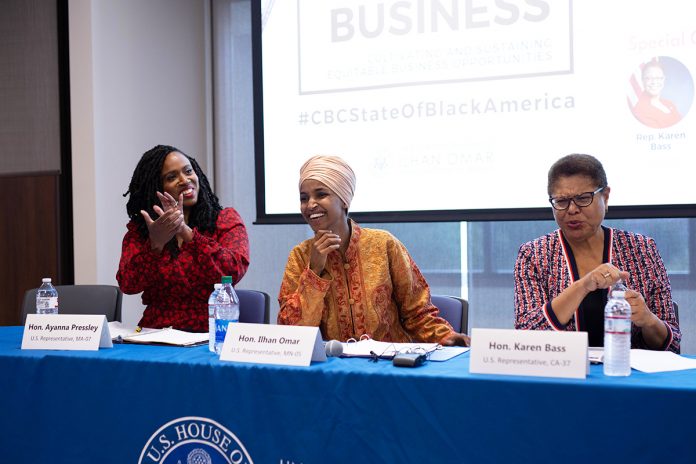
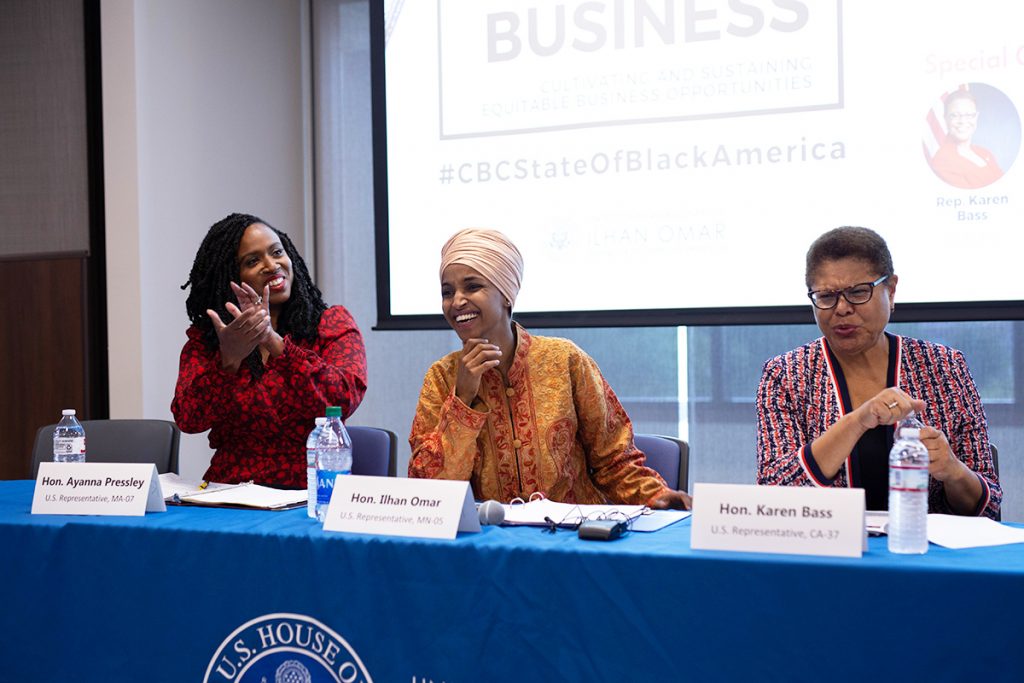
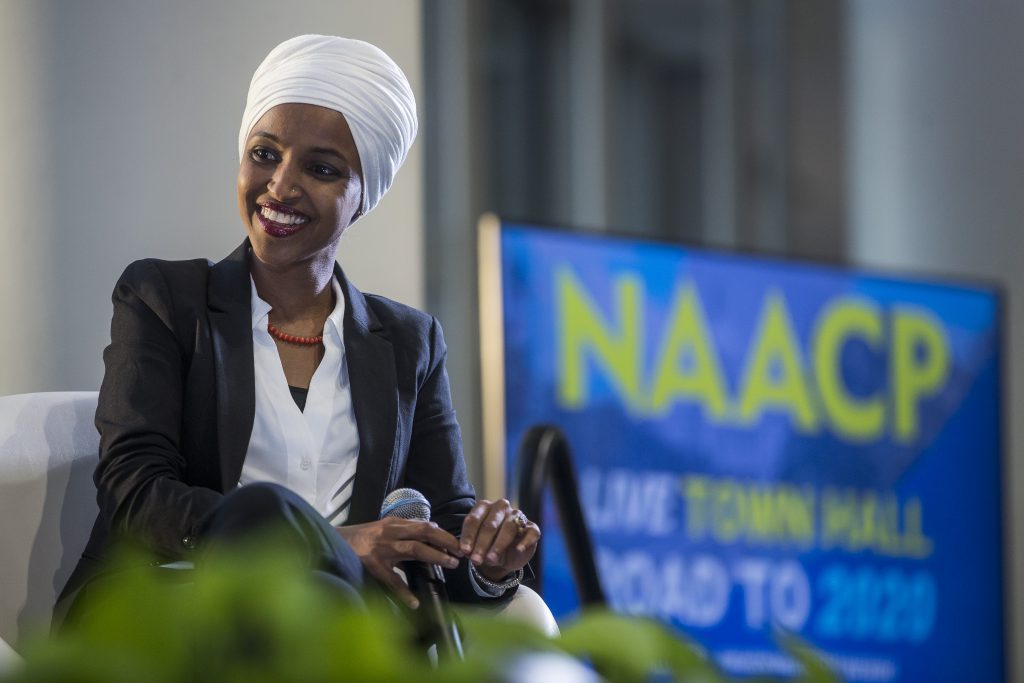
Rep. Ilhan Omar at a State of Black America meeting she hosted in North Minneapolis on August 30, 2019. On the right is Congressional Black Caucus chair Karen Bass and on the left Massachusetts Congresswoman Ayanna Pressley. Mshale endorses Ilhan Omar in the DFL August 11, 2020 primary. Photo: Jerusa Nyakundi/Mshale
Rep. Ilhan Omar at a State of Black America meeting she hosted in North Minneapolis on August 30, 2019. On the right is Congressional Black Caucus chair Karen Bass and on the left Massachusetts Congresswoman Ayanna Pressley. Mshale endorses Ilhan Omar in the DFL August 11, 2020 primary. Photo: Jerusa Nyakundi/MshaleRep. Ilhan Omar at a State of Black America meeting she hosted in North Minneapolis on August 30, 2019. On the right is Congressional Black Caucus chair Karen Bass and on the left Massachusetts Congresswoman Ayanna Pressley. Mshale endorses Ilhan Omar in the DFL August 11, 2020 primary. Photo: Jerusa Nyakundi/Mshale
Yaa Asantewaa, Funmilayo Ransome-Kuti, Wangari Maathai, Ann Nzingha and others are names that readers of Mshale will be very familiar with, many of them having been educated in Africa and taught the history of its people. Those are four names of great African women during different periods in African history. The most recent of the four being Wangari Maathai. Flawed human beings that nevertheless overcame serious odds to lead their people, for the better. In other words, Africans are used to and are very familiar with strong women, contrary to popular opinion.
U.S. Rep. Ilhan Omar, the first black person born on African soil elected to the U.S. House of Representatives, is seeking reelection for a second term and her fight for that second term has reminded us of the aforementioned four women. Rep. Omar first came to the attention of many of you when she was awarded the 2015 Community Leadership Award at the African Awards, which are run by Mshale. She told us the award inspired her to seek elective office for the first time the following year. Since then we have followed her legislative career.
Some criticism leveled at her is justified for an elected leader, and must be expected. However, there is another type of criticism directed her way that is unjustified because some of it is rooted in Islamophobia and an aversion to ‘strong women’. For example, some tell her to tone it down in her twitter battles with the racist president we have in office currently, or that she should be nicer and work for the people of the Fifth District. Those of us who have read the history of Ann Nzigha of Angola, described as a great military strategist, will not buy that line of argument. Nzigha, in addition to doing the work of government that her people expected her to do also fought for the dignity of her people that was under assault from the Portuguese. No, we do not want Ilhan Omar to just roll over and be nice as she is being abused, and her very humanity questioned.
If your choice of leader is based on their legislative record, we are here to tell you Rep. Ilhan Omar is doing the work she was elected to do (Just take a look at her legislative record here). There are many that would like to diminish that record but you need to keep in mind this is Rep. Omar’s first term (which is two years). She needs another term to accomplish more. In addition, those that live in the Fifth District and have a larger worldview than just Minneapolis and the surrounding areas that constitute the Fifth, and they deserve a leader that has that same worldview. We say that in the wake of the killing of Mr. George Floyd in Minneapolis, which sparked a global protest. Minneapolis people, all of whom reside in the Fifth District, are known to espouse a global view that goes beyond the Fifth and Omar fits the bill. Like her predecessor, Keith Ellison, whom we loved because he had time for issues in Africa that we all cared about, Omar has had time for many of us who have a difficult time gaining access to our elected leaders. Just read this Op-Ed by a Liberian American that appreciates Rep. Omar’s work in obtaining a pathway to citizenship for Liberians.
Two years is too short to accomplish what she set out to do. She needs another term to do more. We ask voters in the Fifth District on August 11 to pick her as their choice to move on to the November 3 election.
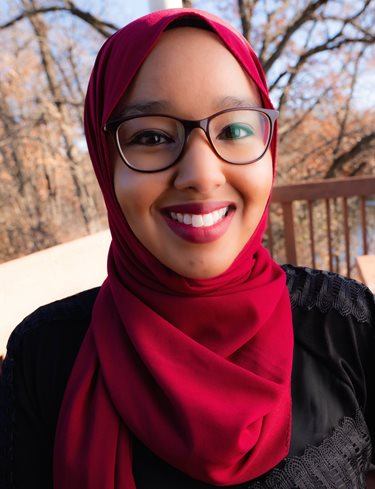
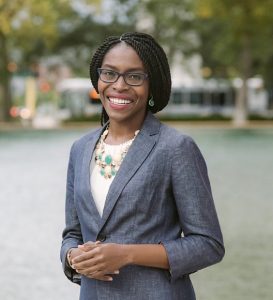
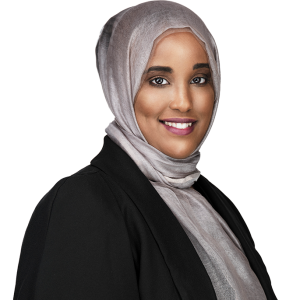
Somali American educator Qorsho Hassan of the Rosemount-Apple-Valley-Eagan school district was on August 6, 2020 named the 2020 Minnesota Teacher of the Year. Photo: Courtesy Education Minnesota
Somali American educator Qorsho Hassan of the Rosemount-Apple-Valley-Eagan school district was on August 6, 2020 named the 2020 Minnesota Teacher of the Year. Photo: Courtesy Education MinnesotaSomali American educator Qorsho Hassan of the Rosemount-Apple-Valley-Eagan was on August 6, 2020 named the 2020 Minnesota Teacher of the Year. Photo: Courtesy Education Minnesota
Qorsho Hassan, a fourth-grade teacher in the Rosemount-Apple-Valley-Eagan school district (ISD 196) was named by her peers in the state as the 2020 Minnesota Teacher of the Year during a ceremony in Saint Paul Thursday, becoming the 56th recipient since the inception of the award. She is the second person from her school district to receive the award.
The Rosemount-Apple-Valley-Eagan school district, located in the south suburbs, is among the top in the state offering a public school education with some of its high schools ranked high nationally in academics and extracurricular activities.
We reported about her making the finalist list in April as distance learning got underway for most of the state’s schools due to the coronavirus pandemic.
“Being aware of the lived experiences of my marginalized students and their communities makes me fight harder to ensure they receive a high quality-education,” said Hassan, a Somali-American educator, in an essay submitted to the Minnesota Teacher of the Year judges. “I build strong relationships in order to know every single student as an individual. I challenge systems of oppression such as poverty and racism by demanding more resources for my students and their families. I believe that if students are in a learning space where they feel safe, seen and heard, they will succeed.”
Before coming to Minnesota, she taught for three years in Ohio and one year in Kuala Lumpur, Malaysia, as part of a Fulbright Fellowship.
Hassan will represent Minnesota at the national competition.
Education Minnesota, the 86,000-member teachers union, organizes the Teacher of the Year program.
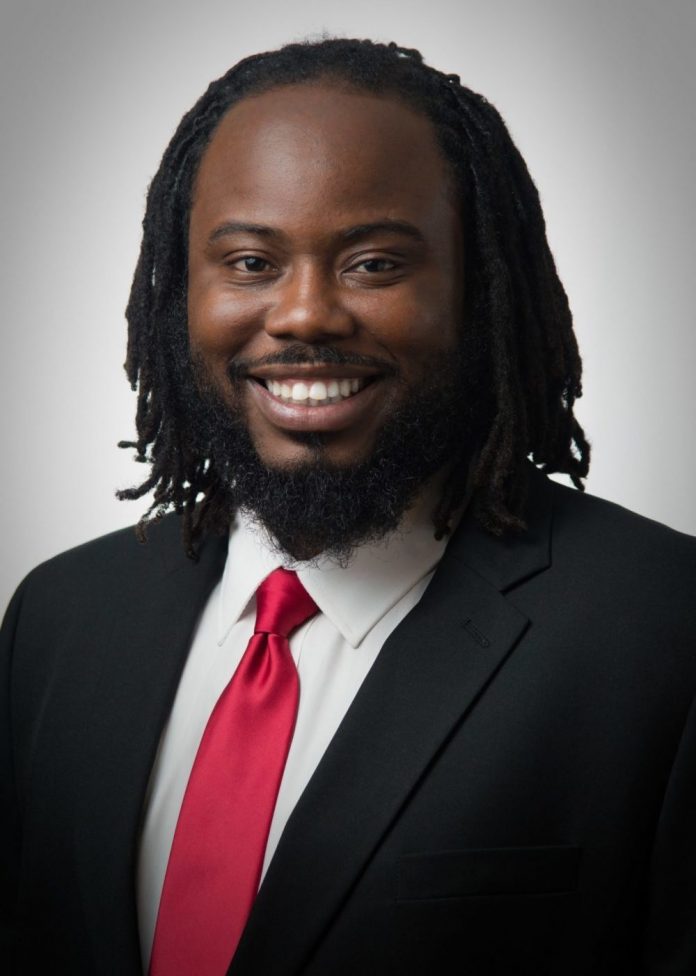
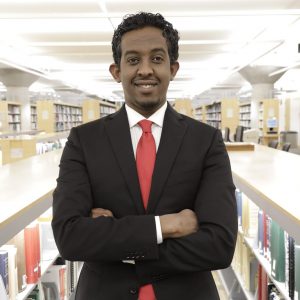
Alexander Deputie who was born in Liberia is the endorsed GOP candidate for Minnesota Senate District 67 in the November 3, 2020 election. Photo: Submitted
Alexander Deputie who was born in Liberia is the endorsed GOP candidate for Minnesota Senate District 67 in the November 3, 2020 election. Photo: SubmittedAlexander Deputie who was born in Liberia is the endorsed GOP candidate for Minnesota Senate District 67 in the November 3, 2020 election. Photo: Submitted
Liberian born Alexander Deputie has put his name in the running as a state senator for Minnesota Senate District 67 as the endorsed candidate by the state’s Republican Party. Deputie, a small business owner and longtime resident of the district is running on a platform advocating for limited government and greater personal liberties.
“I live on the east side of Saint Paul,” he said. “The east of Saint Paul is a very diverse place, it has a lot of potential.”
Senate District 67 includes Saint Paul’s East Side and portions of Ramsey County. The District is among the most culturally and ethnically diverse in the state. Among its previous state senators is the state’s current Public Safety Commissioner John Harrington.
There will be no primary for the seat by either the GOP or the DFL as both Deputie as the GOP endorsed candidate and the incumbent DFL’s Foung Hawj have no challengers from within their parties. Hawj is a two term incumbent.
Deputie was inspired to run for office during the COVID-19 pandemic when he felt that his constitutional rights were infringed upon which prompted him to go to the state capitol to speak with elected officials.
“I felt like my voice was not heard,” he said. Discouraged and disappointed Deputie decided he would run for office. “That motivated me to run for politics.”
He is running in a district that has been represented by Democrats for three decades. The electoral hopeful is running on a GOP platform that largely aligns with popular conservative views nationally.
Deputie was born in Liberia and moved to the United States at the age of eight after spending two years at a refugee camp in the Ivory Coast. He grew up in Saint Paul where he completed his elementary and secondary education before attending Normandale Community College in Bloomington.
His experience immigrating to the United States as a refugee has contribute to his conservative stance on immigration. “I am for immigration, I think America does a better job than any other country when it comes to immigration,” he said.
Deputie aligns himself with stated GOP views that are against a pathway to citizenship for undocumented individuals. This stance on immigration might come off as alienating to District 67’s residents many of whom are immigrants that have moved to the United States within the past thirty years.
The discussion of affordable and accessible healthcare has been front and center for all political candidates. Deputie would like to see an increase in the free market healthcare system with interstate competition as a solution for astronomical medical prices.
As a father of seven who chooses to home school his children, he advocates for a system that allows parents to choose to opt out of local taxes that fund public schools if their children are not attending. Deputie would also like to implement an option that allows for parents to send their kids to any school district of their choosing.
Deputie acknowledges the current tense political climate within the country and he would like to resolve the divide through nonpartisan conversation. “Our country is in a real big trouble, we are fighting among ourselves,” he said.
“We can sit down and be ourselves…talk to each other civilly,” he said. “That’s where healing starts.”
Outside of his career, Deputie volunteers for a number of local organizations. He also manages a nonprofit coffee shop in Saint Paul with his wife. He says he would like to promote unity in his community through citizenship.
“Let’s look at all the good that is happening now and just promote that,” he said.
He lives in Saint Paul with his wife and seven children. To learn more about his campaign you can visit his website.
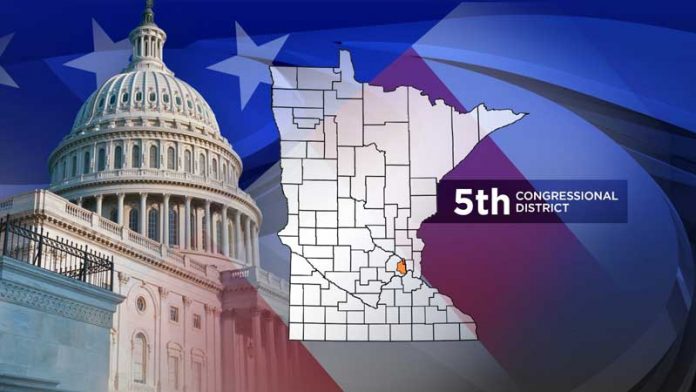
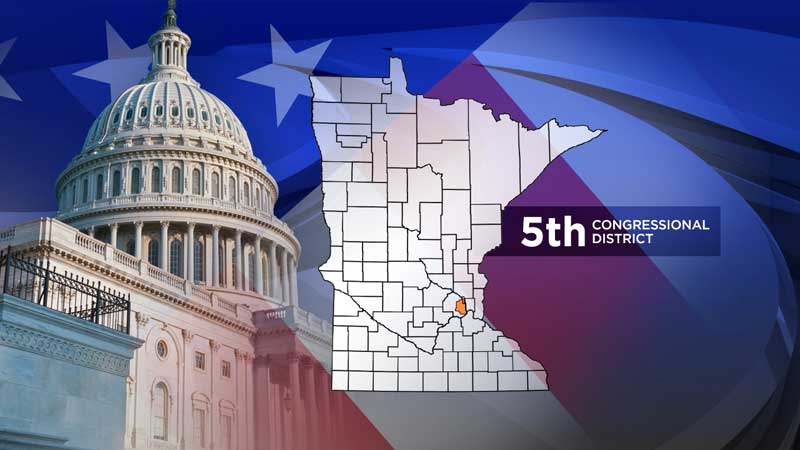
Primary Day for Minnesota's Fifth Congressional District is Tuesday, August 11, 2020.
Primary Day for Minnesota's Fifth Congressional District is Tuesday, August 11, 2020.
20 years ago, I fled my birth country of Liberia during a civil war. I left my loved ones to provide for them in America because I knew there was hope and opportunity here. Since then, I have been able to build a life for myself in the country I now call home. I have worked as a caregiver for 4 years with Dungarvin, and with Wells Fargo as a Home Lending Team Lead/Executive Office Team Lead for 15 plus years, building a life and home for myself in the 5th District of Minnesota.
My story is not uncommon. It’s the American Dream—people fleeing oppression seeking a better life and a home here. It’s also Ilhan Omar’s story—a woman who fled the Civil War in Somalia and worked her way through school and college to become the first African-born person ever elected to the United States Congress.
I was able to stay and work in this country because of Deferred Enforced Departure (DED)—even though it provided no path to legal status or citizenship for us. Last year, Donald Trump threatened thousands of Liberian Americans with removal from this country by threatening not to renew DED. (Minnesota is home to the largest community of Liberian Americans of any state in the nation.)
As soon as she was sworn into office, my Congresswoman, Ilhan Omar took our case on as if it was her own. She had multiple staff working to ensure that DED did not expire, worked with the Minnesota delegation on multiple letters to the administration, and held multiple public events calling for an extension. She reached out and invited me to join her as a guest at the first State of the Union speech she attended—as a physical reminder that immigrants make this country great. She introduced me to House Speaker Nancy Pelosi to make my case directly, along with local and national journalists to help cover the fight. (The issue wasn’t getting very much political attention at the time, but Ilhan used her public profile to draw attention to it, both nationally and here in Minnesota.)
Eventually, as a result of her advocacy, Trump delayed his threat to remove us. And at the end of 2019, Rep. Omar helped enshrine this into law—passing an amendment ensuring that Liberians would be protected from deportation in Minnesota and across the country.
This is not the Ilhan Omar you’ll read about often. But it is the kind of representative Ilhan Omar is: someone who fights on behalf of all marginalized people as if they were her own. Someone who knows that you can fight for transformative change on a global level and fight for transformative change for your constituents’ lives.
At a time when the President threatens to “send us back” to where we came from or calls our countries of origin “shithole countries,” Ilhan represents those identities and proudly fights on behalf of people who share them. She has gained prominence not because she seeks it, but because she is willing to fight for what she believes in.
I know there are countless other Minnesotans like me who have similar stories—people whose lives have been changed in ways big and small by Ilhan’s representation and advocacy. And I know she will continue to fight for us if we “send her back” to Congress where she belongs.
Primary Day for Minnesota's Fifth Congressional District is Tuesday, August 11, 2020.
Primary Day for Minnesota's Fifth Congressional District is Tuesday, August 11, 2020.Primary Day for Minnesota’s Fifth Congressional District is Tuesday, August 11, 2020.
The Fifth Congressional District and Minnesota are blessed with some of the largest African communities outside of the continent. Everyday, we see the value that immigrant families add to our community.
Nearly 40 percent of African immigrant workers in Minnesota work in healthcare or public service. Many in our district, especially women, work in high-need healthcare roles, including in long-term care facilities and as home care aides. These are extremely important—but highly underpaid—jobs that care for our most vulnerable residents. Many East Africans provide essential services in low-wage jobs. African immigrants and their families are also prolific business owners and entrepreneurs, providing services, innovation, and jobs for Minnesotans.
Through conversations with countless African immigrants who call the Fifth home, I’ve learned first-hand how many in our community have been hit hard by the coronavirus pandemic and associated economic crisis.
Workers have been forced to risk their health in order to serve the rest of Minnesota in essential roles. In addition, many families are “cost-burdened,” meaning they pay more than 30% of their income on housing. The severe recession and high unemployment rate have added to this housing crisis. African immigrant business owners have faced difficulty in accessing state and federal aid, in part due to language, cultural, and technical barriers.
These communities need and deserve immediate assistance. I’m running for Congress against Rep. Ilhan Omar because the Fifth Congressional District deserves a representative who will deliver results to our communities on urgent issues.
COVID-19 has exposed how many of our lowest-wage jobs are essential to our society. As a result, we must fight for hazard pay for essential workers so that wages reflect the risk they are being asked to assume, and oppose efforts to allow companies to avoid responsibility for ensuring a safe workplace. We must also fight for permanent paid family and medical leave so that no one has to choose, now or in the future, between taking care of themselves or a family member and their income.
Moving forward, we need to ensure that this recession doesn’t erase the wealth and security of immigrant communities. That’s why I’m calling for immediate rental and mortgage assistance to struggling families. I’m also calling for Congress to provide more funds specifically to help minority-owned businesses that were left out of previous rounds of assistance.
This crisis is falling disproportionately on our Black and African immigrant communities and we must ensure they are not simultaneously left out of relief and recovery efforts.
It has become crystal clear that this pandemic is compounding long-standing inequities. Our African immigrant communities deserve not just short-term assistance but long-term solutions.
Many families are facing housing instability not only because of our immediate crisis, but because of the severe shortage of affordable housing. I have a plan to change this, by investing significantly in public housing and housing vouchers to make housing affordable for all families. I will also fight to expand affordable homeownership opportunities and rid our credit system of systemic racial bias, so immigrant families can build generational wealth. I have a plan to pay for all of this, too.
It’s also past time that underpaid workers got a raise. A $15 minimum wage is a start but we can do better. I will fight for a national living wage, tied to inflation, so no one has to work more than one job just to pay the bills.
We must also make our public schools work for immigrants and second-generation students. The Fifth is home to some of the worst educational achievement disparities in the nation. We must diversify our teacher workforce so that our educators reflect the student body and our educational programs are culturally competent. We need to ensure that students and their families receive the wrap-around services and resources they need to support educational success.
Our African immigrant communities are shining examples of the value of being a country with humane immigration policies that accepts refugees. We must end Donald Trump’s Muslim ban that has separated many people in our community—especially our Somali residents—from their families. We must recommit to welcoming refugees and immigrants seeking a better life.
African immigrants and their descendants enrich our district and our state. It’s time that our government begin to work for them and reflect the value they bring to our country. This is what I’ll work for as the Fifth District’s congressional representative.
Antone Melton-Meaux is a progressive Democrat, mediator, and attorney. He is a candidate for the DFL nomination for Minnesota’s Fifth Congressional District in the August 11th DFL Primary.
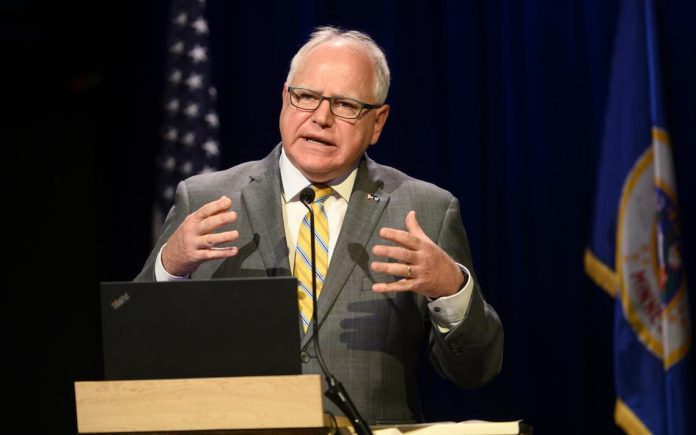
Minnesota Gov. Tim Walz during a news conference to announce the learning plan for Minnesota schools for the upcoming 2020-21 school year on Thursday, July 30, 2020. Photo: Pool Photo by Aaron Lavinsky
Minnesota Gov. Tim Walz during a news conference to announce the learning plan for Minnesota schools for the upcoming 2020-21 school year on Thursday, July 30, 2020. Photo: Pool Photo by Aaron Lavinsky
As a classroom teacher for more than 20 years, I know firsthand how resilient, strong, and flexible our students and educators are. There’s nobody better suited for a challenge. But COVID-19 has posed unprecedented questions about the balance of public health and education that simply have no easy answers.
We know Minnesotans have conflicting feelings about the upcoming school year. Some families are afraid for the safety of our students and the families they go home to. Others are eager to get children back into the classroom, where our kids learn best. Many more feel a mixture of both and we all worry for the health of our teachers and school staff. As a former teacher for more than 20 years and the parent of a child in public school, I am committed to providing the best education to our students while keeping them and their educators safe.
I followed three principles as I worked with the Departments of Education and Health on a plan for the 2020-21 school year. First, our top priority was the safety, health, and well-being of students, staff, and families. Second, we continue to make data-driven decisions, leaning on science and research to make the best decisions for our state. And finally, we would respect the importance of local school districts, their expertise of their unique communities, and their commitment to making the best decisions for their students.
That is why we are taking a localized, data-driven approach to the 2020-21 school year that will put student and staff safety first. By bringing together the local education leaders who know their students, staff, and communities the best with the public health experts who know the virus the best, this plan will help determine a learning model that makes the most sense for each community.
School districts and charter schools will begin in one of three models: in-person, distance learning, or a hybrid model. Experts at the Departments of Health and Education will partner with local school districts and charter schools to help determine which learning model they should use to start the school year. While there are many factors to consider, the decision-making process will center on local data indicating the prevalence of COVID-19 in the surrounding county.
Throughout the school year, we will need to be flexible and adapt with the fluid nature of this pandemic. The Departments of Education and Health will work with school districts and local health professionals to consistently track the virus to determine if and when a school may need to adjust their learning plan. School districts and charter schools will be required to ensure all families have the option to choose distance learning for their student. Teachers and staff will be given similar flexibility to the extent possible. As we switch between models, the plan prioritizes keeping younger children in the classroom because transmission is less likely for younger children and in-person learning is particularly critical at their developmental stage.
With an investment of more than $430 million, we will support our schools, educators, students, and families through this uncertain time. We will provide face coverings for every student, educator, and staff member. We will deploy a comprehensive testing plan for educators and staff. We will help cover costs for cleaning supplies and technology needs, and we will create strategies for child care throughout the state.
School districts and public health officials have a lot of important work to do, but the ultimate success of this process isn’t just up to them. It’s also in the hands of each and every Minnesotan. Our schools reflect their surrounding communities. For this to work, we need Minnesotans to come together to slow the spread of COVID-19. We need everyone to do their part to help get our kids and our teachers back in the classroom safely.
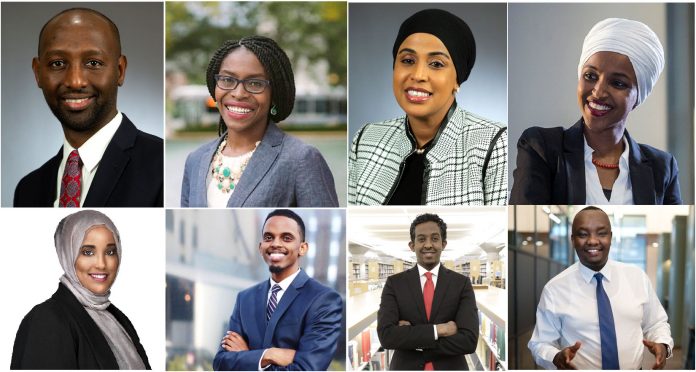
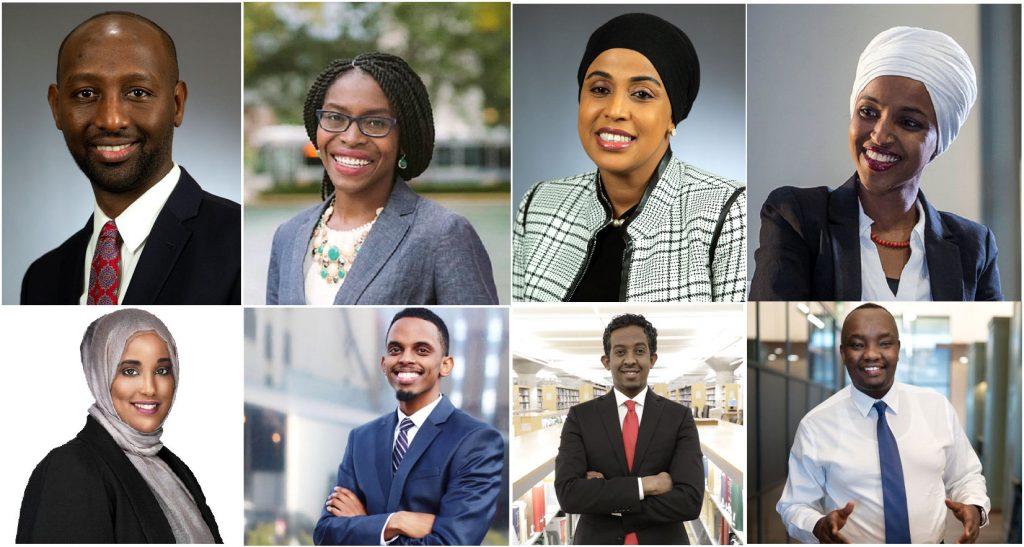
A record number of African immigrant candidates are running for legislative offices in the 2020 election cycle in Minnesota.
A record number of African immigrant candidates are running for legislative offices in the 2020 election cycle in Minnesota.A record number of African immigrant candidates are running for legislative offices in the 2020 election cycle in Minnesota.
The number of African immigrant elected officials in Minnesota — which has more than doubled in the past four years — could soon grow further, thanks to a record field of African immigrant candidates this year, according to internal Mshale tracking of the 2020 election cycle.
Internal tracking that Mshale has done of African immigrant candidates for over 20 years tallies 10 African elected officials across all levels of government in the state, up from just three after the 2016 general election. Numbers based on candidate filings with the Minnesota Secretary of State that Mshale reviewed shows a record 21 African immigrant candidates running for office this year, including several candidates with strong chances of joining various city councils, school boards and the Minnesota House of Representatives.
Seven of the twenty-one candidates are running for legislative office, both state and federal.
These efforts come as African immigrant candidates in Minnesota have within the last two election cycles achieved state and national firsts. Most notable was the election of congresswoman Ilhan Omar to the Minnesota legislature in 2016 and two years later to the US House of Representatives, making her the first black person born in Africa to be elected to the US Congress. She is the highest ranking elected African immigrant politician in the state by virtue of the fact she holds a congressional seat.
Despite significant progress, Basil Ajuo, CEO of Minnesota Africans United (MAU), a non-profit that works on civic engagement, says “it is time for our voices to be reflected at all decision-making process in Minnesota. This is the only way to maintain the true meaning of our country that was built by immigrants.”
In terms of what party elected African immigrants belong to, Mshale’s tracking data reveals a striking partisan divide. As of the time of this writing, all elected African immigrant officials are Democrats and none are Republicans, and the same case can be said for what are considered non-partisan city council officials. In the non-partisan races we have tracked previously that had African immigrants running, virtually all candidates affiliated with the Democrats. The lone exception being token Republican candidates who ran against Rep. Omar in her bid for the Minnesota House and Rep. Noor who succeeded her. Republicans in Minnesota have yet to field an African immigrant candidate in a competitive race that Republicans have a chance of winning.
Below is your guide to African immigrant candidates running for legislative races this year, where if they win or are reelected, gives them law making powers with implications for the state, and the nation in the case of Rep. Omar if she successfully fends off a primary challenge.
For other races we are covering including an African immigrant running for county judge and city council candidacies, be sure to visit our Election 2020 page.
Legislative races
Ilhan Omar – Minnesota Fifth Congressional District
Leading the contingent of African immigrant political candidates seeking elective office in Minnesota is Congresswoman Ilhan Omar. To win reelection she has to go through a primary on August 11. In her case, being the incumbent she has a record to defend, a record that includes seven pieces of legislation that she cosponsored that ultimately became law, including the Never Again Education Act that was to expand the U.S. Holocaust Memorial Museum education programming and most recently the CARES Act commonly known as the $2.2 trillion Coronavirus Aid, Relief, and Economic Security Act.
Rep. Ilhan Omar is seeking reelection to Congress for a second term. She is the first Black person born on African soil to be elected to Congress.
In 2018 she made history as the first Black person born on African soil to be elected to congress and was an instant celebrity. She came to the attention of Mshale readers when she was awarded the Community Leadership Award at the Mshale run African Awards in 2015 and a few months later won her first elective office when she was elected to the Minnesota House of Representatives representing House District 60B.
A once in a lifetime opportunity presented itself as she was about to finish her first term at the Minnesota House when then congressman Keith Ellison decided to run for Attorney General instead.
Despite some of the controversies her tenure has garnered while in Congress, Minnesota’s Democratic Party seems happy with her work. The party has endorsed her for another term. Minnesota’s Attorney General Keith Ellison has also endorsed her as have a cavalcade of other leaders, local and national, including Speaker Nancy Pelosi.
She faces a primary from four fellow Democratic candidates but the one considered the main challenger is the well-funded Antone Melton-Meaux who has drawn scrutiny on where his campaign money is coming from according to this MinnPost story.
Should Rep. Omar prevail in the August 11 primary, she is as good as elected in November given the district is overwhelmingly Democratic.
Minnesota House of Representatives
Mohamud Noor – House District 60B
State Representative Mohamud Noor is running for a second term in the Minnesota House. He has no challengers from within his party or from outside. In other words, Rep. Noor is as good as reelected.
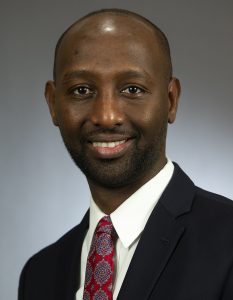
Mohamud Noor
Noor is also the only black male in the Minnesota House of Representatives. “It can be lonely as a black male sometimes over there,” he told guests at the home of local activist Hassanen Mohammed of Brooklyn Park during an iftar dinner last year.
Noor has taken a leading role in championing legislation to eliminate cash bail for those arrested and fighting for tenant rights and most recently police reforms.
With no opposition, he is expected to spend the rest of the election cycle helping fellow Democrats with their campaigns.
60B comprises parts of downtown Minneapolis and all of Cedar Riverside.
Hodan Hassan – House District 62A
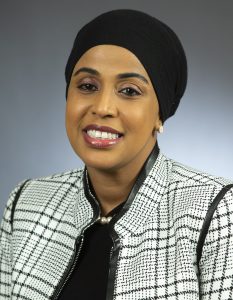
Hodan Hassan
The popular Hodan Hassan is seeking a second term in the Minnesota House. She faces no opposition from within her party meaning there will be no primary in 62A as the only other candidate in the race, Republican Arjun Kataria also has no challenger from within the GOP.
Kataria however has no listed campaign address nor a website. 62A voted 83% for Hillary Clinton in the 2016 presidential election and in 2018 when Hodan first ran the Republican against her only managed to garner 1,281 votes to Rep. Hassan’s 13,107 votes (90%).
62A is in south Minneapolis and neighbors House District 62B which is where George Floyd was murdered by Minneapolis police.
Omar Fateh – Senate District 62
African immigrant candidates in Minnesota have usually shied away from challenging popular African American elected officials that are considered effective and doing the work.
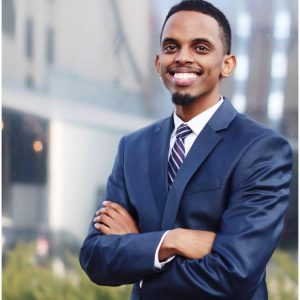
Omar Fateh
Not anymore. Omar Fateh, who was born to Somali immigrant parents in the Washington DC area where he grew up, sent shockwaves this past May when he trounced incumbent Jeff Hayden and won the DFL endorsement from 72% of the delegates when he only needed 60%. With Senator Hayden deciding to soldier on to the primary, the two will square off on August 11 with the winner advancing to the November general election. The senate district is overwhelmingly Democratic so whoever wins on August 11 is as good elected.
Should Fateh win, he would become the first African immigrant elected to the Minnesota Senate. However, the win would open a wide chasm between African immigrants and African Americans based on the commentary Mshale has been following on the street and social media.
Fateh told the online Sahan Journal after winning the endorsement that he is a democratic socialist (ala Bernie Sanders) and that he supports a $15 per hour statewide minimum wage, free public transportation and single payer health care.
The district is in south Minneapolis.
Esther Agbaje – House District 59B
Should Esther Agbaje prevail in her quest for a seat in the Minnesota House, she will become the first Nigerian-American to do so and also become the first African immigrant that is not Somali to win a legislative seat in the state.
Esther Agbaje
The Harvard educated lawyer spoke to Mshale earlier in her campaign and said she envisions eco-friendly neighborhoods and will focus on education, housing and health as the pillars of her campaign. Like Fateh, Agbaje also defeated a veteran for the DFL endorsement beating Ray Dehn who has represented the district for four terms.
Both Fateh and Agbaje told Sahan Journal that they won the endorsements because the incumbents had neglected their constituents with Agbaje saying “our campaign is about the future of the district and moving forward, making sure we are really getting to the heart of the matters.”
59B comprises parts of North Minneapolis and parts of downtown which includes the area where the $1billion plus Vikings Stadium is located.
Suleiman Isse – Senate District 59
Like Omar Fateh in Senate District 62, Isse is also trying to unseat a very poplar African American incumbent with bills that have become landmark laws. Isse is challenging the popular Bobby Joe Champion and the two will square off in the August 11 primary with the winner as good as elected in the Democratic district.
Suleiman Isse
In an interview with Mshale early in his campaign Isse admitted to the task ahead but said he is up to the challenge. Champion is the author of the bill that became law called “Ban the Box” which prevents private employers from asking about criminal history information on job applications and during interviews.
Isse came to the US as a teenager fleeing civil war in Somalia. A small business owner, he is running on a platform of affordable housing, a green economy and access to health care.
District 59 comprises all of North Minneapolis and most of downtown Minneapolis.
Sahra Odowa – Senate District 55
Sahra Odowa who was born in New York City is running for the Minnesota Senate to represent District 55. Her candidacy has not garnered much attention with African immigrants but has the hallmarks of a shocker in the making. The senate district comprises the far-flung suburbs of Prior Lake, Shakopee and Jordan. Mshale could not immediately determine if voters there have ever had to contend with a competitive candidate that is not Caucasian for a local race but if they have not, they will have a chance this November to choose between their two term Republican incumbent and a fresh face in Odowa.
Sahra Odowa
Shakopee is also where Amazon has their biggest warehouse in Minnesota. The warehouse has gained national attention in the last two years as the first in the nation where workers were able to force the anti-union ecommerce giant to negotiate for better working conditions. As of the time of this writing, The American Federation of State Council and Municipal Employees Council 5 (AFSCME) union, which represents public employees in Minnesota announced their endorsement of Sahra Odowa for Senate District 55. Democrats control the Minnesota House and are expected to maintain control in November but the Minnesota Senate is in the hands of Republicans. Democrats need to flip three Republican seats to regain the senate majority hence the attention being paid to candidates like Odowa by DFL allies like AFSCME.
The district falls in the Second Congressional District which for many years was Republican and voted for Trump in 2016 but voters there two years later tossed out their Republican congressman Jason Lewis and elected Democrat Angie Craig instead.
Odowa is a mental and public health practitioner which is informing part of her platform of increasing health care access and education funding.
There will be no August primary for either party in Senate District 55 as both Odowa and the Republican incumbent, Eric Pratt have no challengers from their respective parties. The two will face off in November.
Hennepin County Board of Commissioners
Boni Njenga – District 5
While not a legislative body, Hennepin County is Minnesota’s largest county and home to the state’s largest city, Minneapolis. It has an annual budget of $2.5 billion that is managed by a board of seven elected commissioners representing the seven districts in the county. Kenyan-American Boni Njenga is vying to be one of those seven commissioners, representing District 5 which comprises Bloomington, Eden Prairie and Richfield.
Boni Njenga
Njenga is going up against the incumbent Debbie Goettel who is serving her first term. Mshale spoke to Njenga after he launched his campaign and you can read that profile here.
District 5 is being watched because of what it means if Njenga wins in November (he has no primary in August), and De’Vonna Pittman, who is running in District 1 makes it to November and emerges triumphant. That scenario will see the Hennepin County Board of Commissioners for the first time with people of color as the majority. Pittman however has a primary to deal with on August 11. One of her opponents is Brooklyn Park mayor Jeff Lunde.
If Njenga and Pittman triumph in November they will join the other two people of color on the board, Irene Fernando and Angela Conley. Fernando and Conley’s seats are not up for election this year.
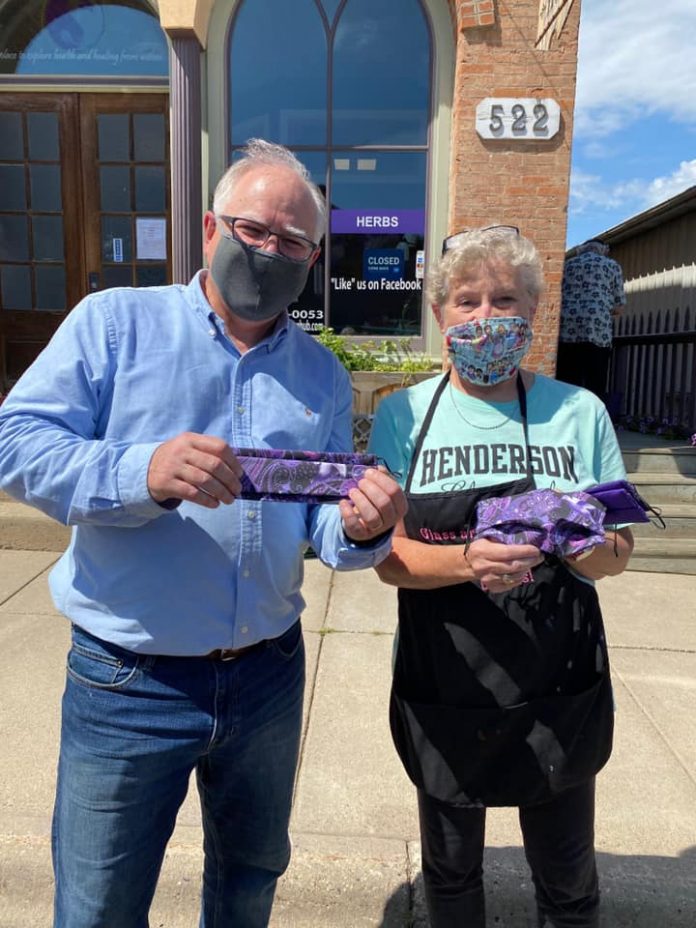
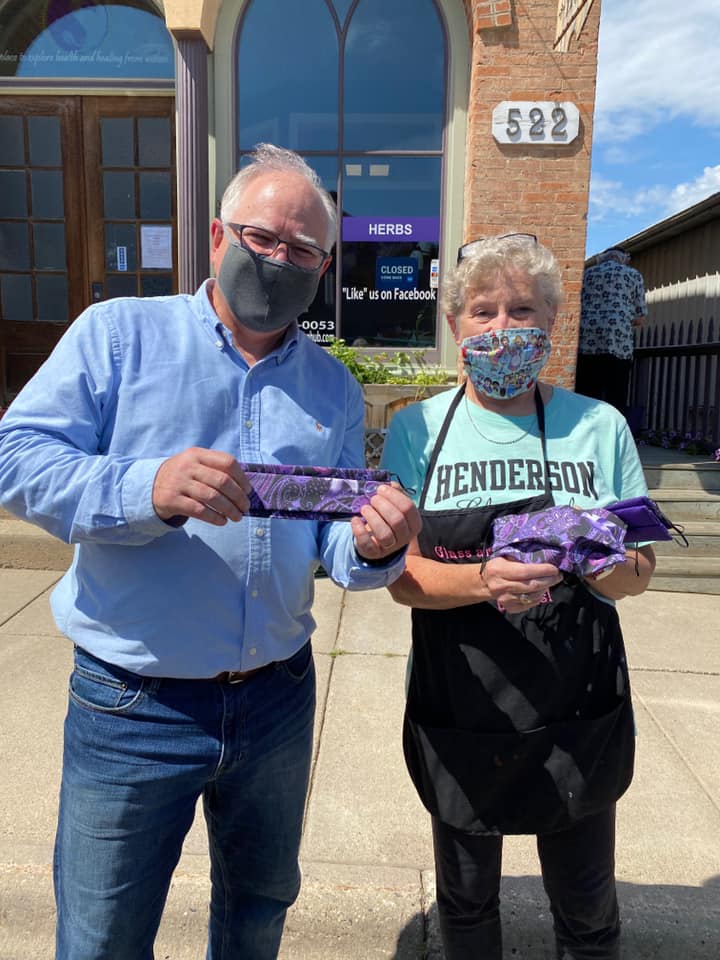
Governor Walz of Minnesota holds Prince-themed masks made in Henderson, Minnesota. Photo: MN Governor's Office
Governor Walz of Minnesota holds Prince-themed masks made in Henderson, Minnesota. Photo: MN Governor's OfficeGovernor Walz of Minnesota holds Prince-themed masks made in Henderson, Minnesota. Photo: MN Governor’s Office
Minnesota Governor Tim Walz issued an executive order yesterday that effective Saturday, July 25, Minnesotans will be required to wear masks indoors at businesses and public spaces as the state and nation continues to battle the coronavirus pandemic. The order will remain in effect until the peacetime emergency the state is under ends and affects everyone aged 5 years and above.
The order also affects those who use public transportation like light rail and city buses.
“This is the way, the cheapest, the most effective way for us to open up our businesses, for us to get our kids back in school, for us to keep our grandparents healthy and for us to get back that life that we all miss so much,” Walz said.
Those with a medical condition, mental health condition or disability that makes it difficult to wear a mask are exempted. Governor Walz encouraged voluntary compliance but also said those that are aged 14 and over that violate the order risk fines of $100 and a petty misdemeanor. Businesses will face fines of $1,000 if not in compliance.
The full list of the rules and requirements are listed on the Minnesota Department of Health website at this link.
Governor Walz’s full text of the executive order can be found at his link.
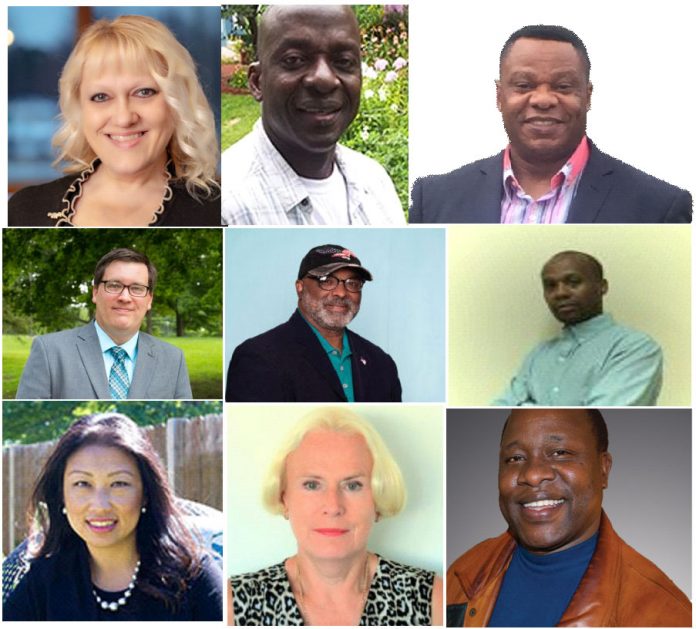
Ten of the remaining eleven candidates in the upcoming August 11 Minneapolis City Council Sixth Ward special election participated in a candidates forum that was hosted virtually by Mshale last evening and live streamed on Facebook.
Top row (l to r) East District candidates - Lisa Jacobson, Oduwa Aganmwonyi
Middle row (l to r) Central District candidates: Christian Eriksen, Boyd Morson, Walter Nyabere.
Bottom row (l to r) West District candidates: Susan Pha, Yelena Kurdyumova, Henry Momanyi
Top row (l to r) East District candidates - Lisa Jacobson, Oduwa Aganmwonyi
Middle row (l to r) Central District candidates: Christian Eriksen, Boyd Morson, Walter Nyabere.
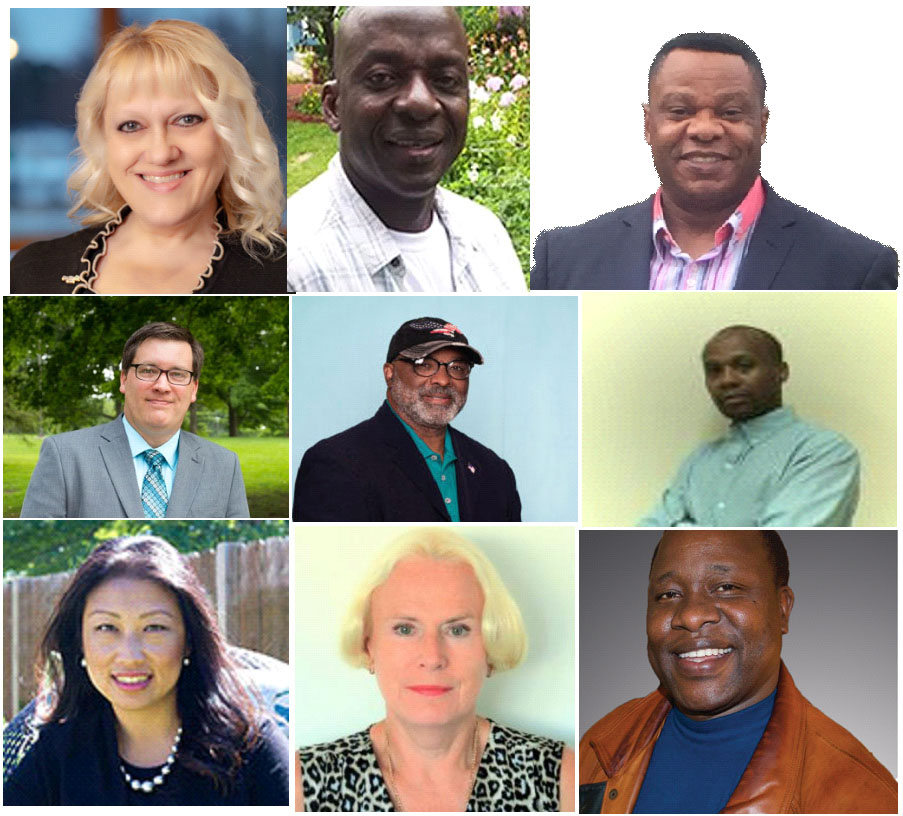
Bottom row (l to r) West District candidates: Susan Pha, Yelena Kurdyumova, Henry MomanyiTop row (l to r) East District candidates – Lisa Jacobson, Oduwa Aganmwonyi. Middle row (l to r) Central District candidates: Christian Eriksen, Boyd Morson, Walter Nyabere. Bottom row (l to r) West District candidates: Susan Pha, Yelena Kurdyumova, Henry Momanyi
Brooklyn Park voters will go to the polls August 11 during the state primary, to cast their ballots for the most diverse pool of candidates to run for City Council since Mshale started tracking the city’s politics two decades ago. Mail-in absentee voting is already underway and will continue until August 10, while in-person absentee voting will begin on August 4 through August 10.
Three of the city’s six council seats are up for grabs in the November election but since there were more than two candidates who filed in each district, the August 11 primary will be used to choose the two candidates for each district that will proceed to the November election. Each district is represented by two council members who serve staggered four-year terms.
This year’s election cycle has had to deal with the coronavirus pandemic that has limited in person campaigning and door knocking for candidates that usually characterizes the race.
Two incumbents in the East and West districts are defending their seats while there is an open seat in the Central district.
East District
First-term Incumbent Lisa Jacobson is fighting off a challenge from two Nigerian-Americans Oduwa Aganmwonyi and Benjamin Osemenam. Aganmwonyi has experience running for public office while this will be Osemenam’s first attempt.
Central District
One of the two incumbents in the Central district Mark Mata is not seeking reelection which has attracted three candidates. Kenyan-American Walter Nyabere is new to city politics while Boyd Morson and Christian Eriksen have had unsuccessful runs for the City Council before.
West District
Incumbent Susan Pha made history in 2016 when she became the first person of color elected to the Brooklyn Park City Council in her first attempt at political office. Kenyan-American Henry Momanyi and Yelena Kurdyumova will try to limit Pha to one term.
Early Voting
The city is encouraging voters to vote early by mail due to the COVID-19 pandemic to minimize crowding on election day. To apply for an Absentee ballot, call the city at 763-493-8119. You can also download the application at this city link or apply to vote absentee on the Secretary of State website.
In-person early voting will take palace August 4-10 at the Community Activity Center, 5600 85th Avenue North.
Council member Nadia Mohamed of St. Louis Park believes Ranked Choice Voting which will be used in the August 11, 2020 Minneapolis special election is a good system as it gives voters more choices. Photo: Courtesy FairVote
Council member Nadia Mohamed of St. Louis Park believes Ranked Choice Voting which will be used in the August 11, 2020 Minneapolis special election is a good system as it gives voters more choices. Photo: Courtesy FairVote
Minneapolis first adopted ranked choice voting, a largely unfamiliar and controversial system, for the 2009 city election. It has been used to elect officials in 22 city offices including park board, mayor, and city council positions.
Despite being over a decade old, RCV has created a cascade of confusion among voters and candidates alike. Advocates of RCV argue that it promotes civility, creates a diverse representation, and reduces negative campaigning.
Yet many voters find the unfamiliar system largely intimidating because they’ve never used it before. This ‘new’ voting system has been a source of much confusion for immigrant voters who have been voting for just one candidate their whole life.
RCV works by allowing voters to rank multiple candidates in order of preference. It upholds the principle of majority rules. However, opponents of the new system are creating confusion by arguing that it doesn’t.
A special election in Minneapolis has been called to fill a vacancy in the Council – Ward 6 seat after Abdi Warsame resigned from his position. Ward Six is relatively small in comparison to other wards in the city, comprising only 6 neighborhoods, see the full map here. However, it is being hotly contested this year by 11 candidates running for the recently vacated seat.
More than half of the candidates are Somali-Americans. Most voters are confused because the ballot has many tables. This is why non-profit groups like FairVote Minnesota are working hard to raise more awareness among candidates and voters about the importance of ranked choice voting. Council Member Nadia Mohamed, an organizer of the FairVote community, believes that residents need to learn more about the new system.
Due to the influx of candidates of Somali descent, some senior community leaders will be looking on at the contests with concerns of potentially losing the only seat they have in the Minneapolis City Council.
Advocates like Mohamed, an elected official of Somali descent, argues that RCV is a smarter way to fix the political system and represent immigrant communities in government offices.
“It is really important for the immigrant community to participate in ranked choice voting because it allows them to have more choices,” said Mohamed. “So often immigrants’ voices aren’t heard, and they aren’t represented in the government. So, when they choose three candidates, they are more likely to get representation.”
Although RCV is an effective way to uphold the principle of majority rules, many candidates are concerned they may lose despite having more votes. Many still believe that there is a chance for second-ranked candidates to beat the one with the most votes. “With RCV, it is not possible for a candidate to win with only 2nd-choice votes even if all voters rank that candidate 2nd”, Mohamed said.
“So do not ask voters to vote for only you – that won’t be of help and could hurt your chances. Some candidates erroneously believe that a 2nd and 3rd choice might somehow hamper their chances.” Mohamed said. “It doesn’t. The 2nd choice is only counted when a voter’s 1st choice is eliminated.”
FairVote, which is a nonpartisan and nonprofit grassroots foundation, has been one of the most vocal supporters of rank choice voting and has extensively trained Ward Six candidates to create more awareness about RCV.
It is important for voters to understand how RCV works. This will increase their chances of selecting their most preferred candidate in an election and eliminate their least preferred candidate.
Mohamed explains how it works. “People vote by ranking candidates by placing them in order of preference: First, Second, and Third. A voter’s second choice will only count if their first choice is eliminated. A voter’s third choice will only count if their first and second choices are unsuccessful.”
When implemented correctly, RCV categorizes the most popular candidates from the ones with the least votes.
Mohamed’s message to candidates is to embrace RCV and not create further confusion among their voter base. “If you urge your voters to not rank other candidates, then backers of your opponents may decide to not rank you as their backup choice either,” warns Mohamed. Candidates are only hurting their own chances by discouraging voters from ranking for other candidates.
She encouraged voters to leverage RCV to its full potential, “Please use your full voice and power to rank your candidates, she said. “Don’t let anyone convince you that you are only allowed to vote for them.”
Mail-in Voting
Minneapolis election officials are encouraging voters to request a ballot and vote by mail due to the COVID-19 pandemic.
Apply to get a ballot in the mail
After you apply, we will mail your ballot to you with a postage-paid envelope for return.
Apply online
The online ballot application for the August primary and November general election is available now.
Application deadline
We recommend you apply for a ballot no later than 10 days before Election Day. This gives you the best chance to get your ballot in the mail and still have time to mail it back or drop-it off.
You can apply after this date, but each day increases the chances you will not be able to receive and return your ballot by the deadline.