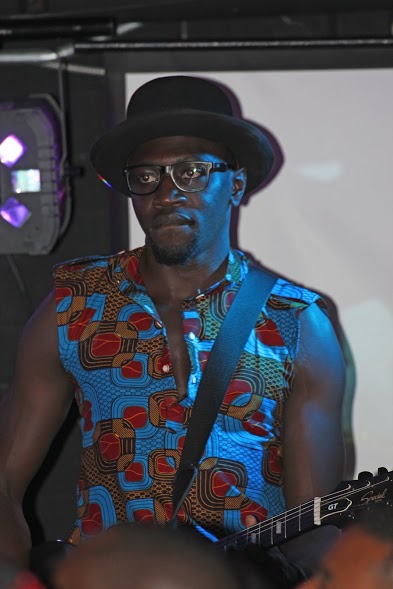
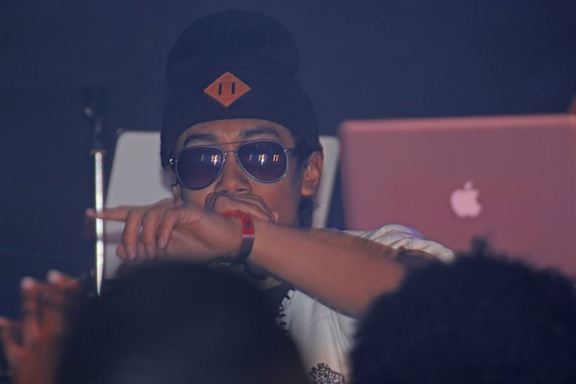
Sauti Sol on stage in Minneapolis on Thursday, May 21 2015 as they kicked off their five state US tour. Photo: Richard Ooga/Mshale
Sauti Sol on stage in Minneapolis on Thursday, May 21 2015 as they kicked off their five state US tour. Photo: Richard Ooga/MshaleSauti Sol on stage in Minneapolis on Thursday, May 21 2015 as they kicked off their five state US tour. Photo: Richard Ooga/MshaleA fan joins Sauti Sol on stage during the U.S. tour kickoff concert in Minneapolis on Thursday, May 21, 2015. Richard Ooga/MinneapolisSauti Sol performing in Minneapolis on Thursday, May 21 2015 in their first concert of a five state US tour. Photo: Richard Ooga/MshaleSauti Sol of Kenya on stage in Minneapolis on Thursday, May 21 2015 as they kicked off a five state U.S. tour. Photo: Richard Ooga/MshaleMinneapolis based Fanaka opens for Sauti Sol during the band’s U.S. tour kickoff concert in Minneapolis on Thursday, May 21, 2015. Photo: Richard Ooga/MshaleFanaka, the opening act for Sauti Sol of Kenya, engages the fans during Sauti Sol’s US tour kickoff concert in Minneapolis on May 21, 2015. Photo: Richard Ooga/Mshale
Sauti Sol teased radio listeners with a 20 minute interview on KFAI radio Thursday afternoon when they conversed with the hosts of African Rhythms, Brad Wrolstad and George (Jojo) Ndege, and sang three different songs including their controversial number, Nerea. (Listen here for a limited time to the last 20 minutes)
Immediately after their radio appearance, they sat down to talk with Mshale reporter, Susan Budig. Foremost for Sauti Sol is their desire to remain a Kenyan band, to not leave their country. “We are going to be globally successful, but remain in Africa,” Willis Chimano said. He plays the keytar for the band. Other band members include Bien-Aime Baraza, Savara Mudigi and Polycarp Otieno.
One of the singles on their latest, soon-to-be-released album, Live and Die in Afrika, has proved to be highly controversial at least here in the United States. Nerea, said Baraza, “is pro-responsibility for the man. It represents a new generation of African man who is taking responsibility.”
However, an alternative interpretation of the song has many listeners stating, unhappily, that the song promotes anti-choice views regarding pregnancy. Baraza firmly contended that “musicians are there to spark discussion on controversial topics.” He felt that as long as a man steps up and takes care of his children, polygamous marriage or relationships aren’t a problem.
Jojo of Kilimanjaro arranged for the band to appear live in the studio at KFAI radio as a preview for their performance, the first of their current US-tour, at Club C’est La Vie in Spring Lake Park, Minnesota on Thursday, May 21, 2015.
The show, billed as starting with dueling DJs at 8 pm, took a turn into the surreal when the band did not appear until 1 o’clock in the morning. The DJs moved beyond dueling one another and began fighting to maintain a high energy-level of the slowly growing crowd as we awaited the main act.
By the time the audience topped out at around 300 people, rapper, Fanaka Nation, had thoroughly warmed the spectators made up of all areas of Africa with the East African segment offering the loudest cheers. A friendly competition lead by Fanaka helped determine audience demographics.
As the Kenyan band took stage, the crowd began cheering and then screaming. With only inches separating the dance floor from the stage, it was easy to reach up and touch the band members, which many in the audience quickly did. Security was on high-alert when onlookers grasped too firmly or intimately. Muscled men moved in, wearing blue shirts, to shoo away admiring fans or unhook hands from shirts and more.
The adoration is genuine and honestly deserved. The band, together since their high school days in 2005, in Nairobi, has been accumulating recognition and awards as of late. Last year’s MTV EMA Award as Best African Band and most recently, a BET (Black Entertainment Television) nomination, has accompanied the band into exciting success. The noted absence of any other media such as the Star Tribune or City Pages, is both disdainful and short-sighted.
The band’s voices on the radio earlier in the day promised a gorgeous night of music. Unfortunately, our eardrums had been pummeled raw by the five hours of synthesized music with decibel levels near 120 dB before Sauti Sol took the stage. Their barely hour-long appearance might have left some paying customers disgruntled.
Despite the sound level and lateness of the show, fans were over the moon. The band sang harmonies and favorite songs especially aimed to satisfy the Kenyans in the crowd. Saturday, May 23rd will see the band in Washington, D. C. and Monday in Dallas, Texas. Tickets available on their website. www.sauti-sol.com
Gerhard Hartman of Sage says African corporations are facing stiff competition for talent and skills.
Gerhard Hartman of Sage says African corporations are facing stiff competition for talent and skills.Gerhard Hartman of Sage says African corporations are facing stiff competition for talent and skills.
Businesses across major African economies such as Kenya and Nigeria are coming under increasing pressure to align their strategies for retaining talent, compensating employees and engaging with their workforces with good international practices.
That’s according to Gerhard Hartman, Head of Department for Sage Payroll & HR’s International Division, who says that African companies are facing stiffer competition for skills as economies grow, governments pump money into building infrastructure, and professionals are lured into the diaspora by the promise of big salaries paid in hard currencies.
One recent study conducted by Ernst & Young (EY) found that 70% of African firms are recruiting–yet many report that they are taking longer to fill vacancies and experiencing higher staff turnover. The skills that are in short demand include engineering, technical and commercial skills, partly because of massive infrastructure products occurring across Africa, says Hartman.
“There’s a real hunger for skills in Africa, which means that businesses are demanding that HR departments step up to the plate,” he adds. “They have to craft strategies that help them to attract and retain the best talent, as well as develop human resources in a manner that delivers a high return on investment to the business. That means they need to really focus on sharpening their capabilities.”
According to a KPMG survey, staff costs make up more than 25% of the total income in 34% of surveyed organisations in Nigeria. This stat seems to be broadly in line with the rest of Africa, says Hartman. There is a growing realisation that employees can be a strategic asset rather than a massive expensive if they are well managed, he adds.
Hartman says that African organisations should focus on the following areas to boost HR performance:
1. Building the employer brand
According to an EY 2014 survey of talent trends and practices in sub Saharan Africa, the strength of the employer brand is the most important factor in attracting talent. Companies that have a reputation as innovative, interesting and caring places to work are the best placed to attract high calibre talent. Companies must focus on creating a positive culture, a quality workplace and a good employee experience since employees value this as much as they do money.
2. Remuneration and rewards
Of course, the importance of a competitive benefits and compensation package cannot be overestimated. High quality employees know their value and expect employers to provide packages that compare favourably to standards in the profession or industry. As such, employers should benchmark their rewards against the rest of the market.The basic salary or wage is important, but savvy employees also want to know about benefits such as medical cover and retirement planning as well as perks such as flexible hours, on-site facilities such as canteens and gyms, and their 13th cheque or performance bonus. It’s important to have a documented reward philosophy to ensure consistency.
3. Learning and development opportunities
Employees place a high value on learning and development opportunities, especially the ambitious high performers who want to improve themselves and move up the ladder. It is important to have a formal learning and training strategy – perhaps mapped to career paths – so employees feel they have structured opportunities for self-improvement. Those that want to study independently should also be supported and encouraged. Of course, it’s also important to create an environment where there is support from mentors to help younger employees learn on the job.
4. Performance management
A fair and transparent performance management process can help organisations boost employee satisfaction while optimising performance. Formal performance management enables organisations to align the individual’s career goals with the strategy of the business.
5. Employee engagement
Employee engagement is about the techniques, tools and strategies organisations use to get employees motivated about their work and engaged in the business’s strategy, values and culture. HR departments can use instruments such as employee satisfaction surveys, exit interviews and informal feedback to discover how engaged employees feel so that they can find opportunities for improvement.
6. Leveraging IT tools and HR data
Many of the above strategies can be boosted or enabled through the use of IT. For example, organisatons could use cloud-based solutions to automate manual processes. They could further benefit from better access to information they can use to make better HR decisions. Employee self-service can also give better service to employees—for example, by letting apply for leave or retrieve payslips online—thereby improving employee engagement.
Congressman Keith Ellison of Minnesota’s 5th Congressional district wrote to United States Secretary of State, John Kerry, on Friday, May 15 2015 thanking the Secretary for visiting Somalia, and expressing his concern that he did not bring up the remittance crisis in his remarks in Somalia.
The Honorable John F. Kerry
Secretary of State
U.S. Department of State
2201 C Street NW
Washington, DC 20520
Dear Secretary Kerry:
I write to thank you for your historic visit to Somalia. Your visit represents the United States’ commitment to a strong and stable Somalia. As your efforts to support Somalia continue, I urge you to address growing concerns regarding remittances and refugees.
Somalia is emerging from two decades of conflict and famine. Much of the success that Somalia has seen is owed to the support of the Somali diaspora who send lifesaving money to their loved ones in Somalia; these remittances account for as much as forty percent of Somalia’s GDP. I am concerned that remittances to Somalia were not addressed in your visit to Mogadishu.
The flow of remittances to Somalia remains an urgent humanitarian and national security issue. I ask for your ongoing commitment to find immediate and long-term solutions to address this crisis. I also urge you to take appropriate steps to ensure that recent horrific events in Kenya do not unnecessarily worsen the situation for Somalis throughout the region.
Following the terrible attack at Garissa University College, the Kenyan government wants to take decisive steps to increase security. This is a necessary and justifiable response, however it is important that the response from the Kenyan government target the terrorist groups that committed these acts of violence and not the entire Somali community.
Last month the Kenyan government suspended the licenses of thirteen money transmitters serving Somalia. This is having a disruptive impact on Somali refugees in Kenya and many aid organizations have been left scrambling to find ways to maintain uninterrupted finance-related support for their humanitarian operations. The suspension of these licenses, along with the call for closure or relocation of the Dadaab refugee complex, could have a devastating humanitarian impact. I ask that you work with Kenya, the United Nations, and other international partners to avoid actions that would further destabilize the region.
The closure of Somali money services businesses in Kenya and the limited service to Somalia from the United States, the United Kingdom and Australia has created a perfect storm to drive back the recent gains in Somalia and the fight against Al Shabaab. Just last week, one of the few remaining U.S. banks serving Somali money services businesses (MSBs) closed all of its Somali MSB accounts.
In your remarks to the Somali people in Mogadishu last week you said Somalia is rebounding and, “…new life has returned to the streets of Mogadishu, Kismayo, Baidoa, and Garowe, and elsewhere. New businesses have opened and diaspora communities are returning to take advantage of new economic opportunities and to help rebuild their country.” With your leadership we can help Somalia continue on this track to greater prosperity, peace, and stability; but if the remittances lifeline remains closed it will threaten the progress the Somali people have fought so hard to make.
Please make the restoration of the remittances pipeline a top priority of your agency. I stand ready to work with you to improve the humanitarian and security situation in East Africa and to continue efforts to provide the vital remittance lifeline to the Somali people.
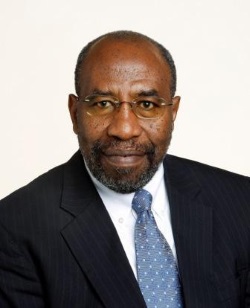
The 10th prime minister of Uganda, Ruhakana Rugunda, will be in Minnesota on Memorial weekend as chief guest at the Twegaite International Convention.
The 10th prime minister of Uganda, Ruhakana Rugunda, will be in Minnesota on Memorial weekend as chief guest at the Twegaite International Convention.The 10th prime minister of Uganda, Ruhakana Rugunda, will be in Minnesota on Memorial weekend as chief guest at the Twegaite International Convention.
Ugandan Prime Minister, Ruhakana Rugunda, will be in Minneapolis this weekend as chief guest of the annual Twegaite International Convention that kicks off here on Thursday, May 21. He is the 10th prime minister of Uganda.
The four day convention program lists him as keynoting the gala dinner on Sunday May 24.The conference focuses on topics of interest to the Busoga region of Uganda.
Also attending the convention is the leader of the Ugandan opposition, Phillip Wafula Oguttu, according to convention organizers.
About 500 attendees from around the world are expected for the four day convention, according to Anthony Isubikalu, Organizing Committee Chair.
The Twegaite convention comes exactly 10 years since Minnesota played host to a major Ugandan convention after the successful Ugandans in North AMerica (UNAA) convention held in Minneapolis in 2005. UNAA is the largest formal association of Ugandans in the Diaspora.
Source of the Nile 5K
Isubikalu, is especially excited about the Source of the Nile 5K run which is one of the highlights of the convention “This could be first East African or even African run in the cities,” he said. The 5K run is organized in benefit the Jinja Hospital Cancer Unit Uganda.
Other highlights include a boat ride Saturday evening.
The full convention and 5K run schedule can be found at TwegaiteMN.org
Sauti Sol of Kenya 2014 winner of MTV Africa Best Act will kick off their US tour in Minneapolis on May 21, 2015. Photo: Courtesy Sauti Sol
Sauti Sol of Kenya 2014 winner of MTV Africa Best Act will kick off their US tour in Minneapolis on May 21, 2015. Photo: Courtesy Sauti SolSauti Sol of Kenya 2014 winner of MTV Africa Best Act will kick off their US tour in Minneapolis on May 21, 2014.
If you haven’t already heard of Kenya’s Sauti Sol, get to know them now. Because on Thursday May 21st, the group will be bringing their music to fans in the diaspora, as they kick off their five city U.S Tour in Minnesota at C’Est La Vie. A show that is sure to set the stage and expectations for the rest of their tour as they head to D.C., Dallas, Atlanta, and Seattle.
Sauti Sol, who released their first album in 2009 have witnessed the kind of success most artists can only dream of, and collected an impressive list of accolades along the way. But the four man afro-pop band comprised of Bien-Aime Baraza, Willis Chimano, Polycarp Otieno and Savara Mudigi, truly found their niche in 2014. This was the year that they set the internet ablaze with their raw talent, killer moves, and some bare chests, transforming them into a household name, from Dar-es-Salaam to Nairobi and Johannesburg to Minneapolis.
The group has grown so popular that securing an interview with them is a near impossible feat that this reporter can attest to after failed attempts at getting the group on Skype for a pre-tour interview. Twice, Sauti Sol’s publicist promised an interview with the group, and twice this reporter sat at her computer listening to the birds chirp, as daylight broke in Minneapolis and the afternoon wore on in Nairobi. The metaphorical phone never rang. But such is the price of fame, when one is wanted and needed everywhere at the same time.
With fame too, comes a wider audience and a platform from which to share one’s beliefs with the world. Enter Sauti Sol’s newest song ‘Nerea’; a song whose anti-abortion message told from a father-to-be’s perspective has ignited debate surrounding reproductive rights in Kenya. The song, and its accompanying video, which feature fellow musicians Amos and Josh, is a plea to the woman who the song is named after, to keep the baby she is pregnant with.
The artists wear white in the video and impose images of a young Lupita Nyong’o, Wangari Maathai, Barack Obama, and Nelson Mandela, among others, implying that the unborn child Nerea is carrying might some day be as famous a figure as these legends. In interview after interview, the members of Sauti Sol have defended their right to artistic expression, in the face of what others see as an attack on women’s reproductive rights. The members argue that the message presented in the song represents their own personal beliefs and is not meant to be divisive, and that ultimately the choice is the woman’s.
Sauti Sol insist that ‘Nerea’ is an acknowledgement of a man’s role in creating unexpected pregnancies, and the need for men to “step up” to the plate and become fathers when this happens. Yet for many women, and advocates for women’s rights to reproductive health services, ‘Nerea’ means something different entirely. It represents an attempt to shame women, and demonize them for choosing an abortion, by implying that the unborn children they carry may some day become Nobel Peace Prize winners, or Presidents. This group argues that when abortion, though constitutionally allowed in certain cases, is already frowned upon by society, a song such as ‘Nerea’ only exacerbates the stigma surrounding the right to abortion for a woman, while ignoring all the socio-economic reasons a woman may choose to have an abortion.
Whatever side one sits on, or whether you straddle the line between pro-life and pro-choice, the fact remains that Sauti Sol have inspired a needed discussion surrounding reproductive health and men’s role in preventing and dealing with unexpected pregnancies. And done so, while providing a quality song, vocally and instrumentally. This, is Sauti Sol’s greatest feat; providing great entertainment with everything they touch and every appearance they make. With their third studio album Live and Die in Afrika due out this year, catch them live to get a sneak peek of what to expect as the group continues to soar in popularity.
Sauti Sol U.S. Concerts
Thursday, May 21 – Tour launch in Minneapolis, MN@ C’est La vie
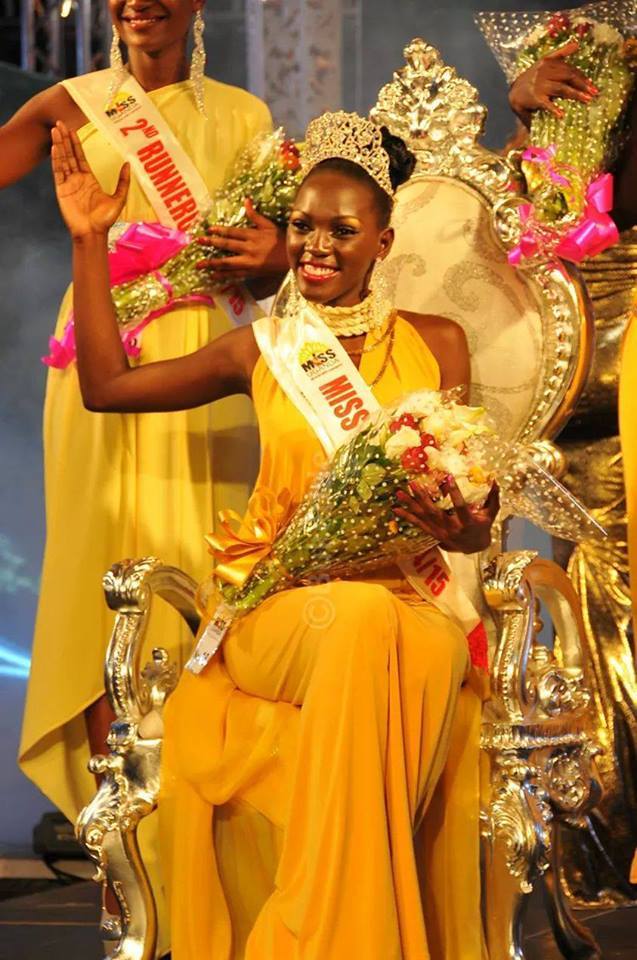
Reigning Miss Uganda, Leah Kalanguka, is coming for the Source of the Nile 5K Run in Minnesota on May 23 and will receive an Achievement Award at the Twegaite International Convention happening at the same time.
Reigning Miss Uganda, Leah Kalanguka, is coming for the Source of the Nile 5K Run in Minnesota on May 23 and will receive an Achievement Award at the Twegaite International Convention happening at the same time.Reigning Miss Uganda, Leah Kalanguka, is coming for the Source of the Nile 5K Run in Minnesota on May 23 and will receive an Achievement Award at the Twegaite International Convention happening at the same time.
The reigning Miss Uganda, Leah Kalanguka, is among Ugandan celebrities jetting in from Uganda to grace the the Source of the Nile 5K run happening next week on Saturday, May 23 at Mount Lake Normandale Park in Bloomington, Minnesota.
The 5K run is organized in benefit the Jinja Hospital Cancer Unit Uganda. The run is being held on the sidelines of the Twegaite International Annual Conference which starts on May 21. the conference focuses on topics of interest to the Busoga region of Uganda.
Ugandans in the US launched a fundraising effort early this year to put up a cancer radiotherapy machine at the hospital which is the second largest in the country according to the country’s Ministry of Health.
Head of the hospital’s cancer Institute Dr. Fred Okuku was quoted in press reports at the fundraising launch by the Uganda diaspora as saying “Having a cancer unit in Busoga will relieve us a big burden and simplify a lot of things.” Cancer has been on the rise in the country, between 300 to 400 women are diagnosed with breast cancer at the institute annually.
Conrad Nviri, Organizing Secretary of Twegaite Minnesota, urged Minnesotans to register for the run to help the people of Uganda tackle the rising incidences of cancer. “It is going to be a great run and hope they come.”
Also scheduled to attend the conference is Uganda’s prime minister, Dr. Ruhakana Rugunda.
Leah Kalanguka, the reigning Miss Uganda, will receive an Achievement Award from Twegaite International.
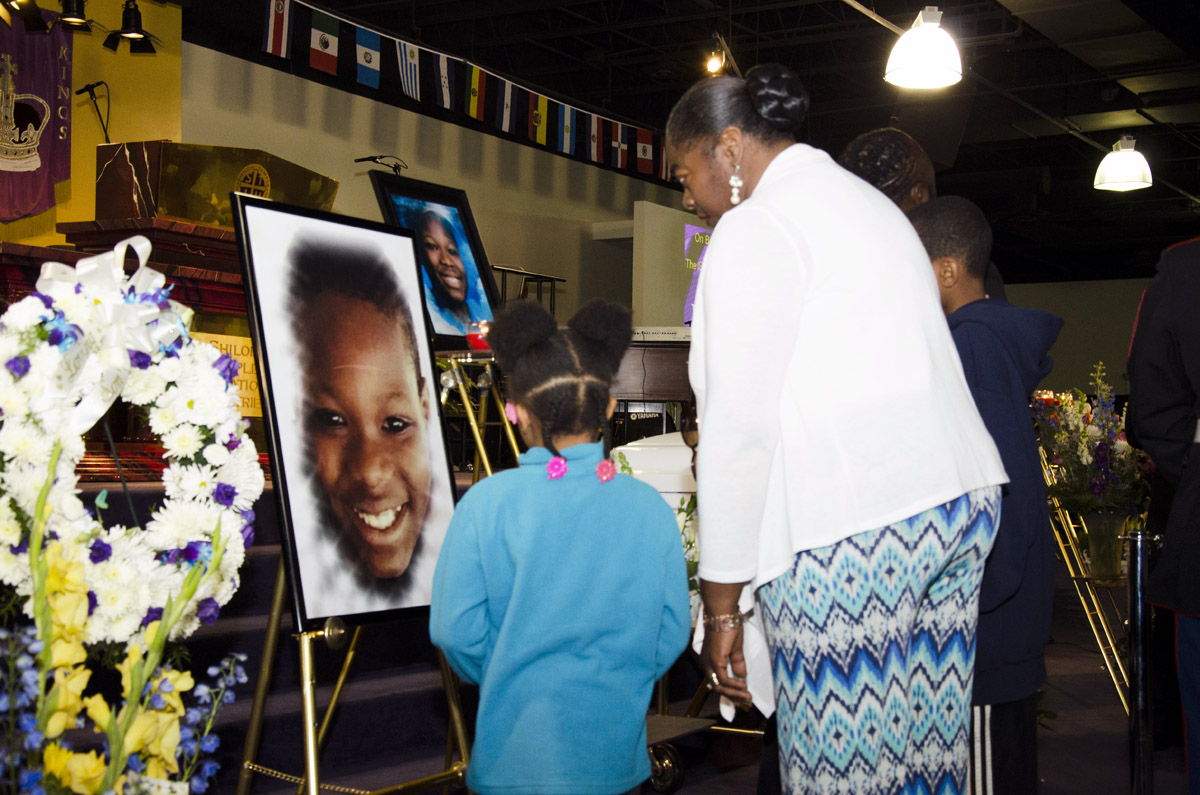
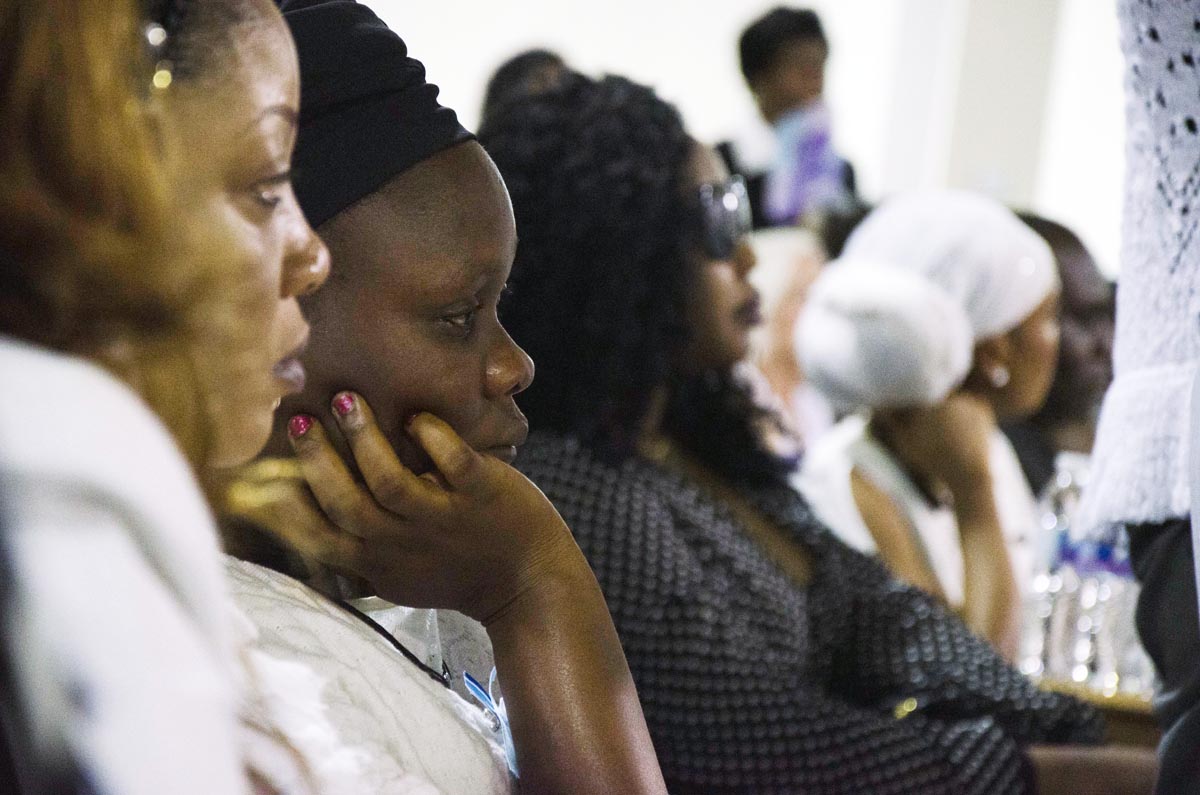
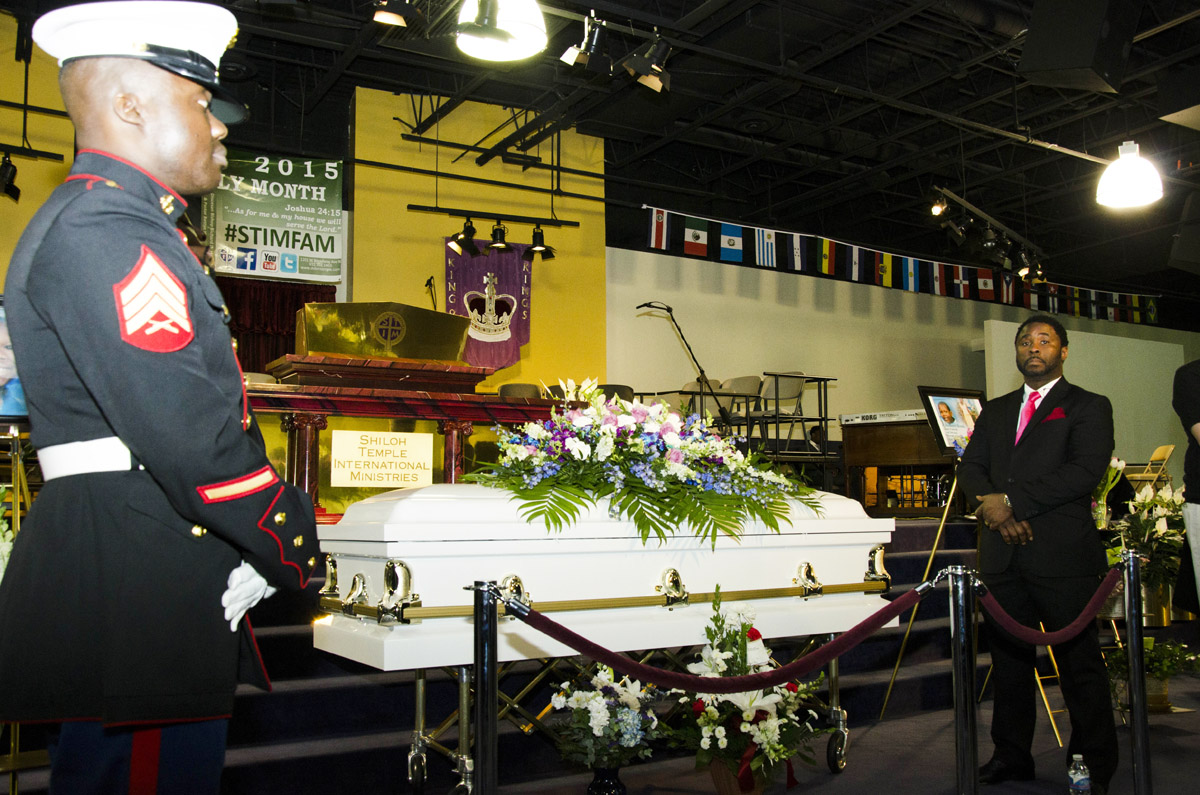
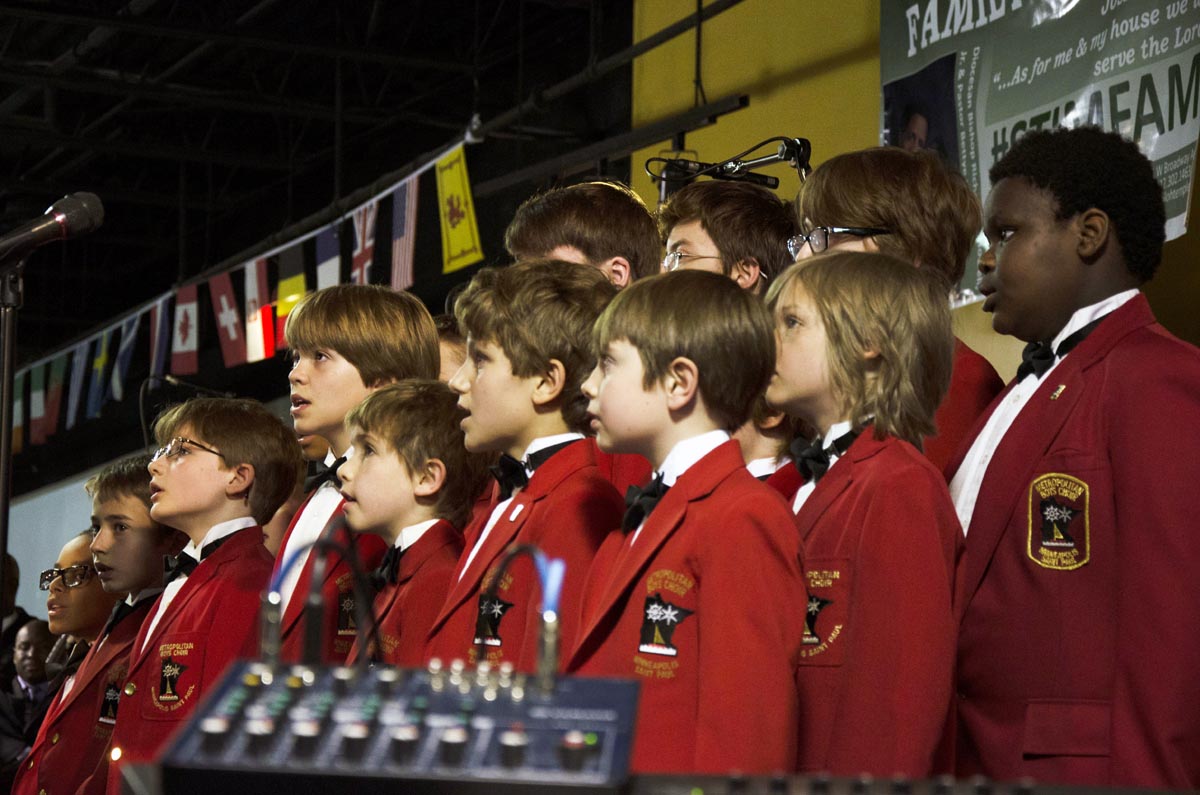
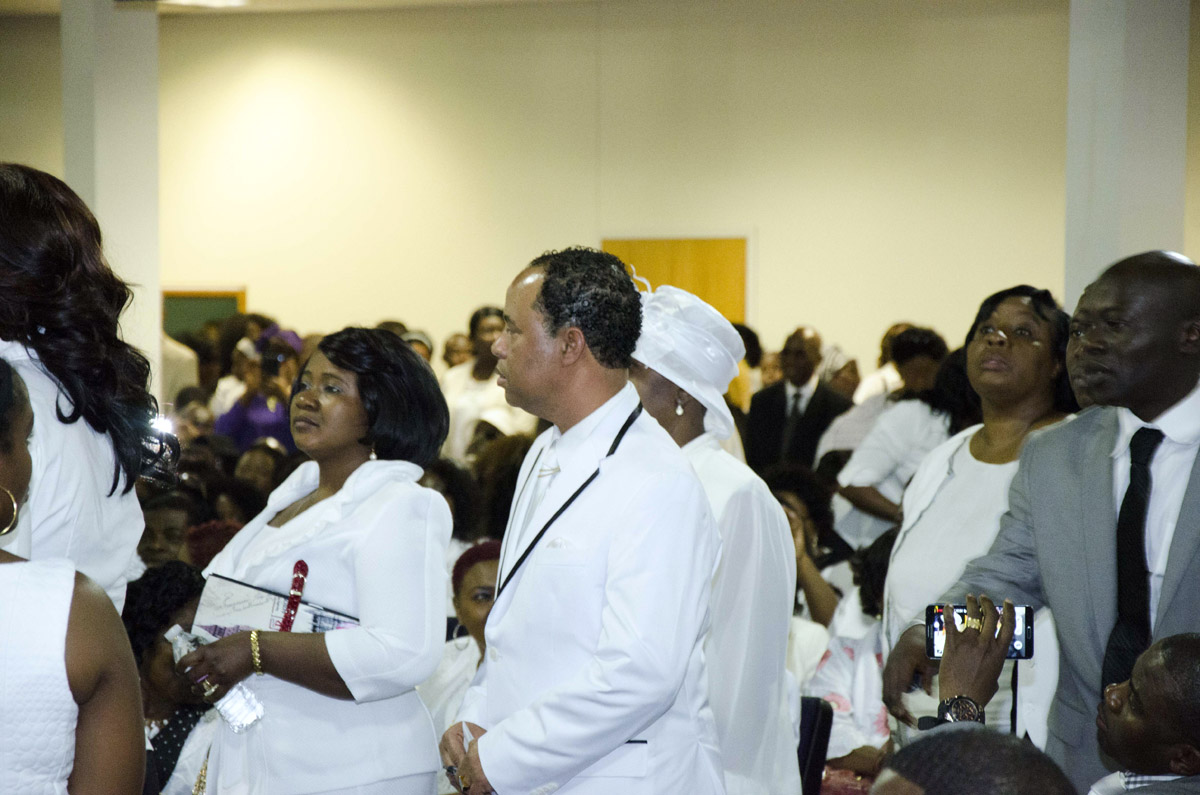
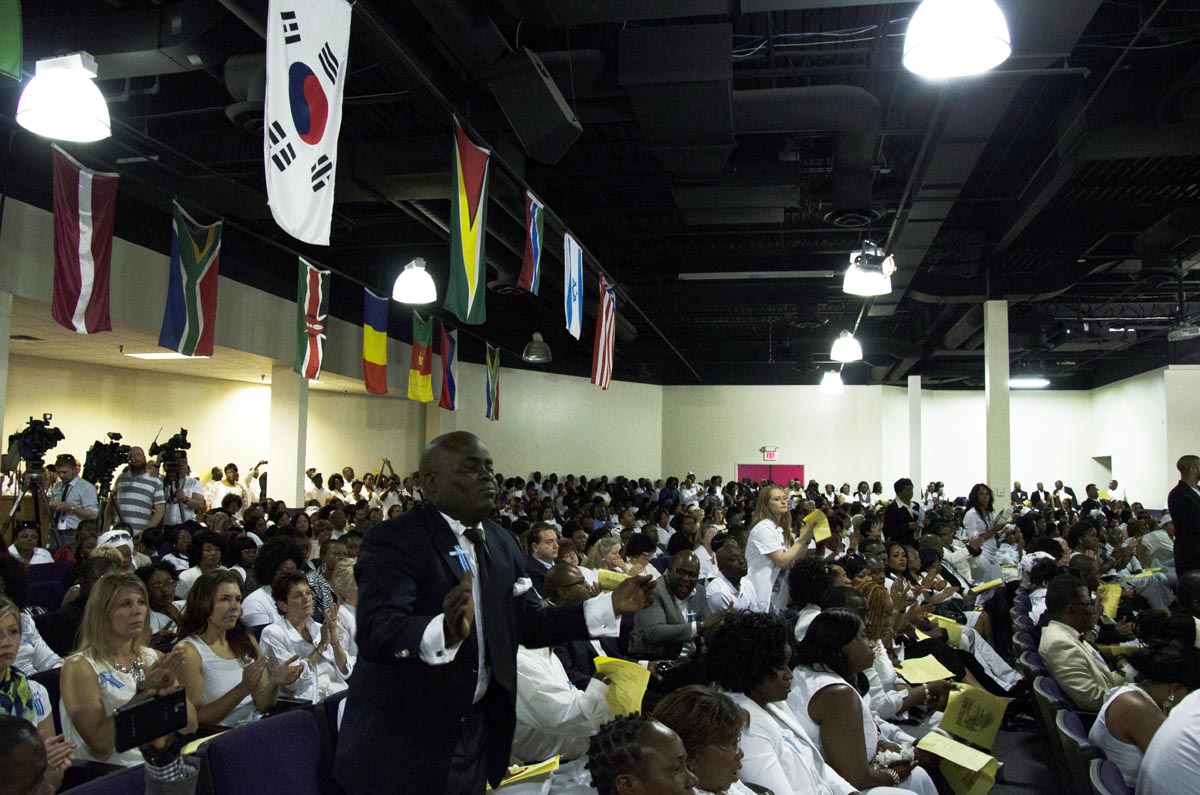
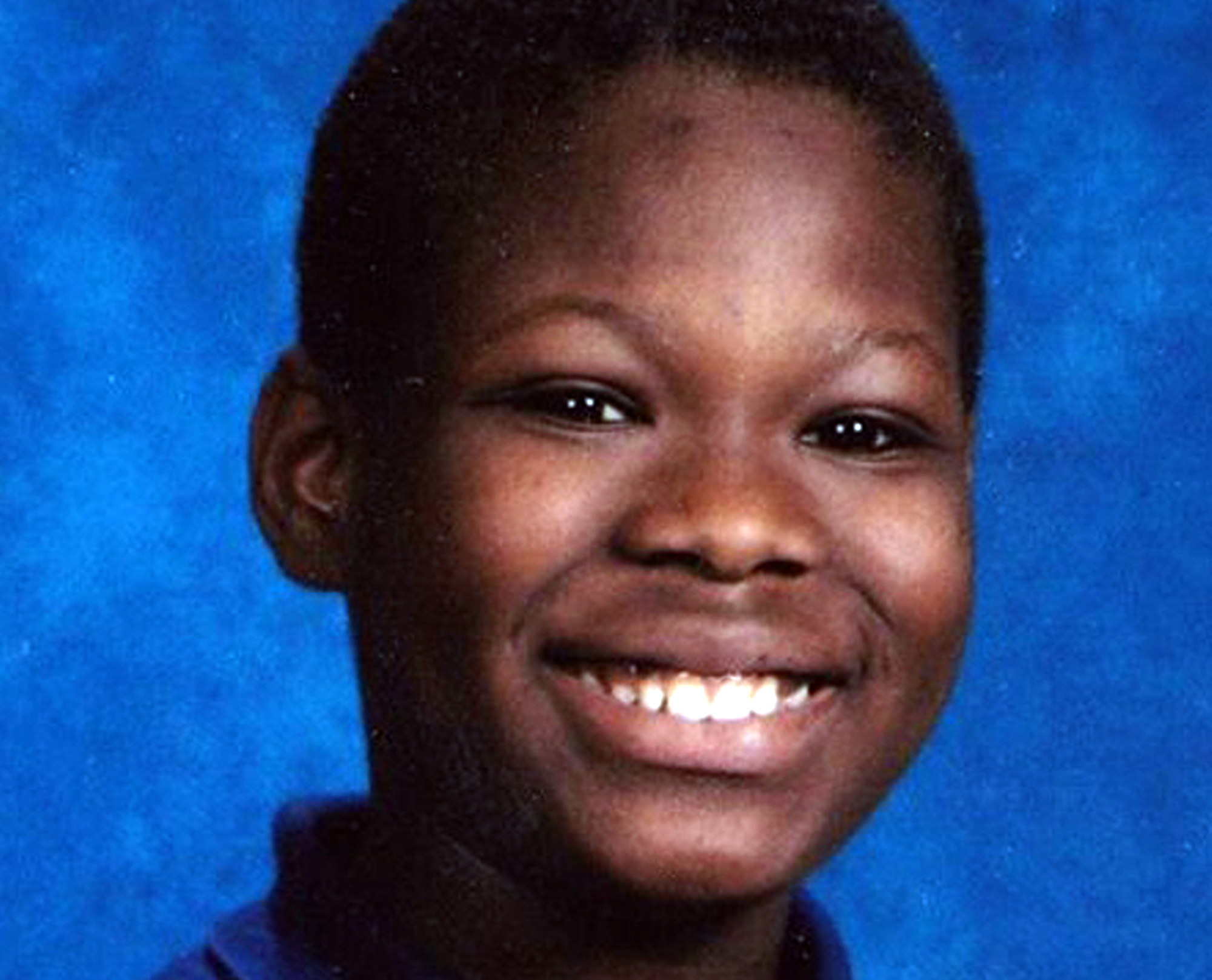
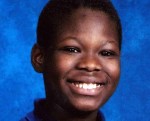
Mourners stare at the smiling photo of 10-year-old Barway Collins during an emotional funeral service at Shiloh Temple International Ministries in Minneapolis on May 2, 2015, exactly three weeks after his body was found on the Mississippi River on Saturday, April 11. His father, Pierre Collins, was taken into custody two days after Barway was found and charged with the murder of his son. Photo: Kaamil Haider/Mshale
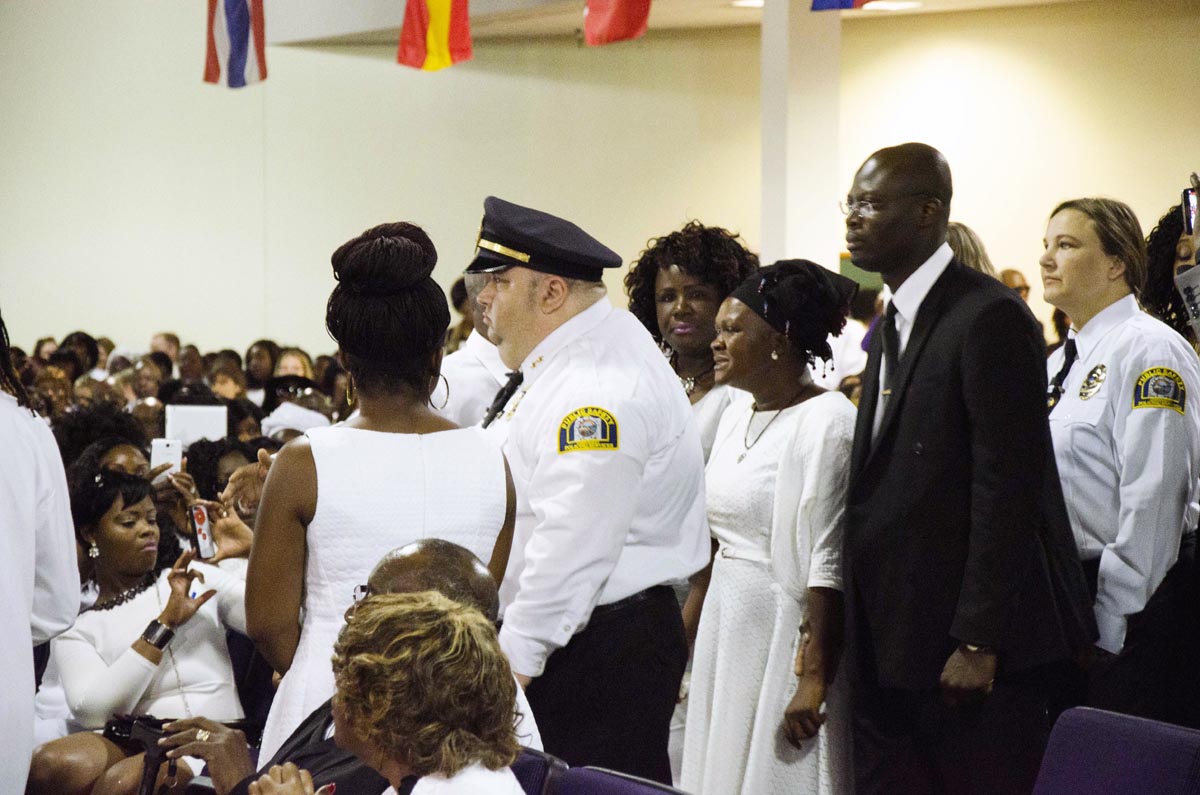
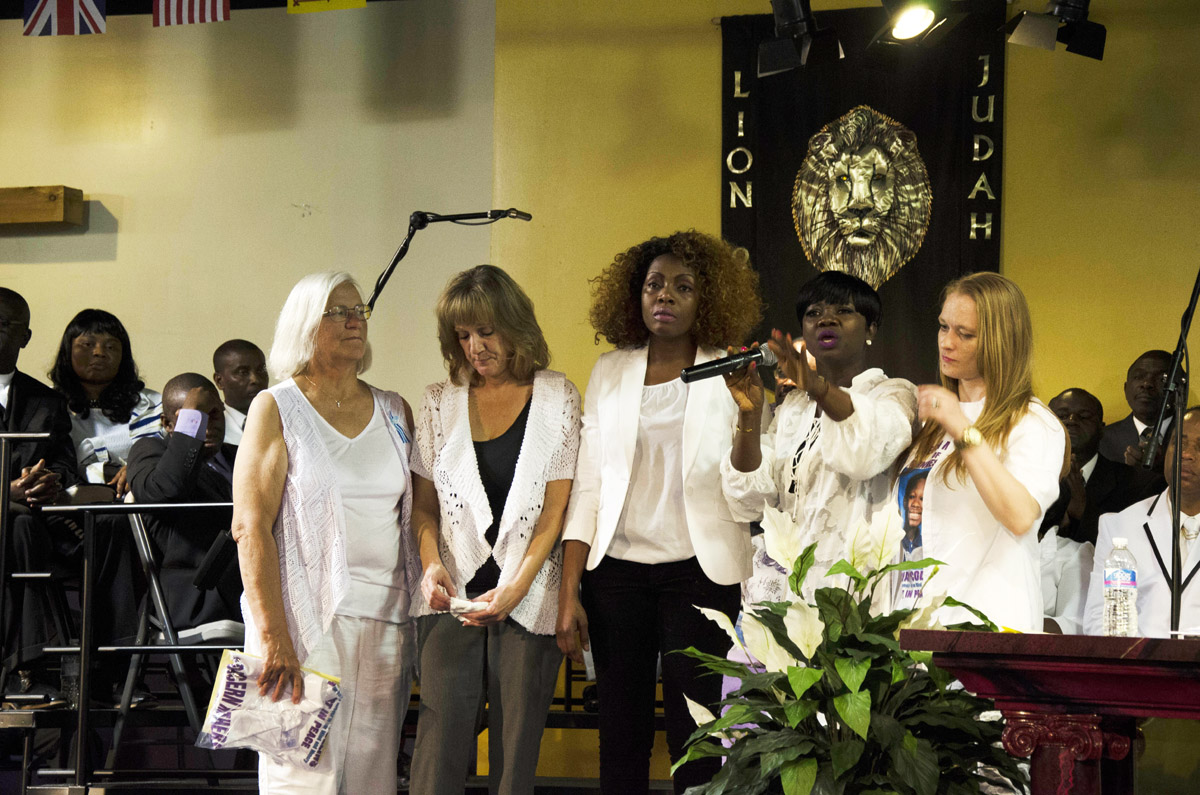
Mourners stare at the smiling photo of 10-year-old Barway Collins during an emotional funeral service at Shiloh Temple International Ministries in Minneapolis on May 2, 2015, exactly three weeks after his body was found on the Mississippi River on Saturday, April 11. His father, Pierre Collins, was taken into custody two days after Barway was found and charged with the murder of his son. Photo: Kaamil Haider/MshaleMourners stare at the smiling photo of 10-year-old Barway Collins during an emotional funeral service at Shiloh Temple International Ministries in Minneapolis on May 2, 2015, exactly three weeks after his body was found on the Mississippi River on Saturday, April 11. His father, Pierre Collins, was taken into custody two days after Barway was found and charged with the murder of his son. Photo: Kaamil Haider/MshaleSecurity and family escort Louise Karluah (in black headscarf), the biological mother to the late 10-year-old Barway Collins, into Shiloh Temple International Ministries in Minneapolis on May 2, 2015, for her son’s funeral. The funeral was exactly three weeks after his body was found on the Mississippi River on Saturday, April 11. Louise Karluah had just arrived from Liberia three days prior to the funeral Barway’s father, Pierre Collins, was taken into custody two days after Barway was found and charged with the murder of his son. Photo: Kaamil Haider/MshaleLouise Karluah, the biological mother to the late 10-year-old Barway Collins, holds her cheeks during an emotional funeral service at Shiloh Temple International Ministries in Minneapolis on May 2, 2015, exactly three weeks after his body was found on the Mississippi River on Saturday, April 11. Louise Karluah had just arrived from Liberia three days prior to the funeral Barway’s father, Pierre Collins, was taken into custody two days after Barway was found and charged with the murder of his son. Photo: Kaamil Haider/MshaleIt was full honors during an emotional funeral service at Shiloh Temple International Ministries in Minneapolis on May 2, 2015 for 10-year-old Barway Collins, exactly three weeks after his body was found on the Mississippi River on Saturday, April 11. His father, Pierre Collins, was taken into custody two days after Barway was found and charged with the murder of his son. Photo: Kaamil Haider/MshaleThe Metropolitan Boys Choir of Minneapolis/St. Paul sung during an emotional funeral service at Shiloh Temple International Ministries in Minneapolis for the late 10-year-old Barway Collins on May 2, 2015, exactly three weeks after his body was found on the Mississippi River on Saturday, April 11. His father, Pierre Collins, was taken into custody two days after Barway was found and charged with the murder of his son. Photo: Kaamil Haider/MshaleMourners, including Abdullah Kiatamba (right in grey suit) of African Immigrant Services, stream into Shiloh Temple International Ministries in Minneapolis on May 2, 2015 for the funeral of 10-year-old Barway Collins, exactly three weeks after his body was found on the Mississippi River on Saturday, April 11. His father, Pierre Collins, was taken into custody two days after Barway was found and charged with the murder of his son. Photo: Kaamil Haider/MshaleThe hundreds of mourners that showed up to mourn 10-year-old Barway Collins during an emotional funeral service at Shiloh Temple International Ministries in Minneapolis on May 2, 2015, exactly three weeks after his body was found on the Mississippi River on Saturday, April 11. His father, Pierre Collins, was taken into custody two days after Barway was found and charged with the murder of his son. Photo: Kaamil Haider/MshaleTeachers from 10-year-old Barway Collins’ school on stage talking about their experience with the late young boy during an emotional funeral service at Shiloh Temple International Ministries in Minneapolis on May 2, 2015, exactly three weeks after his body was found on the Mississippi River on Saturday, April 11. His father, Pierre Collins, was taken into custody two days after Barway was found and charged with the murder of his son. Photo: Kaamil Haider/MshaleA teacher from 10-year-old Barway Collins’ school shows a drawing the young Barway did at school during an emotional funeral service at Shiloh Temple International Ministries in Minneapolis on May 2, 2015, exactly three weeks after his body was found on the Mississippi River on Saturday, April 11. His father, Pierre Collins, was taken into custody two days after Barway was found and charged with the murder of his son. Photo: Kaamil Haider/Mshale
Editor’s note: This story first appeared in the Mshale print edition last week. Pick one for a more extensive photo spread of the funeral service.
MINNEAPOLIS – Well liked, kind, funny, infectious energy, these are just a few of the words used to describe 10 year old Barway Collins at his funeral service Saturday May 2, held at Shiloh Temple International Ministries. Hundreds of community members packed the church to lay him to rest leaving standing room only by the time ceremonies began; yet dozens more people continued to flow in over the next hour filling the front room and the hallways of the north Minneapolis church, as others gathered around the main hall’s doors trying to get a glimpse of the ceremonies. Outside the church, many more people stood in groups speaking and shaking hands. In this respect, Barway accomplished something few us will ever be able to do; uniting an entire community and people from all walks of life in honor of him.
It has been three weeks since Barway’s body was discovered in the Mississippi River after being reported missing on March 18. His body lay in a beautiful white casket at the front of the church, under guard, with a brief viewing at the beginning of the ceremony for family only. There was a visible police presence as well, underlining the ongoing friction over the boy’s disappearance as his father, Pierre Collins stands accused of involvement in his death. But all eyes and hearts for the day were on Barway whose face shined out from blown up photos at the front of the church, and could be seen on t-shirts and on programs throughout the crowd.
A close second in attention was his biological mother, Louise Karluah. Her presence at her son’s funeral was the result of concerted efforts by the Liberian Minnesota community and others to get her to Minnesota as quickly as possible. Karluah, who had not seen her son in 4 years, still lives in Liberia and in the face of tragedy, the community had agreed on two things: one, that Barway should have a funeral befitting of his innocence, and two, that a mother should be allowed to lay her child to rest. Through fundraising efforts led by groups within the community, enough money was raised to fly Karluah to the U.S and cover Barway’s funeral expenses.
Many of the speakers thanked the community for coming together at such a difficult time, each of them stressing the need for unity and support for Barway’s remaining family, particularly his biological mother and his step-mother: both of whom had reached out to each other in the last few days. Bishop Richard Howell Jr. in his welcoming remarks asked for everyone to “put aside our differences and fix our eyes on the smile of Barway,” before handing the ceremonies over to Pastor Harding Smith and Pastor Alexander Collins.
A succession of people involved in Barway’s life as community members, teachers, friends, family, and in the efforts to find him after he went missing all took to the podium, painting the life of a 10 year old boy who had touched many people’s hearts. Representatives from local community organizations spoke about the efforts to find Barway after he was went missing, and how the groups had grown stronger from their engagement around him, stressing the need to continue to be united and build a lasting memory for the slain boy and his mother who will be returning to Liberia at the end of her 30 day visa.
One of the speakers, a woman from the Organization for Liberia Women in Minnesota talked about how a “child sent to America is a big thing,” and all the promise that brings for many Africans for whom America represents a land of opportunity. The tragedy of Barway’s loss at such a young age, had taken from him all the possibilities of doing great things for his home country and the U.S. Cheryl Ray, principal of Evergreen Park Elementary School where Barway attended first 1st through 4th grade also spoke to the crowd on behalf of his teachers and schoolmates, some of whom were in attendance. She spoke of an illustrious boy who had once written in a take home journal, “I want to be a teacher when I’m big,” and who had “so many friends, many staff knew him, he was well known, well liked, he had this infectious energy that everybody around him noticed.” Adding, “He was kind, he was funny, and he had that big smile that everyone will remember.”
One of Barway’s friends, a young boy around 7 years old whom Barway had met when he first arrived in America was invited on stage to speak. Accompanied by his mother and sister, his eyes were downcast as his older sister took to the microphone and stated, “My brother cannot speak right now because he is depressed, (and) so I will be speaking on behalf of my mother and my brother.” In an emotional speech she talked of the friendship between the two boys and how Barway had taken care of her little brother making sure he had lunches and had done his homework after school. His loss she said, was like losing a brother.
Hennepin County Sheriff Rich Stanek who had been involved in the search to find Barway thanked the family and community for their relentless efforts to find him, “I wanted to say thank you to the moms, the friends, (and) the mothers who searched for Barway tirelessly, relentlessly. You never gave up hope. You never gave up the quest for the truth. Thank you for all your effort.” Governor Mark Dayton who was scheduled to attend the event, but could not make it sent his regrets to the family, while a representative from Senator Amy Klobuchar’s office, took to the podium letting them know that Senator Klobuchar is “a friend of the Liberian community.” The representative, Siad Ali, a Somali American, addressed the crowd as an “African brother”, assuring them that the entire African community was grieving with them.
As the ceremonies came to an end, the Collins family and the Karluah family each took to the stage separately for an emotional send off. Yamah Collins, Pierre’s wife and Barway’s step-mother appeared on stage with the Collins family but did not speak. An uncle, Telma Collins spoke on behalf of the family, saying, “Like any family you want to see a child live to his full potential. From all indications, what you have heard here today, the amount of people involved in his life for the past two months, proves that Barway was going to be a great person. It took Barway just 10 years to win the hearts of all of you, and the whole of the country and the world as well.” The uncle also urged the crowd to “pray for us,” before presenting a blanket they had made in his honor to the Karluah family.
The Karluah family took to the stage next, with Louise absent, though she could be heard wailing in the crowd over the loss of her son. Her brother, Emmanuel Monluo, spoke on behalf of the family in an impassioned speech that gave a glimpse into the family’s pain and anger over his death, “Barway was trusted to a person that was supposed to give him the maximum protection. That person has been accused. Get me very clearly, that person has been accused. But I want to tell you, the Karluah family is bleeding. We are bleeding.” He thanked everyone who had worked to bring Louise to Minnesota, noting how Barway had brought the entire African community together and thanking the community for all their work. Above all, he asked for continued support for the family and called for unity, the theme of the day, and the lasting legacy of a brilliant, smiling boy whose life ended too soon.
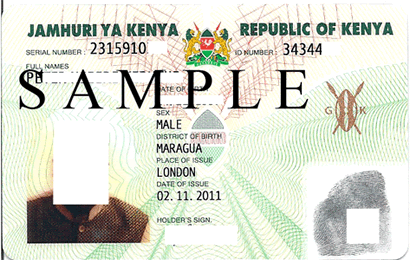
The Embassy of Kenya in Washington DC staff will be in Minnesota on June 6 and June 7, 2015 during Madaraka Day celebrations and will accept applications from Kenyans for the Kenyan national identity cards.
The Embassy of Kenya in Washington DC staff will be in Minnesota on June 6 and June 7, 2015 during Madaraka Day celebrations and will accept applications from Kenyans for the Kenyan national identity cards.The Embassy of Kenya in Washington DC staff will be in Minnesota on June 6 and June 7, 2015 during Madaraka Day celebrations and will accept applications from Kenyans for the Kenyan national identity cards.
A change in policy by the Kenya government means some of its select embassies have the capacity to issue the country’s national identity cards. Its large Diaspora no longer has to travel back to the homeland to obtain the card, a shift many in the Diaspora have applauded. The change allows Kenyan embassy personnel in key countries like the United States to issue the valued identity cards to eligible Kenyans applying for them.
The process for obtaining the identity cards differs significantly from that of a Kenyan passport. For the identity cards, Kenyans in the Diaspora that wish to apply for one while abroad needs to appear in person before a consular officer.
To facilitate the process for Kenyans resident in the US, the Kenya embassy in Washington has taken to the road to take applications from the Diaspora. The eagerly awaited exercise will take place in Minnesota on June 6 and 7 during Madaraka Day celebrations, according to Geoffrey Gichana, chairman of this year’s Madaraka Day committee in the state.
“We have worked with the embassy and the modalities on the ground are in place to make this exercise a success,” Gichana said. “We encourage all those interested in the IDs to do their homework ahead of time by going to the embassy website to see what they might need to bring to minimize frustration, we want all those who want this thing to get it, (I) hope Mshale can link to the embassy ID page to assist our people.”
In October 2014, the Kenya government announced that starting February of this year, Kenyans can start registering for the new digital national identity cards. Back then Mwende Gatabaki, the director-general of Kenya Citizens and Foreign Nationals Management Service (KCFNMS) was quoted as saying in Nairobi that “We will be issuing the first new ID cards to qualified Kenyans beginning October 2015. In December of the same year, we will stop issuing the old IDs and the digital ones will become the way of life.”
The new ID described by Gatabaki is a sort of ‘smartcard’ that will carry information relevant to the taxing authorities, the registrar of motor vehicles as well as the registrar of persons among others.
Why you need the Kenyan ID
Most in the Kenyan Diaspora are frequent visitors to the homeland whether for business or leisure. The Kenyan Diaspora in North America was responsible for almost 50% of the $US1.42 billion remitted to Kenya in 2014 by the global Kenyan Diaspora through traceable financial channels.
It is much safer to carry the national ID than a passport while visiting Kenya as it calls less attention to one.
Conducting business
The national ID is necessary for conducting certain kinds of business such as in dealings with the Kenya Revenue Authority (KRA), the country’s equivalent of the Internal Revenue Service. KRA does not accept passports when one needs to apply for the much valued PIN (Personal Identification Number) that is necessary in transacting most business in the country.
Minnesota’s turn
On Saturday June 6 and Sunday June 7, Kenya’s ambassador to the United States, Robinson Njeru Githae who presented his credentials to president Obama last November will make his first visit to Minnesota. Traveling with him will be the immigration staff at the embassy that will take the Kenyan identity card applications.
Minnesota was officially designated by former ambassador Oginga Ogego in 2007 as the embassy’s official venue for the celebration of the country’s Madaraka Day in the United States. His successor, Ambassador Odembo, continued the tradition and in December 2014 shortly after taking over in Washington, Ambassador Githae pledged to maintain the same.
How to get the Kenyan ID (you might need some documents from Kenya)
Requirements for applying for the Kenyan national identity card are listed on the Kenya embassy website at: https://www.kenyaembassy.com/id.html.
Key items needed are a copy of one’s birth certificate, copy of a valid Kenyan passport, copy of Kenyan passport and/or Identity Card of either parent of the applicant.
Alternative documentation, mostly for naturalized Kenyans, includes a copy of their naturalization certificate. A copy of your unexpired Kenyan passport is still required if using this method.
ID Application venues for June 6 & 7
Embassy staff will take applications from Kenyans in Minnesota during the Madaraka Day celebrations that Ambassador Githae will be officiating. The application form and the full requirements are in the Kenya embassy website at https://www.kenyaembassy.com/id.html to get your paperwork ready.
The following are the two venues where they will be accepting applications for the IDs.
Saturday, June 6, 2015 10:00 A.M. to 5:00 P.M.
Location for Saturday is: 7600 Boone Ave., Brooklyn Park, MN 55428
Sunday, June 7, 2015 10:00 A.M. to 4:00 P.M. (During the Madaraka Day Family Celebration at the park that will feature nyama choma and other Kenyan food).
Location for Sunday is: West Bush Lake Park, Shelter # 2, 95th St & West Bush Lake Road, Bloomington, MN 55438
Text KENYA to 24587 to be informed of late breaking news concerning this event.
Barway Collins will be buried on Saturday, may 2, 2015 after his biological mother arrived in Minnesota this week.
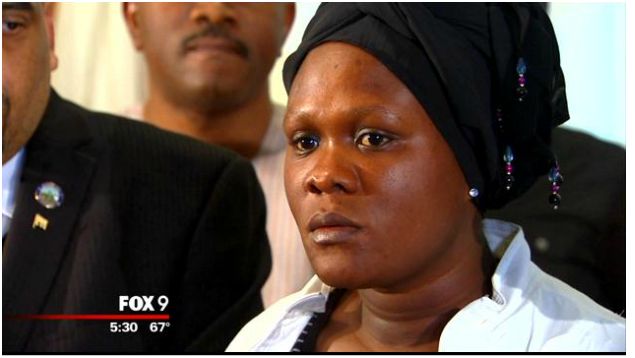
Barway Collins will be buried on Saturday, may 2, 2015 after his biological mother arrived in Minnesota this week.Barway Collins will be buried on Saturday, may 2, 2015 after his biological mother arrived in Minnesota this week.Louise Karluah, Barway Collins’ biological mother addressing the media. She arrived in Minnesota this week. Barway’s father is in jail facing charges for his murder. Photo: Fox News Screenshot
The funeral for slain youth Barway Collins will take place tomorrow Saturday, May 2 2015 according to Mamadee Sesay, Executive Director, Organization of Liberians in Minnesota (OLM) when he released the expense report for the activities of the committee leading up to tomorrow’s funeral in the interest of “transparency.”
The funeral was postponed at the urging of the community to allow for Barway’s biological mother to make it to Minnesota from Liberia. Louise Karluah, his mother, was given a humanitarian visa by the US embassy in Monrovia following intervention from United States Senator Amy Klobuchar’s office. She arrived on Wednesday and this is her first time in the country. She last saw her son four years ago when she sent him to live with his father, Pierre Collins, who is in custody, charged by Hennepin County for his murder.
Wear White
According to details released by OLM, the funeral will be at Shiloh Temple International Ministries located at 1201 W. Broadway Ave Minneapolis, MN 55411.
Richard Moody and 2015 Dandy Adetomiwa Gbadebo at the Dandy Book launch held at Coup d'Etat in Minneapolis. Photo: Kari Mugo/Mshale
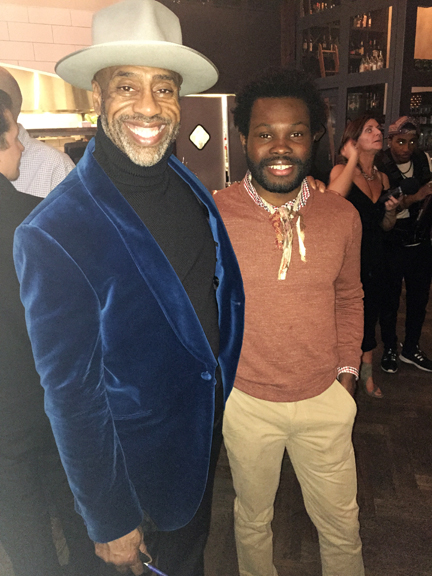
Richard Moody and 2015 Dandy Adetomiwa Gbadebo at the Dandy Book launch held at Coup d'Etat in Minneapolis. Photo: Kari Mugo/MshaleRichard Moody and 2015 Dandy Adetomiwa Gbadebo at the Dandy Book launch held at Coup d’Etat in Minneapolis. Photo: Kari Mugo/MshaleAt the 2015 Dandies Project launch at Coup d’Etat in Minneapolis were 2015 Dandy Darren Hayes, 2014 Dandy Amara Kamara and Mohammed Bangura. Photo: Kari Mugo/MshaleSome of the attendees at the 2015 Dandy Project launch in Minneapolis held at Coup d’Etat. Photo: Kari Mugo/MshaleThe cavernous Coup d’Etat in Uptown Minneapolis played host to the 2015 Dandy Project. Photo: Kari Mugo/Mshale
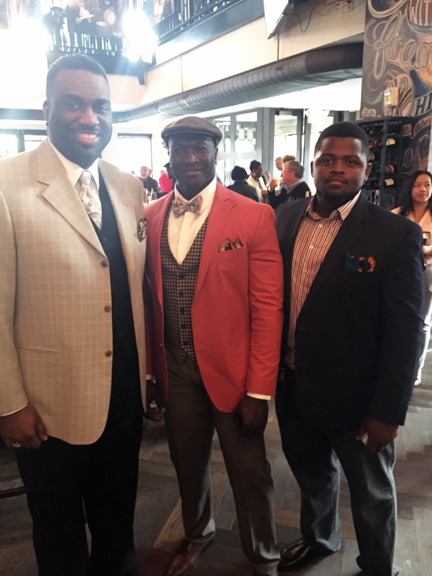
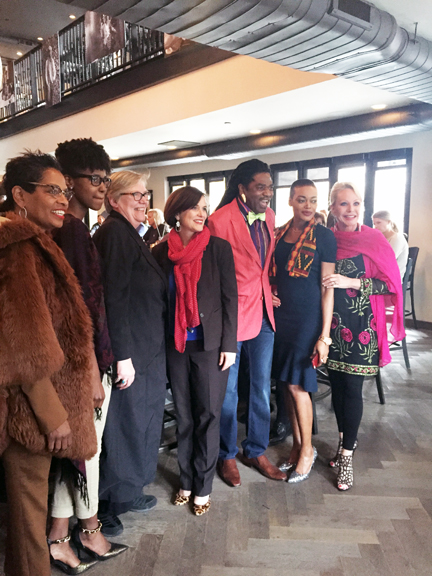
Spring comes in many colors in Minnesota and The Dandies Project latest book launch at Coup d’Etat was truly a spring affair not to be missed. The event brought together members of the art, fashion and business world in a one of a kind networking event at one of Uptown’s new hottest spots. The 2015 Dandies, along with some 2014 Dandies, were also on hand. Many of whom had brought their equally fashionable spouses. While there was no formal agenda, there was plenty to see, eat and do as the event occupied both floors of Coup d’Etat, with the magnanimous back dining room dedicated to a video streaming of interviews with the 2015 Dandies.
The 2015 Dandies Book, on sale for $30, was available to peruse at the front door, and the Dandy Cocktail which featured a delightful mix of bourbon matched with a honey profile can only be described as liquid gold. Host Richard Moody, of IAmMoody productions, whose brainchild the project is, was at once present everywhere with a hearty smile and a ready hand; eager to introduce the Twin Cities professional community of color to each other, in the hopes of building lasting connections.
I managed to sneak in an interview with Richard, and asked about his inspiration for the project, “The inspiration was working with a lot of young men of color and they all didn’t know each other, and I worked with them in freelance or fashion, or music, or education. I have my successes and I have people who can call me and ask if I can be at this event or the other, and I wanted to give it to the next generation. I wanted Minnesotans to call the next young brothers of color and go, “We need you to host, we need you to support this event, we need you to be on this board.” Then I realized, Minnesotans don’t know these young people and they didn’t know how to get in.”
Richard cites the need for a new generation of movers and doers within the Twin Cities community of color as his initial inspiration, which then merged with the men’s existing style, “They were all well dressed, bow-ties and ties. They were in their 20’s and 30’s, and they obviously were raised right, from good stock and I want to be around ‘good stock’.” While there is a resurgence of ‘dandy-ism’ within mainstream culture, for Richard his project “is about more than dress. It’s about education.” Richard hopes to inspire a new generation of young men of color to aspire for professional and personal success while dressing the part. He also sees the Dandies Project becoming more global in the future and spoke of upcoming collaborations with national and international artists from New York, Chicago, and continental Africa.
This year and last year’s Dandies however, already reflect Richard’s global vision; with Dandies from Nigeria, Liberia and Angola featured in the book. I spoke with 2014 Dandy, Amara Kamara, who was dressed the part, in a flat cap, bow-tie and salmon colored blazer, about his involvement in the project. Kamara, a fitness instructor from Liberia had nothing but praise for it, “There’s nothing I could have done better to give back to my community than being a part of this. It means a lot to me.” When asked what being a Dandy involves, he stated, “It’s about leadership, about presentation, to exemplify what you’re wearing as a person.”
Kamara also spoke of growing up in Liberia and watching African leaders who were well dressed, along with black American thought leaders like Malcom X and Martin Luther King, “I wanted to look like that. Their clothes spoke before they even opened their mouths. As an elder, what you portray is what the kids do, so we want to change that perception and especially the perception of the clothing of a black man and who we are as a person. We are representing our community and doing it with a sense of style. ”
Kamara’s mentee, and dandy-in-the-making, Mohammed Bangura, who I also interviewed agreed with this, “We don’t really have too many strong black males presently, or strong black images that youth can follow. So when you see that, you kind of want to gravitate towards it and see what it’s about.” For 2015 Dandy, jewelry maker, and Angola native, Francelino Henrique Zau, the appeal of being a dandy is about fashion, “When I came here to America, I saw all the people dressed so nicely and I said, “That’s what I want to do, that’s the way I want to dress.” Because when you show people who you are, people respect you more if you know how to pose yourself right.”
It was easy to get wrapped up in conversations about representation of black men in media, and the larger goals and visions of each Dandy and the project itself. I had to remind myself that the reason we were all here was for the book, which photographer Nick Gallop has been instrumental in producing both years. After a meeting with Richard Moody at Handsome Cycles, Gallop agreed to be part of the project and volunteered his studio and time for it. Gallop notes that while the first book featured in-studio photos, they wanted the 2015 book to show the Dandies in “their native environment,” outdoors and with a vintage feel to it. It was Gallop’s idea to take the photos from color to black and white this year, “I think it’s huge. It goes along with the whole idea of the project; to see past somebody’s skin color, and in this way, you take that out of the equation. So you’re seeing the person, not their skin color.”
Gallop and Moody are already looking forward to next year’s project and book feature, which they hope to launch in February 2016 in time for Black History Month. Interested participants would do best to get a copy of last year’s and this year’s book for style inspiration. The 2015 Dandies will now sit on The Dandies Project board and are responsible for vetting next year’s cohort, along with the charity to be supported. Calls for 2016 Dandies go out this fall, so keep your ears peeled and your style flawless.
Ambassador Oliver Wonekha of Uganda will be in the Twin Cities May 7, 2015 for a business forum and an address to the annual Books for Africa luncheon.
Ambassador Oliver Wonekha of Uganda will be in the Twin Cities May 7, 2015 for a business forum and an address to the annual Books for Africa luncheon.Ambassador Oliver Wonekha of Uganda will be in the Twin Cities May 7, 2015 for a business forum and an address to the annual Books for Africa luncheon.
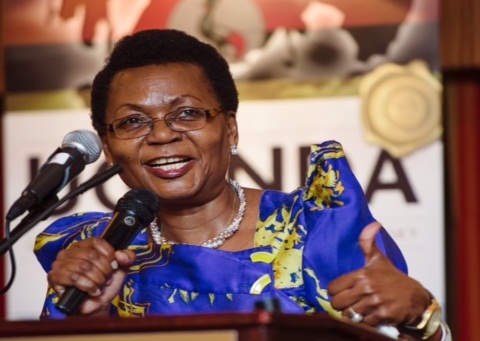
Uganda’s Ambassador to the United States, Oliver Wonekha and the United States Deputy Assistant Secretary of State for African Affairs at a Minnesota Trade Office organized Africa Forum titled Business and Political Trends in Africa on wednesday, May 7 at the Hubert H. Humphrey School at the University of Minnesota. The forum is hosted in partnership with Books for Africa.
Times are listed as 2:30 to 5:30pm.
The two will be joined by Eric Schwartz, Dean of Humphrey School of Public Affairs, University of Minnesota and Carlson School of Management Sri Zaheer.
U.S. trade to and from Africa has tripled over the past decade and the U.S. exported $22.6 billion in goods and services to the region last year. A recent commentary by Mshale founder Tom Gitaa on the Twin Cities leading metro daily on why the state’s business community needs to do ore trade with Africa has generated a lot of discussion.
Just last week the Carlson School of Management hosted a business conference focused on the continent.
When: Thursday, May 7, 2015, 2:30 to 5:30 p.m. A Reception will follow. Where: Cowles Auditorium, Hubert H. Humphrey School Conference Center, University of Minnesota, 301 – 19th Avenue South, Minneapolis Fees: $10, or $5 for students–must show a Student ID. Please pre-register to ensure being included in the catering count.
The fee includes refreshments and the reception.