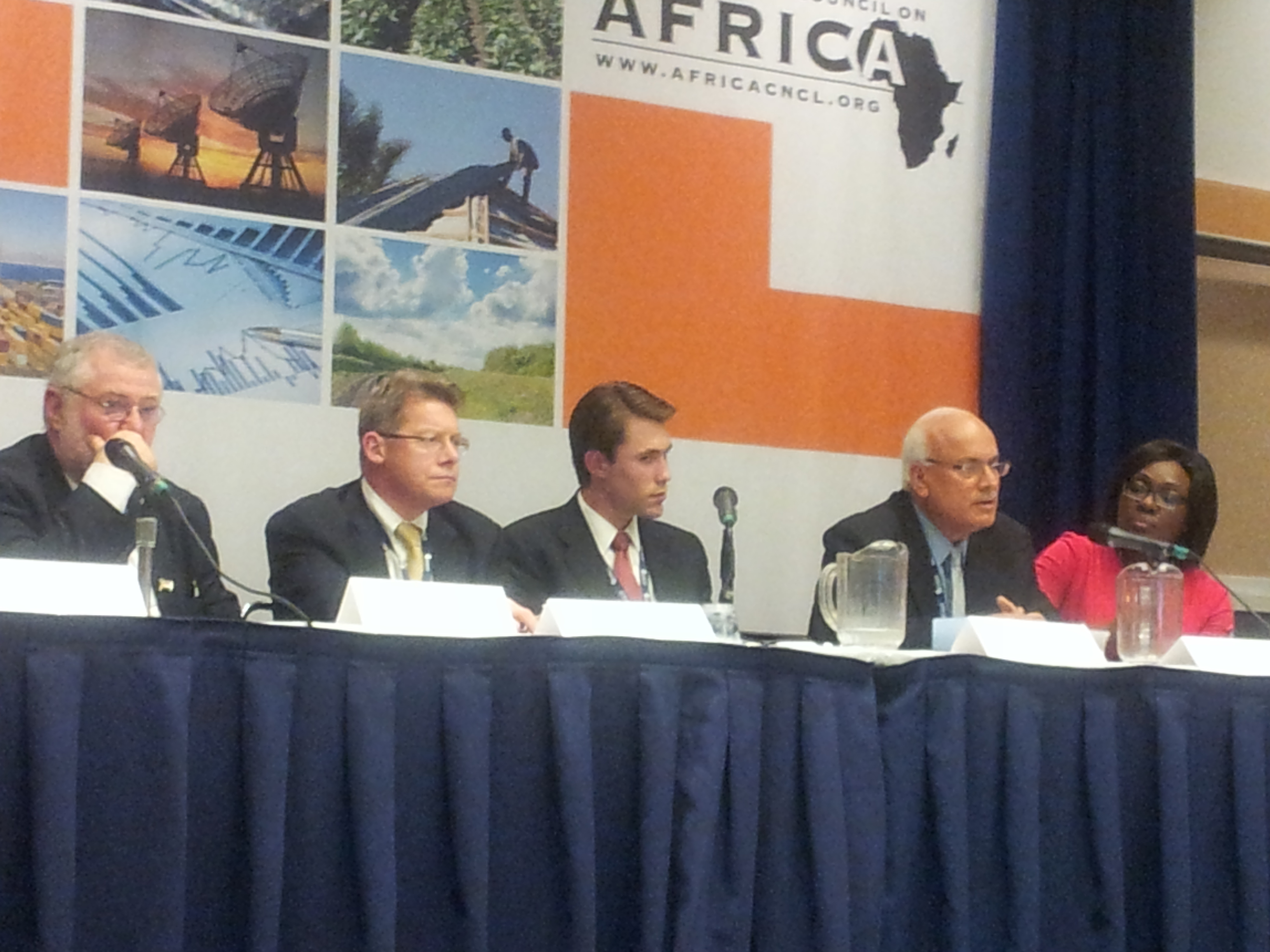
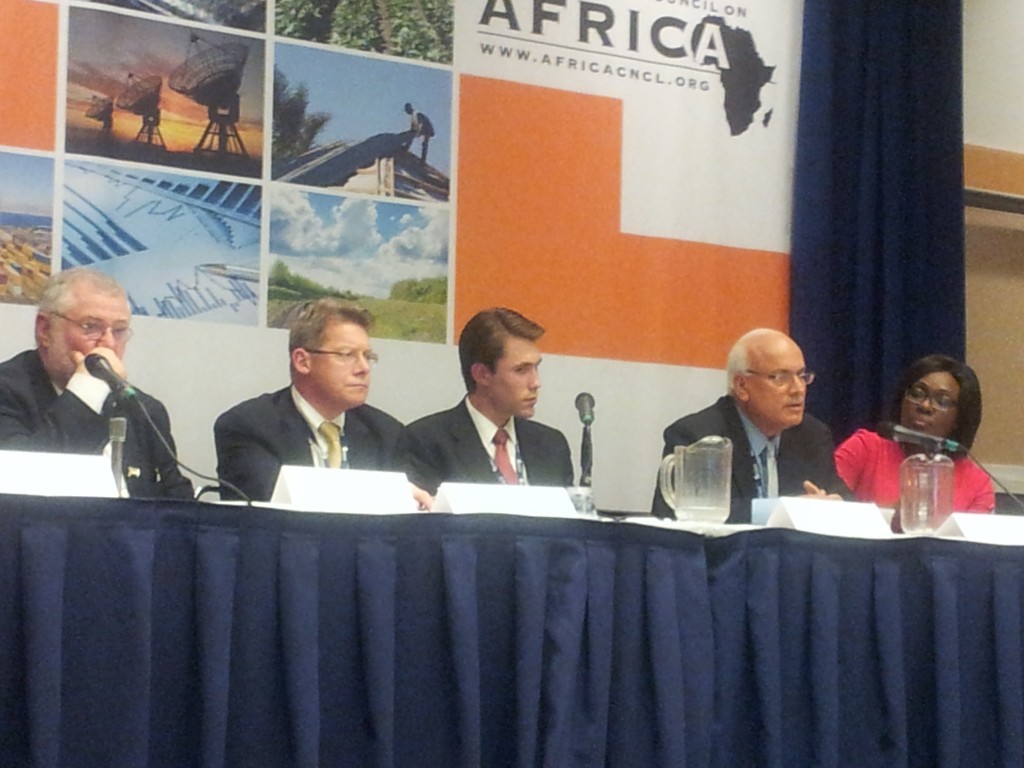
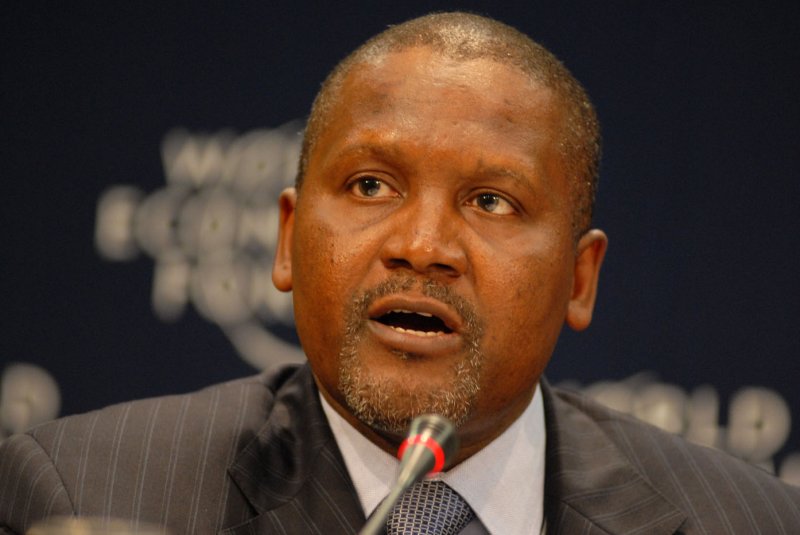
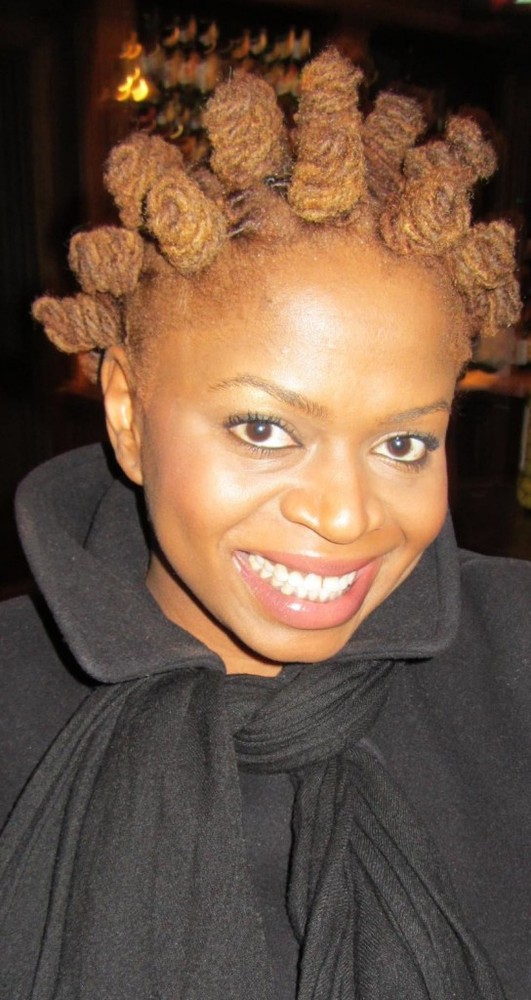
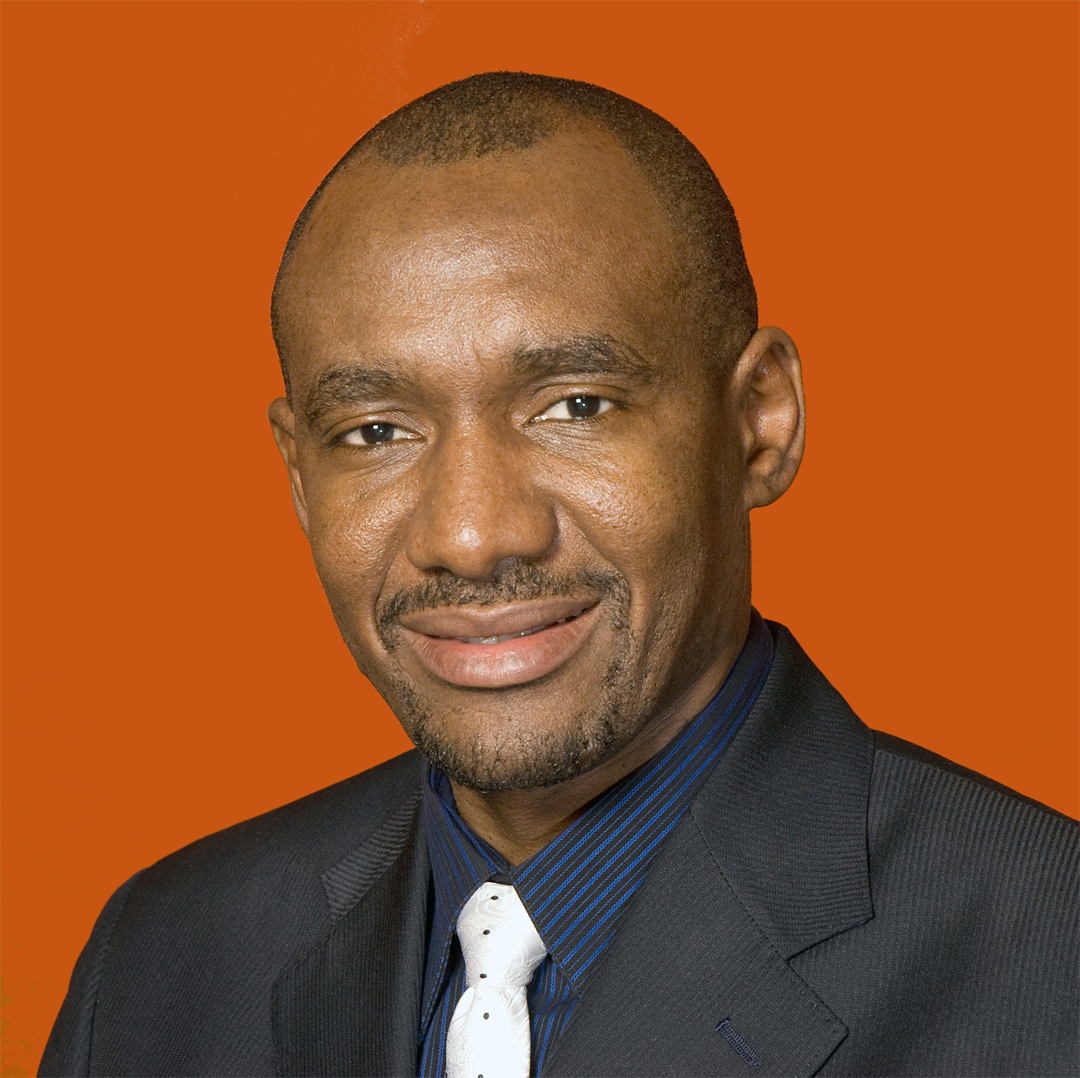
At the Building Capacity session were Calle Schlettwein, Minister of Trade and Industry (Namibia), Dr Robert Kirk International Development Group (IDG), Rajeev Arora of African Cotton & Textile Industries Federation, David Blumberg of Blumberg Capital Partners and Mawuena Trebarh, CEO of the Ghana Investment Promotion Centre. Photo: Tom Gitaa/Mshale
At the Building Capacity session were Calle Schlettwein, Minister of Trade and Industry (Namibia), Dr Robert Kirk International Development Group (IDG), Rajeev Arora of African Cotton & Textile Industries Federation, David Blumberg of Blumberg Capital Partners and Mawuena Trebarh, CEO of the Ghana Investment Promotion Centre. Photo: Tom Gitaa/MshaleAt the 'Building Capacity" session were Calle Schlettwein, Minister of Trade and Industry (Namibia), Dr. Robert Kirk International Development Group (IDG), Rajeev Arora of African Cotton & Textile Industries Federation, David Blumberg of Blumberg Capital Partners and Mawuena Trebarh, CEO of the Ghana Investment Promotion Centre. Photo: Tom Gitaa/Mshale
CHICAGO – An undercurrent of China’s influence in Africa has become a topic of intense conversation at the 9th biennial US-Africa business summit which kicked off formally this morning. The conference in the past has attracted the A-list of US companies operating in Africa and top African companies and this year is no exception. The conference has attracted over 1,000 government and business leaders from both the US and Africa. It is organized by the DC-based The Corporate Council on Africa (CCA), a non-profit that promotes business and investment between the United States and Africa.
Africa’s richest man, Aliko Dangote’s company, the Dangote Group is one of three “Platinum” sponsors alongside Atlantic Energy and Symbion Power.
China which has committed close to $75 billion on aid and development projects in the last ten years (according to aiddata.org) in its bid to secure what many perceive to be a strategy to solidify political and economic influence on the continent has become an obsession with the US business community which has been sounding the alarm recently. President Obama’s trip to four African countries early in the summer was seen as a “catch-up” effort.
Speaking at a panel on “Capacity Building” David Blumberg, Vice President and Director at Blumberg Capital Partners said the “American way” of doing business which focuses on social responsibility can act as a counter weight to the rapidly growing influence of china in Africa. “By deliberately transferring skills to the locals, we can win a lot of favor with them (locals)”, said Blumberg, which in turn can make doing business in Africa easier, he added. His company provides integrated food safety and security storage systems and is active in the agricultural sector in Africa. In July, its subsidiary, Blumberg Grain committed in cooperation with the government of Nigeria to a $250 million investment program in the Nigerian agriculture sector with the first phase of the project creating 1,000 jobs. Mr. Blumberg seemed to be drawing a contrast to the Chinese who bring their own labor including for the most menial of tasks thus denying employment opportunities for local Africans.
At most of the sessions at the summit, china invariably comes up. At a “Doing business in South Africa” session, South Africa’s ambassador to the United States, Ebrahim Rasool, lamented how lean EXIM Bank’s portfolio in Africa is. EXIM is the lending arm of the US government that provides loans to US companies doing business overseas.”United States can’t afford to pull back from Africa at this moment of its greatest potential”, Rasool said as he responded to a questioner regarding the anemic direct investments coming from US companies into Africa.
This is the first time the summit is being held outside of Washington, DC when held in the United States as it has been hosted in South Africa previously. Stephen Hayes, the CCA President and CEO said Illinois US Senator Dick Durbin championed the idea to host the conference in Chicago. “(Chicago) enables CCA to connect with hundreds of Midwestern companies that are ready for new markets, and are especially strong in the fields that favor American investment”, he said.
Note: Mshale Publisher, Tom Gitaa, is live tweeting the summit @Mshale.
4-year-old Portia is daughter of Katherine Walton, a North Carolina native living in Kenya who was shopping at the Westgate Mall with her five children when the mall attack started. She and her three young daughters hid beneath a table until Abdul Haji (seen extending hand to Portia) came to the rescue. Haji is the son of a former Kenyan security chief. Photo: The Standard/Kenya
4-year-old Portia is daughter of Katherine Walton, a North Carolina native living in Kenya who was shopping at the Westgate Mall with her five children when the mall attack started. She and her three young daughters hid beneath a table until Abdul Haji (seen extending hand to Portia) came to the rescue. Haji is the son of a former Kenyan security chief. Photo: The Standard/Kenya4-year-old Portia is daughter of Katherine Walton, a North Carolina native living in Kenya who was shopping at the Westgate Mall with her five children when the mall attack started. She and her three young daughters hid beneath a table until Abdul Haji (seen extending hand to Portia) came to the rescue. Haji is the son of a former Kenyan security chief. Photo: The Standard/Kenya
Al-Shabab’s assault on Westgate Mall in Nairobi, Kenya, exemplifies the behavior of a cornered animal — it lashes out when threatened. The tragic paradox of last week’s attack is that recent security gains against Al-Shabab in Somalia have caused the organization to pursue soft targets abroad.
It’s hard to talk about reasons for optimism in Somalia when blood is still warm in Nairobi, but the way to eliminate Al-Shabab is to support the Somali government’s efforts toward a path of stability and prosperity.
Al-Shabab’s brazen attack, which left more than 60 dead, was a desperate attempt to bait the Kenyan government into an overly broad response. Any crackdown on ethnic Somalis in Kenya would fulfill Al-Shabab’s propaganda about Kenyan oppression, breathing new life into the organization that desperately needs it. The horror that a small group of heavily armed men can rain down upon innocent people at a shopping mall does not mean that Al-Shabab is thriving. In fact, there is no doubt it is on the decline.
Al-Shabab controlled much of Mogadishu and several other Somali cities as recently as 2011. It administered territory and collected taxes like a government. But thanks to the efforts of the African Union Mission in Somalia and the Somali Armed Forces, Al-Shabab controls no major cities today. Its main revenue streams have been cut, and internal divisions are rife. Just two weeks ago, hundreds of young Somalis reportedly defected from the organization. It’s no surprise that Al-Shabab chose to reassert itself on the world stage in a time of crisis.
The Al-Shabab propaganda machine is suffering, too. The group claims to defend Somalia from “outside aggressors,” but 160 Somali Islamic scholars denounced the group’s use of violence earlier this month. It also recently lost the major public-relations icon Al-Amriki — “the American,” in Arabic — when its leaders killed Omar Hammami, an American-born member known for his tweets and raps about terrorism. Hammami’s fate will hopefully undermine Al-Shabab’s predatory tactics to recruit vulnerable youths.
Al-Shabab claimed it allowed Muslims to go free during its rampage in Nairobi. But that is a cynical ploy. As with Al-Qaida, most of Al-Shabab’s victims are Muslim. The family members of Somali-Americans in Minnesota were victims of this attack as well. Al-Shabab regularly kills Muslims in Somalia and does incredible harm to Muslims across the globe, revealing that it is nothing more than a terrorist organization that has no religious legitimacy.
After hunting down the perpetrators of this attack, the best way to defeat Al-Shabab is to support Somalia’s transition to statehood. Somali leaders completed a political process in 2012 that produced the first representative, permanent government in more than two decades. Somalia now has a new constitution, parliament and president. In a strong vote of confidence, former Secretary of State Hillary Clinton formally recognized the new government when President Hassan Sheikh Mohamud visited Washington in January.
President Hassan Sheikh made his second visit to the United States last week. He had participated in the New Deal for Somalia conference in Brussels, where the international community committed $2.5 billion to Somalia’s recovery. His government has constructively engaged its opposition and made progress on the issue of federalism with Puntland and Jubaland.
In a speech in Washington, President Hassan Sheikh announced the hiring of 1,000 teachers and his plan to put a million children in school during his first term. Giving kids opportunities through education would be a major blow to Al-Shabab’s recruiting, which thrives off desperation.
The international community can also help degrade Al-Shabab by maintaining the lifeline of remittances to Somalia. For many Somalis, the small payments they receive from family abroad are their only means of survival. At $1.3 billion each year, remittances make up one third of Somalia’s GDP and are larger than all foreign aid. However, more banks are refusing to process Somali remittances because of regulatory costs or the fear of processing a transaction that may end up in the hands of Al-Shabab. This could be devastating for Somali families and a major win for Al-Shabab, which has accused the West of callousness toward the suffering of the Somali people.
Somalia rests at a critical juncture. There is the chaos of the past, exemplified by this week’s terrorist attack, and the promise of a better future. More than ever, it’s time to stand with the people of Somalia.
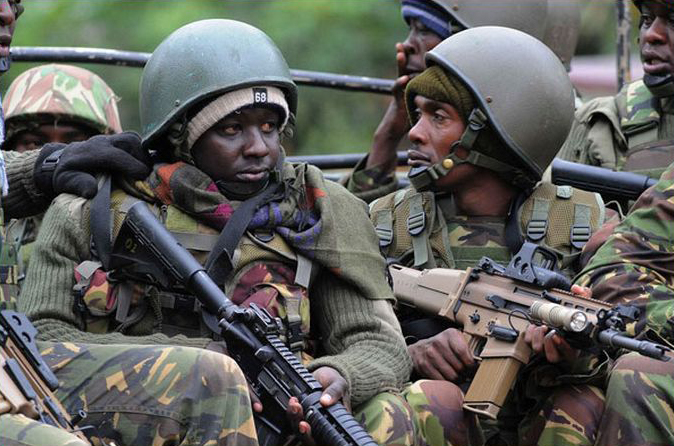
Kenya Defence Forces (KDF) arrive at the upmarket Westgate Mall in Nairobi following a terrorist attack. Photo: Courtesy Nation Group
Kenya Defence Forces (KDF) arrive at the upmarket Westgate Mall in Nairobi following a terrorist attack. Photo: Courtesy Nation GroupKenya Defence Forces (KDF) arrive at the upmarket Westgate Mall in Nairobi following a terrorist attack. Photo: Courtesy Nation Group
Mshale Editor’s Note: The following is an opinion piece by Charles Onyango-Obbo of Kenya’s Nation Newspaper group.
Al-Shabaab terrorists who attacked the Westgate Mall in Nairobi, which claimed the lives of 68 people, and injured 175, were defeated.
After more bodies are retrieved from the collapsed floors of the mall, the casualty figures will rise.
The real defeat the terrorists suffered was not during the shoot-out with security forces. It happened further away in the other suburbs and the rest of Kenya. But ultimately, in the minds of the nation.
While people have to deal with the death of their loved ones and the destruction of livelihoods, for terrorists, the human kill is only a means to a bigger end.
They seek, as President Kenyatta and several commentators observed, to destroy the way of life of nations and peoples, and the things they hold dear. And in the process, to weaken them for the real battles that lie ahead.
For example, the September 11, 2011 attacks upon the US in New York and the Washington DC area killed nearly 3,000, including 19 terrorists.
In retaliation, the US attacked Afghanistan where the Al-Qaeda leadership was hiding out. America’s invasion of Iraq was driven by the fear that dictator Saddam Hussein would provide its enemies weapons of mass destruction that he allegedly had in his stores and the US would thus one day be finished off. Of course, it turned out Saddam didn’t have any such weapons.
However, since late 2001 this America “war on terror” had cost the lives of 5,281 servicemen and women as of April this year. And the number wounded as of last month was a staggering 671,846.
A recent study projected the wars in Iraq and Afghanistan could cost the US as high as $6 trillion (Sh522 trillion –357 times bigger than Kenya’s 2013 budget). In addition, America passed several draconian laws allowing the government to spy on private citizen’s communication, and to deny terrorist suspects trial in civilian courts.
Twin Cities attorney, Paschal Nwokocha, will keynote this year's West African Day which will focus on immigration reform.
Twin Cities attorney, Paschal Nwokocha, will keynote this year's West African Day which will focus on immigration reform.Twin Cities attorney, Paschal Nwokocha, will keynote this year's West African Day which will focus on immigration reform.
The West African Collaborative, a consortium of Minnesota national groups from West Africa will host its annual West African Cultural and Family Day on Saturday, September 28 starting at noon. The event is free.
The event is presented in conjunction with the Center for Families, a program of the Greater Minneapolis Council of Churches. The event incorporates most of the religions prevalent in West African countries including christianity and Islam.
This year’s theme is “Immigration Reform and You“. Paschal Nwokocha, past vice chair of the Minnesota and Dakotas chapter of the American Immigration Lawyers Association (AILA) will deliver the keynote address that will focus on the state of immigration reform.
As is tradition there will be cultural performances and dance and traditional food served. There will be a display of cultural artifacts and a soccer match will serve as a finale before the closing ceremony.
West African Day
Location: Center for Families, 3333 North 4th Street, Minneapolis Date: Saturday, September 28 Time: Noon – 8 p.m. Cost: Free, donations accepted
Contact: Edmund Ocansey at the Center for Families: 612-276-1527
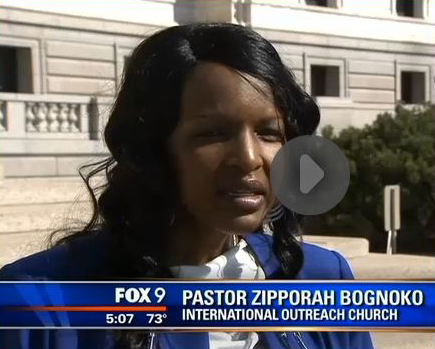
Pastor Zipporah Bogonko speaking to Fox 9 TV outside the Minnesota State Capitol after she read a statement on behalf of Kenyans in the state condemning the Westgate Mall attack.
Pastor Zipporah Bogonko speaking to Fox 9 TV outside the Minnesota State Capitol after she read a statement on behalf of Kenyans in the state condemning the Westgate Mall attack.Pastor Zipporah Bogonko speaking to Fox 9 TV outside the Minnesota State Capitol after she read a statement on behalf of Kenyans in the state condemning the Westgate Mall attack.
Media in Minnesota, home to the largest Somali community in the United States has expanded its already intense focus on the Somali community to the larger Kenyan community following the Westgate Mall terrorist attack over the weekend.
In Minnesota, the larger Kenyan community tends to operate outside the spotlight of the local mainstream media as they devote most of their time to their professional work. The Westgate mall attack however r has brought them out of the shadows. On Wednesday, they called a press conference at the Minnesota State Capitol to voice their condemnation of the attack where Pastor Zipporah Bogonko of the International outreach Church read a statement to that effect.
At the podium she was surrounded by a group of well known figures like Kenyan-American attorney Henry Ongeri, the Director of Pediatric emergency at Hennepin County Medical Center Dr. Andrew Kiragu as well as Pastor Peter King’oina formerly of Kenya Community Church in Brooklyn Center. Mshale publisher Tom Gitaa was also present and helped answer some of the media questions.
Below is some of the coverage by the Twin Cities media:
The Kenyan community in Minnesota will host a prayer rally on Saturday, September 28 to pray for Kenya and its people following the Westgate mall attack.
The rally starts at 5PM.
The rally will be held at the Miracle Empowerment Center located at 5801 John Martin Dr, Brooklyn Center, MN, 55337.
Aliko Dangote, Africa's richest man, will through his Dangote Group build a $400 million cement factory in Kenya.
Aliko Dangote, Africa's richest man, will through his Dangote Group build a $400 million cement factory in Kenya.Aliko Dangote, Africa's richest man, will through his Dangote Group build a $400 million cement factory in Kenya.
Nigerian businessman and Africa’s richest man, Mr Aliko Dangote, Thursday announced plans to put up a Sh35 billion ($400 million) cement factory in Kenya as the two countries pursue stronger trade relations.
Speaking at a Kenya-Nigeria investment roundtable, Mr Dangote said one of his companies, Dangote Cement, would begin construction of the two-million-tonne-capacity factory within the next few months.
Dangote Cement is the largest cement manufacturer in Africa and already has interests in Tanzania and Ethiopia.
“We have realised that if we really want to do something big in East Africa, we must operate in Kenya. We believe that in the next two and half years, we will be the dominant player in cement in Kenya,” said Mr Dangote.
The factory will rely on coal as a source of energy. The renowned businessman has also had talks with Energy minister Davis Chirchir on investments in the nascent oil and gas sector, as well energy generation.
Dangote Kenya Ltd, a subsidiary of the Dangote Group, had already been issued a mining licence but it was cancelled by the government together with 42 others earlier this year.
Abdi Warsame, seen here with his daughter, is the DFL endorsed candidate for City Council Ward 6 in Minneapolis. He is one of the top money raisers in Campaign Finance reports filed.
Abdi Warsame, seen here with his daughter, is the DFL endorsed candidate for City Council Ward 6 in Minneapolis. He is one of the top money raisers in Campaign Finance reports filed.Abdi Warsame, the DFL endorsed candidate for City Council Ward 6 in Minneapolis is one of the top money raisers in Campaign Finance reports filed.
Cab drivers, IT workers and a host of the self-employed have catapulted Minneapolis City Council candidate Abdi Warsame to the top tier of candidates in the city in terms of fundraising. Should he win the election in November, he will be the city’s first Somali City Council member.
Somali-born Warsame is the endorsed Democratic Party (known as the DFL in Minnesota) candidate for the sixth Ward in Minneapolis after the incumbent Robert Lilligren withdrew from endorsement consideration at the DFL convention in the spring. Lilligren challenged the party’s endorsement of Warsame citing irregularities at the caucus but the State party upheld Warsame’s endorsement.
Warsame’s campaign filed its campaign finance report last week as required by law, and it shows for the reporting period in question (January 2013 to August 2013), his campaign raised a total of $11,700 from 45 individuals and total year to date revenues for the campaign totaled $24,835 against year to date expenses of $14,679. The campaign has a healthy cash balance of over $10,000. All donors to his campaign during this period gave a minimum of $200 with the majority giving $300 each.
Warsame’s main challenger, the incumbent Robert Lilligren, in the January-August period that the law requires filing for, had raised $9,250 from 39 individuals and year to date money raised amounted to $15,925 against expenses of $18,295. The campaign reported a cash balance of just over $10,000.
The law caps contribution limits at $500 per individual for Minneapolis mayoral races.
Warsame is not only proving adept at organizing the community to garner votes which resulted in winning the party endorsement, he is also proving equally successful at attracting money to finance the campaign. His cash haul, generated almost exclusively from within the East African community puts him at the near top in fundraising in all of the city’s 13 wards.
The cash haul signals the Somali community’s intent to put their money where their mouth is. They have become an important voting bloc in Minneapolis to ignore with some elections in the city becoming impossible for candidates to win without support from it. The sixth ward in Minneapolis which Warsame is vying to represent is a case in point with Somalis consisting of one of the largest voting blocks
Only two other candidates in all of the candidates running in Minneapolis’ 13 wards have more money at hand than Warsame. Both are veteran council members.
Campaign Finance law requires campaigns to indicate a contributor’s employer and for Warsame it runs the gamut. Contributors listed some of the state’s largest counties as their employers with professions ranging from IT, nutritionists and a sprinkling of professional managers with familiar Somali sounding names.
Warsame who has a Masters degree in International Business from Middlesex University in the United Kingdom where he grew up, has also attracted support from business owners in the Cedar-Riverside area, both Somali and non-Somali, who have given to his campaign.
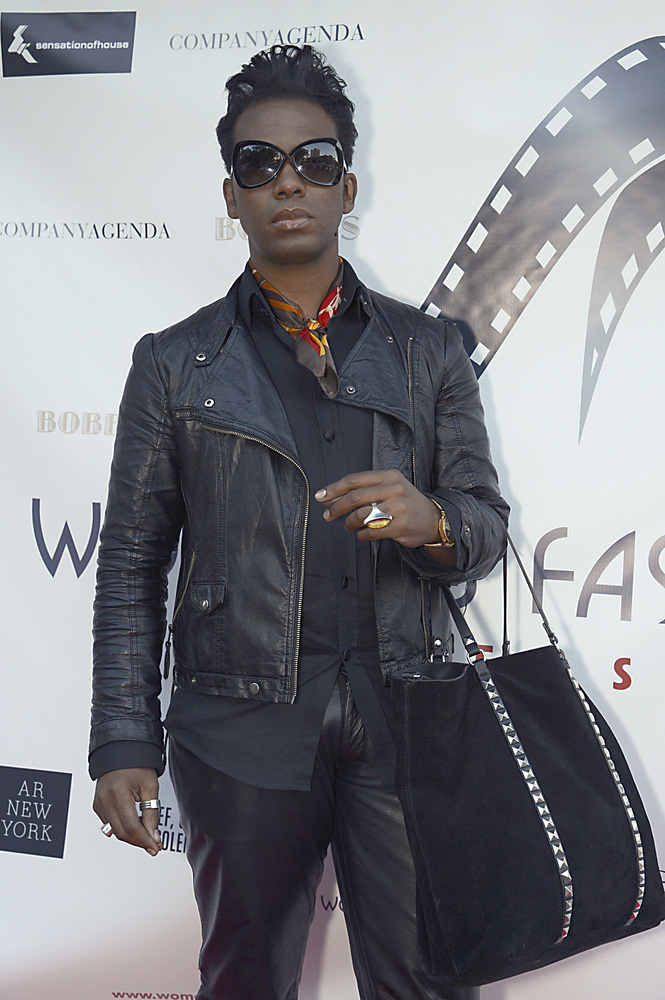
Kahindo Mateene of the MODAHNIK line is at New York Fashion Week 2013.
Kahindo Mateene of the MODAHNIK line is at New York Fashion Week 2013.Kahindo Mateene of the MODAHNIK line is at New York Fashion Week 2013.The sisters behind the William Okpo line, Darlene and Lizzy Okpo are also at New York Fashion Week 2013 which kicked off September 5.South African David Tlale is unveiling his newest collection "The A-lister" at New York Fashion Week 2013.
New York Fashion Week kicked off Thursday. The focus is on the Spring 2014 collections. Just as there are very few models of color on the NYFW runway so too are the designers.
350 spring/summer 2014 collections will be on display during fashion week. Those tracking Fashion Week say 22 of the collections showcased at NYFW this year is the work of black designers.
Three of the 22 black designers are from Africa. Kahindo Mateene of the MODAHNIK line is based in Chicago but was born in the Democratic Republic of Congo (DRC). Mateene has traveled extensively in Europe and Africa and pulls inspiration from the Avant Garde spirit of the Congolese art and culture.
South African David Tlale who is back this year with his newest collection, “The A-lister”. Last year Tlale became the first South African to present at the official Fashion Week tents at Lincoln Center. The official Lincoln Center venue will host about 100 shows this year. Others shows will be scattered throughout New York.
The sisters behind the William Okpo line, Darlene and Lizzy Okpo, originally from Nigeria are also at Fashion Week. The line is named after their stylish father and they say “With William Okpo, the Okpo sisters wish to illustrate the unique aesthetic that results from the juxtaposition of the immigrant’s sense of style against American cultural sensibilities, offering the modern feminine designs with touches of masculine elements. William Okpo is for women who celebrate their cultivated sense of style.”
Also during Fashion Week, specifically on Sunday, September 8, 2013, Project Runway alumni, Liberian-born Korto Momolu, will unveil an array of editorial designs entitled “Enchanted Fantasy” at Helen Mills (137-139 West 26th Street). Momolu is teaming up with Cashhimi Luxury Handbags and Nioxin for the endeavor.
“I’m taking a break from the ready-to-wear trend and other fashion norms this season and revisiting the stepping stones in my life that shaped my intense love affair with fashion,” Momolu stated in a news release to the Mshale newsroom.
To advance the designer’s vision, Cashhimi Luxury Handbags will be featured with Korto Momolu’s “Enchanted Fantasy” collection, the news release stated.
In addition to the latest collection, the Korto Momolu brand will also launch an online store that will allow customers to “own a Korto Momolu original.”
“We have successfully crossed a major hurdle. The new e-commerce store is a brand extension that local and global consumers have been waiting for,” said Leonard DeShield, Korto Momolu brand manager.
Nasibu Sareva, a native of Tanzania and a long time member of management at ADC has been named Interim Executive Director following the passing of the founder, Hussein Samatar on August 25, 2013.
Nasibu Sareva, a native of Tanzania and a long time member of management at ADC has been named Interim Executive Director following the passing of the founder, Hussein Samatar on August 25, 2013.Nasibu Sareva, a native of Tanzania and a long time member of management at ADC has been named ADC's Interim Executive Director following the passing of the founder, Hussein Samatar on August 25, 2013
Nasibu Sareva, the Chief Financial Officer (CFO) at the African Development Center (ADC) has been named Interim Executive Director by the center’s board following the August 25 death of Hussein Samatar after complications arising from Leukemia. Samatar was the center’s founder and executive director.
Sareva, a native of Tanzania, has since May been in charge of operations at the center which is when the late Samatar underwent a bone marrow transplant. He has been assisted in that role by ADC’s Communications and Development Director, Matthew Holm.
The board action this week formalizes the arrangement and names Sareva and Holm as executive director and deputy director respectively.
Other than the intense scrutiny that comes with being executive director of a now larger than life organization as ADC due to its groundbreaking innovations in immigrant loan financing, Mr. Sareva’s assumption of his new role should not be new territory to him. For the latter half of the late Samatar’s tenure at ADC, Sareva has been the chief financial spokesperson for the organization and assisted the late Samatar in strategic and tactical matters while also overseeing the organization’s lending operations.
A statement from the board which is chaired by Mr. Bamson Fadipe sent to Mshale said “ADC Board convened to make a decision for interim leadership of the organization, as well as create a road map for the process of determining the new leadership necessary to not only maintain, but build on the successes of such an important organization within our state.”
Stating that charting the course ahead following the loss of its founder will not be easy, the board however expressed gratitude and appreciation for Samatar’s foresight in seeding the organization “with a deep bench of dedicated practitioners ready to continue this crucial work for Minnesota”. Matthew Holm, who becomes interim executive director under Sareva, has since joining procured nearly $2M in funding.
Before coming to ADC, Sareva worked at PricewaterhouseCoopers as a Field Researcher. He has a BA in Accounting from the International Islamic University in Malaysia, and an MBA in Accounting from Lincoln University in Jefferson City, Missouri.
March on Washington: Banks, business and local government are new enforcers of racism
Today August 28, 2013 is the 50 anniversary of Dr. Martin Luther King’s 1963 “I have a Dear Speech”. Nobody can deny the concrete progress of African Americans and other people of color, but the terrible legacy of over three hundred years of slavery, nearly one hundred years of separate but equal treatment of African Americans, and nearly sixty years of some progress laced with subtle racism and continued inequities regarding education, access to credit, and the criminal justice system epitomizes the remaining work to do in the fulfillment of Dr. King’s 1963 “I have a dream speech.” A huge progress was made in so many aspects of American life, but the dream will remain unfilled as long as African American Americans and other people of color do not enjoy equal access to funds, bank loans, credit, home ownership, educations, and equal justice.
The American dream today is not only for African American only; it is for all the people of color and immigrants of all colors, ethnicity, and creed. The dream remains as unfilled as long as black motorists while (Driving While Black) is something in a wide range of jurisdictions throughout the United States. The dream will remain unfilled as long as public the inequities I public education continues.
The dream remains to be unfilled as long as Fane Mae, Freddie Mac, Wells Fargo, First Union, and multiple banks and mortgage companies and corporations keep on discrimination about African American Americans, and either denying them to have access to a respectful and affordable mortgage that commensurate with their income, putting them in a subprime mortgage despite their comparative qualification for a prime mortgage. These unnecessary impediments have caused a home ownership inequity, a disproportionate number of people of color to unfair foreclosures.
As an immigrant person of color Dr. King’s dream was also our dream, and it was the dream of all immigrants. Dr. King’ dream was not exclusive for African Americans, Like Mahatma Gandhi dream; it is a universal phenomenon of human and civil rights. Yesterday, the dream was to desegregate lunch counters, public schools, colleges, universities, equal employment opportunities, restaurants, and other things. Today’s fight for equity needs to focus on equal opportunity for employment, equal access to credit, high education, and equitable and fair criminal justice system. Yesterdays, the vanguards of the status quo were the local Sharif, police, mayor, or the governor of the highly racially segregated states in the old confederacy.
Yesterday, the pioneers of blatant segregation were Governor George Wallace, Strom Thurmond, Bull, Bull Connor, Richard B. Russell, U.S. senator from Georgia, Lester Maddox of Georgia, John H. Overton, U.S. senator from Louisiana, and many others. Today, the new enforcer of subtle racism, segregation and inequities in employment, education, equal access to credit, and equity in home ownership are bank CEOs, the leaders of some mortgage companies, some local governments and college presidents, boards, or admissions leaders. Much progress has indeed been made.
As a participant in the civil rights movement, I’m proud of that progress. But as long as there is necessity for such a legal category as hate crime, the “Dream” remains unfulfilled. As long as DWB (“Driving While Black”) in the presence of police remains a perilous activity for many African Americans throughout our nation, the Dream remains unfulfilled and diluted. As long as unemployment among African Americans keeps repeating the historic ratio of double the rate of unemployment among white people, the Dream remains unfinished and unfulfilled.
As long as polarization of wealth and absence of equal access to economic opportunity continue to escalate and disproportionately affect African Americans, again the Dream remains unfulfilled. These are not anomalies; they are realities in America. As such, the Dream that Martin Luther King Jr. brought to us remains out of reach and in some cases next to impossible.
Those who argue that our election of an African American president proves that racism is a thing of the past are not looking closely at the subtleties of racism. It is absolutely true the election of to become the first black president of the United States Barack Obama is living proof that tremendous progresses has been made, but there is much work to be done. That unfinished work which is yet to be done, needs a lot of hard work, unity, tremendous focus, and well-planning.
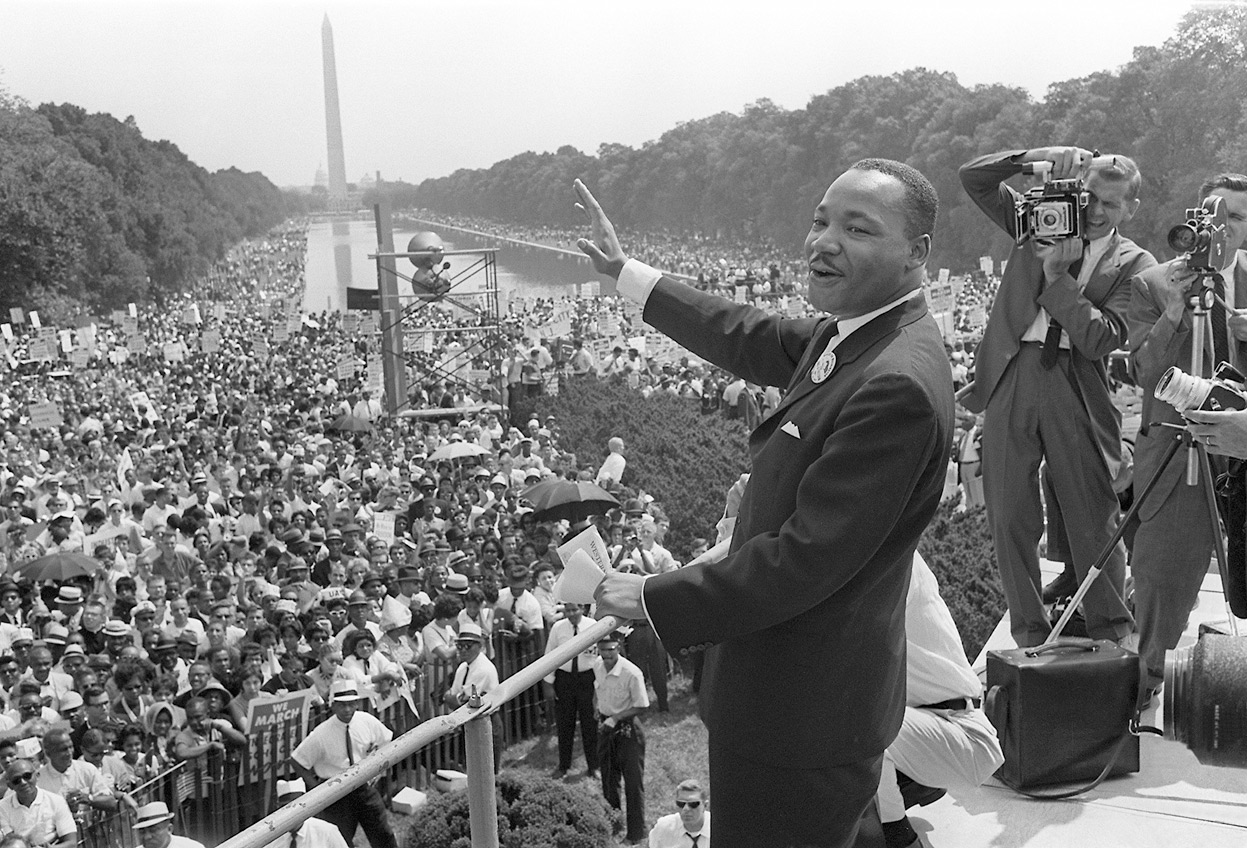
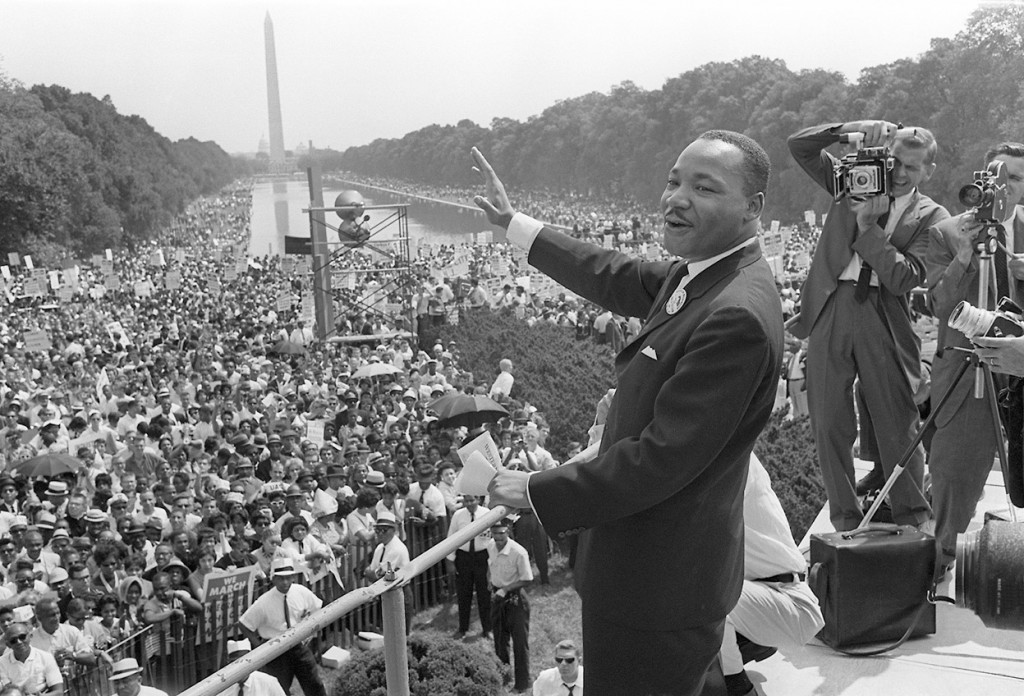
Original March on Washington for Jobs and Freedom was one of the largest political rallies for human rights and civil rights in United States history. August 28, 1963. Martin Luther King, Jr., standing in front of the Lincoln, delivered his historic “I Have a Dream” speech advocating racial harmony during the march. The march was organized by a group of civil rights, labor, and religious organizations, under the theme “jobs, and freedom”. Estimates of the number of participants were about quarter of a million. The march was unanimously agreed upon that was instrumental in the passing the Civil Rights Act of 1964 and the Voting Rights Act 1965.
Although African Americans had been legally freed from slavery, elevated to the status of citizens, and the men given full voting rights at the end of the American Civil War, many continued to face economic and political repression. A system of government sanctioned legal discrimination known as Jim Crow was pervasive in old American South, ensuring that Black Americans remained second-class citizens.
In that backdrop they experienced discrimination from businesses and governments, and in some places were prevented from voting through intimidation, imposition of illegal polls tax and in some cases violence. Twenty-one states prohibited interracial marriage. The momentum for the famous 1963 march on Washington developed over time, and earlier efforts to organize such a demonstration were based on a mass movement of the 1940s. A. Philip Randolph, the president of the Brotherhood of Sleeping Car Porters, president of the Negro American Labor Council, and vice president of the AFL-CIO was a key instigator in 1941. With Bayard Rustin, Randolph called for 10,000 black workers to march on Washington, in protest of discriminatory hiring by U.S. military contractors and demanding an Executive Order. Faced with a mass march scheduled for July 1, 1941, President Roosevelt issued Executive Order 8802 on June 25.
The order established the Committee on Fair Employment Practice and banning discriminatory hiring in the defense industry. Randolph called off the March. Randolph and Rustin continued to organize around the idea of a mass march on Washington. They envisioned several large marches during the 1940s, but all were called off. Their Prayer Pilgrimage for Freedom, held at the Lincoln Memorial on May 17, 1957, featured by many key leaders including Adam Clayton Powell, Martin Luther King, Jr., and Roy Wilkins. The 1963 march was an important part of the rapidly growing Civil Rights Movement and struggle, which involved demonstrations and nonviolent direct action across the United States. In 1963 was also marked the 100th anniversary of the signing of the Emancipation Proclamation by President Abraham Lincoln. In that back drop violent confrontations have erupted in the South, and especially in Cambridge, Maryland; Pine Bluff, Arkansas; Goldsboro, North Carolina; Somerville, Tennessee; Saint Augustine, Florida; and across Mississippi.
Most of these incidents involved white people retaliating against nonviolent demonstrators Multiple people wanted to march on Washington, but disagreed over how the mechanics of the march. There was widespread criticism that the Kennedy administration had not lived up to its promises in the 1960 election; King described Kennedy’s race policy as “cosmetic.” The public failure of the Baldwin–Kennedy meeting on May 24, 1963, underscored the divide between the needs of Black America and the understanding of Washington politicians. But it also provoked the Kennedys to action on the civil rights issue. On June 11, President Kennedy gave his famous civil rights address on national television and radio, announcing that he would begin to push for civil rights legislation, a law which eventually became the Civil Rights Act of 1964. That night, Mississippi activist Medgar Evers was murdered in his own driveway, further escalating national tension around the issue of racial equality.
Phillip Randolph and Bayard Rustin began planning the march on Washington in December 1962. They envisioned two days of protest, including sit-ins and lobbying followed by a mass rally at the Lincoln Memorial. They wanted to focus on joblessness and to call for a public works program that would employ blacks. In early 1963 they called publicly for “a massive March on Washington for jobs. On May 15, 1963, Randolph announced an “October Emancipation March on Washington for Jobs”. He reached out to union leaders, winning the support of the UAW’s Walter Reuther, but not of AFL–CIO president George Meany. Randolph and Rustin intended to focus the March on economic inequality, stating in their original plan that “integration in the fields of education, housing, transportation and public accommodations will be of limited extent and duration so long as fundamental economic inequality along racial lines persists.” As they negotiated with other leaders, they expanded their stated objectives to “Jobs and Freedom” to acknowledge the agenda of groups that focused more on civil rights.
In June 1963, leaders from several different organizations formed the Council for United Civil Rights Leadership, an umbrella group which would coordinate funds and messaging. This coalition of leaders, who became known as the “Big Six”, included: Randolph who was chosen as the titular head of the march, James Farmer (president of the Congress of Racial Equality), Lewis who was the chairman of the Student Nonviolent Coordinating Committee, Martin Luther King, Jr. ,president of the Southern Christian Leadership Conference), Roy Wilkins (president of the NAACP), and Whitney Young, the president of the National Urban League. King in particular had become well known for his role in the Birmingham campaign and for his Letter from Birmingham Jail. Wilkins and Young initially objected to Rustin as a leader for the march, because he was a homosexual, a Communist, and a war resistor.[24] They eventually accepted Rustin as deputy organizer, on the condition that Randolph act as lead organizer and manage any political fallout.
On June 22, March organizers, the so-called Big Six met with President Kennedy, who warned against creating “an atmosphere of intimidation” by bringing a large crowd to Washington. The civil rights activists insisted on holding the march. Wilkins pushed for the organizers to rule out civil disobedience described this proposal as the “perfect compromise”. King and Young agreed. Leaders from CORE and SNCC, who wanted to conduct direct actions against the Department of Justice, endorsed the protest before they were informed that civil disobedience would not be allowed. Finalized plans for the March were announced in a press conference on July 2. President Kennedy spoke favorably of the March on July 17, saying that organizers planned a peaceful assembly and had cooperated with the Washington, D.C. police.
March organizers themselves disagreed over the purpose of the march. The NAACP and Urban League saw it as epitome of support for a civil rights bill that had been introduced by the Kennedy Administration. Randolph, King, and the Southern Christian Leadership Conference (SCLC) saw it as a way of raising both civil rights and economic issues to national attention beyond the Kennedy bill. Student Nonviolent Coordinating Committee (SNCC) and Congress of Racial Equality (CORE) saw it as a way of challenging and condemning the Kennedy administration’s inaction and lack of support for civil rights for African Americans.
Despite their disagreements, the group came together on a set of goals:
• Passage of meaningful civil rights legislation.
• Immediate elimination of school segregation.
• A program of public works, including job training, for the unemployed.
• A Federal law prohibiting discrimination in public or private hiring.
• A $2-an-hour minimum wage nationwide.
• Withholding Federal funds from programs that tolerate discrimination.
• Enforcement of the 14th Amendment to the Constitution.
• By reducing congressional representation from States that disenfranchise citizens.
• A broadened Fair Labor Standards Act to currently excluded employment areas. Authority for the Attorney General was supposed to institute injunctive suits when constitutional rights are violated. Although in years past Randolph had supported “Negro only” marches, partly to reduce the impression that the civil rights movement was dominated by white communists, organizers in 1963 agreed that whites and blacks marching side by side would create a more powerful image.
The Kennedy administration cooperated with the organizers in planning the March, and one member of the Justice Department was assigned as a full-time liaison. Chicago and New York City as well as some corporations agreed to designate August 28 as “Freedom Day” and give workers the day of. To avoid being perceived as radical, organizers rejected support from Communist groups. However, some politicians claimed that the March was Communist-inspired, and the Federal Bureau of Investigation (FBI) produced multiple reports suggesting the same. In the days before August 28, the FBI called celebrity backers to inform them of the organizers’ communist connections and advising them to withdraw their support.
When William C. Sullivan produced a lengthy report on August 23 suggesting that Communists had failed to appreciably infiltrate the civil rights movement, FBI Director J. Edgar Hoover rejected its contents. Traveling by road, rail, and air, from literally near and far, thousands arrived in Washington D.C. on Wednesday, August 28. Marchers from Boston traveled overnight and arrived in Washington at 7am after an eight-hour trip, but others took much longer bus rides from places like Milwaukee, Little Rock, and St. Louis. Organizers persuaded New York’s MTA to run extra subway trains after midnight on August 28, and the New York City bus terminal was busy throughout the night with peak crowds. A total of 450 buses left New York City from Harlem.
All in all, the original objective of the organizers of the 1963 march was the obtainment for equal employments, voting rights, and social justice. Fifty years after the march, the same issues ranging from discrimination, equal employment opportunities and equal voting rights are still standing.