Gen. Carter F. Ham is head of U.S. Africa command seen here testifying before the Senate Armed Services Committee in Washington, D.C., Nov. 18, 2010, discussing his views on AFRICOM's missions, challenges and future development. Photo: Department of Defense
Gen. Carter F. Ham is head of U.S. Africa command seen here testifying before the Senate Armed Services Committee in Washington, D.C., Nov. 18, 2010, discussing his views on AFRICOM's missions, challenges and future development. Photo: Department of DefenseGen. Carter F. Ham is head of U.S. Africa command seen here testifying before the Senate Armed Services Committee in Washington, D.C., Nov. 18, 2010, discussing his views on AFRICOM's missions, challenges and future development. Photo: Department of Defense
The military’s attention on Africa continues, as its secretive Office of Net Assessment has hired contractor Booz Allen Hamilton to study the continent’s future, military documents show.
The Office of Net Assessment is an internal Pentagon think tank that tries to anticipate future needs through a series of studies and war games. Created in 1973, it has been run by the same person, 92-year-old Andrew Marshall, since its beginning. Marshall, in turn, is a disciple of longtime military strategist Fritz Kraemer, a key influence on former Secretary of State Henry Kissinger, former Defense secretary Donald Rumsfeld and former vice president Dick Cheney.
Africa has turned into one of the United States’ largest policy challenges during the Obama administration, including the rise of al-Qaeda-connected groups in the Sahel, the 600-mile-wide band of grassland and desert that stretches from Eritrea to Senegal. In recent weeks, for example, the Pentagon has asked for trainers to teach Tuareg, the language spoken by nomadic tribes in northern Mali. A base for unmanned drone aircraft opened in neighboring Niger in February.
Booz Allen, one of the military’s largest contractors, is a longtime ONA contributor. Contract records show the company received a $45 million contract from ONA in July 2007 to perform a variety of studies.
While Democratic and Republican administrations come and go, ONA and its team of outside advisers remains the same. Contract records show the office relies on studies from outside contractors at firms such as Booz Allen, Science Applications International Corp. (SAIC) and Scitor Corp., universities and think tanks, such as the Center for Strategic and Budgetary Assessments and the Hudson Institute.
Many of the ONA advisers are alumni of the office, such as Andrew Krepinevich of CSBA and several staff members of the Hudson Institute. Others, such as Stephen Cambone, the former undersecretary of Defense for intelligence, were key members of the Bush administration’s Pentagon team. Cambone is the head of Adirondack Advisors, a McLean, Va.-based firm that received a $270,000 contract from ONA in May, according to Virginia corporate records and Pentagon contract documents.
ONA is one of the contributors to the Pentagon’s Quadrennial Defense Review, a document that comes out every four years in order to help shape overall military priorities. The next review is scheduled for release early in 2014.
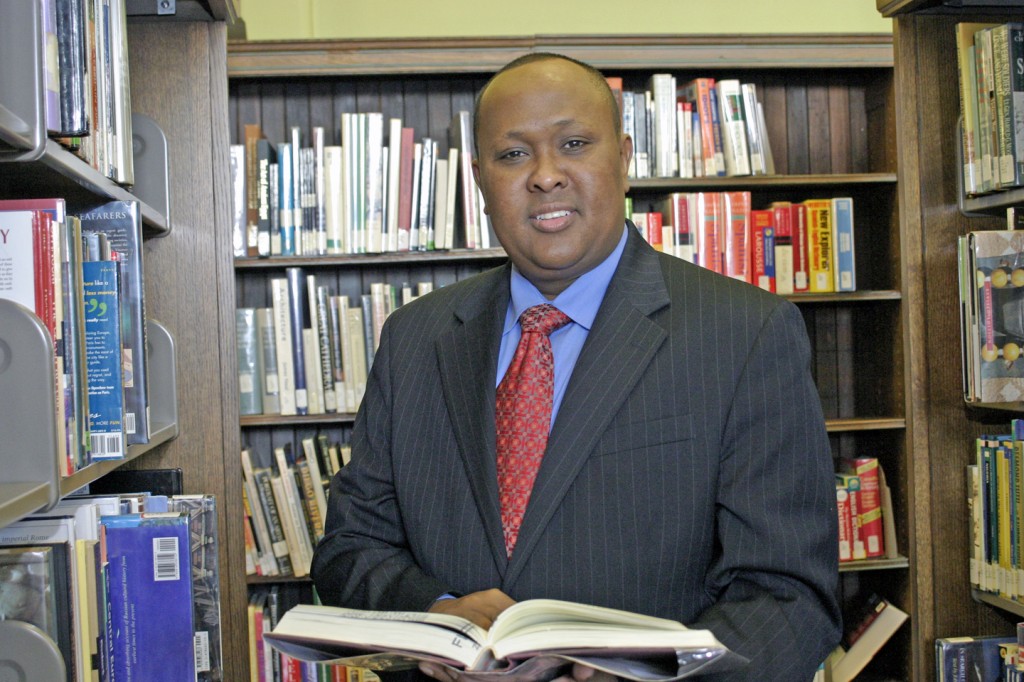
In this December 22, 2005 photo, Mr. Hussein Samatar meets with Mshale for an interview at the Franklin Library in Minneapolis following his appointment to the now defunct Minneapolis Library Board. Mr. Samatar died Sunday, August 25, 2013 following complications from leukemia. Funeral service is today, Monday, August 26 at 1:00PM at the Burnsville Masjid. Photo: Richard Ooga/Mshale
In this December 22, 2005 photo, Mr. Hussein Samatar meets with Mshale for an interview at the Franklin Library in Minneapolis following his appointment to the now defunct Minneapolis Library Board. Mr. Samatar died Sunday, August 25, 2013 following complications from leukemia. Funeral service is today, Monday, August 26 at 1:00PM at the Burnsville Masjid. Photo: Richard Ooga/MshaleIn this December 22, 2005 photo, Mr. Hussein Samatar meets with Mshale for an interview at the Franklin Library in Minneapolis following his appointment to the now defunct Minneapolis Library Board. Mr. Samatar died Sunday, August 25, 2013 following complications from leukemia. Funeral service is today, Monday, August 26 at 1:00PM at the Burnsville Masjid. Photo: Richard Ooga/Mshale
Hussein Samatar, a Somali-American former banker turned entrepreneur and politician, died yesterday (Sunday, August 25, 2013) following complications from leukemia. He was 45.
His death was relayed to the Mshale newsroom in an email message from the board of directors of the African Development Center at 8:39pm Sunday. Samatar founded the African development Center in 2004.
In a March 6 message to friends and supporters Mr. Samatar announced that he was on December 4, 2012 diagnosed with Chronic Lymphocytic Leukemia (CLL) and since the diagnosis had gone through three cycles of chemotherapy and doctors pronounced him as responding well to treatment.
He tweeted a message to followers on May 21 that he was going for a bone marrow transplant on that day and followed again with another tweet on May 27 that the transplant went well but that “it was gruesome”.
His last tweet was on August 4 where he said he had been hospitalized for the previous two weeks.
Mr. Samatar graduated from Somalia’s National University in 1991 just as civil war was erupting and he eventually found his way to Minnesota where he enrolled at the University of St. Thomas earning an MBA and working as a banker for Wells Fargo.
It was while at Wells Fargo bank where Mr. Samatar realized how difficult it was for new African immigrants to obtain loans to start or finance their businesses. He left the corporate world in 2004 to launch the African Development Center so as to provide microloans and technical expertise to emerging African immigrant businesses.
Over the years, the center also branched out to providing first time home buyer training to African immigrants.
Mr. Samatar’s activities with the African Development Center garnered him substantial press coverage over the years, but it was his appointment in November 29, 2005 by Minneapolis Mayor RT Rybak to the now defunct Minneapolis Library Board that brought him to the attention of the wider public and to the larger African immigrant community following a much read profile of him by Mshale on January 2006 following his appointment. The Minneapolis library system was eventually absorbed into the Hennepin County Library system.
The success ADC was having with helping African immigrant businesses get off the ground led Samatar to lead the organization in another ground breaking innovation in partnership with the City of Minneapolis in 2006, lending that is compliant with Islamic law which prohibits the charging of interest rates.
In the Sharia compliant system of lending, instead of charging interest, Samatar’s ADC estimates how long it will take to pay the loan, combines that with the calculated interest and combines the two to make one lump sum “It feels like, looks like and acts like a loan, but it’s just a different way of looking at it,” Samatar said at the time.
In 2010, Mr. Samatar, virtually running unopposed won an election to the Minneapolis School board, an achievement that made him the first Somali-American to be elected to public office in Minnesota. Mainstream media declared the win as one that “most likely made him the first Somali-American elected to public office in the country.”
During his tenure at the Minneapolis School Board, Mr. Samatar served on the audit, finance and teaching and learning committees. Minneapolis School Board Chair, Alberto Monserrate, said Samatar will be profoundly missed by his colleagues on the school board, as well as the many community members whose lives he touched.
“I join the rest of the Minneapolis Public Schools community in mourning the loss of Director Hussein Samatar,” said Dr. Bernadeia Johnson, superintendent of schools. “Hussein was a passionate leader, a committed public servant, a dedicated collaborator and a valued friend. My thoughts, prayers and the condolences of countless others at MPS and in our larger community are with his family as they grieve his passing and celebrate his legacy.”
In a statement to Mshale, Minneapolis Mayor RT Rybak said one of his greatest pleasures as mayor was getting to know Samatar.
“He has been an extraordinary leader and a real friend,” Rybak said. “I am heartsick about losing him, but I will look for solace in knowing how many people he helped.”
Mr. Samatar is survived by his wife Ubah and four children.
A message from ADC said funeral services for Mr. Samatar will be held today, Monday, August 26 starting at 1:00PM at the Burnsville Masjid. The masjid’s address is: 1351 Riverwood Drive, Burnsville, MN 55337.
Nigerian actress Genevieve Nnaji is part of the Nollywood film industry that has grown into a $800-million-a-year industry that employs thousands of people.
Nigerian actress Genevieve Nnaji is part of the Nollywood film industry that has grown into a $800-million-a-year industry that employs thousands of people.Nigerian actress Genevieve Nnaji is part of the Nollywood film industry that has grown into a $800-million-a-year industry that employs thousands of people.
Obi Emelonye had to battle Lagos airport bureaucrats, indifferent banks and skeptical peers to release his plane-crash thriller, a movie production on a scale rarely seen in Nigeria’s film industry.
“The biggest challenge was negotiating the diplomatic nightmare, potholes, even land-mines — taking over 100 people every day and passing them through security to go air-side with technical equipment,” the writer-director-producer says in an interview in London, after flying in from the Seattle International Film Festival.
“Every day we came, it was another story and I had to throw some money on the table usually to allow us to be able to shoot.”
“Last Flight to Abuja” was the highest-grossing West African film last year, taking in $350,000, with premieres in cinemas from London to Lagos.
It cost $250,000 to make, more than six times the typical budget in an industry known for shoddy shoots, poor production and filmmakers churning out features en masse to a nation of more than 160 million people, Africa’s most populous.
Emelonye, 46, is trying to avoid being another nobody whose movies go straight to DVD. He is making better- quality movies as he tries to attract a global audience to Nollywood which, like Bollywood, is a play on Hollywood.
Nigeria’s film industry, the world’s second largest by films made, generates about $800 million a year in revenue, according to London and Lagos-based distributor iROKO Partners Ltd.
Nigeria started producing movies in the 1960s, though modern Nollywood started with Kenneth Nnebue’s 1992 drama “Living in Bondage” establishing the themes of marital discord, greed and conflicts between Christianity and traditional faiths.
The West African nation made an average of 1,093 films a year between 2005 and 2009, second only to India’s 1,178 movies, according to the UNESCO Institute for Statistics.
A typical Nollywood film has a budget of $40,000, the largest producers make 20 to 40 titles a year and an average movie sells 50,000 copies, according to iROKO Partners, which distributes DVDs in Africa and streams videos for international subscribers online using a similar model to Netflix.
This year will see the release of an adaptation of Chimamanda Ngozi Adichie’s novel “Half of a Yellow Sun,” the most expensive movie filmed in Nigeria. Set during the country’s civil war in the 1960s, it cost $9 million.
Seventy percent of the funding was raised from Nigerian investors with the rest from Britain and the British Film Institute.
Directed and written by Nigerian novelist and playwright Biyi Bandele and filmed in the city of Calabar, the film places international actors Chiwetel Ejiofor and Thandie Newton alongside Nollywood stars such as Genevieve Nnaji.
The promotional trailer was the most viewed online among those being screened at the Toronto International Film Festival this year.
“One of the reasons for going to Toronto is to sell the film to distributors,” says Yewande Sadiku, an executive producer on the film and an investment banker at Stanbic IBTC Holding Co., who helped assemble the financing.
If the movie is a success, it may spur more funding, Sadiku says in an interview at the Federal Palace Hotel overlooking the Lagos lagoon, Nigeria’s commercial capital and home of Nollywood.
“Nollywood in size is big, but Nollywood in financial terms is piddly,” she says. “This film demonstrates what is possible.”
There is an appetite for well-made Nigerian films. Yet with a few more than 10 cinemas in the country and a disorderly distribution network, it’s hard for producers to recoup costs on higher-budget films, according to filmmaker Lonzo Nzekwe.
The 38-year-old director of 2010’s “Anchor Baby,” a drama about a Nigerian couple illegally living in the US, recouped the $200,000 it cost and made a small profit.
The movie was released in Nigerian, Ghanaian, British and Canadian theaters and won 12 awards at festivals. The first Nollywood movie available on iTunes is also on Nzekwe’s own video-on-demand website.
“Nigerians are doing well in international film festivals, it’s not about making a movie and going straight to DVD,” Nzekwe says in a phone interview.
Getting bank financing is nearly impossible, according to both Emelonye and Nzekwe, who relied on the support of family and friends.
Only a few companies — such as phone companies MTN Group, Emirates Telecommunications, and lenders such as Diamond Bank — have started sponsoring films and using Nollywood stars to market products.
Nigeria’s government has realized the potential of Nollywood, which employs 200,000 people directly and another million indirectly, according to Finance Minister Ngozi Okonjo- Iweala.
This year ministers started a three billion naira ($18.7 million) film training plan, while offering more tax relief, she says.
Nollywood needs better distribution of quality DVDs and a clampdown on piracy, according to Adi Nduka-Agwu, head of Africa business development for iROKO.
In response iROKO, which started in 2010, has built an audience of 6 million users across 178 countries with more than 5,000 movies that can be streamed online for about $5 a month.
Patchy Internet networks in Africa lead to many people watching DVDs instead of streaming online, Nduka-Agwu says in an interview in Johannesburg.
iROKO started supplying Nollywood DVDs to 150 retail outlets in Johannesburg in June and is looking to expand further in Africa’s biggest economy. The company has had its first request from a distributor to supply to Zimbabwe, she says.
With his next three films, Emelonye is hoping that banks, investors and companies begin to realize Nollywood’s potential.
Emelonye is confident that his movies will soon generate enough box office to persuade banks to back them.
“With that you can raise your standards, get bigger stars from across the world,” he says.
Mandela's grandsons create social network to honor him
South African president Nelson Mandela has countless streets named after him, his own foundation, his own fan page and now his own social network.
The website Mandela.is allows users, called “citizens”, to connect, share inspirational thoughts, photos and articles in an effort to emulate the apartheid icon’s positive effect on the world.
The site is the brain-child of two Mandela grandsons and it was set up by the company behind American pop icon Lady Gaga’s online social community littlemonsters.com.
“It’s a social network around the inspiration my grandfather gave to the world,” said Ndaba Mandela, 30.
“People can share what Mandela inspired them to do, to give back to their communities.”
Few people today command the same global adoration as Mr Mandela, 95, who for many embodies peace and forgiveness.
Four years ago the United Nations declared his birthday, on July 18, Mandela Day — calling on people around the world to spend 67 minutes doing good for others to mark the number of years he spent as an activist.
But four hospitalisations in a year are a reminder of Mr Mandela’s old age and mortality.
He has spent more than two months in hospital for a critical lung infection and is on life support machines.
“We only celebrate our icons, our leaders when they have passed away,” Ndaba said. “We came together as a family and said, ‘Guys, let’s not wait until he is dead, let us start the celebration now (while) he is still moving, talking, communicating.’”
‘It’s not about the money’
Entrepreneur Ndaba developed the idea with his cousin Kweku, 28, who has a background in entertainment and marketing.
The cousins’ parents, Makgatho and Makaziwe, are Mr Mandela’s children with his first wife, Evelyn Mase, whom he divorced in 1958.
Mandela.is was quietly launched in March 2013. Still in the beta phase, it has about 1,000 members, some of them already vocal.
How to fight the 'biggest wave of voter suppression' since 1965
The same morning Hillary Clinton was using her highly visible stature at the recent American Bar Association convention to call for increased protection for Americans’ right to vote, North Carolina Gov. Pat McCrory signed a law that strips all residents of same-day voter registration, shortens early voter registration and imposes onerous voter ID requirements.
“We view the attacks on voting rights in North Carolina to be among the most extreme and regressive we’ve seen in the country,” said Eddie Hailes, managing director and general counsel for Advancement Project, a civil rights organization that works on clearing barriers to the ballot box.
In a statement announcing the organization’s lawsuit against North Carolina, Advancement Project Co-Director Penda Hair noted that voters of color would be the hardest hit by the new restrictions; young people as well.
For instance, HB 589, the law Gov. McCrory enacted, will end the pre-registration of 16- and 17-year-old future voters; and increases the likelihood of incidents of intimidation at the polls by allowing voters to be challenged by a registered voter from the same county. In the past, those challenges were limited to voters from the same precinct.
“Right now, in 2013, we’re having a repeat performance of 2012,” said Kathy Culliton-Gonzalez, director of voter protection for Advancement Project. Proposed voter ID restrictions by 24 states in 2013 head the list as the most popular form of legislative fiat. Other initiatives run the gamut from reducing early voting days – like in North Carolina — to voter purges.
“Even though this is not a presidential election year, this Supreme Court decision [Shelby County v. Holder] has opened the door to more and more restrictive voting changes. Yes, it’s better than the ‘60s — there’s not as much violence involved in these battles of voting rights — but we’ve seen the biggest wave of voter suppression in the form of modern-day poll taxes and literacy tests since the Voting Rights Act was passed.”
Fighting back against voter suppression
Voting rights advocates are responding in four main ways. Litigation continues to be the critical bulwark against the implementation unfair voting practices, but, as Culliton-Gonzalez notes, litigation is expensive and is sure to test of the resources for the organizations like hers, the ACLU, Brennan Center for Justice, the Lawyers’ Committee for Civil Rights Under Law, the Leadership Conference, the NAACP Legal Defense and Educational Fund, and others that champion voting rights.
Secondly, public demonstrations and civil disobedience could raise public awareness about the unjust or disparate impact of newly proposed or enacted laws. Rev. Dr. William J. Barber, II, president of the North Carolina chapter of NAACP, had some success in rallying protesters against HB 589 and other legislative actions through Moral Monday demonstrations each Monday in Raleigh. His organization is continuing to hold Moral Monday forums outside of the state capitol and is planning demonstrations in 13 of the state’s congressional districts on Aug. 28th to coincide with the 50th anniversary of the 1963 March on Washington.
Whether the intensity and discipline of the North Carolina protests can be replicated in other states remains to be seen. Yet other veterans of the civil rights era are encouraging a national movement for the restoration and protection of voting rights.
Rev. Joseph Lowery, 91, a former president of the Southern Christian Leadership Conference, used the bully pulpit at the Ebenezer Baptist Church in Atlanta last week to promote the Voting Rights Project, a new 50-state initiative. “There have been deliberate and systematic attempts at the state level to make it harder for voters to participate,” he said in a statement reported by The Atlanta World. “We must put an immediate stop to this or lose any gains we have made since the Civil Rights movement and passage of the Voting Rights Act.”
A third front of organizational activity focuses on pressuring Congress to take up the issue of devising a new Section 4 formula so that Section 5 can be fully restored.
Section 5, the strongest oversight measure of the Voting Rights Act, allows the Department of Justice to challenge proposed changes in election laws before they could be implemented, if those changes could be shown to have discriminatory impact on minority voters. But it was the findings under Section 4’s formula that triggered the DOJ action.
Myrna Perez, deputy director of the democracy program at Brennan Center for Justice, concurs with turning the focus to Capitol Hill. “We want Congress to have conversations; we want them to hold hearings. We want them to study the issue, talk to experts, review options and come up with something that is bipartisan and constitutional. Section 5 is still constitutional,” she emphasized. “Section 4 requires revisiting and we need Congress to do that.”
But a Congressional revival of Section 4 — so that Section 5 can once again be employed by DOJ — could prove to be a distant possibility. “By invalidating Section 4 of the Voting Rights Act, the court has effectively eliminated Section 5 federal oversight,” wrote David Bositis of the Joint Center for Political and Economic Studies. “The current U.S. House of Representatives will almost certainly NOT provide a new definition for Section 4 coverage, and so Section 5 is out for the foreseeable future.”
Others add that partisan politics could simply lead to Congressional inaction. Both houses of the North Carolina legislature are controlled by Republicans, as is the governor’s office. Congress may speak of re-invigorating Sections 4 and 5, but for some Republican members, it could be seen as political suicide for their party. Republicans have better odds of holding North Carolina in 2016 with HB 589 enacted and Section 5 sidelined.
While all three prongs of a voting rights offensive may be in play, ultimately, the endgame in voters’ rights may be the passage of a Constitutional amendment explicitly guaranteeing the right to vote. Currently, that right is only implicit under federal law. Resources, again, may be the determinant of whether such a movement can be sustained. At a time when African-American and Latino voters are often marginalized by successful gerrymandering, the amount of energy required to move a coalition forward will be formidable. Still, said Culliton-Gonzalez, “We’re not going away.”
Immigration reform: African and Caribbean immigrants forgotten
In 2003 Black Enterprise magazine named Hawthorne’s Golden Krust Caribbean Bakery and Grill Inc. one of the top 100 black-owned companies in the United States. And when Hawthorne, Golden Krust’s CEO, published a book late last year about his journey from new American to embodiment of the proverbial American dream, newspapers large and small published stories outlining his business struggles and triumphs.
He hasn’t exactly lived in the shadows.
But the same can’t be said for the other 3.5 million immigrants of African or Caribbean descent in the U.S. In many cases these immigrants are invisible, since they aren’t likely to be the first people who come to mind when most Americans think about the conversation going on in Washington, D.C., about immigration reform.
“I probably wouldn’t go so far as to say that the immigrant of African descent has been invisible, and certainly wouldn’t say they’ve been excluded,” says Rep. Yvette Clark, a Democrat representing New York’s 9th District in Congress, an area that includes Brooklyn neighborhoods that are home to hundreds of thousands of African and Caribbean immigrants. “I would say that our interests have been somewhat marginalized.”
Many immigrants from the West Indies and Africa have distinct needs that are often overlooked. At 12.5 percent, black immigrants had the highest unemployment rate of any foreign-born group in the United States in 2011, according to the Bureau of Labor Statistics. They also earn lower wages, according to the Urban Institute. None of these issues are currently part of the discussion on Capitol Hill.
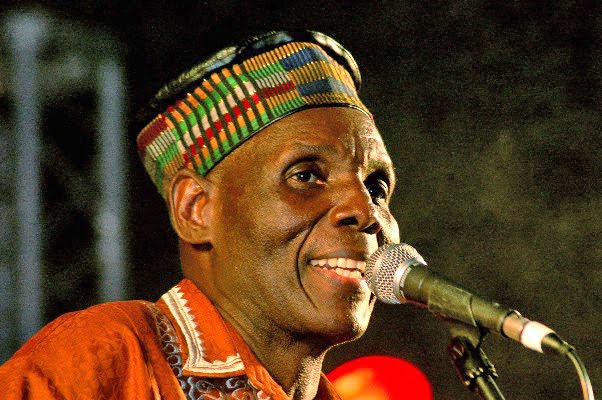
Global music titan, Oliver Mtukudzi of Zimbabwe, will headline the Cedar Cultural Center's 25th anniversary season kick -off with a free concert on Sunday, September 1, 2013.
Global music titan, Oliver Mtukudzi of Zimbabwe, will headline the Cedar Cultural Center's 25th anniversary season kick -off with a free concert on Sunday, September 1, 2013.Global music titan, Oliver Mtukudzi of Zimbabwe, will headline the Cedar Cultural Center's 25th anniversary season kick -off with a free concert on Sunday, September 1, 2013.
The Cedar Cultural Center, a top destination for touring artists from Africa like Femi Kuti, Fatoumata Diawara, Habib Koite and others, turns 25 in September.
Editor’s note: Mshale is a sponsor of the Cedar’s 25th anniversary season.
To celebrate its silver jubilee and thank its supporters, it has scheduled four free concerts in Spetember as it kicks off its 25th season. On Sunday, September 1,they will kick off the season with a free concert by global music titan, Oliver Mtukudzi of Zimababwe and his & Black Spirits band. On September 18, the Krar Collective,
a group dubbed ‘The White Stripes of Ethiopia’ will perform.
Th fifth annual Global Roots Festival, which is also free, will feature four bands (Dakhabrakha, Kardemimmit, Debo Band, Christine Salem) over the course of two days, September 24-25.
The kick off of the 25th season also brings to the Cedar its first Artistic Director since 2008, longtime Cedar employee who was born the year the venue was founded, Sage Dahlen. “With artists from more than 12 different countries, and genres ranging from second-wave ska to Ethiopian funk, this September is a perfect way to kick off our 25th season. It showcases so much of what we do well, and hopefully exposes even longtime Cedar patrons to something new,” said Dahlen.
The Cedar will celebrate its anniversary throughout the 2013-2014 season with monthly 25th Anniversary Shows hand selected by its staff. Following the African groups that will kickoff the season in September will be Malian superstar Rokia Traoré. Traoré will perform on Monday, November 25.
Visit the Cedar website for the African and non-African acts that will be be featured as part of the 25th Anniversary Shows.
Announced African Acts for Cedar’s 25th Anniversary (as of 8/15/2013):
Sunday, September 1, 2013: (FREE) Oliver Mtukudzi & The Black Spirits.
Wednesday, September 18, 2013: (FREE) Krar Collective.
Wednesday, September 25, 2013: (FREE) Debo Band and Christine Salem.
Monday, November 25, 2013: Rokia Traoré (Advance: $30 or $35 at the door)
Ticket info and full details can be found at the Cedar website.
In 2006, Mo Abudu experienced what Oprah Winfrey would call an “aha moment”, ditching a 20-year career in human resources to try her hand at television.
Seven years later, Abudu’s show – Moments with Mo – has featured guests such as Hillary Clinton, Christine Lagarde and Diane von Furstenberg, and is the first TV talkshow to have been syndicated across Africa. Last month, the self-taught presenter cemented her status as “Africa’s Oprah” with the launch of her own continent-wide TV network, Ebony Life.
Having grown up in the UK and Nigeria, Abudu says she was inspired by her childhood in 1970s London and Tunbridge Wells: “You find yourself being asked questions that just boggle your mind. Do you guys live in trees? Do you dance around fires? What do you eat for breakfast? For me, I think somewhere deeply buried in my subconscious was a need to tell Africa’s story.”
She describes comparisons with her “hero” Oprah Winfrey as “very flattering”, although they are not in touch. “I must have sent Oprah Winfrey tons of messages. I was really hoping she would give me guidance and mentorship. That didn’t happen, but it didn’t stop me,” she says.
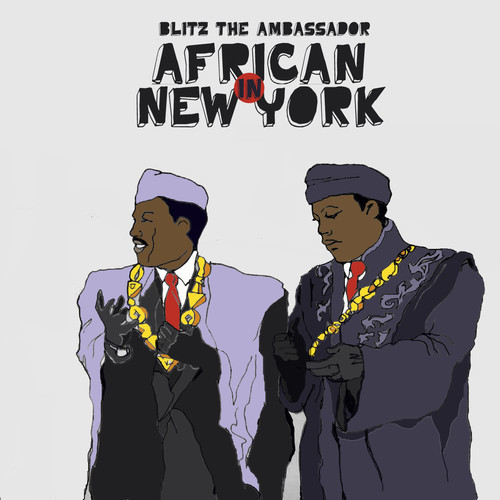
Blitz The Ambassador returns with “African In New York”, the latest track from the Accra, Ghana born New York City residing wordsmith’s forthcoming EP The Warm Up.
Following a sample from Eddie Murphy‘s classic comedy Coming To America, Blitz paints a picture of the lives of a selection of African immigrants who are trying to live the American Dream in the Big Apple.
‘”African In New York” chronicles the colorful immigrant life in NYC from an African perspective. From the Bootleggers on Canal street to the Dollar cab drivers to the Restaurants Uptown, everybody gets a shout out over this banging Blitz production complete with live guitars and signature horns.’ – Blitz the Ambassador
Abasiama Idaresit of WildFusion is listed by Forbes as an African internet millionaire worth watching among others from Kenya, Namibia and South Africa. Photo: Courtesy of Forbes
Abasiama Idaresit of WildFusion is listed by Forbes as an African internet millionaire worth watching among others from Kenya, Namibia and South Africa. Photo: Courtesy of ForbesAbasiama Idaresit of WildFusion is listed by Forbes as an African internet millionaire worth watching among others from Kenya, Namibia and South Africa. Photo: Courtesy of Forbes
Forbes has named the ten African Internet millionaires it believes are worth watching as Africa’s technology sector accelerates.
According to the magazine, the ten are:
Nigeria’s Abasiama Idaresit of WildFusion
South Africa’s Justin Clarke and Kenya’s Carey Eaton of One Africa Media
Nigeria’s Jason Njoku of iRokoTV
Namibia’s Herman Heunis of MXit
South Africa’s Adii Pienaar of Woothemes
South Africa’sRonnie Apteker of Internet Solutions
Hennepin County seeks feedback on Bottineau Transitway Health Impact Assessment
It is years before the Bottineau Transitway can be built from downtown Minneapolis to its northwest suburbs but the county has been in the process of reviewing the impact access to this transportation option will have on the health of residents.
The Bottineau Transitway, a proposed 13-mile light rail line was declared in 2012 by Mshale as the single most impactful transit project on the burgeoning African immigrant community in the northwest suburbs. The northwest suburbs have the single most concentration of African businesses and African immigrant homeowners. As the Central Corridor light rail in Saint Paul was impactful for the big Asian community along the line, Bottineau is also expected to affect the African community in ways they have never experienced before.
The Bottineau HIA is a recently completed draft by county staff that includes information about how the locations of transit stations along the 13-mile proposed light rail line could improve residents’ physical activity, access to education, employment and healthy food, as well as traffic safety.
The county in a news release sent to Mshale said it is inviting the public to provide the feedback on the draft online starting now through September 15.
After viewing the report, one can fill out the survey on the same website. The county will not respond to individual comments submitted through the survey but “a public comment report will summarize and respond to feedback collected during the public review period and be posted on the project website after the public review period is completed”, the news release indicated. Staff will review and compile all comments and make adjustments to the Bottineau HIA as-needed.
For those without internet access, they can access the assessment in person at the following locations:
Brookdale Library, 6125 Shingle Creek Parkway, Brooklyn Center
Brooklyn Park, 8600 Zane Ave. N., Brooklyn Park
Golden Valley, 830 Winnetka Ave. N., Golden Valley
Rockford Road, 6401 42nd Ave. N., Crystal
North Hennepin Community College (Student Life Office, Campus Center Room 116), 7411 85th Ave. N., Brooklyn Park
City Hall in Brooklyn Park, Crystal, Golden Valley and Robbinsdale
Deadline to fill out the survey is September 15, 2013.