
Home Blog Page 180

Killing the dream

0
Killing the dream

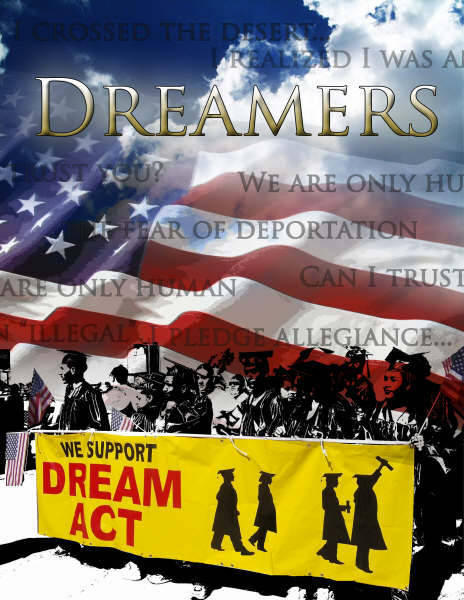
The history of the DREAM Act has been marked by high hopes and wrenching defeats.

In the eyes of immigrant rights advocates, it’s inexplicable why a bill aimed at helping college students and young military personnel get their immigration papers could face such stiff resistance.

The U.S. Senate’s failure to reach 60 votes in order to advance the bill was characterized as a slap in the face to immigrant constituencies.

Advocates were quick to point to the Republican Party as being to blame.

“The best and the brightest of our nation’s immigrant community— who want to go to college and serve in our military— just had the door slammed in their face by the GOP,” said Frank Sharry, executive director of America’s Voice and a veteran of Washington, D.C. immigration policy battles.

Before the Republicans blocked debate on the DREAM Act and the bill of which it was part, all of the powerful Democrats in Congress and the executive had put their shoulders to the wheel to get it done.

President Obama had issued a strong public endorsement, and asked Latino voters not to forget which party is standing with them on the DREAM Act and immigration policy generally.

Sen. Harry Reid, majority leader from Nevada, had come up with the innovative tactic of attaching the DREAM Act to the annual defense authorization bill. Rep. Luis Gutiérrez, the champion of immigration reform in the lower house, had said he believed he had the 218 votes needed to pass the DREAM Act in that chamber.

In the end, the Democrats’ failure to bring over Republicans to stand with them on the DREAM Act meant that, just like in 2007 and other instances, the policy would remain on advocates’ wish list.

Privately, immigrant advocates also expressed frustration that the Democratic leadership was so late to jump on the DREAM Act bandwagon this year. Sen. Reid’s was a last-minute effort on the DREAM Act. Republicans were able to characterize it as a desperate move to win Latino support as Reid fights to fend off a Tea Party-powered challenger in November.

Immigrant rights grassroots organizations at the state and local level have invested money and time to help student groups and youth organizers build a base for the legislation. The DREAM Act has become basically a household word in immigrant communities and media.

Republican senators who in the past have been supportive of immigrants and immigration reform—including a path to legalization for undocumented immigrants— such as Lindsey Graham of South Carolina and John McCain of Arizona, showed no interest in the DREAM Act this time around. With the Republican Party shifting right on many issues ahead of the November races, immigration was no exception.

Advocates who favor strict immigration controls contended that the DREAM Act was little more than a partial immigration amnesty dressed up for midterm season politicking.

One California Republican, Rep. Brian Bilbray, even went as far as to connect the DREAM Act to the recent massacre of 72 migrants in Mexico— implying that immigration policy changes could backfire by pushing more Latin Americans to move illegally on pathways controlled by organized crime.

“This talk of amnesty is not only an insult to every American who has come to the United States legally and the millions who wait patiently while playing by the rules,” wrote Bilbray in a blog on the DREAM Act published in The Hill (http://thehill.com/blogs/congress-blog/politics/119803-something-to-consider-before-casting-a-vote-for-the-dream-act-rep-brian-bilbray). “But it is in part what makes it possible for the cartels to murder those 72 innocent migrant workers.”

To benefit from the DREAM Act, undocumented immigrant high school graduates must attend college or serve in the military. They also need to have entered the United States at age 15 or younger and prove they’ve resided in the country for five years or more.

In the wake of the DREAM Act’s defeat, it appears that immigration reform of a comprehensive nature faces little margin for passing, even after the midterms.

Sen. Bob Menendez of New Jersey, a Democrat and the only Latino in the upper house, said he would introduce such legislation in the coming weeks. He may be gambling that post-midterms, senators will again be amenable to deal making.

But it’s more likely that the momentum on immigration legislation will continue to shift to the states, where efforts like Arizona’s crackdown have become part of a widespread effort by state capitols and localities to take immigration matters into their own hands.

That may not necessarily be a bad thing for undocumented immigrant students who hoped to benefit from the DREAM Act.

State legislation can go either way on immigration, even though hard-line measures attract the most attention.

A group called the State Legislators for Progressive Immigration Policy noted that 10 states have legislation providing in-state tuition to undocumented immigrant college students. And that includes red states like Utah and Texas.

From refugee to airline pilot

0
From refugee to airline pilot

Aluel Bol Aluenge’s journey has taken her from Africa to America and back again, and from young refugee to airline pilot.

Along the way she’s had a greater breadth of experiences than most people.

Her friend, Diana Albertson, whose family sponsored Bol and her family, called because she thought Bol’s story was worth some ink. I think so, too. It’s an old American story.

Bol lives in Ethiopia now, but she’s here visiting her three older brothers and their families, so I took the opportunity to speak with her.

Bol, 27, is Sudanese, but her story is different from what you might expect.

Full story at Seattle Times.

Kenya calls on UN Security Council to end hands-off approach to Somalia

0
Kenya calls on UN Security Council to end hands-off approach to Somalia

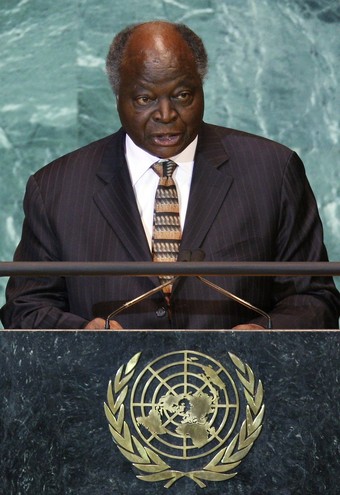
Kenyan President Mwai Kibaki today called on the Security Council to abandon what he called its hands-off approach to Somalia and strengthen the African peacekeeping force in the faction-torn country to counter the threat from Islamist militants.

“Somalia continues to suffer benign neglect from the international community leading to many lost opportunities to resolve the crisis,” he told the General Assembly on the opening day of its annual high-level segment.

“The perceived reluctance of the United Nations Security Council to engage with Somalia has been ? matter of great concern for those of us who suffer the greatest consequences of the conflict,” he added, reaffirming the central role of the UN in global governance.

He said critical proposed measures adopted by the African regional Inter-Government and Development (IGAD) group showed the way forward, calling for the appointment of an eminent high level personality for Somalia, the effective deployment of 2,000 additional troops, enhancing the capacity of the 5,000-strong African Union peacekeeping mission (AMISOM) and boosting support to the Transitional Federal Government (TFG) in its fight against Islamist militants.

“Unfortunately, the support needed to implement these decisions by the international community has not been forthcoming,” he declared. “It is against this background that Kenya urges the United Nations and the entire international community to seize the opportunity created by the African regional initiative and lend support to the proposed measures.

Somalia has not had a functioning central government since for nearly two decades, during which it has been torn apart by factional fighting, most recently between the TFG and Al Shabaab Islamists and other militias.

“Today, as this Assembly convenes, the security situation in Somalia continues to deteriorate and threaten peace and stability across the entire region and beyond,” he declared. “Needless to say the threat posed by today’s Somalia to international peace and security is greater than in any other conflict in the world.”

Mr. Kibaki also stressed the role of IGAD in ensuring that January’s self-determination referendum goes forward in southern Sudan as planned, the final stage in the 2005 comprehensive peace agreement (CPA) that ended two decades of war between the south and the central Government.

He said Sudanese President ?mar Bashir and First Vice President and Southern Sudanese leader Salva Kiir had reaffirmed to him their commitment to resolve all the outstanding issues, to hold the referendum on 9 January and accept the outcome of the vote.

“These efforts by the neighbours of Sudan and the African Union have created ? momentum that is critical to the full implementation of the ???,” he said. “It is critical that the world stands in support of these initiatives as Sudan takes critical steps in relation to its future governance.

Gun Violence and Children

0
Gun Violence and Children

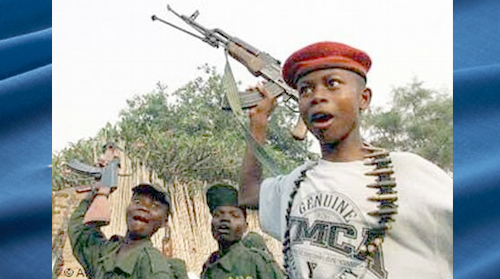
Recently, the United Nations expressed new concern about a crisis many Americans know little about: The use of child soldiers in global conflicts, especially in Somalia. Somalia, whose government collapsed in 1991, has been in a constant state of conflict and tension for years and still has no legally recognized government.

The United States joins Somalia as the only two countries in the world not to ratify the Convention on the Rights of the Child, an international treaty recognizing the human rights of children that UNICEF points out is the most widely and rapidly ratified human rights treaty in history. One of the Convention’s provisions prohibits the use of soldiers younger than age 15 in conflicts.

The United States did ratify a later optional protocol prohibiting the use of soldiers younger than 18. But in Somalia, both insurgent groups and the Transitional Federal Government — which is dependent on help from the West, especially, the United States — have been widely accused of violating this principle.

The United Nations estimates the Somali military is using hundreds of child soldiers, some as young as age nine. As one official from the transitional government told the New York Times, when it came time to recruit and equip their army, “I’ll be honest … we were trying to find anyone who could carry a gun.” The New York Times said, “Officials also revealed that the United States government was helping pay their soldiers, an arrangement American officials confirmed, raising the possibility that the wages for some of these child combatants may have come from American taxpayers.”

As shameful as it is that the United States may be inadvertently paying the salaries of Somali child soldiers, it shouldn’t be surprising. Our nation continues to allow gun violence to destroy thousands of children’s lives at home too. The Children’s Defense Fund (CDF) has documented the threat of gun violence against American children for nearly two decades since we learned in a Peter Hart Associates poll undertaken by CDF’s Black Community Crusade for Children that the number one concern of Black adults and youths was gun violence.

So, many in both generations feared they or their children would never reach adulthood because of pervasive gun violence. Although some progress has been made to reduce gun violence, it is at risk of being negated by the aggressive NRA pro-gun campaign and the U.S. Supreme Court decision relaxing the reach of gun control laws.

In our latest annual report, Protect Children, Not Guns 2010, and in a special section on gun violence in The State of America’s Children 2010, we show that in 2007, 3,042 children and teens died from gunfire in the United States — eight every day — as a result of homicide, suicide, or accidental or undetermined shootings. Almost six times as many children and teens suffered non-fatal gun injuries, which have serious physical and emotional consequences. Random violence, especially in poor communities, drives thousands of vulnerable young people into the pipeline to prison where they remain trapped with little chance of escape. Consider these other startling facts on gun violence from our research.

Since 1979 gun violence has ended the lives of 110,645 children and teens in America. Fifty-nine percent of them were white and 37 percent were Black. Fifty-six percent were homicides and 31 percent were suicides. The 3,042 deaths of children and teens from gunfire in 2007 nearly equaled the total number of U.S. combat deaths in Iraq through February 2010. More Black children and teens died from gun violence in 2007 — 1,499 — than all the military deaths in Afghanistan since America’s engagement in that war began nine years ago. Black males ages 15-19 are more than five times as likely as their white peers and more than twice as likely as their Hispanic peers to be killed by firearms.

White children and teens are six times as likely as any other racial or ethnic group to be victims of firearm-related suicide. The annual number of firearm deaths of white children and teens decreased by 54 percent between 1979 and 2007, while the deaths of Black children and teens increased by 61 percent.

Violence is a widespread problem for American youths. Almost one in five high school students admitted carrying a weapon in 2007; one-third of those students brought the weapon to school. One in 20 admitted carrying a gun. One in 18 high school students reported staying home from school because they felt unsafe at school or going to or from school.

There are over 280 million privately owned firearms in the United States, which is the equivalent of nine firearms for every ten men, women and children in our country. Recent court decisions challenging handgun bans could add to these numbers. Just as children should not be paid soldiers in armed conflicts half a world away, they also should not be forced to live in fear of the widespread armed threat in American streets, schools, and homes.

What is it going to take for adults in America to stand up and say enough to the violence that is terrorizing and killing our children? No enemy without poses as great a threat as the gun enemy within. — (NNPA)

Marian Wright Edelman is President of the Children’s Defense Fund whose Leave No Child Behind® mission is to ensure every child a Healthy Start, a Head Start, a Fair Start, a Safe Start and a Moral Start in life and successful passage to adulthood with the help of caring families and communities. For more information, go to www.childrensdefense.org.

Debate Over Birthright Citizenship: A Devious Distraction from Needed Reform

The debate over abolishing birthright citizenship is one more distraction from fixing our broken immigration system. Instead of focusing on comprehensive reform, Republican leaders are proposing constitutional amendments to deny citizenship to “anchor babies” – a derogatory term used to describe children born in the U.S. to undocumented immigrants. Under current immigration law, some undocumented immigrants may obtain relief from removal if they can show that their departure would cause exceptional and extremely unusual hardships to their U.S. citizen child. An American child, after turning age 21, may also petition for her foreign national parents to become lawful permanent residents of the United States. While birthright citizenship is now a part of the immigration debate, repealing it is not an effective solution, but a distraction from what really needs to be done.


Section 1 of the Fourteenth Amendment states, “All persons born or naturalized in the United States and subject to the jurisdiction thereof, are citizens of the United States and of the State wherein they reside.” Some Congressional leaders want to change this portion of the Fourteenth Amendment to discourage foreign national mothers from entering the United States just to give birth to a child who will automatically become a U.S. citizen. In a recent appearance on Fox News, Senator Lindsey Graham of South Carolina said, “They come here to drop a child. It’s called drop and leave.” His comment helped to spurn the renewed debate about birthright citizenship. Subsequently, Senator John McCain of Arizona suggested that Congress hold hearings to discuss the issue.


Both of these seasoned Republican senators had previously worked with Democrats in a bipartisan attempt at passing comprehensive immigration reform. Now that election season is approaching, however, the conservative senators have changed their tune. Right wing polls have made it clear that the conservative voter base wants hard lines against undocumented immigrants, rather than cooperation with President Obama that could result in a mending of our broken immigration system.

While everyone agrees our nation’s immigration system is broken, the birthright citizenship debate has caused further divisiveness. Instead of continuing to work across party lines in what was and could have continued to be a boldly refreshing effort at needed immigration reform, Graham and McCain have now made the unrealistic suggestion that we consider denying citizenship to persons born in the U.S whose parents did not cross our border legally.


Making such a drastic change is nearly impossible, as doing so would require constitutional changes, which rarely occurs because it needs a vote from two-thirds of Senate and three-quarters of the states. Neither Senator McCain nor Senator Graham expects this to occur. Graham and other members of his party are concerned that our policy of giving citizenship to everyone born in this country encourages people to break the law by coming to this country without permission.


They also note that the United States is one of few countries that gives citizenship to everyone born within its borders. Canada is another. Great Britain changed its policy in 1981 to allow citizenship only to babies born to citizens and permanent residents. France allows those born in France to become citizens when they reach adulthood, rather than at birth. It is not often though, that a republican senator follows the lead of the French on policy matters.


Opponents of repealing birthright citizenship point out that by denying citizenship to people who are born in this country, we would create an underclass of non-citizens who may also have difficulty obtaining citizenship in the land from which their parents immigrated.
Also, the Fourteenth Amendment, and the guarantee of citizenship at birth that goes along with it, is a policy that has allowed this nation of immigrants to be united. Cristina Rodriguez, a law professor at NYU wrote: “Each generation born in the U.S. stands on its own, with equal citizenship status, regardless of parentage. Given our history as a society of immigrants, this rule has been crucial to our development into a cohesive political community and to our ability to integrate each new immigrant cohort.”


The Fourteenth Amendment, which guarantees equal protection to all persons in the jurisdiction of the United States, is a tradition of which we should be proud. It was added to the constitution in part to ensure that African Americans, who had been slaves, would have equal protection of the law. In addition to a guarantee of legal equality, the Fourteenth Amendment helps ensure that all persons who are born here are entitled to have a voice in this country.


Rather than discussing the revocation of this tradition that has helped to make our nation great, we should focus on taking positive steps to make our immigration system function. With some effort and cooperation, Congress can pass a bill that will benefit both the conservative voters and the immigrants who will continue to come to our country and make positive contributions. Congress needs to do away with these distractions and pass comprehensive immigration reform because an immigration system that works is a benefit to us all.


Nothing in this article should be taken as legal advice for an individual case or situation. The information is intended to be general and should not be relied upon for any specific situation. For legal advice, consult an attorney experienced in immigration law.


Cheptaab to headline Kenyan Diaspora Queens concert

0
Cheptaab to headline Kenyan Diaspora Queens concert

Barbara Chepkoech, popularly known by her stage name Cheptaab, was raised in Nairobi, Kenya. She started singing at a very young age with various groups before joining the popular Kenya Army band Maroon Commandos as one of their singers and dancers. She later went solo and released her debut album in 2009. The album featured Cheptaab’s runaway hits Tilenyun and Josi josi.

Cheptaab also had a successful stint as an actress. She appeared in the popular TV comedy Vioja Mahakami as Suzzy Ndambuks and also in Tahidi High and Waridi. Cheptaab moved to the U.S. in early 2010 and is based in Des Moines, IA. Her fans will have a chance to see her perform on Sunday, September 5th at Cabooze 917 Cedar Avenue South in Minneapolis as part of the Kenya Moja Pamoja Labor Day Weekend events.

her Sunday performance will be the finale of a labor day weekend entertainment menu that will also feature Professor Jay from Tanzania, currently on tour in the U.S. and up and coming Kenyan female artist, Jedidah who goes by the stage name Genge Gal.

Full lineup of the weekend long festivities can be found at KE411.com.

Liberians in Minnesota: A community divided

0
Liberians in Minnesota: A community divided

When U.S. Representative Erik Paulsen walked through the doors of Brooklyn United Methodist Church in Brooklyn Center recently, little did he know he was walking into what one meeting participant later called a “booby-trap.” The church, which holds fond memories for the Congressman because it served as his wedding venue, was now a scene of vitriol exchanges between various Liberian groups that gathered to address lingering tensions within their immigrant community.

More than 50 people, including members of the clergy and tribal organizations sat around the table in an open-style-dialogue format and aired their grievances to the first-term Republican lawmaker, hoping he would help identify solutions to an array of stifling leadership challenges confronting one of the largest Liberian communities in the Diaspora.

As Mr. Paulsen moved around, shaking hands, patting shoulders, and greeting everyone, he smiled confidently, diffusing the now tension-filled room. The Congressman sat at the head of the table, flanked on both sides by officials of the Advocates for Human Rights, his co-partner in coordinating the “peace” meeting, moderated by Ahmed Sirleaf, a program associate in the Advocates international justice program.

“It is about the opportunity”, Mr. Paulsen said. “Think about the opportunity to take advantage of the large Liberian population here [Minnesota]. This has to be looked at from a position of opportunism.”

The crowd listened studiously as Mr. Paulsen continued laying out the reasons he believes Liberians in Minnesota need to work together. “You need to speak with one voice to make progress. Join the school board, join the city council; you should be the champion of your causes, but you have to first be unified,” he said.

After his opening comments, community members took turns listing what each person viewed as issues contributing to disunity in the Liberian community. A power struggle in January 2010 eventually led to the splitting of the Board of the Organization of Liberians in Minnesota (OLM), the lead community organization, between two rival groups headed by John Tarley and Clarence Yaskey. The lack of a clear leader was mentioned by 90 percent of the speakers as the main source of the problem in the community.

Mr. Paulsen, whose Third Congressional District covers a huge swath of the northwest suburbs, where many Liberian immigrants live, urged the group to set benchmarks for success and build relationships with the larger majority community. The Congressman left early for another scheduled event, but the meeting continued with the Advocates facilitating.

Robin Phillips, the Advocates executive director, encouraged participants to continue talking, and said Liberians should engage one another in frank but civil exchanges, to find common ground on issues that affect their collective interests.

“The Advocates for Human Rights has always partnered with Liberians and their organizations every step of the way”, Ms. Phillips said. “We thank all of you for coming and look toward to a healthy and productive discussion.”

The meeting began with tensions – with some participants hurling invectives at others – yet ended with suggestions, as to how participants could commit to a more sustained process, with the Minneapolis-based rights organization playing a mediating role.

According to Mr. Sirleaf, who also coordinates the Advocates community reconciliation project, a spin-off of its Diaspora TRC work, a collection of comments recorded during the meeting will be synthesized and sent to Representative Paulsen for his intervention.

What it costs to run Somalia

0
What it costs to run Somalia

Want evidence that the government in Somalia – a country that tops the 2010 Failed States Index – needs desperate help? Allow me to show you the money. Literally.

According to the Annual Financial Report released by the office of the Prime Minister today, Somalia’s budget in the fiscal year 2009 was just over $11 million. (The budget of Minneapolis Minnesota, by contrast, is $1.4 billion.) The two largest sources of revenue collected were customs duties from the main Mogadishu port ($6.2 million) and exit fees from the airport ($351,920). Taxes couldn’t be collected due to security. The government received $2.875 million in bilateral aid — the largest total, $1.6 million coming from Libya (the United States gave just $25,000 — about the equivalent of a very entry-level staffer’s annual income.)

Full story @ Foreign Policy.

Outsourcing the war: Ugandans in Iraq

0
Outsourcing the war: Ugandans in Iraq

Last week the Pentagon proclaimed that the last U.S. combat forces had left Iraq. This after an armored unit drove out of the country and crossed the border into Kuwait. However, there will still be 50,000 U.S. troops in Iraq.

An Iraq veteran turned war critic, Camillo Mejia, said that 4,000 U.S. troops who are leaving Iraq will be replaced by 7,000 employees of private military contractors. Other observers say the U.S. has long outsourced the Iraq occupation to troops from some of the world’s poor nations, such as Uganda, Angola, India and Bangladesh, and that many of the mercenaries due to replace other U.S. troops will also come from those countries, especially from Uganda.

The New York City-based Black Star News publishes many critics of U.S. foreign policy in Africa, and Black Star’s Ugandan-American Editor Milton Allimadi is among the most outspoken critics of U.S. use of Ugandan mercenaries, elsewhere in Africa and in Iraq.

“This is not surprising,” declares Allimadi. “It’s a disturbing development and something needs to be done to really stop this because Ugandans are being victimized by the dictator, Yoweri Museveni, and now in collusion with the United States government.

“And another reason why this is very disturbing: It’s an extension of what the U.S. has been doing for a couple of years now with respect to Uganda – outsourcing of torture of people interdicted by the United States to Uganda. And this was well documented in a report by Human Rights Watch that has not garnered sufficient attention.

“The report is called ‘Open Secret: Illegal Detention and Torture’ by the Joint Anti-Terrorism Task Force in Uganda. It was published last year, April 8, 2009, and it says that the United States provided not only training, but also $5 million for Ugandan security agents to torture individuals detained in Uganda, which is illegal according to the Leahy Amendment, an amendment by Sen. Patrick Leahy, which prohibits U.S. cooperation or funding or training for any government that is torturing its individuals or committing human rights abuse.

“It needs to be investigated by the Senate and by Congress.”

In Kampala, former Ugandan soldiers fill out application forms for jobs with the Dreshak company in Iraq. Ugandan security guards make $600 to $1,000 per month over a year-long contract in Iraq, reports Middle East Online, far less than the $15,000 that Western recruits are paid but 20 times the average income in Uganda. – Photo: Middle East Online

Black Star News contributor Michael Kirkpatrick has traveled in Northern Uganda, the wartorn home of the indigenous Acholi people, and written about Blackwater, Dreshak and KBR’s recruitment in refugee camps, otherwise known as Internally Displaced Persons or IDP camps, which he first observed in 2007.

“Back in 2007, I traveled to Northern Uganda at the invitation of some Acholi friends of mine,” says Kirkpatrick. “This was an opportunity for me to see how that part of the country was rebuilding after a 20-year rebel insurgency.

“While I was there, I met a young woman who was there from the British High Commission, and she was studying a local language in the city of Gulu, which is the largest city in Northern Uganda. And she was there to learn this obscure tribal African language because she needed to train translators in Iraq. Well, I thought this was odd, that the Acholi language was being spoken in Iraq.

“Well here what I learned was that there were Acholi, young Acholi men, being recruited by military contractors to go to Iraq and they obviously needed translators because these young men did not speak English, so they needed translators in Iraq to be able to instruct and direct these military contractor employees.

“I’ve come to learn even since then that the recruitment of Ugandans is a very common practice by these military contractors. There are a lot of things going on in East Africa that require the U.S. presence there. And currently, right now, there are recruiting stations in the capitol city of Kampala and there are regularly long lines of Ugandans waiting to get jobs.

“For Ugandans, this isn’t an act of fighting Al Qaeda. This isn’t an act of justice or spreading democracy in the Middle East. For them it is purely an economic issue. They need the jobs; they need the money. From my point of view, we are exploiting a desperate people. We’re bribing them with money to carry weapons into a war that is not theirs.”

Asked whether recruiting stations belong to private military contractors or the U.S. military, Kirkpatrick responded: “They are private. They are not U.S. military. They are not manned or stationed by U.S. military. But believe me, the U.S. military is paying their bills.”

Kirkpatrick also says that private for-profit companies do not have to report casualties or open their accounting books to anyone.

Nigeria’s Zizi Cardow back at Couture Fashion Week

0
Nigeria's Zizi Cardow back at Couture Fashion Week

In her second appearance at Couture Fashion Week New York, award-winning Nigerian designer Zizi Cardow will present her latest collection at 6:00 p.m. on Saturday September 11, 2010. The fashion show will be held in the renowned Grand Ballroom of the Waldorf-Astoria on Park Avenue, New York City.

One of Nigeria’s top fashion designers, Zizi Cardow launched her own signature fashion label in 2000 with a view to globalizing distinctive African prints. Within a year, Ms. Cardow began to win a number of prestigious fashion awards for her impeccable designs, including Best Designer Nigeria (2001), St. Moritz Style Selection (2002), and Fashion & Life Achievement Award (2008).

In 2002 she received the DAME Award for outstanding achievement in fashion at an event attended by Nigeria’s President Chief Olusegun Obasanjo. She has been named an Ambassador for Fashion by the Imo State Chamber of Commerce. Also in 2002, her “Jungle Renaissance” fashion show was widely covered and acclaimed by media worldwide, including CNN Germany and CNN Italy.

Her collections have been shown on runways in Paris, Milan, Cape Town and Israel, and her international clientele includes first ladies and A-listers on Nigeria’s social scene. In 2005 Ms. Cardow represented Nigeria in the Africando fashion and arts exhibition in Milan, an event attended by the mayor of Milan, dignitaries and foreign ambassadors.

Zizi Cardow recently celebrated the 10th anniversary of her fashion label with a gala evening and runway show attended by celebrities, dignitaries and other VIPs at the Eko Hotel in Lagos.

In addition to her numerous fashion accomplishments, Ms. Cardow is greatly involved in various mentorship and youth programs. Her efforts in these areas have also been recognized with such distinctions as the African Role Model Leadership Gold Award (2007), Pillar of National Development Gold Award (2007), Nigeria Enterprise Award for Excellence (2008) and Great Legend of Africa Gold Award (2008).

Couture Fashion Week is a multi-day event showcasing couture and luxury fashion. It also includes exhibits of luxury brands and fine art as well as world-class entertainment and receptions. The event is held at the Waldorf-Astoria in New York City and occasionally in other selected cities and is attended by upscale consumers, invited VIPs, the press and high-end store buyers. Couture Fashion Week offers unique branding opportunities for luxury products and services.

Ramadan: An American-Egyptian Perspective

0
Ramadan: An American-Egyptian Perspective

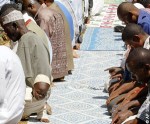
Across cultures and peoples, the principles of Ramadan are the same: self control and the cleansing of the body and mind. However, my celebration of Ramadan varies, depending upon where I am and the existing culture there.

When I was living in Egypt, I noticed the culture is heavily influenced by Islamic lifestyle. Every sunrise I heard the adhan (call to prayer) which is delivered over a loudspeaker in every mosque. The adhan marks the beginning of the fast. In addition, we Muslims are required to observe rules of the public domain. The obligations are twofold: The society must be managed in accordance with the consent of the Muslim constituency as well as God’s commandments. The Holy Quran states: “You who believe? Fasting is prescribed for you, even as it was prescribed for those before you, so perchance you may attain God-consciousness.” (2:183)

In Islam, religion and spirituality are not limited to the private life. The principles that govern the private lives of Muslims are often exhibited publicly through social obligations and rights. While celebrating Ramadan in Egypt, I saw the structure of the day shift in accordance with Ramadan. The work day and school day is shortened. Some businesses (mostly restaurants and cafes) open early for suhoor (a meal eaten before the sunrise). In Egypt, the majority of people are fasting: The struggle is group oriented.

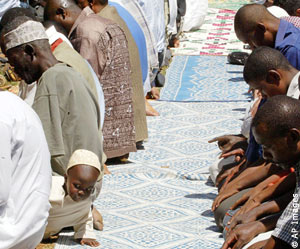
During Ramadan, we Muslims are obliged to give charity, repent sins, make a strong effort to commit good deeds, read Quran, pray, and offer iftar (breaking of the fast) to those who fasted. When I lived in Egypt, these public acts of religiosity surrounded me.

Celebrating Ramadan in the United States has been a very different experience. I have a whole other set of challenges in the month-long celebration. It seems the public is not that aware of Ramadan. The work schedule is not adjusted to fit my family’s needs, and since Islam is not the status quo, only a minority of the population is participating in Ramadan.

I think the culture of Ramadan in America is created by Muslims who are most honestly and sincerely interested in completing religious obligations and enhancing spirituality. Unlike Egypt, where the ceremonies happen all around me, in America my family and I have to put forth a strong effort in preparing the celebrations. Ramadan is more of a private matter in America: Our iftar takes place at home and mosques, and there is no adhan that marks the beginning of the fast. But it’s still Ramadan, and although the celebrations may be different, we still follow the two principles.