Home Blog Page 182

“Apps 4 Africa” : Techies and Civil Society intersect

0

Is it possible to develop software applications in Africa that respond to civil society needs? Techies, or technologists, in East Africa say “yes!” and will set out to do exactly that with “Apps 4 Africa,” a contest that challenges software developers to respond to specific needs described by people in Kenya, Tanzania, Uganda and Rwanda.

Sponsored by Appfrica Labs of Kampala, the Innovation Hub (iHub) of Nairobi, the Social Development Network (SODNET) of Nairobi, and the U.S. State Department, the contest was launched July 1 at iHub, an innovation hub and community workspace for local technologists. The contest runs through August 31.

The State Department hosted a webchat July 9 where three of the software developers involved in creating Apps 4 Africa answered questions from a global audience about the contest and what it could accomplish. The software developers — Josh Goldstein and Jon Gosier, Americans who have worked in technology development in Africa, and Kenyan Philip Thigo of SODNET — said they see the contest as a way to link civil society needs in East Africa with home-grown technology solutions.

Thigo told webchat participants that his passion is “enabling citizens and the non-profit sector to strategically use technology to create change,” and said he sees the contest as “a much needed conversation between civil society and techies.”

There is a cultural gap, Goldstein said, between technologists who get excited about high tech and community leaders who get excited about usability. Apps 4 Africa can be a step in bridging that gap.

Goldstein said the contest will challenge technologists in East Africa to build applications that are useful to the public. The contest is “about giving citizens a platform to share ideas about how technology can help improve their lives,” he said.

The contest website, www.apps4africa.org, provides a place for civil society organizations and individuals to submit project ideas, describing needs or problems that could be addressed by technology. Projects on the website propose apps, for example, to help day laborers find work, respond to victims of sexual violence, track microloans, connect teachers and students, help people with disabilities, and enhance public health and safety.

The website also provides a space for African technologists to connect with mentors and network on the collaboration page, as they seek to design software solutions to meet project needs. Gosier predicted the contest will serve to “showcase the knowledge capacity available in Africa.”

What kinds of apps can be considered? All kinds, said the organizers, responding to questions. Gosier said the medium — mobile device, computer — is not as important as the functionality and the problems the developers will attempt to solve.

Apps will be judged on four criteria, according to Goldstein: usefulness to citizens; potential for the application to be useful for other, global users; usability; and originality. Thigo emphasized that the apps must be “simple and applicable to the regional context,” and must be effective in improving the lives of communities and the work of civil society. Developers can even submit existing apps.

A group of civil society and technology activists will judge the competition, Goldstein said. “We brought together an amazing group of judges — civil society and tech industry luminaries from around the world.”

The judges, Africans and Americans, include: Joseph Mucheru, the regional leader for Google in sub-Saharan Africa; Ory Okolloh, a Kenyan lawyer, political activist and blogger; Anil Dash, technologist, blogger and founding director of Expert Labs; Nathan Eagle, mobile phone developer and chief executive officer of txteagle; Tim O’Reilly, computer book publisher and blogger on emerging technology trends; Rakesh Rajani, Tanzanian founder of citizen-centered initiative Twaweza and a fellow of the Harvard Global Equity Initiative; Thomas Gibian, executive chairman of Emerging Capital Partners; and Emeka Okafor, venture capitalist, entrepreneur and “Timbuktu Chronicles” blogger.

Prizes, as detailed on the website, include “a small bit of fame and fortune — cash, gadgets, chances to improve your technical skills and the opportunity to hobnob with our judges panel of tech luminaries and civil society leaders at an awards ceremony in September.” The contest runs through August 31.

Arizona’s other immigrant conflict: African Americans vs. Africans

0
Arizona’s other immigrant conflict: African Americans vs. Africans

Abdulmajeed Dere expressed frustration with trying to interact with African Americans since he arrived in the metropolitan Phoenix area from his native Somalia in 1996.

“When I came to the country, I saw African Americans as my brothers,” said Dere, a small-business owner. “I was laughing with joy to see them. But every time I talk to them, rejection, rejection—every time. After awhile I felt like, why should I even talk to them?”

Dere is resigned to the cultural split, but is also frustrated by it. As a middle-aged member of the sandwich generation, attending both to children in high school and college and to his elderly mother, he feels he has much to share with his American brothers. A former community case worker, he is deeply familiar with the strain black families face, especially in this recession, squeezed by household demands from both ends of the age scale.

He believes, though, that his accent and a sense of superiority among some African Americans erect barriers to communication and undermine the potential for mutual support. Research published by Arizona State University (ASU) reinforces and echoes Dere’s experience.

Two Different Paths

Africans make up a small but growing part of the black population in metro-Phoenix, which limits opportunities for interaction. According to the 2008 American Community Survey, “foreign-born Africans” number around 18,500 in Maricopa County, or 10.8 percent of the area’s black population. The refugee population in Arizona is much smaller, although that figure more than doubled from 2006 to 2009, to 4,327, according to the U.S. Office of Refugee Resettlement.

In a 2008 supplemental report entitled “The State of Black Arizona, Volume I,” ASU associate professor Lisa Aubrey and colleagues found that many African Americans hold new arrivals “responsible” for their ancestral enslavement and “correlate Africa . . . with poverty and feel ashamed.” Aubrey and her coauthors call today’s African Americans “old diasporans,” descendants of slaves and other earlier African arrivals. The scholars refer to modern continental Africans, including refugees who fled strife in their countries, as “new diasporans.”

Extremely different paths to settlement in Arizona, combined with dissonance within each group, pose challenges for African Americans seeking to build bridges between old diasporan and new diasporan communities. New diasporans in metro Phoenix hail from many parts of Africa, including Liberia, Somalia, Rwanda and Sudan.

Elders from both old and new diasporan communities confront complex issues that will impact their quality of life and that of their descendants for generations to come. While African Americans face myriad health challenges, African immigrants also run into barriers of transportation and isolation, which impede their social and emotional health.

“People are too busy with life, no one is interested in reaching out to African communities,” said Abraham Reech, a senior case manager at Lutheran Social Ministries, a Phoenix area refugee resettlement agency. “There is no reason, no incentive.”

“There is a lack of communication,” said Tap Dak, outreach coordinator for the AZ Lost Boys Center, which serves the Sudanese community of metro Phoenix. He said differences in religion, ideology and politics among African immigrants and refugees often lead to misconceptions between different ethnicities, despite their similar experience and mutual concerns.

Dak added, “The (African) community doesn’t have dialogue within itself.”

Recent African arrivals in Arizona’s Valley of the Sun often possess starkly different experiences, expectations and outlooks on America—and on each other, ASU’s Aubrey noted, Along with refugees seeking political asylum, the immigrants include “some of the most highly educated, professionally skilled and accomplished Africans from the continent,” she said.

Preconceived ideas about other ethnic groups often lead to rifts.

Reech, who is Sudanese, recalled an instance when African neighbor—like Reech, a recent immigrant—forbade his son to associate with Reech’s son. Reech believes that the father didn’t want his son to associate with black people, whether African or African American — even though he was also black. He said this is a common reaction among immigrants, who wish to avoid negative associations with African Americans.

“My son was on the principal’s list,” Reech said, shaking his head in exasperation. “What would make the father think that way?”

Little Interaction Among Immigrants

Charles Shipman, Arizona’s refugee coordinator, acknowledged that there is little interaction among the newer African immigrant groups. He attributes the problem less to outright antagonism than to a sense of competition.

During his eight years of working with refugees, Shipman said, he has seen collaborative efforts between African immigrant groups quickly collapse when discussions turn to pursuing funds.

But the situation is improving, Shipman added. “Organizations are starting to understand that mutual assistance is about mutual assistance. They are starting to come together,” he said.

African Americans around Phoenix also constitute a diverse population, including Valley natives and recent arrivals from other states. In many instances, a shared ancestry with African immigrants is not enough to promote intercultural connections.

Outreach Efforts

“Refugee assistance is all about outreach, and there is not a lot of outreach from the African American community,” noted Eman Yarrow, a community and economic development manager for the Arizona Refugee Resettlement Program.

Yarrow cited First Institutional Baptist Church and the Light of Hope Institute as faith-based organizations particularly committed to aiding refugee families. “Resettlement agencies need to do a better job—talk to larger churches about supporting smaller immigrant churches.”

For example, First Institutional invited Kigabo Mbazumutima, a doctor from Benin, to speak at its 2010 Community Health Forum and share his experiences growing up in the Congo.

Mbazumutima is working with ASU faculty to improve health care access to the Great Lakes region of Africa, and the mostly African American attendees at the forum showed interest in volunteering and making donations. He and event organizers hope that by providing access to resources, such as the church facility, established groups in the African American community in Phoenix will foster cultural understanding and the greater acceptance that new diasporan communities need to flourish in this desert region.

Obama offers support to Africa against terror

0
Obama offers support to Africa against terror

President Obama said the United States will redouble its cooperation with Uganda and other African Union members against the Somali terror group al-Shabaab to try to ensure that it and similar organizations “are not able to kill Africans with impunity.”

Speaking with the South African Broadcasting Corporation at the White House July 13, Obama said he had conveyed to Ugandan President Yoweri Museveni the condolences of the American people for the July 11 attacks that killed more than 70 who had gathered at locations in Kampala to watch the World Cup final. Obama also told Museveni that the United States will support a thorough investigation into the attacks, for which al-Shabaab has claimed credit.

Obama said it was “tragic and ironic” that the attacks took place during South Africa’s hosting of the World Cup, which had offered “a terrific showcase … for Africa as a whole” by refuting negative stereotypes of African capacity and demonstrating that “when given an opportunity, Africa is a continent full of leaders, entrepreneurs, [and] governments that can operate effectively.”

“On the one hand, you have a vision of an Africa on the move, an Africa that is unified, an Africa that is modernizing and creating opportunities; and on the other hand, you’ve got a vision of al-Qaida and al-Shabaab that is about destruction and death,” Obama said. “I think it presents a pretty clear contrast in terms of the future that most Africans want for themselves and their children.”

The international community needs to “support those who want to build, as opposed to want to destroy,” he said. And as Somalia’s Transitional Federal Government continues to try to establish itself, he said, African Union peacekeeping forces should work with Somali authorities to “try to stabilize the situation and start putting that country on a pathway that provides opportunity for people, as opposed to creating a breeding ground for terrorism” that could export more violence beyond Somalia’s borders if al-Shabaab gains more control within the country.

Obama said statements by terror organizations show that “they do not regard African life as valuable in and of itself. They see it as a potential place where you can carry out ideological battles that kill innocents without regard to long-term consequences for their short-term tactical gains.”

For that reason, he said, it is important that even as the international community deals militarily with al Shabaab and other violent extremists, it must also promote development, entrepreneurship, democracy and human freedoms and build upon the models of countries like South Africa that “are trying to move in the right direction” and empower their citizens to improve their lives. “Hopefully, the United States can be an effective partner in that,” the president said.

Obama referred to his July 2009 speech in Ghana, where he said the United States can partner with African nations, “but ultimately, on whether it’s issues of eliminating corruption, ensuring smooth transitions of democratic governments, making sure that businesses are able to thrive and prosper and that markets are working for the smallest farmer and not just the most well-connected person — those are issues that Africans can work on together.”

The United States wants to provide resources to Africa but wants to partner with Africans “who are interested in growing their own capacity over time and not having a long-term dependency on foreign aid,” the president said.

Obama said former South African President Nelson Mandela has provided a path to understand “the standards of leadership that are needed” on the continent and expressed confidence that those standards could be met. Mandela is “not just a national treasure” for South Africa, “but a world treasure,” he said.

“We are constantly reminded that his legacy of seeing every person as important, and not making distinctions based on race or class but the degree to which they are people of character — that’s a good guidepost for how all of us should operate as leaders,” Obama said.

“African Cheese” aims for U.S. market

0

Brown’s Cheeses is something of a multinational corporation on a tiny scale: It sells brie, mozzarella and other European-style cheeses made by East Africans, it’s owned by a Kenyan couple of British descent, and their daughter and her American-born husband will start running the company this year.

Its ambitions are far-reaching, too, and brought Brown’s Cheeses to New York this summer for the Fancy Food Show.

Andrew Stirling, the American, said his wife Delia’s parents started the company in Limuru, Kenya, in the highlands north of Nairobi, almost by accident 30 years ago, the byproduct of a craving. “They started making cheese out of their kitchen because they couldn’t buy cheese that they liked, and started giving it as Christmas gifts,” he said. “And those same people started requesting it and became their first customers.”

David and Sue Brown expanded their cheese repertoire over the years, learning the craft by trial and error and on trips to Italy and France. “It’s a small market, so you’re very close to your customers,” Stirling said. “You get a phone call if somebody gets a bad cheese. Fortunately, that doesn’t happen very often anymore.”

The Browns used milk from their small herd of about 20 cows and then supplemented it with cow’s milk and goat’s milk from hundreds of other small, sustainable family farms nearby. The cheeses are handmade and all natural, and they have a following among European and American expatriates in Kenya and Tanzania as well as among tour and safari companies that serve Brown’s cheeses to their customers.

“Now we’re looking for new markets,” Stirling said.

Transporting cheese across the Atlantic is no small thing, but Stirling said the United States offers powerful incentives: a large market of cheese lovers and the African Growth and Opportunity Act (AGOA). Begun in 2000, AGOA is a U.S. government initiative that helps expand U.S.-African trade and investment, promotes free markets, stimulates economic growth and assists sub-Saharan Africa as it integrates into the global economy. At the food show, Brown’s Cheeses was one of several African businesses featured at a booth for the Competitiveness and Trade Expansion Program (COMPETE), sponsored by the U.S. Agency for International Development (USAID).

“We can bring our cheese to the U.S. duty-free. That is a huge advantage for us,” Stirling said. “Certainly, we have to balance that with the increased logistics costs of maintaining a cold chain from Nairobi, which is essentially on the equator, through Europe to the U.S. and then through customs in the U.S.”

The logistical problems are not insurmountable, though: Stirling said Kenyan flower exporters have given him advice, and the air freight company that delivered an assortment of Brown’s Cheeses for the New York show proved that it can do the job.

Curiosity might help generate interest among consumers, Stirling said: “We like to think that we have the best cheese in Africa, and we think a lot of cheese shops would be interested in carrying a cheese from Africa, if it were available.” Response from buyers for North American retailers at the Fancy Food Show “has been very strong.”

Stirling said his in-laws are ready to retire from the cheese business and concentrate on their other interests — Sue is an herbalist, David a painter — and he and Delia have worked in the cheese operation enough in years past to take it over. In the United States, he has been a product manager for an electronics company, and she has been a commercial real estate broker; now they can apply that business experience to cheese.

Stirling said the prospect of growing a business of their own was exciting and “a great opportunity.” But he admitted to one sore point: “I do get some flak from my mother for moving 10,000 miles away.”

The magic that is P-Square

0
The magic that is P-Square

When I heard that P-Square was coming to the US for a tour, I was willing to travel to whatever city they were scheduled to visit because at the time, there was no word that they would perform in Minnesota. Then it was big news that they had indeed been nominated by the BET Awards for the “Best International Act”.

For those that have been following P-Square’s career, this was no surprise because for every milestone that African artists were told they could not achieve, Peter and Paul have set to achieve it and surpass it. This is a great motivation for Peter and Paul Okoye the duo that is P-Square.

After the P-Square concert in Houston, Texas, the anticipation of their performance was raw, there was a collective held breath in anticipation of their Minnesota concert which was preceded by the concerts in Los Angeles and Oakland in California. They were brought to Minneapolis courtesy of BCS African Foods, a Brooklyn Park based wholesale importer of African foods.

On Saturday, July 10, 2010 the crowd was wound up tighter than a corkscrew in anticipation of seeing them perform live. The dozen or so clips all over the social media networks had whet my appetite for the duo and of all the fans were eager to witness the magic that is P-Square on stage.

The concert was held in Brooklyn Center just outside of Minneapolis and when we arrived, we were greeted by dozens of fans holding their posters of Peter and Paul, fans taking pictures on the red carpet sponsored by Access LIB. The fans were dressed to the nines and ready for the dynamic duo to hit the stage.

The moment P-Square hit the stage, the audience lost all decorum and crowded the stage to get a close-up of the bizzy body magic that brought hits like Ifunaya, Do me, I love you, Possibility and many more. Peter and Paul performed in perfect harmony making sure that every girl in the audience felt touched by their lyrics, dancing to the frenzied screams and even slowing things down so that every lyric was heartfelt and repeated by the audience.

At one time Peter and Paul cut the beat and in acapella mode and pointing to each other, belted the phrase, “who wants to marry my brother?” I believe that it is at this point that my ear drums went numb from all the screams that rocked the house. They also gave tribute to the Ibo tribe. P-Square serenaded the fans, broke out into pitch perfect dance which was full of energy and that rhythmically rocked the fans into stepping out and just having the best time ever.

P- Square’s songs are written and produced by Paul Okoye. It was clear on stage that Paul is the lyricist while Peter is the dance dynamo. They are doubly talented and skilled and that is why the concert was so on point. They capitalized on their strengths and the live band and dancers serve as a unit that is so in sync with each other that they serve to provide a seamless show.

The P-Square duo had a chance to engage in an intimate meet and greet at Klub Afrika’s VIP lounge with a select group of fans in Brooklyn Park the next night, before jetting out.

P-Square is scheduled to perform in Maryland, Washington DC, Virginia, detour to Ontario, Canada before ending the US Tour in New York City. For more information on specific dates and times please visit P-Square’s Facebook page or their website.

World Cup: Africa, the real winner

0
World Cup: Africa, the real winner

The United Nations today hailed the 2010 World Cup as a great success for the Government and people of the host nation South Africa, as well as the entire African continent, adding that the event also served as a vital tool to promote development and peace.

“Irrespective of the result of the final, the real victor of the 2010 World Cup is Africa and the South African people,” according to a press release issued by the world body after the end of the month-long tournament in which Spain took home the top prize.

The organization of the world’s biggest sporting event “surpassed expectations, as the tournament took place in a positive spirit and safe environment for athletes, fans, observers, and local community members alike.

“While there may have been doubts prior to the World Cup about staging the event in South Africa, there is now widespread confidence in the ability of the region to stage such global events.”

The UN added that a number of initiatives surrounding the tournament – held for the first time in Africa – also helped to advance a host of development objectives from ensuring quality education and a clean environment to reducing hunger and disease.

The 2010 World Cup “marked an unprecedented opportunity for the United Nations to promote its development and peacebuilding efforts, in particular the Millennium Development Goals (MDGs),” the world body stated, referring to the anti-poverty targets world leaders have pledged to achieve by 2015.

Although sport was already widely used by the UN prior to the World Cup as a cost-efficient and effective tool for development and peace, the 2010 World Cup has given the use of sport as a development tool “an incredible burst of momentum” that has been felt throughout the UN system.

“It is my hope that the momentum that has been gained through the World Cup will carry through in the coming years and hopefully be amplified even further through the engagement of governments,” said Secretary-General Ban Ki-moon.

Mr. Ban, who attended the opening ceremony in Johannesburg on 11 June, encouraged governments to work with the UN system and his Special Adviser on Sport for Development and Peace, Wilfried Lemke, to harness the power of sport as a development and peacebuilding tool.

You have to claim the American dream, says Project Runway finalist Korto Momolu

You have to claim the American dream, says Project Runway finalist Korto Momolu

Despite getting eliminated and feeling irked about losing season five of Bravo TV’s hit show “Project Runway,” Korto Momolu still pushes her fashion creativity to inspire people across the world.
 
Momolu, 35, born in Monrovia, Liberia immigrated with her family to Canada in 1990, where she lived for 20 years.

“We went back and forth,” Momolu said during a phone interview on Tuesday evening. Momolu, the second of three siblings resides in Arkansas with her 6-year-old daughter and her husband. 

Momolu steadily re-emerged as the noted African fashion designer, stylist and one of the most selected works in the fashion industry. Many viewers followed the extraordinary designer through a reality TV show that earned her the fan favorite on season five. 

“As a black woman I was very proud of myself,” Momolu said.

The competitive reality series did not merely boost Momolu to climb the hills of the fashion industry. It was a gut feeling that prepared her for the emotional journey and to audition in New York for “Project Runway”, Momolu said.

“It was emotional for me,” she said. “You get so far and you wonder why you didn’t win. But letters of encouragement from all over the world motivated me to go forward. Regardless of what happens, we have to keep going and claim the American dream.”

Despite the emotional roller coaster, Momolu is able to ruminate on her life and to capture those who embraced her talent at a tender age.

“I have always been creative,” Momolu said.“My art teacher nurtured my talent and directed me to fashion design.”

Whether it was cultivating her fashion talent at Richard Robinson School of Fashion in Canada, or emancipating from the many talents she possessed, Momolu always landed on fashion design. She has done fashion design, interior design, photography, hair, makeup and music, Momolu said

“When you’re an artist it’s hard to be in one lane,” she said. “But fashion design is one I went back to because it came natural to me.”

Momolu’s collection brand bears her name, “Korto Momolu.”

Her work is known for the fine texture, long garments, exhilarating colors, print and beading that accentuate her work. “I use a lot of print and beading,” Momolu said. “That’s one way of knowing it is a Korto Momolu. I put something together that no one can.”

Momolu designs with the intention of attracting all female consumers, and eradicating their insecurities when it comes to buying “Korto Momolu” clothing.

“I know their insecurities,” she said. “I make something that compliments them. Not trashy.”

Aside from her clothing, Momolu will launch her accessories line for Dillard’s on New York Fashion Week in December. Dillard’s is based in Arkansas. The company approached Momolu and asked to see her work, she said.

Launching Korto Momolu handbags and jewelry with Dillard’s in February was amazing, Momolu said.

“Unlike Project Runway, I can pick my models on my solo shows,” she said. “It is amazing to see my lines in major department stores.”

“Korto Momolu” jewelry has gained the same popularity as its designer. Vanessa Williams, Whitney Houston have placed special orders of her jewelry. But her most memorable so far was doing custom designing for President Ellen Johnson Sirleaf of Liberia.

“Doing a custom design for the president of Liberia was the best thing I have done,” said Momolu.

Korto Momolu perfume and bedding are something to watch for as Momolu’s fashion design progress, she said.

Momolu, a firm believer in jewelry has a fixed idea on what she would design for First Lady Michelle Obama, if asked.

“I would make a piece of jewelry for the First Lady,” Momolu said. “It becomes a piece of treasure. She can pass it down to her children.”

For the first time, the designer will appear on EVK’s Runway Africa in Minneapolis on July 17th to showcase her work and to visit some of her family.

Still, Momolu doesn’t consider herself a celebrity. For her, touring states like Minnesota is about connecting with people.

“It’s about showing my work and seeing me,” she said. “It just makes it real and it can inspire people. I hope to have a big crowd when I come to Minnesota.”

Editor’s note: Enter a free ticket drawing on our Facebook fan page for a chance to win a pair of tickets to go see Korto Momolu at EVK’s Runway Africa show at the Epic in Minneapolis on July 17. Simply enter a comment where her photo appears by Monday, July 12.

Somali community celebrates graduates

Somali community celebrates graduates

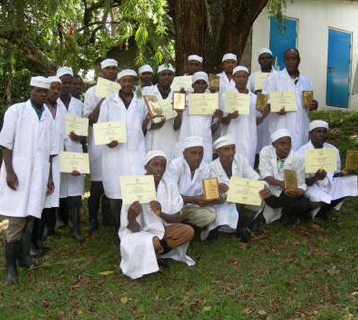
Friends, families and community leaders gathered at Augsburg College recently for Waxbaro Project’s second annual graduation ceremony to celebrate the achievements of the Somali youth graduates. The speakers and the panelists spoke in both English and Somali.

Hussein Samatar, executive director of the African Development Center in Cedar-Riverside, the Democratic-Farmer-Labor (DFL) Party endorsed candidate for the Minneapolis Public Schools Board – District 3, appeared as the keynote speaker. His speech not only motivated the students, but the Somali community at large.

“The more we have education, the better we are going to become,” Samatar said. Waxbaro Project known as “learn something” is a non-profit organization that was established 2009 in Minneapolis. The organization holds annual recognition ceremonies and is comprised of distinguished committee members, who are either in college or have advanced degrees.

Although the purpose of the project was to illuminate the young graduates, the organization got positive publicity and funds from the Somali community. Some see the Waxbaro Project as the only organization in Minnesota that uplifts and prepares the Somali youth to become better Somali Americans.

The organization served 400 Somali graduates this year.

In retrospect, Fardawsa Yusuf contended that Waxbaro Project exemplifies the educational history of Somalia in 1975, motivating and encouraging Somalis to acquire education and to teach them how to become the new faces of Somalia and the United States.

“This will show children that they are supported with their education,” Yusuf said in a news release.

Saturday June 12th celebration started around 6:30 p.m. when the panelists, performers and the celebrated graduates eagerly awaited to mount on stage.

Graduates like Abdihakim Adam and Rahma Warfa expressed their appreciation and excitement through exchanging handshakes with friends and community organizers who embraced and recognized their achievements.

“I was there to get my certificate and to entertain the community,” Adam said.

A majority of the panelists were college graduates. The motive of the panelists was to encourage high school graduates to seek higher education, providing resources while reflecting on the significant discrepancies between colleges and high schools.

“It is OK to be confused in college,” said Warfa, who studied medical technology at University of Minnesota. “My field of study was actually accidental.”

Warfa and other panelists alike urged the high school graduates to explore elective courses of interest and to use friends and mentors when picking a major.

Many took the time to define their chosen careers while some condemned the stigma connected with Somali women, reminding the Somali community that it’s OK to see many women pursuing nursing careers.

Moreover, Samatar emphasized that there should be no gender division in the Somali community.

“Boys will not have more privilege than girls,” he said.

Samatar promised that he would represent and open doors of opportunity to the Somali community.

Obama’s immigration speech wins praise

0
Obama's immigration speech wins praise

President Obama’s speech may be too little, too late on immigration. But few have said it better.

Obama’s remarks at American University ahead of the July 4 holiday – his first major policy speech devoted solely to this issue – tried to reframe a debate that has grown more contentious than ever with the advent of Arizona’s new legislative crackdown on illegal immigration, which will go into effect later this month.

The president compared the immigration system to the health care and financial messes. He said the immigration laws are broken and in need of a major overhaul.

Clearly meant to galvanize national opinion, and reframe the debate, Obama’s speech cast immigration as an essential part of the American spirit, a force for good in business, and an ingredient in the country’s economic competitiveness.

The president quoted poet Emma Lazarus’s early-20th century words—words inscribed on the Statue of Liberty–about America receiving the globe’s “tempest-tossed” and “huddled masses yearning to be free.” But he also embraced immigration as a source of economy-powering talent and innovation.

“The scientific breakthroughs of Albert Einstein, the inventions of Nikola Tesla, the great ventures of Andrew Carnegie’s U.S. Steel and Sergey Brin’s Google -– all this was possible because of immigrants,” said Obama.

The speech definitely put immigration back in the spotlight and lent it the shine of a presidential priority.

<object width=”580″ height=”360″><param name=”movie” value=”http://www.youtube.com/v/KWEfeyiwTP8&amp;hl=en_US&amp;fs=1?rel=0&amp;border=1″></param><param name=”allowFullScreen” value=”true”></param><param name=”allowscriptaccess” value=”always”></param><embed src=”http://www.youtube.com/v/KWEfeyiwTP8&amp;hl=en_US&amp;fs=1?rel=0&amp;border=1″ type=”application/x-shockwave-flash” allowscriptaccess=”always” allowfullscreen=”true” width=”580″ height=”360″></embed></object>

“This elevates the issue,” stated Janet Murguia, president of National Council of La Raza, a Latino advocacy group, in a conference call with reporters after the speech.

But it is unclear whether the presidents’ words will be enough to realize real change in immigration any time soon, even though he challenged Republicans to set aside election year bickering to get something done on the issue.

Some doubted whether Obama had gone far enough.

Chung-Wha Hong, head of the New York Immigration Coalition, asked whether Obama is truly risking his political capital because his administration has refused to suspend several federal enforcement programs that advocates for immigrants see as misguided and damaging.

One of the programs most unpopular with advocates is “287g.” Named after a section of the 1996 federal legislation that created it, this statute delegates immigration powers to state and local police (making it a kind of precursor to the Arizona law).

“Yes, we need the president to speak forcefully and honestly about an issue of such importance, and we are grateful he did that,” Hong said. “But we also need to see action.”

Tamar Jacoby, a conservative proponent of immigration reform and president of ImmigrationWorks USA, argued that Obama’s scapegoating of the GOP would prove counterproductive.

“The president is still scolding and blaming Republicans rather than appealing to them in terms that might draw them into a serious effort to compromise on a bill,” she said.

Obama did not shy away from the most explosive part of the immigration debate–the question of illegal immigration. He reserved tough words, and an almost scolding tone, for those who believe border fences or deportations alone will solve the problem of the 11 million undocumented immigrants making up much of the laboring underclass in the United States.

He said those who already had entered the country illegally should be required to register, learn English, pay a fine, pay taxes and wait in line to gain legal status.

Ultimately, the president said, only a more flexible legal immigration system—one that makes room for family reunification and allows young immigrants to attend college and find jobs– can ensure that immigration will flow through proper channels. Add to that flexibility a strict accounting system for business owners, who create jobs magnets by flouting immigration law, he said.

The president stressed that approaches like Arizona’s only fan the flames of the debate without offering real solutions.

It is only after pushing through health care reform, the stimulus program and a Wall Street overhaul that Obama has turned his rhetorical gifts to immigration. It may be that at this stage, with Democrats facing difficult midterm elections in November, Obama’s golden tongue–coupled with Chief of Staff Rahm Emanuel’s legislative arm-twisting–are no longer enough to turn a debate.

In the nation’s capital, advocates for immigrants still see opportunities for immigration reform to move forward, and welcomed the president’s public nudge to Republicans on immigration.

“This legislative year is not over,” said Angela Kelley, immigration expert at the Center for American Progress, a think tank tied to the Democratic party. Given Republican recalcitrance on this issue, she added, “I think it is fair for (Obama) to say, I can lead, I can push, but I can’t do this alone.”

After a bruising 18 months in office, President Obama is no longer King Midas. It is no longer true that whatever he touches becomes a political sure bet. He does not command the popularity, political capital or legislative super-majority he once did to get major change through without Republican support on Capitol Hill.

So immigration reform could very well remain a giant sleeper of an issue, despite Obama’s talent for rousing words.

More IT professionals and investors needed, Tanzania convention told

0
More IT professionals and investors needed, Tanzania convention told

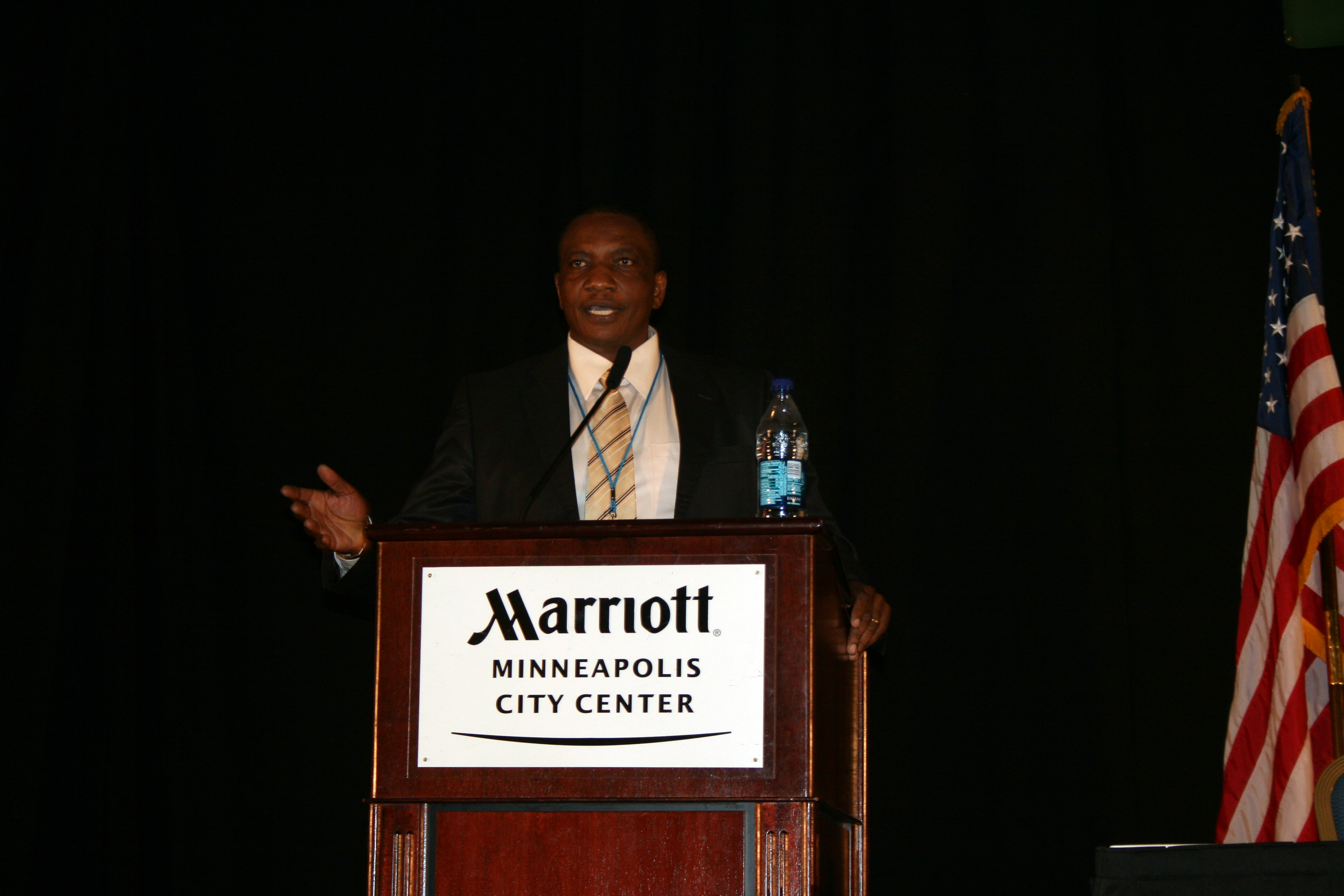
MINNEAPOLIS – Tanzania is in need of more skilled IT personnel and investors to fully exploit the recent landing of the submarine cable in the country, the second annual Diaspora Council for Tanzanians in America convention (DICOTA) in Minneapolis was told during the second day of deliberations on how to harness the resources of the Diaspora for the development of the country.

During a freewheeling discussion on ICT (Information and Communications Technologies), delegates expressed concern over whether Tanzania was maximizing the new fiber optic cable that the country has now acquired and whether all parts of the country were benefitting.

Mr. Philemon L. Luhanjo, Chief Secretary and Secretary to the Tanzania cabinet assured delegates that 16 of the 21 regions in the country have already had access to the fiber optic backbone “and the government has spent $170 million to bring this thing (fiber)” and that the government will eventually roll it out to all the regions soon. The challenge, he said, was that businesses and potential investors have yet to tap into the new opportunities that the fiber optic cable has presented acknowledging the underutilization of the new bandwidth the country enjoys.

“Infrastructure without  the human capital will be a waste”, said Dr. Negus Adefris, an IT consultant who suggested that one way for the country to overcome and address the IT personnel shortage that the landing of the fiber has revealed is to tap into the many Tanzanian IT professionals that now reside abroad. Dr. Adefris who runs a consulting practice said his company has engaged many such Tanzanian IT professionals “some who own their own companies” he said.

A local physician, Dr. Crispin Semakula, said Tanzania needs to urgently prepare for “systemic use of ICT” as it lays the groundwork on spreading the use of such. He gave examples of how he uses ICT in his Minneapolis practice saying telemedicine could help overcome the lack of physicians in rural Tanzania.

Panelists that included a Sprint IT expert of Tanzanian origin offered a menu of options that Tanzania could choose from as it prepares to use ICT to address the myriad societal and economic challenges the country faces.

Mr. Norbert Safari Leone who owns a construction company in Dar es Salaam and is a delegate to the convention intimated to Mshale that he is an early adopter of ICT in running his business. On why businesses in Tanzania might not be taking advantage of the new fiber optic and the resulting high bandwidth it offers, he said “to be honest the charges (for ICT services) are so high right now that I cannot blame any business for not using it.”

His company, Nordic Construction, has to use technology to remain competitive. His hope, he said, is that charges will be more reasonable in the near future to ensure wide adoption by Tanzanian businesses.

Eric Shigongo, CEO of Global Publisher, perhaps put it in context for potential Diaspora investors when in an unscheduled short motivational talk of his rags to riches story following a lively ICT session he said “don’t let money stop you, what matters is the idea.”
 

Ambitious welfare scheme for Tanzania Diaspora unveiled at DICOTA convention

Ambitious welfare scheme for Tanzania Diaspora unveiled at DICOTA convention

MINNEAPOLIS – The National Social Security Fund of Tanzania (NSSF) today unveiled an ambitious welfare scheme for Tanzanians in the Diaspora estimated at 170,000.

The groundbreaking scheme was announced by the NSSF Director of Operations, Mr. Crecentius .J. Magori, when he addressed delegates to the second annual Diaspora Council for Tanzanians in America convention (DICOTA) that is going on this weekend in Minneapolis.

In a well received speech, Mr. Magori qualified his remarks by stating that final details were still pending and were subject to the consultations he will be holding with Diaspora members while in Minneapolis.
Dubbed WESTADI (Welfare Scheme for Tanzanians in Diaspora), the scheme is targeted to cover at least 5% of the Diaspora.

The scheme which is modeled in the form of an insurance policy will provide for outpatient and in-patient medical services to members and their families back in Tanzania. A low annual premium of $200 will provide coverage for the insured and up to four dependents while in Tanzania and include those left behind in Tanzania.

“Medical services will be provided by accredited and reputable medical providers”, said Mr. Magori.

A section of his presentation that drew the most applause was when he announced that part of the proposed scheme will cover the transportation of the human remains of a member back to Tanzania and that the benefit package will also provide for an air ticket for one individual to accompany the remains.
“The days of calling a mchango (fundraiser) to send a body home will be history”, he declared to cheers from the audience.

Other benefits to accrue from the scheme will include the provision of an airline ticket to a sick member to go back to Tanzania. A ticket will also be provided to a person accompanying the sick member.

On how premiums for the new scheme will be collected, Mr. Magori said the NSSF is in negotiations with Stanbic Bank, part of the Standard Chartered Bank system for the management and collection of premiums. The idea of using a multinational bank seemed to trouble some in the audience who felt there could be other more convenient and cost-effective ways “such as PayPal” one delegate offered.

Whichever way the premiums were remitted did not appear to trouble North Carolina physician Dr. Kurwa Nyigu as long as they were efficient. “These are things to be explored whether it’s PayPal or standard Banks,” Nyigu said.

Nyigu who was also a delegate to the inaugural DICOTA Houston convention last year was impressed by NSSF’s presentation at that convention which led her to visit NSSF’s office in Tanzania while on vacation last year. Nyigu was impressed with the tremendous changes the NSSF has made in this year’s convention and how much NSSF officials have listened to her suggestions as a member of the Tanzanian Diaspora.

“The first convention was more ideas without a clear plan,” Nyigu said. “This year’s convention is more detailed and engaging.”

Editor’s note: Follow convention updates at our Twitter page.