Open Door Strategies: Tam Tam’s Strives to Survive Recession
Editor’s Note: The National Bureau of Economic Research has
reported that the US Economy is in recession. The end of 2008 has seen
thousands of Americans lose their jobs, and millions of dollars lost on
Wall Street. This is a first of recession-related articles from Mshale
Newspaper that will cover the impact of the economy on the African
community.
This is a scary time for businesses; especially small businesses. All are feeling the squeeze of the economic downturn.
Many had hoped for a holiday redemption but weak sales triggered business closings from online stores to the malls and to the streets.
Some experts believe that the small business sector will survive because it has always been the most resilient in the economy, benefiting from the lack of cumbersome fixed cost base that burdens large businesses and with little or no debt to service. In fact, it is widely believed that the recession will result in a larger number of business startup in the coming years as individuals stricken by the downturn resort to embarking on their postponed hidden desires to branch out on their own.
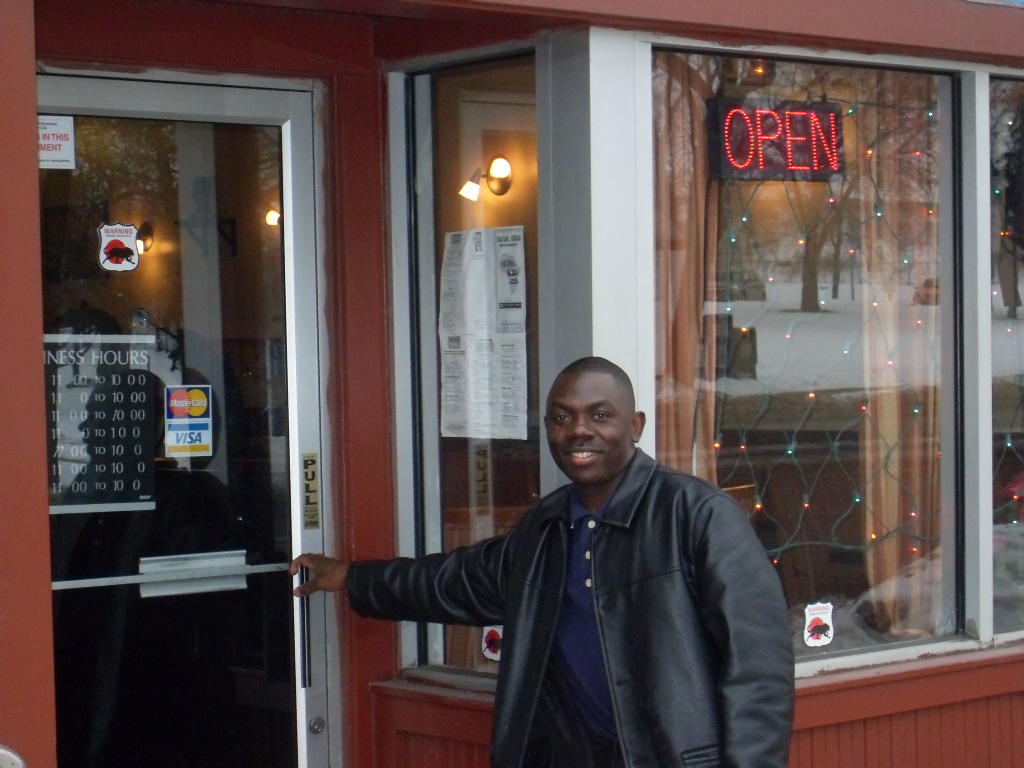
Over two years ago restaurateur Stephen Kaggwa embarked on his own journey of entrepreneurship. With the right ingredients on hand—a background in business education, industry experience, a cooking hobby turn vocation, a willingness to take risk and the guidance of a nonprofit businesses development center—Kaggwa started as co-owner of Tam Tam’s African Restaurant in the Cedar Riverside neighborhood. It has definitely been rewarding but not without its challenges.
Knocking the table in front of him, Kaggwa says, “We’re doing fine so far. If things don’t start to look up come spring, early summer then I’ll start to get nervous. For now, we’re okay.”
As the only Pan-African restaurant in the Twin Cities (serving dishes from East, West, Central and South Africa), Tam Tam’s is still being discovered by people in the metro and surrounding areas. You can say that they are still coming into their own, which is not a bad place to be in an economy such as this. The steady flow of traffic from the East African population in the neighborhood, students from the University of Minnesota and Augsburg College, surrounding institutions like the Fairview University Medical facilities and other downtown area businesses is keeping Kaggwa and his team busy.
In addition to the growing requests of catered private and corporate events, Tam Tam’s is starting to participate in signature events in and around the cities like the Annual Taste of Many Cultures held in December 2008, which is a multicultural evening of food music, dance and fun, sponsored by the Multicultural Development Center (MCDC) and Cub Foods. Kaggwa is pleased to be able to share a part of the African culture through food with Minnesota’s growing multicultural community.
Like many small businesses, Kaggwa is incorporating strategies to improve business and help carry him through the economic downturn:
Cost-saving measures
Kaggwa has not had to layoff his staff, however, they he has to cut back on their hours. That means that Kaggwa is spending more time at work and, at times, wearing twice as many hats during the day—greeter, waiter, cook, cashier, janitor, etc.
“It gets tough but that’s what it takes to keep the doors open sometimes,” Kaggwa said.
Customer service and satisfaction a high priority – this is an area where many immigrant and minority businesses struggle with but Tam Tam’s doing a great job at it. Kaggwa’s big smile, big heart, sociable personality and passion for what he does come through Tam Tam’s service and atmosphere as well. Customers rave about the experience.
One satisfied customer wrote on Chowhound, an online post for food lovers, “…the service was among the best I’ve ever gotten, extremely attentive, and this guy [Kaggwa] really seemed to enjoy this restaurant operation.”
Kaggwa recognizes that customers show their appreciation by coming back again and by referrals.
Time-saving measures
“When you’re cooking African food, you have to start from scratch and it takes more time than most American food preparation. When you’re out spending leisure time with friends over dinner, that’s no problem but when you have only a few minutes to spare on a lunch break, waiting is out of the question,” Kaggwa said.
To tackle that challenge, Tam Tam’s launched its lunch buffet in November 2008. “The buffet works well for people who want to enjoy the food but would like to get in and out as fast as possible.
“The cost is reasonable and comparable to other buffets, the items are visible and they also get a chance to try items that they might not have tested otherwise.”
Tune in to Customer Concerns
Ingredients and spices used in African cooking are not enticing to everyone. Stories are sometimes told of individuals unintentionally transferring not-so-pleasant food smells to places where it’s not very welcome or of outfits that had to be thrown out because even professional cleaners failed to do the trick. There are also stories of apartment managers having the “smell talk” because other tenants had complained about the African who wanted nothing more than the comfort of some “back home” cooking.
Laughing, Kaggwa says, “We’ve had to modify some of our recipes to avoid such incidences.” In addition, spice is served on the side and spicy dishes are clearly labeled to ensure that there are no surprises.
Diversify customer base
“Going into this business I knew one thing for sure—that Africans have not fully embraced the American culture of eating out. Their first preference is to cook at home, not to mention the fact that many African households fall into the low income category. I understand that they have to stretch their money so when they come to Tam Tam’s I want it to be a real treat for them. I also rely on them for feedback on my cooking,” Kaggwa said with a smile.
Tam Tam’s goal has always been to serve food that everyone enjoys – authentic enough for Africans looking for food that reminds them of “home” and tasty and enjoyable for non Africans who are looking to try something different or share in the culture.
New Business Opportunities
The chance to cater for private and corporate events have been a great way to add to the bottom line and get their name out in the community. Signature events like the Tastes of Cultures and others help Tam Tam’s to share, learn, expand and grow.
Provide work opportunities
Many of Kaggwa employees are students from the neighborhood. He is glad that he is able to provide employment for people in the community. He says it makes the business operation even more meaningful.
Good standing with bank and investors
Kaggwa is proud of the financial standing of his business. He keeps in touch with his financial partners, keeping them apprise of company developments and opportunities he’s considering. A plan to move to a larger location was put on hold because of the dire business climate.
The strategies Kaggwa has put into place is serving him well and keeping his doors open. In addition, his attention to the economy and customer preferences will help him make the adjustments needed to survive the downturn.
Kaggwa understands the challenges of doing business in a tough economy and acknowledges that there is more than could be done to help him get through, like marketing, advertising and perhaps creative strategies to engage customers. However, with running a lean operation and his having to wear multiple hats most of the time, there is a limit to what can be done.
The economic downturn is adding more steam to the heat in Kaggwa’s kitchen but he hopes that his survival strategies will be sufficient to put out any looming fires.
SIDE BAR
At the recent 20/20 Community Development Expo held in November 2008, Hussein Farrah, Business Program Director at the African Development Center (ADC), speaking on a panel at Impact of Immigrant Entrepreneurs the breakout session called, said that one of the main challenges faced by immigrant entrepreneurs is cultural barrier.
Farrah said that many understand that the ups and downs of a business is a given; it is part of the playing field. However, sometimes they fail to attribute the shortfall to the overall market or the current business environment. Therefore many fail to look for changes in customer psychology and behavior in order to plan appropriately to better meet those challenges.
Farrah said that ADC works with immigrant business owners to help them understand the differences in doing business in America compared to in their home country. ADC was instrumental in Tam Tam’s startup and in 2007 awarded Kaggwa Small Business of the Year in the African Community.
Tam Tam’s Restaurant is located on 605 Cedar Avenue South, Minneapolis, 612-339-0854. The lunchtime buffet is only $7.99. For a full menu listing click here.
People outside the Horn of Africa see Somalia as one country united by one language, one religion and perhaps one culture. To the contrary, clan friction and rivalry have made this country ungovernable since the fall of President Siad Barre in 1991 and widespread civil war has replaced good governance.
As we say good bye to 2008, the Transitional Federal Government led by President Abdullahi Yusuf Ahmed comes to a dead end as the Ethiopian military forces that protected it were preparing to leave. Somalia’s neighbors: Djibouti, Kenya, Yemen and Ethiopia see power shifting more into the hands of the Islamic Courts Union and Al-Shabab ushering in the establishment of an Islamic State in the region.
With the failed state and the chaotic situation on the Somalia coast, armed clan gangs engaged in sea pirating of sea vessels carrying both cargo and humanitarian assistance to the troubled country and the hinterland have emerged. The international community is worried as they see this part of the world as a “hot” spot that will lead to an inevitable humanitarian catastrophe.
During the European partition of Africa in 1884, Northern Somalia fell under the British whereas the Southern part fell under the Italians. British Somaliland became independent on June 26, 1960 whereas Italian Somaliland became free five days later. On July 1, 1960 the two territories united to form the Somali Republic.
The first President of the Somali Republic was Aden Abdullah Osman Daar and his Prime Minister was Abdirashid Ali Shermarke. The latter became President from 1967 – 1969. The fragile union faced inter-clan rivalry with many clans grumbling that they had been dragged into the union by force.
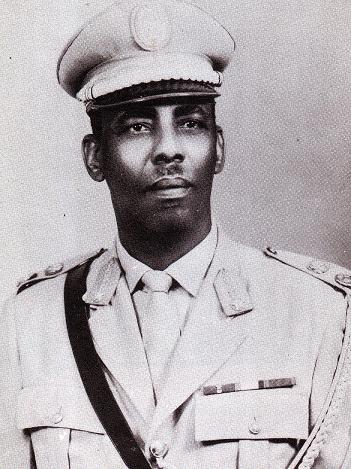
President Shermarke was assassinated in 1969 and a military coup led by General Siad Barre and Chief of Police Jama Korshel took over with the two coup leaders assuming the posts of President and Vice President respectively.
A dictatorship and one party rule ensued through the founding of the Somali Revolutionary Socialist Party in 1976 that remained in power until its overthrow in 1991. It took the combined armed revolt of the Somali Salvation Democratic Front, United Somali Congress, Somali National Movement, and the Somali Patriotic Movement joining hands with non-violent political opposition groups to topple the dictatorship.
The year 1991 marked the watershed of Somali politics when Siad Barre was ousted by combined northern and southern clan forces backed by Ethiopia. Amid this chaos, Somaliland to the north declared her independence in May 1991 and although peaceful and stable, has not gained recognition from any foreign government.
Clan allegiances and competition for resources disrupted agriculture, animal husbandry and food distribution. Clans fought for water, pasturage and cattle and famine struck prompting the United Nations Security Council in 1992 to authorize limited peacekeeping operations and humanitarian assistance.
Clan rivalry prompted the United States to organize a military coalition to secure a corridor in Southern Somalia to provide safe passage of humanitarian operations. A United Task Force dubbed Operation Restore Hope in December 1992 became operational.
In January 1991, Ali Mahdi Muhammad was selected interim President, but found strong opposition from United Somali Congress leader, General Mohamed Farrah Aidid; and the leaders of the Somali Patriotic Movement and Somali National Movement.
Mohammed Farrah Aidid’s antics escalated fighting in Mogadishu killing 18 American troops and over 1,000 Somalis in October 1993. The United Nations withdrew Operation United Shield in May 1995 after suffering significant casualties.
In the turmoil that ensued, Mohamed Farrah Aidid was killed in 1996.
There have been endless conflicts between rival clans bordering on civil war since the death of Farrah Aidid. The Harti and Tanade clans moved on to declare self-governing state in the northeast calling itself Puntland. Then Southwestern Somalia comprising Bay, Bakool, Jubbada Dhexe, Gedo, Shabeellaha Hoose and Jubbahda Hoose declared an autonomous state. Their army, the Rahanweyn Resistance Army, produced Shatigadud as Finance Minister and Chairman of the Rahanwein Traditional Elders’ Court based in Baidoa.
In 2006, the state of Jubaland consisting of parts of Gedo, Jubbada Dhexe, and Jubbada Hoose declared regional autonomy. Barre Adam Shire Hiiraale, chairman of the Juba Valley Alliance in Central Somalia became the most notable leader. Like Puntland, they sought some kind of federal autonomy.
Subsequently, the battle for Mogadishu of 2006 brought forth the Islamic Courts Union, currently the predominant force in the country. Its militia clashed with the Alliance for the Restoration of Peace and Counter-Terrorism seeking to establish Sharia Law in Somalia.
The Islamic Courts Union accused the U.S. of funding the warlords through the Central Intelligence Agency and supplying them with arms. The Ethiopian-supported Transitional Federal Government was later joined by the East African Peacekeeping force from Uganda and Burundi but continued to face fierce opposition from the Islamic militia. The Islamic Courts Union objected to the presence of foreign troops in Somalia, especially those from Ethiopia following their imperial history of occupying and annexing Ogaden.
Conflicts broke out between the ICU and the Transitional Government with Eritrean forces backing the ICU and Ethiopian forces supporting the Transitional Government. The Transitional Federal Government had their base in Baidoa and partially moved to Mogadishu after Prime Minister Meles Zenawi of Ethiopia helped to retake Mogadishu using tanks and jets.
On January 9, 2007 the United States sent Lockheed AC-130 gunships to attack Islamic positions in Ras Kamboni that became their stronghold after they had abandoned Kismayo. The U.S. was assisting the Transitional Government to dominate the Islamic Courts fearful of another Islamic nation in the region.
Somalia today is a sandwich of so many clan-strongholds. With President Abdullahi Yusuf Ahmed resigning from the Interim Transitional Federal Government and the withdrawal of Ethiopian forces, full scale civil war among the competing clans is bound to dominate the scene in 2009.
Somalia has been a failed state for two decades now. The only hope for the future lies in the prospect of the Islamic Courts Union using the country’s common denominator of religion to unite the clans and establish an Islamic state in Somalia. Foreign intervention has produced poor results and the way forward is to accept the reality that all clan leaders can best be rallied under the umbrella of a common religion to broker a power-sharing agreement.
So much wanton blood has been split in Somalia since conflict started in 1991. The displaced Somalis now scattered in every corner of the world are home sick if only they could be assured of a united peaceful country devoid of war.
Opinions expressed here are the author’s and do not represent those of Mshale.
Anti-apartheid activist Helen Suzman died on New Year’s Day at the age of 91. As accolades from around the world pour in, news reports also mention the controversy she sparked on college campuses in the late 1980s.
I’ll say. At my alma mater in Connecticut in 1989, we almost rioted when we heard Suzman had been invited to speak — a fact that, today, fills me with contrition.
Suzman, who helped found South Africa’s liberal Progressive Party, was for 13 years the lone voice against apartheid in the South African parliament. She spoke out fiercely against racist legislation, and frequently visited anti-apartheid activists, including Nelson Mandela, in the nation’s notorious prisons.
So what was our beef with Suzman at Wesleyan University, a small liberal arts school in Middletown, Conn.?
We and other campus activists were incensed that Suzman opposed economic sanctions against South Africa. Nor did she favor the divestment movement, still going strong in the late 1980s, which pushed colleges and municipalities to relinquish their financial holdings in companies that did business in South Africa.
Suzman argued that such actions were counterproductive and primarily hurt black South Africans.
We didn’t care that Suzman met with imprisoned leaders of the freedom movement; she obviously wasn’t listening to their nearly unified calls for sanctions. We thought she should resign her ineffectual post in an inherently racist system. And we were convinced that the university chose her to speak as a way of bolstering its refusal to immediately divest.
Fair enough, I suppose, except for the conspiratorial part. But what followed the announcement of her impeding campus speech was despicable.
In the days before Suzman’s arrival, campus radicals started a smear campaign in the university’s alternative press. I remember editing articles that attacked Suzman, of whom I had never heard. Quotations of Suzman’s own words, which I and other politically motivated editors never fully checked, made her sound downright racist.
When the day of Suzman’s speech finally came, many students couldn’t fit into the campus cinema where she was scheduled to speak. So we demanded a larger venue — we made a lot of “demands” in those days — and eventually a crowd of about 300 marched across campus to the chapel. There, black students from Wesleyan’s Malcolm X House lined up behind Suzman, who stood at a podium; they and others in the crowd hissed derisively (and some applauded) as she defended her views on sanctions.
And defend herself she did. Suzman had read everything written about her in the in the days preceding her talk. By reading aloud the complete text of her selectively quoted remarks, Suzman revealed a propaganda effort by left-wing students that would have made Joseph McCarthy proud.
She then read a letter from Nelson Mandela, written to her the year before and reprinted the following day in the largest campus paper. Mandela, writing from Victor Verster Prison in Paarl, began “Dear Helen,” and continued:
“The consistency with which you defended the basic values of freedom and the rule of law over the last three decades has earned you the admiration of many South Africans. A wide gap still exists between the mass democratic movement and your party with regard to the method of attaining those values. But your commitment to a non-racial democracy, a united South Africa, has won you many friends in the extra-parliamentary movement.”
Mandela wrote that he hoped in the future Suzman’s voice “will be heard throughout the country free from the constraints which parliamentary convention imposes.” He closed, “Fondest regards and best wishes to you and your family.”
In the end, in a question and answer session after her talk, Suzman made mincemeat of most arguments for divestment from the campus left. She was like a lion. She destroyed us.
The Nelson Mandela Foundation this week called Suzman a “great patriot and a fearless fighter against apartheid.” The African National Congress lauded her as “a thorn in the flesh of apartheid.”
Perhaps there’s still room for cynicism with respect to the life of Helen Suzman. Certainly many of the world leaders lauding her now did their part to forestall democracy in South Africa while she lived. Obviously a huge number of black South Africans did as much or more, at far greater risk to themselves, to end apartheid; yet most will never be known to the world at large.
One could even point to Mandela’s carefully worded letter, wherein he never explicitly states his own opinion. Perhaps her positions angered him, and his hospitality was strategic. But perhaps he deliberately, personally withheld judgment of Suzman and her tactics. A man of his wisdom likely knew how little we know of our power and its effect in the world.
Regardless, he remained polite, and kind.
History suggests that Helen Suzman was wrong to resist the economic isolation of South Africa during apartheid. But it suggests more strongly that she did far more help than harm to the nation’s freedom movement. How many of us, in her shoes, would have acted similarly?
Helen Suzman, Nelson Mandela and the passage of time have taught me a little about dignity, humility and honesty — and how quickly activists of all stripes will trade these away in moments of self-centered, self-righteous zeal.
Opinions expressed here are the author’s and do not represent those of Mshale.
Filing a FORM I-360: The Violence Against Women Act Self-petition
An estimated 1.3 million women in the United States fall victim to physical assault by an intimate partner each year. More than twice that number suffers verbal and emotional abuse annually. Although an increasing number of men are subjected to abuse, a U.S. Department of Justices study approximates that 89% of all assaults on spouses or ex-spouses is perpetuated on women by their male partners. A notable percentage of assaults are committed against foreign national women by their U.S. citizen or Lawful Permanent Resident (LPR) spouses.
Domestic Abuse of Foreign National Spouses
Real, loving relationships can and do exist between foreign nationals and U.S. citizens or LPRs. But in many cases, domestic abuse results when a citizen of a poor, developing country who desires to improve her living standards marries a citizen of a developed country who wants absolute control of his partner. Mail-order brides (and in some cases, mail-order husbands) who express their desire for an international marriage and publish their names, photos, profiles and contact information in hard copy brochures and Internet-based catalogues aimed at prospective spouses are particularly vulnerable. The majority of mail-order brides hail from Eastern Europe (Russia, Ukraine and Moldova) and Southeast Asia (the Philippines, Thailand and Malaysia). The United States is one of the top nations to receive mail-order brides.
In January 2006, the Bush Administration signed into law the International Marriage Broker Regulation Act, as part of the reauthorization of the Violence Against Women Act (VAWA), to help protect foreign nationals who enter into marriages with U.S. citizens through international marriage brokers. One key provision is that the marriage broker must conduct a background check on their clients and inform the prospective foreign spouse of the prospective U.S. spouse’s criminal history. While this law helps protect mail-order brides, it does nothing for foreign nationals who meet their U.S. citizen or LPR spouses through other means. Thus, foreign nationals who do not use the mail-order bride industry to find their American spouses could be just as vulnerable to abuse as those who do.
There are multiple factors contributing to the vulnerability of foreign national fiancées and spouses to domestic abuse. When a foreign national with limited resources relocates to the United States to marry or live with her American partner, she becomes entirely or mostly dependent on the partner to continue her lawful presence in the country. The dependent nature of the relationship makes foreign nationals prime targets for domestic abuse. They often do not report domestic abuse to the police for fear that they will be deported or that the legal system will not protect them if they lack immigrant status. Many victims suffer in silence and stay in the marriage because they feel trapped and unable to leave for fear of physical harm, making the abuser angrier, living alone or being alone, losing their children, and facing financial problems without the abuser’s aid.
Abused Foreign National Spouses May Self-Petition to Become Lawful Permanent Residents
In a typical situation, a U.S. citizen (but not an LPR) may file a Form I-129F (K-1) visa petition for his fiancée to come to the United States. After she enters the United States, he then marries her within 90 days and she files a Form I-485 application to adjust to lawful permanent resident status.
If the couple is already married, the U.S. citizen or LPR may file the Form I-130 petition regardless of whether the foreign national is overseas or is in the United States, so she may begin the immigration process.
But what happens when the American marries the foreign national, subjects her to domestic abuse, and refuses to file the I-130 petition or assist her with the immigration process?
Recognizing the existence of this problem, Congress enacted VAWA in 1994 to permit non-citizen survivors of domestic abuse to attain immigrant status without their spouses’ assistance and without their spouses’ knowledge. The law is not gender-specific and protects both men and women in any abusive relationship.
To commence a VAWA self-petition, the foreign national must file a Form I-360, Petition for Amerasian, Widow(er), or Special Immigrant and all supporting documents with the United States Citizenship and Immigration Services (USCIS). The applicant must show that she meets all of the following requirements to qualify for VAWA protection:
She was subject to battery or extreme cruelty by her United States citizen or LPR spouse;
She is or was legally married to the abuser and her marriage was entered in good faith;
She has lived in the United States with her U.S. citizen spouse or LPR spouse;
She was battered or subjected to extreme cruelty during the marriage or that her child was subjected to such extreme cruelty during the marriage;
She meets all the other requirements of admission under normal circumstances; and
She is of good moral character.
The USCIS reviews the Form I-360 and all the necessary documents upon receipt and then makes an initial determination of eligibility. If the applicant meets the basic eligibility requirements, the USCIS will then issue a Notice of Prima Facie Determination. Although the notice does not necessarily mean the USCIS will approve the petition, it provides several advantages, including allowing the applicant to obtain public benefits from state and/or federal agencies while the petition remains undecided. Once the I-360 petition is approved, the applicant may file to adjust to lawful permanent resident status as long as an immigrant visa number is immediately available.
While many marriages between foreign nationals and Americans are bona fide, some are exploitative and abusive. Under VAWA, eligible foreign national spouses do not have to put up with domestic violence, ranging from physical assault to psychological manipulation, simply because they fear deportation. Instead, they may file their self-petitions to become lawful permanent residents as victims of battery and extreme cruelty inflicted by their spouses.
Nothing in this article should be taken as legal advice for an individual case or situation. The information is intended to be general and should not be relied upon for any specific situation. For legal advice, consult an attorney experienced in immigration law.
Pirates using small, fast speed boats hijacked a Liberian-registered tanker in the Gulf of Aden, said the International Maritime Bureau (IMB) piracy reporting center (PRC) in a statement from its head office in Malaysia.
The MV Biscaglia was transporting palm oil when it was captured Nov. 28 off the coast of Somalia, where heavily armed bandits have commandeered nearly a 100 ships this year and are currently holding them for ransom.
Three security guards – all former British soldiers – jumped into the sea after futile attempts to prevent the pirates from taking control of the vessel. They were later rescued by a German naval helicopter and taken to a nearby French frigate, said Nick Davis, director of the London-based Anti-Piracy Maritime Security Solutions (APMSS) that hired the unarmed guards.
In a news release issued last week, Davis said: “APMSS security team came under heavy attack from pirates, but were able to mount sustained, non-lethal, resistance, denying the attacker’s access to the ship long enough for the ship’s operating crew to seek safety below decks and to summon assistance from coalition warships.”
“I have spoken with my team leader on the phone and he informs me that the level of violence was unprecedented and forced them to reluctantly leave the vessel after every effort was made to ensure the safety of the ship’s crew,” said Davis.
He said the three guards are well with no reported injuries, but there are still 25 Indian and two Bangladeshi crew members on board the Biscaglia, which is believed to be headed to anchorage in Puntland, Somalia.
Pirates have become increasingly daring in the in the narrow shipping corridor between Somalia and Yemen, a major international shipping lane through which about 20,000 oil tankers, freighters and merchant vessels pass each year.
Another Liberian-flagged ship was hijacked earlier this month in the most high-profile hijacking so far, when Somalia-based pirates seized the MT Sirius Star, some 518 miles south-east of Mombassa, Kenya. The Saudi oil super tanker, carrying $100 million worth of crude oil, is the largest vessel to be hijacked to date. Pirates are still holding 25 crew members.
“Although this is just the latest of a large spike in attacks off the east coast of Africa, this incident is significant on two counts,” said Pottengal Mukudan, director of the International Maritime Bureau. “ Firstly, this is the largest vessel to have been hijacked. Secondly, the distance from the shore would suggest a highly organized operation – this is not mere opportunism.”
In response to the worsening situation, several countries have dispatched warships to the Gulf. Germany and France have ships in the area as part of a NATO armada which, along with Denmark, India, Malaysia, Russia and the U.S. navies, have started patrolling the vast waterway in the Indian Ocean.
Liberia generates $13 million annually from its ship registry program – the second largest in the world – which includes nearly 2, 800 ships, 10 percent of the world’s ocean going fleet. According to the U.S. Maritime Administration, Liberian flagged vessels transport more than one-third of the oil imported into the United States.
Though autism is becoming more and more common, it is still difficult to understand. It is normal for parents, family members, and caregivers of individuals with autism to have questions and concerns. Learning about autism makes living with it easier. The following are answers to some of the most commonly asked questions about autism.
What is autism?
Autism is a complex developmental disability that typically appears by two to three years of age. It is a neurological disorder that affects the function of the brain, impacting the development of social and communication skills. Autism is a “spectrum disorder,” meaning that the severity of symptoms varies from individual to individual. Currently, one in 150 individuals is diagnosed with autism. Autism occurs in all racial, social, and ethnic groups and is four times more likely to be found in boys than girls. There is no cure for autism, but there are many resources for those it affects.
What causes autism?
There is no single known cause of autism. Generally, researchers believe that it is caused by abnormalities in brain structure or function. Many theories are being tested, such as heredity, genetics, and environmental factors. Though childhood vaccines were investigated as a potential cause of autism, to date there is no research that clearly supports this link. Parents with concerns about vaccinating their children are encouraged to speak with their doctor.
What are some of the early signs of autism?
Autism affects each individual differently. However, there are some symptoms that are present in most individuals. Children with autism may have trouble relating to others, may use limited or no speech, or may communicate in unusual ways (such as screaming or crying.) They tend not to make eye contact and may engage in repetitive behaviors such as saying the same word or performing the same movement over and over again. Compared to typically developing children, children with autism may be more or less sensitive to sights, sounds, and touch. There are also some signs tied to a child’s development, including:
No big smiles or other warm, joyful expressions by six months of age or thereafter
No back-and-forth sharing of sounds, smiles, or other facial expressions by nine months of age or thereafter
No babbling by twelve months of age
No back-and-forth gestures such as pointing, showing, reaching, or waving by twelve months of age
No words by sixteen months of age
No two-word meaningful phrases (without imitating or repeating) by 24 months of age
Any loss of speech, babbling, or social skills at any age
(Above list provided by First Signs, Inc. www.firstsigns.org)
What should I do if I think my child has autism?
Parents whose children exhibit any of the symptoms listed above should arrange an autism screening with their family doctor or pediatrician as soon as possible. Early intervention is very important when dealing with autism. Early intervention refers to services given to children before age three. Research has shown that early intervention greatly impacts the symptoms of autism. Children that receive services early often make a great deal of progress by the time they enter kindergarten, reducing the need for intensive supports.
Though those with autism face difficulties, they still have many opportunities for success. With early intervention, the right resources, and ongoing support, individuals with autism and their families can lead happy and fulfilling lives.
Resources for individuals with autism and their families: The Autism Society of Minnesota: Resources for parents, caregivers, and educators of individuals with autism. www.ausm.org or (651) 647-1083
Minnesota Early Autism Project: Promotes early diagnosis and support of children with autism. www.meapkids.org or (763) 425-0792
The Arc of Minnesota: Advocacy and support services for individuals with developmental disabilities. www.thearcofminnesota.org or (651) 523-0823
PACER: Services for parents, families, and children with developmental disabilities. www.pacer.org or (952) 838-9000
This is part of an ongoing series of health articles to educate refugee
communities by the Minnesota Health Department. Look out for Mshale’s
investigative report on autism in the African immigrant community in
the following months.
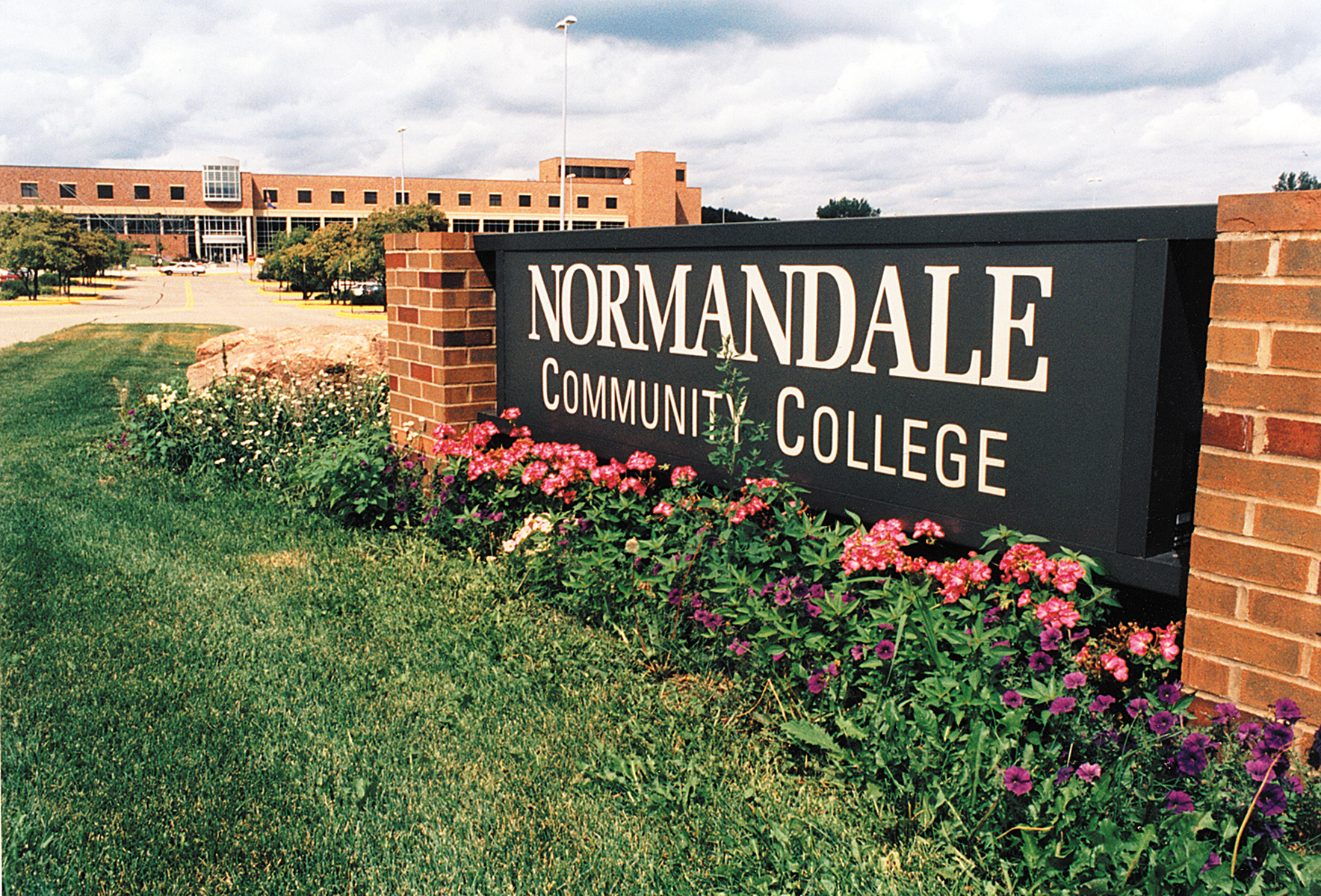
Normandale Community College Offers Free Classes for the Unemployed
Bloomington, Minn–The last several months has seen thousands of Minnesotans, like other Americans, lose their jobs as the economy hits a recession. Many of these unemployed are turning to educational institutions so that they can have an edge in an ever-increasing competitive job market. Now, they can get started for free.
Normandale Community College announced this month that it will offer free tuition for some classes beginning January to people who are currently eligible for Minnesota’s unemployment insurance benefits.
“By offering this tuition waiver, we can help provide unemployed Minnesotans access to the college courses they need to improve their opportunities for reemployment through retraining or education toward a new career,” said Normandale president Dr. Joe Opatz.
Students will be eligible to receive free tuition during the spring semester, which begins Monday, January 12, 2009. A list of courses that qualify for the waivers is now available on the school’s website.
Normandale will waive tuition for classes that are not already filled with students paying full tuition, Opatz said. The program will not cause any extra expense to the college because the classroom, the instructors and multimedia equipment will already be in use.
“We’re providing an important service to Minnesotans in need while also being better stewards of the state’s resources at a critical time,” Opatz said in a statement.
Normandale will also provide programs and services to help unemployed Minnesotans find new work opportunities. These programs include free career exploration and planning services through the college’s career and academic planning center. The resources of the center are also available free of charge to the general public.
Individuals interested in taking advantage of this new free tuition program should immediately apply for admission to Normandale using the college’s on-line application by going to www.normandale.edu and clicking on “Apply” under the “Future Students” link. Students will be charged the regular $20 application fee, which will be reimbursed to students eligible for this new program.
In order to obtain the free tuition benefit and application fee waiver, students will have to provide documentation of their unemployment insurance eligibility to the Normandale Office of Admissions. All individuals who hold either a high school diploma or GED are eligible for admission to the college.
Students receiving the free tuition benefit will strongly be encouraged to complete the Free Application for Federal Student Financial Aid (FAFSA) to assure their maximum eligibility for additional student financial assistance toward student fees, books, supplies, living expenses and other non-tuition costs associated with attending college.
The way Donnell Herrington tells it, there was no warning. One second he was trudging through the heat. The next he was lying prostrate on the pavement, his life spilling out of a hole in his throat, his body racked with pain, his vision blurred and distorted.
It was September 1, 2005, some three days after Hurricane Katrina crashed into New Orleans, and somebody had just blasted Herrington, who is African-American, with a shotgun. “I just hit the ground. I didn’t even know what happened,” recalls Herrington, a burly 32-year-old with a soft drawl.
The sudden eruption of gunfire horrified Herrington’s companions–his cousin Marcel Alexander, then 17, and friend Chris Collins, then 18, who are also black. “I looked at Donnell and he had this big old hole in his neck,” Alexander recalls. “I tried to help him up, and they started shooting again.” Herrington says he was staggering to his feet when a second shotgun blast struck him from behind; the spray of lead pellets also caught Collins and Alexander. The buckshot peppered Alexander’s back, arm and buttocks.
Herrington shouted at the other men to run and turned to face his attackers: three armed white males. Herrington says he hadn’t even seen the men or their weapons before the shooting began. As Alexander and Collins fled, Herrington ran in the opposite direction, his hand pressed to the bleeding wound on his throat. Behind him, he says, the gunmen yelled, “Get him! Get that nigger!”
The attack occurred in Algiers Point. The Point, as locals call it, is a neighborhood within a neighborhood, a small cluster of ornate, immaculately maintained 150-year-old houses within the larger Algiers district. A nationally recognized historic area, Algiers Point is largely white, while the rest of Algiers is predominantly black. It’s a “white enclave” whose residents have “a kind of siege mentality,” says Tulane University historian Lance Hill, noting that some white New Orleanians “think of themselves as an oppressed minority.”
A wide street lined with towering trees, Opelousas Avenue marks the dividing line between Algiers Point and greater Algiers, and the difference in wealth between the two areas is immediately noticeable. “On one side of Opelousas it’s ‘hood, on the other side it’s suburbs,” says one local. “The two sides are totally opposite, like muddy and clean.”
Algiers Point has always been somewhat isolated: it’s perched on the west bank of the Mississippi River, linked to the core of the city only by a ferry line and twin gray steel bridges. When the hurricane descended on Louisiana, Algiers Point got off relatively easy. While wide swaths of New Orleans were deluged, the levees ringing Algiers Point withstood the Mississippi’s surging currents, preventing flooding; most homes and businesses in the area survived intact. As word spread that the area was dry, desperate people began heading toward the west bank, some walking over bridges, others traveling by boat. The National Guard soon designated the Algiers Point ferry landing an official evacuation site. Rescuers from the Coast Guard and other agencies brought flood victims to the ferry terminal, where soldiers loaded them onto buses headed for Texas.
Facing an influx of refugees, the residents of Algiers Point could have pulled together food, water and medical supplies for the flood victims. Instead, a group of white residents, convinced that crime would arrive with the human exodus, sought to seal off the area, blocking the roads in and out of the neighborhood by dragging lumber and downed trees into the streets. They stockpiled handguns, assault rifles, shotguns and at least one Uzi and began patrolling the streets in pickup trucks and SUVs. The newly formed militia, a loose band of about fifteen to thirty residents, most of them men, all of them white, was looking for thieves, outlaws or, as one member put it, anyone who simply “didn’t belong.”
The existence of this little army isn’t a secret–in 2005 a few newspaper reporters wrote up the group’s activities in glowing terms in articles that showed up on an array of pro-gun blogs; one Cox News story called it “the ultimate neighborhood watch.” Herrington, for his part, recounted his ordeal in Spike Lee’s documentary When the Levees Broke. But until now no one has ever seriously scrutinized what happened in Algiers Point during those days, and nobody has asked the obvious questions. Were the gunmen, as they claim, just trying to fend off looters? Or does Herrington’s experience point to a different, far uglier truth?
Over the course of an eighteen-month investigation, I tracked down figures on all sides of the gunfire, speaking with the shooters of Algiers Point, gunshot survivors and those who witnessed the bloodshed. I interviewed police officers, forensic pathologists, firefighters, historians, medical doctors and private citizens, and studied more than 800 autopsies and piles of state death records. What emerged was a disturbing picture of New Orleans in the days after the storm, when the city fractured along racial fault lines as its government collapsed.
Herrington, Collins and Alexander’s experience fits into a broader pattern of violence in which, evidence indicates, at least eleven people were shot. In each case the targets were African American men, while the shooters, it appears, were all white.
The new information should reframe our understanding of the catastrophe. Immediately after the storm, the media portrayed African Americans as looters and thugs–Mayor Ray Nagin, for example, told Oprah Winfrey that “hundreds of gang members” were marauding through the Superdome. Now it’s clear that some of the most serious crimes committed during that time were the work of gun-toting white males.
So far, their crimes have gone unpunished. No one was ever arrested for shooting Herrington, Alexander and Collins–in fact, there was never an investigation. I found this story repeated over and over during my days in New Orleans. As a reporter who has spent more than a decade covering crime, I was startled to meet so many people with so much detailed information about potentially serious offenses, none of whom had ever been interviewed by police detectives.
Hill, who runs Tulane’s Southern Institute for Education and Research and closely follows the city’s racial dynamics, isn’t surprised the Algiers Point gunmen have eluded arrest. Because of the widespread notion that blacks engaged in looting and thuggery as the disaster unfolded, Hill believes, many white New Orleanians approved of the vigilante activity that occurred in places like Algiers Point. “By and large, I think the white mentality is that these people are exempt–that even if they committed these crimes, they’re really exempt from any kind of legal repercussion,” Hill tells me. “It’s sad to say, but I think that if any of these cases went to trial, and none of them have, I can’t see a white person being convicted of any kind of crime against an African-American during that period.”
You can trace the origins of the Algiers Point militia to the misfortune of Vinnie Pervel. A 52-year-old building contractor and real estate entrepreneur with a graying buzz cut and mustache, Pervel says he lost his Ford van in a carjacking the day after Katrina made landfall, when an African American man attacked him with a hammer. “The kid whacked me,” recalls Pervel, who is white. “Hit me on the side of the head.” Vowing to prevent further robberies, Pervel and his neighbors began amassing an arsenal. “For a day and a half we were running around getting guns,” he says. “We got about forty.”
Things quickly got ugly. Pervel remembers aiming a shotgun at a random African American man walking by his home–even though he knew the man had no connection to the theft of his vehicle. “I don’t want you passing by my house!” Pervel says he shouted out.
Pervel tells me he feared goons would kill his mother, who is in her 70s. “We thought we would be dead,” he says. “We thought we were doomed.” And so Pervel and his comrades set about fortifying the area. One resident gave me video footage of the leafy barricades the men constructed to keep away outsiders. Others told me they created a low-tech alarm system, tying aluminum cans and glass bottles together and stringing them across the roads at ankle height. The bottles and cans would rattle noisily if somebody bumped into them, alerting the militia.
Pervel and his armed neighbors point to the very real chaos that was engulfing the city and claim they had no other choice than to act as they did. They paint themselves as righteous defenders of property, a paramilitary formation protecting their neighborhood from opportunistic thieves. “I’m not a racist,” Pervel insists. “I’m a classist. I want to live around people who want the same things as me.”
Nathan Roper, another vigilante, says he was unhappy that outsiders were disturbing his corner of New Orleans and that he was annoyed by the National Guard’s decision to use the Algiers Point ferry landing as an evacuation zone. “I’m telling you, it was forty, fifty people at a time getting off these boats,” says Roper, who is in his 50s and works for ServiceMaster, a house-cleaning company. The storm victims were “hoodlums from the Lower Ninth Ward and that part of the city,” he says. “I’m not a prejudiced individual, but you just know the outlaws who are up to no good. You can see it in their eyes.”
The militia, according to Roper, was armed with “handguns, rifles [and] shotguns”; he personally carried “a .38 in my waistband” and a “little Uzi.” “There was a few people who got shot around here,” Roper, a slim man with a weathered face, tells me. “I know of at least three people who got shot. I know one was dead ’cause he was on the side of the road.”
During the summer of 2005 Herrington was working as an armored-car driver for the Brink’s company and living in a rented duplex about a mile from Algiers Point. Katrina thrashed the place, blowing out windows, pitching a hefty pine tree limb through the roof and dumping rain on Herrington’s possessions. On the day of the shooting, Herrington, Alexander and Collins were all trying to escape the stricken city, and set out together on foot for the Algiers Point ferry terminal in the hopes of getting on an evacuation bus.
Those hopes were dashed by a barrage of shotgun pellets. After two shots erupted, Collins and Alexander took off running and ducked into a shed behind a house to hide from the gunmen, Alexander tells me. The armed men, he says, discovered them in the shed and jammed pistols in their faces, yelling, “We got you niggers! We got you niggers!” He continues, “They said they was gonna tie us up, put us in the back of the truck and burn us. They was gonna make us suffer…. I thought I was gonna die. I thought I was gonna leave earth.”
Apparently thinking they’d caught some looters, the gunmen interrogated and verbally threatened Collins and Alexander for ten to fifteen minutes, Alexander says, before one of the armed men issued an ultimatum: if Alexander and Collins left Algiers Point and told their friends not to set foot in the area, they’d be allowed to live.
Meanwhile, Herrington was staring at death. “I was bleeding pretty bad from my neck area,” he recalls. When two white men drove by in a black pickup truck, he begged them for help. “I said, Help me, help me–I’m shot,” Herrington recalls. The response, he tells me, was immediate and hostile. One of the men told Herrington, “Get away from this truck, nigger. We’re not gonna help you. We’re liable to kill you ourselves.” My God, thought Herrington, what’s going on out here?
He managed to stumble back to a neighbor’s house, collapsing on the front porch. The neighbors, an African American couple, wrapped him in a sheet and sped him to the nearest hospital, the West Jefferson Medical Center, where, medical records show, he was X-rayed at 3:30 pm. According to the records, a doctor who reviewed the X-rays found “metallic buckshot” scattered throughout his chest, arms, back and abdomen, as well as “at least seven [pellets] in the right neck.” Within minutes, Herrington was wheeled into an operating room for emergency surgery.
“It was a close-range buckshot wound from a shotgun,” says Charles Thomas, one of the doctors who operated on Herrington. “If he hadn’t gotten to the hospital, he wouldn’t have lived. He had a hole in his internal jugular vein, and we were able to find it and fix it.”
After three days in the hospital, which lacked running water, air conditioning and functional toilets, Herrington was shuttled to a medical facility in Baton Rouge. When he returned to New Orleans months later, he paid a visit to the Fourth District police station, whose officers patrol the west bank, and learned there was no police report documenting the attack. Herrington, who now has a wide scar stretching the length of his neck, says the officers he spoke with failed to take a report or check out his story, a fact that still bothers him. “If the shoe was on the other foot, if a black guy was willing to go out shooting white guys, the police would be up there real quick,” he says. “I feel these guys should definitely be held accountable. These guys had absolutely no right to do what they did.”
Herrington, Alexander and Collins are the only victims, so far, to tell their stories. But they certainly weren’t the only ones attacked in or around Algiers Point. In interviews, vigilantes and residents–citing the exact locations and types of weapons used–detail a string of violent incidents in which at least eight other people were shot, bringing the total number of shooting victims to at least eleven, some of whom may have died.
Other evidence bolsters this tally. Thomas, the surgeon who treated Herrington, staffed one of the few functioning trauma centers in the area, located just outside the New Orleans city line, not far from Algiers Point, for a full month after the hurricane hit. “We saw a bunch of gunshot wounds,” he tells me. “There were a lot of gunshot wounds that went unreported during that time.” Though Thomas couldn’t get into the specifics of the shooting incidents because of medical privacy laws, he says, “We saw a couple of other shotgun wounds, some handgun shootings and somebody who was shot with a high-velocity missile [an assault-rifle round].” The surgeon remembers handling “five or six nonfatal gunshot wounds” as well as three lethal gunshot cases.
In addition, state death records show that at least four people died in and around Algiers Point, a suspicious number, given that most Katrina fatalities were the result of drowning, and that the community never flooded. Neighborhood residents, black and white, remember seeing corpses lying out in the open that appeared to have been shot.
———-
While the militia patrolled the streets of Algiers Point, the New Orleans Police Department, which had done little to brace for the storm, was crippled. “There was no leadership, no equipment, no nothing,” recalls one high-ranking police official. “We did no more to prepare for a hurricane than we would have for a thunderstorm.” Without functioning radios or dispatch systems, officers had no way of knowing what was happening a block away, let alone on the other side of the city. NOPD higher-ups had no way to give direction to unit commanders and other subordinates. As the chain of command disintegrated, the force dissolved into a collection of isolated, quasi-autonomous bands.
Around Algiers Point people say they rarely saw cops during the week after Katrina tore through Louisiana, and in this law enforcement vacuum the militia’s unique brand of justice flourished. Most disturbing, one of the vigilantes, Roper, claims on videotape recorded just weeks after the storm that the shootings took place with the knowledge and consent of the police. When we talk he makes the same assertion: “The police said, If they’re breaking in your property do what you gotta do and leave them [the bodies] on the side of the road.”
As we drive through Algiers Point in a battered white van, Roper tells me he witnessed a fatal shooting. Roper says he was talking on his cellphone to his son in Lafayette one evening when he spied an African American man trying to get into Daigle’s Grocery, a corner market on the eastern edge of the neighborhood, which was shuttered because of the hurricane. Another militia member shot the man from a few feet away, killing him. “He was done,” Roper recalls.
During our conversations, Roper never acknowledges firing his weapon, but in 2005 a Danish documentary crew videotaped him talking about his activities. In this footage Roper says, when pressed, that he did indeed shoot somebody.
Fellow militia member Wayne Janak, 60, a carpenter and contractor, is more forthcoming with me. “Three people got shot in just one day!” he tells me, laughing. We’re sitting in his home, a boxy beige-and-pink structure on a corner about five blocks from Daigle’s Grocery. “Three of them got hit right here in this intersection with a riot gun,” he says, motioning toward the streets outside his home. Janak tells me he assumed the shooting victims, who were African American, were looters because they were carrying sneakers and baseball caps with them. He guessed that the property had been stolen from a nearby shopping mall. According to Janak, a neighbor “unloaded a riot gun”–a shotgun–“on them. We chased them down.”
Janak, who was carrying a pistol, says he grabbed one of the suspected looters and considered killing him, but decided to be merciful. “I rolled him over in the grass and saw that he’d been hit in the back with the riot gun,” he tells me. “I thought that was good enough. I said, ‘Go back to your neighborhood so people will know Algiers Point is not a place you go for a vacation. We’re not doing tours right now.'”
He’s equally blunt in Welcome to New Orleans, an hourlong documentary produced by the Danish video team, who captured Janak, beer in hand, gloating about hunting humans. Surrounded by a crowd of sunburned white Algiers Point locals at a barbeque held not long after the hurricane, he smiles and tells the camera, “It was great! It was like pheasant season in South Dakota. If it moved, you shot it.” A native of Chicago, Janak also boasts of becoming a true Southerner, saying, “I am no longer a Yankee. I earned my wings.” A white woman standing next to him adds, “He understands the N-word now.” In this neighborhood, she continues, “we take care of our own.”
Janak, who says he’d been armed with two .38s and a shotgun, brags about keeping the bloody shirt worn by a shooting victim as a trophy. When “looters” showed up in the neighborhood, “they left full of buckshot,” he brags, adding, “You know what? Algiers Point is not a pussy community.”
Within that community the gunmen enjoyed wide support. In an outtake from the documentary, a group of white Algiers Point residents gathers to celebrate the arrival of military troops sent to police the area. Addressing the crowd, one local praises the vigilantes for holding the neighborhood together until the Army Humvees trundled into town, noting that some of the militia figures are present at the party. “You all know who you are,” the man says. “And I’m proud of every one of you all.” Cheering and applause erupts from the assembled locals.
Some of the gunmen prowling Algiers Point were out to wage a race war, says one woman whose uncle and two cousins joined the cause. A former New Orleanian, this source spoke to me anonymously because she fears her relatives could be prosecuted for their crimes. “My uncle was very excited that it was a free-for-all–white against black–that he could participate in,” says the woman. “For him, the opportunity to hunt black people was a joy.”
“They didn’t want any of the ‘ghetto niggers’ coming over” from the east side of the river, she says, adding that her relatives viewed African-Americans who wandered into Algiers Point as “fair game.” One of her cousins, a young man in his 20s, sent an e-mail to her and several other family members describing his adventures with the militia. He had attached a photo in which he posed next to an African American man who’d been fatally shot. The tone of the e-mail, she says, was “gleeful”–her cousin was happy that “they were shooting niggers.”
An Algiers Point homeowner who wasn’t involved in the shootings describes another attack. “All I can tell you is what I saw,” says the white resident, who asked to remain anonymous for fear of reprisals. He witnessed a barrage of gunfire–from a shotgun, an AK-47 and a handgun–directed by militiamen at two African American men standing on Pelican Street, not too far from Janak’s place. The gunfire hit one of them. “I saw blood squirting out of his back,” he says. “I’m an EMT. My instinct should’ve been to rush to him. But I didn’t. And if I had, those guys”–the militiamen–“might have opened up on me, too.”
The witness shows me a home video he recorded shortly after the storm. On the tape, three white Algiers Point men discuss the incident. One says it might be a bad idea to talk candidly about the crime. Another dismisses the notion, claiming, “No jury would convict.”
According to Pervel, one of the shootings occurred just a few feet from his house. “Three young black men were walking down this street and they started moving the barricade,” he tells me. The men, he says, wanted to continue walking along the street, but Pervel’s neighbor, who was armed, commanded them to keep the barricade in place and leave. A standoff ensued until the neighbor shot one of the men, who then, according to Pervel, “ran a block and died” at the intersection of Alix and Vallette Streets.
Even Pervel is surprised the shootings have generated so little scrutiny. “Aside from you, no one’s come around asking questions about this,” he says. “I’m surprised. If that was my son, I’d want to know who shot him.”
By Pervel’s count, four people died violently in Algiers Point in the aftermath of the storm, including a bloody corpse left on Opelousas Avenue. That nameless body came up again and again in interviews, a grisly recurring motif. Who was he? How did he die? Nobody knew–or nobody would tell me.
After hearing all these gruesome stories, I wonder if any of the militia figures I’ve interviewed were involved in the shooting of Herrington and company. In particular, Pervel’s and Janak’s anecdotes intrigue me, since both men discussed shooting incidents that sounded a lot like the crime that nearly killed Herrington and wounded Alexander and Collins. Both Pervel and Janak recounted incidents in which vigilantes confronted three black men.
Hoping to solve the mystery, I show Herrington and Alexander video of Pervel, Janak and Roper, all of whom are in their 50s or 60s. No match. The shooters, Herrington and Alexander tell me, were younger men, in their 30s or 40s, sporting prominent tattoos. I have not been able to track them down.
———-
New Orleans, of course, is awash in tales of the horrible things that transpired in the wake of the hurricane–and many of these wild stories have turned out to be fictions. In researching the Algiers Point attacks, I relied on the accounts of people who witnessed shooting incidents or were directly involved, either as gunmen or shooting victims.
Seeking to corroborate their stories, I sought out documentary evidence, including police files and autopsy reports. The NOPD, I was told, kept very few records during that period. Orleans Parish coroner Frank Minyard was a different story. The coroner, a flamboyant trumpet-playing doctor who has held the office for more than thirty years, had file cabinets bulging with the autopsies of hundreds of Katrina victims–he just wouldn’t let me see them, in defiance of Louisiana public records laws.
After wrangling with the coroner for more than six months, I decided to sue–with a lawyer hired by the Investigative Fund at The Nation Institute–to get access to the autopsies. (We weren’t the first to take the coroner to court. CNN and the New Orleans Times-Picayune had successfully sued Minyard, seeking particular Katrina-related autopsies.) This past May, Orleans Parish district court judge Kern Reese ruled in our favor, ordering Minyard to allow me to review every autopsy done in the year after the storm. But I soon learned that reconstructing history from the coroner’s mess of files was next to impossible, because the paper trail is incomplete. “We carried the records around in our cars, in the trunks of our cars, for four months and, I mean, that–that was the coroner’s office,” Minyard said in a sworn deposition obtained during the course of our suit. “I’m sure some of the records got lost or misplaced.” Even the autopsy files we got were missing key facts, like where the bodies were found, who recovered them, when they were recovered and so forth.
Many of the manila file folders the coroner eventually turned over were empty, and Minyard said he’d simply chosen not to autopsy some twenty-five to fifty corpses. The coroner also told us he didn’t know exactly how many people were shot to death in the days immediately after the storm–“I can’t even tell you how many gunshot victims we had”–but figured the number would not “be more than ten.”
Under oath Minyard proceeded to say something stunning. The NOPD, he testified, was only investigating three gunshot cases, all of them high-profile–the Danziger Bridge incident, in which police killed two civilians, and the shooting of Danny Brumfield, who was slain by a cop in front of the Convention Center. Minyard’s statement buttressed information I’d gotten from NOPD sources who said the force has done little to prosecute people for assaults or murders committed in the wake of the storm.
I contacted the police department repeatedly over many months, providing the NOPD with specific questions about each incident discussed in this story. The department, through spokesman Robert Young, declined to comment on whether officers had investigated any of these crimes and would not discuss any other issues raised by this article.
Sifting through more than 800 autopsy reports and reams of state health department data, I quickly identified five New Orleanians who had died under suspicious circumstances: one, severely burned, was found in a charred abandoned auto (see “Body of Evidence,” page 19); three were shot; and another died of “blunt force trauma to the head.” However, it’s impossible to tell from the shoddy records whether any of these people died in or around Algiers Point, or even if their bodies were found there.
No one has been arrested in connection with these suspicious deaths. When it comes to the lack of action on the cases, one well-placed NOPD source told me there was plenty of blame to go around. “We had a totally dysfunctional DA’s office,” he said. “The court system wasn’t much better. Everything was in disarray. A lot of stuff didn’t get prosecuted. There were a lot of things that were getting squashed. The UCR [uniform crime reports] don’t show anything.”
In response to detailed queries made over a period of months, New Orleans District Attorney spokesman Dalton Savwoir declined to say whether prosecutors looked into any of the attacks I uncovered. The office has been through a string of leadership changes since Katrina–Leon Cannizaro is the current DA–and is struggling to deal with crimes that happened yesterday, let alone three years ago, Savwoir told me.
James Traylor, a forensic pathologist with the Louisiana State University Health Center, worked alongside Minyard at the morgue and suspects that homicide victims fell through the cracks. “I know I did cases that were homicides,” Traylor says. “They were not suicides.” NOPD detectives, the doctor continues, never spoke to him about two cases he labeled homicides, leading him to believe police conducted no investigation into those deaths. “There should be a multi-agency task force–police, sheriffs, coroners–that can put their heads together and figure out what happened to people,” Traylor says.
One of the suspicious cases I discovered was that of Willie Lawrence, a 47-year-old African American male who suffered a “gunshot wound” that caused a “cranio-facial injury” and deposited two chunks of metal in his brain, according to the autopsy report. Minyard never determined whether Lawrence was murdered or committed suicide, choosing to leave the death unclassified. However, the dead man’s brother, Herbert Lawrence, who lives in Compton, California, believes his sibling was murdered. Herbert tells me he got a phone call from one of Willie’s neighbors shortly after he died. The caller said Willie, whose body, according to state records, was found on the east bank of the Mississippi, was killed by a civilian gunman. “The police didn’t do anything,” Herbert says, pointing out that NOPD officers didn’t create a written report or interview any relatives. ———-
Malik Rahim is one of a handful of African-Americans who live in Algiers Point, and as far as he’s concerned, “We are tolerated. We are not accepted.” In the days after the storm struck, Rahim says, the vigilantes “would pass by and call us all kind of names, say how they were gonna burn down my house.” They thought “all blacks was looting.”
As he walked the near-deserted streets in that period, Rahim, 61, a former Black Panther with a mane of dreadlocks, came across several dead bodies of African American men. Inspecting the bodies, he discovered what he took to be evidence of gunfire. “One guy had about his entire head shot off,” says Rahim, who was spurred by the storm to launch Common Ground Relief, a grassroots aid organization.
“It’s pretty hard to think a person drowned when half their head’s been blown off,” he says. He thinks some of the gunmen saw Katrina as a “golden opportunity to rid the community of African Americans.”
Sitting at his kitchen table, while a noisy AC unit does its best to neutralize the stifling Louisiana heat, Rahim describes the dead and lists the locations where he found the bodies. He also shows me video footage taken days after the storm. On the tape, Rahim points to the grossly distended corpse of an African American man lying on the ground.
Rahim introduces me to his neighbor, Reggie Bell, 39, the African American man Pervel confronted at gunpoint as he walked by Pervel’s house. At the time, Bell, a cook, lived just a few blocks down the street from Pervel. In Bell’s recollection, Pervel, standing with another gun-toting man, demanded to know what Bell was doing in Algiers Point. “I live here,” Bell replied. “I can show you mail.”
That answer didn’t appease the gunmen, he says. According to Bell, Pervel told him, “Well, we don’t want you around here. You loot, we shoot.”
Roughly twenty-four hours later, as Bell sat on his front porch grilling food, another batch of armed white men accosted him, intending to drive him from his home at gunpoint, he says. “Whatcha still doing around here?” they asked, according to Bell. “We don’t want you around here. You gotta go.” Bell tells me he was gripped by fear, panicked that he was about to experience ethnic cleansing, Louisiana-style. The armed men eventually left, but Bell remained nervous over the coming days. “I believe it was skin color,” he says, that prompted the militia to try to force him out. “That was some really wrong stuff.” Bell’s then-girlfriend, who was present during the second incident, confirms his story. (In a later interview, Pervel admits he confronted Bell with a shotgun but portrays the incident as a minor misunderstanding, saying he’s since apologized to Bell.)
On my final visit to Algiers Point, I stand on Patterson Street, my notebook out, interviewing a pair of residents in the dimming evening light. An older white man, on his way home from a bar, strides up and asks what I’m doing. I reply with a vague explanation, saying I’m working on an article about the “untold stories of Hurricane Katrina.”
Without a pause, he says, “Oh. You mean the shootings. Yeah, there were a bunch of shootings.” When I share with Donnell Herrington what the militia men and Algiers Point locals have told me over the course of my investigation, he grows silent. His eyes focus on a point far away. After a moment, he says quietly, “That’s pretty disturbing to hear that–I’m not going to lie to you–to hear that these guys are cocky. They feel like they got away with it.”
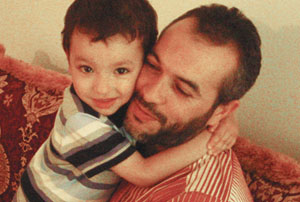
FALLS CHURCH, Va. — A Moroccan couple living in Falls Church, Va. reunited with their toddler on Aug. 6, 2007 after a two year-separation due to delays on his immigration papers.
Abdeloihab Boujrad, 38, a U.S. citizen originally from Morocco, and his wife Leila Bendaoud, 31, had been trying since June 2005 to get their son to join them in the United States.
Around 11:00 pm, the 3-year-old opened his eyes in his father’s arms at Reagan National Airport after getting off the plane with a family friend. When he saw his parents in front of his eyes, he first thought he was dreaming and started to doze off.
The U.S. Citizenship and Immigration Services (USCIS) has been scrutinized by legal experts and immigrant advocates on their immigration hold-ups. Since the attacks of 9/11, the Department of Homeland Security (DHS) has been working closely with the USCIS to monitor and screen all immigration documents, causing indefinite citizenship and green card delays.
“I received many letters saying the application is pending. They kept on giving different answers, but never denied the application,” said Boujrad. “I made about 150 phone calls to the INS Vermont Service Center.”
Boujrad came to the United States in 1997 after winning the U.S. immigration lottery in Morocco.
After saving money from a hotel management position and a part-time taxi cab business, he returned to Morocco to get married to Leila in 1999.
The new couple would be together only twice a year when Abdeloihab Boujrad would visit Leila in Morocco. Ahmed Yassine Boujrad was born on May 24, 2004.
Boujrad passed his citizenship test in 2003; however the USCIS delayed his oath ceremony for eighteen months. After constant phone calling and personal visits to the immigration office, Boujrad was invited to the citizenship oath ceremony in 2005.
“When you apply for citizenship and have passed the test, I was told by my attorney it shouldn’t take more than six to seven months to take the oath and receive citizenship status, but for me, it took almost two years,” said Boujrad.
After he received his citizenship status, he immediately filed for his wife to come to the United States with his son. When Leila’s visa allowing her to travel to the United States was about to expire in 2005, she unwillingly decided to leave their 18-month old son with her husband’s sister.
Leila received her permanent residence status in 2006.
The Washington-based Muslim civil rights advocacy group CAIR suspected the unusual delay was caused by the similarity in Ahmed Yassine’s name to the founder of the Palestinian Islamic Resistance Group Hamas, Sheikh Ahmed Yassin, who was killed in 2004 by Israeli military forces.
“We strongly believe his name had a lot to do with the hold-up,” said Attorney Morris Days, civil rights manager of Council on American Islamic Relations (CAIR) MD/VA Chapter.
According to Morris, Muslims have faced unexplained delays and denials on immigration and citizenship applications since the attacks of 9/11. The USCIS is implementing rules that are not legislated and citizenships are being delayed by the Federal Bureau of Investigation (FBI).
Morris told the Muslim Link he is working on more than a dozen cases in which Muslims are facing unprecedented hold-ups on various immigration issues.
“I thought it was hilarious when the USCIS kept on telling us the case is under administrative review. What kind of an administrative review could a three-year-old go through?” questioned Morris.
Morris clarified the USCIS usually reviews cases when there is some deficiency or the case needs clarification on the validity of someone being in the United States.
The Boujrads’ case did not need any clarification, said Morris.
The two-year isolation from their son adversely affected their well-being while they were trying to remain patient.
“While I understood I have to be patient, I still suffered from depression,” said Boujrad.
Leila cried for weeks, didn’t communicate for months, and spent the majority of her time with the neighbor’s children to take her mind off of her son. At times, Leila felt so lonely she asked her husband to take her back to Morocco.
“Things were very difficult for my wife and I. We never imagined having our first child and then being forced to be estranged from him,” said Boujrad.
Whenever the Boujrads thought about their son, they went online and communicated with Ahmed Yassine through their Web-Cam.
It is still not the same as interacting in person, said Leila.
Ahmed Yassine’s parents were reminded about him every minute of their lives.
Whenever a child called his father, Boujrad remembered his son’s soft voice calling him “baba.”
Whenever Leila returned home from running errands, she imagined her son running to the door to greet her or help her with groceries.
Two years ago, the Boujrads were dealing with their frustration by themselves. In 2007, one evening after Maghrib prayer, Boujrad told his story to Dar Al-Hijrah Islamic Center’s outreach coordinator, Imam Johari Abdul-Malik.
Imam Johari immediately called Imam Mohammed Magid of the All Dulles Area Muslim Society (ADAMS), who then put him in touch with an immigration attorney at CAIR MD/VA. Boujrad said CAIR MD/VA advocated on his behalf. The national media picked up the story and brought attention to his “unexplainable case.”
In June 2007, after national media coverage highlighted the struggle of the family, USCIS approved the paperwork allowing his son to immigrate.
“The director of the INS called me and apologized and approved the case,” said Boujrad.
Boujrad’s son’s immigration process was expedited within weeks, and his son arrived in Washington two months later.
The family was asked what lesson they learned throughout this two-year process.
“Patience is everything. If you are patient, Allah will help you,” said Boujrad.
“I observed that they were very patient with the process,” said Tehreema Ali, outreach coordinator for CIAR MD/VA. “They always said they would continuously make duaa and understood that Allah tests those whom he loves.”
Ali said since Leila joined her son, she is overjoyed. “It seemed as if all of her sufferings went away with the first glimpse of her son.”
The parents of Ahmed Yassine said one positive aspect about the prolonged separation is their sons’ ability to speak fluent Arabic. They said they are happy their son was exposed to an Islamic environment from a young age.
Now, the Boujrads hope their son memorizes the Quran. They are currently looking into a full-time Hifz school for Ahmed Yassine while waiting on the arrival of their second child.
“There couldn’t have been a better time to expand my family now that my older son is here with us,” said Boujrad.
As Leila took Ahmed Yassine to his room for an afternoon nap, she shed tears and told the Muslim Link, “this room has been empty for two years.”
Leila said she suffered from anxiety and depression passing through the second bedroom, wondering when she will hear the noises of laughter of her son.
Leila enjoys doing everything with her son. Ahmed Yassine helps her with the house chores, reads the Quran, learns Arabic, and entertains her with his silly jokes.
“The old days of suffering have just become bitter memories. I thank Allah for bringing my baby back to me,” said Leila.
Ahmed Yassine’s parents admitted they were nervous their son would have forgotten them from not having physical interaction with his parents. On the contrary, they found their son to be the opposite.
Now, the family has some catching up to do. They take their son to Chucky Cheese, the park, and library so he can learn about his surroundings. They are taking small steps to teach him his first English alphabets.
Relaxing at home together, his dad asked Ahmed Yassine who he loves more.
Ahmed Yassine answered, “I love ummi more, and I love baba more.”
Calls made to the Moroccan embassy and the USCIS for comments weren’t returned.
The Democratic Republic of Congo is being ravaged by a violence the rest of the world should not ignore. Yet, Western governments continue to send arms deliveries to rebel movements and oppressive governments. Muadi Mukenge, a Congolese women’s rights activist, questions the international community’s willingness to prevent another catastrophe in her country of origin.
As I watched President-elect Barack Obama deliver his acceptance speech and lay out his philosophy of leadership last month, I thought about what it meant to others around the world. I wondered whether the “Yes We Can” message that inspired millions of Americans would spread throughout the African continent and replace the atrocities fueled by poor governance with people-centered initiatives that inspire hope and enable development, equality and justice.
Hope and justice are long overdue in Africa, including in my home country, the Democratic Republic of Congo, where a fresh armed conflict threatens to destabilize a peace process that took many years to achieve. The war between 1998 and 2003 already took 5 million lives. Now a few selfish people are attempting to take the Congo back in time, instead of respecting the efforts at national reconstruction and healing.
There is deep despair, especially among women and girls, who already suffered unspeakable sexual violence during the war and its aftermath. There is also outrage, from not only the Congolese who have suffered directly over the past decade, but from those of us in the diaspora and friends of the Congo, who have contributed energies to rebuild the country since the 2003 peace accord.
Although I have lived in the United States for most of my life, I’m very involved in matters of the African continent. As the head of the Africa program at the Global Fund for Women, I help support women’s groups in sub-Saharan Africa to implement projects that improve the status of women and raise awareness about human rights abuses.
From all indications, it seems that the lives of the Congolese are dispensable. We are dispensable because the hands that send weapons to rebel movements in the Congo are the same ones to rush to send humanitarian aid to fix the damage wreaked by their arms trade. We are dispensable because African leaders – elected or imposed – choose to use these weapons on innocent civilians. We are dispensable because, despite millions of deaths since war broke out in the Congo in 1998, the world still rolls out the red carpet for the National Congress for People’s Defense (CNDP), a rebel army that claims to protect a Tutsi minority in Congo.
Rather than engage directly with the Interhamwe, the Hutu militants who escaped into Congo after committing the genocide in Rwanda, CNDP has taken the easier route of terrorizing Congolese civilians who have nothing to do with persecuting Tutsis. The international community – which is guilty of standing by during the 1994 genocide that took the lives of more than 800,000 people – continues to be hoodwinked by Rwanda, as that country’s government arms a rebel movement likely to fuel another genocide in neighboring Congo.
Congo has over 250 ethnic groups. We are all marginalized, and the millions who have died in Congo’s wars come from all ethnic groups. Yet, we have not taken up guns in the quest for inclusion and resources. The rhetoric from the CNDP is just that – rhetoric. Sadly, profits from armed conflicts and lucrative resources in the Congo are more alluring than any agenda to stop violation of human rights.
Since the recent resumption of the armed conflict in Congo and the displacement of more people, human rights activists have signaled an alarm that those who seek to return to war must be stopped. In mid November, hundreds of women in Goma, Congo, defied the sound of gunfire just outside the city limits and marched to protest the war. Human rights networks in Congo and throughout the world have launched petitions and declarations to condemn the violence and the actions of CNDP. Congolese activists convening at the largest global meeting on women rights hosted by the Association of Women’s Rights in Development (AWID) in Cape Town, read a declaration during the plenary on Nov. 16. Their message is clear: “Enough is enough!”
In September, I visited Congo as part of a solidarity mission headed by the Open Society Institute for Southern Africa (OSISA). Global Fund for Women was invited along with other donors and women’s rights networks from several African countries to learn about challenges facing the women’s rights movement in Congo, as well as key efforts that have been put in place to improve the status of women and girls. But in order for development and human rights to flourish, there must be peace in Congo.
Women members of Parliament shared their priorities with us. They include a work-plan that prioritizes HIV prevention, sexual violence and gender parity; increasing awareness among women elected officials of the national budget process and legislative procedures; passing legislation on the rights of persons living with AIDS; and promoting women’s participation in local elections, especially by expanding their literacy. A key challenge to the Ministry of Gender is the lack of a budget to implement the National Gender Policy.
We visited l’Hopital Muya, a state-run facility that has specialized services for victims of sexual violence. With a grant from the United Nations Population Fund, it’s able to provide comprehensive services, including exams, antibiotics, emergency contraception, post-exposure prophylaxis, counseling, fistula surgery — and all for free. Its services are lifesaving, but they are like a band-aid approach, given that impunity for rape is the norm throughout Congo. Ten percent of the hospital’s patients are under 10 years old. The older clients forego legal support after medical care, afraid to challenge their perpetrators and lacking support from their families, as well as the monetary means to pay legal fees.
We visited mines to witness the working conditions as well as the context under which sexual abuse takes place. As we drove, we passed lines of people making the long trek to dig for diamonds by hand. We passed rows of dilapidated, densely packed wooden structures that double as diamond selling counters, homes and fast-food eateries. We finally arrived at deep excavations with water at the bottom. People dig by hand through the silt water, looking to find a speckle of hope. Women do most of the digging, then leave the sifting to the men to find the nuggets to sell. The girls selling food there make about 20 cents a day. Sexual exploitation and trafficking of minors is rampant. There are terms to refer to girls aged 6 to 8, or 9 to 15. You can make an order just as easily as you can at McDonald’s.
When I think of the women and girls who told us their horrifying experiences of sexual torture, I keep thinking of the modern weapons that make this torture possible, and the origins of these weapons. Certainly, they are not made in Congo.
It is not coincidental that rebel forces armed with sophisticated weapons are in regions where minerals are most abundant. The Congo has been plundered for more than 100 years by explorers, colonial governments, multinational corporations, African opportunists, and a small circle of Congolese leaders. Meanwhile, the majority of the 66 million people in the country don’t have access to food, sanitation, education, transportation, healthcare or justice.
Another major problem the people of Congo face is the United Nation’s slowness to protect them from violence. Many demonstrations have taken place throughout the Congo against the U.N. Mission for its apparent inaction. When will we see bold action to protect Congolese people, especially women?
I am often asked what can be done to help the Congo. There are many efforts undertaken by Congolese women’s rights NGOs to rebuild their country and restore dignity. But these efforts will remain an uphill task as long as Western governments continue to send arms deliveries to rebel movements and oppressive governments.
These efforts will also be in vain as long as the media place the spotlight on the leaders of armed movements that terrorize innocent people. No change will be made when there is no political will to respect past peace talks and accords. The Congolese people are waiting for a time when we will see action, instead of empty proclamations. We are waiting for justice that is long overdue. We know that 5 million deaths constitute genocide. We are waiting for the rest of the world to agree and act with us.
Muadi Mukenge is the regional director for Sub-Saharan Africa at the Global Fund for Women, the largest public foundation exclusively investing in women’s rights groups globally.
BLOOMINGTON, Minn. – On the day Muslims around the world began to celebrate Eid al-Adha, Fatuma Mohamed was at the Mall of America (MOA), far away from where she would normally say her prayers.
But she and other Muslims needed to take time from the activities of the mall and find a quiet area to pray as Muslims do during the festival that commemorates Ibrahim’s willingness to sacrifice his only son for God.
“I said my prayer right at that corner,” Mohamed said, pointing to the spot.
Another Muslim, Amran Ali, did the same.
“I had to say my prayer at a corner,” Ali said. “I was stared at, but no one bothered me.”
Every year, as Muslims in America are compelled to engage in business, work and shopping during the holidays, many find themselves away from mosques and other places where they can hold prayers without interruption. They are forced to seek privacy in corners and alleyways, places that often subject them to unwanted attention. Some Muslims also worry that their repetitive calls of “Allah akbar!” (God is great!) during prayers could be misconstrued as calls for Jihad.
“Of course, out curiosity people will stare at you but don’t say anything,” said Shuuriye Ali. “I wish they would ask. I would love to educate them about my peaceful religion.”
This year Muslim leaders from the Twin Cities area were able to persuade MOA, the largest enclosed mall in the United States, to set aside a room for prayers.
“I learned quite a bit from my last meeting with the community,” said Douglas Reynolds, MOA’s security director.
But Mohamed and other Muslims did not know there was a prayer room, even though MOA and Muslim volunteers had intended to have eight posters in three languages, (English, Somali and Arabic) to be displayed at all entrances to the mall.
“I didn’t notice any signs,” Mohamed said.
Reynolds said many might have missed the signs because MOA and the Muslim leaders did not advise the community about the prayer room before this week’s observance of Eid al-Adha. The signs also went up too late in the day, Reynolds said.
“It would have been nice to get the message out to the community earlier,” Reynolds said. “The signs were also not available until 4:30 p.m.”
He promised that MOA would “do a better job next time.”
Regardless of the glitch, many Muslims appeared excited that the MOA reserved prayer space for them and promised to continue doing so in the future.
“It is about time,” Jamad Barrow said. “I’m happy to hear that the mall is trying to accommodate and appeal to the Muslim community.”
Sheikh Neelain Muhammad, an imam at the St.Paul-based Da’wa Islamic Center, and five other volunteers from the center were among the many volunteers who were at the mall to make sure that day went on without incidents, especially from teenagers.
Reynolds, the MOA security director, said that community volunteers were very helpful.
“At one point, Sheikh Neelain Muhammad and his team were spotted talking to the youth and telling them to behave … and so, they did.”
The presence of culturally competent volunteers at the mall avoided the law enforcement solution that often leads to the arrest of Muslim youths.
“No one youth that was acting out that didn’t change after we talked with him or her,” Sheikh Muhammad said.
Mahmood Kanyare, one of the community volunteers, said the volunteers reminded the youth about good manners in Islam.
“They were all responsive to our messages and behaved well as a result,” Kanyare said.
The day ended with a positive note for both MOA and the Muslim community. No one was arrested and only few were asked to leave.
Reynolds, the director of security, said he hoped to continue building MOA’s relationship with the Muslim community.