
Home Blog Page 56

New tournament aims to get more Black people playing golf

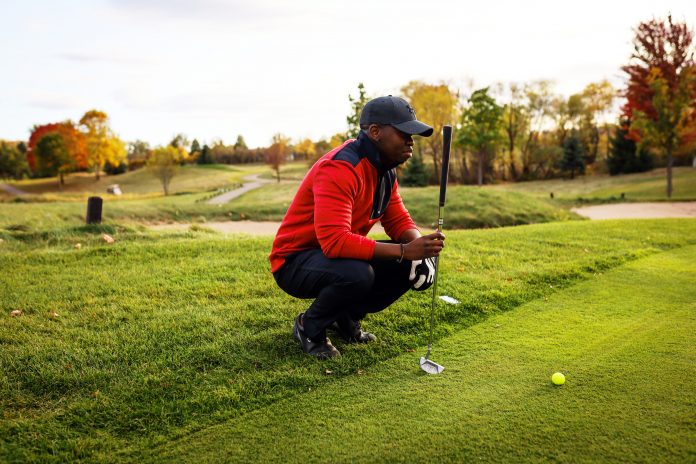
Justice Sikakane eyes the final hole before putting his last shot at the inaugural Beyond End of Season Golf Invitational at the Crystal Lake Golf Club in Lakeville, Minnesota. Photo: Panashe Matemba-Mutasa/Mshale
Justice Sikakane
Justice Sikakane eyes the final hole before putting his last shot at the inaugural Beyond End of Season Golf Invitational at the Crystal Lake Golf Club in Lakeville, Minnesota. Photo: Panashe Matemba-Mutasa/Mshale

Collins Oppong thinks taking up golf could improve the economic and social wellbeing of the African community. The Ghanaian-born podcast host and media development consultant, hosted the inaugural Beyond End of Season Golf Invitational on Saturday at the Crystal Lake Golf Club in Lakeville, Minnesota. Oppong established the tournament to fulfill his vision of seeing Africans connect over golf, a sport that has not always welcomed them in the past.

“What draws me to golf is the wonderful opportunity to experience nature, exercise, network with diverse people, and create fun memories for everyone,” Oppong said.

Golf hasn’t always been open to Black people in the United States. Until 1961, the Professional Golfers’ Association (PGA) held a “whites only” policy. Although there are now more options to practice golf more cheaply, there are still private clubs that charge initiation fees upward of $50,000, which some see as a continuation of the sport’s segregationist history. The golfers at Oppong’s event seem to think that there are affordable ways Black people can introduce their children to golf.

Around 90% of Fortune 500 CEOs played golf, and 80% of business executives said that golf facilitated deeper professional relationships, according to a study published by Forbes. Black people only make up 9.5% of professional golfers, according to data from the career research firm, Zippia. Oppong said his goal was to close the gap by connecting Africans to the golf world.“Africans getting into golf is a great way to connect the African diaspora and grant us the opportunity to network in a way that is both relaxing and different from what we are accustomed to,” Oppong said.
IMG 4813
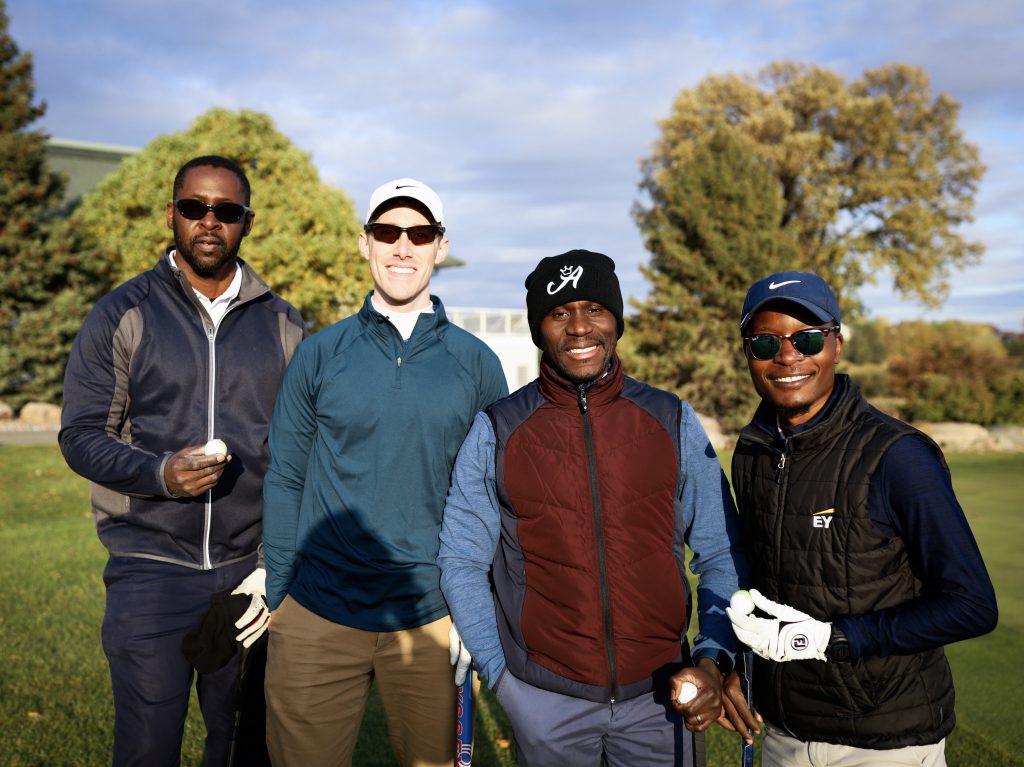
Collins Oppong, thirds from left, host of the inaugural Beyond End of Season Golf Invitational poses with other golfers at Crystal Lake Golf Club in Lakeville, Minnesota where the invitational was held. The tournament’s Best Gross Score winner, George Mburu, is on the right. Photo: Panashe Matemba-Mutasa/Mshale

Dressed in professional golfing gear from head to toe, Justice Sikakane, eyed the final hole from multiple angles before putting his last shot. He has been golfing since high school and credited Tiger Woods for inspiring him to start playing. Sikakane, who is an IT professional, expressed gratitude for the plethora of networking opportunities the sport has brought him over the years and said that closing the racial gap in golf could create new avenues of professional advancement for Black people.

“A lot of the times when I get invited to golf outings for work, I end up meeting really interesting people in my field,” Sikakane said.

The tournament’s Best Gross Score winner George Mburu, ended his 18-hole journey with a celebratory fist bump. To him, sports are the great equalizer, diminishing the weight of skin color by providing every player with the same set of rules. He said it was an old myth that golf excluded for people of color, and that free resources to learn golf and financially accessible clothing options are available.

“This sport can bridge the haves and the have-nots,” Mburu said. “You don’t need expensive gear either; you just need to show up and be willing to potentially network. I learned golf through YouTube.”

According to a collaborative study conducted by the University of Southampton, England, and the University of Southern California, golfers may be more likely to live well into old age than their sedentary elderly people. For senior citizens, more time out on the course was linked to increased strength, improved balance and coordination, and even mental health benefits from “seeing more green.” In addition, golf demands less physical exertion than other sports, making it an ideal choice for many in the latter half of their lives.

Eagan, Minnesota resident Kofi Hinson started packing his clubs as the sun was beginning to set. As he waited for his friends to tally their final scores, Hinson explained why he thought golf is “a game of a lifetime.”

“My kids got me my first golf set when I turned 60 and now I play very frequently, so it’s never too late to start reaping those health benefits,” Hinson said.

Hinson acknowledged that there were racial barriers to the sport, but not the ones that were there in the past. Since segregation is not keeping Black people physically off the course anymore, Hinson said there is a chance for Black people to begin introducing the game to their children. He said that Black youth can grow to love it if it becomes a part of their culture, much like basketball.
Gambo Ato and Marcus Davis
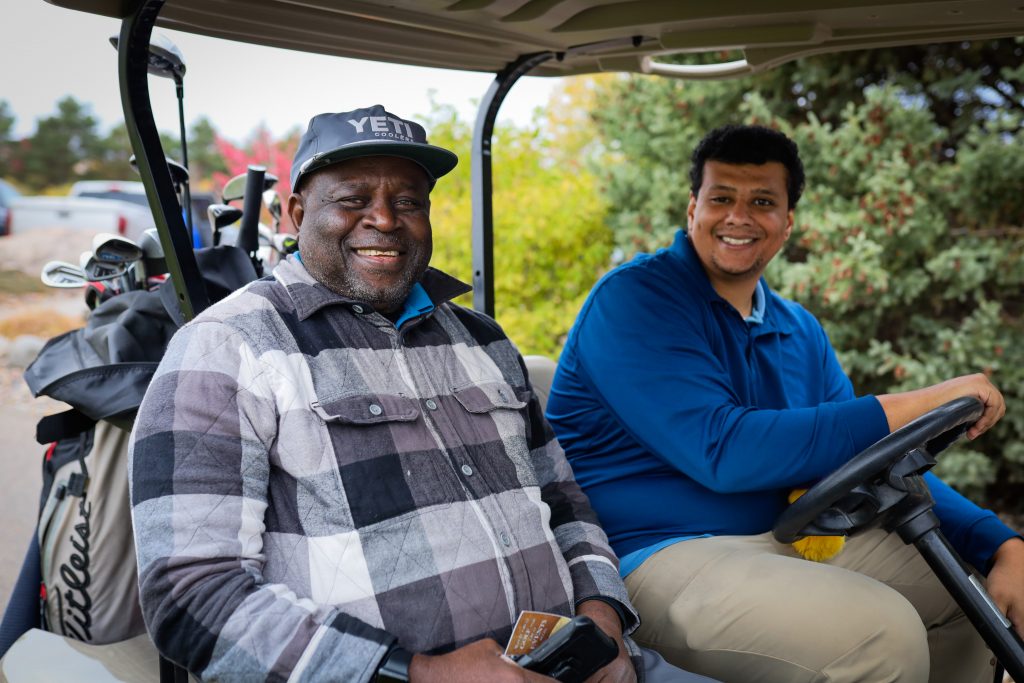
Marcus Davis, left, at the inaugural Beyond End of Season Golf Invitational at the Crystal Lake Golf Club in Lakeville, Minnesota. Photo: Panashe Matemba-Mutasa/Mshale

“The issue nowadays is not access,” Hinson said, “it’s exposure. You have white kids who pick up an interest in the sport because their parents and grandparents did it, and so I think if we want our kids to pick up golf we have to first encourage it ourselves.”

But golf doesn’t just offer physical and professional benefits. Event guests seemed to agree that it builds character as well. As he stood mere meters away from the hole, avid local golfer Marcus Davis adjusted his form in preparation for what he hoped would be his last swing. When the ball scraped the edge of the hole and continued to roll, he let out a sigh. Patience, he said, is one of the virtues one gains when they choose to pursue golf.

“Golf is an allegory for life,” he said. “You can have a plan to make that hole-in-one shot, but it doesn’t always work out the way you planned, so you have to have the patience to allow yourself the time to come up with a game plan.”

Ugandan American entrepreneur Ian Oundo raised his golf club in victorious celebration as his ball rolled smoothly into the last hole. As he made his way back to his golf cart, he smiled as he sang the praises of his friend Oppong. Oundo, who runs a political consultancy firm, said Golf was the perfect way to socialize on a cool fall afternoon.

“It’s beautiful not only because we are supporting our brother Collins, but also just to see a good group of African guys come together and bond over the sport,” Oundo said. “I want to see us out on the golf course more.”

Masjid Al-Ansar Ribbon-cutting and Dedication

0
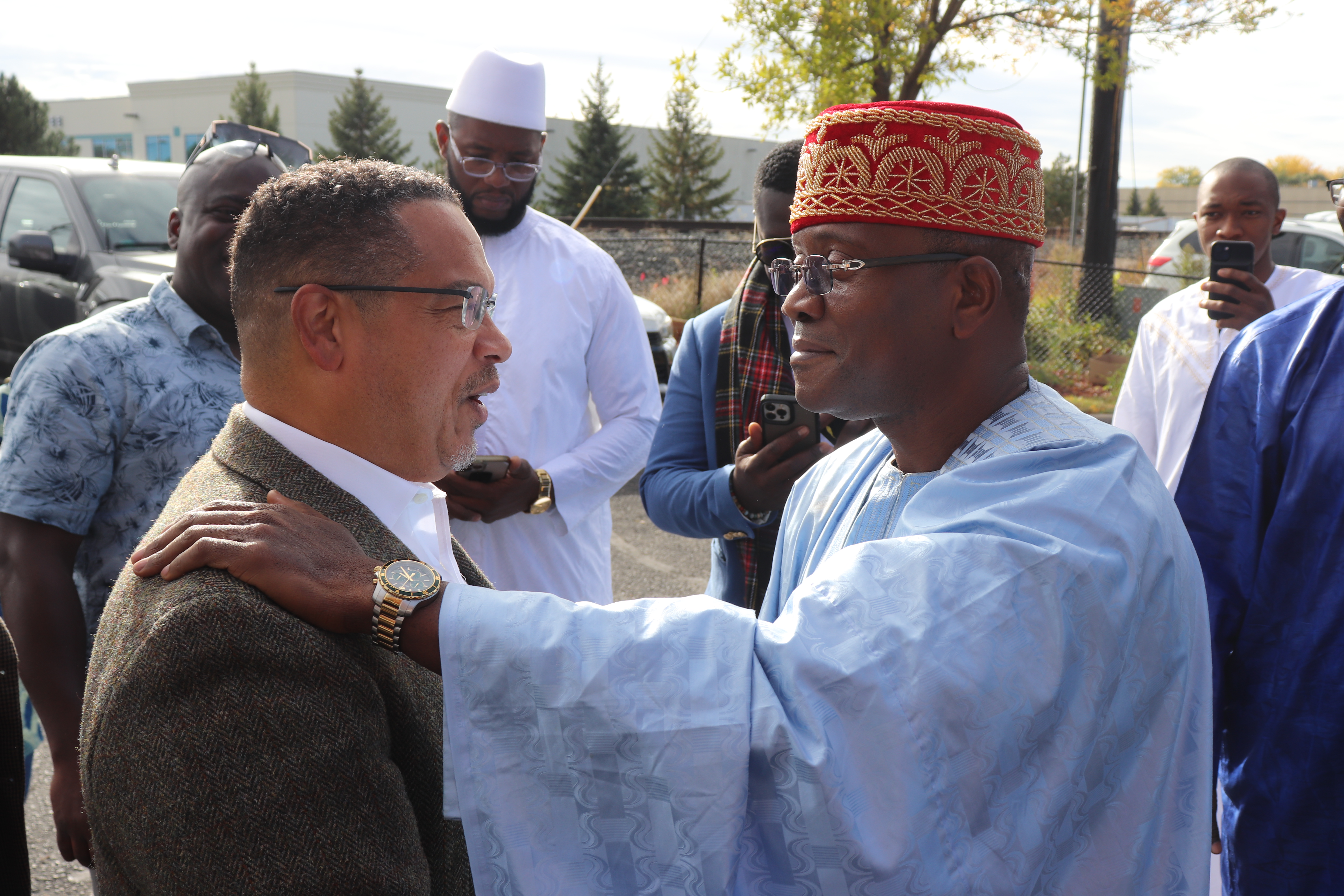
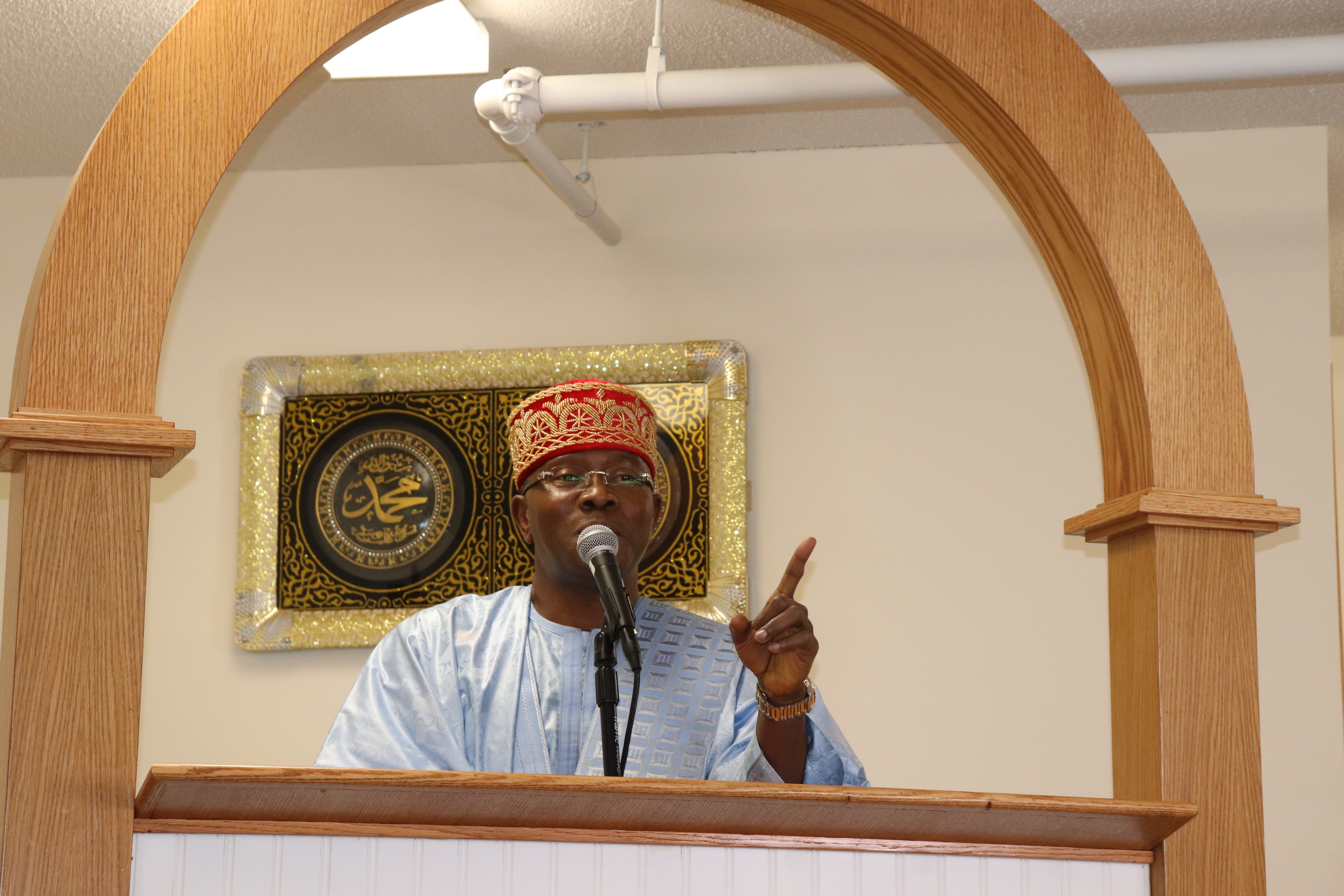
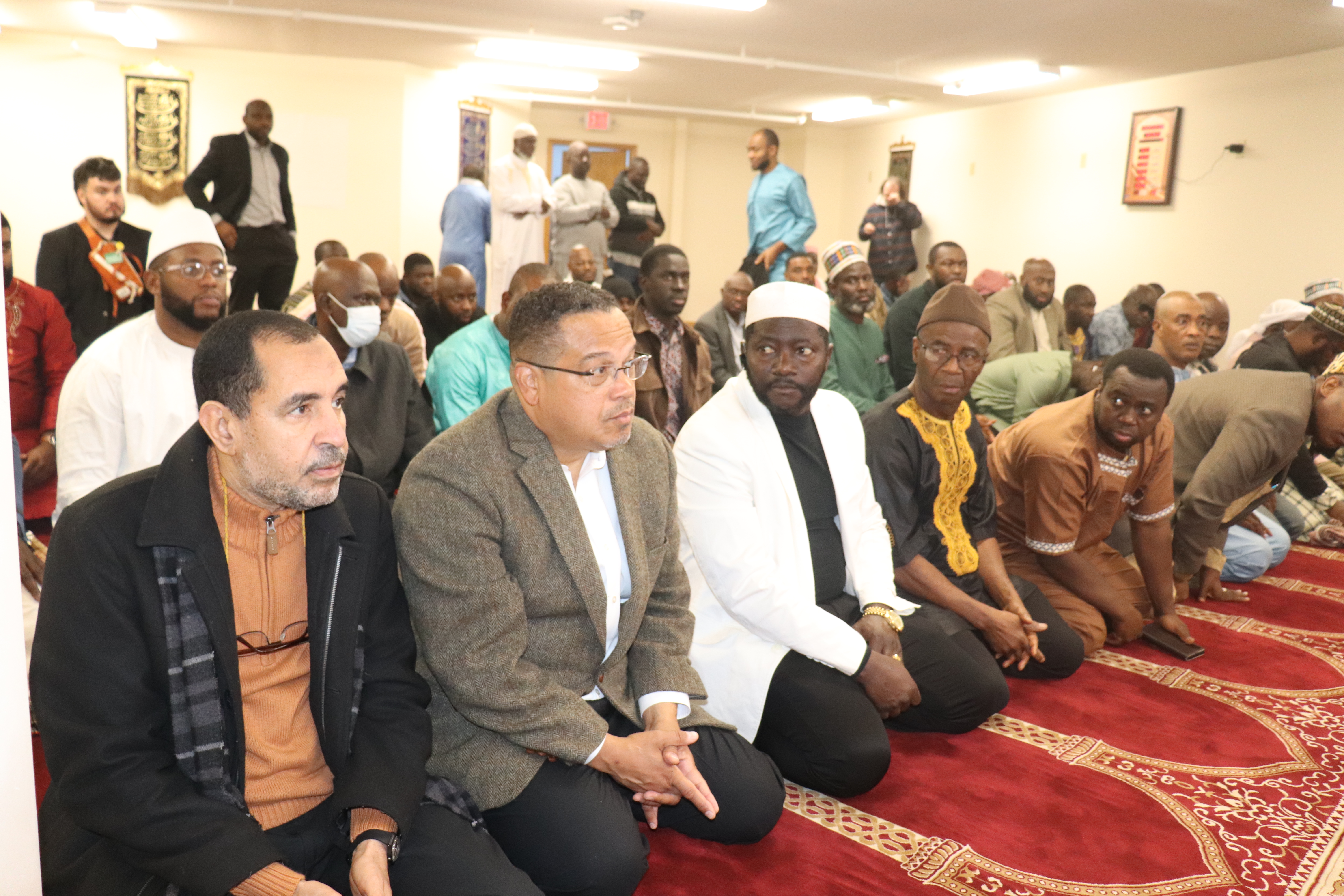
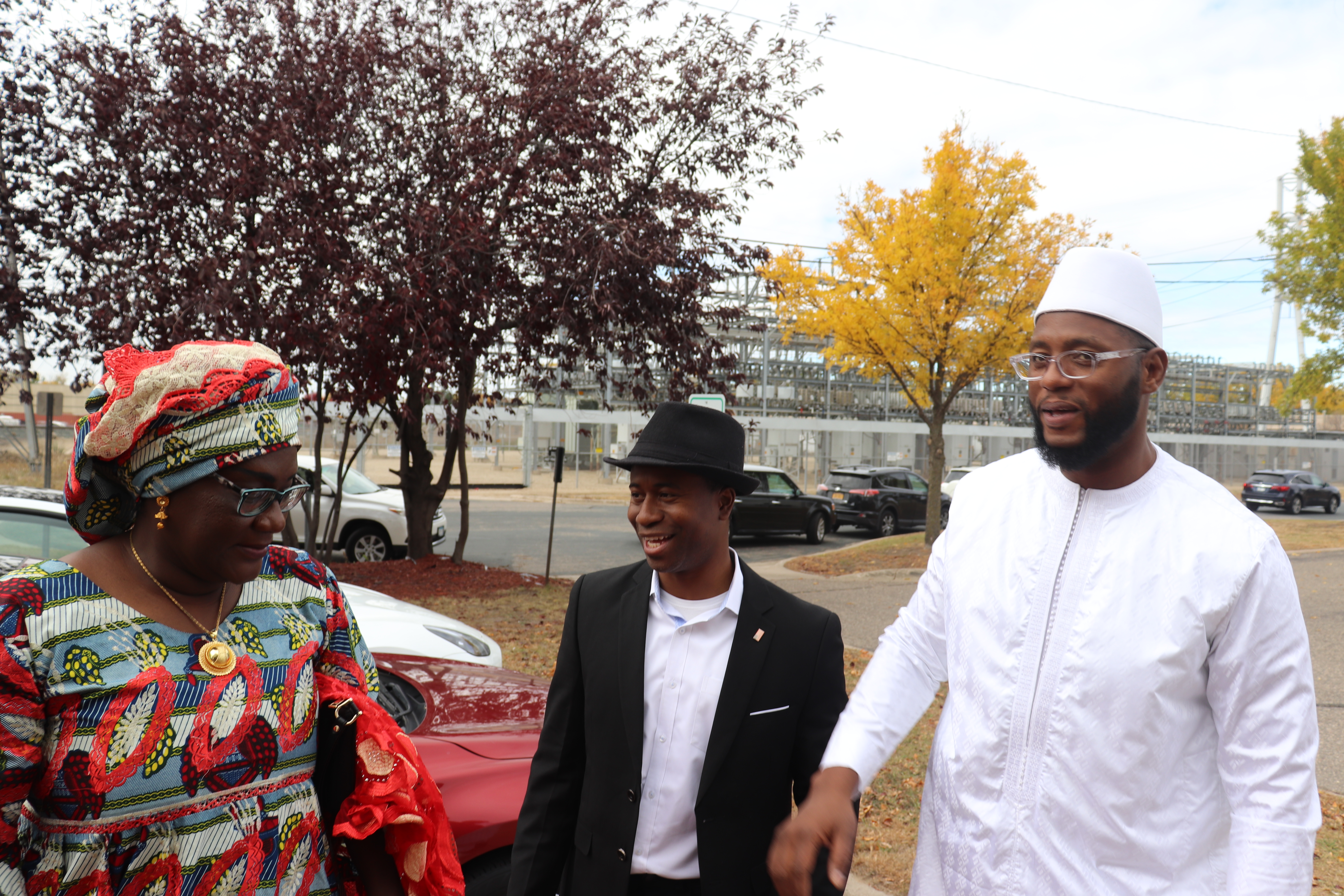
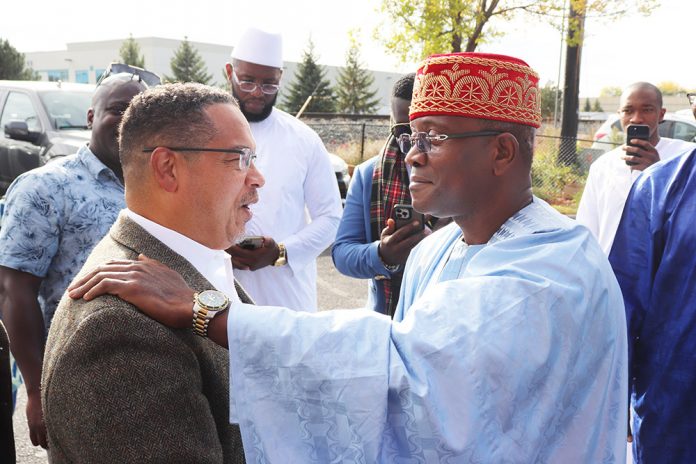
Imam Mohamed Dukuly (right) welcomes Minnesota Attorney General Keith Ellison to Masjid Al-Ansar in Brooklyn Center on Saturday, October 15, 2022 when that mosque held its ribbon-cutting and dedication ceremony. Photo: Tom Gitaa/Mshale
MShale Masjid featured
Imam Mohamed Dukuly (right) welcomes Minnesota Attorney General Keith Ellison to Masjid Al-Ansar in Brooklyn Center on Saturday, October 15, 2022 when that mosque held its ribbon-cutting and dedication ceremony. Photo: Tom Gitaa/Mshale

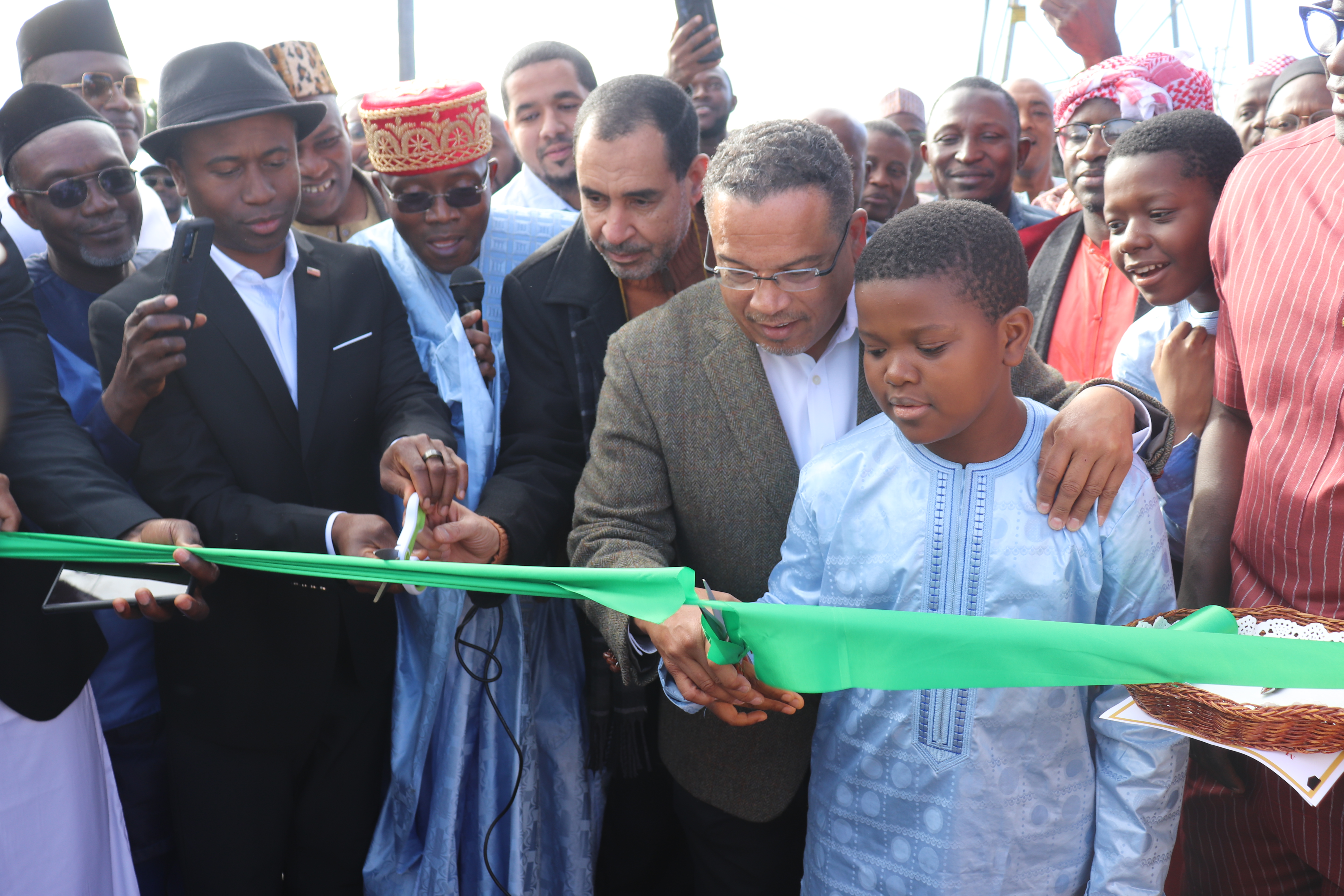
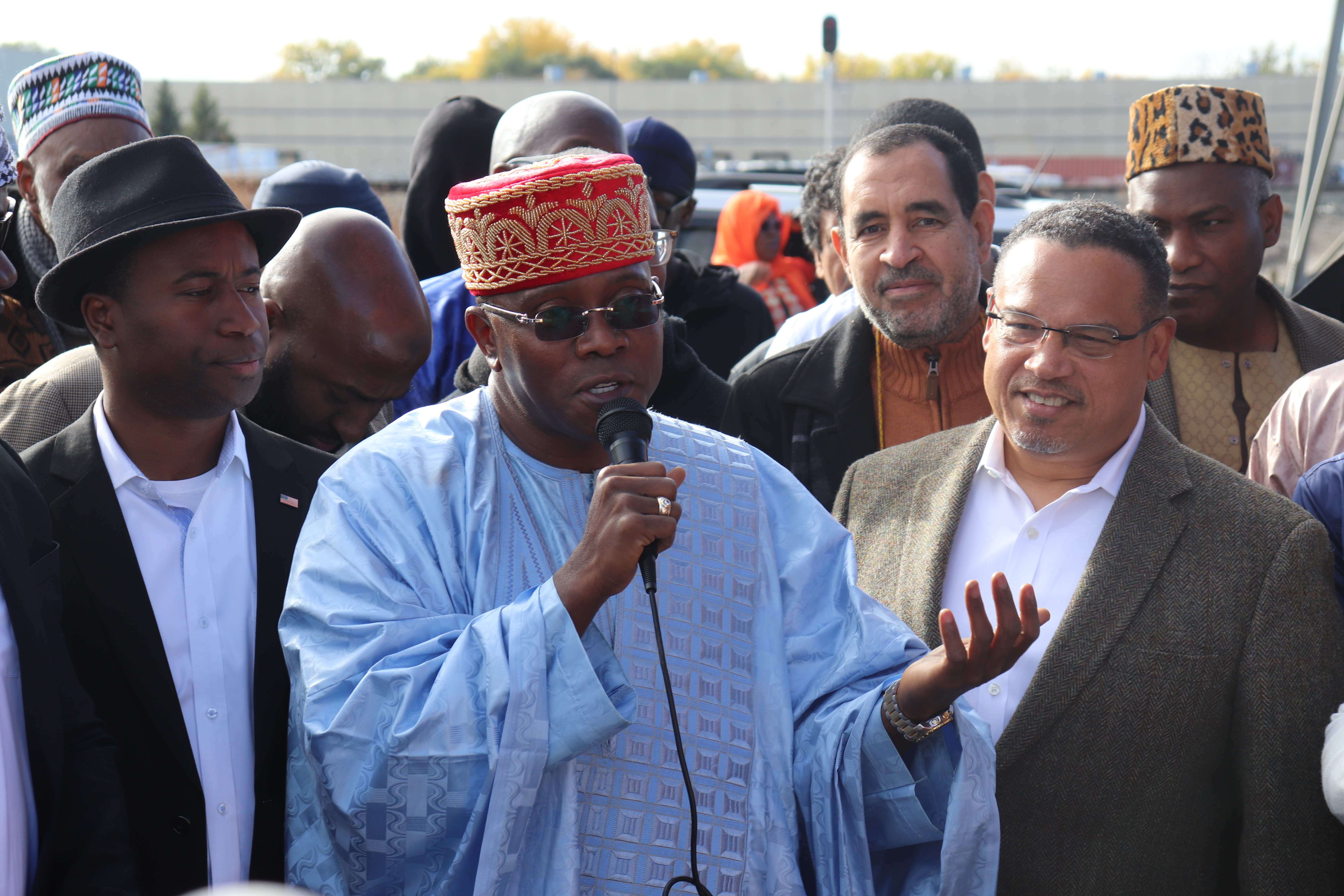
Minnesota Attorney General Keith Ellison and Brooklyn Center Mayor Mike Elliott joined other leaders for the ribbon-cutting and dedication of Masjid Al-Ansar in Brooklyn Center on Saturday, October 13, 2022. The mosque’s congregation is mostly West African immigrants and it is located just steps from the corporate headquarters of Caribou Coffee. Read full story on the grand opening and dedication at this link.

Hundreds celebrate Masjid Al-Ansar’s grand opening and dedication

0
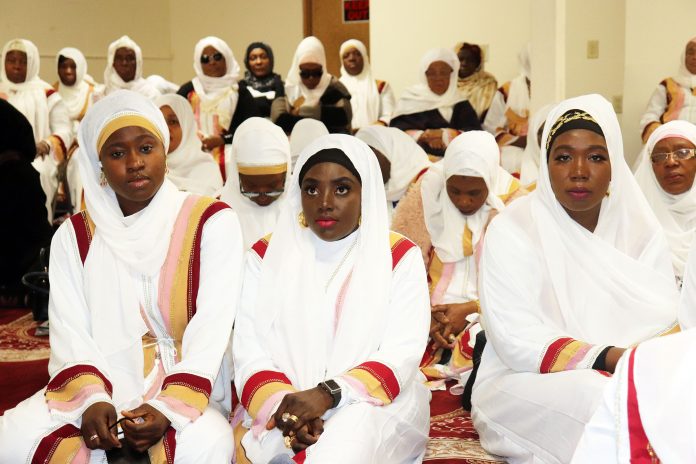
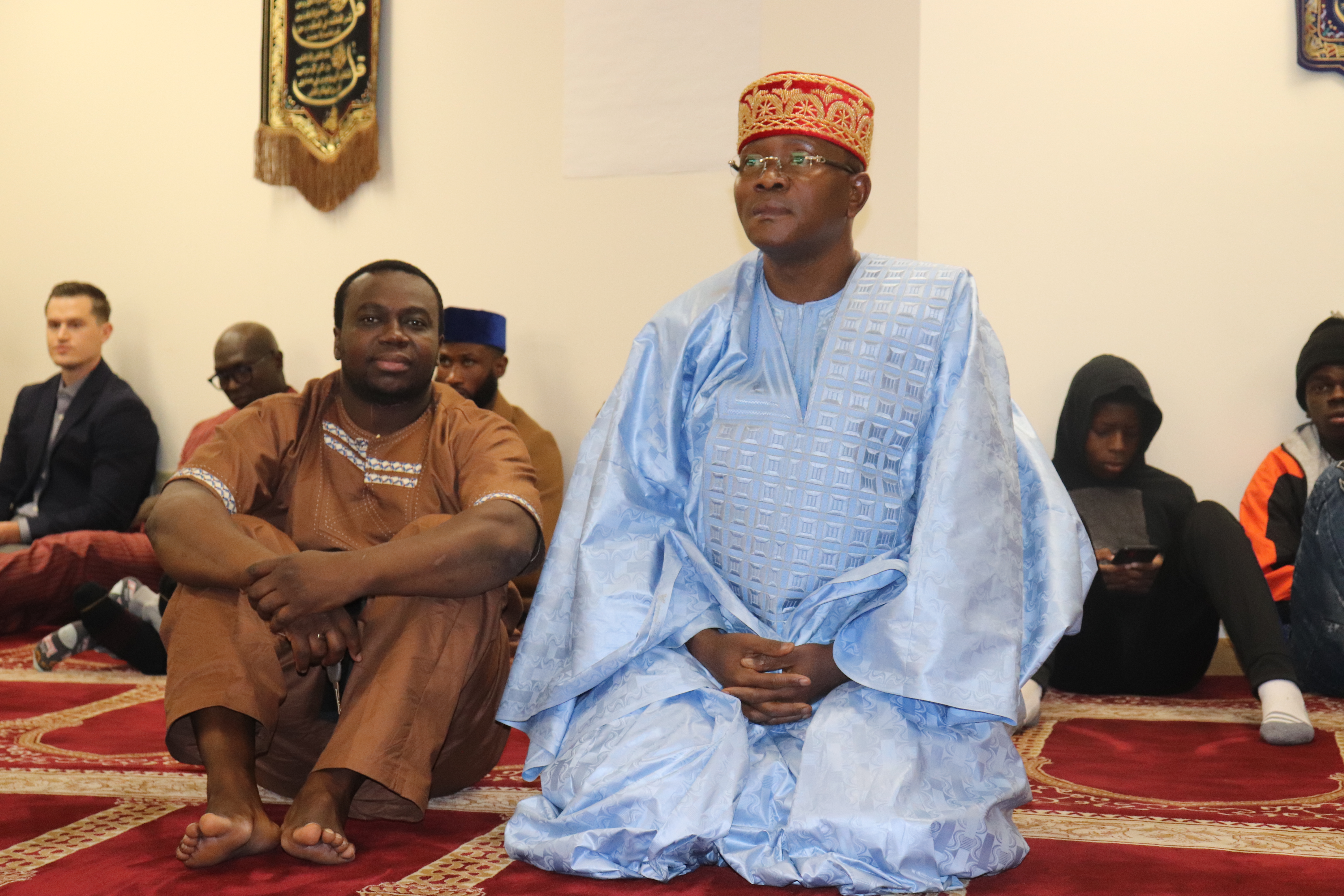
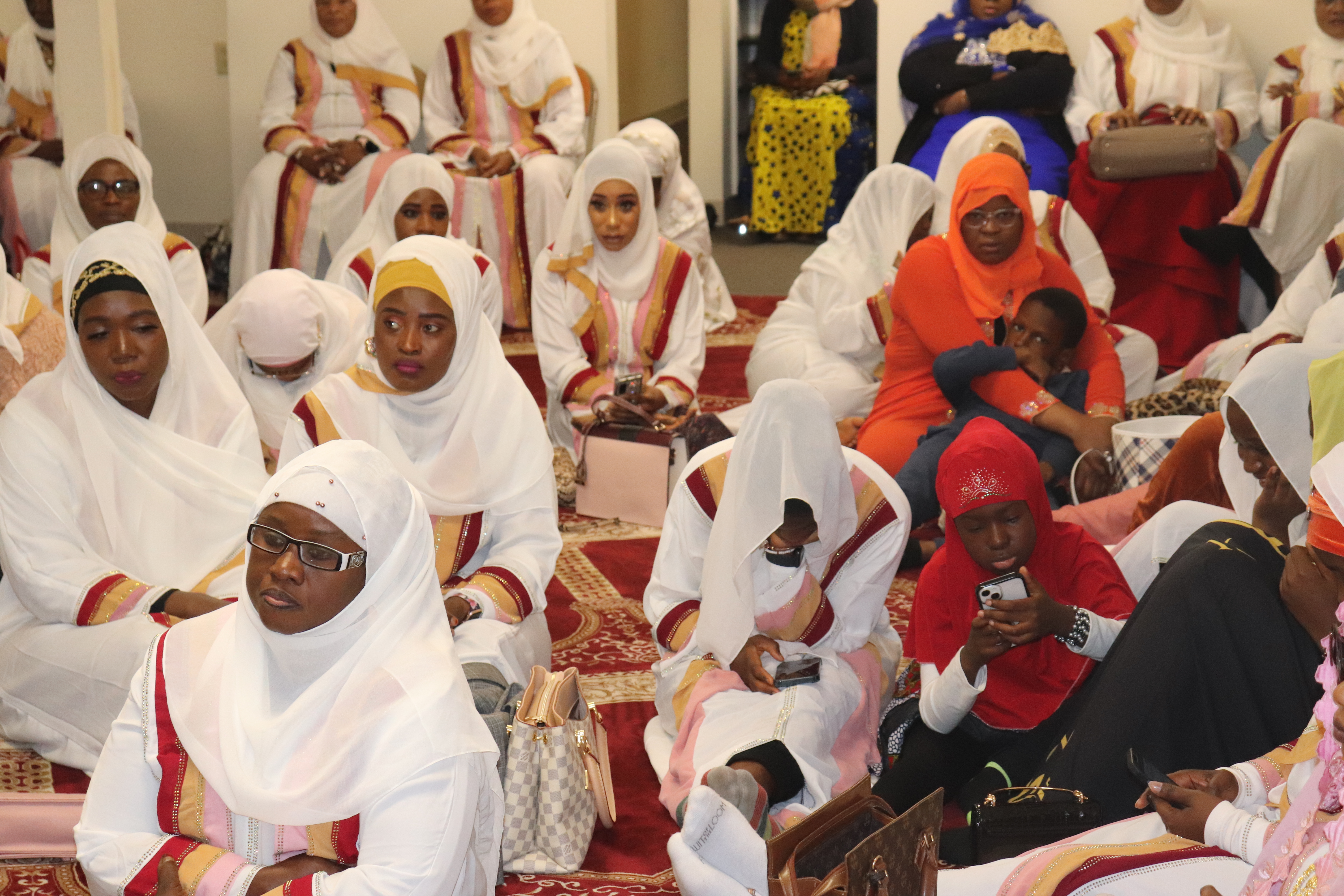
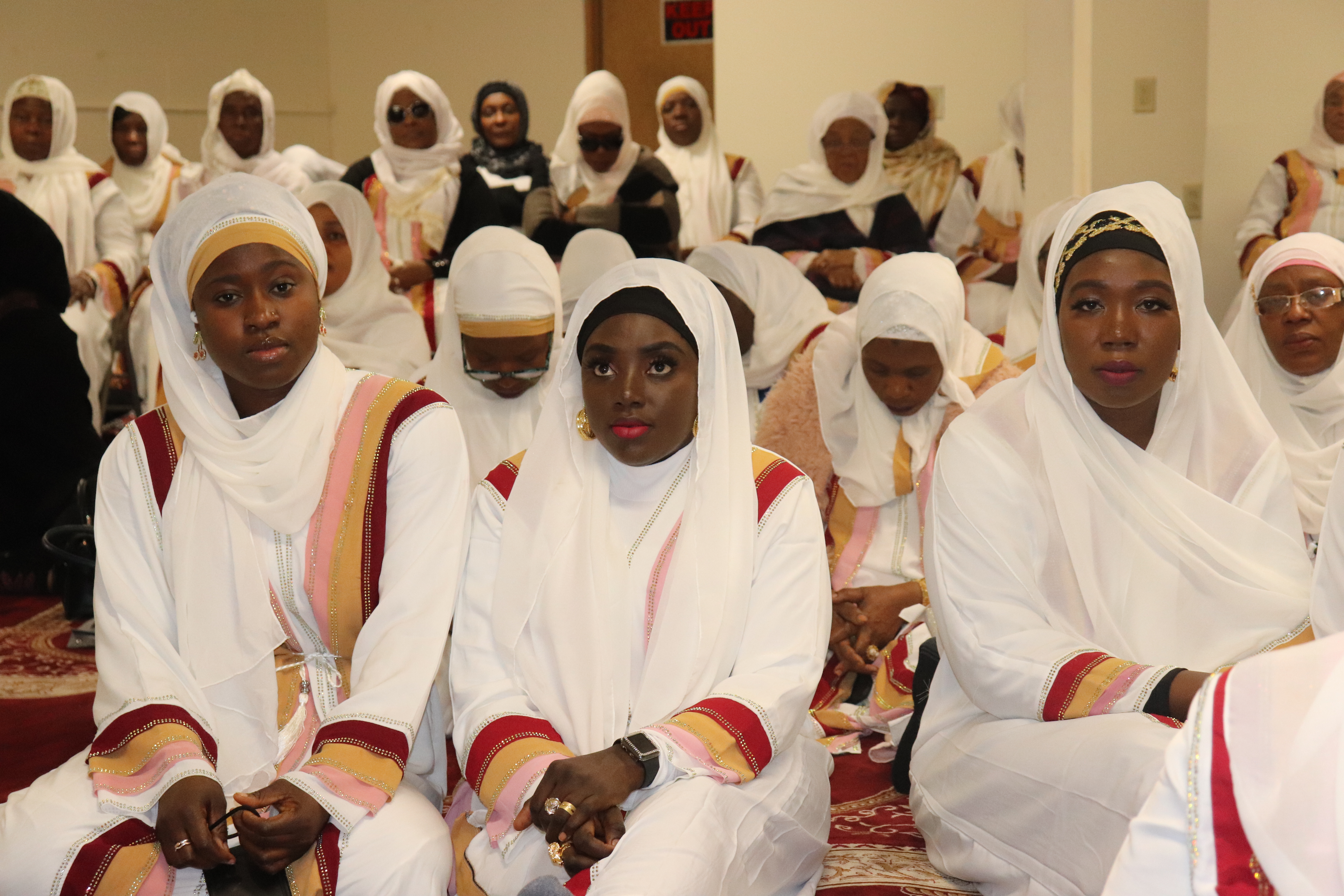
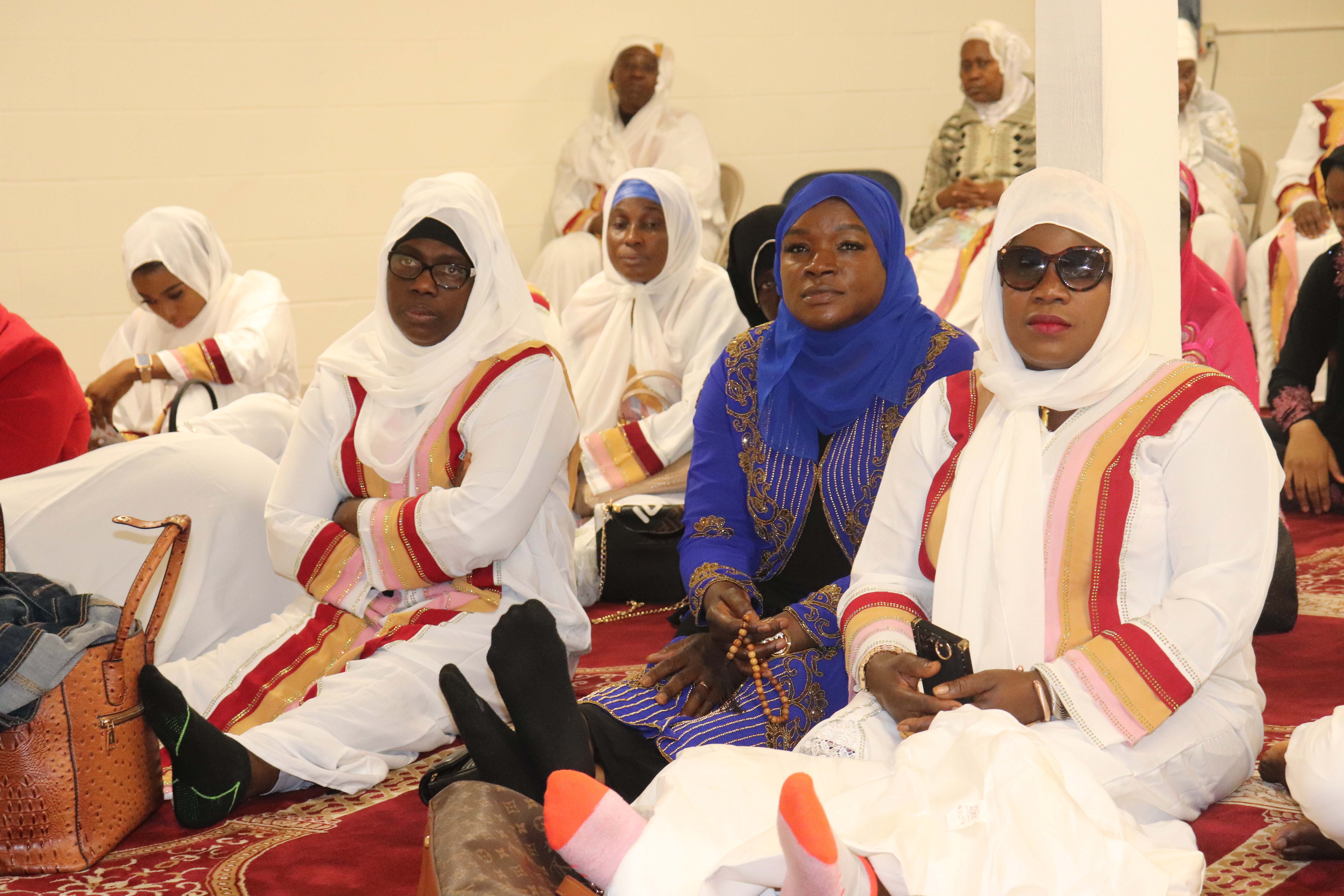
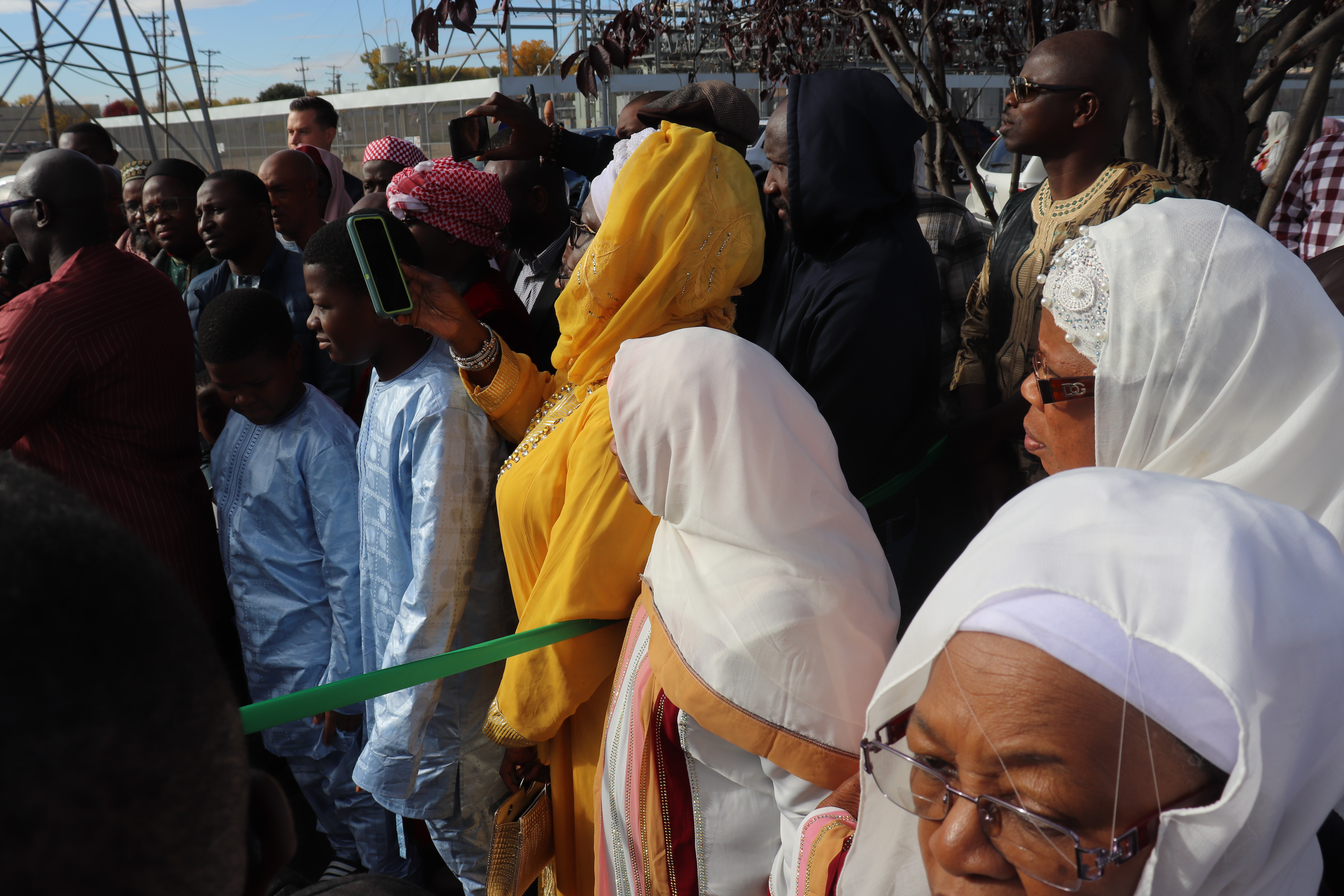
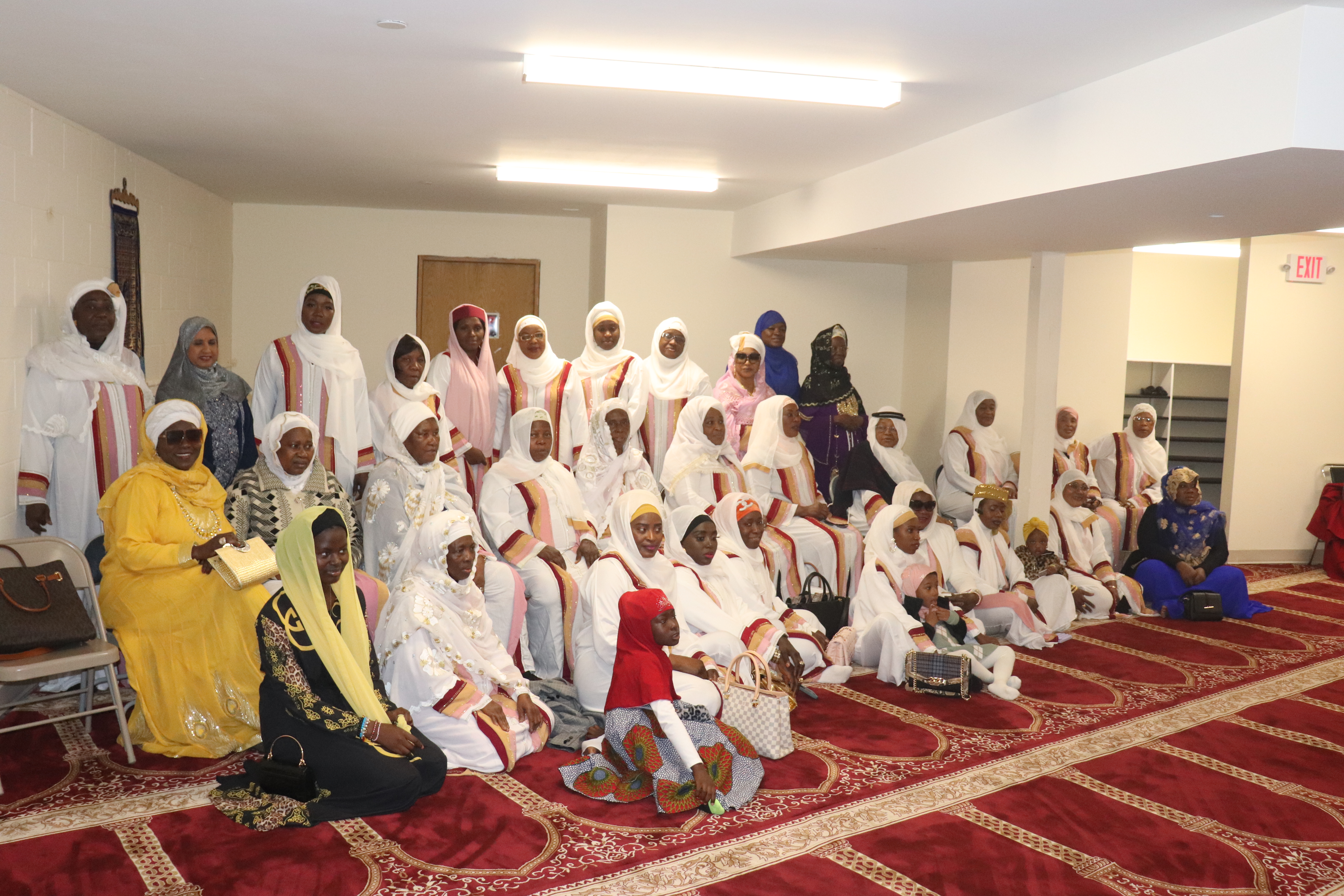
Women of Masjid Al-Ansar listen to Imam Mohamed Dukuly deliver the khutbah (sermon) during the mosque’s ribbon-cutting and dedication on Saturday, October 15, 2022 in a ceremony attended by Minnesota Attorney General Keith Ellison and Brooklyn Center Mayor Mike Elliott. Photo: Tom Gitaa/Mshale
Women at Al Ansar Grand Opening
Women of Masjid Al-Ansar listen to Imam Mohamed Dukuly deliver the khutbah (sermon) during the mosque’s ribbon-cutting and dedication on Saturday, October 15, 2022 in a ceremony attended by Minnesota Attorney General Keith Ellison and Brooklyn Center Mayor Mike Elliott. Photo: Tom Gitaa/Mshale

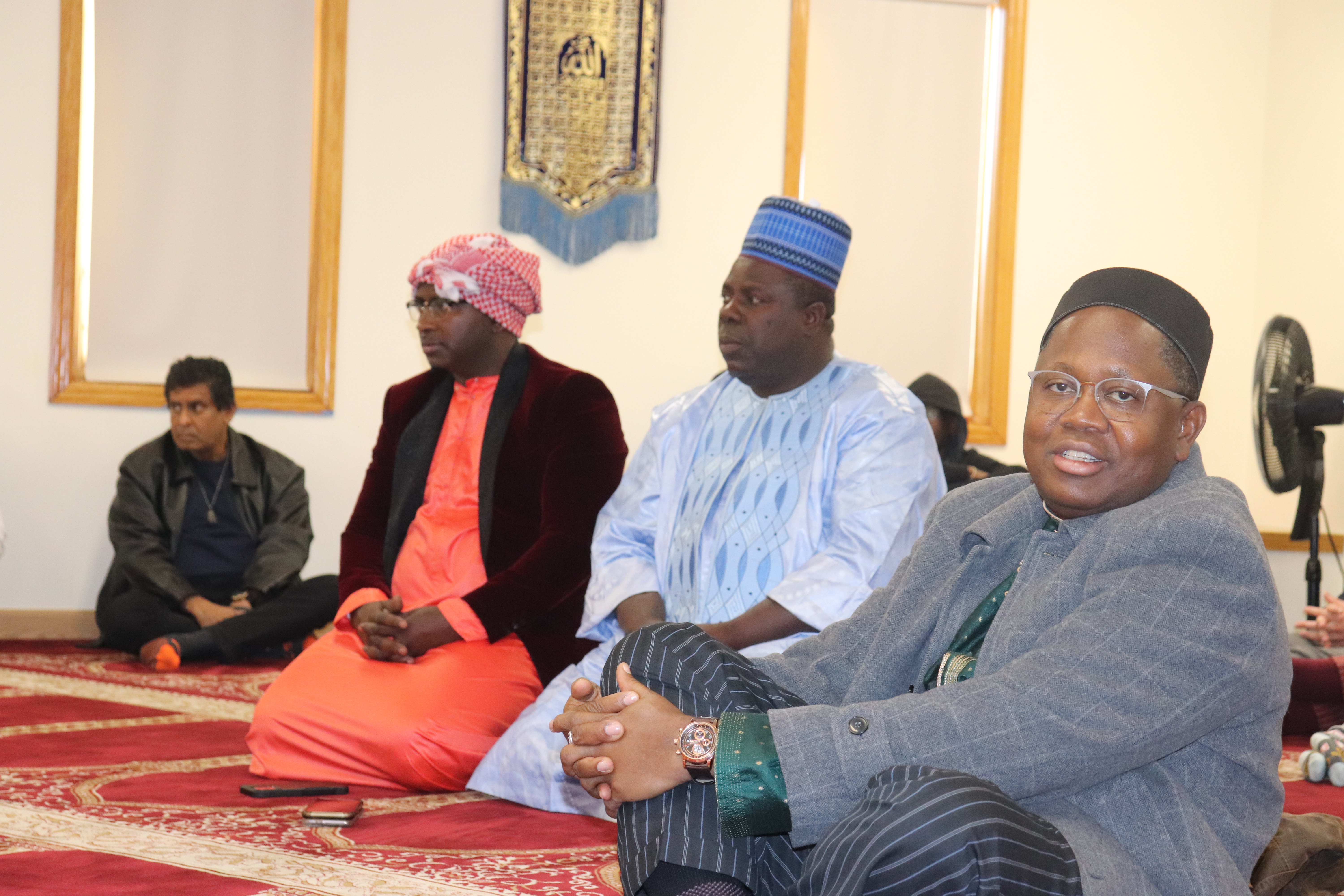
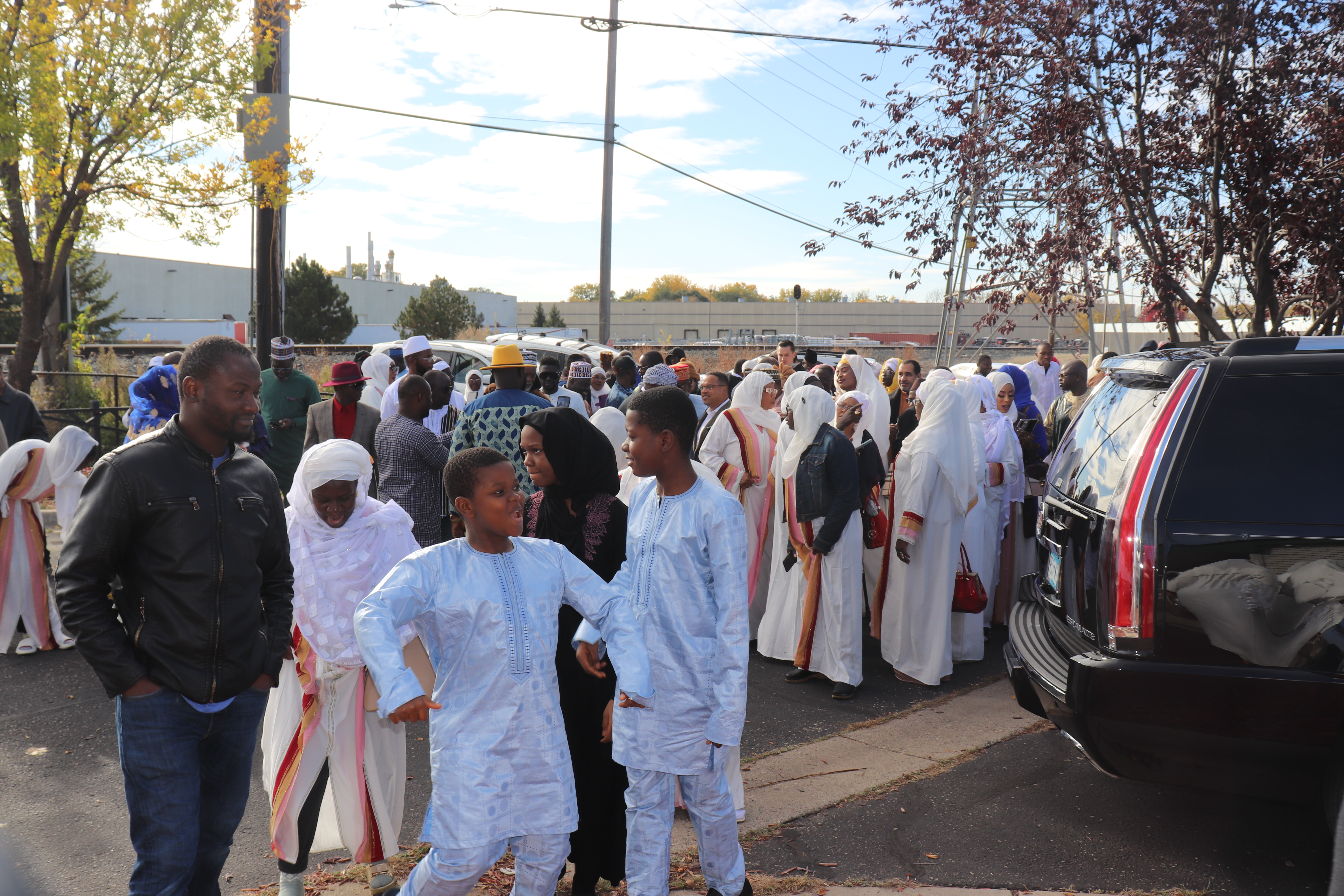
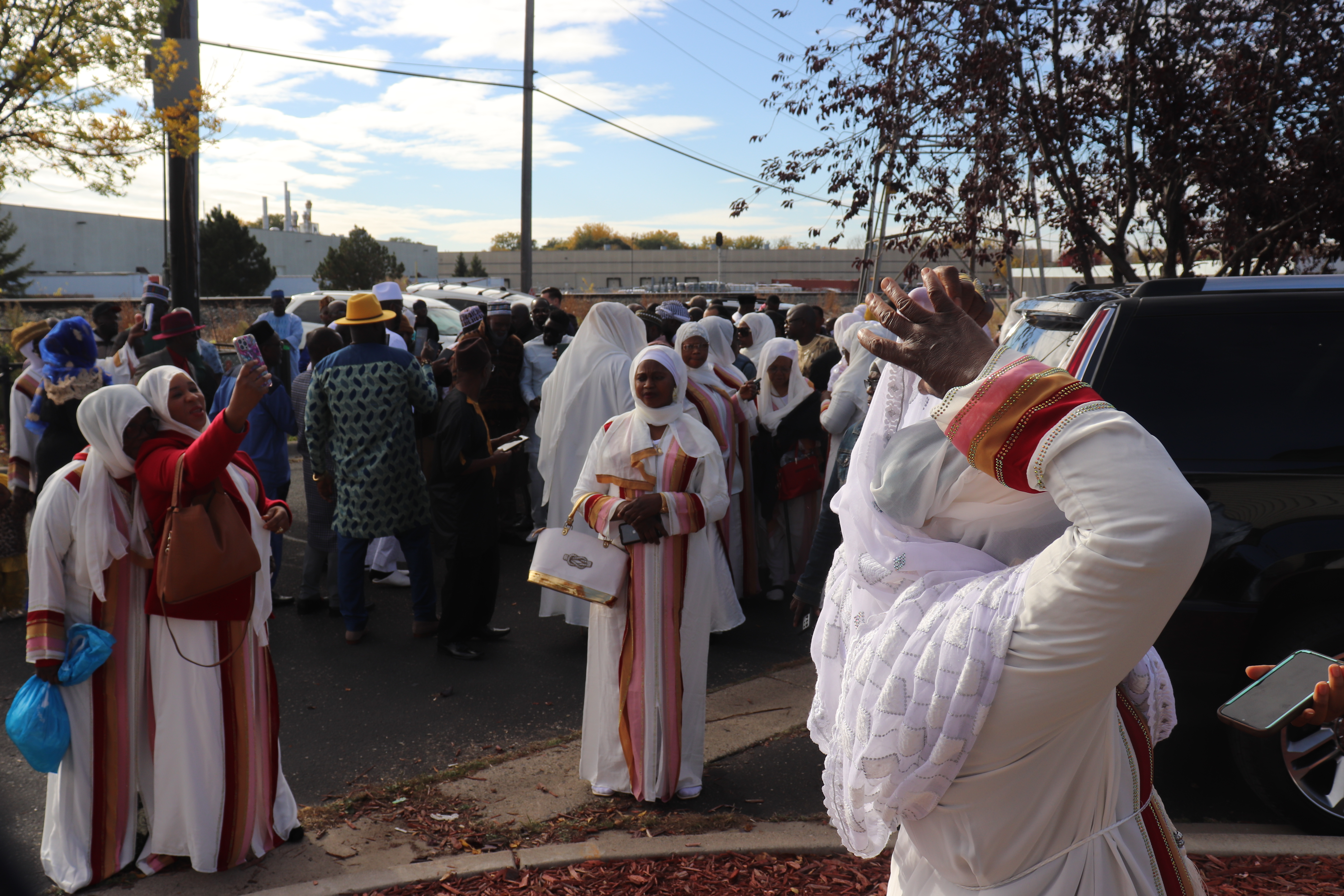
Attorney General Keith Ellison and Brooklyn Center Mayor Mike Elliott joined members of the West African Muslim community in the Twin Cities on Saturday to celebrate the grand opening of Masjid Al-Ansar in Brooklyn Center – a project three years in the making.

The mosque at 4900 France Ave. provided a backdrop for a colorful ribbon-cutting ceremony as proud community members, thrilled to see their years of hard work come to fruition, crowded around their Imam, Mohammed Dukuly and the dignitaries to cut the ribbon.

The Muslim community in the Twin Cities seven county metro area is estimated to be close to five percent of the area’s 3 million people, according to the Federal Reserve Bank of Minneapolis. Minnesota is also home to the first Muslim elected to serve in the U.S. Congress when Keith Ellison was elected to the US House of Representatives in 2006. Ellison is the current Attorney General for Minnesota and is also the first Black person to win statewide office in Minnesota.

Ellison and Elliott, who are both in the middle of tight reelection races, were joined at the ribbon cutting by other civic leaders such as Brooklyn Park councilmember Wynfred Russell and Hollies Winston. Russell and Winston are on the ballot in November for mayor of Brooklyn Park, with the winner becoming that city’s first Black mayor.

Siad Ali, the senior advisor and outreach director for U.S. Senator Amy Klobuchar, brought congratulatory messages from the state’s senior US senator.

“I will not ask for your vote here as this is not the place,” Ellison said. “But as Muslims we can’t complain about something and not go out to vote to change it.”

Aicha Kromah recently moved from Austin, Minn. to the Twin Cities. She stood outside the building, smiling and gazing at the crowd outside.

The Liberian immigrant said there was nothing to compare to in Austin and when she lived there, she had to drive at least an hour to Rochester to pray at a mosque.

“It is hard too hard to describe how I feel, just happy,” she said. “I feel like I am back home when I come here.”

The new mosque is a much-needed improvement over the place where the congregation gathered for prayers for the past few years – an office building on Brooklyn Boulevard, said Kadiatou Sackor, a school bus driver in nearby Osseo.

“This is much better I tell you,” Sackor said. “The community put in a lot of work in this and it is a great blessing indeed.”

Many West African Muslims in the northwest suburbs, such as Sackor, worship at mosques in nearby cities such as Minneapolis. But, with such a growing number of Muslims from that part of Africa, it’s important that they also have a place to remember their culture and practice their traditions and languages as they worship, those at the ribbon-cutting said.

A beaming Imam Dukuly, who has led the congregation since its founding, thanked and praised the community for its fundraising in making the dream of their own mosque a reality.

“Allah’s blessings are upon those that build a mosque,” Dukuly said. “It is a good thing they (congregation) have done.”

Imam Dukuly said the congregation of about 200 consists of many hardworking African immigrants, mostly from West Africa, and a mosque to call their own is long overdue.

“However, we have many people from different parts of the world that come to worship with us, so we welcome all of them as we are all brothers and sisters” Dukuly said.

The new masjid is located in an area that is zoned for industrial use and had to be granted a special use permit by the city to use it as worship space.

One of those that was all smiles at the ribbon-cutting was Trevor Morlach, a realtor at Arrow Real Estate in Maple Grove. He has helped mosques rent space for worship before but Masjid Al-Ansar was the first mosque he has assisted in purchasing their own building.

“It was quite an involving process to work with the city and Imam Dukuly to get all the zoning issues sorted out and bring the building up to code, as the city required,” Morlach said. “I am very happy that I could help them accomplish this.”

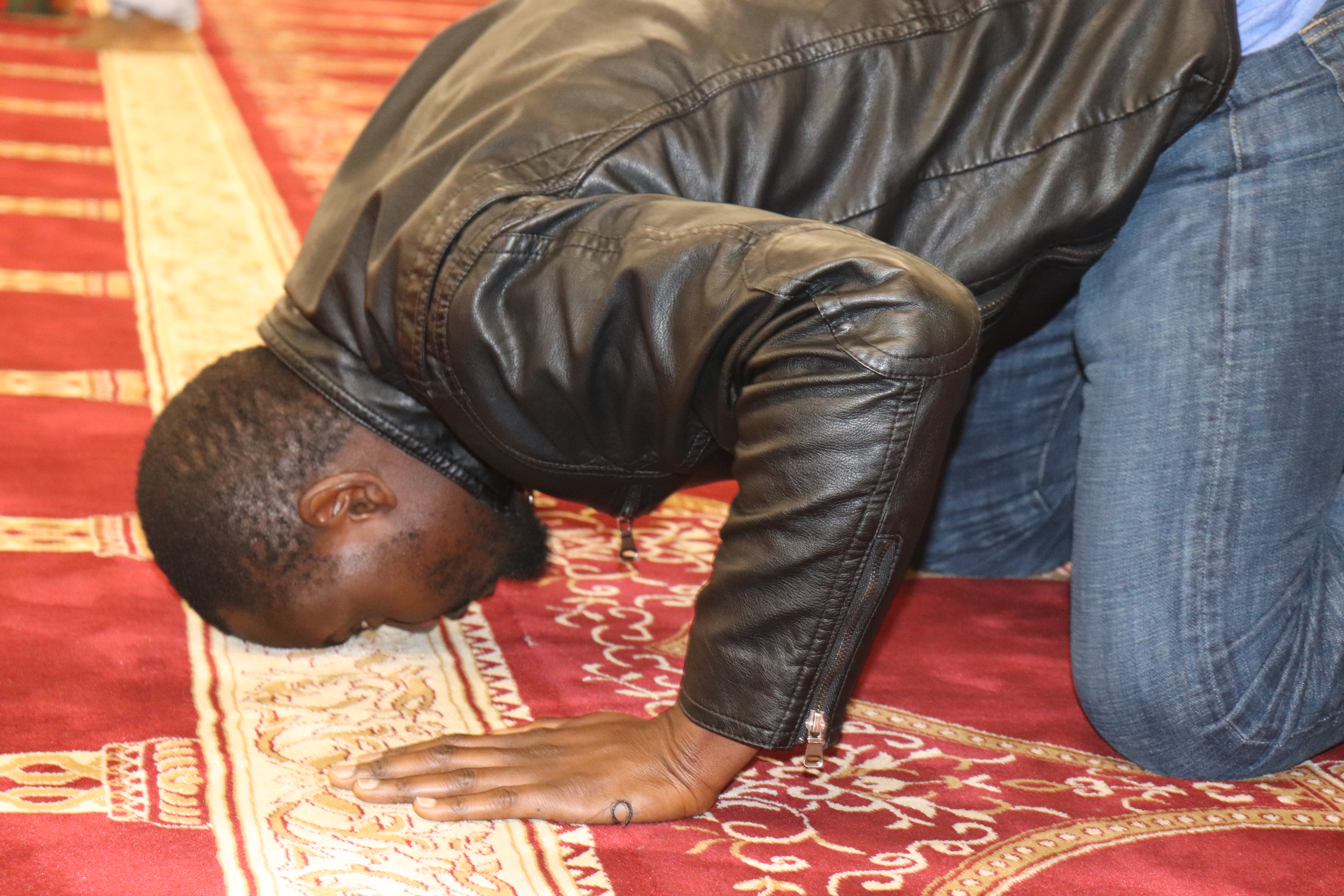
The building is about 100 feet from the Caribou Coffee corporate headquarters, separated by railway tracks.  The masjid’s entryway features an area for worshippers to leave their shoes, and immediately upon entering the prayer area, one is greeted by a flowery red maroon carpet. The minbar, the area where the Imam delivers the khutbah (sermon), is made of pine cedar.

Ahmed Sirleaf, an international development professional and currently a doctoral student at the University of Minnesota, stood outside with hundreds of others as the imam and dignitaries got ready to cut the ribbon.

Sirleaf considers himself a global citizen, given his extensive international development work. He worships on occasion at a masjid in north Minneapolis but appreciates one that is closer to the community.

“This means a lot. It is good to have something close to where you live so you don’t drive too far and the community needs this,” Sirleaf said outside the parking lot, gesturing toward the mosque “It is good to be around those you share a common culture as we worship.”

“This is more than a mosque. It is also a gathering place that connects us,” Sirleaf said.

MINN Summit: NGO executive calls for local representation in leadership

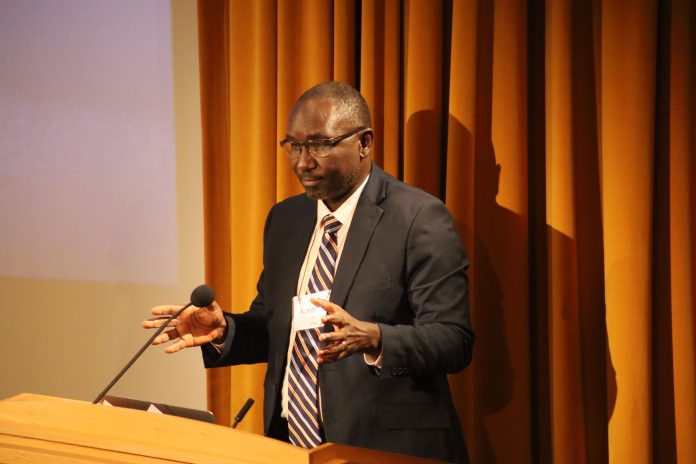
Abraham Leno, the executive director of the Eastern Congo Initiative (ECI), delivering his keynote address at the Minnesota International NGO Network summit on Thursday, October 13, 2022 in Minneapolis. Photo: Panashe Matemba-Mutasa/Mshale
IMG 4783
Abraham Leno, the executive director of the Eastern Congo Initiative (ECI), delivering his keynote address at the Minnesota International NGO Network summit on Thursday, October 13, 2022 in Minneapolis. Photo: Panashe Matemba-Mutasa/Mshale

Nongovernmental organizations (NGOs) would be a lot more effective if they included more people from the communities they serve in their leadership, according the director of an NGO based in Democratic Republic of Congo (DRC).

Abraham Leno, who was born in Sierra Leone and spent 11 years with his family as a refugee in Guinea, is now the executive director of the Eastern Congo Initiative (ECI) which was founded to invest in local community organizations in order to tap the potential of the people of DRC and create opportunities to market their product.

“We believe that the best solutions to the world’s problems come from the brilliance of the people who live through them,” said Leno

Leno was the keynote speaker at this year’s MINN Summit, which was organized by Minnesota International NGO Network to connect like-minded professionals working on solutions to pressing issues around the globe. The event was held at the University of Minnesota’s Humphrey School of Public Affairs.

One criticism of foreign-run NGOs is that they are often unwilling to consult with people of the communities they operate in. A 2020 a study by the Kellogg School of Management at Northwestern University found that sometimes NGOs do more harm because they “may not fully grasp the needs of the communities they serve.”

Leno, who previously led relief and development efforts in Liberia, South Sudan, Darfur, Ethiopia, and Pakistan, before shifting to his current role in DRC, said years of service had taught him that it was crucial to seek the knowledge and perspectives of the people an NGO serves.

“If there is somebody better than you at what you do, give them the space because we do not operate for profit,” Leno said. “We operate on behalf of people. Why risk lives to unnecessary competition?”

Leno said he strived to foster partnerships between ECI and the people of Eastern Congo in order to build trust and create sustainable change.

“What has kept me in Congo is the vibrancy and sheer joy of these people,” he said. “It is the energy that you feel when you are there.”

Anne Betzner, a MINN Summit board member, said Minnesota has a large number of NGOs and that it was important for them to strive to better the way they operate.

“It is important that we all perform at the highest level so that we can achieve our missions in the most efficient way possible,” Betzner said.

Doherty
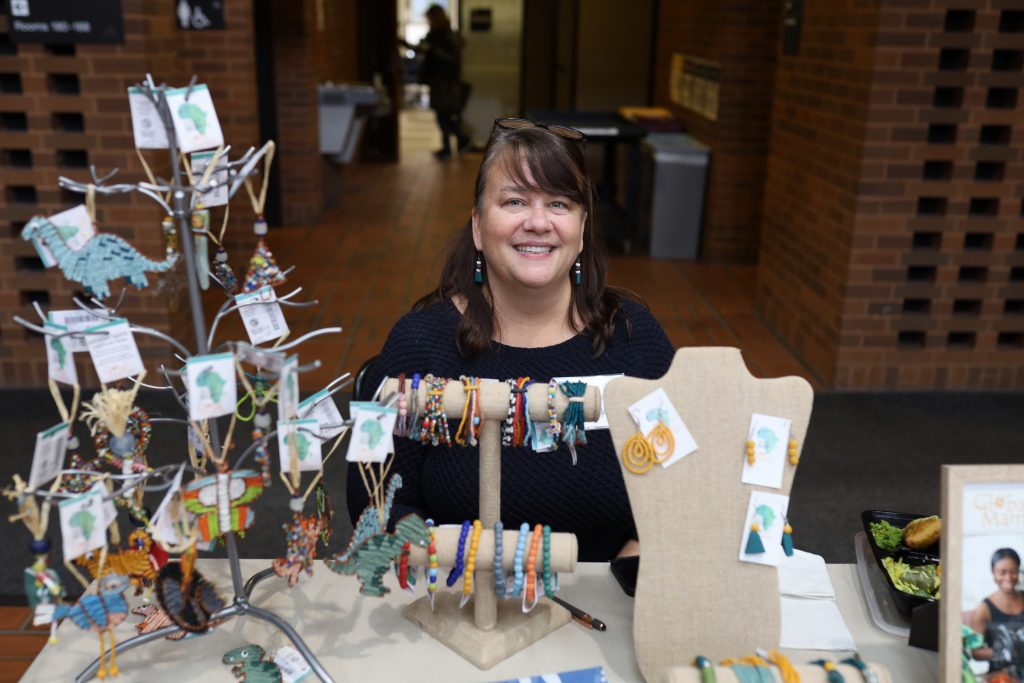
Kristin Doherty, co-founder of Global Mamas at her organization’s vendor table during the Minnesota International NGO Network summit on Thursday, October 13, 2022 in Minneapolis. Photo: Panashe Matemba-Mutasa/Mshale

Carol Nelson, the medical program director at Rural Health Care Initiative, which focuses on improving health, nutritional, and postnatal care for women in Sierra Leone, agreed with Leno that including people in the process of making decisions about their lives is one of the most powerful steps an NGO can make. She said that in 2020, her organization hired a local nutritionist named Umu Shour to address issues of child malnutrition as part of a move toward including local perspectives.

“I think it is very valuable that we are working closely with these communities to ensure that they get the care that they need,” Nelson said.

Kristin Doherty, co-founder of Global Mamas, beamed as she showcased an earring set made by women in her organization, which as has more than 400 Ghanaian women entrepreneurs skilled in jewelry and handicraft making. The organization follows the “fair trade” and empowers women to earn a living while doing what they love.

“I’m really proud that we are led by the women that we serve,’ Doherty said. “I think it’s a confidence boost for them.”

Laura Skubic, a development manager at OneVillage Partners, an international NGO based in Sierra Leone, said she was proud to be co-creating solutions for issues like education and mental health. Her organization works to address a multitude of issues in the country, including access to clean water, food, and the economic advancement of women. OneVillage strives to ensure representation in its leadership and works closely with the people it serves.

“All of our program work is led by communities we are working with, and we take that very seriously,” Skubic said.

In a breakout session about news coverage, Fred de Sam Lazaro, creator of the Under-Told Stories Project, brought up the topic of how media decide what is newsworthy on the global stage. He said many believed it was racist when Ukraine was seemingly gaining more media traction for its refugees than African nations. But Lazaro encouraged the audience to frame it differently.

IMG 4774 2
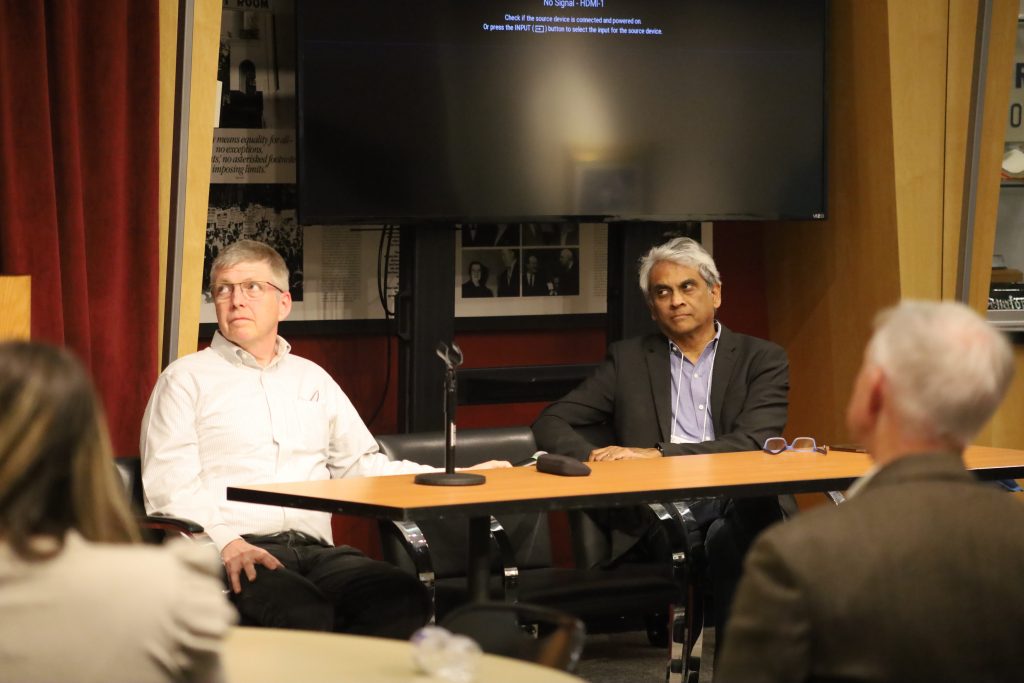
Paul Ferguson, manager of News Technology Integration at CNN and Fred de Sam Lazaro, correspondent of PBS NewsHour and executive director of the Under-Told Stories Project participate in a panel session about news coverage at the Minnesota International NGO Network summit on Thursday, October 13, 2022 in Minneapolis. Photo: Panashe Matemba-Mutasa/Mshale

“The nature of news is that it asks, ‘What’s new?’” Lazaro said. “Millions of refugees in Africa is not a new story, but millions of refugees in Ukraine is. It goes beyond a race.”

Leno said that it was important to consider how NGOs themselves frame issues of the countries they serve. One of the most common themes in NGO advertising was the depiction of the regions they operate in. He said it was harmful to continually portray regions as “problem areas,” because of the negative image such language can create of people.

“When you go [to Congo] you see children that just got out of school singing,” Leno said. “You see a woman who is carrying a heavy load on her back, and she turns around to say hello with a smile. That is Congo for me. We don’t see that on the news. We see only the war and the problems.”

Imarhan delivers strong performance at The Cedar

0
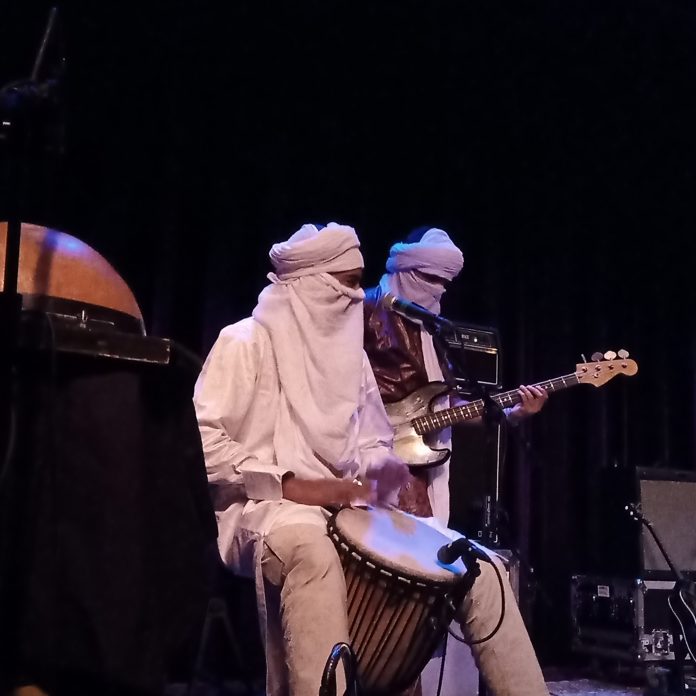
An Imarhan drummer during their performance at The Cedar on Tuesday, October 11, 2022. Photo: Susan Budig/Mshale
Imarhan at The Cedar 1
An Imarhan drummer during their performance at The Cedar on Tuesday, October 11, 2022. Photo: Susan Budig/Mshale

Imarhan took us to another land where music is the only currency and they throw out $100 bills like candy. Imagine standing in the audience, catching those notes, your giddy joy at such fortune.

It definitely felt wonderful Tuesday evening at The Cedar Culture Center hearing Tuareg music played by this Algerian desert band. They were all about the music, offering no banter between songs. The lead singer and guitar player, Iyad Moussa Ben Abderahmane aka Sadam, on occasion whispered a thanks to the audience, but then dove back into the set-list and focused on the next song.

Imarhan opened with Temet, the title song off their second album released in 2018, which starts slowly and builds as if the dawn is breaking. A few people in the audience move closer to the dance area and start to sway with the second number, Assof, which is more insistent.

Imarhan at The Cedar 2
An Imarhan guitarist during their performance at The Cedar on Tuesday, October 11, 2022. Photo: Susan Budig/Mshale

By the third song, Laouni, Haiballah Akhamouk on calabash and Hicham Bouhasse on drums, have established a dance beat the dedicated dancers find irresistible. When the band breaks out with Achinkad, featured on their third and latest album, Aboogi, the crowd responds with enthusiasm. Bouhasse has displayed his agility, consecutively playing drums, guitar, and percussion all with an impish playfulness.

Their set-list is almost a cut-n-paste from their album, Aboogi, but no one complains. More and more of the 140 people, according to house manager, Kendall, join in the dancing. Abdelkader Ourzig on rhythm guitar attempts a bit of fancy footwork, but the rest of the band does not join him. The repetitive, trance-like sound builds and ebbs until it resolves only to pick back up in the next song.

The bass guitarist, Tahar Khaldi, and Akhamouk both wear the traditional turban and litham, covering their head and most of their face. All wear tunics of white or yellow or bronze color. Sneakers or sandals cover their feet.

They play for over 90 minutes, 16 songs including the two encore pieces. With nearly no conversation, they fully deliver on the implied promise to perform their rich music steeped in meaning that most of us can’t understand because we don’t know their language. After the show, I overhear a couple conversations with band members, but none are in English.

Once again, music is the universal language. A visitor to the United States, Nicaraguan Rachel, proclaimed that whenever she visits from her Central American country, she makes a beeline to The Cedar because she trusts the venue to always provide top-notch music. Imarhan did not disappoint.

US clears updated COVID boosters for kids as young as 5

0
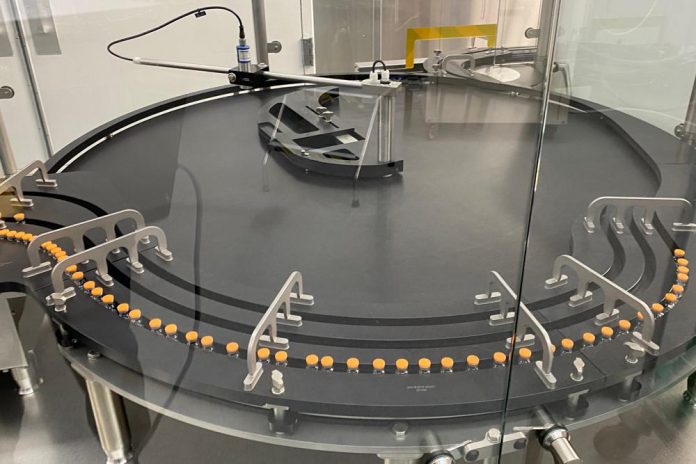
This provided by Pfizer in October 2022 shows manufacturing of the company's COVID-19 bivalent vaccine for ages 5-11. The U.S. on Wednesday, Oct. 12, authorized updated COVID-19 boosters for children as young as 5, seeking to expand protection ahead of an expected winter wave. Photo: Pfizer via AP
Pfizer Vaccine Manufacturing
This provided by Pfizer in October 2022 shows manufacturing of the company's COVID-19 bivalent vaccine for ages 5-11. The U.S. on Wednesday, Oct. 12, authorized updated COVID-19 boosters for children as young as 5, seeking to expand protection ahead of an expected winter wave. Photo: Pfizer via AP

The U.S. on Wednesday authorized updated COVID-19 boosters for children as young as 5, seeking to expand protection ahead of an expected winter wave.

Tweaked boosters rolled out for Americans 12 and older last month, doses modified to target today’s most common and contagious omicron relative. While there wasn’t a big rush, federal health officials are urging that people seek the extra protection ahead of holiday gatherings.

Now the Food and Drug Administration has given a green light for elementary school-age kids to get the updated booster doses, too — one made by Pfizer for 5- to 11-year-olds, and a version from rival Moderna for those as young as 6.

The Centers for Disease Control and Prevention, which recommends how vaccines are used, also signed off.

Americans may be tired of repeated calls to get boosted against COVID-19 but experts say the updated shots have an advantage: They contain half the recipe that targeted the original coronavirus strain and half protection against the dominant BA.4 and BA.5 omicron versions.

These combination or “bivalent” boosters are designed to broaden immune defenses so that people are better protected against serious illness whether they encounter an omicron relative in the coming months — or a different mutant that’s more like the original virus.

“We want to have the best of both worlds,” Pfizer’s Dr. Bill Gruber, a pediatrician, told The Associated Press. He hopes the updated shots will “re-energize interest in protecting children for the winter.”

The updated boosters are “extremely important” for keeping kids healthy and in school, said Dr. Jason Newland, a pediatric infectious disease specialist at Washington University in St. Louis.

Parents should know “there is no concern from the safety perspective with the bivalent vaccines, whether Moderna or Pfizer,” Newland added.

Only people who’ve gotten their initial vaccinations — with any of the original-formula versions — qualify for an updated booster. That means about three-fourths of Americans 12 and older are eligible. As of last weekend, only at least 13 million had gotten an updated booster, White House COVID-19 coordinator Dr. Ashish Jha estimated Tuesday.

To pediatricians’ chagrin, getting children their first vaccinations has been tougher. Less than a third of 5- to 11-year-olds have had their two primary doses and thus would qualify for the new booster.

This age group will get kid-size doses of the new omicron-targeting booster — and they can receive it at least two months after their last dose, whether that was their primary vaccination series or an earlier booster, the FDA said.

“Vaccination remains the most effective measure to prevent the severe consequences of COVID-19,” Dr. Peter Marks, FDA’s vaccine chief, said in a statement.

While children tend to get less seriously ill than adults, “as the various waves of COVID-19 have occurred, more children have gotten sick with the disease and have been hospitalized,” Marks said.

For the updated booster made by Pfizer and its partner BioNTech, 5- to 11-year-olds would get a third of the dose that anyone 12 and older already receives. Pfizer said it could ship up to 6 million kid-sized doses within a week of authorization, in addition to ongoing shipments of adult-sized doses.

Until now, Moderna’s updated booster was cleared only for adults. FDA just expanded that adult bivalent dosage to 12- to 17-year-olds, and authorized half the dose for kids ages 6 to 11.

As for even younger tots, first vaccinations didn’t open for the under-5 age group until mid-June — and it will be several more months before regulators decide if they’ll also need a booster using the updated recipe.

Exactly how much protection does an updated COVID-19 booster shot offer? That’s hard to know. Pfizer and Moderna are starting studies in young children.

But the FDA cleared the COVID-19 booster tweaks without requiring human test results — just like it approves yearly changes to flu vaccines. That’s partly because both companies already had studied experimental shots tweaked to target prior COVID-19 variants, including an earlier omicron version, and found they safely revved up virus-fighting antibodies.

“It’s clearly a better vaccine, an important upgrade from what we had before,” Jha said earlier this week.

Jha urged adults to get their updated shot in October — like they get flu vaccinations — or at least well before holiday gatherings with high-risk family and friends. People who’ve recently had COVID-19 still need the booster but can wait about three months, he added.

Congresswoman Ilhan Omar presents $1,000,000 check to ACER and COPAL

0
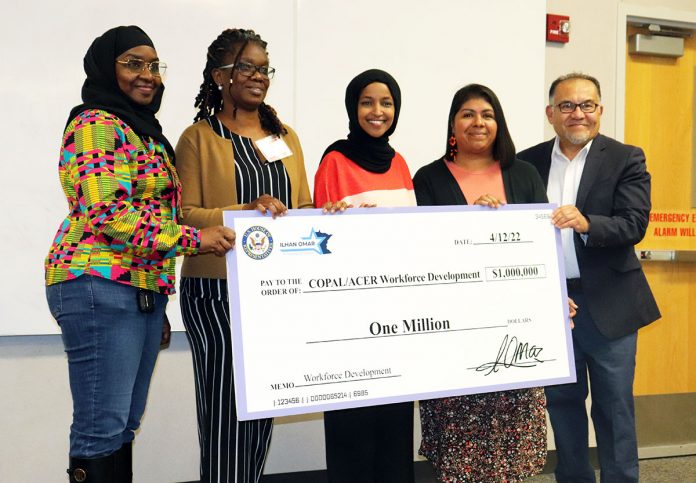
U.S. Rep. Ilhan Omar presenting a $1,000,000 check for workforce development activities to African Career Education and Resources (ACER) and Comunidades Organizando el Poder y la Accion Latina (COPAL) on Wednesday, October 12, 2022 in Brooklyn Center, Minnesota, part of a congressional appropriation she sponsored. Photo: Tom Gitaa/Mshale
Ilhan Omar 1 Million Check
U.S. Rep. Ilhan Omar presenting a $1,000,000 check for workforce development activities to African Career Education and Resources (ACER) and Comunidades Organizando el Poder y la Accion Latina (COPAL) on Wednesday, October 12, 2022 in Brooklyn Center, Minnesota, part of a congressional appropriation she sponsored. Photo: Tom Gitaa/Mshale

U.S. Rep. Ilhan Omar today presented a joint check of $1,000,000 to African Career Education and Resources (ACER) and Comunidades Organizando el Poder y la Accion Latina (COPAL) at a ceremony held at the Brookdale Library in Brooklyn Center.

The funding is part of a $17M congressional appropriation that Rep. Omar secured for ten projects in her Fifth Congressional District back in March. The $1M that the two nonprofits received will go towards joint workforce development activities the two are working on.

“As an African immigrant I always enjoy the opportunity to celebrate the entrepreneurial spirit that exists in our community,” Omar said. “There is no better way to celebrate the diversity in our community than showcasing the economic vibrancy that exists.”

ACER is a Brooklyn Park based nonprofit that works on connecting people of color, especially Black immigrants and refugees, to resources such as affordable housing, employment opportunities and education. COPAL, which is based in Minneapolis, is a community engagement non-profit that works to improve the lives of Latinos in Minnesota.

All of Minneapolis and Brooklyn Center are in the Fifth Congressional District.

ACER executive director Nelima Sitati Munene and COPAL officials joined Rep. Omar for the ceremonial presentation, all describing the funding as essential in supporting the work that they do.

“If there is anything we learnt about the pandemic is that our communities are innovative and that the solutions lie within us. We are thankful to the Fifth Congressional District for being a part of the investment in our community,” said Sitati Munene.

Sitati Munene also pointed to the latest study published by the Minnesota Department of Employment and Economic Development (DEED), which found the state is home to around 400,000 residents who identify as Black or African American, 125,000 of whom were born in Africa. An alarming statistic in that DEED study found nearly 50% of Black residents live in households with an income below $50,000.

The DEED study was a source of much of the discussion at a recent African professionals conference.

“There is definitely work to be done,” said Sitati Munene.

Brooklyn Center Mayor Mike Elliott, in an interview with Mshale at the check presentation, described the funding as “incredibly important” in aiding the work of the two organizations that are active in his city.

“This kind of funding is very important in helping them (ACER and COPAL) accelerate their activities as far as workforce development is concerned. It will help cities such as ours expand our economic bases,” said Elliott.

MCUB program opening doors for underutilized businesses

0
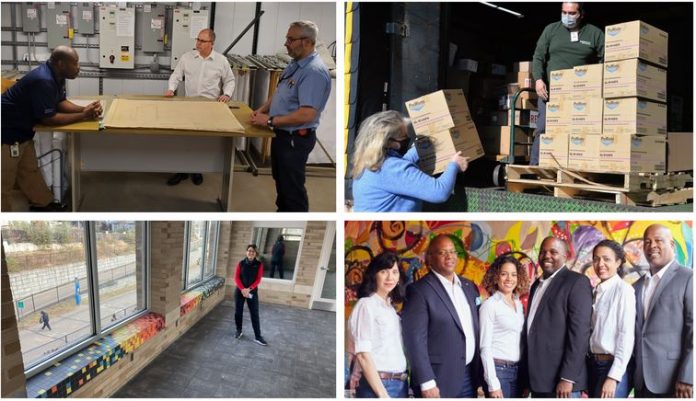
Clockwise from top left: KMS Airduct Cleaning owner Ken McCraley visits with Facilities Maintenance staff; Katherine Howard delivers packages of gloves to Metro Transit’s Overhaul Base on Monday, Nov. 2; staff from St. Paul-based 4RM+ULA; Stacia Goodman at the Uptown Transit Station, where she recently installed tile mosaics.
MCUB
Clockwise from top left: KMS Airduct Cleaning owner Ken McCraley visits with Facilities Maintenance staff; Katherine Howard delivers packages of gloves to Metro Transit’s Overhaul Base on Monday, Nov. 2; staff from St. Paul-based 4RM+ULA; Stacia Goodman at the Uptown Transit Station, where she recently installed tile mosaics.
Sponsored Content from Metro Transit

Stacia Goodman has been installing detailed mosaics in public and commercial spaces for the past 15 years.

Despite her rich portfolio, she says she has often felt the need to prove herself while working in largely male-dominated construction environments.

Lately, though, she’s come to see being a woman-owned business as an asset.

This spring, Goodman’s business, Stacia Goodman Mosaics, was certified through the U.S. Department of Transportation’s Disadvantaged Business Enterprise (DBE) small business program, one of several certification programs included in the Metropolitan Council Underutilized Business Program, also known as MCUB.

The MCUB program is designed to help Minnesota-based women, minority, veteran and disabled-owned and operated businesses stand out when vying for public contracts.

Public Art Administrator Mark Granlund encouraged Goodman to seek the certification, and recently hired her to install six- and ten-foot long mosaics on ledges inside the Uptown Transit Station, where public art may be used to deter vandalism. Goodman hopes her certification will help her land more like projects in the future.

“Getting certified was the first time I felt being a woman was a bonus, that it was seen a positive thing,” Goodman said. “It has really taken a bit of weight off my shoulders after always feeling like I have to work twice as hard.”

Stories like Goodman’s are becoming more common thanks to the MCUB program. Created in 2012, the program boosts the profile of more than 2,400 underutilized businesses through a searchable online directory and other networking opportunities.

To support equity and inclusion goals, the Council aims to direct at least 10% of its annual spending on goods and services and 14% of its annual spending on construction and professional technical services toward MCUB businesses this year. Departments may have their own MCUB-related goals, and locally funded projects with contracts exceeding $175,000 also carry MCUB participation goals.

“I always say that we represent our community, so we should do business with those who represent our community,” said Tara Rasch, the Council’s Senior Manager of Purchasing.

While businesses get a leg up for being certified, the Council has also found advantages to working with MCUB businesses.

One example: St. Paul-based M/A Associates, an MCUB business that began supplying the Council with small quantities of cleaning products several years ago. This year, the company is supplying gloves, masks and cleaning supplies that are in short supply due to the COVID-19 pandemic.

Katherine Howard, who bought the business a decade ago, said it has been rewarding to not just earn more business but to fill a need. “It really is heartwarming to know we are able to help at this scary time,” said Howard, whose husband Tom helps run the business.

Like M/A Associates, St. Paul-based architecture firm 4RM+ULA has strengthened its relationship with Metro Transit over the years.

A certified DBE and MCUB, 4RM+ULA helped design METRO Green Line stations and has since worked on downtown St. Paul bus shelters, suburban METRO Orange Line stations and provided concept level design work for improvements at the Brooklyn Center Transit Center.

Nathan Johnson, one of 4RM+ULA’s three partners, said being an MCUB business has helped the firm earn more business and in turn provide opportunities to people of color, who are underrepresented in architecture.

“Right now, African Americans represent just 2% of architects nationwide so we are not well represented within the industry,” Johnson said. “A program like MCUB can really help a firm like ours, that has the knowledge, has the capacity, but needs the opportunity.”

While the MCUB directory is a good starting point, the Council’s Office of Equal Opportunity (OEO) can also help facilitate connections.

Recently, OEO Senior Manager Tracey Jackson connected Facilities Maintenance with the owner of KMS Airduct Cleaning, a Minneapolis-based DBE that has been in business for nearly 30 years.

KMS owner Ken McCraley said the chance to meet with staff was a key to getting his foot in the door. McCraley met Jackson through his work as the past president of the National Association of Minority Contractors.

“When you’re a small minority business, you can bid on all the projects you want but it’s important to have those relationships and to be able to offer that value proposition,” he said.

Learn more about the program and explore the MCUB directory at metrocouncil.org.

Minnesota NGOs to share ideas at annual summit

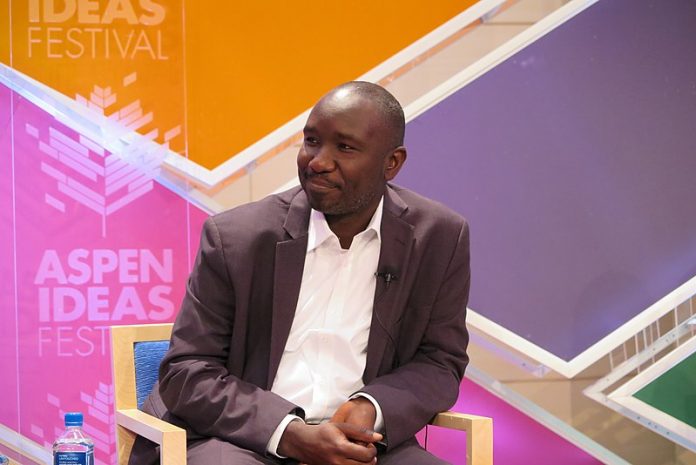
Abraham Leno, the executive director of Eastern Congo Initiative at the 2015 Aspen Ideas Festival. He will keynote the annual Minnesota International NGO Network summit on Thursday, October 13, 2022. Photo: Wikimedia Commons
Abraham Leno at Spotlight Health Aspen Ideas Festival 2015
Abraham Leno, the executive director of Eastern Congo Initiative at the 2015 Aspen Ideas Festival. He will keynote the annual Minnesota International NGO Network summit on Thursday, October 13, 2022. Photo: Wikimedia Commons

The Minnesota International NGO Network (MINN) conference returns to the Twin Cities Thursday at the University of Minnesota’s Humphrey School, presenting local organizations with an opportunity to network, share ideas, and learn from each other.

According to a statement on MINN’s website, the annual summit “provides exciting professional development opportunities, offers insights, and sparks conversations that will propel international development success in a changing world.”

The keynote speaker will be Abraham Leno, the executive director of Eastern Congo Initiative, an organization that invests in community organizations that tap the potential of the people of Democratic Republic of Congo and creates opportunities for them to market their goods. Leno, who himself spent 11 years with his family as a refugee in Guinea, previously led relief and development efforts in Liberia, South Sudan, Darfur, Ethiopia, Pakistan, and now the Democratic Republic of the Congo.

This year’s summit offers a full-day program that enabled participants to learn from and connect with Minnesota’s global NGOs that are working on critical global issues. This year’s key topics include a segment on leadership in Ethiopia, where an armed conflict in the Tigray region has led to a humanitarian crisis, according to Human Rights Watch. Panelists will also delve into navigating burnout, good governance, international newsroom coverage patterns, and innovation in healthcare delivery.

Founded in the spring of 2005, the Minnesota International NGO Network centers Minnesota on the global stage by connecting state, national, and international leaders to discuss the impact of MN-based NGOs around the world. The MINN Summit brings this objective to the general public by fostering an interactive experience in which participants can tune into multiple breakout sessions, a panel discussion, and a networking happy hour towards the end.

Additional event details can be found at here.

African immigrant professionals call on community to break glass ceiling

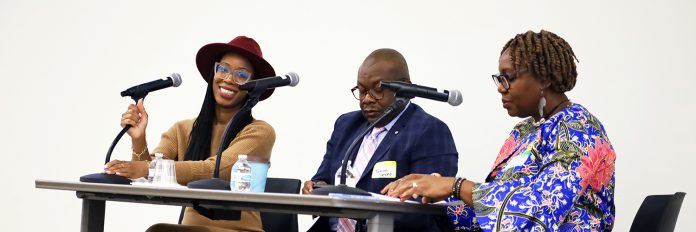
(L to R) Wokie Daboh, the director of diversity and inclusion at ESPN, Jerome Wesson of Boston Scientific and moderator Rita Apaloo during a keynote panel at the African Immigrant Professional Development Conference on Saturday, October 1, 2022 held at North Hennepin Community College. Photo: Panashe Matemba-Mutasa/Mshale
Wokie Daboh Panel Online
(L to R) Wokie Daboh, the director of diversity and inclusion at ESPN, Jerome Wesson of Boston Scientific and moderator Rita Apaloo during a keynote panel at the African Immigrant Professional Development Conference on Saturday, October 1, 2022 held at North Hennepin Community College. Photo: Panashe Matemba-Mutasa/Mshale

The African Immigrant Professional Development Conference (AIPDC) returned to the Twin Cities Saturday, as professionals from the public and private sectors came together to find ways African immigrants can overcome barriers in career development.

“Navigating Change,” was the theme of this year’s conference, which was held at North Hennepin Community College in Brooklyn Park. It sparked a conversation about how to break common barriers that prevent African newcomers to Minnesota from achieving career and economic advancement.

“There are real hurdles that we face,” said Wokie Daboh, the director of diversity and inclusion at ESPN, in her keynote speech.

As Minnesota’s population demographics continue to change, so does its workforce. According to a 2020 study published by the Minnesota Department of Employment and Economic Development (DEED) Minnesota is home to around 400,000 residents who identify as Black or African American, 125,000 of whom were born in Africa. Nearly 50% of Black residents live in households with an income below $50,000. The goal of this year’s AIPDC was to investigate the root cause of these disparities and formulate solutions for a brighter future for Minnesota’s African immigrants.

Daboh, who calls herself a “proud Liberian Minnesotan,” spoke about a culture of insularity that she had witnessed among Liberians and other African immigrant communities. Her parents worked hard to instill in her a sense of pride in her heritage, which helped her form her sense of identity. Though she appreciated the sense of community, she said there were lost opportunities to connect with others outside of the community to network and build professional relationships.

“When I entered into the working world, it was very hard to form those necessary connections,” Daboh said.

Still, Daboh acknowledged the value of retaining one’s culture and not losing one’s identity to fit into the American professional world. A study by Stanford’s Institute for Economic Policy Research found an increasing percentage of immigrants opting for “less foreign” sounding names for their children, and the effects are significant: those with foreign sounding names completed fewer years of schooling, earned less, and experienced higher rates of unemployment and job discrimination than their American-named peers. But for Daboh, the uniqueness of her name is cause for celebration.

“My mother gave me a name where I could not hide who I was and where I came from,” she said.
“It’s a strong part of my identity, as my name is very specific to a tribe.”

On the topic of choosing between assimilation and authenticity, Daboh said that it was important to strike a balance. Stepping foot onto new soil should not undo the uniqueness of one’s heritage and culture, she said.

“I’ve had so many Black women who look like me, who said that seeing me on a call with my headwrap inspired them to bring their authentic selves to the job, and that is so important,” Daboh said.

Jerome Wesson, a Liberian immigrant and technician at Boston Scientific, said that breaking out of insular cultural circles would require many African immigrants to step out of their comfort zones. Wesson said that he often felt out of place “like a piece of mold on white bread” when navigating predominantly white spaces. Still, he said the initial discomfort is necessary in expanding one’s professional network. But African immigrants must be proactive about being seen and having their voices heard because it is not enough to just be in the spaces, he said.

“We are smart,” Wesson said. “Don’t let people tell you that you don’t belong here. And don’t just get to the table; be an active participant at the table.”

Thomas Tapeh, a former NFL fullback from Monrovia, Liberia, talked about lessons he had to learn as an immigrant in a major sports league. Though the pay was more than generous, Tapeh said he had to adjust and work hard to gain financial literacy. He said many immigrant professionals often do not come with the knowledge about wealth building strategies.

“As a Liberian immigrant in the NFL, I was kind of on my own, and there was no one to teach me about the value of investing,” Tapeh said.

Asneth Omare MshaleOnline
Asneth Omare reacts to proceedings at the African Immigrant Professional Development Conference on Saturday, October 1, 2022 held at North Hennepin Community College. Photo: Panashe Matemba-Mutasa/Mshale

Nancy Omondi, a Kenyan immigrant and director at DEED, talked about the challenges she faced when she became unexpectedly pregnant out of wedlock in college. Overcoming that ignited a passion in her to advocate for the women and girls in the African community who may be silent about their struggles out of fear for being shamed. One of her professional goals was to continue to help people reach their fullest potential by equipping them with the resources they need, she said.

“At work I am on a team, and I have a responsibility to help others,” Omondi said. “I have to ask myself every day, ‘What does this person need the most to help them get to where they need to be?’”

Jeff Peal III, an information security officer at Clinician Nexus, said that the key to Black and African immigrant prosperity in Minnesota was to explore more career opportunities. Peal, who oversees information technology (IT) departments, said he observed the gap in America’s high-tech industry. Additionally, Peal strives to address this gap by presenting these opportunities to Black people whenever he can.

“There’s just not many that look like me in the field,” Peal said. “It’s been intentional on my part to encourage African and African American men and women move into IT, and there is a wealth of opportunity for us to explore.”
According to Zippia, the career consulting and research firm, Black people only make up 7 % of workers in the high-tech field, even though they are 13% of the U.S. population.

Brooklyn Park resident and entrepreneur, Oluwatobi Oluwagbemi, said she was inspired to attend the conference because she is passionate about addressing issues of the African community. In her two years of running a business consulting firm, she was proud to help everyone, but said she was especially proud to see those who look like her flourish in their professions.

“I believe it is important for people who look like me to be represented at the table,” Oluwagbemi said. “I want my people to be successful.”

Financial coach Asneth Omare, said that she’d gotten the invitation to the conference a few times in the past and was excited about finally being able to make it. Omare was inspired when the panelists delved into the discussion of investing and financial literacy, a conversation she said was often missing in the African community.

“My work is centered around teaching people how the stock market works so that the layperson can understand it, and I think that’s crucial for our community,” Omare said.

Tim ONeill MshaleOnline
Timothy O’Neill, a labor market analyst at the Minnesota Department of Employment and Economic Development presented data on Black and immigrant data at the African Immigrant Professional Development Conference. Photo: Panashe Matemba-Mutasa/Mshale

Jenkins Vangehn, a fellow at Harvard Kennedy School, said that he felt lucky to have learned a lot at the conference. He said it was important for the event to feature accomplished African figures to tell their stories and give advice. He was most moved by research shared about the extent of employment and earnings disparities when compared to other communities.

“The stats honestly shocked me,” he said. “Even African immigrants who are educated and working are struggling. It should not be like that,” Vangehn said

Esther Muturi, a Kenyan immigrant, said professional underdevelopment was among the most pressing disparities. She learned a lot of valuable information, which she intended to take back and share with other Africans in her circle, she said.

“I am ambitious, and I think it’s important to spread this information within the community so that we can grow,” Muturi said.

Veronica Lewis-Barr, a Liberian community member, said she had known of the conference since Covid, but was most motivated to attend now that it was in-person. Events like the AIPDC could give African immigrants the networks and resources needed to compete in a fierce job market, she said.

“We need to have these dialogues to help each other, because when we do that, everybody in the community benefits,” Barr said.

Biden pardons thousands for ‘simple possession’ of marijuana

0
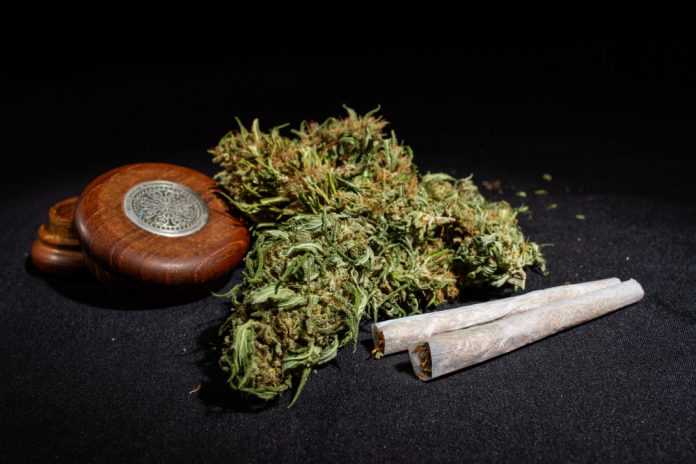
Marijuana bud with pores and grinder. Photo: Carlos Robles fotografia via Shutterstock
Marijuana
Marijuana bud with pores and grinder. Photo: Carlos Robles fotografia via Shutterstock

WASHINGTON (AP) — President Joe Biden is pardoning thousands of Americans convicted of “simple possession” of marijuana under federal law, as his administration takes a dramatic step toward decriminalizing the drug and addressing charging practices that disproportionately impact people of color.

Biden’s move also covers thousands convicted of the crime in the District of Columbia. He is also calling on governors to issue similar pardons for those convicted of state marijuana offenses, which reflect the vast majority of marijuana possession cases.

Biden, in a statement, said the move reflects his position that “no one should be in jail just for using or possessing marijuana.”

“Too many lives have been upended because of our failed approach to marijuana,” he added. “It’s time that we right these wrongs.”

According to the White House, no one is currently in federal prison solely for “simple possession” of the drug, but the pardon could help thousands overcome obstacles to renting a home or finding a job.

“There are thousands of people who have prior Federal convictions for marijuana possession, who may be denied employment, housing, or educational opportunities as a result,” he said. “My action will help relieve the collateral consequences arising from these convictions.”

The pardon does not cover convictions for possession of other drugs, or for charges relating to producing or possessing marijuana with an intent to distribute. Biden is also not pardoning non-citizens who were in the U.S. without legal status at the time of their arrest.

The announcement marks Biden’s reckoning with the impact of 1994 crime legislation, which he supported, that increased arrest and incarceration rates for drug crimes, particularly for Black and Latino people.

Biden on October 6 2022 by AP
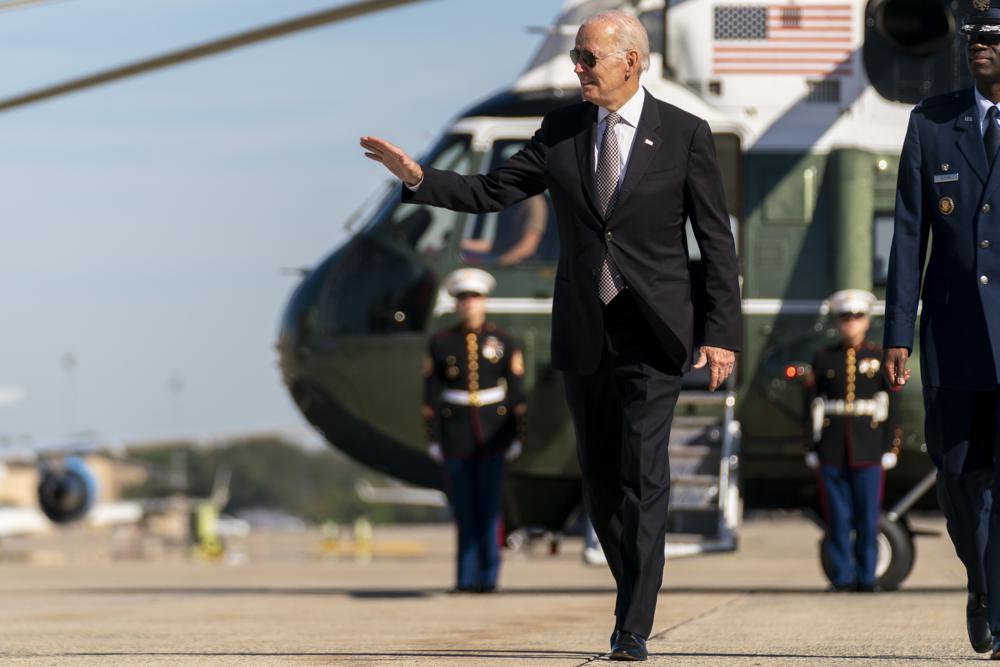
President Joe Biden boards Air Force One at Andrews Air Force Base, Md., Thursday, Oct. 6, 2022, to travel to Poughkeepsie, N.Y. (AP Photo/Andrew Harnik)

The Department of Justice is working to devise a process for those covered by Biden’s pardon to receive a certificate of pardon, which they can show to potential employers and others as needed.

“The Justice Department will expeditiously administer the President’s proclamation, which pardons individuals who engaged in simple possession of marijuana, restoring political, civil, and other rights to those convicted of that offense,” the department said in a statement. “In coming days, the Office of the Pardon Attorney will begin implementing a process to provide impacted individuals with certificates of pardon.”

Biden is also directing the secretary of Health and Human Services and the U.S. attorney general to review how marijuana is scheduled under federal law. Rescheduling the drug would reduce or potentially eliminate criminal penalties for possession. Marijuana is currently classified as a Schedule I drug, alongside heroin and LSD, but ahead of fentanyl and methamphetamine. The White House did not set a timeline for the review.

But Biden said he believes that as the federal government and many states ease marijuana laws, they should maintain limitations on trafficking, marketing and underage sales.

The move by Biden puts the federal government on course with other big cities like New York that have been moving toward decriminalizing low-level marijuana arrests for years. But there’s a big divide in the nation as some police departments still believe the drug leads to more serious crime and ignoring low-level offenses emboldens criminals.

Advocacy groups praised Biden’s announcement, with Kassandra Frederique, the executive director of the Drug Policy Alliance, saying the organization was “thrilled.”

“This is incredibly long overdue,” said Frederique. “There is no reason that people should be saddled with a criminal record — preventing them from obtaining employment, housing, and countless other opportunities — for something that is already legal in 19 states and D.C. and decriminalized in 31 states.”

It remains to be seen whether governors follow Biden’s lead. Erik Altieri, executive director of the National Organization for the Reform of Marijuana Laws, said extending the action to states could help millions of Americans.

“Since 1965, nearly 29 million Americans have been arrested for marijuana-related violations — for activities that the majority of voters no longer believe ought to be a crime,” he said.

Chris Goldstein, 46, was arrested after smoking half a joint during a marijuana legalization protest at Independence Hall in Philadelphia in 2013. He paid a $3,000 fine and spent two years on probation.

“As someone who voted for President Biden, I’ve been expecting this from the first day he came into office,” Goldstein said. “This was a campaign promise.”
As a writer and activist who has been public about his conviction, he’s not sure that his criminal record was an obstacle to him getting a job, but he knows that it shows up in his background checks. And he’s shied away from visiting other countries because convictions can complicate international travel.

“I’m thrilled, and everyone like me is going to be just as thrilled,” he said.

Rev. Al Sharpton, the president of the National Action Network, said Biden’s “righteous action today will give countless Americans their lives back.” But he added, “The United States will never justly legalize marijuana until it reckons with the outdated policies that equated thousands of young Black men with hardened drug pushers.”
The move also fulfills one of the top priorities of the Democratic nominee in one of their party’s most critical Senate races, as Pennsylvania Lt. Gov. John Fetterman has repeatedly pressed Biden to take the step, including last month when they met in Pittsburgh.

Fetterman, in a statement, took credit for elevating the issue on Biden’s agenda and praised the decision, calling it “a massive step towards justice.”

“This action from President Biden is exactly what this work should be about: improving people’s lives. I commend the president for taking this significant, necessary, and just step to right a wrong and better the lives of millions of Americans,” he said.