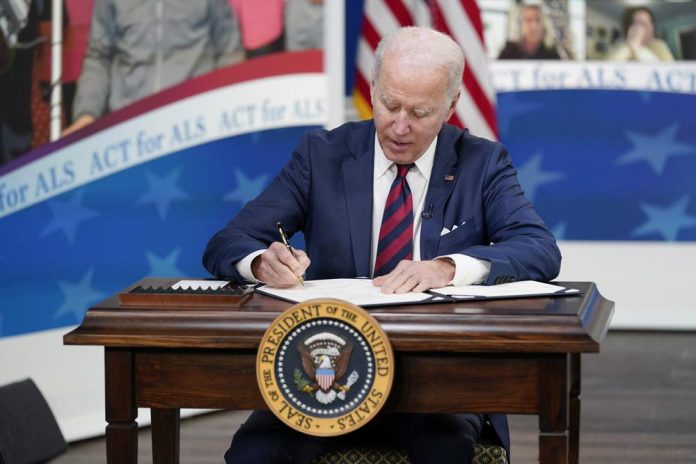
President Joe Biden signs the "Accelerating Access to Critical Therapies for ALS Act" into law during a ceremony in the South Court Auditorium on the White House campus in Washington, Thursday, Dec. 23, 2021. Photo: Patrick Semansky/AP
WASHINGTON (AP) — The U.S. will lift travel restrictions on eight southern African countries that it imposed to try to blunt the spread of the COVID omicron variant, the White House announced Friday.
The variant, which was first detected by scientists in South Africa, has since spread around the world. The World Health Organization and leaders in southern Africa criticized the travel ban as ineffective and unfairly damaging to local economies.
The Nov. 29 ban barred nearly all non-U.S. citizens who had recently been in South Africa, Botswana, Eswatini, Namibia, Lesotho, Malawi, Mozambique and Zimbabwe. The restrictions will be lifted on New Year’s Eve.
White House spokesman Kevin Munoz said on Twitter that the decision was recommended by the Centers for Disease Control and Prevention. Munoz said the temporary travel bans bought scientists necessary time to study the new virus variant and conclude that the current vaccinations are effective in blunting its impact.
Omicron is now spreading rapidly throughout the U.S., including among the vaccinated, but a huge majority of those being hospitalized are unvaccinated.
“The restrictions gave us time to understand Omicron and we know our existing vaccines work against Omicron, esp boosted,” Munoz tweeted.
Much about the omicron coronavirus variant remains unknown; scientists say omicron spreads even easier than other coronavirus strains, including delta. The government reports that 73% of new infections nationwide are from the omicron variant. But while breakthrough infections among vaccinated people have become common, they have rarely led to severe illness or hospitalization.
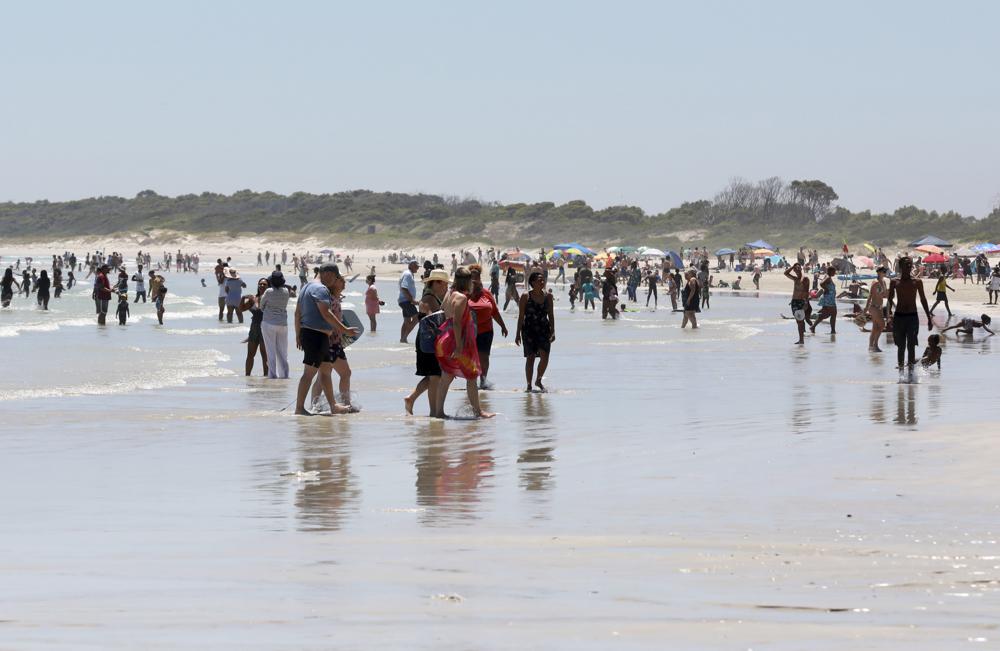
Holdiaymakers enjoy a day at Strand Beach near Cape Town, South Africa, Tuesday, Dec. 21, 2021. South Africa’s drop in new COVID-19 cases in recent days may signal the country’s dramatic omicron-driven surge has passed its peak, medical experts say. Photo: Nardus Engelbrecht/AP
The rapid advance of omicron, along with more people gathering indoors during winter, has led to a major infection spike. The seven-day rolling average for U.S. COVID-19 cases climbed past 160,000 this week, according to data collected by Johns Hopkins University. That’s more than double the average in late November.
The rapid spread of the new variant hasn’t overwhelmed most domestic hospital systems yet, but it has roiled businesses, sports leagues and Christmas travel plans across the country. Multiple NBA and NFL games have been rescheduled due to COVID outbreaks, and the Hawaii Bowl, scheduled for Friday, was cancelled outright after Hawaii was forced to withdraw. Three major airlines have cancelled dozens of domestic and international flights, citing staffing shortages.
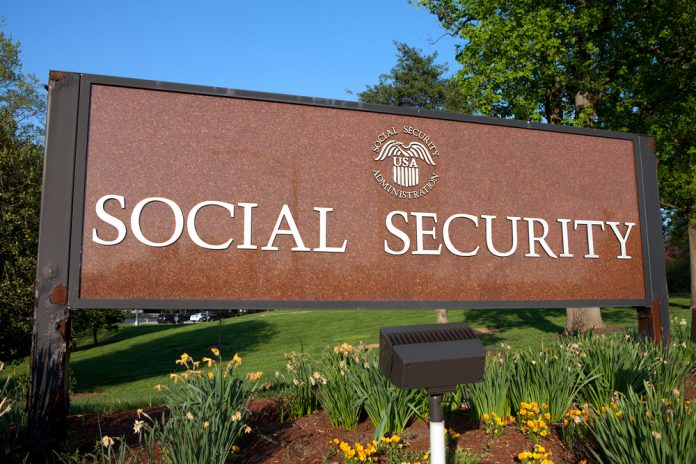
Security Administration Headquarters in Woodlawn, MD. Kilolo Kijakazi, Acting Commissioner of Social Security announced on Monday, December 20, 2021 that Minnesotans can now request replacement cards online. Photo: Mark Van Scyoc/Shuterstosck
Security Administration Headquarters in Woodlawn, MD. Kilolo Kijakazi, Acting Commissioner of Social Security announced on Monday, December 20, 2021 that Minnesotans can now request replacement cards online. Photo: Mark Van Scyoc/Shuterstosck
Minnesotans wishing to replace lost Social Security cards can now do so online, the Social Security Administration announced on Monday.
In a statement, Kilolo Kijakazi, Acting Commissioner of Social Security, announced that residents of Minnesota can use the my Social Security portal for many replacement Social Security number (SSN) card requests.
“I am pleased to offer Minnesota residents the safe, secure, and more convenient option for replacing their Social Security card through the my Social Security portal,” Acting Commissioner Kijakazi said. “Minnesota residents can now replace their Social Security card online, from the convenience of their home, alleviating the need to send in important identifying documents to the office.”
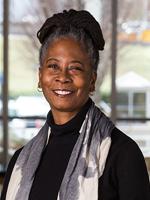
Kilolo Kijakazi, Acting Commissioner of Social Security. Photo: Courtesy C-SPAN
Until recently, Minnesota was among a handful of states that had not implemented the Internet Social Security Number Replacement Card (iSSNRC) project, which would grant individuals the ability to apply for a new social security number or replacement card online. The Social Security Administration (SSA) implemented the project in 2014 to reduce the burden on both American citizens and SSA field offices. Minnesota was among five states that had not made necessary changes to state law needed in order to implement the iSSNRC project.
The pandemic forced Social Security offices to close. Minnesotans were unable to conduct business with Social Security forcing the Minnesota legislature in its last session to pass the necessary legislation on June 24, which Gov. Walz signed into law.
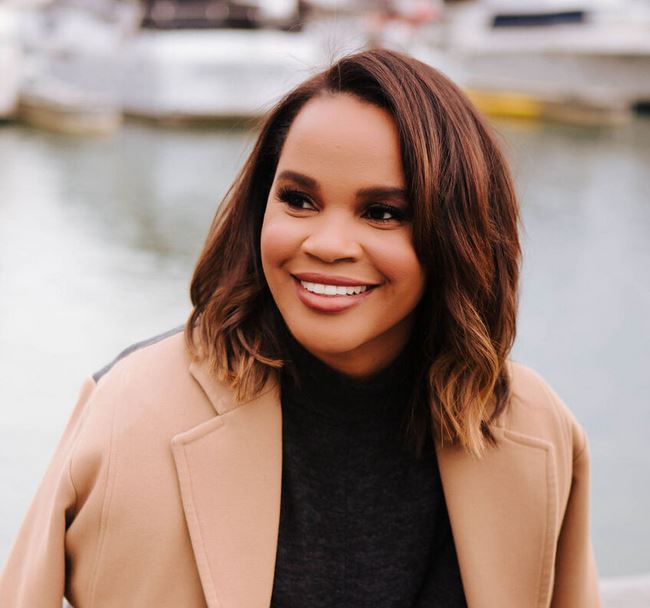
CNN's Laura Coates, a St. Paul native and former federal prosecutor, will keynote the MLK Holiday Breakfast in Minneapolis on Jan. 17, 2022. Photo: Courtesy LauraCoates.com
CNN's Laura Coates, a St. Paul native and former federal prosecutor, will keynote the MLK Holiday Breakfast in Minneapolis on Jan. 17, 2022. Photo: Courtesy LauraCoates.com
Former federal prosecutor and current CNN legal analyst, Laura Coates, will keynote the annual Dr. Martin Luther King Jr. Holiday Breakfast on Jan. 17.
Coates is a St. Paul native and served as Assistant United States Attorney for the District of Columbia, as well as a Trial Attorney in the Civil Rights Division of the Department of Justice, specializing in the enforcement of voting rights throughout the United States.
Due to the pandemic the 2022 event will be virtual and will run 8:45 a.m. to 10:30 a.m.
Closed captioning will be provided in four languages; English, Hmong, Somali and Spanish.
The event is presented each year by General Mills in collaboration with the United Negro College Fund to help area students attend college. The Minneapolis-based General Mills said in a statement since the inception of the annual breakfast it has provided more than $6.7 million in philanthropic support “to advance the UNCF’s mission and impact.”
“This important annual gathering aims to both motivate and inspire action to advance racial equity in our community,” Mary Jane Melendez, chief sustainability and global impact officer at General Mills said in a statement.
This year’s theme is “Fierce Urgency of Now.” Dr. King was a graduate of historically Black college Morehouse College.
Previous speakers have included the late former Secretary of State Gen. Colin Powell, former Attorney General Eric Holder and actor David Oyelowo.
Entertainment will be provided by community youth choir, KNOWN MPLS.
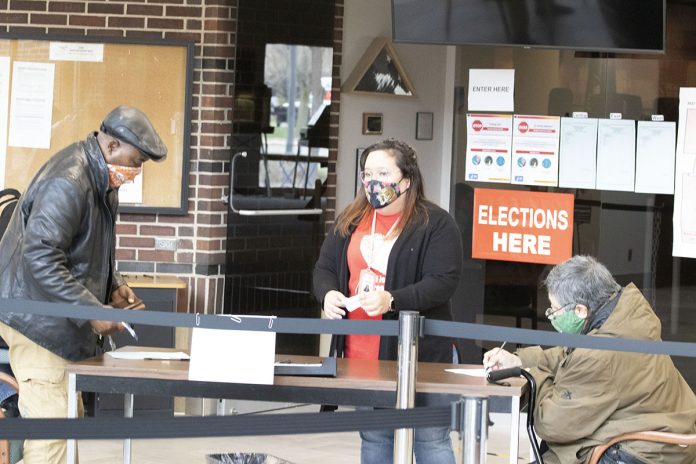
Brooklyn Park voters fill out absentee ballot applications at city hall in April 2021 during a special primary election for mayor. Voters in the city's East District have a special election on Feb. 8 2022 to elect a new council member. Photo: Tom Gitaa/Mshale
Brooklyn Park voters fill out absentee ballot applications at city hall in April 2021 during a special primary election for mayor. Voters in the city's East District have a special election on Feb. 8 2022 to elect a new council member. Photo: Tom Gitaa/Mshale
The upcoming special election to fill the East District seat on the Brooklyn Park City Council has drawn four candidates. The deadline to file for a place on the ballot for the special Feb. 8 election closed today at 5:00 p.m.
Candidates that filed for a spot on the ballot are Xp Lee, LaDawn Severin, Abraham Bah and Benjamin Osemenam.
City Clerk Devin Montero said eight candidate packets had been picked up but only four actually filed. In addition to paying the $25 filing fee with their Affidavit of Candidacy, candidates have to obtain 25 signatures from registered voters in the district they want to represent. Those signatures can only be obtained during the filing period, which for this special election was a two week window.
Voters will choose one of these four candidates to fill the council seat of Lisa Jacobson, who was elected Mayor in August. The winner of the special election will serve the rest of Jacobson’s term, which ends on Dec. 31, 2024.
The city council amended the city charter to waive the requirement of a primary election if more than two candidates file. Because 2022 is a redistricting year, state law dictates when localities can hold elections and a primary would have left East District voters with no representation on the council. The charter amendment only applies for the East District special election and will not carry over to future elections.
Candidates who wish to drop out of the race have to do so within the next two days on December 16 at 5:00 p.m.
Important dates
Absentee voting will begin on Dec. 27 and close at 5 p.m. on Feb.7.
Voting in-person BEFORE the election starts Dec. 27 through Feb. 7: Voters can vote in-person at city hall Monday through Friday between 8 a.m. and 4:30 p.m.
Saturday voting in-person: If you want to vote in person before the special election but can only do it on a Saturday, you can do so on Feb. 5 between 10:00 a.m. and 3:00 p.m. at city hall.
Jan. 18, 2022: This is the last day for you to pre-register to vote if you are not already a registered voter in the East District.
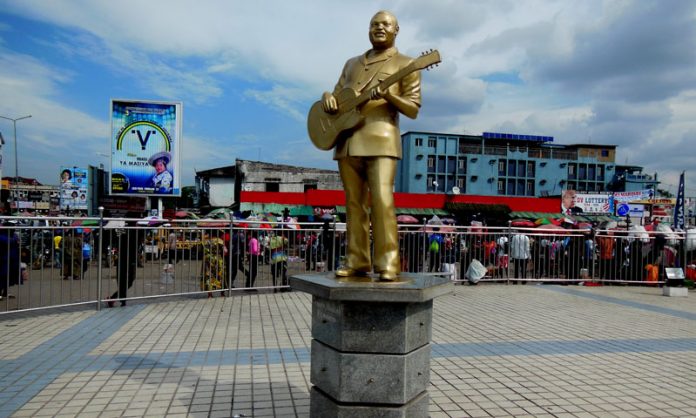
A statue of the late musician Franco Luambo Makiadi in Kinshasa. Prime Minister Augustin Matata Ponyo called France the "symbol of rumba music" when he unveiled the statue in 2018. Photo: Courtesy Digital Congo
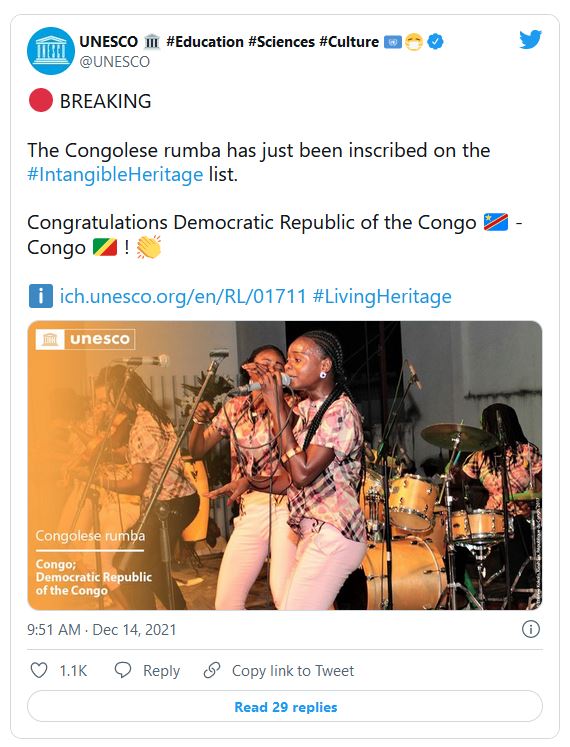
UNESCO on Tuesday added Congolese rumba music to its world heritage list. The Democratic Republic of Congo and Congo Republic had submitted a joint bid for their rumba to receive heritage status for its unique sound that melds the drumming of enslaved Africans with the melodies of Spanish colonizers.
“The rumba is used for celebration and mourning, in private, public and religious spaces,” said the UNESCO citation. Describing it as an essential and representative part of the identity of Congolese people and their diaspora.
UNESCO in its citation also said rumba “is perceived as a means of conveying the social and cultural values of the region and of promoting intergenerational and social cohesion and solidarity.”
The office of Democratic Republic of Congo President Felix Tshisekedi said in a tweet “The President of the Republic welcomes with joy and pride the addition of Congolese rumba to the list.”
Siad Ali who is serving his second consecutive term on the Minneapolis school board announced on December 9, 2021 that he will not be seeking a third term in November 2022. He was first elected in November 2014. Photo: Courtesy Bush Foundation
Siad Ali who is serving his second consecutive term on the Minneapolis school board announced on December 9, 2021 that he will not be seeking a third term in November 2022. He was first elected in November 2014. Photo: Courtesy Bush Foundation
Siad Ali, a member of the Minneapolis Board of Education, will not seek re-election to the board next year after serving two terms, he announced Thursday.
Ali, whom many in the African immigrant community view as a trailblazer, has not ruled out a run for a different office.
“My brother I have not made any other decisions right now besides this one,” Ali told Mshale on Thursday.
Ali was elected in 2014 as the Minneapolis school board’s second Somali ever elected. He was reelected in 2019. Since then, many other Somali Americans have been elected to various school boards in the metro area.
During his tenure, Ali introduced board resolutions affirming Minneapolis Public Schools as a “welcoming and safe district for immigrants and Muslims” and worked to increase teacher diversity through intensive recruitment efforts and retention of culturally-diverse staff.
Ali, whose day job is as senior advisor and outreach director for U.S. Senator Amy Klobuchar, thanked Minneapolis voters for trusting him to represent them at the board.
About 4,000 students in the Minneapolis Public Schools, the state’s third largest, self-identify as Somali and Director Ali has been the only Somali director on the nine-person elected board since his election. It is not clear yet whether another Somali American might emerge to run to take over from Ali.
“I would encourage others to lead and represent our communities and bring their perspective and leadership to our Minneapolis Public School Board,” Ali said. “I truly appreciate the support, endorsements, and collaboration that everyone provided me during the last seven years.”
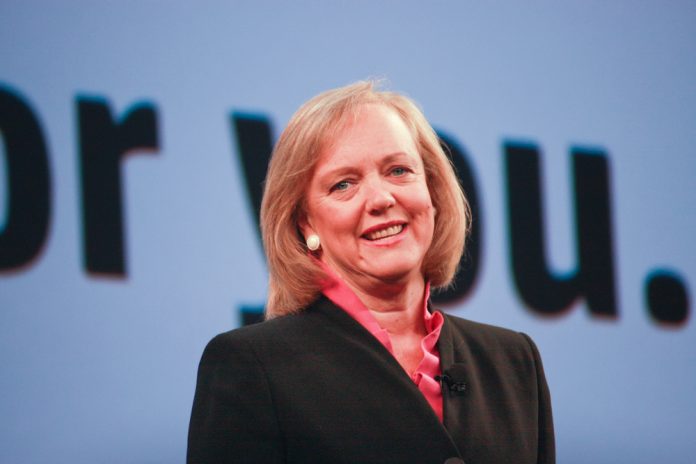
The White House announced on Wednesday, December 8, 2021 that President Biden has nominated former HP president and chief executive officer Meg Whitman as the ambassador to Kenya. Whitman is seen here delivering an address to HP Discover 2012 conference on June 5, 2012 in Las Vegas, NV. Photo: Shutterstock
The White House announced on Wednesday, December 8, 2021 that President Biden has nominated former HP president and chief executive officer Meg Whitman as the ambassador to Kenya. Whitman is seen here delivering an address to HP Discover 2012 conference on June 5, 2012 in Las Vegas, NV. Photo: Shutterstock
President Biden on Wednesday announced he has nominated former Hewlett-Packard Chief Executive Meg Whitman as U.S. ambassador to Kenya.
Whitman, a Republican, gave $500,000 to the Biden Victory Fund during last year’s presidential campaign after endorsing Biden at the virtual Democratic Convention.
“I’m a longtime Republican and a longtime CEO. And let me tell you, Donald Trump has no clue how to run a business, let alone an economy,” Whitman said as she endorsed Biden.
Whitman ran unsuccessfully for governor of California against Jerry Brown in 2010, spending a record $144 million of her own money.
The White House when making the announcement noted her many achievements as a business leader, including her nomination into the Bay Area Business Hall of Fame and the U.S. Business Hall of Fame.
Whitman received a B.A. from Princeton University and an M.B.A. from Harvard University. She received an Honorary Doctor of Business Practice from Carnegie Mellon University. She is a recipient of the Alumni Achievement Award from Harvard Business School and was awarded the Corporate Citizenship Award by the National Action Council for Minorities in Engineering, Inc.
Prior to becoming Hewlett Packard CEO, she was CEO of e-commerce giant eBay.
Whitman’s nomination requires Senate confirmation and if confirmed will take over from Eric Kneedler, who became chargé d’affaires ad interim at the US embassy in Nairobi in January.
U.S. Secretary of State Antony Blinken was in Kenya in November as part of a three-nation Africa tour where he reiterated Kenya as a strategic partner of the United States.
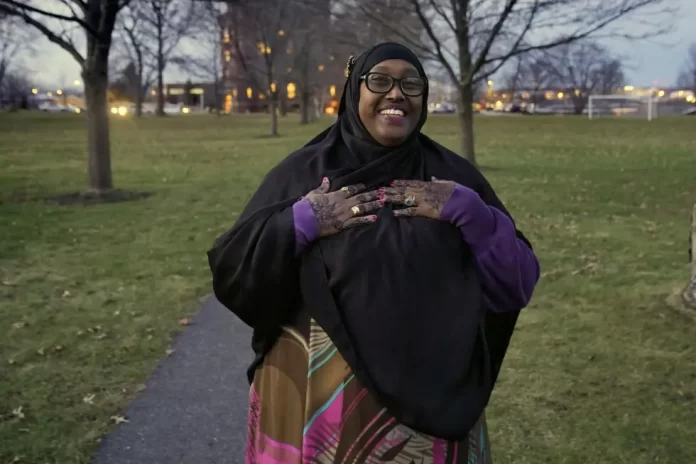
Deqa Dhalac poses near her home Tuesday, Dec. 7, 2021, in South Portland, Maine. On Monday Dhalac, who fled Mogadishu 31 years ago, became the first Somali-American mayor in the United States. Photo: Robert F. Bukaty/AP
Deqa Dhalac poses near her home Tuesday, Dec. 7, 2021, in South Portland, Maine. On Monday Dhalac, who fled Mogadishu 31 years ago, became the first Somali-American mayor in the United States. Photo: Robert F. Bukaty/AP
PORTLAND, Maine (AP) — Deqa Dhalac is the first Somali immigrant to become the mayor of a U.S. city, but she describes her rise in local politics as very old fashioned.
Dhalac, 53, became mayor of South Portland, the fourth largest city in Maine, on Monday. She fled Somalia in the early 1990s as war broke out and settled in the coastal city of about 25,000 in 2008 after finding a job in social work.
Voters elected Dhalac to the South Portland City Council in 2018 and the seven-member board this year chose her to serve as the city’s mayor. She said her election came after years of volunteering and building relationships in the community — the same kind of door-to-door campaigning that has launched the careers of countless politicians before her.
“It’s an amazing feeling, but I don’t think it’s a milestone you can get unless you build relationships with all kinds of people,” Dhalac said. “That contributed to where I am today.”
Jaylani Hussein, Minnesota executive director for CAIR, a Muslim civil rights organization, has tracked the rise of Somali politicians in the U.S., confirmed Dhalac is the first to become mayor of a city.
Her election follows a trend of increased political participation from Somali immigrants over the past decade, Hussein said. It is also significant that Dhalac was elected in a city that lacks a large Somali voting bloc, which has benefited some political newcomers in Minnesota, Hussein said.
“Her victory is extremely unique, and it also shows that Somali Americans are taking part in the democracy, not just voting,” he said.
There are now about 30 elected officials of Somali heritage in the U.S., though as recently as 2006, there were none, Hussein said. The highest to rise is Democratic Rep. Ilhan Omar of Minnesota, who was elected in 2018.
Somali immigrants are slowly growing in influence in Maine, which has had a small Somali population for the last two decades. Currently numbering more than 10,000, the state’s Somali population is mostly based in Lewiston, where Dhalac lived for a few years, and Portland. South Portland, which is 90% white, has a smaller Somali community than those cities.
Safiya Khalid was the first Somali American elected to Lewiston City Council in 2019 and Pious Ali was the first African-born Muslim elected to office in the state in 2013 as a member of the Portland school board. Ali, who is originally from Ghana, is now a member of the Portland City Council. He said the steady growth of participation among Maine’s African immigrant community is inspiring.
“It’s a very good milestone, not just for the cities but the state,” said Ali.
South Portland is located across the Fore River from Portland, the largest city in the state. It was long a blue-collar community, but rapidly increasing property values have sparked fears that it is becoming unaffordable. It’s also home to the Maine Mall, the largest mall in the state, and a working waterfront.
As for her tenure as mayor, Dhalac said she plans to focus on diversity, environmental protection and affordable housing.
“We are an inclusive city and we want people to feel that way when they are here,” Dhalac said.
AP story by Patrick Whittle who is based in Maine and covers environment.
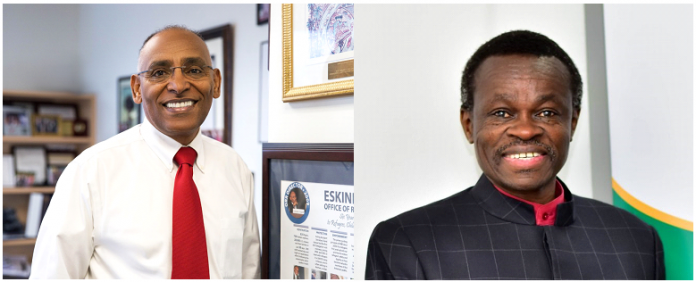
Ethiopian-born politician Eskinder Negash and P.L.O. Lumumba, director of the Kenyan School of Law will keynote the the virtual National African Leadership Conference hosted by St. Paul, Minnesota based African Economic Development Solutions on Dec. 9 and 10, 2021. Photo:Courtesy
Ethiopian-born politician Eskinder Negash and P.L.O. Lumumba, director of the Kenyan School of Law will keynote the the virtual National African Leadership Conference hosted by St. Paul, Minnesota based African Economic Development Solutions on Dec. 9 and 10, 2021. Photo:Courtesy
An economic development agency serving African immigrant community in the Twin Cities is bringing back a leadership conference after the inaugural one held in 2020 became a success.
On Dec. 9 and 10, the African Economic Development Solutions (AEDS) will host the 2021 National African Leadership Conference, which will be held virtually due the coronavirus pandemic. The theme of this year’s conference will be “Lifting as We Climb: Unleashing the Potential of African Leaders”, and will feature solution-oriented conversations regarding economic issues plaguing the African immigrant community in Minnesota, according to the conference’s organizers.
“We are back by popular demand,” said AEDS President Gene Gelgelu.
AEDS works by linking African immigrants to resources to help them attain home ownership, build businesses, and achieve financial security. The leadership conference brings together African immigrant officials and leaders from across the state to address economic disparities.
African Americans lag behind their white compatriots when it comes to home ownership, which is the bedrock of building generational wealth and creating economic independence. Only 46.4% of Black Americans, compared to 75.8% whites, own homes, according to the Brookings Institution, and that homes in predominantly Black neighborhoods were valued at 48,000 less than similar ones in white neighborhoods. Because of that racial disparity in home appraisals, Black families are worth a lot less that white families. A research report by the Federal Reserve Bank of St. Louis found that in 2019, the median net worth of a Black family was a mere $23,000, while that of a white family was $184,000.
Gene Gelgelu. Photo: Courtesy Bush Foundation
Lately, organizations like AEDS have been trying to bridge that wealth gap. Minnesota has one some of the widest racial disparities in economic achievement in the country, according to NPR News. The state has the second largest income inequality gap between Blacks and whites in the nation – second only to the District of Columbia. Many African immigrants in Minnesota lack the necessary resources and connections need to improve their economic well-being and close the wealth gap. By bringing together African immigrants and leaders, AEDS hopes to gather ideas on how the community can speed up addressing economic inequalities.
This year, the National African Leadership Conference will feature Ethiopian-born politician Eskinder Negash, who served as the director at the Office of Refugee Resettlement under the administration of President Barack Obama. Negash has been a public servant for over 12 years, helping to maintain the rights and improve the futures of both voluntary and displaced immigrants.
P.L.O. Lumumba, a professor who is director of the Kenyan School of Law and Founder of the PLO Lumumba Foundation, will be the keynote speaker. His foundation, based in Nairobi, is committed to addressing issues such as poverty, education, and health.
Mayor Mike Elliott of Brooklyn Center, Minnesota outside Palmer Lake Elementary School in Brooklyn Park after participating in a Philando Castile Relief Foundation event on Nov. 5, 2021 to offset students' school lunch debt. Photo: Jasmine Webber/Mshale
Mayor Mike Elliott of Brooklyn Center, Minnesota outside Palmer Lake Elementary School in Brooklyn Park after participating in a Philando Castile Relief Foundation event on Nov. 5, 2021 to offset students' school lunch debt. Photo: Jasmine Webber/Mshale
When 18-year-old Mike Elliott went to Brooklyn Center City Hall for a permit to hold a carwash fundraiser for his high school prom, he did not know that was his first step to making history as the city’s first Black mayor.
“I remember that day very vividly,” says Elliott, during a recent interview in the council chambers at City Hall.
It was Elliott’s first time ever visit to City Hall, and his first introduction to how local government functions.
“The fact that I – a young person – was able to walk into City Hall and get what I had come for was fascinating,” he says.
Elliott was intrigued because that was not how government worked in Liberia, his birthplace, which he fled for the United States as a refugee when he was 11 years old. Even though as a child he had family members who worked in government in Liberian, he did not feel welcome at government offices.
“In Liberia, the government was something that happened over there in that building, and the executive mansion,” he says. “You were not welcome to just walk up there.”
After high school, Elliott went to study at Hamline University in St. Paul. He graduated with a B.A. in international management, with a minor in political science. He went into entrepreneurship and founded a tutoring company called Fastforward Education. A year after graduation, he was hired to develop the Brooklyns Youth Council, a joint program of Brooklyn Center and neighboring Brooklyn Park that gives youths opportunities for input in the decision-making process.
As he learned more about the functions of city government, Elliott began to think that there was a need for change in Brooklyn Center to reflect the growing diversity of the suburban city of 33,000, located north of Minneapolis, on the west bank of the Mississippi River. And he couldn’t think of anyone better to lead that transformation.
“I thought I was the right person to be mayor of Brooklyn Center because I brought some unique perspectives and skillsets that would be beneficial in leading the city to where it needed to go,” he says.
He entered the mayor’s race in 2014, but lost by only 145 votes. Elliott, however, says his first campaign was major success because it galvanized African immigrants and other people of color who didn’t even know they had the power to influence local politics.
“Sometimes when you are trying to drive a nail home, you have to hammer it more than once,” he says. “We learned important lessons that we could apply in the next campaign.”
Indeed, four years after his first run, Elliot applied those lessons and struck the nail right on the head. In 2018, the people of Brooklyn Center made history by electing him as the first Black and person of color to lead the city.
As their population in Minnesota continues to grow, African immigrants are increasingly coming together to elect members of their community to represent them in government. Over the last few elections, several African-born Minnesotans have been elected to seats in small suburban cities like Brooklyn Center, the Minnesota state legislature, and of course to Capitol Hill, in the case of Rep. Ilhan Omar, who in 2020 was overwhelmingly re-elected to a second term to represent Minnesota’s 5th Congressional District in the U.S. House of Representatives. Whereas those newly-elected to high-profile offices like the U.S. Congress have their parties and caucuses to help them settle, newcomers to local governments often find themselves without mentors when they begin their terms.
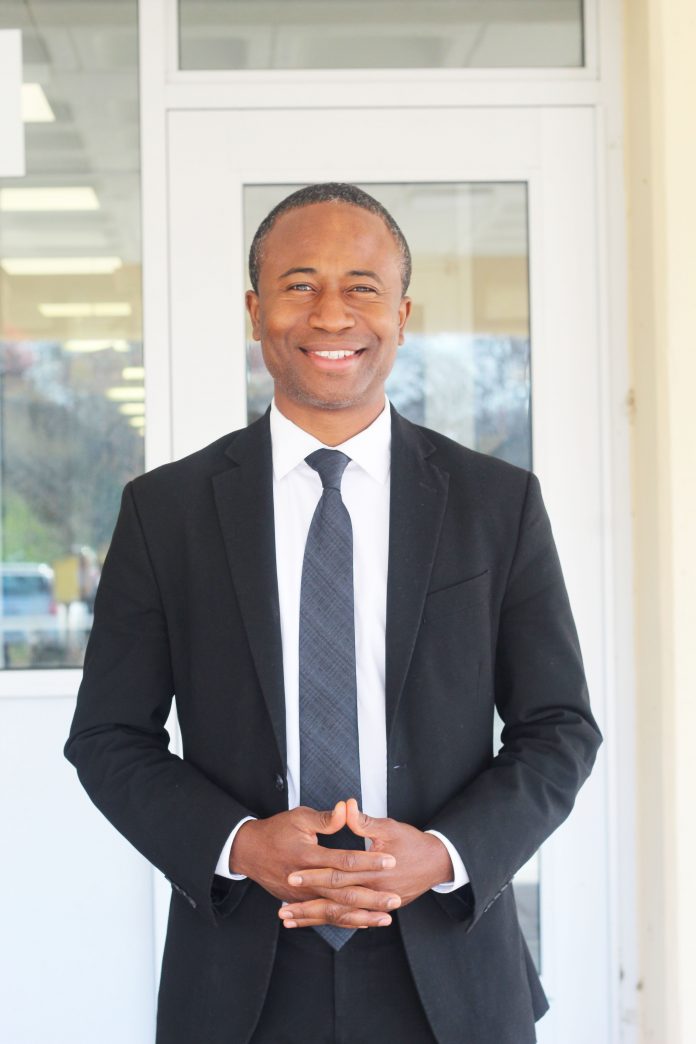
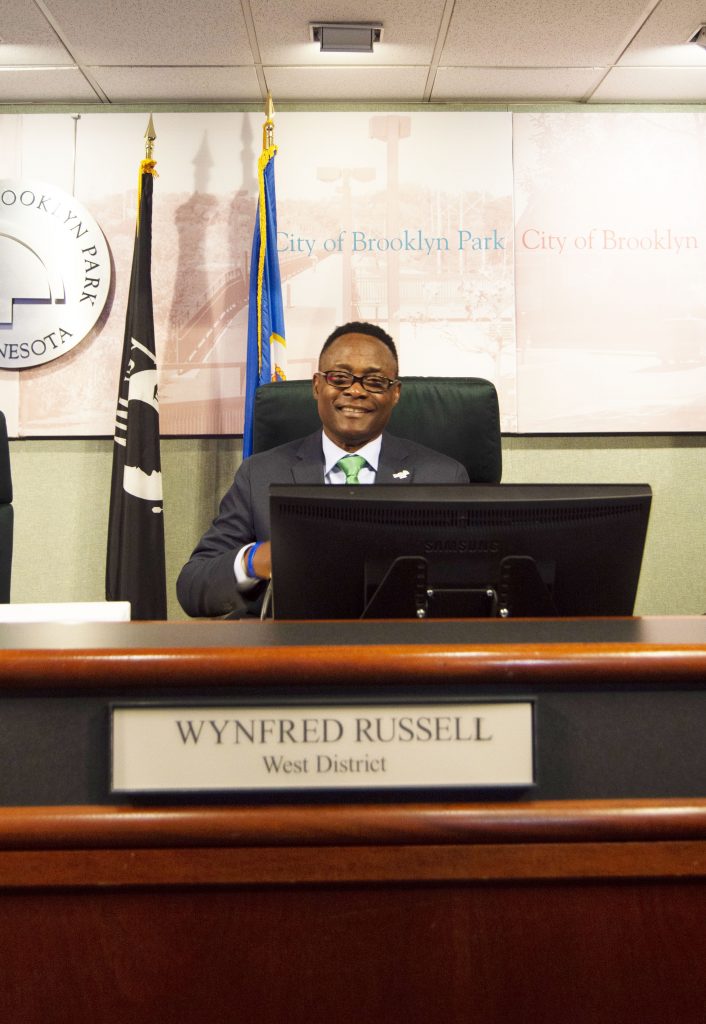
Wynfred Russell, who like Elliott was born in Liberia and came to the United States as a refugee, was elected in 2018 as a councilmember to represent the West District of Brooklyn Park, a city of 86,000. Mshale catches up with him at a coffee shop on a Monday afternoon, as he prepares for a city council meeting scheduled later that evening. He says he remembers being “lost” during his first days in office.
“I realized very quickly that there is a difference between campaigning, or being an advocate, and governing,” he says.
The challenges of lack of mentorship have brought African-born elected officials closer, often consulting each other, Russell says. On his first day in office, for example, he remembers receiving a call from Richard Paul, a Sudanese-born refugee, who had been elected to the city council in nearby Blaine.
“Richard Paul called me and said, ‘Man, I don’t know what I am supposed to do,’” Russell says. “But I was in the same situation.”
Russell says that one of the reasons African immigrants find themselves isolated when they get elected is that white people, who have historically occupied positions of power, do not know how to handle those like him who are challenging the status quo and breaking barriers. He also thinks there are some who see newcomers like him as threat.
Wynfred Russell at the Brooklyn Park City Council chambers shortly after taking the oath of office on Monday, Janury 7, 2019. Photo: Bethel Gessesse/Mshale
“We didn’t get elected because Minnesota is nice,” he says. “We got elected because it’s changing, and the people of our community want to be at the table. That scares some folks. They are not going to give up power easily and help mentor us.”
Indeed, Minnesota is changing, especially in the areas surrounding the Twin Cities of Minneapolis and St. Paul. More than 125,000 people living in Minnesota were born in Africa, according to Migration Policy Institute. About 83,000 of them were born in eastern Africa, mostly Somalis who came to the United States as refugees. There are an estimated 35,000 Liberians in the state, according to International Institute of Minnesota. Both Brooklyn Park and Brooklyn Center are minority-majority cities, with 55% and 67% of their populations being people of color, respectively.
According to 2020 U.S. Census data, people who identify themselves as Black or African American make up 29% in Brooklyn Center, and 29.1% in Brooklyn Park, making them the single largest minority group. African immigrants call the two cities “Little Africa.” Now community leaders are trying to rally people to make sure local governments reflect their population.
Like Russell, Elliott found himself with similar challenges of trying to fit in when became mayor.
“Because the bureaucracy does not reflect the diversity of the community, it makes it harder for people who attempt to bring a different perspective to the government,” he explains.
It also didn’t help Elliott’s transition that when he was sworn in, Brooklyn Center’s charter limited the mayor’s power to ceremonial roles, opting to place the responsibility of running the city in the hands of a city manager. In fact, Elliott didn’t even have office space at City Hall.
But all that changed on April 11, 2021.
On that day, Elliott says he was taking an afternoon walk in the park. He received a message notification on his phone. He doesn’t remember if it was a voicemail, or text message. It could have been an email. But one thing that is clear is that the contents of that message forever changed his job as mayor of Brooklyn Center.
“Initially there, wasn’t an indication that, Brooklyn Center police had shot someone,” Elliott says. “It was just that there was a shooting.”
It wasn’t until after he called a member of his staff that the magnitude of the shooting became apparent to the mayor. A Brooklyn Center police officer had shot and killed an unarmed Black man during a minor traffic stop. The officer was later identified as Kim Potter, a 26-year veteran of the police department. She claimed she accidentally shot 22-year-old Daunte Wright because she mistook her handgun for a taser.
The place and timing of the shooting couldn’t have been worse for Elliott and Brooklyn Center. The site of Wright’s killing was a mere a 15-miute drive from where a year earlier Derek Chauvin, a Minneapolis Police Department officer murdered George Floyd, another unarmed Black man. The killing sparked months of national protests against police brutality. At the time Potter killed Wright, Chauvin’s trial for the murder of Floyd was taking place only 10 miles from Brooklyn Center. Elliott knew it was only a matter of time before protesters descended on his city. He needed to come up with a plan to protect lives and property.
“I knew that we were facing an important moment in our history,” Elliot says. “We needed to act in a way that didn’t make the problem worse – to start to lay the groundwork for how these situations should be responded to in a way that honors the humanity of the people who are mostly affected by these seemingly intractable problems.”
Elliott’s swift action following the shooting might have saved the city from the wrath of protesters. He was quick to condemn the killing of Wright, when other mayors might have delayed.
“I followed what I thought was the right thing to do,” he explains.
On the day after the shooting, the City Council voted to give Elliott more power to lead the city’s response to the crisis. He fired the city manager. He took command of the police department, and accepted resignations of the police chief, and the officer who killed Wright. He released footage from the shooting. And he ordered the police to stop using rubber bullets and teargas on protesters. When asked whether he thought of the consequences of his actions – given that other mayors who have faced similar problems have moved much slower – he pauses for a while before answering.
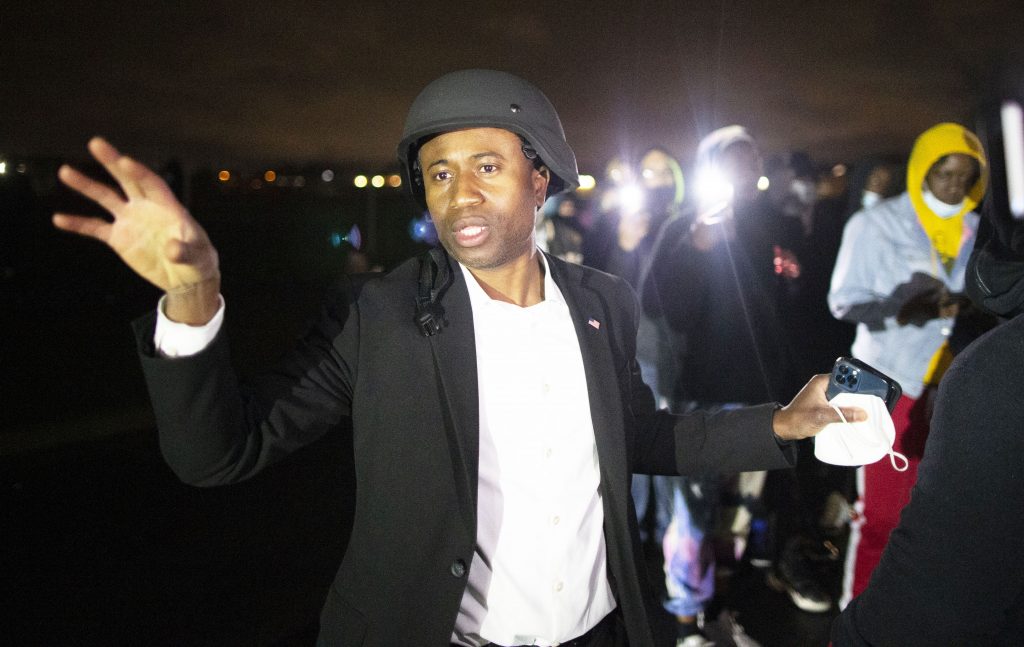
Mike Elliott, the Mayor of Brooklyn Center stands near protesters and signals for police to not shoot rubber bullets at them shortly after he talked to protesters as protests over police killing of Daunte Wright continue in Brooklyn Center, Minnesota, U.S., on April 13, 2021. Photo: Christopher Mark Juhn/Anadolu Agency via Getty Images
“In my mind, there was no contradiction between what is fundamentally right and humane,” he says. “I thought that gassing human beings was wrong when the Nazis did it. It was wrong enough to be banned in war internationally. So, if soldiers fighting to kill each other are not allowed to gas each other, why should civilians, who are not trained to defend themselves, be gassed? It’s just wrong on every single level.”
Perhaps the most important thing Elliott did is how he handled protesters. He went out to the streets himself to persuade them to be peaceful. He set up listening sessions but did not want to have them at City Hall. It is a mediation technique he says he learned from his childhood in Liberia. Instead of the people going to the chief’s office for community meetings, the chief traveled to them and held meetings in various villages. Elliott held one of the city council meetings outside, in front of the police station where protests were.
“It was not us, sitting up high on the dais, but getting down, walking, and going into the community under the tree, if you will, where people are,” he says. “We wanted them to talk to us and have us listen to what their concerns were, and what they wanted to see different.”
What came out of those listening sessions has made Brooklyn Center a model of how to deal with issues of police reform. The City Council passed the Daunte Wright and Kobe Dimock-Heisler Community Safety and Violence Prevention Resolution. (Dimock-Heisler was also killed by Brooklyn Center police).
In September, Brooklyn Center changed its policy to require police officers to issue citations and release people accused of misdemeanors and gross misdemeanors, instead of arresting them. The policy does not apply to felonies, or offenses that involve guns.
“We’ve seen too often, these minor infractions lead to deadly interactions with the police,” Elliott says. “So, that was our way of decreasing the possibilities that something very minor can lead to police shooting and killing someone.”
Huldah Momanyi-Hiltsley, a resident of Brooklyn Center and the president of Mwanyagetinge, the largest organization of Kenyans in Minnesota, says the creative way Elliott has managed the fallout from Wright’s shooting shows that African immigrants in elected office can be very instrumental in solving the problems of their communities.
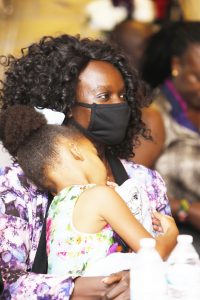
Huldah Momanyi-Hiltsley with her daughter during her campaign launch for the Minnesota State Senate on Thursday, September 16, 2021. Photo: Richard Ooga/Mshale
“We bring a different perspective in terms of our experiences, and it adds to this fabric of what America is,” she says. “That experience comes through the different, unique cultures that we bring along.”
Momanyi-Hiltsley recently launched her 2022 campaign for the Minnesota State Senate to represent District 40, which covers Brooklyn Center and parts of Brooklyn Park. She says the time has come for African immigrants to flex their muscles and get involved in leadership. But do to so, they must begin thinking of the United States as their permanent home, instead of as a country belonging only to those born here.
“I came here when I was nine, so I have this passion for Kenya and our people there, but as time has gone by, I’ve realized that, yes, it’s good to have that passion, but we have to be engaged here as well,” Momanyi-Hiltsley says.
She says she began to look at America as home three years ago when she gave birth to her daughter.
“That’s when I realized that all of this passion that I have for Kenya is great, but my kid is growing up here,” she says. “So, I need to invest here. I need to engage here more than I have in the past. That’s what drove me to a lot of the decisions in terms of leadership and community involvement that I’ve made in the last couple of years – to participate in the politics of where I live, where I work, and where my child is growing up.”
However, Momanyi-Hiltsley acknowledges that changing that mindset will not easy, as African immigrants still have strong bonds to their countries of birth. Russell agrees.
“We never really unpacked,” he says, with a laughter. “Most of us still have our suitcases packed, waiting decades for the day we shall return to Africa. But we need to realize that instability in Africa has killed our dream of returning and begin building our lives here, where we are raising our children.”
All three leaders say that although energizing African immigrants to vote on Election Day is challenging, getting them engaged to help their representatives address the problems they were elected to address is more difficult. For example, Russell says African immigrants are missing from boards that make important decisions but don’t require elections.
“Decisions are being made without us,” Russell says. “Remember, if you don’t have a chair at the table, you are on the table; you are the menu. We get so focused the politics of Washington, D.C., when most policies affecting us are made by cities and counties. President Biden cannot reform the police force, for example. That’s the city council’s job. Folks need to understand that.”
Elliott says generally people lose enthusiasm once elections are over, though it’s more noticeable that African immigrants are missing from key policy discussions in cities where they have significant population. But he says leaders like him cannot afford to give up, and must come up with culturally appropriate ways to get their communities engaged.
“Government buildings can be very intimidating,” he says. “There are people in our community who get shocked when they see that I don’t walk around surrounded by group of people. We have to be creative to ease their fear of government. We have to go to the people and make them comfortable so they can come to us and help us do what they sent us here for.”
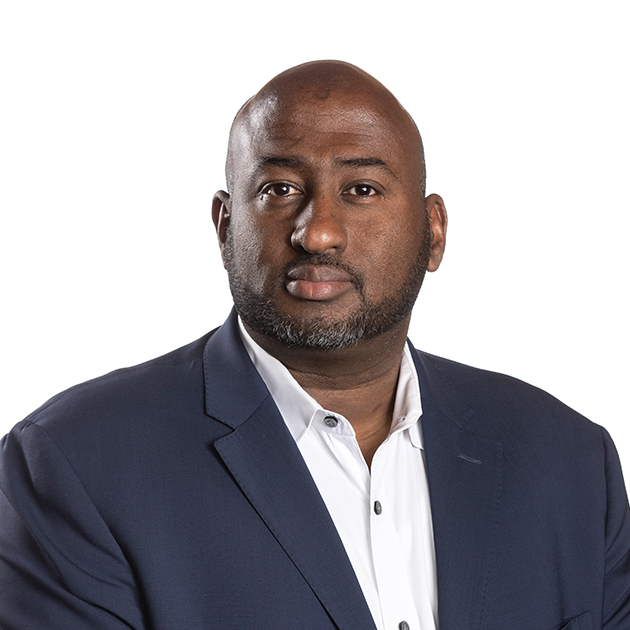
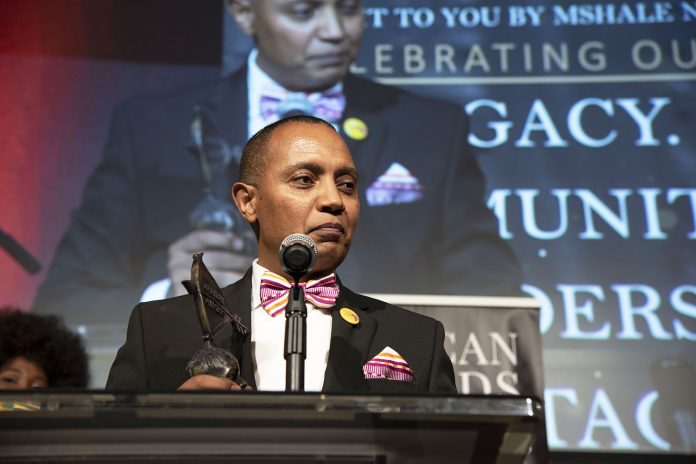
Jote Taddese accepts the Friend of the Community Award on behalf Books for Africa on October 12, 2019 at Mshale's African Awards Gala held at Target corporate headquarters in Minneapolis. Taddese, an Ethiopian immigrant, recently led an effort to ship 16,000 books from the organization to Ghana. Photo: Oladipupo Sule for Mshale
Jote Taddese accepts the Friend of the Community Award on behalf Books for Africa on October 12, 2019 at Mshale's African Awards Gala held at Target corporate headquarters in Minneapolis. Taddese, an Ethiopian immigrant, recently led an effort to ship 16,000 books from the organization to Ghana. Photo: Oladipupo Sule for Mshale
A container with 16,000 books arrived in Cape Coast, Ghana this week as the launch of a historic trade and investment expo dubbed “Wakanda-One, City of Return” is taking place. The books which will benefit students in the country is a collaboration between the African Diaspora Development Institute (ADDI), a Washington, D.C.-based nonprofit and the St. Paul based Books for Africa, the largest shipper of donated school textbooks to the African continent.
The African Diaspora Development Institute’s mission is to reconnect people of African descent around the world with their roots in Africa.
Books for Africa executive director Patrick Plonksi welcomed the collaboration with the African Diaspora Development Institute was founded and is headed by the former African Union Ambassador to the U.S., Ambassador Arikana Chihombori-Quao. Plonski said in a statement that his organization “hopes to participate in future projects (with ADDI) that will help the students of Africa.”
The effort to get to the books to Ghana was led by Jote Taddese, an Ethiopian immigrant and vice president of engineering at Optum Digital, a UnitedHealth Group Company. Taddese is also a former board president of Books for Africa and has stayed on as its director for diaspora engagement.
Taddese who sits on the African Diaspora Development Institute board which raised the funds for the shipment of the books, said his life experience growing up in Ethiopia is what inspires him to support kids in Africa with books.
“As a person who was raised in Africa and educated in the diaspora, I am a living example of when we put a book in the hands of a child, we not only help fulfill the potential of the child, but also change the impact on the lives of individuals and the global communities that child will touch,” Taddese said.




 UNESCO in its citation also said rumba “is perceived as a means of conveying the social and cultural values of the region and of promoting intergenerational and social cohesion and solidarity.”