
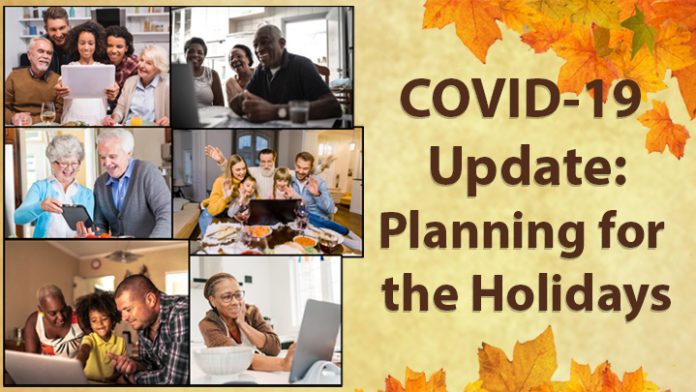
This holiday season, how to stay safe during a pandemic
MSR Forefront to discuss Covid-19 and communities of color in Ramsey County
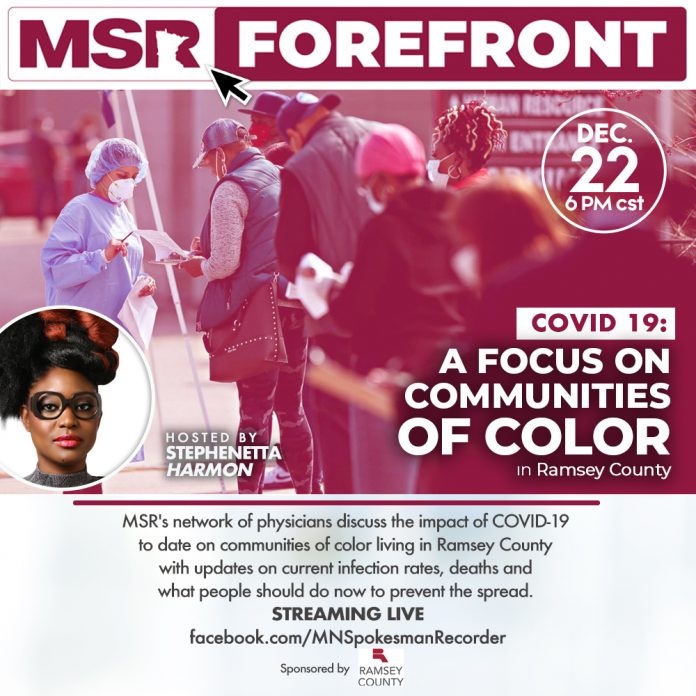

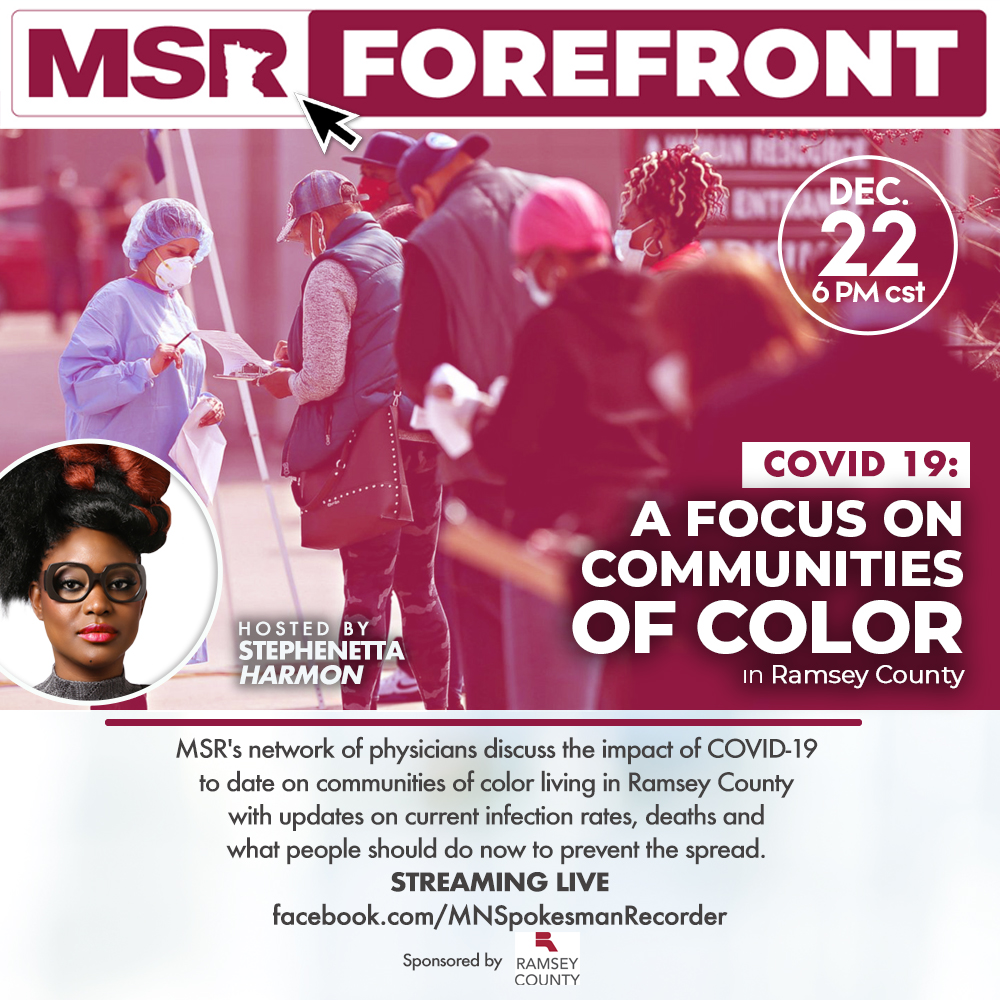 As a continuation of their series on racial equity in partnership with Minnesota Public Radio (MPR), MSR Forefront will focus on the Covid-19 pandemic and affected communities of color in Ramsey County.
Host Stephenetta Harmon will interview MSR’s network of physicians about the impact of COVID-19 to date on communities of color living in Ramsey County with updates on current infection rates, deaths and what people should be doing now to prevent the spread.
The live-streamed event takes place on Tuesday, December 22, 6 pm CST. To watch this episode of Forefront, visit MSR’s Facebook page https://www.facebook.com/MNSpokesmanRecorder.
The event is sponsored by Ramsey County Racial Equity & Community Engagement Response Team (RECERT).
Follow MSR’s activity and this special partnership by subscribing to email updates on the Spokesman-Recorder.com website, following them on Facebook, and visiting Spokesman-Recorder.com/Forefront for more information.
Minnesota Africans United announces new board chair, other leaders


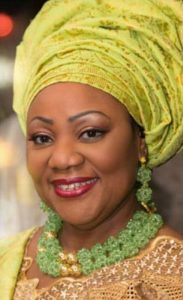
Minnesota Africans United has announced Dr. Fatima Lawson as the new board chair along with new leadership and members effective January 1 2021, according to a news release.
Lawson, a school principal at Saint Paul’s Highwood Hills Elementary, has been part of the inaugural board of the young organization which was launched in 2017.
Outgoing chair Ms. Nelima Sitati Munene said her board spent the last three years laying a foundation and long term vision for the new organization, adding “Dr. Lawson will bring her experience and expertise to continue leading on this vision.” Sitati Munene will continue to serve on the board as chair of the Civic Engagement and Public Policy Committee.
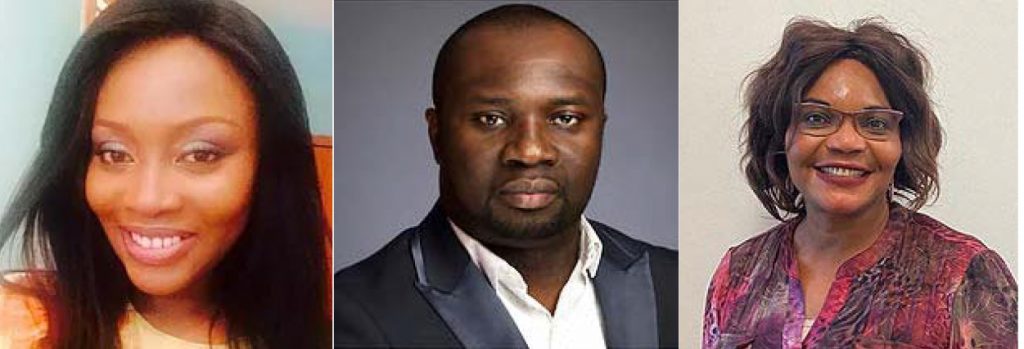
Ms. Divine Arpellet will serve as the vice-chair while Dr. Michael Appiah will be the treasurer. Dr. Julia Ugorji wills serve as secretary to the board.
“The future direction of Minnesota Africans United depends on the incoming newly elected board officers who will represent the voices of all Africans in Minnesota. They represent the diversity of Africans in Minnesota and will [bring] diverse perspectives on the board,” Basil Ajuo, Minnesota Africans United founder and CEO, said in the release.
Need money for a down payment to buy a home?



Before the economic fallout caused by COVID-19, homeownership among people of color in Minneapolis and St. Paul showed the highest homeownership disparity in the entire U.S. To help change this problem, the NeighborhoodLIFT program is coming to Minneapolis and St. Paul to assist hundreds of people with $15,000 in down payment assistance to buy a home.
Why homeownership is important
Homeownership is a key foundation to wellness, dignity, and economic opportunity. Yet, far too many families face uncertainty of rising rents because they struggle with overcoming the barrier of coming up with a down payment to buy a home.
With a commitment to create positive change, the Wells Fargo Foundation, NeighborWorks® America, and NeighborWorks Home Partners are teaming up to provide $15,000 in down payment assistance to 425 eligible homebuyers in Minneapolis or St. Paul. Interested homebuyers can get a home loan with any NeighborhoodLIFTapproved lender.
Who is eligible for NeighborhoodLIFT?
Beginning Jan. 11, NeighborhoodLIFT will provide $15,000 in down payment assistance to eligible homebuyers. Interested homebuyers must meet eligibility requirements including earning 80% or less of the local family median income, which is $77,840 in the Twin Cities.
$15,000 downpayment assistance
The NeighborhoodLIFT® program for Minneapolis and St. Paul will help 425 people buy homes with $15,000 in down payment assistance.
How to prepare to apply on Jan. 11 for NeighborhoodLIFT?
- Complete eight hours of HUD-approved homebuyer education
- Get a mortgage pre-approval from an eligible NeighborhoodLIFT lender
Participating NeighborhoodLIFT nonprofits and lenders are available at https://nwhomepartners.org/ neighborhoodlift/
Minneapolis and St. Paul NeighborhoodLIFT program
When to apply: January 11, 2021
Learn more: www.wellsfargo.com/lift or 866-858-2151
Local NeighborhoodLIFT homeowners assisted to date: 875
LIFT program homeowners assisted in U.S.:24,500+ since 2012
Nwokocha: Biden must act with speed to fix Trump immigration damage
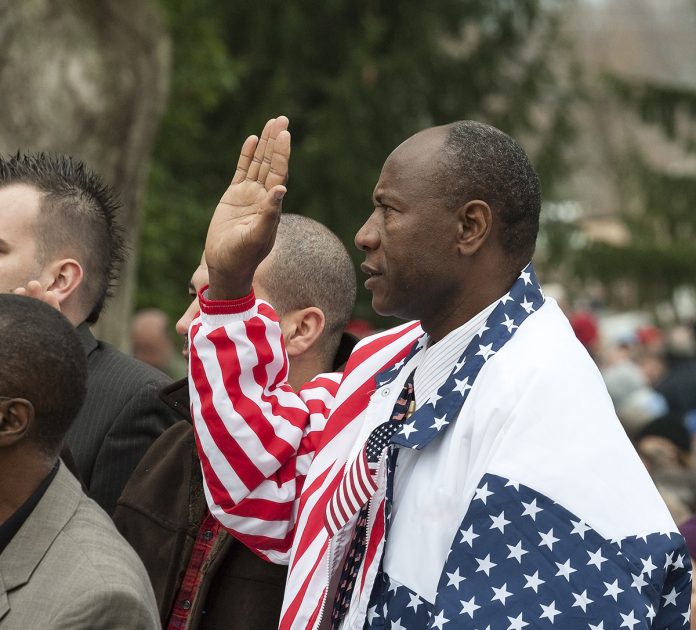
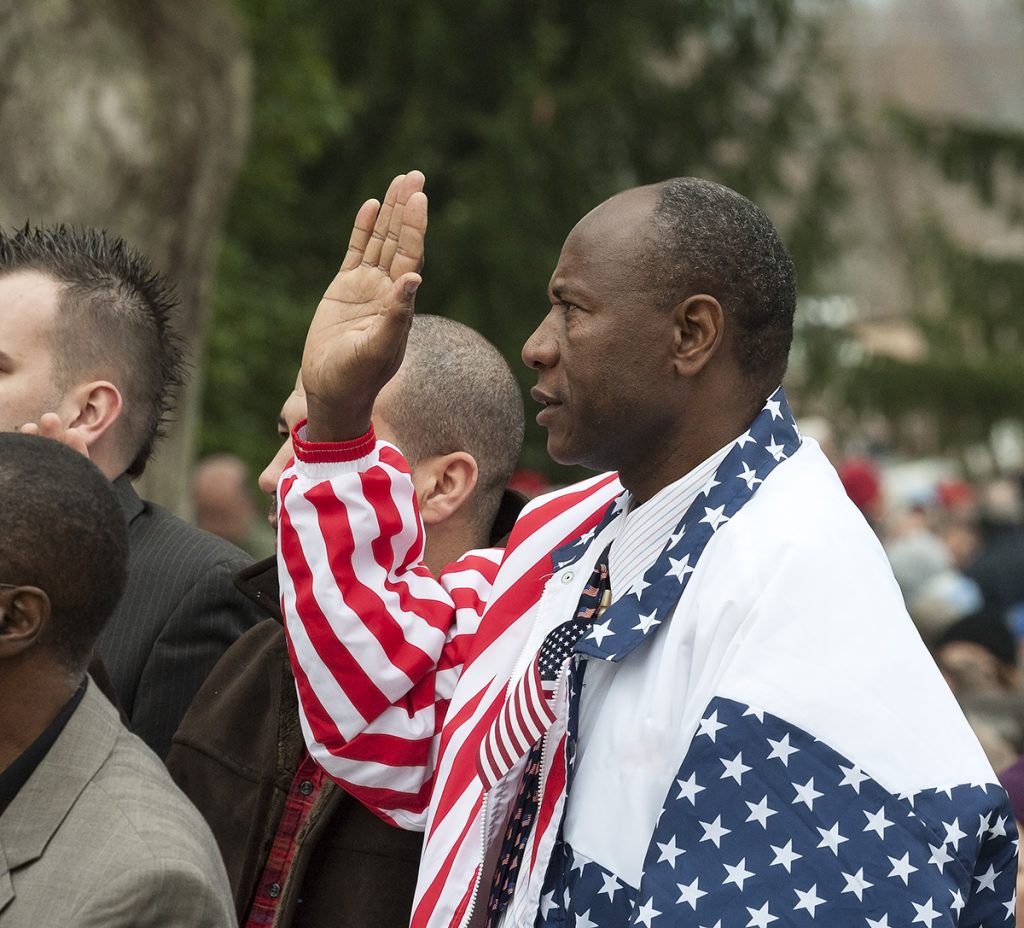
Americans elected Mr. Joseph Biden as the next president of the United States. This is a remarkable feat, only the tenth time in U.S. history a sitting president has contested and failed to secure a second term. Underneath this result, however, is a disquieting epiphany: that more than 70 million Americans, for whatever reason, voted for a second installment of the Trump administration.
As an immigrant, the election results provide insight into the soul of my adopted country. It reveals how complex the country is, and how far we are from realizing the dreams of a more perfect union and equality. That Trump received more than 70 million votes is stunning; that the election was even close is unbelievable.
It was a surprise that Mr. Trump was elected president in 2016. It stunned most people in my familial, professional and community circles. Politicians and pundits offered various explanations for the results. Most of the explanations came down to a common denominator: Trump was different from other politicians. In the immigrant communities, Trump had his supporters, some because of promises of fiscal discipline; but a huge number voted for him because they believed he was a Christian and that his faith would guide his administration. But not even these voters expected the wrecking ball he took to immigration.
As an African American, immigrant and immigration attorney, the result of the 2020 elections left me wondering if Trump voters live in the same America that I live in. Having lived through the traumatic events of 2020, I thought there was no way Mr. Trump stood a chance of winning. We witnessed a country throw aside its immigration ideals; we watched a president promote racism and stoke the embers of hatred for four years; we watched an administration (supported by white evangelical Christians) cast away biblical injunctions of Exodus 22: 21 about how to treat foreigners-not to wrong, mistreat or oppress them,- and replace it with draconian measures, including official policies of separating children from their parents; we watched our government ban people from entering the United States solely because of their faith; we watched our government refuse to welcome the “huddled masses yearning to breathe free”; we watched our government repeatedly attack legal immigration. The list goes on and on. Consistent with its professed collective ideals, I expected this country to resoundingly repudiate Trump and his enablers. Though he lost, the margin wasn’t what I thought it would be. Many of his enablers in government won and continue to stay in power. This was no repudiation; it feels like far too weak a protestation in the face of utter depravity.
All the pro-immigration forces have a lot of work ahead. We have to reach out to our fellow Americans, especially those outside our pro-immigrant circles, to educate them on the value of immigration. According to an August 2020 Report by Pew Research Center, “a majority of Americans have positive views about immigrants. About two-thirds of Americans (66%) say “immigrants strengthen the country because of their ‘hard work and talents,’ while about a quarter (24%) say immigrants burden the country by taking jobs, housing and health care.” Broken down by party affiliation, for Democrats and Democratic-leaning independents, 88% think immigrants strengthen the country with their hard work and talents, and just 8% say they are a burden. Among Republicans and Republican-leaning independents, 41% say immigrants strengthen the country, while 44% say they burden it. Clearly there is a large portion open to persuasion.
We have to create avenues where the immigration-hostile American has the opportunity to meet immigrants. A 2019 American Immigration Council Report found that native-born Americans hold more positive views about unauthorized immigrants or “pro-immigrant sentiments” if they have friendly interactions with immigrants. Those of us who still believe in the immigration ideals of this country should use every opportunity to increase these contacts, and also to promote positive experiences. Our task is to break down the barriers.
This will require the conscientious efforts of everyone. We all must accept our common humanity; this is a non-negotiable factor that must prevail in any discussion of “how we got here.” People of faith have an opportunity to lead in this endeavor.
The task for the incoming administration is daunting. Having seen the type of damage the Trump presidency inflicted on immigrant communities; the Biden-Harris administration must act with all deliberate speed. The life and future of immigrants depend on it. Trump demonstrated that the presidency could do a lot of damage through its executive power. Thankfully, some of this harm can be immediately addressed by the new administration. Biden-Harris must use executive power for good. Ideally, the president-elect would work with Congress to pass comprehensive immigration reform. However, based on experience, and the projected partisan divide in Congress, the incoming administration must be realistic in its expectations and act accordingly. For instance, the Biden-Harris administration should consider the set of proposals from AILA that seek not only to ameliorate the damage done by the Trump administration, but to improve our immigration system generally. All regressive executive actions must be rescinded, and the welcoming lamp of America must be re-lit.
The message must be clear: America is once more open to the world, and it will return to being the beacon of hope and example to the rest of the world. No more will our nation vilify immigrants.
Here are the key dates in the 2021 Brooklyn Park special election for mayor



Brooklyn Park voters will be back at the polls as early as April 13 to elect a new mayor in a special election. The city’s attorney Jim Thomson laid out two possible dates for the election at a council meeting on Monday. During a presentation to the council, the city attorney said the city has to follow state law regarding when special elections can be held.
April 13 will be either the special election day or primary election day. Should April 13 turn out to be a primary day, then the special election will be held on August 10.
Photo: Courtesy Kennedy & Graven Chartered
Current mayor Jeff Lunde, who was elected to the county commission in November, will tender his resignation as early as this weekend that will be effective January 3. According to Thompson, this will allow the council to accept his resignation at its regularly scheduled council meeting on December 14 and declare a vacancy and order a special election at its next meeting on January 4.
On January 4 when the council orders a special election, a notice will be published on January 14 announcing the candidate filing period, which will be February 2 to February 16. Absentee voting for the primary will begin on February 26 for the April 13 primary.
After the April 13 primary, absentee voting for the August 10 special election will begin on June 25.
As of the time of this writing, two candidates have announced their candidacy.
City Clerk Devin Montero, responding to a question from council members put the total cost for both elections at $80,000.
Key dates
Dec. 14, 2020 – Brooklyn Park City Council expected to accept the resignation of Mayor Jeff Lunde effective Jan. 3, 2021.
Jan. 4, 2021 – Council declares mayor’s seat vacant and orders special election.
Feb. 2-Feb. 16 – Candidate filing period.
Feb. 26 – Absentee voting begins for primary or special election on April 13.
April 13 – Primary or special election.
June 25 – Absentee voting begins for August 10 special election if April 13 was a primary election.
Aug. 10 – Special election if there was a primary in April 13.
President-elect Biden taps Adewale Adeyemo as Deputy Treasury Secretary
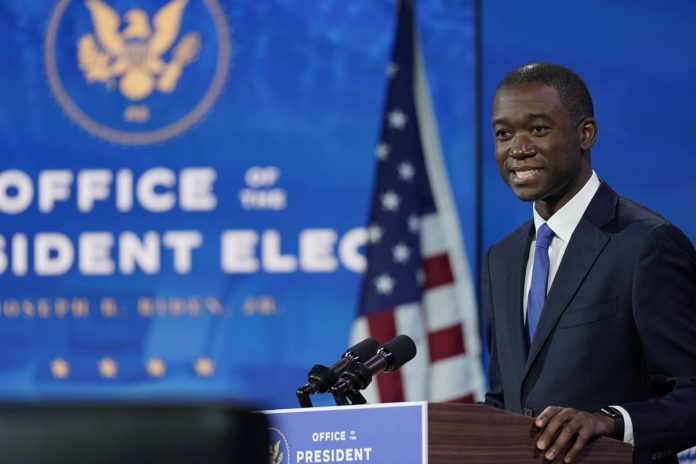

President-elect Joe Biden on Monday made two historic appointments as he prepares to take over the White House. Biden announced the nomination of Janet Yellen as his Treasury Secretary, making her the first woman to hold that position if confirmed. Biden also named Adewale Adeyemo as his nominee for Deputy Treasury Secretary. Adeyemo will become the first Black person to serve in that role and the highest-ranking African immigrant in the Biden-Harris administration, and possibly in any administration thus far.
39-year-old Adeyemo who goes by Wally was born in Nigeria. He currently serves as the Obama Foundation president. He moved to the United States with his parents when he was just “a baby,” according to the New York Times. He grew up in Southern California where his father was a teacher and mother a nurse. Adeyemo and his two siblings, a younger brother and sister, grew up sharing a two-bedroom apartment.
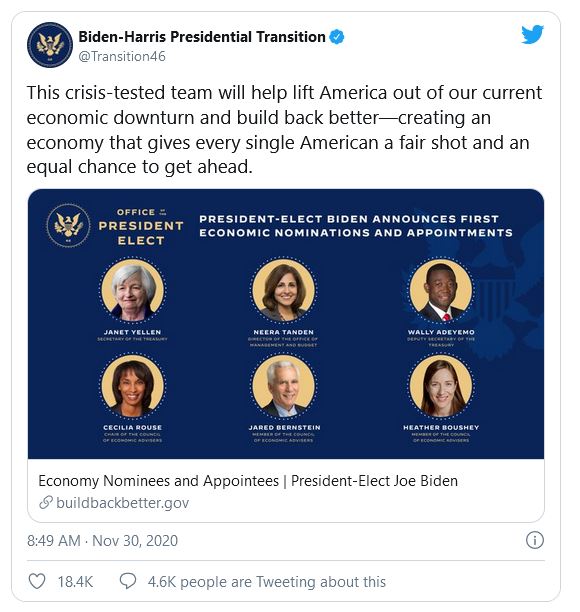 Prior to joining the Obama Foundation, he had been president Obama’s senior international economic advisor after Obama had appointed him deputy national security advisor and deputy director of the National Economic Council. In that role, he was responsible for coordinating the policymaking process on international finance, trade and investment, energy, and environmental issues, according to a profile of him by the Center for Strategic & International Studies, a Think Tank that he advises.
Adeyemo received his undergraduate degree from the University of California at Berkeley and a Juris Doctor from Yale Law School.
“This crisis-tested team will help lift America out of our current economic downturn and build back better—creating an economy that gives every single American a fair shot and an equal chance to get ahead,” the Biden-Harris transition team tweeted after Biden announced the members of his economic team.
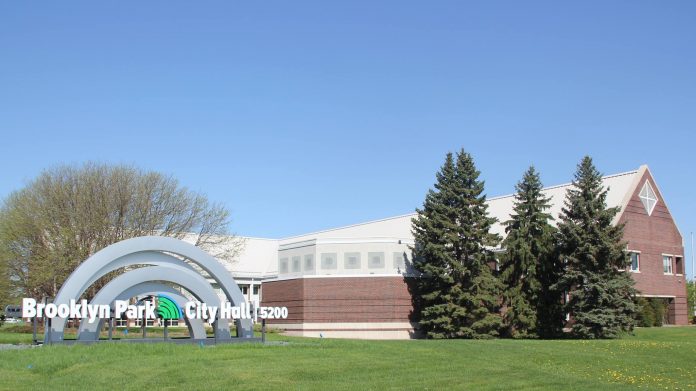
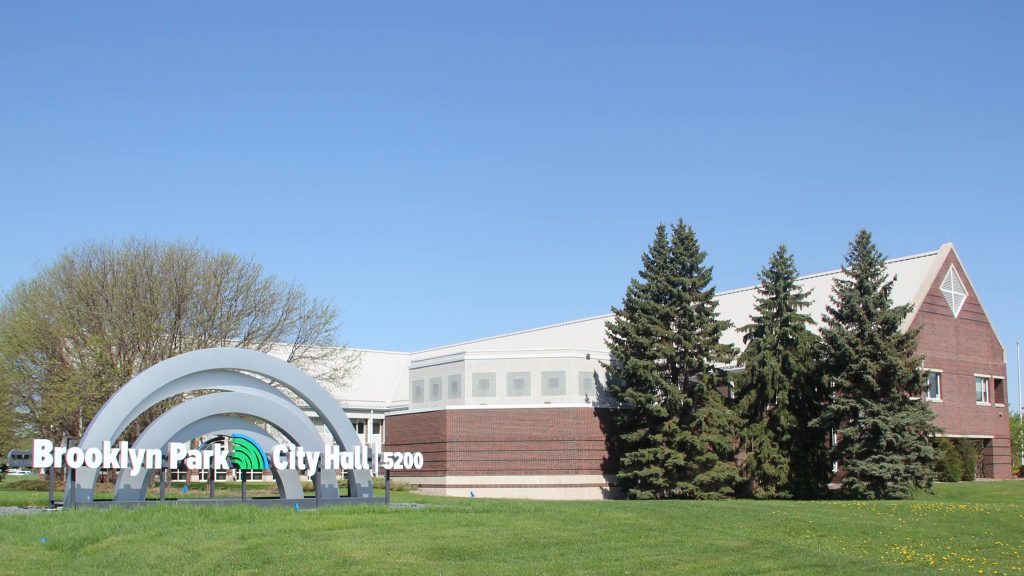
Brooklyn Park to hold special election for mayor

Outgoing mayor expects a crowded field
Brooklyn Park residents will be back at the polls as early as this spring to fill the expected vacancy in the city’s mayoral seat. Current mayor Jeffrey Lunde was elected to the Hennepin County Board of Commissioners representing District 1 in November’s general elections.
“Since 2001 we’ve had five special elections,” Devin Montero said. Montero has been serving as the clerk for the city of Brooklyn Park since 2005.
Three of the five special elections were for council member positions, one for city representative, and once for the mayoral position. It was then, that mayor Jeffrey Lunde was elected after the unfortunate passing of mayor Steve Lampi from cancer.
The city of Brooklyn Park is working with city attorney Jim Thompson to establish appropriate dates for candidates to file for the position and dates when voters can head to the polls. Montero said all city polling stations will be open for voters to cast their ballots, early voting and absentee ballots will be granted as well.
Outgoing mayor Lunde told Mshale he intends to officially hand in his resignation on January 3, the following day on January 4, he is set to begin his position with the county. According to the city charter, after a vacancy has been declared the city council will appoint a mayor pro tem from among its members to serve until a new mayor is elected.
Mayor Lunde thinks the race will be a crowded one. “I would expect ten candidates,” he said. If more than two candidates file for the position, the city will need to have a primary.
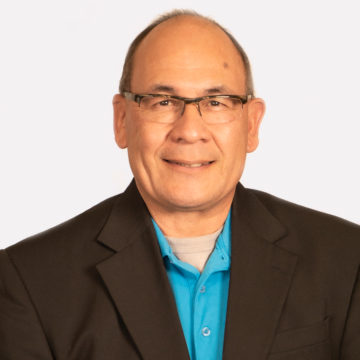
Although the filling dates have yet to be released, some mayoral hopefuls have already announced their candidacy. Current city council member Wynfred Russell announced his desire to run for the position earlier this month by releasing a statement on social media.
“I’m excited to announce my candidacy for Mayor of the City of Brooklyn Park in the special elections,” Russell said. “It’s time to bring in new blood, a new face, progressive thinking, and most importantly, forward-thinking actions.”
Russell made history last year as the first Black person elected to the city’s council. After filling, it would be his first citywide race.
Another electoral hopeful is city commissioner Hollies Winston. “I am happy to announce I will be running for Mayor of Brooklyn Park,” Winston said. “I’m running to create a Brooklyn Park that works for all of us!”
Winston currently sits on the city’s Budget Advisory Committee. This will be his second run for mayor.
If more than two candidates file, there will be a primary to narrow the field to two that will move on to the special election.
City clerk Montero is anticipating the elections with great optimism. “We always have great candidates, I think the community should be proud of that fact,” Montero said.
Lunde is leaving behind a legacy of reduced crime rates and increased diversity in Brooklyn Park. He hopes his successor can be a leader that takes into account the diverse voices of Brooklyn Park. “I just think that people need to want to be mayor of everyone, not just their groups,” he said.
Lunde will be transitioning out of his role in the middle of his third term as mayor. In the interim he is preparing the council for transition. As he anticipates his new role, he is looking to hire two full time policy aides for his office in Hennepin County.
As the Covid-19 pandemic continues, it is a unique time for public servants to be governing. City clerk Montero anticipates a smooth transition. “Mayor Lunde has been a great mayor for the city of Brooklyn Park,” he said. “I think he will leave the city in a great place”.
Mshale will continue to update readers as information regarding the special election is released.
Amidst pandemic, local nonprofit urges Minnesota not to forget HIV/AIDS fight
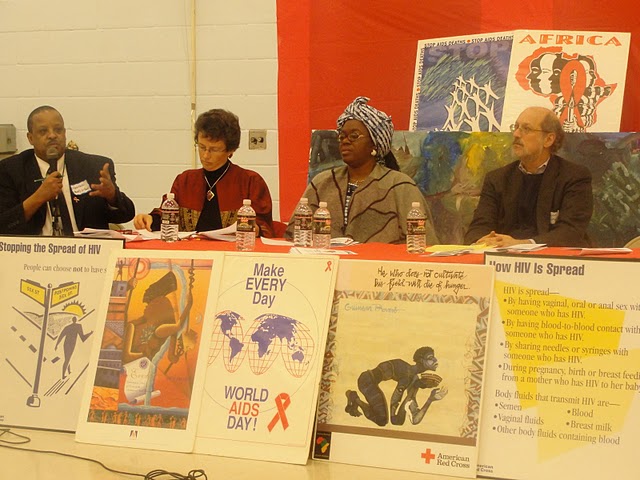
December is national HIV/AIDS awareness month. It is a time when organizations spread awareness to reduce the stigma and bring attention to the resources they have available to help persons living with HIV/AIDS. A local organization that has been aiding and educating communities affected with the disease is the Sub-Saharan African Youth and Family Services (SAYFSM).
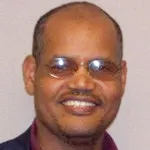
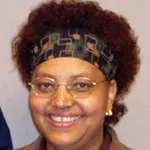
Elizabeth Namarra and Ephraim Olani founded SAYSFM as a nonprofit organization that could provide emotional support for African persons infected with HIV/AIDS in Minnesota. While working as a social worker with Lutheran Social Services, Namarra realized there were not any local organizations catering specifically to individuals from Africa.
“During those times, the community wouldn’t associate with these people,” Olani said. Removing the stigma surrounding HIV/AIDS is one of the largest obstacles in educating individuals and communities about this disease.
SAYFSM began by providing a safe space for emotional support groups. Soon after their inception, they realized the community needed more additional support. “We learned that providing a support group by itself doesn’t solve the problem,” Olani said.
The couple began outreach programs to educate the community. After supporting the work independently, the couple applied for and received a grant from Hennepin County.
Obtaining funding enabled them to expand their services to include various educational initiatives, provide medical transportation, as well as medical case management. Later, the organization was able to create a women’s sewing class to help local women infected with HIV/AIDS that were limited in employment options due to literacy barriers.
To remove any social stigma associated with partaking in the courses, the organization decided to open the sewing classes to the public at large. Anyone who is interested in acquiring skills in sewing, knitting, and fabric arts is welcome to enroll. Since starting the classes, the organization has graduated over 100 women who are now able to utilize their sewing and embroidery skills to find employment or start their own businesses.
Having partnered with Minnesota’s Department of Human Services (DHS) to help decrease the health disparities that exist in minority populations, SAYFSM connects individuals to resources available through the DHS.
In the state of Minnesota there are about 10,000 individuals infected with HIV/AIDS. For the past five years, the state of Minnesota has reported about three hundred cases of new HIV/AIDS infections. Males accounted for 72 percent of the data and communities of color account for over half of new infections.
The DHS has grants available that offset and eliminate the cost of HIV/AIDS medication.
Without these subsidies, HIV/AIDS medication costs can range up to four thousand dollars a month. The subsidies are available to anyone living with HIV/AIDS and is within 400 percent of the poverty level. The DHS has these resources available for all individuals regardless of immigration status.
Almost twenty years since founding SAYFSM Olani has found working with individuals and communities impacted with HIV/AIDS to be extremely rewarding. He has been able to witness thousands of individuals grow and overcome the challenges they once faced because of the diagnosis.
“I’m always very happy when I see people, when I see a smile on some of the people who have been once devastated with the impact of HIV and AIDS,” he said. “This is a blessing for me.”
In the midst of the COVID-19 pandemic, Olani wants to remind the public to remember the fight against HIV/AIDS. “We really need to work together with resilience to end this epidemic, while we are in a pandemic there is this epidemic too,” he said.
To learn more about SAYFSM and access the resources provided by them you can visit their website.
Get a flu vaccine!
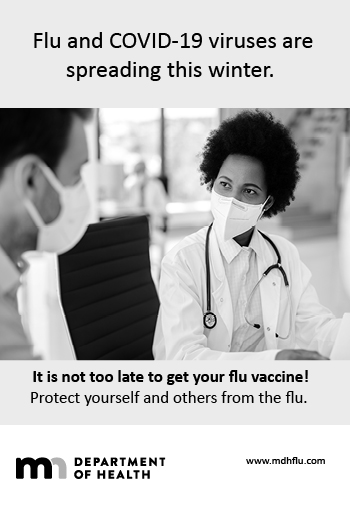
Flu and COVID-19 are spreading this winter. A flu vaccine is one of the best ways to stop the flu. It is more important than ever to do what we can to stop illnesses like flu, so we do not overwhelm our health care system. Along with getting a flu vaccine, it is important to cover your cough, stay home when sick, wash your hands often, wear a mask, and stay 6 feet from others to stop spreading disease.
Everyone 6 months of age and older should get a flu vaccine every year. It is especially important for people with long-term health conditions (chronic diseases), pregnant people, young children, and older adults. Flu vaccination has been shown to lower the risk of getting sick with flu as well as to reduce the risk of having a serious flu outcome, such as going to the hospital or being admitted to the intensive care unit.
Flu is an illness caused by a virus that attacks the nose, throat, and lungs. Flu can spread in the air when people with the virus cough or sneeze, or by someone touching a surface with the virus on it and then touching their mouth or eyes.
Symptoms of flu include fever, cough, sore throat, headache, being very tired, and body aches. These symptoms usually start suddenly and may be bad enough to stop your daily activities. Since people with long-term health conditions are more likely to get very sick from flu, this could mean having to miss many days of work, school, or other activities.
Flu season can last through the month of April. It is not too late to get your flu vaccine to help protect yourself and the people around you. Flu vaccine is available at many locations: your doctor or other health care provider’s office; county health departments; pharmacies; and community vaccination clinics. Some clinics around the state of Minnesota offer free or low-cost flu vaccine for people who do not have health insurance. It is safe to go to a clinic. Call your clinic to learn what they are doing to keep patients safe. Find a clinic near you at VaccineFinder (https://vaccinefinder.org/).
African Immigrant Leadership Conference to be held Dec. 10-11

African Economic Development Solutions (AEDS), a local non-profit organization focused on educating and empowering local African businesses will be hosting its first ever National African Immigrant Leadership Conference. The two-day virtual event will take place on Dec. 10.
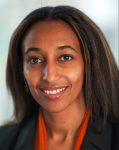
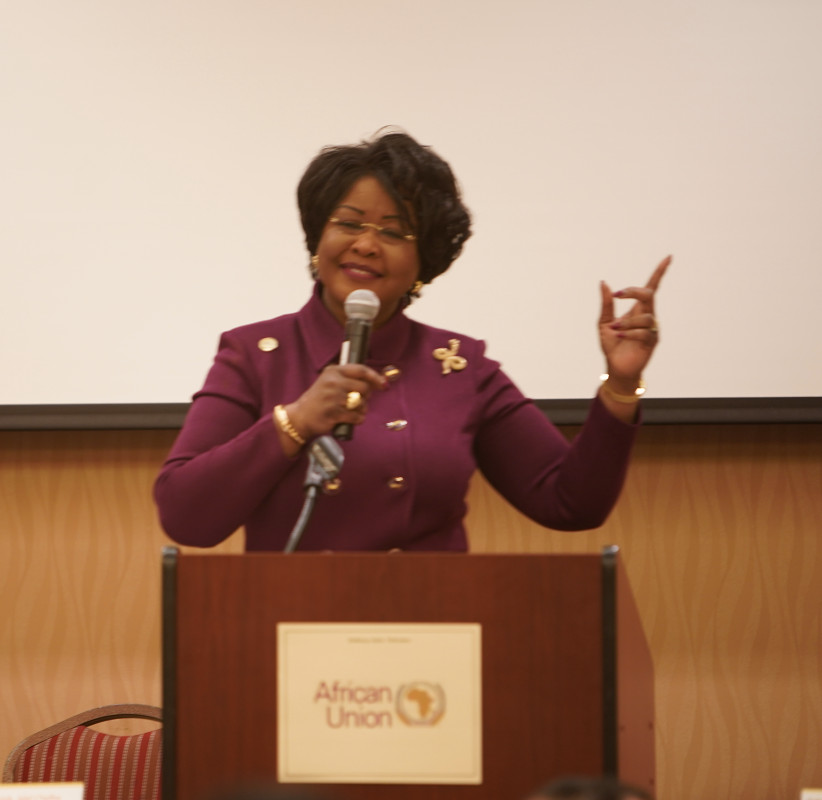
Participants can expect to have access to sessions hosted by leaders in various industries. The keynote address will be delivered by international African leaders. First will be the former African Union ambassador to the United States, Dr. Arikana Chihombori-Quao of Zimbabwe and Ethiopian entrepreneur and non-profit leader Alfa Demmellash. Demmellash was named as a Young Global Leader by the World Economic Forum in 2015.
The organization’s first international event has been in the making for a couple of years. Organizer and AEDS C.E.O. Gene Gelgelu said he wanted to have an event where African immigrant leaders can have an opportunity to share their knowledge as well as provide opportunities for individuals to learn and grow.
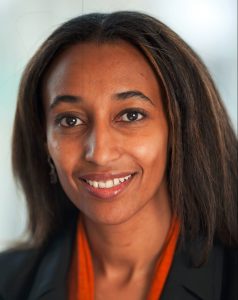
At the beginning of the year however, the COVID-19 pandemic threatened to postpone the event. “This is the most difficult time and that is the time we need each other,” Gelgelu said. Explaining his motivation to continue hosting the event virtually.
“We thought that covid would go away in a couple of weeks, but it didn’t happen, covid is here to stay,” he said.
Gelgelu is no stranger to organizing during challenging times. In 2008, right in the middle of a massive global recession is when he decided to start AEDS.
“A lot of African immigrants were unemployed or underemployed,” he said. Gelgelu saw an opportunity to create an organization that could empower and share resources with those who are struggling.
Over ten years later AEDS has grown to an organization that has served thousands of individuals by providing educational resources and micro loans to small businesses. Just this year, the organization has recorded helping over 700 people.
Africans constitute the second largest immigrant group in Minnesota. The Federal Reserve Bank of Minnesota estimated that African immigrants brought in about $2.5 billion in earnings in 2015 and paid $419 million in federal taxes and $220 million in state and local taxes.
“We have a stake in the region,” Gelgelu said. Societal contributions to the local economy is a driving factor in having Minnesota host the first national African immigrant conference.
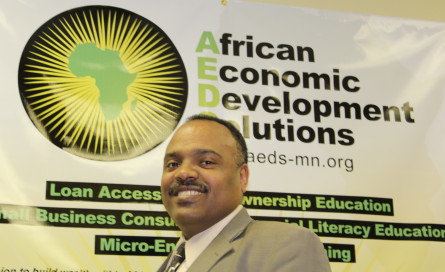
Organizers of the event want participants to expand their knowledge in business and community building. They want to share tools that will help individuals recover from the COVID-19 pandemic and the internal unrest caused from various social justice struggles.
“During the time of uncertainty, of trauma,” Gelgelu said. “We need social connection and leadership building more than ever.”
Participants can expect to partake in fourteen different sessions over the course of two days. The sessions cover a wider range of topics from women in leadership to community engagement. The event will also offer two mastermind courses that are separate from general admissions. Student and group rates are offered at a discount.
To learn more about the conference and to register, you can visit the AEDS website.