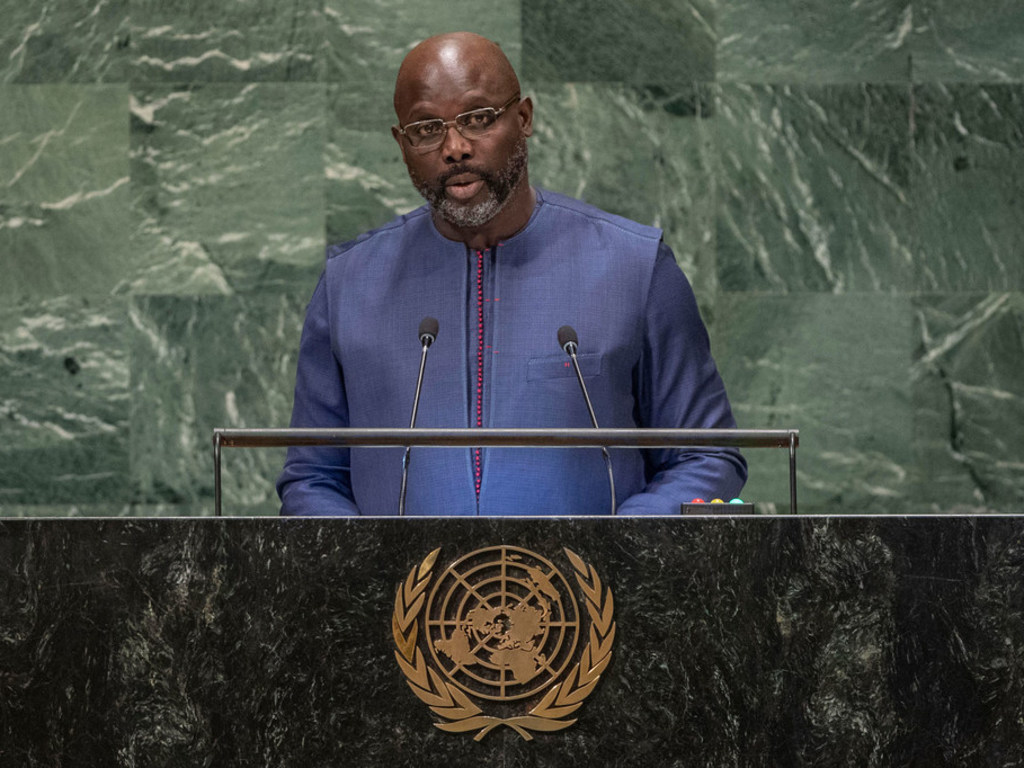
President George Manneh Weah of the Republic of Liberia addresses the seventy-third session of the United Nations General Assembly. Photo: Cia Pak/UN
President George Manneh Weah of the Republic of Liberia addresses the seventy-third session of the United Nations General Assembly. Photo: Cia Pak/UNPresident George Manneh Weah of the Republic of Liberia addresses the seventy-third session of the United Nations General Assembly. Photo: Cia Pak/UN
In his address to the general debate at the Assembly’s 73rd session that concluded last week, President George Manneh Weah of Liberia expressed appreciation for the UN peacekeeping mission in his country, UNMIL, noting that it brought stability and helped rebuild Liberia’s institutions and communities.
“We are a peacekeeping success story, and we are grateful for the support given,” he said.
President Weah, who succeeded Ellen Johnson Sirleaf as the country’s leader in January this year, said that it was the first time in 73 years that Liberians enjoyed a peaceful transfer of power from one democratically-elected Government to another.
“The challenges of leadership are enormous, but in each and every one of these challenges, I see opportunities to make things better, and to bring permanent improvements to the lives of all Liberians,” he added.
The key policy to that end, explained the Liberian President, is the Pro-Poor Agenda for Development and Prosperity, the country’s national development plan for the next five years, with a focus on youth, infrastructure and agriculture.
“Our Pro-Poor Agenda is designed to give power to the people, promote economic diversification, protect sustainable peace and encourage good governance,” he explained, urging all stakeholders to support his Government’s efforts.
Concluding his address, President Weah reaffirmed the West African country’s support to the United Nations and work to reinforce peace and security in the ECOWAS region as well as in the wider African continent.
Kenya's celebrated Moipei Quartet performs during a dinner to launch the Kenya Airways Nairobi-New York non-stop flight on Sunday, September 23, 2018. The inaugural flight from Nairobi will depart on October 28. Photo: Victor Odwori/CYPACE for Mshale
Kenya's celebrated Moipei Quartet performs during a dinner to launch the Kenya Airways Nairobi-New York non-stop flight on Sunday, September 23, 2018. The inaugural flight from Nairobi will depart on October 28. Photo: Victor Odwori/CYPACE for Mshale
NEW YORK – Kenyan president Uhuru Kenyatta attended the official launch of the much-anticipated Kenya Airways non-stop flights between Nairobi and New York during a dinner atop the Rockefeller Center during United Nations Week.
The dinner, underwritten by Boeing, was held at the Rockefeller Center on the 50th floor overlooking the New York night skyline.
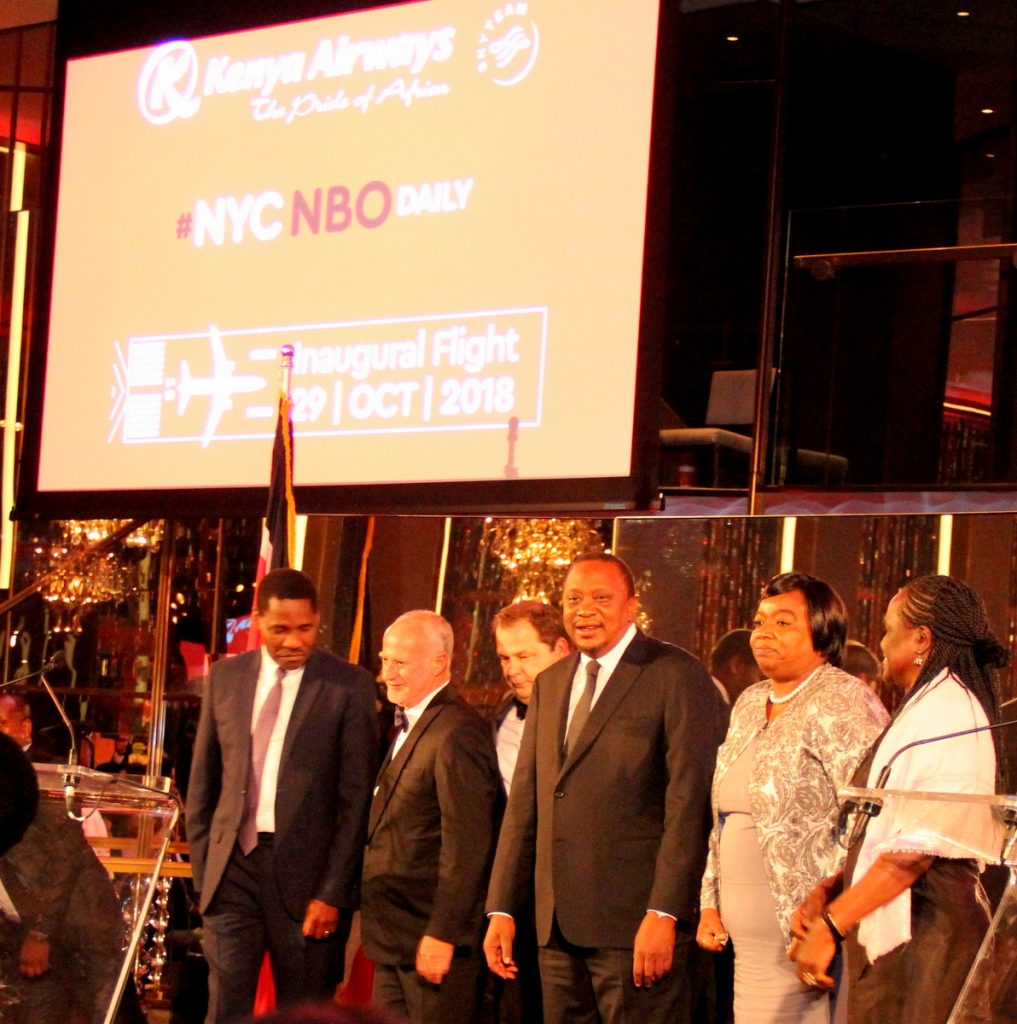
Accompanied by his foreign minister Monica Juma and Transportation principal secretary Esther Koimett, the president underscored the strengthening of ties between the US and Kenya that the new flights will bring. Juma who introduced the president to speak called the upcoming flights as “one of the president’s signature achievements,” adding that the airline is one of “our country’s key diplomatic tools.”
President Uhuru Kenyatta of Kenya speaks in New York during a dinner to launch the Kenya Airways Nairobi-New York non-stop flight on Sunday, September 23, 2018. The inaugural flight from Nairobi will depart on October 28. Photo: Victor Odwori/CYPACE for Mshale
“It has been a difficult road that we have traveled but we can now begin to celebrate the work you have done,” Kenyatta said. “This also marks an opportunity to bring our two countries closer together, and not just from a touristic point of view but two countries that share common values.”
The president pointed out that one of the engineers at Boeing in the Dreamliner project, the airline that will be used for the direct flights, is Kenyan. The flight will be of special benefit to many American countries that have made Kenya their base for serving the African market, the president said. The direct flight will make it easier for them to conduct business between the US and Africa. Foreign mister Juma said in her introductory remarks that “We shall be able to take breakfast in New York and do dinner in Nairobi.”
The president, an Amherst College Class of 1985 graduate and famous for his wit caused laughter as he recalled the tortuous connections he had to make through Europe to get to his college in Massachusetts, which included using a Greyhound bus to the last destination. “But it will be easier for our children now,” Kenyatta said.
Also speaking at the launch dinner were Kenya Airways chairman Michael Joseph and the airlines CEO Sebastian Mikosz. Kenyan media personality Julie Gichuru emceed the evening dinner while Kenya’s celebrated Moipei Quartet provided the evening’s entertainment, as guests munched on roasted Amish chicken and 1934 Rainbow Room filet mignon “Maréchale.” Also present was Kenya’s ambassador to the United States, Njeru Githae and the airline’s North America country manager, Stephen Ngamau.
President Uhuru Kenyatta of Kenya poses for picture with Kenya Airways chairman Michael Joseph, CEO Sebastian Mikosz, CS Monica Juma and PS Esther Koimett in New York during a dinner to launch the Kenya Airways Nairobi-New York non-stop flight on Sunday, September 23, 2018. The inaugural flight from Nairobi will depart on October 28. Photo: Victor Odwori/CYPACE for Mshale
As previously reported by Mshale, Kenya Airways will commence daily direct non-stop flights to New York on October 28 with the inaugural flight departing Nairobi on Sunday, October 28 at 11:25pm and arriving in New York on October 29 at 6:25am. The New York flight will depart at 12:25pm and arrive in Nairobi at 10:55am.
As of the time of this writing, the airline, the third largest in Africa, has 40 planes in its fleet serving 53 destinations in over 41 countries in Africa, Asia, Europe, Middle East and the Far East.
A new bill introduced in the United States Congress on September 20, 2018 seeks to allow F-1 visa holders to apply for a green card.
A new bill introduced in the United States Congress on September 20, 2018 seeks to allow F-1 visa holders to apply for a green card.A new bill introduced in the United States Congress on September 20, 2018 seeks to allow F-1 visa holders to apply for a green card.
A new bill in the United States Congress seeks to allow students on F-1 visas to seek permanent resident status “while a student or during Optional Practical Training.”
The bill, H.R. 6794, known as the “Immigration Innovation Act of 2018,” was introduced on Thursday by Colorado Republican Rep. Mike Coffman and Illinois Democrat Raja Krishnamoorthi, an Indian-American. The main thrust of the bill is geared towards the H-1B visa program that it seeks to reform and reducing what it calls the “green card backlog.” It seeks to give spouses of H-1B visa holders the authority to work. Those spouses usually have H4 visas which prohibits taking up employment. Beneficiaries of that exemption will include children of H-1Bs.
Most immigration analysts however believe with midterms just two months away, passage is very unlikely before then as immigration has become a toxic issue for many lawmakers. As of the time of publishing this story, no companion bill had yet been introduced in the Senate.
There is normally a per country cap of H-1B visas each year and H.R. 6794 seeks to remove those caps. The majority of H1-B visa holders are mostly tech workers from India and China.
Additionally, the bill seeks to direct fees collected from H-1B visas and conditional green cards to states to promote domestic STEM education and worker training, including financial aid and research initiatives. The states will receive 93 percent of the funds while 5 percent will go to financial aid and the remaining 2 percent to national research and development.
Here are some of the key components we were able to decipher from the proposed bill:
Increasing the application fee to $10,000 for each employee
Allowing US university-educated professionals to apply directly for conditional green cards
Banning employers from hiring H-1B holders to replace US workers
Introduction of a grace period to allow H-1B visa holders to change jobs without their losing legal status
The creation of a new conditional green card category to allow US employers to sponsor university-educated
foreign professionals through a separate path from H–1B
The bill seeks to have employers attest that no American worker has been displaced for the green card holder
Offering prevailing wage of not less than $100,000 per year
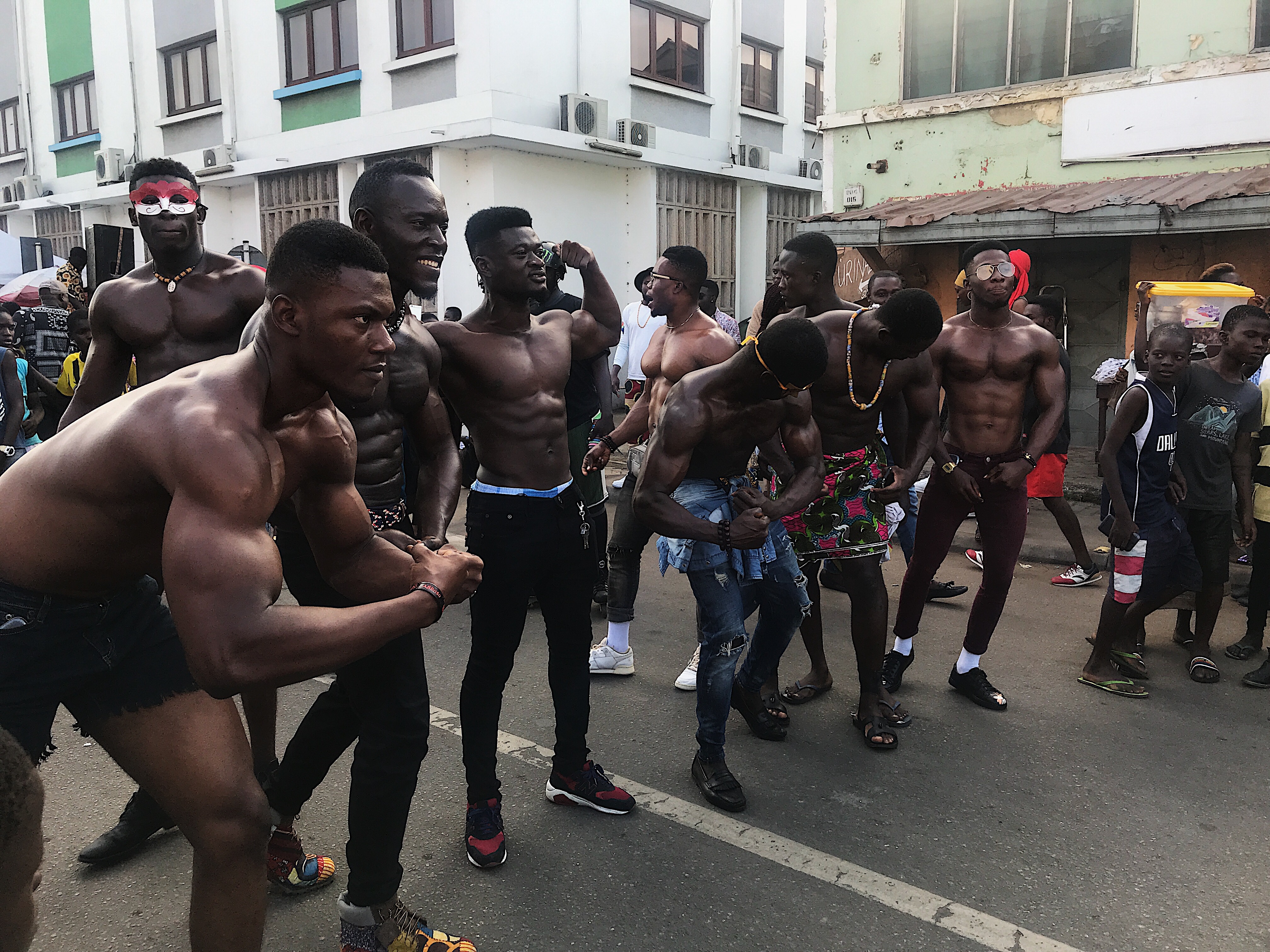
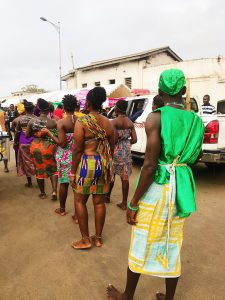
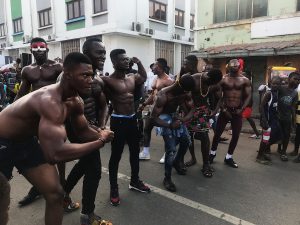
Body builders on High Street in Jamestown show off their muscles during the Chale Wote Art Festival in August 2018. Photo: Kari Mugo/Mshale
Body builders on High Street in Jamestown show off their muscles during the Chale Wote Art Festival in August 2018. Photo: Kari Mugo/Mshale
Body builders on High Street in Jamestown show off their muscles during the Chale Wote Art Festival in August 2018. Photo: Kari Mugo/Mshale
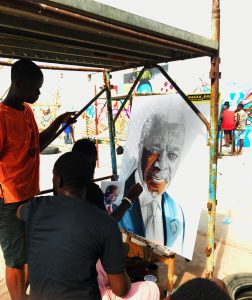
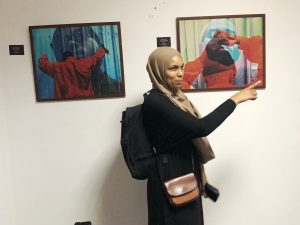
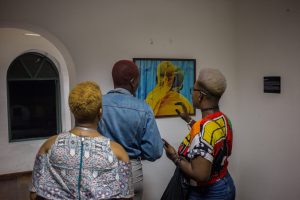
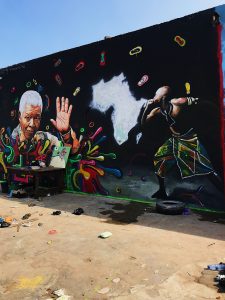
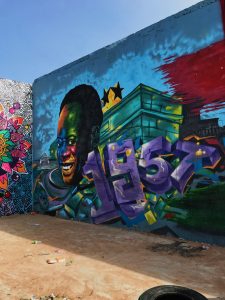
Africa is not a place that usually comes to mind when one thinks of great art festivals. Following independence, African countries mostly focused on the area of academics that had the potential to lead to white-collar jobs. Arts education was almost nonexistent, as art was seen as something to do only after all else had failed. The idea that someone would make a living from selling art was laughable in those days.
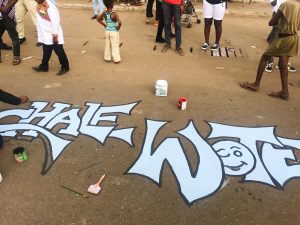
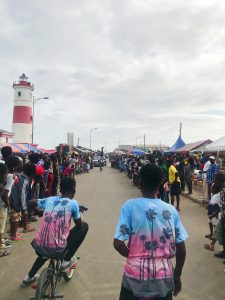
But there is evidence that Africa’s attitude towards art is changing. A recent street art festival on the continent attracted an estimated 30,000 attendees. Now in its eighth year, the Chale Wote Street Art Festival is a sensory delight featuring: films, panel discussions, live art performances, visual art, night parties, and traditional processions. This year the festival added extreme sports to its diverse list of events. Each year, Chale Wote transforms Accra’s oldest neighborhood, Jamestown, a major port during the colonial era into one large roaming party, where people go to see as much as to be seen.
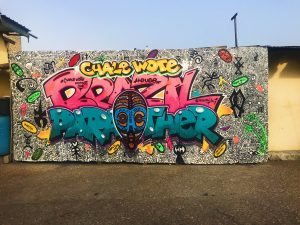
According to its founders, Chale Wote’s “vision is to cultivate a wider audience for the arts in West Africa by breaking creative boundaries and using art as a viable form to rejuvenate public spaces.” This year’s theme was “Para-other,” briefly defined in a statement as a, “transatlantic shortwave that transcends language and geography.”
With over 200 artists from various countries exhibiting their work, hundreds of vendors selling everything from kebabs to palm wine to locally designed merchandise and of course, art, there was no shortage of things to see or love about Chale Wote. The festival is also undoubtedly one of Africa’s boldest attempts at creative placemaking.
Creative placemaking is the concept of engaging arts, culture, and creativity to transform neighborhoods. It involves public-private collaborations that use art to revitalize spaces, create economic opportunities and strengthen a sense of community. Creative placemaking has become fully entrenched in the West (including in cities like St. Paul, Minn.) as a means to spur local economies and create a sense of belonging for residents. However, the story in Africa is far different where the arts remain greatly underfunded and where public art is often seen as a nuisance rather than an additive to a functioning society. Yet the massive economic potential creative placemaking has for the African continent cannot be understated as one experiences Chale Wote.
Hakeem Adams, one the festival’s organizers and a 2018 Chale Wote participating artist, estimates that attendance of the festival grew over the last year due to its popularity.
“On Friday night, the High Street in Jamestown, the main artery of the festival, was already shut down by anticipating patrons of the festival, as work for the weekend was being installed,” Adams told me.
Most of Chale Wote’s activities leading up to its main weekend took place outside of Jamestown as artists prepare their art installations to be premiered over the weekend. Come Saturday morning, a large swath of High Street was blocked closed to all vehicular traffic through the weekend. Having visited many of the Jamestown festival sites earlier in the week to familiarize myself with the venue, there was a sense of disbelief when I returned in the high heat of Saturday afternoon.
Above the steady stream of afrobeat music pulsating from speakers were throngs of people where none had been. The small colorful shacks that sat next to High Street when I visited earlier in the week were barely visible through the thick of vendors, curious children running around, and the roving performers in full costumes who stopped crowds so often that I wondered how they made it from one end of the festival street to the other. There was a buoyancy in the air. People danced. Ate. Snapped selfies. Took photos of the art and performers. Everyone was there for the same purpose: to have a good time while consuming art. A sentiment that Adams shared.
“I tell a lot of people that Chale Wote changed my life, and this is even before I exhibited work at the festival,” he said. “Over the past eight years, this event has almost single handedly altered the way in which art of whatever form is seen in Ghana. The impact is immense in shaping young impressionable minds like mine.”
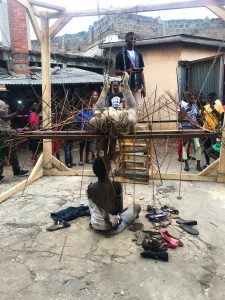
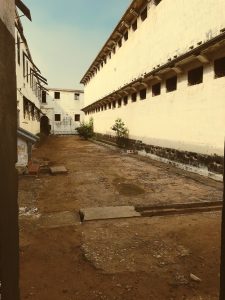
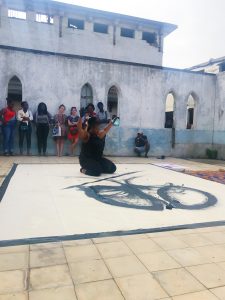
Chale Wote indigenizes creative placemaking by marrying African rituals with modern takes on visual and performance art. And this by far, is what makes it so special. Take for instance multi-disciplinary artist Va-Bene Elikem Fiatsi’s live performance, “agbaWnu”, held in the courtyard of Fort James. Covered in mud and appearing nude Fiatsi lay seemingly embedded amongst corroded metal spikes while a young girl in tattered clothes sat underneath him playing haunting melodies on a flute. All of this encased in a large metal frame that viewers could walk around. Serving as an eerie reminder of the imprisonment of African bodies performed in a Fort that had served as a prison up until 2008.
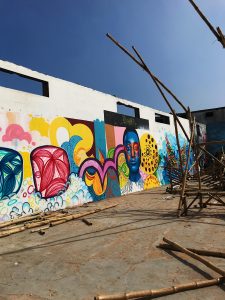
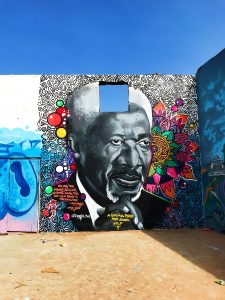
Meanwhile around the corner from Fiatsi’s performance, visual art was exhibited in prison cells with doors flung open. And further back, a traditional healer, dressed in full traditional regalia sat taking clients in one of the Fort’s open corridors. Back on High Street, young boys on bicycles did impressive tricks – spins and flips that seemed to defy gravity – while groups of friends posed for photos in front of graffiti laden walls. This is the juxtaposition of Chale Wote: a constant reminder of the past while reflecting on the present.
To begin to understand the economic impact of the festival, however, one must first understand Jamestown itself, a neighborhood whose past glory is long gone and which has quickly slipped into one of the poorest communities in Accra. So much so that as I marveled to a friend, a local, about the beach access in Jamestown, he quipped, “You know Jamestown is basically Kibera on the ocean, right? It’s a slum.”
“Yes, I know.” I wanted to utter back that I saw how Jamestown mirrored Kenya’s largest slum. But amidst the art and the revelry that fact had been lost.
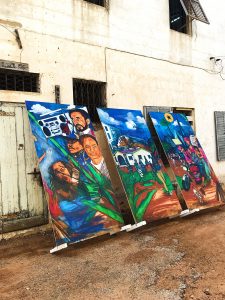
Jamestown still holds some of Accra’s treasured historical monuments which form the canvasses the artists use each year. From James Fort to Ussher Fort to Otumblohm Square, the shells and hulks of buildings hundreds of years older than the residents of Accra are given new life. And this poor residential fishing community is transformed into one of Africa’s largest art festivals for just one weekend. Many of the food and beverage vendors that line the streets are from Jamestown as are the costumed performers who earn quick money with festival goers eager to take photos with them. Likewise, many participating artists, including the festival organizers, ACCRA [dot] ALT, call Jamestown home.
That for the first time, the Ghana Ministry of Tourism, Arts and Culture offered financial support to the tune of GHc 300,000 (approx. $63,000) for the festival is proof of the potential and the impact that the festival already has. I asked Fiatsi about his experience as a first-time artist at Chale Wote.
“It was, to me, pilgrimage. Perhaps Mecca where people came to renew their souls, minds and make new covenants to humanity while experiencing all forms of art.”
One can only hope that in many ways Chale Wote will be the next Carnival or Mardi Gras. Each celebrating the unique remembrances of a way of being. This one, paying homage to the many ways of being African.
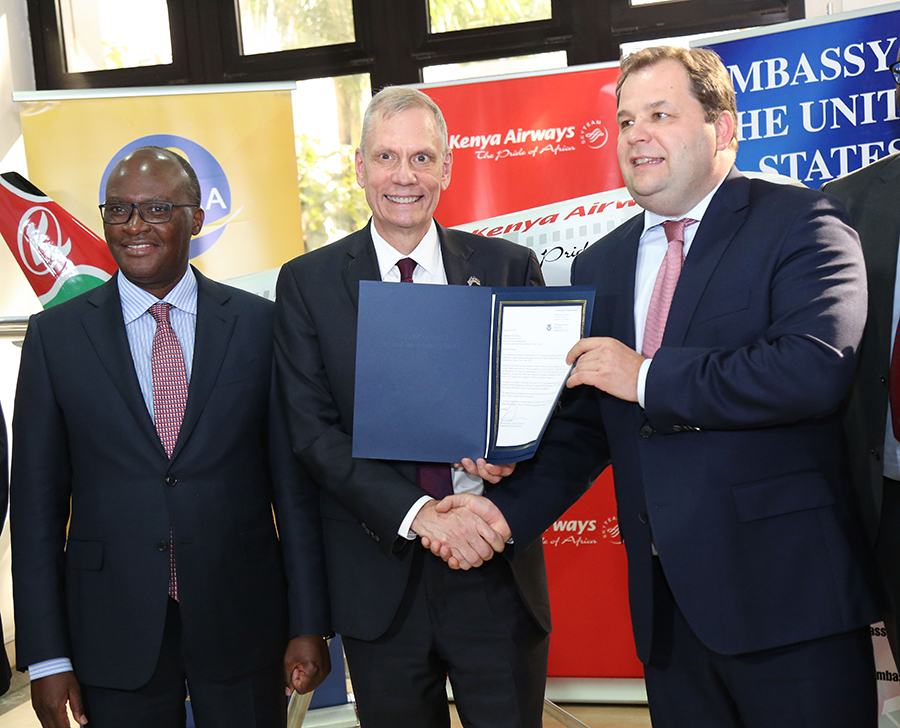
Kenya Airways Group Managing Director and CEO, Sebastian Mikosz (right) receives the Transport Security Administration's Last Point of Departure confirmation letter from US Ambassador Robert Godec at the airline's headquarters in Nairobi on Thursday, September 13, 2018 clearing the way for the airline's planned direct flights from Nairobi to the United States. On the left is Kenya's Transport Minister James Macharia. Photo: Courtesy of Kenya Airways
Kenya Airways Group Managing Director and CEO, Sebastian Mikosz (right) receives the Transport Security Administration's Last Point of Departure confirmation letter from US Ambassador Robert Godec at the airline's headquarters in Nairobi on Thursday, September 13, 2018 clearing the way for the airline's planned direct flights from Nairobi to the United States. On the left is Kenya's Transport Minister James Macharia. Photo: Courtesy of Kenya AirwaysKenya Airways Group Managing Director and CEO, Sebastian Mikosz (right) receives the Transport Security Administration’s Last Point of Departure confirmation letter from US Ambassador Robert Godec at the airline’s headquarters in Nairobi on Thursday, September 13, 2018 clearing the way for the airline’s planned direct flights from Nairobi to the United States. On the left is Kenya’s Transport Minister James Macharia. Photo: Courtesy of Kenya Airways
The much-anticipated debut of Kenya Airways’ direct flights from Nairobi to New York on October 28 got a step closer to reality when the airline received the Last Point of Departure (LPD) confirmation letter from the Transport Security Administration (TSA). Receipt of the letter confirms that Nairobi’s Jomo Kenyatta International meets TSA security standards, clearing the way for the historic flight.
US Ambassador, Robert Godec presented the TSA letter to Kenya Airways Group Managing Director and CEO, Sebastian Mikosz at a ceremony held at the airline’s headquarters in Nairobi yesterday. The letter comes barely two weeks after president trump met at the White House with Kenya’s president Uhuru Kenyatta to discuss trade and security. Only the third African president trump has hosted at the White House since taking office.
As of 2017, TSA listed 280 airports around the world as Last Points of Departure. Airports in that category typically have enhanced security screenings and advanced technology that include explosive trace detection. Before clearing an airport as a Last Point of Departure, TSA among other things assesses the intelligence and counterterrorism capabilities of the country where the airport is located.
“We are indeed delighted that JKIA has been granted the Last Point of Departure status. This will now permit us to fly daily non-stop flights to John F. Kennedy International Airport (JFK) New York as scheduled on October 28, 2018,” Mikosz said at yesterday’s ceremony that was attended by Kenya’s Transport Minister, James Macharia and the chairman of the Kenya Airports Authority (KAA) Isaac Awuondo. The authority manages Jomo Kenyatta International Airport.
Mikosz and his management team were in New York in April to brief US media on the airline’s entry into the US skies. You can read that report here.
The daily non-stop Nairobi to New York flight is expected to boost trade and tourism between the two countries. The US recently surpassed the United Kingdom as the number one source market for tourists and Kenya’s ambassador to the United States, Robinson Njeru Githae, recently told Mshale his country intends to grow the numbers.
At yesterday’s ceremony, Ambassador Godec indicated his country’s desire to make Kenya’s wishes of more tourists from the US come true when he said “I’m very pleased today to provide U.S. approval for Kenya Airways direct flights between Nairobi and New York. These flights will connect our people. They will make travel easier for tourists, business people, students and everyone. We have worked hard side by side to make this possible.”
Kora virtuoso, Sona Jobarteh, will perform at a free concert at the Cedar as part of the Cedar's Global Roots Festival. The festival runs September 15-19. Photo: Courtesy of Artist
Kora virtuoso, Sona Jobarteh, will perform at a free concert at the Cedar as part of the Cedar's Global Roots Festival. The festival runs September 15-19. Photo: Courtesy of Artist Kora virtuoso, Sona Jobarteh, will perform at a free concert at the Cedar as part of the Cedar’s Global Roots Festival. The festival runs September 15-19. Photo: Courtesy of Artist
Clear your calendar for the upcoming weekend all the way through Wednesday, September 19th. The Cedar Cultural Center teaming with the American Swedish Institute present the 10th annual Global Roots Festival. True to the Cedar’s mission, true to their history, the Festival’s line-up encompasses music from around the world.
Saturday evening, September 15th features the Cedar’s 2018-19 Artist in Residence, British-Somali musician Aar Maanta. The next day, Aar Maanta, along with Somali multimedia artist, performer and educator Ifrah Mansour, will talk at 11 am at a roundtable discussion: Traditional Art, Reimagined. There’s no charge for any of the shows including the free workshops, film screenings, and art activities.
Sunday afternoon, events move over to the American Swedish Institute where they’ll host a free screening of “Martha & Niki.” This film tells the story of two friends, a Ugandan Swede and an Ethiopia Swede, who were the first ever female hip hop dance duo to take top honors at an international street dance competition Juste Debout in Paris.
Monday evening offers the free performance of West African kora virtuoso Sona Jobarteh. Begin the evening early enough to also hear music curated by the East African Diasporic Artists Initiative on The Cedar’s plaza.
All five days are filled with music, dance, and culture from nearly every continent. This link provides greater description.
The Cedar Cultural Center: 416 Cedar Avenue S, Minneapolis, MN, 55454
The American Swedish Institute: 2600 Park Avenue Minneapolis, MN, 55407
Mshale is getting ready to issue its endorsements for the 2018 election. Send your questions to [email protected] for possible inclusion in the questions we will be asking candidates.
Mshale is getting ready to issue its endorsements for the 2018 election. Send your questions to [email protected] for possible inclusion in the questions we will be asking candidates.Mshale is getting ready to issue its endorsements for the 2018 election. Send your questions to [email protected] for possible inclusion in the questions we will be asking candidates.
We are getting ready to send questionnaires to political candidates in Minnesota jurisdictions that the Mshale print edition newspaper is distributed. The questionnaires will guide our endorsements which will be published in the October edition of Mshale.
We have our questions ready but would like to open it up to our readers to chip in with their own questions for possible inclusion.
Send your questions by Wednesday, September 12 to: [email protected]
We will be endorsing candidates in the following areas with a good concentration of African immigrants and have a stake in who gets elected:
1.) US Congressional Districts (Minnesota only): Districts 3, 4 and 5.
2.) Minnesota House of Representatives: District 36B (Brooklyn Park), District 40B (Brooklyn Center), All Minneapolis and St. Paul House Districts including 60B and 62A.
3.) Municipal Races: Brooklyn Park and Brooklyn Center.
In areas where we have African immigrants running for office, we will provide coverage of their races but might not necessarily give an endorsement if the demographics of the district or area does not boast of a healthy African immigrant population.
African Students Association perform during African Nite at the University of Minnesota. Mshale File Photo
African Students Association perform during African Nite at the University of Minnesota. Mshale File PhotoAfrican Students Association perform during African Nite at the University of Minnesota. Mshale File Photo
As college students head back to school, campus administrators are anxiously making their final count of international students enrolled for the fall semester.
Visa numbers and college officials suggest that fewer international students have enrolled at U.S. colleges and universities over the past few years. And with the pool of college-age students shrinking due to demographic trends and state support for higher education sputtering, public colleges and universities that lose overseas students can find themselves in financial trouble.
“This has coincided with a decline in domestic student enrollment and has led to real financial pain,” said Thomas Harnisch, director of state relations and policy analysis for the American Association of State Colleges and Universities, which advocates for public institutions.
Changes in the international higher education market and President Donald Trump’s nativist policies could be leading students from China, India and other countries to enroll elsewhere, say college administrators and experts who track student data.
Not every college has seen a decrease in enrollments recently, and some have seen bigger swings than others. At the University of Central Missouri, for instance, an enrollment boom driven mostly by graduate students from India peaked at over 2,700 international students in 2015, then dropped to just 900 students last year.
Between 650 and 700 students will probably enroll this year, said Mike Godard, interim provost and chief learning officer at the university. Most of the international students weren’t paying more than in-state students, but losing them still hurt the university’s bottom line.
“When you have a reduction of 2,000 international students, there’s a very significant impact on the institution overall,” he said. The university had to lay off staff over the past fiscal year to account for the $14 million drop in revenue, he said.
Overall international student enrollment increased by more than two-thirds in the United States over the past decade, hitting a high of more than 900,000 students during the 2016-17 academic year, according to a survey of college officials conducted by the Institute of International Education, a nonprofit based in New York City. But the number of newly enrolled students that same year declined by 3 percent. Preliminary figures for 2017-18 suggest a further decline of almost 7 percent.
Visa numbers tell a similar story. According to the State Department, the number of student visas issued dropped by 17 percent between 2016 and 2017, to 393,573. That’s nearly 40 percent fewer than in 2015, when visa numbers peaked.
The slowdown has been most pronounced in the Midwest and Texas, said Rajika Bhandari, a senior adviser at the Institute of International Education who leads its survey. That’s possibly because many of the institutions in those regions aren’t well-known overseas, or — in Texas’ case — because students are nervous about a state law allowing guns on campus.
Bhandari said there are three major factors driving the decline. First, the Saudi and Brazilian governments have scaled back scholarship programs that allowed tens of thousands of their citizens to go to college overseas.
Second, other countries — such as Australia, Canada and Germany — have stepped up their efforts to attract international students and make it easy for them to remain in the country and work, which increases the competition American colleges and universities face.
And third, restrictions to international student visa programs and Trump’s vows to reduce immigration overall have made students wary of coming to the United States. “Students, when planning their studies in a country, are thinking about a longer-term trajectory,” Bhandari said.
In January 2018, the Trump administration tightened the rules for the Optional Practical Training program, which allows international students to work in the United States for a few years after graduation. In 2017, over 276,000 skilled immigrants worked under OPT, more than were employed thanks to the better-known H-1B program, according to the Pew Research Center. (The Pew Charitable Trusts funds both the Pew Research Center and Stateline.)
The rules now say students with science, technology, engineering or mathematics (STEM) degrees must be employees, not temporary workers, to qualify for three-year work authorization.
In April 2017, Trump signed an executive order that said the government would ensure H-1B employment visas, which are designated for highly skilled workers, go to the most highly skilled, highly paid candidates. The administration also has considered ending a visa program for the spouses of skilled immigrants.
And earlier this year, the Department of Homeland Security announced a crackdown on foreign students and exchange visitors who illegally overstay their visas. The department estimates that about 6 percent of people on student visas and 4 percent of people on exchange visas in fiscal 2016 will stay longer than they should.
The University of Central Missouri’s Godard said his team has heard that Indian students are finding it harder to get student visas. Students are also worried about their ability to get a work permit or visa after graduation, he said. “We know those are becoming a bit more restrictive from what they’ve been in the past, even for STEM-related fields.”
Dennis Dunham, executive director of global affairs at the University of Central Oklahoma, said that when he travels internationally to market the university, he often has to address wild rumors about immigration — for instance, that H-1B visa holders are getting kicked out of the country.
He asked Oklahoma’s congressional delegation to provide him with a letter confirming that international students are still welcome in the United States, and he now shares it with prospective students. “That’s a hard thing to say when they’re reading so much of the opposite stuff in the newspaper,” he said.
Some college administrators have other theories for why fewer international students, or fewer students from certain countries, might be applying and enrolling — such as that the guidance back home is changing.
While the University of Illinois Urbana-Champaign saw a decline in the number of applications from China this year, the applications it received were from better-qualified students, said Kevin Pitts, vice provost for undergraduate education.
In China, it’s common for students to work with advisers on their college applications, Pitts said. “I’m wondering if those advisers might be doing a better job helping students identify colleges they might be admitted to.”
The Impact on Campus
In more than half the states, tuition has become more important to public colleges’ budgets than state appropriations. Although overall state funding for higher education hasn’t returned to pre-recession levels, tuition increases have allowed public colleges to rake in about 6 percent more money per student than in 2008, according to the State Higher Education Executive Officers Association.
Many flagship public research institutions have become dependent on out-of-state and international students, who typically pay higher tuition than in-state students, said David Tandberg, vice president of policy research and strategic initiatives at the Boulder, Colorado-based association.
A 2016 working paper by researchers at the University of Michigan, the Urban Institute, the University of California-San Diego and the University of Virginia estimated that a 10 percent reduction in state funding is associated with a 12 percent bump in enrollment of international students at public research universities, suggesting that colleges are seeking out foreign students to fill the budget gap.
Meanwhile, fewer kids are graduating from high school in mid-Atlantic, New England and Rust Belt states, and in some rural regions, the entire population is shrinking. “If it’s harder to recruit and enroll international students — that’s very, very problematic, within that context,” Tandberg said.
Flagship universities, with their strong brand names and robust finances, are better positioned to deal with a decline in overseas applications.
The University of Illinois Urbana-Champaign’s Pitts said the expected decline in international students — the university is still crunching final enrollment numbers — won’t really hurt the university’s bottom line, but it might affect the scholarships it can offer. International students pay up to $42,796 in tuition a year, some $5,000 higher than U.S. out-of-state students pay. The surcharge goes to fund financial aid for Illinois residents, Pitts said.
Pitts stressed that universities enroll international students to bring global perspectives to campus and enhance everyone’s education. “It’s not all about money,” he said. About 1 in 7 University of Illinois undergraduates are international students, out of a student body of roughly 39,000.
International students sent about 29 percent fewer applications to Michigan State University for admission this fall than they did four years ago. But so many U.S. students have applied and accepted offers of admission that overall, undergraduate enrollment is up, said Patty Croom, who runs international admissions at the university. Almost 14 percent of students at the university are from outside the United States.
Regional colleges and universities may be harder hit financially by an enrollment decline, because they don’t have other sources of revenue — such as multibillion-dollar endowments — to cushion the blow.
In the University of Central Missouri’s case, the plunge to a few hundred students was concentrated in graduate computer science and industrial management programs that charged the same price per credit hour — $398.50 for graduate computer science, for example — to all students, no matter whether they were in-state, out-of-state or from abroad.
“Any cohort of students, if we lost 2,000 of them, would be very impactful,” Godard said.
There’s not a single explanation for the rapid rise and fall of international enrollment at the university, Godard said. The rise seemed propelled by low prices and social media — just people talking about the university online.
Since then, other universities have adopted the same pricing structure, and the Indian economy has slowed down, he said. Then there’s the visa situation and general worry among students that they’re not welcome in the United States.
The Institute of International Education’s Bhandari said changing the rules governing visas and work permits is what’s most likely to hurt international enrollment over the long haul. Whether students feel welcome changes over time, she said — for instance, the United States saw a temporary decline in international enrollments after the 9/11 attacks.
“The desire to come to the U.S. and acquire that ‘Made in America’ credential rebounds pretty quickly,” she said.
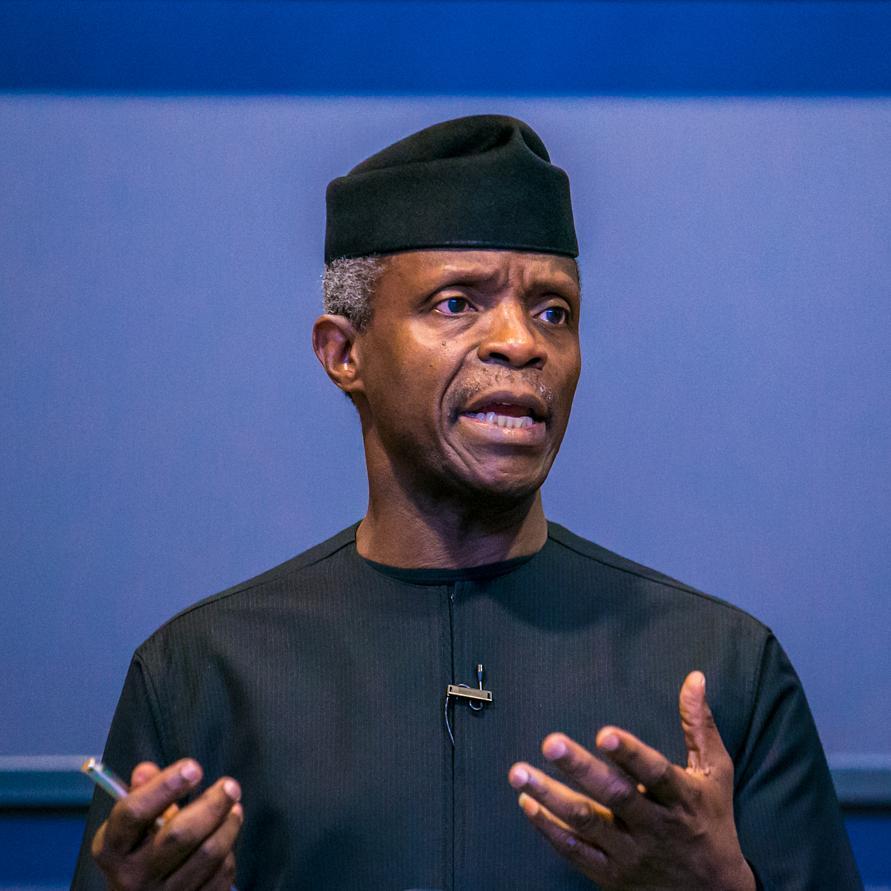
Vice-president Yemi Osinbajo of Nigeria delivering the keynote address at the Africa Rising Conference at Harvard University on January 16, 2018. The vice-president will hold a town hall meeting with Nigerians in Minnesota on Sunday, August 26, 2018 at the Airport Marriott. Photo: Courtesy of Harvard Business School
Vice-president Yemi Osinbajo of Nigeria delivering the keynote address at the Africa Rising Conference at Harvard University on January 16, 2018. The vice-president will hold a town hall meeting with Nigerians in Minnesota on Sunday, August 26, 2018 at the Airport Marriott. Photo: Courtesy of Harvard Business SchoolVice-president Yemi Osinbajo of Nigeria delivering the keynote address at the Africa Rising Conference at Harvard University on January 16, 2018. The vice-president will hold a town hall meeting with Nigerians in Minnesota on Sunday, August 26, 2018 at the Airport Marriott. Photo: Courtesy of Harvard Business School
The vice-president of Nigeria, Yemi Osinbajo, is scheduled to hold a town hall style meeting with members of the Nigerian community in Minnesota on Sunday, August 26 at the Minneapolis Airport Marriott located at 2020 American Blvd E, Bloomington, MN 55425.
Local leaders have described the meeting with the diaspora as “non-partisan, non-political and non-religious.” The vice-president has however won widespread praise in Nigeria for his no-nonsense approach recently while that country’s president, Muhammadu Buhari, was on a 10-day vacation prompting Nigerians on twitter to ask for the president to extend his vacation while his deputy cleaned house.
The town hall starts at 5 p.m. until 7 p.m. The town hall will be preceded by a meeting between the vice-president and leaders of all the Nigerian ethnic groups resident in Minnesota, according to Dr. Richard Oni of Minnesota Institute for Nigerian Development (MIND).
“Nigerians leaders (in Minnesota) are ready with catalogue of questions and suggestions for the Vice President of the Federation,” Oni said.
The public can sign up for the town hall online at this link.
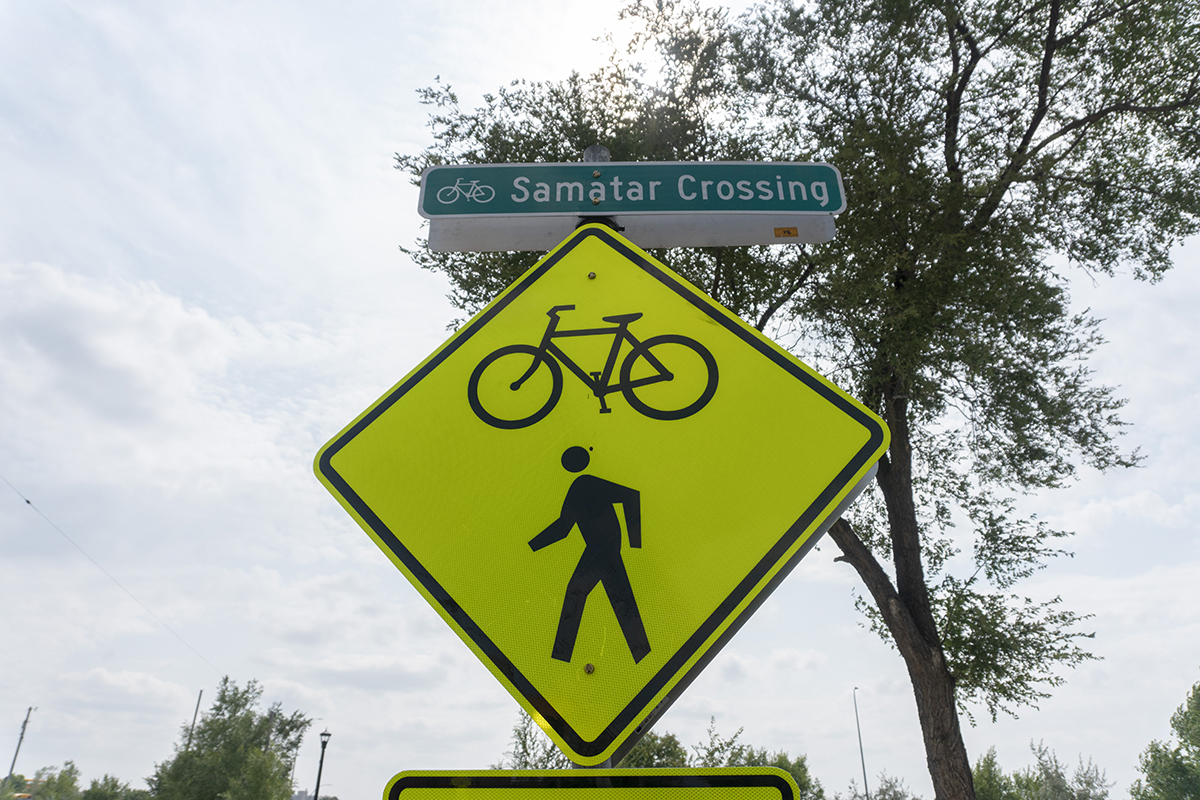
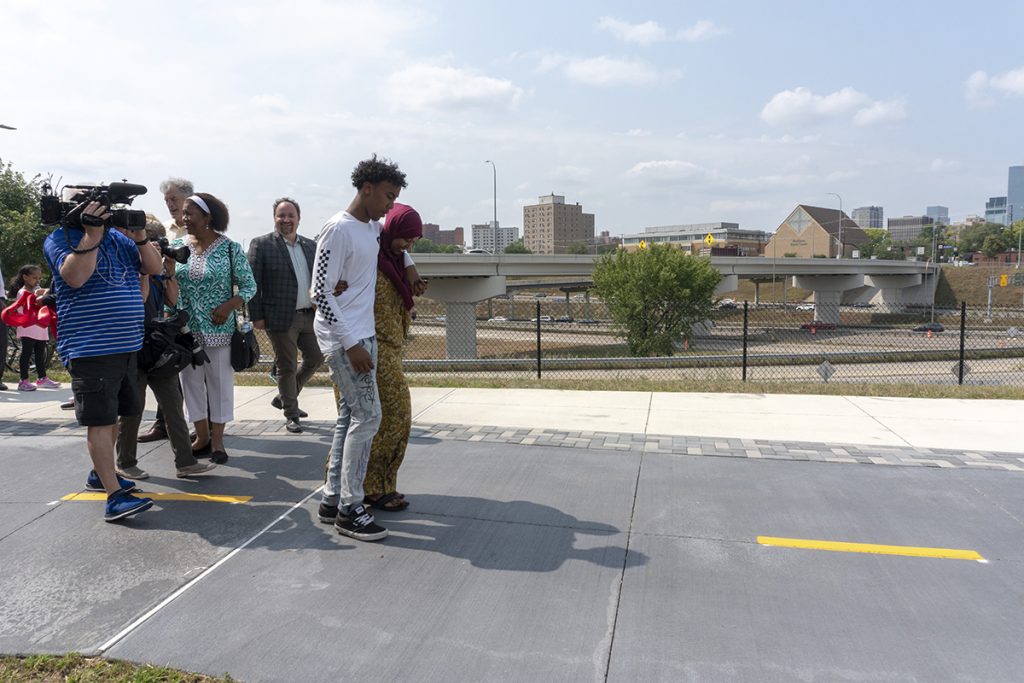
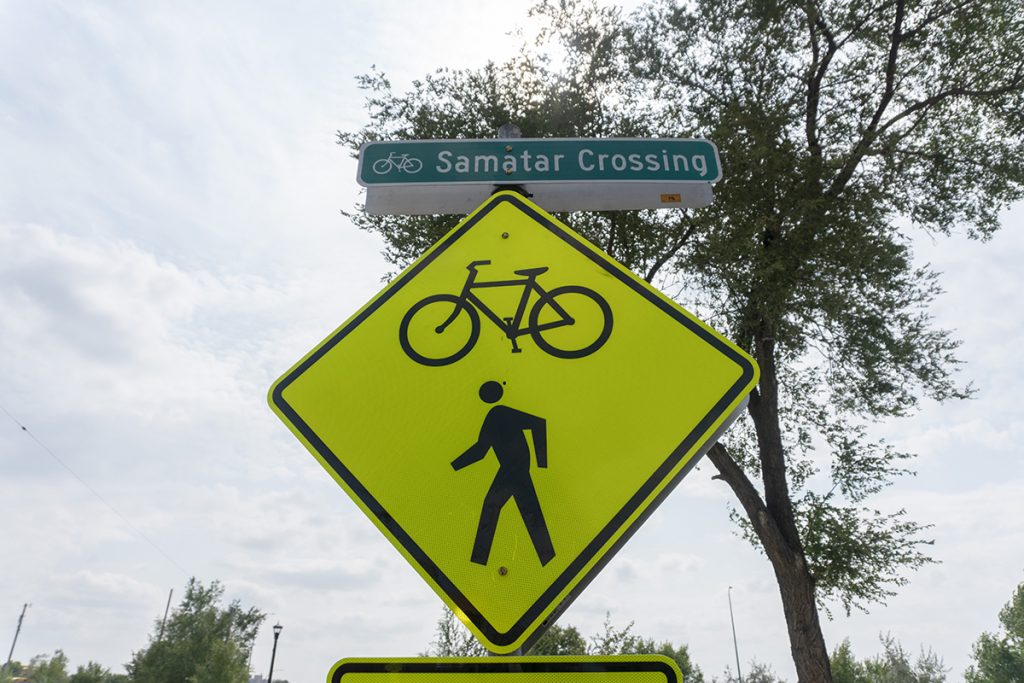
Samatar Crossing, a new pedestrian and bike pathway, named in honor of the late Hussein Samatar was dedicated by the City of Minneapolis on Thursday, August 23, 2018. Photo: Bethel Gessesse/Mshale
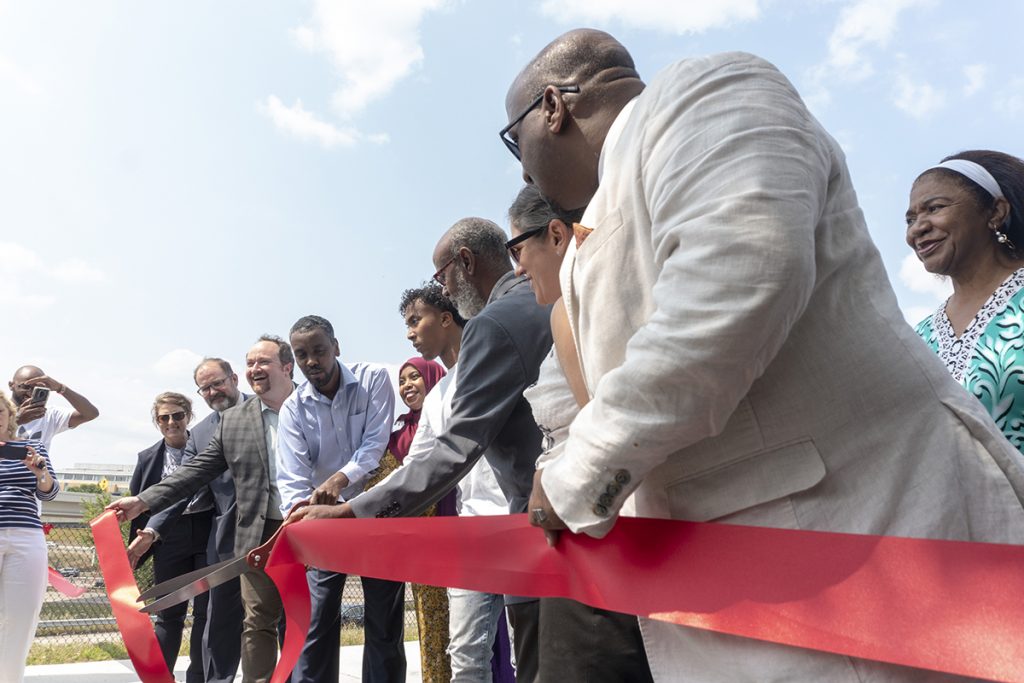
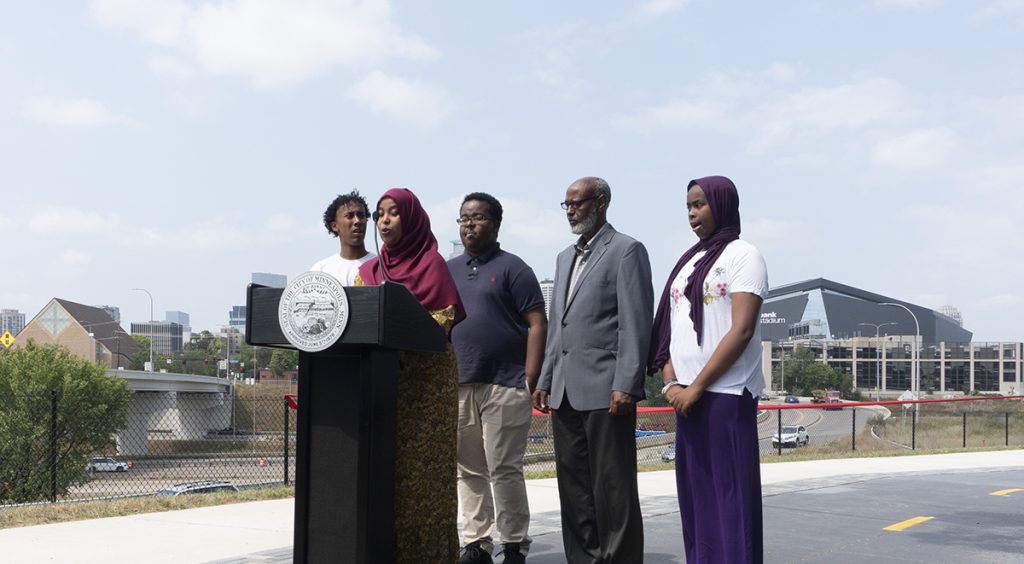
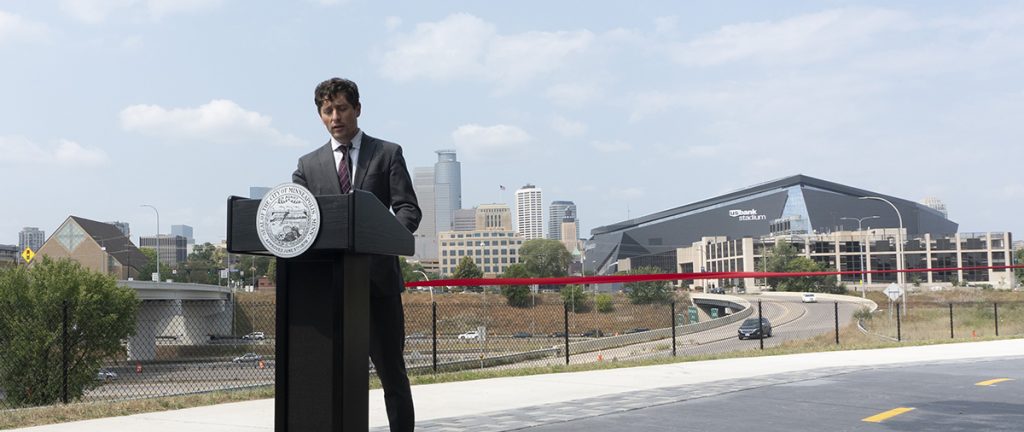
Samatar Crossing, a new pedestrian and bike pathway, named in honor of the late Hussein Samatar was dedicated by the City of Minneapolis on Thursday, August 23, 2018. Photo: Bethel Gessesse/MshaleUbah Jama and her son Harun walk along Samatar Crossing after its dedication by the City of Minneapolis on Thursday, August 23, 2018. The pedestrian and bike pathway is named after her late husband Hussein Samatar. Photo: Bethel Gessesse/MshaleCouncil Member Abdi Warsame and Ubah Jama, the widow of the late Hussein Samatar, are assisted by others in cutting the ribbon to dedicate Samatar Crossing on Thursday, August 23, 2018. Photo: Bethel Gessesse/MshaleUbah Jama, widow of Hussein Samatar, flanked by her children and speaks during the dedication of Samatar Crossing named in honor of her husband on Thursday, August 23, 2018 in Minneapolis. Photo: Bethel GessesseMayor Jacob Frey of Minneapolis speaks during the dedication of Samatar Crossing on Thursday, August 23, 2018. The pathway is named in honor of Hussein Samatar, founder of the African Development Center and a former Minneapolis School Board member and first Somali-American elected to public office in the United States. Photo: Bethel GessesseSamatar Crossing, a new pedestrian and bike pathway, named in honor of the late Hussein Samatar was dedicated by the City of Minneapolis on Thursday, August 23, 2018. Photo: Bethel Gessesse/Mshale
Minneapolis welcomed a new connection between the Cedar-Riverside neighborhood and downtown Minneapolis, a pathway called Samatar Crossing, with a ribbon cutting celebration on site. The pathway starts at the Cedar-Riverside light rail station and connects directly to Minnesota’s largest public works project to date, US Bank stadium.
About 100 members of the community, which included elected county and city officials, gathered to witness the new pathway that will allow for walking and biking with ease between Cedar-Riverside and downtown.
Samatar Crossing is named after Hussein Samatar, founder of the African Development Center and a former Minneapolis School Board member and the first Somali-American elected to public office in the United States, before he died in 2013.
Samatar’s wife, Ubah Jama, spoke of her late husband’s love for America and dedication to his adopted country.
“Hussein always used to say we are Somali-Americans and we are here to stay. His positive energy, dedication, and sense of helping others was remarkable. Hussein loved this community and was passionate about uplifting and connecting communities,” Jama said. “Now seniors and children will be able to walk and bike in a secure beautiful path that is safe. I want to thank the city of Minneapolis, especially former Mayor Rybak and Councilman Warsame and Mayor Frey for making this legacy a reality.”
Nasibu Sareva, the executive director who succeeded Samatar at the African Development Center, echoed Jama’s sentiments. “Hussein was all about unity and this is a fitting tribute to him and an example to all our Africans that all is possible as we keep his (Samatar’s) legacy alive,” said Sareva.
Councilman Abdi Warsame, who presided over the ribbon-cutting ceremony, said Samatar was a mentor and inspiration to many including him.
“This (Samatar Crossing) is a testament to who Hussein was. He worked all his life to connect people and to bridge communities and the fact that we are connecting two communities, Cedar-Riverside and downtown, is a testament to his work,” Warsame said.
Warsame added that Samatar was an important figure in the community and “the vanguard of the Somali political movement that has now ushered in Ilhan Omar, Siad Ali, Hodan Hassan and others. The African community in Minnesota is integral to its success and will drive it into the future.”
The unveiled Samatar Crossing is the former Fifth Street ramp into downtown Minneapolis that the Minneapolis Public Works Department repurposed into a pathway for pedestrian and bicycle only traffic. Mayor Jacob Frey admitted to the challenge in achieving the milestone that is Samatar Crossing in his remarks.
“This project wasn’t easy, this is a tough one, to transform something that was previously an off-ramp for motorized vehicles and turning it into an urban paradise just for pedestrians, it ain’t easy,” said Frey and added that Samatar was known to take on tough projects and to fight for his community and a challenging project like the repurposing was a fitting tribute to his legacy. He praised the Public Works Department for the accomplishment. That department’s director, Robin Hutcheson, said city staff did the entire project and that no outside contractors were used.
“This is saying to our Somali population, to our new American population that yes you are part of this city, you matter and we want you here,” Mayor Frey said.
There are plans for additional landscaping and public art along the pathway and the city has issued a call for artists. It is seeking up to three artists to collaborate on the design of an “iconic public artwork” for the crossing.
Third Ward Councilman Steve Fletcher also spoke and recalled how Samatar was highly respected by both his Somali community and those outside. “I was very lucky to work with Hussein Samatar when he was on the school board, what I loved about working with him was that he was so important to the Somali community, but also to everyone else, and when we came to him with issues that had no direct impact on his community like North High School, but were citywide issues he would listen,” said Fletcher.
After the ribbon-cutting, Ubah Jama and some of the elected officials made a symbolic walk along Samatar Crossing.
African Students Association at the University of Minnesota at a past African Nite. New immigration rules on F-1 students effective August 9 2018 will have far reaching effects. Photo: Mshale File
African Students Association at the University of Minnesota at a past African Nite. New immigration rules on F-1 students effective August 9 2018 will have far reaching effects. Photo: Mshale FileAfrican Students Association at the University of Minnesota during “African Nite.” New immigration rules on F-1 students effective August 9 2018 will have far reaching effects. Photo: Mshale File
New immigration rules effective August 9 could have serious consequences for students on F-1 visas, the most common visa among international students.
The United States Citizenship and Immigration services last week sent out a final memorandum ironing out a rule change aimed at reducing visa overstays.
Until this new rule change came into effect, students who dropped out of school, failed to maintain the minimum number of hours, or otherwise fell out of good standing – “unlawful presence” status did not kick in until after the government formally notified them. That changes with this new rule.
International students will start accruing days of ‘unlawful presence’ immediately after they no longer meet the terms of their student visa, according to this new U.S. Citizenship and Immigration Services policy.
It is not uncommon for students on F-1 to take a semester off because maybe they cannot afford a class or a particular class is not being offered and still stay in the country while they wait to resume classes. That will no longer be possible with the new rules as once a student skips, “unlawful presence” would already have accumulated and they will need to leave the country.
According to the new rules, a student accumulating more than six months of “unlawful presence” could be barred from entering the United States from three to ten years.
As of the July 2018 reporting data from the Department of Homeland Security, there were around 51,000 active students on international student visas (F-1, M or J) from Africa. Asia has the largest number of students with over 860,000 with Europe a distant second at 78,000 students.