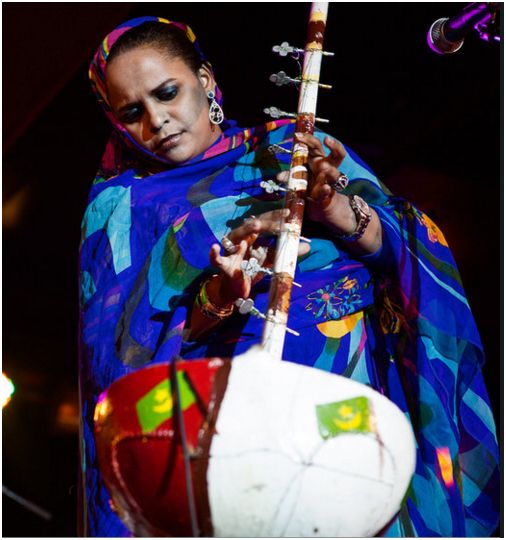
Noura Mint Seymali when she performed at National Public Radio's (NPR) globalFest two years ago. She will be performing at the Cedar on Friday, February 19, 2016. Photo: Courtesy NPR
Noura Mint Seymali when she performed at National Public Radio's (NPR) globalFest two years ago. She will be performing at the Cedar on Friday, February 19, 2016. Photo: Courtesy NPRNoura Mint Seymali when she performed at National Public Radio’s (NPR) globalFest two years ago. Photo: Courtesy NPR
The Twin Cities has finally gotten lucky and will play host to the heir of a Mauritanian Griot lineage stretching back untold generations.
The Cedar will host Noura Mint Seymali on Friday, February 19 for one show.
She is the daughter of Seymali Ould Mouhamed Val, a revered scholar-musician credited as the first person to apply written notation to folk music in Mauritania. Mint Seymali has taken the musical world by storm with her cosmopolitan mix of funk bass, drums, and psych guitar played by her husband and fellow griot, Jeich Ould Chighaly.
She began her career at age 13 as a supporting vocalist with her step-mother, the legendary Dimi Mint Abba.
After two albums, Tarabe (2006) & El Howl (2010), released locally in Mauritania and years of experimentation adapting Moorish music to various pop formations, Noura Mint Seymali’s current band is a concise return to the roots, a light formation led by the “azawan,” a word in Hassaniya that refers to the collective ensemble of traditional instruments; the ardine, tidinit, guitar.
The Cedar concert is in partnership with The Walker Art Center and Mshale as the media sponsor.
Noura Mint Seymali Ticket Info:
Friday, February 19, 2016 – 8:00pm
Doors Open: 7:00pm
Advance: $25.00
Day of show: $25.00
Standing show; all ages
$22 for Walker members (purchase through the Walker)
How to buy:
Phone: 612-338-2674 ext 0 between 12 noon and 4pm M-F ($2 fee per ticket) or from the Walker (612-375-7600) ($2.50 fee per ticket)
In person: From a Cedar volunteer in the front lobby during events (no fee; cash, check, credit card), Depth of Field (no fee; cash or check only), or Electric Fetus (approximately $2 fee)
Online: Ticketfly (typically $2–$3 fee/ticket) until 5pm day of show
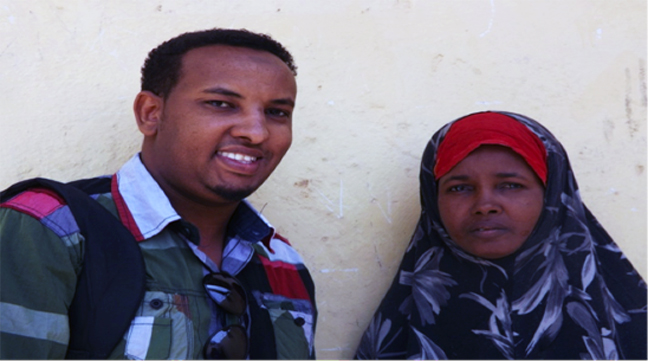
Abdiqani Abdullahi Askar, a psychiatric mental health practitioner and Medical Director of the Somali Mental Health Foundation with a patient, Khadra Dirie, a Somali national in Djibouti that the foundation successfully treated. Photo: Courtesy of Somali Mental Health Foundation
Abdiqani Abdullahi Askar, a psychiatric mental health practitioner and Medical Director of the Somali Mental Health Foundation with a patient, Khadra Dirie, a Somali national in Djibouti that the foundation successfully treated. Photo: Courtesy of Somali Mental Health FoundationAbdiqani Abdullahi Askar, a psychiatric mental health practitioner and Medical Director of the Somali Mental Health Foundation with a patient, Khadra Dirie, a Somali national in Djibouti that the foundation successfully treated. Photo: Courtesy of Somali Mental Health Foundation
With discussions about mental health spreading across the African immigrant community and especially among the refugee communities, the Somali Mental Health Foundation and the Somali Mental Health Professionals Network have decided to come together to address the issue.
“Unlinking the Chains: Making Global Mental Health a Priority” will be hosted at the University of Minnesota on July 16. The conference will give mental health practitioners, researchers, graduate students, policy makers, and consumers a venue to expand the dialogue and get at solutions through collaboration of the stakeholders. The conference will be the first of its kind according to Dr. Fartun Mohamud, one of the organizers.
Speakers will include leading mental health experts on community based and culturally responsive treatment options.
The current “rebirth” in Somalia is happening with the exclusion of people with mental illness as cultural misconceptions are preventing such people from participating in the economic redevelopment taking place in Somalia.
Community organizations or businesses wishing to exhibit at the conference can contact Dr. Mohamud at [email protected].
The conference is organized in partnership with the University Of Minnesota, School of Social Work.
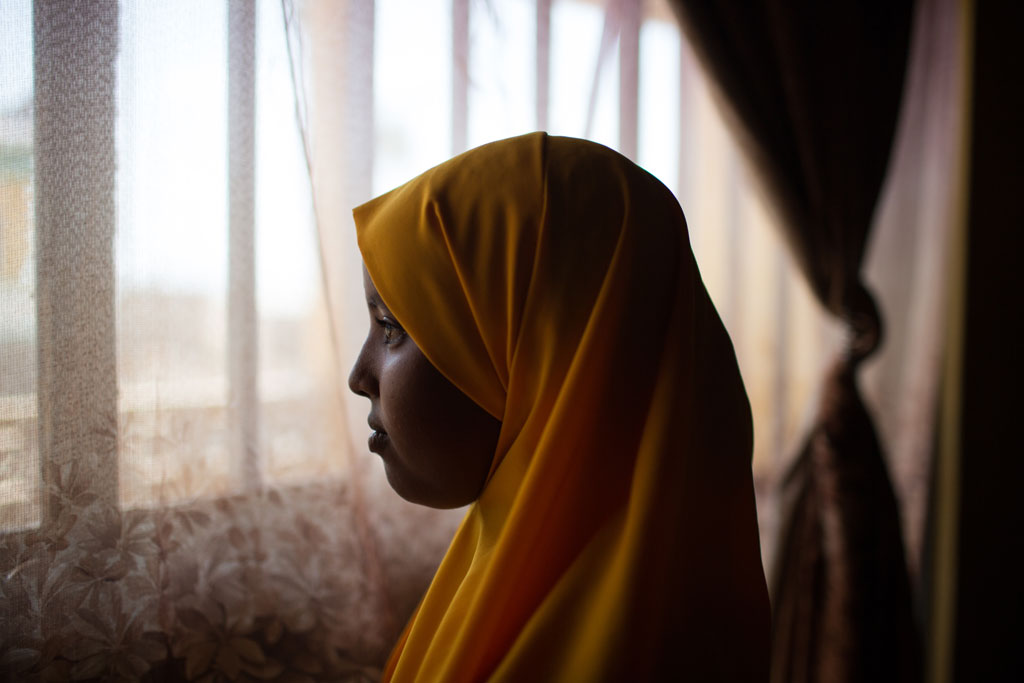
In Ethiopia, Bilen Yusuf, 12, poses for a photograph in her home in Gursum Woreda, Bombass district (Kebele), Somali Region. Bilen requested a Female Genital Mutilation (FGM) type known as Sunna-circumcision, last year which led to her mother being sued by the Woreda Bureau of Women, Children and Youth Affairs (BOWCYA) for arranging the act without notifying the office. Though FGM is illegal by law, Sunna-circumcision still takes place in the Somali region because it is considered as a religious requirement by many. Photo: United Nations
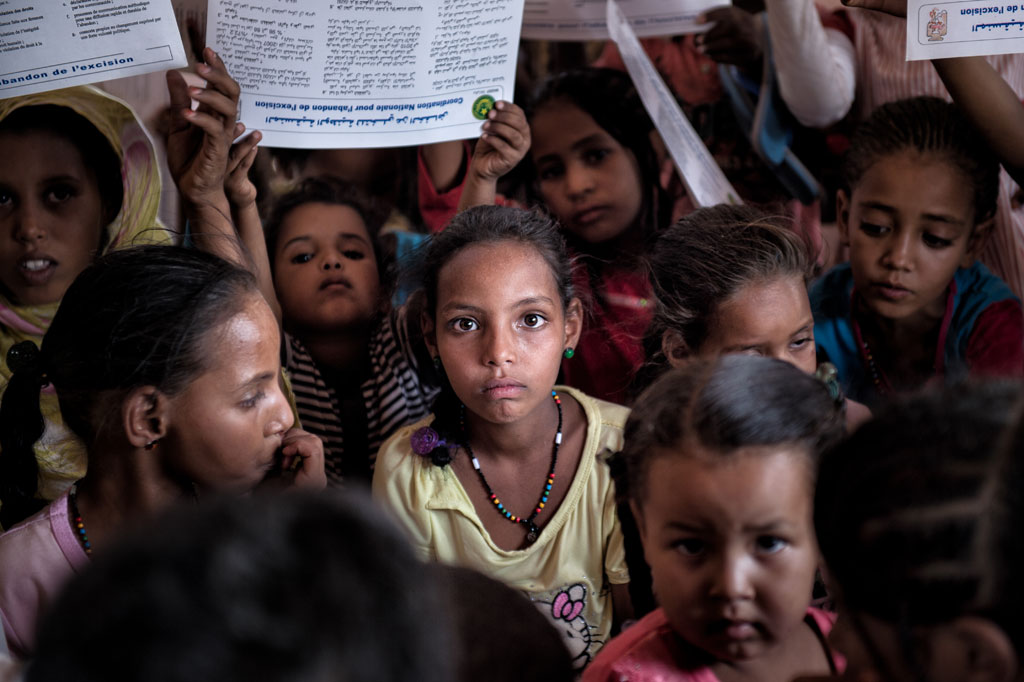
In Ethiopia, Bilen Yusuf, 12, poses for a photograph in her home in Gursum Woreda, Bombass district (Kebele), Somali Region. Bilen requested a Female Genital Mutilation (FGM) type known as Sunna-circumcision, last year which led to her mother being sued by the Woreda Bureau of Women, Children and Youth Affairs (BOWCYA) for arranging the act without notifying the office. Though FGM is illegal by law, Sunna-circumcision still takes place in the Somali region because it is considered as a religious requirement by many. Photo: United NationsIn Ethiopia, Bilen Yusuf, 12, poses for a photograph in her home in Gursum Woreda, Bombass district (Kebele), Somali Region. Bilen requested a Female Genital Mutilation (FGM) type known as Sunna-circumcision, last year which led to her mother being sued by the Woreda Bureau of Women, Children and Youth Affairs (BOWCYA) for arranging the act without notifying the office. Though FGM is illegal by law, Sunna-circumcision still takes place in the Somali region because it is considered as a religious requirement by many. Photo: United NationsIn Mauritania, girls participate in an awareness-raising campaign rally to end FGM/C, facilitated by UNICEF implementing partner CORDAK, a Consortium of 54 NGOs which implement UNICEF’s child protection programmes in Assaba district. Photo: United Nations
The most senior United Nations officials are urging the world to eliminate female genital mutilation (FGM) by 2030, calling it a “violent practice” that scars girls for life, endangering their health, depriving them of their rights, and denying them the chance to reach their full potential.
“Never before has it been more urgent – or more possible – to end the practice of female genital mutilation, preventing immeasurable human suffering and boosting the power of women and girls to have a positive impact on our world,” said United Nations Secretary-General Ban Ki-moon in a message ahead of the International Day of Zero Tolerance for Female Genital Mutilation marked annually on 6 February.
The UN chief stressed that the Sustainable Development Goals (SDGs), adopted unanimously by UN Member States last year, contain a specific target calling for an end to FGM.
“Today I raise my voice and call on others to join me in empowering communities which themselves are eager for change,” he declared. “I count on governments to honour their pledges with support from civil society, health providers, the media and young people.”
At least 200 million girls and women alive today have undergone female genital mutilation in 30 countries, according to a new statistical report published by the UN Children’s Fund (UNICEF).
Female Genital Mutilation/Cutting: A Global Concern notes that half of the girls and women who have been cut live in three countries – Egypt, Ethiopia and Indonesia – and refers to smaller studies and anecdotal accounts that provide evidence FGM is a global human rights issue affecting girls and women in every region of the world.
“Female genital mutilation differs across regions and cultures, with some forms involving life-threatening health risks. In every case FGM violates the rights of girls and women,” said UNICEF Deputy Executive Director Geeta Rao Gupta in a press release.
According to the data, girls 14 and younger represent 44 million of those who have been cut, with the highest prevalence of FGM among this age in Gambia at 56 per cent, Mauritania 54 per cent and Indonesia where around half of girls aged 11 and younger have undergone the practice. Countries with the highest prevalence among girls and women aged 15 to 49 are Somalia 98 per cent, Guinea 97 per cent and Djibouti 93 per cent.
In most of the countries the majority of girls were cut before reaching their fifth birthdays.
The global figure in the FGM statistical report includes nearly 70 million more girls and women than estimated in 2014.This is due to population growth in some countries and nationally representative data collected by the Government of Indonesia. As more data on the extent of FGM become available the estimate of the total number of girls and women who have undergone the practice increases. As of 2016, 30 countries have nationally representative data on the practice.
“Determining the magnitude of female genital mutilation is essential to eliminating the practice. When governments collect and publish national statistics on FGM they are better placed to understand the extent of the issue and accelerate efforts to protect the rights of millions of girls and women,” Ms. Rao Gupta explained.
UNICEF says momentum to address female genital mutilation is growing. FGM prevalence rates among girls aged 15 to 19 have declined, including by 41 percentage points in Liberia, 31 in Burkina Faso, 30 in Kenya and 27 in Egypt over the last 30 years.
Since 2008, more than 15,000 communities and sub-districts in 20 countries have publicly declared that they are abandoning FGM, including more than 2,000 communities last year. Five countries have passed national legislation criminalizing the practice. Data also indicate widespread disapproval of the practice as the majority of people in countries where FGM data exists think it should end. This includes nearly two-thirds of boys and men.
But the overall rate of progress is not enough to keep up with population growth. The UN says if current trends continue the number of girls and women subjected to FMG will increase significantly over the next 15 years.
“All of us must join in this call. There simply is no place for FGM in the future we are striving to create – a future where every girl will grow up able to experience her inherent dignity, human rights and equality by 2030,” said UN Population Fund (UNFPA) Executive Director Dr. Babatunde Osotimehin and UNICEF Executive Director Anthony Lake in a statement.
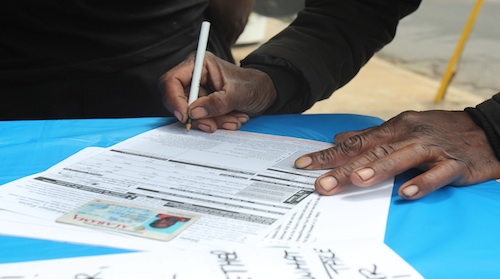
An Alabama resident fills out a voter registration form outside a deli in Pratt City, Ala. The deli is owned by Marie Thomas, and operated by her daughters Debbie and Danita Agee, who organized the registration drive. Photo by Khara Persad/News21
An Alabama resident fills out a voter registration form outside a deli in Pratt City, Ala. The deli is owned by Marie Thomas, and operated by her daughters Debbie and Danita Agee, who organized the registration drive. Photo by Khara Persad/News21An Alabama resident fills out a voter registration form outside a deli in Pratt City, Ala. The deli is owned by Marie Thomas, and operated by her daughters Debbie and Danita Agee, who organized the registration drive. Photo by Khara Persad/News21
New and increasingly strict state and county voting laws are threatening to cut off a growing number of Americans from their right to vote as primary season opens.
Ethnic minorities are disproportionately affected by lack of access to polling sites, voter ID requirements, and lack of language assistance, just as experts claim these groups are gaining political clout.
Since the 2010 elections, 20 states have passed voting restriction laws, most often requiring citizens to provide photo ID before voting, minimizing early voting time, and in some cases blocking entire swaths of voters–such as those who have been convicted of a felony–from voting at all. Some of the laws will go into full implementation for the first time in 2016.
The surge in restrictive laws intensified in 2013, when the Supreme Court deemed Section 5 of the Voting Rights Act unconstitutional. The rules in the section were designed to address the problem of racism at the polls by, for example, forbidding literacy tests from being used as a prerequisite for voting, and by imposing federal oversight in districts with a history of racial discrimination.
A look at how new restrictions are impacting ethnic voters, even before the 2016 elections have set in:
· Florida’s harsh voting laws regarding former felons disproportionately affect the state’s African American population: 20% of the Florida’s black voting-age population are banned from the polls. Without the clemency of the governor, a felony conviction negates a Florida citizen’s right to vote permanently, even if the felony is a nonviolent drug offense. The harsh policy–which was briefly reversed in 2007 after Democratic former Gov. Charlie Crist took office–was reinstated by Republican Gov. Rick Scott in 2011, and affects an estimated 1 in 10 Florida residents.
· In South Dakota, Native Americans living on reservations have long faced a barrier to voting due to the prohibitive distances voters must travel to cast early ballots. The 2002 Help America Vote Act (HAVA) provides states with federal funding to meet minimum election standards, but Buffalo County in South Dakota has resisted using the federal funding to set up accessible satellite offices for early voting. Eligible Native voters living with disabilities or who don’t have vehicles and gas money are left without options. Native voting rights activists in South Dakota and Montana have pressed lawsuits against counties with similar policies.
· Latino voters have been challenged at the polls by multiple states demanding proof of U.S. citizenship as a requirement to vote. This regulation was first put into place in 2004 by the State of Arizona, but was struck down by the Supreme Court in 2013. The court ruled that the law violated the constitutional ban on poll tax since voters without ID were required to pay fees for obtaining government-issued ID cards and documentation in addition to the sometimes considerable transportation costs needed to travel to the nearest DMV. Arizona has appealed the ruling, but for now has two lists of voters: those eligible to vote in federal elections but don’t meet the requirements for state elections, and those who are eligible to vote in both.
· The language assistance provision of the Voting Rights Act has provided important protections to Asian American voters across ethnic communities. According to the law, voting districts with large populations of voters who speak a language other than English and have low English proficiency must receive language assistance. This assistance includes allowing voters to bring a translator of their choosing into the voting booth. The Texas Election Code has been sued for violating this requirement by forcing voters to use translators who are registered to vote in the same county, effectively limiting the pool of translator’s the voter may choose from.
Restrictive voting laws continue to proliferate even as the pool of ethnic voters is expanding. The 2016 elections will be key to understanding whether these laws passed in the name of preventing fraud will discourage vulnerable voters—especially ethnic minority voters—from going to the polls.
U.S. Citizenship and Immigration Services (USCIS) has extended Temporary Protected Status (TPS) for South Sudan through November 2, 2017.
U.S. Citizenship and Immigration Services (USCIS) has extended Temporary Protected Status (TPS) for South Sudan through November 2, 2017.U.S. Citizenship and Immigration Services (USCIS) has extended Temporary Protected Status (TPS) for South Sudan through November 2, 2017.
As the civil war in South Sudan has worsened, U.S. Citizenship and Immigration Services (USCIS) last week announced the extension of Temporary Protected Status (TPS) for nationals of South Sudan. TPS is a special designation that US immigration authorities provide to a country’s nationals when certain emergencies arise in that country if those nationals are already present in United States.
When TPS is extended beneficiaries can live and work in the U.S. and travel in and out of the U.S. for the duration of the TPS without fear of being placed into removal proceedings for overstaying a visa.
Such emergencies include but not limited to civil war and natural disasters.
Civil war has ravaged South Sudan since 2013 as armed conflict between government forces and rebels has escalated.
In the USCIS announcement of TPS for South Sudan, the authorities said South Sudanese currently in the United States that have TPS must re-register during the 60-day re-registration period that runs from January 25, 2016 through March 25, 2016.
South Sudanese that currently do not have TPS may file an initial application to register under the recent redesignation.
USCIS has stressed the importance, especially for initial filers, of filing during the 180-day registration period that runs from January 25, 2016 through July 25, 2016.
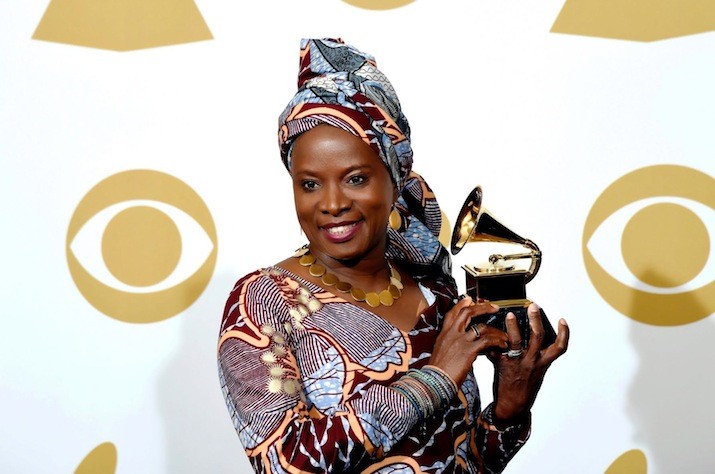
Angelique Kidjo at the 57th Grammy Awards in February 2015 where she won a Grammy for her Eve album. Photo: Courtesy Angelique Kidjo
Angelique Kidjo at the 57th Grammy Awards in February 2015 where she won a Grammy for her Eve album. Photo: Courtesy Angelique KidjoAngelique Kidjo at the 57th Grammy Awards in February 2015 where she won a Grammy for her Eve album. Photo: Courtesy Angelique Kidjo
After a five year hiatus, two-time Grammy Award winner, Angelique Kidjo, will be back in the Twin Cities on Sunday, April 24.
The “Queen of African Music” will perform at The O’Shaughnessy on the main campus of St. Catherine University in St. Paul.
She is the reigning World Music winner at the Grammy’s having just won at the 57th Grammys in February 2015. She has again been nominated for this year’s Grammys to be held on February 15.
Priced at $25-$45, tickets for the April 24 concert went on sale last week at the venue and online.
Kidjo last performed in the Twin Cities in 2011 during a sold-out concert at the Ordway.
Her 2014 album that won her last year’s Grammy, Eve, topped Billboard’s World Music chart.
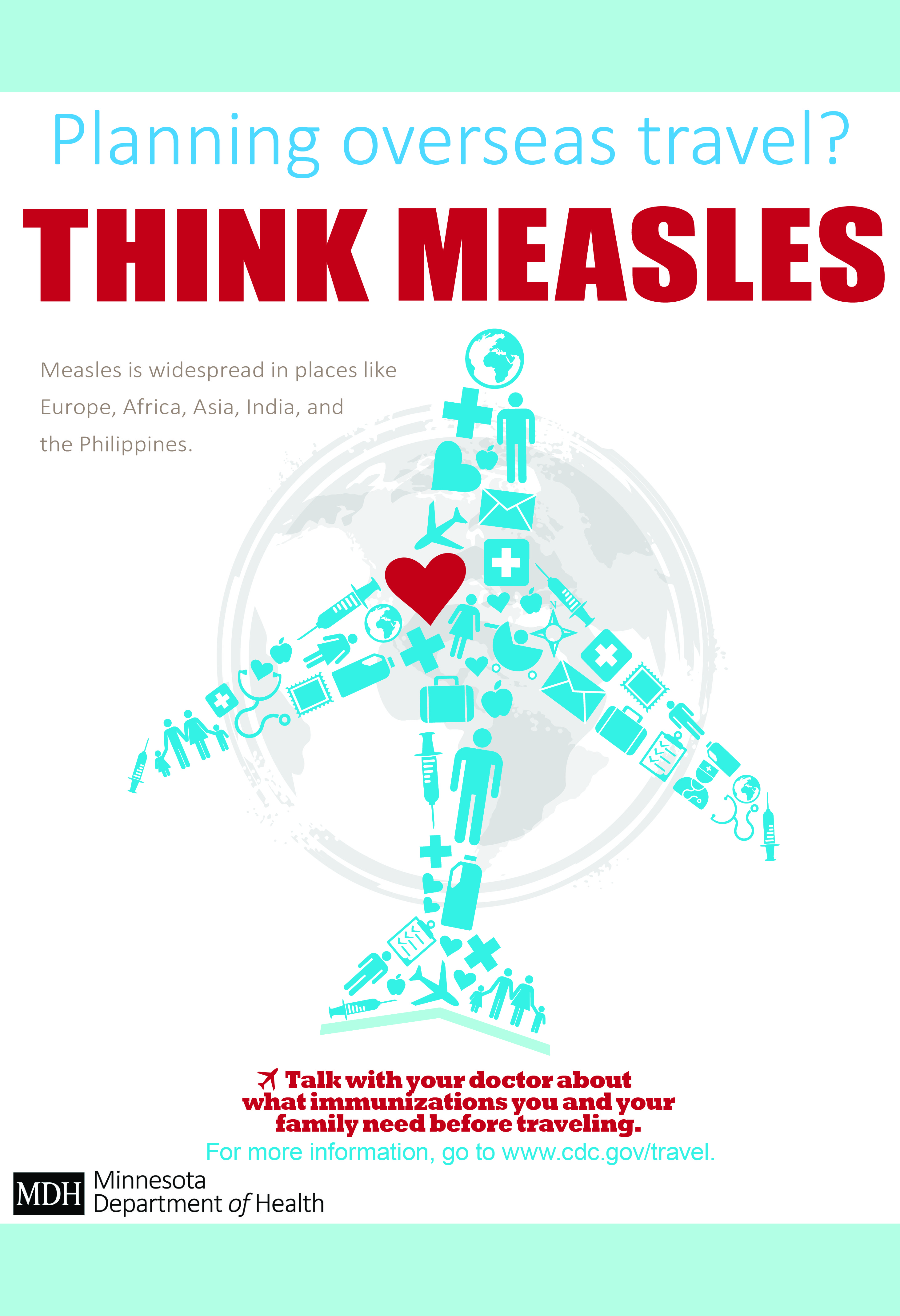
If you are traveling overseas, make sure that you and your children are up-to-date on your measles, mumps and rubella vaccine (called MMR). Children as young as 6 months old should receive the MMR vaccine.
If you are traveling overseas, make sure that you and your children are up-to-date on your measles, mumps and rubella vaccine (called MMR). Children as young as 6 months old should receive the MMR vaccine. If you are traveling overseas, make sure that you and your children are up-to-date on your measles, mumps and rubella vaccine (called MMR). Children as young as 6 months old should receive the MMR vaccine.
Measles kills 400 children in the world every day. It is very contagious and travels easily from one continent to another. But, there is something you can do to protect you and your family – get vaccinated.
If you are traveling overseas, make sure that you and your children are up-to-date on your measles, mumps and rubella vaccine (called MMR). Children as young as 6 months old should receive the MMR vaccine.
It can be easy to think that measles won’t affect you and your family, but one Minnesota mother found out how dangerous it can be while traveling. Before traveling, the doctor recommended that her son get his MMR vaccine earlier than usual because they were traveling to visit family in Kenya. She wanted her son to get the vaccine, but he was finally sleeping. She decided it could wait until they came back. They were just going to visit family which didn’t seem like a big risk.
The day they returned home, her son developed cold symptoms – a cough, runny nose, and watery, red eyes. Then he got a fever and became very tired. She took him to the doctor, and they said it was a virus and to watch him closely. The cough got worse and the fever got higher so she took him to the doctor again. This time they put him in the hospital because he had pneumonia. The doctors did more tests and put him in a private room – he had measles.
It was hard for her child to breathe so they put him on a breathing machine. There were tubes in his mouth, nose, and arms. She felt helpless. The doctors warned that her son might die. For three weeks she watched a machine breath for her son.
The little boy survived, but his mother will never forget his suffering. The disease also spread to other people on the airplane and among family members that were not vaccinated. She tells anyone traveling overseas, “Be sure to get all the vaccines you or your family needs.”
To keep your travels healthy, talk to your clinic or doctor about your trip, the shots you need and ways to stay healthy while traveling.
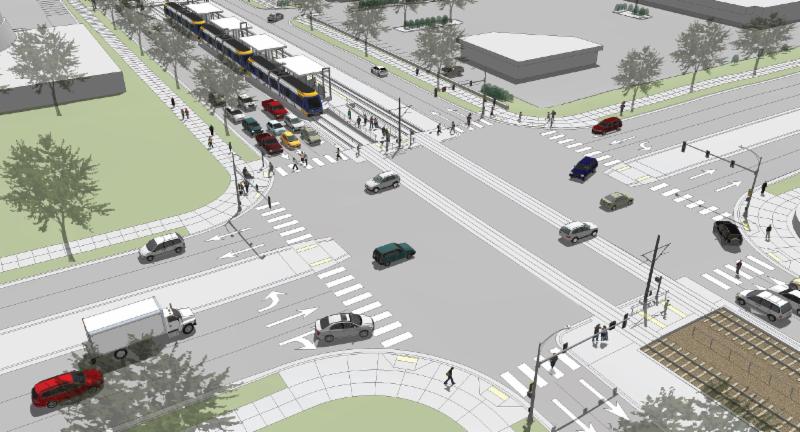
Rendering of West Broadway and 85th Avenues looking southwest, including the proposed reconstruction of West Broadway Avenue by Hennepin County. Photo: Courtesy of Metropolitan Council
Rendering of West Broadway and 85th Avenues looking southwest, including the proposed reconstruction of West Broadway Avenue by Hennepin County. Photo: Courtesy of Metropolitan Council Rendering of West Broadway and 85th Avenues looking southwest, including the proposed reconstruction of West Broadway Avenue by Hennepin County. Photo: Courtesy of Metropolitan Council
The City of Brooklyn Park held its first of two public hearings on the proposed Blue Line Extension on Monday, January 25th at the Brooklyn Park City Hall. The proposed 13 mile extension of the existing METRO Blue Line would extend from downtown Minneapolis through north Minneapolis, Golden Valley, Robbinsdale, Crystal and Brooklyn Park, serving the northwest Twin Cities.” If approved, the extension would provide easier access to the Northwest suburbs and faster public transit connections to popular destinations such as downtown Minneapolis, Mall of America and the Minneapolis-St. Paul International Airport.
Dubbed the ‘Bottineau LRT’, the joint project is led by the Metropolitan Council with the cost currently pegged at $1.48 billion, most of it coming from the federal government with funding participation from the State of Minnesota and Hennepin County. The public hearing in Brooklyn Park which invited citizens to share their comments or concerns on the proposed project is one in a series of such hearings being conducted in the cities that sit along the proposed line as part of Minnesota’s Municipal Consent process that is required by state law for communities affected by a transit project.
Minnesota law calls for the Municipal Consent process which tasks the Metropolitan Council with seeking “local review and approval” for such projects. This means public hearings as well as consent from each city government before the project can be green lighted. In the case of the Bottineau line, those cities include Brooklyn Park, Crystal, Golden Valley, Brooklyn Center, Robbinsdale and Minneapolis. The Municipal Consent requirement has proved particularly challenging for another light rail project also in the works, the Southwest LRT project which will go from downtown Minneapolis to Eden Prairie. That project has been met with fierce public opposition and cost overruns. Its battle in the Northwest suburbs, home to many African immigrants and property owners, may prove easier as evidenced by the steady progress of the project, and public comments at the January 25th public hearing.
Speaking with Laura Baenen, communications manager for both the Southwest LRT and the Bottineau LRT, she noted the hearing was about giving “the public a chance to comment on preliminary designs plans- stations, tracks, bridges, roadways, sidewalks,” and “to help people understand the plan,” which is “currently 15 to 30% complete.”
Members of the public had the opportunity to engage project staff who were on hand to answer questions during the open house. A scaled model of the planned line that the public could interact with was also available in an adjacent room. Council chambers quickly filled up before the 7pm hearing with approximately 80 people in attendance, a fraction of whom would take to the floor over the course of an hour, sharing both concerns and hopes for the impact of the Bottineau LRT on the City of Brooklyn Park.
Project Director, Dan Soler, opened the public hearing with an outline of existing physical design components for the LRT. He walked attendees through the proposed tracks and stations, detailing the path the Bottineau LRT would take through Brooklyn Park- entering the city limits under Highway 694, with its main route and stops along West Broadway, before ending its tracks at a proposed maintenance station at 101st Ave and Oak Grove Parkway.
Soler also provided progress on the project stating, “We’re in the middle of the Municipal Consent process. The idea is to have it completed by March 4th.” What happens after Municipal Consent is given? “Then we’ve got 6 years of work to opening day (in 2021). We’ll be engaging the city at 30%, 60%, 90% and eventually completion of the project.”
Brooklyn Park Mayor, Jeffrey Lunde, spoke after Soler stressing the importance of allowing the public a chance to offer their comments for review prior to a city council vote on the project. Chris Berne of North Maplebrook Circle was the first to offer his comments, and one of only two residents speaking who out rightly opposed the project. Berne cited concerns around the lack of a formal plan to address compensation for homeowners whose properties would be affected by the expansion. An issue initially brought up in 2014 when detailed maps of the project were first presented to the public. Berne applauded the council on the improved plan since it was first presented, but urged the council to work on remaining issues before voting for its approval.
The majority of commenters however spoke in favor of the project. They ranged from construction to electrical workers, long time and newer Brooklyn Park residents, representatives from North Hennepin Community College, the African Career, Education & Resource Inc. (ACER), the healthcare industry, and other community organizations. Among the major benefits those in favor touted were the jobs the project would create, both during construction and after, economic development of areas along the transit corridor, and access to a fast and easy public transit option that would greatly improve livelihoods and create health benefits for those using it.
However, many cited safety as a concern with many asking for improved safety and accessibility at planned crossings, particularly along the busy West Broadway Ave in Brooklyn Park. For others there were concerns around ensuring affordable housing along the line, particularly given the number of low income, and residents of color living in the community.
Fearing a rise in rents or the proliferation of expensive condos and apartments that has occurred along other LRT transit corridors such as the Green Line and the existing Blue Line, residents sought reassurances that both the city and the Metropolitan Council would make affordable housing a priority. But for Denise Butler, an ACER member, affordability extended beyond housing. She called on the Metropolitan Council to ensure that there would be no increase in transit fares, “people are already struggling with existing fares,” she stated. Other commentators of color stressed the need to ensure that the project had racially equitable outcomes given the startling data showing wide racial disparities in Minnesota.
Overall, despite opposition over certain aspects of the project, those who provided comments applauded the city council and the Metropolitan Council on its efforts thus far and appeared enthused over the increased opportunities the LRT extension would provide. As Gordon Carter, Brooklyn Park resident noted in one of the lighter moments of the evening, “We might even get a decent restaurant in Brooklyn Park.”
The next and final stage in the Municipal Consent process will be action by the Brooklyn Park City Council where the Council is set to vote on whether to give consent to the project. That vote is scheduled for February 22nd at 7pm.
According to Baenen, Communications Manager for the project, citizens can also attend public hearings in other cities along the project line to have their comments heard. In addition, the Metropolitan Council will be taking online comments until January 29 and Brooklyn Park will be taking written comments until February 15th. Written comments can be submitted by mail or email to Emily Carr, development project coordinator for the city of Brooklyn Park, at 5200 85th Ave. N., Brooklyn Park, MN 55443 or to [email protected].
To review plan documents please visit a public library in cities along the proposed line, the planning and economic development office at City Hall, or the Blue Line Extension Project Office, 5514 W. Broadway, Suite 200, Crystal.
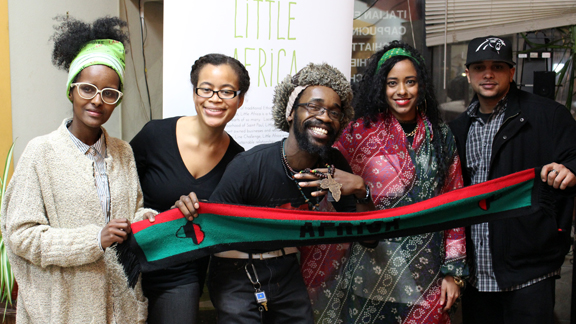
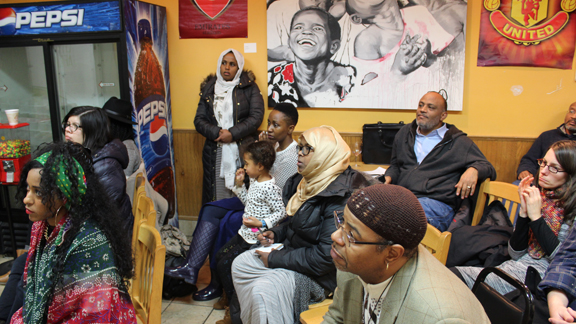
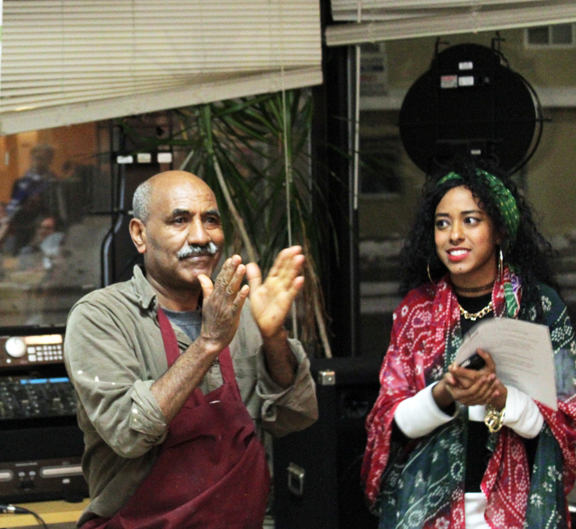
Performers and organizers at Little Africa's open mic and dialogue series held at Snelling Cafe on January 20, 2016. Photo: Courtesy AEDS
Performers and organizers at Little Africa's open mic and dialogue series held at Snelling Cafe on January 20, 2016. Photo: Courtesy AEDSPerformers and organizers at Little Africa’s open mic and dialogue series held at Snelling Cafe on January 20, 2016. Photo: Courtesy AEDSThe audience at Little Africa’s first open mic and dialogue series at Snelling cafe in St. Paul, Minnesota on January 20, 2016. Photo: Courtesy of AEDSSnelling Cafe owner Afeworki Bein, cheers a performer as curator Lula Saleh looks on during Little Africa’s first open mic and dialogue series held at the cafe on January 20, 2016. Photo; Courtesy AEDSSpoken word artist Abdifatah Farah, aka Abdi Phenomenal of the youth group Ka Joog was one of the featured artists at Little Africa’s first open mic and dialogue series on January 20, 2016 at Snelling Cafe in St. Paul, Minnesota. Photo: Courtesy AEDS
The Little Africa initiative, spearheaded by project leader Gene Gelgelu, held its first arts, open mic and dialogue series this past Wednesday, January 20th. The free event, held at the Snelling Cafe in St. Paul’s Hamline-Midway neighborhood drew a varying crowd of 50-60 people, the majority of whom were of African descent.
Little Africa is “a branding and marketing campaign focusing on African immigrant economic assets” along transit corridors such as the Blue Line and the Green Line and organized by African Economic Development Solutions (AEDS), which supports economic development opportunities within Minnesota’s African immigrant community. It was last year’s recipient of the Non-Profit of the Year category award at the African Awards.
The St. Paul Hamline-Midway neighborhood, where Snelling Cafe is located, has been a hubbub of activity for the initiative. The cafe is owned by Eritrean-born Afeworki Bein. Last summer, the area saw a series of colorful murals go up on the walls of African owned businesses in proximity to the Snelling Avenue Green Line stop. African owned businesses in the neighborhood have also served as the location for a series of community meetings focused on engaging the African community in the development of Little Africa.
With an estimated 50-60 African owned businesses in the area, the minds behind the initiative hope to “root the heart of Little Africa within St. Paul’s Hamline Midway area,” according to Sagirah Shahid, Office Manager and Public Relations Specialist for AEDS.
The Snelling Cafe event is the first in a series that curator and organizer Lula Saleh hopes will “bring more attention to this community of African immigrant businesses and entrepreneurs,” in order “to support and celebrate them, while having much-needed conversations through the arts about culture, identity and race.”
Saleh, a singer, songwriter and performer of Eritrean descent hosted the open mic whose theme was ‘Home, Identity, and Displacement’, a heavy topic that both the performers and audience members were eager to unpack in discussions following each performer. Saleh opened the event by performing an essay she had written surrounding the question that many new immigrants are often asked, “Where are you from?” For Saleh, as for many other immigrants, the simplicity of the question belies its complicated nature. Does the person asking the question mean where do you currently live? Where you were raised? Where you were born?
Saleh says, “In truth, I answer differently, each time.”
A succession of performers ranging in age and nationalities took the stage over the next two and a half hours exploring the question of identity and belonging as African immigrants, while also highlighting the diversity of immigrant experiences in the Twin Cities and Minnesota. Popular performance artists Abdi Phenomenal (who runs the Somali American youth group Ka Joog) and Ifrah Mansour (whose 2015 solo piece, How to Have fun in A Civil War explored civil war through the eyes of a child) both performed at the event along with lesser known local artists. Audience participation in the discussions following each performer allowed for engaging conversations about the issues presented that shed a light on both perceptions and misperceptions of new African immigrants.
Abdi, whose two spoken word pieces were enthusiastically received by the crowd, took to the event’s Facebook page later that evening noting, “For me, tonight was a testimony of how our communities have relevant voices and powerful roots. I was thankful to hear all of your poems and stories!” This increased visibility of the wealth and breadth of cultural assets in Minnesota is what AEDS hopes to showcase through the series.
State Representative Rena Moran, whose district “the heart” of Little Africa sits in was in attendance as well, giving a reading of a poem titled ‘Heroes’ and an impassioned speech for the need for increased participation of people of color at the Capitol. Rep. Moran who serves as the only black woman in the legislature talked about the importance of “telling our stories,” and her desire to connect more to the African community both in her district and beyond. She encouraged those in the room to get involved with political processes outside of voting day, whether through caucuses, joining political campaigns, interning, or just visiting the Capitol building.
“I want us to get comfortable believing that we belong in this building,” she said.
For Snelling Cafe owner, Afeworki Bein who kept the growing number of attendees well fed serving up delicious, mouth watering platters the event was an opportunity to introduce people to what has been “the hang out for East, West, and South Africans,” for the 11 years he has been in Minnesota. As performer Mansour noted, “Art is a catalyst for opening doors, I came here for the art, but I’ll be leaving with so much more.”
The next Little Africa open mic will be hosted on Tuesday March 8th at a location yet to be determined. To stay up to date on the Little Africa initiative and see highlights from past events you can find them on:
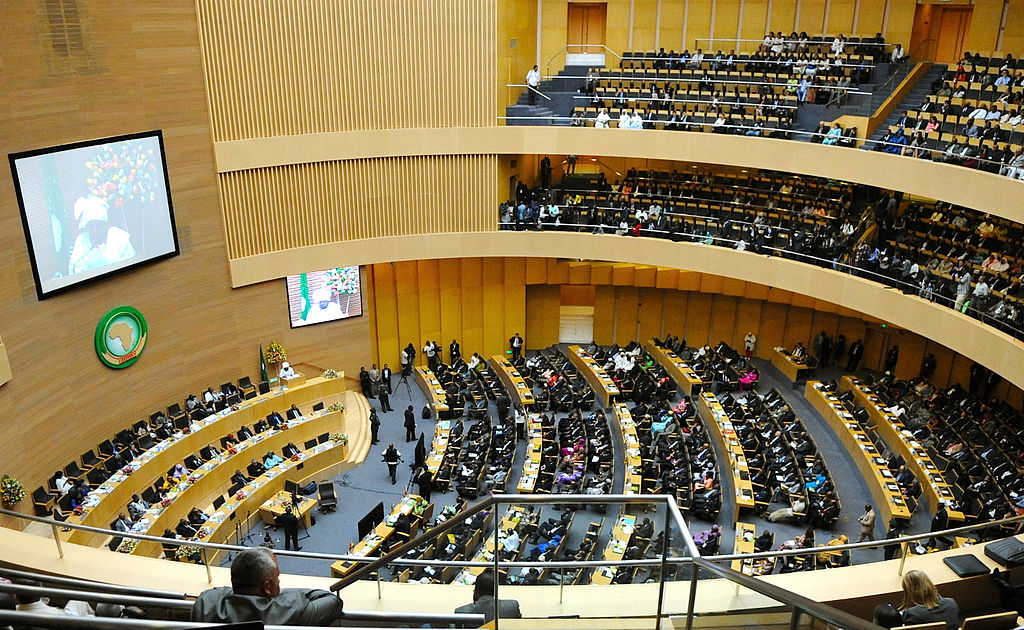
African leaders, seen here during the AU's 50th anniversary in 2013 at the organization's headquarters in Addis Ababa, will be pressing for a permanent UN seat during 26th ordinary session this week. Photo: AU
African leaders, seen here during the AU's 50th anniversary in 2013 at the organization's headquarters in Addis Ababa, will be pressing for a permanent UN seat during 26th ordinary session this week. Photo: AUAfrican leaders, seen here during the AU’s 50th anniversary in 2013 at the organization’s headquarters in Addis Ababa, will be pressing for a permanent UN seat during 26th ordinary session this week. Photo: AU
The present composition of the United Nations is a thorn in the side of some African leaders who question why none of the five permanent members to the Security Council is a black African.
The Security Council is a powerful decision-making body within the house of nations. It is charged with maintaining global peace, admitting members to the UN and approving changes to the agency’s charter.
It has 15 members, but only five are permanent and hold veto powers. They are Russia, China, France, the UK and the USA.
Despite being the recipient of most declarations on peace and security, Africa can have only non-permanent members who do not influence major decisions.
At its 26th ordinary session in Addis Ababa this week, the African Union is expected to take up the call for reform of the most powerful arm of the U.N.
A Committee of 10, including Kenya, Algeria, Libya, Senegal, Sierra Leone, Namibia, Zambia, Uganda, Equatorial Guinea and Congo is resolved to put the issue as first item on the AU agenda.
“The Security Council does not reflect 21st century political and economic realities. This underrepresentation is discriminatory, unfair and unjust,” said Kenya’s Foreign Cabinet Secretary Amina Mohamed.
Kenya, alongside Equatorial Guinea were the main lobbyists for the “Africa Common Position” in 2005 which said in part: “Africa’s goal is to be fully represented in all the decision-making organs of the UN, particularly in the Security Council.
“Full representation of Africa in the Security Council means: not less than two permanent seats with all the prerogatives and privileges of permanent membership including the right of veto, and five non-permanent seats.”
As for women’s rights, also on AU’s agenda, two issues are making headlines.
Zimbabwe’s highest court this month outlawed child marriage, ruling on an application by two former child brides.
“I’ve faced so many challenges,” said, Ruvimbo Tsopodzi , one of the applicants in a press interview. “My husband beat me. I wanted to stay in school but he refused. It was very, very terrible,” said the mother of one, who was married at 15.
Until the ruling, the country’s Marriage Act set the minimum age at 16 for girls and 18 for boys. The Customary Marriage Act sets no minimum age.
Lawyer for the two women, Tendai Biti, called the ruling “historic and revolutionary.” “It’s a great day for women,” she said. However, celebrations would not last long as long as there were no penalties for those who ignore the court’s ruling.
Also in the news, South African Mayor Dudu Mazibuko is facing questions over her decision to award 16 scholarships for young women who are virgins and remain so while at college. Winners of the “Maiden’s Bursary (scholarship) Awards must take regular virginity tests in order to keep their funding.
The government-backed Commission for Gender Equality criticized the mayor’s initiative, saying her intentions were great but “we don’t support giving scholarships for virginity. There is an issue around discrimination on the basis of pregnancy, virginity and even against boys,” said Mfanozelwe Shozi. “This is going too far.”
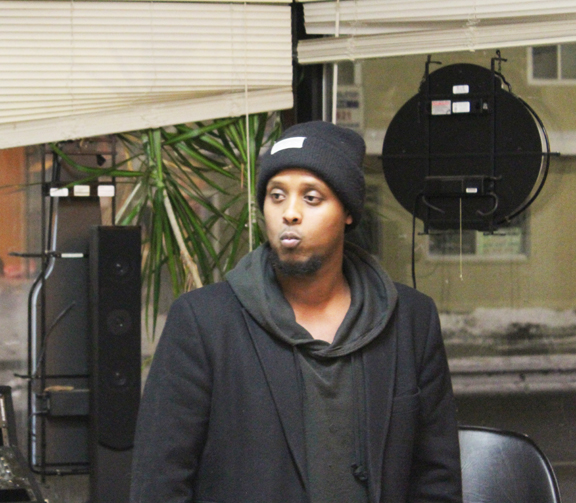
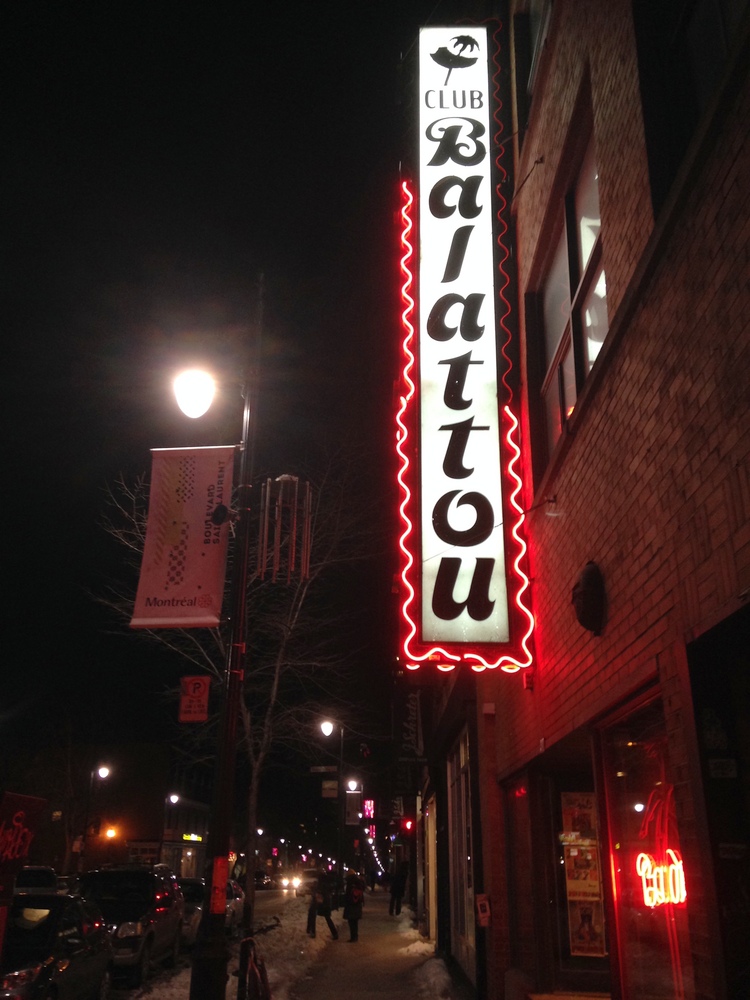
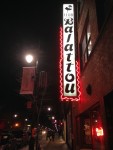
Club Balattou sits on a bustling block on St. Laurent. Photo: David Sommerstein/NCPR
Club Balattou sits on a bustling block on St. Laurent. Photo: David Sommerstein/NCPRClub Balattou sits on a bustling block on St. Laurent. Photo: David Sommerstein/NCPRLamine Toure, owner and founder of Club Balattou. Photo courtesy Nuits D’Afrique
Club Balattou is tiny. You walk in off St. Laurent, one of Montreal’s main drags, and you’re looking directly at musicians on stage just ahead to the right. In fact, you have to walk right in front of the stage to get a drink at the bar. Little has changed here over the years. Same mirrors on the ceiling and walls. Same 80s logo in purple neon splashed over the bar. Even the carpet is the original from when Balattou opened in 1985.
A Guinean kora player named Yamoussa Kora was the first act. As Kora’s band Thousand Colors kicks in, a quiet man with darting eyes and a black ski cap hunches by the door. He wears a baggy fleece over an African batik. Occasionally he offers a handshake or a hug, or leans in to share a confidence as stragglers wander in.
You’d never know it’s Lamine Toure, Club Balattou’s owner and founder, a sort of godfather of African music in Canada.
“Lamine Toure is the wise man of the neighborhood,” says Montreal-based music journalist Ralph Boncy. “He’s a magician. He’s not fast. He’s always slow. He always has advice for you.”
Toure didn’t grant interviews for years. And still, he’s not one to tell much of his own story. Boncy says Toure’s quiet wisdom made Balattou the prime gathering place for African immigrants in Montreal in the 1990s. “It’s like the light by the shore, always faithful to guide Black culture and the diasporas.”
In the 1980s, Toure lured some of Africa’s biggest stars to play in little Balattou when they were selling out stadiums in their home countries. Papa Wemba and Baaba Maal made American debuts here. Salif Keita, Yossou N’Dour, Angelique Kidjo made early appearances, too, as did Congloese soukous band, Loketo.
Toure was born in Guinea to a successful African trader. He followed his father on trips to Mali, Senegal, Congo and learned the language of business. When he was 13, he became a dancer with the National Ballet of Guinea and toured across Africa and Europe.
Through all those travels, he absorbed the differences in African cultures, says longtime collaborator Suzanne Rousseau, but also what ties those cultures together. Rousseau says he became an encyclopedia of musical roots. “He tells you exactly what origin it came from, from that country. Soca, calypso, for example, it came from the High Life of Ghana. All these connections.”
In 1974, Toure moved to Montreal, where he met Alex Boicel, the son of a jazz club owner. Together they opened Café Creole, a place for African and Caribbean immigrants to talk politics and share music. Boicel says Toure would hold court. “Toure would tell you so many things about Africa. You don’t even have to go to the book and read it. That was the pure story.”
Toure became a father figure to Boicel. They helped immigrants navigate working papers and permits. They had a couple beds in back for people just off the plane. And, Boicel says, people brought in the latest records from overseas. “If you want to hear music from Congo, from Cameroon, Guinea, Mali, Senegal, this is the place to be. And all the students, those who were very homesick for their country were coming there.”
When Café Creole closed, Toure decided to open a club of his own. “I wanted to make something that automatically said it was a club for everyone,” says Toure, “all races and cultures.” So he coined a word in French – Bal-a-tous – “dance party for all”. That became the name, Club Balattou.
Suzanne Rousseau worked at Balattou from the beginning. She says Toure directed the club DJs to mix their sets, to encourage the mixing of cultures and genres. “We must travel. [The DJ will play] three French-Caribbean, three latin American, three central Africa, for example. We have to represent all these musics. They are all connected.”
As Balattou became a must-stop for African musicians, Congolese artist Dally Kimoko even wrote a song about it, called “Balattou a Montreal.” Today Club Balattou holds an annual summer festival all over Montreal that attracts almost 200,000 people. It’s called Nuits D’Afrique, and it showcases world-famous acts from Africa, Latin America, and the Caribbean.
Rousseau is the director. She says in the faces in the crowd, she sees Lamine Toure’s legacy. “The mixture of the generations, and the different cultures mixed together, with a smile up to here.”