Home Blog Page 141

America’s Top 100 Ethnic media on display at the Newseum

0
One Nation With News for All, an exhibit at the Newseum in Washington, DC highlights the important role played by ethnic media in America. The exhibit which goes on through January 4 features Mshale among its list of America’s Pioneering Ethnic 100 Media Outlets in the permanent section of the exhibit. Photo: Courtesy of the Newseum
IMG 0516
One Nation With News for All, an exhibit at the Newseum in Washington, DC highlights the important role played by ethnic media in America. The exhibit which goes on through January 4 features Mshale among its list of America’s Pioneering Ethnic 100 Media Outlets in the permanent section of the exhibit. Photo: Courtesy of the Newseum

The Newseum in Washington DC, in partnership with the Smithsonian Institution, in the summer opened “One Nation With News for All”, a new exhibit that tells the dramatic story of how immigrants and minorities have used the power of the press to fight for their rights and shape the American experience.
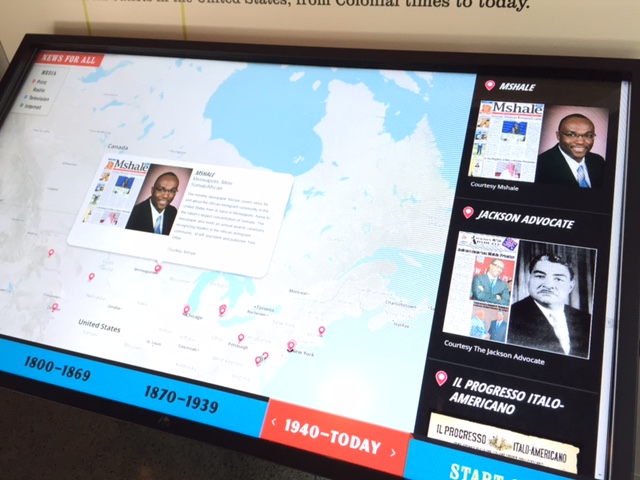
One Nation With News for All, an exhibit at the Newseum in Washington, DC highlights the important role played by ethnic media in America. The exhibit which goes on through January 4 features Mshale among its list of America’s Pioneering Ethnic 100 Media Outlets in the permanent section of the exhibit. Photo: Courtesy of the Newseum
One Nation With News for All, an exhibit at the Newseum in Washington, DC highlights the important role played by ethnic media in
America. The exhibit which goes on through January 4 features Mshale among its list of America’s Pioneering Ethnic 100 Media Outlets
in the permanent section of the exhibit. Photo: Courtesy of the Newseum
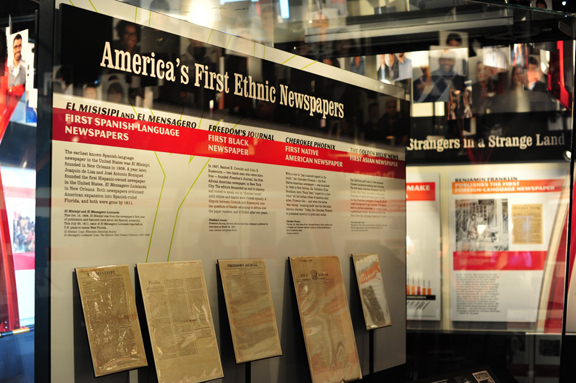
A display of America’s first ethnic newspapers at the Newseum. Photo: Jonathan Thompson/Newseum
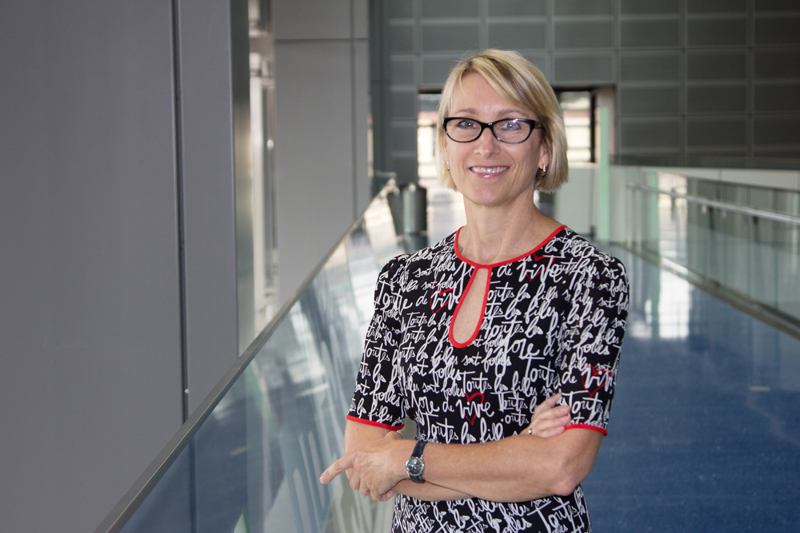
Patty Rhule, the Newseum’s Senior Manager for Exhibit Development Photo: Courtesy Newseum

Mshale is one of the publications featured at the exhibit alongside rarely seen historic newspapers including Freedom’s Journal, the first black newspaper, launched in 1827 to fight for equal rights and demand an end to slavery and the the Cherokee Phoenix,the first Native American newspaper, published in 1828 to champion the rights of Native Americans.

According to the Newseum, one in four Americans turns to ethnic media for news.

The Newseum’s Senior Manager for Exhibit Development, Patty Rhule, was interviewed recently by our correspondent Daood Obaid about the exhibit.

Q: Patty Rhule before we get into Mshale news publication, provide for those of us the genesis of the Newseum’s niche, in partnership with the Smithsonian Institution?

Patty Rhule: The Newseum’s CEO met with the secretary of the Smithsonian several years ago, and came up with the idea to team up for this exhibit as part of the Smithsonian’s “Our American Journey” project. “One Nation With News for All” tells the dramatic story of how immigrants and minorities used the power of the press to fight for their rights and shape the American experience, and are still doing so today.

Q: With so many publications on the market, exactly convey the selection process allowing Mshale to share its place in The Newseum, “One Nation With News for All,” new exhibit?

Patty Rhule: Ethnic media is a powerful force in the United States today. There are more  than 3,000 ethnic media outlets, offering news in languages from Amharic to Hmong to Yiddish. One in four adults turns to ethnic media for news. We wanted this exhibit to be not just a historic exploration of how ethnic newspapers helped to shape the American story; we also wanted people to know that ethnic media are an influential force today.

Our exhibit research team reached out to New America Media news service and other resources to compile a list of 100 pioneering newspapers, radio and TV stations and Internet sites that reflect the vibrancy of ethnic media today.

Mshale is an influential newspaper serving the growing African immigrant community around the country, and in Minneapolis, where it is based and where the largest population of  Somali Americans resides. We made sure to include it in our interactive map of 100 pioneering ethnic media outlets that visitors to “One Nation With News for All” can explore.

Q: Are private tours available, and if so, what do they entail?

Patty Rhule: The Newseum offers highlights tours of our museum, depending on the availability of volunteers who lead them. They are free with admission to the Newseum. In addition, visitors can schedule private tours at an additional cost.

Q: Personally, your viewpoint as to why the Newseum is such a major attraction?

Patty Rhule: The Newseum explores the great stories of our lives in vivid exhibits and original films. Located on Washington, D.C.’s historic Pennsylvania Avenue, the Newseum has seven floors, 15 theaters and 15 galleries of amazing artifacts, photos and compelling stories. We display eight sections of the Berlin Wall to tell the story of how the free flow of information led to that wall going up after World War II, and also led to the fall  of the wall in 1989. We also display all of the Pulitzer Prizewinning photos since the awards for photos were first given out in 1942.

Our News Corp. News History Gallery explores 500 years of news history, with artifacts such as the door that led police to the Watergate break-in that ultimately cost President Richard Nixon his presidency, as well as more than 350 historic newspapers from the Newseum’s collection of more than 30,000 print objects.

We have regular changing exhibits, including “One Nation With News for All,” and our FBI  exhibit, which focuses on the sometimes contentious relationship between the FBI and the press and displays the Unabomber’s cabin and engines from the planes that were struck down by the terrorist attacks of 9/11.

We have an interactive gallery where visitors can try their hand at being a TV news anchor, or they can pretend to be a news photographer.

We also have a 4-D film, where visitors experience key moments in journalism, including live news coverage of the bombing of London, by putting on special glasses and going for a ride through history.

There is something for everyone at the Newseum.

Q: And your role as Senior Manager of the Exhibit Development?

Patty Rhule: I oversee a team of writers and editors who produce the changing exhibits and update permanent content in the Newseum.

Q: Is the Mshale publication a permanent feature of the interactive kiosk of 100 pioneering ethnic media outlets in the Newseum?

Patty Rhule: Yes, Mshale is a permanent part of the interactive. Also, One Nation With News for All is open through Jan. 4, 2015.

To visit the Newseum for “One Nation With News for All” exhibit

Hours: Open daily from 9 a.m. to 5 p.m.
Closed Thanksgiving, Christmas and New Year’s Day.

Newseum opens one hour earlier than the Smithsonian museums.
Address: 555 Pennsylvania Ave., N.W., Washington, D.C., 20001.
Located between the U.S. Capitol and the White House on historic Pennsylvania Avenue.

Admission

Purchase a ticket, and the next day’s visit is free!
Adults, 19 to 64: $22.95 + tax
Seniors, 65 and older: $18.95 + tax
Youth, 7 to 18: $13.95 + tax
Children, 6 and younger: Free
Prices subject to change without notice.
Discounts for military, college students, and AAA members are available at admissions
desk with applicable ID.

More info: www.newseum.org
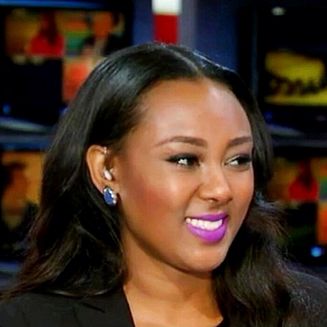
Addis Ababa born Lilly Workneh is new editor of Black Voices

0
Addis Ababa born Lilly Workneh has been named editor of Black Voices according to the Huffington Post which owns the site. Photo: Courtesy of Lilly Workneh
Lilliy Workneh
Addis Ababa born Lilly Workneh has been named editor of Black Voices according to the Huffington Post which owns the site. Photo: Courtesy of Lilly Workneh

Huffington Post has hired Addis Ababa born Lilly Workneh as editor of its HuffPost Black Voices. Most recently she was Lifestyle editor at theGrio.com.

Workneh moved to Manchester, England with her family at a young age where they lived for eight years before moving to Atlanta, Georgia where she grew up. She eventually granduated from the University of Georgia with a BA in Journalism.

Among media outlets she has worked with include People magazine, [InStyle] Magazine, NBC, MSNBC and CNN.

Huffington Post took control of BlackVoices three years ago. In that time it has overtaken MediaTakeOut.com, Bossip.com, MadameNoire.com, The Grio and The Root in terms of traffic, according to ComScore, a research company that tracks among other things websites.

Liberian women say ‘NO’ to Ebola madness with videos on Twitter

0
vIRUS
Liberian women say ‘NO’ to Ebola madness with videos on Twitter

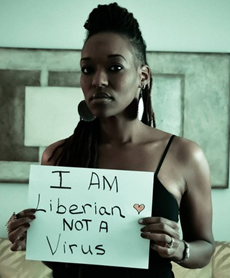
Ebola“I am a Liberian, not a virus.” That’s the loud and clear message of a campaign launched online by a group of Liberian women who refuse to be shamed by thoughtless outbreaks of rejection and cruelty that link African people with the epidemic that has taken thousands of lives.

“If I am Liberian, that doesn’t mean that I have Ebola,” Carolyn Woahloe, a registered nurse, told the Los Angeles Times. “This is not a Liberian problem. This is a world problem.”

Misinformation about the virus has sparked fears around the country and around the world, prompting some national leaders to deny visas to West Africans despite medical guarantees that this was unnecessary and unsafe. As with the AIDS virus in the early days, Africans have been singled out for slurs and rejection even when they present no threat at all.

In Texas, for example, Liberians living in the Dallas area where the first Ebola death was recorded were taunted with “Go back to Liberia.” Students from Rwanda were ordered to stay away from a New Jersey school where they were enrolled. An Oregon high school canceled a planned visit by 18 African students – all from countries untouched by Ebola – citing a “fluid” situation on the continent.

In response, Shoana Clarke Solomon, a Liberian photographer and TV host, created a hashtag “#IamaLiberianNotaVirus,” (I am a Liberian, Not a Virus) that quickly went viral.

“We are Liberians, Sierra Leoneans, Guineans and Nigerians. We live in a region that has been devastated by a deadly disease, but we are not all infected,” she said.

“It is wrong to stereotype and stigmatize an entire people. Remember we are human beings.”

Her message was echoed by singing sensation Angelique Kidjo from the West African nation of Benin who found a jeering comment posted on her Facebook page when she announced her concert this week at Carnegie Hall honoring the late South African singer Miriam Makeba, known widely as Mama Africa.

They wrote: “Instead of mama africa it should be mama ebola” and “I wonder if she is bringing any Ebloa [sic] with her?”

“Overnight it seems that all the naïve and evil preconceptions about Africa have surfaced again.” Kidjo wrote on the op-ed page of The New York Times. “Ebola has brought back the fears and fantasies of Africa as the Heart of Darkness and the fear-mongering about the disease threatens to reverse decades of progress for Africa’s image.”

“Stigma is bound to happen,” added Clarke Solomon, “especially when people don’t take the time to learn the facts.”

Still, she said, “I am also grateful for the media. It’s bringing much-needed attention to Liberia and other countries that need help with ending this epidemic. Without press coverage, this situation would be far … worse.”

Election Results: Siad Ali wins Minneapolis School Board seat but other African immigrant candidates fall

0
Siad Ali, originally from Somalia, was the only African immigrant to win an election Tuesday as other African candidates in races around the metro failed to win including in Brooklyn Center where Mike Elliott was running for Mayor.
Siad Ali
Siad Ali, originally from Somalia, was the only African immigrant to win an election Tuesday as other African candidates in races around the metro failed to win including in Brooklyn Center where Mike Elliott was running for Mayor.
Mike Elliott came up short in his bid to be the next mayor of Brooklyn Center on Tuesday, November 4, 2014.

Siad Ali, running unopposed in the East District clinched a spot in the Minneapolis School Board election on Tuesday. 10,018 people (96%) cast their vote for Mr. Ali to send him to  the school board. His victory was the only good news for African immigrant candidates as  they fell short in various races in Minnesota in their quest to fill school boards, state representative offices and a bid for mayor in the state’s most diverse city.

A record five African immigrants were on the ballot Tuesday in Minnesota races.

Brooklyn Center Mayor

Mike Elliott, 31, a Liberian immigrant who came to America at age 11 was defeated by incumbent Tim Willson in his quest to become mayor of Minnesota’s most diverse city which neighbors Minneapolis to the west. Elliott received 3,330 (48.58%) votes to Willson’s 3,475 (50.70%).

More than half of the city’s population is non-white with a quarter of them born outside the United States, a good number of them being from Africa.

Mr. Elliott’s defeat by less than 150 votes brought back memories of a similar election in neighboring Brooklyn Park where Wynfred Russell, another Liberian immigrant, was defeated by a mere five votes. Brooklyn Park’s population is also majority non-white with the entire elected City Council being white.

A silver lining for residents of Brooklyn Center voters was the election of April Graves to the City Council, becoming the first sitting African-American council member in the city.

Osseo School District

Two candidates originally from Africa vying to fill three of the open seats in the Osseo School District were unable to finish among the top three to ensure election to the board.  The school district is home to the majority of the children of African immigrants who reside in the northwest suburbs which includes the two Brooklyns, Maple Grove, Osseo, Plymouth and Rogers.

Oduwa Aganmwonyi and Pa Modou Ann needed to finish among the top three out of nine candidates to win their way to the board. This is how they ranked based on the results:

Jessica Craig – 15,317 (18.47%)
Robert Gerhart – 15,138 (18.26%)
James E. Burgett – 14,871 (17.93%)
Susan Brown-Whistler – 10,846 (13.08%)
Collette Guyott-Hempel – 7,639 (9.21%)
Pa Modou Ann – 6,459 (7.79%)
Oduwa Aibuedefe Aganmwonyi – 5,188(6.26%)
Delma J. Francis – 4,228(5.1%)
Radious Y. Guess – 2,912(3.51%)
Write-in – 322(0.39%)

Thus Jessica Craig, Robert Gerhart and James Burgett will take up the three board
positions.

State House District 60B

Abdimalik Askar, the first African to be endorsed by the Minnesota Republican party was trounced by the DFL’s Phyllis Kahn, Minnesota’s longest serving female legislator in the Minnesota House. Askar got 2,298 votes to Kahn’s 7,908. This will be Kahn’s, who is 77, 22nd term in the House.

District 60B encompasses most of the University of Minnesota Twin Cities campus community as well the Cedar-Riverside area, heavily dominated by Somali immigrants and is heavily Democratic.

Ticket Splitting in Brooklyn Park Mayoral race

Brooklyn Park did not have any African immigrant on the ballot this cycle but the city is of special interest because of the significant number of Africans that live and works there.

The city is 52% non-white and boasts a significant foreign-born population.The entire City Council is however all white.

Joy Marsh-Stephens, an African-American candidate, put up a spirited campaign for mayor attracting the endorsement of the District DFLers and a good slice of the African immigrant population in the city.

In the end, the city voters decided to keep Mark Dayton (a Democrat) in the governor’s mansion and Al Franken (a Democrat) in the united States Senate but also keep the Republican Mayor of Brooklyn Park. The two Democrats at the top of the ticket, winning easy reelection in Brooklyn park, was not enough to convince Brooklyn Park voters to also vote in a Democrat as mayor.

Jeff Lunde, the incumbent Republican mayor beat Marsh-Stephens handily, garnering 12,090 votes to the challenger’s 8,049.

In Brooklyn Park, Democrat Mark Dayton got 12,472 votes as he cruised to reelection as governor. His challeger Jeff Johnson received 8,707 votes. In the US Senate race, Al Franken also easily won in the city getting 13,028 to Mike McFadden’s 8,426.

In other words, Brooklyn Park voters voted Democratic with the exception of the mayor’s race.

Any hope that the 52% minority city might have a person of color in the City Council also evaporated when Reva Chamblis’ bid in Ward E fell below expectations. She was defeated by Terry Parks who handily carried the Ward getting over 60% of the votes, 4,570 to Chamblis’ 2,930.

Mshale Exit Poll: 1PM Results

0
ElectionVoterGuide
Mshale Exit Poll: 1PM Results

Initial survey results from the exit poll we told you about are as follows as of 1:00 PM CST. Survey respondents from our community said what was important to them.

Numbers sent over by Dr. Bruce Corrie.

1. Did You Vote in the November 4, 2014 Elections

Value

Count

Percent

Yes

43

95.6%

No

2

4.4%


Statistics

Total Responses

45


3. Please list the way you voted

Value

Count

Percent

I voted early in person

11

25.0%

I voted via absentee ballot

2

4.6%

I voted in person

30

68.2%

Other

1

2.3%


Statistics

Total Responses

44

4. Please tell us which of the following groups you self-identify with. Use the “other” column to specify any other unique identity, example, Somali, Oromo, Mexican, Hmong, etc.

Value

Count

Percent

African American

7

15.6%

African Immigrant

10

22.2%

Latino or Hispanic

5

11.1%

Asian

15

33.3%

Native American

1

2.2%

Other

13

28.9%


Statistics

Total Responses

45


6. List your top policy priority for Minnesota in 2015


Value

Count

Percent

Closing the achievement gap

14

31.8%

Jobs

7

15.9%

Business Development

2

4.6%

Housing

0

0.0%

Health care

3

6.8%

Immigration reform

5

11.4%

Public safety/guns/violence

4

9.1%

Better Transportation options

1

2.3%

Senior Citizen Issues

1

2.3%

Youth Issues

1

2.3%

Other Specify

6

13.6%


Statistics

Total Responses

44


7. Please check all that apply

Value

Count

Percent

I volunteered for a political campaign

11

31.4%

I hosted a fundraiser for a political candidate

5

14.3%

I attended a political fundraiser for a candidate

13

37.1%

I am a delegate/official for a political party

3

8.6%

I was contacted by a candidate or political party

28

80.0%


Statistics

Total Responses

35

Free rides to the polls on election day

0
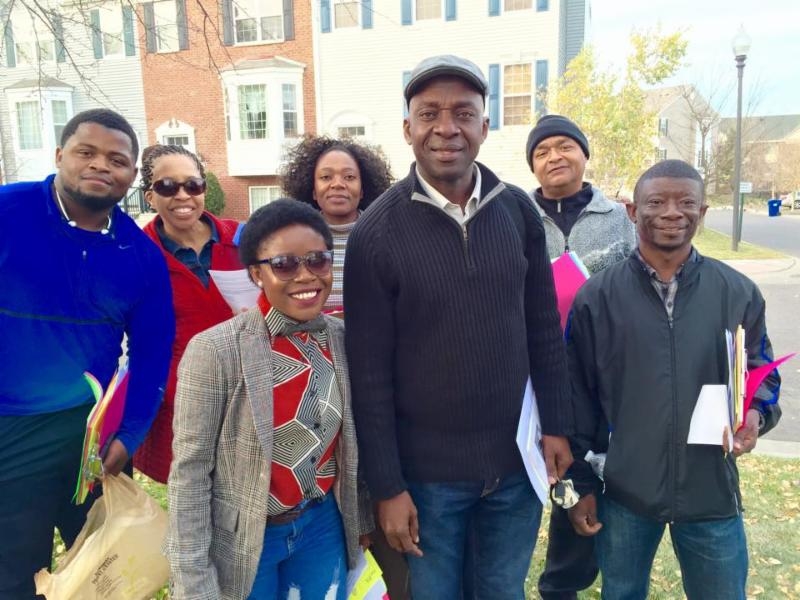
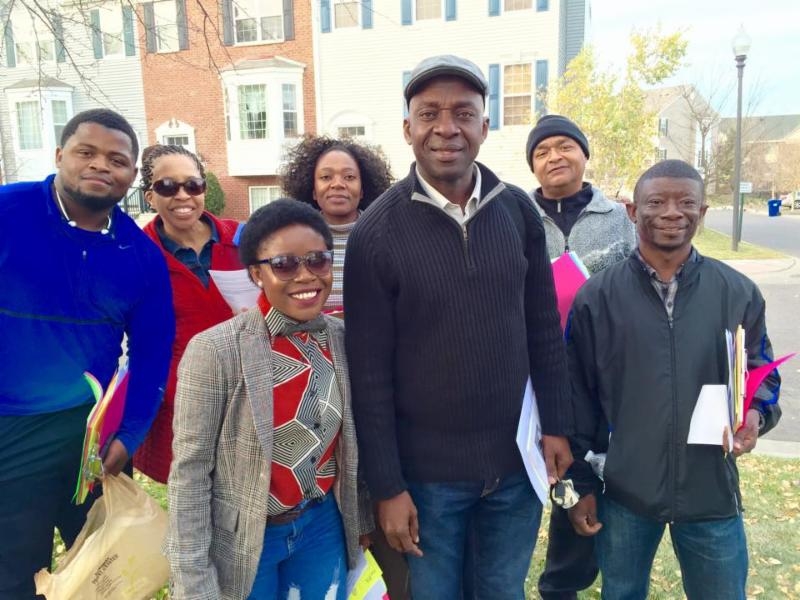
African immigrants in the northwest suburbs of the Twin Cities as they door knocked on the last weekend of this election cycle.
DoorKnocking AIS
African immigrants in the northwest suburbs of the Twin Cities as they door knocked on the last weekend of this election cycle.

Leaders of the African community in the Northwest suburbs, working through the Minnesota African Task Force Against Ebola (MATFAE) and African Immigrant Services (AIS), agreed to increase the participation of African immigrants in this year’s election.

Abdullah Kiatamba, chairman of the Minnesota African Task Force Against Ebola (MATFAE) and executive directorof AIS said “Even while we try to close disparities in Minnesota, we are also interested in leaders who are ready to push the U.S. government to increase relief aid to affected Ebola countries, to invest in drugs to cure Ebola, and to help build collapsed healthcare systems in those affected countries.” To make that possible, the group has made it possible for those not able to get to the polls to get free rides to vote.

Those needing rides should call 612-388-4767763-639-3316 or 763-202-9696.

To increase voter participation by Africans this year, Kiatamba said the group has knocked on more than 4,000 doors, sent over 10,000 emails and 9,000 text messages. They initiated more than 8,000 robocalls and dialed over 1,000 numbers. In the process, they have secured the commitment of more than 1,500 people to vote.

Key races (featured in the latest Mshale print edition in its voter guide) of interest to Africans include that of Brooklyn Center mayor where Liberian immigrant Mike Elliott is on the ballot. The Osseo School board elections also has two Africans on the ballot vying for two of the three open spots. In Minneapolis, Siad Ali is running unopposed for school board while in Brooklyn Park, home to a large African immigrant population, the city which now has a majority minority population is poised to elect its first black mayor if Joy Marsh Stephens wins or first city council person if Reva Chamblis wins.

Mshale exit polling and free rides to vote

0
African immigrants in the northwest suburbs of the Twin Cities as they door knocked on the last weekend of this election cycle.
DoorKnocking
African immigrants in the northwest suburbs of the Twin Cities as they door knocked on the last weekend of this election cycle.
Mshale has joined with 11 other organizations to conduct exit polling in election day.
Mshale has joined with 11 other organizations to conduct exit polling on election day.
African immigrants in the northwest suburbs of the Twin Cities as they door knocked on the last weekend of this election cycle.

Mshale has joined with 11 other organizations to capture the political power of African, Latino, Asian and Native American peoples of Minnesota (ALANA) via a survey exit poll. The survey will take 2 minutes to complete. Results of the survey will be used to illustrate ALANA voting power in each legislative district, and to encourage policy leaders to grow the $20 billion ALANA economic assets in Minnesota.

After voting, members of the ALANA community can fill out the survey at: www.surveygizmo.com/s3/1874493/I-Voted-2014.

Participating organizations are:

  • Minnesota Black Chamber of Commerce
  • Oromo Community of MN
  • Oromo Chamber of Commerce
  • Minnesota Somali Chamber of Commerce
  • Hmong American Partnership
  • Council on Asian Pacific MN
  • Chicano Latino Affairs Council
  • India Association of MN
  • ISUROON
  • Insight News
  • National Coalition Against Racism in Sports and Media
  • Mshale Newspaper

Free rides to the polls

Meanwhile, leaders of the African community in the Northwest suburbs, working through the Minnesota African Task Force Against Ebola (MATFAE) and African Immigrant Services (AIS), agreed to increase the participation of African immigrants in this year’s election.

Abdullah Kiatamba, chairman of the Minnesota African Task Force Against Ebola (MATFAE) and executive directorof AIS said “Even while we try to close disparities in Minnesota, we are also interested in leaders who are ready to push the U.S. government to increase relief aid to affected Ebola countries, to invest in drugs to cure Ebola, and to help build collapsed healthcare systems in those affected countries.” To make that possible, the group has made it possible for those not able to get to the polls to get free rides to vote.

Those needing rides should call 612-388-4767, 763-639-3316 or 763-202-9696.

To increase voter participation by Africans this year, Kiatamba said the group has knocked on more than 4,000 doors, sent over 10,000 emails and 9,000 text messages. They initiated more than 8,000 robocalls and dialed over 1,000 numbers. In the process, they have secured the commitment of more than 1,500 people to vote.

Key races (featured in the latest Mshale print edition in its voter guide) of interest to Africans include that of Brooklyn Center mayor where Liberian immigrant Mike Elliott is on the ballot. The Osseo School board elections also has two Africans on the ballot vying for two of the three open spots. In Minneapolis, Siad Ali is running unopposed for school board while in Brooklyn Park, home to a large African immigrant population, the city which now has a majority minority population is poised to elect its first black mayor if Joy Marsh Stephens wins or first city council person if Reva Chamblis wins.

After you vote: Go to www.surveygizmo.com/s3/1874493/I-Voted-2014 and tell us you did.

Minnesota ethnic media directors challenge political campaigns

0
On the eve of the mid-term election, leaders of Minnesota's leading ethnic media have sent a letter to political campaigns challenging their advertising practices.
mmmclogo new
On the eve of the mid-term election, leaders of Minnesota's leading ethnic media have sent a letter to political campaigns challenging their advertising practices.
On the eve of the mid-term election, leaders of Minnesota’s leading ethnic media have sent a letter to political campaigns challenging their advertising practices.

Political campaigns should not ignore Minnesota’s ethnic media

America is steeped in yet another contentious election cycle and Minnesota is no exception.

Our member media houses which include the leading minority newspapers and cablecast/broadcast outlets in the state reflecting a multicultural perspective have done their civic duty this past year in informing our communities on their obligations as citizens to vote.

As we have done in past elections member media owners who are directors of the Minnesota Multicultural Media Consortium (MMMC) hosted and met with both the DFL and GOP to let them know of the impact and role we play in our respective communities. Both parties accorded us audience and were cordial which we appreciated as we hope they did.

Our disappointment is with what happened thereafter. After making promises to make minority media an integral part of engaging our communities through information dissemination and advertising, the DFL and Minnesota GOP have instead concluded that our media outlets are fit only for press releases to get their message to our communities but not invest in the advertising that makes this possible as they have done with the mainstream media. The DFL is unfortunately the major culprit in this as their senior staff and Franken campaign made explicit commitments to our membership. Unfortunately as in the past, they did not come through. They instead have continued the practice of the past of buying token advertising not in proportion to the impact our media outlets have in the community. Instead, the bulk of campaign advertising dollars have continued to stream to non-minority media.

We ask the parties to stop taking minority media and our communities for granted. We ask our readers, listeners and viewers to join us in insisting that the political parties and candidates offer more than lip service and token advertising, but rather invest in cultivating voter awareness, engagement and turnout in our communities on par with the advertising investment made in the white community.

Tom Gitaa, Publisher, Mshale & MMMC Chair
Rick Aguilar, Publisher, Latino American Today & MMMC President
Wameng Moua, Publisher, Hmong Today & MMMC Secretary
Al McFarlane, Editor Insight News & MMMC Treasurer
Pete Rhodes, President Urban Mass Media Group & MMMC Director
Nick Lopez, Executive at Santamaria Broadcasting & MMMC Director
Nghi Huynh, Publisher Asian American Press & MMMC Director
Bashe Said, Publisher African News Journal & MMMC Director

Minnesota to observe African World AIDS Day on Saturday

0
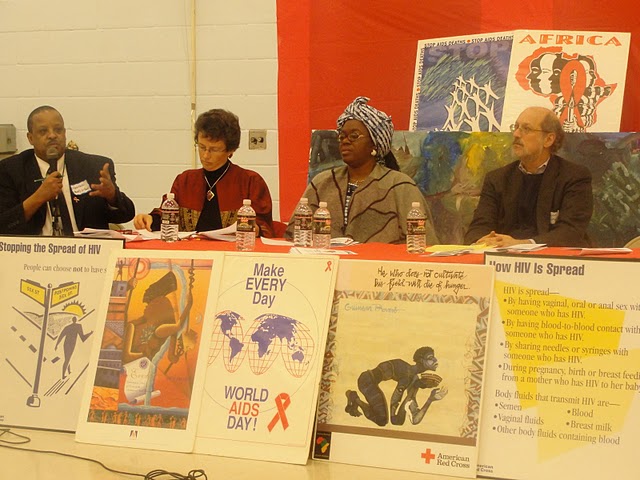
A panel discusses HIV/AIDS among Africans in Minnesota during a past African World Aids Day (AWAD) in Minneapolis. Photo: Sahra Mohamud/Mshale
DSC00360
A panel discusses HIV/AIDS among Africans in Minnesota during a past African World Aids Day (AWAD) in Minneapolis. Photo: Sahra Mohamud/Mshale

The annual African World AIDS Day (AWAD) Event will take place 2:00 p.m. to 7:00 p.m., Saturday, November 1st at Oromo Community Center in Saint Paul. The free event is sponsored by the AWAD Planning Committee – a coalition of local African residents and organizations united in the fight against HIV/AIDS.

“We want all Africans living in Minnesota to attend this important event,” said Ephraim Olani, Spokesperson, AWAD Planning Committee. “It’s all about saving lives and keeping us safe from HIV/AIDS for generations to come.”

AWAD began in Minnesota in 2004 by a coalition of local African agencies that chose to have an annual World AIDS Day observance to focus on African culture and the devastating impact that HIV/AIDS has had on Africans worldwide and in Minnesota. To date, the AWAD event has served over 1,600 Africans.

“Our mission has always been to provide our African residents with vital information about the prevention, testing and treatment of HIV infection,” said Olani. “Our theme and goal is ‘getting to zero’ that aims at reducing new HIV infections, discrimination and AIDS related deaths to zero among Africans.”

According to the latest reports from the Minnesota Department of Health, Africans represented fourteen percent (14%) of all new cases reported in 2013 and thirteen percent (13%) of all persons living with HIV– yet, they represented only one percent (1%) of the state’s total population. The HIV infection rates that year for Africans were 17 times greater than whites. There are 1,042 Africans that are estimated to be currently living with HIV in Minnesota.

“This year’s event will feature expert speakers, African youth performance groups, testimonials, free HIV testing, agency resource exhibits, and African cuisine with refreshments,” said Olani.

Julia Opoti, publisher, editor, writer and radio producer, will emcee the event. Inspirational African speakers will include Lucie Makena, Mesfin Feyisa Robi and Kiatamba. A panel of agency representatives will discuss their services and programs for Africans. The talented Oromo Cultural Youth Group will provide a unique performance dedicated to the event. Music will be provided by the renowned DJ, Shortlegg.

The AWAD event is free and open to the general public. For more information, contact any of the following AWAD Planning Committee members: Henry Momanyi, 763-439-0083, [email protected]; Tom Bichanga, 612-363-5219, [email protected]; or, Ephraim Olani, 763-228-2112, [email protected].

African World AIDS Day
465 MacKubin Street, St. Paul, MN 55103
2:00pm-7:00pm

Minnesota Africans tackle Ebola

0
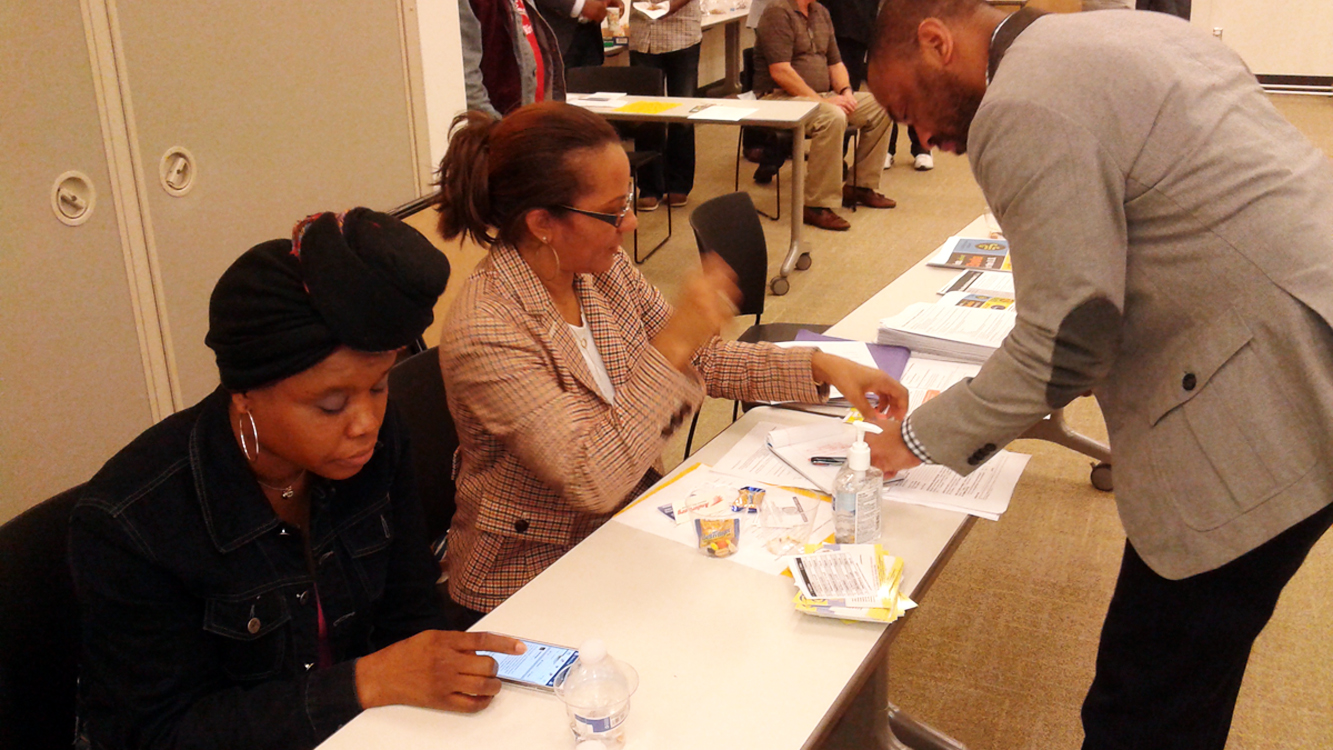
Kumba Momo and Ramona Gaye, a Registered Nurse, are part of Boots on the Ground, a group that has been signing up African medical practitioners from the diaspora that want to go and volunteer in West Africa in the fight against Ebola. They were at the Saturday session to solicit volunteers. Photo: Tom Gitaa/Mshale
Boots On The Ground
Kumba Momo and Ramona Gaye, a Registered Nurse, are part of Boots on the Ground, a group that has been signing up African medical practitioners from the diaspora that want to go and volunteer in West Africa in the fight against Ebola. They were at the Saturday session to solicit volunteers. Photo: Tom Gitaa/Mshale
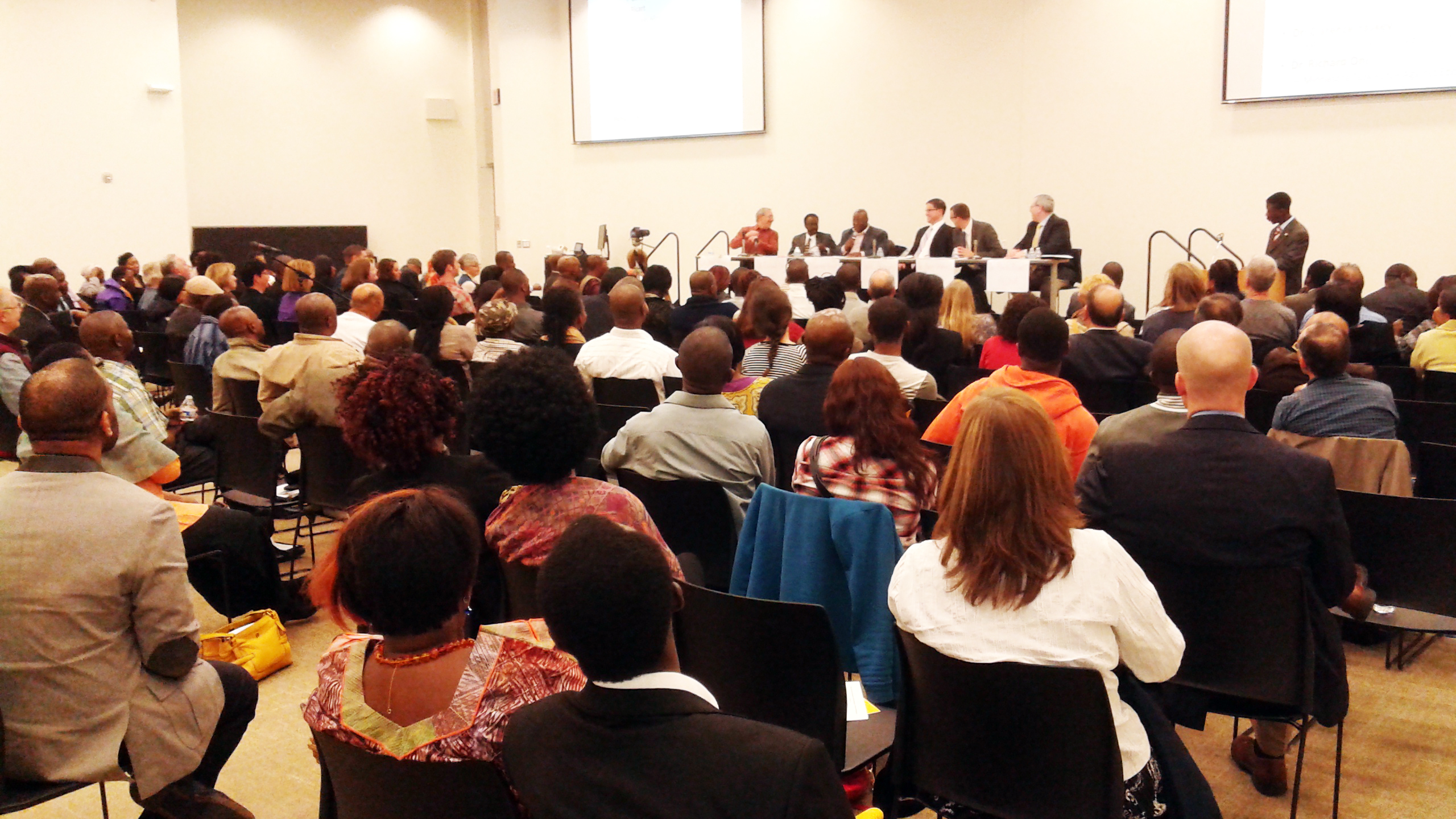
It was a packed house at the  Community college Saturday evening for an Ebola information session organized by the Minnesota Africans Against Ebola Task Force and the Minnesota Department of Health Ebola Information Session in brooklyn park, Minnesota on Saturday, October 25, 2014. Photo: Tom Gitaa/Mshale
It was a packed house at the Community college Saturday evening for an Ebola information session organized by the Minnesota Africans Against Ebola Task Force and the Minnesota Department of Health Ebola Information Session in brooklyn park, Minnesota on Saturday, October 25, 2014. Photo: Tom Gitaa/Mshale
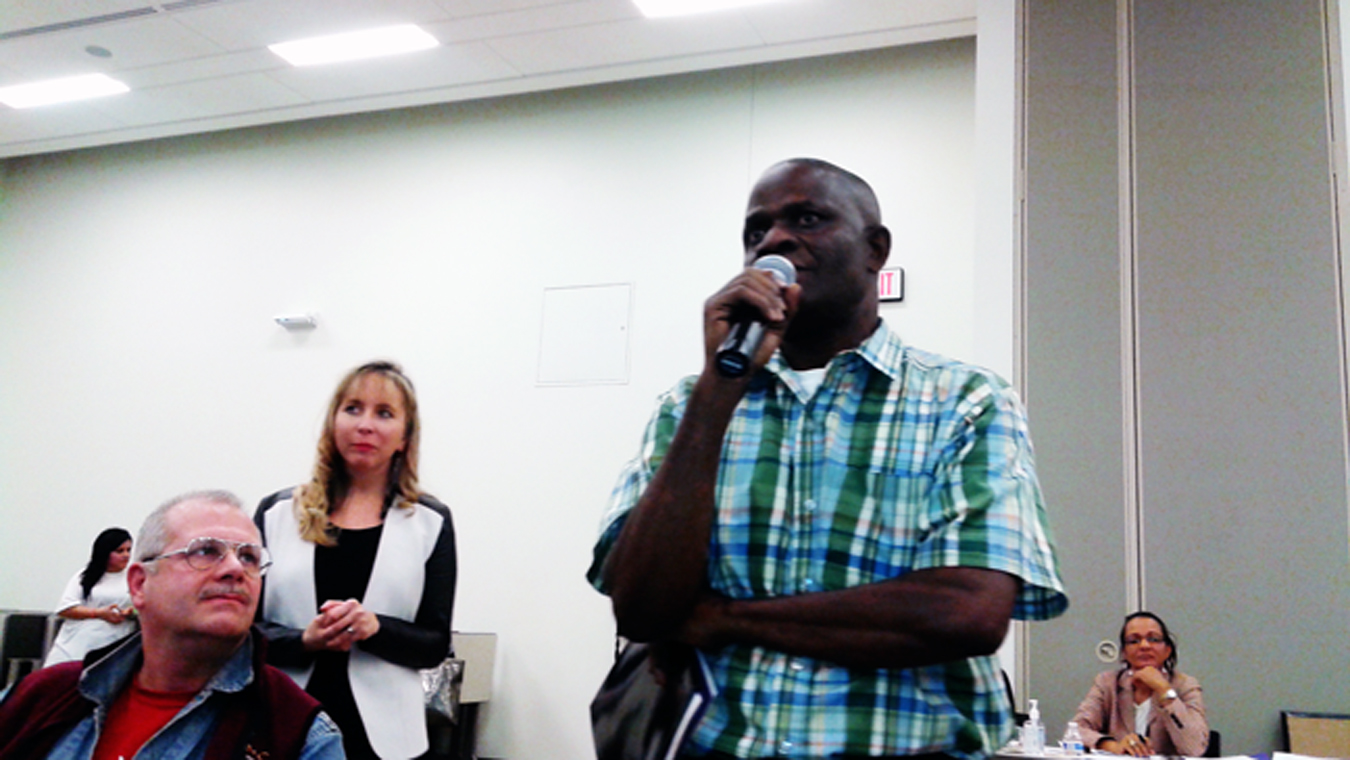
Kirkpatrick Weah, a Liberian-American community activist asked whether the Ebola virus was deliberately released. Photo: Tom Gitaa/Mshale
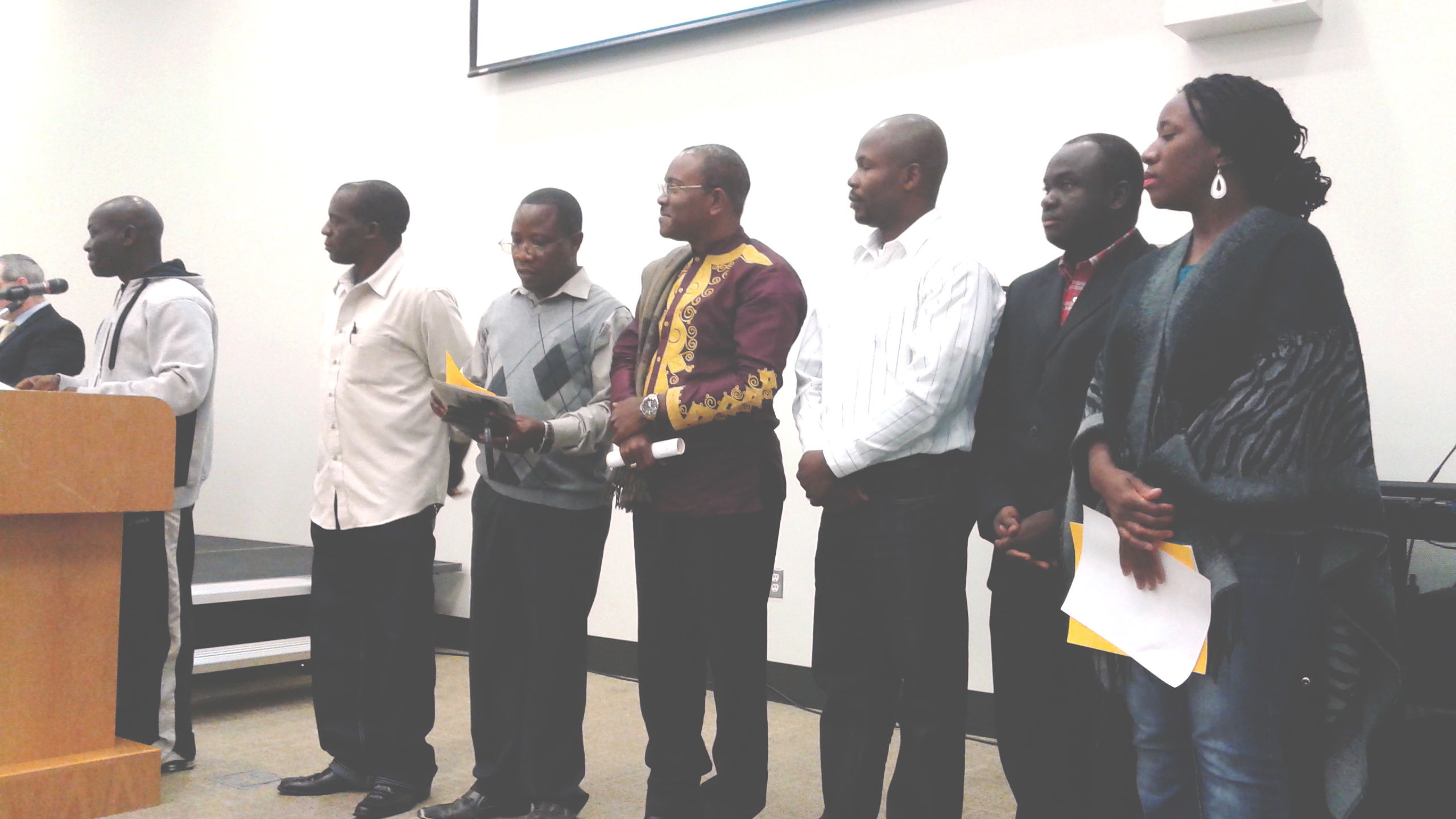
Abdullah Kiatamba (on microphone), Executive director of African Immigrant Services and chair of the Minnesota Africans Against Ebola Task Force introduces members of the Task Force. Photo: Tom Gitaa/Mshale

BROOKLYN PARK, Minn. – Hundreds of local residents gathered at the North Hennepin Community college Saturday evening for an Ebola information session organized by the Minnesota Africans Against Ebola Task Force and the Minnesota Department of Health.

Panelists included representatives from Allina Clinics and Hospitals and the Fairview Clinics. The two hospital systems are among the four selected by the state of Minnesota to be Ebola treatment centers should a case be diagnosed in the state. The other two are University of Minnesota Medical Center’s West Bank campus and the world-famous Mayo Clinic in Rochester. Abdullah Kiatamba, chair of the Task Force, said the choice of both private and public sector representatives was deliberate as “both perspectives are important,” he said. Rounding up the panelists was renowned mental health expert Dr. Richard Oni and Dr. Clarence Yaskey both members of the Task Force.

The US public has been in panic mode since the first case of Ebola was diagnosed on US soil, that of Thomas Eric Duncan, a Liberian who died October 8 after entering the country on September 20. Two nurses who treated him at a Texas hospital later contracted Ebola, Nurse Nina Pham being the first one to be diagnosed on October 12 with the second one, Nurse Amber Vinson on October 15. The two nurses have now recovered.
Avoid ‘Non-essential travel’

At Saturday’s session, Dr. Aaron Devries who is Director of Infectious Disease at the Minnesota Department of Health described Ebola as “one of the biggest health events in our community.” He said the numbers so far don’t capture the impact of the virus. Echoing recent statements from the Minnesota Africans Against Ebola Task Force urging African immigrants to avoid travel to the affected countries unless part of the medical teams that are volunteering to go and provide assistance, Devries said cooperation from members of the community is critical in dealing with any possible Ebola cases that might be diagnosed in the state. Dave Johnson, who oversees epidemiology at Hennepin County, the sates largest county and home to a larger percentage of the state’s African immigrants said the law gives the government the power to quarantine someone in the interest of public health. He stressed the preferred way is for those suspected to have been exposed to Ebola to cooperate with public health authorities.

“Please let us all encourage our people coming back (from West Africa) to adhere to the 21 day voluntary quarantine.” Stressing it will not be good for authorities to have to take extreme measures when it could be done voluntarily.

Dr. Alberto Ricart then explained the Ebola screening process when a suspected case shows up at the hospital. The Allina Hospital System is the largest in the state. Unity Hospital where Ricart is based is one of the twelve hospitals in the Allina system and is located in Fridley by the northwest suburbs home to many of the state’s large African population. It is one of the designated Ebola treatment c enters. Unity Hospital, Dr Ricart said, has a “negative pressure” room where someone suspected to have Ebola would be isolated to.

Through all these procedures, Dr. Steve Meizel of Fairview Hospitals said, his institution’s approach is to ensure the dignity of the patients is maintained.

The medical experts on the panel assured the community that the state is “well prepared” should any instance of Ebola be diagnosed.

They emphasized however that Ebola is not spread through the air and that one has to be exposed to the bodily fluids of an infected person.

Mental Health

“Mental health is not about craziness,” Dr. Richard Oni said in addressing the negative attitudes Africans have about the subject. He said Ebola is “stressing out people” and it is time for the community to embrace mental health. He said the virus is wreaking havoc with the African immigrants’ mental health as many are still dealing with the scars of civil war. Liberia, one of the three countries worst affected (the other two are Guinea and Sierra Leone), is the largest in Minnesota among the West African communities.

He lamented Africans’ response to stress or mental challenges by “overworking until they crash.” From a mental health perspective, he said such a response is not sustainable.

Conspiracy Theory

As is to be expected at a gathering that has Africans amongst it, things did get interesting during the Q & A, even with the seriousness of the subject. “Was this virus released into the world by the Americans as part of research?” one Liberian-American asked.

Dr. Aaron Devries of the Minnesota Department of Health calmly debunked the conspiracy and said Ebola “has been around for years.” The only difference he said the latest outbreak has been more widespread causing fear and panic. As of Saturday, the World health Organization (WHO) said the death toll from Ebola had risen to 4,922 out of 10,141 recorded infections. Guinea, Sierra Leone and Liberia account for 4,912 of the 4,922 deaths.

However “If one has no symptoms, you are not infectious,” he said.

Responding to another question, Devries said the state does not need that many ‘Ebola beds’ as they are not needed. The likelihood that the state will need to respond to a massive outbreak is very remote.

Stigma

Attendees at the session also shared instances of being stigmatized. A teacher from the Osseo school district said children of African immigrants do not want to be identified as African as other children have been accusing them of “bringing Ebola to America.”

A Liberian-American pastor, Alexander Collins, said even in his multicultural church, non-Africans have stopped coming to church for fear of catching Ebola.

Medical Volunteers

Ramona Gaye, a Liberian-American Registered Nurse (RN), spoke briefly about the recruiting effort of the Diaspora’s medical talent that is being spearheaded by Medical Boots on the Ground round among others. We cannot just wait for others to do things for us,” she said.
Insurance, evacuation and salaries of the volunteers will be covered. “And your job is guaranteed, upon returning,” she assured those contemplating volunteering.

Those interested in the Medical Boots on the Ground initiative can send an email to [email protected] for more information.

Congo’s Faustin Linyekula and Mozambique’s Panaibra Gabriel Canda to perform at the Walker November 7 and 8

0
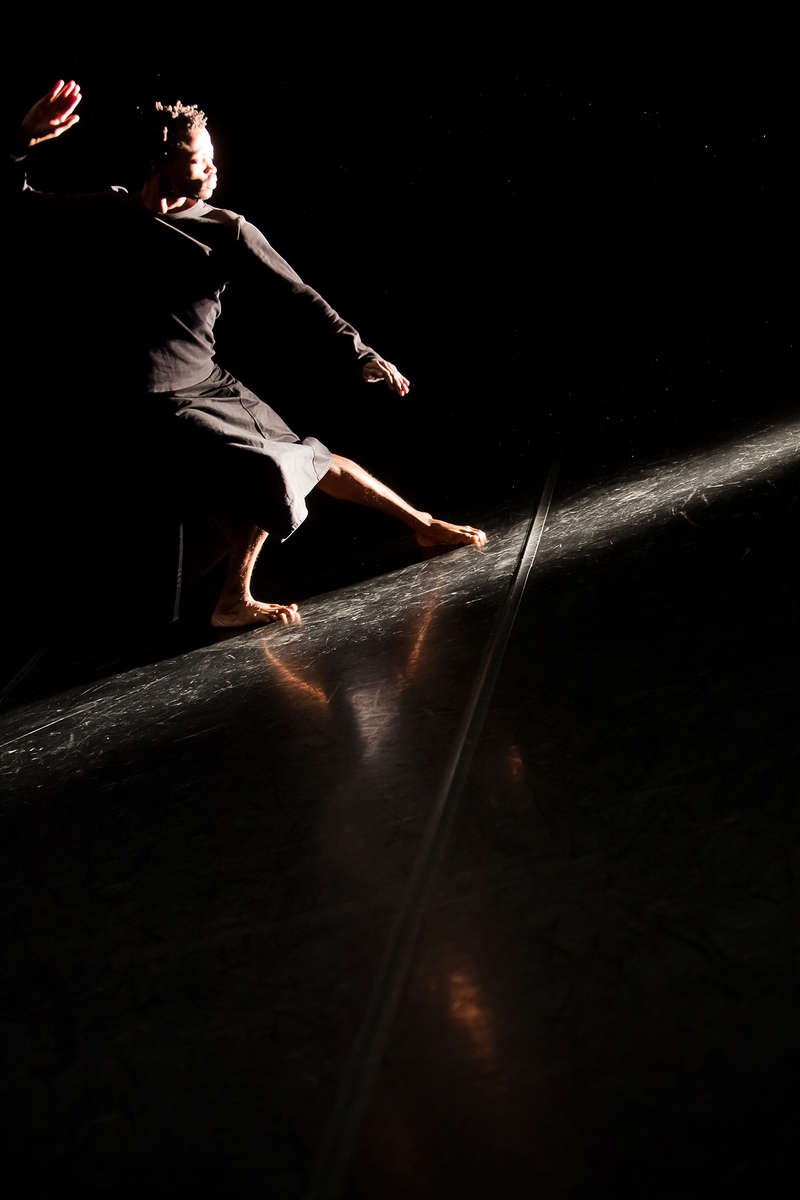
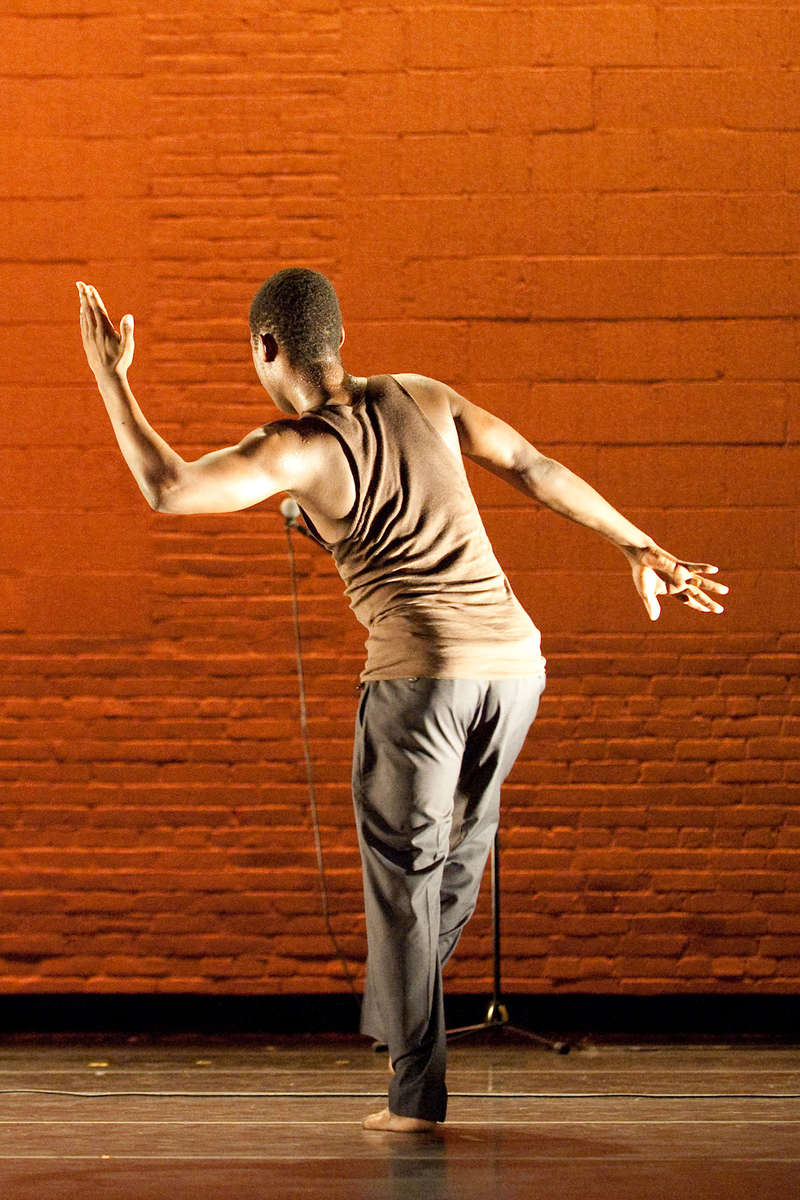
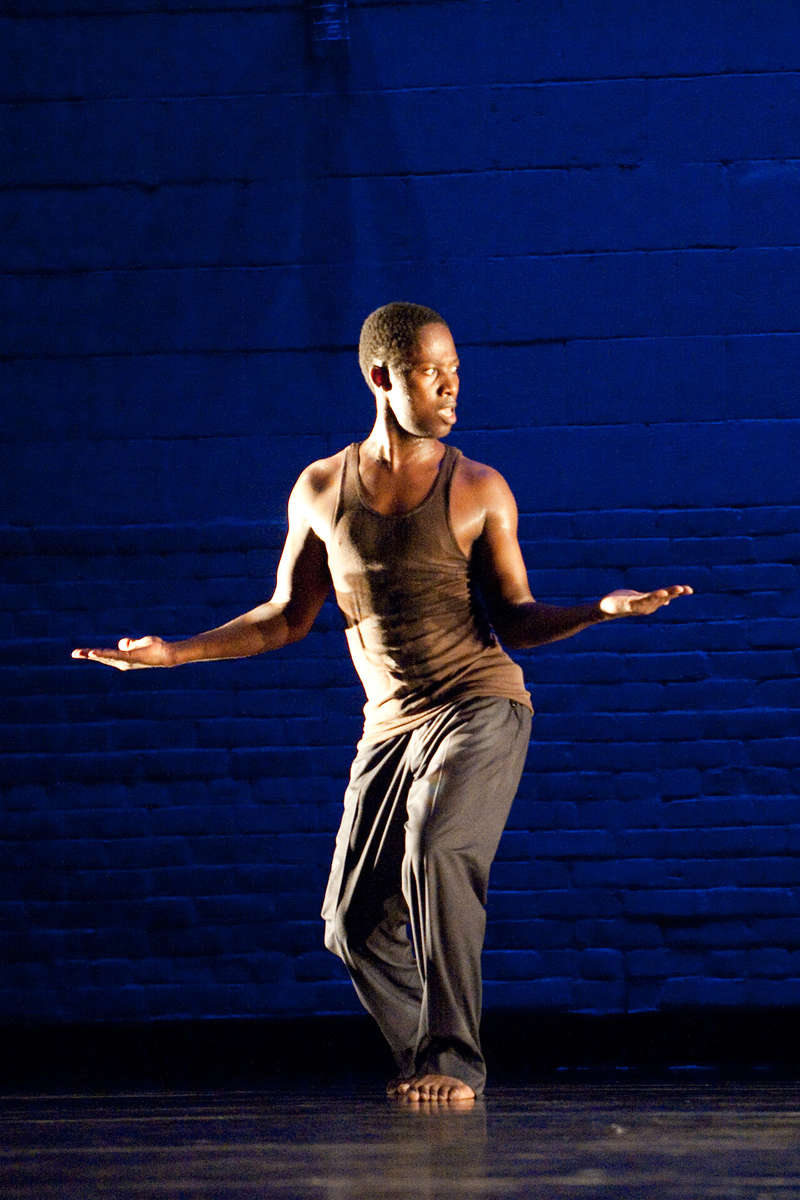
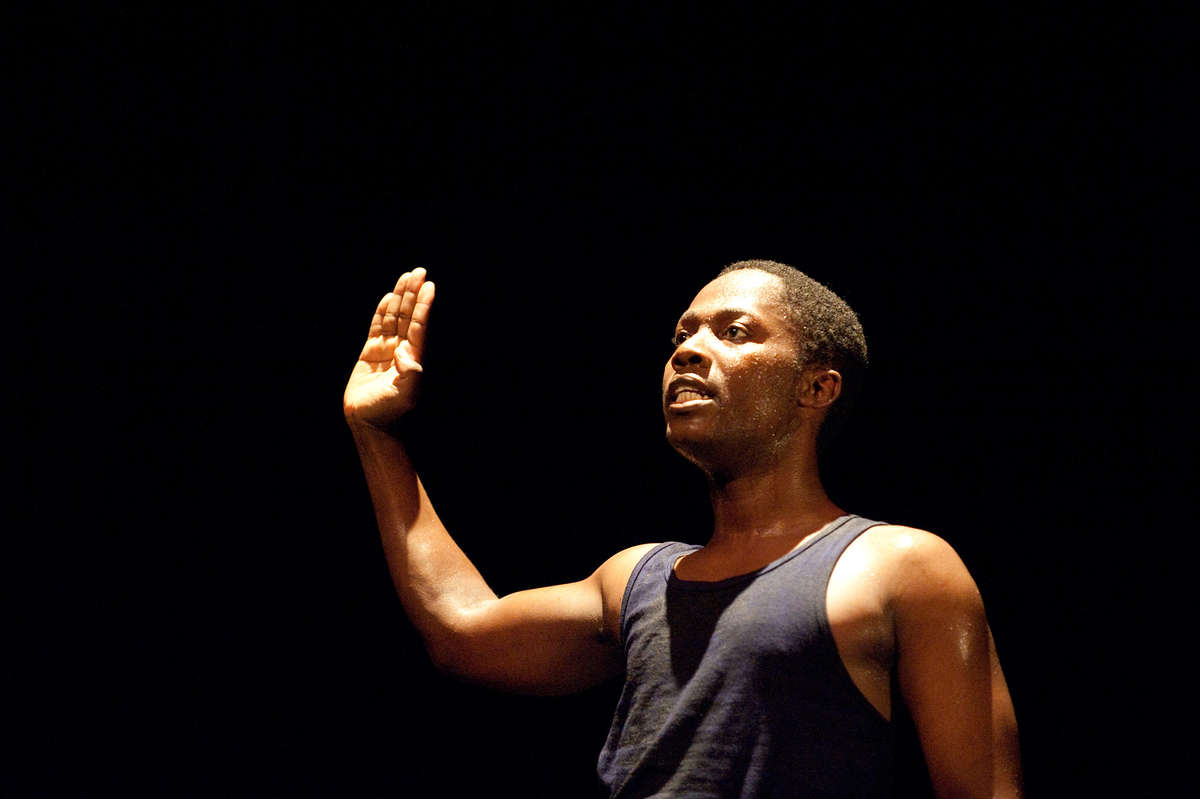
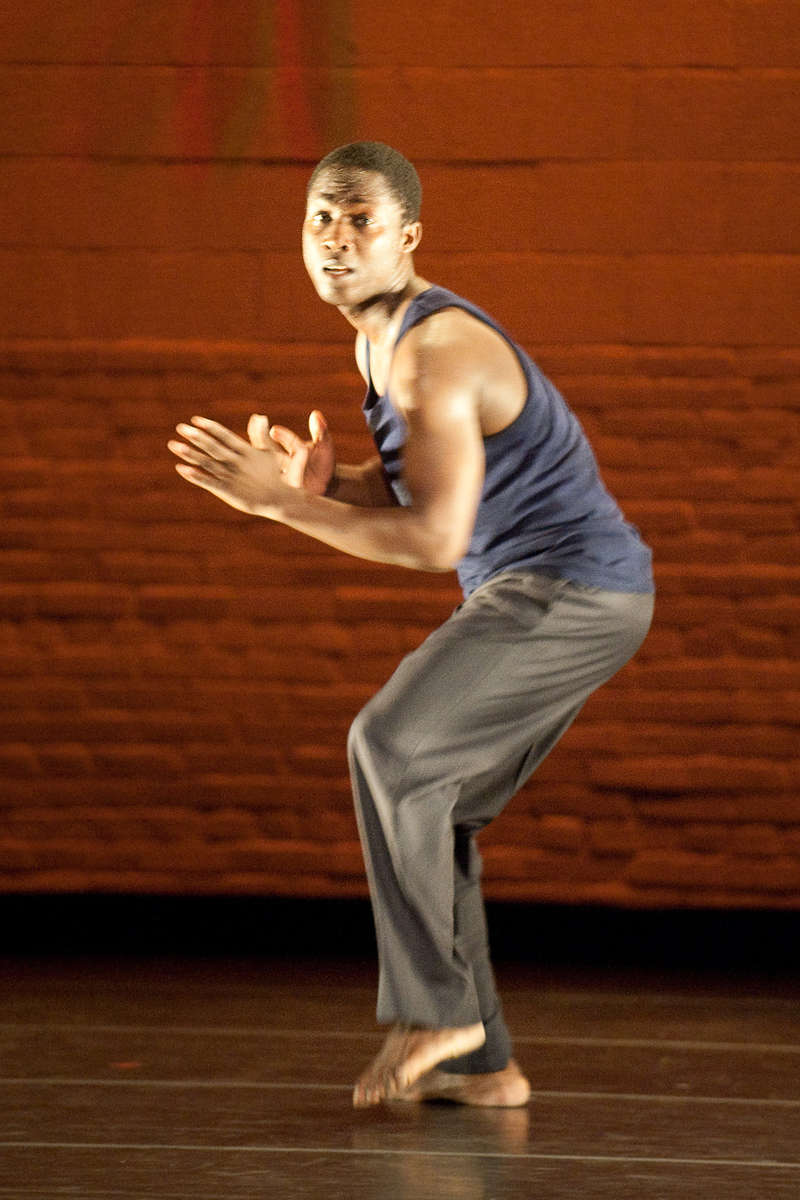
Faustin Linyekula performing Le Cargo. Photo: Agathe Poupeney
Faustin Linyekula
Faustin Linyekula performing Le Cargo. Photo: Agathe Poupeney
Panaibra Gabriel Canda performing Times & Spaces. Photo: Arthur Fink

This two-evening program of intimately scaled dance-theater features extraordinary contemporary artists from the African continent and the welcome return of Walker favorite Faustin Linyekula. In both full-length works, Linyekula and Panaibra Gabriel Canda grapple with the complex histories of their countries by reigniting memories of and experiences with their fathers and their own experiences of dislocation, forced emigration, and cultural assimilation. They present, in very different ways, intimate and personal points of view on colonialized and postcolonial Africa, familial and national histories, and our global society—and in the process, reveal the rigor and passions of their contemporary lives.

Tickets

Purchase tickets to both shows for $30 ($26 Walker members) by calling the box office at 612.375.7600. Single show, $22 ($18 Walker members)

Faustin Linyekula: Le Cargo

Friday, November 7, 8 pm

Following the success of his recent work more more more… future, Linyekula presents his first-ever choreographed solo. Le Cargo tells of the artist’s return home in search of things lost and the dance, people, and music he reclaimed in the process.

Panaibra Gabriel Canda: Time and Spaces: Marrabenta Solos

Saturday, November 8, 8 pm

Since gaining independence from Portugal in 1975, Mozambique has been a land of social and political rifts in which an inflexible communist model gradually made way for a fragile democracy. This complex history is carried in marrabenta, a musical form born in the 1930s from a mix of local and European influences. Time and Spaces: Marrabenta Solosdeconstructs cultural representations of a “pure” African body. Accompanied by virtuoso guitarist Jorge Domingos, Canda dances and speaks about today’s African body that has absorbed the elements of colonialism, nationalism, modernity, and freedom of expression.

Get tickets at the Walker website.