Mshale writer Anna Otieno was among a number of journalists honored at the annual Ethnic and Community Media Awards in Minneapolis. The award ceremony the first of its kind was co-sponsored by the Twin Cities Media Alliance and California-based New America Media.
Last year Otieno went to Washington D.C. where she covered the first Runway Africa– a high fashion catwalk showcasing African couture to raise awareness and money for AIDS. Otieno’s subsequent article (read here) earned her second place in the Art and Culture division.
In a statement read on her behalf, Anna said that while reporting on the fashion show she used her responsibility as a journalist to tell the bigger story. “Behind each vibrant design and eclectic print was a story – a story about a fashion designer who celebrates the skills and talents of Ghanaian women, a story showcasing the handcrafted jewelry of Cape Town, a story of a fashion show that strives to fights AIDS in Africa in innovative ways, and a story of instilling hope and self-esteem in the beautiful African Diaspora.”
Mshale’s founder and publisher, Tom Gitaa expressed gratitude to the organizers and his staff, “I am very honored that Mshale won this award because we have invested a lot in our writers.”
Minnesota’s longest running ethnic newspaper, the Minnesota Spokesman-Recorder, was the leading publication of the evening, with top articles in three divisions. Another Minnesota African paper, the African News Journal was recognized for an article that highlighted the challenges that aging immigrant populations face with little or no access to public resources and infrastructure. Other publications honored were: Workday Minnesota, The Bridge, Korean Quarterly, Hmong Today, and Asian Pages.
LOS ANGELES — Ask Africans what their chief criticism of U.S. mass media is and you’ll get an almost unanimous answer: Coverage of the continent focuses too much on stories that portray Africa as a backward place full of great suffering.
Mostly, Africans have sat back and helplessly watched as the image of their continent continues to be assaulted. But that may change if The Africa Channel – a new, ambitious cable television station dedicated to original news and entertainment programs from Africa – succeeds.
Recently I traveled to southern California for a celebration of a deal that put The Africa Channel on Time Warner Cable Channel 176 in the greater Los Angeles area. For this video report, I spoke with Congolese-born NBA star Dikembe Mutombo, who was among the first major investors in the idea of broadcasting African programming across America, and Zimbabwean-born, James Makawa, the company’s CEO.
Makawa, a long-time NBC correspondent, acknowledges that much of what is reported in the mainstream media about the African continent – HIV/AIDS, armed conflicts, hunger, corruption – is accurate. But he says that that is not all that goes on in Africa, and that’s the point The Africa Channel is trying to make.
Such stories often come from foreign journalists, whose only source of knowledge of the continent is what journalism schools and newsrooms call “parachute memos” – quick facts about a subject, printed out and read on the way to the scene of the “breaking news.” Many of these journalists also come from news organizations that have fewer bureaus in Africa than they did 20 years ago.
Even the news organizations that have bureaus in Africa assign their correspondent extensive regions to cover. Look in the Africa section of these publications and you might see, for instance, a story about the Democratic Republic of Congo written from Nairobi or Johannesburg.
And even when stories about Africa are positive, there are usually elements of stereotypes embedded in them. A few months ago I was attracted to a headline in a major American daily, asking whether Nairobi was going to be a hub of technology like Palo Alto in Silicon Valley. The story – one of the best I have seen highlighting the intellect of Africans – was about a young man in Nairobi who had written an application for the iPhone, though he had never held one in his hand. To my dismay, the image that accompanied the story was of a run-down mobile phone retail shack with a Maasai in full traditional attire walking in front of the kiosk. The editor must have feared that a photo of a retail store in downtown Nairobi looked too much like Palo Alto.
On November 10th, the world woke up to the tragic news of the legendary Miriam Makeba.
Laura Audrey Kabasomi “Somi” Kakoma, a jazz musician based in New York, has been described as a modern day Miriam Makeba. Born in the US, of East African parents, Somi’s music is deeply influenced by African vocal sounds and instruments.
Her “heart heavy with the news” of Makeba’s demise she wrote the following tribute in honor of her mentor, Miriam Makeba.
when i remember last night i feel the warm embrace of old friends.
bright beads of proud african decadence: laughter, tears, introspection, and celebration – the atmosphere.
miriam whispers in my ear and my heart and i hope she’s dancing.
oh, how i wish i’d had the chance to tell her how her journey inspired me to sing my own stories.
she was the ORIGINAL.
it doesn’t get any hipper or more courageous than
an african woman
touring the world in the 1960s all breath and truth-telling
if she wasn’t here then, would i be here now?
when i remember last night
i feel the swelter of a packed room nodding heads dressed in light and shadow the slap of palm to drum
a shekere meets the roar of applause meets the sudden hush of ears longing to hear her have the last word.
Oscar Amaya regrets not being able to vote in the presidential election, but is consoled by the knowledge that he is part of a historic event. The Salvadoran, a native of San Vicente, is one of six Latinos helping to build the podium in front of the White House from which Barack Obama will witness the inaugural parade, after being sworn in as the new president at the Capitol on Jan. 20.
“As a Latino you feel very proud to play a small role in the inauguration of the next president,” said Amaya, who immigrated to the country eight years ago and is covered under Temporary Protected Status (TPS). “That’s why I couldn’t vote,” he explains.
Amaya, his brother Jose Amaya and his nephew Marcial Amaya are working on the project, which began immediately after the election.
They are members of the Laborers’ International Union of North America’s (LIUNA) Local 657.
“Our union has helped build the White House podium for many years,” said LIUNA representative Jhunio Medina on Dec. 3. In all, about 30 workers, including carpenters, locksmiths, welders and supervisors, are working on the platform, Medina said.
Preparation for the inauguration officially began on Sept. 24 with the ceremony of hammering the first nail on the platform at the Capitol. They also did repair work along Pennsylvania Ave.
The historic day will begin with a procession from the White House to the Capitol. Barack Obama and Joseph Biden will be sworn in on the 10,000-square-foot platform on the west side of the Capitol.
Then the president and vice president will join the parade from the Capitol to the White House, along Pennsylvania Ave.
When they arrive, they will stand on the podium that Latinos from LIUNA are building.
“For us it’s an honor to be part of such an important historic event. We’ll be able to tell our children that we helped build the podium in front of the White House for the first African-American president of the United States,” Medina said.
Meanwhile, bearing the increasingly harsh cold from 6 a.m. to 6 p.m., the workers continue to construct bleachers for the long-awaited event that is estimated to draw about 1.5 million people.
On Monday, Muslims around the world will celebrate Eid Al-Adha, a religious holiday to commemorate Ibrahim’s (Abraham) sacrifice and the end of the annual pilgrimage to Mecca. Eid commemorates the day Ibrahim was willing to sacrifice his son Isaac to God.
In observing this day, hundreds of Muslims across the state will gather in mosques, social halls and malls to celebrate as a community. The Mall of America (MOA) has in the past experienced an influx of visitors to the mall during this Muslim holiday. Major Douglas Reynolds, MOA Security Director says that in “past years we [have] messed up in terms of staffing … it is difficult to plan when you don’t know the precise date of the holiday …Eid sneaks up on us but we have gotten a little better.”
Unlike other religious holidays that occur on the same day every year, Eid and other Islamic holidays are based on the lunar calendar; cycles of the moon phase. As a result Eid falls on a different day every year.
Muslim leaders are concerned that since MOA does not have designated prayer rooms, Muslims seen praying in corners at the mall might be considered suspicious by other shoppers. Their concerns are hardly misplaced as several months ago three Muslim imams were held for questioning at the Minneapolis/St. Paul International Airport when they were seen by airport staff praying at a terminal. The community recommends that the mall considers creating a meditation room that is open for all customers’ use and marked as such.
Security at the mall is also an issue. “Gang violence is a concern … last year we got word that three Somali gang groups will be coming and they wanted to hurt each other… we have got ready for them but fortunately they didn’t show up … usually, we hire and work side-by-side with off duty officers for special programs or events and I think will do just that this time,”said Reynolds . The last six months has seen six young Somali men lose their lives to gang violence, however, none of these crimes were committed at the MOA.
Reynolds said that gang violence resulted in the closing of the mall, in 2006 and 2007, when “a fight got out of control.” Mall security has since involved the community, and has seen “fewer incidents and no fights at all, ” according to MOA security.
The Mall also reports that as the Minnesotan Muslim community keeps growing, they are striving to understand and accommodate this community. The mall has recruited volunteers and hired people from the Somali community to work on Eid to afford the community a culturally sensitive environment.
MOA has agreed to offer a prayer room for Eid. Reynolds has assured the Muslim community that he will work towards establishing a permanent meditation room in the mall.
“We hope to provide the best customer service possible to the community,”Reynolds said.
Tax Tips: Delay Home Energy Efficiency Improvements
If possible, delay energy efficient home improvement projects into 2009 to receive a tax credit. In October 2008, President Bush signed the “Emergency Economic Stabilization Act of 2008”. This law extends the tax credit for energy-efficient existing home improvements for 2009. Home improvements, including energy efficient windows, doors, HVAC, insulation, roofs, and water heaters, installed between January 1, 2009 and December 31, 2009 are eligible for the tax credit.
Caution: Improvements made in 2008 are not eligible for tax credits. Under the energy efficient tax credit law of 2005, all tax credits expired at the end of 2007. New 2008 law applies only to improvements in 2009.
Tax Facts About Capital Gains and Losses
Almost everything you own and use for personal purposes, pleasure or investment is a capital asset. When you sell a capital asset, the difference between the amounts you sell it for and your basis, which is usually what you paid for it, is a capital gain or a capital loss.
While you must report all capital gains, you may deduct only capital losses on investment property, not personal property.
Here are a few tax facts about capital gains and losses:
• Capital gains and losses are reported on Schedule D, Capital Gains and Losses, and then transferred to line 13 of Form 1040.
• Capital gains and losses are classified as long-term or short-term, depending on how long you hold the property before you sell it. If you hold it more than one year, your capital gain or loss is long-term. If you hold it one year or less, your capital gain or loss is short-term.
• Net capital gain is the amount by which your net long-term capital gain is more than your net short-term capital loss.
• The tax rates that apply to net capital gains are generally lower than the tax rates that apply to other income and are called the maximum capital gains rates. For 2008, the maximum capital gains rates are 5, 15, 25 or 28 percent.
• As noted earlier, the long term capital gains rate is expected to increase to 20% in 2011.
• If your capital losses exceed your capital gains, the excess is subtracted from other income on your tax return, up to an annual limit of $3,000 ($1,500 if you are married filing separately).
TIP: For more information about reporting capital gains and losses, or get IRS Publication 550, Investment Income and Expenses.
Income from Foreign Sources
Many immigrants who are American citizens with business interests in their country of birth earn money from foreign sources. These taxpayers must remember that they must report all such income on their tax return, unless it is exempt under federal law.
U.S. citizens are taxed on their worldwide income. This applies whether a person lives inside or outside the United States. The foreign income rule also applies regardless of whether or not the person receives a Form W-2, Wage and Tax Statement, or a Form 1099 (information return).
Foreign source income includes earned and unearned income, such as:
Wages and tips
Interest
Dividends
Capital Gains
Pensions
Rents
Royalties
An important point to remember is that citizens living outside the U.S. may be able to exclude up to $87,600 of their 2008 foreign source income if they meet certain requirements. If married and both individuals work abroad and both meet either the bona fide residence test or the physical presence test, each one can choose the foreign earned income exclusion. Together, they can exclude as much as $175,200 for the 2008 tax year. However, the exclusion does not apply to payments made by the U.S. government to its civilian or military employees living outside the U.S.
TIP: For more information check out IRS Publication 54, Tax Guide for U.S. Citizens and Resident Aliens Abroad.
Recent IRS Warning – Form 1099-OID Fraud
The IRS cautions taxpayers to avoid getting caught up in a new tax fraud disguised as a debt payment option for credit cards or mortgage debt. The fraud is also marketed as a way to reduce taxes or pay outstanding tax liabilities. It involves the filing of Form 1099-OID, Original Issue Discount, and/or bogus financial instruments such as bonded promissory notes or sight drafts.
This fraud has evolved from an earlier frivolous argument that a “strawman”(artificial person) bank account has been created at the Treasury Department for each U.S. citizen, and that individuals could use such “strawman” accounts to pay debts and claim withholding credits.
The IRS addresses the “strawman” argument in Revenue Ruling 2005-21 and Revenue Ruling 2004-31, and discredits the use of this position for income tax purposes. Moreover, the courts that have reviewed the “strawman” argument and other similar arguments have found them frivolous.
Ethiopian Pop Star "Teddy Afro" Sentenced to Six Years in Prison
Addis Ababa, Ethiopia- AFP reports that Tewodros Kassahun “Teddy Afro”, an Ethiopian pop singer and activist, has been
sentenced to six years in prison for a hit-and-run that resulted in the
death of a homeless man.
Teddy Afro has denied the charges saying that he was not in Addis Ababa at the time of the alleged crime. The accident occurred in 2006, however, Teddy Afro was not arrested and charged until April of this year.
Teddy Afro’s arrest two years ago captured the attention of many Ethiopians who saw his arrest as political persecution. Teddy Afro had been known to sing anti-government songs that accuse the government of not doing enough for its people.
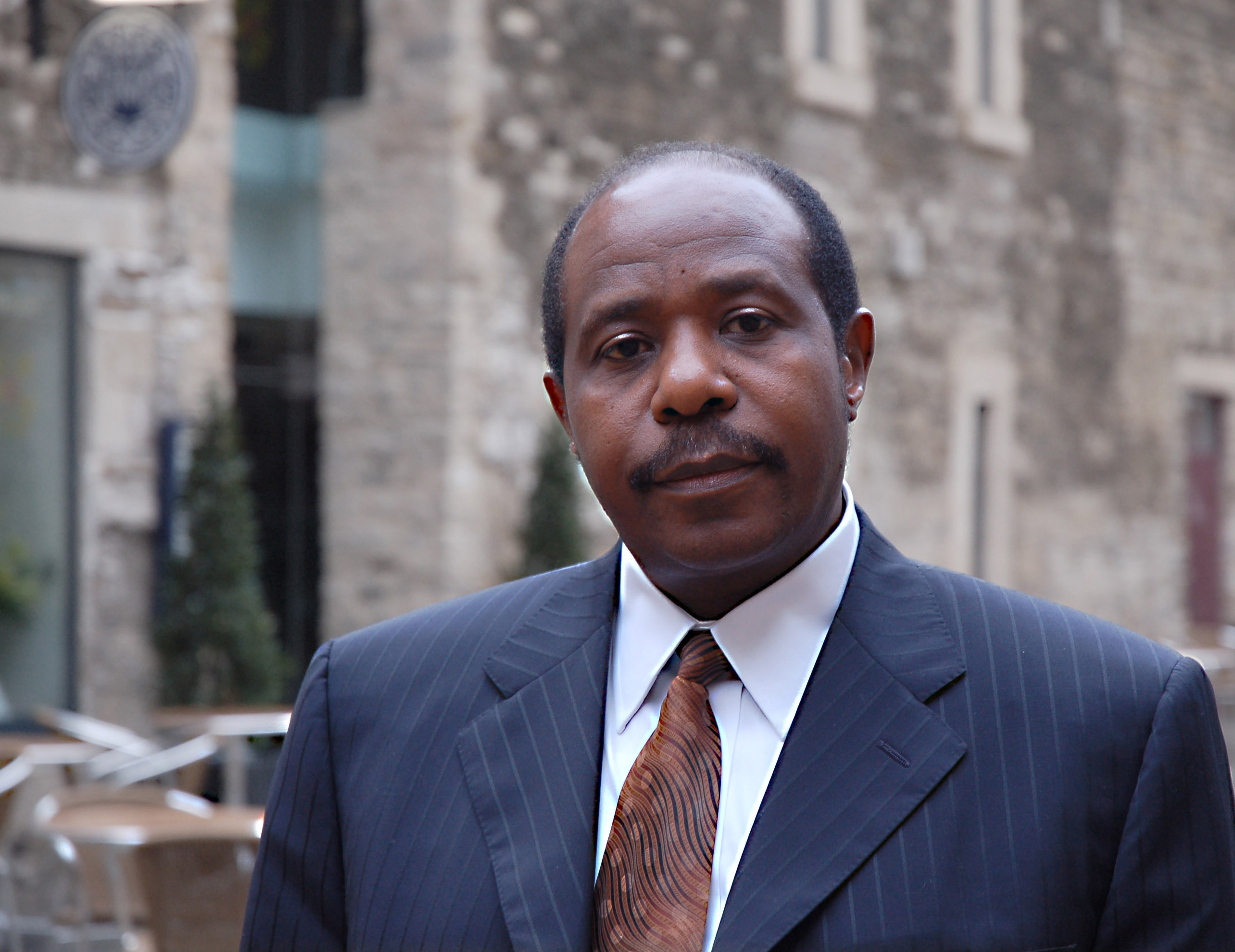
Birmingham, Al– Paul Rusesabagina, the man whose account of the 1994 Rwanda genocide is recounted in the movie “Hotel Rwanda”, came under fire this month during a lecture he was giving at the Birmingham-Southern College. Rusesabagina is doing a world tour to promote his autobiography, “An Ordinary Man”.
Prior to the speaker’s scheduled appearance, Grace Balinda and her brother Daniel from Rwanda sent a mass e-mail to the college community calling Rusesabagina a “heartless impostor”. They said that he was taking advantage of horrible situations to do business and earn a living.
Rusesabagina was a manager at the luxurious Hotel Milles Collines during the genocide, where he claims to have housed more than a thousand Tutsi refugees hiding from Hutu militiamen. Hotel Milles Collines became famous during the Rwandan 1994 genocide when close to 1000 people sought refuge at the hotel. According to Rusesabagina, he protected theses refugees through diplomacy and by bribing their would-be killers with expensive cognac. Rusesabagina recounted an episode where militiamen tried to take over his hotel. After two hours of negotiations, he was let go, but had to pay the men who had held him.
Several people at the event, however, questioned Rusesabagina’s account of the events that unfolded during that time.
Gatsinzi Basaninyenzi, another Rwandese national, drove about 75 miles with other family members to attend the lecture. He said it was painful for him to listen to the speaker make distortions about the cause of genocide in Rwanda. He also challenged a section in Rusesabagina’s book predicting that another episode of genocide was inevitable in the region.
“Sir, do you really believe that there is a justification for genocide?” he asked.
Vince Gawronski, an associate professor of political science at the college and the session moderator said he was not impressed by Rusesabagina’s lecture. He said he was especially perturbed by the author’s inability to answer legitimate questions raised by the audience.
“His version of events is a bit different than that portrayed in the academic literature,” he said. “For one, the Hotel Milles Collines was under UN protection the entire time he was ‘saving’ Rwandans” he continued further casting doubt on Rusesabagina’s credibility.
Rusesabagina refuted claims that he charged people to take shelter at the hotel. He also rebutted concerns that he was a genocidaire, saying that the Rwandan government had rewarded certain people to make those claims.
Paul Rusesabagina currently lives in Belgium on exile. According to the United Nations estimates, about 800,000 people died in the course of a hundred days in Rwanda in 1994.
Many people may believe that if they are traveling domestically inside the United States, they cannot be questioned about their immigration status. Unfortunately, this is not entirely true. Indeed, in Upstate New York, an alarming number of noncitizens who are out of status and encountered by the U.S. Border Patrol aboard buses and trains from New York City have been arrested, detained and placed in removal proceedings. Those who are not carrying proper immigration documentation with them, such as a “green card” or a passport and I-94 card, may be delayed and subjected to a humiliating interrogation while officials investigate whether they are in fact in status. Amtrak and Greyhound provide no warning to their passengers that they may be subject to such inspections by immigration authorities.
It is clear that when a person is seeking to enter the United States at a border point, or a port-of-entry as immigration law refers to it, Customs and Border Protection (CBP) officers can request a passport and a visa, if required, or other appropriate identification, and can inquire in detail about the reason why one wants to come into the country. Therefore, there are very few rights at the border. The Government is authorized to question individuals to determine whether they have a legitimate right to enter or remain in the U.S. This is called the inspection process.
However, this process is not just limited to the physical border. There is a provision in the immigration law that treats a distance of up to 100 miles from an international border as its “functional equivalent.” This allows Border Patrol and other immigration officials to enter and search vessels, buses, trains, and vehicles traveling inside the U.S. to determine whether those aboard are legally in the country. These searches extend to train and bus stations, and even airports which have no international flights. Recently, the American Civil Liberties Union (ACLU) issued a fact sheet on the “Constitution-Free Zone,:” this area 100 miles from an international border, including the U.S. coastline. The organization calculates that 197.4 million people live in this zone.
In Upstate New York, the Border Patrol has generally extended its power to stop and question within the “functional equivalent of the border” to only 25 miles from the physical border. Nonetheless, since 400 miles of New York State borders Canada, this still means that all major Upstate cities, including Buffalo, Rochester, Syracuse and Albany, are within Border Patrol’s jurisdiction. Moreover, these four cities lie along Interstate 90, a major pathway for buses and trains from New York City to points westward, such as Cleveland, Detroit and Chicago and onward.
The “functional equivalent of the border” rule gives immigration authorities broad powers to conduct transportation checks farther from the actual border in order to stop and question people about their immigration status, as well as to establish checkpoints inside the U.S. However, this does not mean that one gives up all of his or her rights. The Fourth Amendment of the United States Constitution protects people from unreasonable searches and seizures by law enforcement. Therefore, a law enforcement officer must have a search warrant or the consent of an occupant to enter a dwelling. Similarly, outside of a checkpoint, immigration officials must have a reasonable suspicion that a U.S. immigration law has been violated in order to stop a car, as well as probable cause or a warrant to search the car. It is also very important for individuals to know that, if stopped by Border Patrol at a bus or a train station or at an airport, even within the area known as the “functional equivalent” of the border, they still have the right to remain silent and may refuse to respond and walk away.
Since 9/11, given the concern that terrorists might enter the United States from Canada, there has been a steady increase in agents conducting checks along the Northern border. While in 2001 only 340 immigration agents were assigned to this border, by next year, there will be 1800. These agents are aggressively patrolling the region: they board buses, trains and ferries to question people about their status in the U.S. and they operate undercover in area’s airports as well. Although it has publicly denied doing so, immigrant advocates express concern that the Border Patrol is engaging in racial profiling during its transportation checks to determine who is not a U.S. citizen.
While civil rights organizations like the ACLU justifiably view the transportation checks as a broad and illegitimate expansion of law enforcement’s authority to protect U.S. borders, there have been no legal challenges of the law to date. For individuals caught up in the dragnet, nonetheless, the consequences are severe.
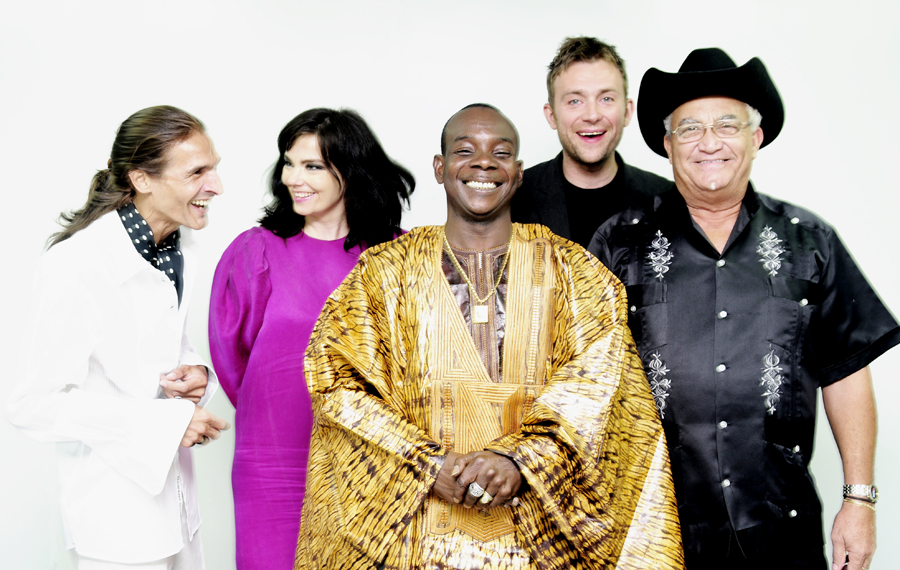
It may strike many people as odd that a musician as world renowned as Toumani Diabate has only recently released his second solo album. It’s even more perplexing when you find that his first solo album was his debut at the age of 21 entitled “Kaira”, released in 1988. Now, you may think he took some sort of a hiatus in that twenty year period to tend to matters other than making music on the kora. You could be excused for thinking that if you know nothing about the history and background of this cherished native of Mali.
You see, Toumani Diabate was born in Bamako, the capital city, on August 10, 1965 to Sidiki Diabate and Nene Koita. His father is considered the greatest kora player in recent memory and his mother was a famous singer. Now, throw in the fact that Diabate is the 72nd generation in a lineage of kora players spanning the last eight centuries, and you begin to appreciate the infinite musical entity that is Toumani Diabate.
The answer to what he has been up to over the last twenty years would include forming and touring with his 50-man strong Symmetric Orchestra band. Along the way, he has collaborated on albums with many musicians including diverse music greats such as Taj Mahal, Bjork, and the late Ali Farka Toure.
Luckily for us, he found time to haul his enormous, ornately designed, 50 year old kora to our doorsteps at The Cedar in Minneapolis to give us a taste of West African sunshine on a rather frigid Thursday evening in November. It was to be as much of a masterpiece in solo musicianship as I have ever seen.
“Hello new America,” was his greeting to the highly expectant crowd, which was met with great applause. He was very humble in his introduction and came across a very spiritual man. Once he began playing the first song, there was a palpable sense of the crowd being gradually enraptured and seduced by his instrument. He played with his eyes closed as if in trance; to focus on visualizing a place to take us musically, while his head swayed with the music. His fingers seemed to move at sonic speed as they picked at the strings. It was amazing to all the plethora and complexity of sound that he produced from his kora.
The kora is a harp-like instrument constructed from half a gourd of calabash with 21 strings of fishing net attached to a notched stalk much like a guitar. The gourd area is clothed in cow hide to provide resonance. It is played with the thumb and index finger of each hand only; mastery of the kora requires not just years of training, but also skill. Toumani Diabate is regarded as the best living exponent of this art.
Much of his material on the night was taken from his recently released album, “The Mande Variations.” It is worth noting that most of the songs were barely recognizable to me although I was quite familiar with the music. This was so because kora music is more of an art of improvisation than anything else and very rarely is a composition played the same way twice. I could always make out the melody, but then he would depart from it as he ventured on a progression of rhythms that seemed to build on each other and yet always held on to an existing theme.
One highlight of the evening was the song, “Ali Farka Toure,” a tribute to the late Malian blues man. The mention of Toure’s name in the introduction of the song caught the crowd on fire, and at its stunning end, gave rise to a standing ovation.
This was to be a memorable night for all present, and especially so for Ryan Skinner, an American who had studied playing the kora under Diabate for several years in Mali. They both spoke about their relationship and referred to each other as “brother.” The only thing more endearing than their journey together was their first ever performance together, which was to serve as the finale to the show.
In Mali, most kora players are griots called Jeli. They inherit the duties of being historians and storytellers tasked with passing on old adages and traditions to future generations through song. They journey endlessly to perpetuate the culture. Toumani Diabate traveled far off the beaten path to leave us with some inspiration through his timeless music, and in gratitude, we can only wish him safe passage to his next destination.
<object width=”425″ height=”344″><param name=”movie” value=”http://www.youtube.com/v/8luhdxS2KuM&hl=en&fs=1″></param><param name=”allowFullScreen” value=”true”></param><param name=”allowscriptaccess” value=”always”></param><embed src=”http://www.youtube.com/v/8luhdxS2KuM&hl=en&fs=1″ type=”application/x-shockwave-flash” allowscriptaccess=”always” allowfullscreen=”true” width=”425″ height=”344″></embed></object> Video: Toumani Diabate plays the Kora
Listen to more of Toumani Diabate’s music here. Click here for tour dates.
Agency Reaches out to African farmers in Rural Minnesota
The last weekend of October, 2008, the Institute for Agriculture and Trade Policy (IATP) held what’s hoped to become an annual conference, the first of its kind in Minnesota and possibly the entire country. Founded in 1986 by an international board of directors who shared a common vision for farmers the world over IATP works to ensure fair and sustainable food, farm, and trade systems both in policy as well as practice.
IATP is a non-governmental agency that is locally rooted yet global in its concerns. Corinne Rafferty, vice president for IATP programs pin pointed an essential component of their organization. “Government agencies often focus on providing services; we focus on changing policies so that, for instance, rural communities in the Upper Midwest can thrive,” said Rafferty.
This inaugural conference, Summit for Africa, provided a chance for education, information sharing, and networking to over 150 African refugees living in rural Minnesota communities as well as recent African refugees living in the Twin Cities. Also attending were professors, concerned citizens, social workers, community planners, political aides, and others who are involved in the concerns of both rural Minnesota and African immigrants.
Monday morning, October 27th Summit for Africa opened its second day of activities at the Radisson Suite Hotel in St. Cloud, Minnesota. Because of IATP’s focus on agriculture, and in recognition of the growing immigrant population who are relocating to rural communities, IATP has developed a program specifically to help integrate rural African immigrants into their chosen communities with an objective that they become successful, long term residents.
Keynote presenters for the morning included IATP’s CEO Jim Harkness, Minnesota state resettlement coordinator Gus Avenido, and Director of Immigrant Development Center in Fargo, North Dakota Fowzia Adde.
Avenido works extensively with Africans resettling in rural Minnesota. He described rural communities as those comprising less than 2500 people. Places such as Olivia in the west-central part of the state or Tracy in southern Minnesota are typical of the rural towns in which immigrants relocate.
According to IATP over 20,000 African immigrants now live in rural Minnesota. Immigrants’ relocation site from their homeland is a result of various decisions such as joining existing family already located here, personal preference, or the subjective decision of an Immigration officer.
Unlike other immigrants who can resettle at a US location of their choice, refugees are often assigned a location. When a refugee arrives in the United States and there is no family reunification in the plans, the State Department assigns the refugee to a location.
“The resettlement office helps with housing, learning English, medical services, employment, and other issues,” said Avenido. “It takes a lot of time for a newcomer to integrate into these communities,” he continued. “Social services are very limited in such areas,” Avenido said.
In addressing the Summit for Africa audience, Avenido quoted extensively from a report on rural life titled “Perceptions of Rural America,” published by the W.K.Kellogg Foundation and studied by Greenberg, Quinlan, Rosner Research. Referencing this report, Avenido suggested that perceptions are dichotomous in rural America. “Rural life represents traditional values, but it is behind the times,” said Avenido.
As an example, Avenido quipped, “If you want to meet Somalis for a conversation, you go to Starbucks. In rural America, there are no Starbucks.”
The refugee resettlement officer took issue with the stereotype “Rural life looks serene and slow paced.” In fact, said Avenido, “Rural life is also grueling.”
Despite the commonly held perception that rural life is friendly, to outsiders, stated Avenido, rural life can be encountered with indifference. “Everyone knows everyone; everyone cares for one another,” but you have to be a part of the system, connected to the community to be included in that care, suggested Avenido.
Finally, Avenido highlighted that, “People depend on their neighbors; there is no public transportation.” In other words, integration can be essential for the successful rural immigrant.
“It’s all about relationships,” said Avenido. “Networking takes a lot of time, but we don’t have a lot of time in job development. Successful integration has to be dependent on the relationships that are built over time.”
The third keynote speaker, Fowzia Adde, fluent in five languages, chose to speak in Somali with Garat Ibrahim, IATP’s Rural Communities Organizer translating for her. As the director of the African Development Center in Cass County, North Dakota and Clay County, Minnesota, Adde works to improve community life with respect to their burgeoning diverse populations.
Key to creating a cooperative work environment, said Adde, is encouraging cooperation between one institute with another institute as well as “proactively integrating our culture” with that of Minnesota’s (and North Dakota’s) culture.
Adde also spoke about the differences she saw between the two cultures. Adde said, “As a parent, to my memory, we never had the opportunity to speak with or back to our parents. Our African way to show respect was to keep quiet, but here (in the United States) it is different. Here we have to understand that our children must discuss issues with us. Old culture is in conflict with the new culture. As a parent, we have to engage our children,” said Adde, a sentiment that applies to a cross-section of parents and children regardless of their rural or urban status.
Several discussion groups were held following the morning’s address. Topics included law, economic development, housing, human rights, employment, health, and education. Facilitators for these discussion groups ranged from Professor Abdulkadir Alasow who teaches at Mankato State University to Hussein Farah with African Development Center, a financial services institution.
Cultural understanding was foremost in the presenters’ orientation. A quick example of the need for this respectful mindset was made apparent in Farah’s discussion when he noted that “Most lenders (of American lending institutions) do not ask an African ‘how many families are you supporting back home?’ they’ll just look at the income and make the loan accordingly. At ADC, we include that question.”
The need for cultural sensitivity rose to the top of concerns for many who attended the conference. At the same time, as was pointed out by Siad Ali, staff worker for Minnesota Senator Amy Kolbuchar, “We have to help employers to understand the different culture and build that trust. However we can’t demand that a company change their policy because this is America, not Somalia,” said Ali.