Minnesota Kenyans watch a soccer game during an end of summer get together at Centennial Park in Brooklyn Center on August 29, 2021. The popular Kenyan TV show Daring Abroad has announced a live taping of its show in neighboring Brooklyn Park on Saturday, August 19, 2023. Photo: Jasmine Webber/Mshale
Minnesota Kenyans watch a soccer game during an end of summer get together at Centennial Park in Brooklyn Center on August 29, 2021. The popular Kenyan TV show Daring Abroad has announced a live taping of its show in neighboring Brooklyn Park on Saturday, August 19, 2023. Photo: Jasmine Webber/Mshale
Daring Abroad, a popular Kenyan TV show that highlights Kenyans living abroad, has announced a live taping of the show in Brooklyn Park on Saturday, August 19 at 4:00 p.m.
The taping which will also double as an investment forum for Kenyans in the diaspora will be held at the Brooklyn Middle Steam School, 7377 Noble Ave. N.
The event is free to attend.
Representatives from some of Kenya’s blue-chip companies like Co-operative Bank and Kenya Airways will be present to share investment opportunities and products tailored for those in the diaspora.
The show’s producer and host, veteran Kenyan journalist Mr. Alex Chamwada, unpacks the rich and multifaceted lives of Kenyans in the diaspora. In each episode, he interviews successful Kenyan entrepreneurs and professionals on their life journeys.
Kenyan veteran journalist and host of the popular Kenyan TV show Daring Abroad will do a live taping of the show in Brooklyn Park, Minnesota on Saturday, July 19, 2023. Photo: Courtesy of Chams Media
This is the show’s first stop in Minnesota, one of the states with the most Kenyans after Texas and the New York tri-state area.
Central Bank of Kenya figures show remittances from Kenyans in the diaspora were the leading foreign exchange earner last year totaling $4.027 billion in 2022, with close to 54% of it came from North America. Tea, the country’s leading export, brought in $1.2 billion in 2022.
Ms. Roselidah Nyaberi, president of Mwanyagetinge has spearheaded the show’s Minnesota stop with support from Minnesota Kenya Association through its president Ms. Lillian Otieno.
Ambassador David Gacheru, Deputy Chief of Mission at the Kenya Embassy in Washington DC will be the guest of honor.
Among local Minnesota Kenyan entrepreneurs expected to be interviewed by the show while they are in town include the Language Banc founder and CEO Siyad Abdullahi, who made it to Minneapolis/St. Paul Business Journal’s 50 Fastest Growing Private Companies list, Mr. Bill Akuma of Uplifted Care Services, Attorney Henry Ongeri, and former Brooklyn Park City Council candidate Henry Momanyi among others.
“Through Daring Abroad we bring the world right into your living room or right at your fingertips and we appreciate the support we continue to get from the diaspora community,” said Mr. Chamwada in a statement to Mshale via WhatsApp.
More info: Details on the day’s program can be found at this Chams Media link.
Note: This story has been updated to indicate that Ambassador Gacheru of the Kenya Embassy in Washington will be the guest of honor according to information posted on the Chams Media website.
Acclaimed jazz artist Nduduzo Makhathini of South Africa will perform at the Dakota in downtown Minneapolis on Wednesday, August 30, 2023 at 7PM. Photo: Hugh Mdlalose via Nduduzo Makhathini
Acclaimed jazz artist Nduduzo Makhathini of South Africa will perform at the Dakota in downtown Minneapolis on Wednesday, August 30, 2023 at 7PM. Photo: Hugh Mdlalose via Nduduzo Makhathini
There are a hundred ways to interpret Nduduzo Makhathini’s music and each one of them would be valid. But to understand exactly what this jazz pianist intended with each of his compositions, one would need a running commentary simultaneously displaying like movie subtitles as he performed.
This industrious, acclaimed jazz artist will take the stage at The Dakota on Wednesday, August 30th. Owner of the Dakota, Lowell Pickett said, “Nduduzo is a brilliant new voice in African music and this is his debut at our venue.”
Makhathini’s style of jazz that includes old modern jazz, speaks to colonialism, apartheid, and displacement.
“Jazz, like any art form, emanates from history and modalities of society,” Nduduzo Makhathini said when Mshale spoke with him via a Zoom interview last week.
Makhathini’s latest album, In the Spirit of Ntu, which will fill the setlist at his show, reflects and elaborates on the catastrophic events experienced by the peoples of Africa.
“[The album speaks] of people removed or taken into slavery through the Atlantic,” he said, “These people [were a] culturally displaced group [because] they could not speak any languages from the continent [living where] they don’t have any shared languages.”
Makhathini himself lived under the segregating, discriminating policy of Apartheid in South Africa for eight years until the system was dismantled beginning in 1990.
Makhathini pointed out how African dancing was banned in America, “that had been understood to be another form in which they would communicate messages against their slave masters,” he said.
“So this background is important because Jazz in this sense is a kind of protest against…the conditions in the United States [harming] Black people,” Makhathini said.
“In this moment when you’ve forgotten your language…you’re not too sure about what culture you belong in…then there’s something about memory that comes and it comes through something they then called the Blues or the Negro Spirituals, which flows into the making of this year’s music,” said Makhathini.
Performing with Makhathini will be Francisco Mela on drums and Zwelakhe Duma Bell le Pere on bass. Their show at the Dakota comes at the end of the US leg of their current tour.
“So Jazz is really a universal music in that sense. Everyone that listens to it recognizes something that’s really close to them,” Makhathini said, “it really presents what I call an invitation…you know, most people when they come to Jazz, they feel a sense of home.
“And for me, that’s the function of it: to remind humanity of our sameness and what we would call collective memory. What does it mean to remember from the essence of being…in the essence of being the constricts of the body which is a material side, is not really there. It’s the spirit.
“And the question of—does the spirit have any color? No. So it doesn’t’t suffer all of these compartments that humanity has created.
“And so when we listen to Jazz, there’s a place that makes all of us equal that makes all of us dream in equal ways, that allows us to dream and imagine a Tomorrow that is infinite.
“So that’s the thing about it” Makhathini summarizes, “that the aesthetics build from lack, but they produce abundance. That’s the magic of it.”
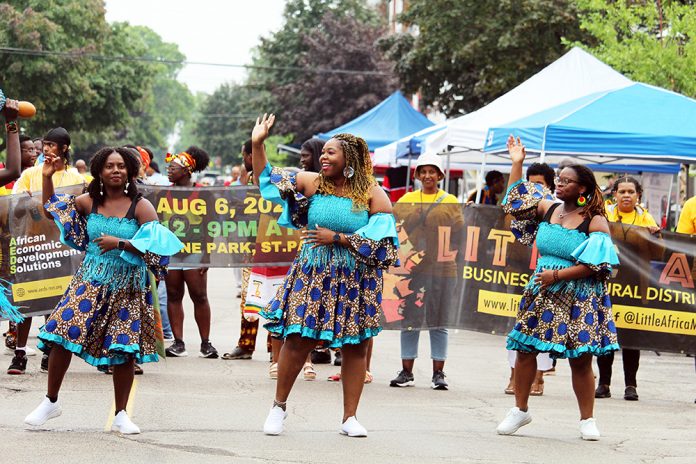
Afrocontigbo dancers cheer up the crowd during the parade portion of the 9th annual Little Africa Festival parade at Hamline Park in St. Paul, Minnesota on Sunday, August 6, 2023. Photo: Jasmine Webber/Mshale
Afrocontigbo dancers cheer up the crowd during the parade portion of the 9th annual Little Africa Festival parade at Hamline Park in St. Paul, Minnesota on Sunday, August 6, 2023. Photo: Jasmine Webber/Mshale
For the ninth year, African immigrants in the Twin Cities recently held the Little Africa Festival and Parade to showcase the continent’s diverse cultures. But this year’s festival was special because, in addition to the usual art, products, food, and performances, it featured the groundbreaking for the construction of Little Africa Plaza on North Snelling Avenue, in the Hamline-Midway neighborhood of St. Paul.
The plaza will have retail space, an African museum, and a new headquarters for African Economic Development Solutions (AEDS), the nonprofit that organizes the festival.
“[This will be a] cultural display project to build a new pan-African culture,” said Dr. Gene Gelgelu, executive director and founder of AEDS said.
The construction of Little Africa Plaza is the latest development in an immigrant community that is increasingly becoming important to the economic and cultural fabric of the state of Minnesota. In the last two decades, the population of Black immigrants living in the state increased by 274% to an estimated 100,000, placing Minnesota among the top 10 destinations, according to the Pew Research Center. In 2018, the Federal Reserve Bank of Minneapolis estimated that African immigrant households had a spending power of $1.8 billion, after paying more than $640 million in federal, state, and local taxes. Economic activities in centers like Little Africa Plaza are often the drivers of growth in communities of immigrants from the continent.
For funding and lending, African immigrant entrepreneurs in the state often rely on community financial institutions like Africa Development Center, and AEDS, whose mission to strengthen the role of Africans immigrants in the economy, culture, and livelihood of the Twin Cities. AEDS offers a list of services like business lending, business development, homeownership education and community building. The Plaza will centralize AEDS’s resources, operating at the heart of Snelling, home to notable African immigrant businesses like Snelling Café.
The Little Africa Festival, which was held at Hamline Park, spotlighted a variety of African businesses, promoting cultural awareness, fashion, personal care, and knowledge-building through Afro-centered books about the African continent.
Prior the commencement of the parade, Corey Boyd, senior public engagement liaison for Gov. Tim Walz spoke about the importance of solidarity.
“When you start bringing everyone together, you’re opening up for everybody, [so] that even those who are not a part of the culture can learn the culture,” Boyd said.
The festival had a main stage where local artists performed spoken word, rap songs and traditional cultural dances. Titambe West African Dance Ensemble got the crowd moving with riveting drum melodies and dance moves. The ensemble got the crowd prepared for the parade down Hamline Avenue, led by AEDS and Little Africa organizers.
Members of the Oromo Youth Association and the University of Minnesota’s Oromo Student Union performed a series of traditional dances from the Oromo region in Ethiopia. There was also a fashion show that exhibited traditional clothes from Nigeria, Kenya, Ghana, and Cameroon. Vendors of Somali, Kenyan, and Jamaican food provided a variety of traditional cuisine from the African diaspora.
Little Africa Plaza will cost an estimated $4.5 million and is scheduled to be completed in the spring of 2024. Gelgelu, the AEDS director, said it was important to show the hard work and resilience of African immigrants.
“We need a collective culture showcased,” said Gelgelu. “To showcase our youth, our future, to learn within Africa, and to showcase that to others outside of Africa.”
Delta and Kenya Airways leaders during the signing ceremony for their strategic partnership. From left to right: Perry Cantarutti, SVP - Alliances & International (Delta); Alain Bellemare, President - International (Delta); Peter Carter, EVP - External Affairs (Delta); Allan Kilavuka, Group MD & CEO (Kenya Airways), Julius Thairu, Chief Commercial & Customer Officer (Kenya Airways); Michael Joseph, Chairman Kenya Airways PLC. Photo: Courtesy Delta Air Lines
Delta and Kenya Airways leaders during the signing ceremony for their strategic partnership. From left to right: Perry Cantarutti, SVP - Alliances & International (Delta); Alain Bellemare, President - International (Delta); Peter Carter, EVP - External Affairs (Delta); Allan Kilavuka, Group MD & CEO (Kenya Airways), Julius Thairu, Chief Commercial & Customer Officer (Kenya Airways); Michael Joseph, Chairman Kenya Airways PLC. Photo: Courtesy Delta Air Lines
Getting on the nonstop New York to Nairobi Kenya Airways flight from elsewhere in the United States just got easier, thanks to an expanded partnership agreement with Delta the Kenyan airline inked on Monday.
Passengers wishing to get on the popular Kenya Airways nonstop flight from other parts of the U.S. that Delta flies to can now book that flight on Delta.com. The Nairobi-based airline launched its nonstop service from New York to Nairobi in the fall of 2018 and is still the only non-stop connection between East Africa and the United States.
If planning to fly from Chicago to Nairobi for example, the Kenya Airways New York flight is one of the options Delta.com provides. From Nairobi, passengers have options of more than 30 single connection destinations from the Kenya Airways hub.
A booking on the Delta Airlines website Mshale attempted for a Minneapolis/St. Paul to Nairobi route for August 24, 2023 that provided the Kenya Airways nonstop New York-Nairobi flight as an option, allowing a passenger to avoid Europe if they wish. Photo: Delta.com Screenshot
In early 2022 Kenya Airways entered an agreement with JetBlue to feed passengers to its New York flight with luggage checked through to Nairobi but that agreement pales in comparison with the new one with Delta. The one with Delta, as the second largest airline in the United States, comes with 57 destinations across the U.S. and Canada.
The two airlines were already members of the SkyTeam Alliance but the enhanced partnership, which the two sides described as “strategic,” also comes with more frequent flier benefits for both carriers’ loyalty club members.
Delta’s President of International, Mr. Alain Bellemare and Kenya Airways CEO, Mr. Allan Kilavuka, signed the strategic agreement at Delta headquarters in Atlanta flanked by executives from both airlines.
“At a time when we are seeing unprecedented demand for travel between North America and Africa, expanding our strategic partnership with Kenya Airways offers our customers more travel options as well as supports our priority to deepen our presence across the African continent,” said Bellemare.
Mr. Kilavuka hailed the agreement as one that will enhance connectivity between Africa and the U.S.
“The expansion of the codeshare is historic as it not only allows KQ to expand its footprint in the U.S., providing seamless connectivity on a single ticket for those travelling for business, leisure or studies. It also offers seamless connectivity to those visiting Africa for similar reasons through JFK into KQ’s hub at Jomo Kenyatta International Airport (JKIA) in Nairobi,” said Kilavuka.
Clockwise from bottom: ShaVundra Brown with Richard Jackson on keys, Kashimana with her bad and Priscilla Momah when they perfoemd at the Cedar on July 27, 2023. Photos: Susan Budig/Mshale
Clockwise from bottom: ShaVundra Brown with Richard Jackson on keys, Kashimana with her bad and Priscilla Momah when they perfoemd at the Cedar on July 27, 2023. Photos: Susan Budig/Mshale
Annually, the Cedar Cultural Center grants commissions to six early career/emerging Minnesotan composers and musicians to create and perform new music on their stage. The commission includes money, access to technology, mentorship, marketing support, a production stipend, and more.
In 2019, Nigerian-born, Minnesota-based Kashimana received a commission. This past July 27th, they presented their second album project as a direct result of the grant with a release party celebrating the launch of Phantom Cries.
Their new album mixes blues, soul and spoken word to describe the journey of motherhood with all the fears, joys and pain of giving birth and raising a child. In fact, Kashimana’s daughter, wearing sneakers that emitted a strobe-like glow, flitted around the audience and was even coaxed on stage to participate in a song.
The evening started promptly at 8 pm with ShaVunda Brown as she offered a deep, warm, and vocally erotic performance referencing Black Power, Black Love, and more personal and intimate details of one-on-one love. Perhaps fittingly so in light of the labor and delivery songs slated for later in the evening.
Brown’s vocal range, comparable to Minnie Riperton’s five-octave range, shined when she sang Riperton’s song, Loving You. Accompanied by Richard on the keyboard, Brown displayed fantastic genre range sliding back and forth between spoken word and hip hop, both imbued with unflinching femininity.
A 15-minute interlude before Kashimana took the stage was filled with Priscilla Momah, also from Nigeria. Momah works in a multi-disciplinary fashion incorporating music with the body. She prompted the audience to breathe in and purposely exhale several times before engaging us with her voice and guitar.
Momah only had time for three numbers before transitioning us to Kashimana, but those three songs whet our appetites for another gig with her in the future.
Kashimana and the Halos, Aja Parham, Sarah O’Neil, and Alicia Steele, opened with a combination of delight, whimsy, and a dire message. Accompanying them on keys and percussion were Khary Jackson and Glory Yard. Despite the low turn-out of a few dozen people in the audience, there was diversity most notably in age.
As the inspirations for the music of Kashimana’s second album, Phantom Cries, ran about the floor and occasionally on-stage, Kashi, wearing a dazzling rainbow-colored wrap, sang, played guitar, and drove our attention to the dismal statistics regarding maternal health and mortality.
Splayed on the backdrop of the stage were numbers of deaths and faces of women and children often in somber repose. In fact, the maternal mortality rate of Nigerian women currently is 1047 deaths per 100,000 live births. In the United States it is 33 deaths per 100,000 live births. In Japan and Denmark, it is 4 deaths for every 100,000 live births.
The juxtaposition of seeing Kashimana’s and other band members’ joyful children against such dire statistics was shocking.
Kashimana and the Halos sang a lullaby, Hunny Bunny, to all of us followed by The Bloody Show. Kashi said, “Maternal mortality rates are high and so we have to do something.” Her something is to create music and share it with others in an effort to raise awareness and generate change.
Businessman Isaak Rooble is running for a seat in the Bloomington City Council in the November 2023 election. Photo: Courtesy Fowzi Media
Businessman Isaak Rooble is running for a seat in the Bloomington City Council in the November 2023 election. Photo: Courtesy Fowzi Media
With the District 4 Bloomington City Council seat open after incumbent Patrick Martin decided against seeking reelection, Mr. Isaak Rooble, a businessman and past recipient of the “Community Leadership Award” at the 6th annual African Awards, is running to represent the northeastern part of the city that includes the area that Mall of America sits on.
A native of Somalia, Rooble, 36, came to the U.S. in 2011. He and his wife and children have called Bloomington home for the last 10 years. He has an associates degree in applied science from Rochester Community and Technical College.
Mr. Rooble spoke to Mshale after a recent Saturday door knocking exercise accompanied by outgoing two-term Councilmember Martin who has thrown his support behind him, as has the city’s mayor, Tim Busse who has been on the Council since 2011.
This is his first time running for elective office and a win in November will make him the first Somali to serve on the Bloomington City Council. The city is Minnesota’s fourth largest after Minneapolis, St. Paul and Rochester.
“I’m running to make Bloomington an even more attractive and stronger city,” Roble said. “As a community organizer and volunteer, I (have) tirelessly worked to make a positive impact on people’s lives and enhance their quality of life. My unique quality lies in bringing people together and setting a tone for good governance and leadership.”
The seven-member City Council, which includes the mayor, is up for election this year following redistricting. City voters will elect a mayor and six council members—one for each of the four districts, one at large and another two-year term at-large seat. Unlike the four district council members, at-large candidates are elected by voters citywide.
In 2021, the city implemented ranked choice voting for local elections following a charter amendment by city voters in 2020. The system eliminates the need for a primary election which allows for an unlimited number of eligible candidates to file and run for office.
“Our records show this is the first time in Bloomington’s history that the entire seven-person council has been on the ballot at the same time,” City Clerk Christina Scipioni said in a statement posted on the city’s website when candidate filing commenced on August 1. The filing period runs through August 15.
Those that follow him on social media know that Rooble likes sharing updates on what the city is up to, in terms of service delivery for those that might need them, although since campaigning got in high gear, campaign messages have also taken center stage.
His plans for the City Council however go beyond informing his fellow neighbors of what is going on.
“My governance starts from the bottom where I engage my neighbors and discuss issues and decisions that will impact the neighborhood and community at the neighborhood level. I’m not someone who will say decisions will be made at the city hall, I will bring those discussions to the community level environment, where voters and residents can understand what’s at stake and decide. Then, they can send us to city hall to make a final say on what they want and how they want things to be done.”
Rooble says his top priorities are public safety, small business, affordable housing and accessible city services. He believes being intentional in harnessing public input is key to making Bloomington a thriving city.
“In both my public and professional lives, I’ve been a positive, decisive and compassionate advocate for our residents and small business,” attributes he says he will bring to the Council for the benefit of the city.
Rooble says what motivated him to run is the city’s “fast growing, diverse and vibrant community, and the many plans for our city,” the latter a reference to “Forward 2040,” the city’s comprehensive plan adopted in 2018 that guides development and public investments in city facilities and services such as parks, trails, fire stations, roads, sewer and water systems, and housing.
Rooble says he was disappointed when Bloomington lost the bid to host the 2027 World Expo but believes the loss provides the city with a great opportunity to explore other uses for the parcel around the Mall of America that was to be the site for the expo, referred to as the South Loop.
“We have a discussion going on about the South Loop already (and) once elected I am looking forward to bringing the community together on how we can use those resources to move the city forward for the benefit of our residents,” Rooble said.
Register to vote
Election Day is November 7.
While in Minnesota the law allows voters to register on election day at their voting location, registering in advance is highly recommended.
October 17 is the last day to register in advance as a voter.
Election Judges: The City of Bloomington is also looking for election judges and will provide paid training. Check required qualifications and apply at this city website.
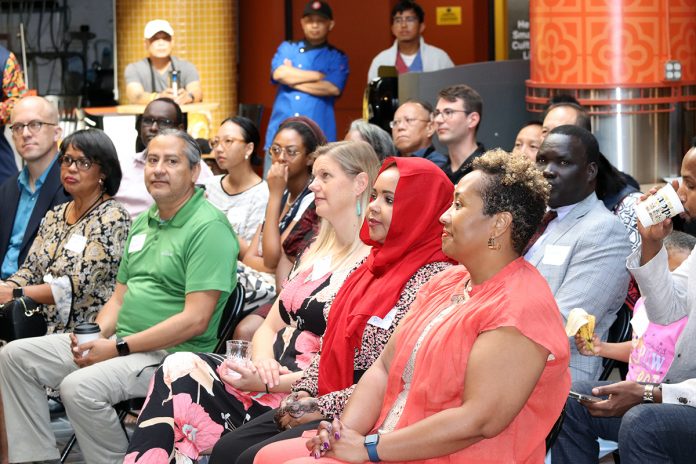
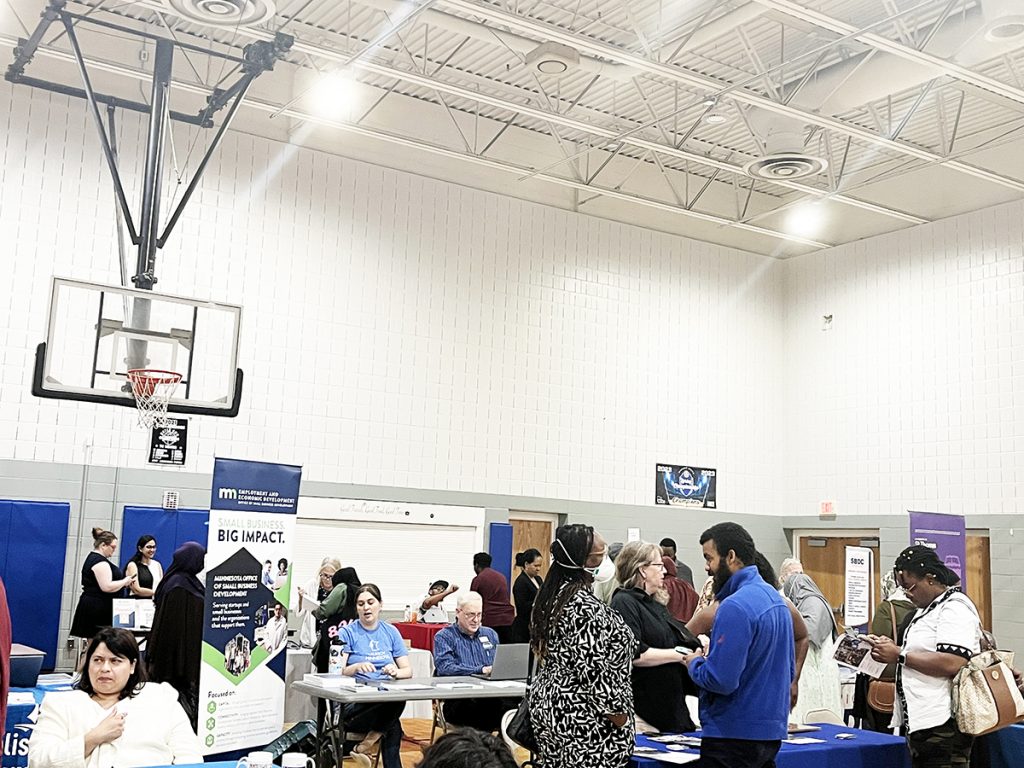
A section of community members that turned out to an event at the Midtown Global Market organize by the Minnesota Department of Employment and Economic Development (DEED) to celebrate the formation of Minnesota’s Office of New Americans (ONA) on Tuesday, August 1, 2023. ONA is a result of the One Minnesota Budget that Gov. Tim Walz signed into law on May 24, 2023. Photo: Tom Gitaa/Mshale
A section of community members that turned out to an event at the Midtown Global Market organize by the Minnesota Department of Employment and Economic Development (DEED) to celebrate the formation of Minnesota’s Office of New Americans (ONA) on Tuesday, August 1, 2023. ONA is a result of the One Minnesota Budget that Gov. Tim Walz signed into law on May 24, 2023. Photo: Tom Gitaa/Mshale
Since its establishment in 2020, Minnesota’s Office of New Americans has grown in popularity for spearheading efforts to integrate the state’s newest residents into the workforce by helping them navigate barriers to securing employment. But until recently, the office commonly known as ONA has been a temporary initiative operating under the state’s Department of Employment and Economic Development (DEED) and relying mostly on grants.
On Aug. 1, however, leaders from the government and the immigrant community gathered at Midtown Global Market in Minneapolis to celebrate ONA’s qualification for permanent funding, thanks to the One Minnesota Budget that Gov. Tim Walz signed into law on May 24.
DEED Assistant Commissioner for Immigrant and Refugee Affairs Abdiwahab Mohamed said the new permanent ONA will continue to work on expanding state resources into immigrant and refugee communities, so that they have a voice in policy recommendations. ONA will also work in collaboration with the state’s ethnic councils so that its work reflects the communities it serves.
State Representative Hodan Hassan (DFL-Minneapolis), left, at the formal launch of the Office of New Americans at Midtown Global Market in Minneapolis on Tuesday, August 1, 2023. Rep. Hassan is the chair of the House Economic Development Finance and Policy committee which included the Office of New Americans in the $500 million jobs and economic development omnibus bill that Gov. Walz signed. Rep. Hassan was the chief author of the bill on the House side along with Rep. Jay Xiong. Senate President Bobby Joe Champion and Sen. Zaynab Mohamed (DFL-Minneapolis) carried it in the senate. Photo: Tom Gitaa/Mshale
“We will also continue to expand language access which is a major barrier for people to access state resources and to develop and provide for their families,” Mohamed said.
Offices for New Americans are becoming important channels for some state agencies and local governments across the country to assist immigrants and refugees to transition seamlessly into the foreign culture they encounter when they settle in the United States.
Mr. Matt Varilek, commissioner of the Minnesota Department of Employment and Economic Development, speaks at the Midtown Global Market in Minneapolis during an event to celebrate the formation of Minnesota’s Office of New Americans (ONA) on Tuesday, August 1, 2023. Behind him are Mr. Henry Jiménez, executive director of the Latino Economic Development Center and Ms. Anjuli Mishra Cameron, the chief executive officer of SEWA-AIFW. Photo: Tom Gitaa/Mshale
The One Minnesota Budget proposed and annual amount of $750,000 to support ONA. The funds include $250,000 per year for translation services to ensure non-English speakers are aware of employment opportunities. So far, ONA has established outreach programs that connected employers to protentional employees and successful ensured that they retained 300 employees, according to DEED.
ONA will also work in collaboration with Neighborhood Development Center (NDC), a St. Paul-based organization that trains entrepreneurs and supports their small businesses. DEED Commissioner Matt Varilek said the agency had confidence in NDC because it had already helped many of the business owners operating at Midtown Global Market.
“Lots of the folks that are in here got their start through the training and technical assistance and financing as well as space that make up the NDC model,” Varilek said.
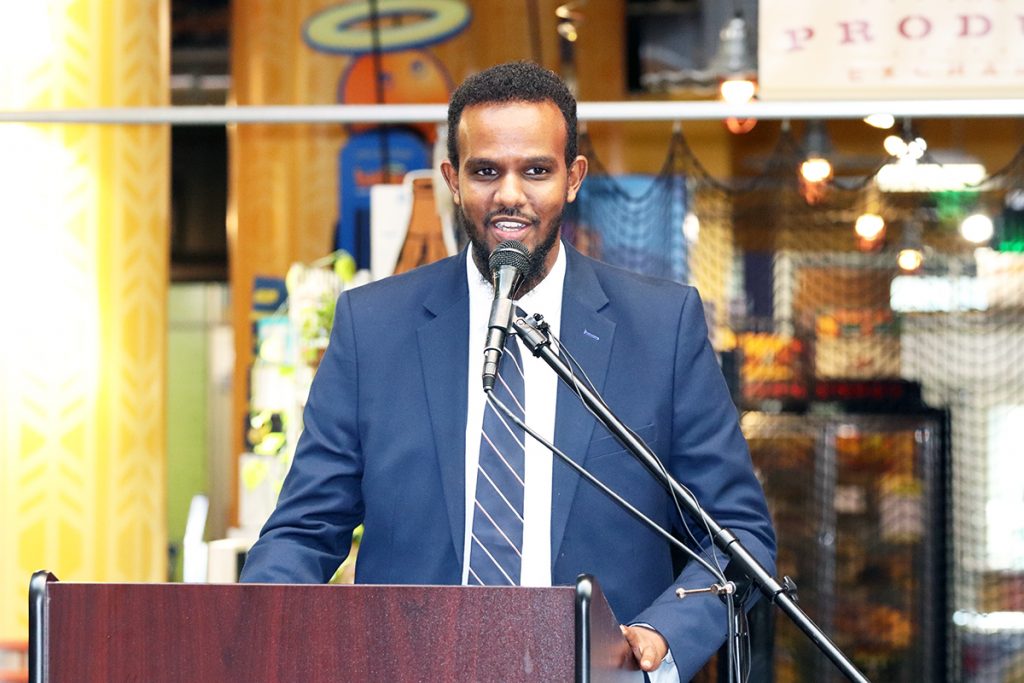
DEED Assistant Commissioner for Immigrant and Refugee Affairs Abdiwahab Mohamed, speaks at the Midtown Global Market in Minneapolis during an event to celebrate the formation of Minnesota’s Office of New Americans (ONA) on Tuesday, August 1, 2023. ONA is a result of the One Minnesota Budget that Gov. Tim Walz signed into law on May 24, 2023. Photo: Tom Gitaa/Mshale
Henry Jiménez, the executive director of the Latino Economic Development Center, which supports Latino entrepreneurs and small businesses in Minnesota, talked about the importance of cultivating immigrant-led businesses. Jiménez, who is a son of immigrants, said there was a lot of untapped potential within immigrant communities that is wasted due to the absence of offices like ONA and spaces like Midtown Global Market.
“The most important business corridor in Minnesota is not Hennepin,” he said. “It’s not downtown. It’s Lake Street.”
Anjuli Mishra Cameron, the chief executive officer of SEWA-AIFW, a nonprofit dedicated to ensuring total family wellness within the South Asian community spoke about his organization’s collaboration with ONA. Most recently, they worked together in the resettlement of Afghan refugees by helping them find employment and housing.
“What the Office of New Americans did was they saw these people as whole people and brought together coalitions of government [and] community organizations to really step up [and] pool resources [to] meet people where they were at.”
Registered nurse Thera Witte, right, was among the first Minnesotans to receive the COVID-19 vaccine at the Minneapolis VA Medical Center on Tuesday, Dec. 15, 2020. On August 1, 2023 the Minnesota Department of Health started accepting applications for student loan debt forgiveness for registered nurses woking in direct patient care at nonprofit hospitals Photo: April Eilers / Minneapolis VA Health Care System
Registered nurse Thera Witte, right, was among the first Minnesotans to receive the COVID-19 vaccine at the Minneapolis VA Medical Center on Tuesday, Dec. 15, 2020. On August 1, 2023 the Minnesota Department of Health started accepting applications for student loan debt forgiveness for registered nurses woking in direct patient care at nonprofit hospitals Photo: April Eilers / Minneapolis VA Health Care System
The Minnesota Department of Health (MDH) today (Aug. 1) started accepting applications from the state’s registered nurses for student loan forgiveness under the Nurse and Patient Safety Act that Gov. Tim Walz signed into law on May 26 and went into effect on July 1.
The law allows the commissioner of health to annually pay eligible nurses 15% of the average loan debt in their fields. Applicants must have a student loan that exceeds $6,000.
To be eligible, the registered nurse has to be providing direct care to patients at a nonprofit hospital and their student loan cannot be in default.
November 2023 for others
Other healthcare workers such as public health nurses, licensed practical nurses, nurse practitioners, nurse-midwives, nurse anesthetists, and advanced clinical nurse specialists also qualify but their application period will open in November 2023.
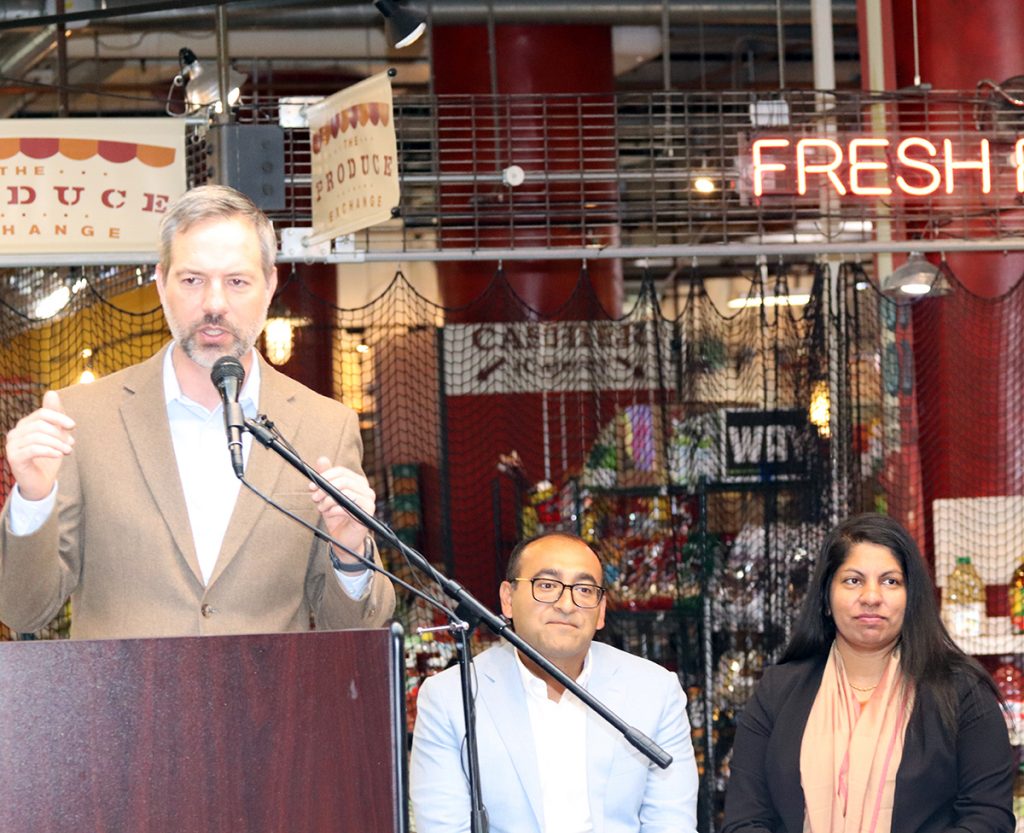
Minnesota Commissioner of Health, Dr. Brooke Cunningham, left, speaks with Ms. Linda Sloan, executive director of the Council for Minnesotans of African Heritage on August 1, 2023 at the Midtown Global Market in Minneapolis during the official launch ceremony of the Office of New Americans. Also happening on the same day was the Minnesota Department of Health starting to accept applications for student loan debt forgiveness for registered nurses working in direct patient care at nonprofit hospitals. Photo: Tom Gitaa/Mshale
How to apply and details about the program can be found at this MDH page.
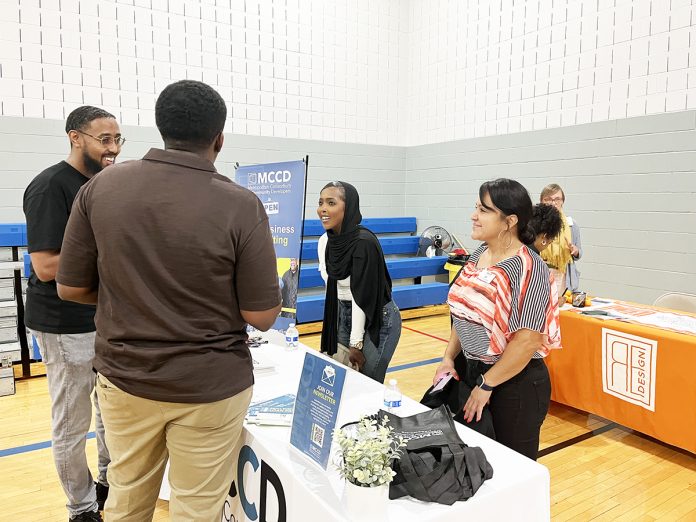
Zamzam Mohamed and Vicky Gonzalez, business advisors at Metropolitan Consortium of Community Developers (MCCD), attend to visitors to their table during Minneapolis Black Businessweek’s East African Panel Discussion and Resource Fair on Wednesday, July 26, 2023 held at the Brian Coyle Community Center. Photo: Milkee Bekele/Mshale
Zamzam Mohamed and Vicky Gonzalez, business advisors at Metropolitan Consortium of Community Developers (MCCD), attend to visitors to their table during Minneapolis Black Businessweek’s East African Panel Discussion and Resource Fair on Wednesday, July 26, 2023 held at the Brian Coyle Community Center. Photo: Milkee Bekele/Mshale
Businesswomen from Minneapolis’s East African immigrant community said lack of access to networking resources, training, and capital were some of the greatest barriers to starting and sustaining their businesses.
The women were speaking during the East African Panel Discussion and Resource Fair, which was part of the Black Business Week summit, Minneapolis Mayor Jacob Frey and Council President Andrea Jenkins hosted in the week beginning July 24. The purpose of the conference, which was held at the Brian Coyle Community Center in the Cedar-Riverside neighborhood of Minneapolis, was to spotlight and promote Black owned businesses in the city.
One of the panelists was Abyan Nur, the founder and CEO of Faceless Pro, a company that wants to eliminate discrimination during the application process by creating a job board that that removes identifiers from candidates’ resumes and only highlights their qualifications, skills, and experience.
“Raising capital is the biggest struggle that I’m having,” Nur said. “Being a Black woman, you’re overlooked constantly.”
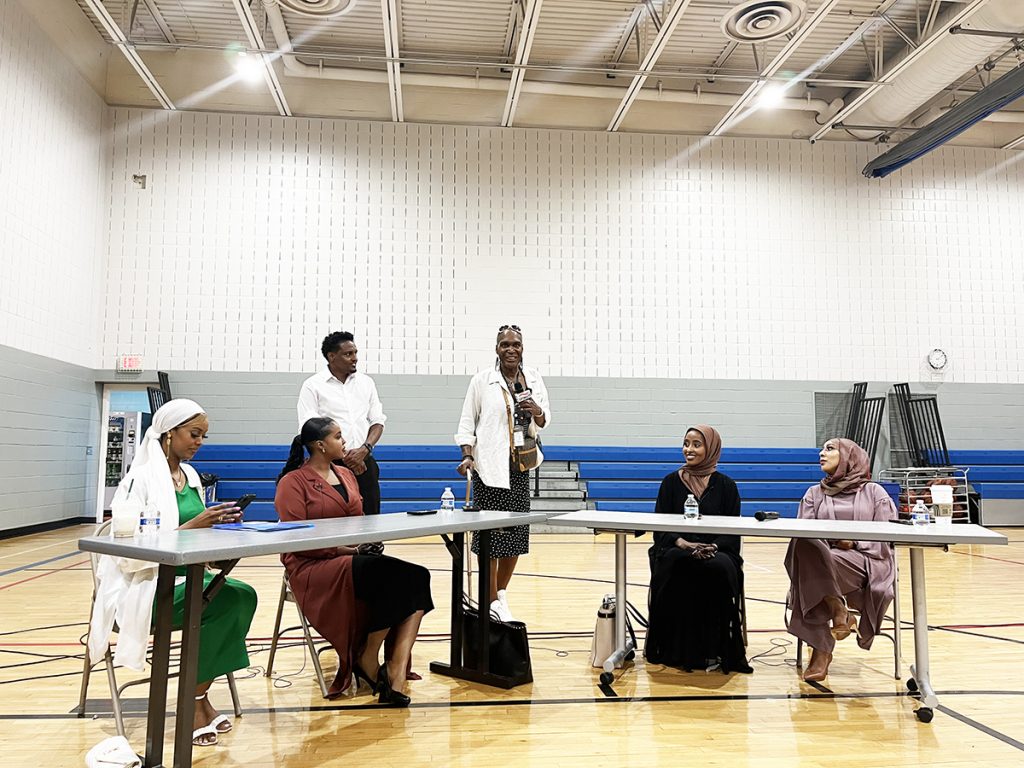
Minneapolis City Council President Andrea Jenkins makes remarks at the start of the East African Panel Discussion and Resource Fair held as part of Minneapolis Black Business Week at the Brian Coyle Community Center Wednesday, July 26, 2023. Sitting, left to right, Yusra Mohamud, Abyan Nur, Ifrah Jama, Amani Ahmed and Councilmember Jamal Osman. Photo: Milkee Bekele/Mshale
Private sector organizations such as the African Development Center and the Metropolitan Consortium of Community Developers teamed up with Minneapolis city agencies like Community Planning and Economic Development, and Finance and Property Services, to provide resources to entrepreneurs at the summit.
“Women are our fastest growing business owners in this country and in this city” said Jenkins, the council president.
This year’s Black Business Week explored the idea of entrepreneurship as a way of creating generational wealth in Black communities. Frey, the mayor, said the purpose of the summit was to celebrate the incredible entrepreneurs that exist throughout Minneapolis for “adding vibrancy” and having economic growth and culture at the same time.
“And at the forefront of so much of that great work is our East African entrepreneurs that are women,” Frey said.
Ifrah Jama, the founder of fashionable and modest activewear catering to Muslim women and girls who was on the East African panel, said she founded her company because she believed that Muslim women should not compromise their faith or value to live an active lifestyle. She said women like her in business needed mentors and networking skills to help them succeed.
The Minneapolis Black Business Week’s East African Panel Discussion and Resource Fair on Wednesday, July 26, 2023 at the Brian Coyle Community Center. Photo: Milkee Bekele/Mshale
“It would be really helpful if we can have access or procurement opportunities for us to really compete for grants or just training,” said Jama. “This whole path of entrepreneurship it’s been [me] really just utilizing the resources that are available and really having people to guide me through.”
The third panelist was Amani Ahmed, the CEO and founder of the East African Business Association, which provides immigrants from the region support, advocacy, and resources to encourage business growth. Like Jama, she said East African women could be a successful entrepreneur and still maintain their faith and culture.
“I’m very proud to be a Somali woman,” said Ahmed. “If you’re not proud to represent your culture, and you’re not proud to represent your religion, people feel it when you walk into the room. People will notice like you’re not even secure.”
The East African panel was hosted by Jamal Osman, a council member of Somali descent, who represents Ward 6 in Central Minneapolis, which is home to the largest population of residents who have their roots in East Africa. Yusra Mohamud, a business advisor for Lake Street Council and founder of Minnesota’s Eat and Talk podcast, was the panel’s facilitator.
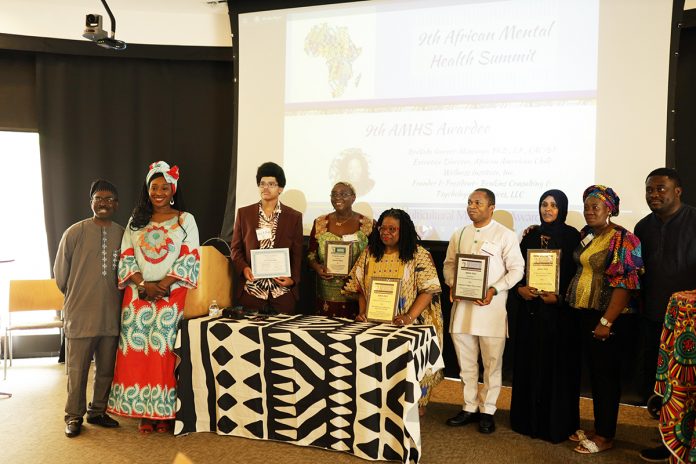
Individuals honored at the 9th African Mental Health Summit for their service in promoting mental health pose with their awards for a portrait on the final day of the summit at Amherst H. Wilder Foundation Auditorium in St. Paul, Minnesota on Saturday, July 15, 2023. Left to right, Dr. Richard Oni, Ms. Tanya Young, Mr. Alvin Lynard Goldie Killough II, Dr. Florence Njoyi, Dr. Bravada Garrett-Akinsanya, Dr. Kingsley U. Chigbu, Ms. Fartun Weli, Dr. Tolulope Monisola Ola and Dr. Bayo Akómoláfé. Photo: Panashe Matemba-Mutasa/Mshale
Individuals honored at the 9th African Mental Health Summit for their service in promoting mental health pose with their awards for a portrait on the final day of the summit at Amherst H. Wilder Foundation Auditorium in St. Paul, Minnesota on Saturday, July 15, 2023. Left to right, Dr. Richard Oni, Ms. Tanya Young, Mr. Alvin Lynard Goldie Killough II, Dr. Florence Njoyi, Dr. Bravada Garrett-Akinsanya, Dr. Kingsley U. Chigbu, Ms. Fartun Weli, Dr. Tolulope Monisola Ola and Dr. Bayo Akómoláfé. Photo: Panashe Matemba-Mutasa/Mshale
Mental health providers of African descent should take it upon themselves to create culturally appropriate remedies to a crisis that has been exacerbated by effects of the coronavirus pandemic, experts said in a recent summit.
The experts spoke recently at the African Mental Health Summit, which returned to Minnesota’s Twin Cities to continue a conversation that began nearly a decade ago to explore how best to tackle mental health issues in African communities. The two-day conference, which was in its ninth year, was themed “Mental Health Inequities Post Pandemic: Building a Cultural Ecosystem of Well-Being” and began on July 14 at the Minneapolis Institute of Art and ended in St. Paul at the Wilder Foundation.
The theme color for this year’s summit was purple, which represents creativity, energy, and spirituality, according to Nigerian-born Dr. Richard Oni, who founded the summit eight years ago. Oni said that the coronavirus pandemic indiscriminately took a high toll on African communities, creating an urgent need mental health services.
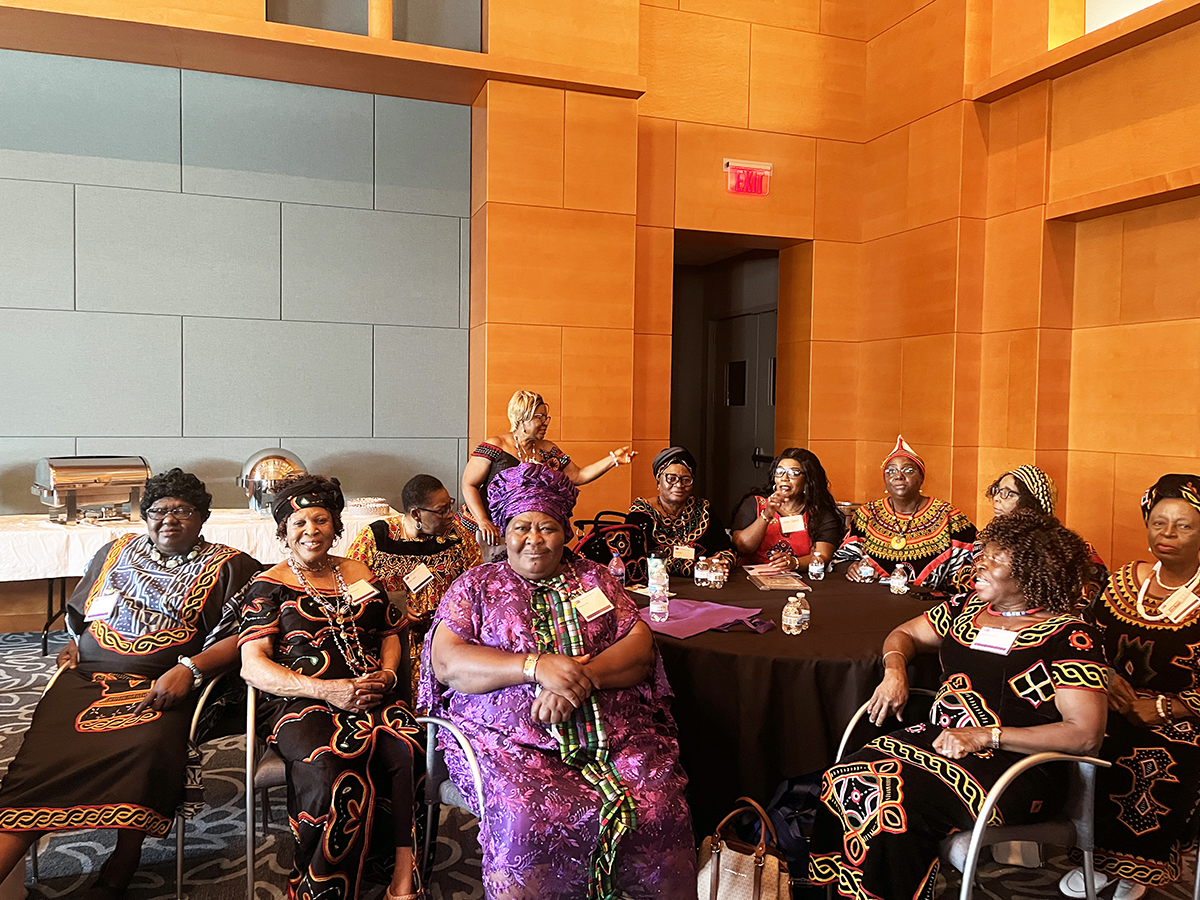
Members of Cameroon Catholic Women Association of Minnesota listen to a speaker during the 9th African Mental Health Summit at the Minneapolis Institute of Art on Friday, July 14, 2023. Photo: Milkee Bekele/Mshale
“Everyone, regardless of tribe, needs good mental health,” Oni said, who is also the executive director of Progressive Individual Resources, Inc., a St. Paul-based organization that trains service agencies how to serve children and families from diverse cultural backgrounds.
Although mental health is an uncomfortable subject worldwide, it’s even more so in African communities, where people dealing with psychological illnesses are often ostracized. Efforts to provided care are further complicated by a lack of funding. Most African countries allocate less than 1% of their annual budgets toward mental health care, according to the World Health Organization (WHO). The lack of investment means that more than 80% of Africans struggle with mental health issues like depression without treatment.
The coronavirus pandemic “triggered something in us,” causing people to become more irritable, agitated, and frustrated, said Andre Dukes, the vice president of family and community impact programs at Northside Achievement Zone (NAZ), a nonprofit that advocates for education as a means to eradicating generational poverty in North Minneapolis’s communities of color.
“The compounded effects of racial injustice and political upheaval during quarantine caused us to see the world through a dark lens,” Dukes said.
In his keynote address, Dr. Bayo Akómoláfé, a clinical psychologist and a scholar who is also a fellow at the Othering and Belonging Institute at University of California, Berkeley, said it was important to construct Afro-centered wellness practices to deal with the setbacks of the pandemic.
“We could not have anticipated that after 30, 40, 50 years of doing climate justice work – of trying to get everyone to slow down – it was a tiny, seemingly infinitesimal critter of a virus that stole into our economy and sent everyone home invisible,” Akómoláfé said.
A study published in 2001 in the South African Journal of Psychiatry, found that isolation and quarantine associated with COVID-19 lockdowns, along with the grief that followed the loss of loved ones, adversely impacted the phycological wellbeing of many Africans. As of July 19, the WHO estimated that there were 9.5 million cases of COVID-19 in Africa, leading to more than 256,000 deaths.
Dr. BraVada Garrett-Akinsanya, a licensed clinical psychologist and executive director of African American Child Wellness Institute Inc., said when addressing mental health issues, it is also important to acknowledge the generational trauma that dates to slavery, and the racism that is still exists today.
Dr. Bayo Akómoláfé, left, poses for a portrait with Dr. Richard Oni after he delivered the keynote address at the 9th African Mental Health Summit at the Minneapolis Institute of Art on Friday, July 14, 2023. Photo: Milkee Bekele/Mshale
“People will try to tell you they didn’t own any slaves, yet they are comfortable with the effects of it,” she said.
Akinsanya also spoke about how microaggressions – subtle remarks rooted in stereotypes – can affect an individual’s self-esteem. According to a study published in Harvard Business Review, people subjected to microaggressions are more likely to report feelings of negative emotions. The study also found that Black individuals experienced microaggressions at significantly higher rates, which impacts their mental health and performance at work.
The summit also reiterated the importance of making efforts to raise awareness and correct the problematic attitudes many in the African and African American communities possess towards mental health. Oni, the founder, talked about destigmatizing the conversation around mental health and wellness in the African community, adding that mental health is just as important as physical health.
“We should have a paradigm shift,” Oni said.
Victor Obisakin, a member of the Nigerian community, fought tears as he explained why he attended the summit. He said that he had recently lost his sister, who struggled with mental illness.
“I started crying back there,” Obisakin said, pointing to where he had been sitting. “I wish she was here to see that there’s hope in the African community.”
Obisakin agreed with the experts that methods of treating mental illness in the African community should be more culturally specific. For example, African Americans and African immigrants share skin color, but there are cultural differences between them that mental health providers often miss when treating patients, he said.
“We need to decolonize the system and the tools used to diagnose our people,” Obisakin said. “When you have the wrong people with the wrong tools, that’s [when] you have problems.”
Dukes, the NAZ vice president, said he saw those differences in culture when he traveled to Senegal, where he noticed a deep sense of community that was absent in his neighborhood in the United States. People in Senegal, he said, had a spirit of togetherness, and a culture of being responsible for each other. He said the United States could borrow from such cultures to create a stronger mental health support system.
“That culture of ‘What I have, is also yours’ is the ecosystem we all need to remain mentally healthy and spiritually whole,” Dukes said.
Ultimately, it is mental health providers of African descent who can come up with viable solutions that are tailored to their unique cultures. Akómoláfé, the Berkeley fellow, said African countries needed not just monetary funding but also implementation of creative strategies to address what he said was a mental health care crisis. He gave an example of Nigeria, his country of birth, which when he began his Ph.D. had only three functionals psychiatric hospitals to serve a population of 200 million people.
“The government was trying to address this crisis by pumping more money into the hospitals, but somehow [it didn’t] translate to real reforms,” he said.
Another challenge African communities must address, according to Akinsanya, is the shortage of Black experts in the mental health profession. In the United States, for example, a mere 2% of members of American Psychological Association identify as Black or African American, according to the professional group, creating concern that most providers lack the cultural competence required to guarantee adequate care.
“A lot of us are trained by white people,” Akinsanya said. “A middle-aged white man from [a tiny Minnesotan town, for example,] sets the standards for culturally responsive mental health care. That is our problem.”
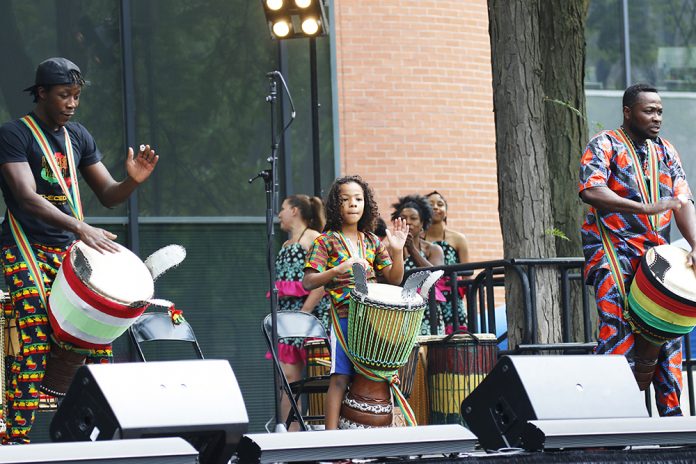
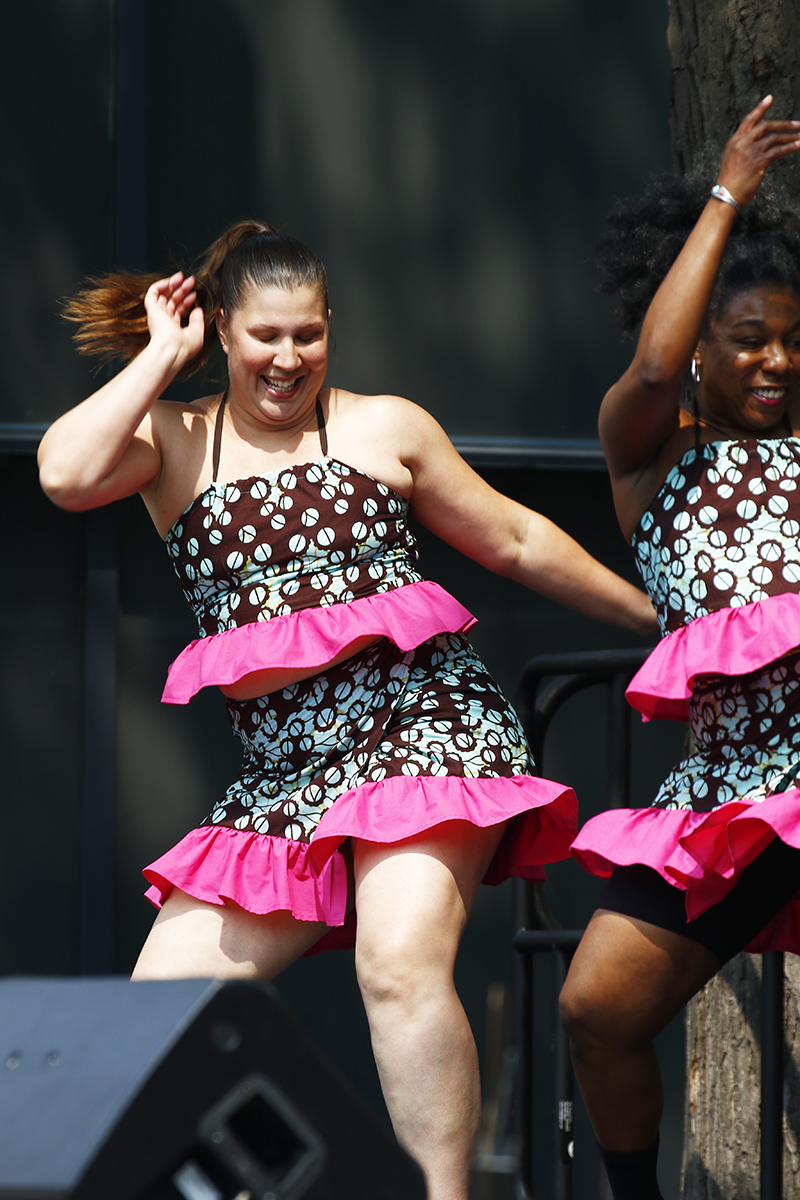
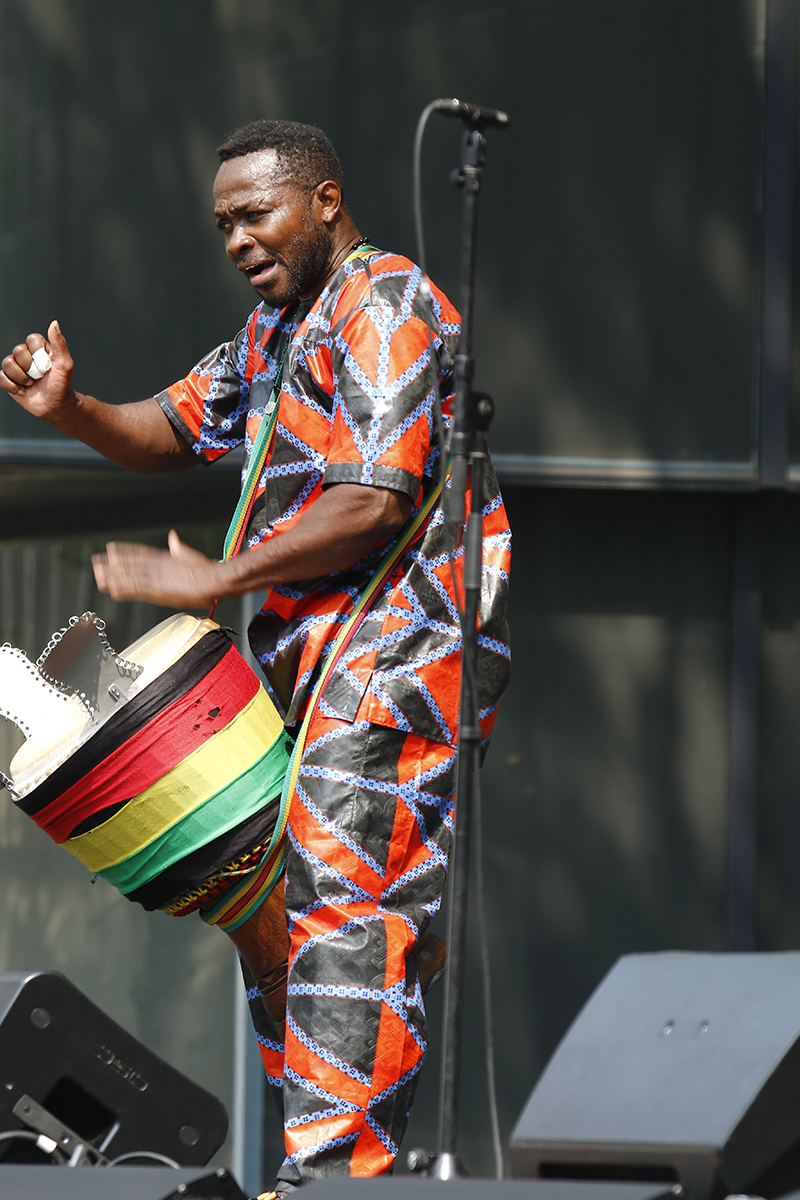
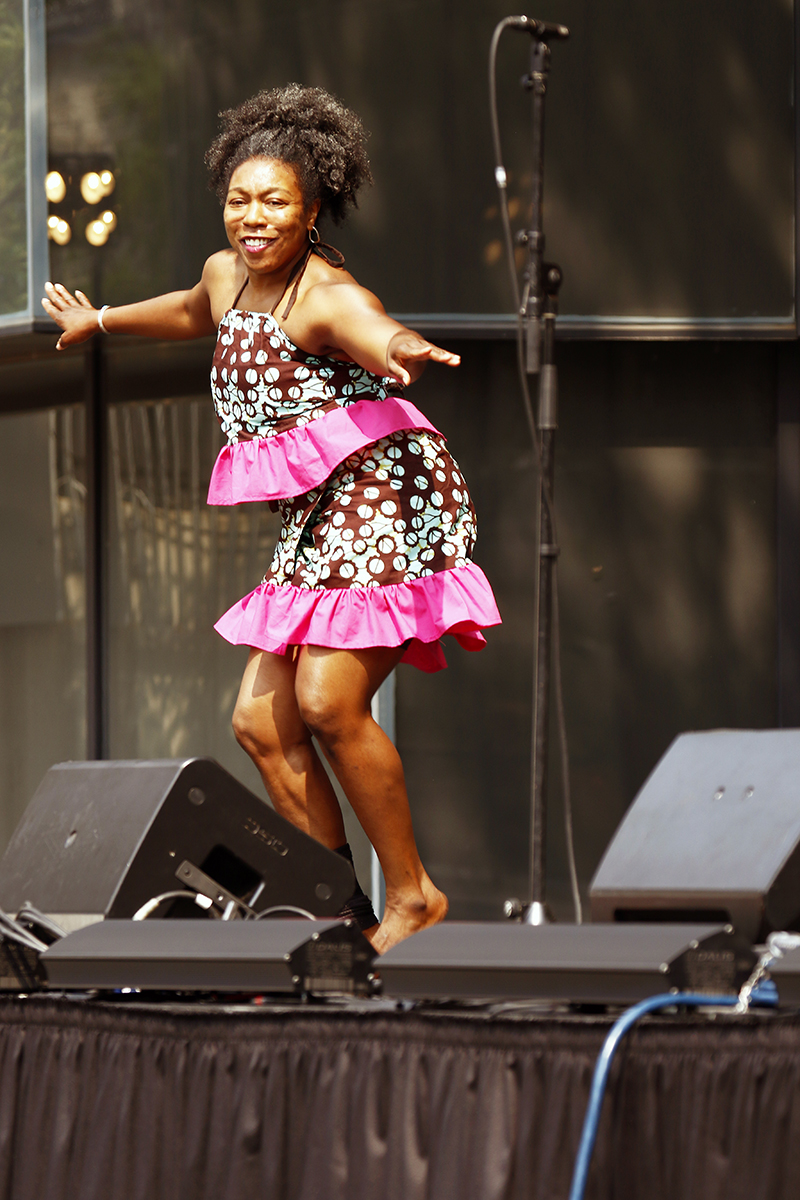
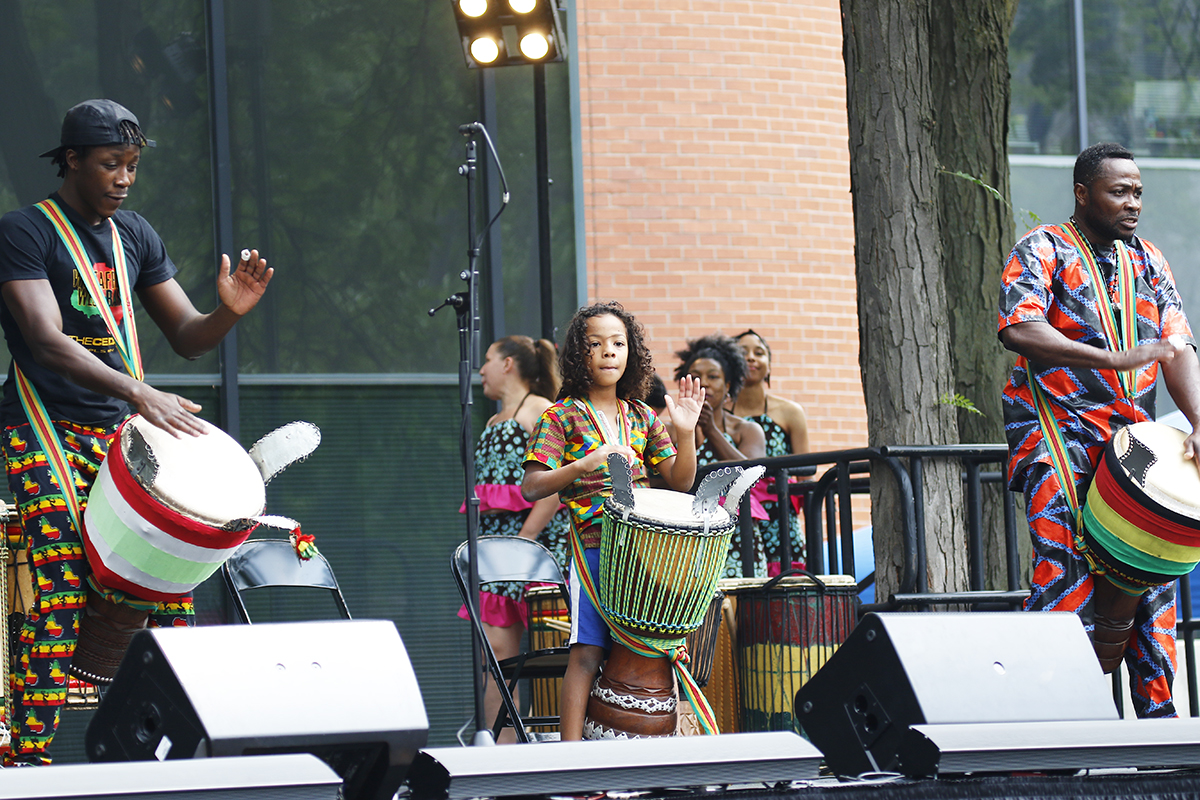
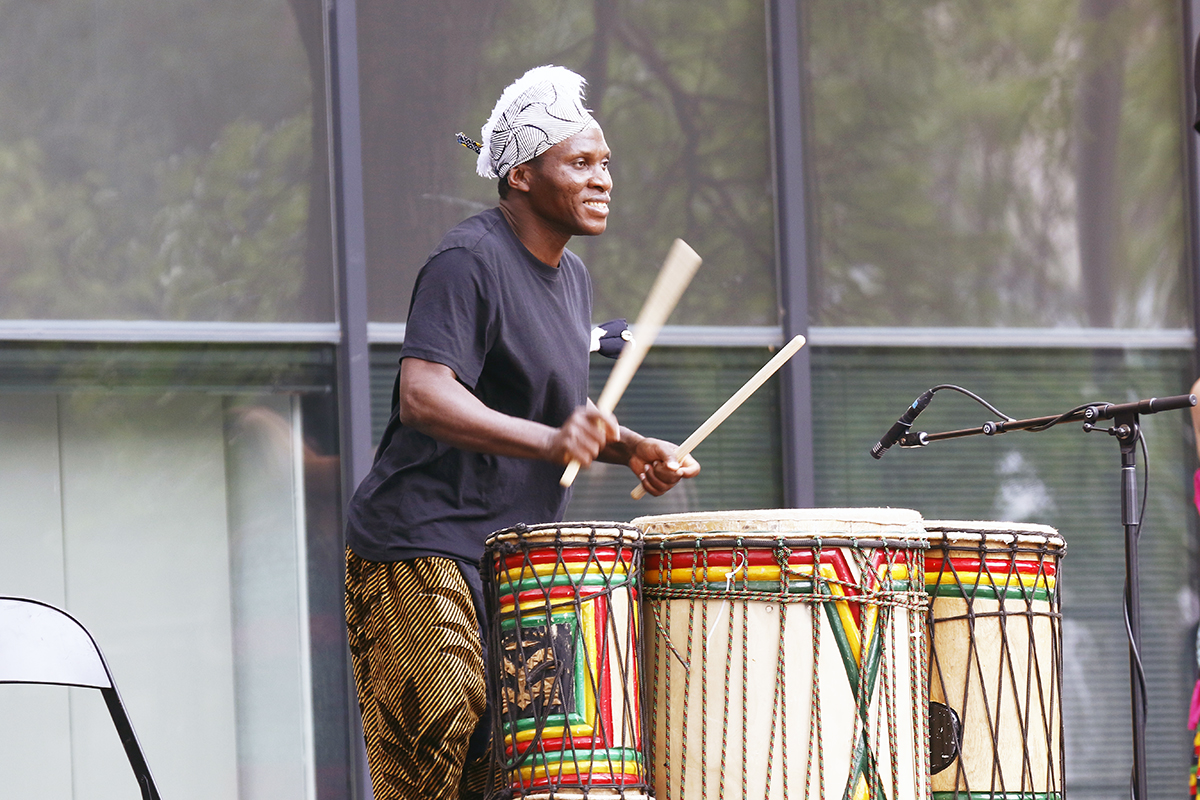
Duniya Drum and Dance Company drummers perform outside Peavey Plaza on Nicollet Mall in Minneapolis during International Day of Music on Saturday, July 15, 2023. The annual event marks the beginning of Orchestra Hall’s summer season. Photo: Richard Ooga/Mshale
Duniya Drum and Dance Company drummers perform outside Peavey Plaza on Nicollet Mall in Minneapolis during International Day of Music on Saturday, July 15, 2023. The annual event marks the beginning of Orchestra Hall’s summer season. Photo: Richard Ooga/Mshale
International Day of Music, hosted by Orchestra Hall with programming partners, BRKFST Dance Company, the Cedar Cultural Center, and City of Bells provided a platform for the rich diversity of artistic talent that exists here in Minneapolis and St. Paul.
On Nicollet Mall and 11th Street Saturday, July 15th, in the same space as Orchestra Hall, music from the Democratic Republic of Congo and Ukraine, Chile, India, Guinea, England, and other countries could be heard.
Instead of violins and double-basses carrying the tune, vinyl records spun, sound machines queued, and djembe beats bounced off all the surfaces at Peavey Plaza.
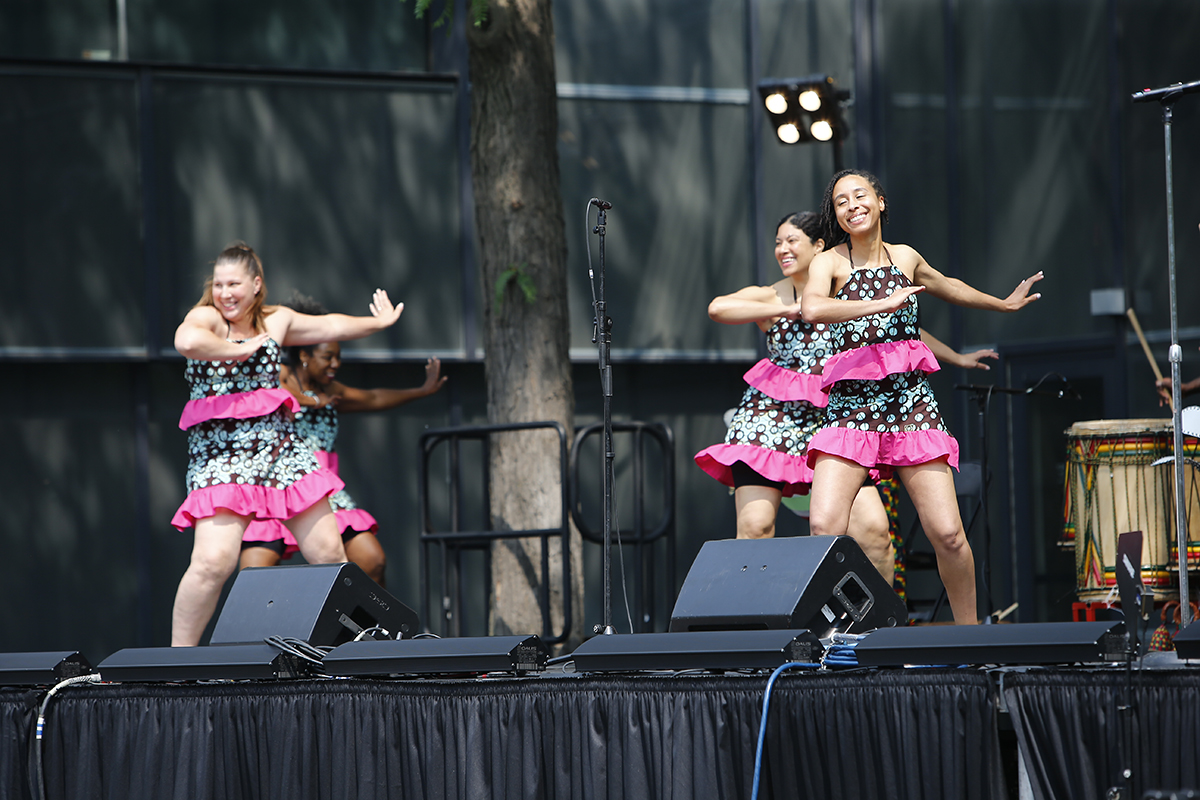
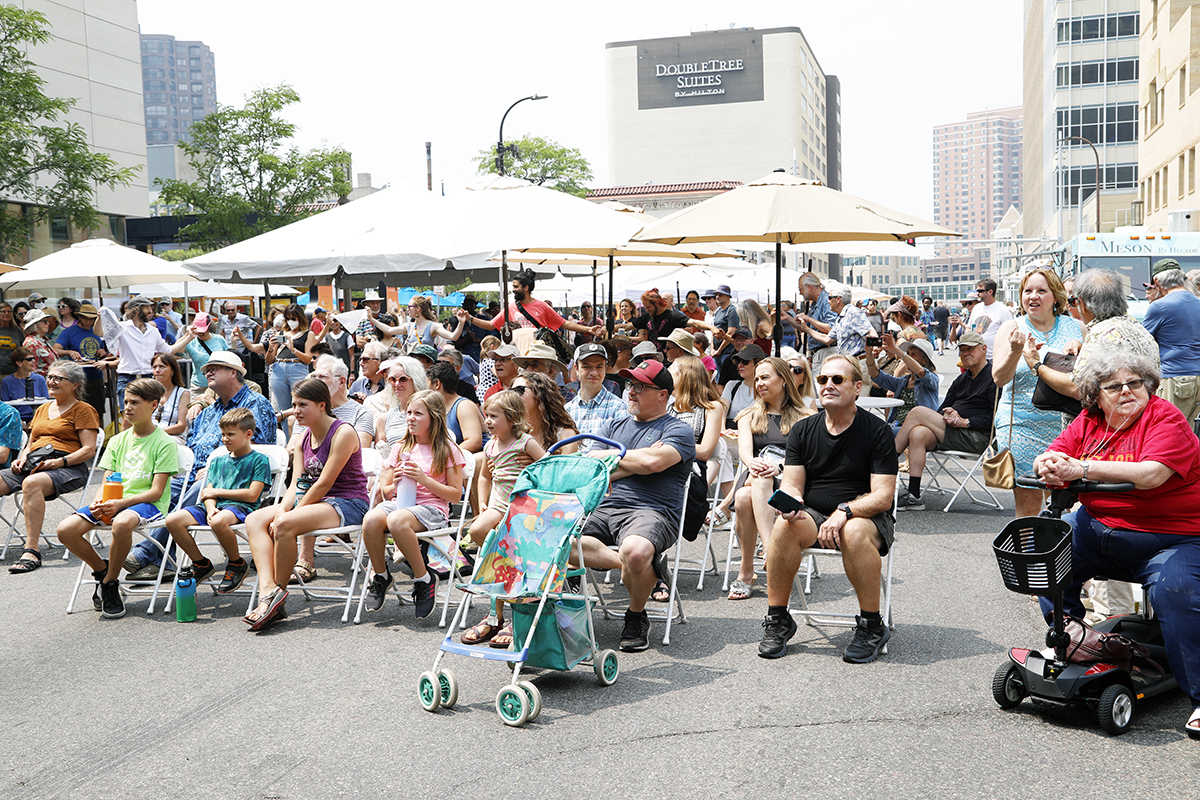
Through the power of music and dance performed by representatives of each of these countries, Minneapolis hummed with an International voice. People in the audience danced, swayed, clapped, shouted, whistled, and jumped as they listened to music and watched dancing and drumming from 25 different countries over a twelve-hour span.
Of a trio of grey-haired or no-haired music aficionados who arrived early, two of them had never heard of the scheduled acts at the Atrium stage, but they trusted the sound to be exciting as they’d been attending this event for many years.
Renamed several times, International Day of Music marks the beginning of Orchestra Hall’s summer season. As the Twin Cities has moved into a more cosmopolitan citizenry so has the festival’s output grown more diverse and inclusive.
Dumont Doumbe, one half of the duo that comprises Douala Soul Collective, said they spin according to the vibe they feel from the crowd. Slotted into the morning session, the crowd was still waking up, yet there were a few dancers who used their smiles to invite others to join them as they grooved to the DJs’ tunes.
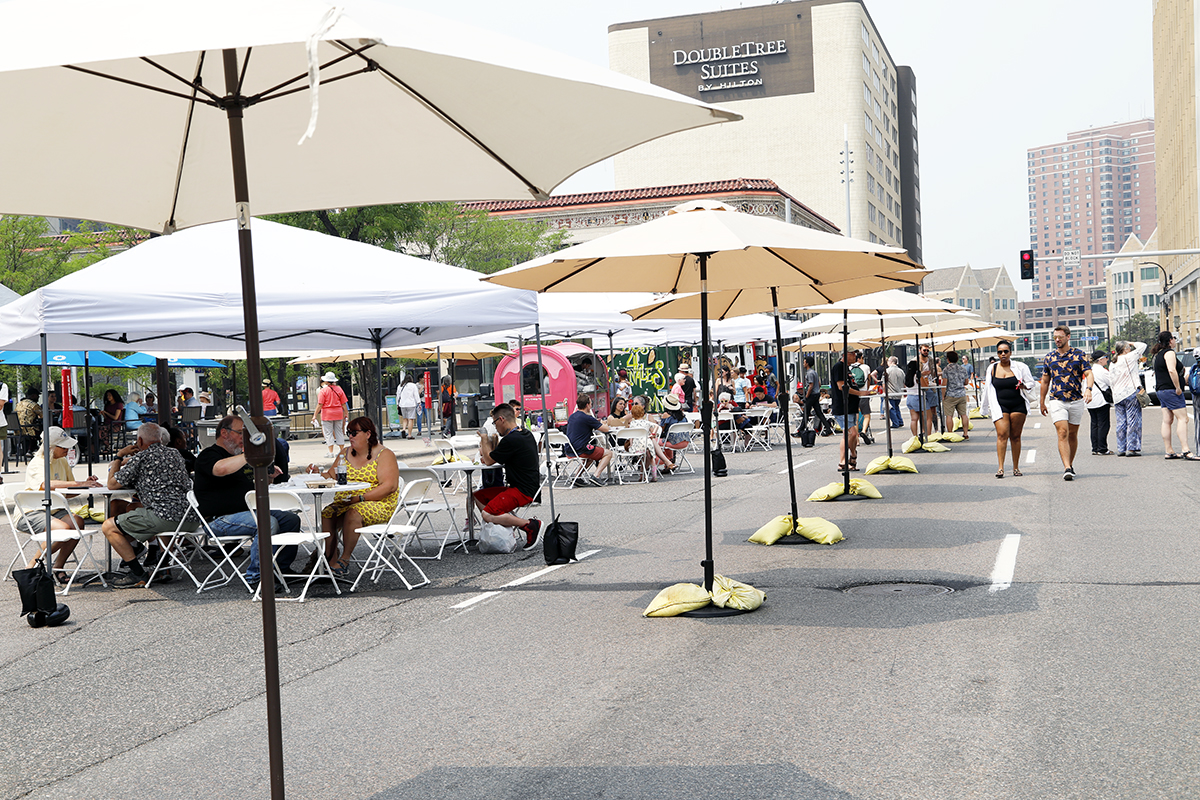
While attendance was never shoulder-to-shoulder, it was up from previous years of the pandemic. This year, however, was hampered by air quality alerts, primarily impacted by the wildfires in Canada. Saturday’s rating was yellow indicating a moderate air quality with an AQI of 66. Some people wore masks out of caution against the pollution.
The skies were sunny with a haze and a strong breeze. In fact, an employee of Orchestra Hall sporting a coral-colored T-shirt as did most of the event workers and volunteers, deemed it windy enough to warrant the removal of the coveted umbrellas that offered scarce shade citing safety concerns.
Although this decision was not met with agreement from the audience, no one left especially since a miked voice suddenly called out, “Are you all ready to travel to Guinea West Africa?” Displaced people quickly found new spots to stand or sit and attention riveted to the Peavey Plaza stage where Duniya Drum and Dance Company began their performance.
“Music brings people together and music begins with the drum roll,” the same voice shouts.
The heat of the day taxed many of the audience members, but despite a twelve-plus hour shift, at 10:30 pm, Robert Lehmann, Community and Grant-Funded Programs Manager of the Cedar Cultural Center, remained present and applauding the many performances.
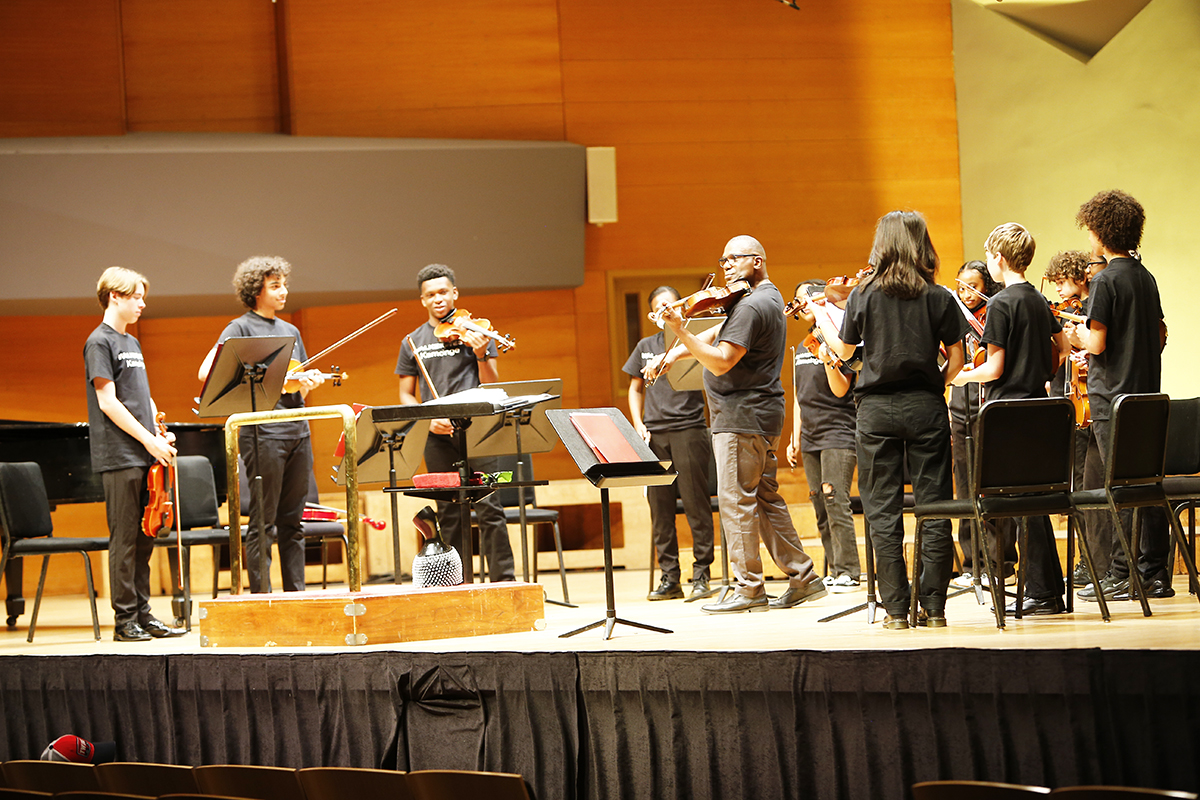
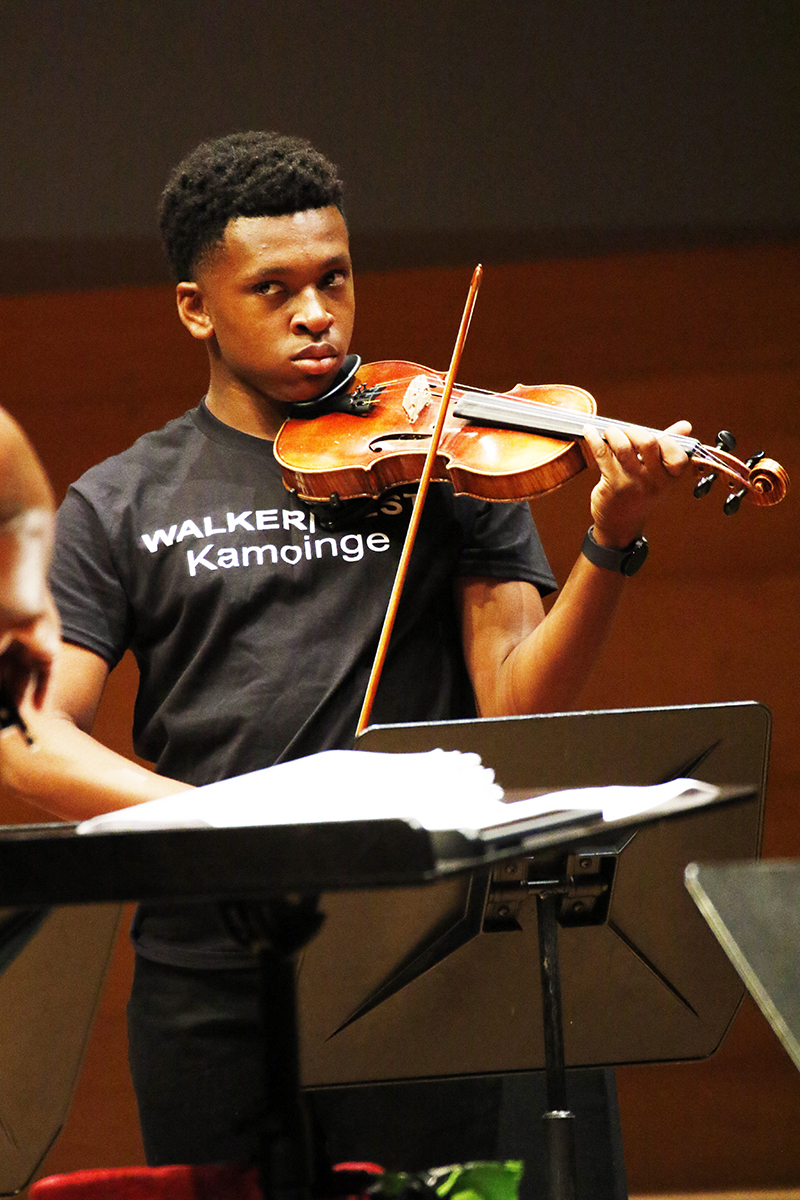
At least 70 people sat in cushy seats of Orchestra Hall taking in Miloe and the Kabeyas, a local phenomenon that rose up out of the pandemic. Bobby Kabeya, founder and lead singer in the band, emigrated from DR-Congo at a young age. Most of his family, including his dad, Mike, and mom, Sylvie, were on stage enamoring the audience with original work save for Sylvie’s captivating rendition of Miriam Makeba’s Malaika.
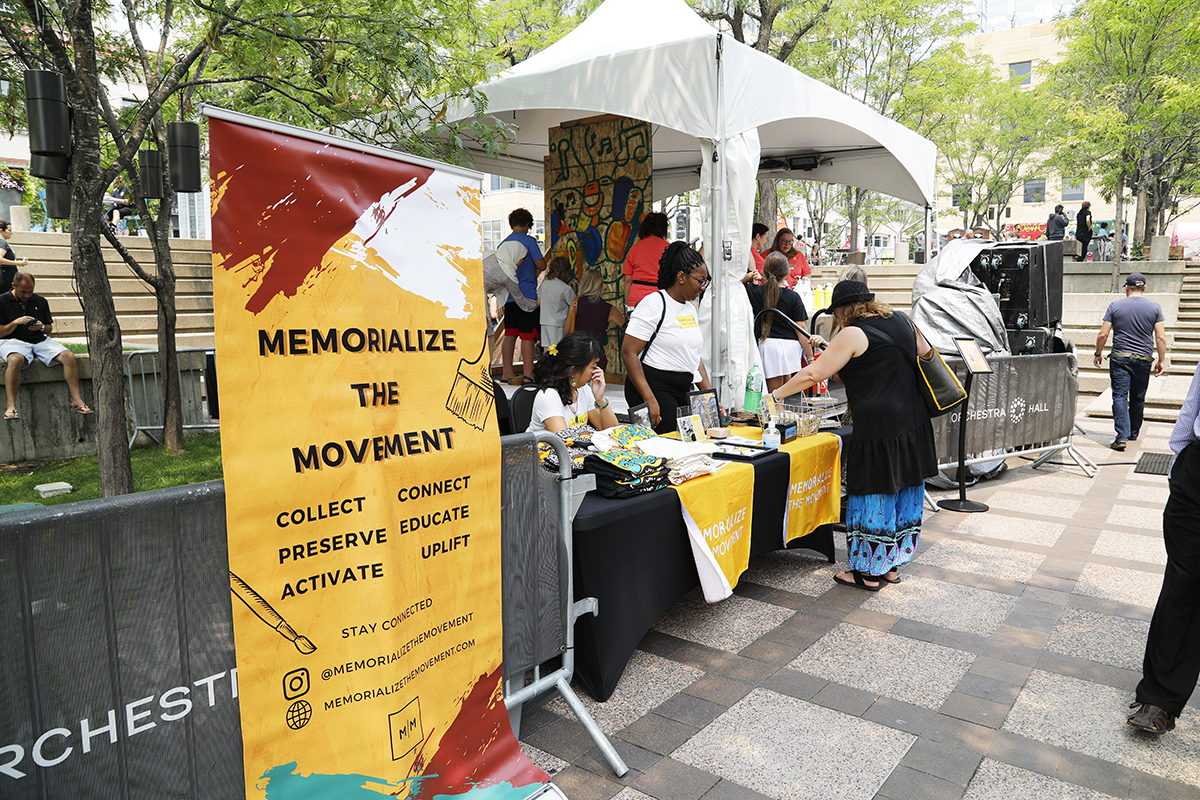
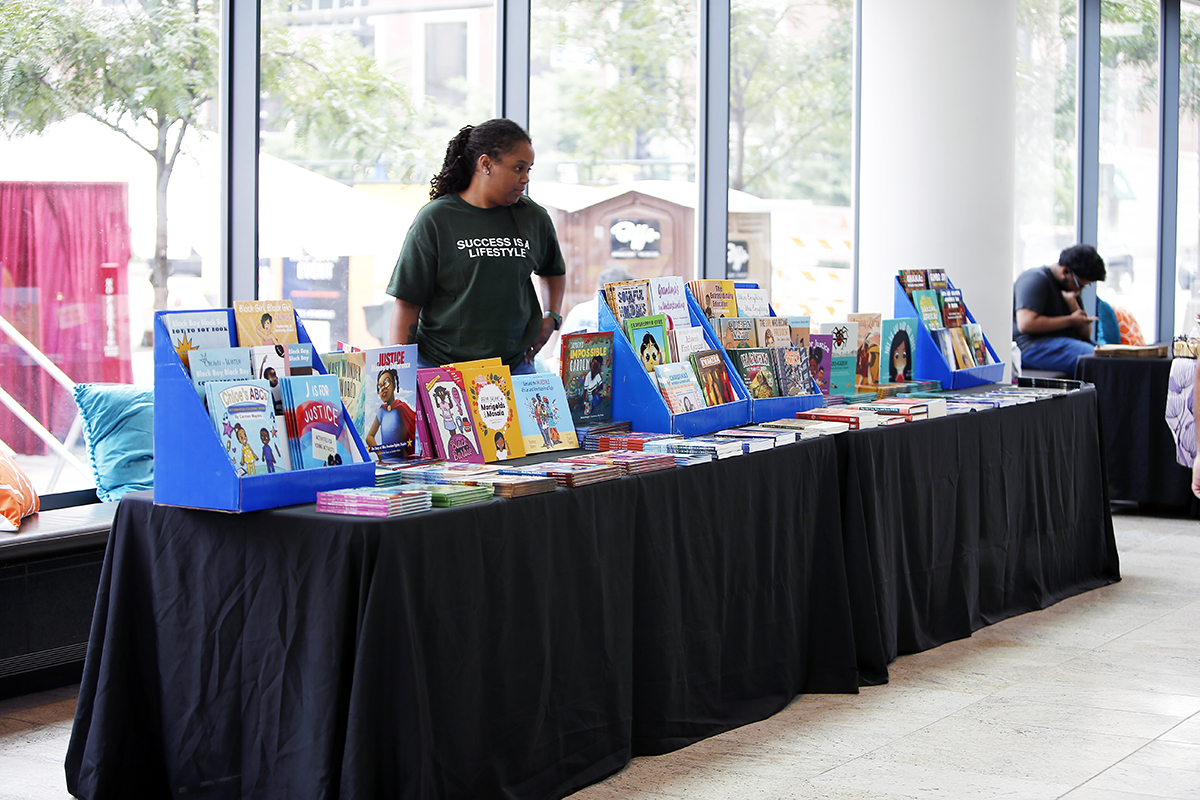
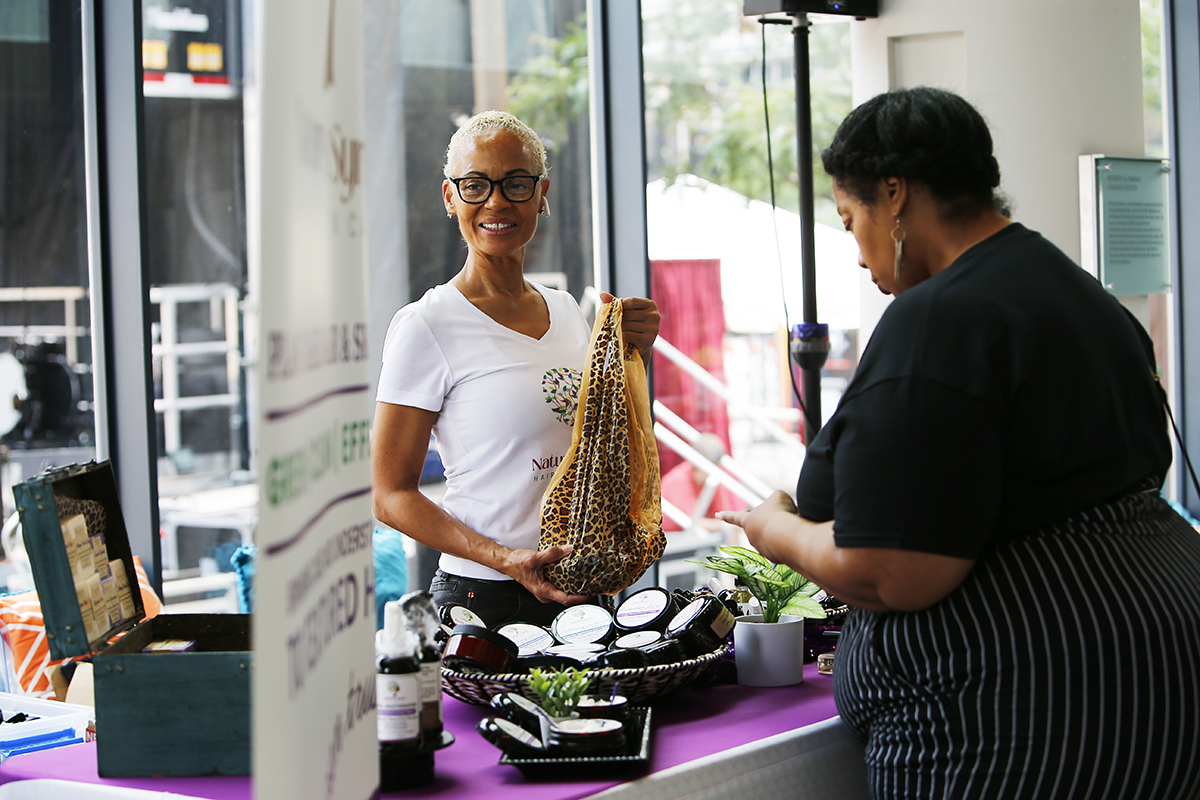
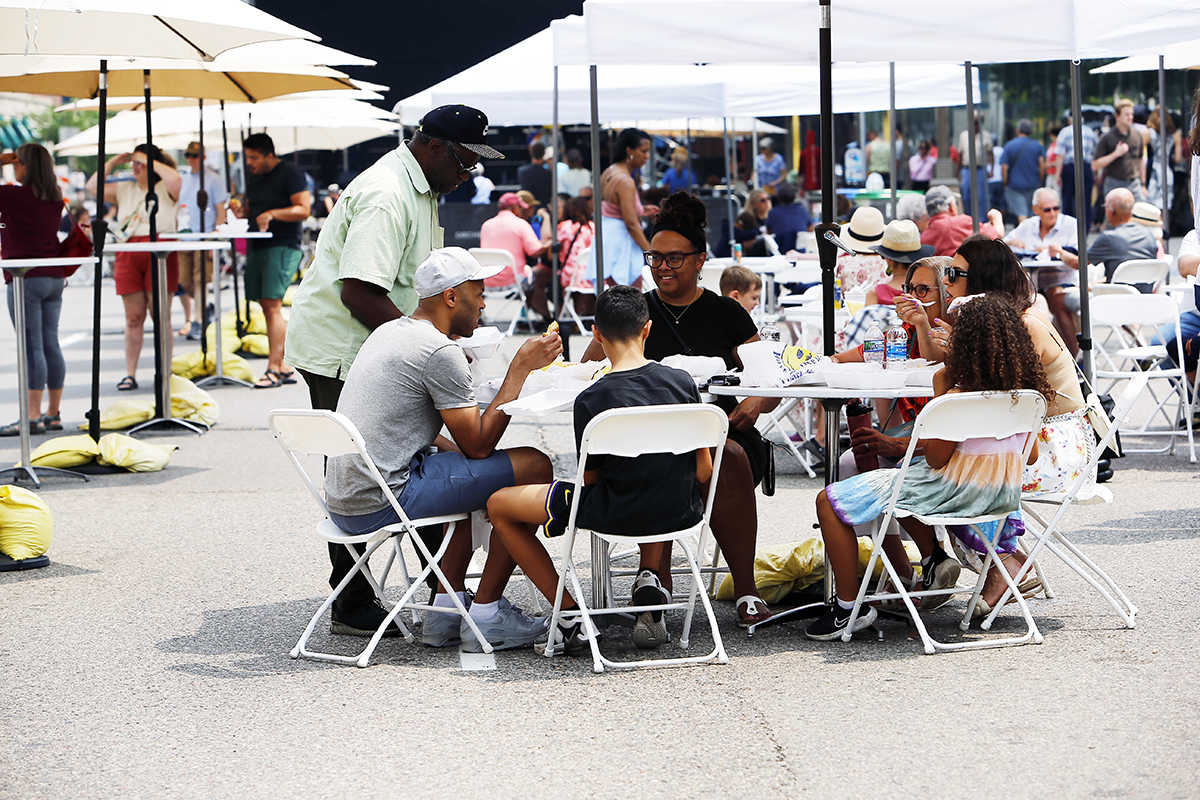
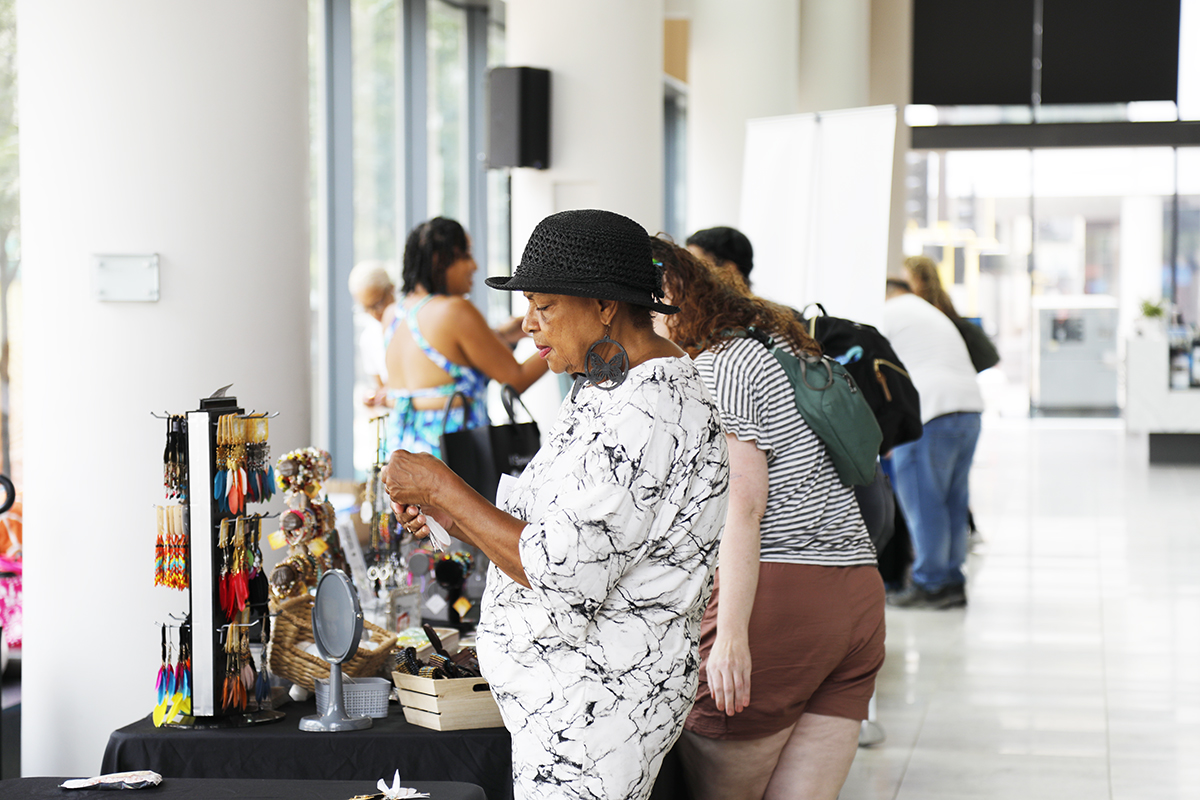
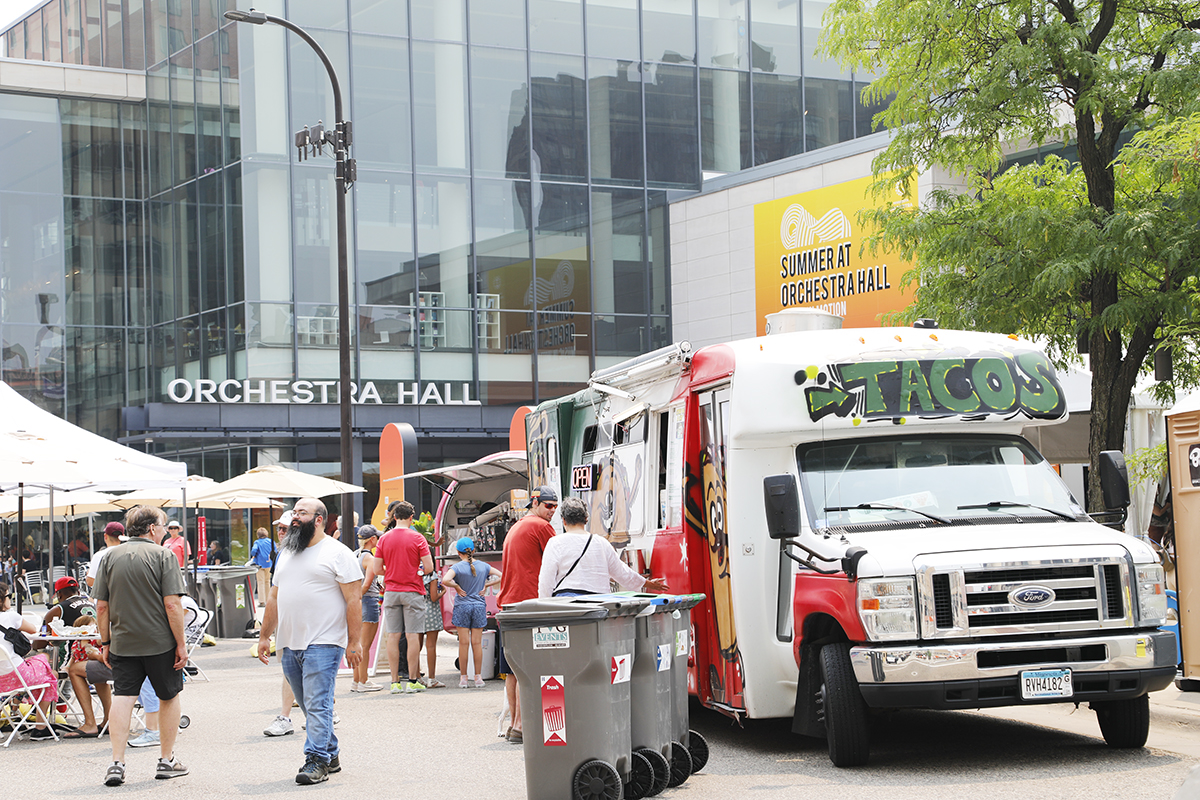
Peavey Plaza and the Global Groove Stage provided space for outdoor acts. Inside Orchestra Hall, both the auditorium and the Target Atrium served as performance halls. In addition to the performances, vendors and food trucks filled both inside and outside spaces. Most of the food trucks were of Latin American fare. Indoors, vendors sold jewelry, skin-care products, and books all produced locally.